Beijing Food Guide: Douzhi, Luzhu, Copper Pots, Niujie and What to Eat Beyond the Duck
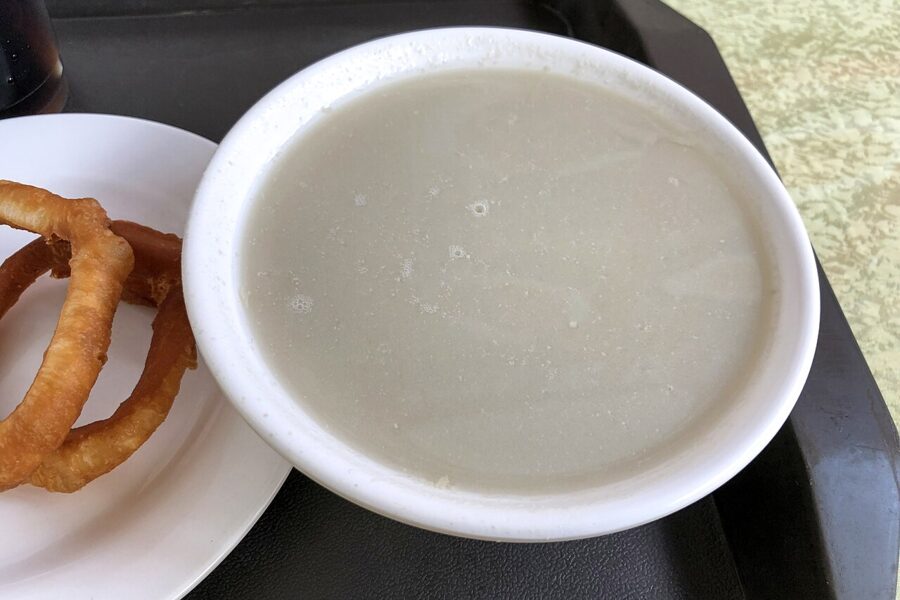
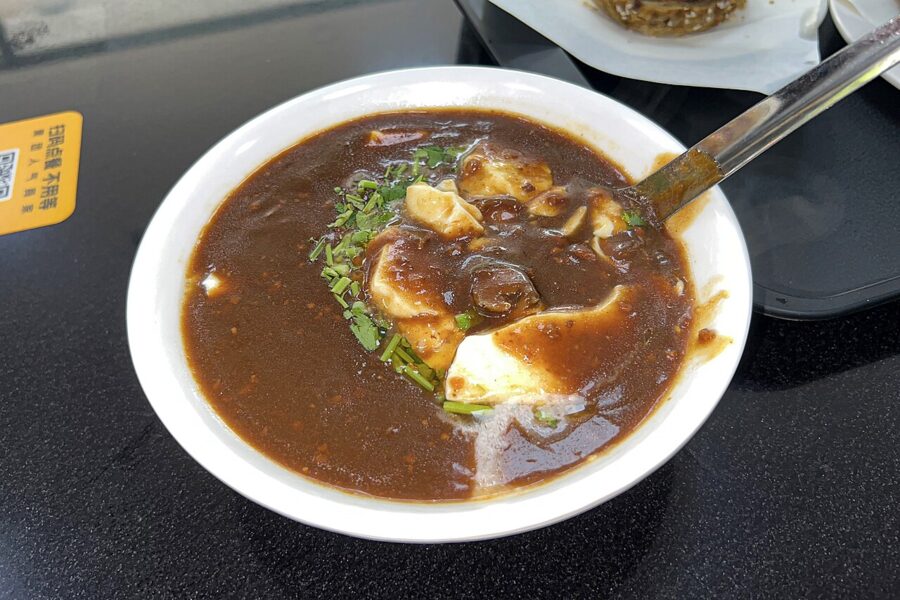
The bowl is grey-green, faintly steaming, and smells like a sink that hasn’t been cleaned. At the next table on Huguosi Street a man in his seventies tips his own bowl, sips it slowly round the rim, and bites into a fried ring so crisp it shatters. That’s douzhi, and it’s the breakfast of old Beijing. You came to this city for the duck, and the duck is very good, but this is where Beijing food actually starts.
Beijing has a reputation problem with food lovers, and some of it is earned. Ask a Cantonese or Sichuan cook about Beijing cooking and you’ll get a polite shrug: salty, heavy, a lot of offal, not much finesse. The city’s own tourism bureau says the dishes that started in Beijing are mostly snacks rather than full courses. That’s the fair version.
The other version is that Beijing ate the best of everyone else for six centuries. Shandong cooks ran its big restaurants, Hui Muslim cooks gave it mutton, tripe and the copper pot, and the Qing court left a pastry tradition and a taste for set milk pudding. And the snacks, the part that really is Beijing’s own, are among the most distinctive things you can eat in China, as long as you’re willing to try a bowl of intestines before lunch.
This guide is the food I’d send you to beyond Peking duck: the old snacks one by one and where to eat them, the halal kitchen of Niujie, the Shandong and imperial dishes that still fill banquet menus, and the neighbourhoods where it’s worth walking hungry. I’ve kept the duck, the noodles and the hot pot short, because each has a full guide of its own.
| Dish | What it is | Where to try it |
|---|---|---|
| Douzhi (豆汁) and jiaoquan (焦圈) | Fermented mung bean drink with fried rings | Huguosi Snacks, Yin San Douzhi |
| Luzhu huoshao (卤煮火烧) | Pork offal and bread stewed in a dark broth | Xiaochang Chen, Menkuang Hutong Bainian Luzhu |
| Baodu (爆肚) | Blanched tripe with sesame sauce | Baodu Feng, Langfang Ertiao |
| Chaogan (炒肝) | Garlicky liver and intestine stew | Yaoji Chaogan, Tianxingju |
| Mending roubing (门钉肉饼) | Thick beef pie shaped like a gate stud | Baorui Mending Roubing |
| Kaorou (烤肉) | Mutton or beef on an iron griddle | Kaorouji, Kaorouwan |
| Lüdagunr (驴打滚), aiwowo (艾窝窝) | Sticky rice sweets | Bai Ji Niangao, Huguosi Snacks |
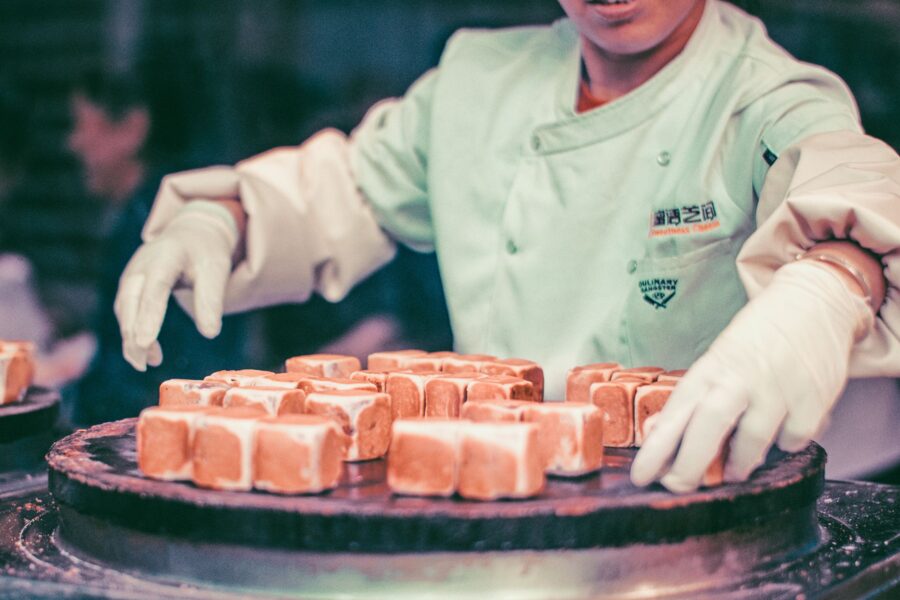
| Gongting nailao (宫廷奶酪) | Set milk pudding from the Qing court | Nailao Wei, Wenyu Nailao |
In This Article
- What makes Beijing food Beijing
- The Shandong base
- The Hui kitchen
- The court and the Manchu table
- The old snacks, one by one
- Douzhi and jiaoquan
- Luzhu huoshao
- Baodu
- Chaogan
- Mending roubing
- Guanchang, madoufu and the other mung bean snacks
- The sweet ones
- Miancha and the drinking snacks
- Huguosi, Jinfang and the snack houses
- Beyond the duck
- Zhajiangmian and copper-pot mutton
- Jiang zhouzi and the braised meats
- Kaorou on the griddle
- The Shandong classics on every menu
- The imperial table
- Dumplings, pastries and a drink
- Niujie and the halal butchers
- Gulou, Nanluoguxiang and the hutongs
- Qianmen and Dashilar
- Guijie after dark
- Breakfast in Beijing
- The Wangfujing question
- Where to eat, by budget
- Skip this
- When to go, and what to eat when
What makes Beijing food Beijing
Beijing has been China’s capital for most of the last seven centuries, and capitals collect cooks. Food writers in Chinese usually describe the city’s cooking as five strands woven together: Shandong cooking, street and market food, the Tan family’s private kitchen, halal Hui cooking and the imperial court. You’ll taste all five in a week, often in the same meal.
The climate matters too. North China is dry, wheat country, so rice plays a smaller part than it does in the south and the carbohydrate is a flatbread, a bun, a noodle or a dumpling. Sesame paste, dark soy, fermented bean curd, scallion and raw garlic do most of the seasoning. For how this fits the wider map, my guide to northern Chinese cooking sets Beijing beside the other regions.
The Shandong base
Most of Beijing’s grand old restaurants were opened by cooks from Shandong, the province on the coast to the south-east. From the Ming dynasty onwards they ran the city’s banquet houses, and Shandong (Lu, 鲁菜) technique is still the backbone of a formal Beijing meal: quick, hot stir-frying, clear stocks, thickened glossy sauces and a lot of scallion. Even the brands people think of as purely Beijing often have Shandong founders.
The Hui kitchen
Beijing’s Hui Muslims, Chinese-speaking and halal, have been in the city for about a thousand years, and their cooking is the reason so much of Beijing’s food is mutton and beef. Rinsed mutton in a copper pot, baodu, griddle-roasted kaorou, sweet tasimi and most of the old sticky-rice sweets come out of Hui kitchens. On a sign or a menu, look for qingzhen (清真), which means halal.
The court and the Manchu table
The Qing emperors were Manchu, and they brought dairy, pastry and a love of hunting-season meat with them. What reached ordinary Beijing from the palace was mostly sweet: pea cakes, set milk, pastries for festivals. The full imperial banquet survives in a few restaurants that recreate it, at a price, and in a lot of stories that every old Beijing dish seems to have about an emperor who once tasted it.
The old snacks, one by one
Old Beijing snacks are called lao Beijing xiaochi (老北京小吃), and there are said to be a couple of hundred of them. These are the ones worth your time, roughly in order of how brave you need to be.
Douzhi and jiaoquan
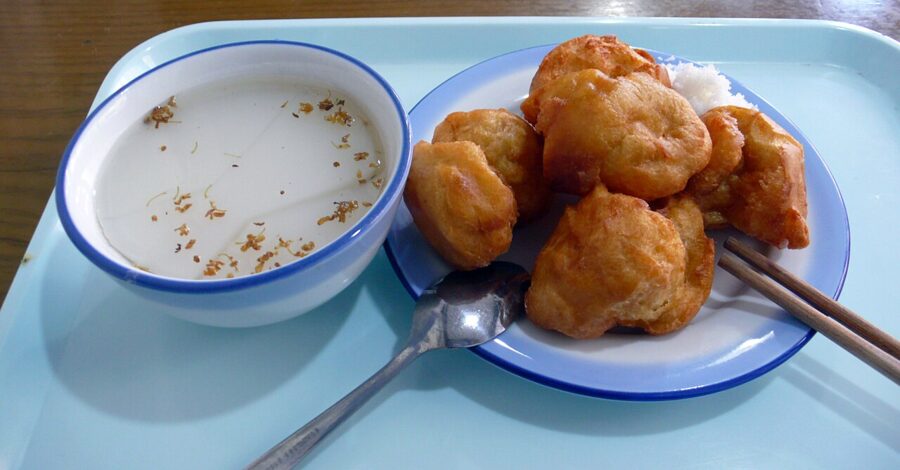
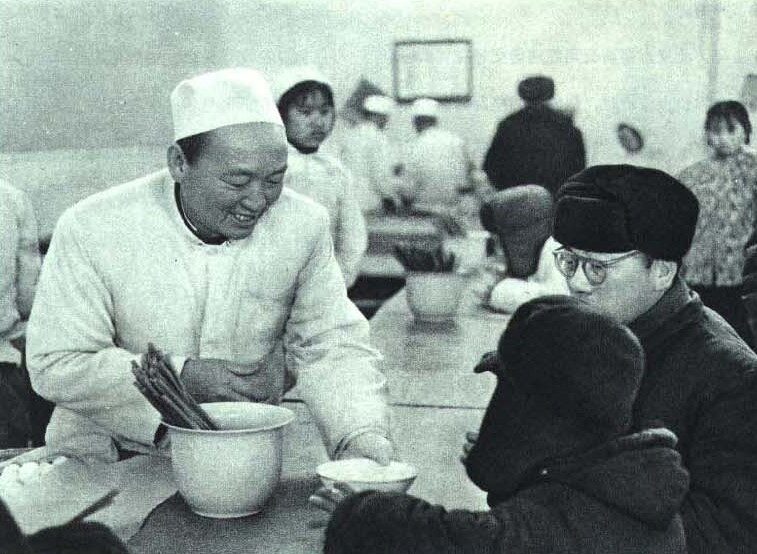
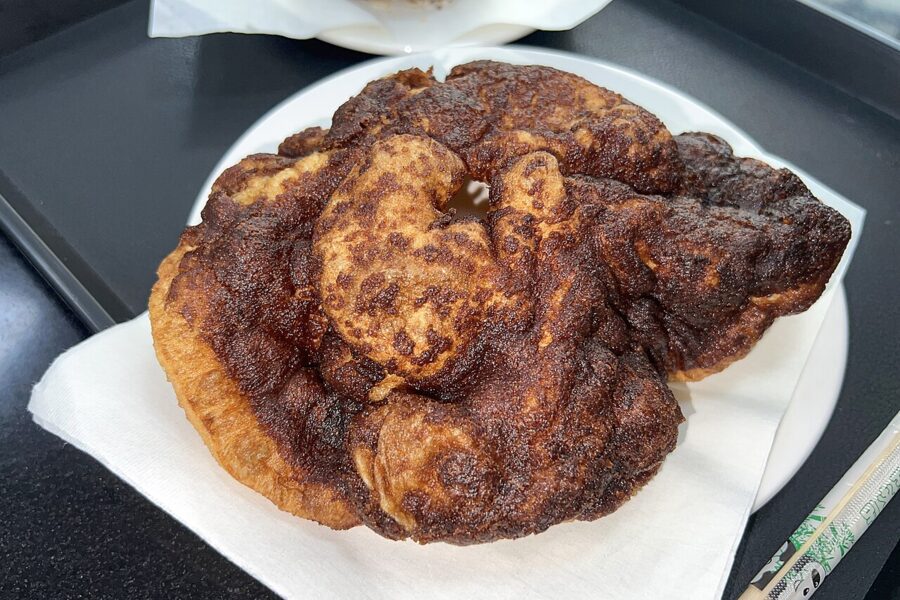
Douzhi (豆汁) is what’s left when mung beans are soaked and ground and most of the starch is taken out for noodles and jelly. The liquid is left to ferment, then simmered slowly until it’s thick, grey-green and sour. It smells strongly of fermentation, and the first sip tastes like old dishwater with a faint sweetness behind it. My guide to Beijing breakfast covers it in full; what matters here is that you should try it once, not that you should finish it.
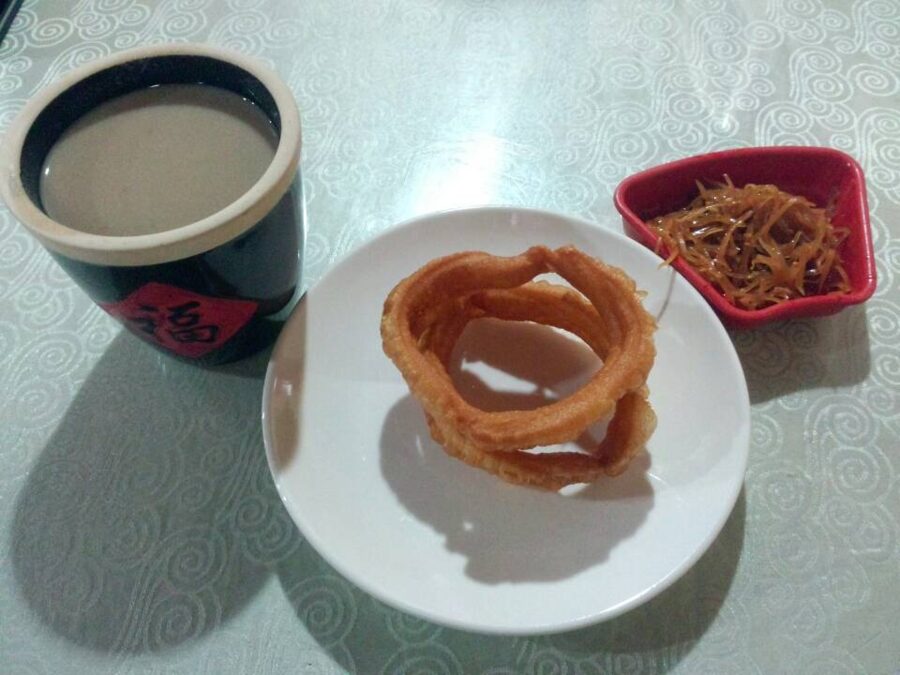
It’s an old taste. Douzhi makers were working in the imperial kitchen in the Qianlong reign of the eighteenth century, and the drink was never really sold outside sight of the old city walls. In 2007 it was added to Beijing’s list of intangible cultural heritage. Demolition in the 1990s closed many of the small douzhi shops, which is why the few left have queues.
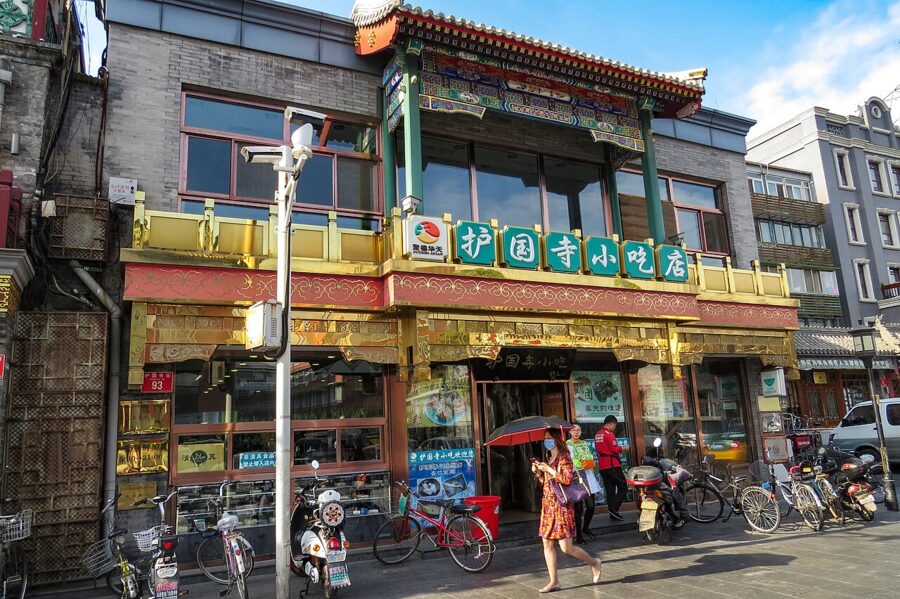
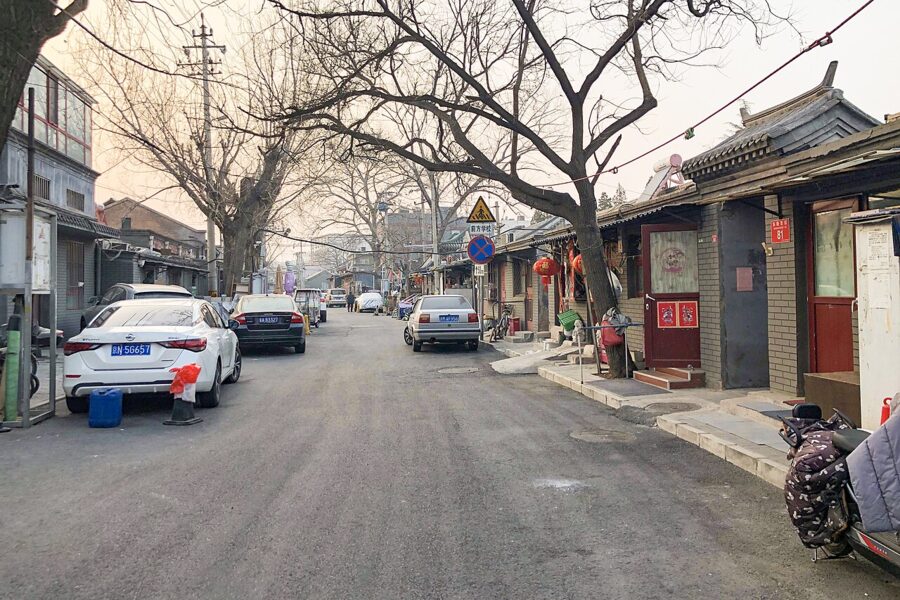
Two shops stand out. Huguosi Snacks (护国寺小吃) is the gentle introduction, its douzhi milder than most, and Yin San Douzhi (尹三豆汁), on Dongxiaoshi Street (东晓市街) a short walk north of the Temple of Heaven, is the one Beijing regulars cross town for, with a bill of about ¥18 a head for a full breakfast. Go before 08:00. The pensioners have been there since it opened.
Luzhu huoshao
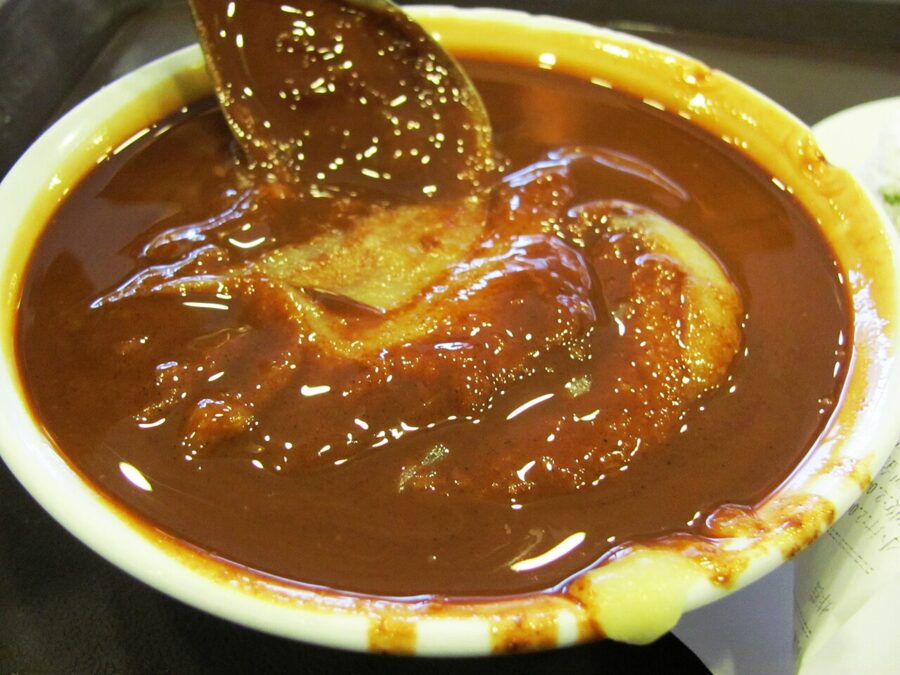
Luzhu huoshao (卤煮火烧) is pig intestine and lung, fried tofu and pieces of wheat bread, all stewed together in a dark, salty broth. The cook fishes your portion out of the pot, chops the bread into a grid and the offal into small pieces, and ladles hot broth over the bowl. You add garlic water, chilli oil and fermented bean curd sauce yourself.
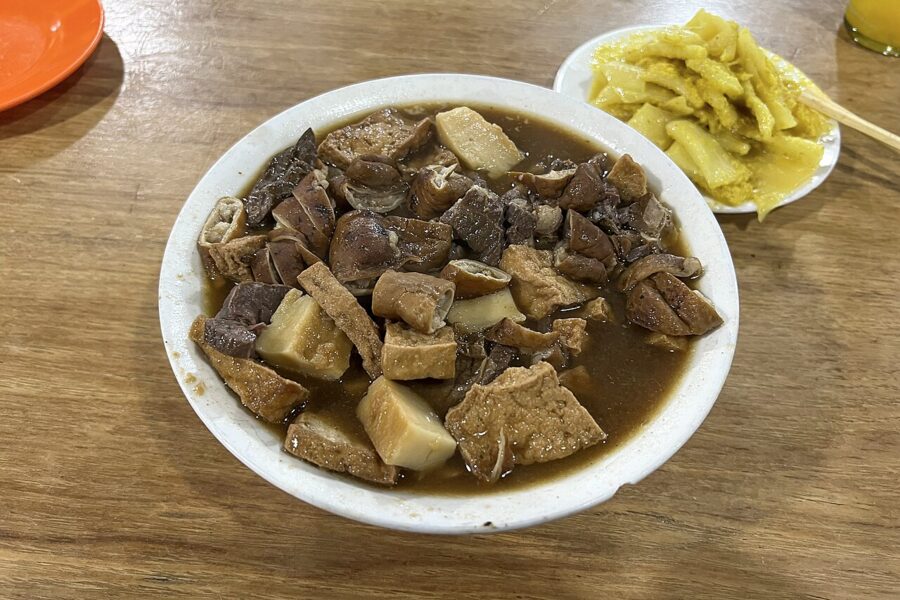
The usual story says it’s a poor man’s copy of suzao rou (苏造肉), pork belly stewed in a spiced broth for the Qianlong emperor. Ordinary Beijingers couldn’t afford pork belly, so they used offal. Xiaochang Chen (小肠陈), the name most often mentioned, has its main shop at 194 Nanheng East Street (南横东街) in Xicheng, and its craft went on Beijing’s heritage list in 2014. It closes between lunch and dinner, roughly 15:00 to 16:30, so don’t turn up at three.
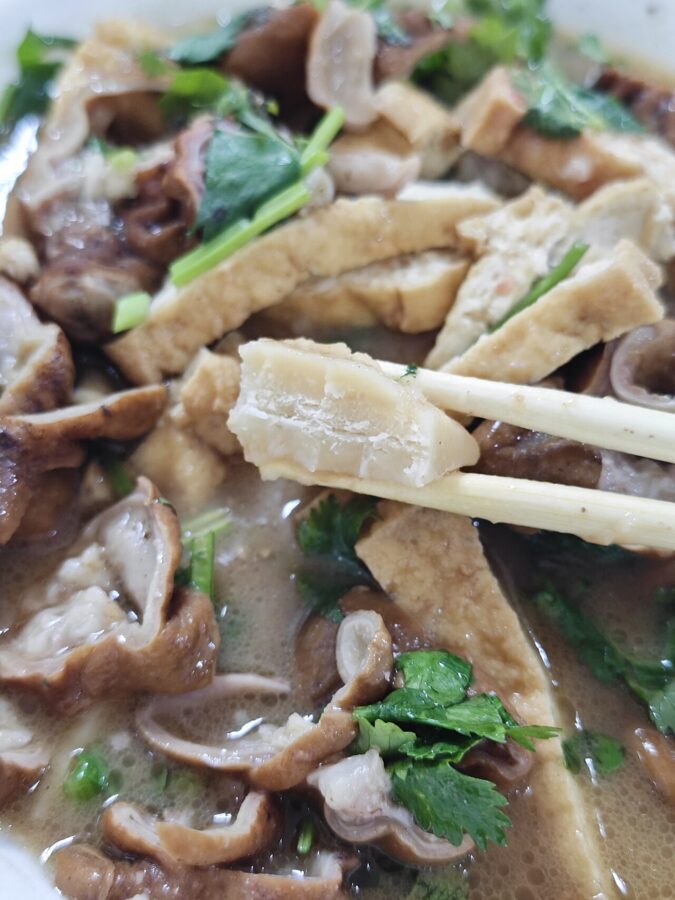
The other big name is Menkuang Hutong Bainian Luzhu (门框胡同百年卤煮), named after a lane near Qianmen, which now has several branches across the city, including one at Xinjiekou in Xicheng.
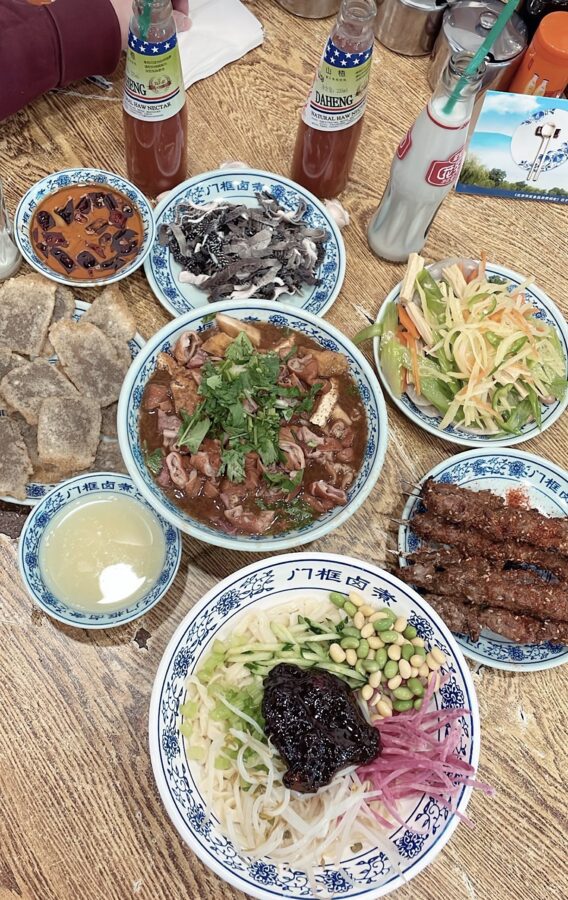
Baodu
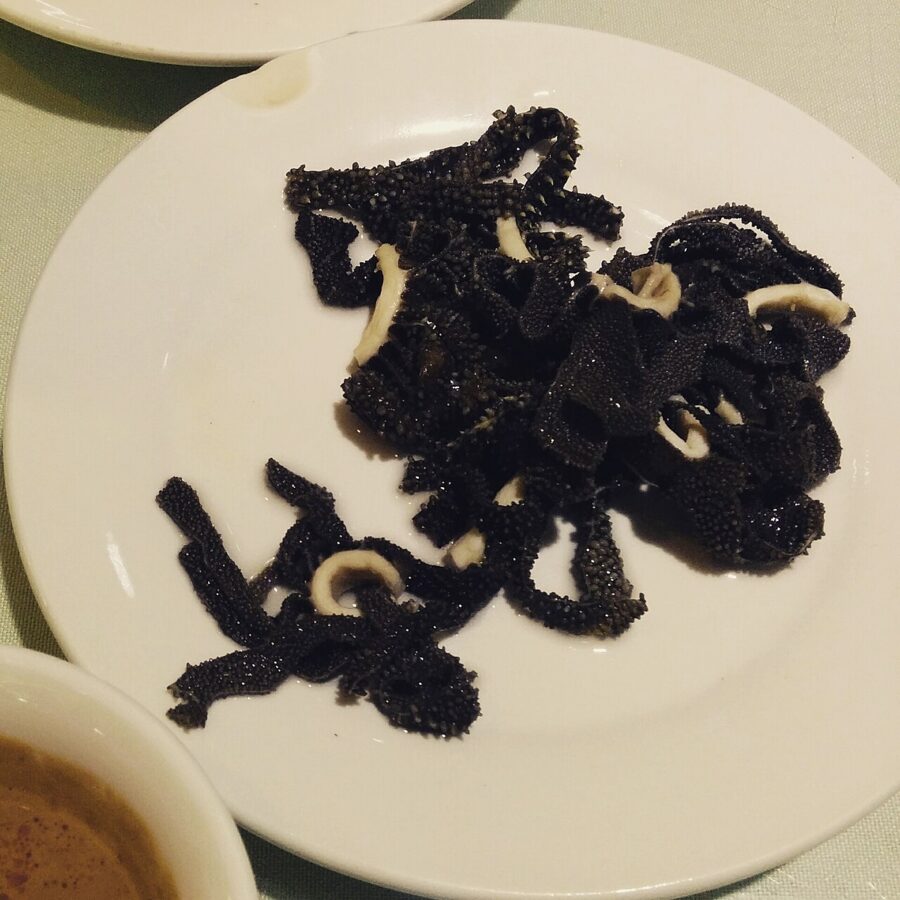
Baodu (爆肚) is tripe, lamb or beef, cut into strips and dropped into boiling water for a few seconds, no more. Done right, it’s crunchy and clean-tasting, dipped in a sauce of sesame paste, fermented bean curd and chopped coriander. Each part of the stomach has its own name and its own cooking time, and a good shop will list six or seven of them.
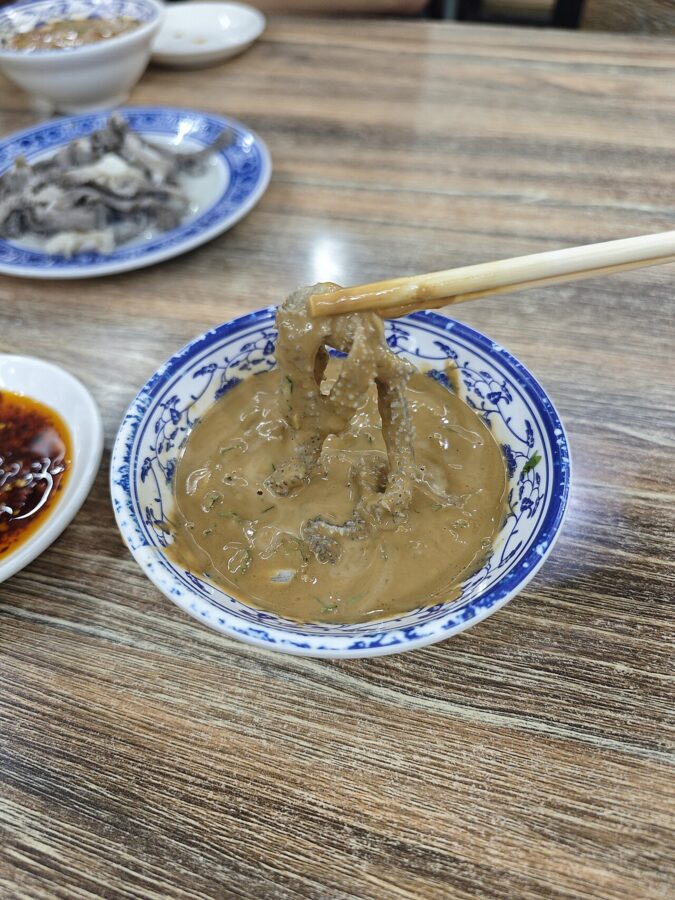
It’s a Hui dish, and the old shops are halal. Baodu Feng (爆肚冯), at 39 Langfang Ertiao (廊房二条) just west of Qianmen Street, traces itself to the Guangxu reign in the late nineteenth century and is still run by the Feng family. If you only eat one plate of tripe in your life, the duren (肚仁), the tender inner part, is the one to choose.
Chaogan
The name means “fried liver”, and it isn’t fried. Chaogan (炒肝) is a thick, dark gravy of pig liver and intestine, mostly intestine, with a lot of garlic, thickened with starch until it coats the spoon. Except you don’t use a spoon: the old way is to tip the bowl and sip round the rim.
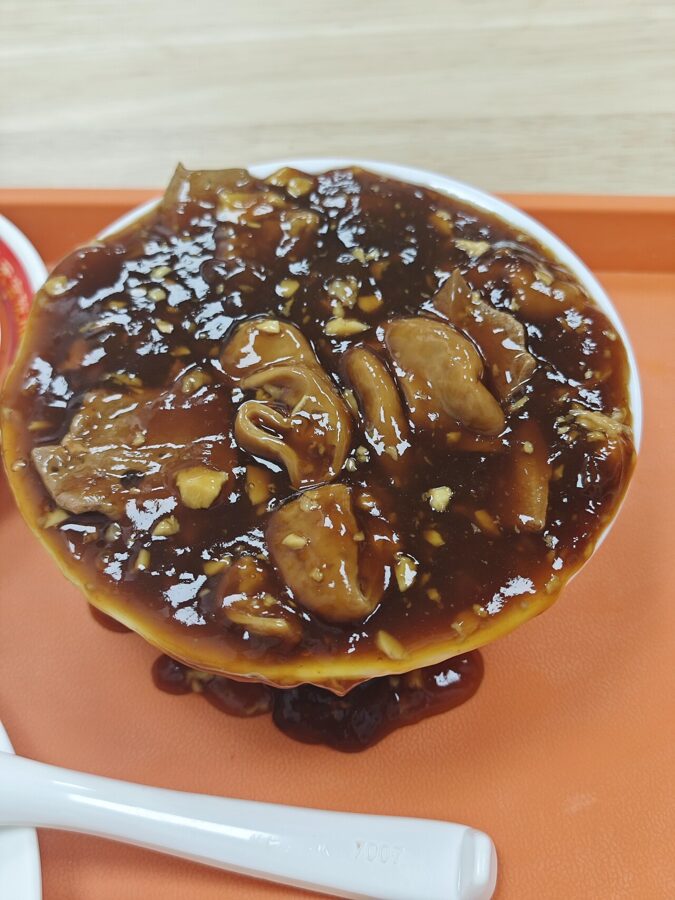
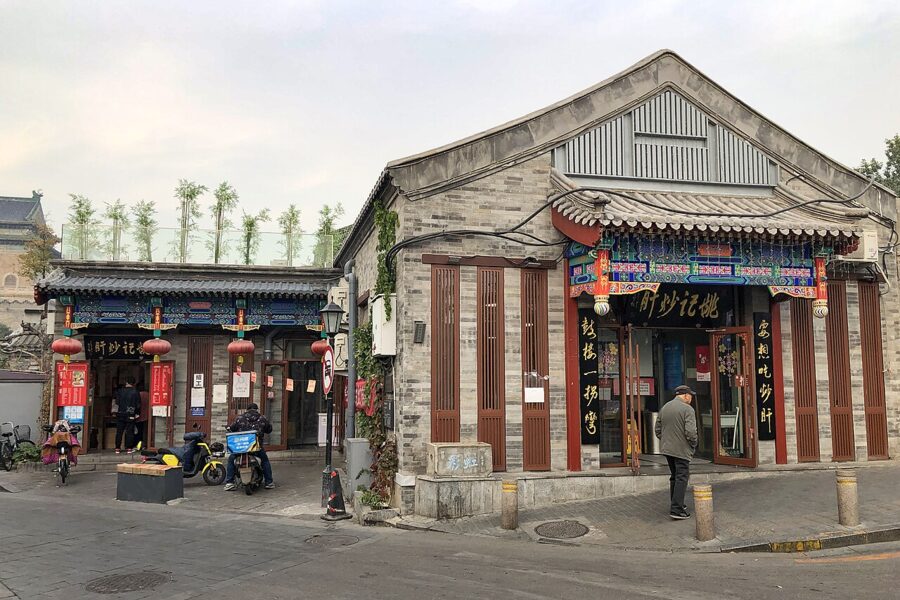
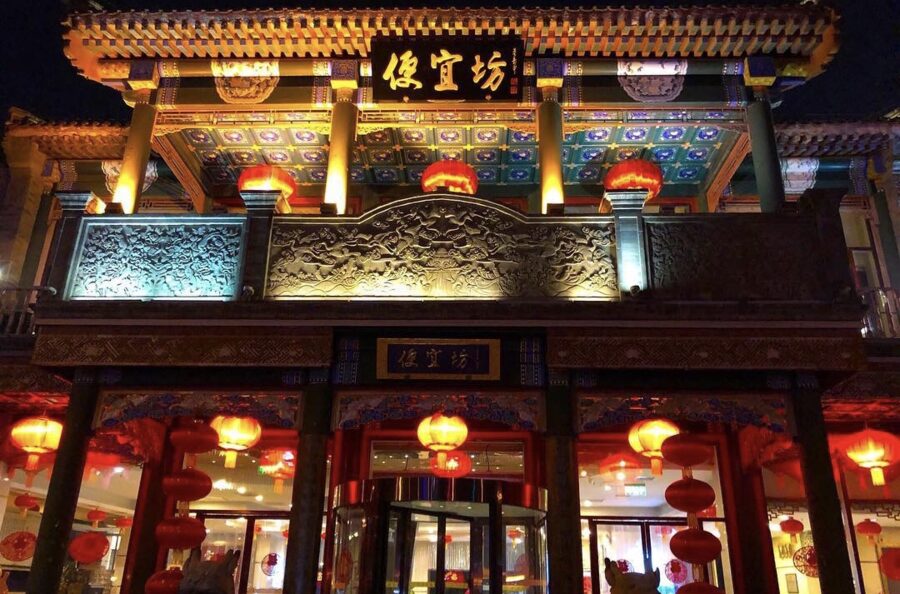
Beijing has a saying, “if you want chaogan, turn the corner at the Drum Tower”, and Yaoji Chaogan (姚记炒肝) at 311 Gulou East Street is the corner people mean. The older house is Tianxingju (天兴居) on Xianyukou, east of Qianmen, which traces itself to a shop called Huixianju in 1862 and is now owned by the same group as Bianyifang. Both are busy from breakfast; both are worth it.
Mending roubing
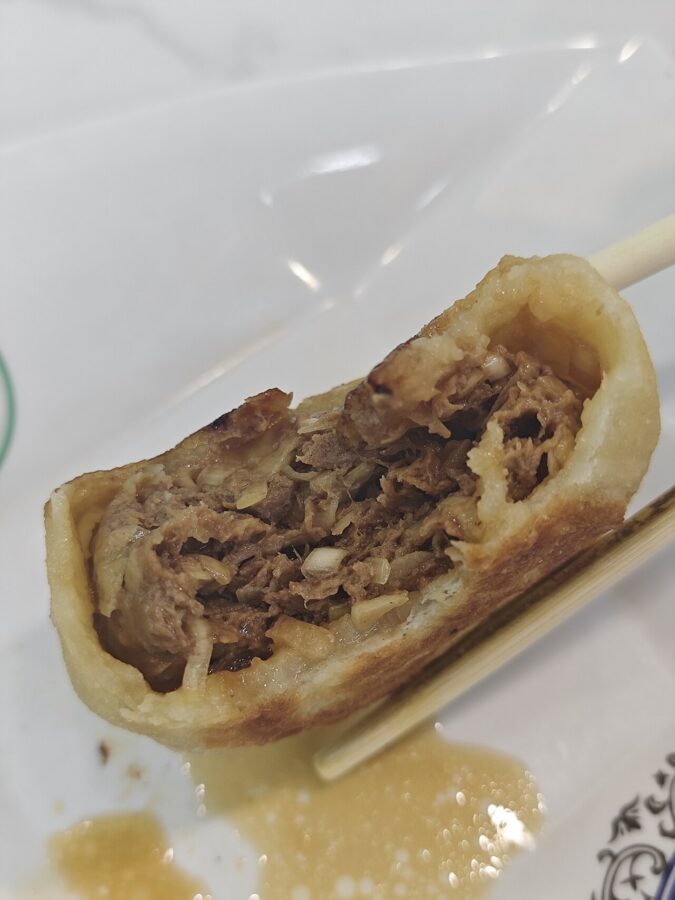
These are beef pies the size and shape of the big round studs on old city gates, about 5 cm across and 3 cm tall. Mending roubing (门钉肉饼), “gate-stud meat pies”, are fried until the outside is crisp, and inside there’s a lot of minced beef, scallion and hot juice. Bite a small hole first and let the steam out, or you’ll wear the juice.
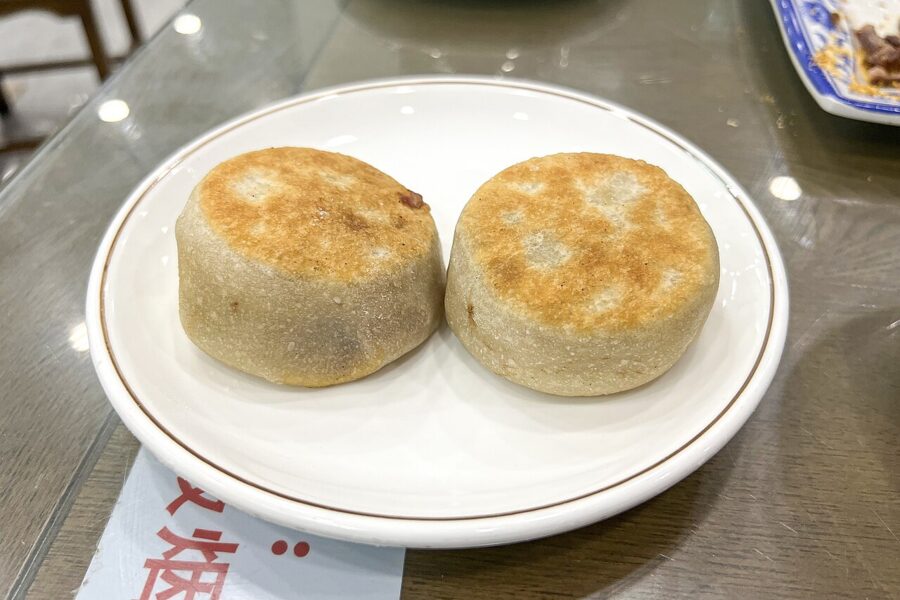
Baorui Mending Roubing (宝瑞门钉肉饼) is the specialist. It moved in May 2024 to 61-2 Chaoyangmen North Street (朝阳门北小街), next door to its old shop, and added an upstairs dining room. A pie costs about ¥4, and it’s a long walk from the nearest metro, which is part of the reason the queue is mostly local.
Guanchang, madoufu and the other mung bean snacks
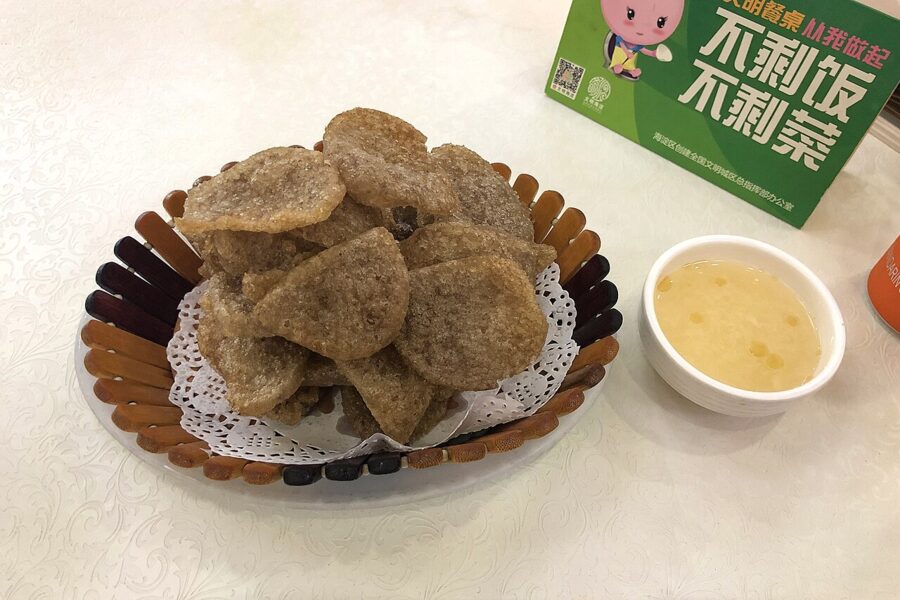
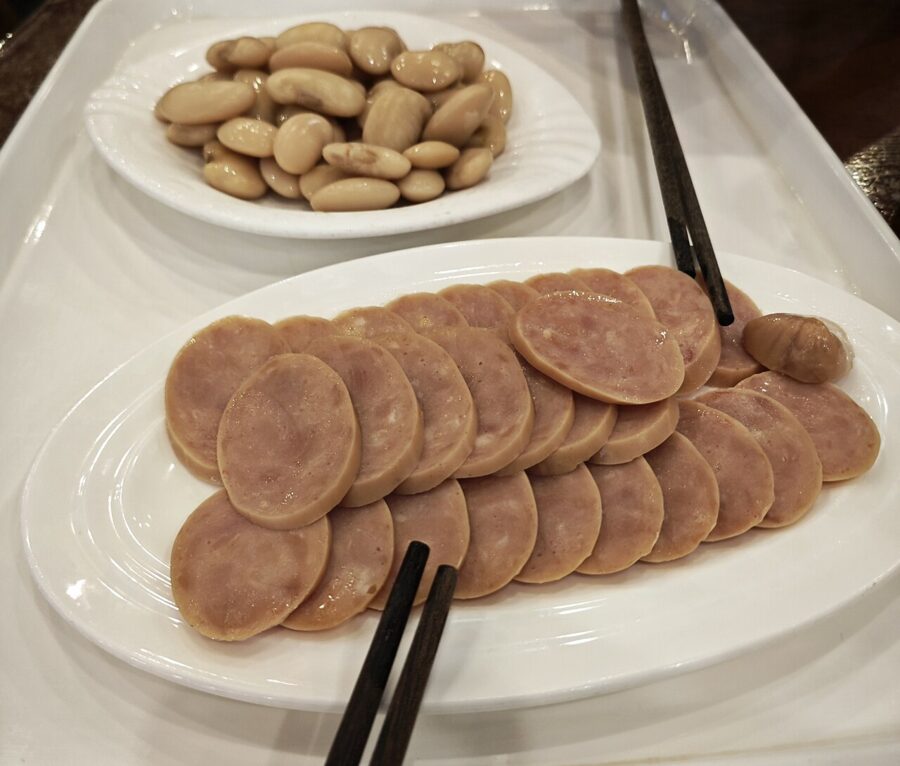
Guanchang (灌肠) looks like a sausage and has no meat in it at all. It’s a starch dough, steamed into a log, sliced thin and fried in a flat pan until the edges blister and crisp, then eaten with toothpicks and a cup of garlic water. Fengnian Guanchang (丰年灌肠), the specialist, came back to Longfusi as a street-front stall in early 2026 and drew queues all through Spring Festival.
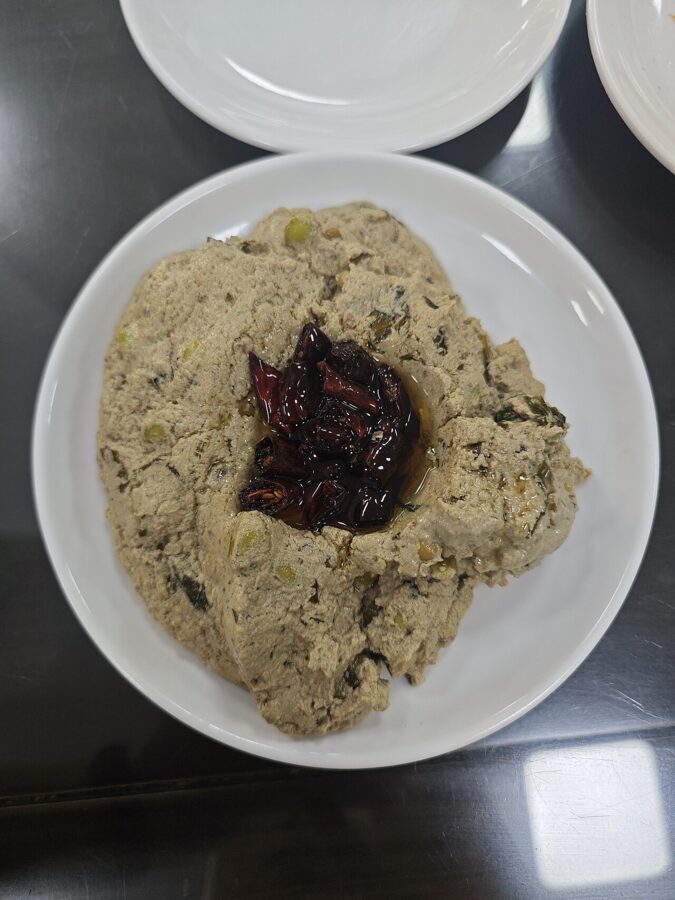
Madoufu (麻豆腐) comes from the same mung bean pulp as douzhi, fried slowly in mutton fat until it’s a soft grey mound with a sour, gamey taste. You’ll see it with a well of chilli oil in the middle. It’s the most niche thing on this list, and plenty of Beijingers say they only learned to like it as adults.
The sweet ones
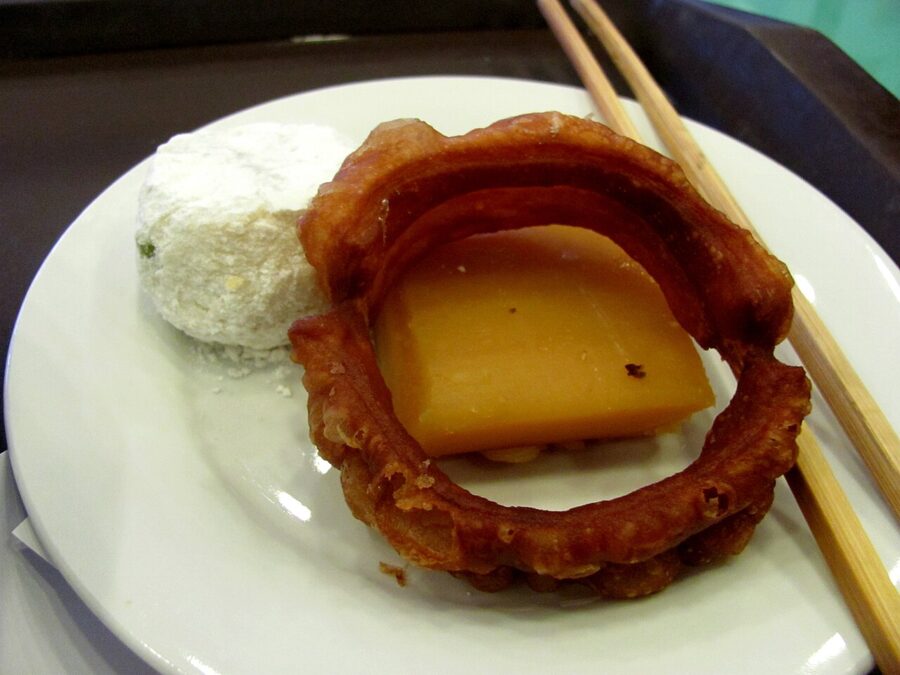
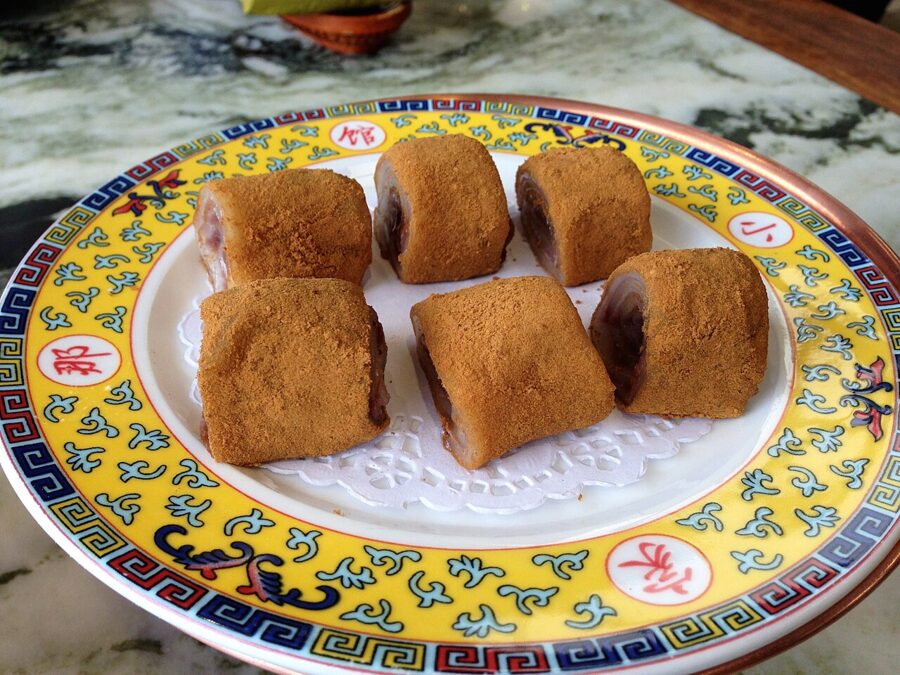
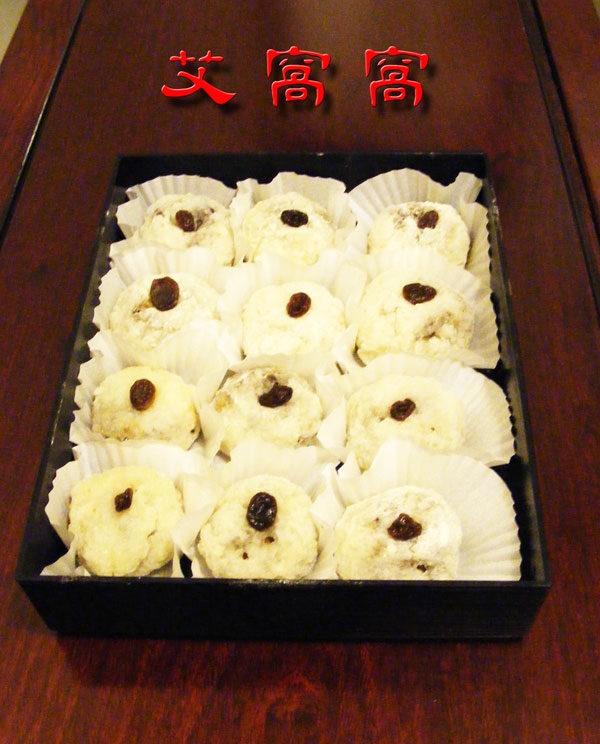
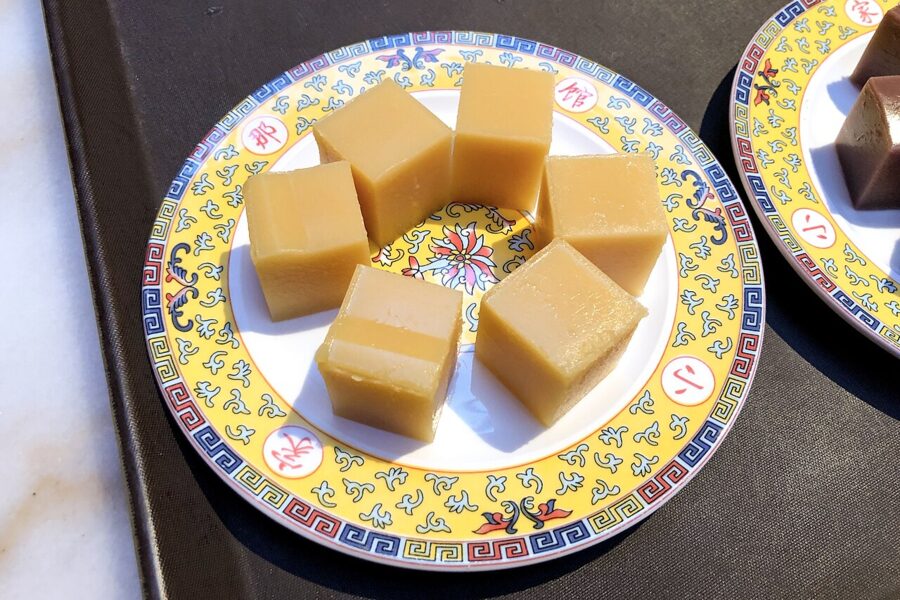
Most old Beijing sweets are sticky rice or beans, lightly sweetened, and many came from Hui kitchens. Lüdagunr (驴打滚), “donkey rolling”, is a roll of glutinous rice and red bean paste dusted in toasted soybean flour, named for a donkey rolling in dust. Aiwowo (艾窝窝) is a white ball of cooked sticky rice with a filling of sugar, sesame, walnut or hawthorn. Wandouhuang (豌豆黄) is a firm, pale yellow pea cake, cut into neat blocks, and the court version from the Qing palace is smoother and sweeter than the street one.
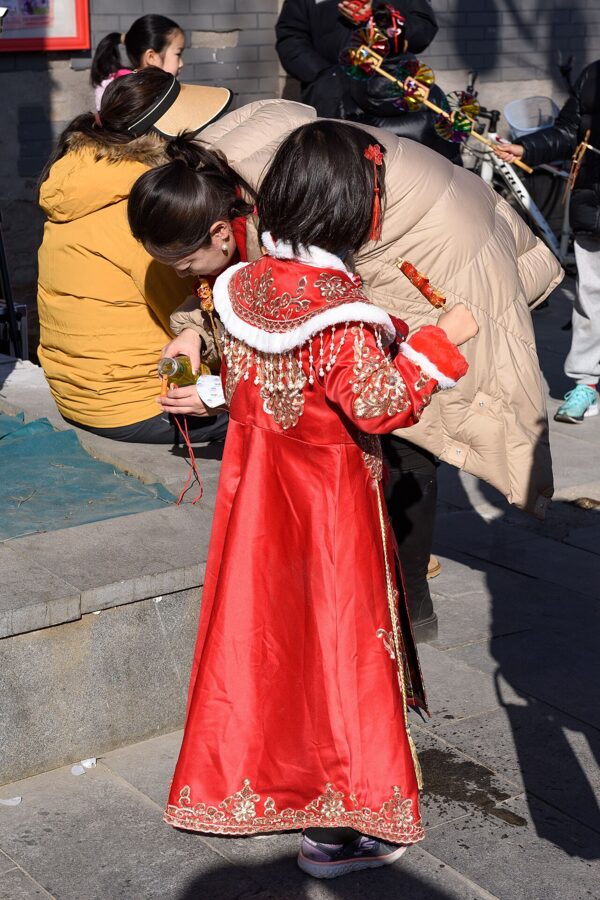
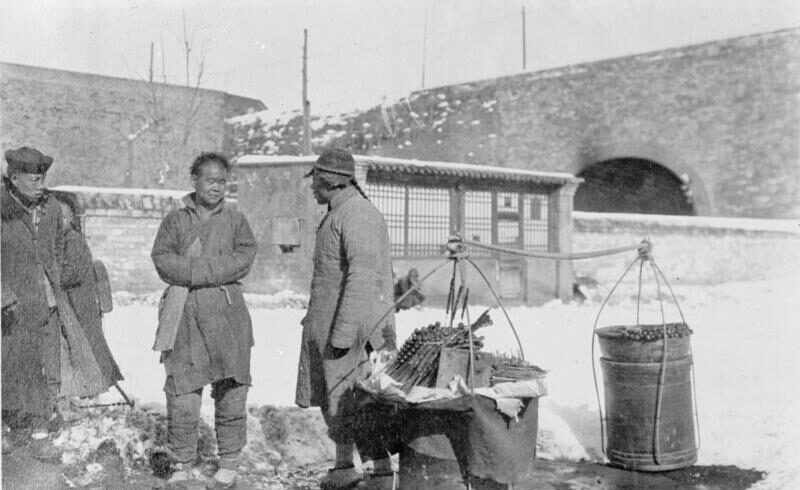
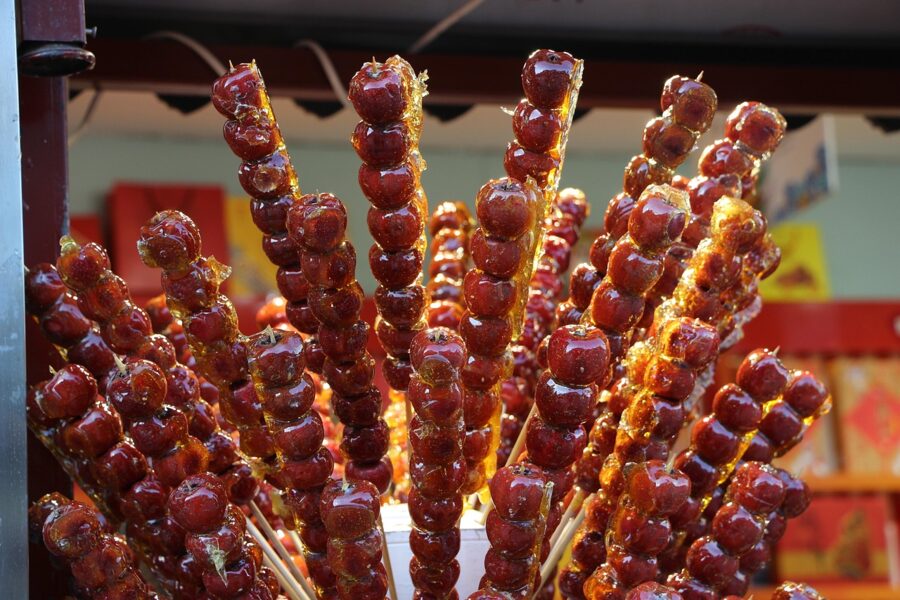
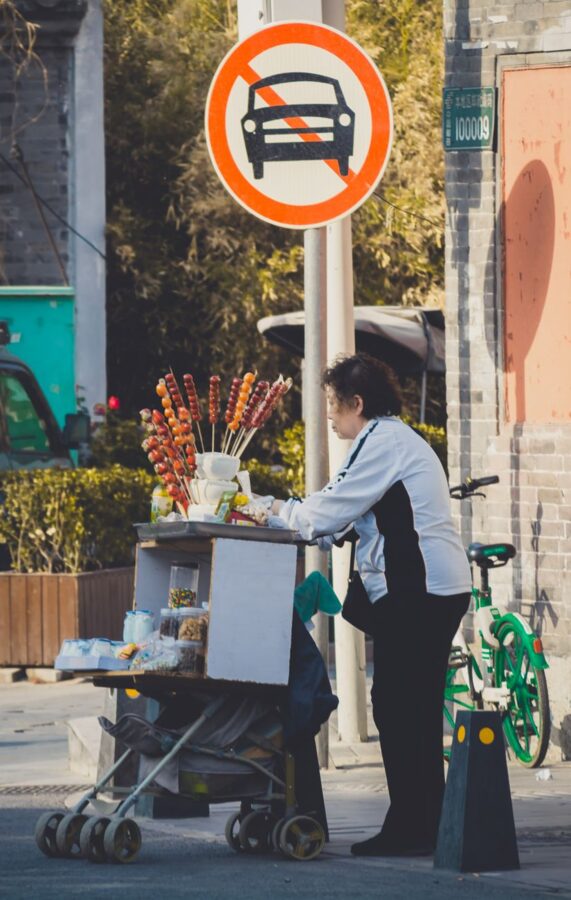
Then there’s tanghulu (糖葫芦), skewers of hawthorn in a glassy coat of rock sugar, which I cover in my guide to Chinese street food. In Beijing it’s a winter thing, best when the cold keeps the sugar hard, and every Spring Festival temple fair has a dozen stalls of it. Strawberries, tangerines and grapes have joined the hawthorn, and they’re fine, but the sour hawthorn is the point.
Two more sweets deserve a mention. Naiyou zhagao (奶油炸糕) is a puffed, fried choux-like ball rolled in sugar, best straight from the oil. And Beijing has a Hui-style tang’erduo (糖耳朵), “sugar ears”, plaited dough fried and soaked in syrup until it’s sticky and dark, which you’ll find at most of the snack houses below.
Miancha and the drinking snacks
Miancha (面茶), “flour tea”, isn’t tea. It’s a hot millet paste with a layer of sesame paste poured over the top and a sprinkle of ground sesame and salt. As with chaogan, you don’t stir it and you don’t use a spoon: you turn the bowl and drink from the edge so that every mouthful gets a bit of both.
Huguosi, Jinfang and the snack houses
You can chase every snack to its specialist, and some are worth it. But the easiest way to eat a dozen of them in one sitting is a xiaochi dian (小吃店), an old snack house, where you take a tray, point at the counter and pay at the till.
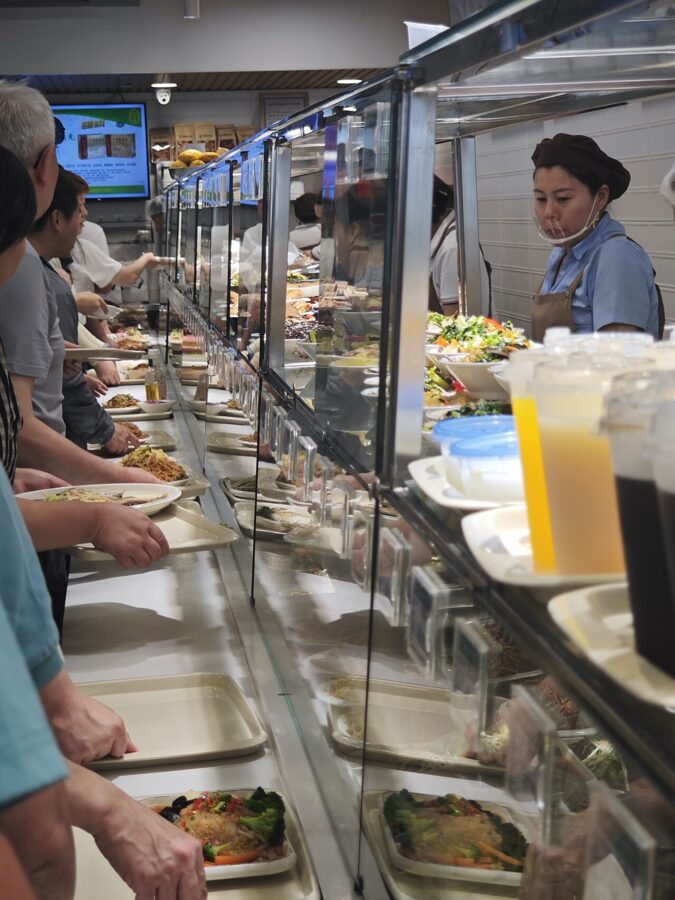
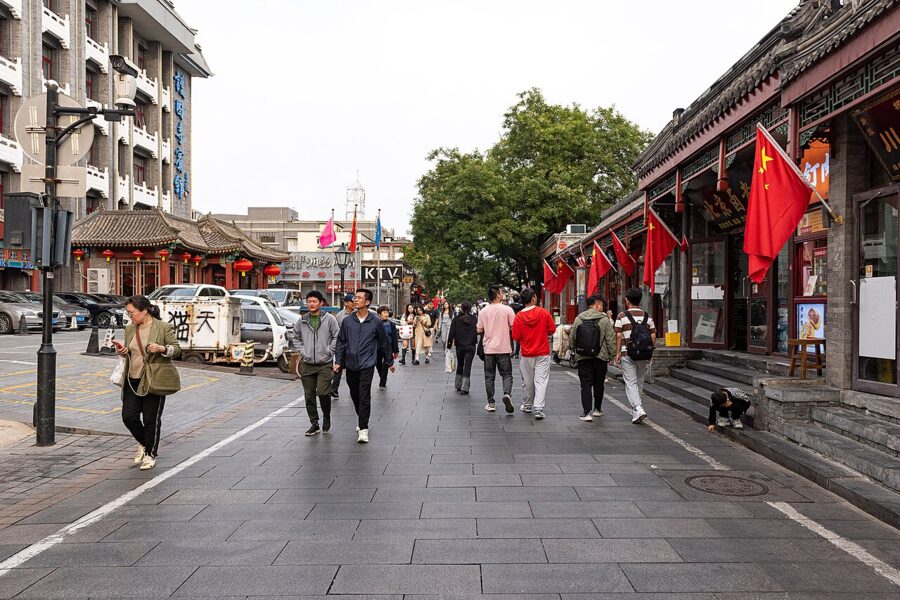
Huguosi Snacks (护国寺小吃) is the one everyone knows. The main shop at 93 Huguosi Street in Xicheng has around eighty snacks on the go, opens at breakfast time and runs into the evening, and a plateful costs about ¥30–35 a head. It’s a short walk from Ping’anli station on Lines 4, 6 and 19. It isn’t the best version of every snack, but it’s a very good version of most, and it’s the best single place for a first try.
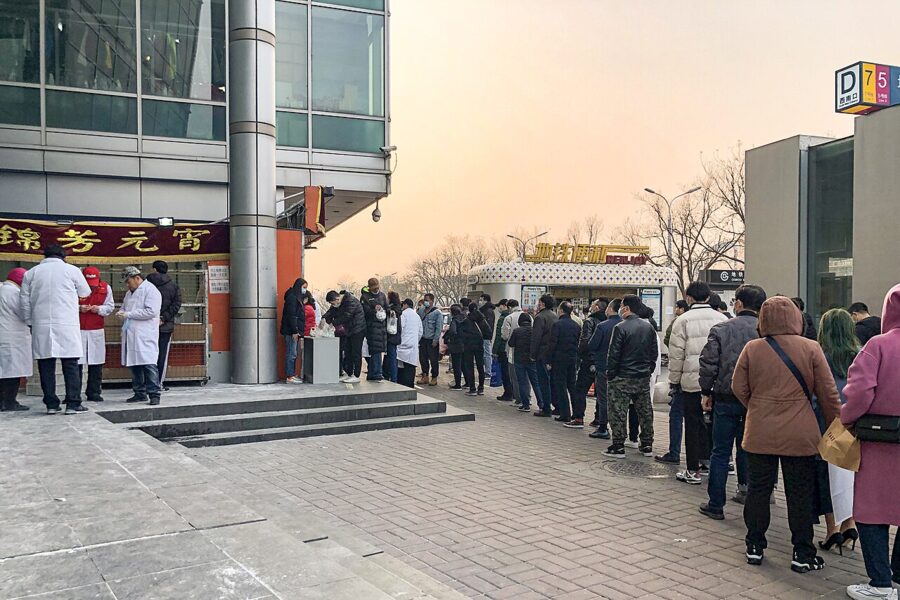
Jinfang Xiaochi (锦芳小吃), at 2 Zhushikou East Street by Ciqikou station on Lines 5 and 7, is the south-side equivalent. It was founded in 1926 by a Hui cook from Dezhou, in Shandong, and its miancha, sugared tangyoubing (糖油饼) and naiyou zhagao are the reasons to go. Before the Lantern Festival every year it hand-rolls yuanxiao (元宵), glutinous rice balls, and in February 2026 the queue for them stretched about a hundred metres down the street.
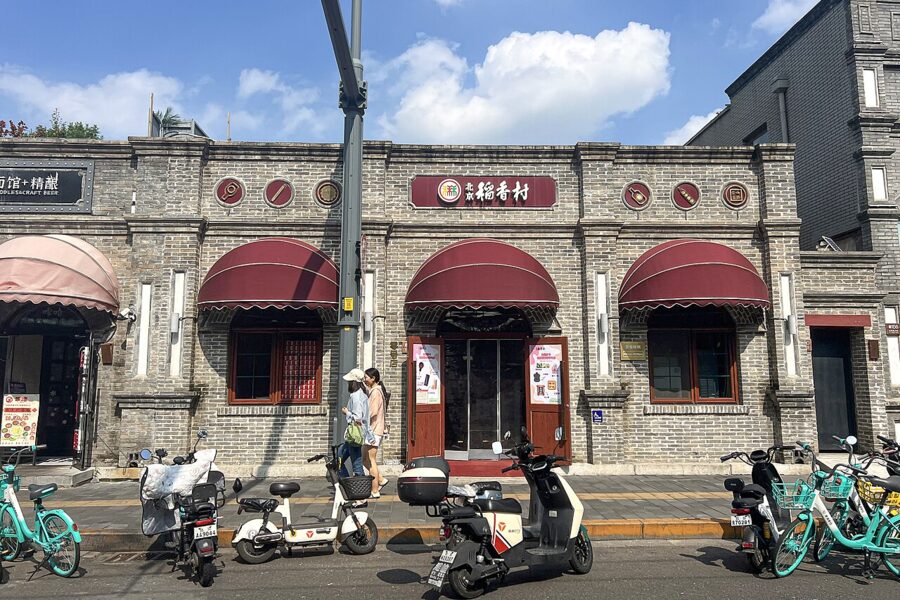
The newest place to eat the old snacks is Longfusi (隆福寺), a few minutes’ walk from Dongsi station on Lines 5 and 6. The old temple-market street spent years half empty, and in 2026 it filled up again: Fengnian Guanchang, the Hui restaurant Bai Kui Laohao (白魁老号), Beijing Daoxiangcun’s showcase shop and a laozihao food hall, Longfu Haoshili (隆福好食里), which opened on 16 October 2026 in the basement of the east courtyard. It’s cleaner and calmer than the old houses, and it’s a good place to try several famous names in an hour.
Beyond the duck
The duck first, briefly. Beijing roast duck is two schools, the hung oven of Quanjude and the closed oven of Bianyifang, carved at the table and eaten skin first, then wrapped in pancakes, and my Peking duck guide covers where it’s worth the money. It deserves a night. It doesn’t deserve every night.
Zhajiangmian and copper-pot mutton
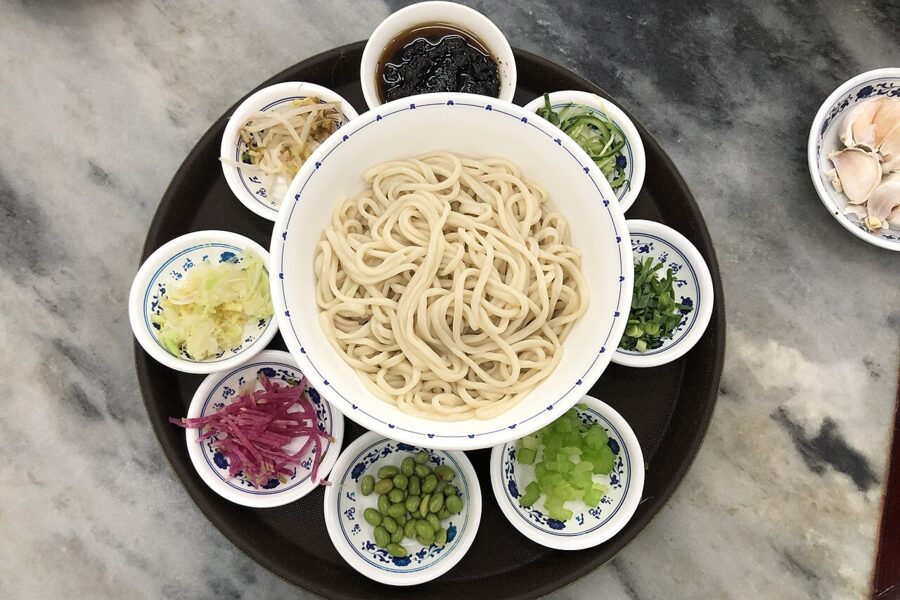
The other two dishes everyone eats here have full guides too. Zhajiangmian (炸酱面) is Beijing’s noodle, thick wheat noodles with a dark fried sauce of pork and yellow soybean paste and a plate of raw vegetable toppings. It came from Shandong and became Beijing’s lunch.
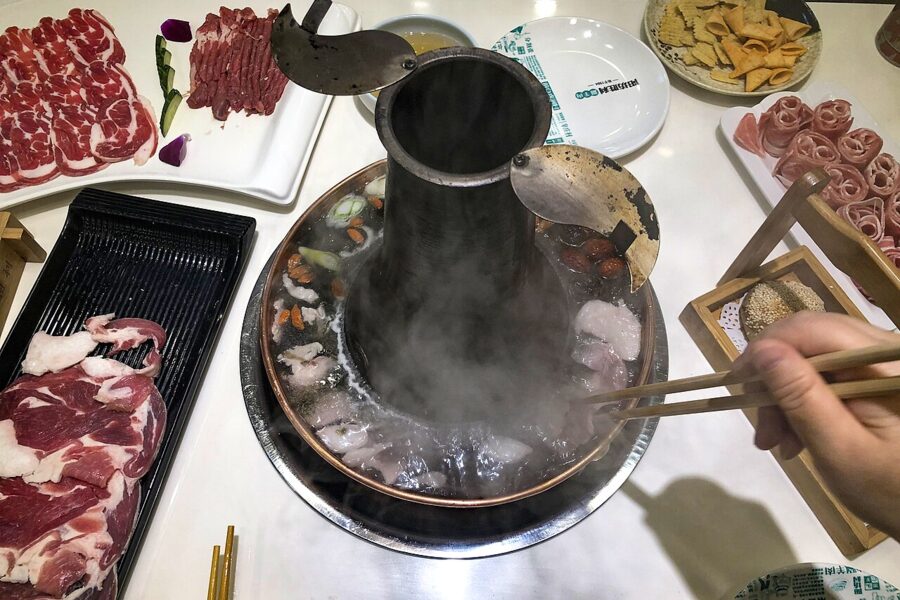
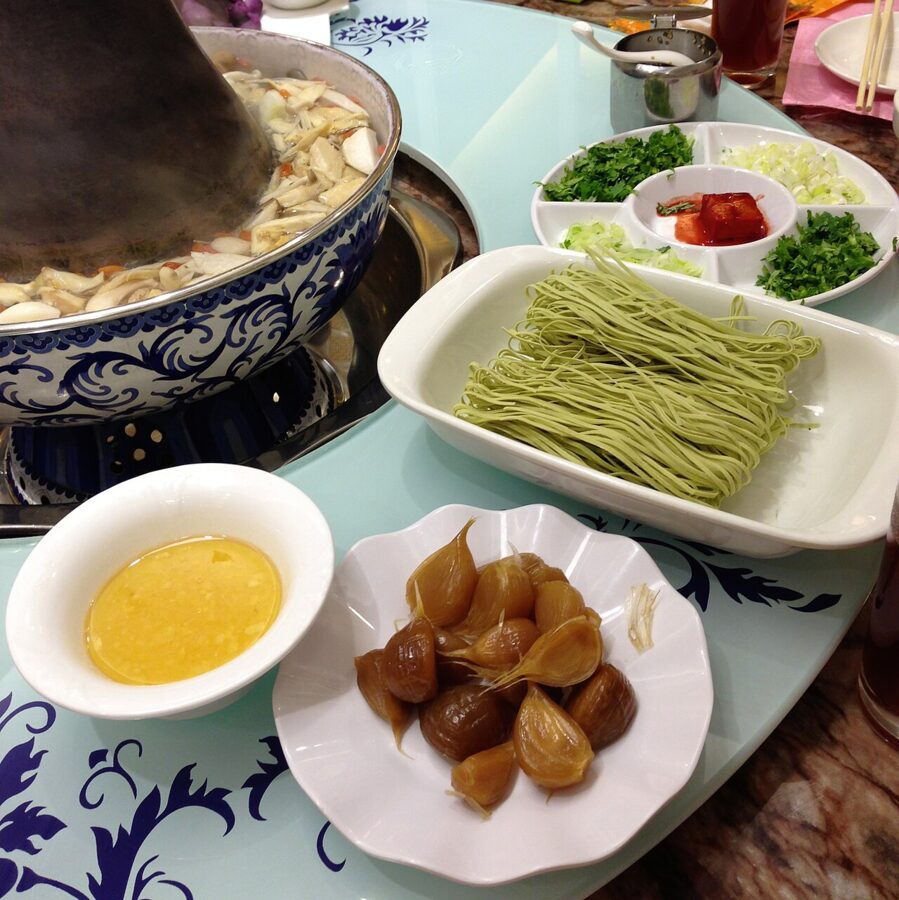
Copper-pot mutton, shuan yangrou (涮羊肉), is the Beijing hot pot: a charcoal chimney pot of almost plain water, hand-cut mutton swished in it for a few seconds and dipped in sesame sauce. It’s a winter dinner, it’s at its best in a halal shop, and it’s the meal that most surprises people who think hot pot means chilli.
Jiang zhouzi and the braised meats
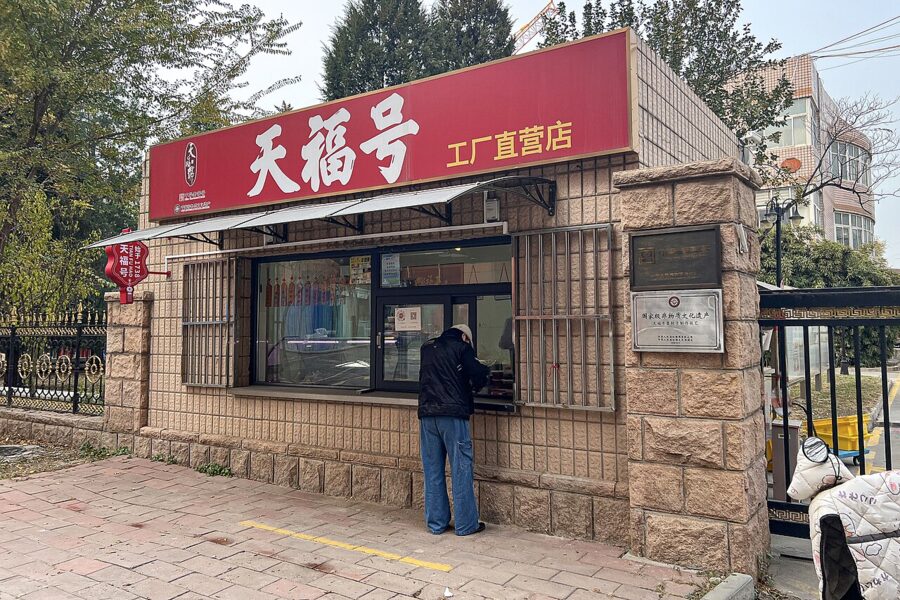
Jiang zhouzi (酱肘子) is pork knuckle braised for hours in soy and spices until the skin is a deep red-brown and the meat comes apart. Tianfuhao (天福号), founded in 1738 by a Shandong man named Liu Fengxiang, is the brand, and its knuckle is on the national heritage list. Beijingers buy it sliced, by weight, to wrap in spring pancakes.
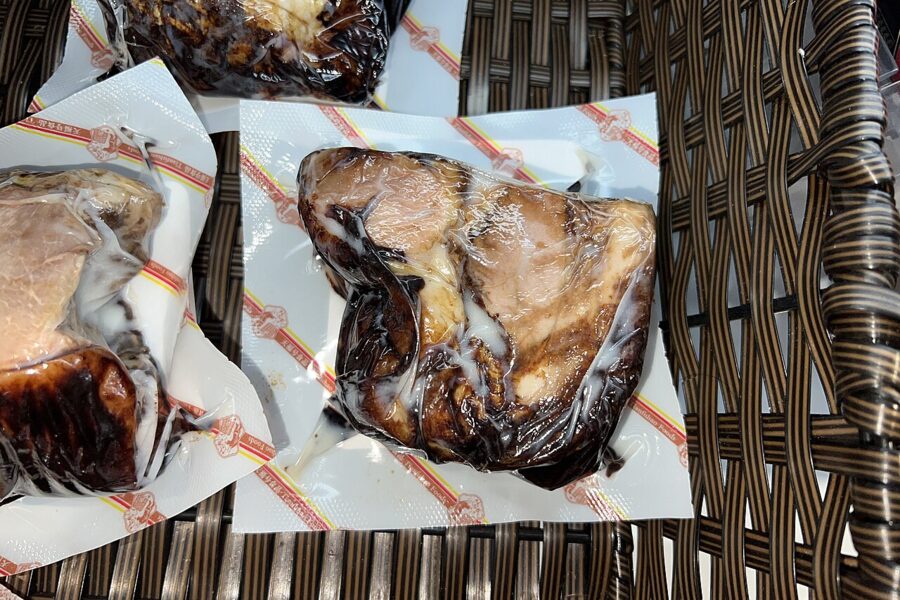
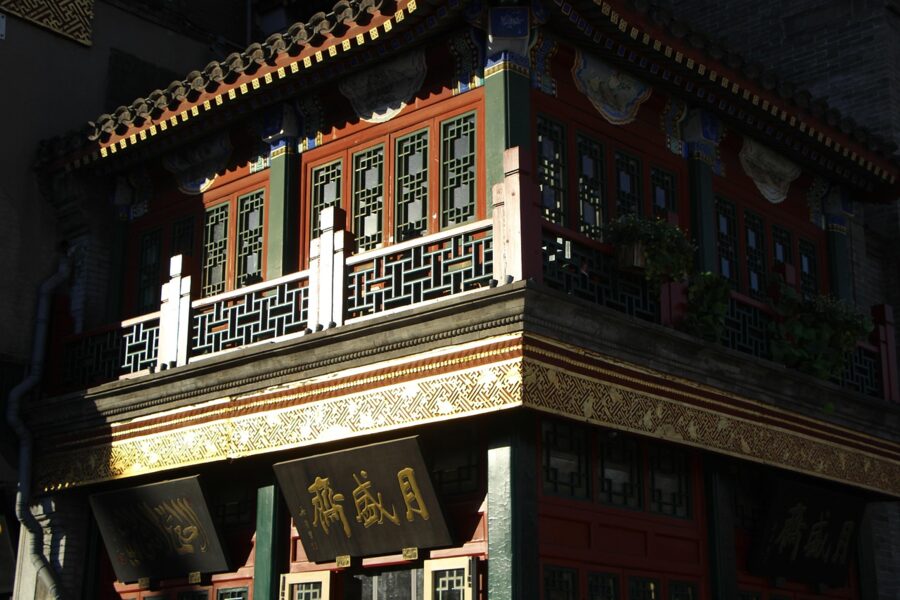
The busiest day of the year for it is Lichun (立春), the start of spring in early February, when Beijing families eat chunbing (春饼), thin pancakes rolled round braised meats and stir-fried vegetables, and the queues outside Tianfuhao shops go round the block. The halal equivalent is Yueshengzhai (月盛斋), which has made jiang niurou (酱牛肉), spiced braised beef, since 1775.
Kaorou on the griddle
Beijing’s kaorou (烤肉) isn’t a skewer. It’s thin slices of mutton or beef, seasoned as they cook, with onion and coriander on a zhizi (炙子), a round iron griddle made of bars, over a wood or charcoal fire. The old way to eat it, called wu chi (武吃), “eating like a warrior”, is standing round the griddle with one foot up on the bench, cooking it yourself.
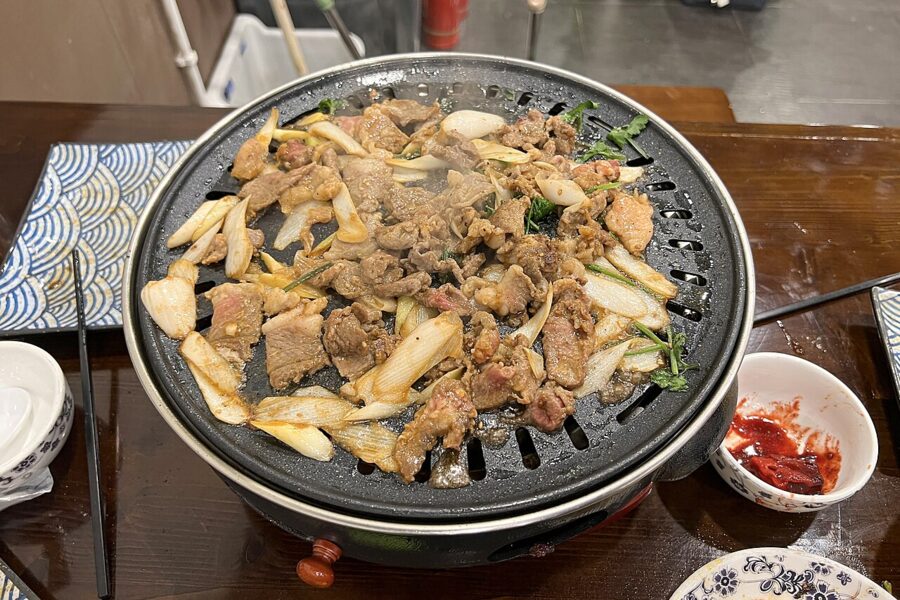
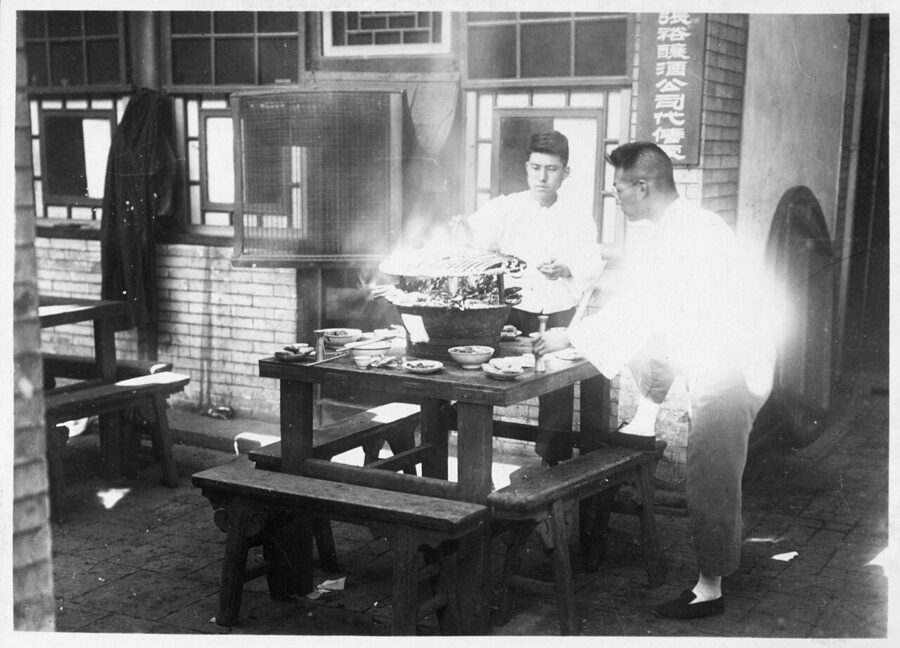
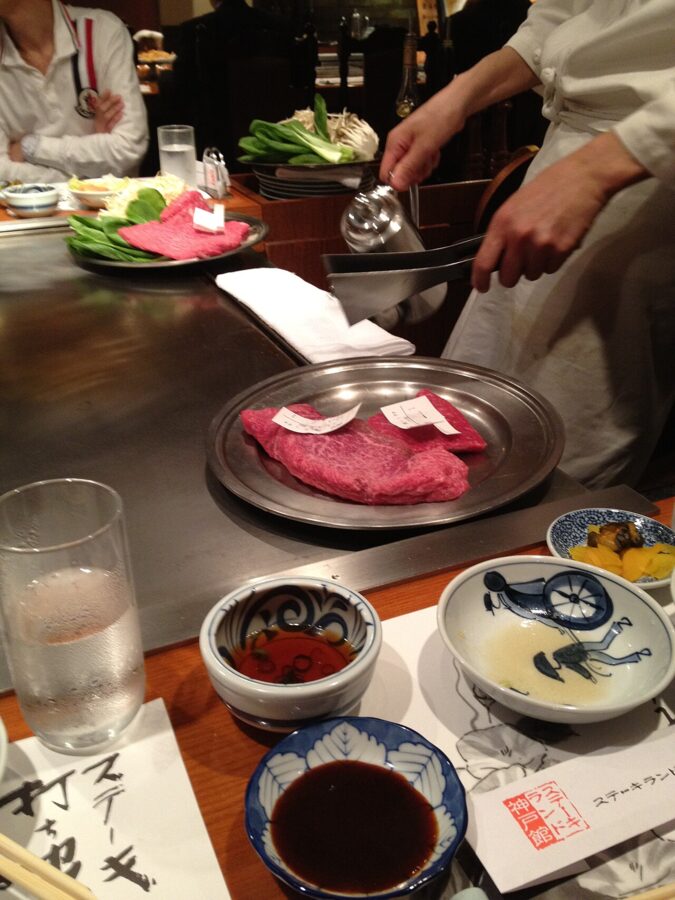
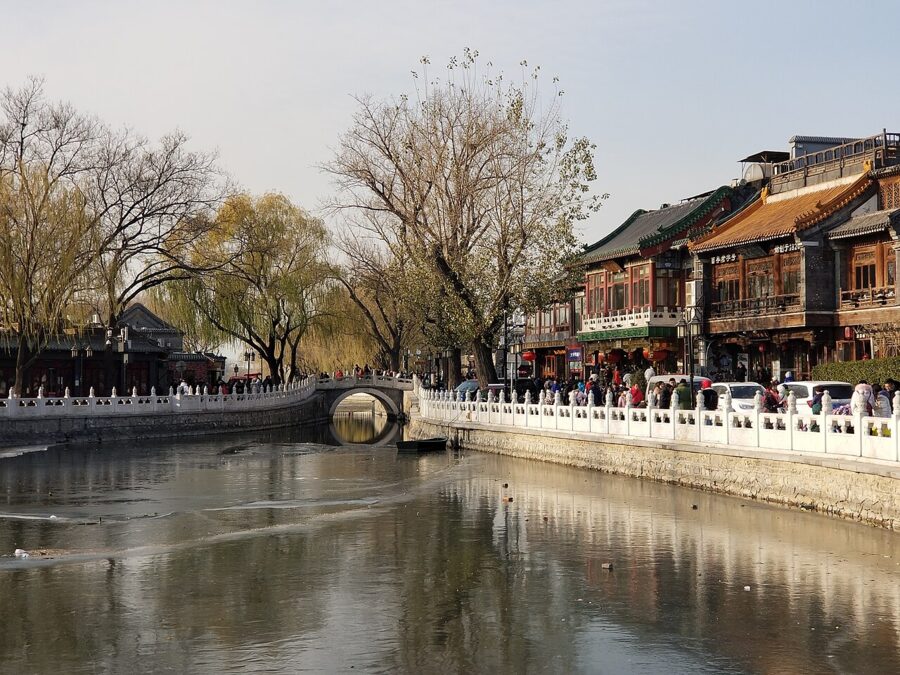
The two old names are known together as nan Wan bei Ji (南宛北季), “Wan in the south, Ji in the north”. Kaorouji (烤肉季) started as a roadside stall by the Shichahai lakes in 1848, when the Ji family came in from Tongzhou, and it still stands at Yinding Bridge, roasting Inner Mongolian lamb. Kaorouwan (烤肉宛), at 58 Nanlishi Road in Xicheng, is the beef house, and halal.
The Shandong classics on every menu
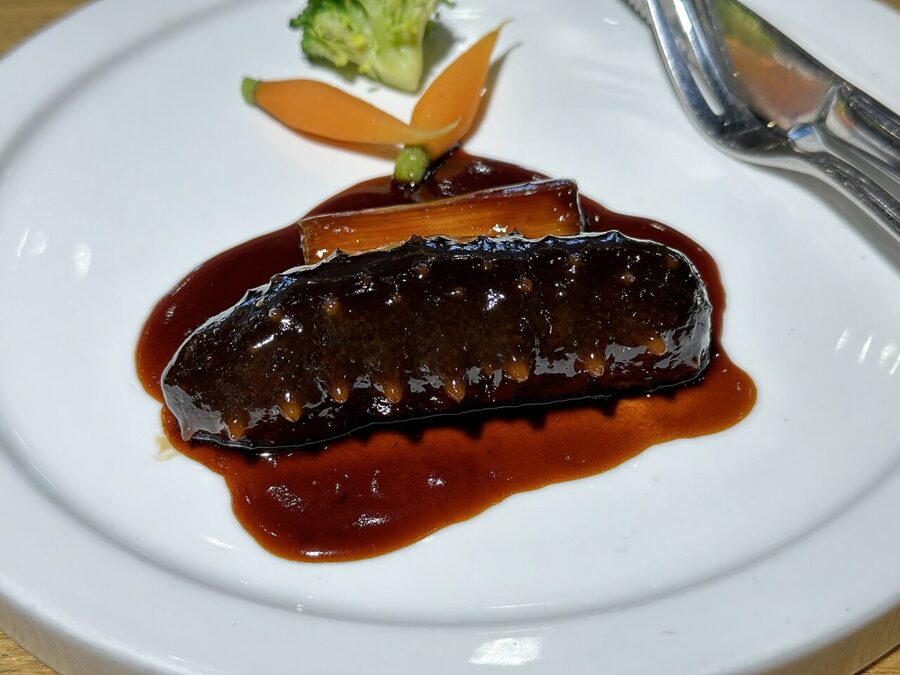
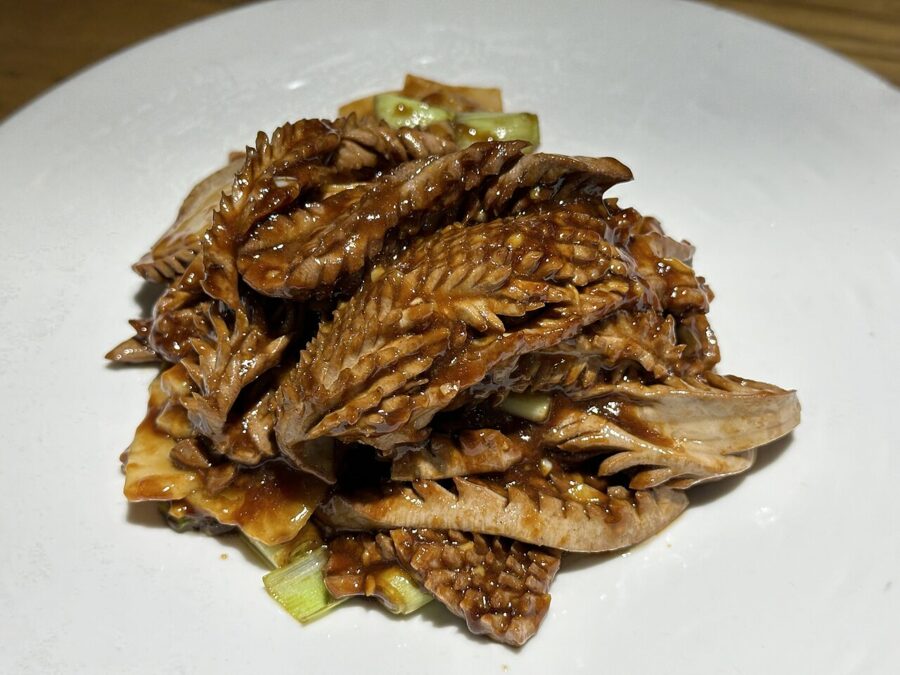
Open the menu at any old Beijing restaurant and you’ll find the same Shandong dishes: cong shao haishen (葱烧海参), sea cucumber braised with scallion, and jiuzhuan dachang (九转大肠), pork intestine braised and glazed in a sweet, sour and peppery sauce. Youbao shuangcui (油爆双脆) is pork tripe and chicken gizzard flash-fried for seconds. And jiaoliu wanzi (焦熘丸子), crisp fried meatballs glazed in brown sauce, is the Beijing family dish you’ll see on half the tables.
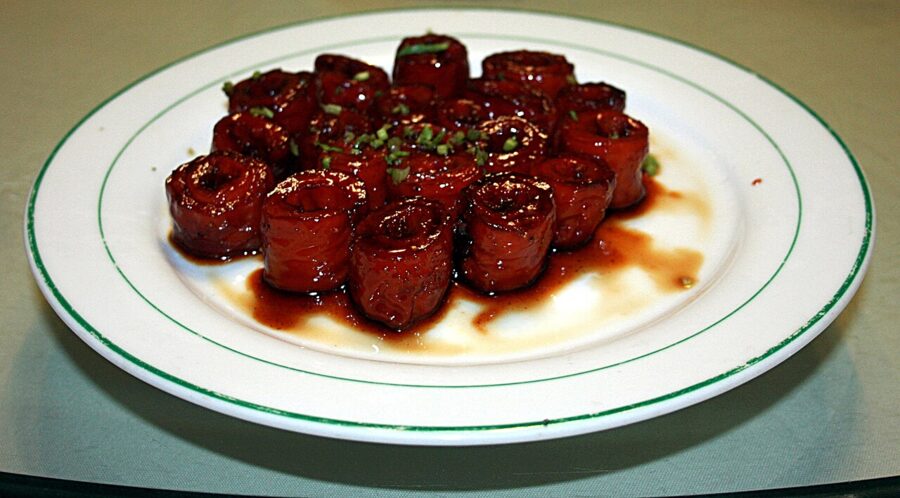
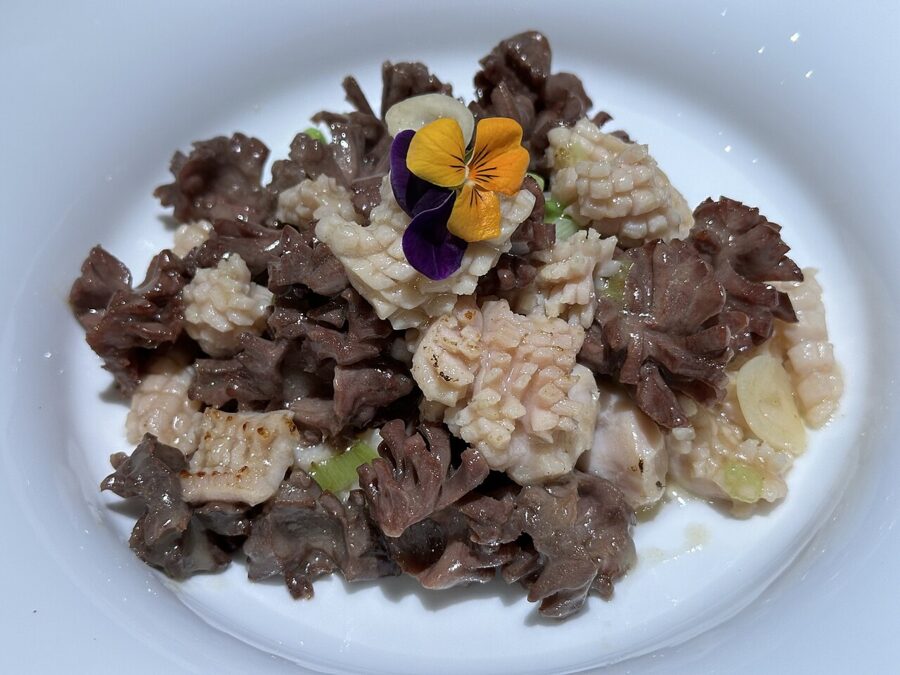
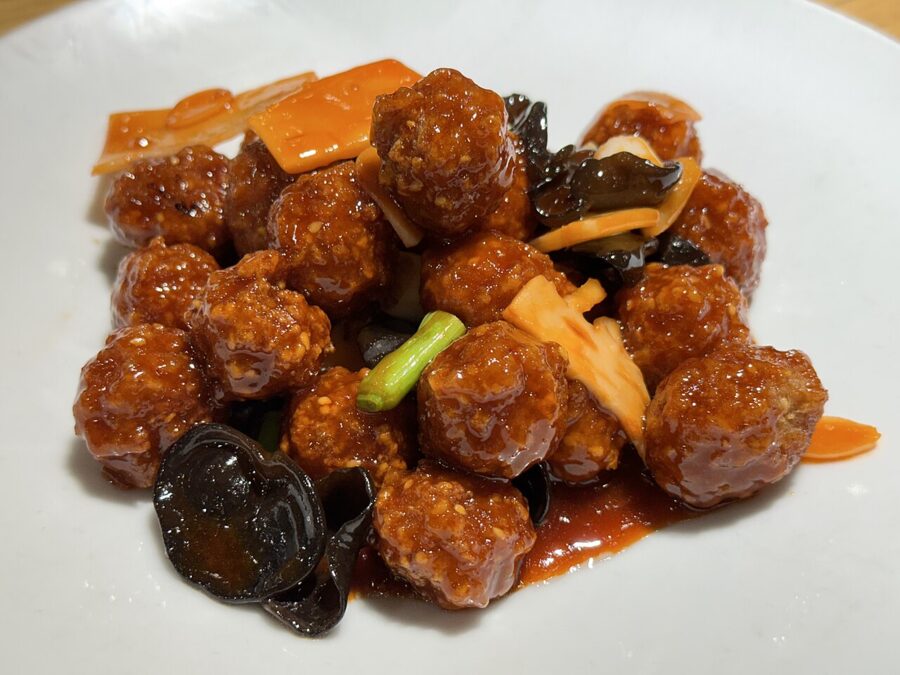
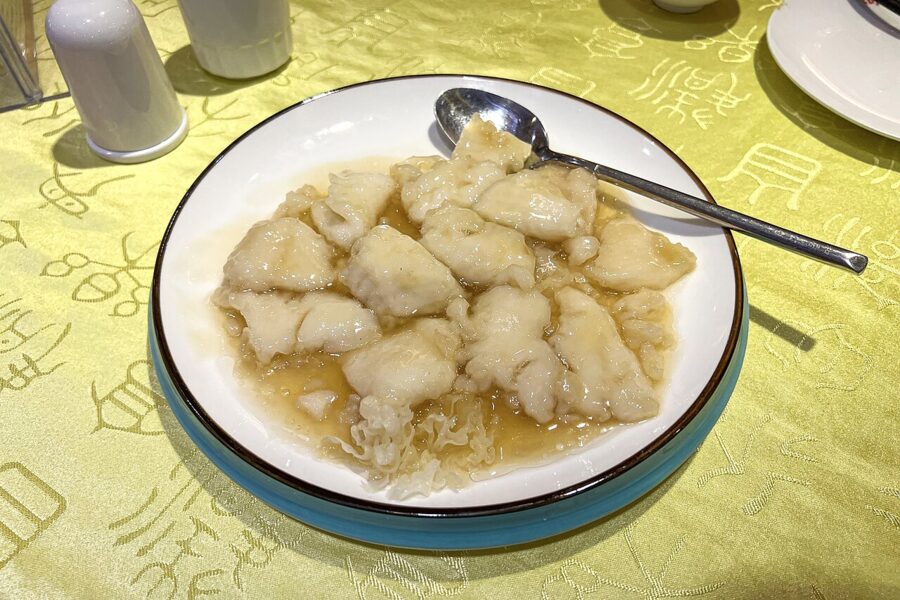
Fengzeyuan (丰泽园), opened in 1930 and now at 83 Zhushikou West Street near Zhushikou station, is the place to eat them properly, and its scallion sea cucumber is the dish to order. Tongheju (同和居), at 71A Yuetan South Street in Xicheng, goes back to the Daoguang reign and is one of the old “eight great ju” restaurants. Its sanbuzhan (三不沾), a sweet custard of egg yolk, sugar and starch stirred so long that it “sticks to neither plate, spoon nor teeth”, is the reason to go.
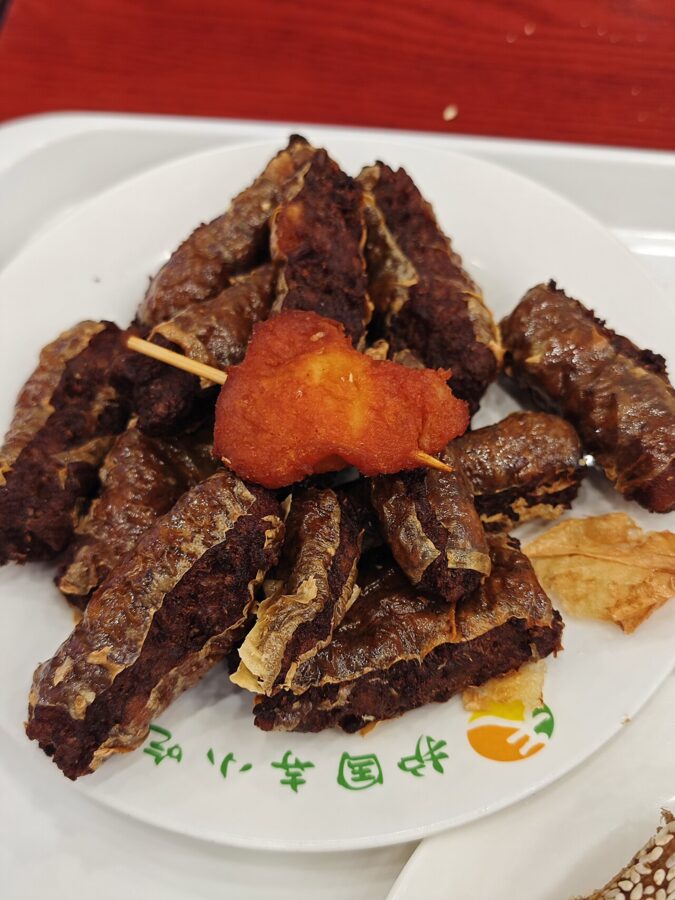
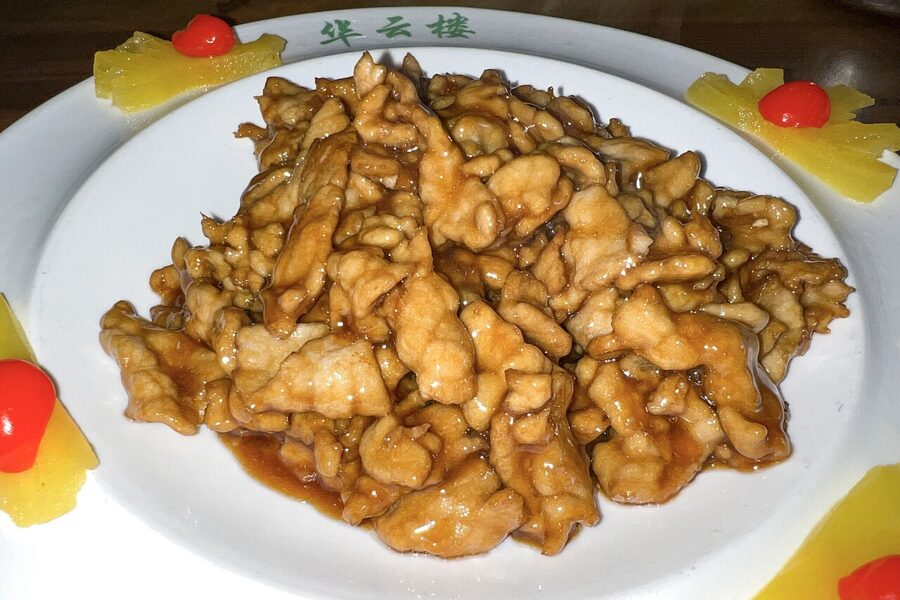
Halal kitchens have their own classics. Tasimi (它似蜜), “it’s like honey”, is thin slices of mutton stir-fried in a sweet, sticky glaze, and zha songrou (炸松肉), a fried roll of minced meat in tofu skin, is on most halal menus too.
The imperial table
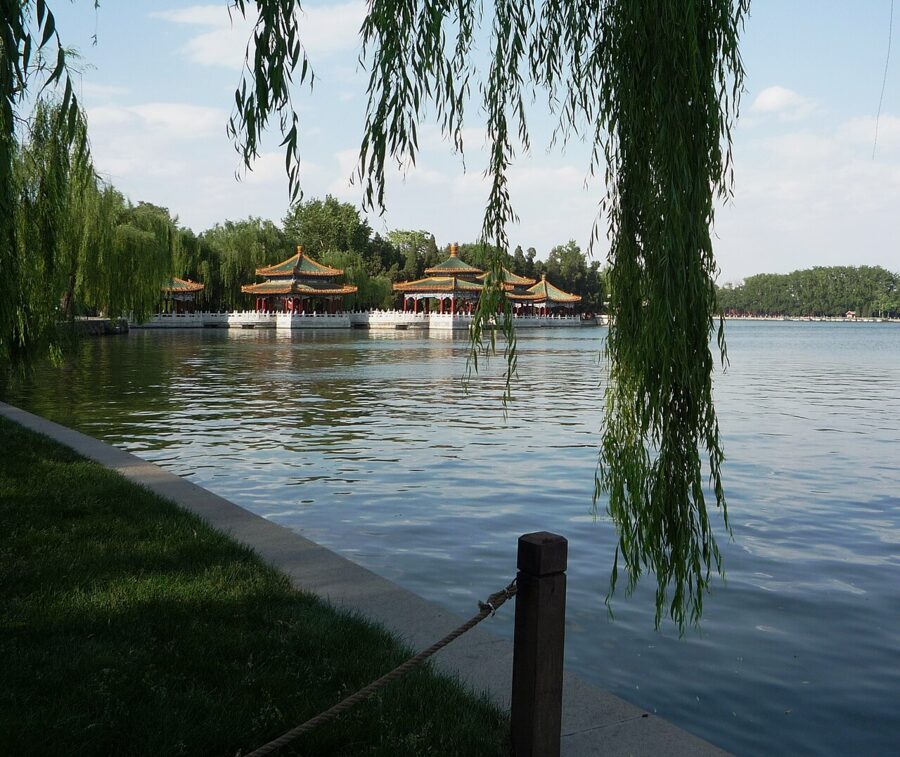
If you want to eat the court version, there are a few places that make it their whole business. Fangshan (仿膳饭庄) was opened in Beihai Park in 1925, the year the park opened to the public, by staff from the former imperial kitchen. It has been on the north shore of the park since 2016, and it marked its 101st birthday there in August 2026. Its signatures are small, sweet things: miniature wowotou (窝窝头) steamed corn buns, pea cake, kidney bean rolls, and sesame buns filled with minced pork.

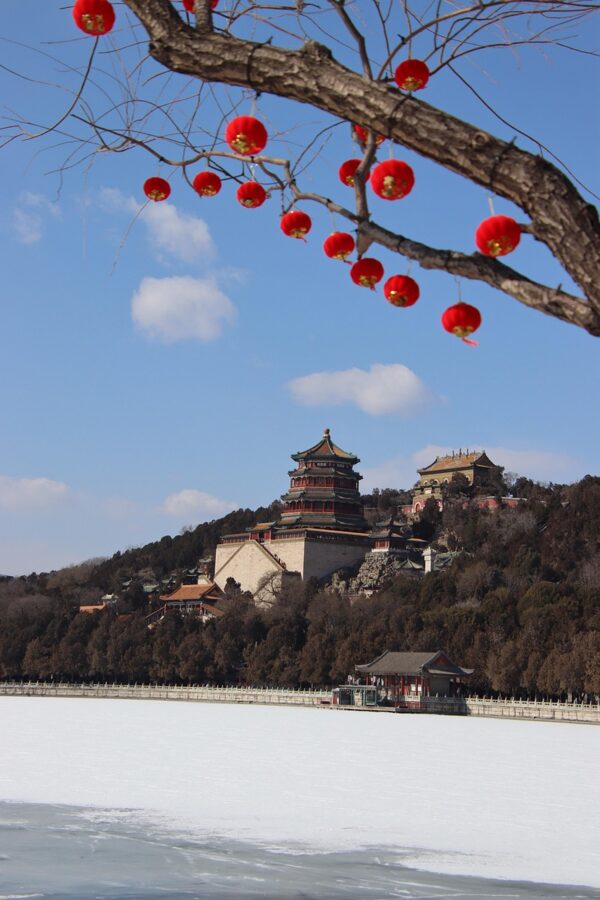
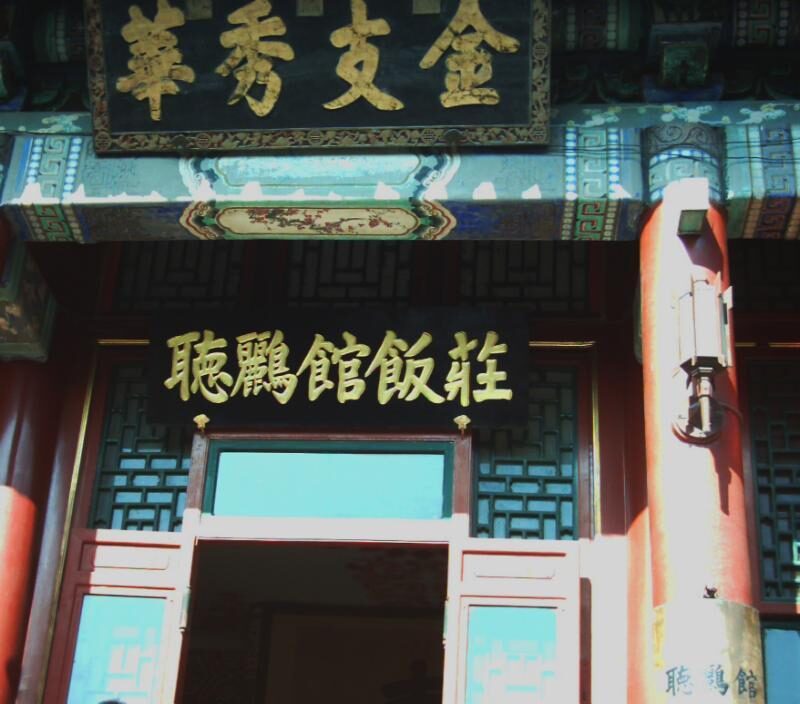
Tingliguan (听鹂馆), in a pavilion of the Summer Palace built in 1750 as a theatre for the Qianlong emperor’s mother, is the other. Both are expensive and a bit theatrical. Go for the setting and the pastries; a full banquet is a lot of money for dishes most diners find heavy.
Dumplings, pastries and a drink
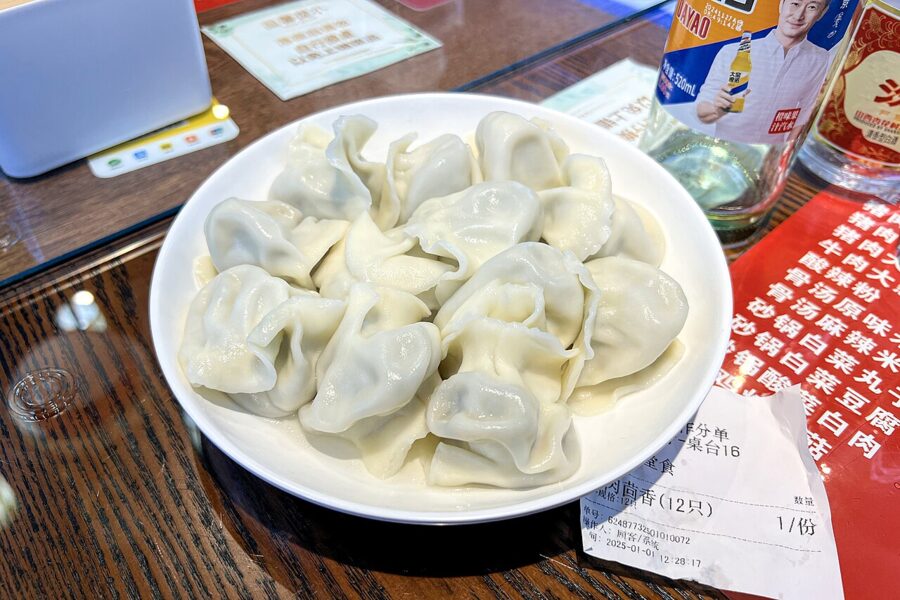
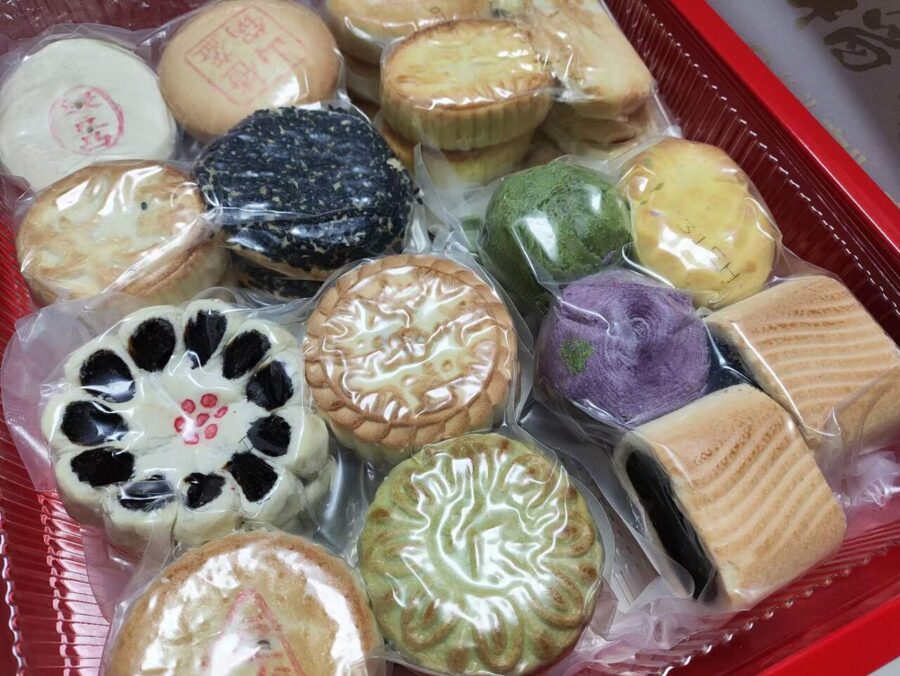
Beijing dumplings are boiled jiaozi, and lamb with scallion or pork with fennel are the northern fillings to look for. Pastries are a gift culture here. A box of jing ba jian (京八件), eight kinds of Beijing pastry, is what you bring when you visit someone, and Beijing Daoxiangcun’s version is the standard.
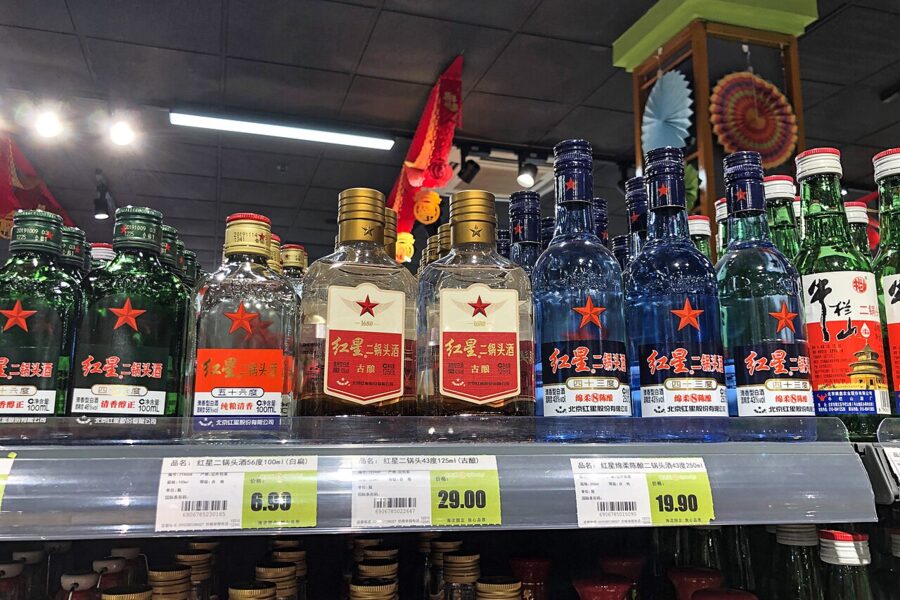
And the drink is erguotou (二锅头), the clear, strong, cheap grain spirit Beijingers drink with copper-pot mutton and offal. My baijiu guide explains the family it belongs to; a small bottle of Red Star (红星) erguotou costs a few yuan at any corner shop, and it’s stronger than you’ll expect.
Niujie and the halal butchers
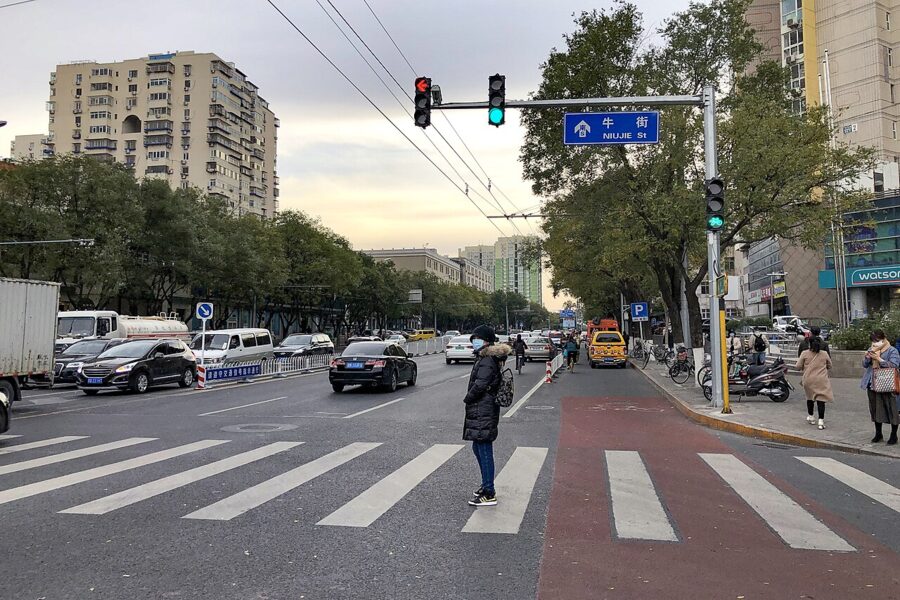
Niujie (牛街), “Ox Street”, in Xicheng, is the centre of Muslim Beijing. Its mosque, founded in 996, looks like a Chinese temple until you notice the Arabic over the doors, and the street around it has the city’s best concentration of halal butchers, bakers and snack shops. Niujie station on Line 19 and Guang’anmennei station on Line 7 are both within walking distance, and the north end of the street meets Guang’anmen Inner Street.
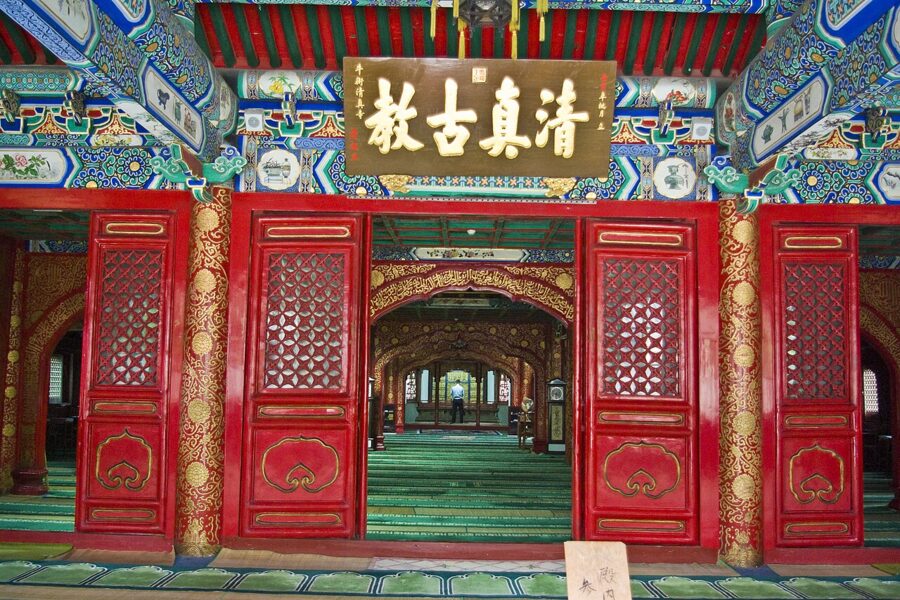
Start at Bai Ji Niangao (白记年糕), on the ground floor of the Niujie Halal Supermarket at 5 Niujie, near Shuru Hutong. It sells sticky-rice cakes by weight, about ¥20.8 a jin (500 g) in mid-2026, and its lüdagunr, aiwowo and purple-rice niangao topped with hawthorn are the best on the street. Go in the morning, when the trays are full.
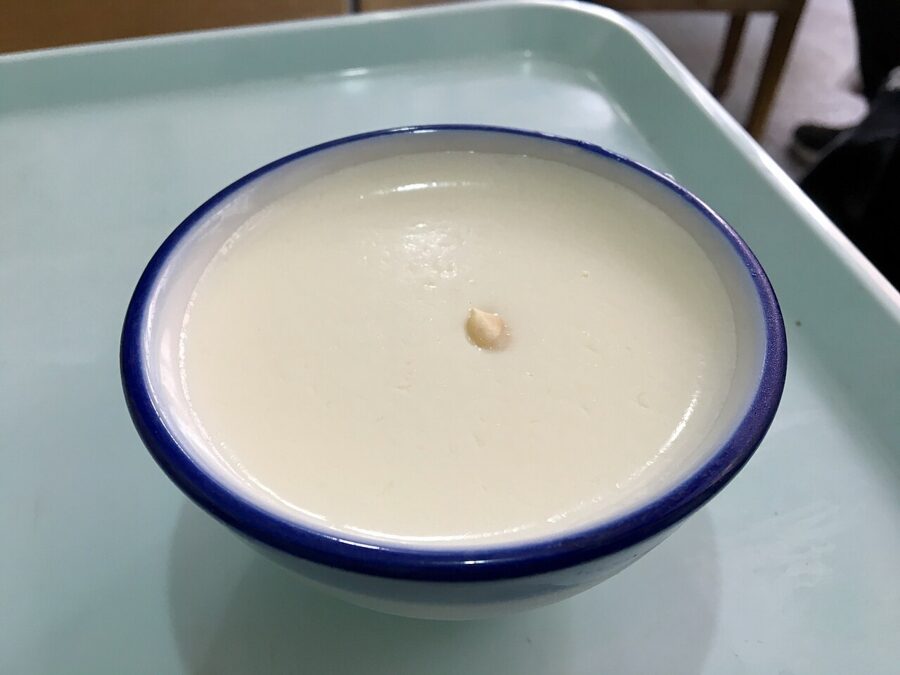
Nailao Wei (奶酪魏), at 202 Guang’anmen Inner Street by the north end of Niujie, makes the court-style set milk. It traces its recipe to a cook who learned it from the palace kitchens in the Guangxu reign, and its plain nailao is lightly sweet with a faint note of rice wine. For lunch, the copper-pot houses Jubaoyuan (聚宝源), at 5-2 Niujie and started as a butcher’s in 1937, and Zi Guang Yuan (紫光园), the halal chain on the corner of Niujie and Nanheng West Street, are the obvious choices.
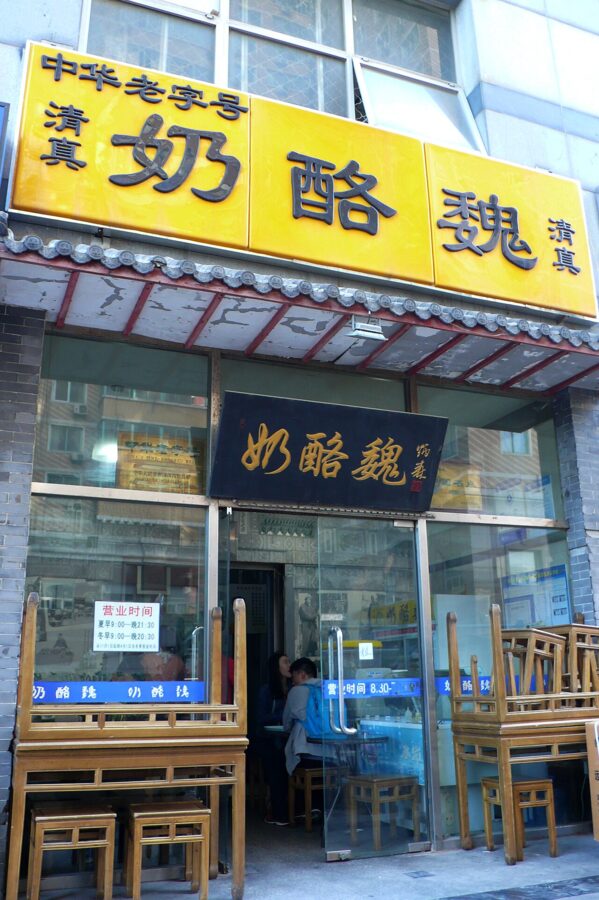
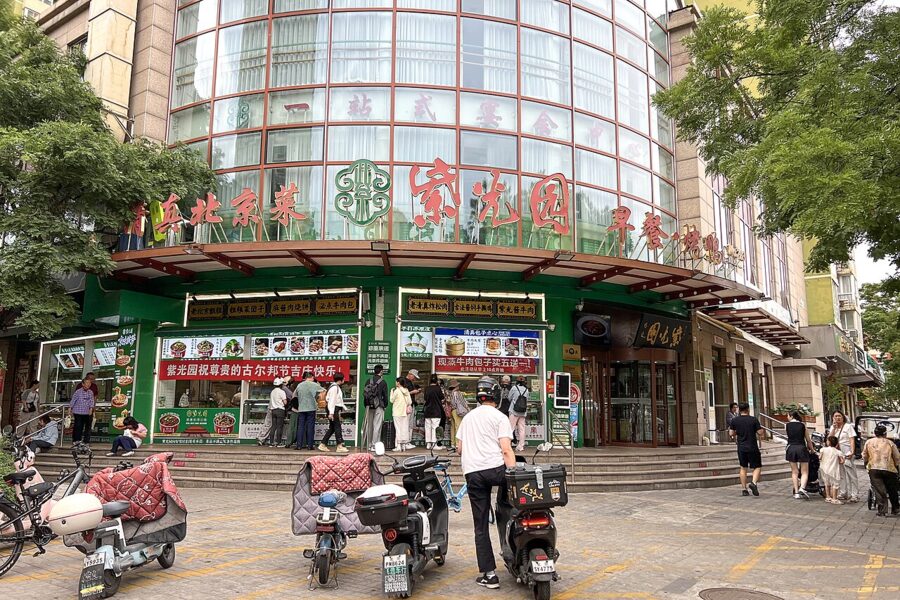
If you’ve eaten in Xi’an‘s Muslim Quarter, Niujie will feel smaller and more domestic. There’s no long row of stalls here and nobody shouting at you to buy. It’s a neighbourhood where Beijing’s Hui families do their shopping, and the snack windows have queues of locals carrying bags home. Go at breakfast or late morning, and avoid Friday midday prayers, when the street is at its busiest.
Gulou, Nanluoguxiang and the hutongs
The lanes around the Drum Tower and the Shichahai lakes are where most people walk, and where it’s easiest to eat badly. The trick is to treat the famous lanes as places to walk through and eat one street over.
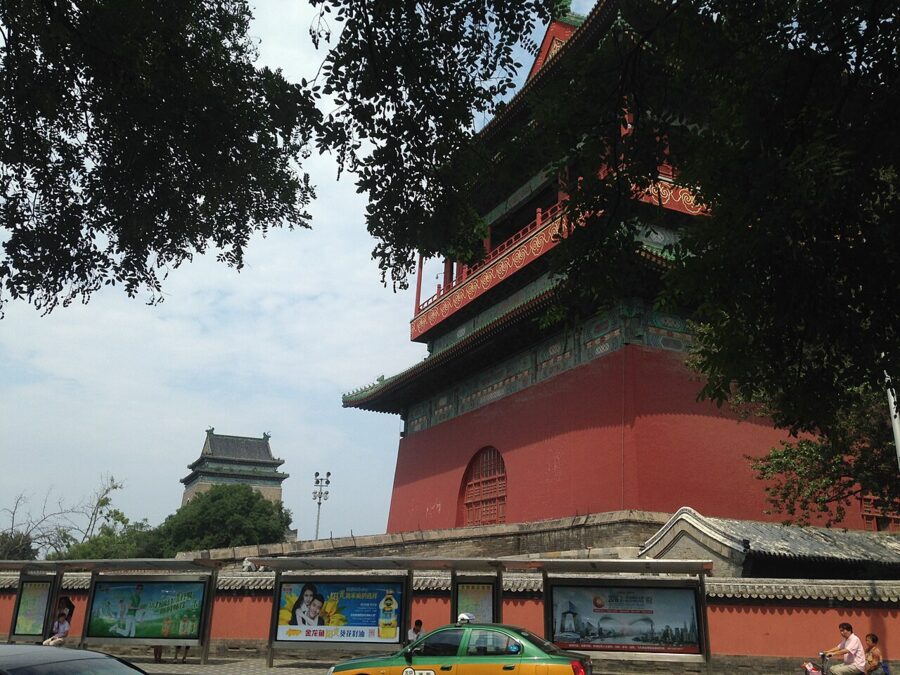
Yaoji Chaogan, by the Drum Tower, is the anchor; it has most of the old snacks on one menu and is busy from breakfast until late. From there it’s a short walk to Yandai Xiejie (烟袋斜街), the old “pipe street” that runs down to Yinding Bridge, which is full of souvenir shops and snack stalls at higher prices than the streets around it. Walk it, and save your appetite for Kaorouji at the bottom.
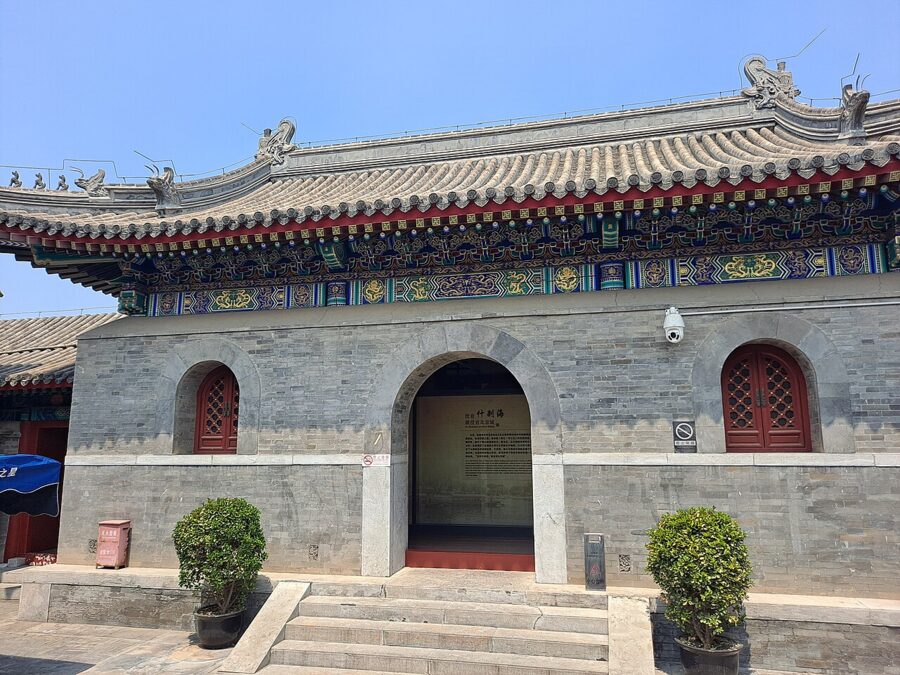
Nanluoguxiang (南锣鼓巷) is the most famous hutong lane in Beijing and on a holiday afternoon it’s shoulder to shoulder. Its main strip is mostly chain snacks and drink shops, but two places off and on it are worth knowing. Fangzhuanchang 69 (方砖厂69号炸酱面), the zhajiangmian shop, started on the side lane of that name, about five minutes from exit E of Nanluoguxiang station on Lines 6 and 8. And Wenyu Nailao (文宇奶酪), at 49 Nanluoguxiang since 2004, does a good set milk and shuangpinai (双皮奶), double-skin milk, at a fair price for the street.
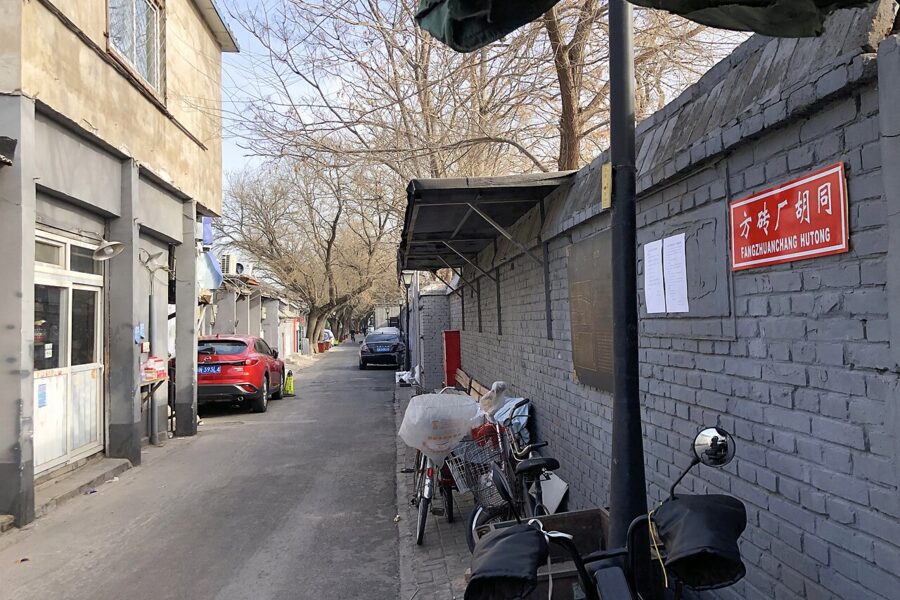
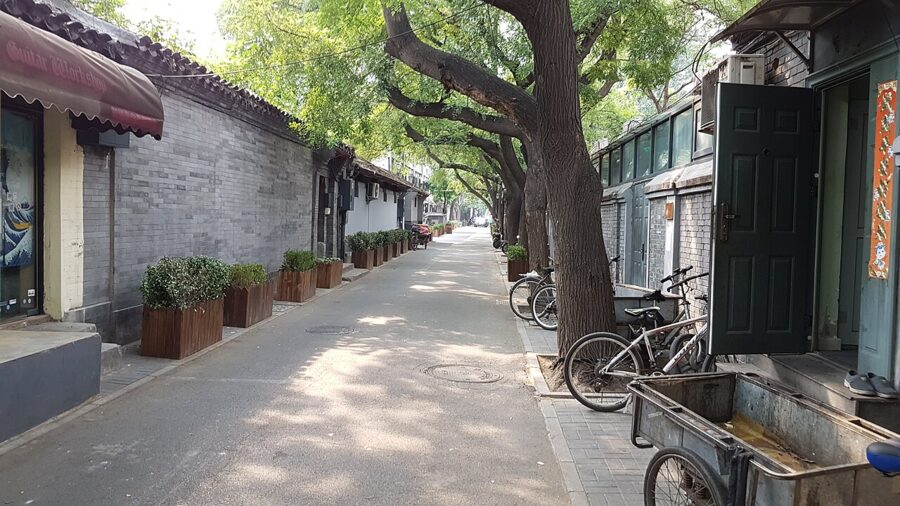
East of Gulou, Chaoyangmen and Dongsi are where Beijingers eat their everyday meals. Baorui’s beef pies are on Chaoyangmen North Street, Longfusi is in Dongsi, and the side hutongs between them have small noodle and dumpling shops with no English menu and very good food. This is the part of the old city I’d wander if I had an afternoon and no plan.
Qianmen and Dashilar
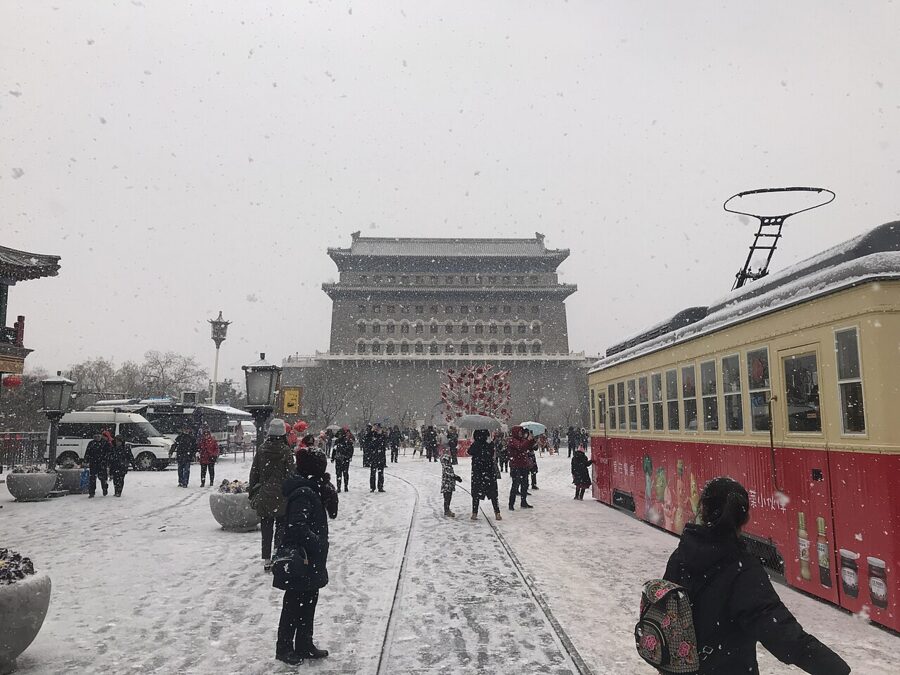
Qianmen Street (前门大街), the pedestrian street south of Tiananmen, was rebuilt in the 2000s, and parts of it feel like a film set. But it’s where many of Beijing’s old food brands started, and several of them are still on it. Take Line 2 to Qianmen station and walk south through the gate.
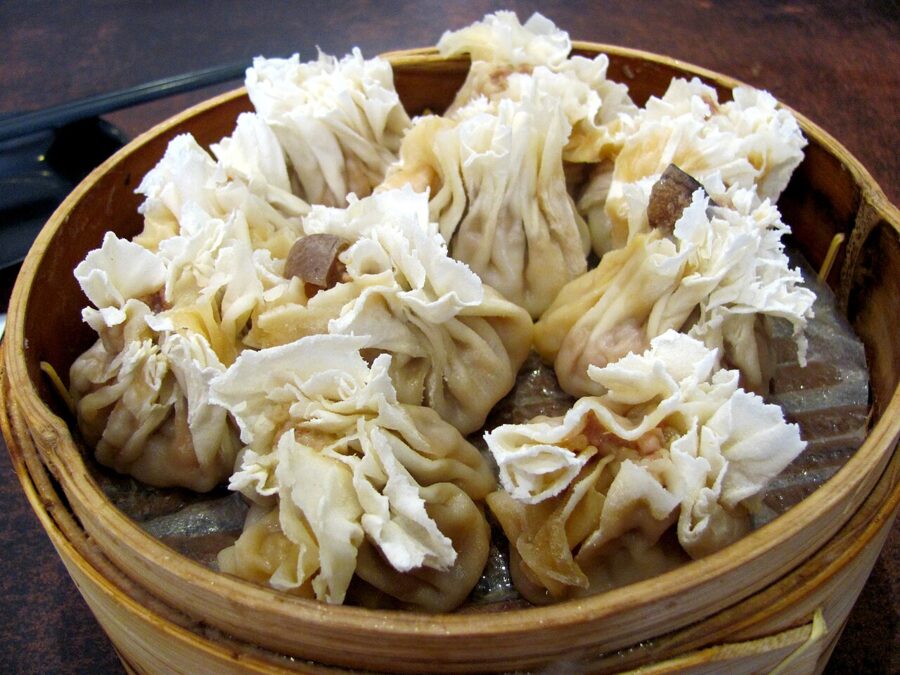
Duyichu (都一处), at 36 Qianmen Street, has made shaomai (烧卖), open-topped steamed dumplings, since 1738, and its craft is on the national heritage list. It’s touristy now and some regulars say it isn’t what it was, but a basket of the three-delicacy shaomai is still a good lunch. Quanjude’s original duck restaurant is a few doors away on the same street.
West of Qianmen Street is Dashilar (大栅栏), the old shopping quarter, and the lanes behind it. Langfang Ertiao, a couple of lanes north, has Baodu Feng and a run of small snack shops. East of Qianmen Street is Xianyukou (鲜鱼口), a short food street with Tianxingju’s chaogan, Bianyifang’s closed-oven duck and a lot of old brands in rebuilt shopfronts. It’s more convenient than special, but the chaogan is the real thing.
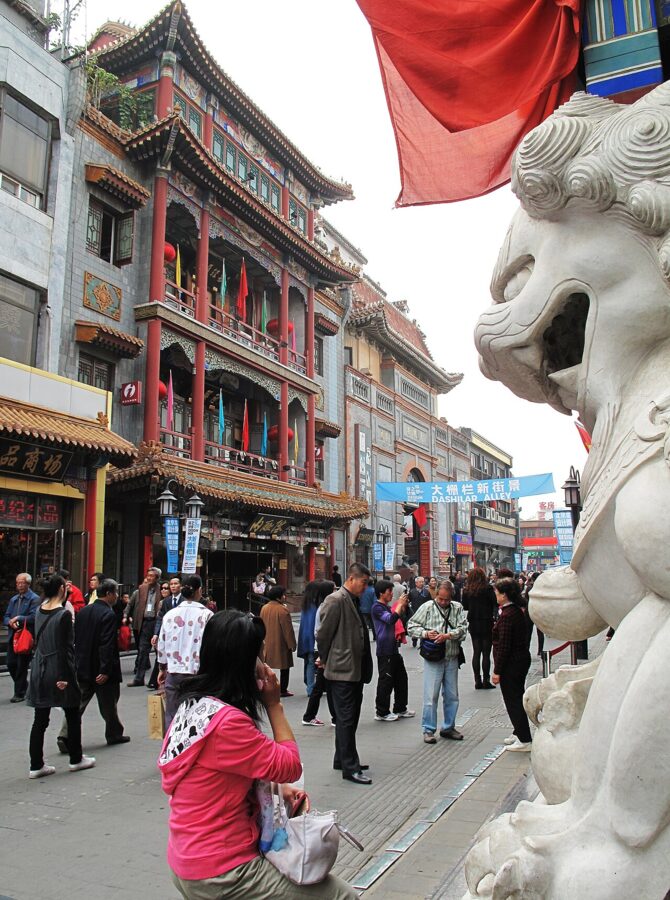
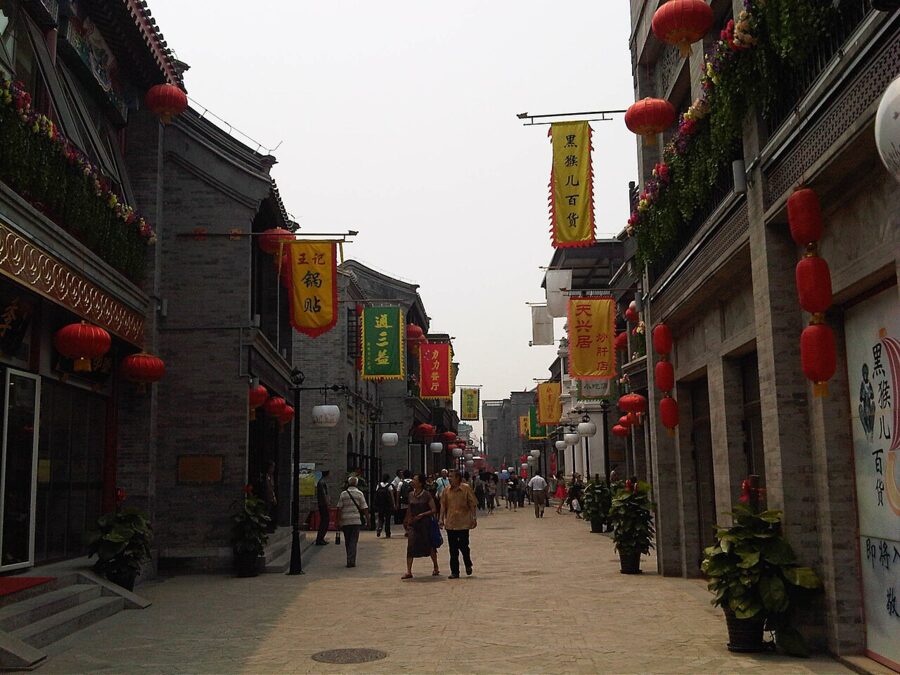
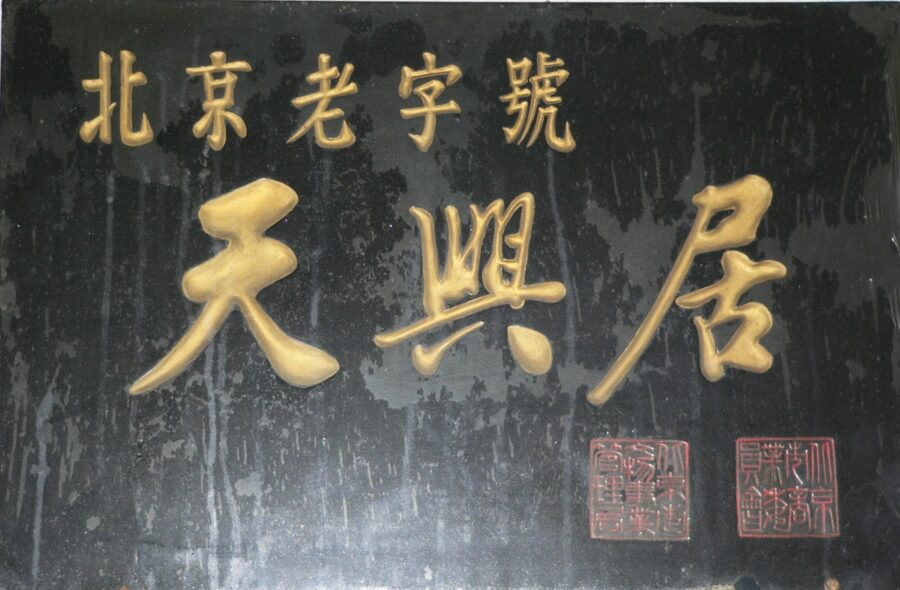
South of Qianmen, Fengzeyuan is a short walk west along Zhushikou West Street, and Yin San Douzhi is a short taxi ride south-east on Dongxiaoshi Street. So a full Qianmen food day is possible: douzhi at Yin San for breakfast, chaogan and a walk on Xianyukou, baodu at Baodu Feng, shaomai at Duyichu and a Shandong dinner at Fengzeyuan. You won’t need dinner the next day either.
Guijie after dark
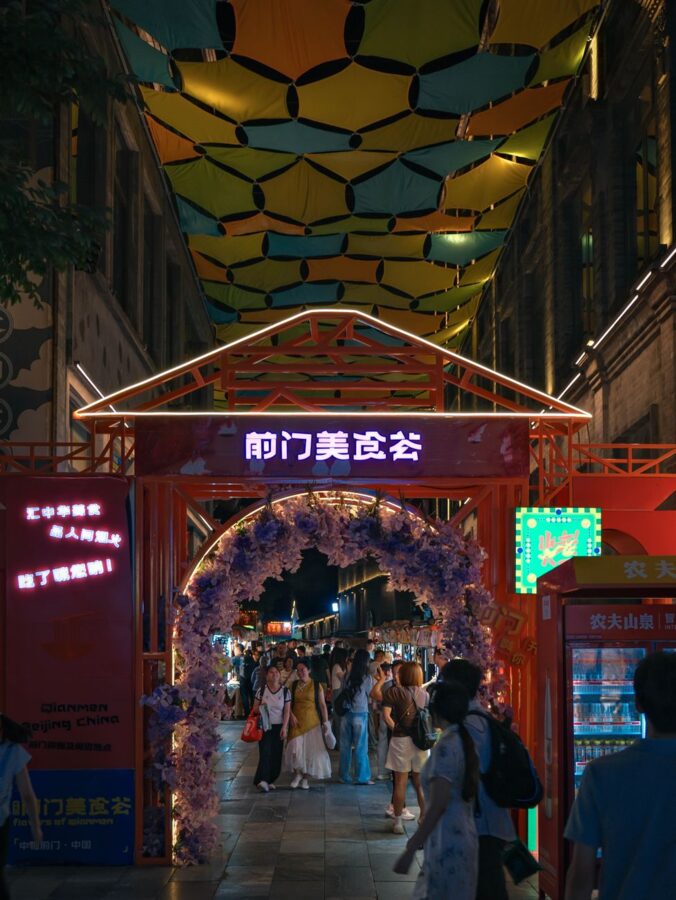
Guijie (簋街), on Dongzhimen Inner Street, is Beijing’s late-night eating street: about a kilometre and a half of restaurants under red lanterns, many open into the small hours. In summer the whole street eats mala xiaolongxia (麻辣小龙虾), spicy crayfish, by the bucket; from September to the end of November it switches to hairy crab. Huda (胡大饭馆), open since 1999, is the famous crayfish house, with a branch by the Beixinqiao station exit on Line 5.
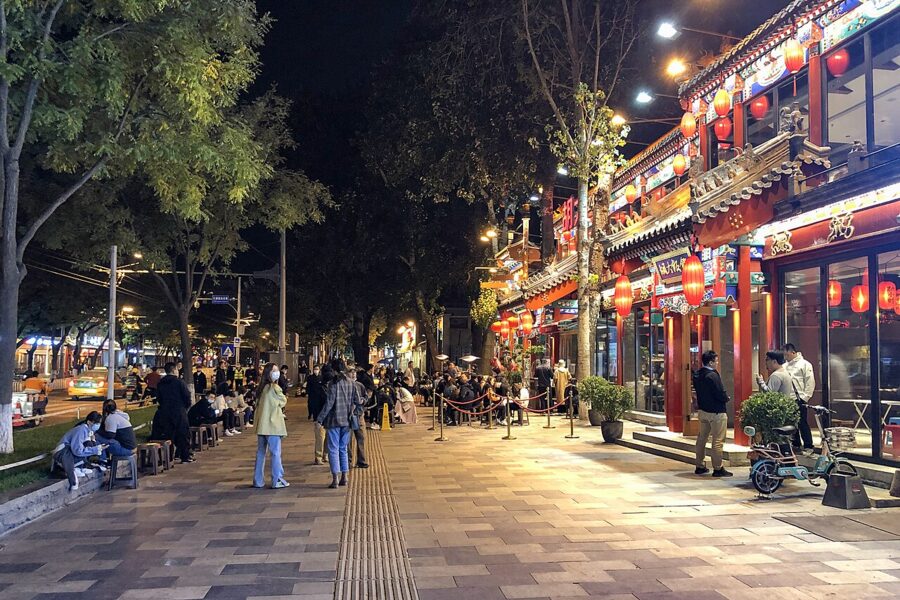
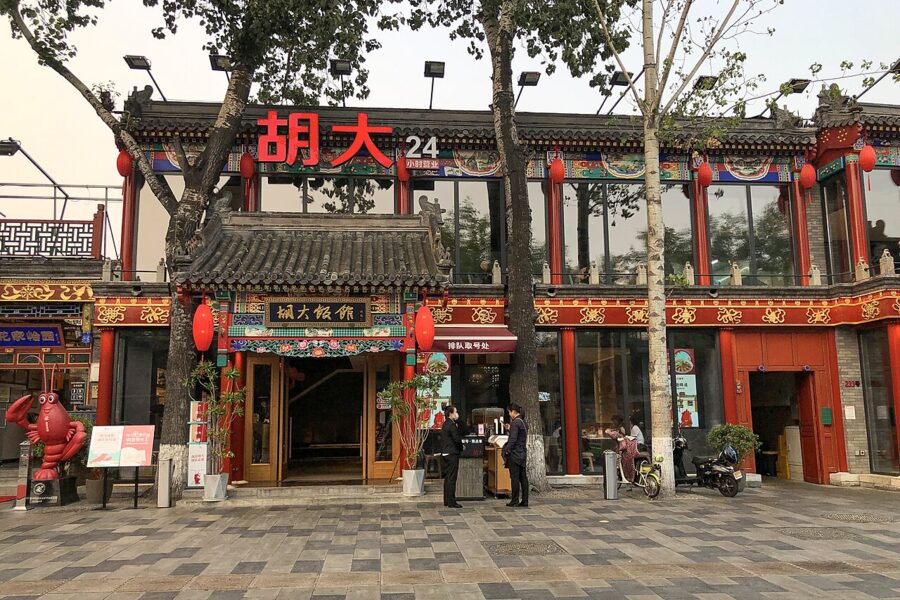
It’s restaurants, not stalls, and it’s not old Beijing food. But it’s the Beijing night out that Beijingers actually have, with plastic gloves, cold Yanjing beer and a table full of shells. If you’re in the city in June, July or August, give it one evening.
Breakfast in Beijing
Beijing breakfast is douzhi and jiaoquan, chaogan with small pork buns, doufunao (豆腐脑) in a savoury gravy, jianbing from a cart and sugar-crusted tangyoubing. My breakfast guide covers the shops in full, so here’s only what’s new.
Go early. The old breakfast houses open at about 06:00 and the douzhi and buns are at their best before 08:30. Yin San Douzhi, Jinfang Xiaochi and Huguosi Snacks all serve a full breakfast, and Bai Ji Niangao on Niujie is the stop for something sweet to carry away. A full old-Beijing breakfast costs under ¥30, and two of them, which is what you’ll want if you’re curious, still cost less than a coffee and a croissant in a mall.
The Wangfujing question
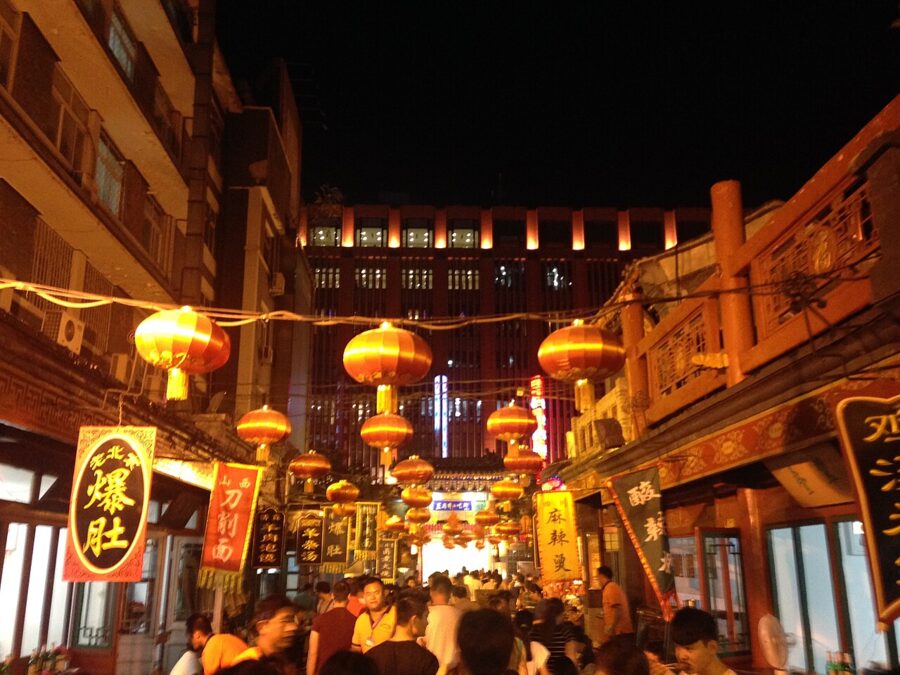
Wangfujing Snack Street (王府井小吃街) is the food street you’ll be sent to first, a lane of more than a hundred shops and stalls off Wangfujing, a short walk from Wangfujing station on Lines 1 and 8. It sells snacks from all over China, plus souvenirs, from about 10:00 to 22:00. Worth it? As a lane to walk through on the way back from the Forbidden City, yes; as a place to eat old Beijing food, no.
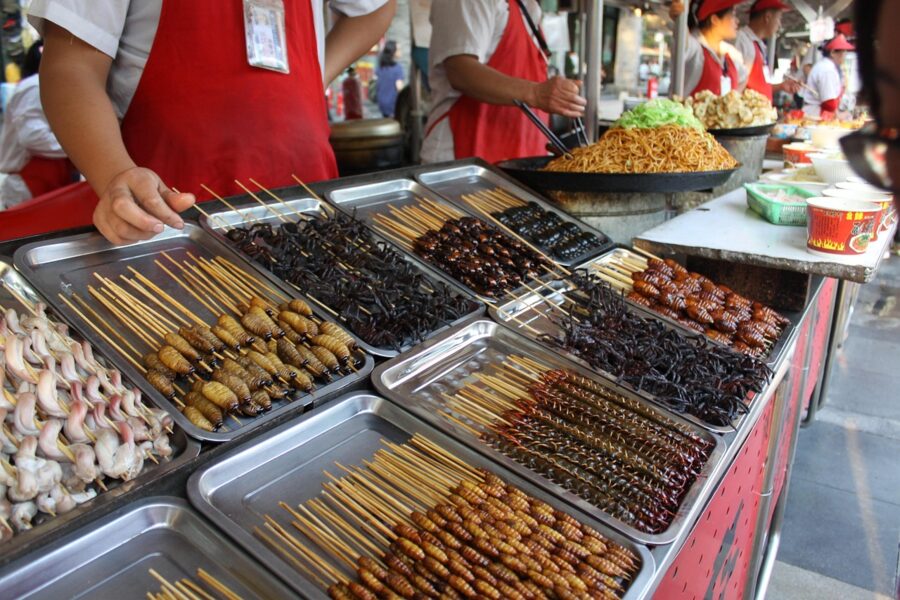
The scorpions on sticks are the thing everyone photographs, and few Beijingers ever eat them. The Donghuamen night market, the long row of stalls that used to run nearby, closed in 2016. If you want the old snacks within walking distance of Wangfujing, the halal brand Donglaishun, on the fifth floor of Beijing APM at 138 Wangfujing Dajie, does copper-pot mutton, and it’s a better meal than anything on the snack street.
Where to eat, by budget
Every place here was trading in 2026. Hours and prices change, especially around Spring Festival, May Day and Golden Week, so check the shop on Amap before a long trip across town. Alipay and WeChat Pay both take foreign cards, and the smaller shops may only take mobile payment; cash is legal tender, but change can be short.
| Budget | Place | Area | Order |
|---|---|---|---|
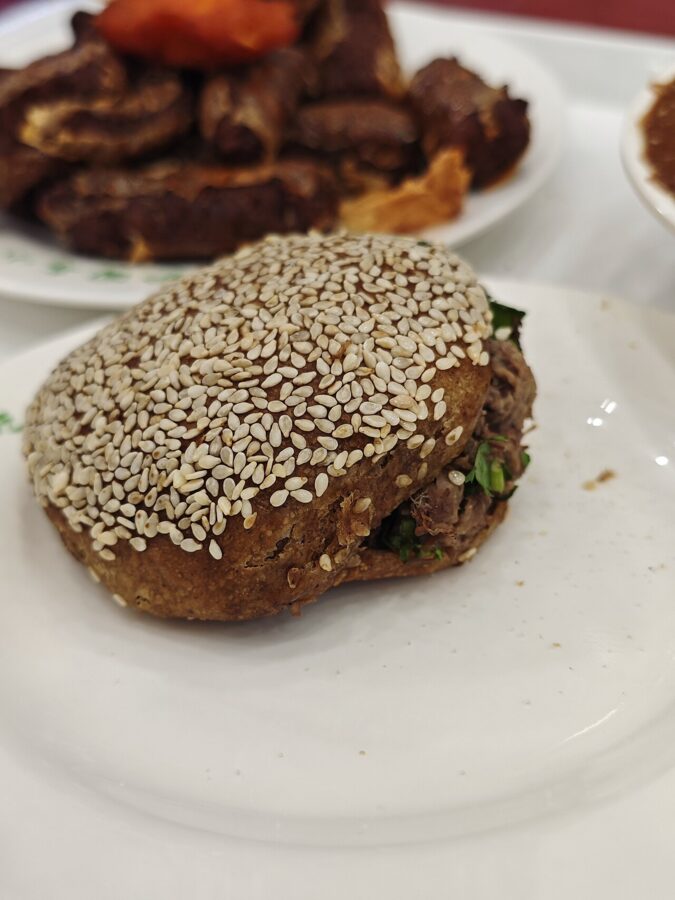
| Under ¥50 | Huguosi Snacks (护国寺小吃) | Huguosi Street, Xicheng | Douzhi set, lüdagunr, sesame beef shaobing |
| Under ¥50 | Yin San Douzhi (尹三豆汁) | Dongxiaoshi Street, near the Temple of Heaven | Douzhi, jiaoquan, tang’erduo |
| Under ¥50 | Yaoji Chaogan (姚记炒肝) | Gulou East Street | Chaogan, pork buns, luzhu |
| Under ¥50 | Bai Ji Niangao (白记年糕) | Niujie | Lüdagunr, aiwowo, purple-rice niangao |
| Under ¥50 | Baorui Mending Roubing (宝瑞门钉肉饼) | Chaoyangmen North Street | Beef mending roubing, millet porridge |
| Under ¥50 | Jinfang Xiaochi (锦芳小吃) | Ciqikou | Miancha, naiyou zhagao, yuanxiao in season |
| ¥50–150 | Xiaochang Chen (小肠陈) | Nanheng East Street, Xicheng | Luzhu huoshao |
| ¥50–150 | Baodu Feng (爆肚冯) | Langfang Ertiao, Qianmen | Duren, sesame shaobing |
| ¥50–150 | Jubaoyuan (聚宝源) | Niujie | Hand-cut mutton in a copper pot |
| ¥50–150 | Kaorouji (烤肉季) | Yinding Bridge, Shichahai | Griddle-roast lamb |
| ¥50–150 | Kaorouwan (烤肉宛) | 58 Nanlishi Road | Griddle-roast beef |
| Splurge | Fengzeyuan (丰泽园) | Zhushikou West Street | Cong shao haishen, jiuzhuan dachang |
| Splurge | Tongheju (同和居) | Yuetan South Street | Sanbuzhan, Shandong classics |
| Splurge | Fangshan (仿膳饭庄) | Beihai Park, north shore | Court pastries, wowotou |
If you’re planning the days around the food, my three days in Beijing itinerary has these stops built into a route, and the halal and Qianmen days in particular fit easily round the sights. For a grand Beijing dinner, a duck house is still the obvious night; for the rest, the snack houses will give you a better sense of the city.
Skip this
- Douzhi on Nanluoguxiang or Qianmen Street, at several times the price of the same bowl at Huguosi or Yin San.
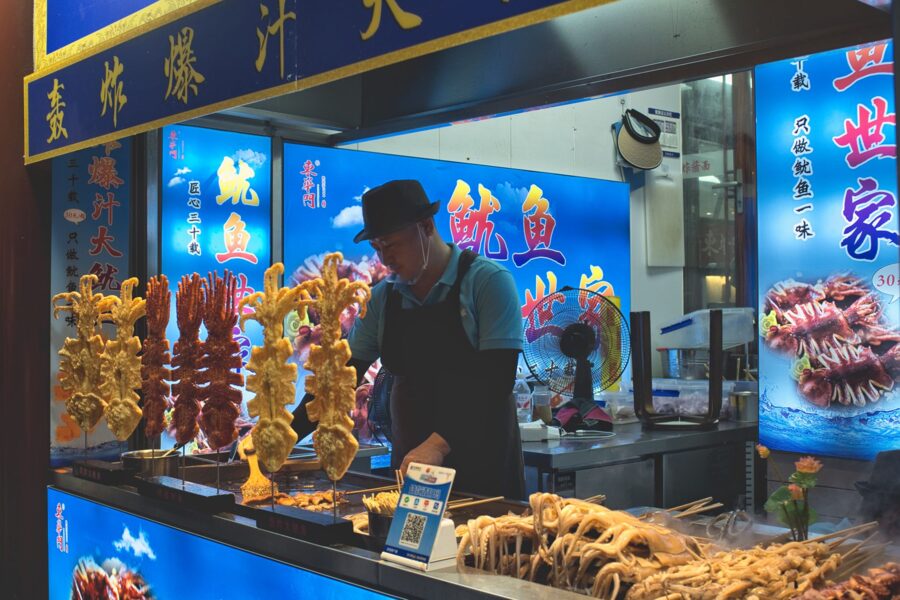
- Scorpion and starfish skewers on Wangfujing.
- Most of the snacks on the main strip of Nanluoguxiang and Yandai Xiejie. Walk one lane over.
- Vacuum-packed “gift” ducks at scenic-area shops, which are reheated duck in a bag.
- A full imperial banquet, unless you’re there for the setting.
When to go, and what to eat when
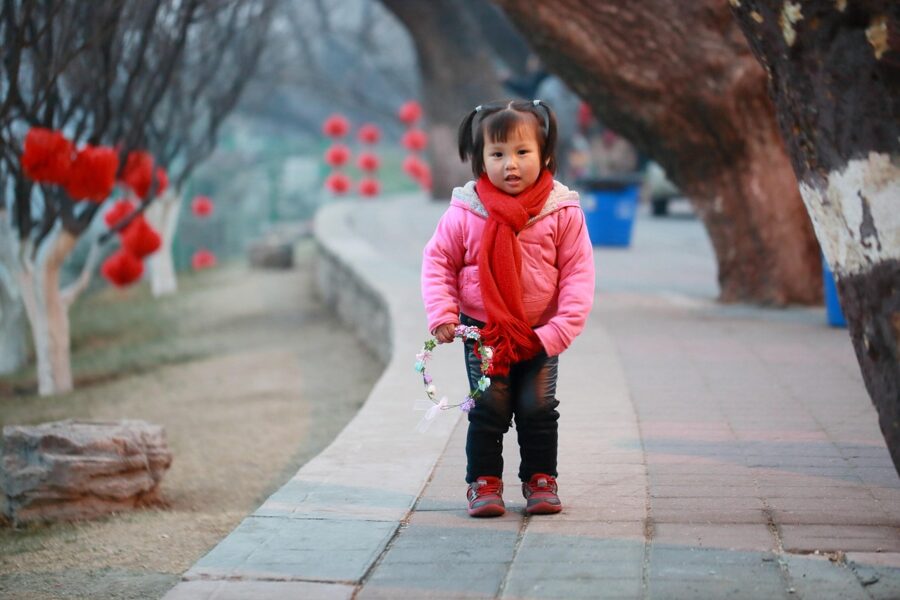
Beijing food follows the calendar more than most. Winter, from November to February, is the season for copper-pot mutton, tanghulu and luzhu, and it’s when the snack houses feel most like themselves. The temple fairs of Spring Festival, at Ditan and Changdian, are the best place to graze snacks and the worst place to find a seat, and many small shops close for the first few days of the holiday.
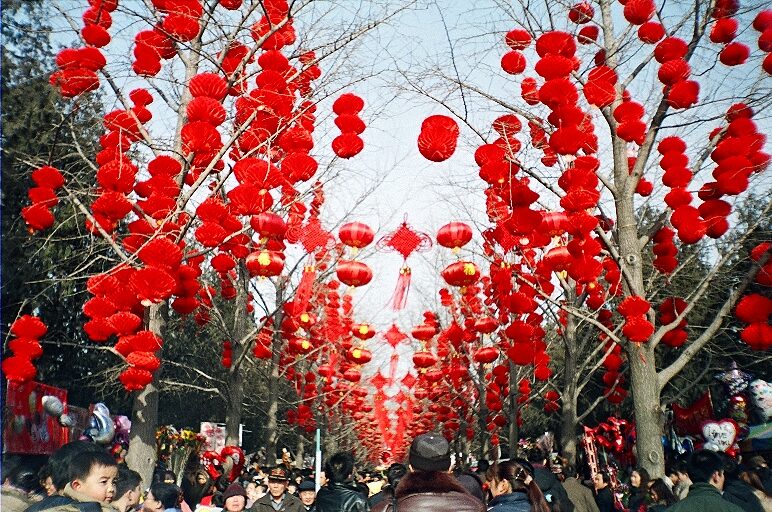
Lichun, in early February, brings the Tianfuhao queues; the Lantern Festival, fifteen days after Spring Festival, brings the yuanxiao queues at Jinfang and the other old houses. Spring is for aiwowo and wandouhuang, summer is for crayfish on Guijie and cold almond tofu, and autumn is hairy crab and the first copper pot of the year. Golden Week, 1–7 October, fills Qianmen, Nanluoguxiang and Shichahai, so eat at the neighbourhood places that week, not the famous ones.
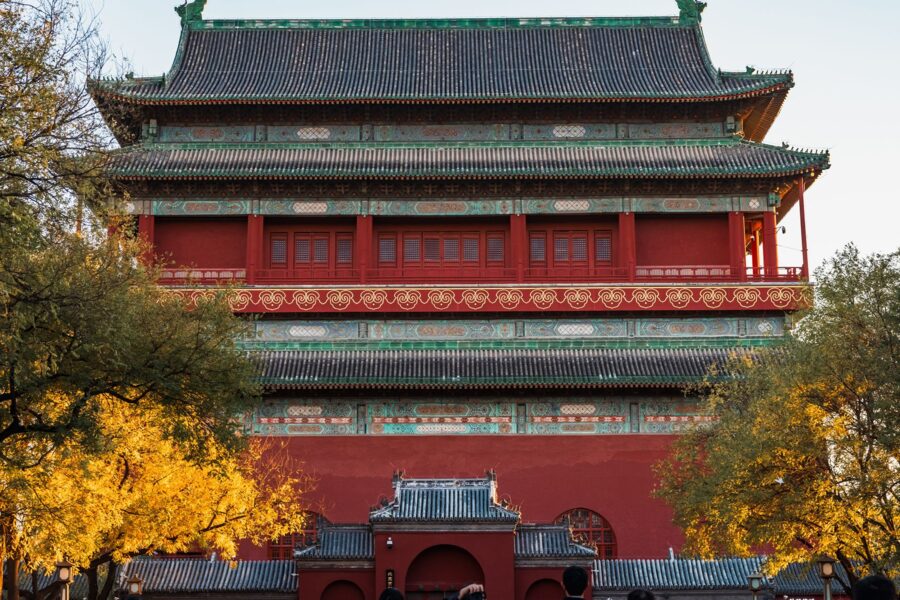
For the rest of China’s big food cities, Shanghai is sweeter and softer, and Shenzhen, where I lived, is Cantonese and Chaoshan at heart. After a year of rice noodles and steamed fish in the south, Beijing’s salt, sesame and offal were a shock. They grew on me fast.
So: one duck, one copper pot, one bowl of noodles. Then a douzhi at Yin San at 07:30, a bowl of luzhu at Xiaochang Chen for lunch, lamb on the griddle at Kaorouji as the light goes over Houhai, and something sticky from Niujie in your pocket for the walk home.
You Might Also Enjoy
 Tokyo’s Yokocho: Golden Gai, Omoide Yokocho and the Drinking Alleys Worth a Night Out
 Chinese Street Food: Jianbing, Roujiamo, Tanghulu, Stinky Tofu and the Snacks Worth Queuing For
 Thai Desserts and Sweets: A Guide from Mango Sticky Rice to Khanom Krok
 The Summer Palace in Beijing: Tickets, Gates, the Long Corridor and a Route That Beats the Crowds