Tokyo’s Yokocho: Golden Gai, Omoide Yokocho and the Drinking Alleys Worth a Night Out
At half past five on a Tuesday the smoke in Omoide Yokocho is already thick enough to taste. It comes off a row of charcoal grills no wider than a sideboard, rolls under the plastic curtains and drifts up towards the Shinjuku skyscrapers, which look, from inside the alley, like they belong to a different city. I came here first on a long weekend out of Shenzhen, with a capsule booked in Nishi-Shinjuku and no plan beyond dinner. Three hours later I was in a bar the size of a lift on the other side of the station, being told by a retired film editor which of the shelf’s whisky bottles belonged to which regular.
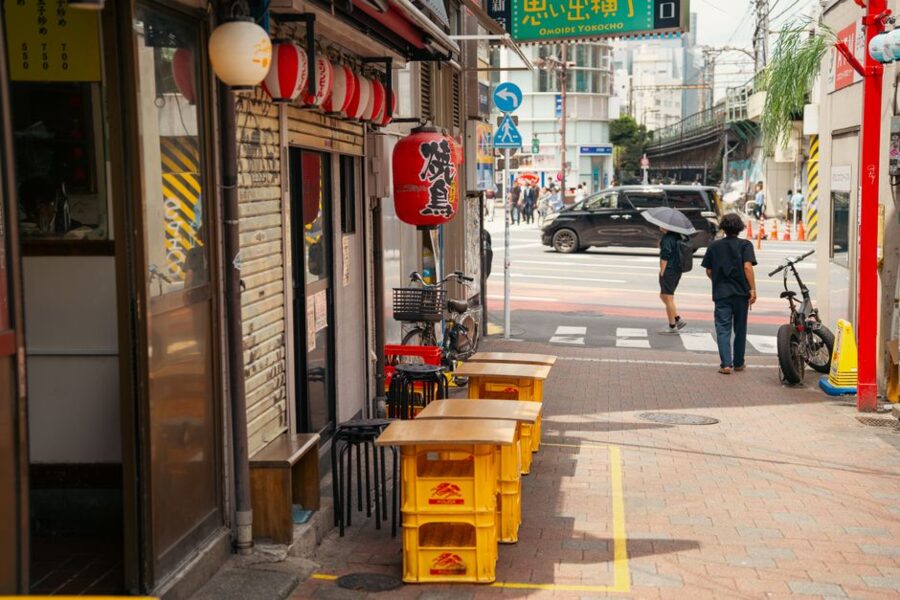
That’s the yokocho in two scenes. The word means a side street, a lane off the main road, and in Tokyo it has come to mean one thing in particular: a knot of tiny bars and grill counters, most of them born in the postwar black markets, that the city has somehow never managed to knock down.
Some seat eight. Some seat four. A few have no seats at all.
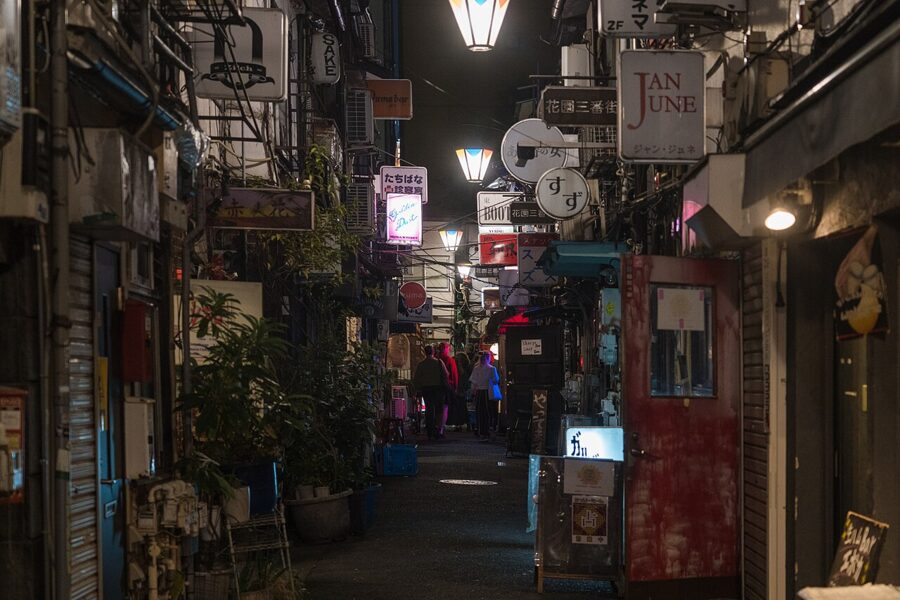
This guide walks the main alleys one by one, from Golden Gai and Omoide Yokocho in Shinjuku to Nonbei Yokocho in Shibuya, Harmonica Yokocho in Kichijoji, Ebisu Yokocho and the brick arches under the tracks at Yurakucho and Shimbashi, then out to Ueno, Akabane and Tateishi. It covers where they came from, how the cover charges actually work, what to eat and drink, and the handful of manners that decide whether a bar’s door opens for you a second time.
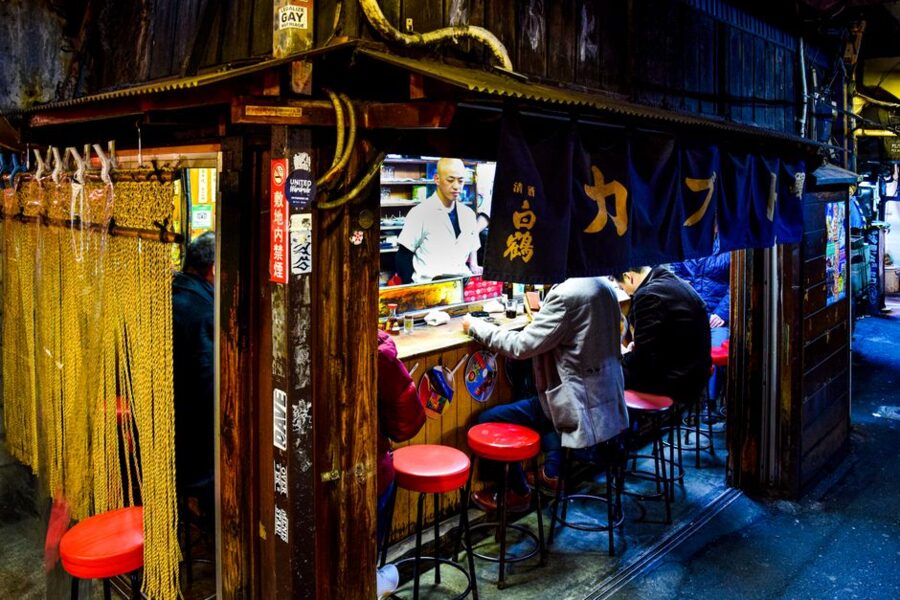
If you only have one night, the short version is this: Omoide Yokocho for skewers between 17:00 and 19:30, then a ten-minute walk to Golden Gai for one or two bars, then the last train. The table below is the rest of the city at a glance.
| Alley | Nearest station | Size | What it’s for |
|---|---|---|---|
| Shinjuku Golden Gai | Shinjuku (JR East Exit), about 5 min; Shinjuku-sanchome Exit E1, 1 min | Nearly 300 bars in six lanes | One drink and a conversation at a five-to-eight-seat counter |
| Omoide Yokocho | Shinjuku (West Exit), 2 min | About 80 shops, 60 of them food and drink | Yakitori, motsuyaki and a beer before dinner |
| Nonbei Yokocho | Shibuya, about 5 min | Under 40 bars in two short lanes | A quieter Golden Gai with home cooking |
| Harmonica Yokocho | Kichijoji (North Exit), 1 min | About 100 shops in five lanes | Old stalls and new bars side by side, open earlier |
| Ebisu Yokocho | Ebisu (East Exit), 2 min | About 20 counters under one roof | Groups, late nights, ordering from several kitchens |
| Yurakucho and Shimbashi, under the tracks | JR Yurakucho or Shimbashi | Dozens of counters along the viaduct | After-work beer and skewers with trains overhead |
| Ameyoko | Ueno or Okachimachi | About 400 shops of every kind | Daytime drinking at open-front counters |
In This Article
- Black markets, barracks and why the alleys survived
- The word itself
- Why the bulldozers never came
- Shinjuku Golden Gai
- The lanes and the two associations
- From black market to literary bar
- Fires and rebuilds
- Cover charges and who is welcome
- Photos in Golden Gai
- Omoide Yokocho
- Lucky Street and the first motsuyaki
- The 1999 fire
- House rules worth knowing
- Shibuya Nonbei Yokocho, and a ghost on Dogenzaka
- Koibumi Yokocho, the love-letter alley
- Kichijoji Harmonica Yokocho
- How the old market got new bars
- Ebisu Yokocho and the new yokocho
- Under the tracks: Yurakucho and Shimbashi
- Hibiya OKUROJI
- Shimbashi, the salaryman’s yokocho
- Further out: Ueno, Akabane, Tateishi
- Ameyoko, Ueno
- Akabane
- Tateishi, and what happens when an alley goes
- What to eat and drink in a yokocho
- Yakitori and motsuyaki
- Nikomi and oden
- Highballs, Hoppy, sours and sake
- Tachinomi, the standing bar
- How the bars work: charges, drinks, photos, smoke
- The seat charge
- How many drinks
- Groups
- Photos
- Smoking
- Cash, toilets and the last train
- Prices and a short “skip this”
- Skip this
Black markets, barracks and why the alleys survived
Tokyo’s first black market opened on 20 August 1945, five days after the surrender, outside the east exit of Shinjuku Station. It was run by a tekiya stall-keepers’ gang, the Kanto Ozu-gumi, and it sold whatever could be found, from sweet potatoes and rice carried in from the countryside on overcrowded trains to soap and second-hand clothes. Within months Shinjuku had a second market run by the Wada-gumi towards the south exit and a third, run by the Yasuda-gumi, along the west side of the station.
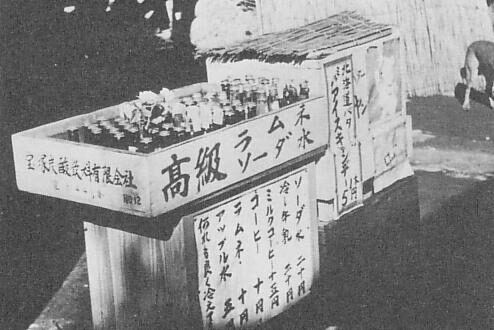
Food was the point. Rationing had collapsed, and any rice bought outside it was technically illegal, so the first stalls sold what slipped through the controls. On the west side, offal from the occupation forces’ beef and pork wasn’t a controlled item, and the stall-keepers there started grilling it on skewers. That is where motsuyaki, Tokyo’s grilled pork offal, became a bar food.
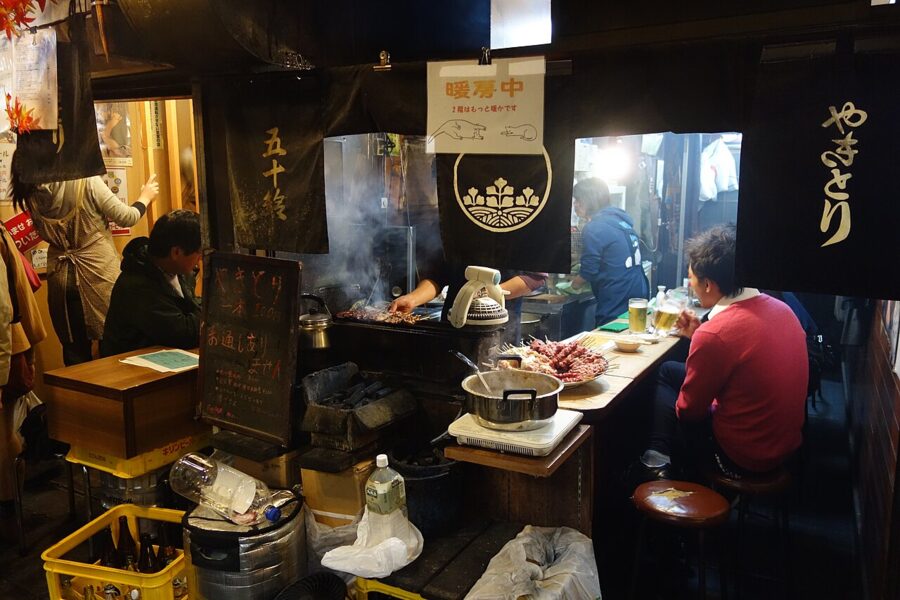
In 1949 the occupation authorities ordered the stalls off the streets, and by December 1951 Tokyo had abolished permanent street stalls altogether. The markets didn’t vanish. They moved, or they dug in.
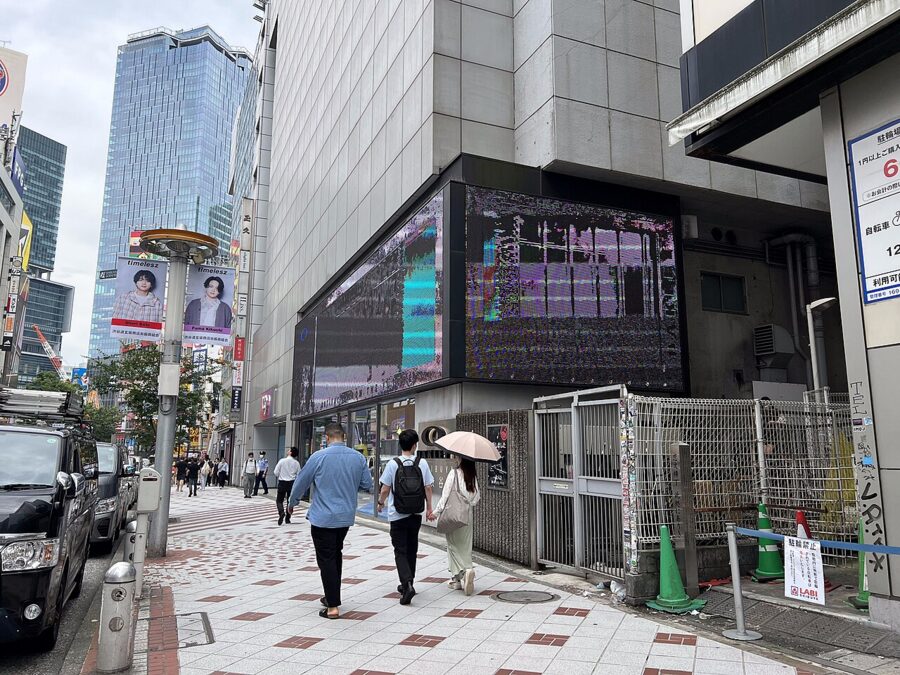
Shinjuku’s east-side stall-holders were sent to a patch of pampas grass in what was then Sanko-cho, and their rows of cheap timber barracks became Golden Gai. Shibuya’s food stalls were gathered into a strip beside the tracks north of the station in 1950, which became Nonbei Yokocho. The west-exit market stayed put and shrank, and became Omoide Yokocho.
The word itself
横丁, yokocho, is literally “side block”, a street that runs off the main road. Old Tokyo used it for any back lane, which is why you’ll find a Hyogo Yokocho in Kagurazaka that has nothing to do with drinking. The drinking sense stuck because nearly every postwar market was a side street by the time the main roads were rebuilt.
Why the bulldozers never came
Three things saved them. The first is paperwork: plots in Golden Gai and Harmonica Yokocho are so finely divided, and the ownership of each 10-square-metre shop so tangled, that assembling enough land to build anything has defeated every developer who tried. The second is the railway. The bars under the Yamanote Line’s viaduct at Yurakucho and Shimbashi sit inside a structure that isn’t going anywhere.
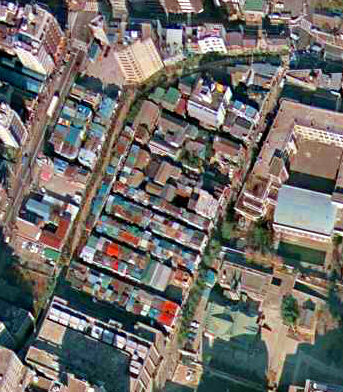
The third is stubbornness. When land speculators started buying up Golden Gai in the late 1980s, paying hundreds of millions of yen for 10-square-metre plots and around ten million yen a time to tenants who agreed to leave, the owners formed a group to defend the block and started visiting the land registry one plot at a time. There were suspicious fires in 1986. The bubble burst before the buyers finished, and the bars are still there.
Not every alley got lucky, and the story of the ones that didn’t is worth knowing too. I’ll come back to those near the end.
Shinjuku Golden Gai
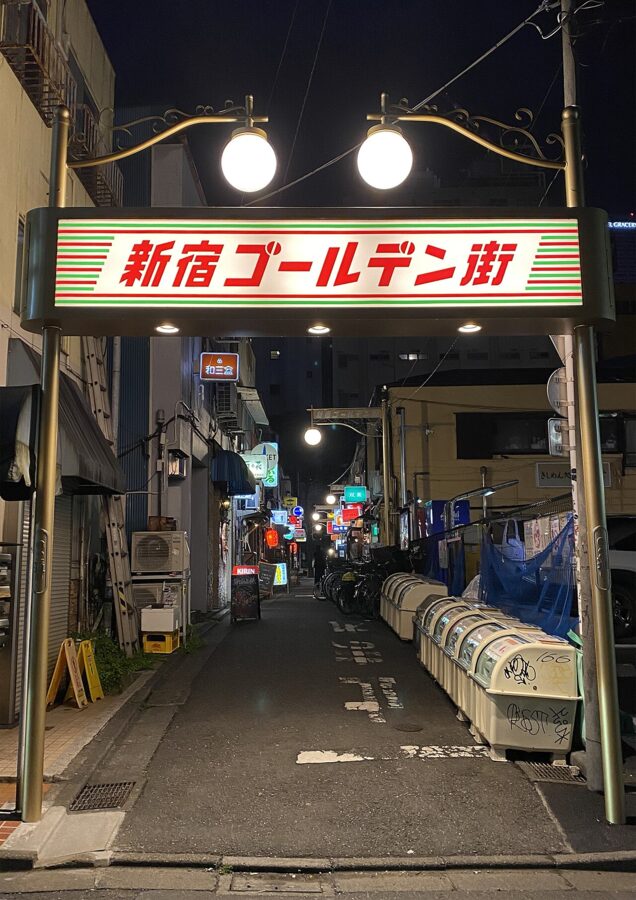
Golden Gai is a rectangle of six narrow lanes on the south-east corner of Kabukicho, wedged between Hanazono Shrine to the east and the green strip of the Shiki no Michi promenade to the west. The whole block covers roughly 2,000 tsubo, about 6,600 square metres, and on that you’ll find nearly 300 bars. Almost all of them are in two- and three-storey wooden row houses built four units to a block, with a lane between each block barely wide enough for two people to pass.
From JR Shinjuku, leave by the East Exit, walk east along Yasukuni-dori past the Shinjuku City Office and turn left onto the Shiki no Michi promenade: about five or six minutes. From the Tokyo Metro, Exit E1 of Shinjuku-sanchome puts you a minute away.
The lanes and the two associations
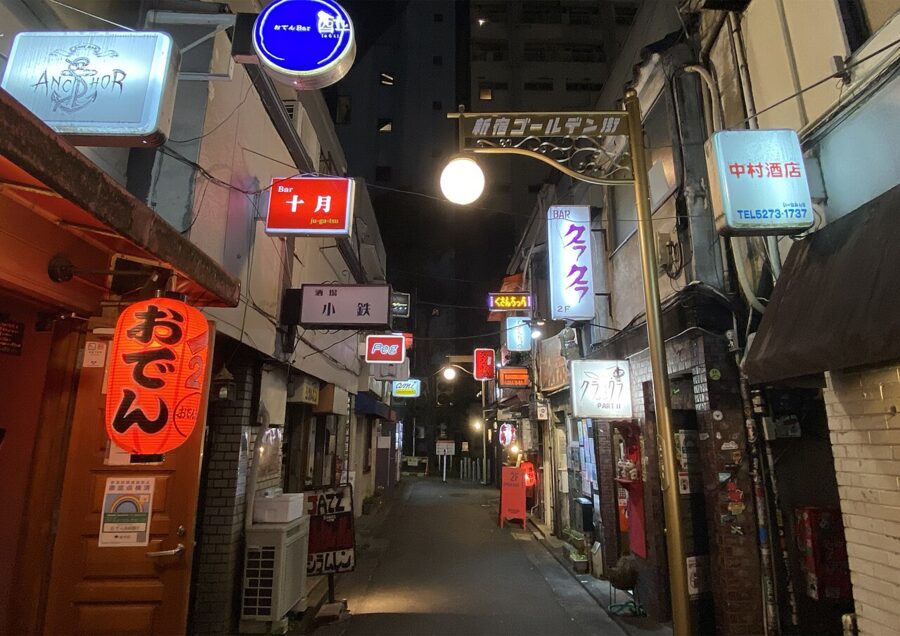
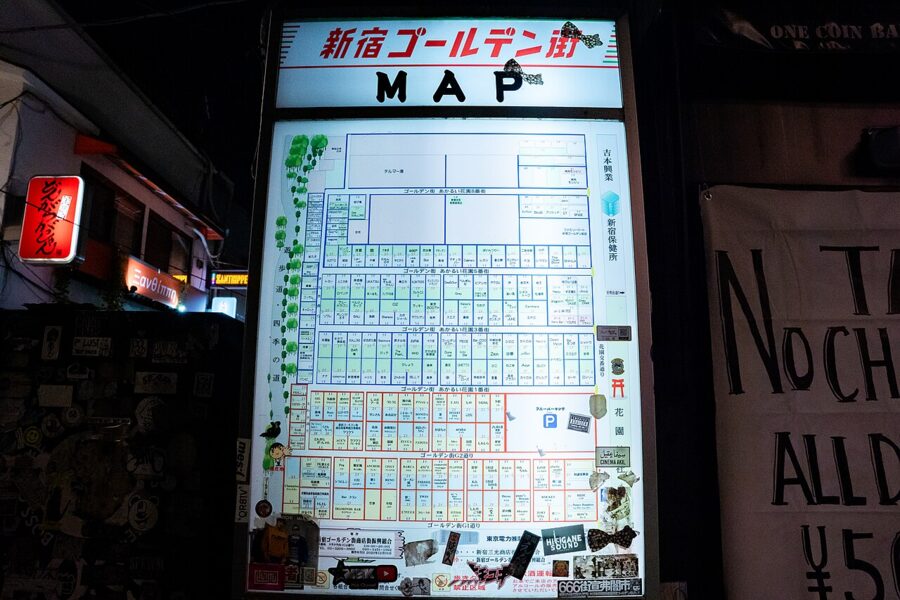
The lanes have names: G1 Dori, G2 Dori, Maneki Dori, and the Akarui Hanazono 1-bangai, 3-bangai, 5-bangai and 8-bangai. Two shopkeepers’ associations split the block. Everything north of Hanazono 1-bangai belongs to the Shinjuku Sanko Shotengai association, founded in 1969, which counts about 290 shops on its side alone, most of them 3 tsubo, or about 10 square metres. The southern half, the Shinjuku Golden Gai association, has slightly larger 4.5-tsubo rooms.
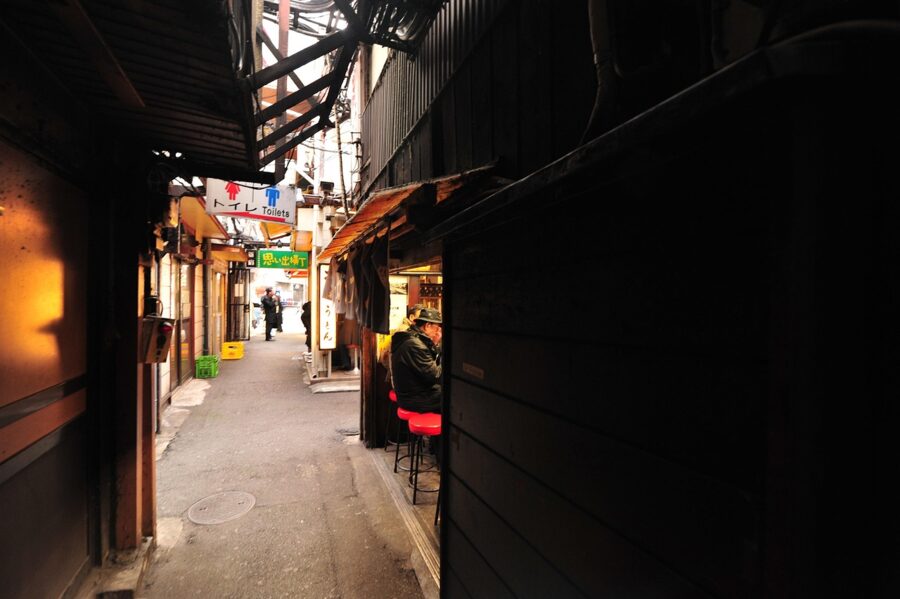
Ten square metres is the whole bar. The counter, the stools, the shelf of bottles, the sink. Many upstairs bars are reached by a staircase steep enough to make you hold the rail, and in some buildings the climb from the second floor to the third is closer to a ladder.
From black market to literary bar
The market that became Golden Gai was the Kanto Ozu-gumi’s east-exit “Shinjuku Market”, which had turned into a lane of drinking stalls called Ryugu Mart by the time the 1949 order came. Its stall-keepers moved to Sanko-cho, which in 1949 was a field of pampas grass with the half-built ward office and not much else; the Shiki no Michi promenade was a tram siding. Stall-keepers moved in from Shinjuku 2-chome as well.
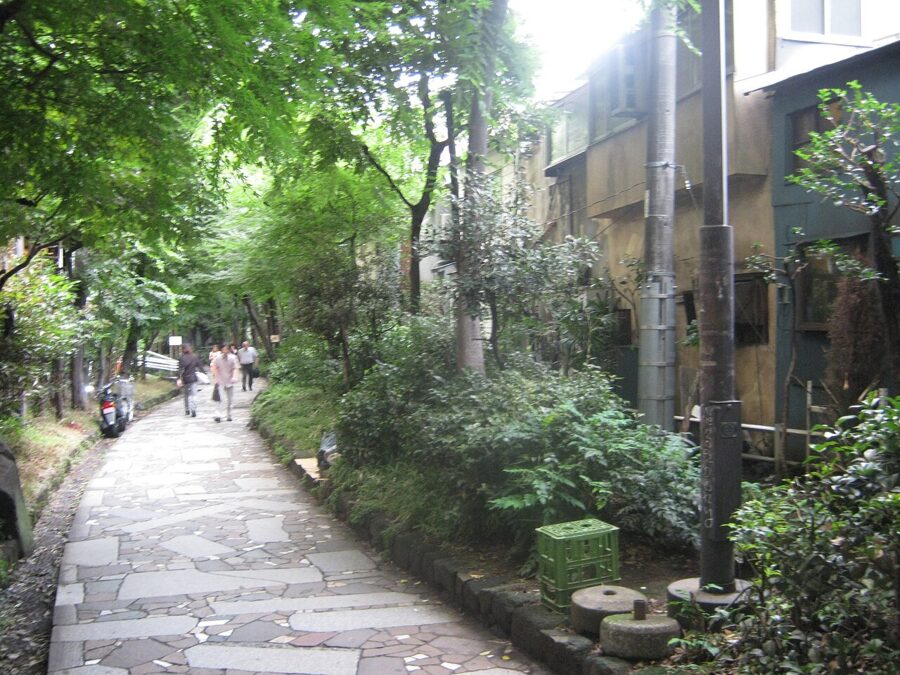
For its first decade much of the block ran as an unlicensed red-light district, an aosen or “blue line” area, named for the way police once marked such districts on their maps. That ended when the Anti-Prostitution Law took effect in 1958. The rooms became bars, and around 1965 the name Golden Gai came into use.
What followed is the part of the story Golden Gai is proud of. Writers, editors, film directors and actors adopted the bars, and in 1976 two regulars, Nakagami Kenji and Saki Ryuzo, won the Akutagawa and Naoki prizes in the same announcement. The newspapers went looking for the bars where the prizewinners drank, and for a decade it was said that anyone who wanted to be taken seriously in the arts needed a regular bar here.
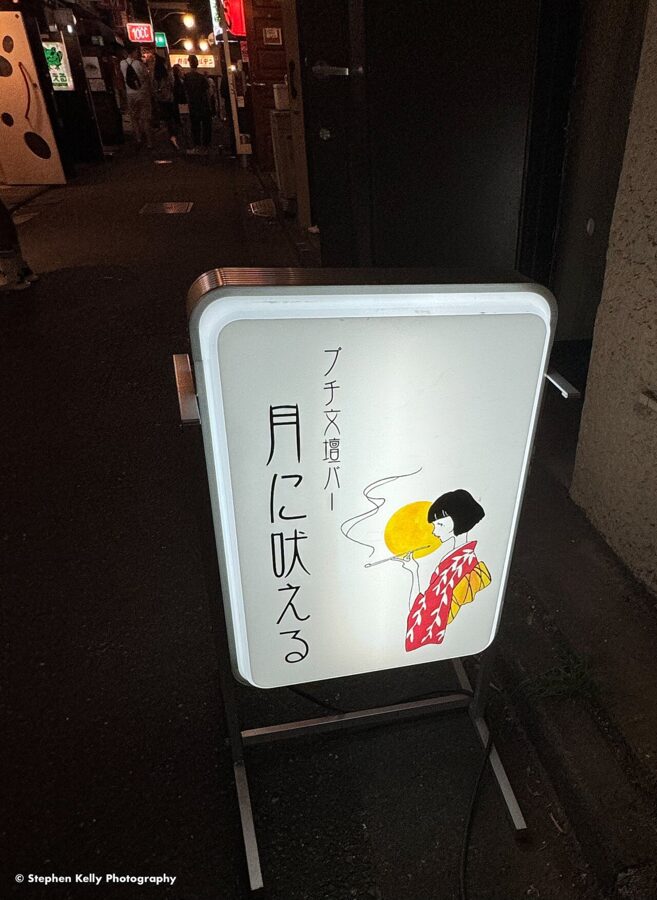
Some of that history is still pouring drinks. Shinya Plus One on 1-bangai was run for years by the comedian Naito Chin, and the crime novelist Hase Seishu worked behind its counter after he moved to Tokyo. Kinema Club on 3-bangai is a film bar. Bar Albatross and The Open Book are both on 5-bangai, and both are on the Sanko association’s current list of member bars, which is the list I’d trust over any blog’s.
Fires and rebuilds
Golden Gai’s real enemy has always been fire. During the land-buying years of the late 1980s the owner who led the defence group saw his bar burn more than once; after one fire he set stools out on the ashes, served what had survived in the fridge, and neighbouring bars sent over food and drink until the night turned into a party. The block emptied out in the 1990s, dropping from more than 200 bars to around 140, then filled up again in the 2000s as younger owners took on short leases.
On the afternoon of 12 April 2016 a fire in a decades-old two-storey building spread to three buildings and burned about 300 square metres. Some bars opened that night anyway. The rest of the block was lucky.
Cover charges and who is welcome
Nearly every bar in Golden Gai charges you for the seat, before your first drink. It might be called a charge, a table charge or an otoshi, and it might come with a small dish of something; the amount is usually between ¥500 and ¥1,500 a person. Drinks are on top, typically ¥600–1,000. Many bars now post both numbers on a board outside, because the alternative was having the same awkward conversation in English every night.
Some bars are members only or regulars only, and say so on the door, sometimes in English, sometimes with a small sign in Japanese that reads 会員制, kaiinsei. Others have a “welcome” sign and an English menu. Most are somewhere in between: open to a stranger who looks in first, asks the price and sits down quietly, less keen on a group of five who walk straight in.
If a bartender says it’s full, it’s full. Move on to the next door.
Most bars open from around 19:00 or 20:00 and stay open late, some until 05:00. A few times a year the associations hold a festival day when participating bars waive the charge and pour drinks from ¥500: the Sakura Matsuri in April and the summer festival, which in 2026 ran on 30 August from 15:00 to 22:00. If your dates line up, those are the cheapest nights to try five bars instead of two.
Photos in Golden Gai
Every lane in Golden Gai is a private road, owned and maintained by the shopkeepers, and both associations require a permit and an armband for photography on the street. They charge for it, too, because the fees pay for the lamps and drains. That rule covers you with a phone as much as a film crew.
Inside a bar, ask the bar; never photograph other customers. The block also bans smoking, eating and drinking in the lanes themselves.
Omoide Yokocho
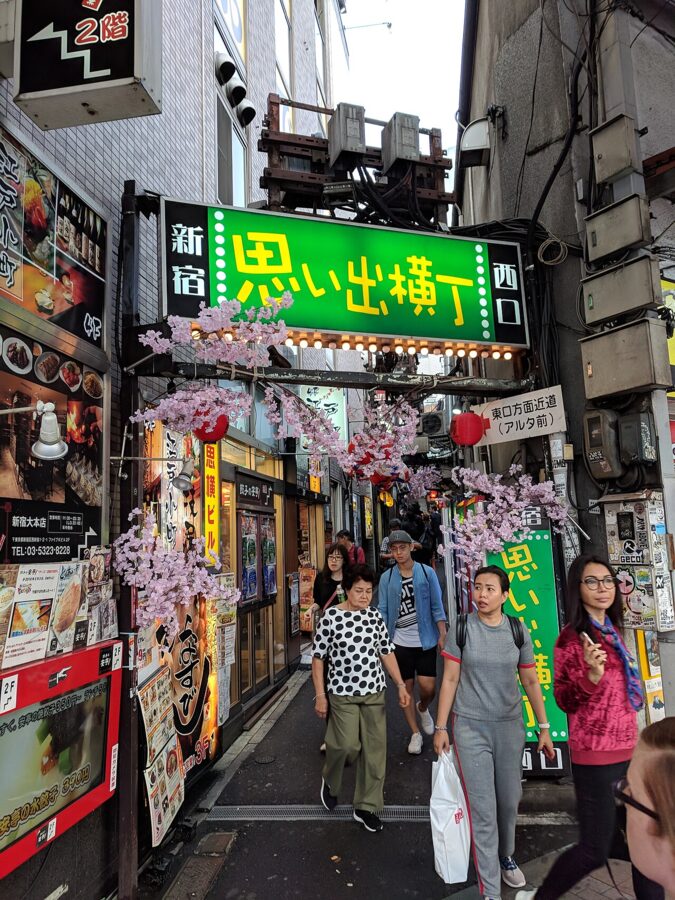
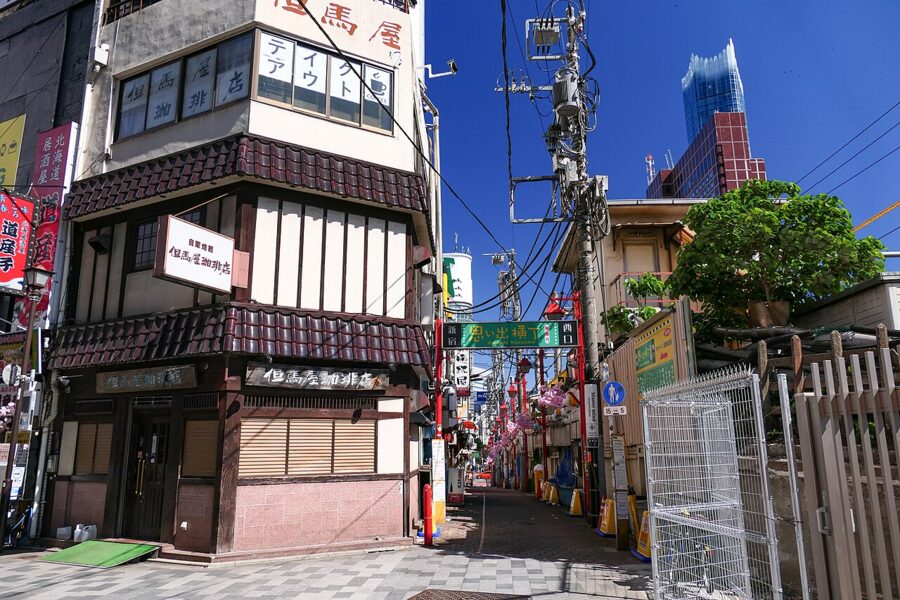
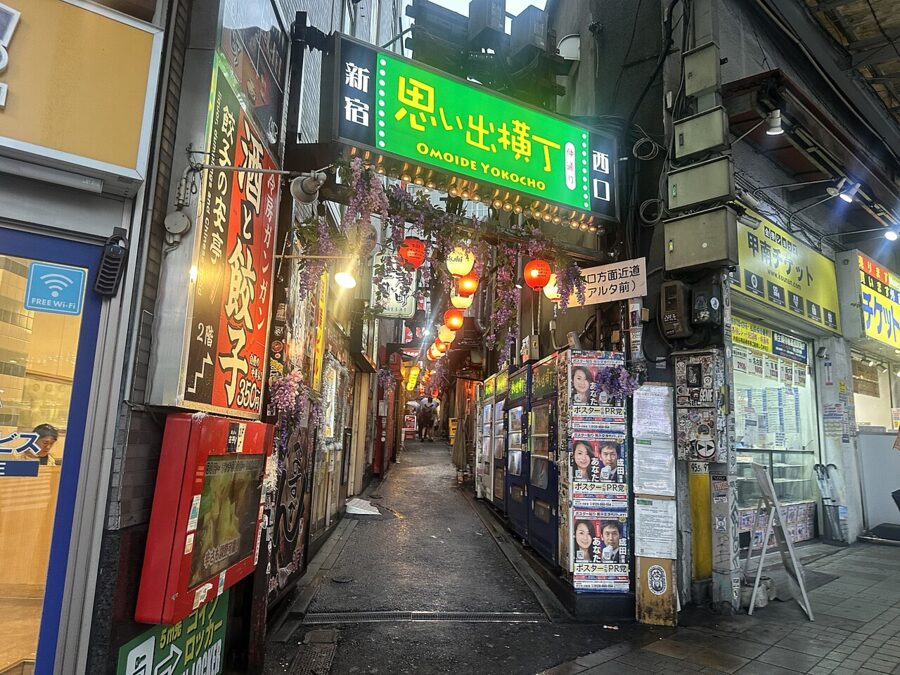
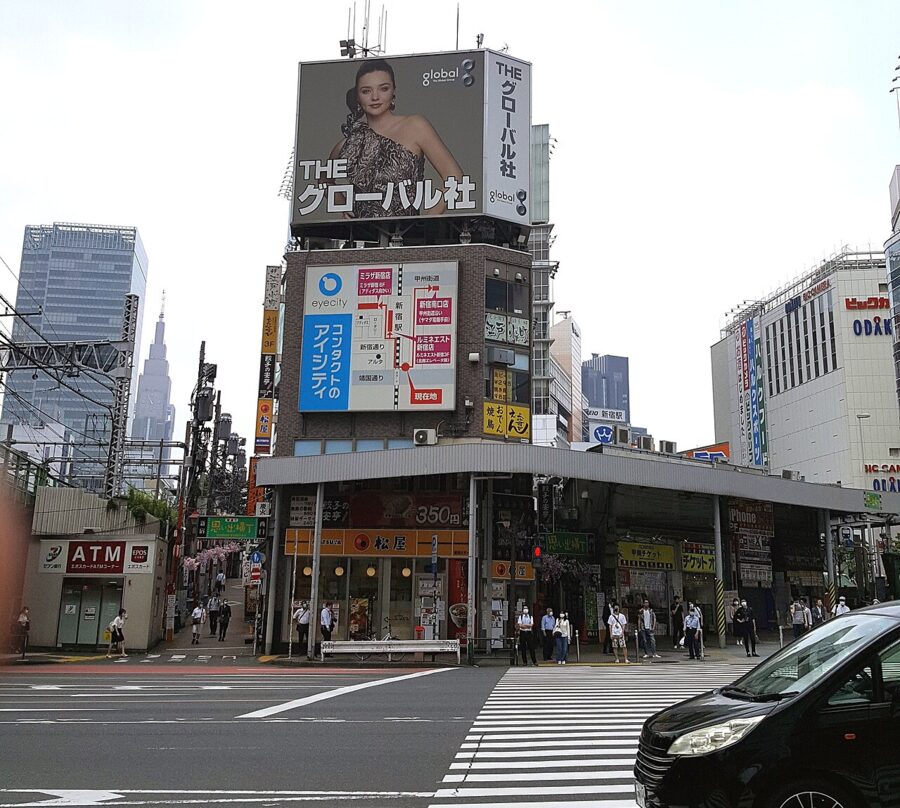
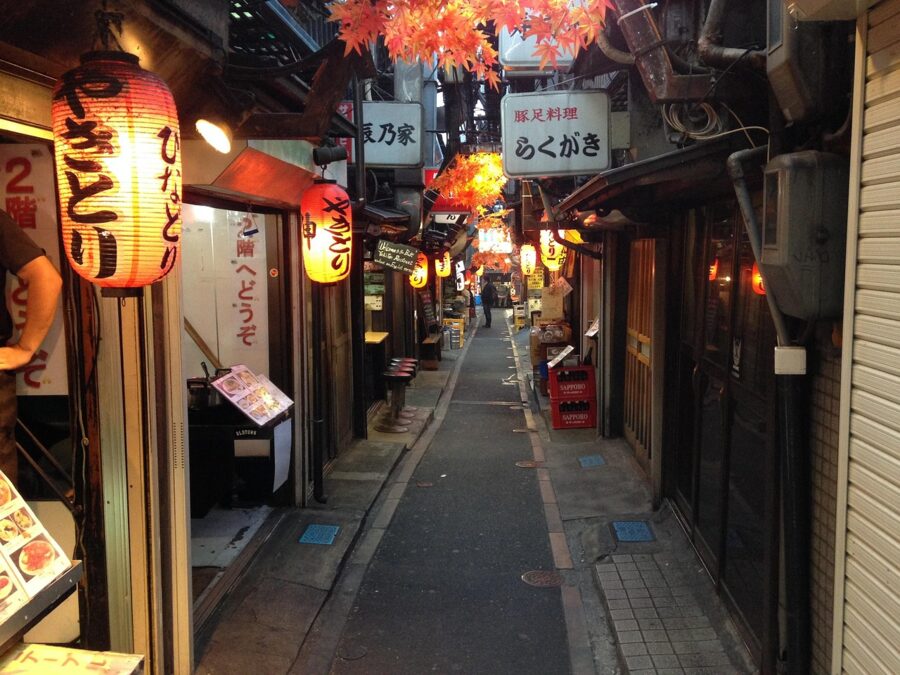
Omoide Yokocho is a tight grid of lanes pressed against the west side of the JR tracks, running north from the Palette Building to Ome-kaido. From the JR West Exit it’s two minutes on foot; from the Toei Oedo Line, use Shinjuku-nishiguchi. About 80 shops share around 630 tsubo, roughly 2,000 square metres, and about 60 of them are places to eat and drink. More than half of those are yakitori or motsuyaki counters.
It smells different, too. Golden Gai smells of cigarettes and spilt highball. Omoide Yokocho smells of fat on charcoal, from late afternoon until close.
Lucky Street and the first motsuyaki
The association’s own history starts in 1946, when the ground west of the station was still rubble. Thirty or forty reed-screened stalls sold oden, steamed sweet potato, boiled azuki beans and second-hand books, burned down, and were replaced by a market of stalls divided by single wooden shutters. It was called Lucky Street. Shinjuku was the transfer point for the people who’d fled bombed-out homes to Setagaya, Suginami and Nerima, so everyone passed through.
Flour was controlled, so ramen and imagawayaki were a struggle to sell; offal from the occupation forces wasn’t, so most stalls switched to grilling it. Houraiya, founded in 1947, is credited by the association as the alley’s first motsuyaki shop. Some shops still grill with a tare sauce that has been topped up, never replaced, for generations. In the 1950s there was even a “yakitori cabaret”, where you ate skewers and drank shochu while hostesses in evening wear kept you company.
The 1999 fire
On 24 November 1999 a fire tore through the alley and destroyed or damaged 28 of its 70 shops, about a third of the street. Nobody was hurt. Omoide Yokocho rebuilt in the same footprint, and the association made 24 November “Omoide Yokocho Day”, with a fire drill by day and a prize draw for customers in the evening. It also bans smoking anywhere in the alley except inside the shops that allow it, and you’ll be told about it if you light up between doors.
House rules worth knowing
The chairman of the association wrote a short guide for first-timers, and it’s more useful than most tourism copy. The shops on the central lane, Naka-dori, have no toilets of their own; there’s a shared block, renovated in March 2021, and you’re advised to go before you really need to. About six in ten shops took cash only when he wrote it. And some shops have their own rules.
The famous one is Kabuto, an eel specialist founded in 1948, where there is effectively one order, the hitotoori, a run of skewers using different parts of the eel, and a limit of three drinks of any kind. It sounds brusque. The point is that there’s a queue outside and the owners would rather feed the people waiting than lose them.
Other counters charge an otoshi, ask for one dish and one drink per person, or set a time limit of 90 minutes or so. If you want the full eel story before you go, my unagi guide covers the cuts.
Two more things. Filming in the alley, including inside a shop, needs the association’s permission, and they’re strict about it. And when you’ve had enough smoke, Tajimaya, the coffee house on the alley’s edge, is where the morning-after crowd goes; it’s in my kissaten guide. For which grill counters to choose and what to order from them, the yakitori guide has a whole section on Omoide Yokocho, so I won’t repeat it here.
Shibuya Nonbei Yokocho, and a ghost on Dogenzaka
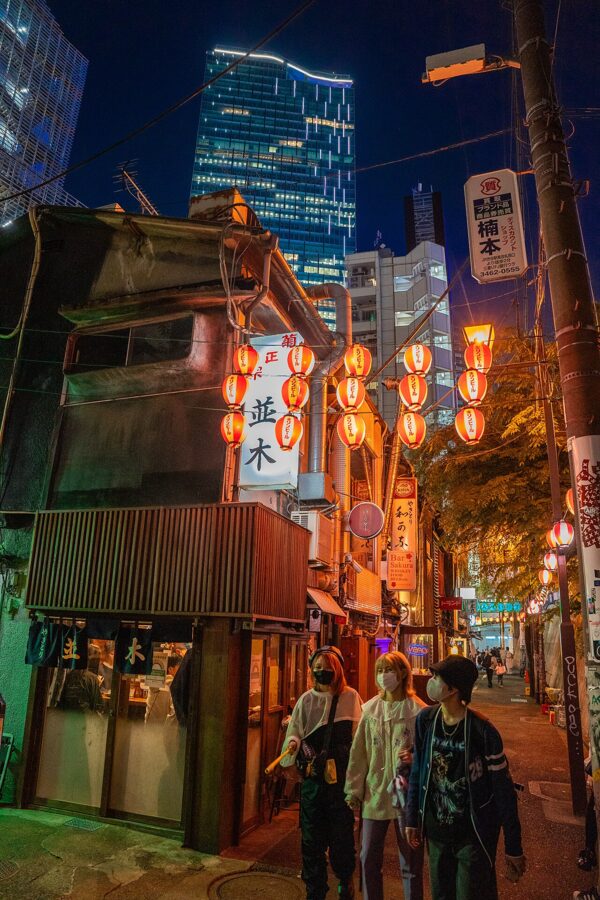
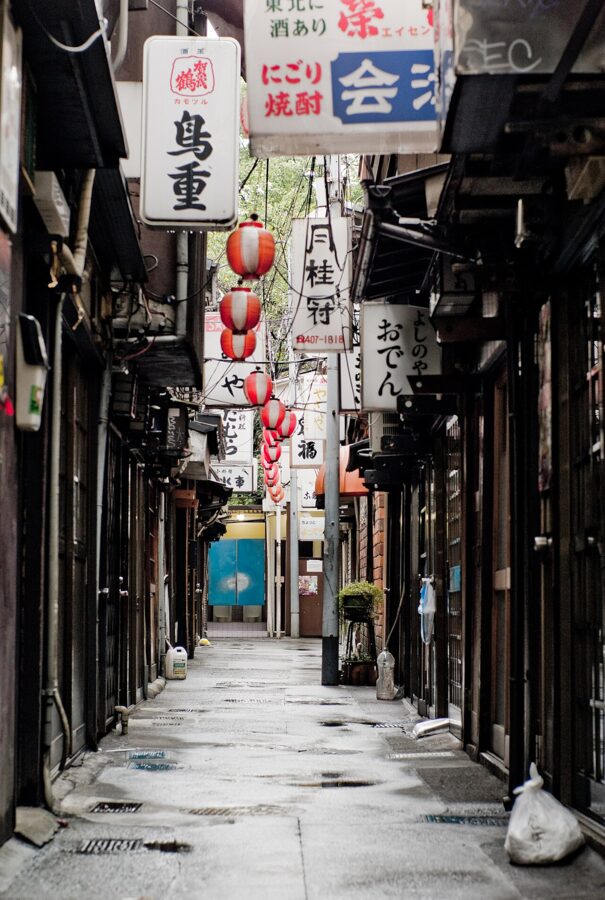
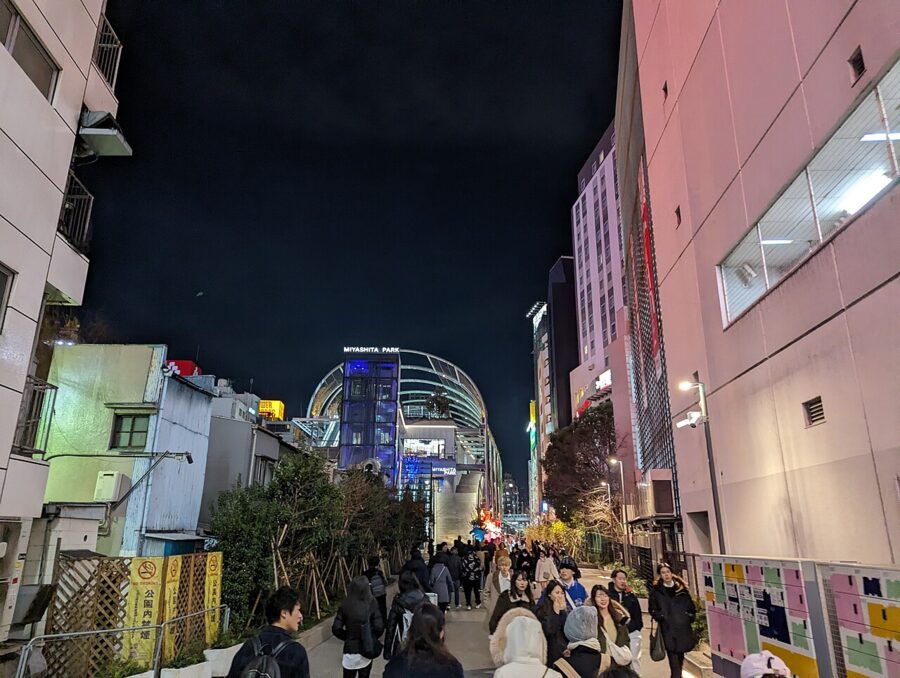
Nonbei Yokocho is two short lanes on the east side of the JR tracks, a five-minute walk north of Shibuya Station on the way to Miyashita Park. Its address is Shibuya 1-25, and its own shop list has fewer than 40 names on it. It was formed in 1950, when Tokyo cleared the food stalls from around the station and collected them on this strip of land beside the tracks.
The rooms are as small as Golden Gai’s, often six or eight seats, but the mood is different. Many are counters run by an okami, the woman who owns the place, doing home cooking: regional dishes from her home prefecture, oden, grilled fish, a plate of something simmered on the counter that changes daily. A couple of wine bars and shot bars have moved in. It’s the alley I’d send someone who wants Golden Gai’s scale without Golden Gai’s crowds.
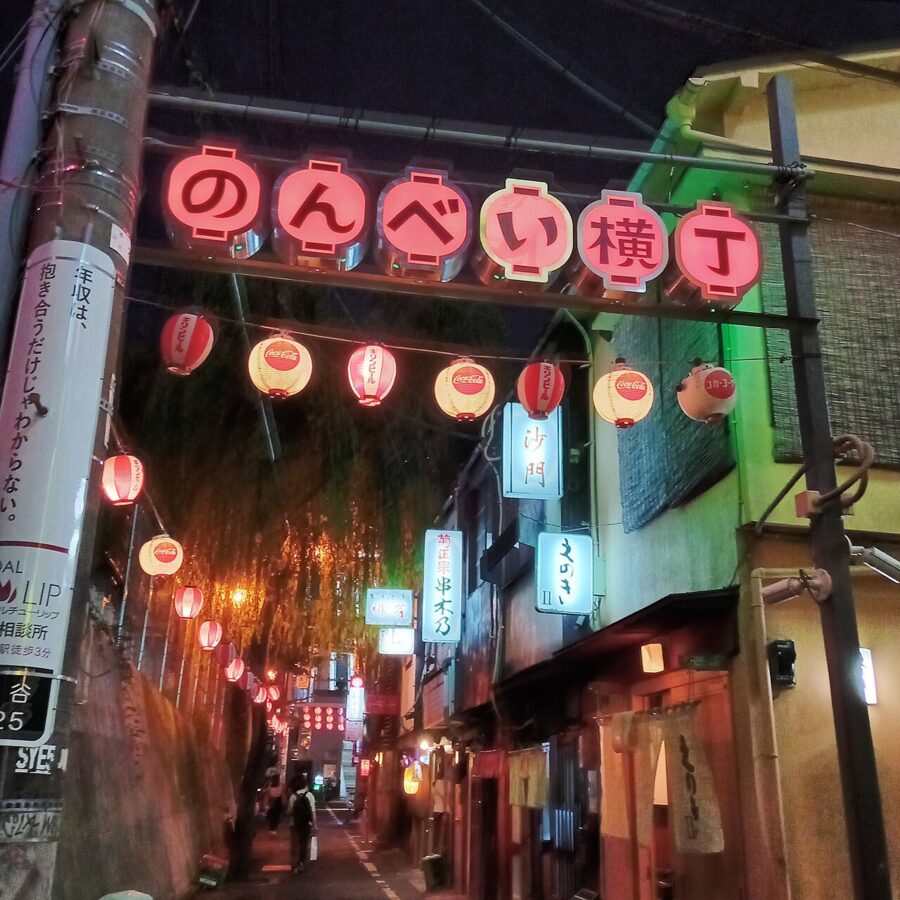
Cover charges exist here too, usually as an otoshi, and seats fill early on Friday and Saturday. My Tokyo food neighbourhoods guide has more on eating around Shibuya, and on the yokocho I only touch on here.
Koibumi Yokocho, the love-letter alley
On the other side of the station, on Dogenzaka, a small steel post marks a yokocho that didn’t survive. In 1948 a former army officer who spoke good English opened a second-hand shop in the Dogenzaka market and started translating letters for women writing to American soldiers. Translation turned into ghost-writing, and ghost-writing into a business. In 1953 the novelist Niwa Fumio serialised a novel about it, Koibumi (“Love Letter”), in the Asahi evening paper, and Tanaka Kinuyo directed the film the same year.
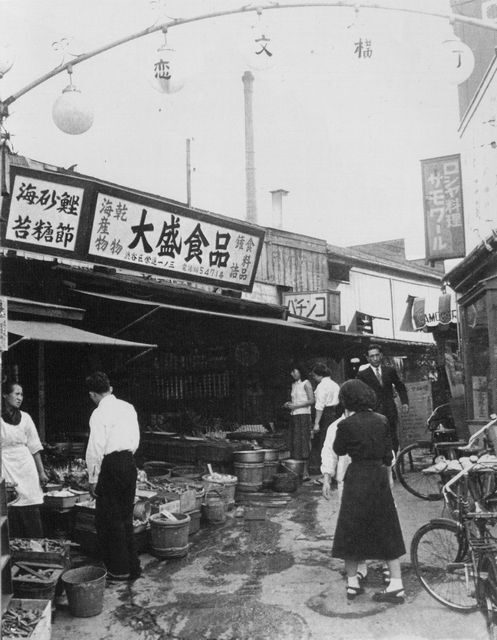
The lane renamed itself Koibumi Yokocho, Love Letter Alley. It was also known for its gyoza stalls.
After a court fight with the landowner, evictions began in 1962, and a fire in 1965 burned what was left. The site is now under a Yamada Denki store and the Shibuya Prime building. A local pharmacist put up the first marker in 1979.
Kichijoji Harmonica Yokocho
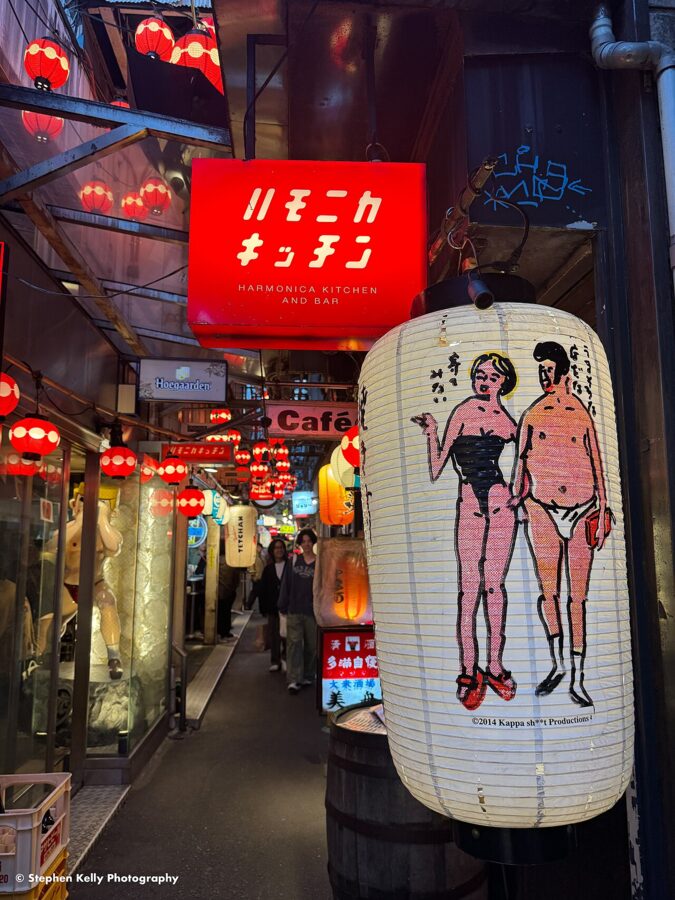
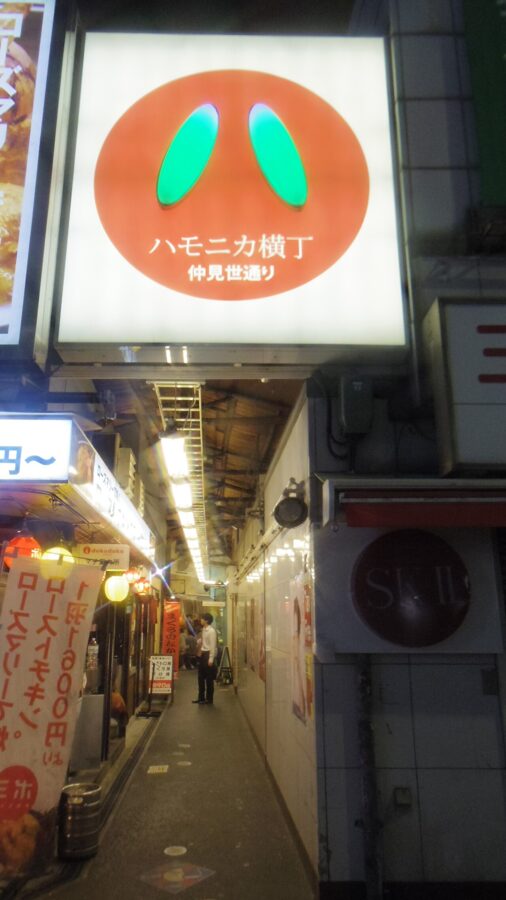
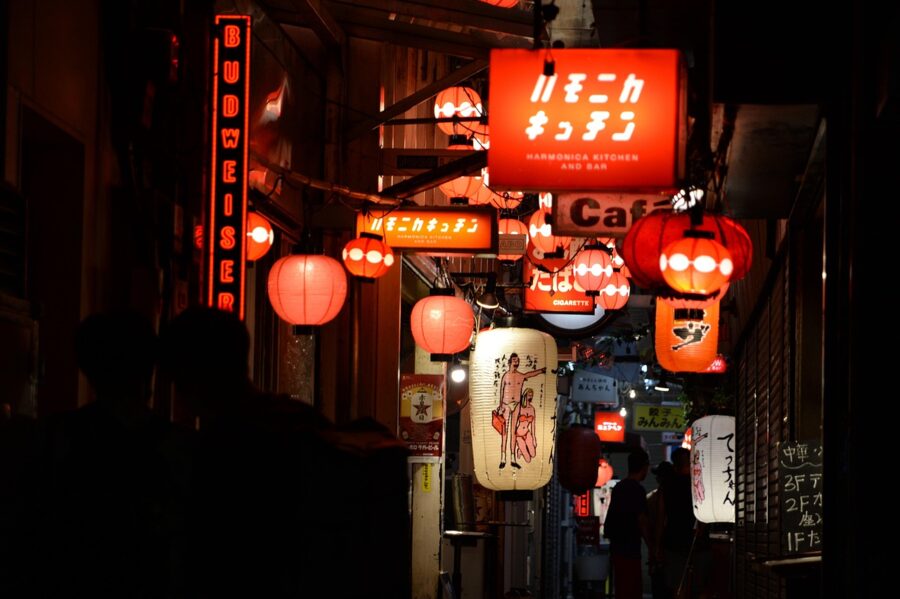
Harmonica Yokocho is the alley I’d choose for an afternoon. It sits immediately outside the North Exit of Kichijoji Station on the JR Chuo Line and the Keio Inokashira Line, about 15 minutes from Shinjuku by rapid train, and its five lanes hold close to 100 shops. They’re mixed: an old pickle shop, a jeweller, a spectacles shop, takeaway snack windows, and among them dozens of bars and counters.
The name comes from the literary critic Kamei Katsuichiro, who lived in the area and said the rows of tiny shop fronts looked like the mouthpiece of a harmonica. Locally it’s usually written and said “Hamonika”. Like the others it began as a black market in the late 1940s, and like Golden Gai it has seen off repeated redevelopment plans because the land rights are too fragmented to untangle.
How the old market got new bars
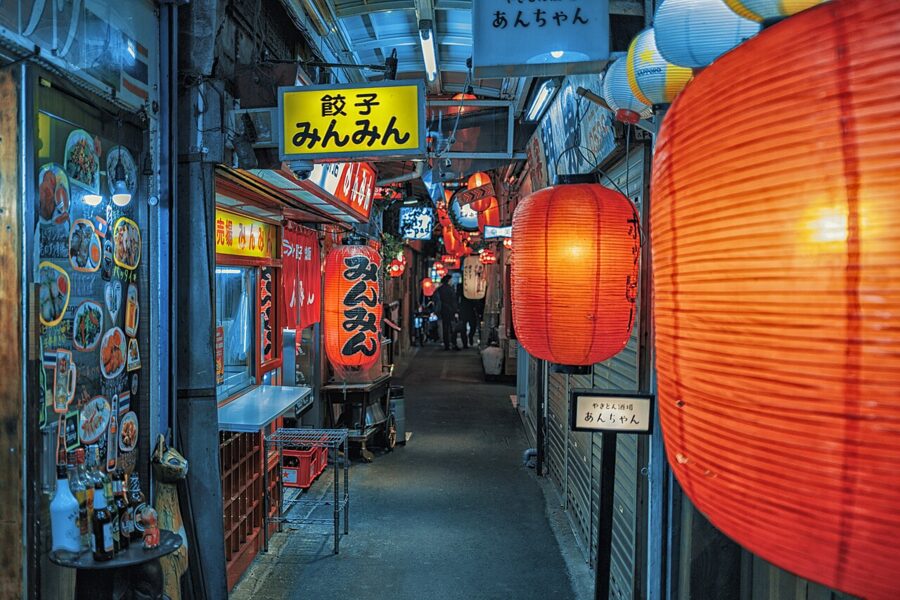
Harmonica’s revival has a name attached. In 1998 Tezuka Ichiro, whose company VIC had opened Japan’s first specialist video equipment shop in Kichijoji in 1981, began opening small food and drink places inside the yokocho, each one designed to exist only there. VIC’s places now include Harmonica Kitchen on Chuo-dori, Yakitori Tecchan, and a wine shop called Crazy Wine with a standing kaku-uchi counter, which bills itself as the cheapest drink in Kichijoji and keeps a pot of oden going.
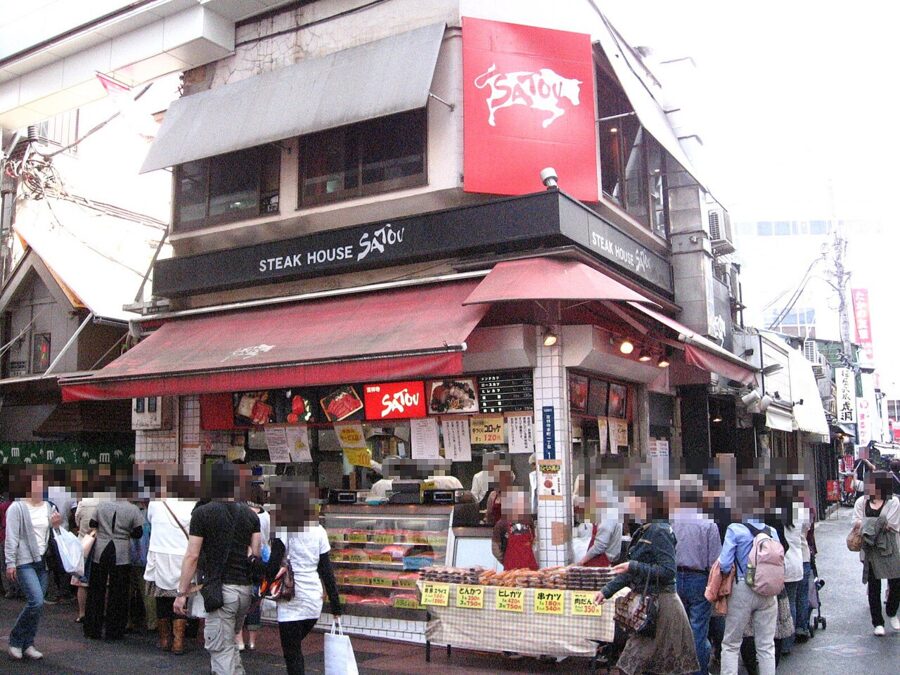
At the far western end, on Showakai-dori, Satou is a butcher famous for its menchi-katsu, a deep-fried minced beef patty, and for the queue in front of it. Roughly once a month, on a Sunday, the Chuo-dori lane holds a morning market from 8:00 to 11:00, with farm vegetables, tea and baking, and 24 August is Harmonica Yokocho Day.
Ebisu Yokocho and the new yokocho
Ebisu Yokocho is not a black-market survivor, and it doesn’t pretend to be. It’s a long covered arcade two minutes from the East Exit of Ebisu Station, lined with about 20 small counters: charcoal grill, Kyoto-style oden, a Shaoxing wine bar, a Hakata-style izakaya, kushiage, seafood grilled at the counter, meat sushi, horse meat. The roof means rain doesn’t matter. The ordering system is the clever part: most shops will deliver dishes to a seat in another shop, so you can sit at one counter and eat from three kitchens.
It’s loud and young and busy until late, and it works well for exactly the group that Golden Gai doesn’t: four or five friends who want to sit together. Book through the individual shop if you’re more than three.
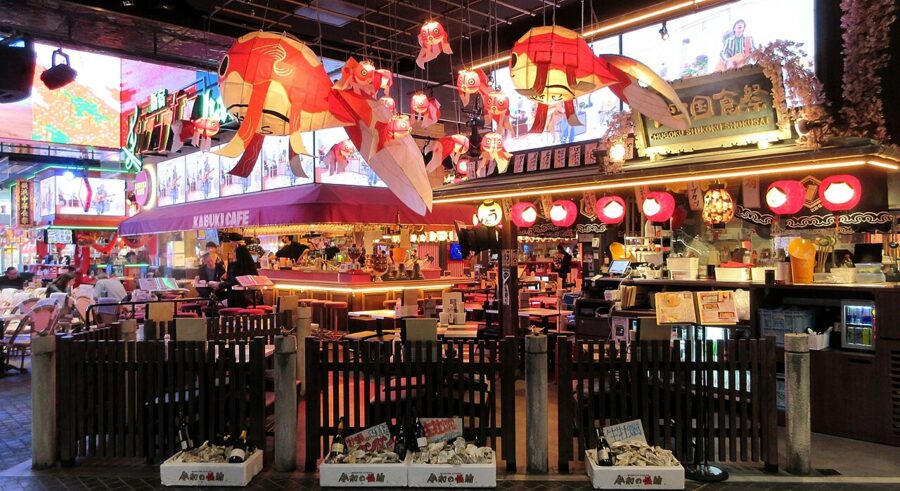
Ebisu Yokocho’s producer, the Hamakura company, went on to build a whole run of these purpose-made alleys, including Shibuya Yokocho at Miyashita Park and the Shinjuku Kabuki Hall food hall on the second floor of Tokyu Kabukicho Tower. They’re clean, easy to navigate and good fun with a group. They’re not what this guide is mostly about, but if the old alleys make you nervous they’re a sound first night.
Under the tracks: Yurakucho and Shimbashi
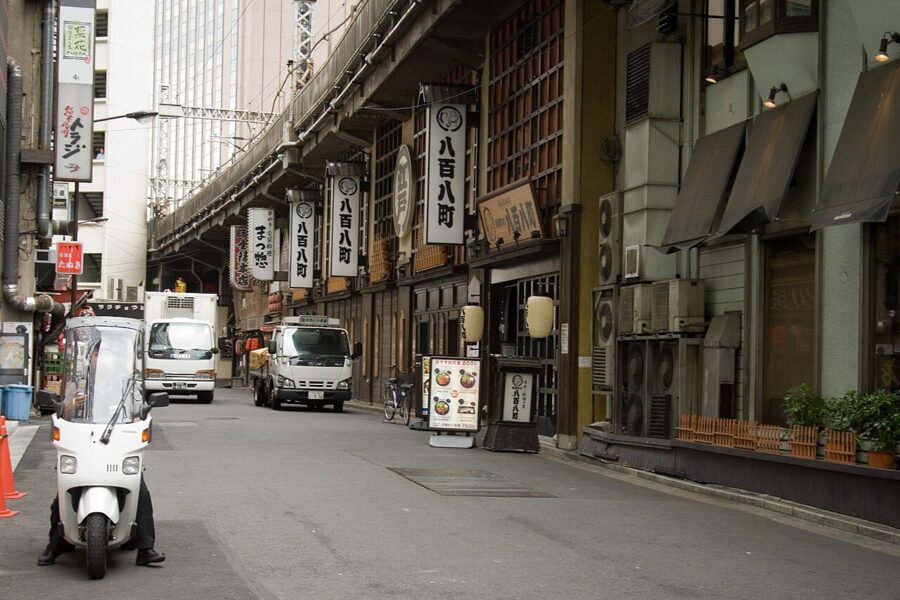
The Japanese word for it is gado-shita, “under the girder”. Between Yurakucho and Shimbashi the Yamanote Line runs on a red-brick viaduct that has been in service since 1910, built to a design modelled on Berlin’s overhead railway, with German engineers advising, and its arches have been rented out as shops and bars for most of its life. The stretch beside Yurakucho Station at Yurakucho 2-chome, on the Ginza side, is the classic one: yakitori smoke, plastic crates for tables, beer in the afternoon.
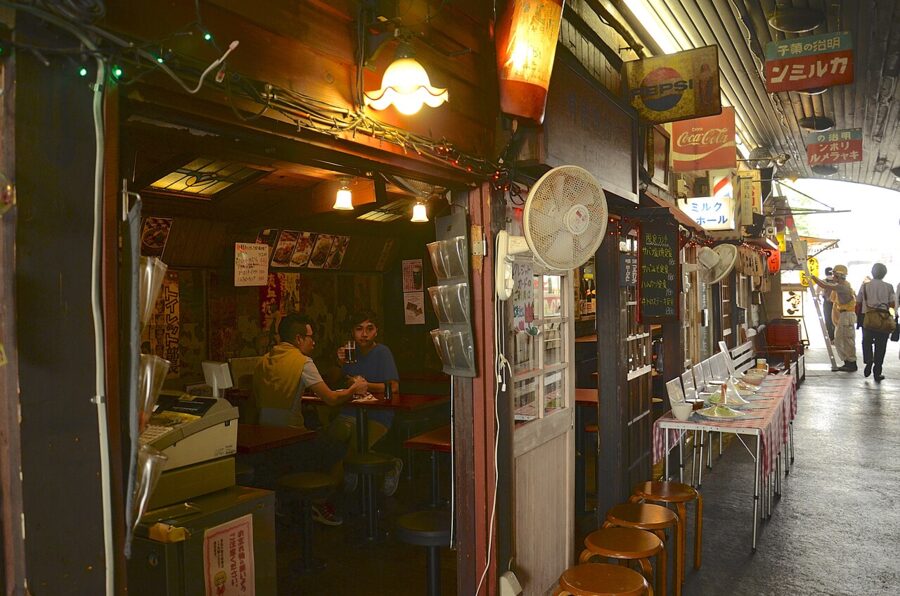
I’m not going to name a favourite counter here, because the line-up under these arches changes and a name that was right last year may not be now. Walk the length of the viaduct from Yurakucho towards Shimbashi and pick the one with the most office workers and the fewest English signs.
Hibiya OKUROJI
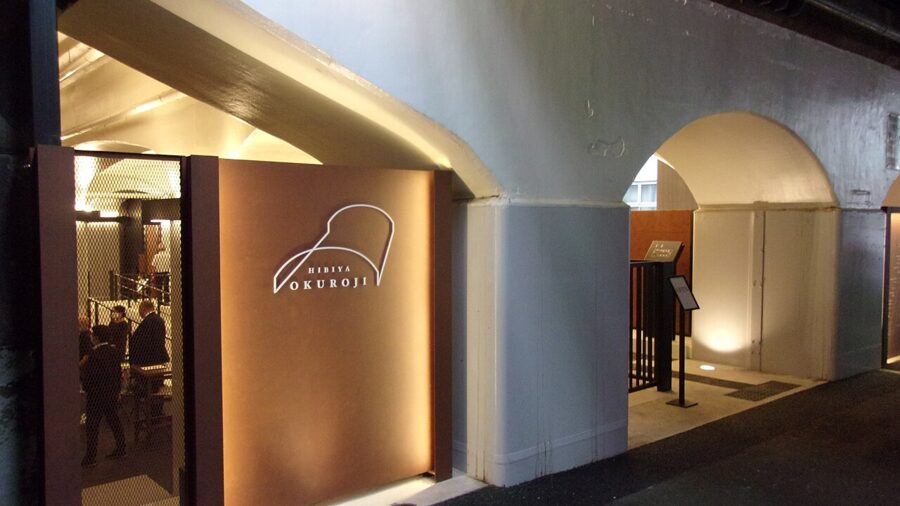
Halfway along, on the Hibiya side of the tracks, JR East’s development arm opened Hibiya OKUROJI on 10 September 2020: about 300 metres of the same brick arches, restored and filled with bars, restaurants and shops. It’s a polished version, quieter and pricier, and a good choice on a wet night. It’s about six minutes on foot from JR Yurakucho, JR Shimbashi, Ginza or Hibiya stations, and five from Uchisaiwaicho on the Toei Mita Line.
Shimbashi, the salaryman’s yokocho
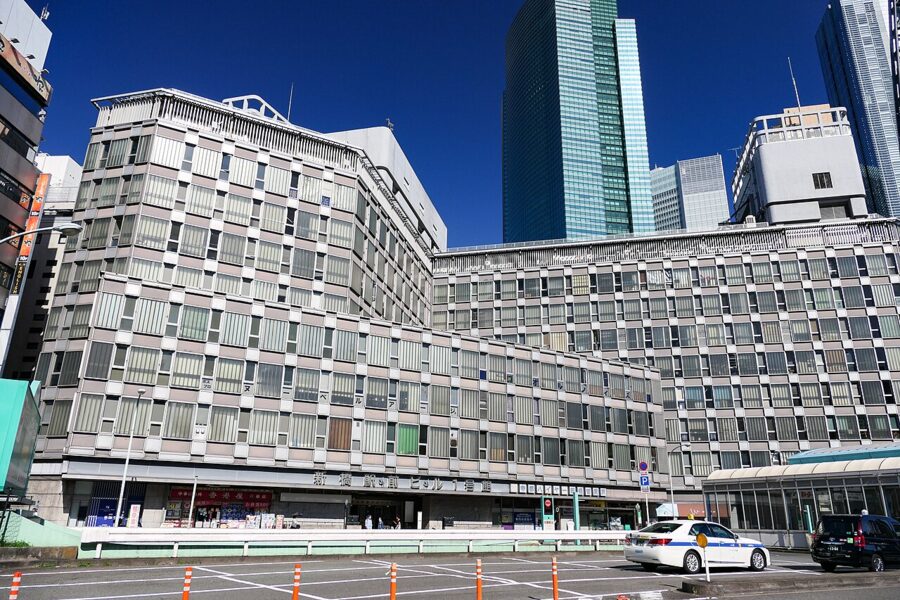
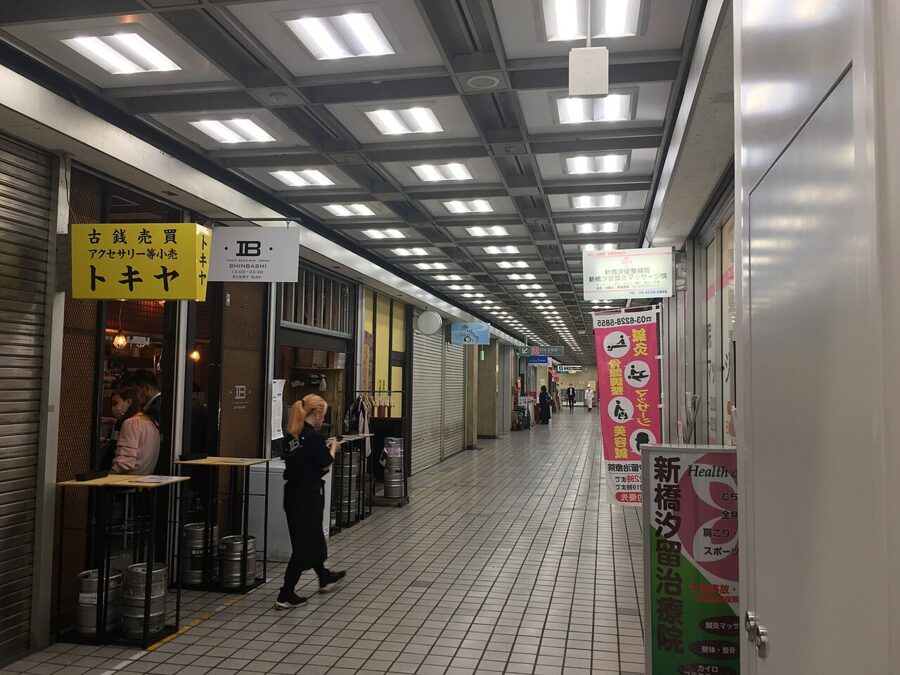
Shimbashi is the alley district you don’t hear about from travel writers, because it’s built for the people who work around it. Near the Karasumori exit, the space under the tracks is lined with bars and set-meal counters. Outside the Shiodome exit on the east side, the Shimbashi Ekimae Building stands on the site of an old drinking lane called Tanuki-koji, Raccoon Dog Alley; when the building replaced it in 1966, the bars moved inside, into the basement and lower floors, and a big tanuki statue still stands at the entrance.
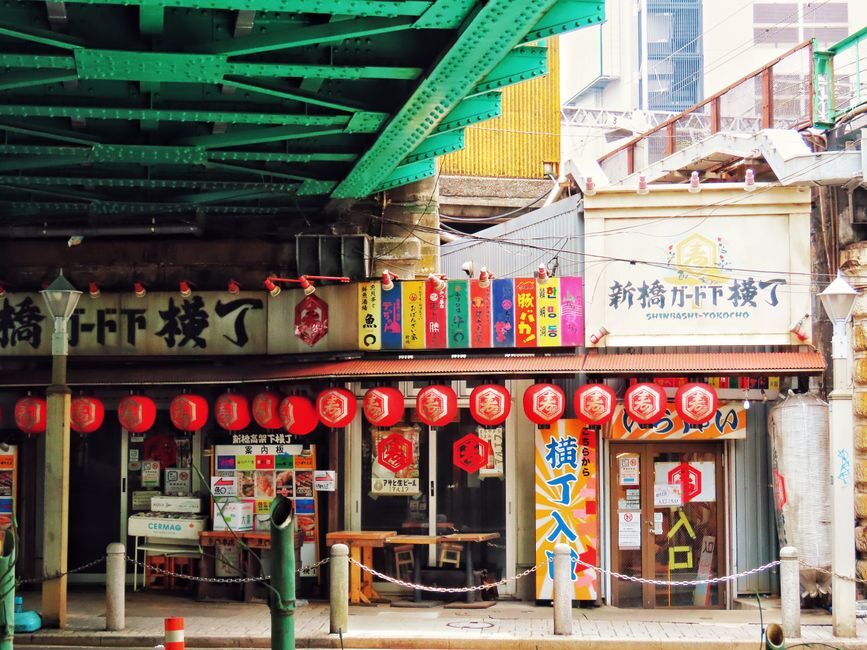
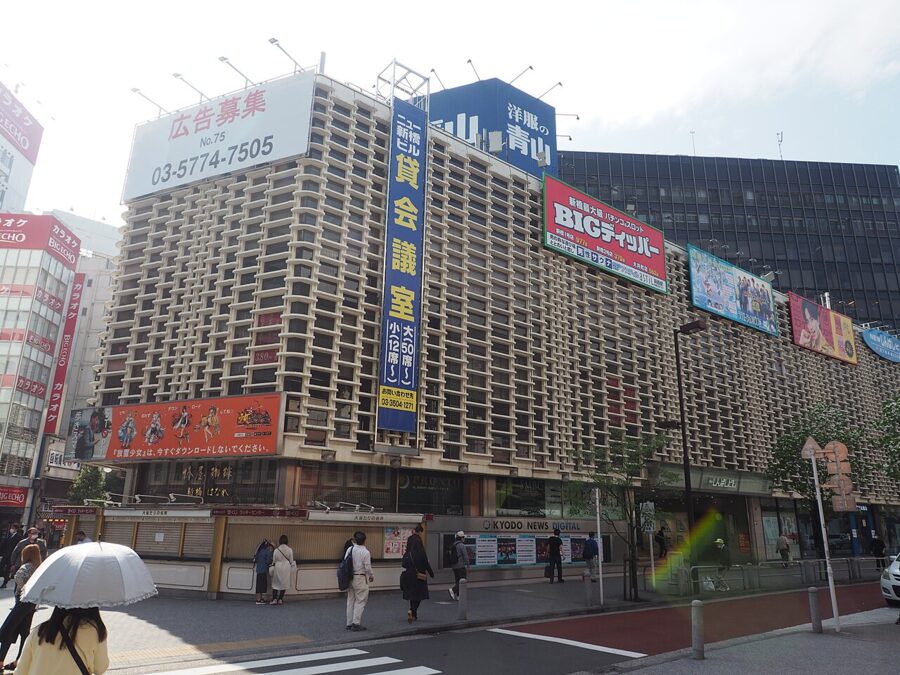
The Ekimae Building and the New Shimbashi Building on the Karasumori side are both lined, floor after floor, with tiny bars and small restaurants. Both are also on borrowed time. The landowners around the Ekimae Building set up a preparatory redevelopment association in February 2025, and the area on the other side of the station has its own plan. If you want to drink in these basements, I wouldn’t wait years.
Further out: Ueno, Akabane, Tateishi
The alleys above are the ones a first visit needs. These three are for a second night, or for someone who wants to see how people in the rest of the city drink.
Ameyoko, Ueno
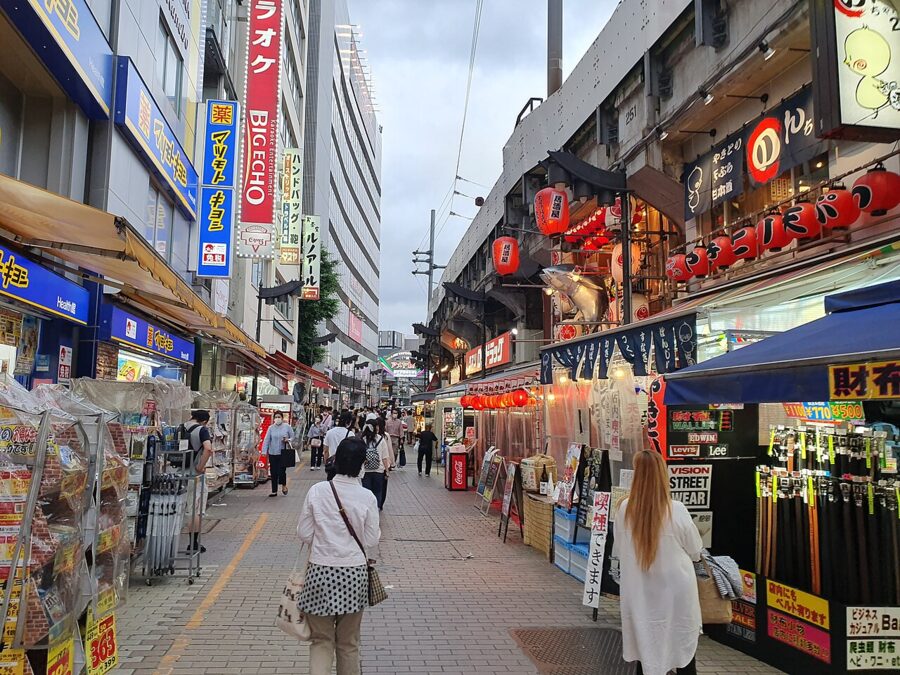
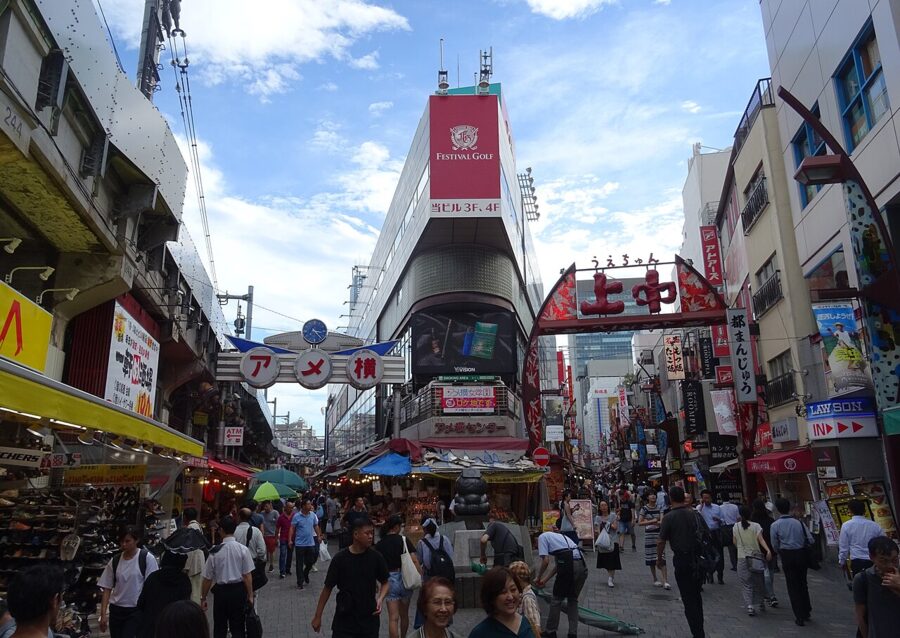
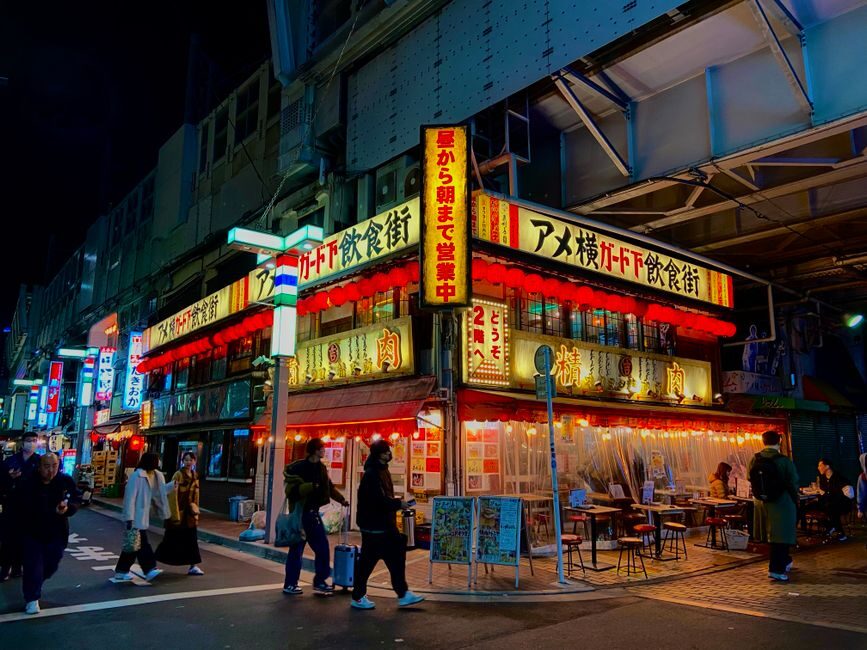
Ameyoko is a market first and a drinking street second. It runs about 500–600 metres between Ueno and Okachimachi along and under the tracks, with about 400 shops. The name has two origin stories: ame, sweets, because candy stalls did a roaring trade when sugar was scarce after the war, or America, because the market sold goods from the occupation forces. Both are probably partly true.
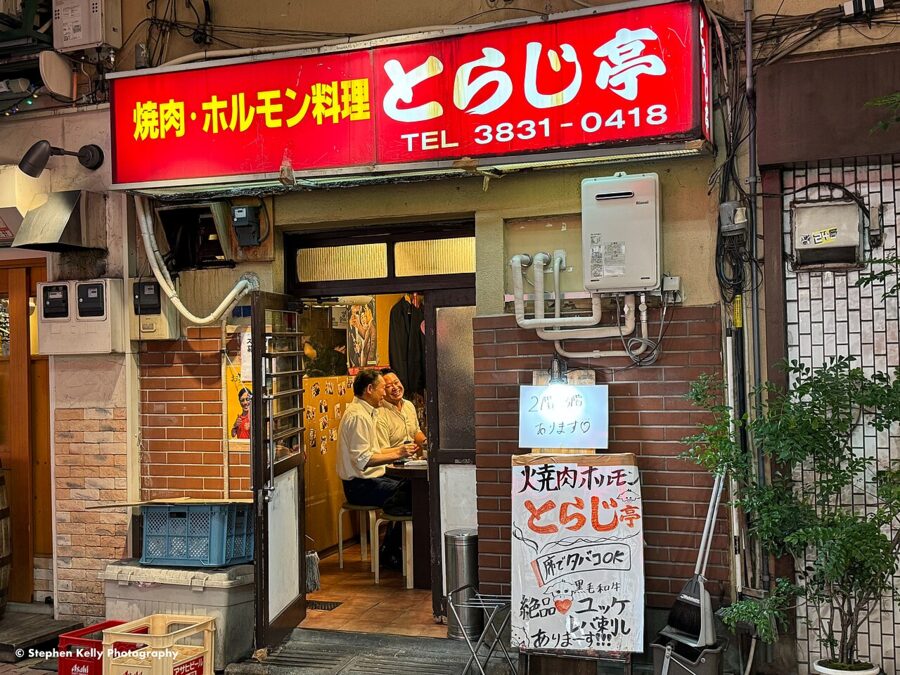
In 1946 the police raided the black market here with 500 armed officers, and the authorities then asked a local businessman to build a covered market for 80 vetted stalls on the triangle of land where the Ameyoko Center Building now stands. Today the drinking happens along the tracks, at open-fronted motsuyaki and seafood counters that are busy from the afternoon on. It’s cheap, it’s loud, and nobody minds if you don’t speak Japanese.
Akabane
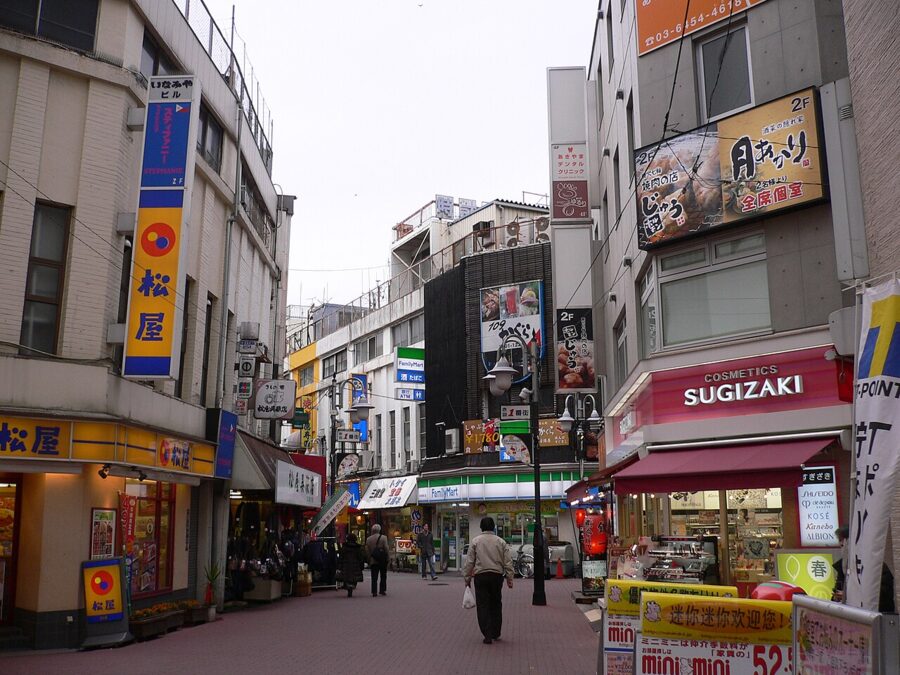
Akabane, in Kita ward, had its own station-front black market after the war, and the arcade streets east of the station still look like it. Ichibangai, just outside the East Exit, and the lanes around it are packed with cheap counters and standing bars. It’s about ten minutes north of Ikebukuro on the JR Saikyo Line, and on a weekday afternoon it’s where you’ll see what sembero means in practice.
Tateishi, and what happens when an alley goes
Tateishi, on the Keisei Oshiage Line in Katsushika, was called the holy land of sembero for years. Its best-known drinking lane, Nonbe Yokocho on the north side of the station, has already been emptied: the bars have moved out, and the site is being rebuilt as a 13-storey building that will house the Katsushika ward office, with three residential towers around the station. A petition to save the alley went nowhere.
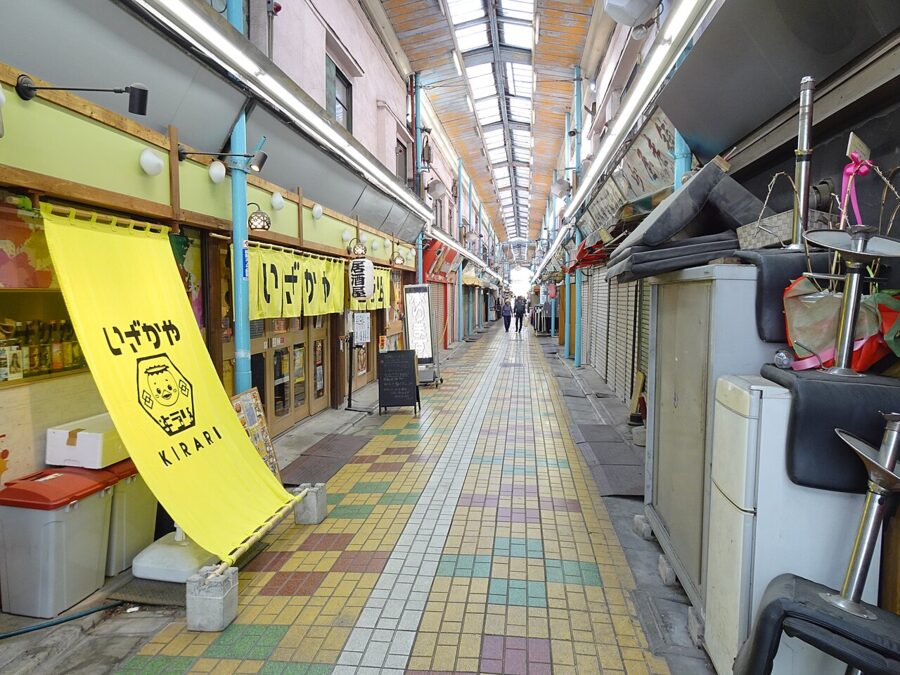
Tateishi Nakamise, the covered market on the south side, is still there, with its oden counters, fried snacks and pickles. Go for lunch and a beer. And take it as a warning: if there’s an alley you’ve always meant to drink in, the right time is soon.
What to eat and drink in a yokocho
Yokocho food is bar food. It’s built to go with a drink, to come out fast, and to cost a few hundred yen at a time. Here’s what you’ll find, roughly in order of how often.
Yakitori and motsuyaki
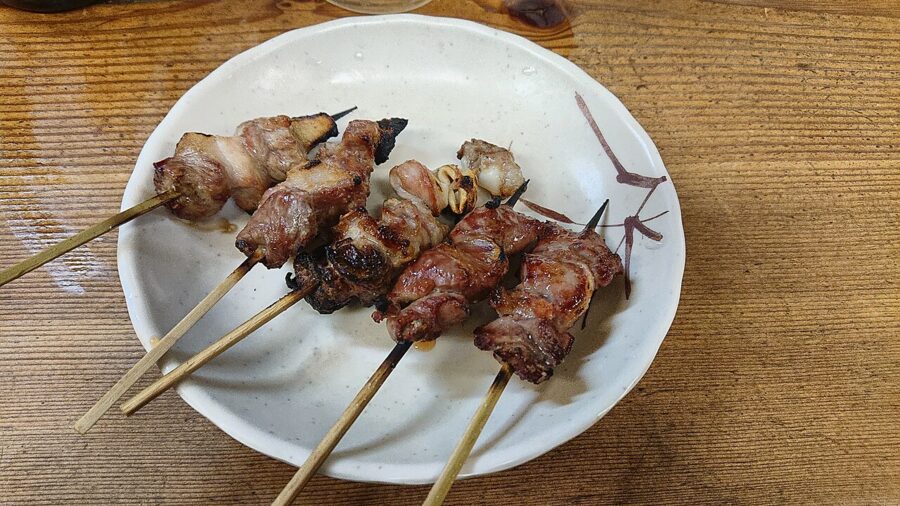
Yakitori means grilled chicken; motsuyaki means grilled offal, usually pork. In most Tokyo yokocho they share the same grill and the same menu, and in older places like Omoide Yokocho the motsu side is the original. Expect kashira (pork cheek), tan (tongue), hatsu (heart), shiro (intestine) and reba (liver), each ¥200–400 a skewer. The yakitori guide I mentioned above goes through every cut.
Nikomi and oden
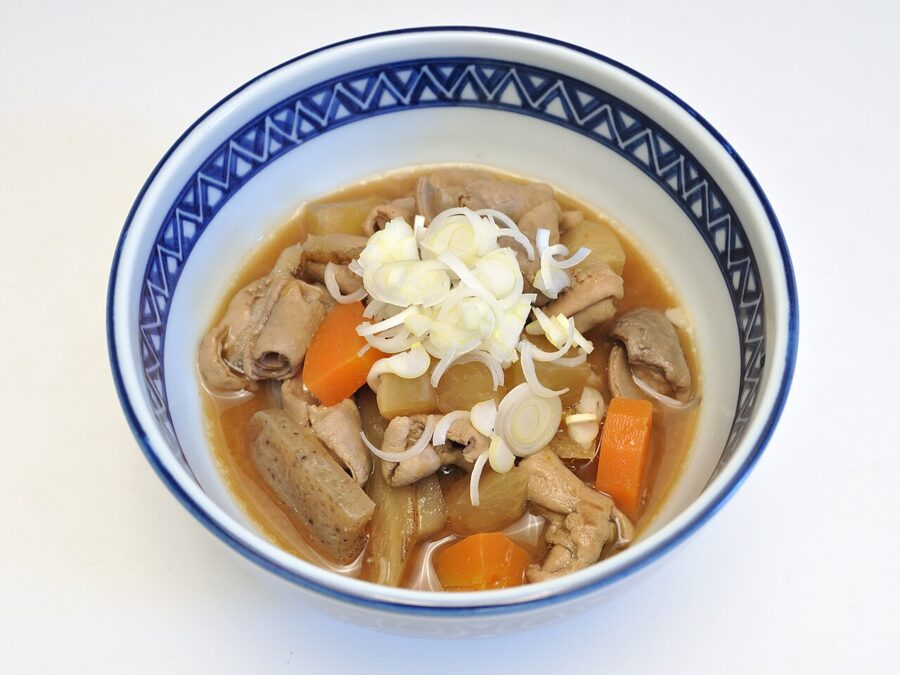
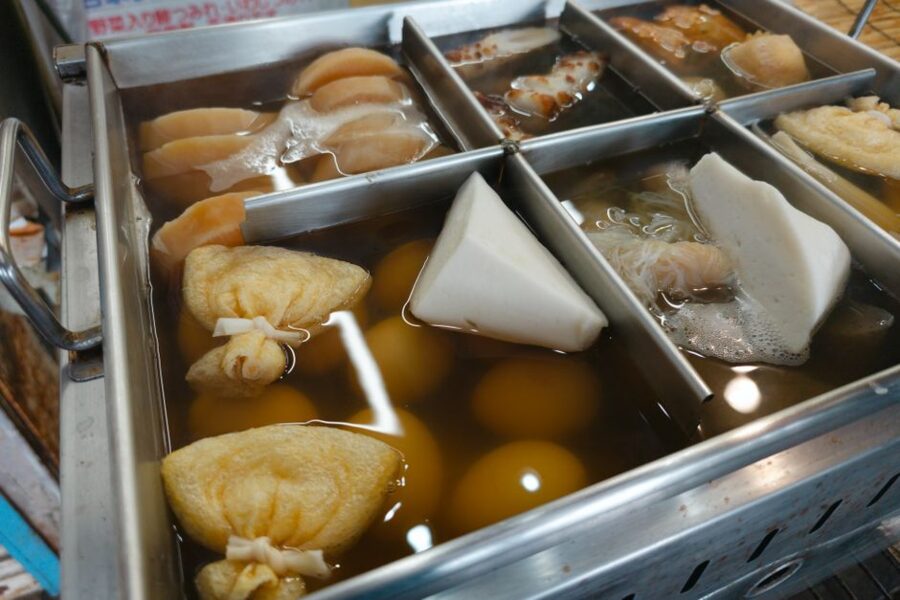
Nikomi, also called motsu-ni, is offal stewed for hours in miso or soy with daikon and konnyaku, and nearly every motsuyaki counter has a pot of it simmering. It comes in a small bowl with chopped spring onion and a shake of shichimi. Oden is the other pot: fish cakes, eggs, daikon and tofu in a light broth, and the standard comfort food from autumn onwards. My oden guide covers the ingredients.
Highballs, Hoppy, sours and sake
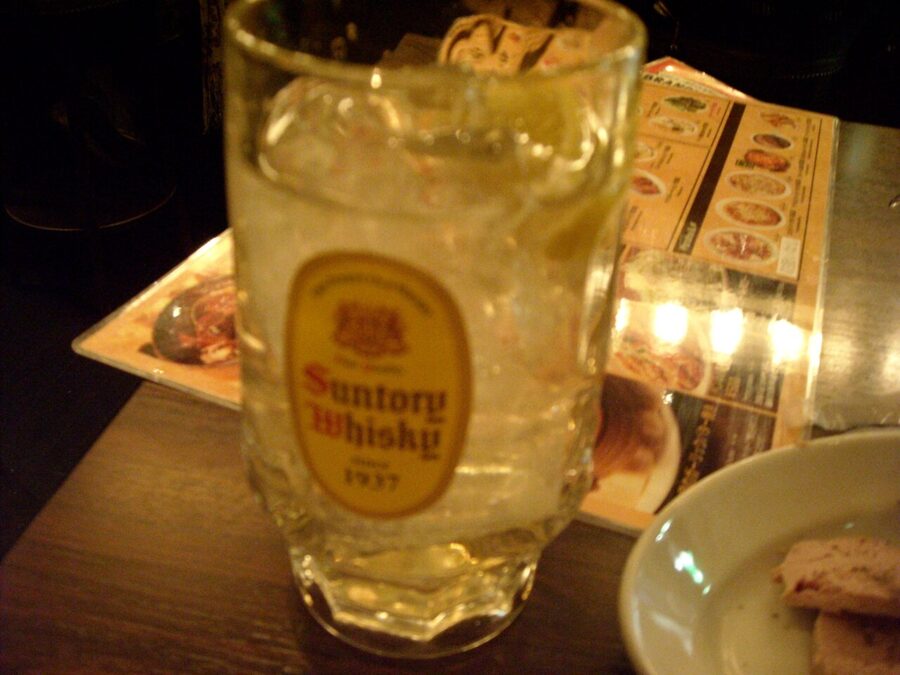
The default first order in a yokocho is a draught beer, and the default second is a highball: whisky and soda over ice in a tall glass, the drink that put whisky back into Japanese bars. The Japanese whisky guide explains why. After that comes the sour, shochu with soda and fresh lemon or grapefruit, and the drink that is most purely Tokyo of all: Hoppy.
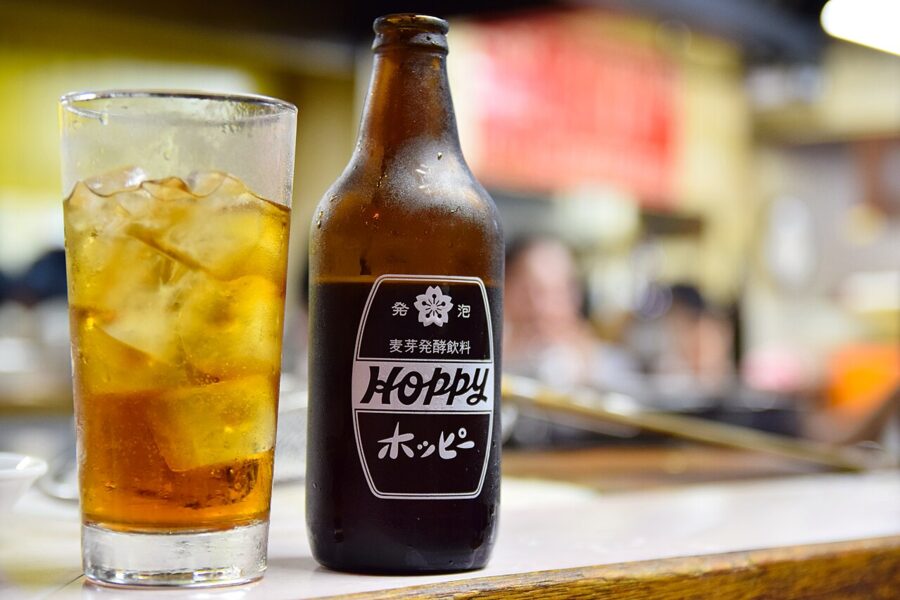
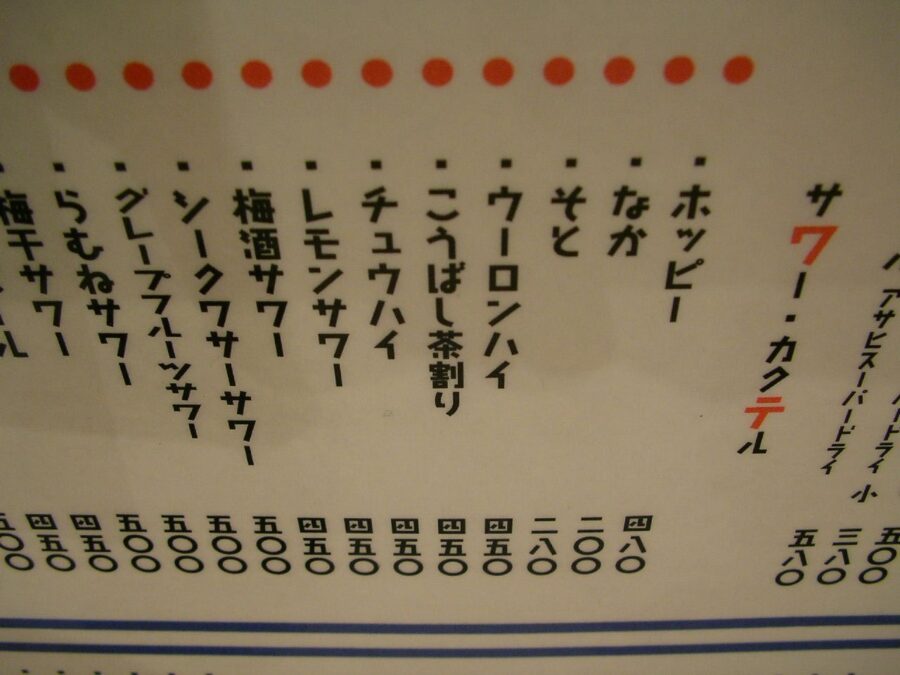
Hoppy was launched in 1948 as a beer substitute. It’s a hoppy malt soft drink with about 0.8% alcohol, sold in a short brown bottle, and you mix it with shochu. The bottle is the soto, “outside”; the glass of shochu is the naka, “inside”.
When your glass runs low you order another naka and top it up from the same bottle, so one bottle covers two or three drinks. It’s cheap and very Showa, and the shochu in it is usually the plain, neutral kind.
Sake turns up mostly as kanzake, warmed, in a small flask, or poured cold into a glass standing in a square wooden box until it overflows. If you want to know what you’re drinking, drinking sake in Japan has the labels. Craft beer is rare in the old alleys and common in the new ones; for a proper tap list, my Japanese craft beer guide is the better starting point.
Tachinomi, the standing bar
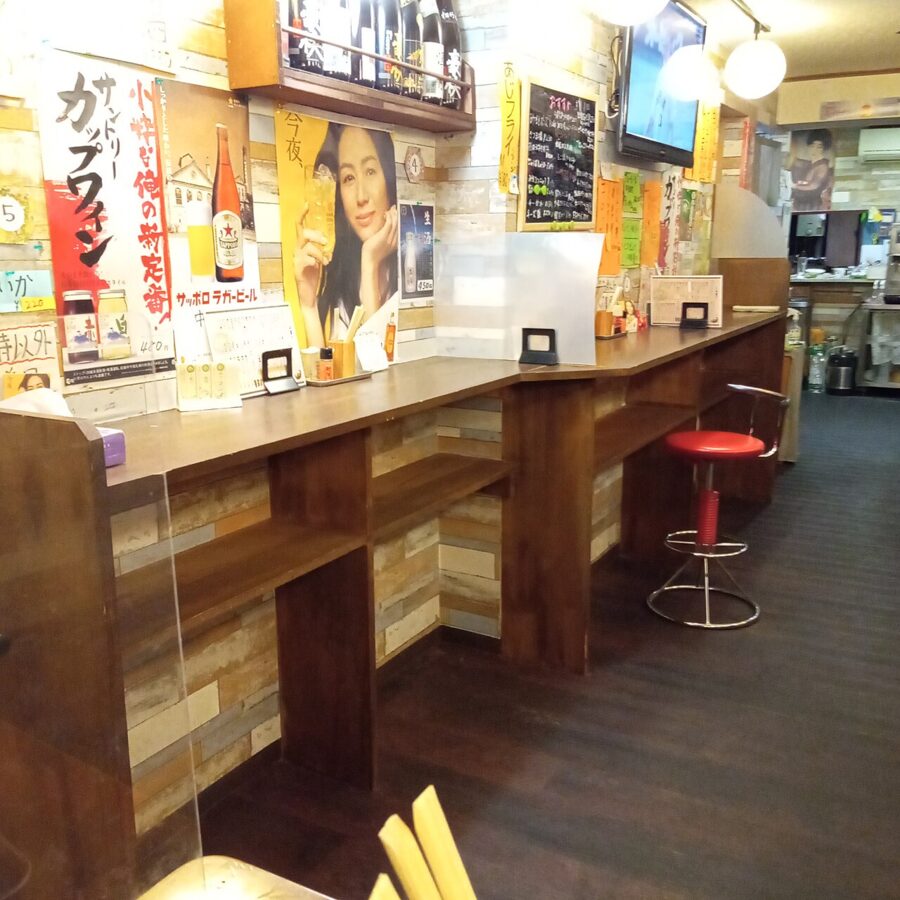
A tachinomi is a bar where you stand. Drinking on your feet at a sake shop counter goes back to the Edo period, but the modern standing bar has an odder origin: during wartime rationing in 1943, Tokyo’s licensed “people’s taverns” were told not to use chairs, so the queue would move faster. Standing bars came back legally when alcohol sales were freed up in 1949 and peaked in the 1960s. They’re thriving again, especially under the tracks.
The economics are simple. No seats means no seat charge, quick turnover and low prices, and many tachinomi take payment as each drink arrives. The same logic drives sembero, a word usually credited to the writer Nakajima Ramo and the editor Kobori Jun and their 2003 book on cheap bars: sen for a thousand yen, bero for berobero, roaring drunk.
In practice it means two or three drinks and a snack for about ¥1,000. That’s the promise of Akabane, Ueno and Shimbashi, and the opposite of a Golden Gai evening.
The izakaya guide covers ordering and the drinks menu in more depth; the rest of this section is about the parts that are particular to the alleys.
How the bars work: charges, drinks, photos, smoke
The seat charge
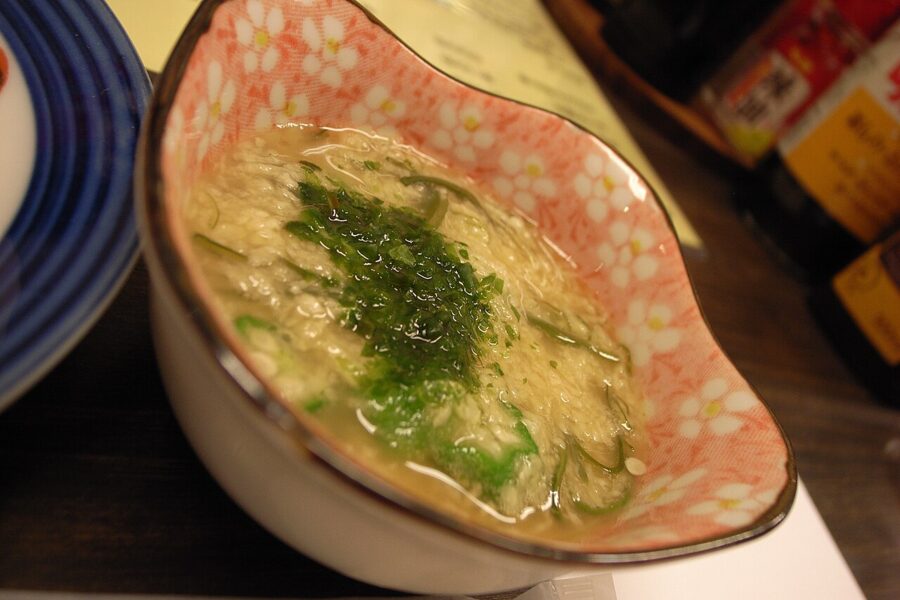
Most yokocho bars charge you for sitting down, and they call it different things. An otoshi is a small dish served automatically and billed per person, typically a few hundred yen. A charge or seki-ryo is a seat fee, often ¥500–1,500 in Golden Gai, sometimes with nibbles. Some bars have both.
It isn’t a scam; it’s how a room with six stools pays its rent. Tourist-heavy bars often post it outside. If not, ask before you sit; chaaji wa ikura desu ka, “how much is the charge”, works everywhere.
How many drinks
One drink per person is the minimum in any bar, and in a small one it’s polite to order at least one more if you stay longer than about half an hour. In Golden Gai, an hour and two drinks in a bar is a normal visit; two or three bars is a good night. In Omoide Yokocho and under the tracks, the pace is faster: a beer and a few skewers, then move on. If a counter has a drinks limit or a time limit, it’ll be on the wall.
Groups
Two or three people is the ideal number for Golden Gai and Nonbei Yokocho. Four is possible if you look in first and ask. Five or more and you’d fill the room, so split up or go to Ebisu Yokocho, Shibuya Yokocho or an Ameyoko counter, all of which are built for groups.
Photos
Ask before photographing the inside of any bar, and never photograph other customers. In Golden Gai and Omoide Yokocho the lanes themselves are private property and the associations require permits for street photography; a quick phone picture from the entrance sign is about as far as I’d go without asking. A lot of these bars are regulars-only precisely because the regulars don’t want to end up on someone’s feed.
Smoking
Since April 2020 Tokyo’s rules have banned smoking inside bars and restaurants that employ staff, except in sealed smoking rooms. A small bar run by its owner with no employees can still allow smoking, and many in Golden Gai do; every bar has to post a sign at the door saying which it is. Under-20s can’t enter a smoking bar at all.
Outside, Shinjuku, Shibuya and the other central wards ban smoking on the street except at designated spots, and both the Golden Gai and Omoide Yokocho associations ban it in their lanes. If smoke bothers you, read the sign before you push the door.
Cash, toilets and the last train
Carry cash: ¥10,000–15,000 is plenty for a long night. Many of the older counters still don’t take cards, and some only take payment at the end, so don’t assume. Toilets are often shared or outside, in Golden Gai’s case on the Shiki no Michi promenade, so go before you start. The last Yamanote Line trains leave Shinjuku a little after half past midnight on weekdays; check JR East’s timetable for the night you’re out, or plan on a taxi.
Prices and a short “skip this”
| Item | Typical price | Where |
|---|---|---|
| Seat charge | ¥500–1,500 per person | Golden Gai and most small bars |
| Otoshi | A few hundred yen per person | Most izakaya-style counters |
| Drink in a small bar | ¥600–1,000 | Golden Gai, Nonbei Yokocho |
| Yakitori or motsuyaki | ¥200–400 a skewer | Omoide Yokocho, Yurakucho, Ameyoko |
| Festival-day drink, no charge | From ¥500 | Golden Gai festival days |
| Sembero evening | About ¥1,000 for two or three drinks and a snack | Standing bars in Akabane, Ueno, Shimbashi |
A two-bar night in Golden Gai with two drinks in each comes to about ¥4,000–6,000 a person. An early evening in Omoide Yokocho with a beer, a highball and eight skewers is closer to ¥3,000–4,000.
Skip this
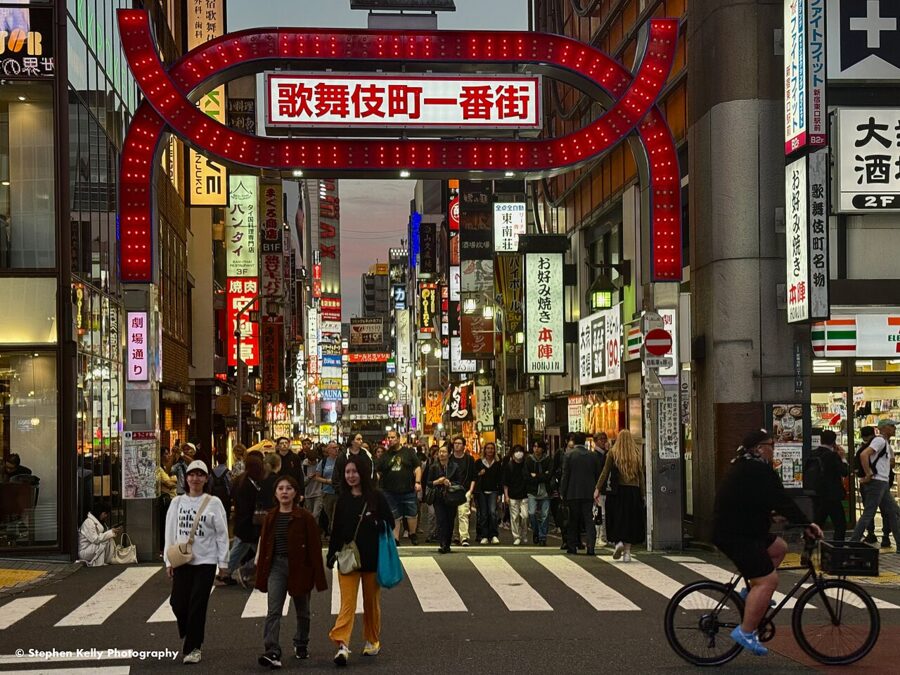
- Anyone on the streets of Kabukicho offering to take you to a bar. Golden Gai doesn’t need touts; the bars at the end of a tout’s walk are where the horror-story bills come from.
- Golden Gai with a group of six on a Saturday. You won’t get in anywhere together, and the lanes will be a crush.
- Omoide Yokocho between 19:00 and 21:00 on a Friday. Come at 17:00, or after 21:00, and you’ll get a stool.
- Any counter with a laminated photo menu and someone outside waving it at you.
- Tateishi’s Nonbe Yokocho. It’s gone. Go to Tateishi Nakamise instead.
Start in the smoke at Omoide Yokocho before the office crowd. Walk across to Golden Gai at nine, look at three or four price boards, and pick the bar with the strangest theme and a seat free. Stay for two drinks. Then catch the last train, or don’t.
You Might Also Enjoy
 Chinese Breakfast: Baozi, Youtiao, Jianbing, Congee and the Regional Morning Map
 Guilin and the Li River: The Cruise to Yangshuo, Xingping, Reed Flute Cave and the Longji Rice Terraces
 Pu-erh Tea in Yunnan: Raw and Ripe, the Old Tea Mountains, the Tea Horse Road and How to Buy It
 Giant Pandas in China: Where to See Them, the Chengdu Base, Dujiangyan, Wolong and How to Visit Well