Guilin and the Li River: The Cruise to Yangshuo, Xingping, Reed Flute Cave and the Longji Rice Terraces
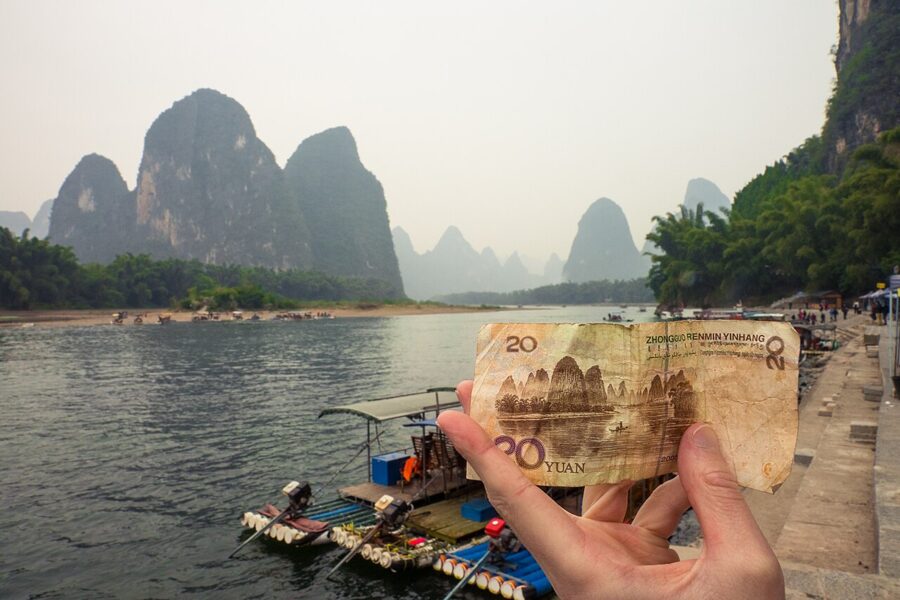
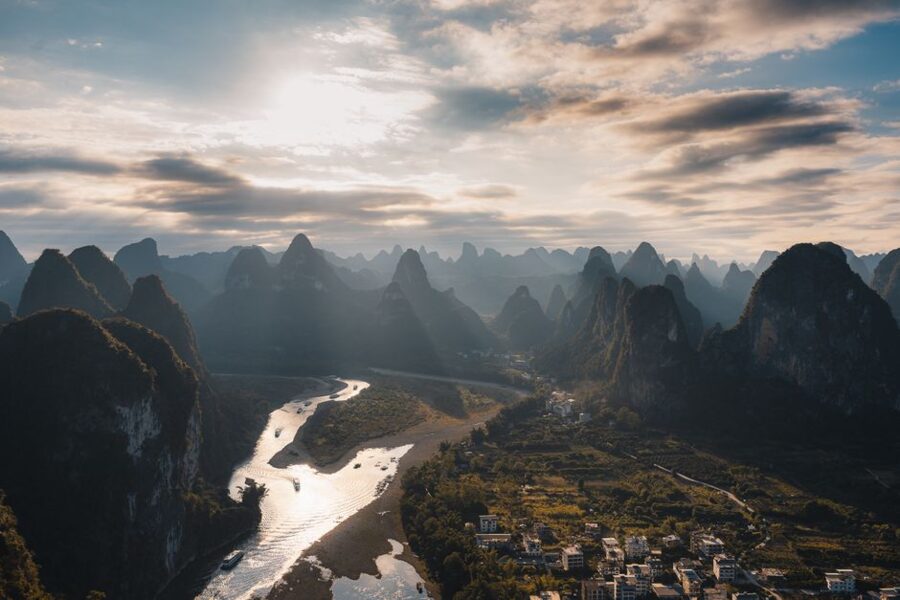
Half the people on the riverbank outside Xingping are holding the same thing at arm’s length: a brown 20-yuan note, turned over to the picture side, lined up against the hills across the water. You shuffle left a step, then right, until the printed peaks sit on top of the real ones. Somebody’s phone clicks. The note goes back in a wallet, and the river keeps sliding past as if nothing happened.
That is the strange thing about Guilin. You arrive already knowing the picture, from a banknote, a restaurant calendar or a scroll painting.
Then the train pulls in and the city turns out to be the centre of a prefecture of about five million people with limestone towers poking up between the apartment blocks. Some of the towers are in parks. One has a palace built round it. A few stand in the river.
This guide covers what the karst is, which hills in town to climb, the Li River cruise to Yangshuo with its prices and catches, the banknote view at Xingping, and the Longji rice terraces. Prices come from the scenic areas’ own notices where they publish them.
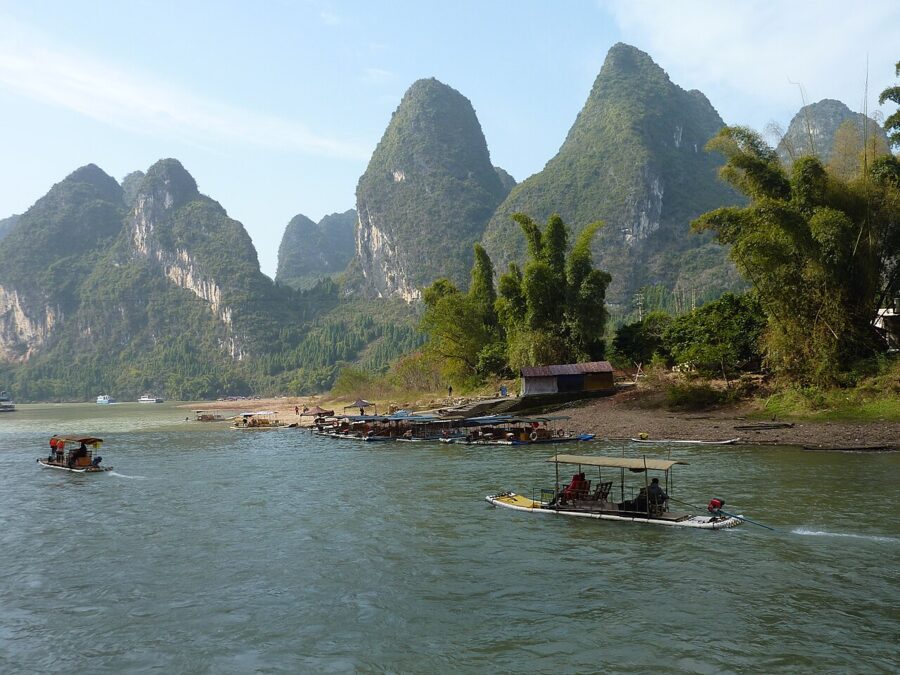
Guilin itself is easy. Most of what you want in town sits within a few kilometres of the Li River’s west bank, the hills you can climb cost ¥20–30 or nothing at all, and the night boats on the lakes run every evening. The river, Xingping and the terraces are where the planning matters. Here are the main ways onto the water.
| Option (official 2026 prices) | Where | Price | Best for |
|---|---|---|---|
| Three-star cruise | Mopanshan to Yangshuo, one way | ¥215 | The full river in one go, with lunch |
| Four-star cruise | Mopanshan or Zhujiang to Yangshuo | ¥360 | The same river, more deck space, buffet |
| Electric bamboo-style raft | Yangdi to Chaobanshan (Xingping) | ¥255 | Being close to the water on the finest stretch |
| Short raft loop | Chaobanshan to Nine Horse Fresco Hill and back | ¥140 | Xingping-based trips, the 20-yuan reach |
| Fishing Village boat | Xingping to Fishing Village and back | ¥115 | A short ride plus an old village |
In This Article
- What you’re looking at: the karst in a few sentences
- Guilin city, hill by hill
- Elephant Trunk Hill
- Reed Flute Cave
- Seven Star Park
- Fubo Hill and Diecai Hill
- Solitary Beauty Peak and the Jingjiang Princes’ City
- The Two Rivers and Four Lakes at night
- The Li River cruise to Yangshuo, without the brochure
- The boats and what they cost
- Mopanshan, Zhujiang and getting to the pier
- What the four hours look like
- Booking with a passport
- The rafts from Yangdi and Xingping
- Touts and “cheap cruises”
- Xingping and the view on the 20-yuan note
- The old town and Fishing Village
- Finding the banknote view
- Laozhai Hill for sunrise
- Getting there from Guilin and Yangshuo
- The Longji rice terraces
- Ping’an or Dazhai?
- When to go
- The cable car and the walk between villages
- Staying overnight
- Getting there
- What to eat
- Getting to Guilin
- Where to stay in Guilin
- Three days: the city, the river and Xingping
- Skip this
What you’re looking at: the karst in a few sentences
The hills are limestone, laid down on the bed of an ancient sea and later lifted, cracked and dissolved by rain. Rainwater picks up carbon dioxide, turns faintly acidic and eats the rock along every crack, so over millions of years the plain wore away and the harder blocks were left standing as towers. Caves are the same process working underground. Guilin’s karst was added to the South China Karst World Heritage listing in 2014.
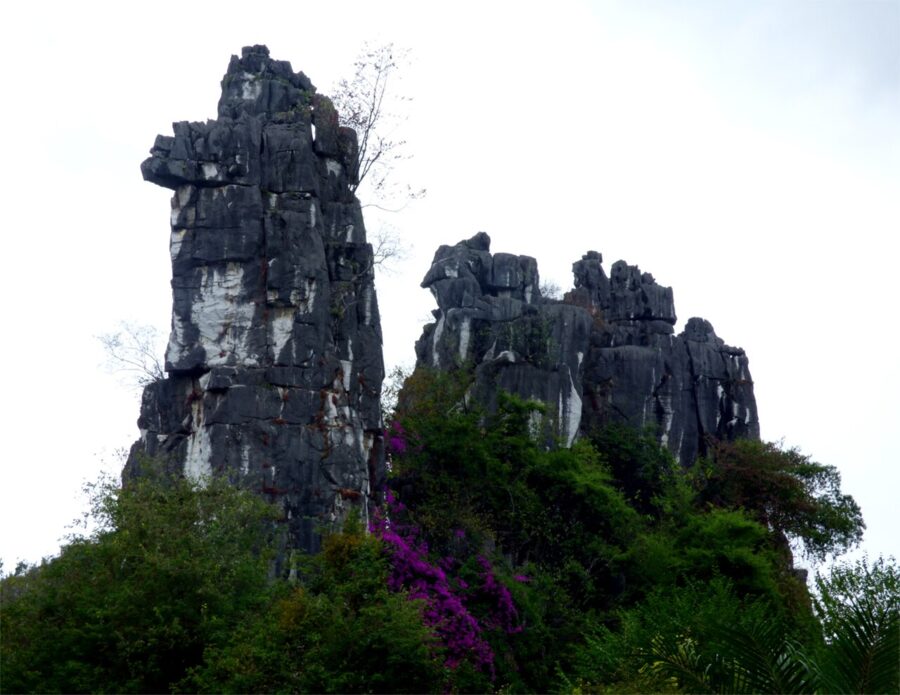
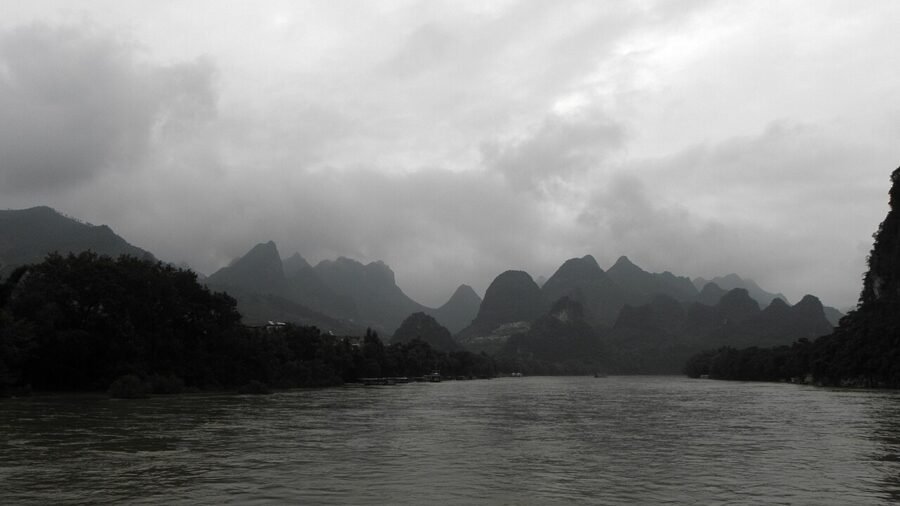
Geologists split it into two kinds, and you’ll see both on one trip. Fengcong is cone karst: clusters of peaks that share a base, with deep hollows between them, and it crowds the gorge-like middle of the Li River. Fenglin is tower karst: single steep towers rising off a flat plain, which is the classic Yangshuo and Guilin-city look. Elephant Trunk Hill and Solitary Beauty Peak are fenglin towers that the town grew around.
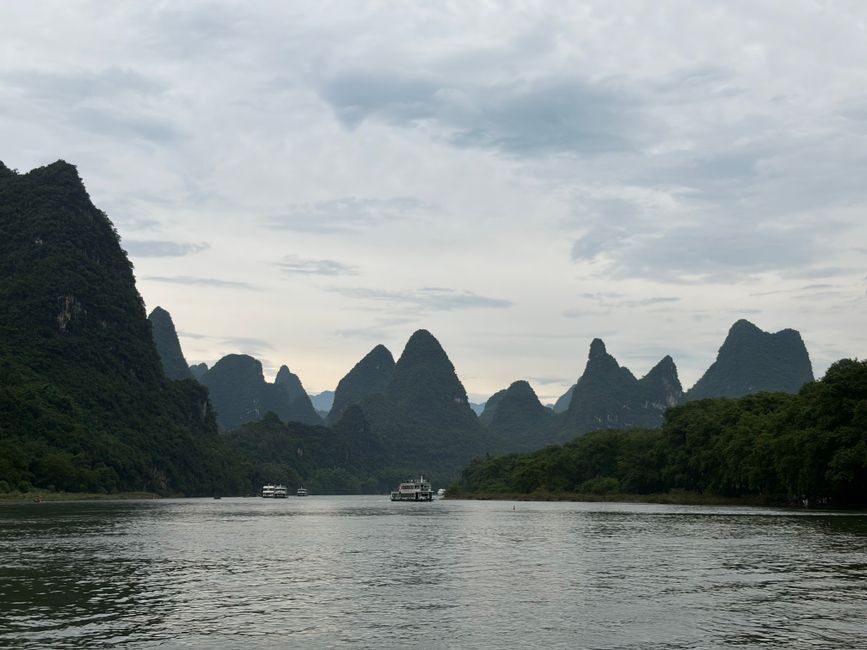
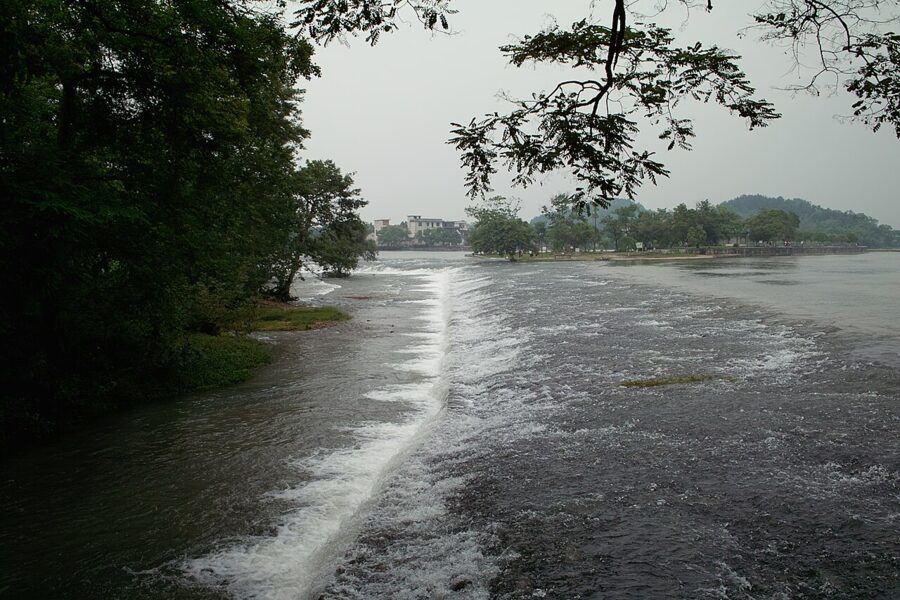
The Li itself rises on Mao’er Mountain, at 2,141.5 metres the highest peak in south China, and runs 164 km before it becomes the Gui River at Pingle. North of Guilin, the Lingqu Canal, dug in 214 BC, joins it to a river flowing north to the Yangtze. For two thousand years that made this valley a highway between central China and the south, and officials, poets and monks passing through left their names on the cliffs.
The name Guilin means something like “cassia forest”. These days the gui is understood as sweet osmanthus, the city flower, and if you come in autumn you’ll smell it before you see it.
Guilin city, hill by hill
The old centre is a rough rectangle on the west bank of the Li. Its spine is Zhongshan Road, Zhengyang Walking Street runs up the middle, and the lakes of the Two Rivers and Four Lakes system make a ring round the south and west. Elephant Trunk Hill is at the bottom right corner, Fubo and Diecai hills are up the riverbank to the north, the palace and Solitary Beauty Peak are in the middle, and Seven Star Park is across the river to the east. Reed Flute Cave is the outlier, about 5 km north-west.
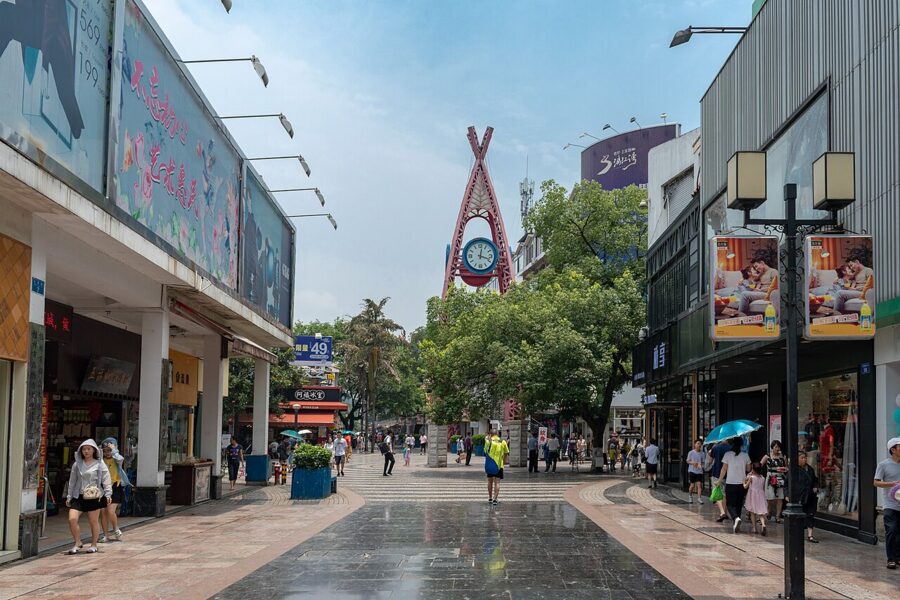
Walk it. From Elephant Trunk Hill up the riverside to Fubo Hill is a pleasant stroll along Binjiang Road, and Diecai Hill is a short walk beyond that. For Reed Flute Cave and the far side of Seven Star Park, a Didi is cheap and saves your legs for the stairs.
Elephant Trunk Hill
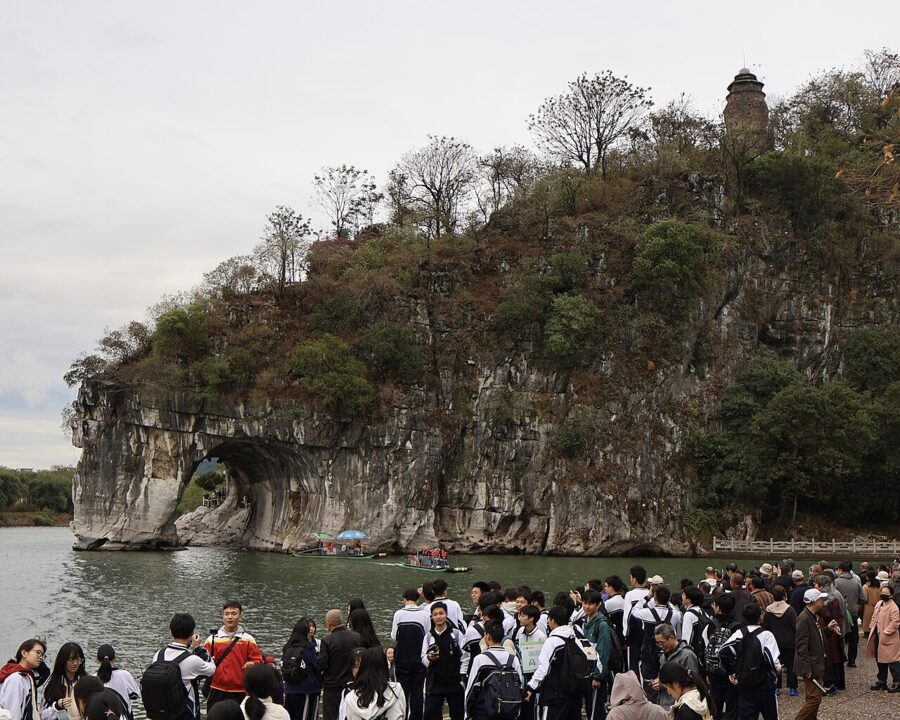
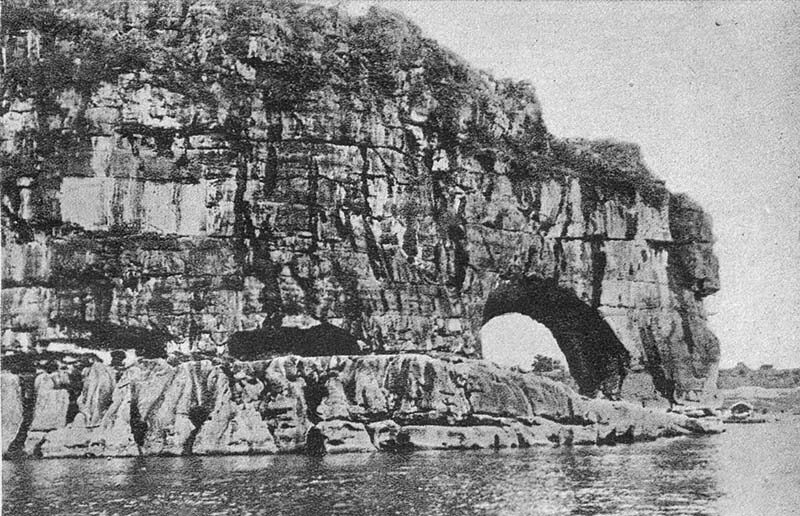
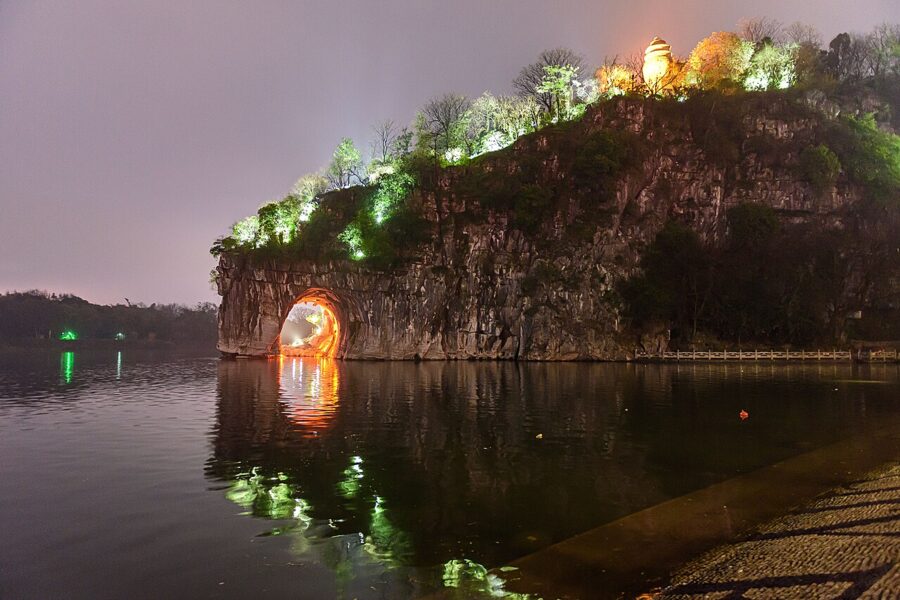
The hill really does look like an elephant drinking, which is more than you can say for most named rocks in China. The “trunk” is a pillar of rock reaching down into the Li, and the gap between trunk and leg is Water Moon Cave, named for the way the moon can appear framed in the arch and reflected below it on a still night. On top sits the Puxian Pagoda, which local legend calls the hilt of the sword the Jade Emperor used to turn his runaway elephant to stone.
The park no longer charges for entry, though “free” here means free with a real-name reservation, made in advance through the scenic area’s booking channel with your passport details. A timed, real-name entry system was trialled from March 2024 and the July 2026 local press still described the hill as free with advance booking. You can climb to the pagoda for the view up the river, or walk round to the trunk itself.
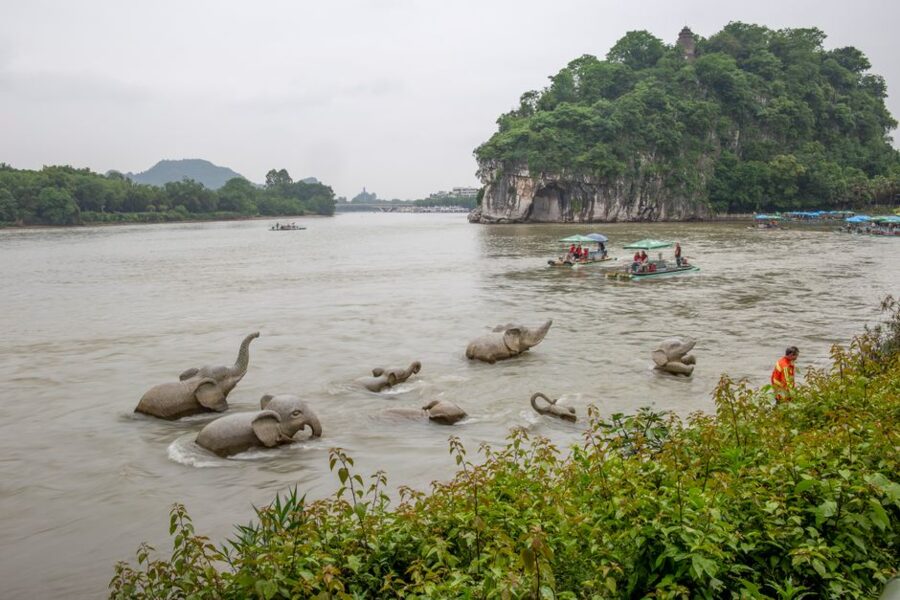
The view most photographers want is from the opposite bank, looking back at the full elephant with the arch open. Go early. By mid-morning small rafts offering rides to the arch line the shore, and the crowd at the trunk gets thick.
Reed Flute Cave
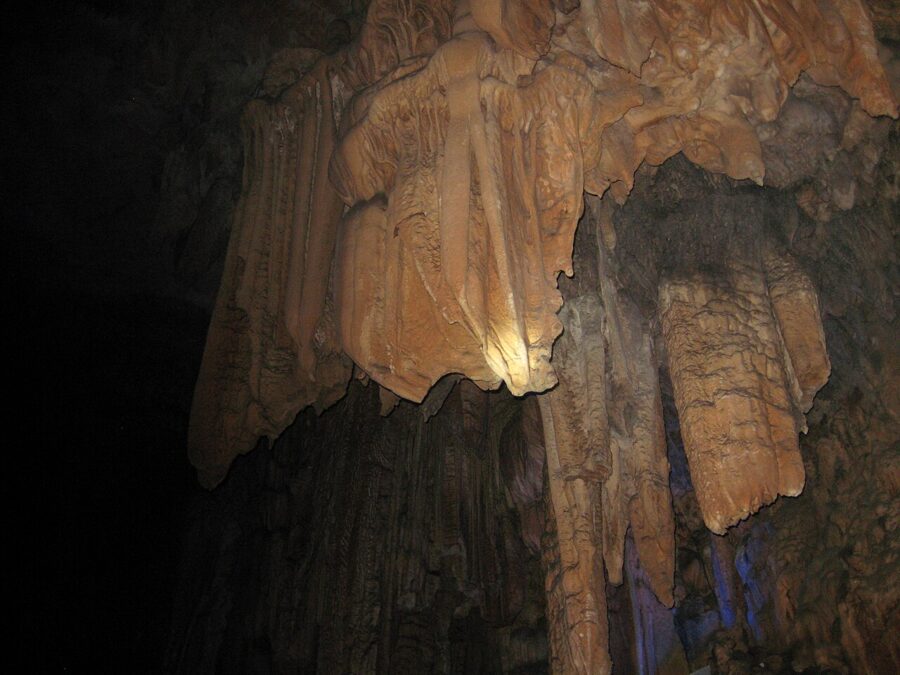
Reed Flute Cave is the most famous cave in a region full of them, and it earns about two-thirds of its reputation. It goes 240 metres into the side of Guangming Hill, the walk inside is about 500 metres, and the formations are lit in reds, greens and violets that are either magical or garish depending on your tolerance for colour. Mine wavered.
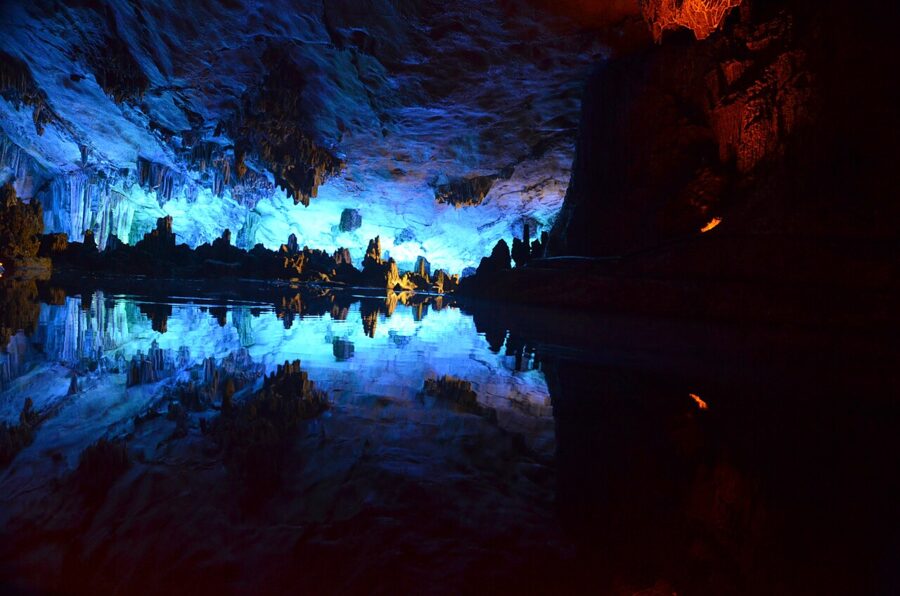
What I liked more than the lights was the graffiti. There are 77 ink inscriptions on the walls, the oldest from the late eighth century in the Tang dynasty, left by people who came in with torches and wrote their names on the rock. Then the entrance was forgotten. Villagers pointed it out again in 1959, the city surveyed it, and the cave opened to the public in 1962 with a new, man-made exit.
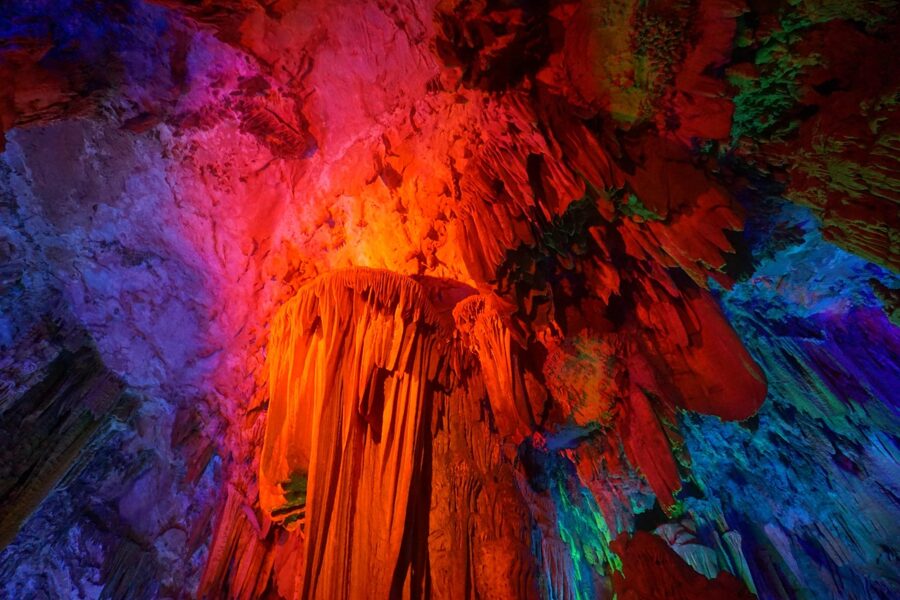
Tickets are ¥90 at the gate or ¥82 if you book by the day before through the cave’s official WeChat account (桂林市芦笛岩景区). Children aged 6 to 18 pay half with ID, as do over-70s, and children under 1.2 metres go free. Allow an hour and a half including the walk up from the car park, which is uphill enough that the scenic area runs a small monorail.
Seven Star Park
On the east bank of the river, Seven Star Park is the big green space of the city: seven hills supposedly laid out like the Big Dipper, plus lawns, osmanthus groves and a cave. Locals use it as an everyday city park, which makes it a good place for an early walk before the tour buses arrive.
Entry is ¥55 on the booking apps, or ¥100 with Seven Star Cave included. The cave is a different experience from Reed Flute, and some people prefer it. If you only have time for one, I’d pick Reed Flute for the lake, and come here for the park instead.
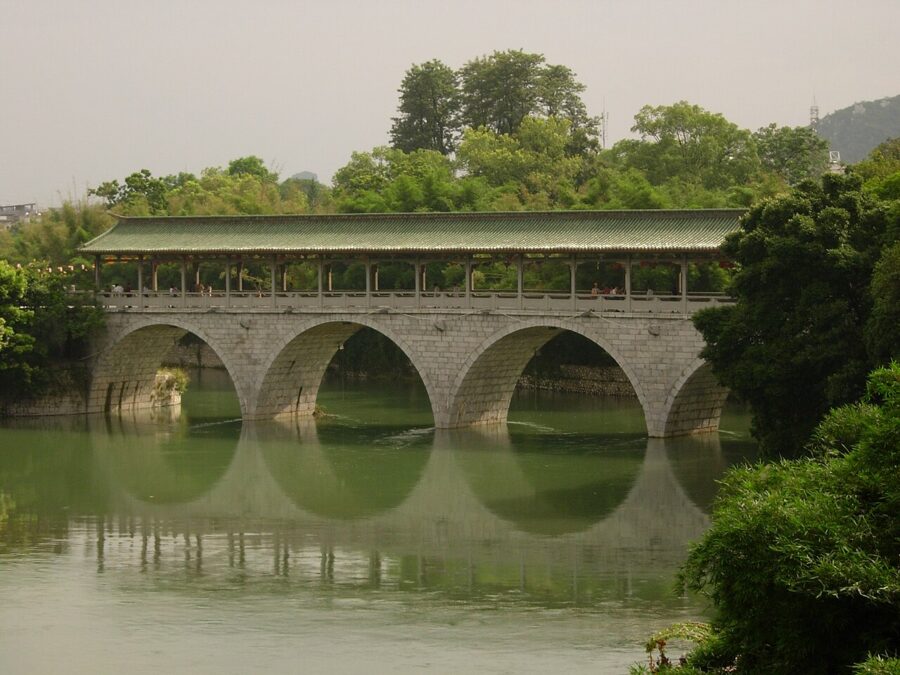
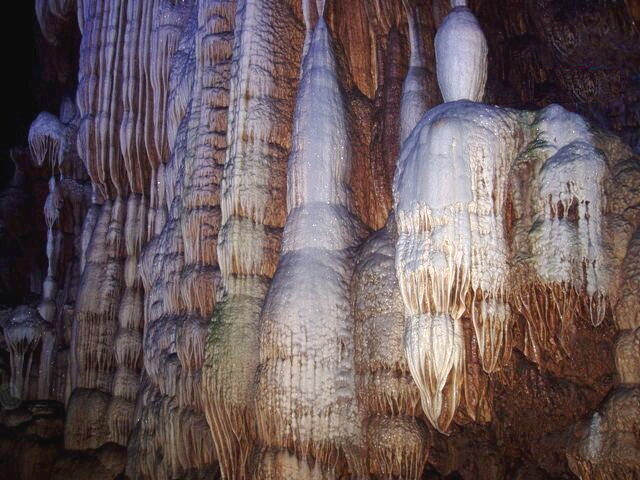
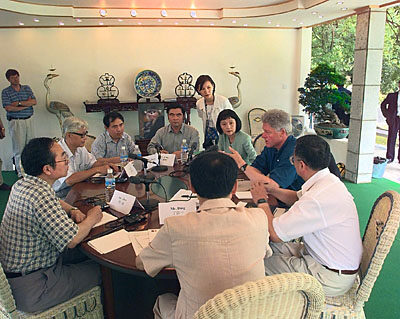
Fubo Hill and Diecai Hill
These two are the cheap thrills of Guilin, and my favourite way to spend a morning in town. Fubo Hill stands half on land and half in the river, a short steep climb from Binjiang Road. It takes its name from Ma Yuan, the Han general who held the title Fubo (“calming the waves”), and his statue rides at the foot of it. Entry is ¥22.
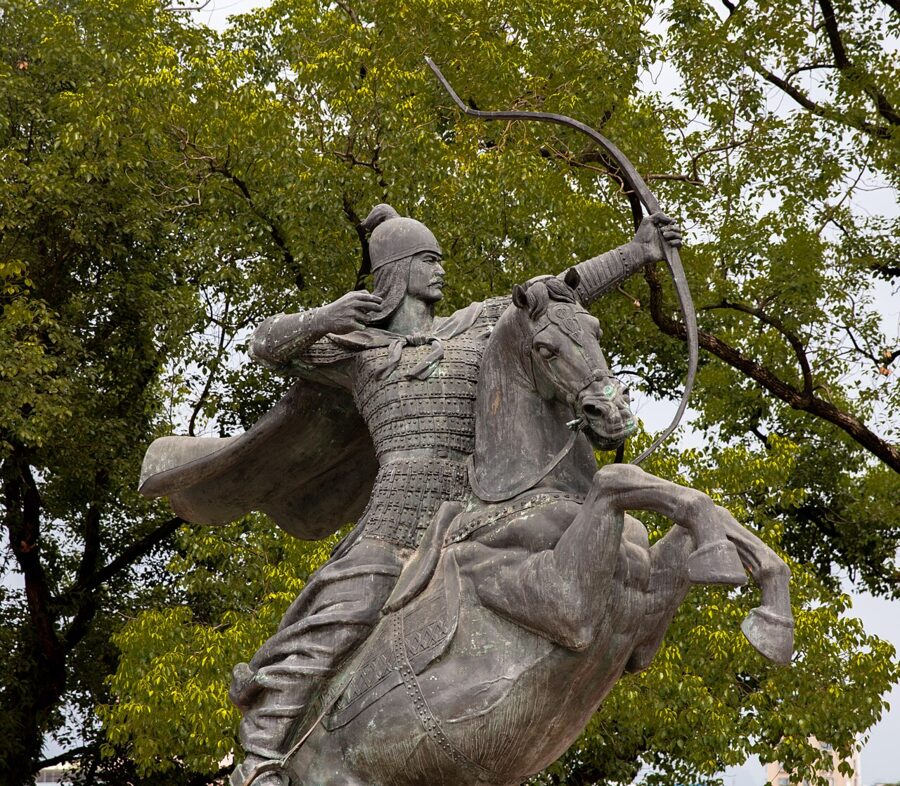
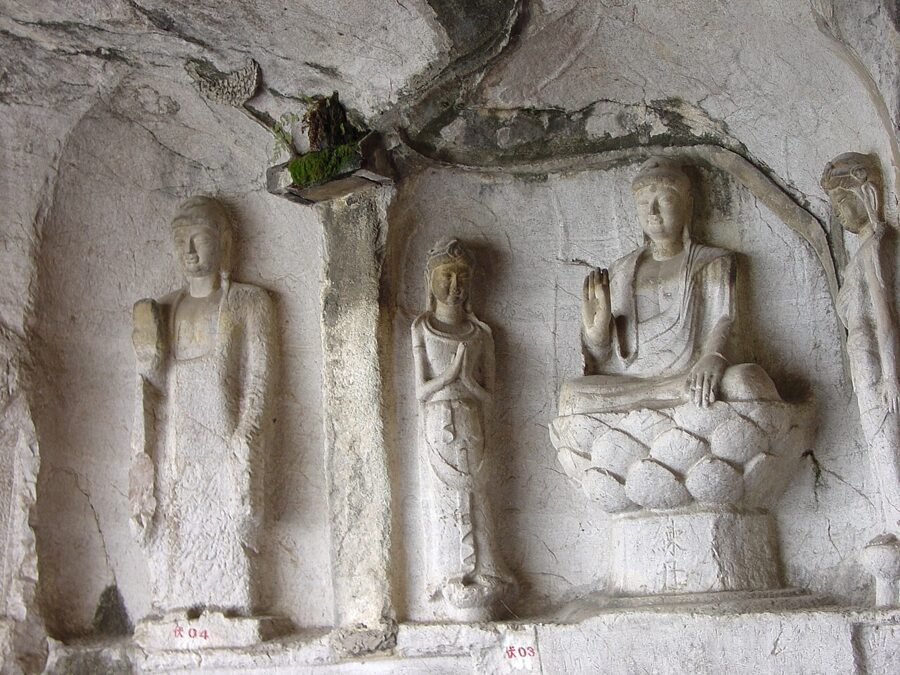
Inside, Returned Pearl Cave runs through the base of the hill to the river, with the Sword-Testing Stone hanging from its ceiling. Next to it, the Thousand Buddha Cave is lined with small Buddhist carvings from the Tang and Song dynasties. The climb to the top is short but steep, and you come out above the river with Diecai Hill to the north.
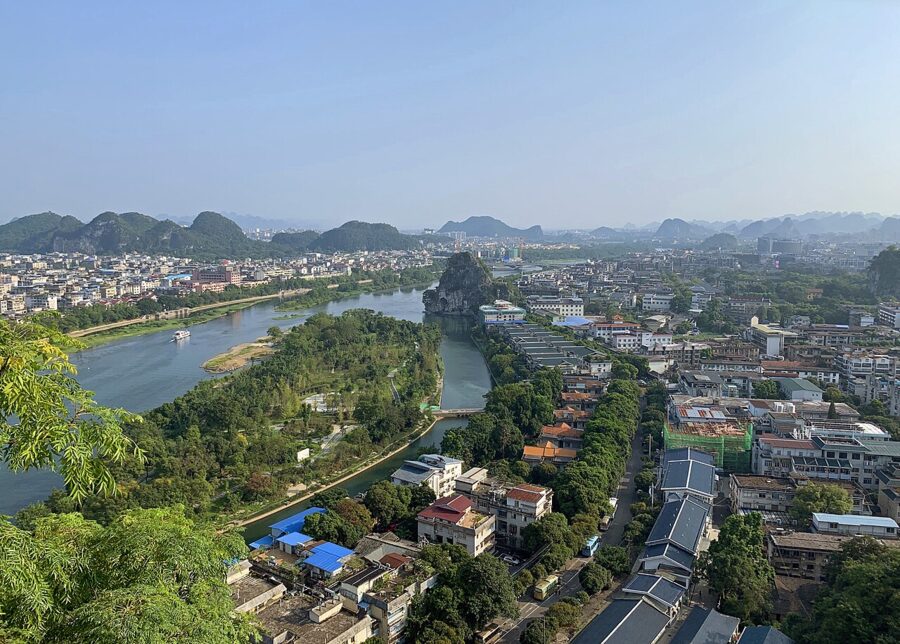
Diecai Hill, a few minutes’ walk north, is ¥25 and has the best view in the city. It is a cluster of peaks, and from Mingyue Peak, the highest, you look south over the rooftops, the river and a row of towers that run into the distance. Halfway up, the Wind Cave blows cool air through the hill all year, and carved over its mouth is a line by Marshal Chen Yi: “I would rather be a man of Guilin than an immortal.”
Solitary Beauty Peak and the Jingjiang Princes’ City
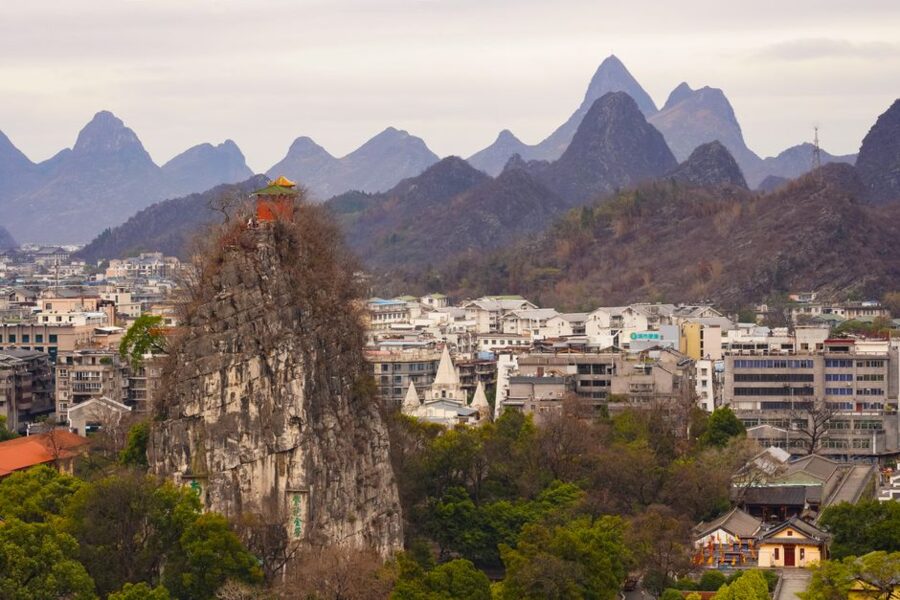
In the middle of the old city a single steep tower of rock rises out of a walled palace compound. This is Solitary Beauty Peak, and the walls round it belong to the Jingjiang Princes’ City, the seat of a Ming dynasty princely line from 1372. The first prince was a grand-nephew of the founding emperor, and his descendants lived here until the dynasty fell.
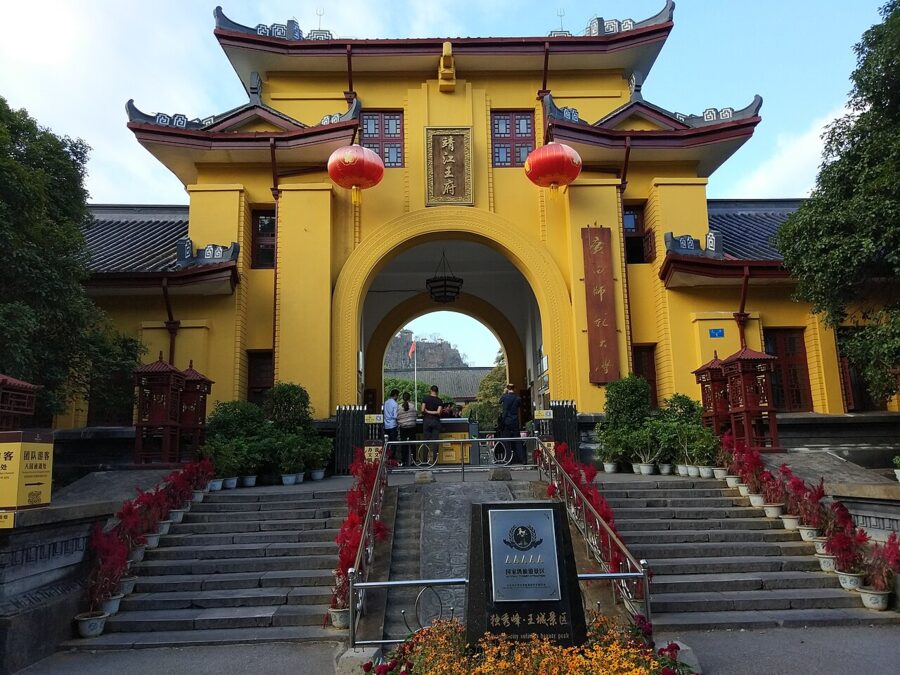
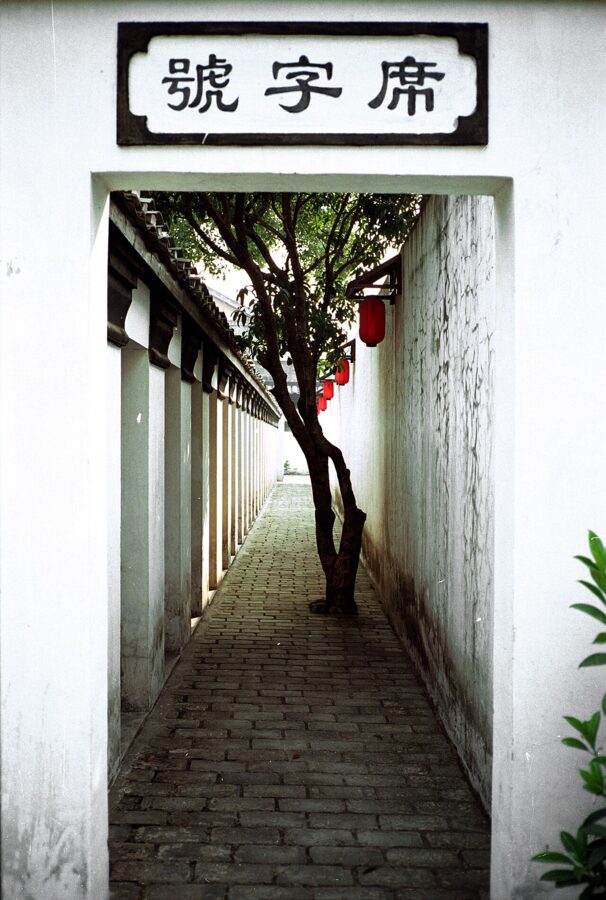
The compound had a second life you won’t guess from the outside. From the 1650s the Qing ran the Guangxi provincial examination hall here, and by 1832 it had about 5,500 cells where candidates sat the provincial exams on the classics. Since 1954 it has been a campus of Guangxi Normal University, so you’ll share the paths with students.
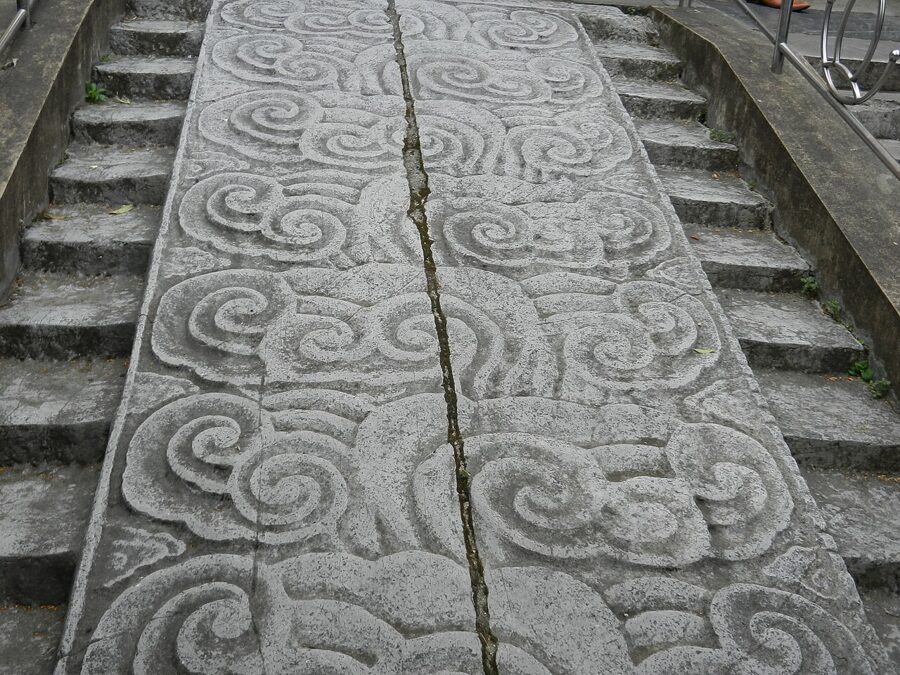
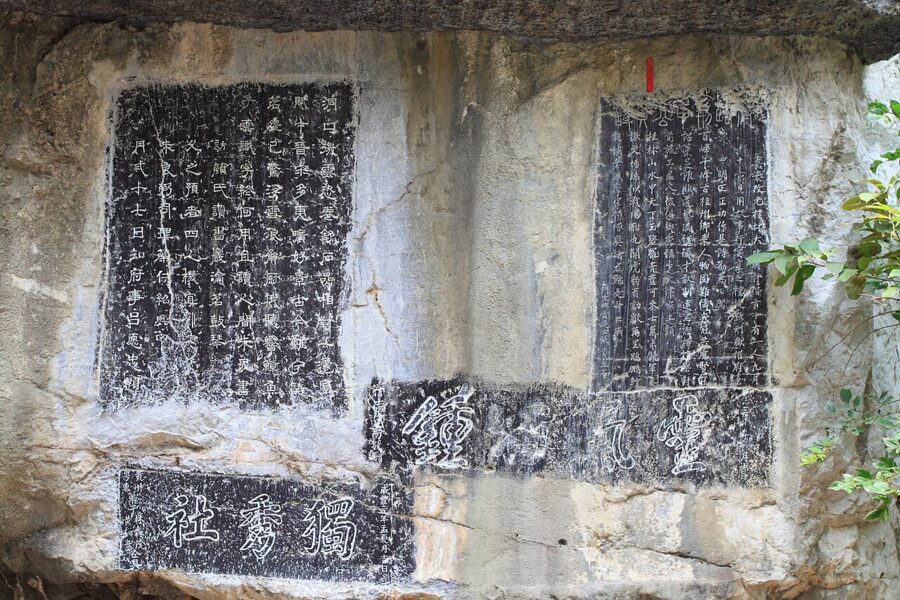
The peak itself is the reason to pay. It’s a steep climb up stone steps to a pavilion with a view straight down the axis of the palace and out over the city. On the way, look for the carvings in the Reading Cave at the foot: one of them, a poem by the Song official Wang Zhenggong, is where the phrase everyone in China knows first appears, Guilin shanshui jia tianxia (桂林山水甲天下), “Guilin’s scenery is the finest under heaven”.
An adult ticket is ¥100 on the booking apps, half for children and students. Allow two hours, and come in the afternoon, when the light falls on the city from the top of the peak.
The Two Rivers and Four Lakes at night
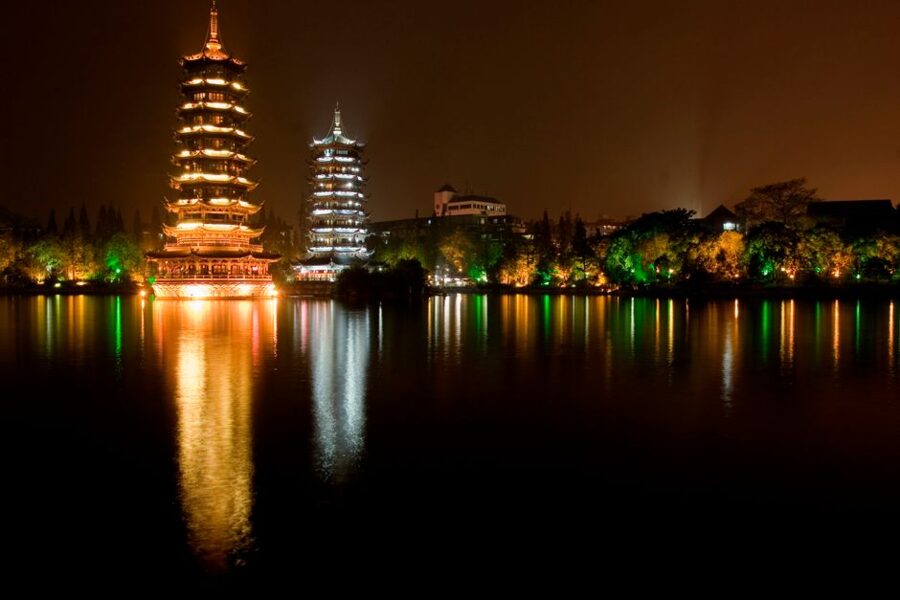
Guilin’s old moat and lakes are joined into a single loop, the Two Rivers and Four Lakes: the Li and Taohua rivers, and Ronghu, Shanhu, Guihu and Mulong lakes. By day it’s a pleasant walk with bridges and banyans. By night it turns into the city’s party piece, with lit bridges, a glass bridge, pagodas glowing on Shanhu Lake and musicians on the banks.
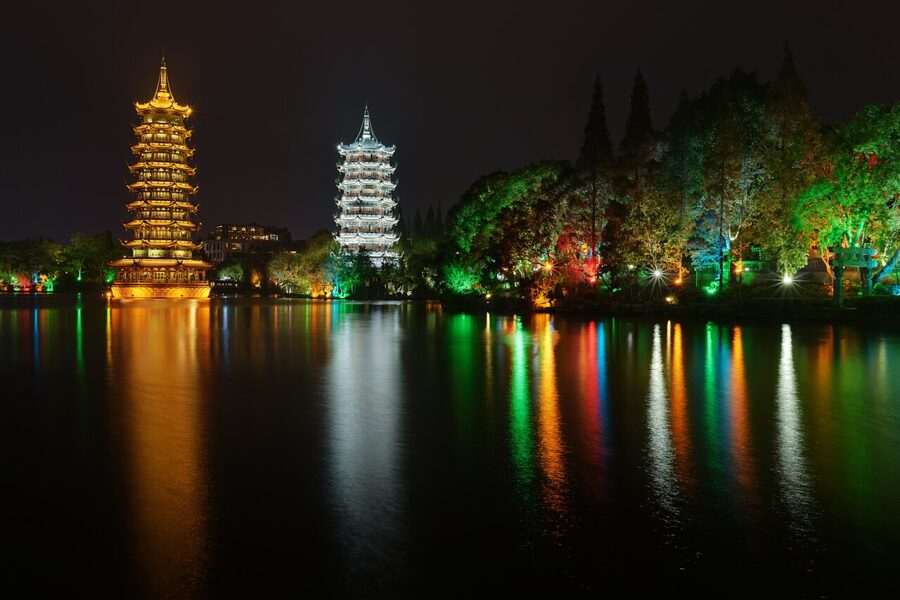
The boats are worth it if you’re in the mood for something a bit theatrical. The standard night trip round the four lakes in a 40–50 seat boat is ¥175 for an adult, about an hour, with sailings every 10–30 minutes from 18:00 to 23:00 in high season and 19:00 to 21:30 the rest of the year. Children from 1.2 to 1.5 metres pay half, and since April 2026 even small children under 1.2 metres need a ¥60 ticket.
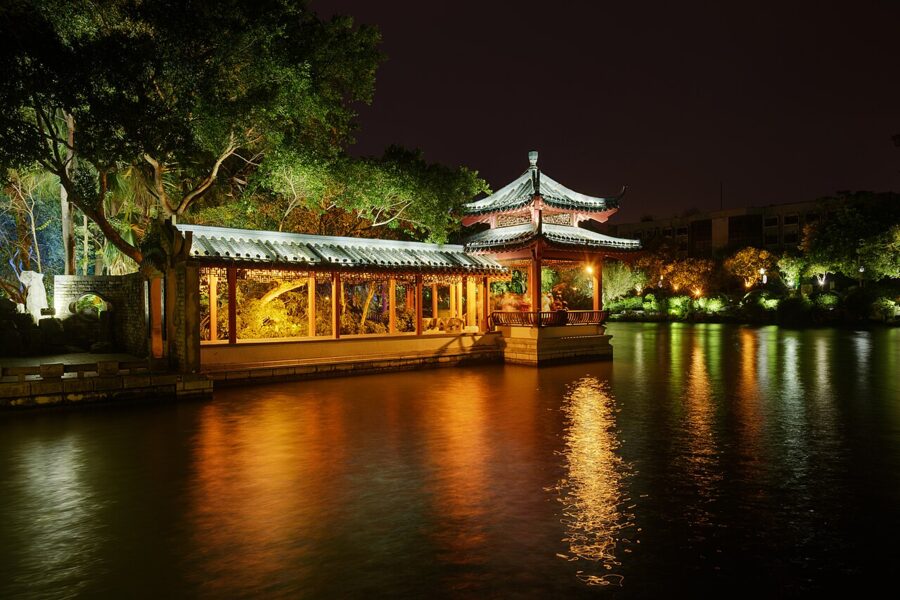
Booking is the fiddly part. Tickets are real-name, sold through the scenic area’s official site or its WeChat mini programme (search 桂林两江四湖). After booking you’re expected to phone on the day to confirm your sailing and pier, because the departure pier changes with the schedule, then turn up 20 minutes early to swap your booking for a paper ticket with your passport. Ask your hotel to make the call if your Mandarin isn’t up to it.
The Li River cruise to Yangshuo, without the brochure
The cruise is the thing almost everyone does, and for good reason: four-odd hours of the most famous river scenery in China, from a seat with a cup of tea. It’s also more of a production than the posters suggest. You board from a pier well outside town, with thousands of other people on a busy day, and the boats follow one another down the river. Knowing that in advance makes it much more enjoyable.
The boats and what they cost
The scenic area runs star-rated boats, and the price notice it published in August 2026 is clear. A three-star boat from Mopanshan to Yangshuo is ¥215, made up of a ¥54 scenic-area ticket and a ¥161 boat ticket. A four-star boat on the same route is ¥360. Both prices are per person, one way.
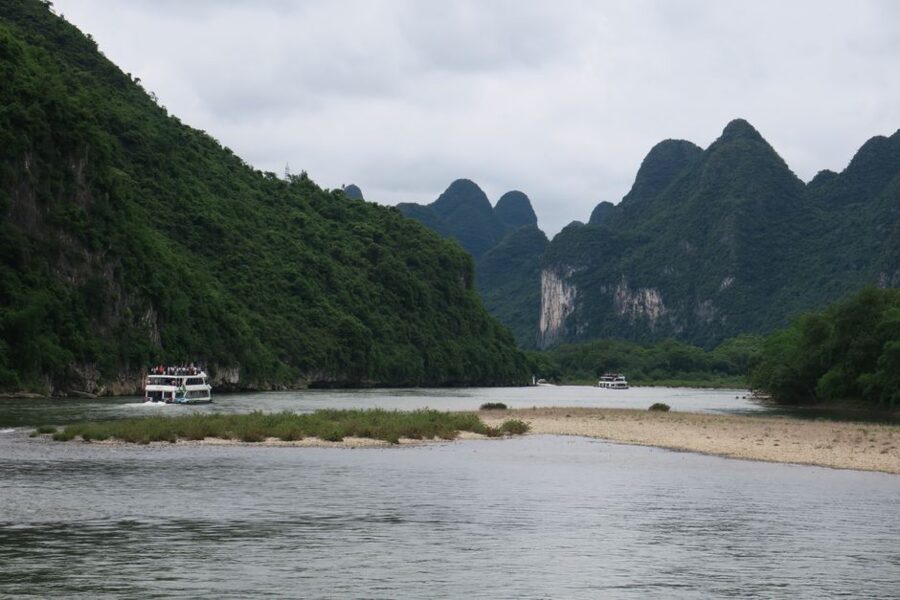
The three-star boats have big panoramic windows, Wi-Fi, a set lunch from the central kitchen and a free audio guide you load by scanning a QR code, plus a live guide. Four-star boats have roomier cabins, two levels of open walking deck and a Chinese and Western buffet, with a small bar or tea service. The river is identical. What you’re paying for is space at the rail, and on a busy day that is worth something.
There’s also a five-star class with butler service and private dining, not on the official price list. For most people the three-star boat is plenty, since you’ll spend half the trip on deck anyway.
Mopanshan, Zhujiang and getting to the pier
The cruise doesn’t leave from Guilin itself. The boats board at two passenger ports, Mopanshan by the old town of Daxu and Zhujiang nearby, a little under 30 km downstream of the city. Your ticket tells you which one.
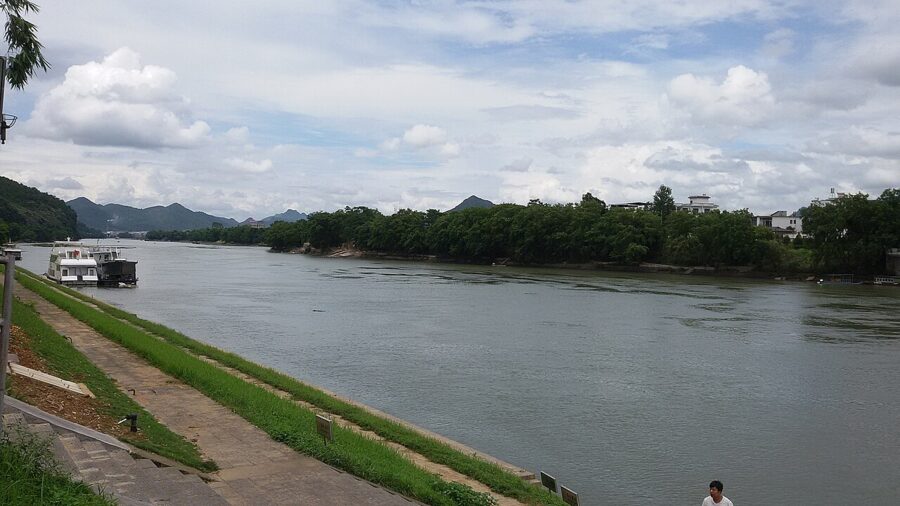
The scenic area runs a customised bus from central Guilin that picks up at Guilin railway station (at the route 100 bus stop), Xicheng Lukou, Shizijie and Sanlidian Square, leaving at 07:00, 07:20, 08:00, 08:30, 09:00 and 10:30. Public bus route 9 also runs to Zhujiang between 07:00 and 08:30.
Hotels and agencies sell packages with the pier transfer and the trip back included, which is the easy way. The official return coach from Longtoushan pier in Yangshuo goes back to the piers, not the city, at 14:50 and 16:10, so for Guilin the train from Yangshuo station is the better bet.
What the four hours look like
Officially the route is about 61 km, from the piers down to Longtoushan in Yangshuo, and the boats take four hours or a little more depending on the water. The first stretch to Caoping is the gentlest. Then the peaks close in and the guide starts reading out names.
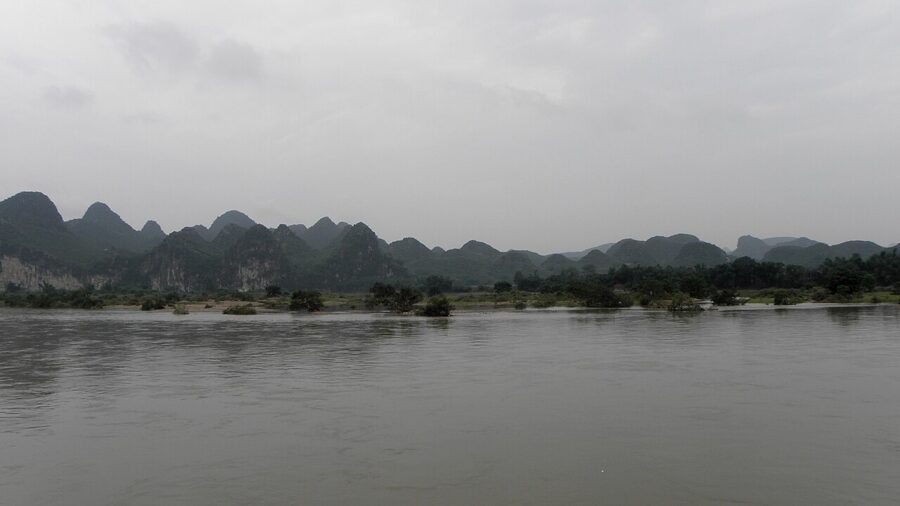
The names are half the fun. Before Yangdi you’ll be told to look for the Bat Welcoming Guests, the Wife Awaiting Her Husband, the Caoping Curtain and the Guanyan Cave, and you will see none of them, then suddenly all of them. After Yangdi comes the stretch most people rate highest, past the Carp Hanging on the Wall, Nine Horse Fresco Hill and Yellow Cloth Shoal to Xingping.
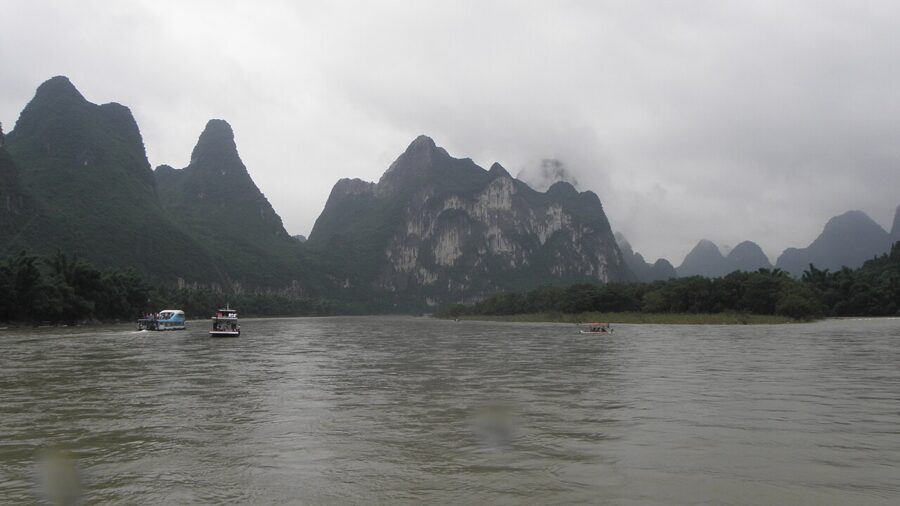
Yellow Cloth Shoal is just below it, a flat pale rock on the river bed that, through clear water, looks like a bolt of yellow cloth laid out under the boat. Seven small peaks around it are the Seven Fairies who would rather stay here than go home to heaven. On a still day, this is where the reflections are best.
The 20-yuan view follows, then Xingping slides by. The cruise doesn’t stop there, which surprises people. After Xingping comes the last stretch to Yangshuo, where the boats tie up at Longtoushan pier and my guide to Yangshuo takes it from there.
Booking with a passport
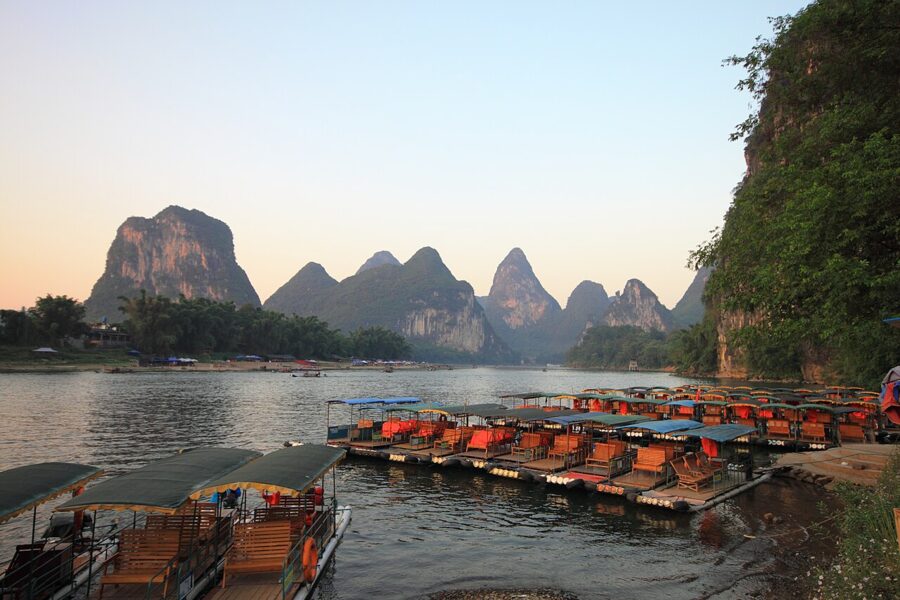
Book online. The scenic area sells cruise and raft tickets through its official WeChat service account (漓江售票处) and its own website, and you should expect to enter passport details for each passenger. In the May Day holiday, Golden Week (1–7 October) and around Spring Festival, book a few days ahead; at other times a day or two is usually enough.
The river has a published daily limit of 55,800 people in its sightseeing zone, 11,000 of them through Mopanshan. On a quiet November weekday you won’t notice. On 2 October, you’ll feel every one of them. Boats also stop when the river is too high or too low, so check the pier status page on the official site the morning you go if the weather has been wild.
The rafts from Yangdi and Xingping
The rafts are the alternative, and in some ways the better trip. They run in short sections rather than the whole river, so you see less, but you sit a foot above the water with a driver behind you and nobody’s elbow in your face.
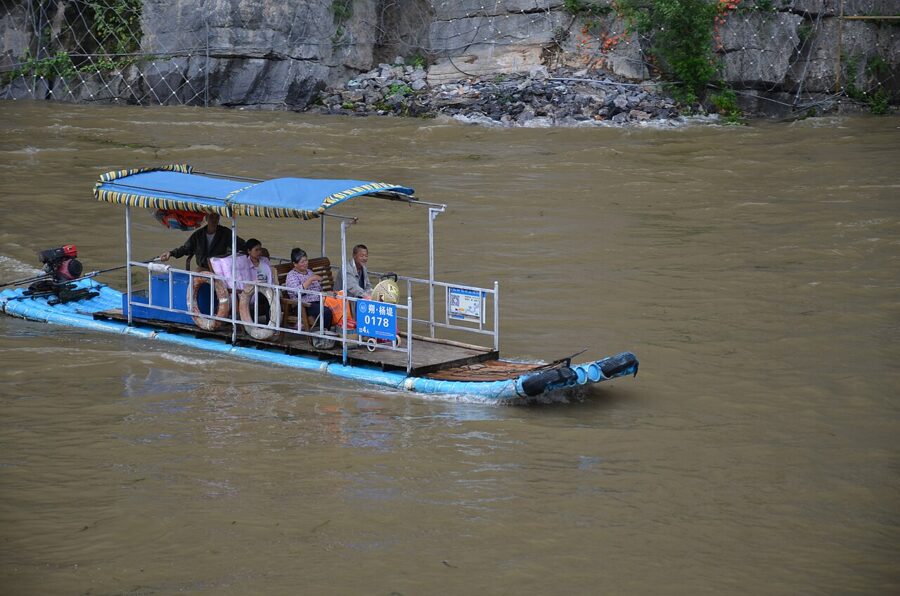
Everything is official and priced in the same notice. Yangdi to Chaobanshan pier at Xingping, the finest section, is ¥255. Yangdi to Mashan pier is ¥140, and a return loop from Yangdi to Laocuntou is ¥170.
If you’re staying in Xingping, the short return loop from Chaobanshan pier to Nine Horse Fresco Hill is ¥140, and it covers the 20-yuan reach and Yellow Cloth Shoal. A shuttle runs from the Xingping raft ticket office to Chaobanshan, every 10 minutes in the quiet season and whenever it fills up in the busy one. For Yangdi pier, buses from Yangshuo via Putao leave every 30 minutes from 07:00 to 17:30.
Touts and “cheap cruises”
Here’s what the brochures leave out. Around Guilin station and outside the big hotels you’ll be offered Li River trips for a fraction of the official prices.
Some are decent private tours. Others are a raft on a different river, a shopping stop, or a boat that isn’t licensed for this stretch. Buy through the scenic area’s own channels, and if a price looks too good, it is.
The same goes for rafts at Xingping. Unlicensed private rafts still turn up, and Chinese travel writers are blunt about them: the safety and the experience are not in the same league. The official rafts have fixed fares and life jackets, and you should wear yours.
Xingping and the view on the 20-yuan note
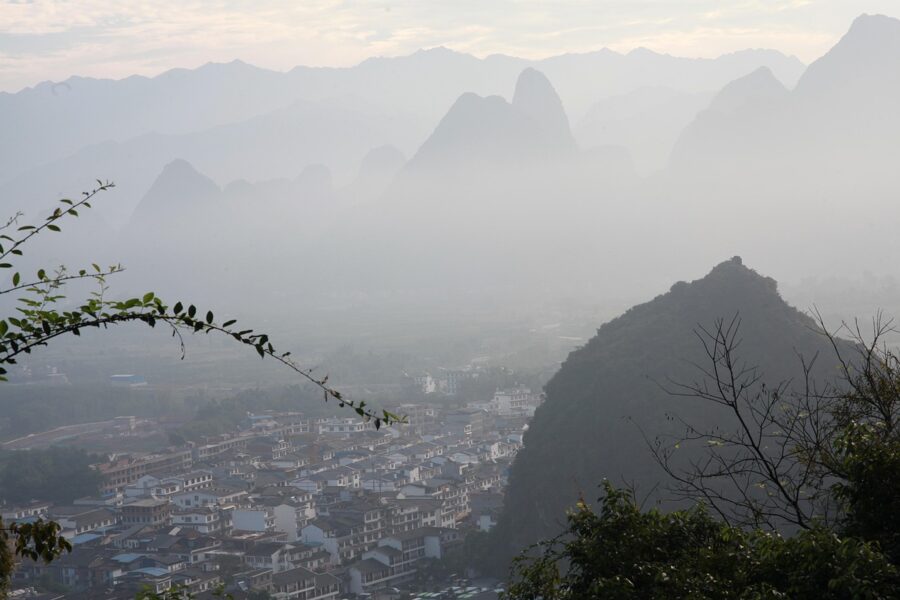
Xingping is the village I’d stay in if I could pick only one. It sits on the Li between Yangdi and Yangshuo, with an old street of brick shophouses, a pier, and peaks all round. Day-trippers come and go in the middle of the day. Early and late, it’s yours.
The old town and Fishing Village
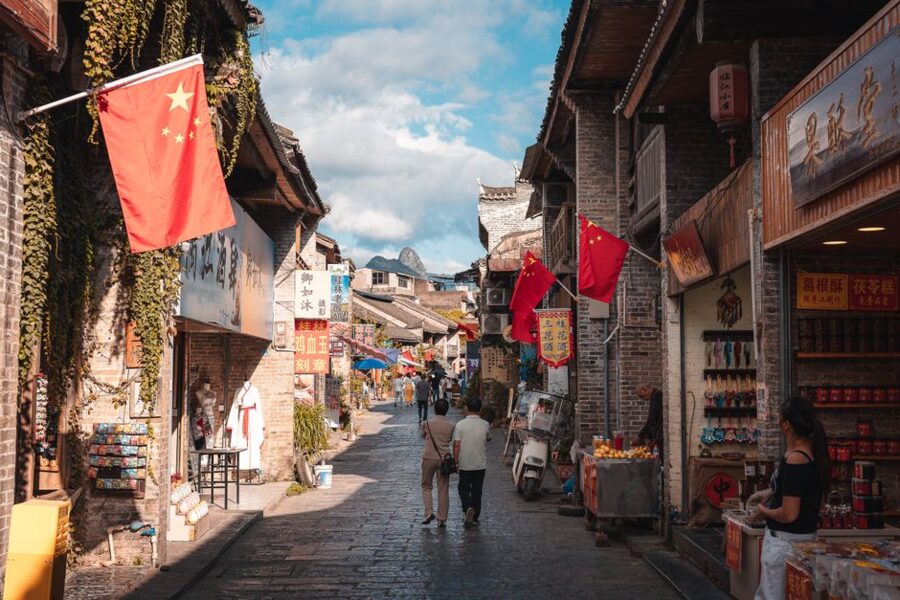
The old street runs down to the river, lined with grey-brick houses with wooden fronts. Most of it is cafes and souvenir shops now, but go up the side lanes and you’ll find ordinary houses and washing lines. It’s the kind of old town that feels very different from places like Lijiang: smaller, scruffier, and still lived in.
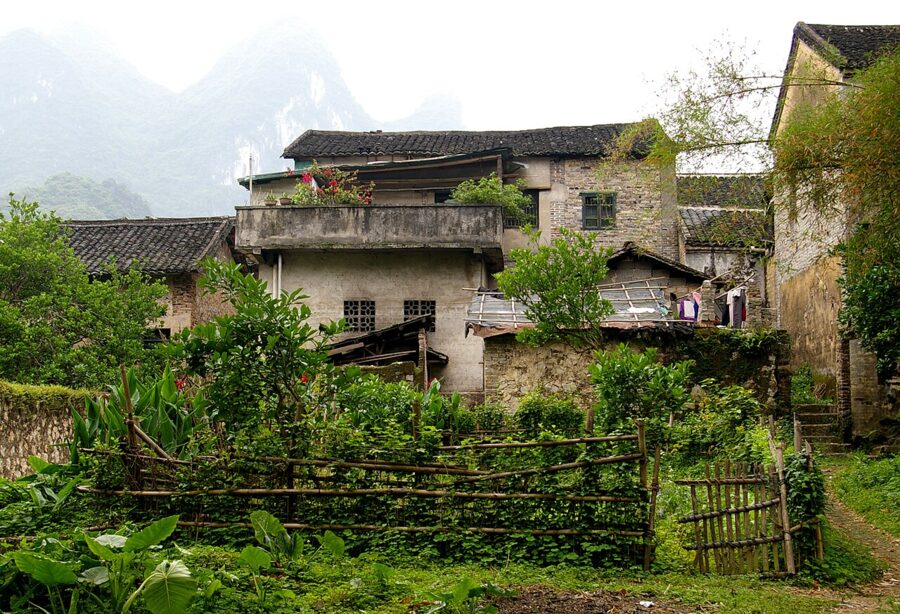
A short boat ride away, Fishing Village (渔村) keeps a cluster of Ming and Qing houses with horse-head gables and carved windows, and in 2012 it was named in the first batch of China’s protected traditional villages. The official boat from Xingping to Fishing Village and back is ¥115, a short ride that also takes in the 20-yuan reach.
Finding the banknote view
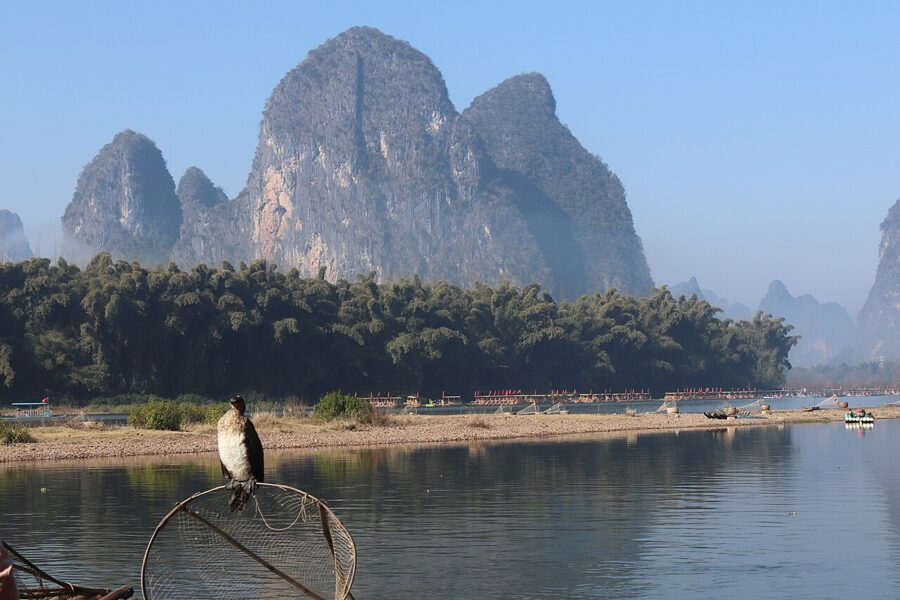
The picture on the back of the 20-yuan note is a stretch of the Li just upstream of Xingping, around the peak the scenic area calls Yuanbao Shan, and Chaobanshan, about a kilometre upriver. There isn’t one exact spot. There’s a riverside viewpoint near Xingping pier where everybody lines up with their notes, plus several angles along the bank, and the raft loops pass right through it.
Bring a note. Any 20 from the fifth series has the scene on it, whether it’s the 1999, 2005 or 2019 printing. With mobile payments everywhere, you may need to ask a shop for one in change, which is its own small adventure.
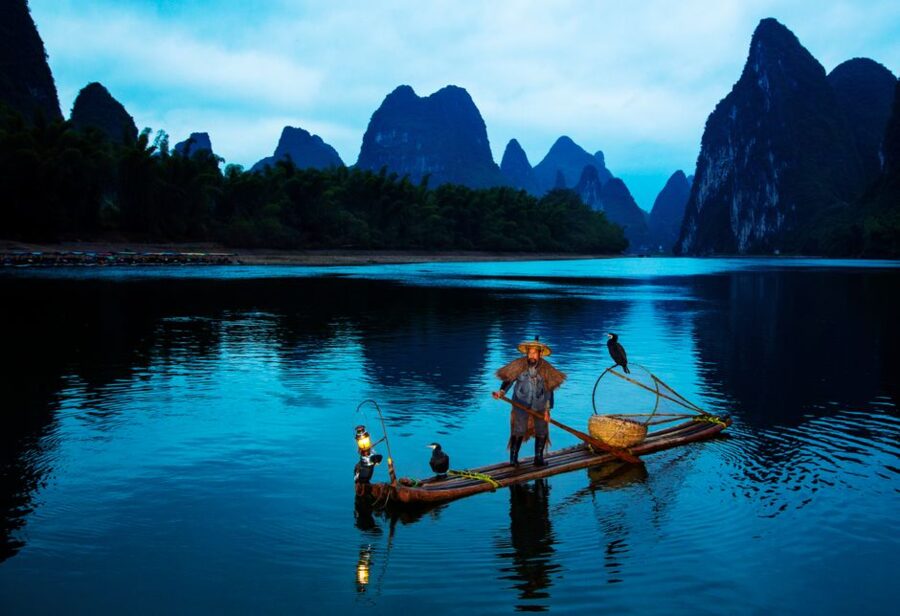
You may meet one of the fishermen who pose with cormorants by the viewpoint. The best known of them, Huang Yuechuang, had been modelling since 2000 and was still at it at 82 in 2022, with a portrait of him by the Australian photographer Neville Jones winning a Sony World Photography Award in 2014. Agree any fee before you raise the camera.
Laozhai Hill for sunrise
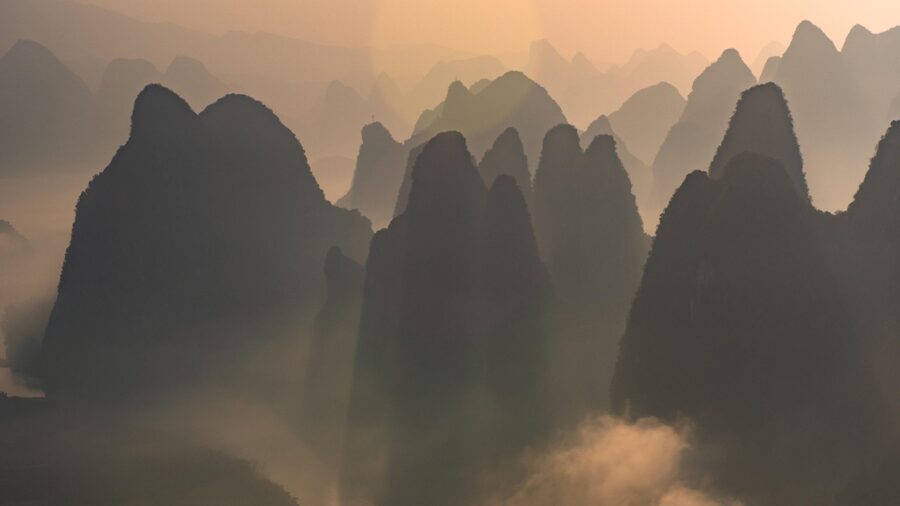
The climb up Laozhai Hill, right behind the village, gives you the view the photographers come for: a great bend of the river with ranks of peaks behind it, often with mist lying in the valleys at dawn. The peak is about 220 metres high, with more than a thousand steps, and most people take 25 to 45 minutes to get up. The trail starts at the south-west edge of the village, and the guesthouses will point you to it.
It’s not a casual walk. The steps are steep, some sections are rough and exposed, and nothing is lit. Don’t go up in rain, in poor shoes, or close to dark, and don’t plan a sunset climb unless you’re happy coming down steep steps by torchlight. At the top there’s a small pavilion.
Getting there from Guilin and Yangshuo
The easiest way from Guilin is the train. Yangshuo railway station, opened in December 2014 with the Guiyang to Guangzhou high-speed line, is actually in Xingping township, much closer to Xingping than to Yangshuo town. Trains from Guilin’s stations take 20 to 50 minutes, usually about 25, and there are more than twenty a day, both G and D trains. From the station, a shuttle runs to Xingping pier, leaving when it fills in high season and timed to the trains in the low season.
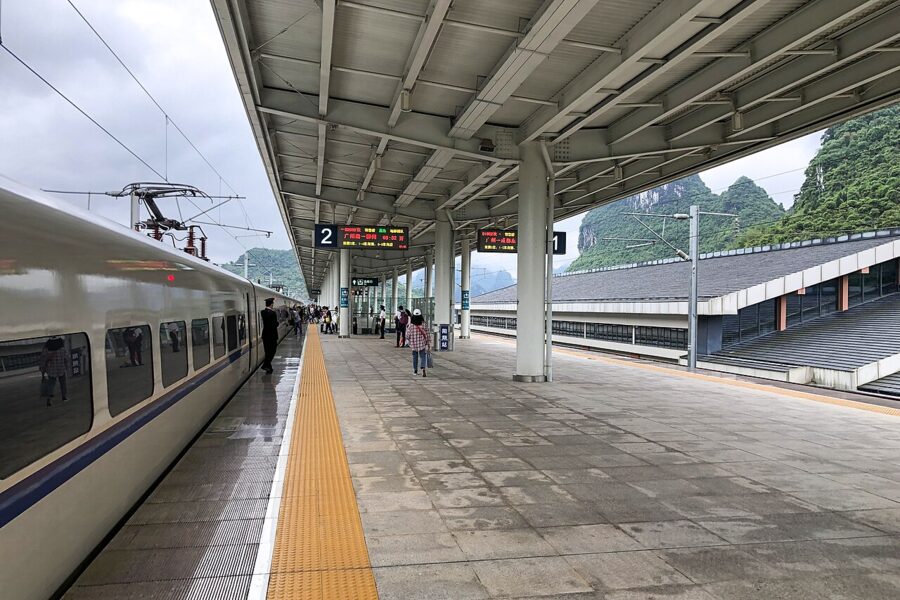
From Yangshuo town, bus 802 runs to Xingping pier from 07:30 to 17:40, and buses on the Yangshuo to Xingping route leave every 15 minutes from 06:30 to 19:20. A Didi takes less time and costs more. The cruise boats from Guilin pass Xingping without stopping, so you can’t hop off on the way.
The Longji rice terraces
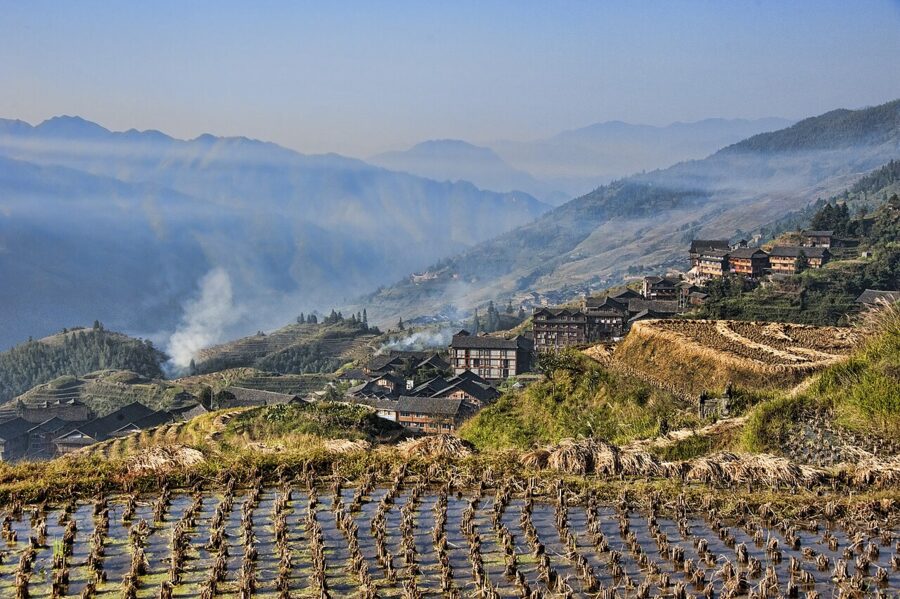
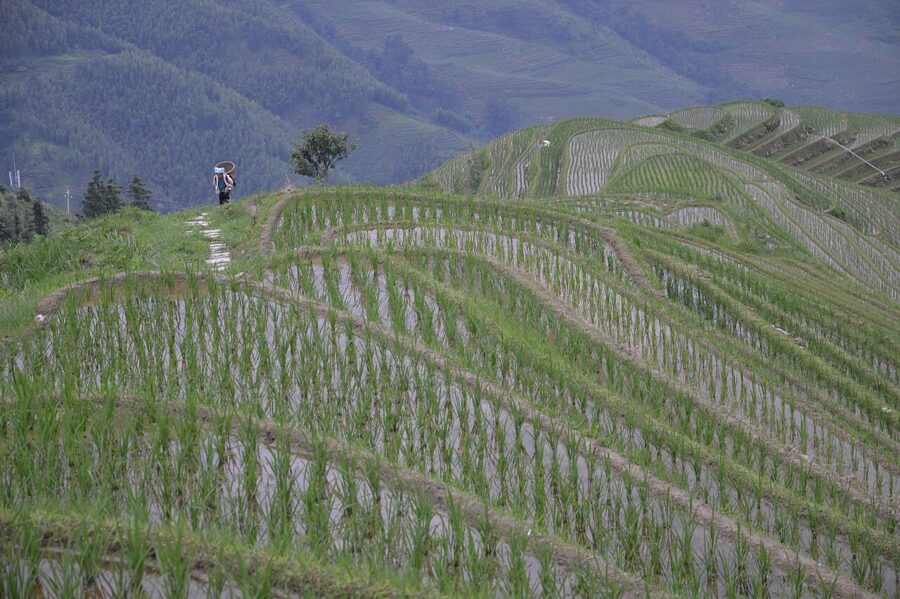
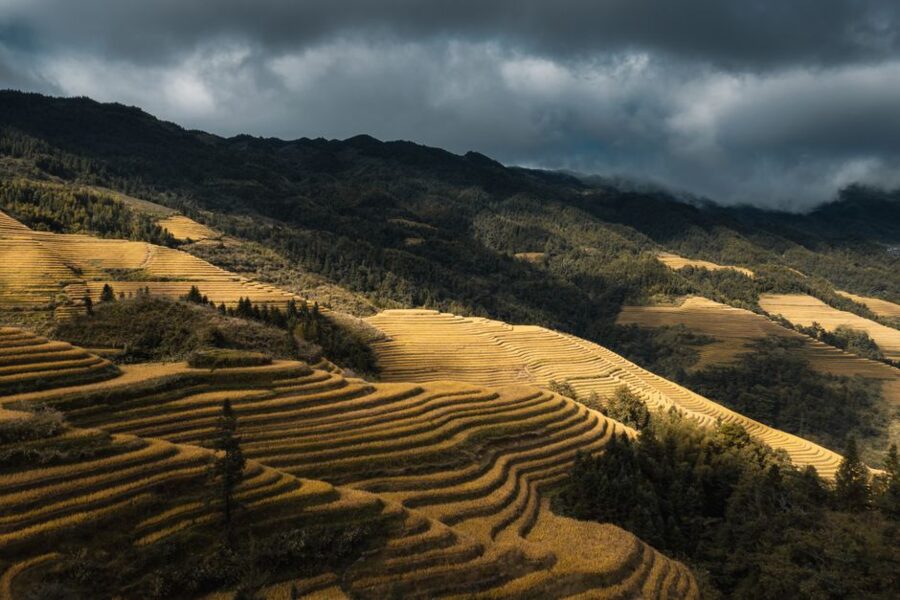
Two hours north of Guilin, the hills of Longsheng county have been carved into terraces from valley floor to ridge, over more than 650 years by Zhuang and Yao farmers. The name Longji means “dragon’s backbone”, for the ridge that runs along the top. In spring the flooded terraces mirror the sky, in summer they’re a hard bright green, and in late September they turn gold just before the harvest.
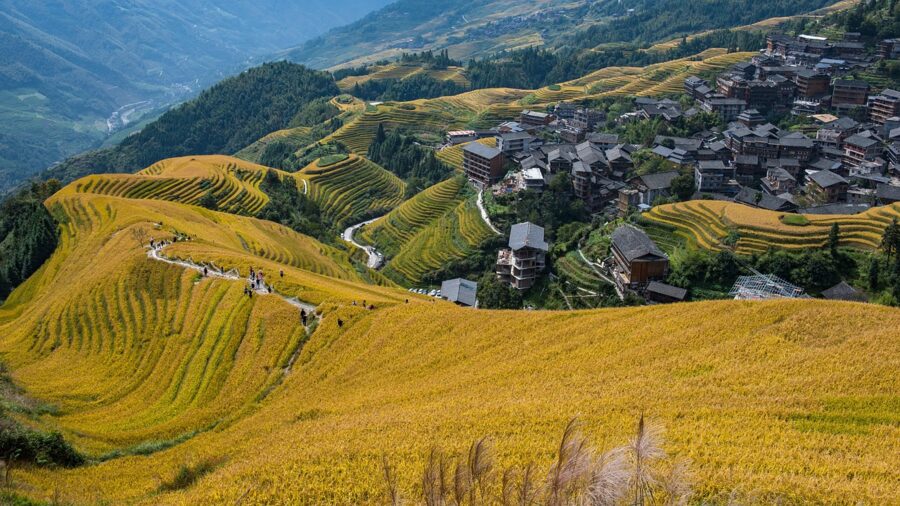
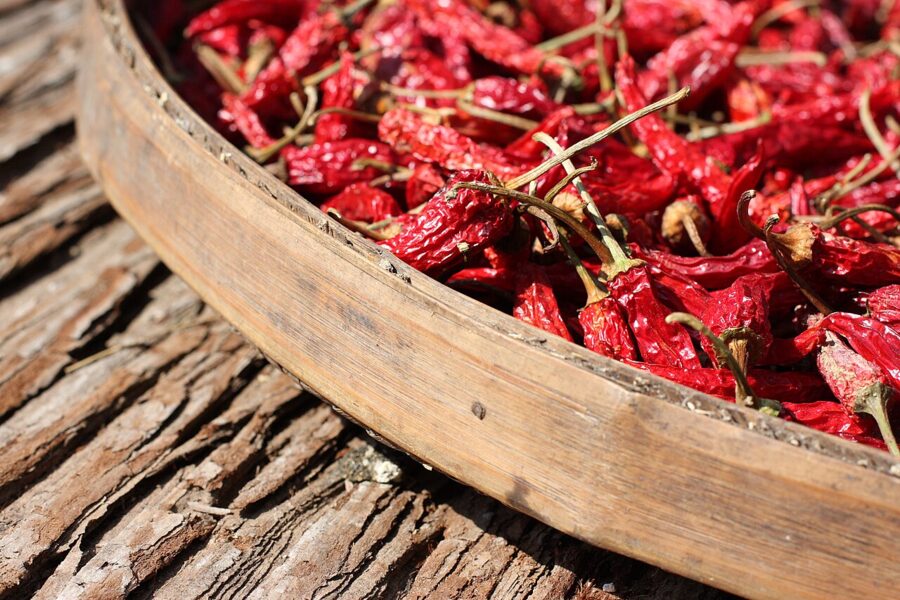
It is a very different day out from the river. There’s no single viewpoint, the walking is all on stone steps, and the villages are working villages, with wooden houses on stilts, chillies drying on bamboo trays and farmers carrying loads up paths you’ll find hard going empty-handed. The scenic area ticket is ¥80 for an adult and ¥40 for young children and over-65s.
Ping’an or Dazhai?
The scenic area has two main villages, and they’re quite different. Ping’an (平安) is a Zhuang village, the more visited of the two, with two famous viewpoints a stiff climb above the houses: Seven Stars Accompanying the Moon (七星伴月) and Nine Dragons and Five Tigers (九龙五虎). It’s the easier choice for a day trip, and it gets the crowds.
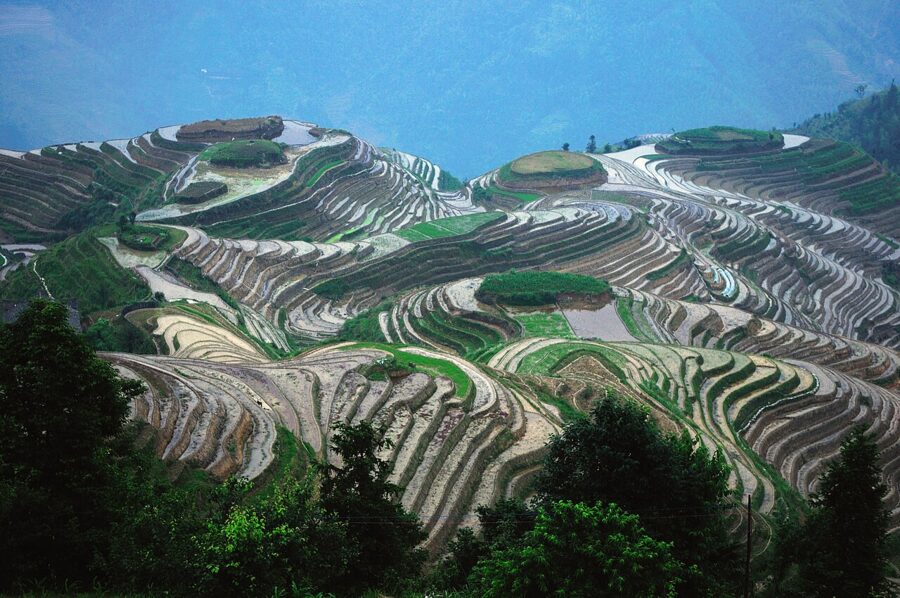
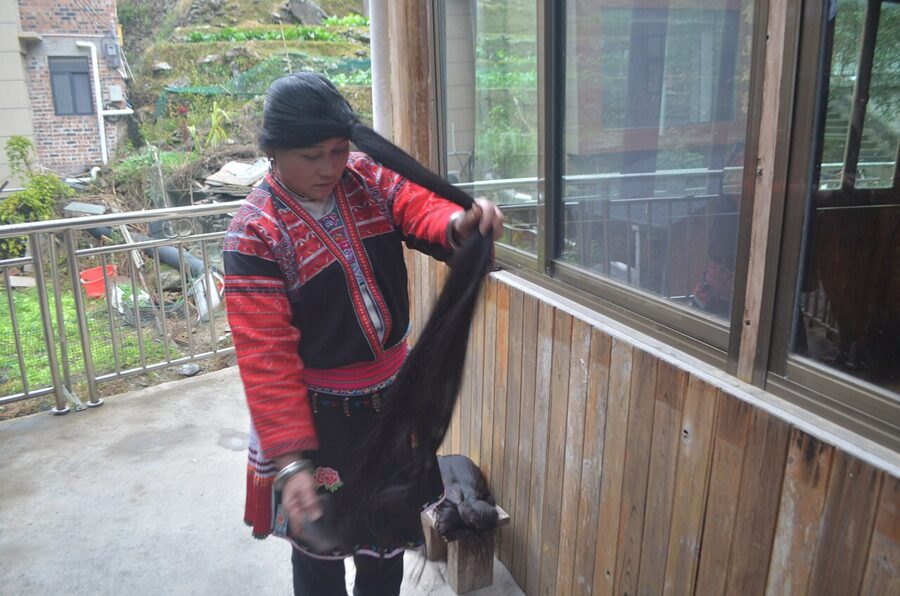
Dazhai (大寨), on the Jinkeng side, is a Red Yao village, bigger in scale and wilder, with three numbered viewpoints: Xishan Shaole (西山韶乐), the Thousand-Layer Ladder (千层天梯) and Golden Buddha Peak (金佛顶). The views from up there are the grandest in the area, terraces stacked up an entire valley wall. If I had one night, I’d spend it in Dazhai.
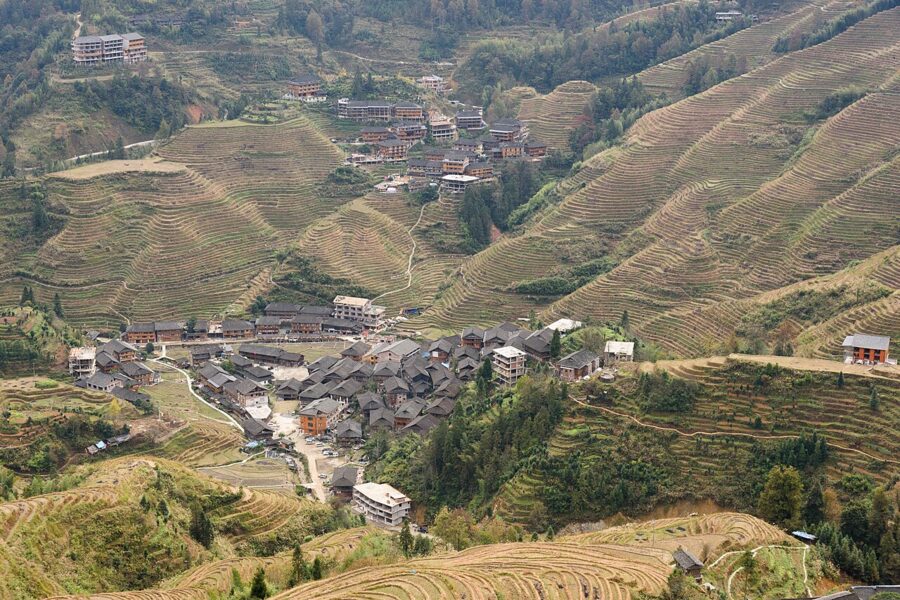
Nearby, Longji Ancient Zhuang Village is smaller and quieter, with old stilted wooden houses. It’s the stop most people miss, and the one I’d add if you have a second day.
When to go
April and May are when the paddies are flooded and planted, so the terraces reflect the sky, and mist and rain are common. June to August is green and lush, but hot and wet, and the afternoon showers come in hard. Mid-September to early October is the gold, and the busiest time. From November to March the fields are bare: quiet, but brown.
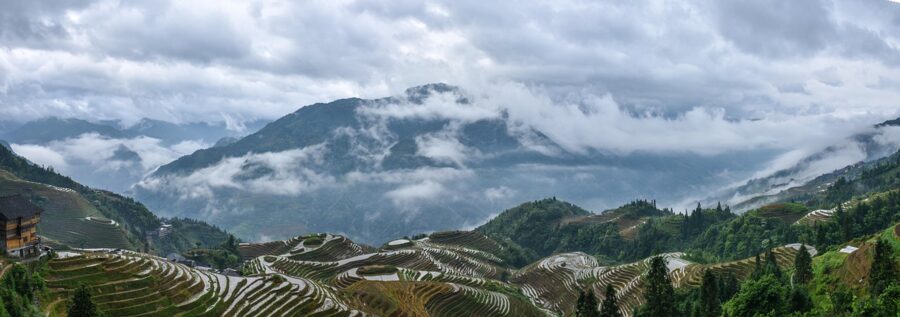
Avoid Golden Week if you can. The villages are tiny, the paths are narrow, and the 1–7 October holiday is right in the harvest season, so every bus from Guilin is full.
The cable car and the walk between villages
On the Dazhai side, the Jinkeng cable car (金坑索道) lifts you from the valley to Golden Buddha Peak. A return ticket is ¥100 on the booking apps, and with the scenic area ticket included it’s ¥180. Take it up and walk down past the other viewpoints; your legs will thank you for not doing it the other way round.
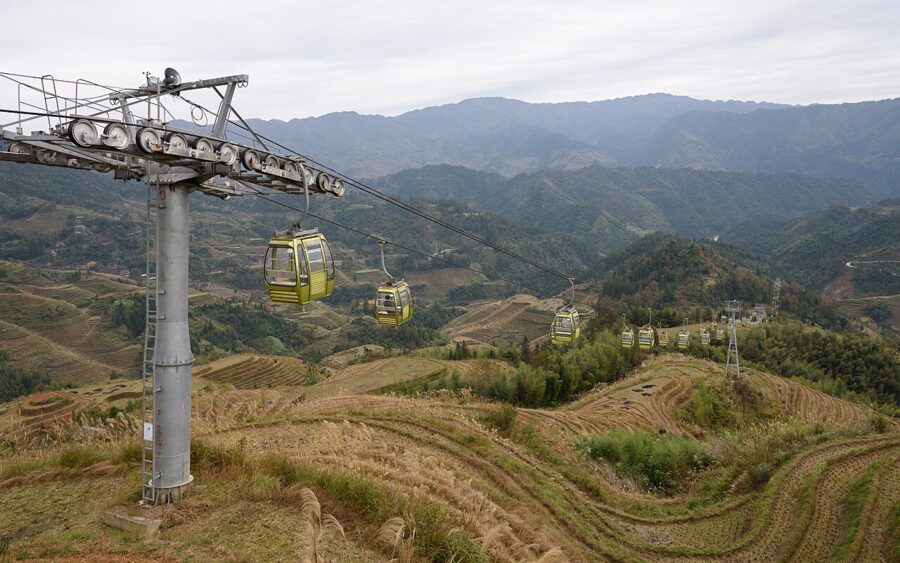
The walk between Ping’an and Dazhai is the classic hike, and it’s a proper one: four to six hours on stone paths up and down the hillsides, through the hamlets of Zhongliu and Tiantou. Start early, carry water, and agree a pickup at the far end before you set off. It’s well worth hiring a local guide.
Staying overnight
Stay. A day trip from Guilin spends four or five hours on the road for three or four hours on the terraces, and you’ll see them in the flat midday light with everyone else. The morning and evening light is what makes them, and the villages are full of family guesthouses, 354 of them across the area by a 2016 count, many with terraces outside the window.
When you book, check the view, the number of stairs from the drop-off point, and whether there’s heating in winter. Nothing up there has a lift.

Getting there
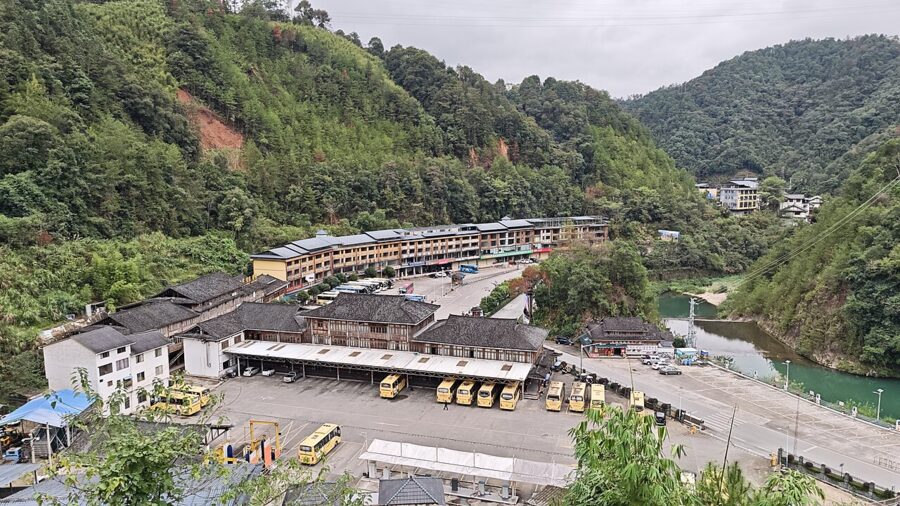
The terraces are about 100 km from Guilin, and the drive takes two to two and a half hours. The booking apps sell the scenic area ticket bundled with a same-day bus from central Guilin and back, which is the easiest. A private car or Didi gives you flexibility. Or take a public bus to Longsheng town and change there for the villages, which is cheapest and the most likely to go wrong when timetables change.
What to eat
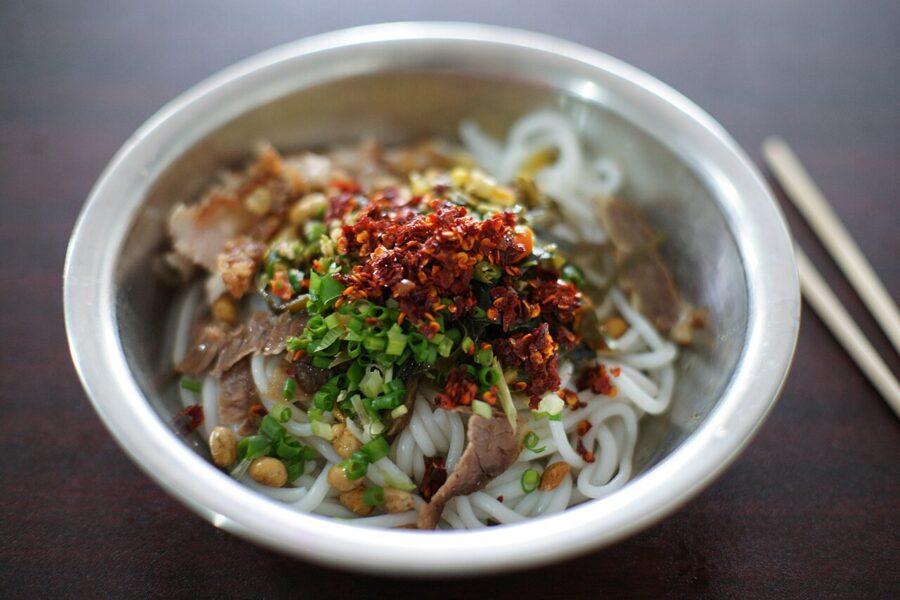
Breakfast is rice noodles. Everyone in Guilin eats them, at a counter, standing up if necessary, with braised meat, crunchy peanuts, pickled beans and a ladle of broth, for very little money. I’ve written a whole guide to Guilin rice noodles and where to eat them, so here’s the short version: pick a busy shop near your hotel and point at what the person in front of you ordered.
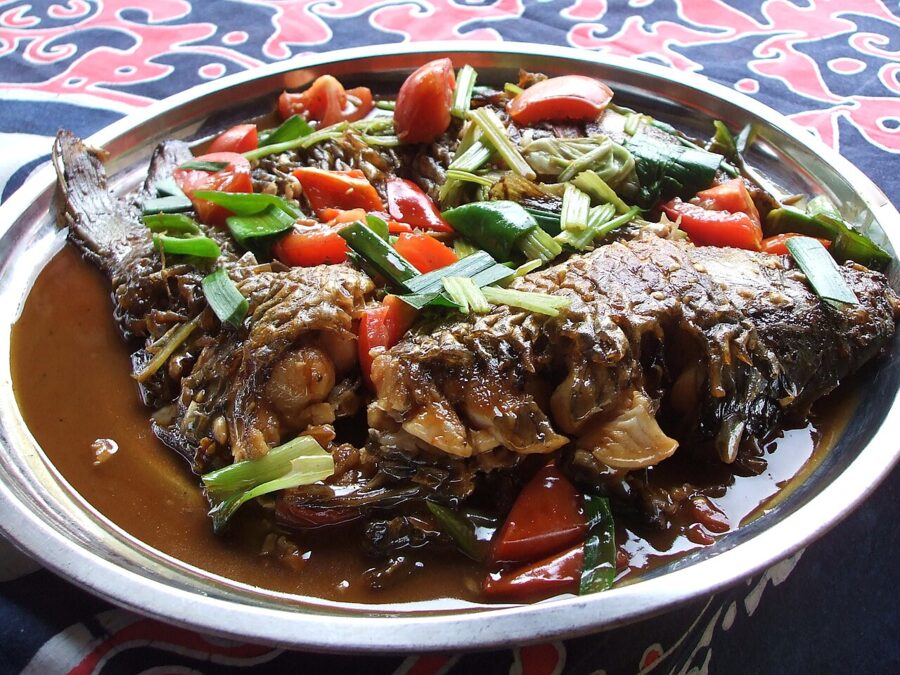
Beer fish (pijiu yu, 啤酒鱼) is the other dish everyone mentions. It’s a Yangshuo speciality: a river fish fried, then braised in local beer with tomatoes and chillies. You’ll find it on almost every menu in Yangshuo and Xingping.
For a proper dinner in Guilin, Chunji Roast Goose (椿记烧鹅) is the local favourite, with its flagship at 2 Zhongshan Middle Road. The goose is roasted in the Cantonese way, with a crisp skin and a sour plum sauce, and you order on your phone at the table. Go early in the evening or expect to queue, and order a half goose between two.
Getting to Guilin
High-speed rail is the way in for most people. Guilin has three main stations: Guilin North, where many trains that start and end here run from; Guilin West, where many trains on the Guiyang to Guangzhou line stop; and the old Guilin station in town. Look carefully at which one your ticket says, because they’re a long way apart, and use 12306 or Trip.com to book.
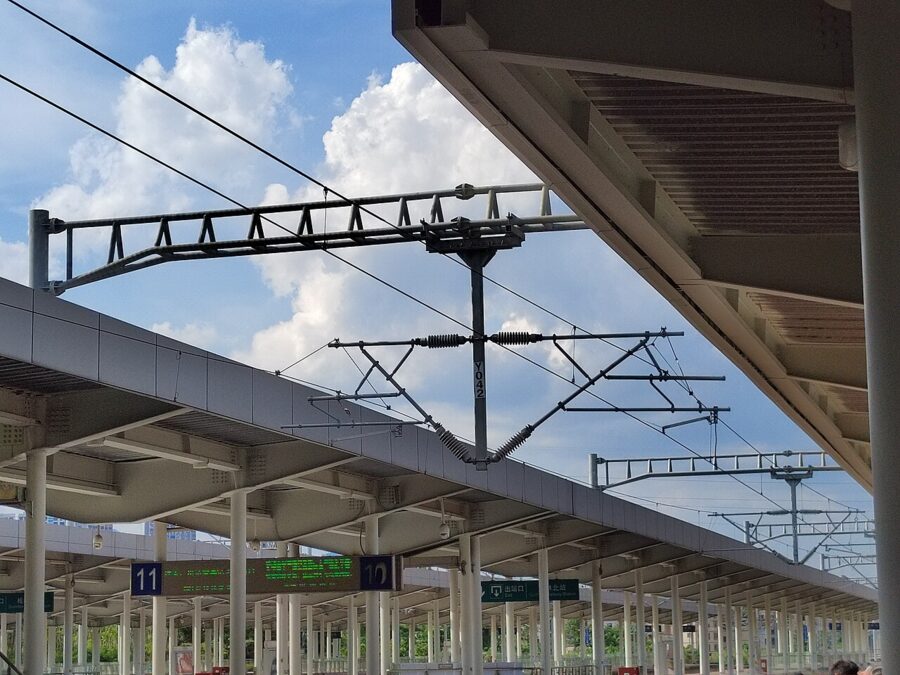
From Guangzhou South there are about seventy trains a day, the fastest in just over two hours and most around two and a half to three. From Shenzhen North, where I’d catch the train when I lived in Shenzhen, the fastest take about two hours forty minutes and most a little over three. There are also three direct G trains a day from Hong Kong West Kowloon, taking about three hours to Guilin West.
Further afield, the fastest trains from Shanghai Hongqiao take about seven and a quarter hours, from Beijing West about eight, and from Kunming South about four and a half. Kunming is the jumping-off point for Dali and Tiger Leaping Gorge if you’re heading west.
Guilin Liangjiang International Airport is about 28 km from the city. Airport buses and taxis run to the centre, and there’s an official coach from the airport straight to Yangshuo every 30 minutes, from 07:30 to 18:30 towards Yangshuo and 09:00 to 20:30 back to the airport.
Getting around town, Didi is cheap and easy, and you can pay through Alipay or WeChat Pay with a foreign card. Many of the ticket offices and small shops are mobile-payment only, though cash is legal tender, so carry a little for the noodle shop that hasn’t got change.
Where to stay in Guilin
Stay near the river or the lakes, between Elephant Trunk Hill and Fubo Hill. You can walk to most of the city sights, the lakes are on your doorstep in the evening, and the pier buses leave from nearby.
- Shangri-La Guilin (Official site | Booking.com): on the east bank of the Li, north of the centre, with a big garden by the river. Quieter than the centre, and a short Didi to everything.
- Sheraton Guilin Hotel (Official site | Trip.com): at 15 Binjiang Road on the riverfront, near Zhengyang Walking Street, with Elephant Trunk Hill a short walk south. The best location in town for walking.
- Lijiang Waterfall Hotel (Trip.com): on Shanhu Lake, opposite the Sun and Moon Pagodas, famous for the waterfall poured down its facade in the evening. It’s touristy, but you can watch the night boats from your window.
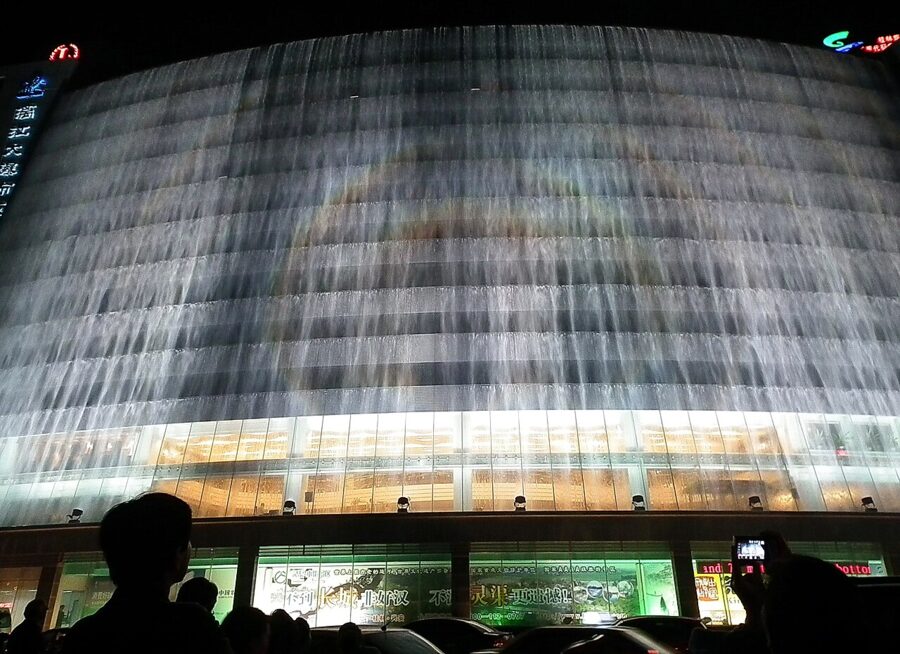
If the river is the point of your trip, sleep in Xingping or Yangshuo after the cruise rather than going back to Guilin.
Three days: the city, the river and Xingping
This is the plan I’d give a friend with three days and no car. It leaves the terraces out, so add a fourth day and a night in Dazhai if you can.
Day 1, Guilin. Breakfast of rice noodles, then Elephant Trunk Hill early, before the groups. Walk up the river to Fubo Hill and Diecai Hill, and have lunch near Zhengyang Walking Street. In the afternoon, take a Didi to Reed Flute Cave, then come back for Solitary Beauty Peak in the late light and finish on the night boat round the four lakes, with goose at Chunji after.
Day 2, down the river. Take the bus to Mopanshan for the morning boat, and spend the afternoon in Yangshuo once you’ve landed. Then take a bus or Didi to Xingping for the night, so you wake up by the river.
Day 3, Xingping. Laozhai Hill for sunrise, breakfast in the old street, then the short raft loop from Chaobanshan to Nine Horse Fresco Hill, with your 20-yuan note ready. Walk the lanes, take the boat to Fishing Village if there’s time, and catch an afternoon train from Yangshuo station back to Guilin or on to Guangzhou or Shenzhen.
With a fourth day, go from Guilin to Longji in the morning, see Ping’an and stay in Dazhai, then take the cable car up in the morning and the bus back in the afternoon. If you want more of this kind of scenery, the sandstone pillars of Zhangjiajie look like Guilin’s towers stretched upwards.
Skip this
- The cheap “Li River” tour from the station. If it’s half the official price, it’s either a different river, a different stretch or a shopping trip with a raft on the end.
- The cruise on 1–7 October. Golden Week crowds are heavy everywhere in China, and the river is no exception. Go the week after.
- Longji as a rainy-day trip. If the forecast says low cloud, you’ll pay for a four-hour round trip to look at fog. Swap it for the caves.
- Both show caves. Reed Flute and Seven Star are variations on a theme. Do one well, with a guide, and spend the saved time on Diecai Hill.
- Laozhai Hill at dusk. The descent is steep and unlit. Sunrise is the better light anyway.
Bring a 20-yuan note and comfortable shoes, and leave a day with nothing in it. Then sit on the bank at Xingping with a coffee and watch the rafts come round the bend while the mist comes off the hills.
You Might Also Enjoy
 Sea World Shenzhen: The Ship, the Plaza, and the Expat Heart of Shekou
 Chaoshan Food: Beef Hot Pot, Braised Goose and the Snack Streets of Shantou and Chaozhou
 The Terracotta Warriors: How to Visit Pits 1, 2 and 3, the Bronze Chariots and Qin Shi Huang’s Tomb Without a Tour
 Eating Fish in Japan: A Guide to Sashimi, Sushi, and the Market Breakfast