Sichuan Food: Mala, Mapo Tofu, Dan Dan Noodles and Where to Eat Them in Chengdu
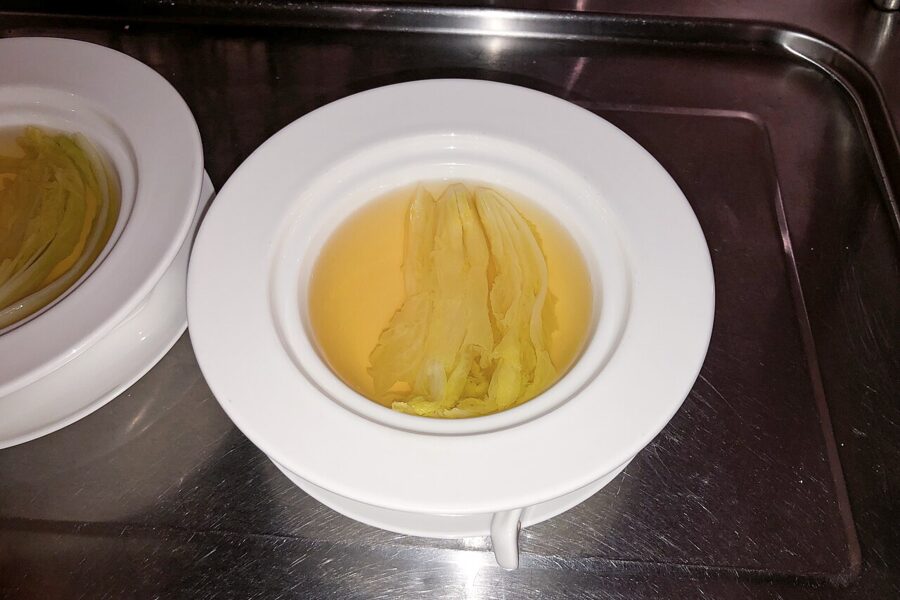
The dish Sichuan chefs cook when they want to show off looks like a bowl of hot water with a cabbage heart sitting in it. It’s called kaishui baicai (开水白菜), boiling-water cabbage, and the “water” is a stock of old hen, duck and ham that has simmered for hours and then been cleared until it runs as clear as the tap. There isn’t a chilli in it. Not one flake.
Keep that bowl in mind, because the other half of the story is louder. The most famous Sichuan dish on earth, mapo tofu, began in 1862 at a small rice shop beside the Wanfu Bridge in north Chengdu, where the widow of the owner, Chen Chunfu, cooked bean curd for the porters who carried oil into the city. Her face was marked by smallpox, so people called her Chen Mapo, pockmarked old Mother Chen. The company that still trades under her name is now on the Michelin Bib Gourmand list.
In Shenzhen, a city where almost everybody seemed to come from somewhere else, the cheapest decent lunch near any office tower was nearly always Sichuan. Six tables, a laminated menu, a cook from somewhere in Sichuan, and a plate of twice-cooked pork with a bowl of rice. That is how most of China eats Sichuan food, and it’s still the best way in.
Sichuan gets one section in my regional map of Chinese food. It deserves far more: the flavour system, the classic dishes and where each came from, Chengdu’s snack culture, how to order a table that doesn’t flatten you, and the places in Chengdu, Chongqing and beyond that are serving it well in 2026.
| Dish | Characters | Flavour | Heat | Try it first at |
|---|---|---|---|---|
| Mapo tofu | 麻婆豆腐 | Mala, beefy, rich | Medium | Chen Mapo, Qinghua Road, Chengdu |
| Kung pao chicken | 宫保鸡丁 | Scorched chilli, sweet-sour | Low to medium | Almost any Sichuan kitchen |
| Twice-cooked pork | 回锅肉 | Bean paste, garlic leaf | Low | Any fly restaurant |
| Fish-fragrant aubergine | 鱼香茄子 | Pickled chilli, sweet, sour | Low | Any fly restaurant |
| Boiled fish | 水煮鱼 | Mala, hot oil | High | Share it, never order it alone |
| Dan dan noodles | 担担面 | Savoury, numbing | Medium | Chengdu noodle shops |
| Fuqi feipian | 夫妻肺片 | Red oil, cold | Medium | Fuqi Feipian, Zongfu Road |
| Zhong dumplings | 钟水饺 | Sweet soy, red oil | Low | Zhong Shuijiao, People’s Park |
| Tianshui noodles | 甜水面 | Sweet, garlicky | Low | Zhang Lao Er, Wenshuyuan Street |
| Chongqing chicken | 辣子鸡 | Dry chilli, fried | High | Chongqing |
In This Article
- Mala is only one of two dozen flavours
- Why the basin eats like this
- Ma: Sichuan pepper
- La: chillies and red oil
- Doubanjiang from Pixian
- The flavours that aren’t hot
- Eight classics, and what to look for in each
- Mapo tofu
- Kung pao chicken
- Twice-cooked pork
- Fish-fragrant aubergine
- Boiled fish
- Dan dan noodles
- Fuqi feipian
- Chongqing chicken
- Three more worth ordering
- Xiaochi: Chengdu’s small eats
- Zhong dumplings
- Long chaoshou
- Tianshui noodles and the rest
- The snack streets
- Fly restaurants, banquet halls and the jianghu
- The fly restaurants
- The banquet tradition
- Chongqing’s jianghu cooking
- How do you order a Sichuan meal without blowing your head off?
- Build a balanced table
- Ask for less heat
- Vegetarians and allergies
- Rice, drinks and paying
- Watch the calendar
- Where to eat Sichuan food in Chengdu
- People’s Park and Chunxi Road: the old names
- Wenshu Monastery: tianshui noodles
- Chen Mapo, Qinghua Road
- The Michelin rooms
- The Sichuan Cuisine Museum, Pidu
- A day of eating in Chengdu
- Skip this: Jinli and Kuanzhai Alley for snacks
- Go beyond Chengdu
- Chongqing
- Leshan
- Zigong
- Beijing, Shenzhen and the rest
Mala is only one of two dozen flavours
Sichuan cooks have a phrase for their own cuisine: yi cai yi ge, bai cai bai wei (一菜一格,百菜百味), each dish its own style, a hundred dishes, a hundred flavours. Cookery schools in Chengdu teach a canon of compound flavours, and most lists put the number at 24. Mala (麻辣), numbing and hot, is the one the world knows, but it shares the table with fish-fragrant, strange-flavour, lychee, garlic paste, ginger juice, sweet and sour, home-style and a clear, salty-savoury style with no heat at all.
Fuchsia Dunlop, the English writer who enrolled at the Sichuan Higher Institute of Cuisine in Chengdu in the 1990s as one of its first foreign students, spent much of Land of Plenty and The Food of Sichuan making exactly this case. Her books are still the best English-language way to learn the system. The short version follows.
Why the basin eats like this
Sichuan’s old nickname is tianfu zhi guo (天府之国), the Land of Abundance. The Chengdu plain is flat, irrigated and green all year, so rice, vegetables, pigs and rabbits have always been plentiful, and the hills around it add mushrooms, bamboo shoots and wild herbs. Pork is the everyday meat by a long way.
The climate does the rest. Summers are hot and sticky, winters damp and grey, and the folk explanation for all that chilli and pepper is that they drive out the damp. It’s a folk explanation, but you’ll hear it at every table.
History stirred the pot too. The wars at the end of the Ming dynasty emptied much of the province, and in the Qing it was resettled by migrants from Hunan, Hubei, Guangdong and beyond, a movement Sichuan people still call Huguang tian Sichuan (湖广填四川), “Huguang fills Sichuan”. Each group brought its own cooking, and the mix is part of why the cuisine has so many voices.
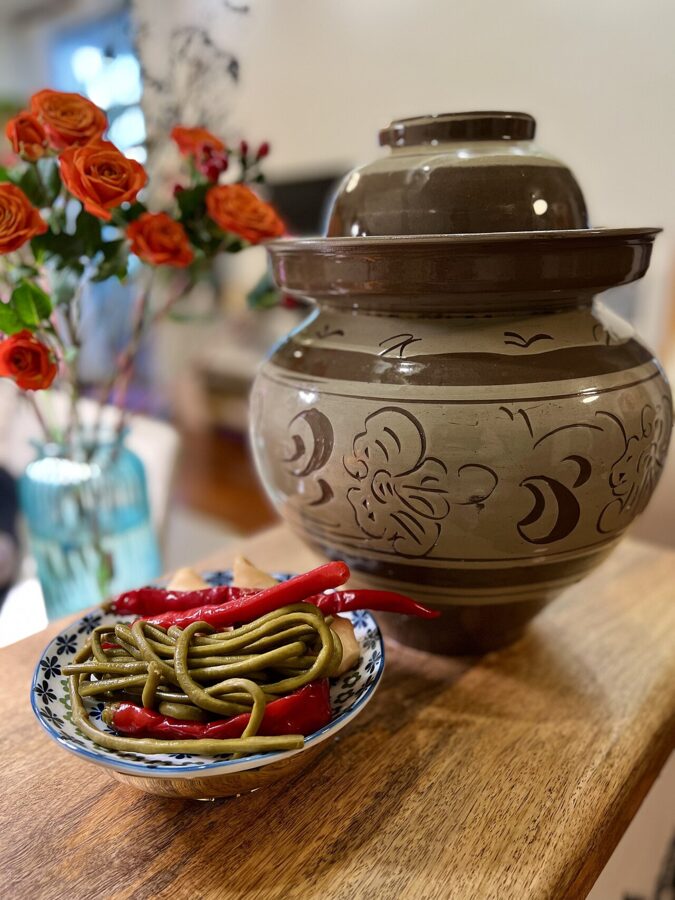
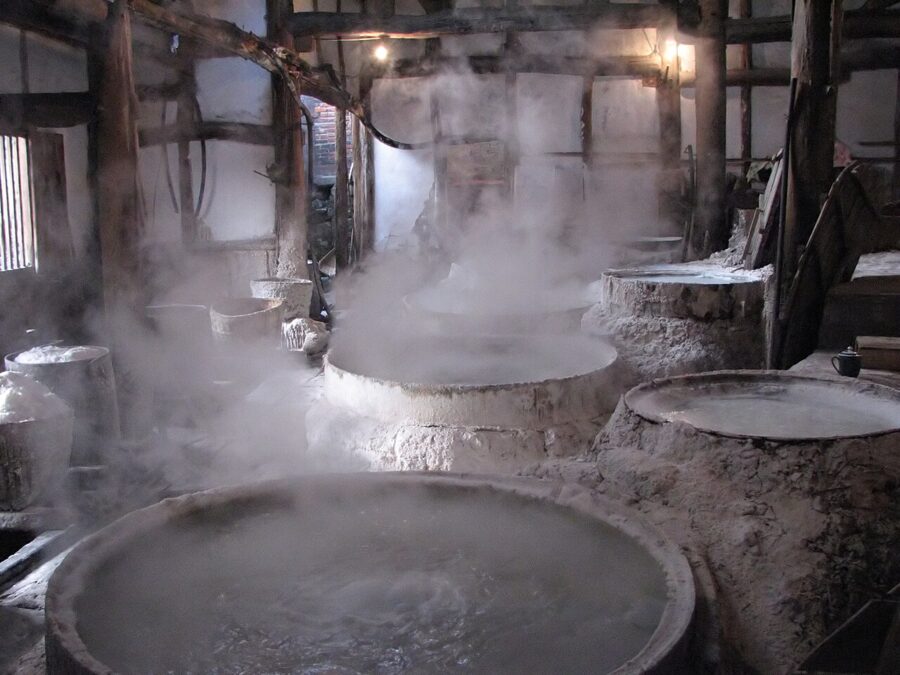
Then there’s salt. Zigong in the south has drawn brine from deep wells for about two thousand years, and salt, along with salted, pickled and preserved food, runs through everything. Almost every Sichuan home kitchen keeps a jar of paocai (泡菜), vegetables and chillies pickled in brine, and pickled chilli is the backbone of the fish-fragrant flavour.
Ma: Sichuan pepper
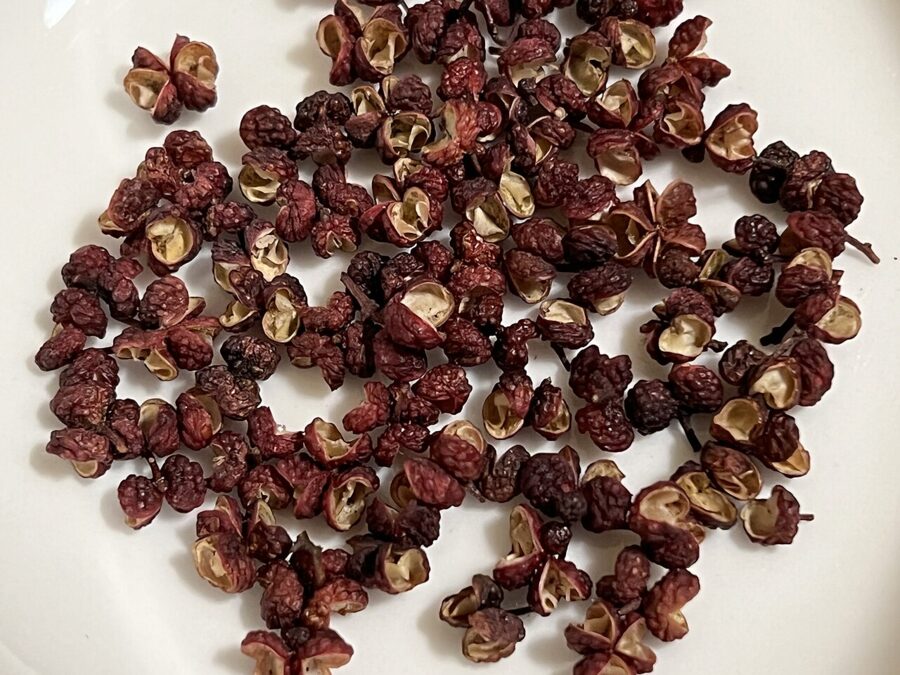
The ma comes from huajiao (花椒), “flower pepper”, the dried husk of a prickly ash berry. It isn’t related to black pepper and it isn’t hot. It makes your lips buzz and your tongue feel faintly electric, which food scientists put down to a compound called sanshool, and it opens the palate so the chilli that follows tastes brighter rather than just harsher.
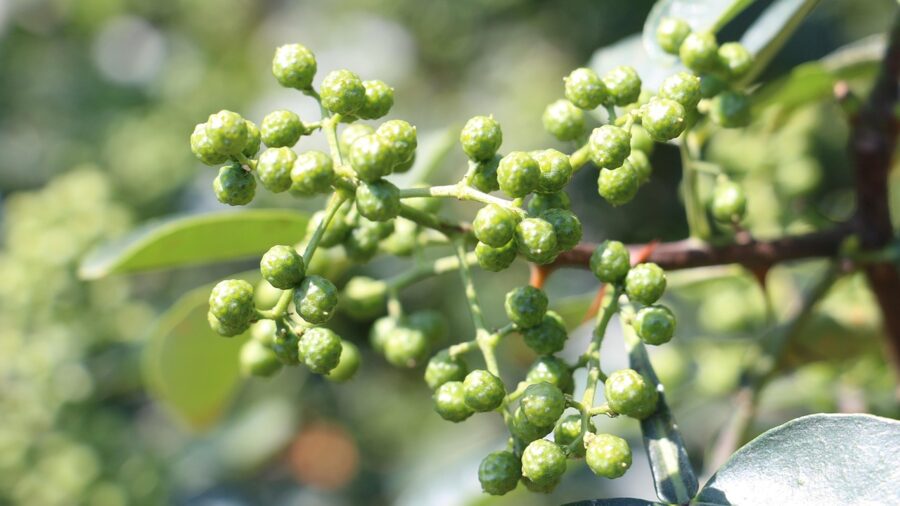
Red pepper from Hanyuan in western Sichuan is the prestige product. Green pepper is steeped into oil or thrown whole over fish. If a mapo tofu arrives without that scent of crushed pepper on top, it was cooked by someone in a hurry.
La: chillies and red oil
The la is younger than people think. Chillies came from the Americas and reached China in the late Ming, and Sichuan cooks only took them up in a big way over the following two centuries. Before that, the province’s heat came mostly from Sichuan pepper and ginger.
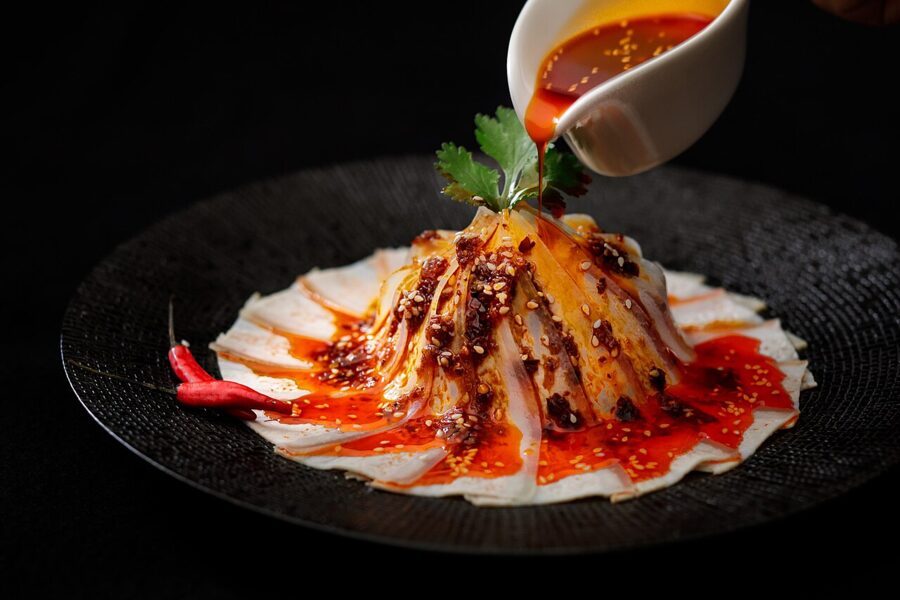
Most of that heat arrives as hongyou (红油), red oil: chilli flakes, sometimes spices, scalded with hot rapeseed oil and left to settle. Every snack shop makes its own, and every snack shop thinks its version is the best. It coats cold dishes, dumplings and noodles, and it is why so much Chengdu food glows.
Doubanjiang from Pixian
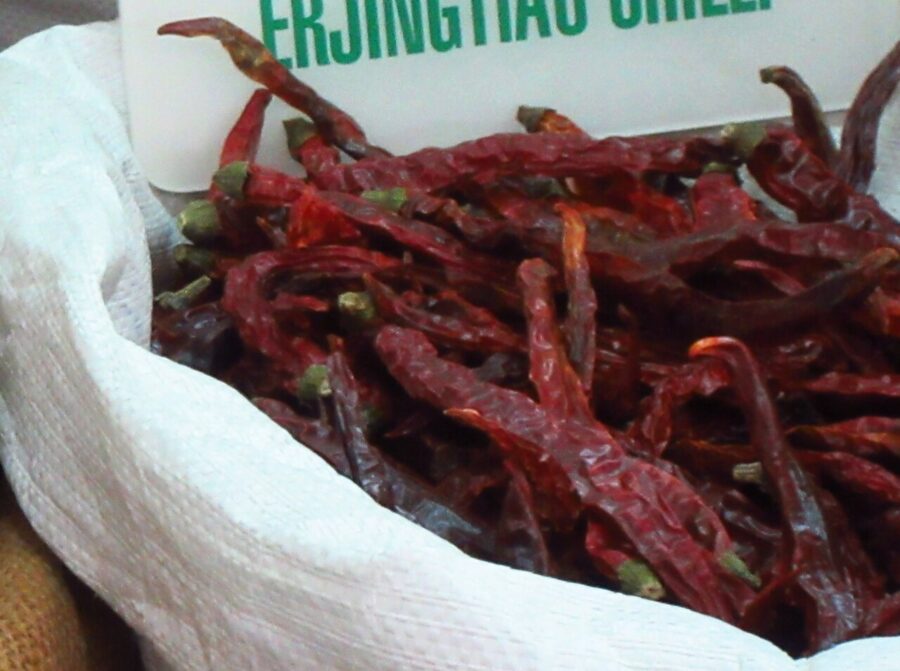
If one ingredient is the base note of Sichuan cooking, it’s Pixian doubanjiang (郫县豆瓣酱), a paste of salted erjingtiao chillies and fermented broad beans from the old Pixian county, now Pidu district, on Chengdu’s north-west edge. The makers trace it back about 300 years. The Sichuan Pixian Douban company, which makes the Juancheng brand, sums up the old method as “sun on fine days, cover on wet days, turn by day, air by night”, and the paste ferments outdoors for months, often years.
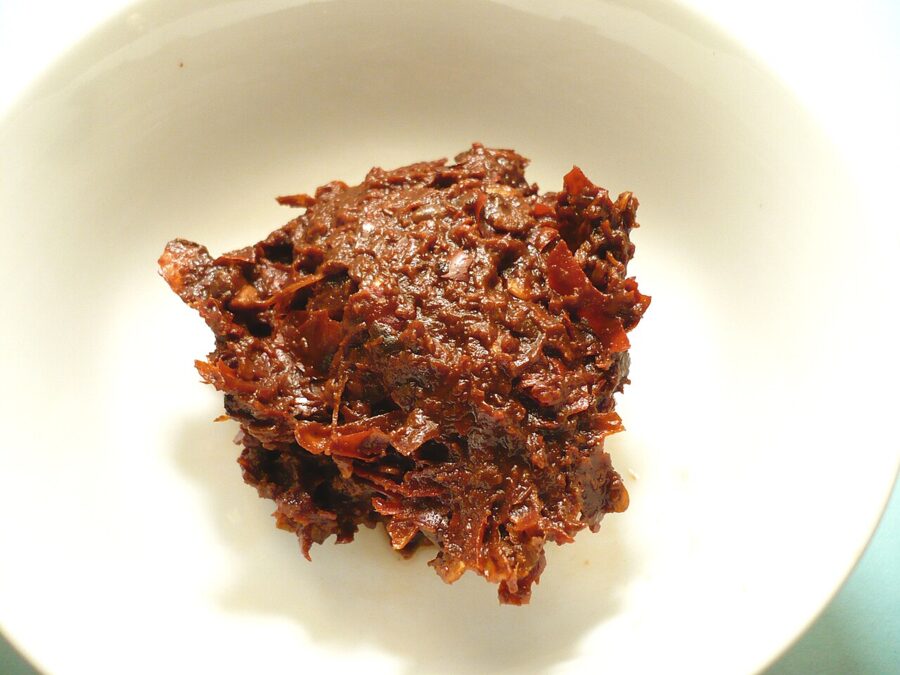
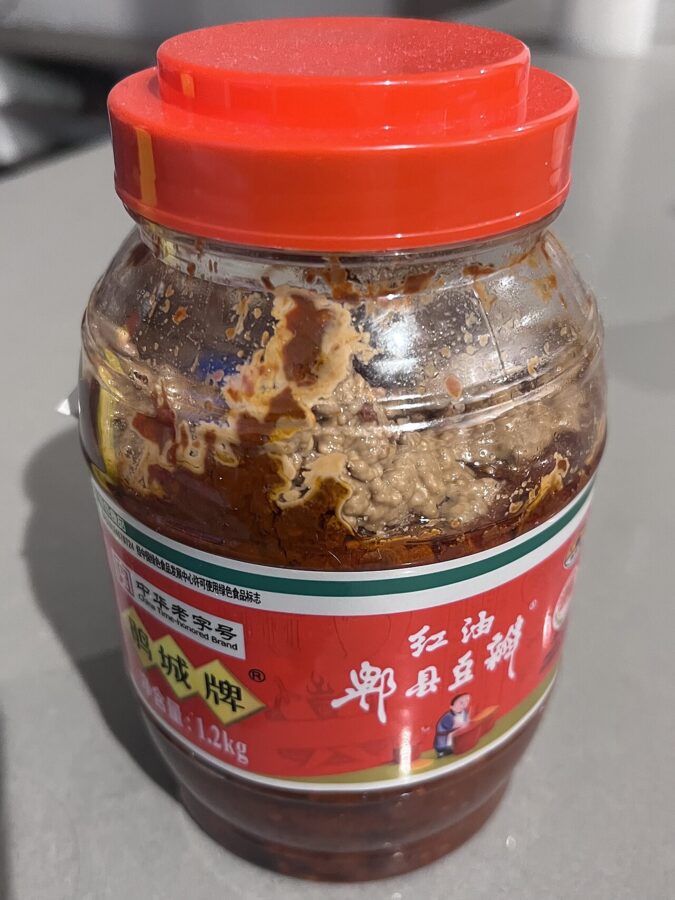
Doubanjiang is what gives mapo tofu and twice-cooked pork their deep, almost meaty savour. It’s fried slowly in oil until the oil turns red, and a cook who rushes that step gives you a dish that tastes raw and sharp. You can usually tell from the first mouthful.
The flavours that aren’t hot
Fish-fragrant (yuxiang, 鱼香) uses the seasonings once used for fish: pickled chillies, garlic, ginger and spring onion, balanced with sugar and vinegar. There is no fish in it. Strange-flavour (guaiwei, 怪味) piles salty, sweet, sour, nutty, hot and numbing into one dressing for cold chicken, and none of them is meant to win.
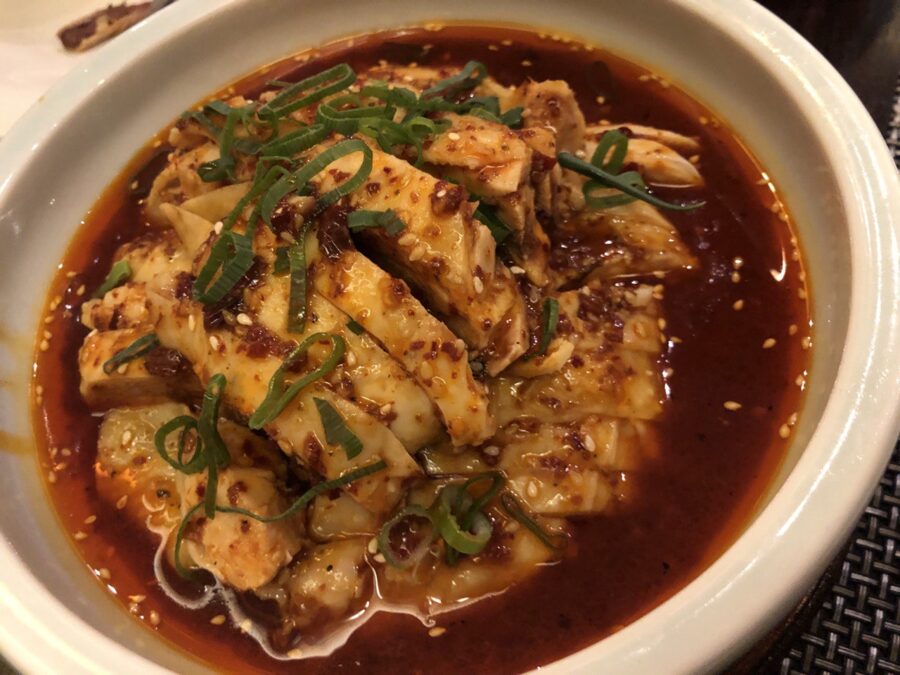
Lychee flavour (lizhi wei, 荔枝味) contains no lychee: it’s a light sweet-and-sour, sharper than Cantonese sweet and sour, and Chengdu’s kung pao chicken is the famous example, with scorched chilli folded in. Garlic paste (suanni, 蒜泥) and ginger juice (jiangzhi, 姜汁) dress cold meat and vegetables.
Then there’s the quiet end: duck soup with pickled radish, clear-broth wontons, steamed pork with rice flour, tea-smoked duck. A good Sichuan table always has one or two of them. They’re not filler; they’re what lets you taste the rest.
Eight classics, and what to look for in each
These are the dishes you’ll meet on every Sichuan menu from Chengdu to Chongqing. Each one has a test that separates a careful kitchen from a lazy one.
Mapo tofu
Order mapo doufu (麻婆豆腐) in Chengdu and you get soft tofu in a glossy red sauce of doubanjiang, fermented black beans, ground chilli and minced beef, not pork, finished with a dusting of ground Sichuan pepper. Cooks describe the ideal in seven words, ma, la, tang, xian, xiang, su and nen: numbing, hot, piping hot, fresh, fragrant, crisp (the beef) and tender (the tofu). The tofu cubes should hold their shape.
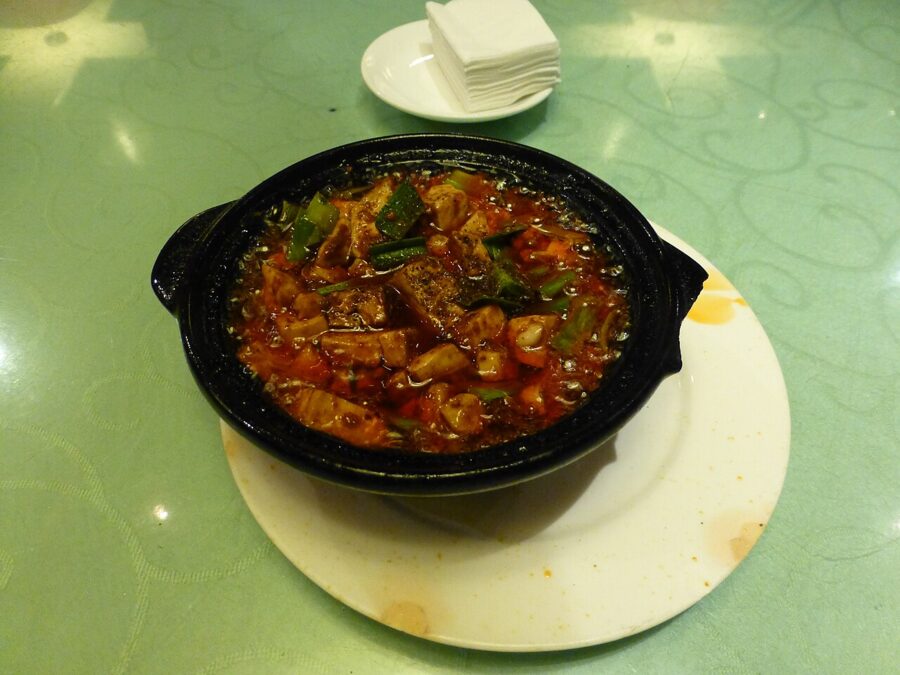
The dish travelled further than any other Sichuan plate. Japan took it up in a sweeter, gentler form, much as it remade ramen and gyoza from Chinese originals, and a Japanese-style mapo is a useful warm-up if you’re nervous about heat.
Kung pao chicken
Gongbao jiding (宫保鸡丁) is named after Ding Baozhen, a Guizhou-born official who served as governor-general of Sichuan from the 1870s until his death in 1886. His honorary title was gongbao, palace guardian, and the dish took it. Dunlop records that the name was politically awkward during the Cultural Revolution, when the dish was renamed for a while.
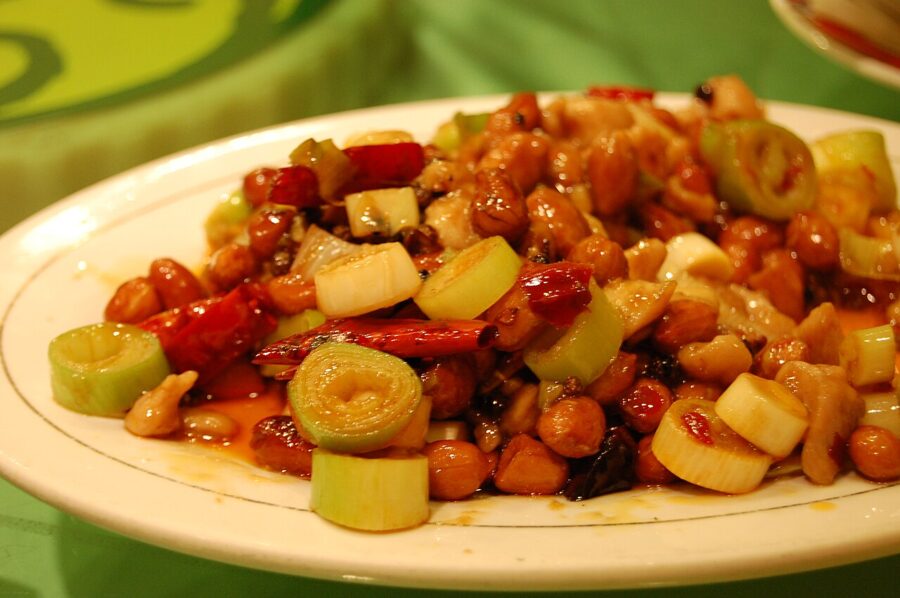
The Chengdu version is “scorched chilli lychee flavour”: tart, slightly sweet, with chillies fried until they darken and Sichuan pepper in the oil. If yours arrives with bell pepper and a thick brown sauce, you’re eating the overseas version.
Eat it fast. The peanuts go soft within ten minutes, and the dish is at its best when the chillies still smell toasted. Leave the dried chillies on the plate; they’ve done their job.
Twice-cooked pork
Huiguo rou (回锅肉), “meat returned to the wok”, is the dish Sichuan families argue about. Pork from the hind leg or belly is simmered whole, cooled, sliced thin and fried with doubanjiang, sweet bean sauce, fermented black beans and green garlic leaves. Cooks call the curled, cupped slices dengzhan wo (灯盏窝), “lamp dishes”, after old oil lamps.
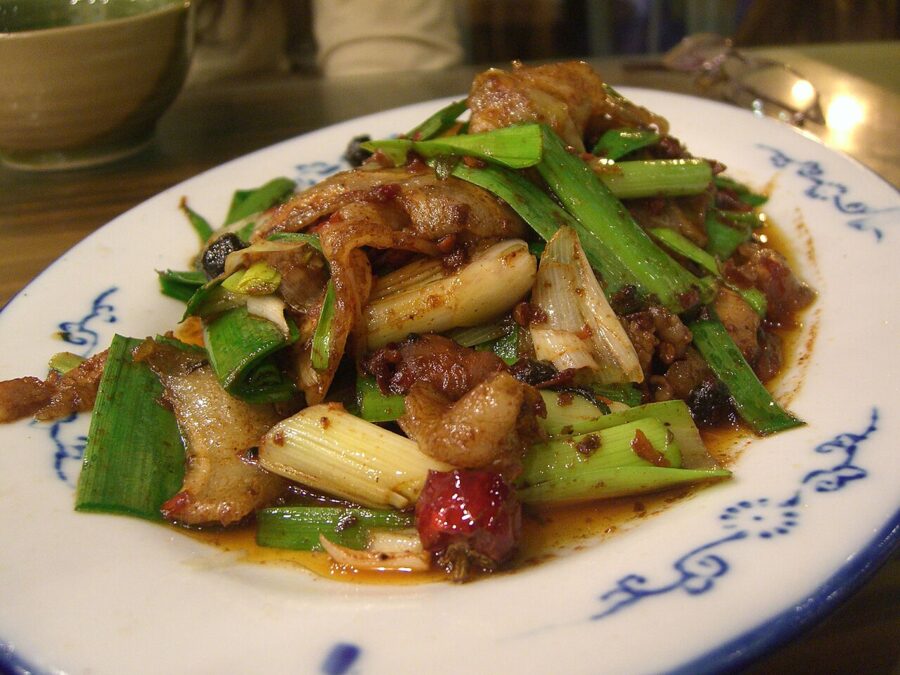
It’s the dish I’d judge any Sichuan kitchen on, more than mapo tofu. Western Sichuan once called it paoge rou (袍哥肉), after the secret brotherhoods whose members ate it at their meetings.
Fish-fragrant aubergine
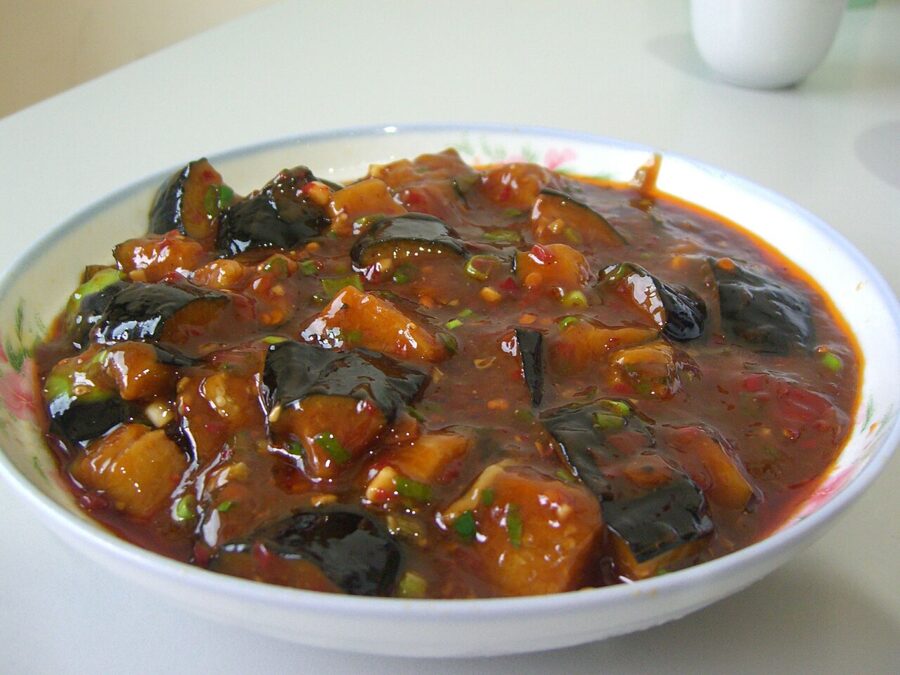
Yuxiang qiezi (鱼香茄子) is aubergine, fried or braised until silky, then tossed in the fish-fragrant sauce: pickled chilli paste, garlic, ginger, spring onion, sugar and dark vinegar. Some kitchens add minced pork. Done well, it’s sweet, sour, salty and gently hot all at once.
Boiled fish
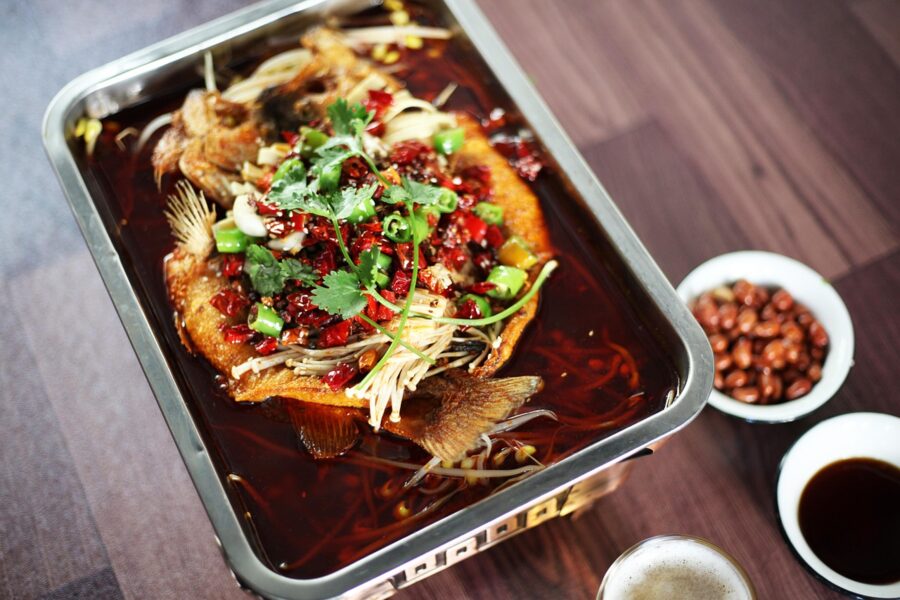
Shuizhu yu (水煮鱼), water-boiled fish, is a bowl of tender fish slices poached in a chilli broth, buried under dried chillies and Sichuan pepper, then finished with a ladle of smoking-hot oil poured over the top at the table. The technique is older than the dish: water-boiled beef is usually traced to the salt-well workers of Zigong, who cooked the meat of retired working oxen with salt and pepper.
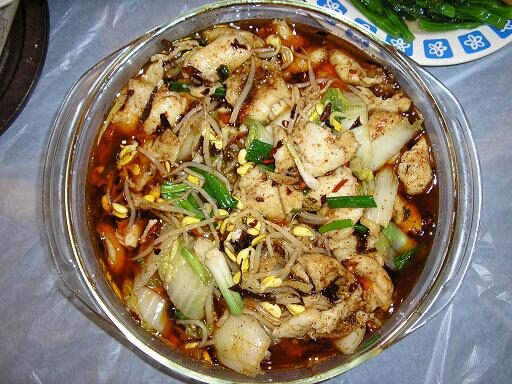
The fish version is generally said to have spread from Chongqing in the 1980s and 1990s. It’s a dish for four people, not one.
Dan dan noodles
Dandan mian (担担面) takes its name from the dan, the shoulder pole hawkers used to carry a stove at one end and bowls at the other. The Sichuan provincial government’s own account repeats the usual story that a Zigong hawker named Chen Baobao started it in 1841. In Chengdu it’s a small bowl, almost no soup, with thin noodles, crisp minced pork, yacai (芽菜, preserved mustard greens from Yibin), soy, red oil and Sichuan pepper sitting at the bottom.
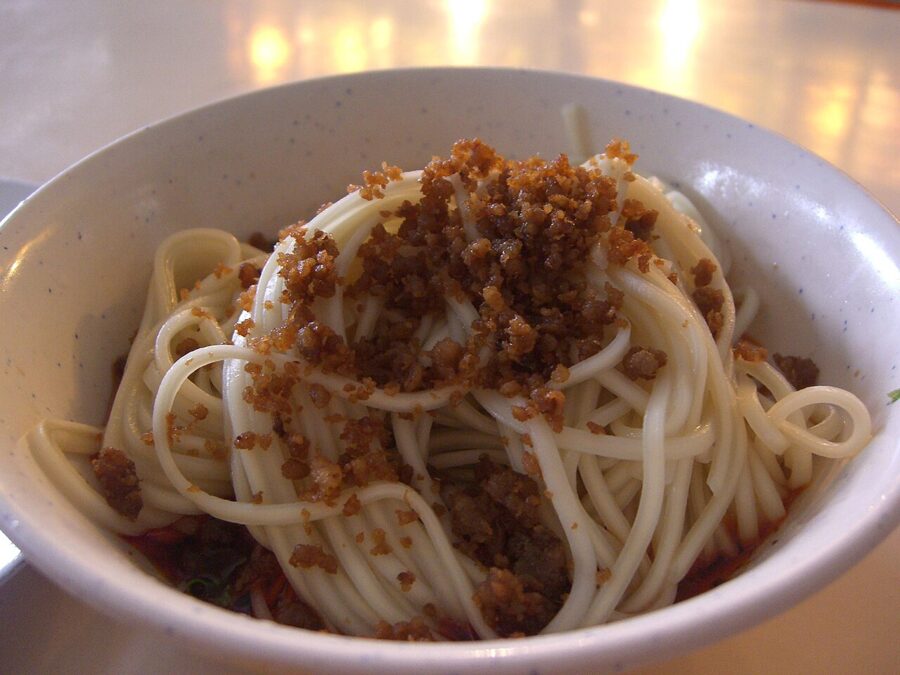
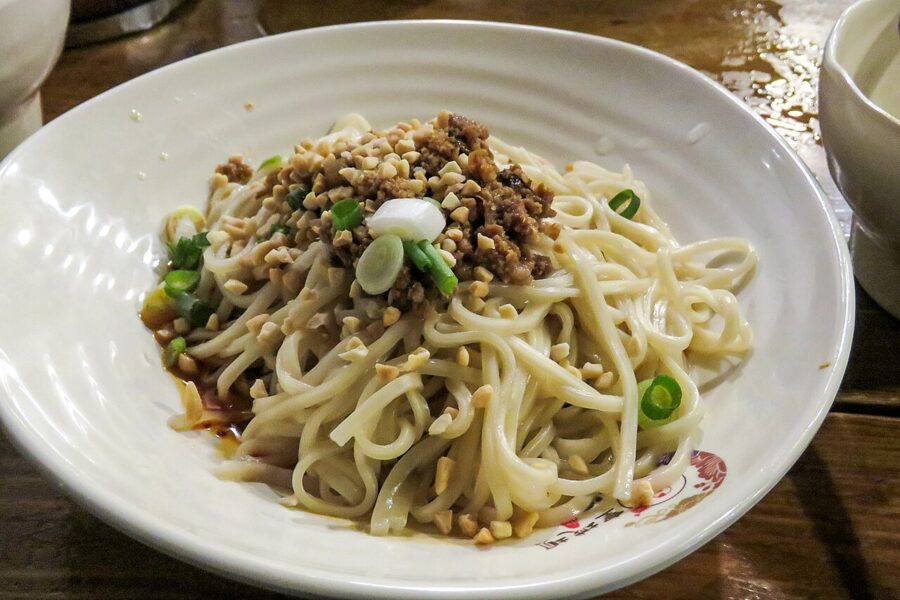
Overseas restaurants often serve a big soupy bowl with peanut sauce. It’s a different dish. For how dandan fits into the wider Chinese noodle map, see my guide to Chinese noodles.
Fuqi feipian
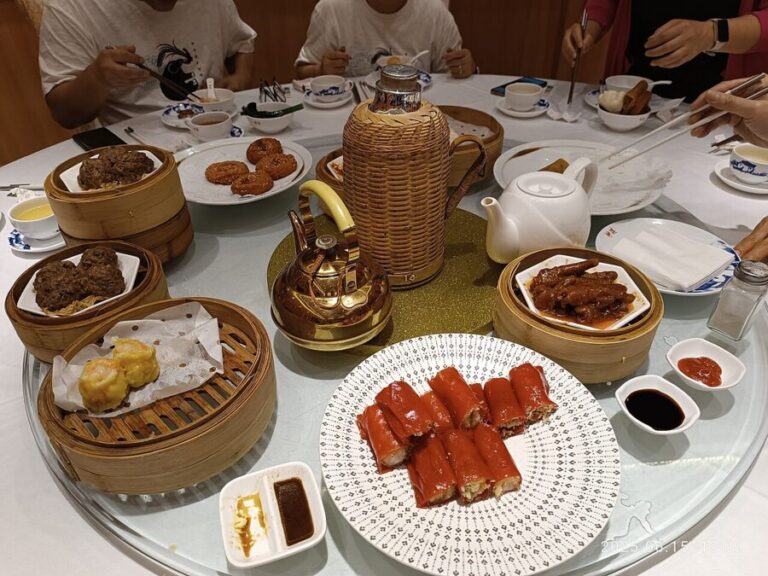
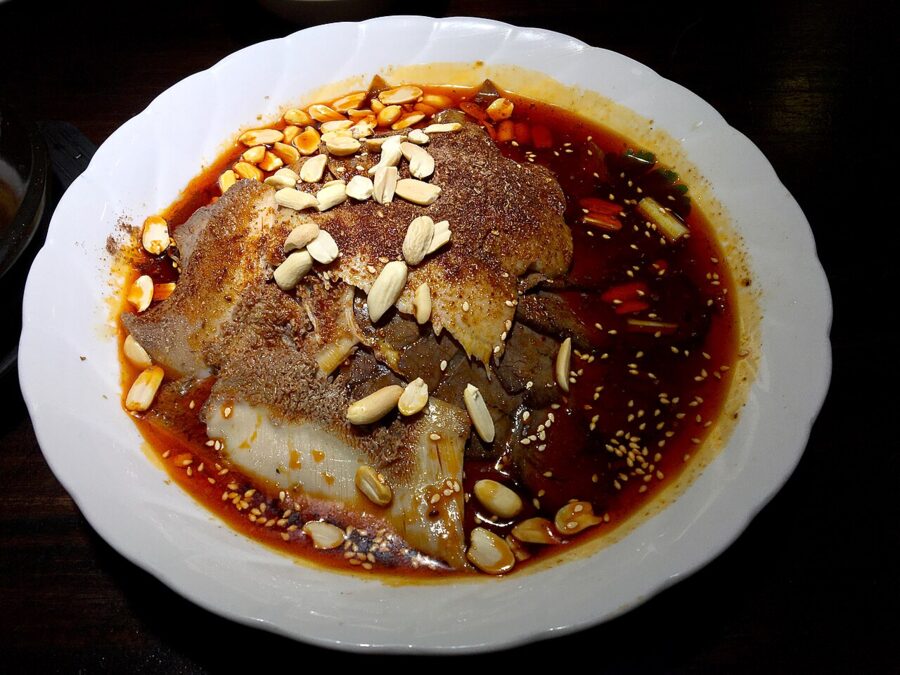
Fuqi feipian (夫妻肺片), “husband and wife lung slices”, contains no lung. In the 1930s a Chengdu couple, Guo Chaohua and Zhang Tianzheng, sold dressed cold beef offal from a basket, made from the cheap cuts butchers threw out. People called it “husband and wife waste slices”, feipian (废片); the “waste” was later swapped for the identical-sounding “lung” (肺), which looked better on a menu.
Chongqing chicken
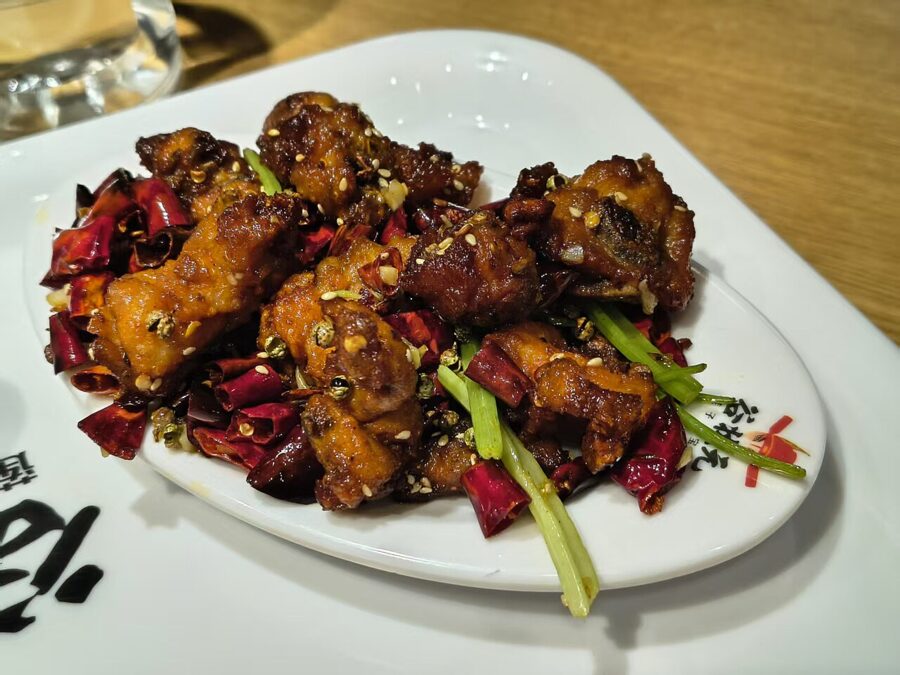
Laziji (辣子鸡) is the dish that made Chongqing’s roadside cooking famous: small pieces of chicken marinated, deep-fried until dry, then tossed with a mountain of dried chillies and Sichuan pepper. Chongqing people say it comes from Gele Mountain (Geleshan) on the city’s western edge.
Three more worth ordering
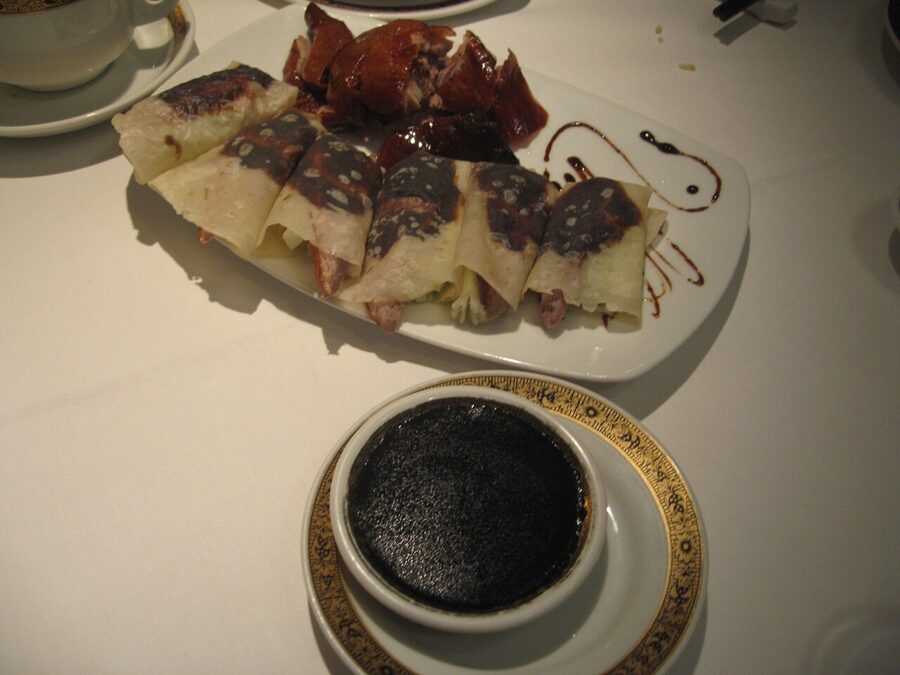
Tea-smoked duck (zhangcha ya, 樟茶鸭) is marinated, smoked over camphor leaves and jasmine tea, steamed and then deep-fried. It’s one of the old banquet dishes, contains no chilli, and is Sichuan’s answer to Peking duck: no pancakes, no carving at the table, but the same idea of a whole bird treated with enormous patience.
Dry-fried green beans (ganbian sijidou, 干煸四季豆) are fried until blistered and wrinkled, then tossed with minced pork, yacai and chilli. Kaishui baicai, the clear-soup cabbage from the top of this piece, is a banquet dish you’ll only find in serious restaurants, and it’s worth asking about.
Xiaochi: Chengdu’s small eats
Chengdu’s xiaochi (小吃), small eats, are a cuisine in themselves. Many of the famous names started as hawkers in the late Qing and Republican years, and the city’s catering company still runs several of them as protected old names. A day of xiaochi costs less than one restaurant dinner.
The best way to eat them is in small portions over a long day. Snack shops sell most things by the bowl or the liang (两), a unit of 50 grams of dough, so you can order one liang of dumplings and one of noodles and keep moving. Many of the old names also sell sampler sets, which is the easy way in.
Zhong dumplings
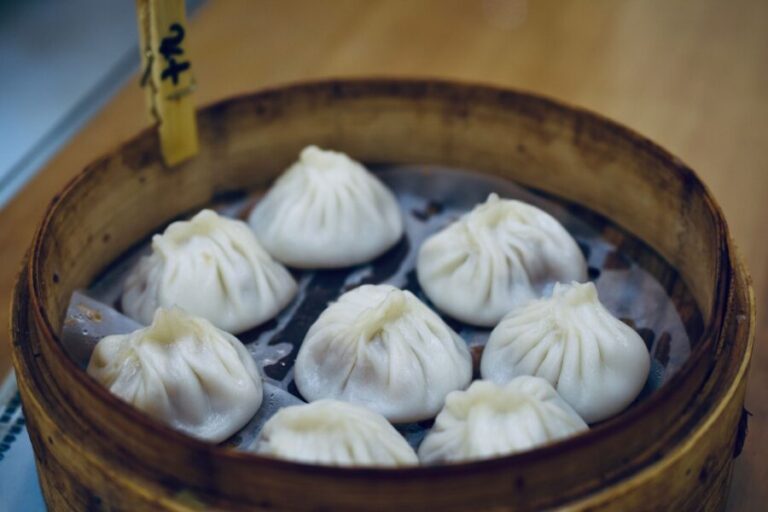
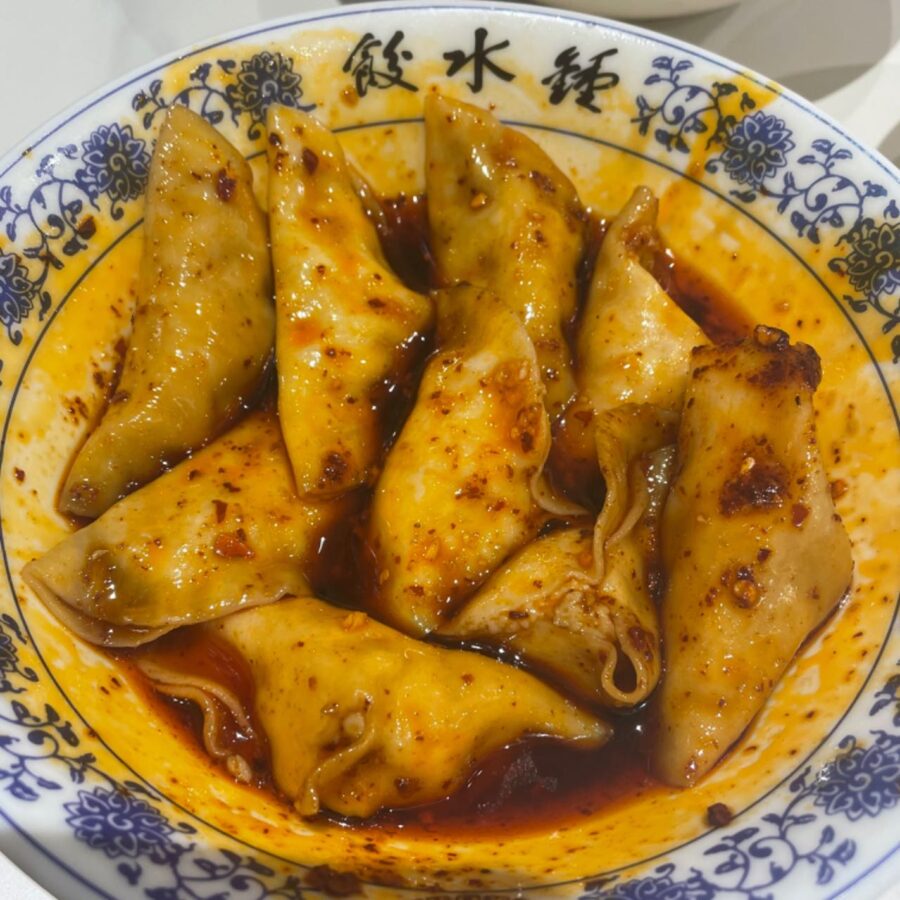
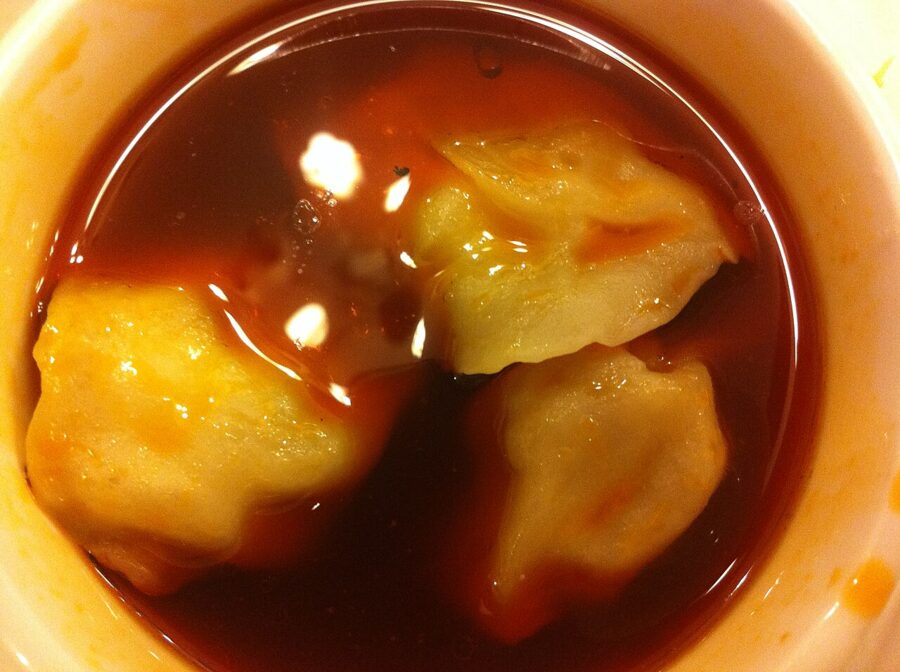
Zhong shuijiao (钟水饺) are small boiled pork dumplings, with no vegetables in the filling, served in a sauce of red oil, crushed garlic and fuzhi jiangyou (复制酱油), soy sauce simmered with brown sugar and spices. The result is sweet first, hot second. The brand dates itself to 1893.
Long chaoshou
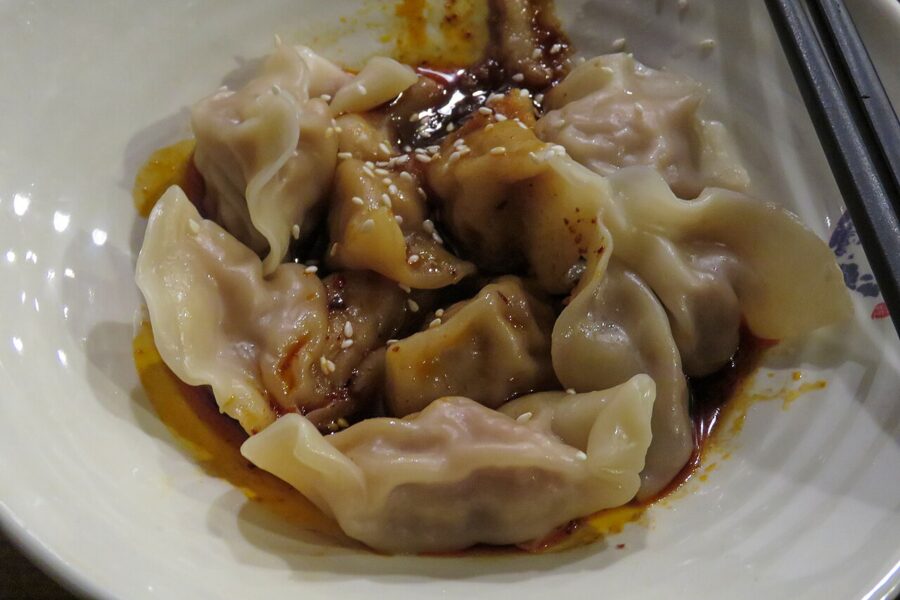
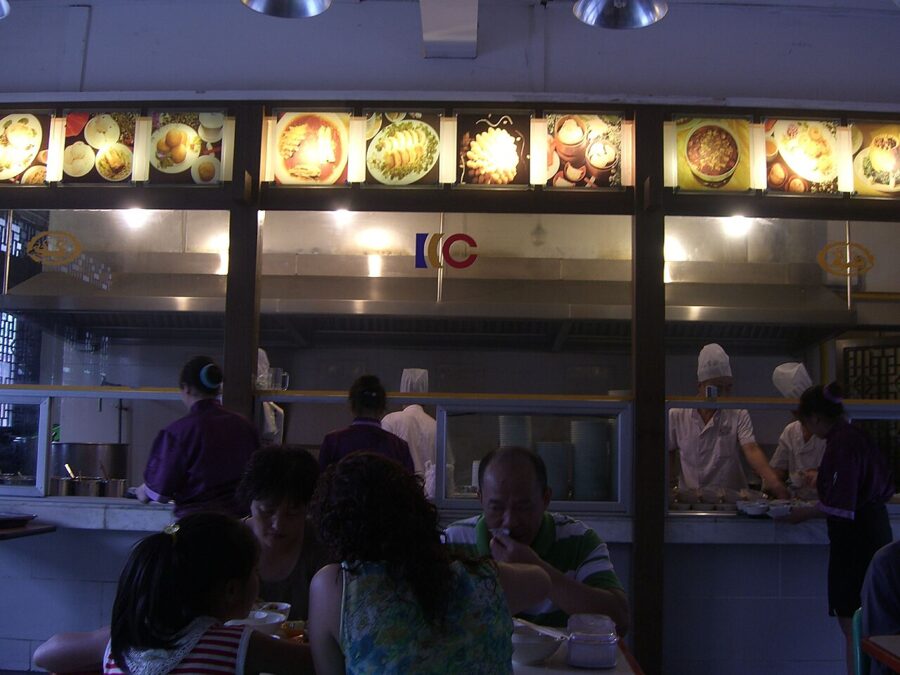
Chaoshou (抄手), “folded hands”, is the Sichuan word for wontons, after the way the wrapper crosses over the filling. Long Chaoshou (龙抄手) opened in 1941; the founders, the story goes, planned it in a teahouse called Nonghua and turned nong into long, dragon. It’s now on Chunxi Road.
Tianshui noodles and the rest
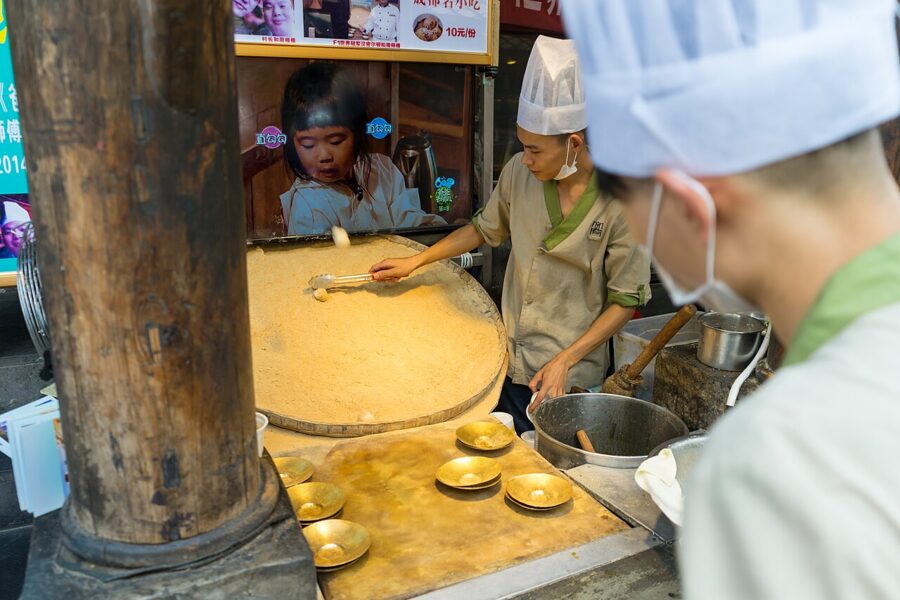
Tianshui mian (甜水面), “sweet water noodles”, are the opposite of dandan: thick, chewy, hand-rolled noodles, almost as wide as a little finger, in fuzhi soy, sesame paste, crushed garlic and red oil. The best-known bowl in town is at Dongzikou Zhang Lao Er Liangfen near Wenshu Monastery, where it costs under ¥10.
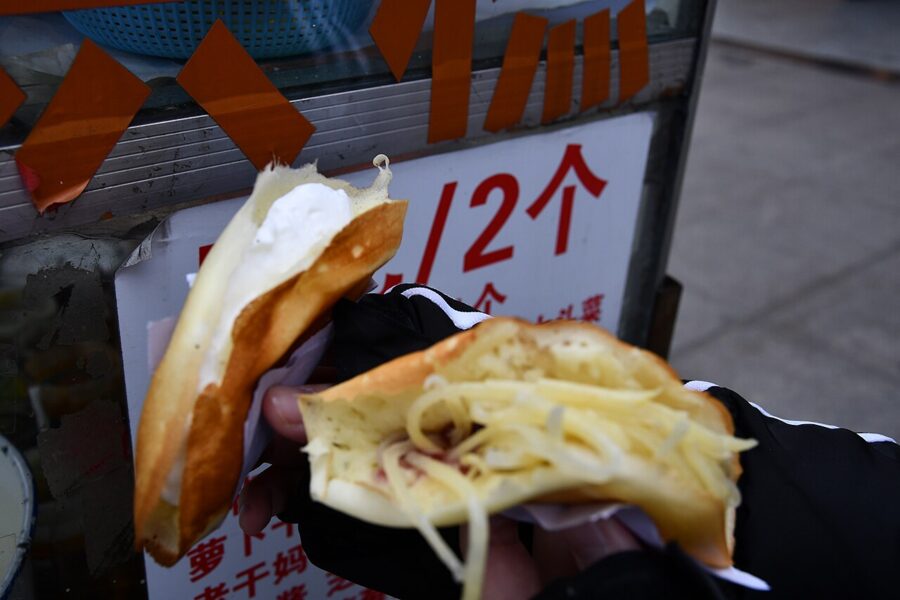
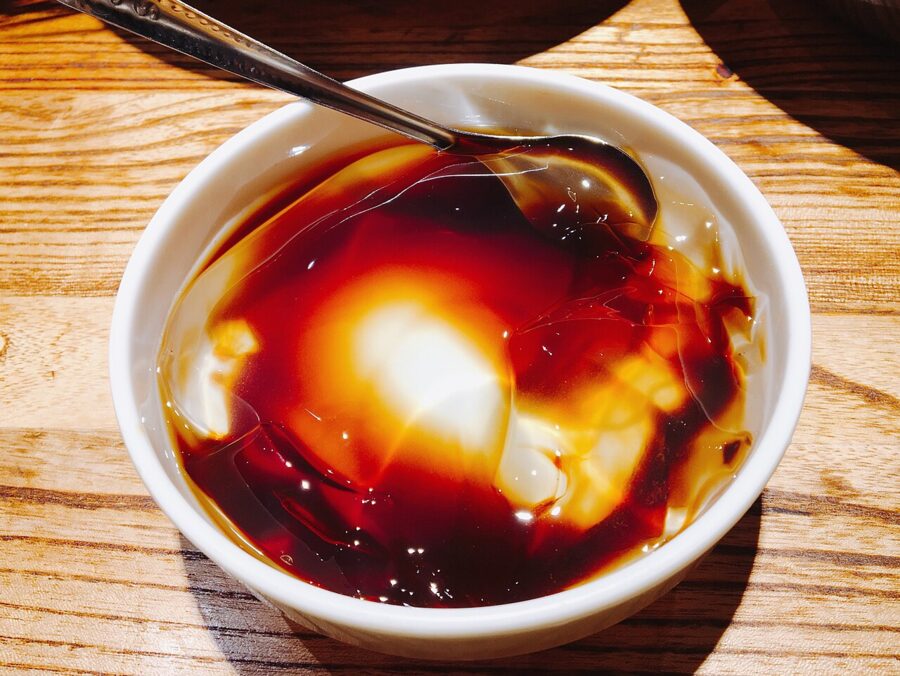
Then the sweets that put the fire out. Bingfen (冰粉) is a clear jelly set from plant seeds, served cold with brown sugar syrup, hawthorn, raisins and peanuts. San da pao (三大炮), “three big cannons”, are glutinous rice balls thrown against a board so they thump, then rolled in soybean flour. Lai tangyuan (赖汤圆) are sesame-filled rice balls in hot water.
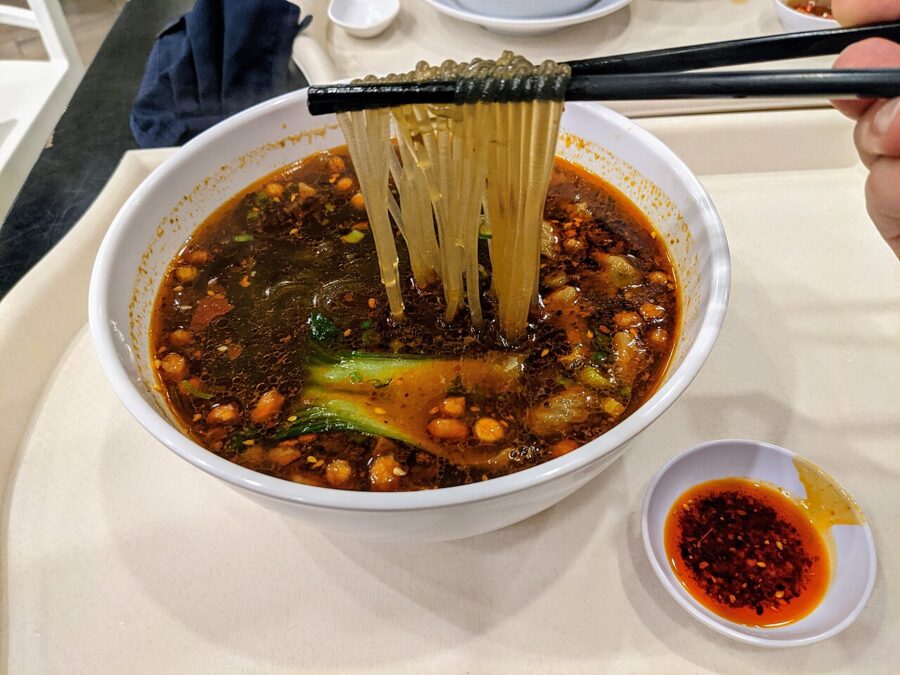
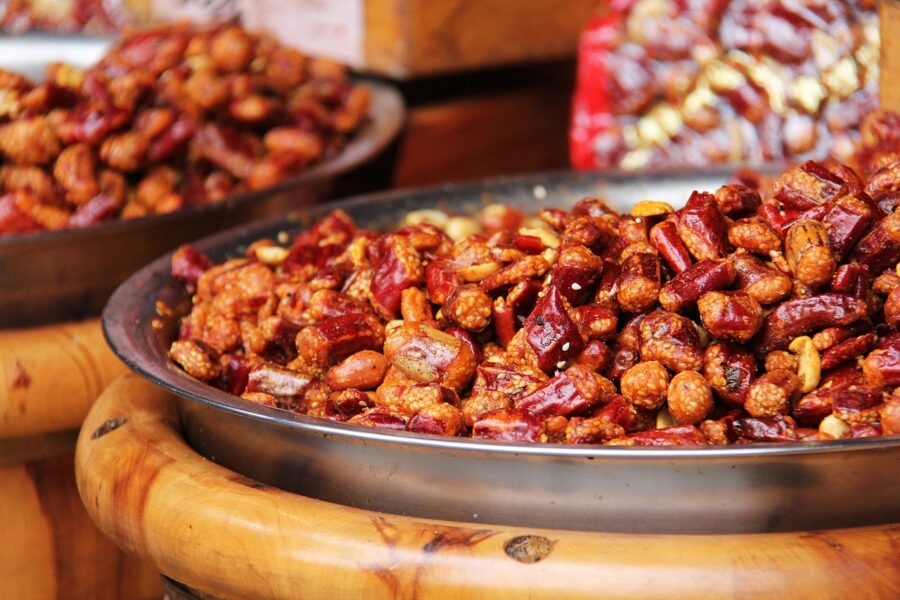
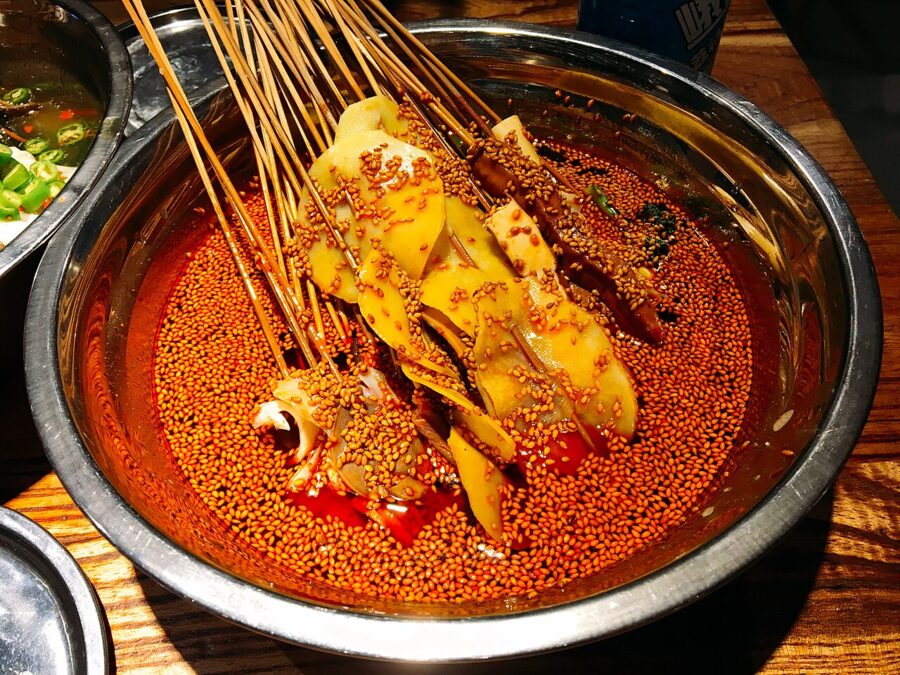
The savoury list is longer. Suan la fen (酸辣粉) is sweet potato noodles in a vinegary chilli broth. Bobo ji (钵钵鸡) is skewers of chicken and vegetables soaking cold in red or green pepper oil, a Leshan snack that Chengdu adopted.
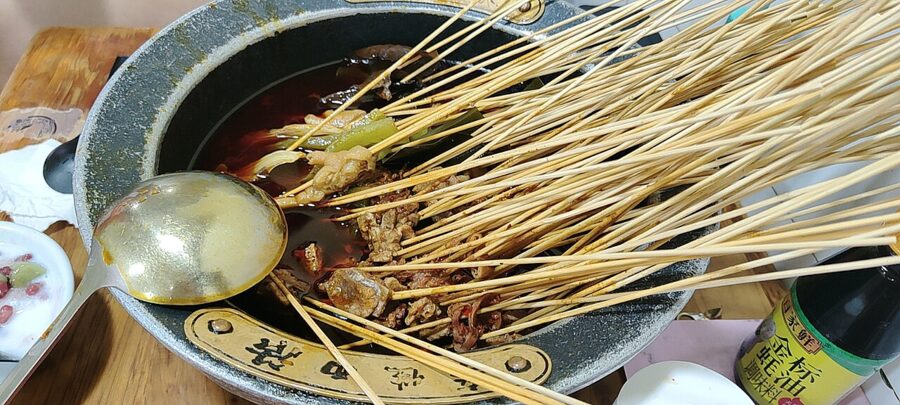
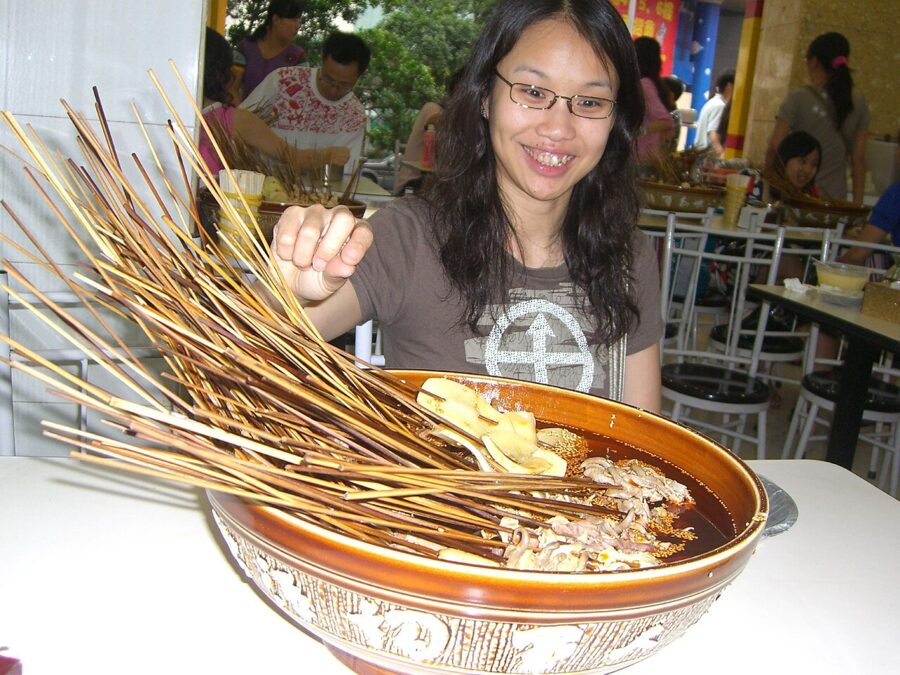
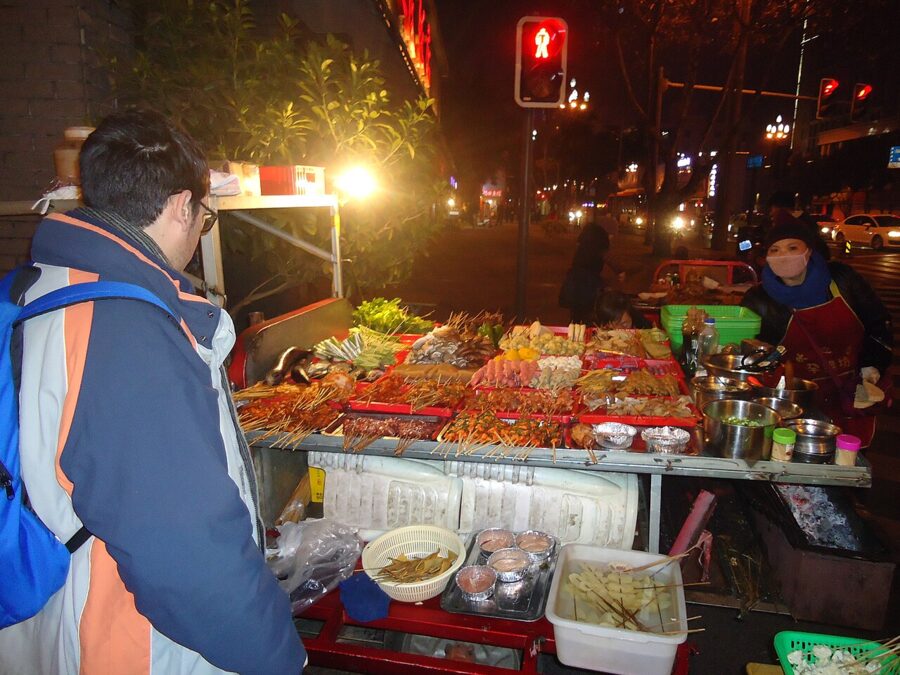
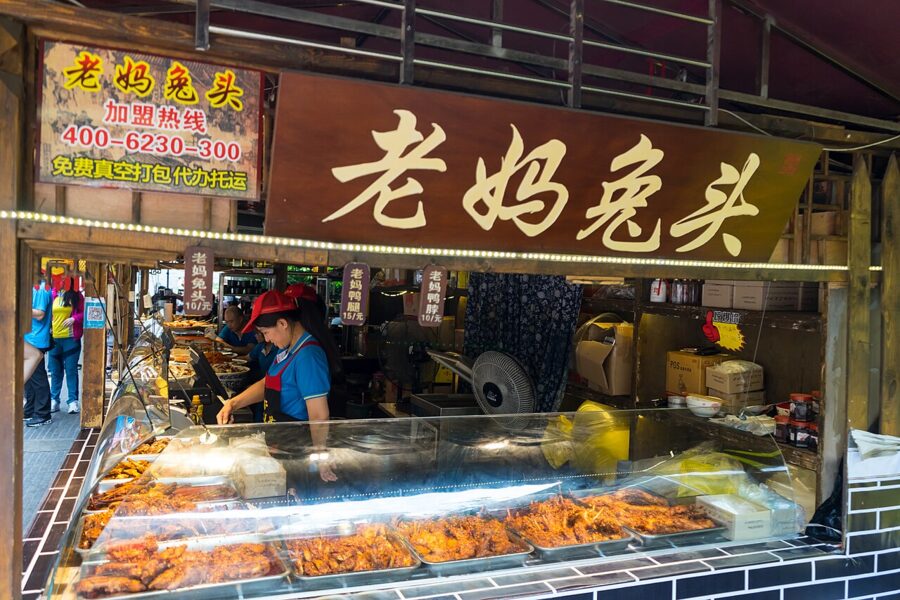
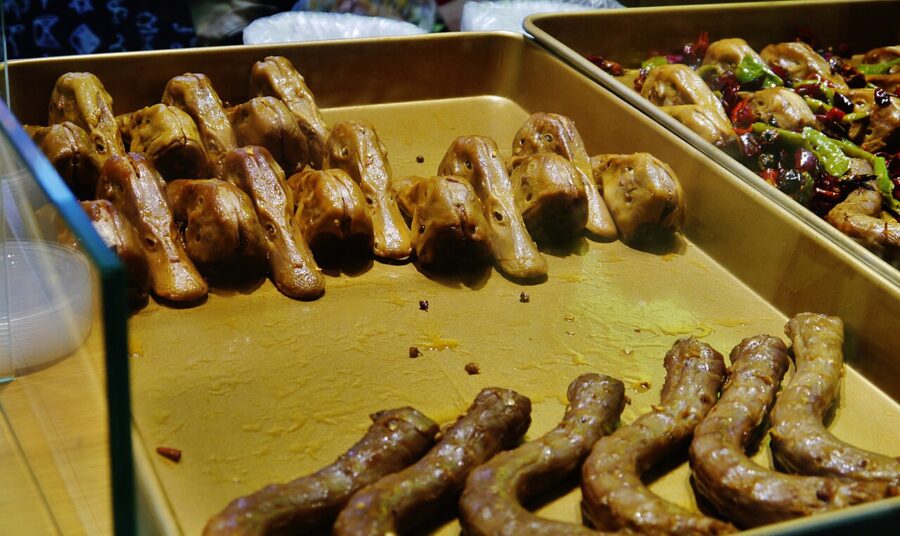
Chuanchuan are skewers of everything, cooked in a spicy pot or left to soak in a cold one. And tutou (兔头), spicy braised rabbit heads, are the snack Chengdu eats in alarming quantities; the Sichuan basin and Chongqing are often said to account for most of China’s rabbit meat.
The snack streets
Kuixinglou Street (奎星楼街), a short walk from exit B of Kuanzhai Alley station on Line 4, is the snack street Chengdu people use themselves: twenty-odd small shops, many with queues. Jianshe Lane (建设巷) in Chenghua district is louder and cheaper, and best after dark. Yulin, south of the centre, mixes snack shops with bars.
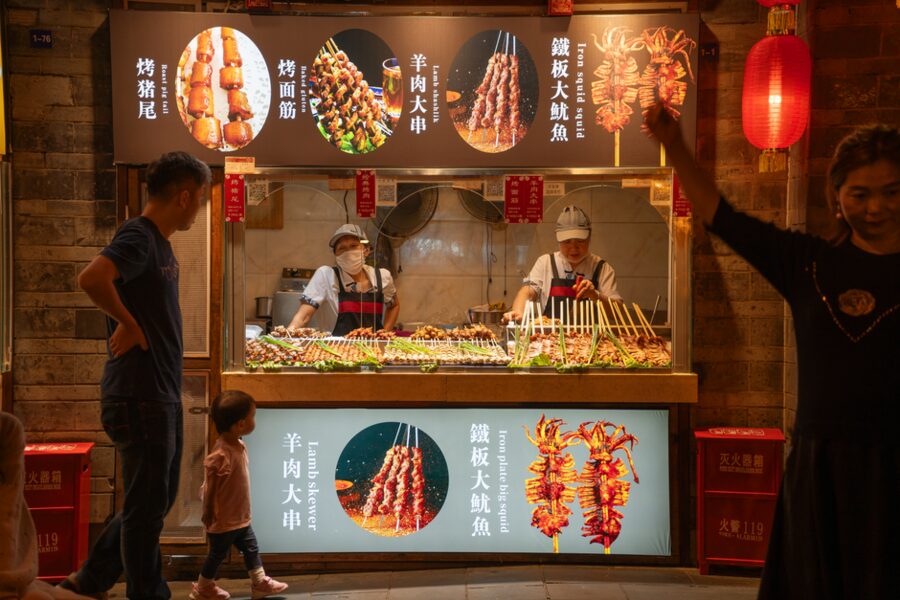
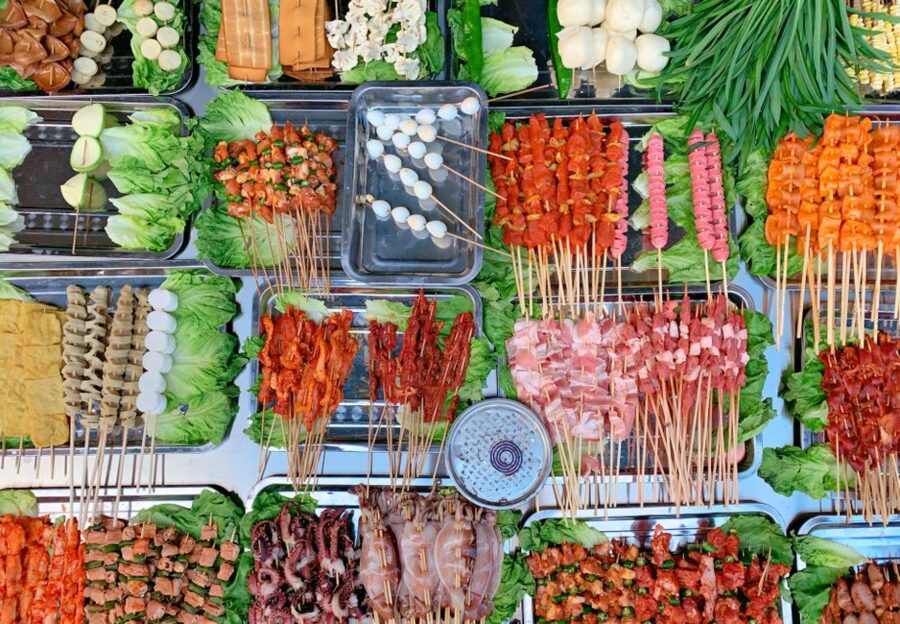
In summer, Chengdu also has leng dan bei (冷啖杯), late-night pavement drinking with cold dishes: beer, crayfish, edamame and plates of cold meat on plastic tables. It’s less about the food than the evening.
Fly restaurants, banquet halls and the jianghu
Sichuan food lives at three levels, and the gap between them is smaller than you’d think. The cheapest kitchens, the grand banquet tradition and Chongqing’s roadside cooking all share the same flavours and many of the same dishes.
The fly restaurants
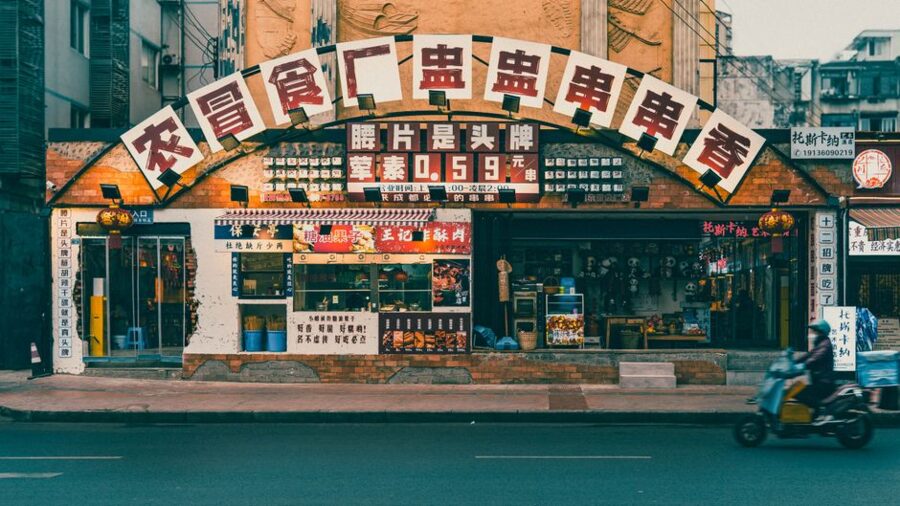
Cangying guanzi (苍蝇馆子), fly restaurants, are the tiny, scruffy family kitchens with a handful of tables, a hand-painted sign and food far better than the room. The name is affectionate. They’re where Chengdu eats lunch, and where twice-cooked pork, fish-fragrant pork and home-style tofu are at their best.
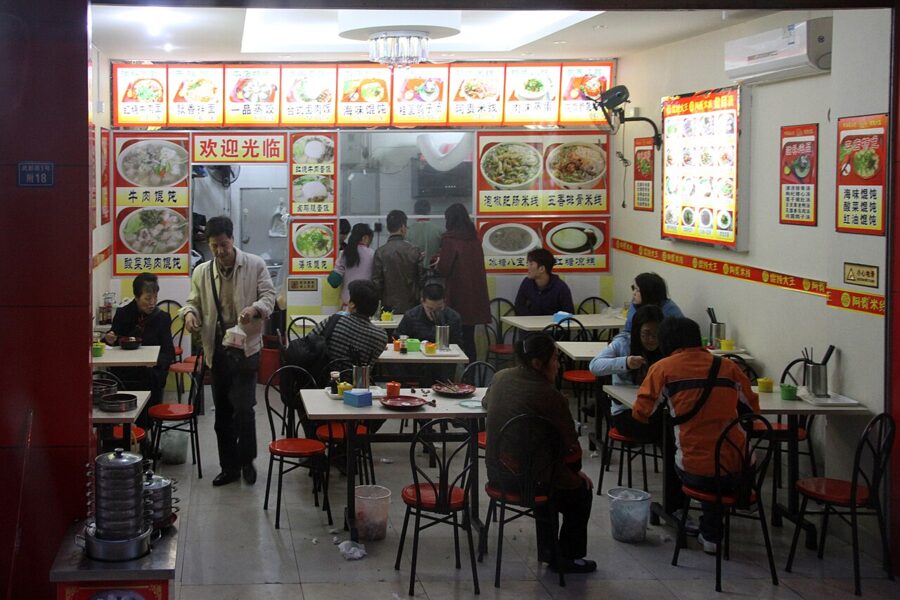
Ordering in one is simple, even without Chinese. The menu is usually on the wall or on a laminated card, and most places will point you to their zhaopai cai (招牌菜), house specialities. Look at what the next table is eating and point; nobody minds. Expect to pay well under ¥100 a head for a table of four dishes and rice.
The Michelin inspectors have started noticing. The 2027 Chengdu guide, published in September 2026, added Da Ya Ji (打牙祭) to the Bib Gourmand list, a place that also turns up on local fly-restaurant rankings. Yongle Fandian (永乐饭店), another Bib, is a family restaurant whose third-generation chef, Yin Sicong, won the guide’s young chef award that year.
The banquet tradition
At the other end is gongguan cai (公馆菜), mansion cooking, the food of Chengdu’s grand households and banquet kitchens. Rong Le Yuan (荣乐园), founded in 1911 by the chef Lan Guangjian, trained a generation of cooks in this style, and its line runs through some of the city’s banquet restaurants today. Banquet food leans on stocks, careful knife work and slow cooking rather than chilli.
The old format was the baoxi (包席), a whole-table banquet ordered in advance, running from cold dishes through a parade of hot ones, soups and sweets. A few Chengdu restaurants still cook this way for private rooms. If you get the chance, take it: it’s the only way to see how a Sichuan menu is meant to move from loud to quiet and back.
Chongqing’s jianghu cooking
Chongqing has its own label: jianghu cai (江湖菜), “rivers and lakes” food, the rough, generous, heavily spiced cooking of roadside restaurants, dockside stalls and hill towns. It’s where laziji, mao xue wang (毛血旺, blood curd, tripe and luncheon meat in a chilli broth) and spring-water chicken come from. Chongqing food is hotter and oilier than Chengdu’s, and proud of it.
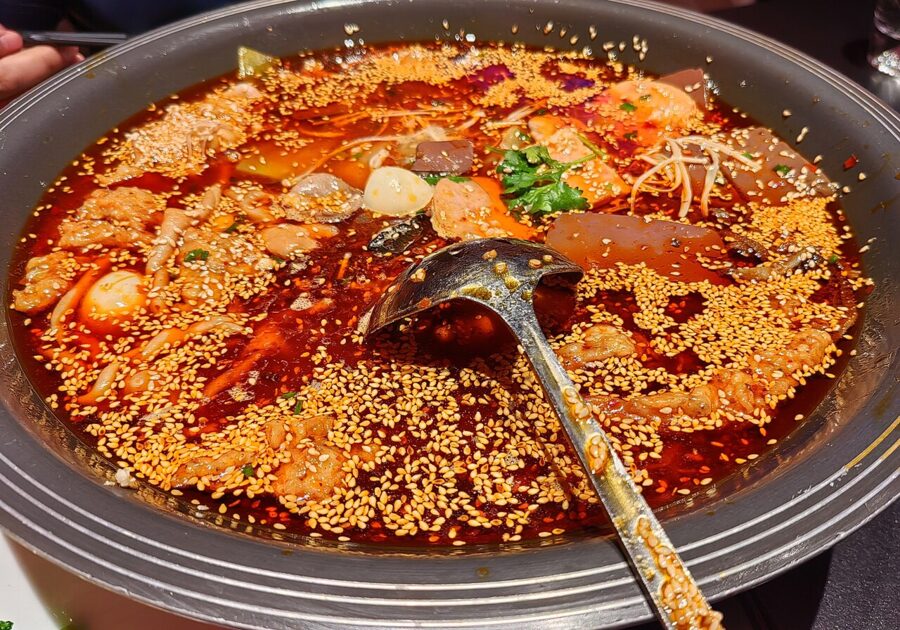
Chongqing is also the capital of hot pot. The classic Chongqing pot is beef tallow, chilli and Sichuan pepper boiling in a grid, with tripe, duck intestine and throat cartilage dipped in seconds; Chengdu’s pots are a little gentler and more often served with a sesame-oil dip. It needs its own guide, so see my hot pot guide for how to order it.
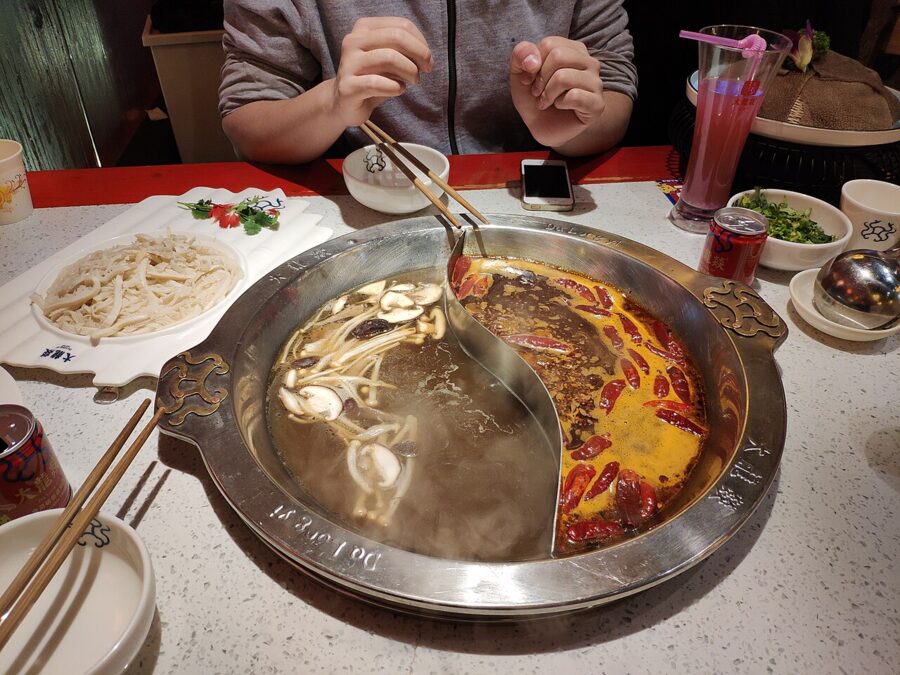
How do you order a Sichuan meal without blowing your head off?
The secret isn’t to avoid the hot dishes. It’s to build a table where the hot dishes have company.
Build a balanced table
For two people, order three dishes and rice; for four, five or six dishes. Start with one cold dish (koushui ji, fuqi feipian or garlic pork), add one or two mala dishes, one non-spicy dish (tea-smoked duck, a soup, steamed pork), and a vegetable, such as stir-fried cabbage or pea shoots. Don’t order mapo tofu, boiled fish and laziji together. Nobody will finish them.
Ask for less heat
| Say | Characters | Means |
|---|---|---|
| wei la | 微辣 | A little spicy (still spicy in Chongqing) |
| zhong la | 中辣 | Medium |
| bu yao la | 不要辣 | Not spicy |
| shao fang huajiao | 少放花椒 | Go easy on the Sichuan pepper |
| shao you | 少油 | Less oil |
| mifan | 米饭 | Plain rice |
“Wei la” in Chengdu is medium anywhere else. Some dishes can’t be made mild, because the heat is the dish; boiled fish and laziji are like that. Ask for “bu yao la” on the stir-fries instead and keep one fierce plate for the table.
Vegetarians and allergies
Sichuan cooking is friendlier to vegetarians than it looks, but you have to ask. Fish-fragrant aubergine, dry-fried green beans and home-style tofu often contain minced pork, and many kitchens cook in lard or use meat stock. Say wo chi su (我吃素), “I’m vegetarian”, and bu yao rou (不要肉), “no meat”.
Wenshu Monastery’s vegetarian kitchen is the easy option in central Chengdu. Peanuts and sesame turn up in kung pao chicken, dan dan noodles, cold dishes and many sauces, so if you have a nut or sesame allergy, carry a written note in Chinese.
Rice, drinks and paying
Order rice at the start, not the end: rice is what makes the heat manageable. Some small restaurants serve it from a big wooden steamer and let you refill. Locals drink cold soy milk, herbal tea or beer with spicy food, and a bowl of bingfen at the end does more than any drink.
Most restaurants now take orders by scanning a QR code on the table, and most stalls take only mobile payment. Alipay and WeChat Pay both accept foreign cards; set one up before you arrive. Cash is legal tender and some old shops still take it, but they may not have change.
Watch the calendar
Spring Festival and the 1–7 October Golden Week change everything. Small family restaurants often close for a week or more around Spring Festival, while the big old names usually stay open; Golden Week fills every snack street in Chengdu to the point of shuffling. For the popular places, the queue apps (Dianping and Meituan) let you take a number and wait somewhere else.
Where to eat Sichuan food in Chengdu
Chengdu became UNESCO’s first City of Gastronomy in Asia in 2010, and the city takes the title seriously. What follows is a route, not a ranking, built around places I could confirm are open in 2026.
People’s Park and Chunxi Road: the old names
Start in People’s Park (人民公园), five minutes on foot from exit B of People’s Park station on Line 2. Zhong Shuijiao (钟水饺) has its flagship inside the park, in the Ziwei pavilion, and it opens from about 08:00.
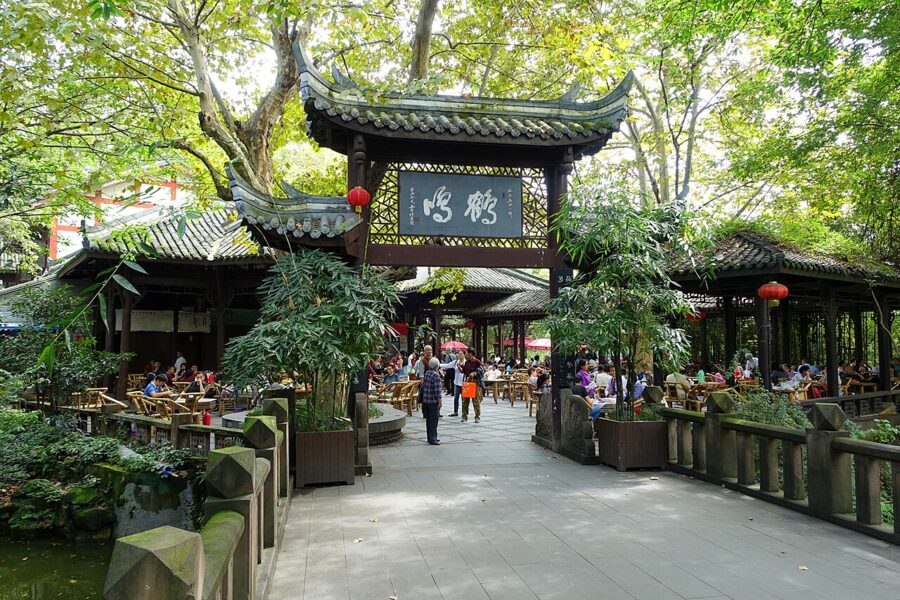
Walk a few minutes to the Heming teahouse (鹤鸣茶社), which dates from 1923, for a gaiwan (盖碗), lidded bowl, of tea from about ¥15. Ear cleaners work the tables with long metal picks and feathers. It’s touristy now and nobody cares; the locals still come.
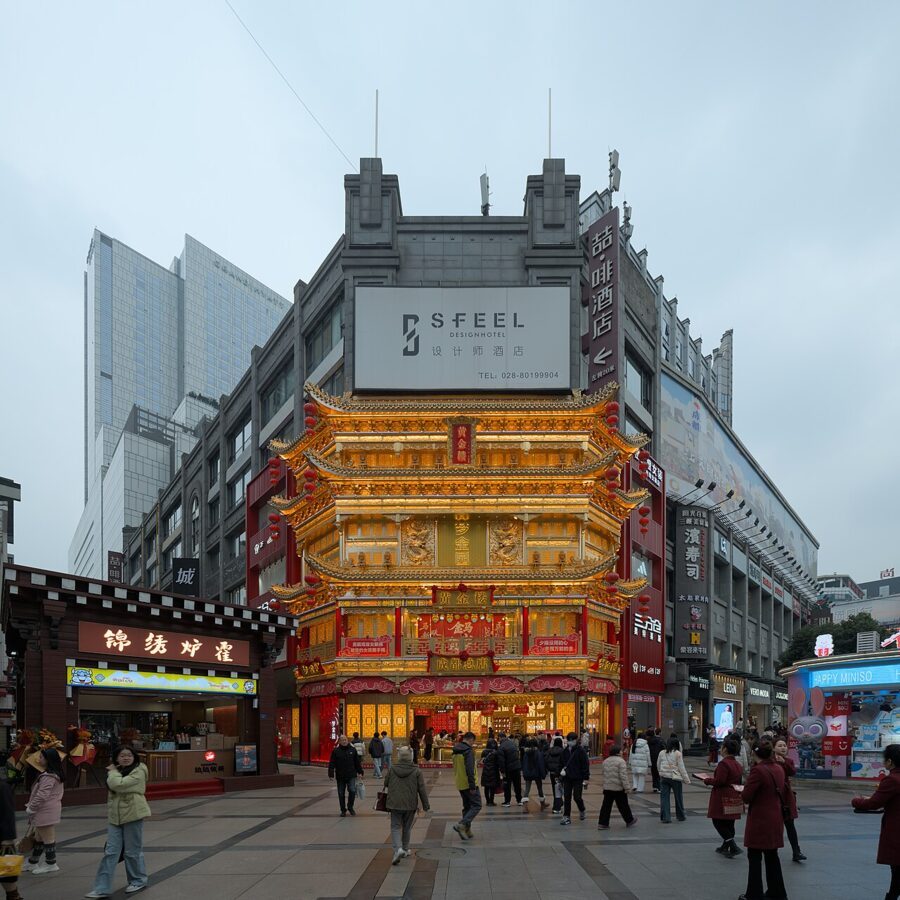
Then head east to Chunxi Road, Lines 2 and 3, Chunxi Road station. Long Chaoshou has its main shop here and opens at 09:00, and the sampler sets are designed for first-timers. Fuqi Feipian (夫妻肺片) keeps its flagship at 23 Zongfu Road, a few minutes north; the cold beef is sold to take away as well as to eat in.
Wenshu Monastery: tianshui noodles
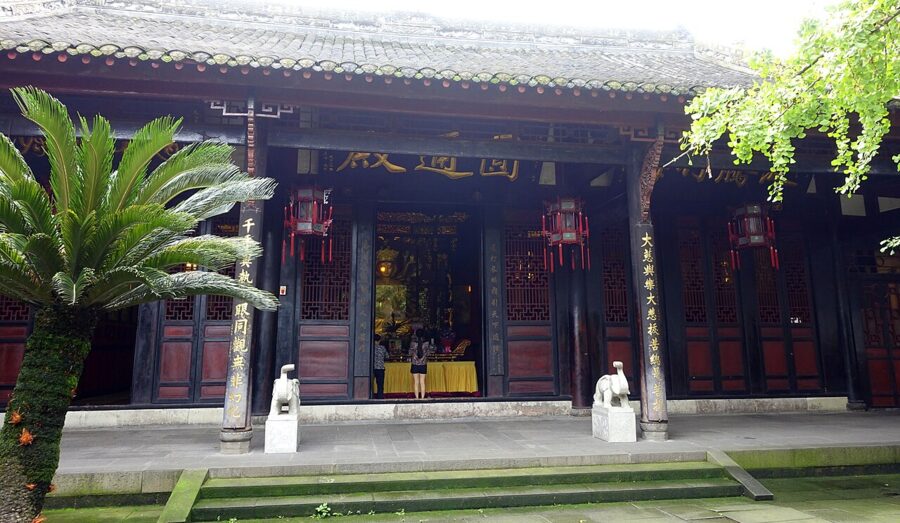
Take Line 1 to Wenshu Monastery station and walk to the monastery gate on Wenshuyuan Street. Diagonally opposite, at number 39, Dongzikou Zhang Lao Er Liangfen (洞子口张老二凉粉) has been selling tianshui noodles and cold yellow liangfen jelly from the same spot for more than half a century. You order and pay at the counter, then collect from the window.
Chen Mapo, Qinghua Road
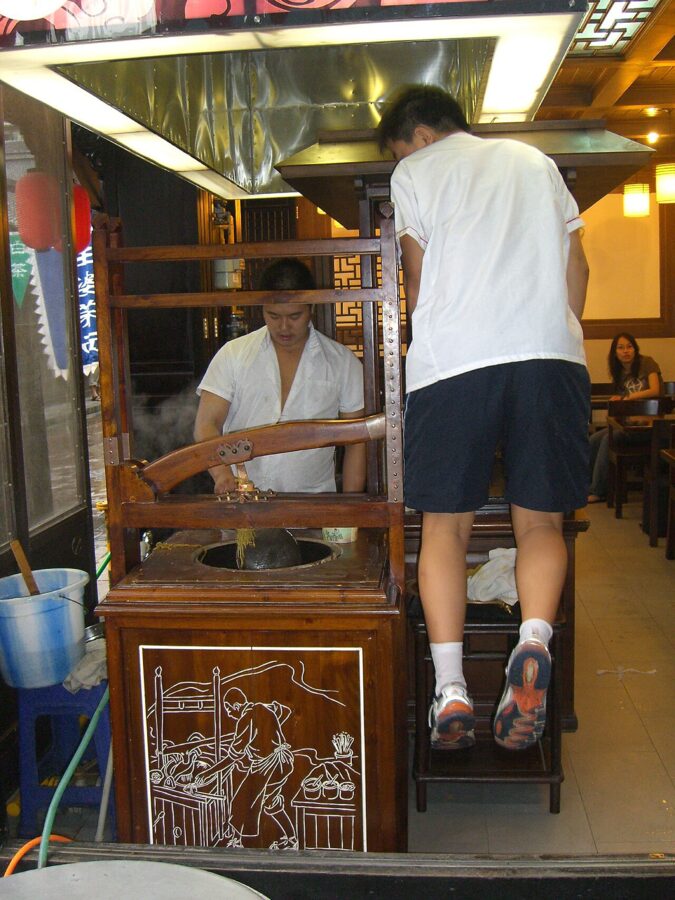
Chen Mapo Tofu runs several branches; the one on Qinghua Road (青华路), near Du Fu Thatched Cottage, is the flagship and the one on the 2027 Michelin Bib Gourmand list. Expect about ¥50–70 a head. Order the mapo tofu, obviously, then twice-cooked pork, a cold dish and a bowl of bingfen to finish.
The Michelin rooms
Ma Wang Zi (马旺子), on Dongkangshi Street near Daci Temple and the Taikoo Li shopping district, holds one Michelin star and has kept it every year since the first Chengdu guide in 2022. The family business started in Meishan in 1923 and cooks traditional Sichuan dishes with care, at prices that are high for Chengdu but low for a starred restaurant. Expect a queue.
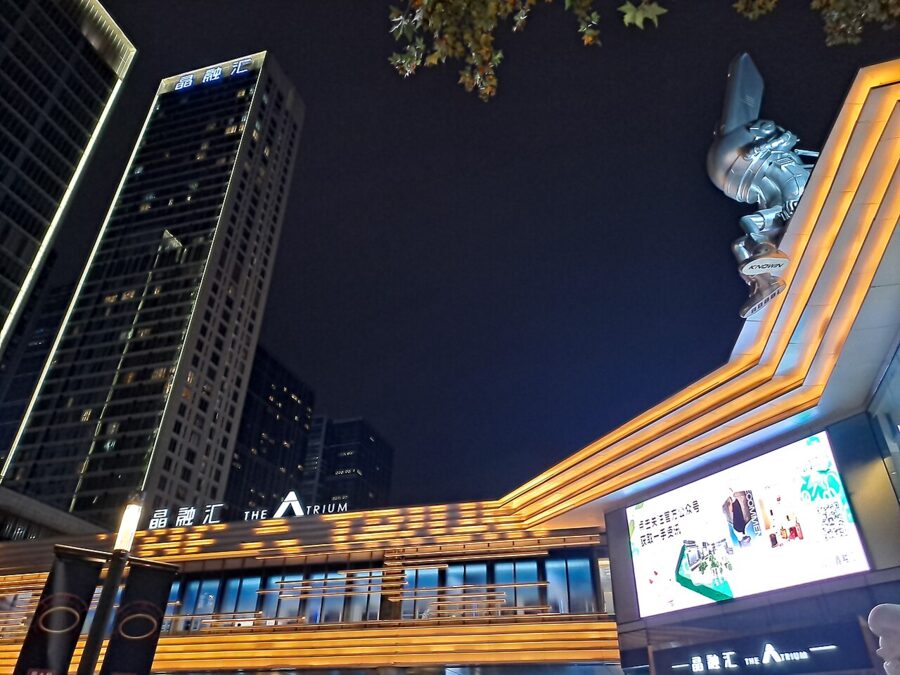
Yu Zhi Lan (玉芝兰), on Changfa Street, is the city’s two-star Sichuan restaurant: a set menu for a small number of guests, booked in advance, run by Lan Guijun, who received the guide’s first Chengdu mentor chef award in 2026. Zinan (梓楠) in Tongzilin, a seventeen-year-old local favourite, won a first star the same year for its traditional cooking.
The Bib Gourmand list is the better hunting ground. Among the 32 names are Wu Ji Guaiwei Mian (吴记怪味面) for strange-flavour noodles, Gan Ji Feichang Fen (甘记肥肠粉) for intestine noodles, and two wonton and dumpling shops new to the 2027 list, 37 Hao Lao Yuanba Chaoshou and Ren Ren Shuijiao.
The Sichuan Cuisine Museum, Pidu
The Chengdu Sichuan Cuisine Museum (成都川菜博物馆) is at 8 Ronghua North Lane in Pidu district, the home of doubanjiang. It opens 09:00–18:00 with last entry at 16:30, and a ticket costs about ¥60 including snack tastings. Cooking classes cost extra and need booking a day ahead. The easiest way there is Line 2 to Xipu, then a local bus or a Didi.
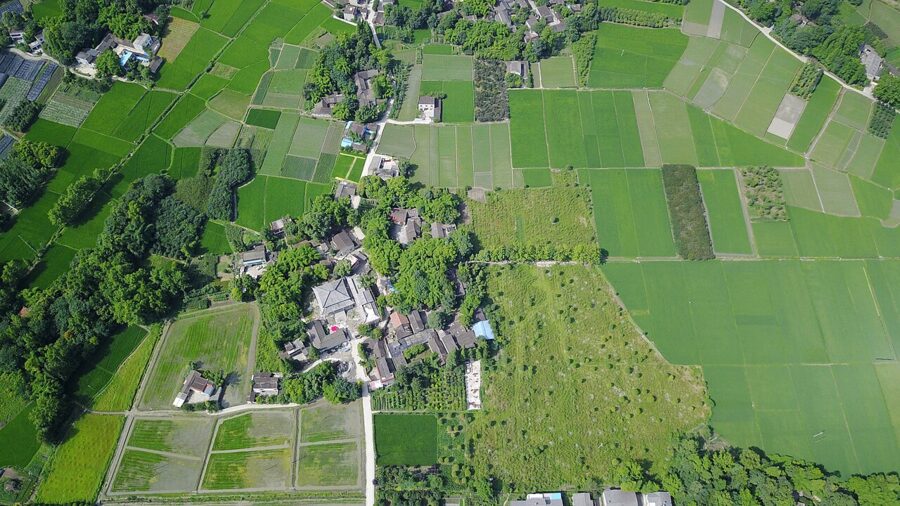
It’s the closest thing to a cookery course you can do in an afternoon. You can try your hand at doubanjiang and a dish or two, walk through a collection of old kitchen tools, and you’ll eat more than you planned.
A day of eating in Chengdu
If you only have one day, this order works. Start with Zhong dumplings in People’s Park at about 08:30, then sit in the Heming teahouse for an hour. Take Line 2 two stops east to Chunxi Road for a Long Chaoshou sampler, or skip it if you’re full.
Late morning, ride Line 1 to Wenshu Monastery, walk the temple and eat tianshui noodles opposite the gate. Lunch is a fly restaurant: twice-cooked pork, fish-fragrant aubergine, a cold dish and rice. Spend the afternoon on Kuixinglou Street with bingfen and a dan hong gao, then rest.
Dinner is the big one: Chen Mapo on Qinghua Road, or a queue at Ma Wang Zi if you planned ahead. On a summer night, finish on Jianshe Lane or with a leng dan bei beer in Yulin. You won’t manage all of it. Nobody does.
Skip this: Jinli and Kuanzhai Alley for snacks
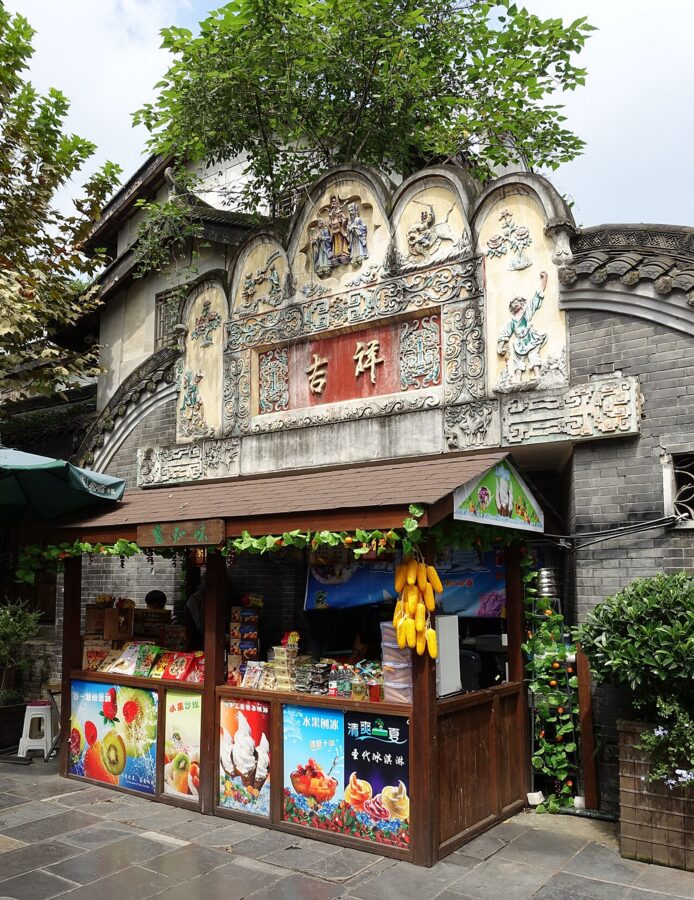
Jinli and the Kuanzhai Alleys are pleasant to walk through, but don’t eat there. Snack prices are about double what the same things cost a few streets away, the cooking is standardised, and on holidays the crowds make it miserable. Walk through, then eat on Kuixinglou Street, five minutes from the Kuanzhai Alleys.
Go beyond Chengdu
Sichuan food isn’t one city’s cooking. Chongqing, Leshan and Zigong each have their own version, and they’re all easy to reach from Chengdu by high-speed train.
Chongqing
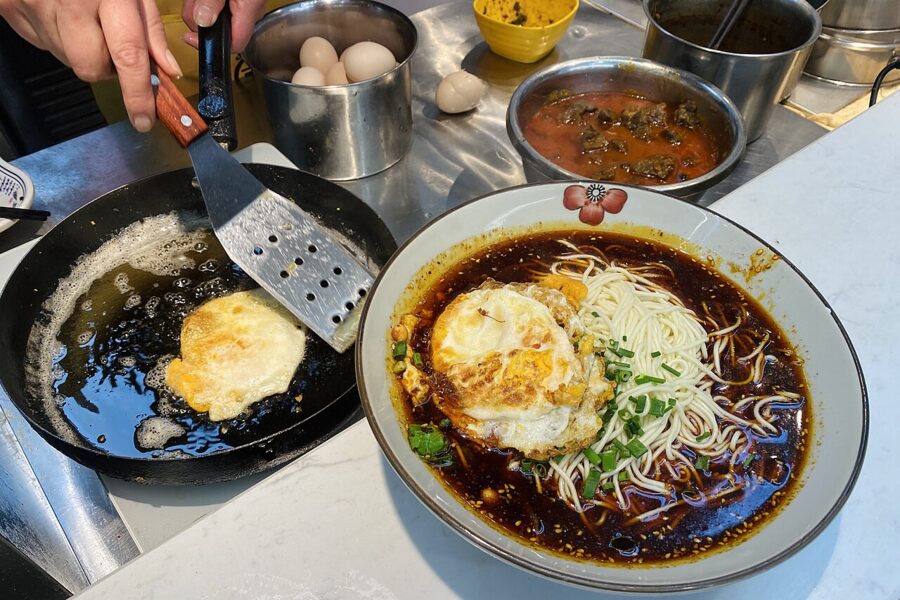
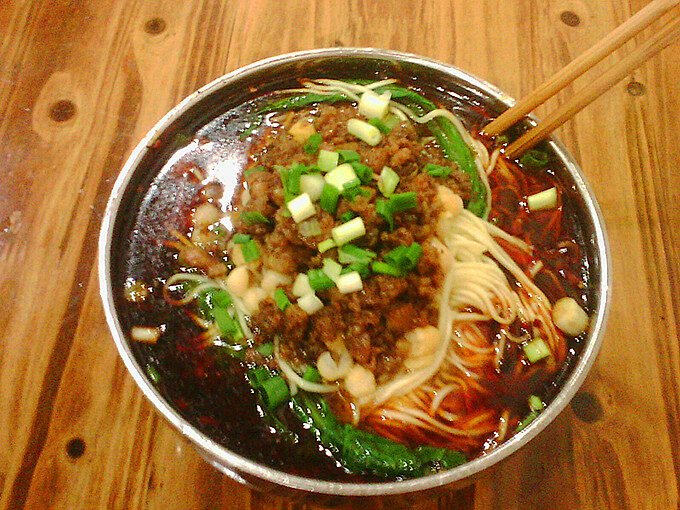
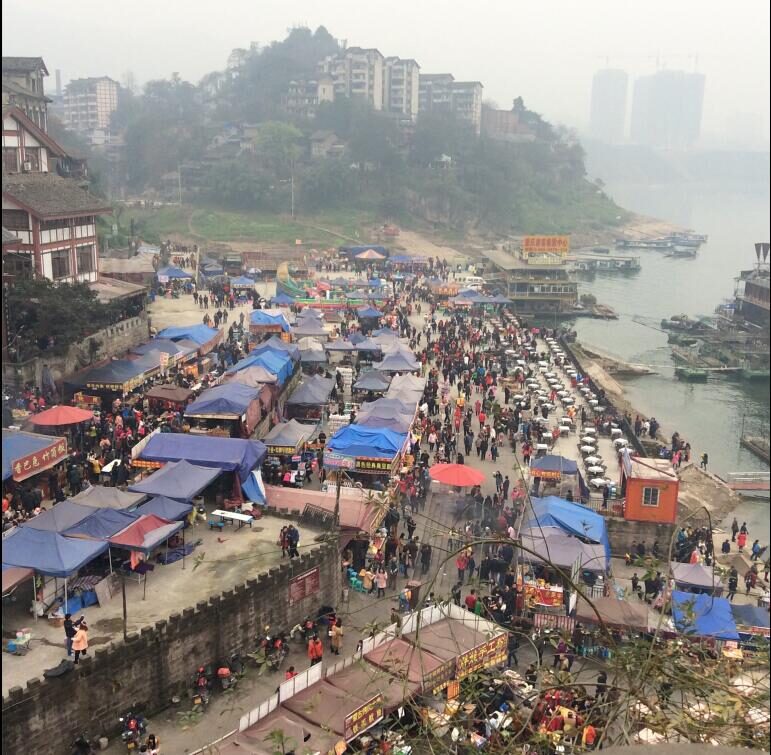
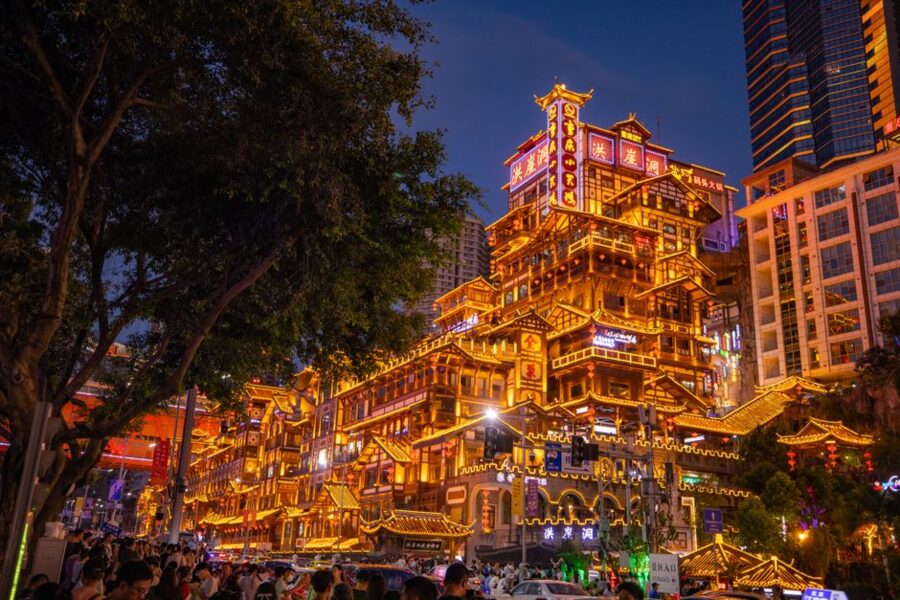
Chongqing’s breakfast is xiaomian (小面), “small noodles”, thin wheat noodles in a broth of chilli oil, Sichuan pepper, garlic and soy, with greens. The classic topping is wanza (豌杂), mushy yellow peas and fried minced pork. Huashi Wanza Mian (花市豌杂面) on Minsheng Road, near Jiefangbei, is the famous one; Qinyun Laotaipo Tantan Mian (秦云老太婆摊摊面), a Jiulongpo district name that claims four generations of noodle-making, has its main shop on Xiejiawan Zhengjie and branches across the city.
For jianghu cooking, Ciqikou old town on the Jialing River has the maoxuewang shops, and Gele Mountain has the laziji restaurants. Chongqing’s metro reaches Ciqikou; Gele Mountain is easier by Didi.
Leshan
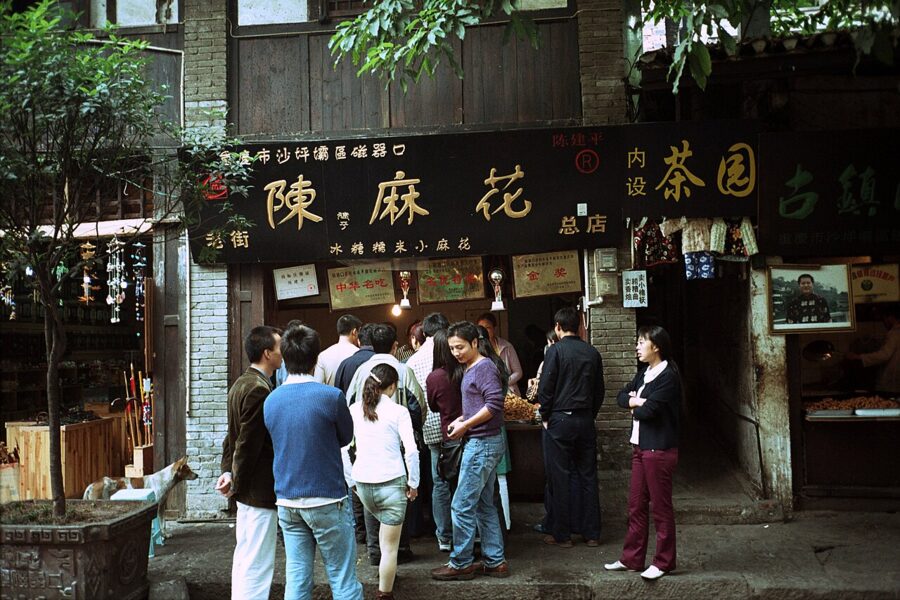
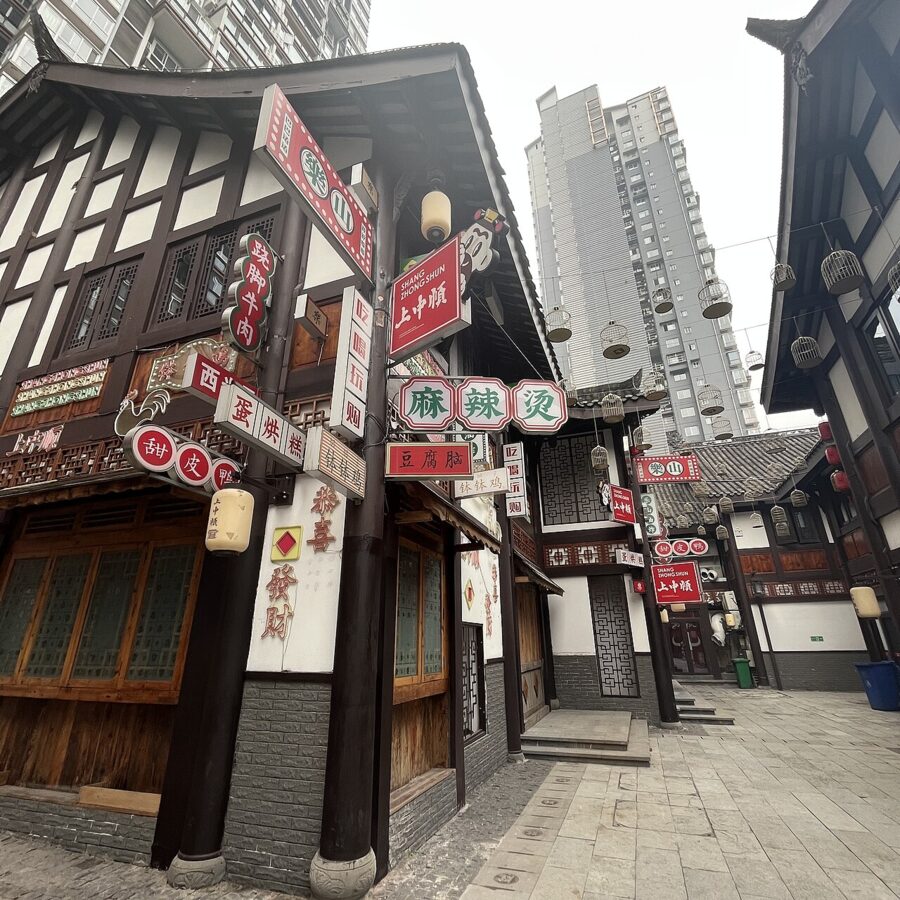
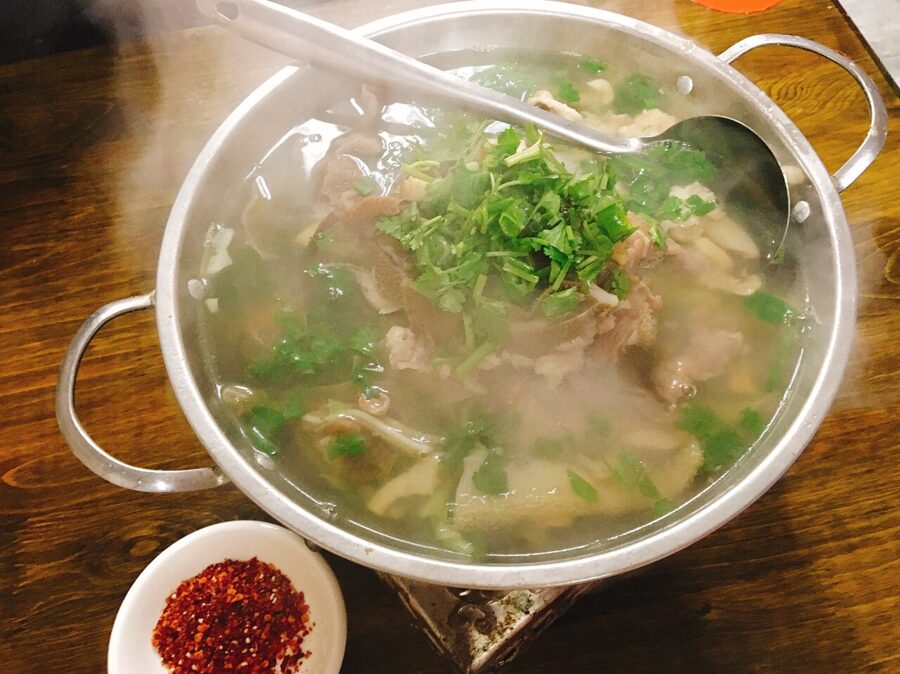
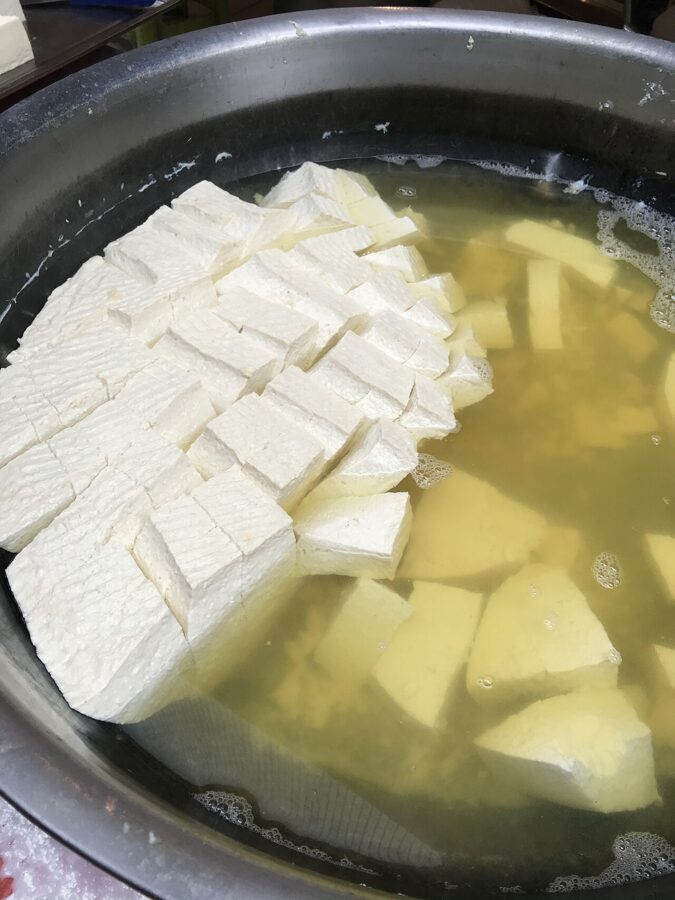
Leshan, home of the Giant Buddha, is a snack town that many Chengdu people visit just to eat. Zhanggongqiao food street (张公桥美食街) collects the local specialities in one place: qiaojiao niurou (跷脚牛肉), beef offal soup that comes from Suji town; tianpi ya (甜皮鸭), braised duck glazed with sugar; bobo chicken; and silky douhua (豆花).
Zigong
Zigong, in southern Sichuan, grew rich on salt for about two thousand years, and its yanbang cai (盐帮菜), “salt merchants’ cooking”, is known for bold, heavy seasoning. The water-boiled technique is credited to the salt wells here, and the city’s signature is rabbit: lengchi tu (冷吃兔), “cold-eat rabbit”, fried dry with chilli and pepper and eaten cold, and xianguo tu (鲜锅兔), rabbit stir-fried with fresh ginger and chillies.
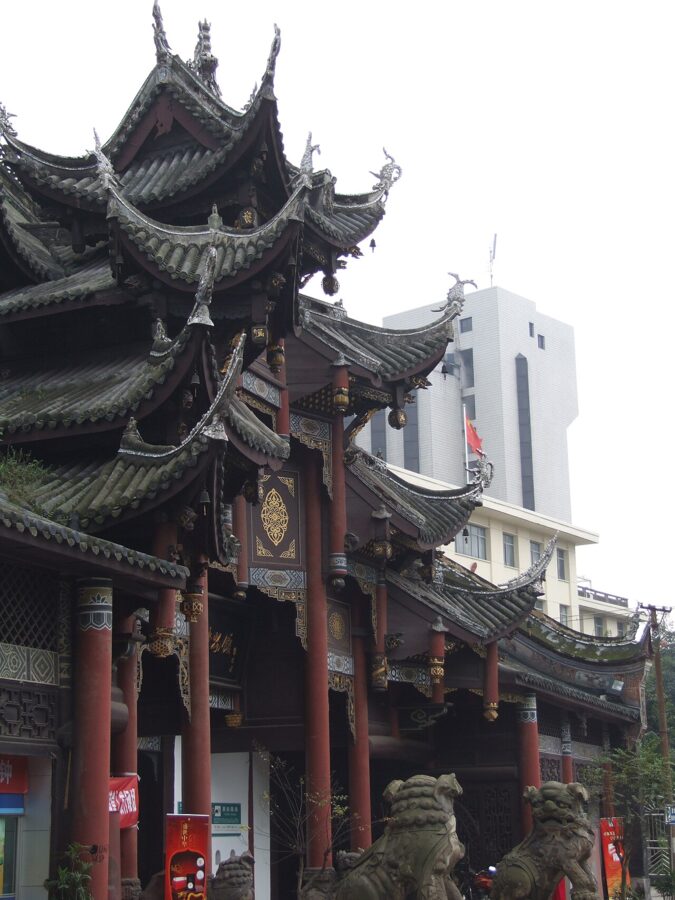
Cold-eat rabbit keeps for days, which is why it’s the classic thing to bring back from Zigong. The salt history is on show at the Xiqin Guild Hall, a merchants’ hall turned salt museum, and at the Shenhai Well, where a tall wooden derrick and open pans show how brine was lifted and cooked down.
Beijing, Shenzhen and the rest
Outside Sichuan, Sichuan food is everywhere, from Shenzhen fly restaurants to the dining room of Sichuan’s government office in Beijing, Lao Chuanban (老川办), near Jianguomen. The cooking is often good. But the snacks, the old names and the doubanjiang-dark home cooking taste different in Chengdu, and that difference is the reason to go.
Eat the cold dishes first, the hot ones second, and always order rice before the chilli arrives. Then find a teahouse, sit down and do nothing for an hour, which is the other thing Chengdu does better than anywhere else.