Kissaten: Japan’s Old Coffee Houses, Nagoya Morning Service and the Shops Still Worth the Trip
In Hong Kong I’d got used to breakfast coming with the drink thrown in: order a set at a cha chaan teng and the milk tea is already in the price. The first time I ordered a coffee in Nagoya, the deal ran the other way. I asked for a blend at a Komeda’s Coffee near the station, nothing else, and the waitress asked which I wanted with my toast: a boiled egg, egg paste or sweet red beans.
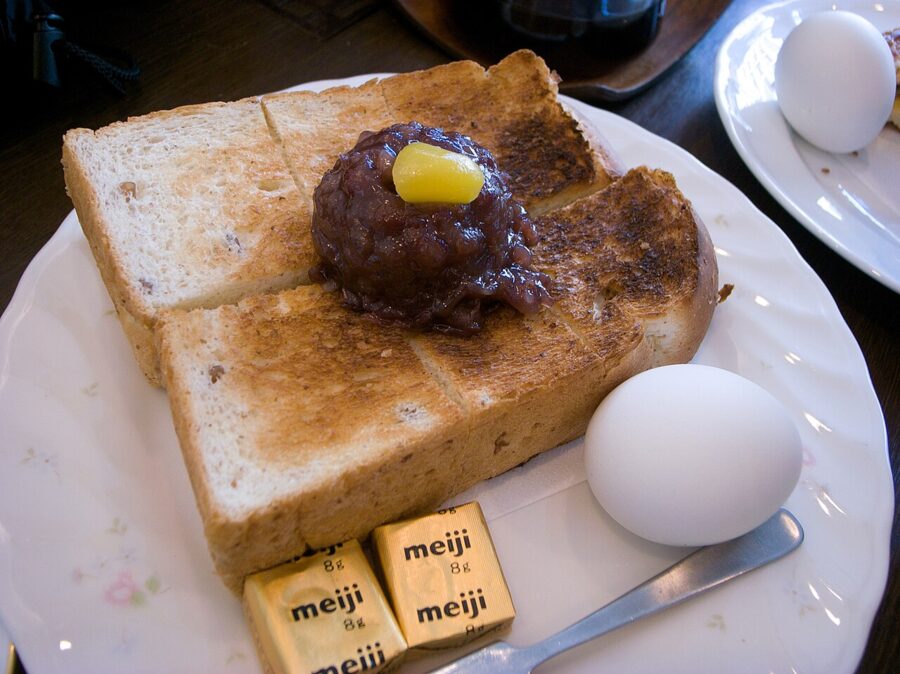
That is morning service, and it is only the most generous habit of the kissaten, the Japanese coffee house. The form took shape between the wars and peaked in 1981, when Japan counted 154,630 of them. What kept the good ones alive is still on the table: coffee dripped through flannel or pulled up a glass siphon, toast cut thick enough to stand on its edge, ketchup spaghetti, a firm pudding under dark caramel, and a melon soda so green it looks dyed (it is).
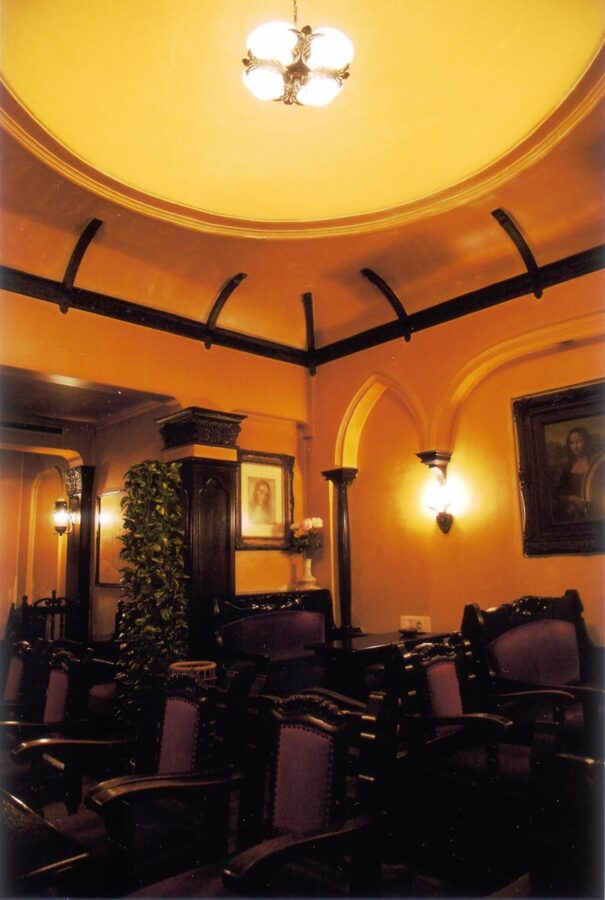
The rooms are half the reason to go. Velvet booths, stained glass, a long counter with a master behind it, and a quiet that most new cafes don’t bother with. By 2014 the count had fallen to 69,977, so roughly half are gone, but the survivors tend to be very good at the few things they do.
Everything below is built around the five cities where the old shops cluster: Tokyo, Kyoto, Osaka, Nagoya and Kobe. Every shop I name was open as I wrote, with the hours they publish themselves wherever they publish them. Many are family businesses run by older owners who close when they need to, so check the day before you cross town.
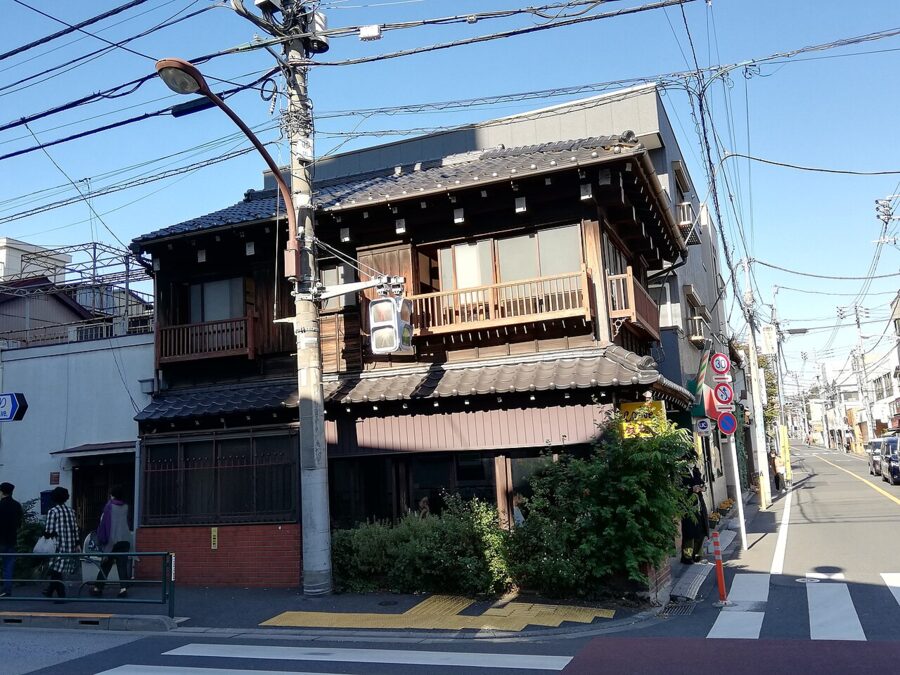
If you only have one morning in each city, these are the shops I’d start with.
| City | Start with | Opens | Order |
|---|---|---|---|
| Tokyo | Kayaba Coffee, Yanaka (1938) | 8:00, closed Mondays | The egg sandwich |
| Kyoto | Smart Coffee, Teramachi (1932) | 8:00 | Hotcakes, then the firm pudding |
| Osaka | Marufuku Coffee, Sennichimae (founded 1934) | 8:00 | Hotcakes off the copper griddle |
| Nagoya | Compal, Osu (1947) | 8:00, morning sets to 11:00 | Iced coffee you pour yourself, fried prawn sandwich |
| Kobe | Nishimura Coffee, Nakayamate (1948) | 8:30 | A straight coffee in the thick house cup |
In This Article
- Not a cafe: what makes a kissaten
- Junkissa, the “pure” coffee house
- The room and the master
- Coffee with a soundtrack
- Five dates that explain the coffee house
- 1888: the shop that was too early
- 1911: Ginza’s year of the cafe
- 1938 to 1950: no coffee at all
- 1968: Nagoya goes big
- 1981 and after: the long decline, then a revival
- Flannel, glass and a very slow kettle
- Nel drip
- Siphon
- Iced coffee, Vienna coffee and the cup you finish yourself
- The menu, from thick toast to a pudding that stands up
- Thick toast and ogura toast
- Napolitan and Nagoya’s “Italian”
- Curry and the Vienna coffee that follows it
- Sandwiches: egg, katsu and fried prawn
- Pudding
- Cream soda and the coloured drinks
- Hotcakes, and the souffle pancake question
- Nagoya morning service, explained
- Where it came from
- Komeda, the chain that took it national
- The old Nagoya shops
- Where to go, city by city
- Tokyo
- Kyoto
- Osaka
- Kobe
- Beyond the five cities
- Know the house rules
- Smoking
- What does it cost, and what can you skip?
Not a cafe: what makes a kissaten
The word is plain enough. Kissa (喫茶) means “drinking tea”, the same two characters that came into Japanese with Japanese tea culture in the 13th century, and ten means shop. Nobody has drunk much tea in a kissaten for about a hundred years.
Today “cafe” (カフェ) usually means somewhere newer, lighter and more likely to have oat milk. When people choose the older word on purpose, they mean a particular style with Taisho and Showa roots: owner-run, a bit dim, with a menu of coffee, toast and Western-style dishes that hasn’t changed in decades. The distinction is about the room and the habits, not a legal category.
Junkissa, the “pure” coffee house
You’ll see 純喫茶, junkissa, on old signboards, and it has a slightly scandalous origin. In the 1920s a kafē was often a bar in all but name, with waitresses who sat with customers, poured drinks and worked for tips. Rules issued in 1929 and 1933 split the trade in two: the “special” coffee houses with alcohol and hostesses, and the “pure” ones that served coffee and food and nothing else.
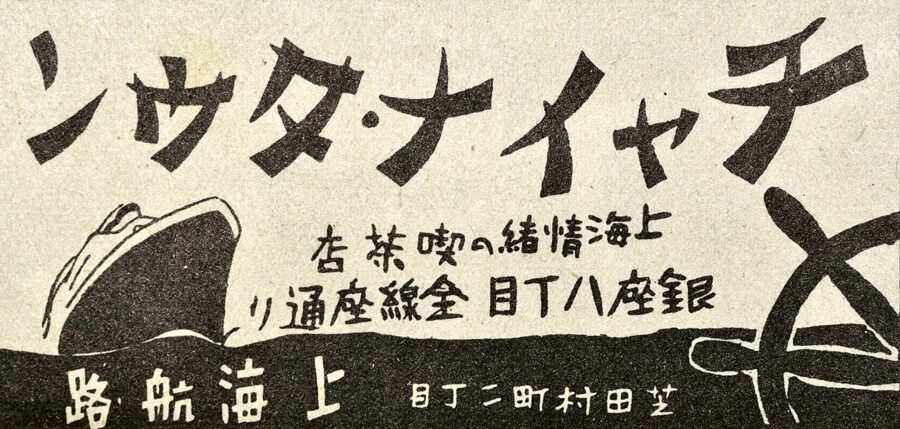
Between roughly 1955 and 1975 the word was everywhere. Now it reads as a mark of age, and it gets used loosely for any old coffee house with the right lamps.
The room and the master
The interiors are the thing you can’t fake. They were built in the decades when an owner might spend a fortune on carved wood, mosaic tile or a chandelier to beat the shop across the road, and almost nobody could afford to do it now. A lot of what survives was installed in the 1960s and simply maintained ever since.
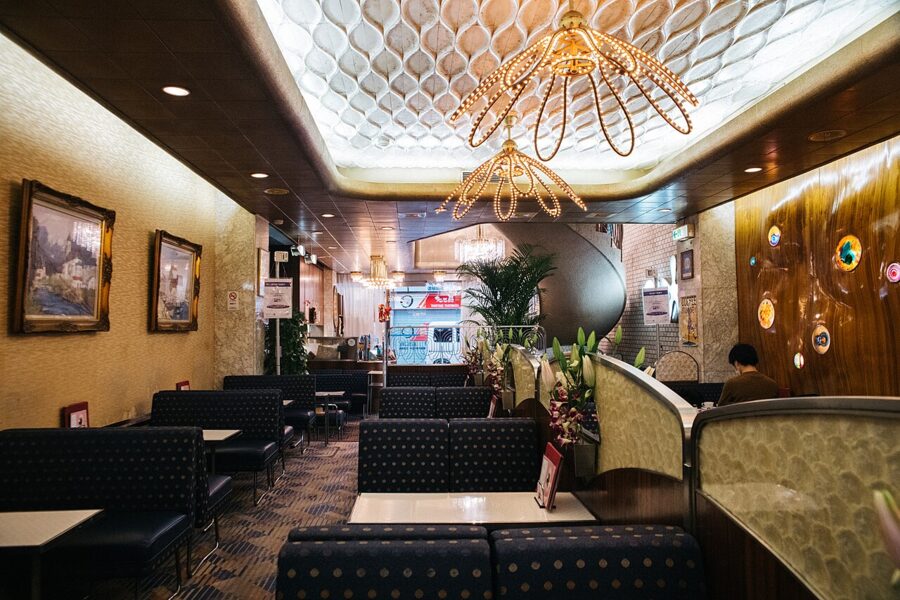
Behind the counter is the masutā, the master, who may have been brewing in the same spot for forty years. In a small shop the master roasts, brews, takes the money and decides the music.
Coffee with a soundtrack
From the 1950s, when records and stereos were still luxuries, music kissa sold listening as much as coffee. There were jazz kissa, chanson kissa, singalong utagoe kissa and the classical meikyoku kissa, where you sat facing the speakers and said nothing. As stereos got cheaper most of them closed, but the best ones are still running.
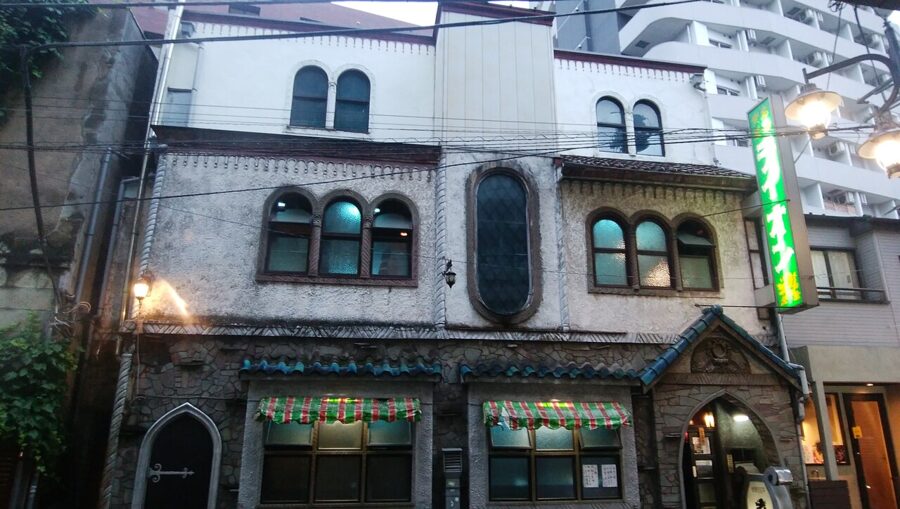
Lion, up the lanes of Dogenzaka in Shibuya, is the one to try. Requests are played through the day, there’s a programmed concert at 15:00 and another at 19:00, and the monthly programme comes on a printed leaflet. Talking above a murmur and taking photos inside are both off limits.
Five dates that explain the coffee house
Coffee reached Japan through the Dutch at Nagasaki, but the coffee house took a long time to stick. Each of these steps left something you can still see.
1888: the shop that was too early
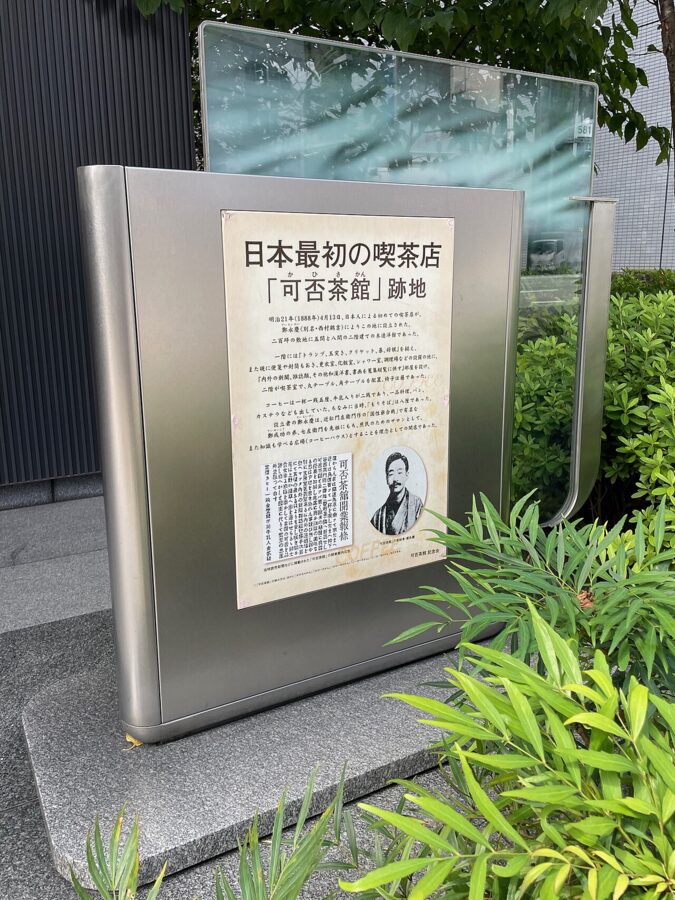
Japan’s first proper coffee house, Kahiichakan, opened in 1888 in what is now Ueno 1-chome. Its founder, Tei Eikei, had left the Foreign Ministry and wanted a place to read and talk, so he stocked newspapers and books, playing cards and billiards, and even a shower room. A black coffee cost 1.5 sen at a time when a bowl of soba cost under a sen, and the shop closed in 1892.
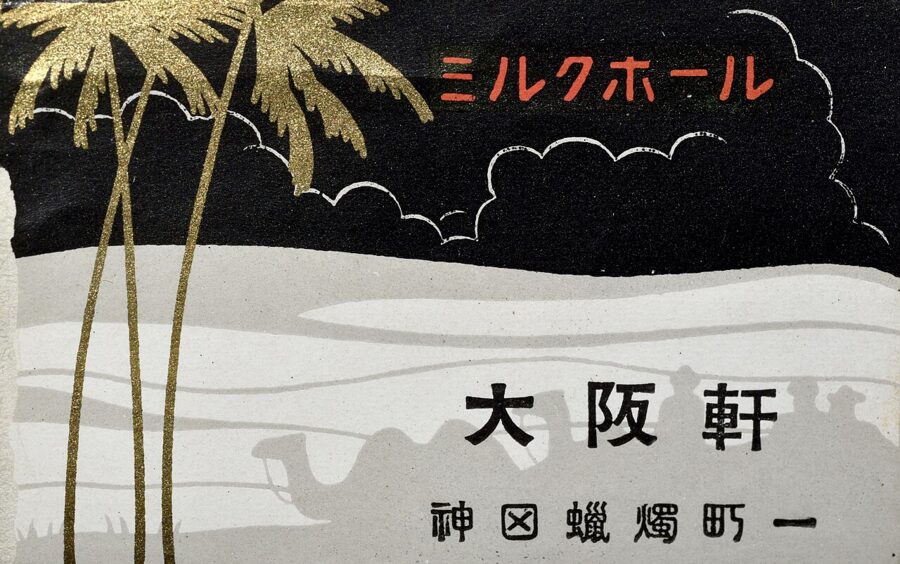
Around the same time, students in Tokyo drank hot milk at “milk halls”, cheap rooms with newspapers that did some of the coffee house’s job before coffee caught on.
1911: Ginza’s year of the cafe
Three Ginza openings in 1911 set the pattern for the next century. Cafe Printemps was a members’ salon for artists, Cafe Lion leaned on its waitresses, and Cafe Paulista sold Brazilian coffee for 5 sen a cup with boys as waiters. Paulista got its beans free from the São Paulo state government, part of a deal tied to Japanese emigration to Brazil, and that supply ran for twelve years.
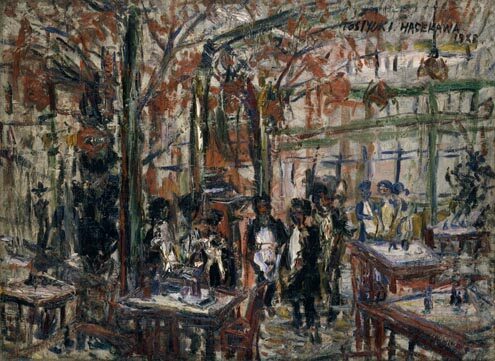
Paulista opened branches from Nagoya to Kobe, lost most of them in the 1923 Kanto earthquake and turned to importing and roasting. The present cafe at Ginza 8-9-16 opened in 1970, and John Lennon and Yoko Ono stopped in during 1978. By 1935 the city of Tokyo alone had about 10,000 coffee houses.
1938 to 1950: no coffee at all
Import limits started in 1938, and once the Pacific war began coffee stopped arriving at all. Shops closed one after another or limped on with substitute “coffee” roasted from soybeans or lily bulbs. Francois in Kyoto changed its name to Junkissa Miyako Sabo and served bancha and dried bananas until the end.
Its founder had a harder war than most. Tateno Shoichi backed an anti-fascist paper, Doyobi, whose writers were regulars, and was arrested when the police shut it down in 1937, so his waitress (later his wife) kept the place running. When imports resumed in 1950, one roaster later estimated that over 90 percent of Japan’s coffee was drunk in coffee houses.
1968: Nagoya goes big
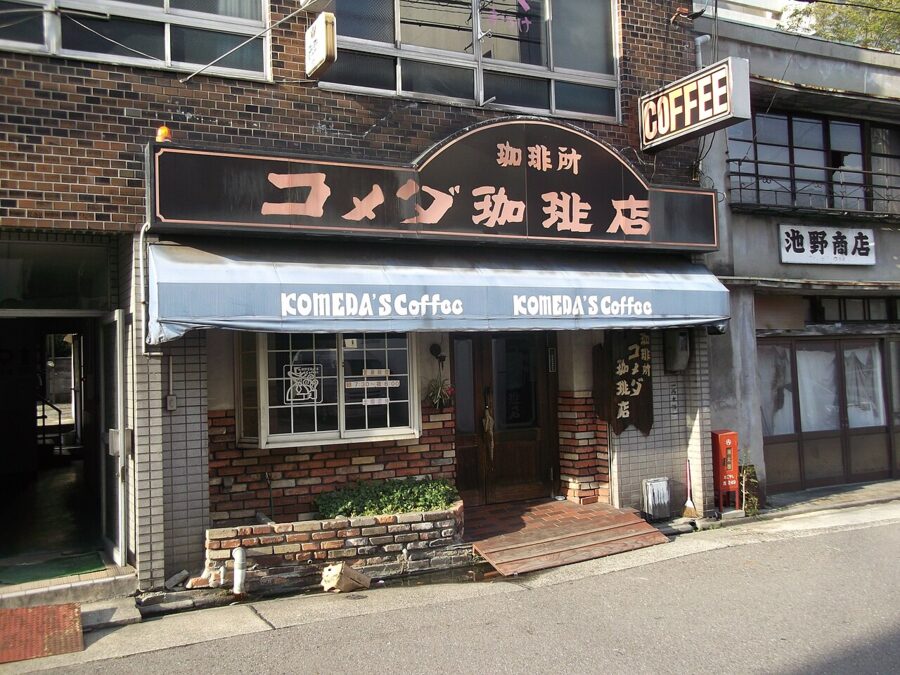
The 1960s and 1970s were the years of the owner-run shop, when every neighbourhood had one and the master’s taste was the brand. In 1968 Kato Taro opened a coffee house in Nishi-ku, Nagoya, and named it after his family’s rice business: Komeda, from “Kome-ya no Taro”, Taro from the rice shop. He started franchising in 1970.
1981 and after: the long decline, then a revival
The peak of 154,630 shops came in 1981. Doutor’s first self-service branch opened in 1980 and Starbucks arrived in 1996, and both were quicker and more predictable than a master with a flannel bag. By 2014 the total had roughly halved.
Then the old shops turned fashionable. Younger customers started queueing for cream soda and stained glass, a run of books about junkissa appeared, and in 2011 the Doutor group launched Hoshino Coffee, a full-service chain with an old-coffee-house look. That revival is why the famous shops have queues at weekends, and why the less famous ones are worth seeking out on a Tuesday.
Flannel, glass and a very slow kettle
Kissaten coffee is darker, heavier and slower than the third-wave cup. The default order is the house blend, burendo, which is usually a deep roast built to stand up to cream and sugar. “American” on a menu means a lighter, weaker cup, and a “straight” coffee is a single origin, a menu idea Nishimura in Kobe says it introduced to Japan.
Nel drip
Neru drip uses a flannel filter instead of paper. The cloth lets more of the oils through, so the cup comes out thicker, rounder and almost syrupy, and the filters are rinsed and kept in cold water between uses. It’s fussy, and that is the point.
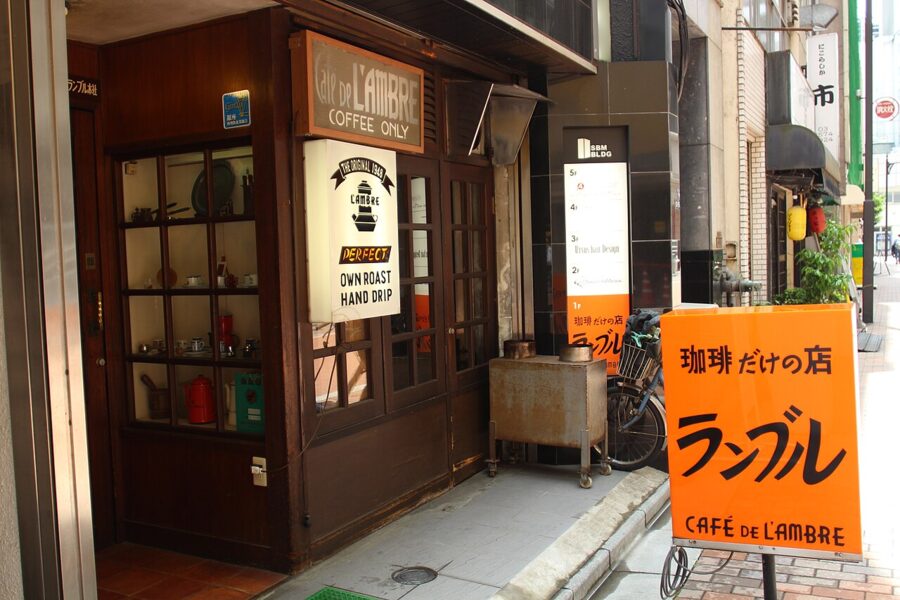
Cafe de L’Ambre, at Ginza 8-10-15, is the purest version. There’s no food, about twenty coffees on the menu, and a grinder its founder, Sekiguchi, had built to order by a precision engineering firm. The pourer holds an enamel kettle with a spout like a crane’s beak in one hand and the flannel in the other, and drips the water in a thin, even thread.
L’Ambre also ages green beans for years, and in November 2026 it put coffee harvested in 2016 on sale in small lots. If that sounds like a stunt, order the Blanc et Noir, number seven on the menu: cold sweetened coffee in a champagne glass with evaporated milk floated on top in a sharp white layer.
The menu lists the blend at ¥1,200, but prices went up across the board on 10 November 2026, so expect a little more. It’s closed on Mondays.
Siphon
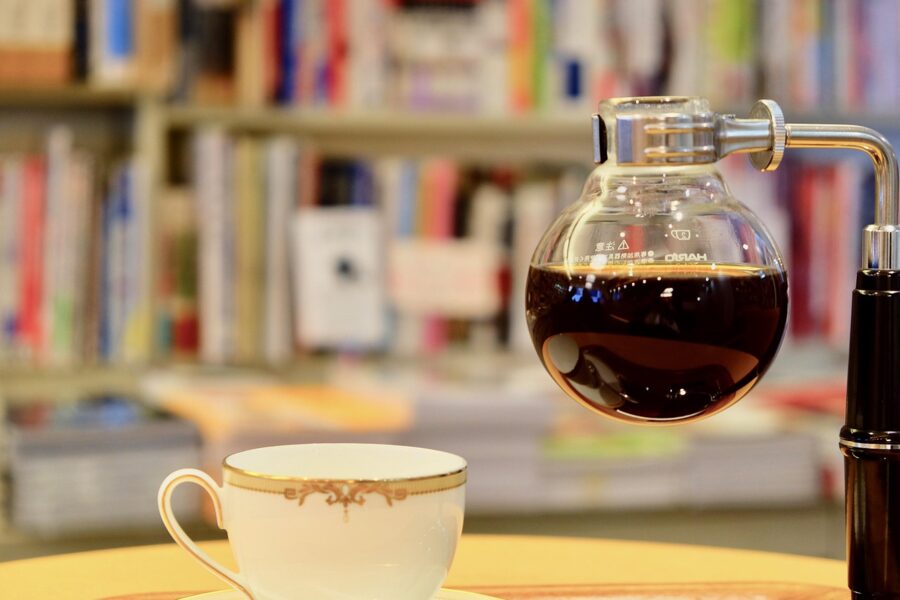
The siphon is the theatrical option. Water heats in a glass bowl, vapour pressure pushes it up into the grounds in the chamber above, and when the flame is pulled away the coffee is sucked back down through a filter. Kono, a maker founded in 1925, says it was the first to sell a coffee siphon in Japan.
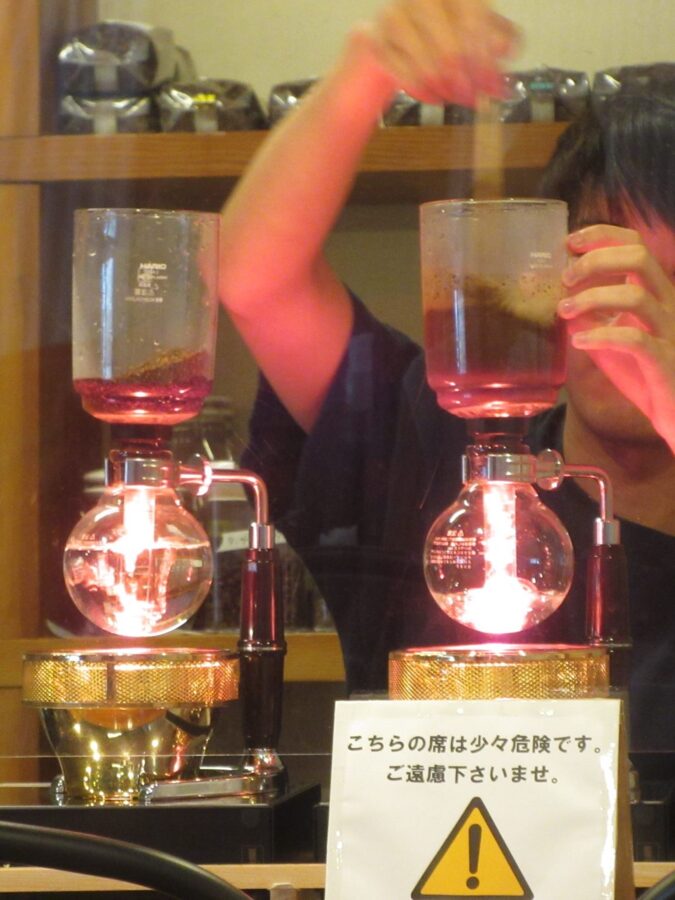
A siphon cup is cleaner and lighter than flannel. If it matters to you, look for サイフォン on the menu or glass bowls on the counter.
Iced coffee, Vienna coffee and the cup you finish yourself
Osaka calls iced coffee reikō, short for rei kōhī, “cold coffee”, and you’ll still see it on boards in the older neighbourhoods. At Compal in Nagoya the iced coffee arrives as a small cup of hot, strong coffee with sugar already dissolved in it, plus a glass of ice. You pour one into the other.
Vienna coffee, black coffee under a hat of whipped cream, is another kissaten standard. Ladrio in Jimbocho is known as the shop that started serving it in Japan, and Tsukiji in Kyoto, opened in 1934, says it was the first in that city. In 1947 Inoda in Kyoto began serving its coffee with milk and sugar already stirred in, because customers were too busy talking to mix it while it was hot, and these days the staff ask first.
The menu, from thick toast to a pudding that stands up
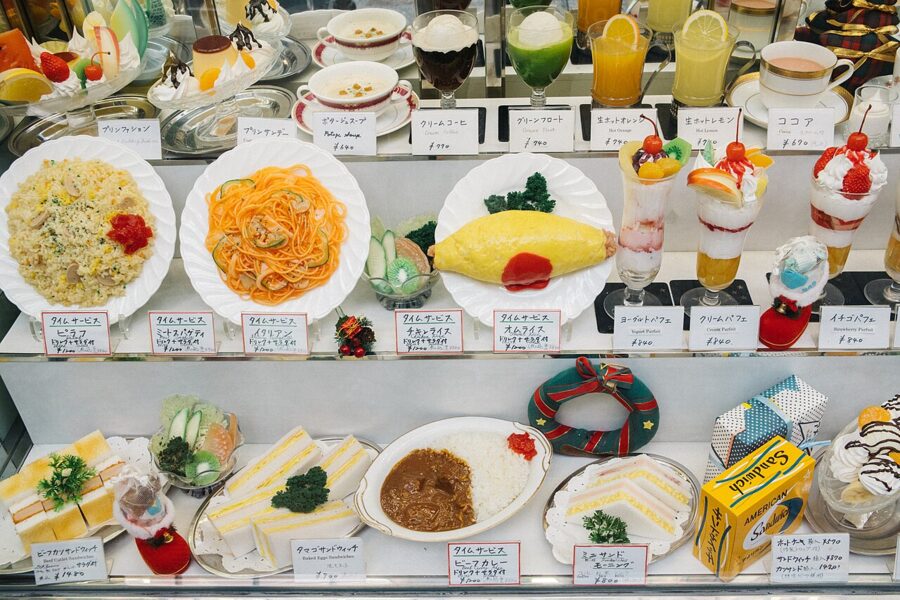
The food is Western-style comfort food filtered through the 1950s and 1960s: toast, sandwiches, spaghetti, curry, pudding and soda. Most of it is cheap, filling and better than it sounds. A few dishes deserve a closer look.
Thick toast and ogura toast
Kissaten toast is cut from a soft Japanese white loaf, far thicker than a sandwich slice, toasted so the outside crisps and the middle stays soft, and buttered while hot. At Soiree in Kyoto the menu warns that it’s thick enough to share between two.
Ogura toast is Nagoya’s version: thick buttered toast with sweet adzuki bean paste on top. The usual story places its birth around 1921 at Mitsuba, a coffee house in Sakae, where students dipped their toast into bowls of sweet bean soup until the owner started serving the two together. The paste is the coarse ogura-an that fills a lot of wagashi, and butter makes it work.
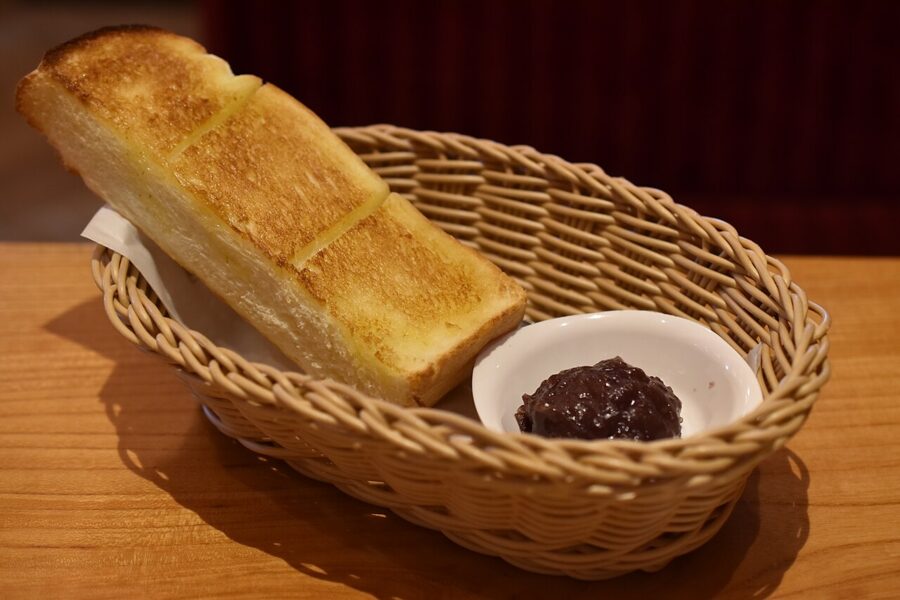
The idea spread well beyond the coffee house. Matsunaga Seika based its Shiruko Sando biscuit on ogura toast in 1966, and it’s still one of the better Japanese snacks to pick up in a supermarket. Shikishima, an Aichi baker, sells a bean-and-margarine roll for people who can’t wait until morning.
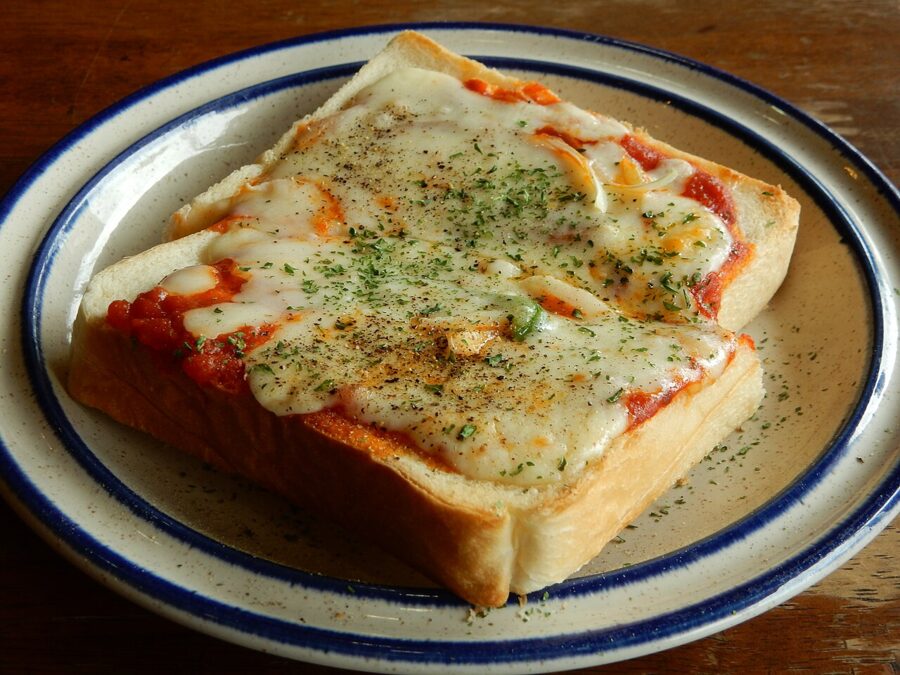
Pizza toast is the other classic: tomato sauce, green pepper, onion, salami and melted cheese on a thick slice. A Yurakucho coffee house is credited with inventing it in the 1960s, when real pizza was expensive. It’s a better lunch than it has any right to be.
Napolitan and Nagoya’s “Italian”
Napolitan, spaghetti fried with ketchup, onion, green pepper and ham or sausage, is the kissaten dish everyone knows. Its postwar Yokohama origin story is in my piece on foods that feel Japanese but were invented somewhere else. What matters at the table is how the kissaten version is made.
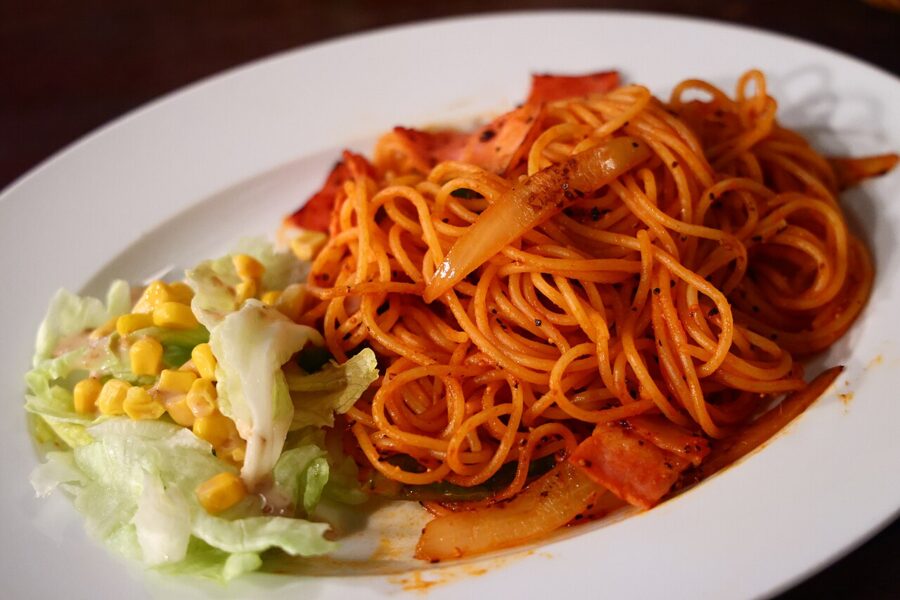
The noodles are boiled well past al dente, tossed in oil and rested, often overnight, then fried with the sauce when you order. That’s why they’re soft and slightly sticky, and why the dish arrives in a few minutes. It’s a short-order trick from the decades before frozen pasta, and nobody serving it thinks it needs correcting.
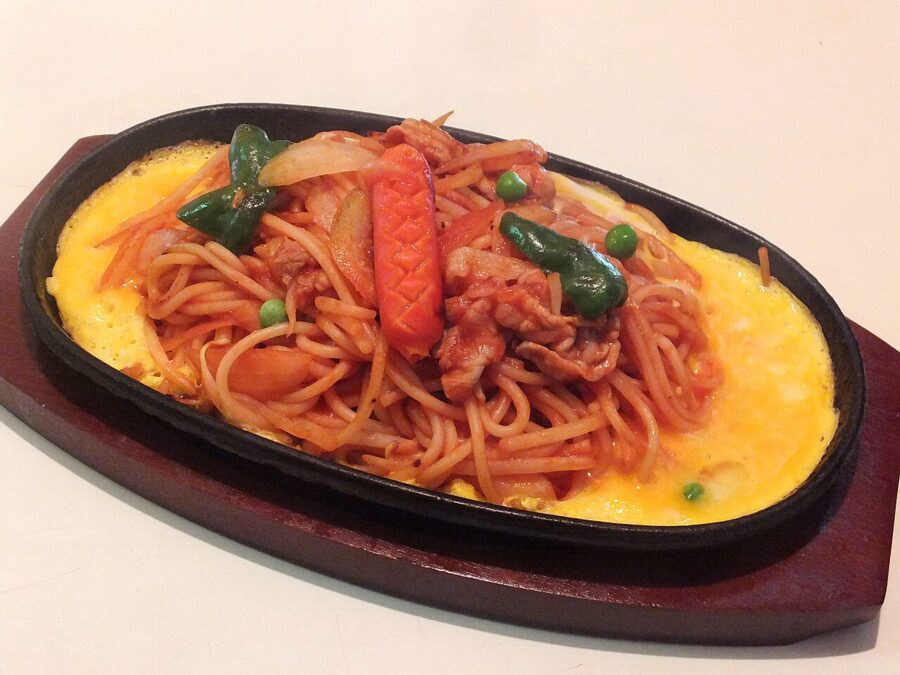
In Kansai and Nagoya the same dish is often called “Italian”. Nagoya’s version comes on a sizzling iron plate, and the cook pours beaten egg over at the last moment so it cooks on the hot metal as you eat. It’s a lunch dish, and a filling one.
Curry and the Vienna coffee that follows it
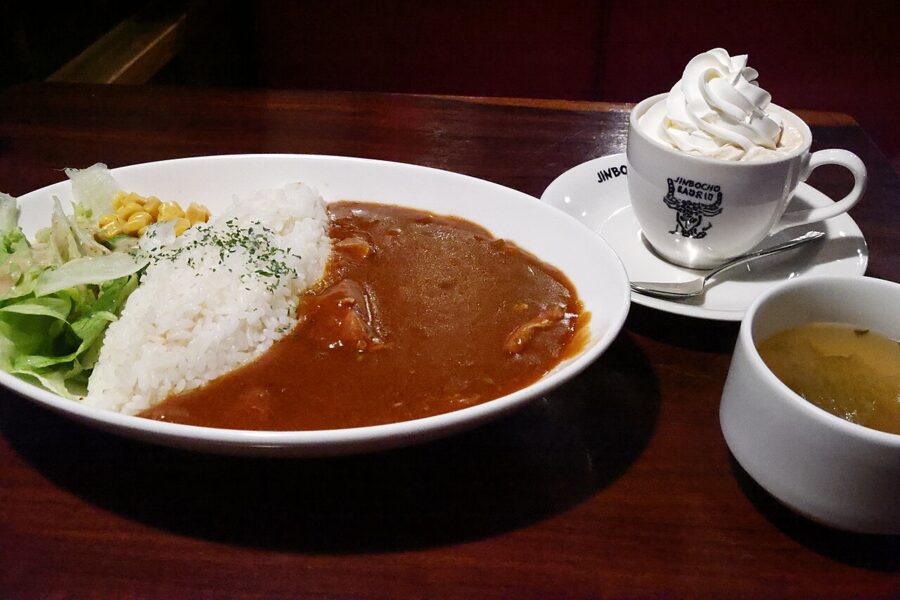
Most kissaten have a curry rice, usually dark, a little sweet and topped with an egg, and I’ve gone through that style in my Japanese curry guide.
Sandwiches: egg, katsu and fried prawn
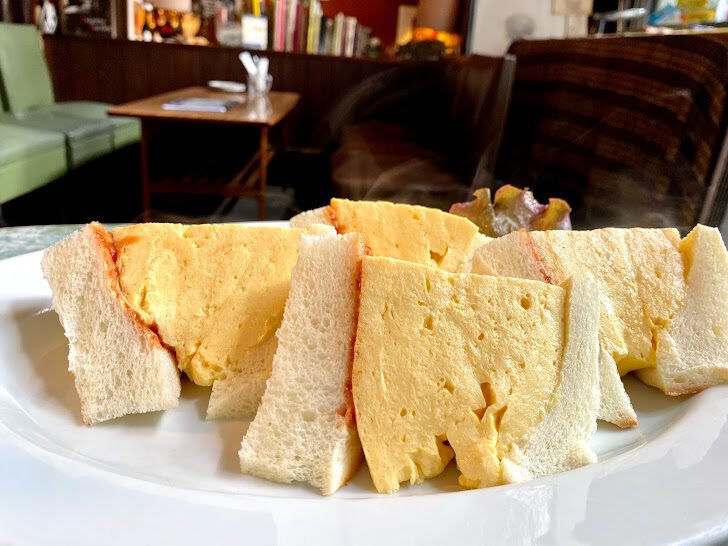
The egg sandwich splits the country. In Tokyo it’s usually a mash of boiled egg and mayonnaise; in Kansai it’s more often a hot omelette cut to order between soft white bread, sometimes with mustard. Kayaba Coffee in Yanaka is the Tokyo exception people cross the city for, with a thick, soft omelette inside.
Kyoto’s most copied version came from Corona, a yoshoku restaurant that has since closed. Its recipe lives on at Kissa Madrague, near Karasuma Oike, which serves the “Corona egg sandwich” with an omelette so tall the bread barely closes round it. Book ahead if you can, because it fills up.
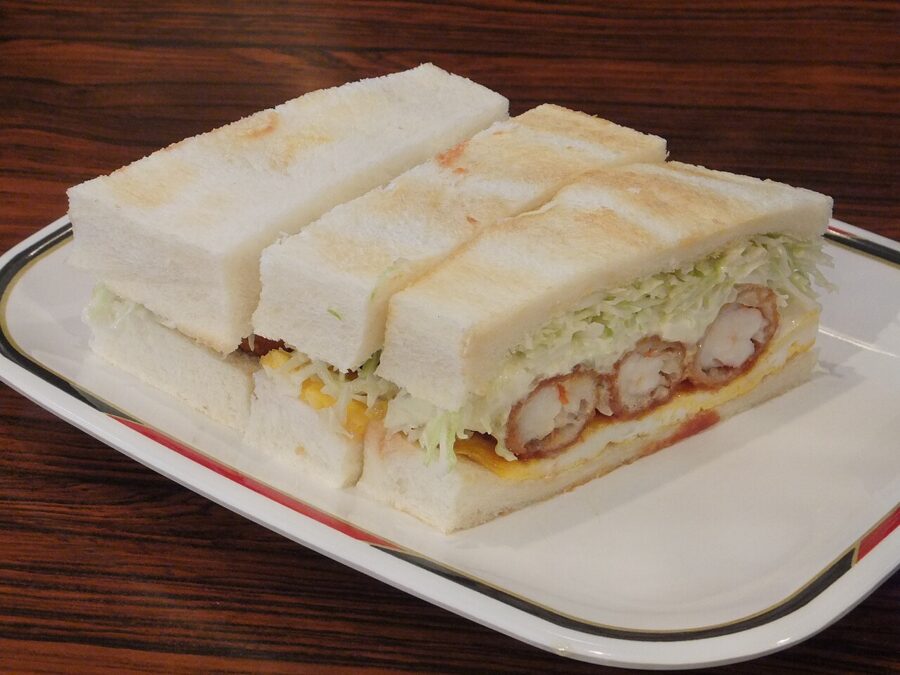
Plenty of kissaten also do a katsu sando, and Nagoya has a sandwich of its own. Compal’s fried prawn sandwich, with tartare and a dark sauce, appeared around 1983, and the chain sells about 750 of them a day across its shops.
Pudding
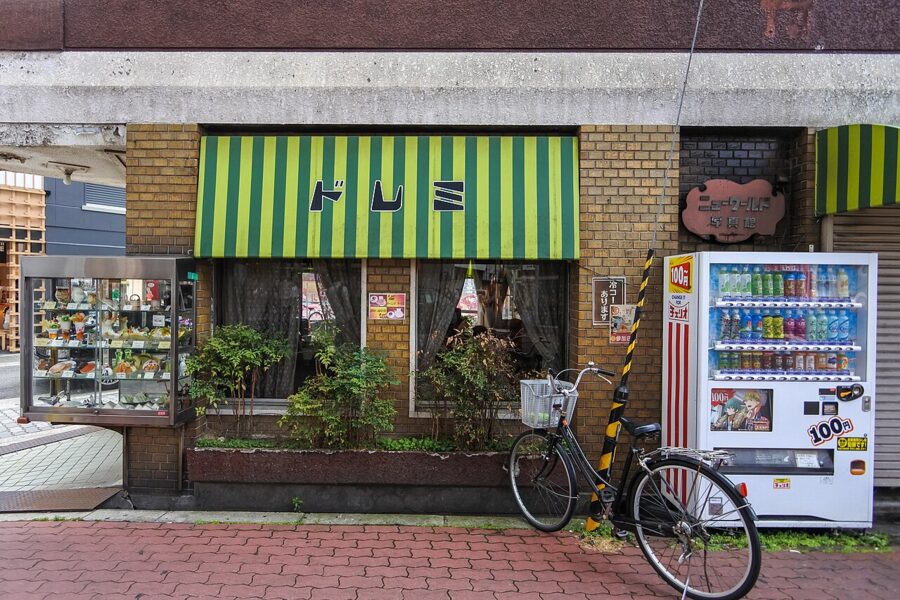
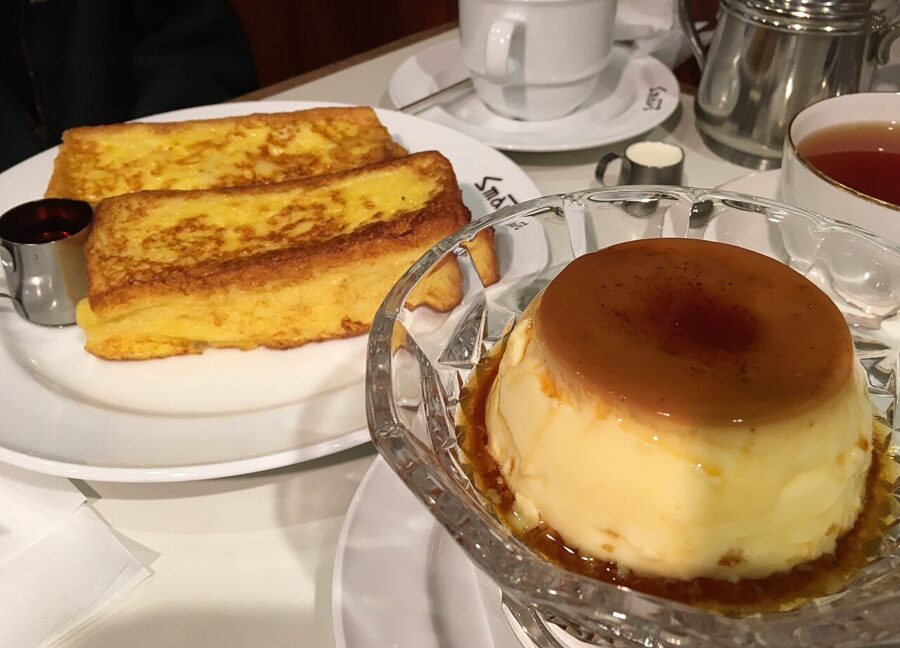
Kissaten purin is a baked custard with a bitter caramel top, and the fashion has swung back to the old firm style. Shops advertise katame pudding, “hard” pudding, that holds its shape on the plate and tastes of egg rather than gelatine. Smart Coffee in Kyoto, Doremi in Osaka and the Nakayamate branch of Nishimura in Kobe, at ¥900, all make their own.
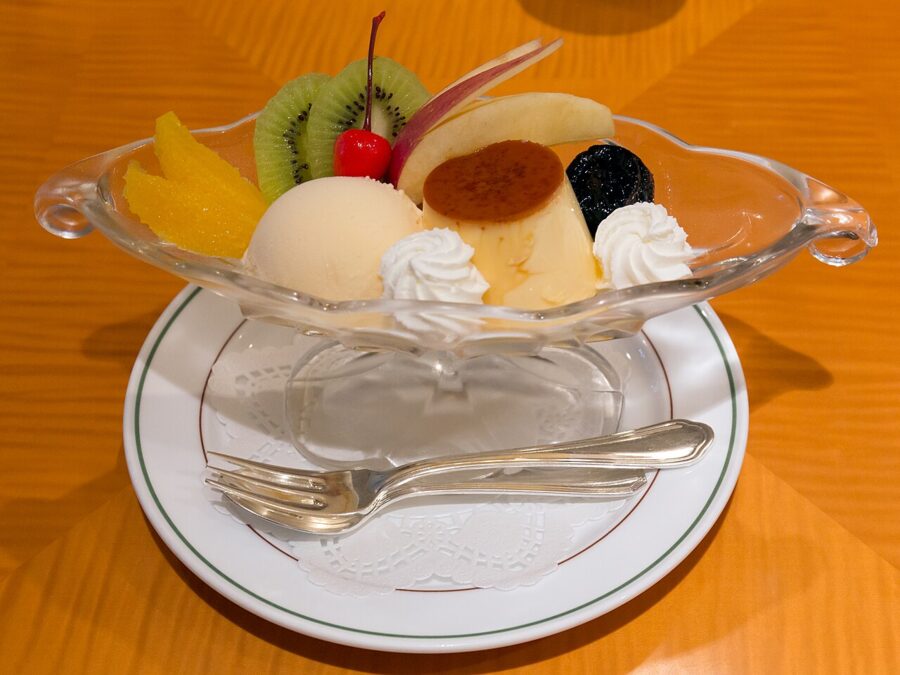
Pudding a la mode puts a pudding in a long glass boat with cream, a scoop of ice cream and tinned and fresh fruit. Coffee Seibu in Shinjuku, open since 1964, is known for a large one and an omurice made with six eggs. Share either.
Cream soda and the coloured drinks
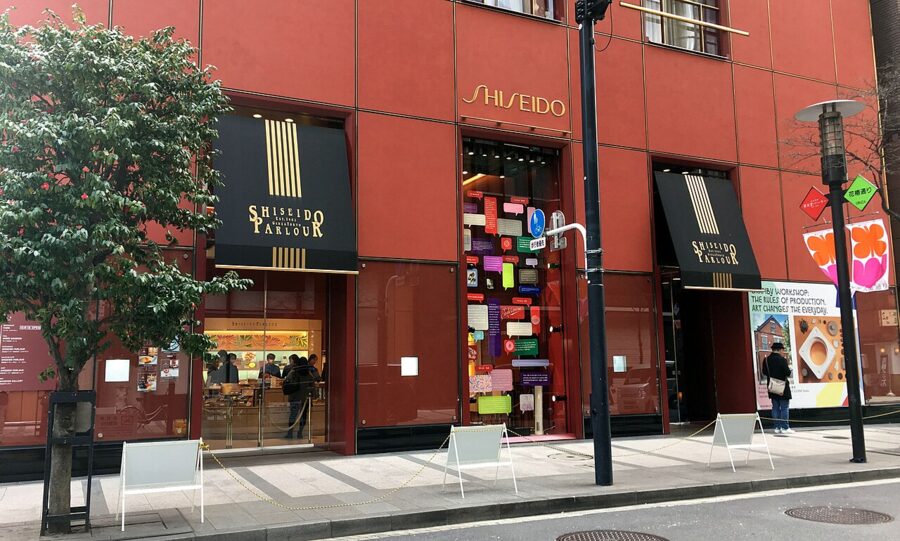
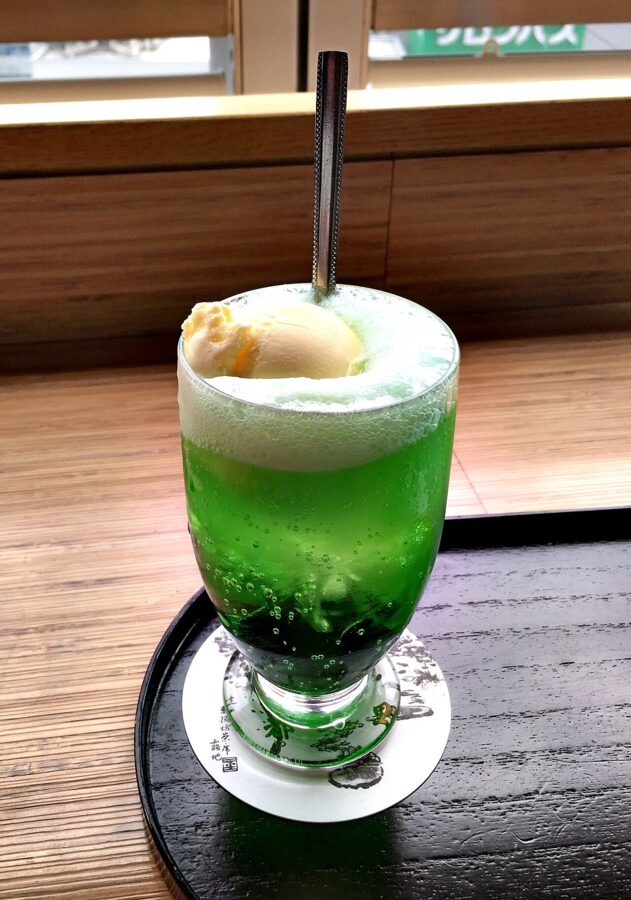
Order a cream soda in Japan and you’ll get green melon soda with a scoop of vanilla ice cream and usually a cherry, nothing like the vanilla soft drink of North America. The earliest Japanese version was the ice cream soda sold at the Shiseido pharmacy in Ginza in 1902. It’s the drink that young customers photograph and older ones order without looking up.
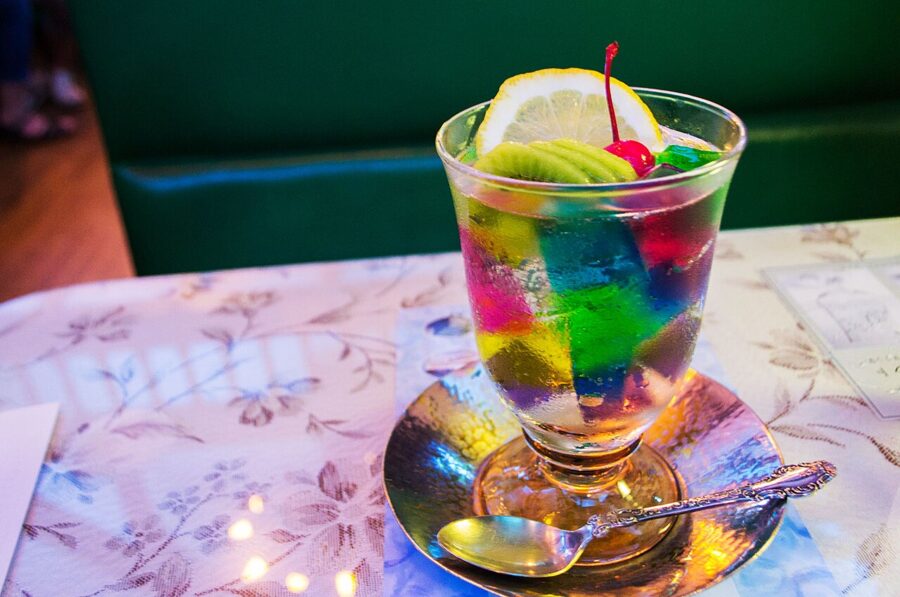
Soiree in Kyoto goes further. Its jelly punch, on the menu since 1975, is five colours of cubed jelly in Kobe-made cider that was first sold in 1899, and under the shop’s blue lights it glows. It was invented by the second owner’s wife, Motoki Shigeko, who started with coloured jelly in milk for a daughter who wouldn’t drink milk plain.
Hotcakes, and the souffle pancake question
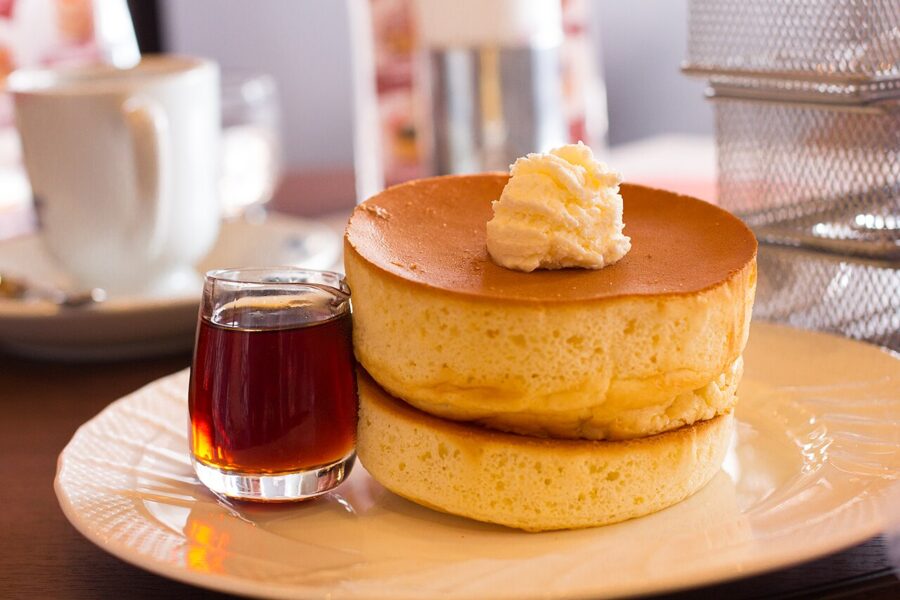
Japanese hotcakes are thick, golden discs eaten with butter and syrup, and the name dates to 1923, when Mitsukoshi’s department store restaurant served them as “hatto keki”. The kissaten version is griddled to order, ideally on a copper plate that spreads the heat evenly, and often comes in a stack of two. It takes a while, and it’s worth the wait.
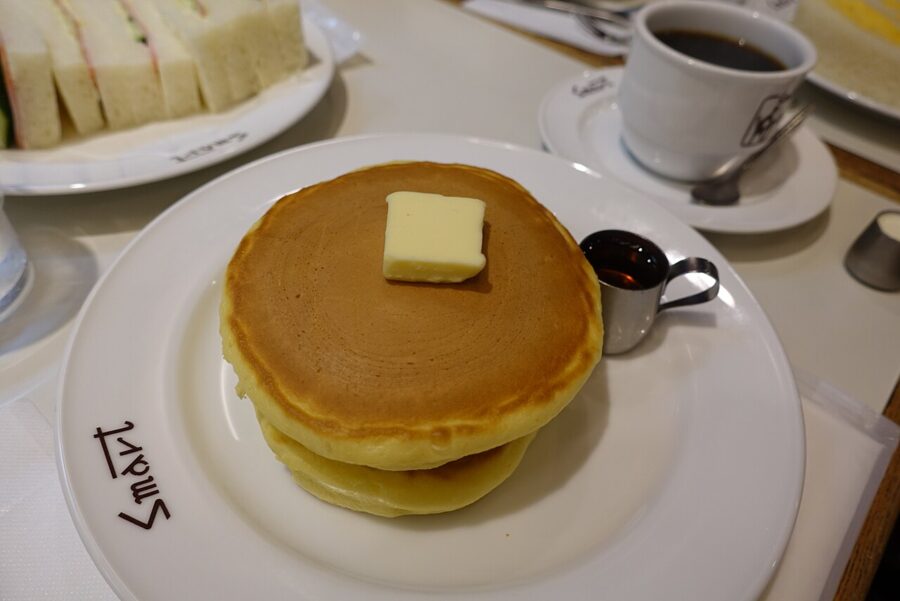
Marufuku in Osaka cooks each one on copper after you order, and the food writer Kobayashi Katsuyo was a fan. Junkissa American in Dotonbori cuts its hotcake into six before it leaves the kitchen, so the butter gets in everywhere. In Kobe, Nishimura’s Nakayamate branch serves a hotcake set from 11:30, except in summer.
The souffle pancake, the tall, wobbly one built on whipped egg white, is a different animal. It rode the pancake boom of the 2010s, which took off after bills opened near Kamakura in 2008 and Eggs’n Things reached Harajuku in 2010, and it belongs to pancake specialists and chains like Hoshino Coffee. It’s fun, but it isn’t kissaten food.
Nagoya morning service, explained
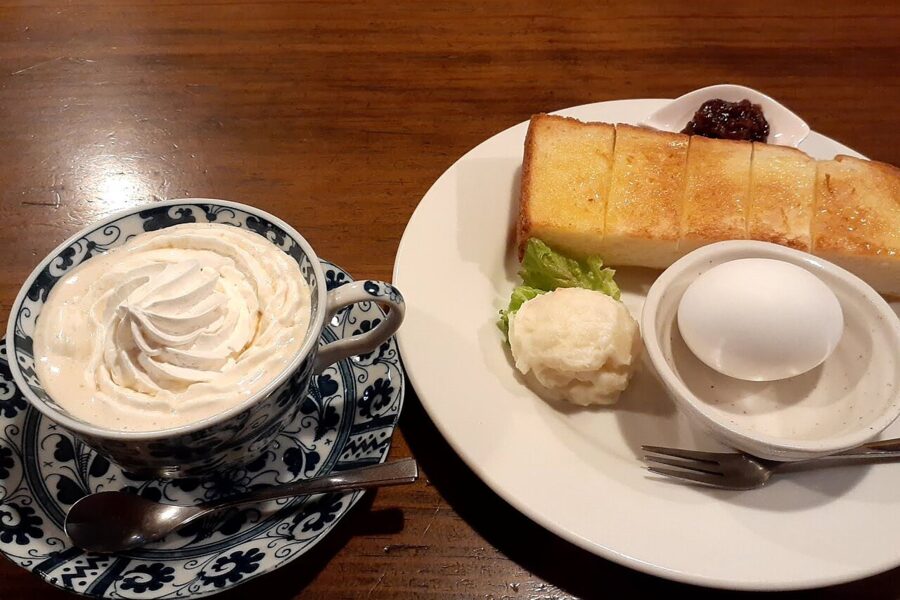
Morning service, mōningu sābisu or just “morning”, is simple. Order a drink during the morning, typically until 10:00 or 11:00, and food comes with it for nothing or for a small extra. Across Aichi and Gifu that usually means thick toast, a boiled egg and a small salad or some fruit, and at the extreme end, rice balls or a small bowl of noodles.
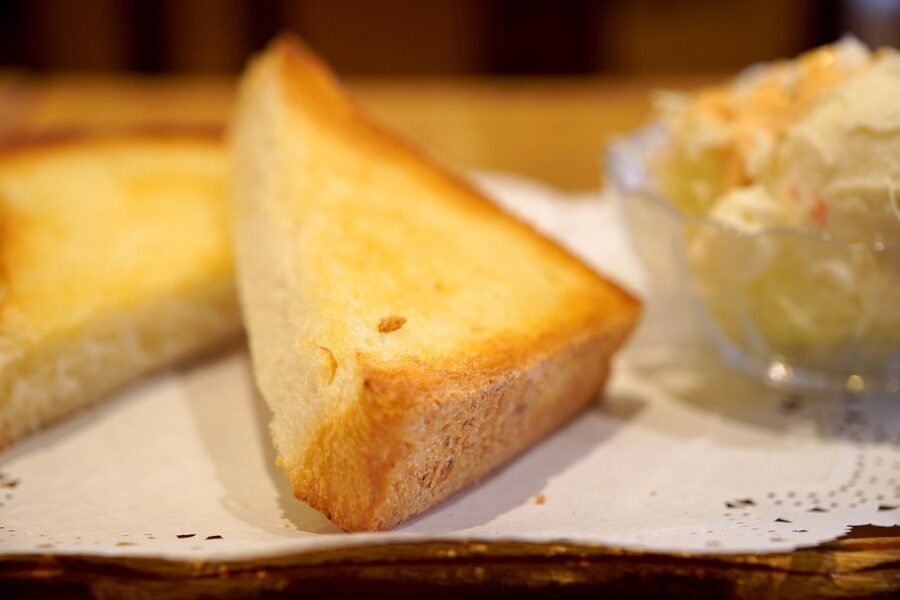
It isn’t a Japanese breakfast of rice, fish and miso soup, and nobody pretends it is. It’s a coffee-house breakfast that started as a bonus and grew into the main event. In the most competitive suburbs some shops now serve “morning” all day.
Where it came from
At least four places claim it. Ichinomiya, a textile town, says the custom grew in the 1950s when mill owners took clients to coffee houses to escape the noise of the looms, and shops added peanuts and boiled eggs to keep them coming. Toyohashi says it started at the same time at a shop by the station, Hiroshima has a coffee house that dates its morning set to 1955, and a history of Cafe Paulista says its branches were told to start one in 1919.
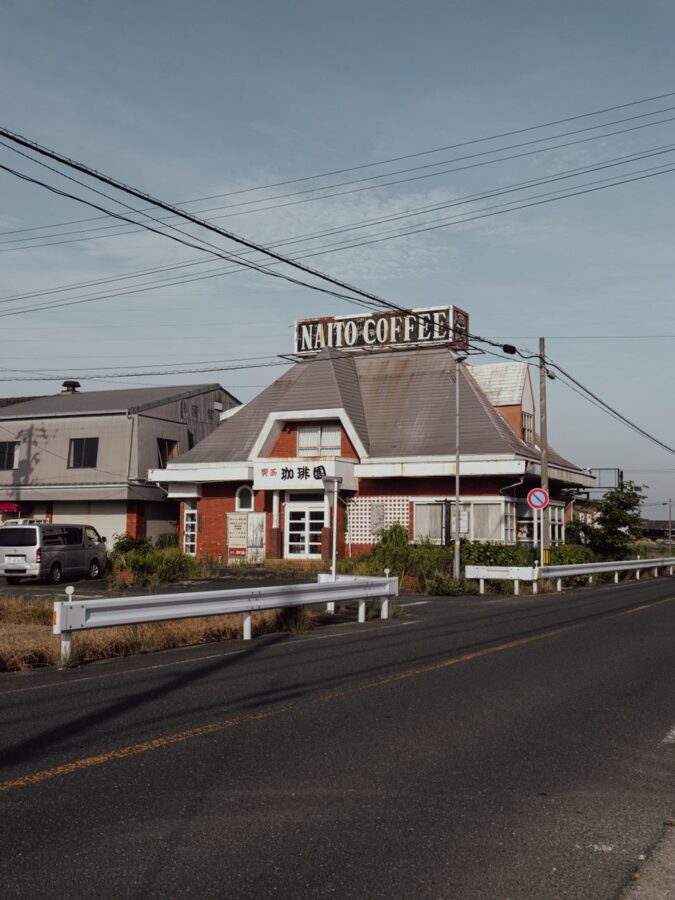
The likelier answer is competition. Aichi and Gifu have more coffee houses for their size than almost anywhere in Japan, and in a crowded market a free egg is cheaper than a price war. In the government’s household spending survey, Nagoya and Gifu have spent years trading places at the top of the table for money spent in coffee shops.
Regulars here still buy coffee tickets, books of eleven cups for the price of ten, and leave them in a rack of pockets by the till. Many shops also put a few peanuts or a biscuit on the saucer with any coffee, at any time of day.
Komeda, the chain that took it national
Komeda’s morning is the easiest to learn because it’s the same in all its shops. Order any drink from opening until 11:00 and you get a piece of thick toast, with a choice of boiled egg, egg paste or the house ogura bean paste. Opening times vary by shop, so a 7:00 opening gives you four hours of free toast.
Shiro-Noir, a warm Danish pastry topped with soft-serve, is the signature dessert, and the full size is too much for one person after breakfast. Order the mini.
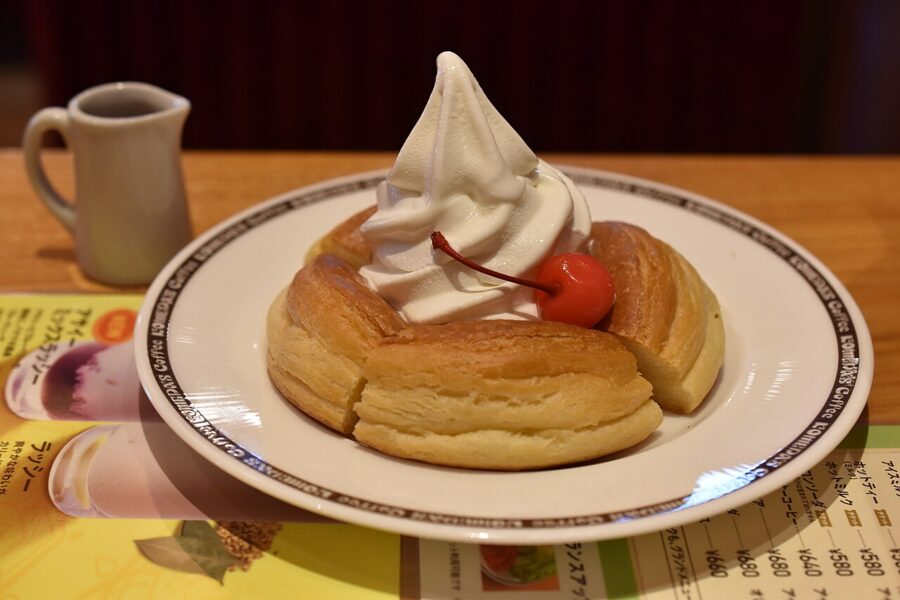
Komeda isn’t an old shop and doesn’t pretend to be. It has Wi-Fi and power sockets at most branches, and with more than a thousand of them it’s the most reliable morning in Japan. Use it when you’re tired, and use the old shops when you’re curious.
The old Nagoya shops
Compal’s main branch in Osu, open since 1947 and on this spot since 1948, is the place to start. It opens at 8:00 and serves morning sets until 11:00, and the iced coffee is the pour-it-yourself kind. The whole chain went non-smoking in 2020, and Kamimaezu Station on the Meijo and Tsurumai lines is three minutes’ walk.
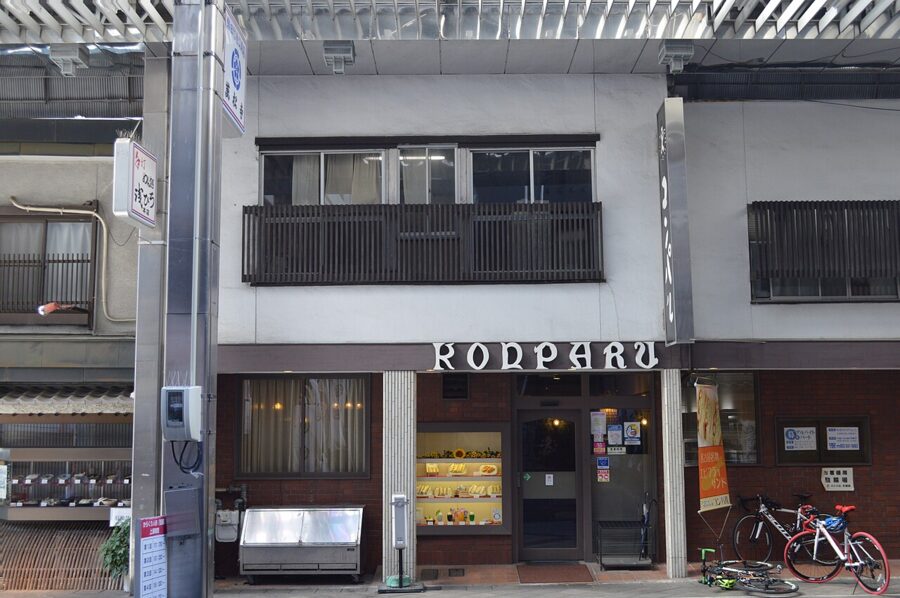
Kissa Tsuzuki, open since 1946 on the second floor of the Tsuzuki Building at Taikodori 6-1 in Nakamura-ku, is the theatrical one. The owner pours coffee and milk for a cafe au lait from a pot held about two and a half metres above the cup, a trick known as “tenjo otoshi”, dropping it from the ceiling. He says he arrived at it because it mixes the drink better and keeps the froth. It opens at 7:30, closes around 17:00 and shuts on Wednesdays.
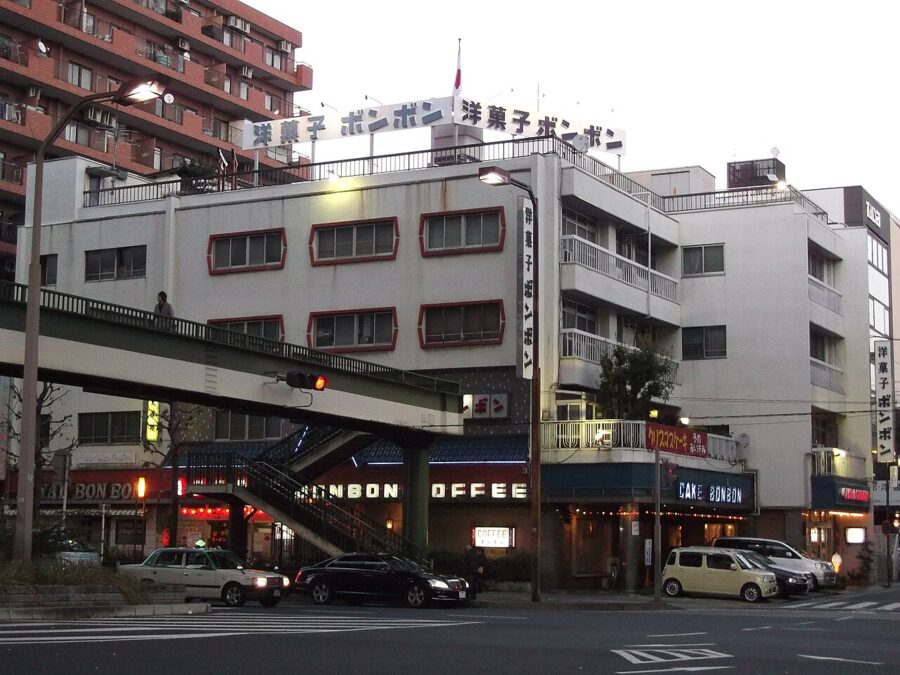
Bon Bon, opened in 1949 at Izumi 2-1-22 in Higashi-ku, is a cake shop with a coffee house attached and more than thirty cakes in the case. The sofas are vermilion, the pudding comes in a well-worn dish, and it’s open from 8:00 to 21:00, four minutes from Takaoka Station. Coffee House Kako in Meieki, open since 1972, was the first in Nagoya to roast its own beans; its Shanty Rouge toast stacks bean paste, cream and homemade fruit preserves, and it opens at 7:00, three minutes from Kokusai Center Station.
Where to go, city by city
These are the shops I’d send a friend to, grouped so you can string two or three together. Hours come from each shop’s own site or a listing updated this year, and national holidays often change them.
Tokyo
Ginza has the history. Cafe Paulista at Ginza 8-9-16 opens at 9:00 on weekdays, and Cafe de L’Ambre is round the corner at 8-10-15. Kissa You, at Ginza 4-13-17 a minute from Higashi-Ginza Station’s exit 5 and right beside the Kabuki-za, is famous for an omurice that kabuki actors have long ordered; it serves from 11:00 to about 16:00 and closes on Wednesdays.
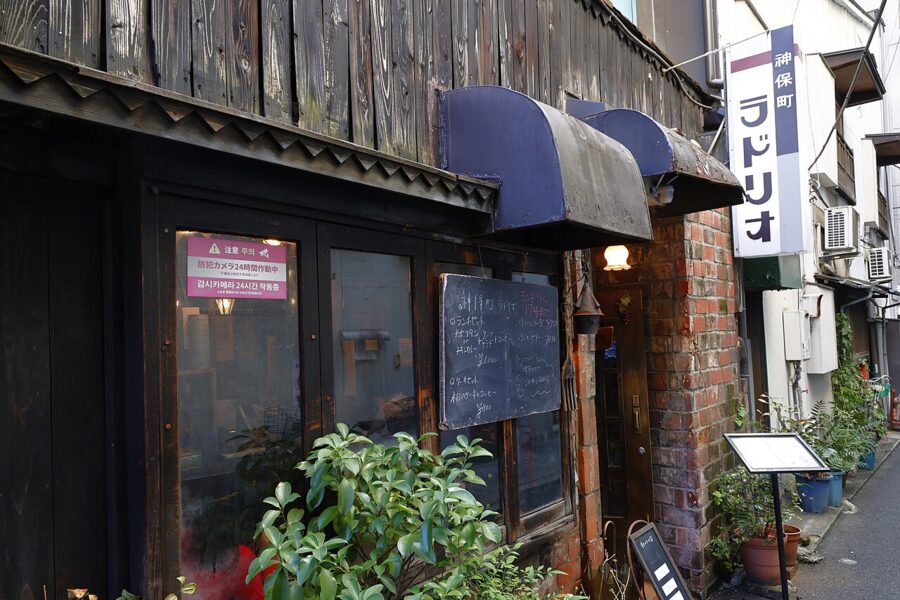
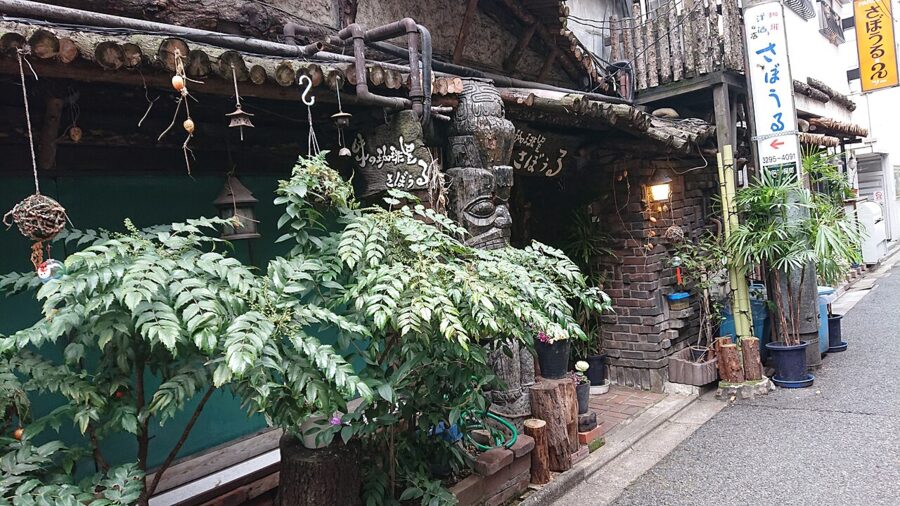
Jimbocho, the secondhand-book district, has the best concentration of old shops in the city. Ladrio, in a back lane two or three minutes from exit A7 at Kanda-Jimbocho 1-3, says it’s the oldest coffee house left in the district, and Sabouru is a minute from exit A7 of Jimbocho Station at 1-11, with its sister shop Sabouru 2 next door doing the enormous napolitan.
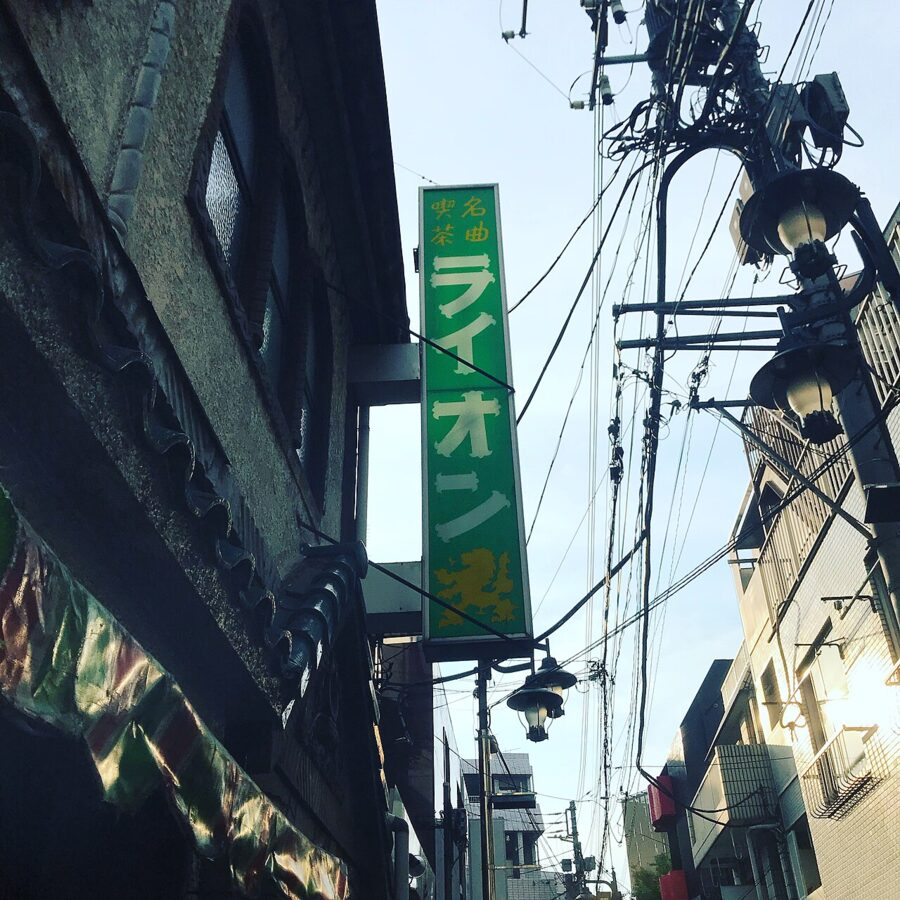
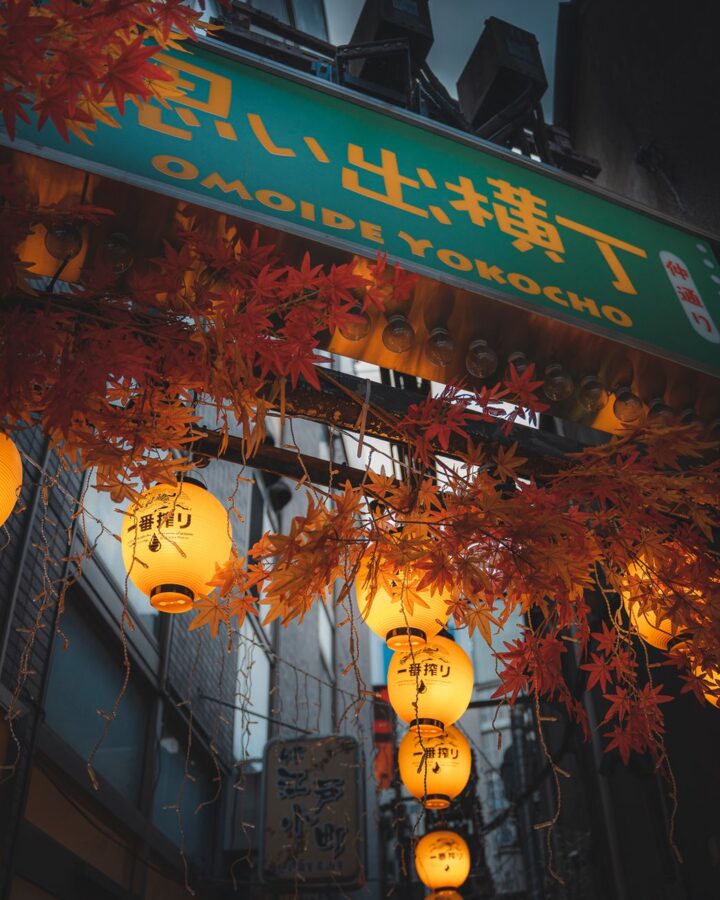
Shibuya has Lion. Shinjuku has Coffee Seibu, which kept its stained glass and pudding a la mode when it moved to the second floor of the Hanamichi Tokyo building at Kabukicho 1-6-12, and Tajimaya by Omoide Yokocho near the west exit, open 10:00 to 23:00, where the deep-roast coffee is flannel-dripped. Kanda Coffee-en, under the brick railway arches by Kanda Station’s north exit since 1957, opens at 7:00 on weekdays for the office crowd.
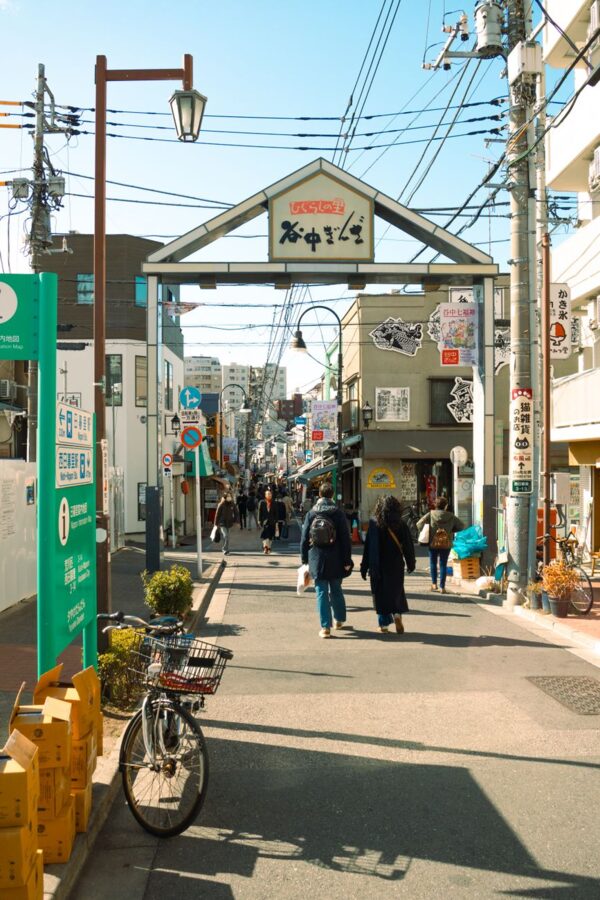
In Yanaka, Kayaba Coffee opens from 8:00 to 18:00 and closes on Mondays (Tuesday if Monday is a holiday). It’s a five-minute walk from Nippori Station, and the egg sandwich is the order. If you’re working through Tokyo’s food neighbourhoods, Yanaka and Jimbocho are the two where a kissaten is as much of the reason to go as anything else.
Kyoto
Kyoto has one of the deepest benches of old coffee houses in Japan, and a lot of them sit within ten minutes’ walk of Shijo-Kawaramachi. If you’re planning meals here as well, my guide to what to eat in Kyoto covers the rest of the city’s table. These are the coffee houses I’d go back to.
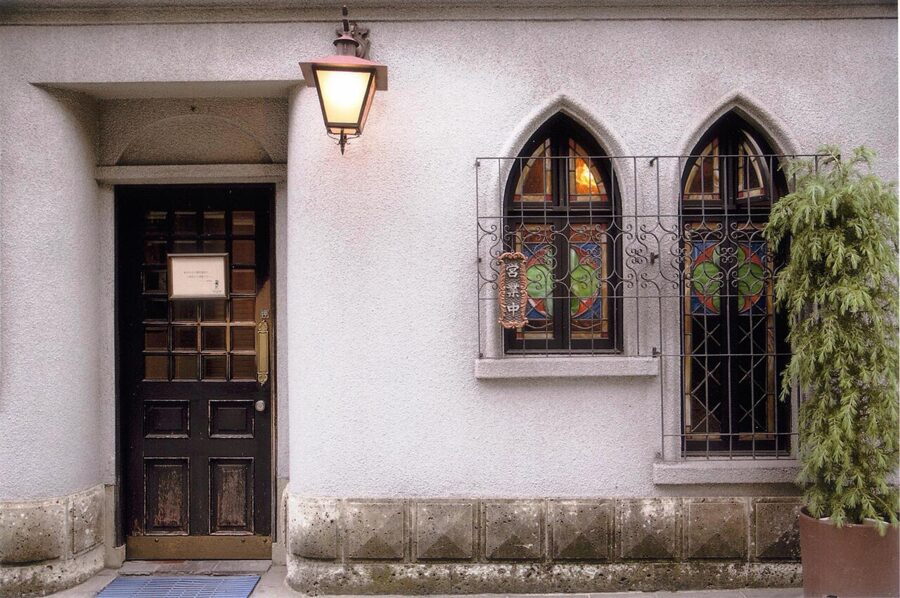
Francois, open since 1934 at Nishi-Kiyamachi Shijo-sagaru, runs from 11:00 to 22:00 and takes cash only. It’s non-smoking, accepts no reservations and asks customers not to take phone calls or use laptops for long, and on busy days staff may ask you to give up your table after about two hours. Order the cake set or the coffee with fresh cream, the shop’s own “semi-Wiener” style.
Soiree, just north of Shijo on the same canal lane, opened in 1948 and has never played background music. The blue lighting was suggested by a dye researcher friend of the founder, who said it made women look beautiful and men look young, and the walls carry original paintings by Togo Seiji and his Nika group circle. It closes on Mondays and the jelly punch is the order.
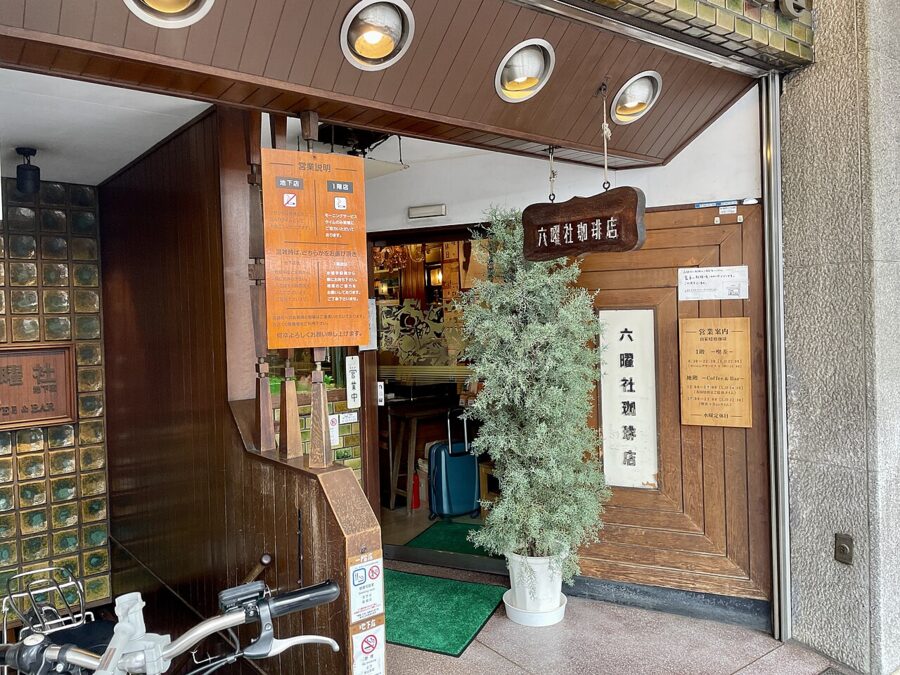
Tsukiji, also from 1934 and just off Kawaramachi, opens from 11:00 to 17:00 in a room crowded with tiles and antiques. Rokuyosha at Kawaramachi Sanjo has two shops in one building: the ground floor (from 8:30, last order 22:00) allows smoking except during morning service until 12:00, and the non-smoking basement opens at 12:00 and turns into a whisky bar from 17:00. Both close on Wednesdays, the basement’s homemade doughnuts appear from midday, and Keihan Sanjo Station is five minutes away.
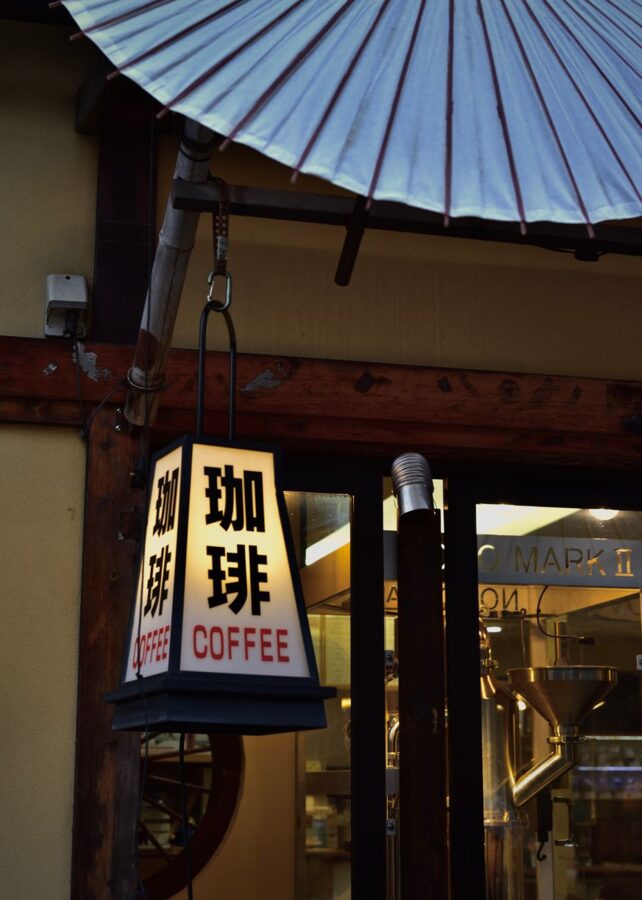
Smart Coffee on the Teramachi arcade at Sanjo opened in 1932 as a Western-style lunch house and became a coffee house after the war, roasting its own beans in a German machine you can see from the street. It’s open from 8:00 to 19:00, a minute from Kyoto Shiyakusho-mae Station, and went fully non-smoking in April 2020. The blend is ¥650 and an egg sandwich is ¥850.
Inoda’s main branch on Sakaimachi-dori, open 7:00 to 18:00 every day, is the big, bright, card-friendly option, with 211 seats and a smoking area out in the garden. The Kyoto breakfast plate is the order, with a cup of the Arabia no Shinju blend it has sold since 1978. The Sanjo branch round the corner has an oval counter from 1970 where you can watch the coffee being strained.
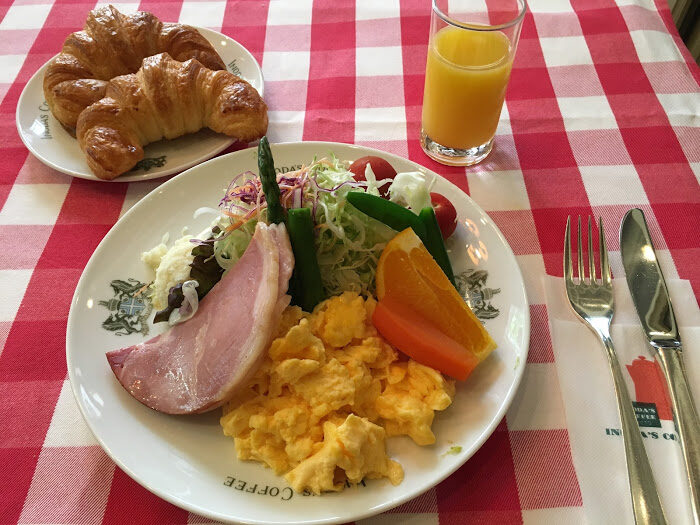
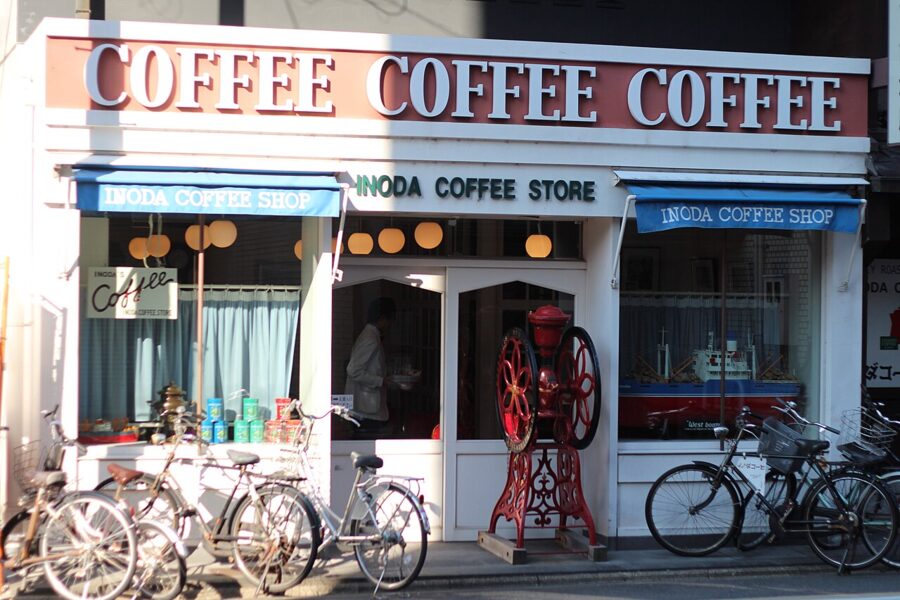
Up by Kyoto University, the Kitamonmae branch of Shinshindo opened as a cafe in the early 1930s, part of a bakery founded in 1913 by a man who went to Paris to learn French bread. The long wooden tables were made by the lacquer artist Kuroda Tatsuaki. It opens 10:00 to 18:00, closes on Tuesdays, and is three minutes from the Hyakumanben bus stop.
Osaka
Osaka has long had more coffee houses than any other prefecture, and its old shops are louder and friendlier than Kyoto’s. You’ll find several around Namba and Shinsekai, the same streets I covered in my guide to Osaka street food.
Mazura, in the basement of the Osaka Ekimae Dai-1 Building near Nishi-Umeda Station, began as a small coffee house in the postwar black market on this site and moved underground when the building opened in 1970. The ceiling is painted as space, with domes for moon craters, and the city lists it among its “living architecture” buildings. It opens at 9:00 and closes on Sundays.
Junkissa American at Dotonbori 1-7-4, open since 1946, is the grand one, with paintings commissioned for the room and fresh flowers arranged by the owners. Marufuku Coffee was founded in Shinsekai in 1934 by Ibuki Sadao, who closed a Tokyo restaurant to bring dark coffee to Osaka; the Sennichimae main branch at Sennichimae 1-9-1 is open from 8:00 to 23:00, non-smoking, with morning sets on weekdays only.
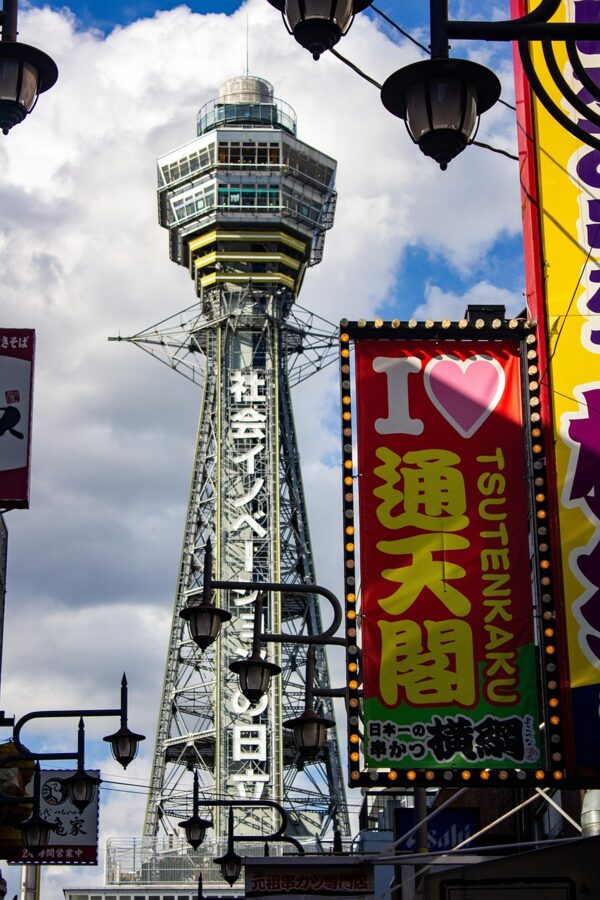
Doremi, under Tsutenkaku in Shinsekai at Ebisu-higashi 1-18-8, is a corner shop with a striped awning and red chairs, where the pudding is made by the owner’s wife and morning service runs until noon. It’s a short walk from Ebisucho Station. Shin-Osaka Station has a proper one too: Kissa Sancho on the ground floor of the JR station, open from 7:20, for a ham-and-egg set before an early shinkansen.
Kobe
Kobe was a port city drinking coffee from the Meiji era, and its old shops are smarter than Osaka’s. Nishimura Coffee began in 1948 as a shop with three tables on a corner of Hunter-zaka and moved four years later to the Nakayamate site. It brews with Miyamizu water from the sake district of Nada and has served coffee in the same thick-walled cups since 1964.
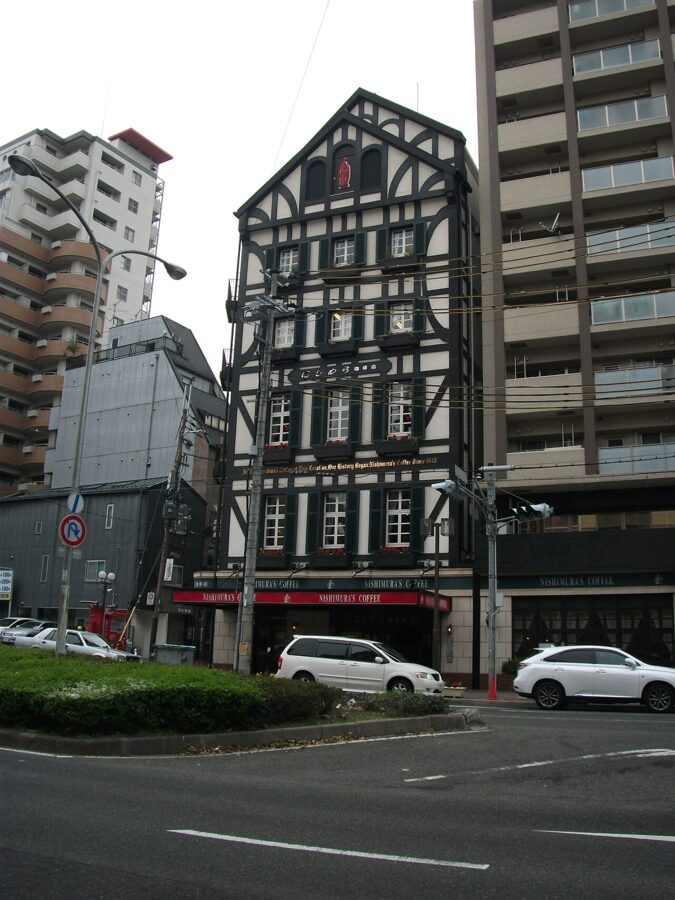
The Nakayamate branch is open from 8:30 to 22:00, with a handmade pudding at ¥900 and a hotcake set at ¥1,600. Up the hill, Kitanozaka Nishimura opened in 1974 as Japan’s first members-only coffee house, with actors and writers on the list, and only opened to everyone after the 1995 earthquake. It’s the quieter, more formal room of the two.
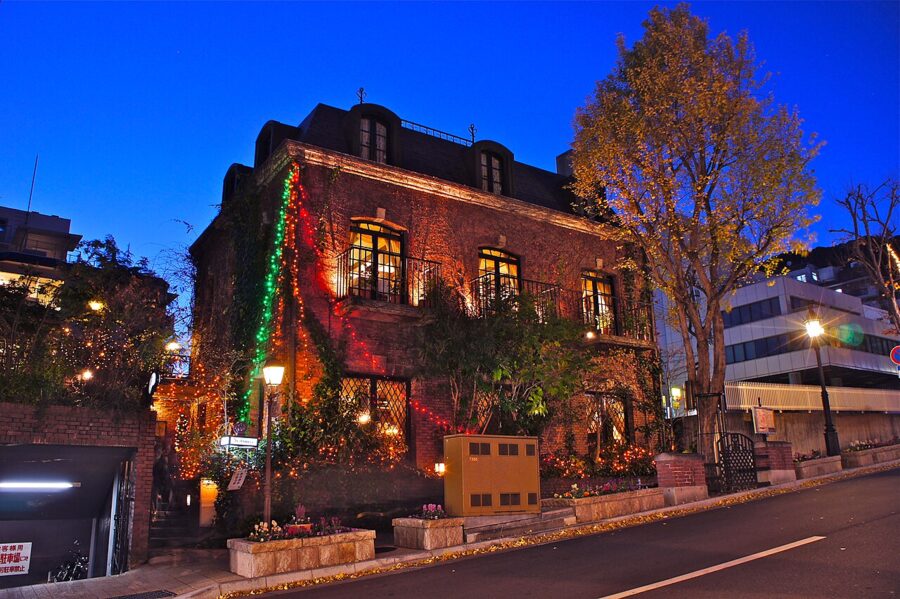
Hata Coffee on the Motomachi arcade at Motomachi-dori 5-7-12, open since 1978, lets you choose your cup from the shelves when it isn’t busy, and knocks ¥100 off toast ordered with a drink before 11:00. Kissa Donie in the Suidosuji shopping street in Nada, open since 1945, does morning sets from 8:30 to 11:30. Cafe de Unique, from 1960, sits right by the south gate of Hankyu Okamoto Station and makes a firm, old-style pudding a la mode.
Beyond the five cities
Most old towns have at least one good coffee house, usually near the station or in a covered shopping street. In the Hida mountains, Takayama has enough kissaten in its old quarter to fill a wet afternoon. In Yokohama, The Cafe at Hotel New Grand serves the napolitan and pudding a la mode the hotel says it created.
Know the house rules
Old coffee houses run on a few unwritten rules, and some are now printed on the menu. None of them are hard.
- One order per person. Everyone at the table orders at least a drink. Kayaba says so on its booking page, and plenty of smaller shops expect it without saying.
- Leave the laptop in the bag. Francois asks customers not to use laptops for long or take phone calls. Komeda, by contrast, offers Wi-Fi and power at most branches, so work there.
- Ask before photographing. Lion bans photos inside. Elsewhere a quick shot of your own cup is normal, but don’t stand up to frame the room, and keep other customers and the master out of the picture.
- Carry cash. Francois and Ladrio take cash only, and many small shops are the same. Inoda and the chains take cards.
- Don’t camp at peak times. At the famous shops, an hour or so over a coffee and cake is fine. Francois may ask you to move after about two hours when there’s a queue.
Smoking
Kissaten used to be smoky, and some still are. Since April 2020 the revised Health Promotion Act has banned indoor smoking in most restaurants, but existing small businesses (individuals or small firms with 100 square metres or less of seating) can register as smoking venues. Nobody under 20 is allowed into a smoking area, which is why a few smoking kissaten bar teenagers at the door.
Look for 禁煙 (kin’en, no smoking) or 喫煙可 (kitsuen-ka, smoking allowed) on the door. Smart and Compal went fully smoke-free in 2020, Inoda keeps smoking to a booth and the garden, and Rokuyosha’s ground floor allows it except during morning service. Tokyo and Osaka have their own stricter rules on top, and Osaka’s latest came into force in April 2025.
What does it cost, and what can you skip?
A kissaten coffee costs more than a chain coffee and usually less than a third-wave pour-over nearby. Food is priced like a cheap lunch.
| Item | What you’ll pay | Example |
|---|---|---|
| House blend | ¥500–700; ¥1,000+ at the specialists | ¥650 at Smart and Soiree, Kyoto; ¥1,200 at L’Ambre |
| Morning service | The price of the drink | Komeda: toast and an extra with any drink until 11:00 |
| Thick toast | ¥500–700 | ¥650 at Soiree, thick enough for two |
| Egg sandwich | ¥800–1,400 | ¥850 at Smart |
| Cream soda | ¥700–900 | ¥800 at Soiree, in six colours |
| Pudding | ¥500–900 | ¥900 at Nishimura Nakayamate |
| Hotcakes | ¥700–1,200 | ¥1,130 at Nishimura Nakayamate, ¥1,600 as a set |
A few things aren’t worth the effort:
- The famous shops at weekend lunchtime. The best-known places queue at weekends, and you can spend longer waiting than sitting. Go at opening on a weekday instead.
- Arriving at 11:05 for morning service. At Komeda the cut-off is 11:00, and most shops work the same way: order before the time on the sign.
- Queueing two hours for a souffle pancake if what you wanted was a kissaten. They’re different things, and the hotcake at Marufuku or Smart is the older, better breakfast.
- Retro-styled chains as a substitute. They’re comfortable and fine for a sit-down, but the reason to go to an old coffee house is the room, and you can’t franchise that.
- Taking a camera into Lion. You won’t be allowed to use it, and the music is the point anyway.
Go early, carry cash and take something to read. Order the blend, then whatever the regular at the next table is eating. And in Nagoya, never order the toast: it comes anyway.
You Might Also Enjoy
 China Travel Tips for 2026: Visa-Free Entry, Paying With Your Phone, Apps, Trains and What First-Timers Get Wrong
 Things to Do in Xi’an: The Wall by Bike, the Big Wild Goose Pagoda, the History Museum and a Three-Day Plan
 Xiaolongbao: Shanghai’s Soup Dumplings, Their Jiangnan Cousins and Where to Eat Them
 Tropical Fruits of Southeast Asia: A Tasting Guide