Japanese Sweets: A Wagashi Guide from Mochi and Dango to Kakigori and Taiyaki
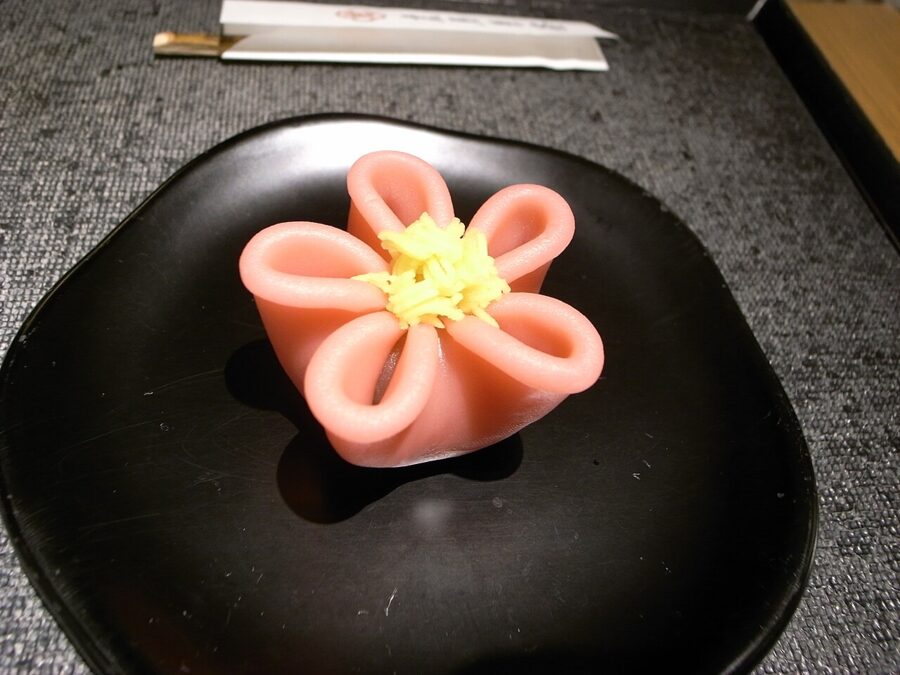
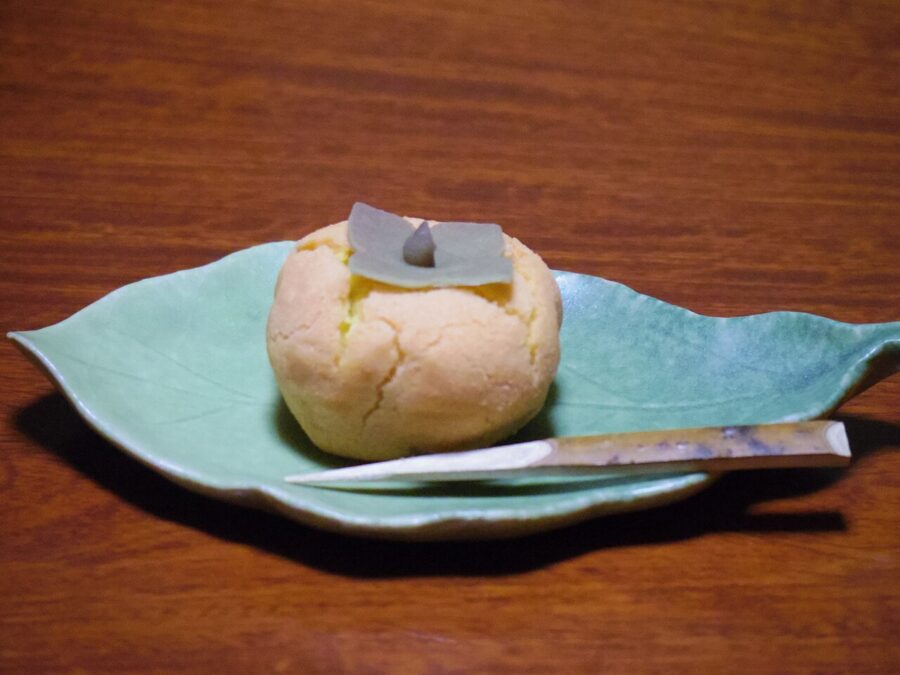
For the first half of December 2026, Toraya’s shop in Akasaka is selling a sweet called Shin-sazanka. It’s a sasanqua camellia made of uirō dough, dyed half red and half white, with a yellow bean-paste centre standing in for the stamens, and it costs ¥540. The design first appears in the company’s records in 1845. On the 16th it goes, and a yuzu-scented roll called Yumaki takes its place.
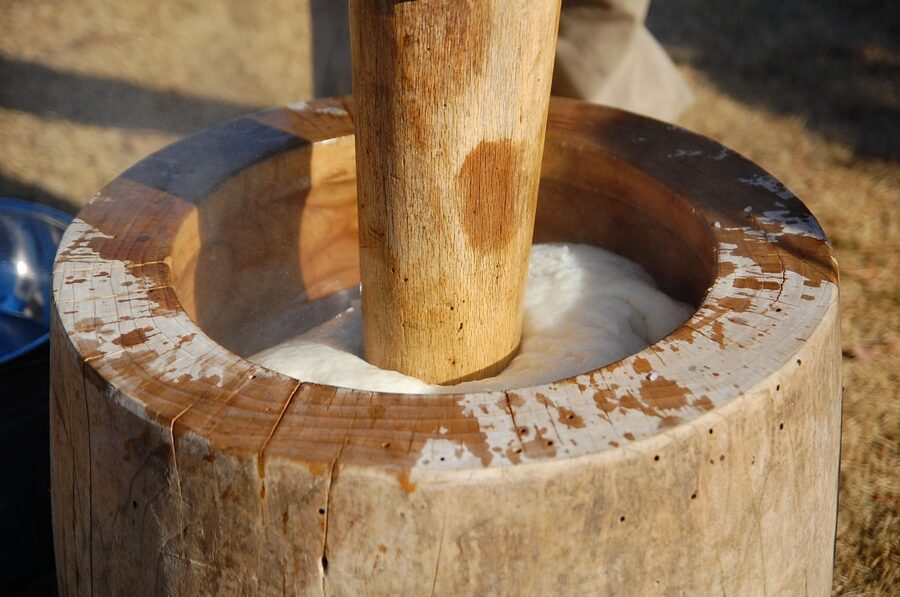
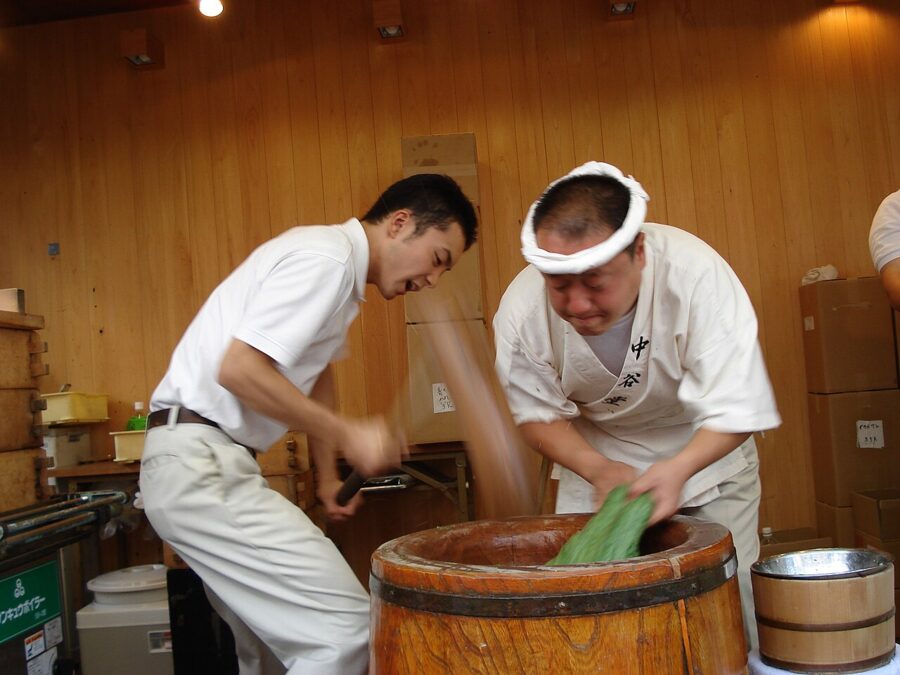
At the other end of the scale is a ¥180 ball of yomogi mochi in Nara. Outside Nakatanidou, where the Higashimuki shopping street meets Sanjo-dori, two men pound the mochi so fast that a crowd gathers every day to film them. The shop insists the speed isn’t a show. Both of these, the court flower and the street mochi, are wagashi.
The word itself is younger than most of the sweets. Wagashi means “Japanese confectionery”, and it only became necessary once Western cakes and chocolate arrived in the Meiji era and needed a name of their own, yogashi. What sits under the label is rice, beans, starch and sugar, very little fat or dairy, and almost always the expectation of a cup of green tea beside it.
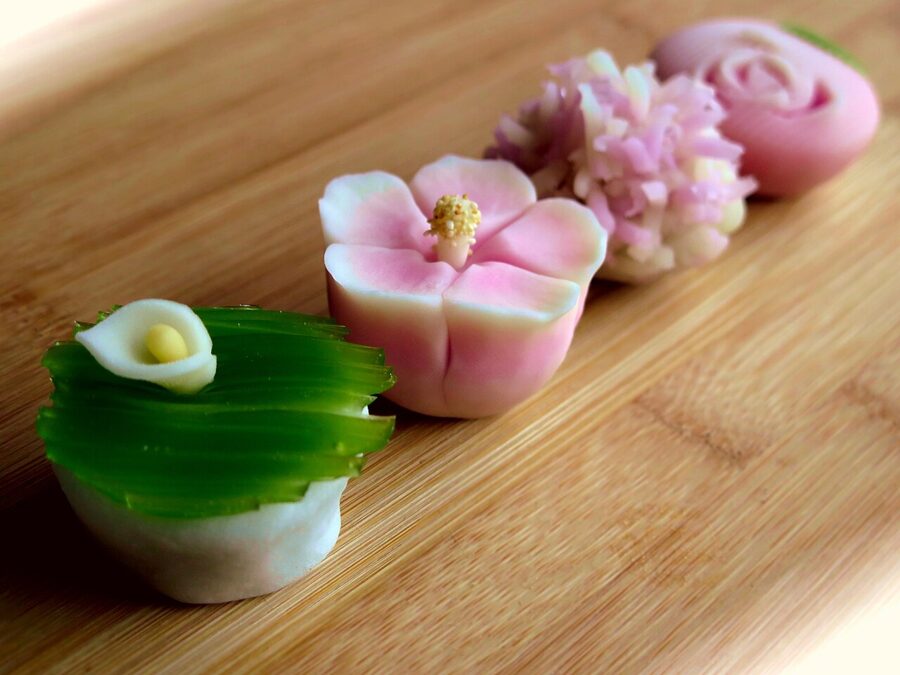
This guide runs from the families and the mochi to the street sweets, the ice and the tea room, then the shops worth a detour and what to order when you sit down. The table is the short version.
| Family | What it means | Typical examples | How long it keeps |
|---|---|---|---|
| Namagashi (生菓子) | “Fresh” sweets, 30% water or more | Daifuku, sakura-mochi, dango, dorayaki, taiyaki | Usually the same day |
| Jō-namagashi (上生菓子) | The top tier of namagashi, made for tea and gifts | Nerikiri, konashi, kinton | The same day |
| Han-namagashi (半生菓子) | Half-dry, 10–30% water | Monaka, kuri-kinton, amanatto | Several days or more |
| Higashi (干菓子) | Dry sweets, 10% water or less | Rakugan, wasanbon, konpeito, senbei, okoshi | Weeks or months |
| Mochi-mono (餅物) | Made from mochi or rice flour dough | Daifuku, kashiwa-mochi, ohagi | Hardens within a day |
| Mushi-mono (蒸し物) | Steamed | Manju, uirō, steamed yokan, karukan | A day or two |
| Yaki-mono (焼き物) | Baked or griddled | Dorayaki, taiyaki, monaka shells, castella | A few days |
| Nagashi-mono (流し物) | Poured into a mould and set | Yokan, mizu-yokan, kingyokukan | Days (mizu-yokan) to months (neri-yokan) |
| Neri-mono (練り物) | Kneaded | Nerikiri, gyūhi | The same day |
| Uchi-mono (打ち物) | Pressed into wooden moulds and dried | Rakugan, wasanbon sweets | Months |
In This Article
- Water, method and the bean paste underneath
- Anko: tsubu or koshi
- Sugar, starch and the dry sweets
- Mochi, in all its forms
- Daifuku
- Ichigo daifuku
- Warabi-mochi
- Kuzu-mochi, east and west
- Sakura-mochi, Kanto or Kansai
- Kashiwa-mochi
- Akafuku, and the mochi that opens at five
- Pounding it yourself
- A plain warning about mochi
- Dango and other things on sticks
- Hanami dango
- Aburi-mochi at Imamiya Shrine
- Hot off the iron
- Taiyaki
- Imagawayaki, by any of its hundred names
- Dorayaki
- Monaka
- Momiji manju
- Kakigori: court ice to specialist queue
- The savoury cousins
- Namagashi and the tea room
- A year in sweets
- Kyoto, shop by shop
- Tokyo’s old houses
- Kanazawa, Matsue and the road to Ise
- Kanmidokoro: what to order
- Prices, shelf life, and a short skip list
Water, method and the bean paste underneath
Japanese confectioners sort their work two ways. The first is by water: anything over about 30% is a namagashi, anything under 10% is a higashi, and the awkward middle is han-namagashi. The second is by method, steamed or baked or poured or pressed, and most shops use both without thinking about it.
Japan’s food hygiene rules use the same water line, and their list of examples is a mixed bag: dorayaki, taiyaki, nerikiri, sakura-mochi, daifuku, dango. So legally, a fish-shaped waffle from a street iron sits beside a ¥540 Toraya flower. Neither will be good tomorrow.
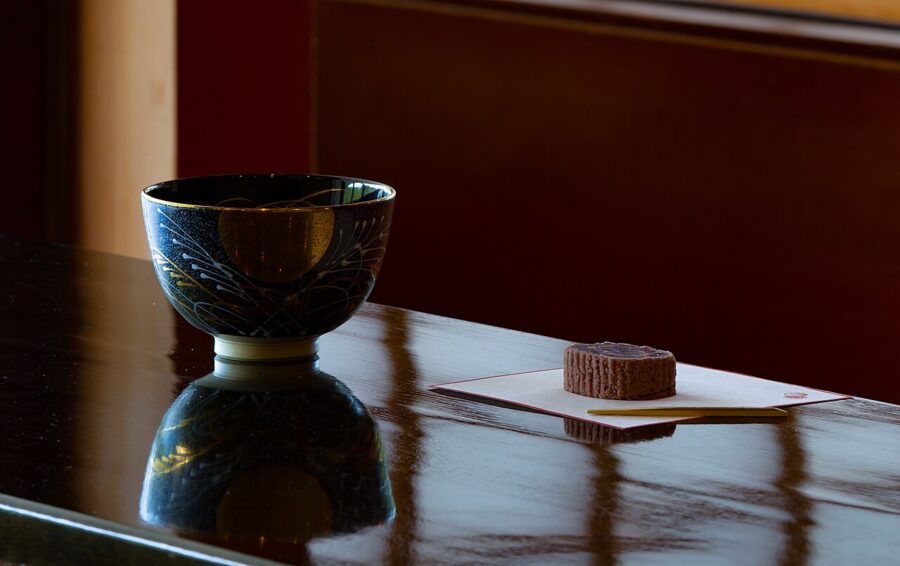
Jō-namagashi is where the craft lives. These are the small sculpted sweets made to be eaten with thick tea, given as gifts or set out for a ceremony, and they’re called omogashi, “main sweets”, in the tea room. Higashi are the opposite: dry, sugary, long-keeping, and served with thin tea or kept in a pocket for later.
Anko: tsubu or koshi
Nearly everything in this guide comes back to anko, sweet bean paste. Azuki beans are simmered, sweetened and either left mostly whole, which gives tsubu-an, or pushed through a sieve to remove the skins, which gives smooth koshi-an. Japanese people argue about which is better with the seriousness other countries save for football.
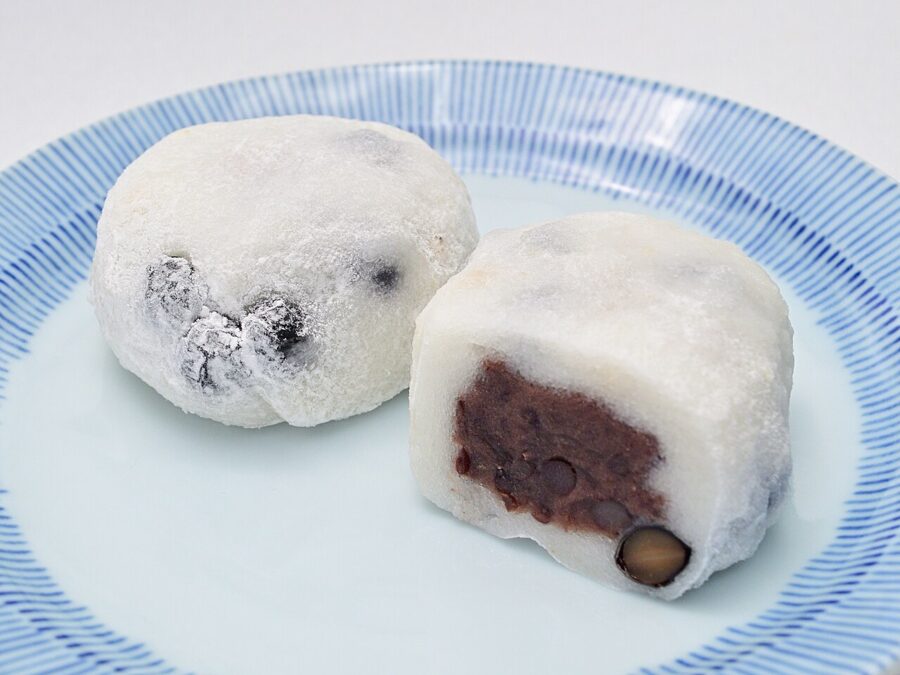
A third paste, shiro-an, is made from white kidney beans such as tebo, and it’s the base of almost every sculpted tea sweet because it takes colour well.
When there’s a choice, ask. Most shops will tell you which paste is inside, and some sell the same sweet both ways. After a year of Cantonese lotus-paste mooncakes in Shenzhen, Japanese anko struck me as less sweet than I expected. My own rule: koshi-an for anything delicate and pale, tsubu-an for anything hot off an iron.
Sugar, starch and the dry sweets
Sugar came late. By one account the monk Ganjin brought it to Nara in 754, and for centuries it was a medicine, not an ingredient. Only in the Edo period, when imports rose and domestic sugar grew, did sweetened bean paste become something ordinary people could buy, and most of the sweets in this guide date from then. I’ve told the longer story in my history of Japanese food.
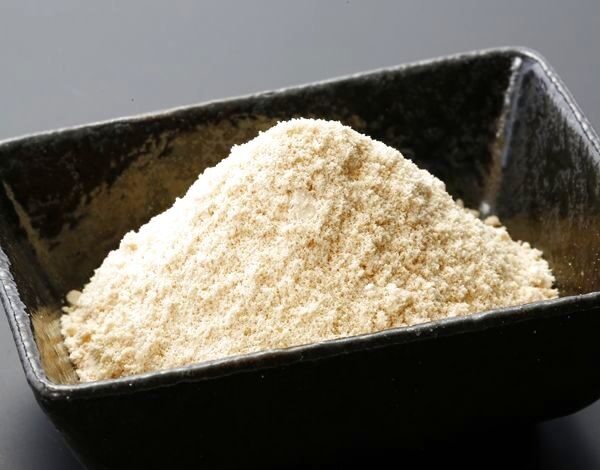
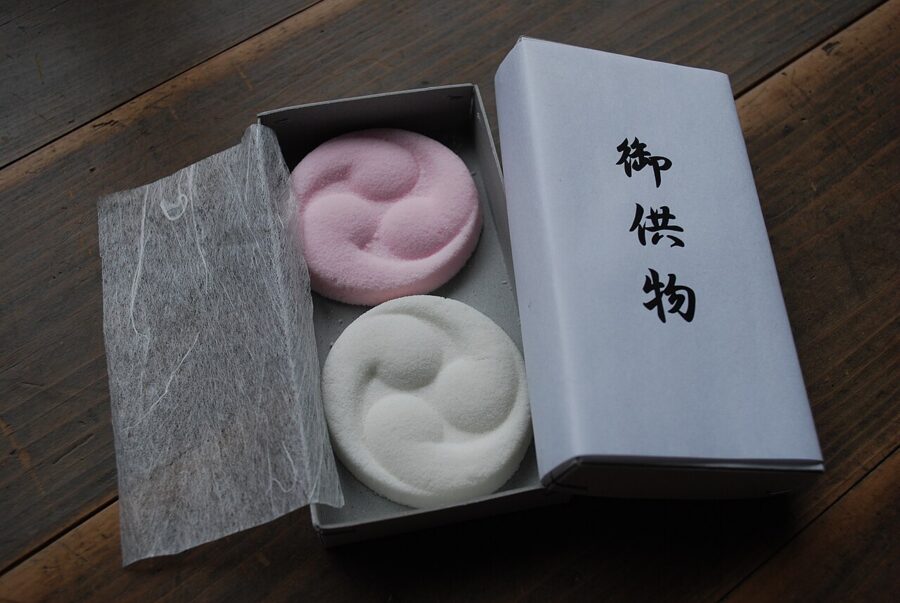
The prized sugar for dry sweets is wasanbon, a pale, almost powdery sugar from Shikoku. Pressed into carved wooden moulds and dried, it becomes an uchi-mono, a pressed sweet that melts on the tongue in a few seconds. The same technique with rice flour and sugar gives rakugan, which you’ll see stacked in boxes as Buddhist offerings at Obon and at memorials.
Konpeito, the knobbly sugar stars, came with Portuguese ships in the sixteenth century, along with castella. Both now count as wagashi.
Mochi, in all its forms
Mochi is glutinous rice, steamed and pounded until the grains vanish into a smooth, stretchy dough. In sweets it’s the most common base of all, in more forms than the word on a Western menu suggests.
Daifuku
The story most often told is that a woman called Otama, in Koishikawa in Edo, started selling a filled rice cake called harabuto-mochi, “fat-belly mochi”, in 1772. The early versions were salted, not sweet. Once sugared bean paste caught on, the name was swapped for the luckier-sounding daifuku, “great fortune”.
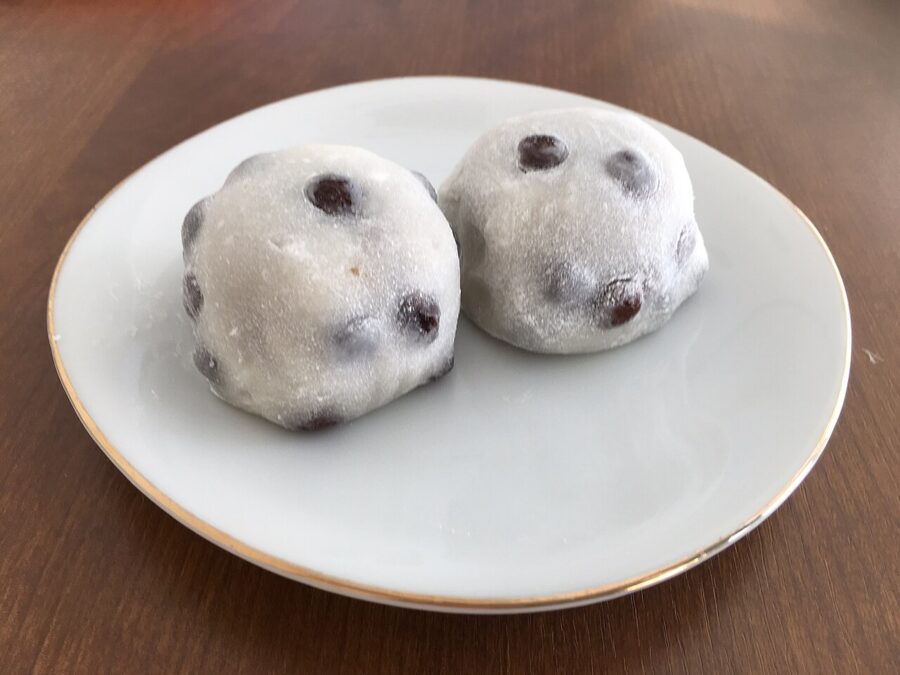
The version to look for is mame daifuku, with red peas or soybeans pounded into the mochi. In Kyoto, the one people queue for is the mame-mochi at Demachi Futaba, near Demachiyanagi Station, a shop that opened in 1899. The queue runs down the pavement even on weekdays.
Ichigo daifuku
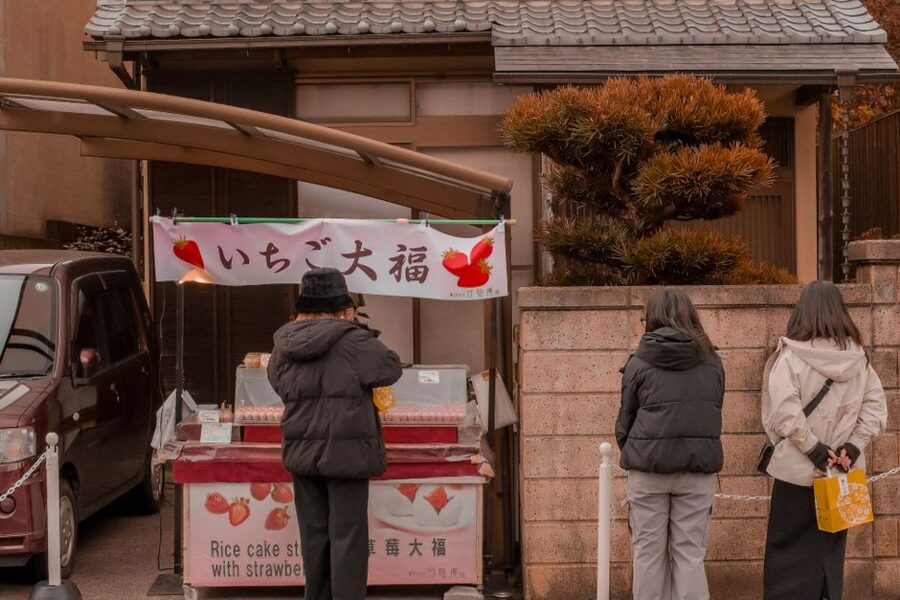
The strawberry daifuku feels ancient and isn’t. It appeared in the 1980s, and several shops in Tokyo and beyond still claim to have invented it. It was such a novelty that a host on TBS’s music show The Best Ten handed them out to the singers on air in January 1987.
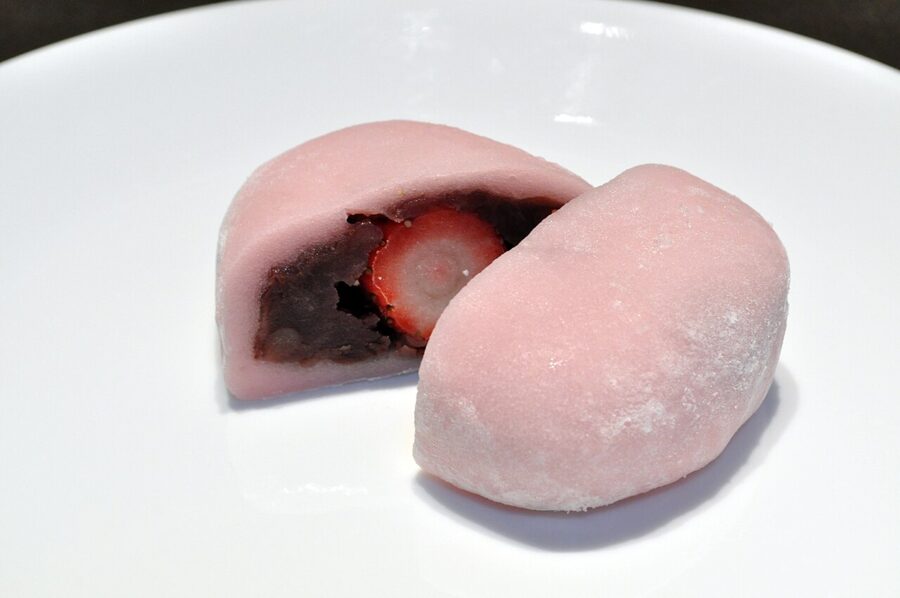
Eat it the day you buy it, ideally within a few hours. The strawberry slowly gives off carbon dioxide inside its sealed skin, and the longer it sits, the more it fizzes faintly on the tongue. Some people like that. Most shops would rather you didn’t find out.
Warabi-mochi
Warabi-mochi isn’t rice at all. It’s made from the starch of bracken root, cooked with water and sugar until it turns into a wobbling, near-transparent jelly, then cut and dusted with kinako (roasted soybean flour) and finished with kuromitsu, black sugar syrup. Real bracken starch is expensive, so most supermarket warabi-mochi is sweet-potato starch with a little bracken or none.
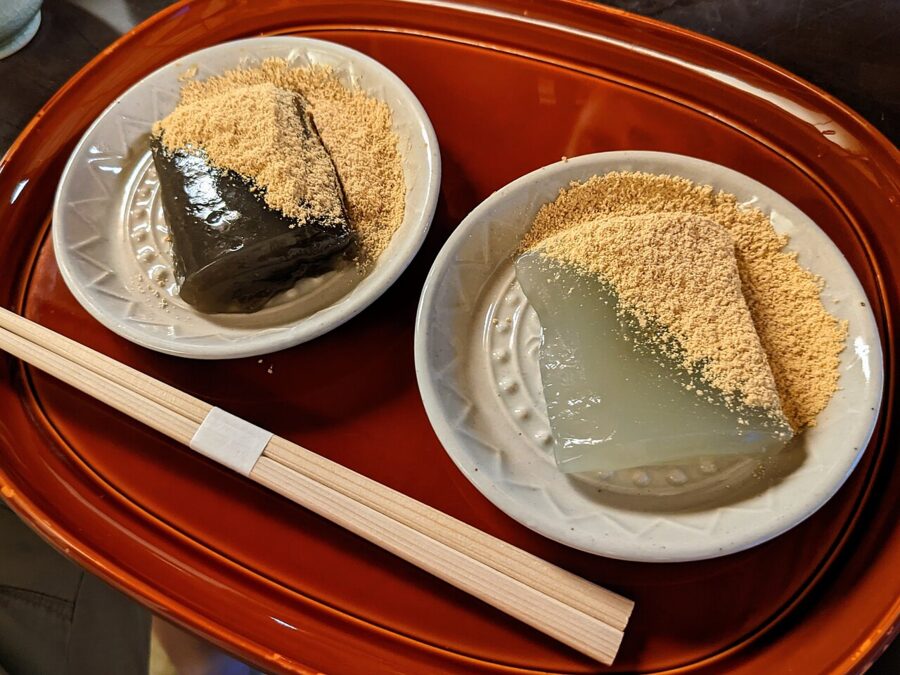
The real thing is darker, softer and almost melts. Look for hon-warabi (本わらび) on the label or menu. In Kyoto, Saryo Housen in Shimogamo makes its warabi-mochi fresh, so expect to wait, and it’s the best way I know to understand what the fuss is about.
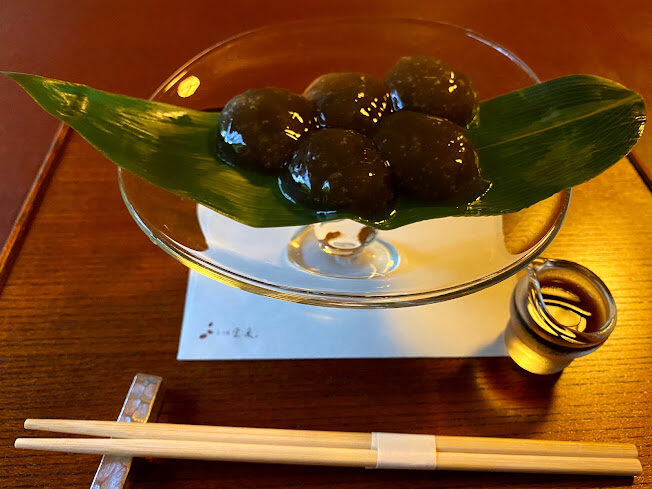
Kuzu-mochi, east and west
Here the two halves of Japan mean different things by the same word. In Kansai, kuzu-mochi is made from kudzu-root starch: clear, cool, wobbly, a summer sweet. In Tokyo, kuzu-mochi (often written 久寿餅) is made from wheat starch fermented with lactic acid bacteria, steamed into opaque, slightly sour triangles, and eaten with kinako and black syrup.
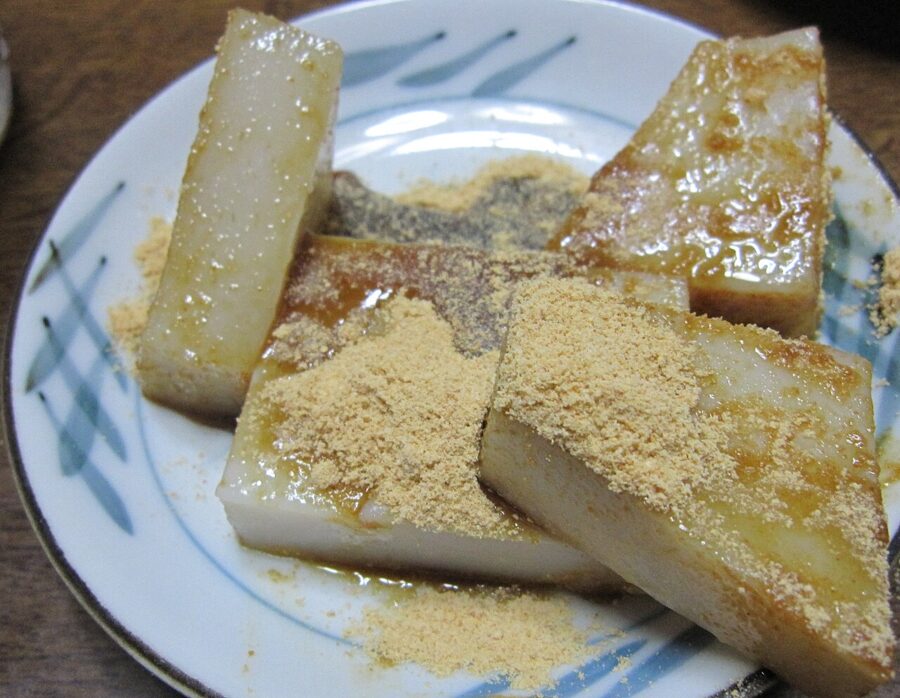
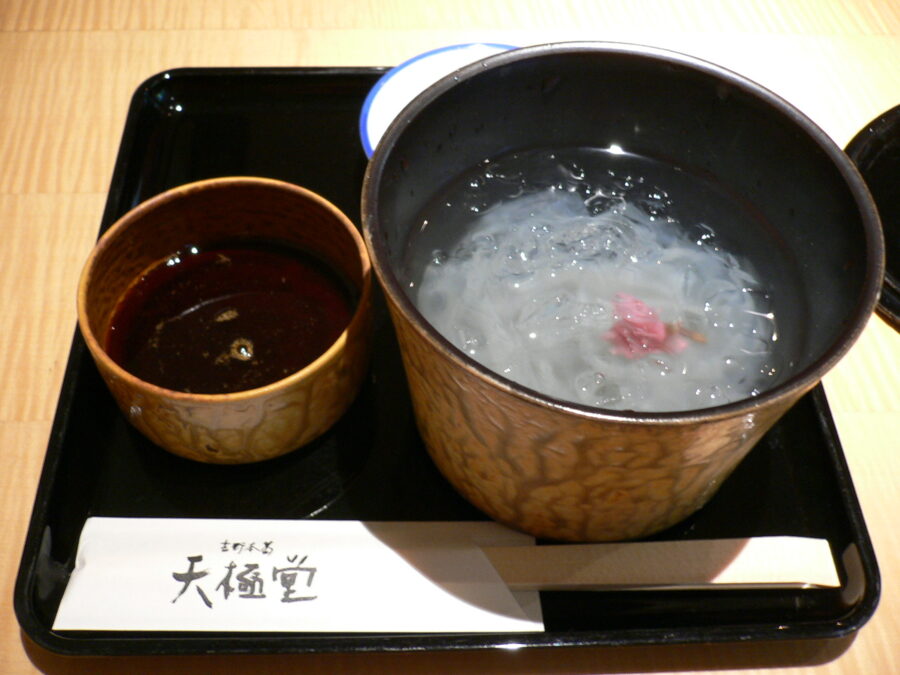
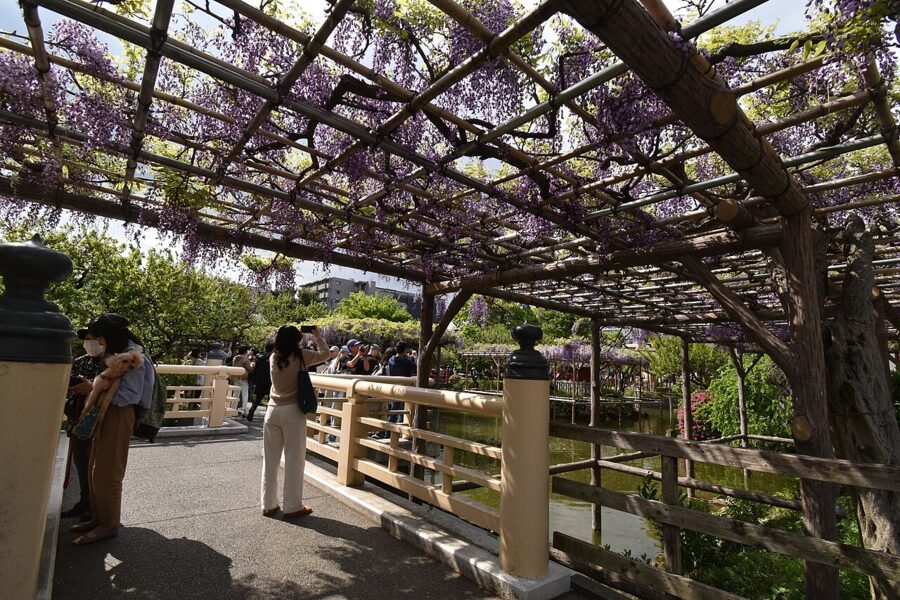
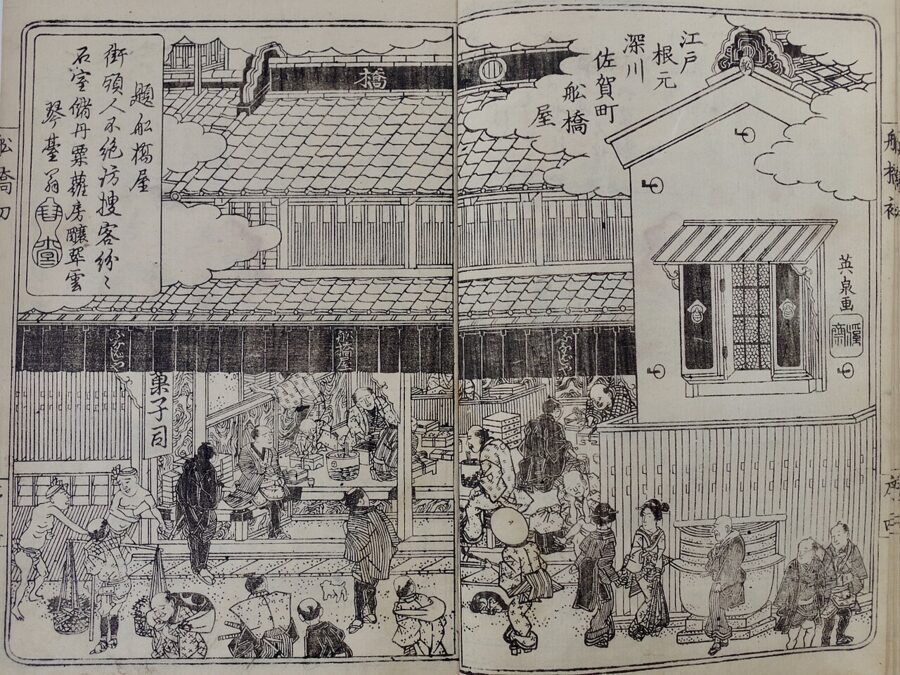
The Tokyo version belongs to the shrine approaches of the east side, and the oldest maker is Funabashiya, founded in 1805 on the approach to Kameido Tenjin. The main shop sells from 9:00 to 18:00, and when the shrine’s wisteria is out in spring the walk is a reason to go in itself.
Sakura-mochi, Kanto or Kansai
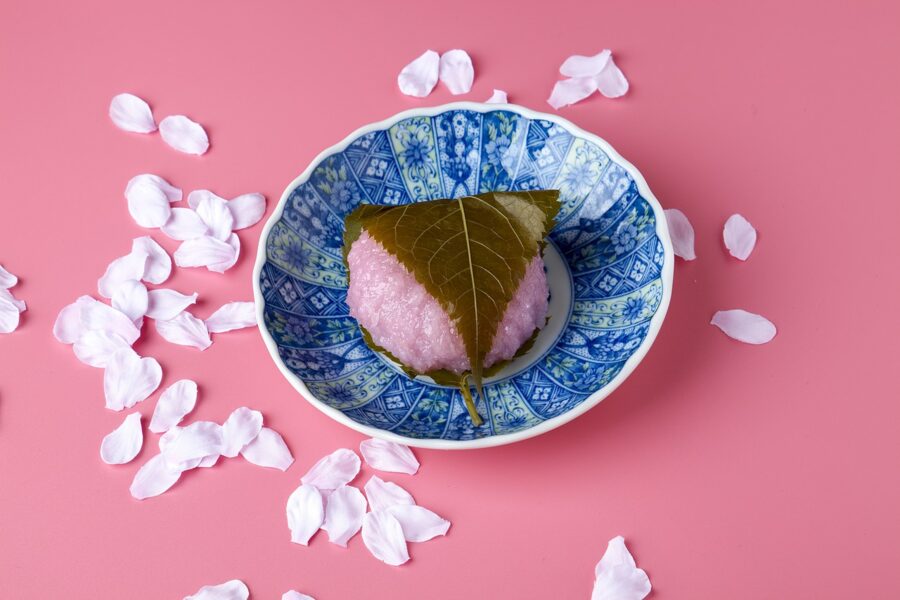
Ask for sakura-mochi in Tokyo and in Osaka and you’ll get two different sweets. Both are wrapped in a salted cherry leaf and both hold bean paste. The Tokyo one is a thin pink-or-white crepe of wheat-flour batter folded around koshi-an; the Osaka one is a ball of coarse, steamed dōmyōji rice.
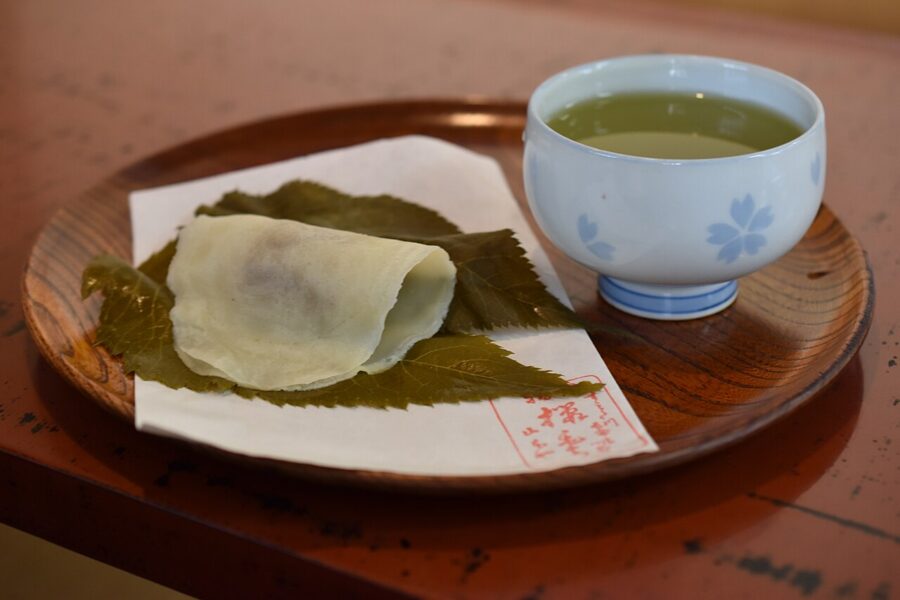
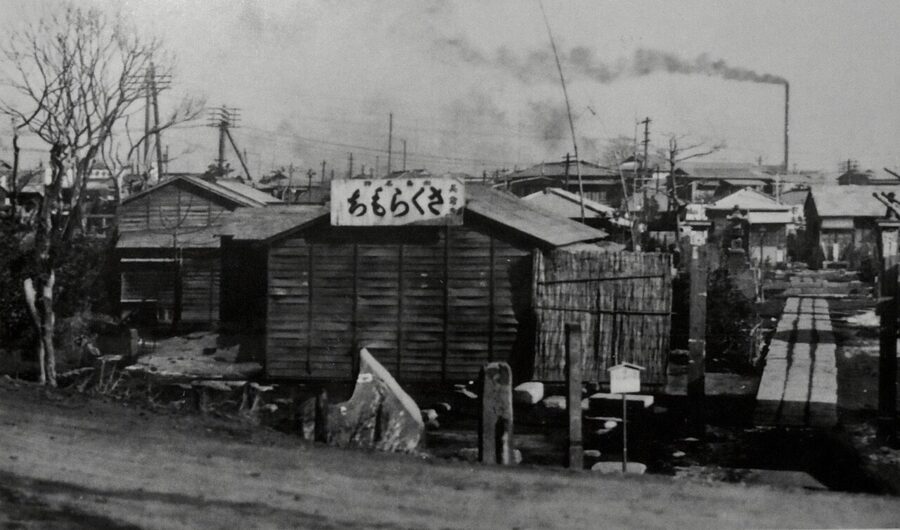
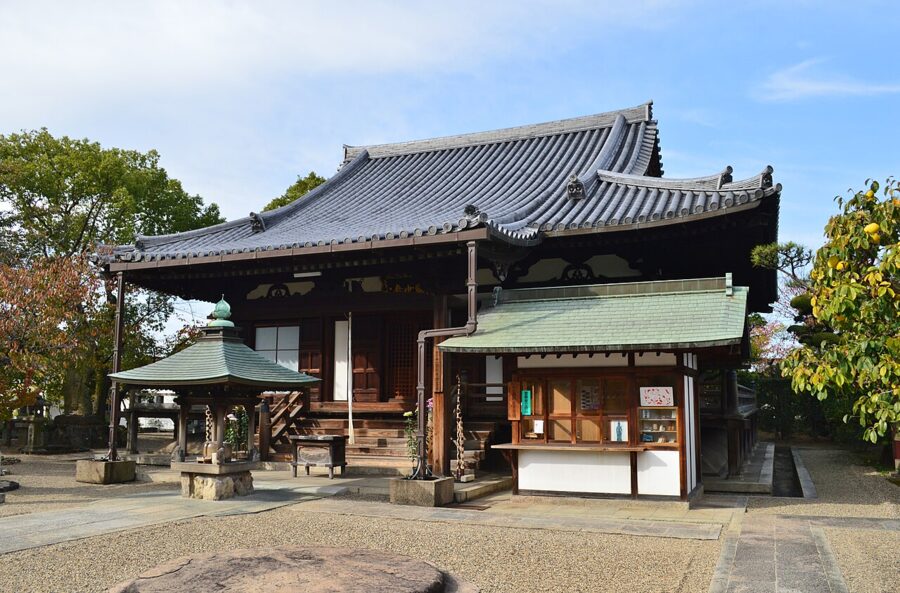
The Kanto style started beside Chomeiji temple on the bank of the Sumida River, where a gatekeeper called Yamamoto Shinroku began selling it in 1717. His shop, Chomeiji Sakuramochi Yamamoto-ya, is still there at Mukojima 5-1-14, open 8:30–18:00 and closed Mondays and Tuesdays. One costs ¥300 to take away, or ¥500 at a table with sencha. They make nothing else, and they suggest you peel the leaves off before eating, though they’re polite about people who don’t.
The Kansai style is named after Dōmyōji, the temple in Fujiidera, Osaka, where the coarse dried rice called dōmyōji-ko comes from. It appeared in Osaka in the 1830s or early 1840s, following the Tokyo fashion. It has been winning ever since, and the Kanto style now holds out mainly in the Tokyo area and pockets of the north and Japan Sea coast, including, oddly, Matsue.
Kashiwa-mochi
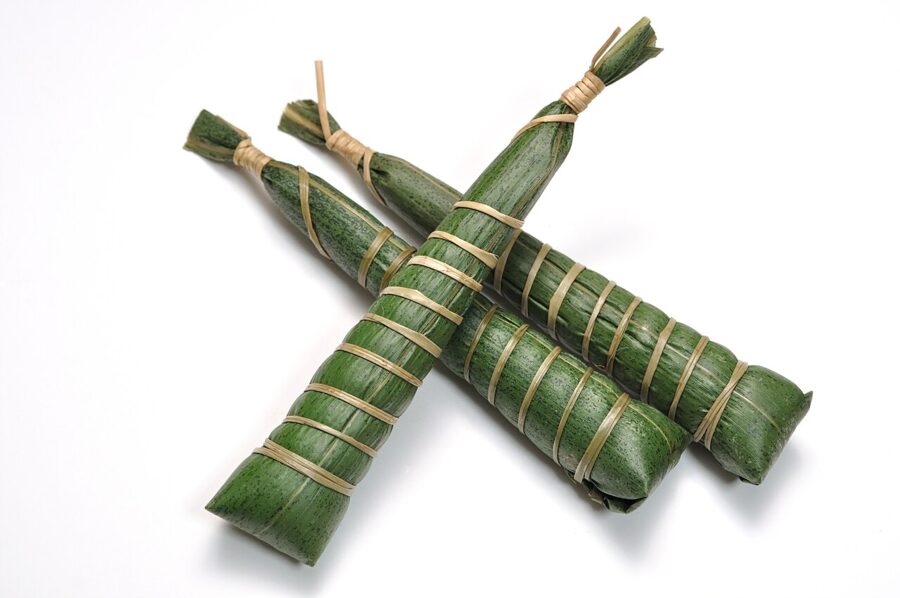
Kashiwa-mochi is for 5 May, Children’s Day: a flat round of rice-flour mochi folded over bean paste and wrapped in an oak leaf. Oak keeps its old leaves until the new buds open, which made it a symbol of a family line that never breaks. The leaf isn’t eaten.
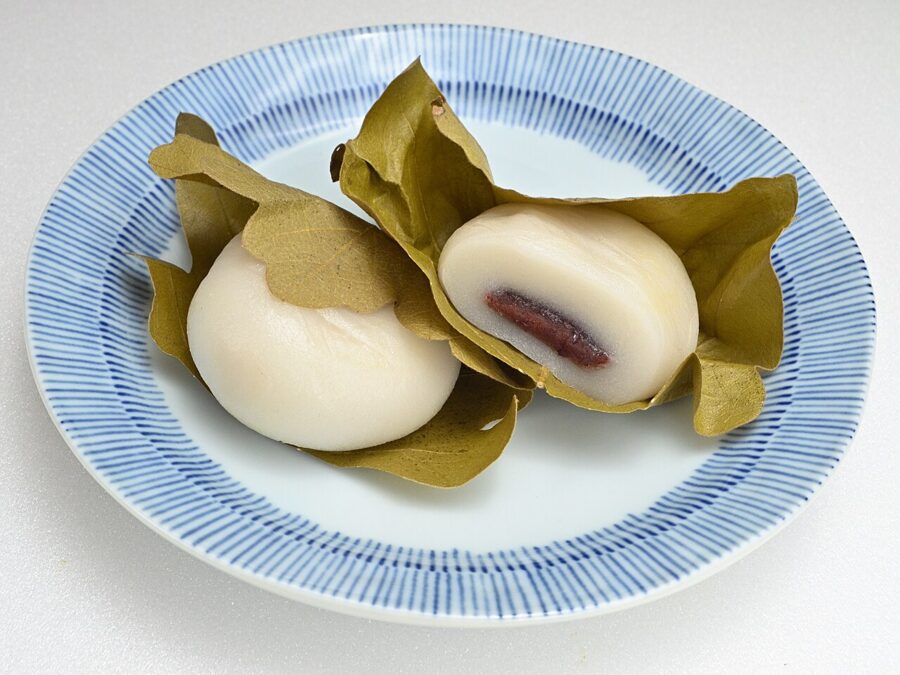
Until the 1930s, oak-leaf kashiwa-mochi was mainly an eastern thing, and western Japan wrapped its Children’s Day mochi in other leaves. Chimaki, rice dumplings wrapped in long leaves, are the other Children’s Day sweet, and you’ll see them more often in the west.
Akafuku, and the mochi that opens at five
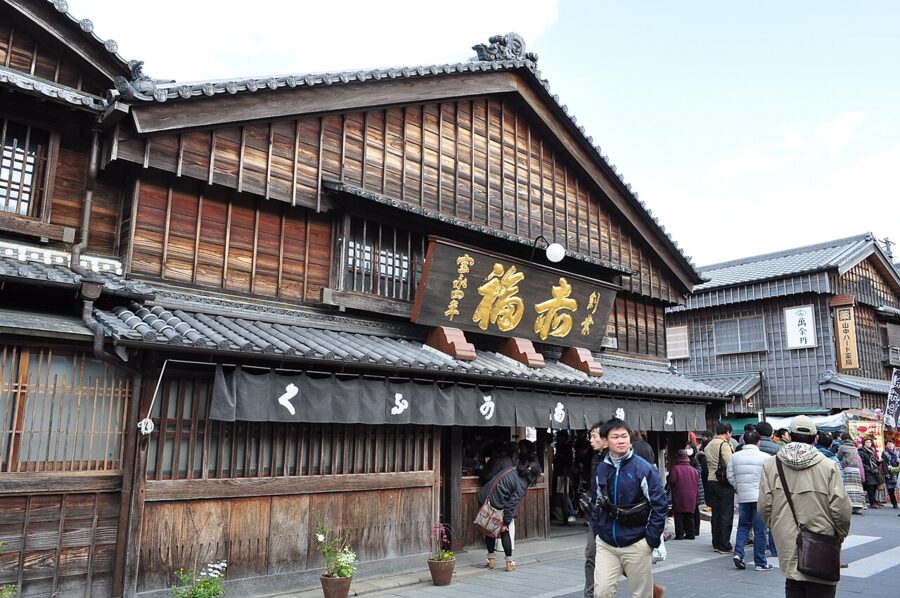
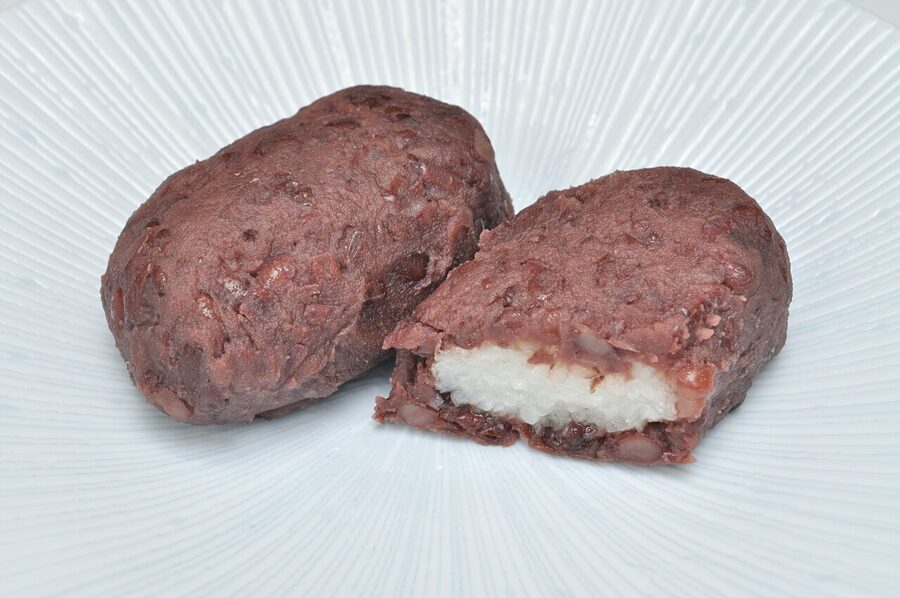
Ise’s sweet is Akafuku. It’s a small cake of mochi covered in koshi-an marked with three ridges, said to show the Isuzu River running over pebbles beside the Inner Shrine. The company dates itself to 1707.
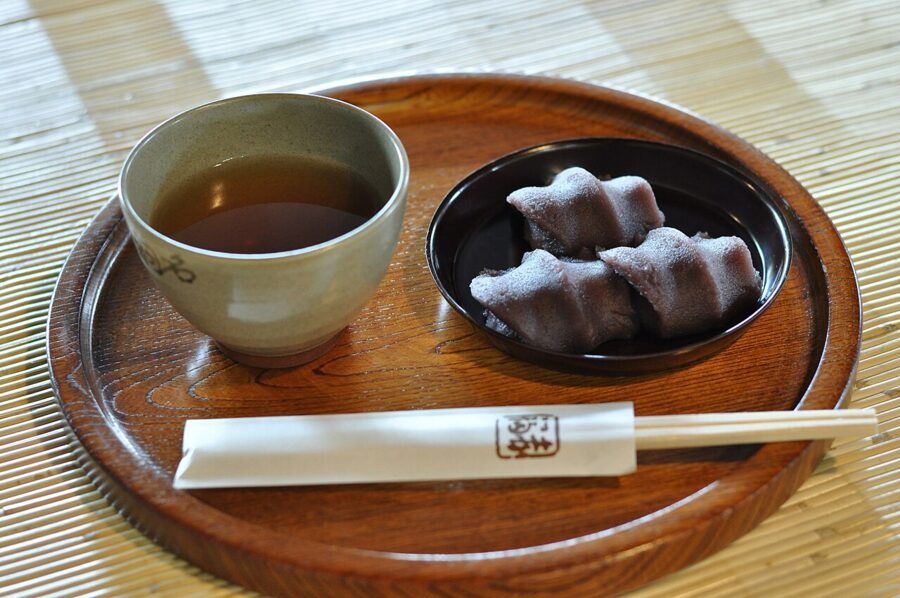
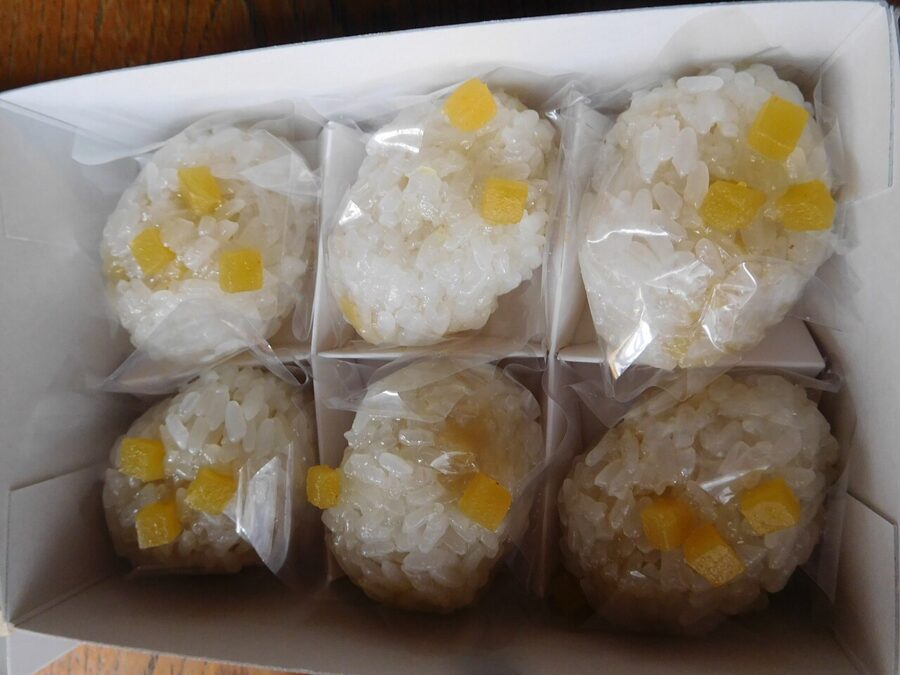
The main shop opens at 5:00 and closes at 17:00, every day of the year, and the only thing served inside is Akafuku. On the first of every month except January the shop also sells a one-day tsuitachi-mochi: oak-leaf mochi in May, millet mochi in August, chestnut mochi in October, a snow-white “yuki-mochi” in December.
Pounding it yourself
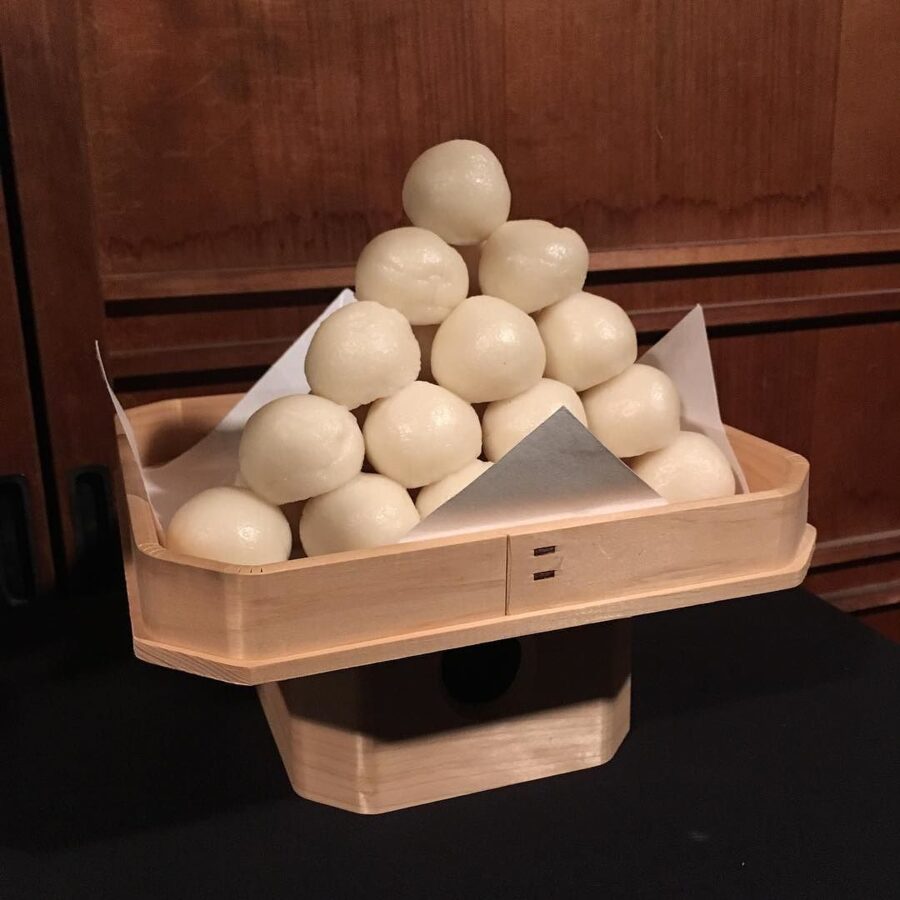
December is mochitsuki season. Steamed glutinous rice goes into a mortar, one person swings the mallet and the other turns the dough between blows, and it takes timing and trust. The results become the round kagami-mochi stacked on household altars at New Year and the cakes that go into the soup called zōni.
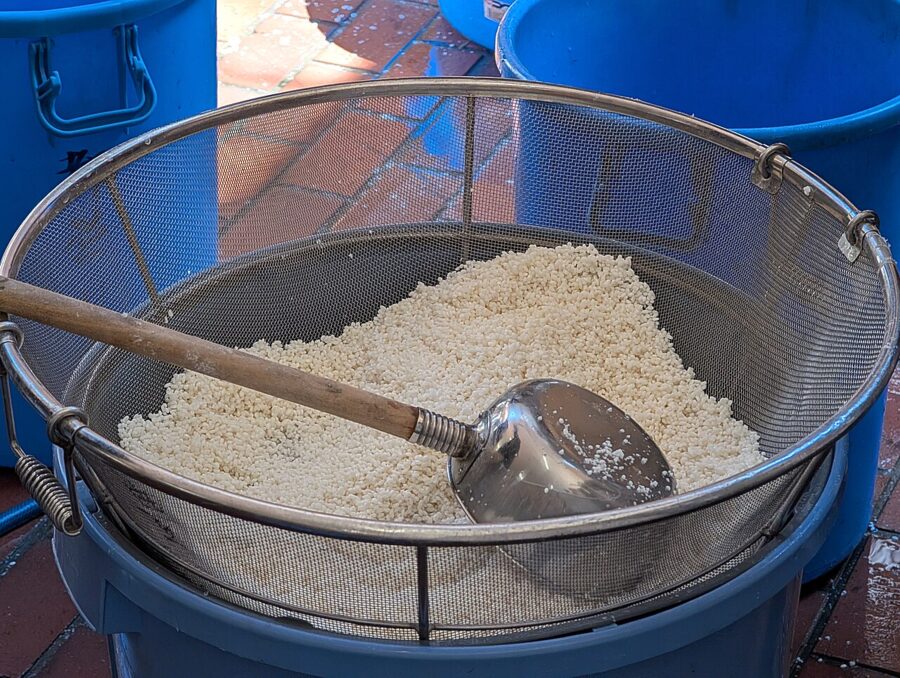
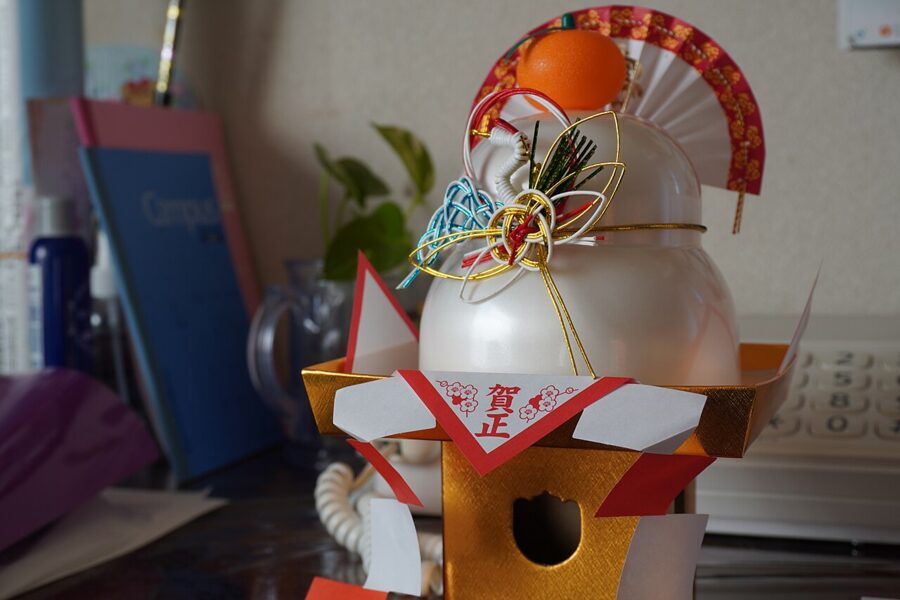
If you want to see it without joining in, go to Nakatanidou in Nara, at Hashimoto-cho 29, five minutes on foot from Kintetsu-Nara Station through the Higashimuki arcade. It opens 10:00–19:00 and closes early when the mochi runs out. A single yomogi mochi, filled with bean paste and rolled in kinako, is ¥180, and it’s meant to be eaten that day.
A plain warning about mochi
Mochi chokes people, every year, mostly the elderly and mostly at New Year. The Tokyo Fire Department reported that in the five years to 2017 it took around 100 people a year to hospital after mochi or dango stuck in their throats, and about nine in ten were 65 or older. On New Year’s Day 2026 alone, it took four people in their eighties and nineties to hospital, and one died.
The fire department’s advice is simple. Cut mochi into small pieces. Drink some tea or soup first so your throat isn’t dry, chew slowly, and don’t take the next bite until the last one is gone.
If you’re eating with older relatives or small children, watch them. It sounds fussy until you’ve seen how far cooked mochi stretches.
Dango and other things on sticks
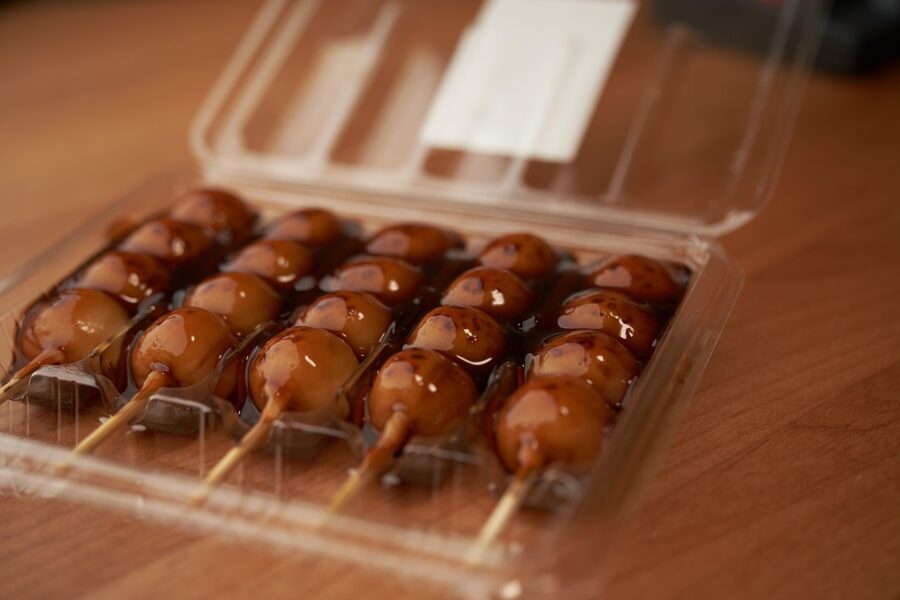
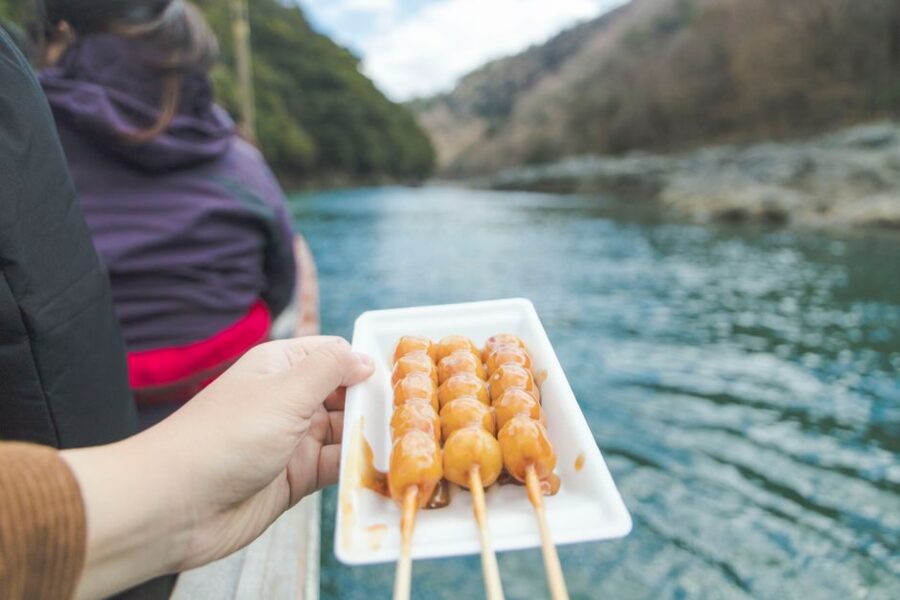
Dango are small balls of rice-flour dough, boiled or steamed and pushed onto a bamboo skewer. They’re plainer and firmer than mochi. The best known is mitarashi dango, glazed in a thick, glossy sauce of soy and sugar.
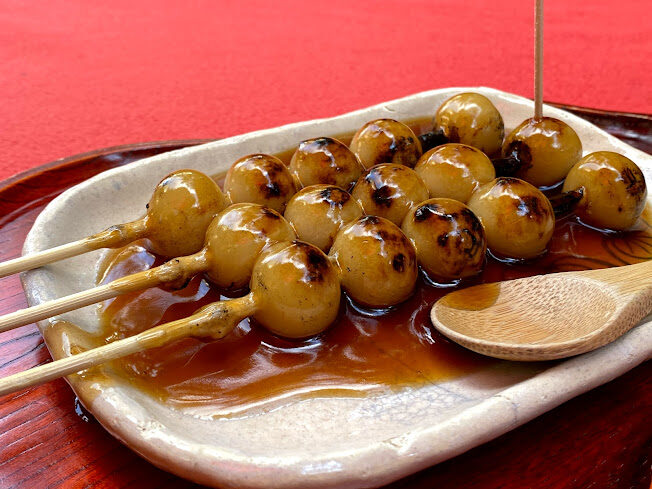
The name comes from Shimogamo Shrine in Kyoto and its Mitarashi Pond, where bubbles rise from the spring water. The original dango were offerings at the shrine’s festivals, threaded five to a skewer with a gap after the first ball, and the most common story says they copy those bubbles. The sweet soy and brown sugar sauce is a twentieth-century addition, credited either to a confectioner among the shrine’s parishioners or to the owner of Kamo Mitarashi Chaya. The tea house is closed on Wednesdays.
In Takayama, the local dango is grilled over charcoal and brushed with plain soy, savoury rather than sweet, and the locals call it mida-rashi. It’s a different snack for a different mood, and worth trying both in the same week.
Hanami dango
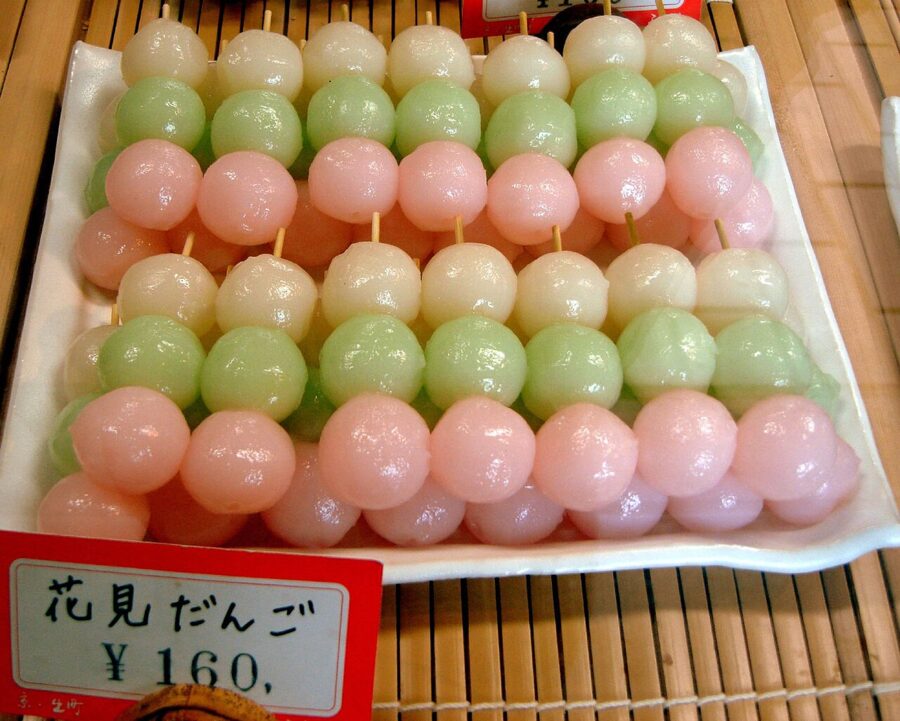
In April the skewers turn pink, white and green: hanami dango, for eating under the cherry trees. The usual reading is pink for the blossom, white for the last snow and green for the new grass coming through. They’re lightly sweet and unglazed, a pastel snack more than a dessert.
Aburi-mochi at Imamiya Shrine
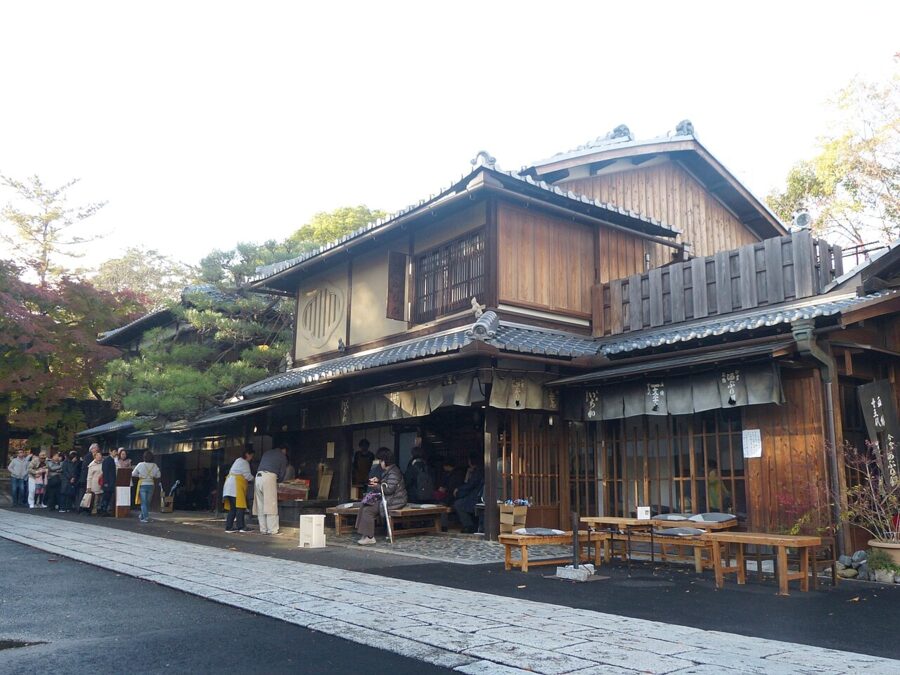
At the east gate of Imamiya Shrine in north Kyoto, two tea houses face each other across the approach and sell the same thing. Aburi-mochi are thumb-sized pieces of mochi on split bamboo skewers, dusted with kinako, toasted over charcoal and dipped in a sweet white-miso sauce. They’re tied to the shrine’s old role in warding off epidemics, and eating them is meant to keep illness away.
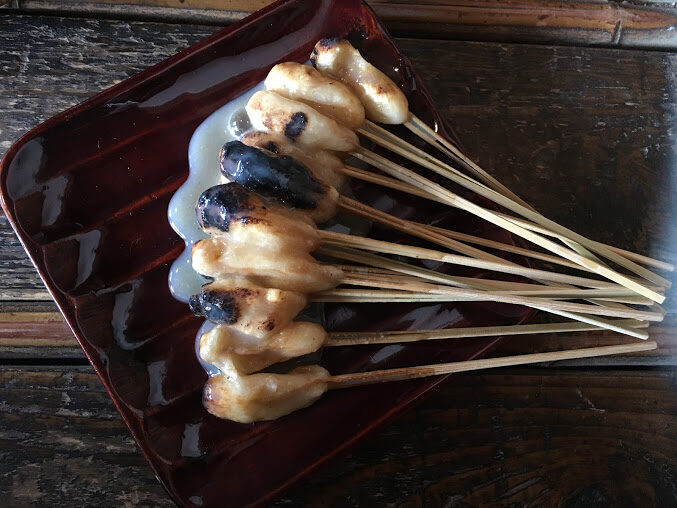
The north side is Ichimonjiya Wasuke, usually shortened to Ichiwa, which says it opened in the year 1000. That makes it, by its own count, the oldest sweet shop still trading in Japan. The shop’s own family will tell you that the oldest surviving document showing it is an illustrated Kyoto guidebook of 1780, which already pictures two tea houses facing each other where they stand now.
Hot off the iron
The cheapest, warmest wagashi are batter and bean paste cooked in cast-iron moulds, the sweets of shopping streets and shrine festivals.
Taiyaki
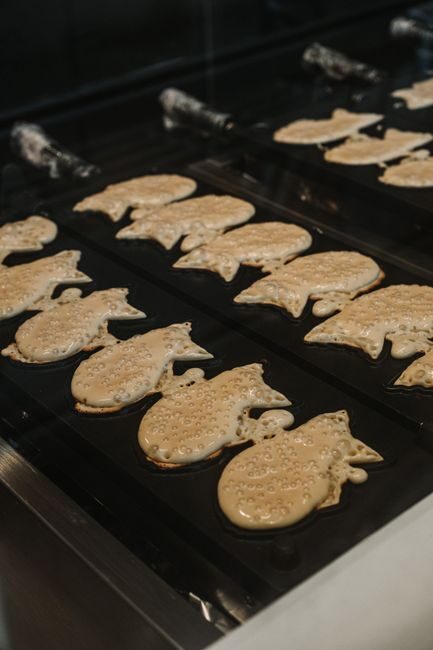
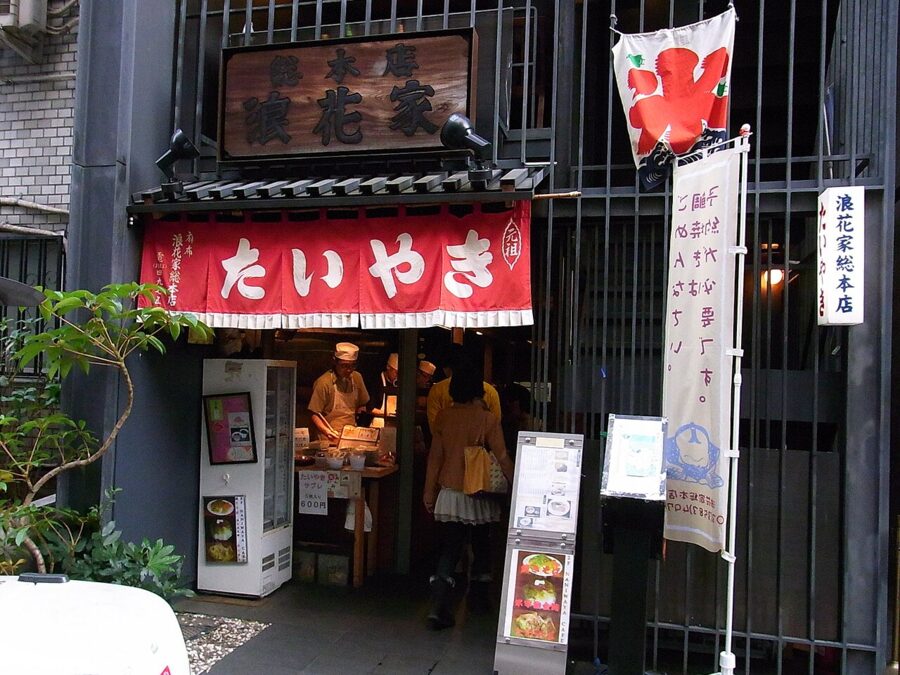
Taiyaki is batter baked around bean paste in a mould shaped like a sea bream, the fish of celebrations. Naniwaya Sohonten, founded in 1909, says it started the shape: its first owner sold round imagawayaki without much luck, tried a turtle shape, and settled on the bream because tai echoes medetai, “auspicious”. The shop began in Kudan and moved to Azabu-Juban after the war, two minutes from Azabu-juban Station.
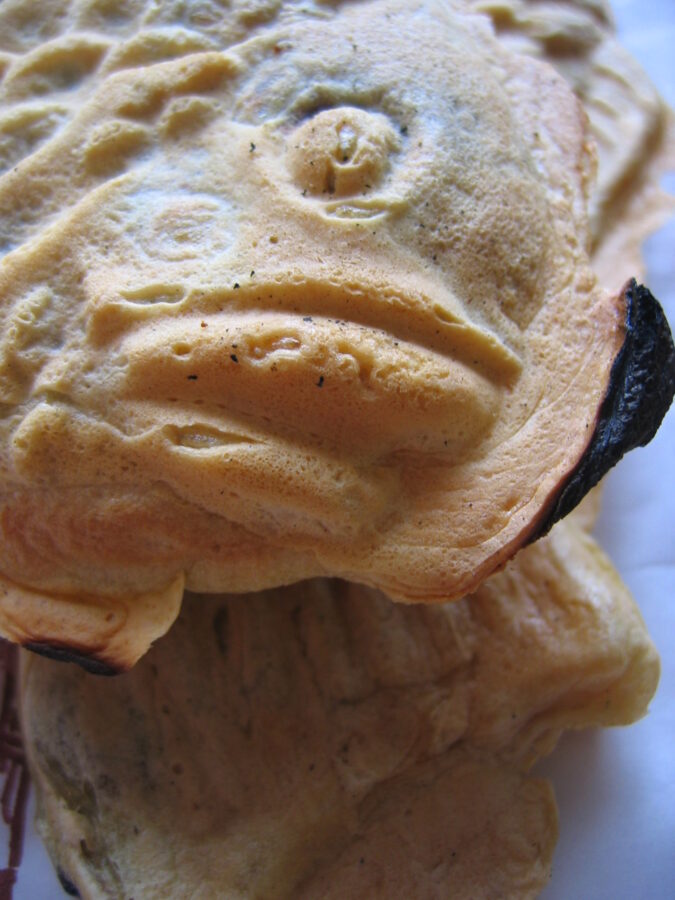
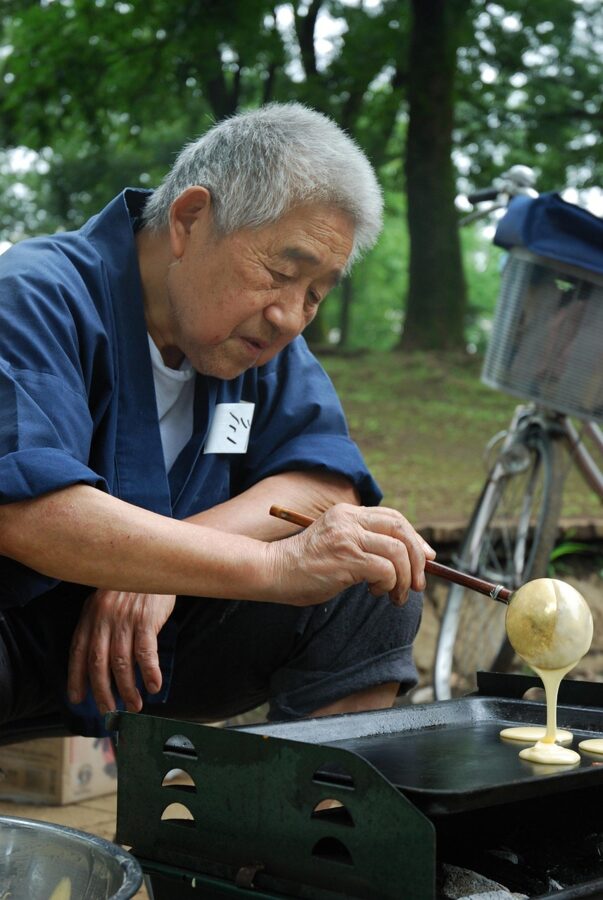
Taiyaki fans split them into tennen, “wild-caught”, baked one at a time in a single heavy iron turned by hand, and yōshoku, “farmed”, baked many at a time on one plate. Each single iron weighs over two kilograms and the work is hard, so fewer shops do it. The wild ones have a thinner, crisper skin.
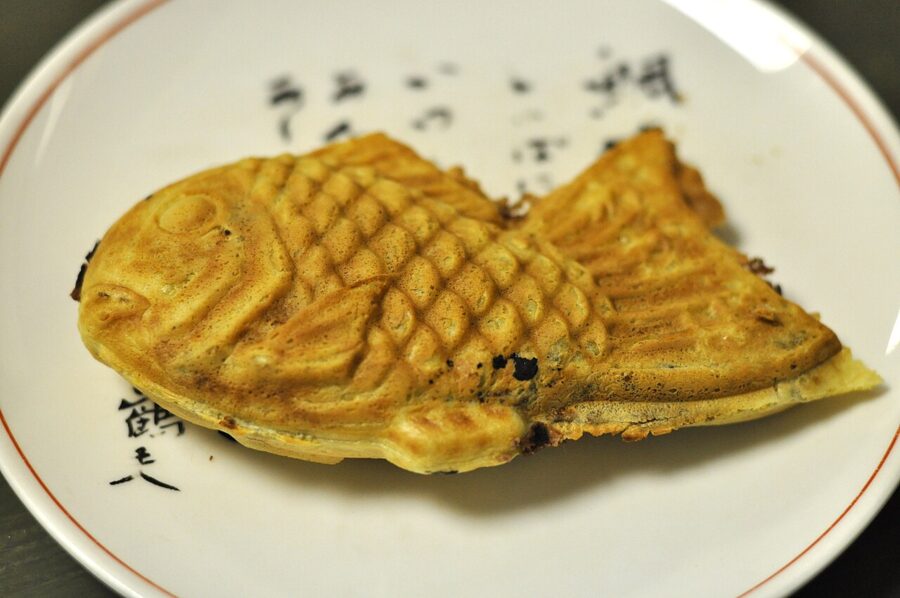
There was a public row in the newspapers, set off by the writer Ando Tsuruo in the Yomiuri, about whether the bean paste should reach the tail. One camp said the tail is a handle and should be empty; the other said an empty tail felt like being cheated. Wakaba is famous for filling the tail. In Osaka, you’ll find taiyaki stalls around Shinsekai, under Tsutenkaku tower.
Imagawayaki, by any of its hundred names
The round, thick cake of batter and bean paste is the older sweet, and the first record is from 1777, a guide to Edo’s famous sweets that lists “imagawa-yaki” from a shop in Honjō. The usual explanation is that it was first sold near Imagawa Bridge in Kanda. After that the name splinters.
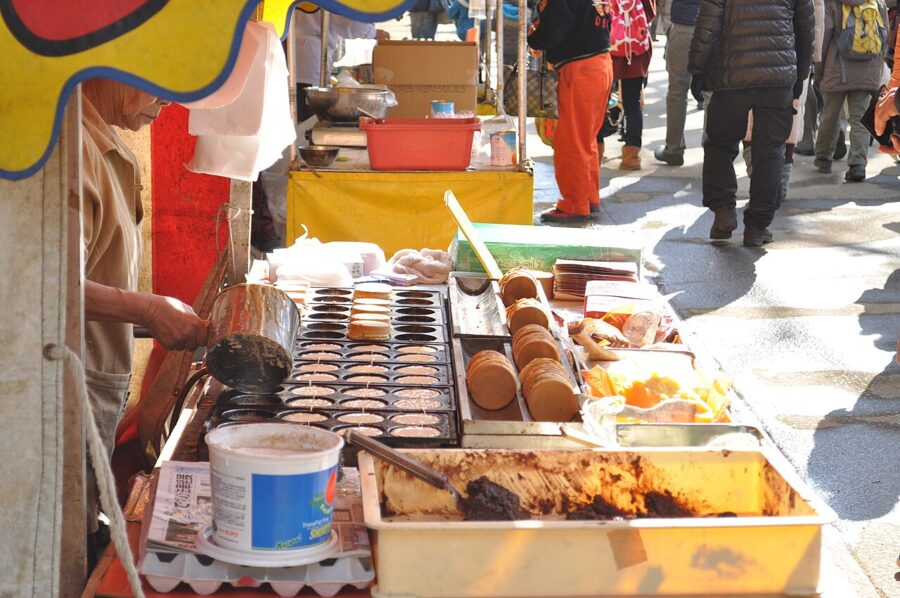
A Japanese linguist counted more than a hundred regional names for it. Obanyaki, the most common nationally, comes from a 1950s machine sold by a Matsuyama company and named after a hit novel. Kaiten-yaki is the third of the big three. In Hyōgo people say Gozasoro, the name of the Himeji chain that has sold them since 1950.
Dorayaki
Dorayaki are two soft, honey-sweet pancakes pressed round a layer of bean paste. The name is usually taken to mean “gong cake”, from the round shape of a temple gong. In Kansai and Nara, the same thing is often called mikasa, after Mount Mikasa, the smooth round hill above Nara Park.
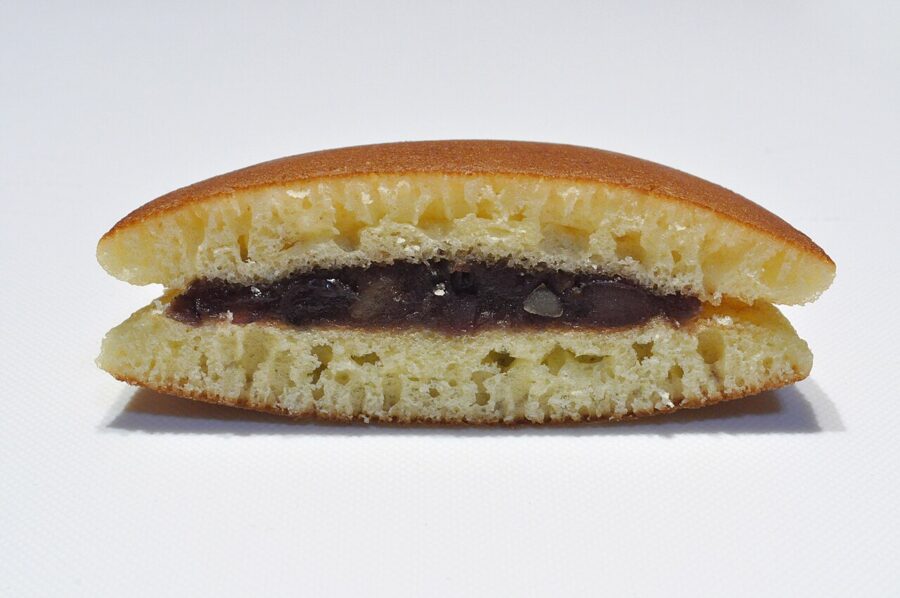
In Tokyo, the shop people queue for is Usagiya in Ueno, founded in 1913 and named for its founder’s birth year of the rabbit. It sits diagonally across from the Matsuzakaya department store in Ueno-hirokoji. Like every good dorayaki, they’re best eaten the day you buy them.
Monaka
A monaka is bean paste between two thin wafers of baked mochi. The name comes from a tenth-century poem in which the full moon reflected in a pond marks the very middle, monaka, of autumn, and courtiers applied the line to a white round rice sweet at a moon-viewing party. The wafers are usually made by specialist suppliers, and the paste is drier and sweeter than usual so it won’t soften them.
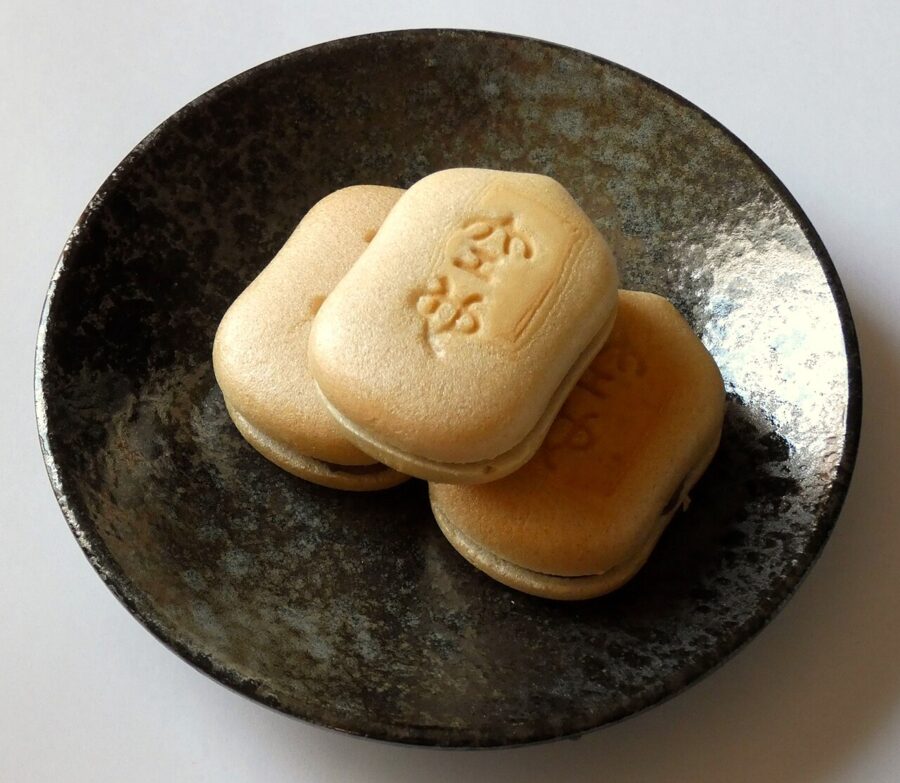
Kuya is the monaka to know about in Tokyo. It asks you to reserve by phone and doesn’t deliver, so ordering ahead is not a formality.
Momiji manju
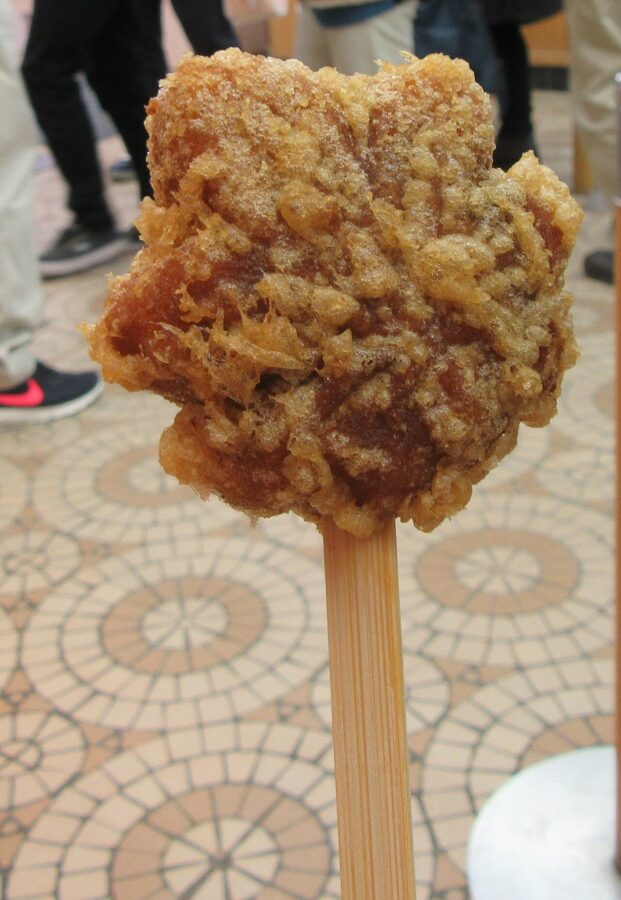
Momiji manju is a small sponge cake baked in the shape of a maple leaf and filled with bean paste, and it’s the souvenir of Miyajima and Hiroshima. I’ve covered it properly in my Hiroshima food guide. On the island, buy it hot or try age-momiji, the same cake deep-fried in batter on a stick.
Kakigori: court ice to specialist queue
Japan’s shaved ice is older than most of its sweets. Sei Shōnagon, writing at the Heian court around the year 1000, listed among “elegant things” shaved ice with a sweet vine syrup in a new metal bowl. Ice then came from himuro, ice houses where winter ice was kept until summer, and only the court could eat it.
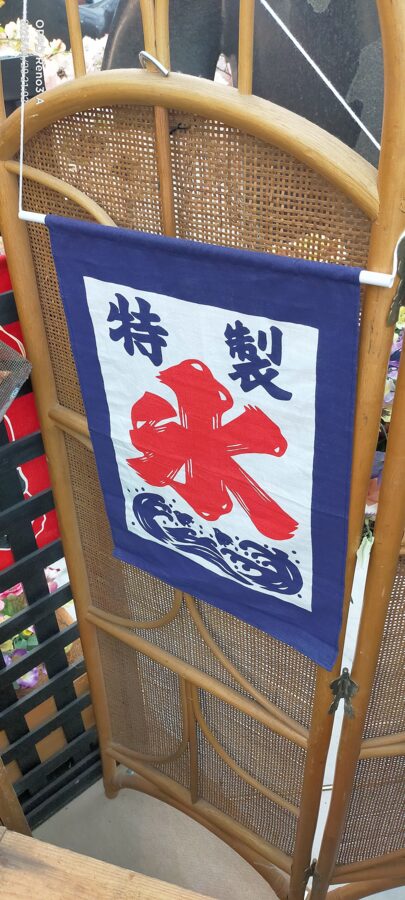
Commercial ice water arrived in 1869, when Machida Fusazo opened a shop on Bashamichi in Yokohama. Ice-shaving machines were patented in 1887 but only became common in the twentieth century. Before the war the menu was short: yuki, ice with sugar; mizore, ice with syrup; and kintoki, ice with sweet azuki, still the best of the three.
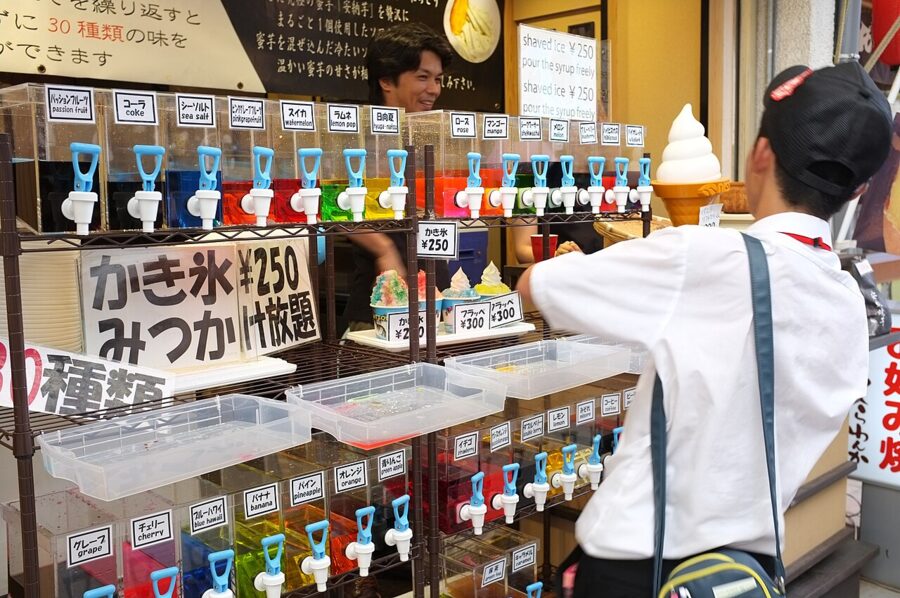
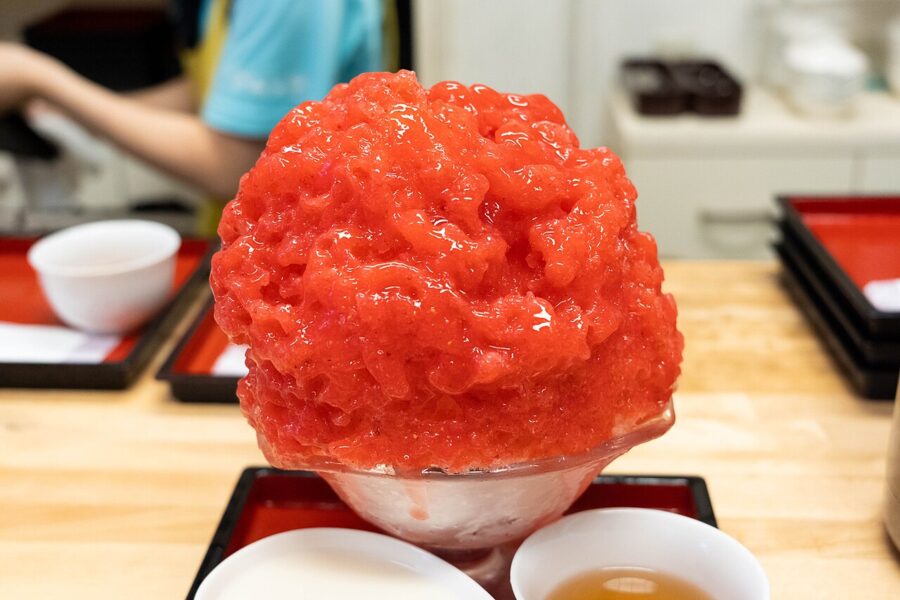
The modern kakigori shop is a different animal. Ice is shaved so fine it looks like fresh snow, piled high, and soaked with syrups made from real fruit, matcha or milk. In Tokyo the queue to beat is at Himitsudo in Yanaka, a short walk from Nippori Station, which uses natural ice cut in winter in Nikko and makes its syrups by hand.
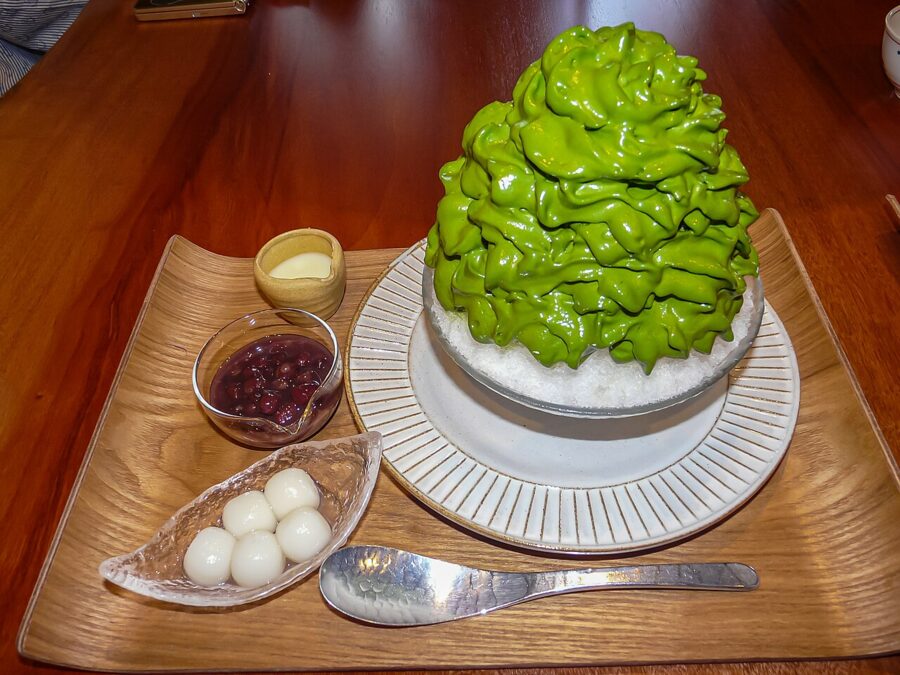
Kyoto’s answer is matcha, inevitably. Shops around Higashiyama and Uji top their ice with matcha syrup or foam and add sweet azuki, the combination called uji kintoki. In Okinawa, by contrast, the word zenzai means shaved ice over sweet kidney beans.
The savoury cousins
Not every Japanese sweet is sweet. Rice crackers sit in the same shops and gift boxes as bean-paste sweets, and the difference between the main kinds is in the rice.
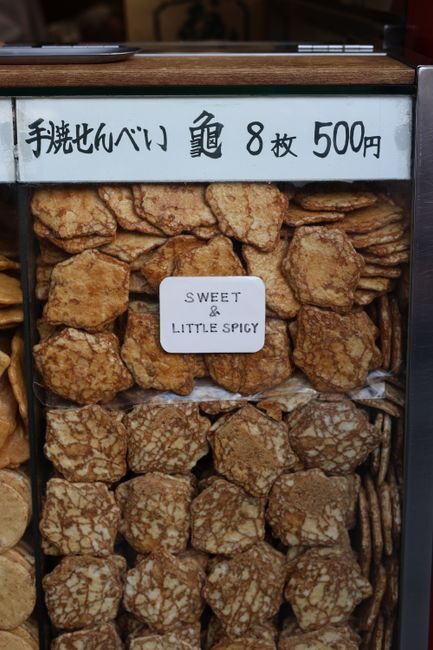
Senbei are made from ordinary non-glutinous rice, flattened and grilled, usually brushed with soy. Arare and okaki are made from glutinous mochi rice, cut into small pieces (arare) or larger chunks (okaki), and puffed in the heat. In Kansai there’s also kawara senbei, a sweet wheat-flour biscuit, which is a different thing entirely.
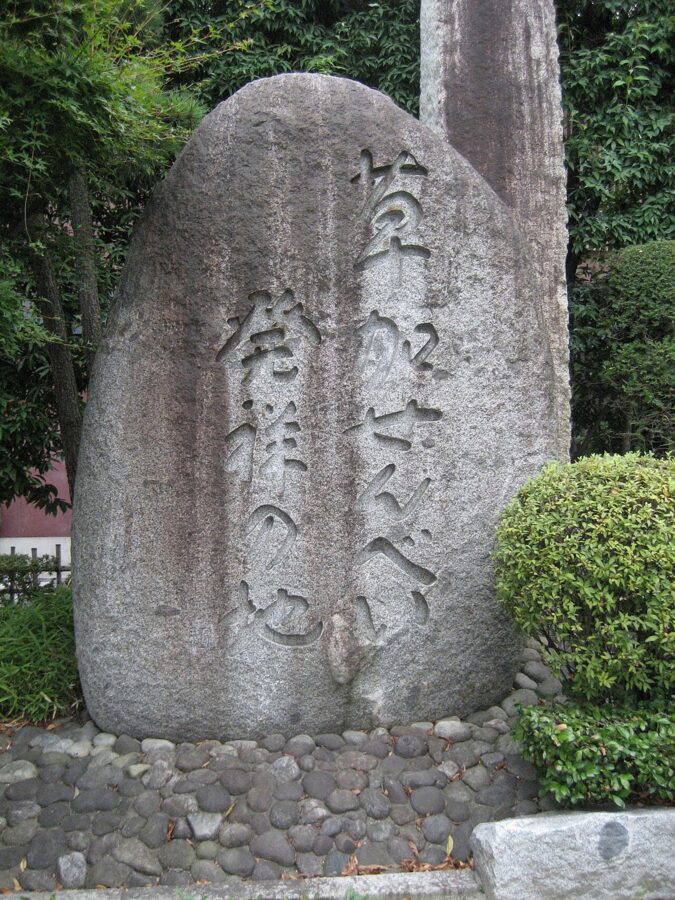
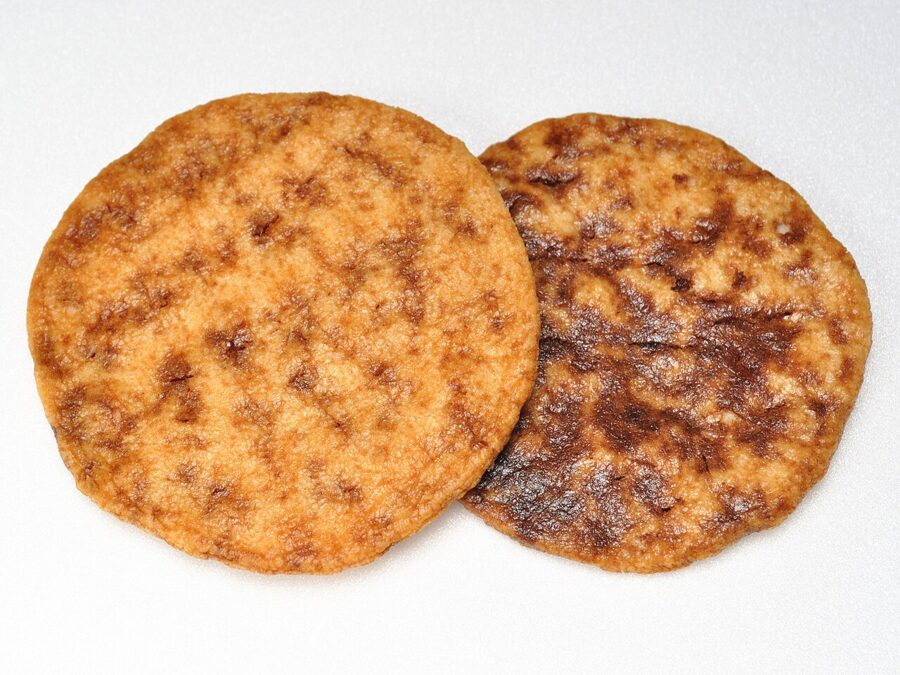
The classic Kanto senbei is the hard Soka style from Saitama, which the town’s story credits to an old woman called Osen who flattened her unsold dango and grilled them. Niigata makers turned out softer crackers from the 1960s that are easier to eat by the bag. On the Chiba coast, the little railway in Chōshi sells its own nure senbei, crackers soaked in soy so they’re soft.
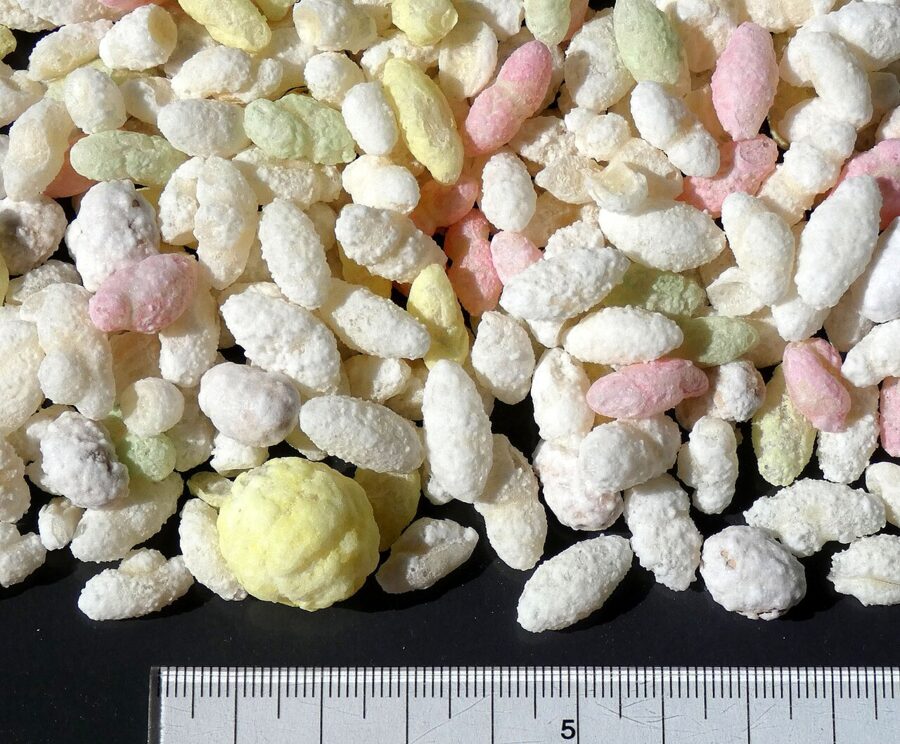
In March the same rice turns pastel: hina-arare for Girls’ Day on the 3rd. In Kanto they’re sweet puffed rice; in Kansai they’re small salty okaki, and each side thinks the other has it wrong.
The Asakusa souvenir is kaminari okoshi, “thunder okoshi”, puffed rice bound with syrup and named for the Kaminarimon gate. Kyoto’s is yatsuhashi, cinnamon-scented rice dough either baked hard into curved crackers or left raw and folded round bean paste as nama-yatsuhashi. If you want the konbini end of the scale, my guide to Japanese snacks covers that.
Namagashi and the tea room
The sculpted sweets in confectioners’ windows are jō-namagashi, and they exist because of tea. In a formal tea gathering a namagashi, the omogashi, comes before the thick tea, and dry higashi come before the thin tea. Each sweet has a poetic name, and each name points to a particular moment in the year.
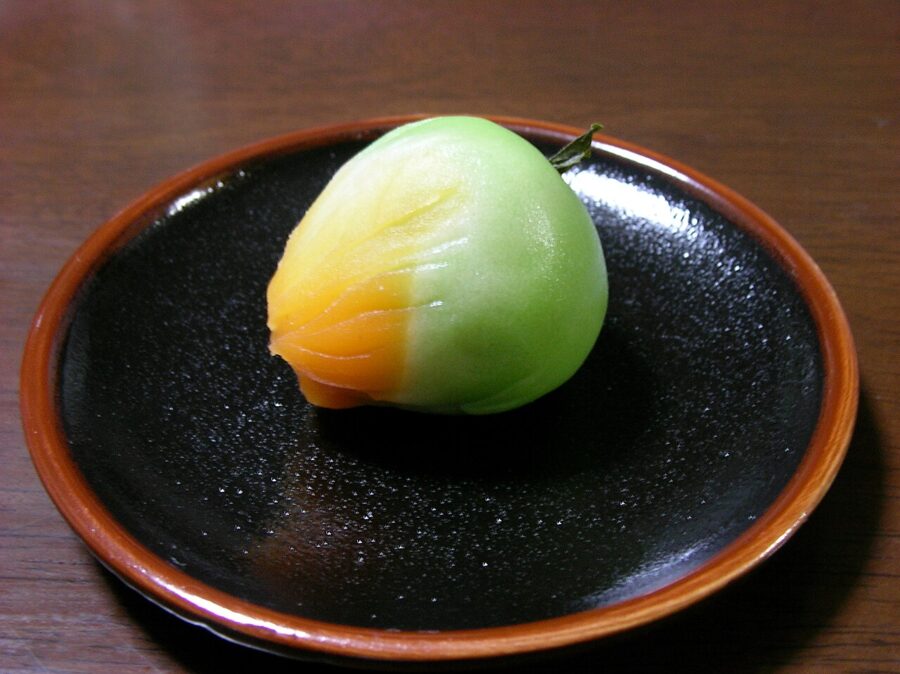
The techniques have names too. Nerikiri is white bean paste kneaded with gyūhi and is the usual medium in Tokyo; konashi, steamed with flour, is the Kyoto equivalent. Kinton is paste pushed through a sieve into fine threads and patted onto a ball of filling, which is how you get those mossy, fluffy chrysanthemums in autumn. Many makers change their jō-namagashi line-up more than once a month.
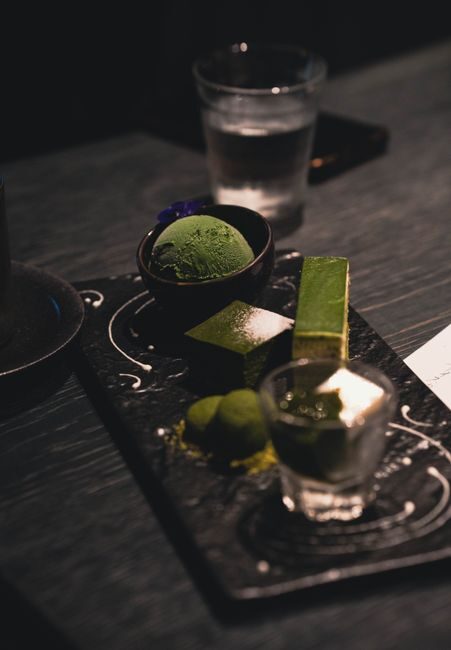
You don’t need a tea ceremony to eat one, or even to know your matcha from your sencha. Buy one or two at a good shop, ask for them boxed, and eat them that day with a cup of strong green tea, using the little wooden pick (kuromoji) to cut them into four or five pieces. The last course of a kaiseki meal works on the same principle, with a seasonal sweet and a bowl of matcha to close.
For a closer look at the craft, the main shop of Tsuruya Yoshinobu in Kyoto, on Imadegawa-dori just west of Horikawa, runs a counter called Kayu-chaya upstairs. A confectioner makes your namagashi in front of you, and you eat it there with matcha. You can reserve a seat online, and Wednesday is usually the day it’s shut.
A year in sweets
Every month has its sweets, and some days do too. 16 June is Wagashi Day, set in 1979 by Japan’s national confectioners’ association after an old custom that began, by tradition, in the year 848, when the emperor offered sixteen sweets and rice cakes to the gods against an epidemic. At Meiji Jingu in Tokyo, confectioners make nerikiri on the spot that weekend and give them away.
| When | Sweet | Why |
|---|---|---|
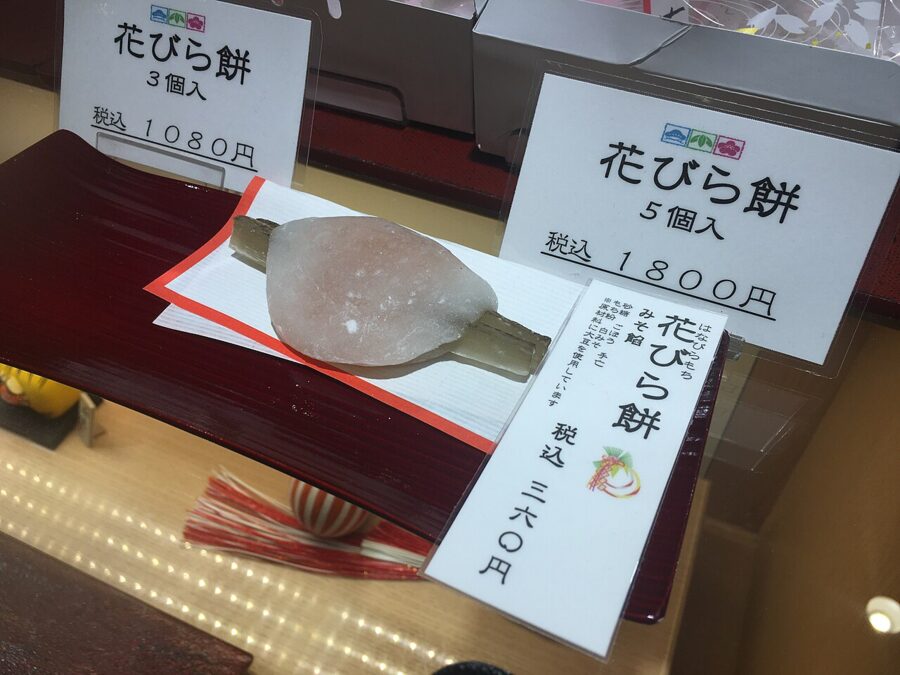
| January | Hanabira-mochi | New Year sweet of white mochi, pink diamond, miso paste and burdock, used at the first tea of the year |
| March | Sakura-mochi, hina-arare | Girls’ Day, 3 March; hina-arare are sweet in Kanto, salty in Kansai |
| April | Hanami dango | Cherry-blossom picnics |
| 5 May | Kashiwa-mochi, chimaki | Children’s Day |
| 16 June | Any wagashi | Wagashi Day |
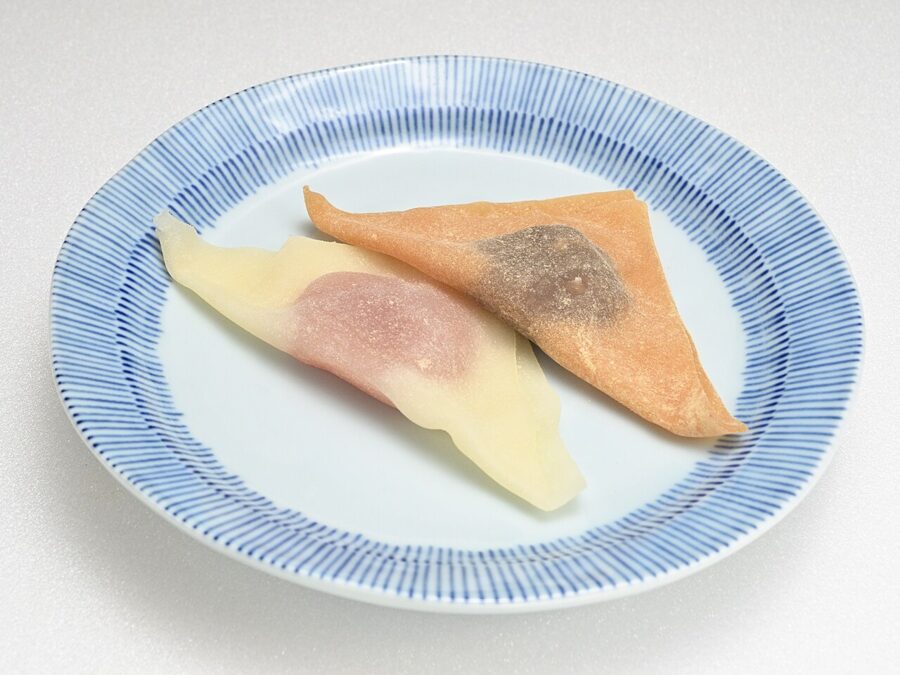
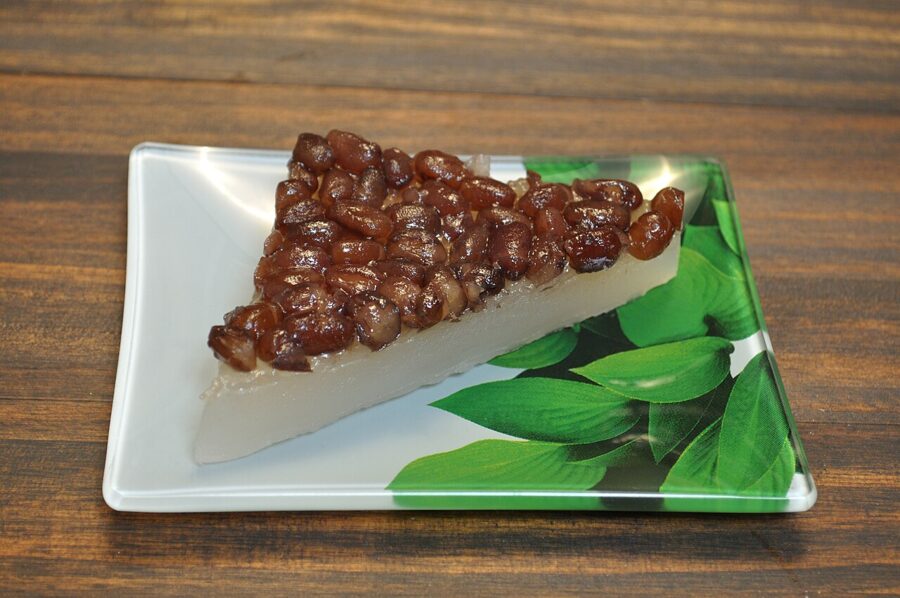
| 30 June | Minazuki | Kyoto’s mid-year purification: white uirō triangles topped with azuki |
| July–August | Kakigori, warabi-mochi, kuzu sweets, mizu-yokan | Heat |
| September | Tsukimi dango, ohagi | Moon viewing; the autumn equinox |
| September–January | Kuri-kinton | The chestnut season in Nakatsugawa, Gifu |
| November | Inoko-mochi | A court custom on the day of the boar in the tenth lunar month |
| December | Mochitsuki, kagami-mochi | Getting ready for New Year |
Minazuki is worth knowing if you’re in Kyoto at the end of June. The triangle of white uirō is said to stand for a piece of ice from the old ice houses, and the azuki on top for warding off bad luck. Kyoto families eat it on 30 June, the day of the mid-year purification at shrines.
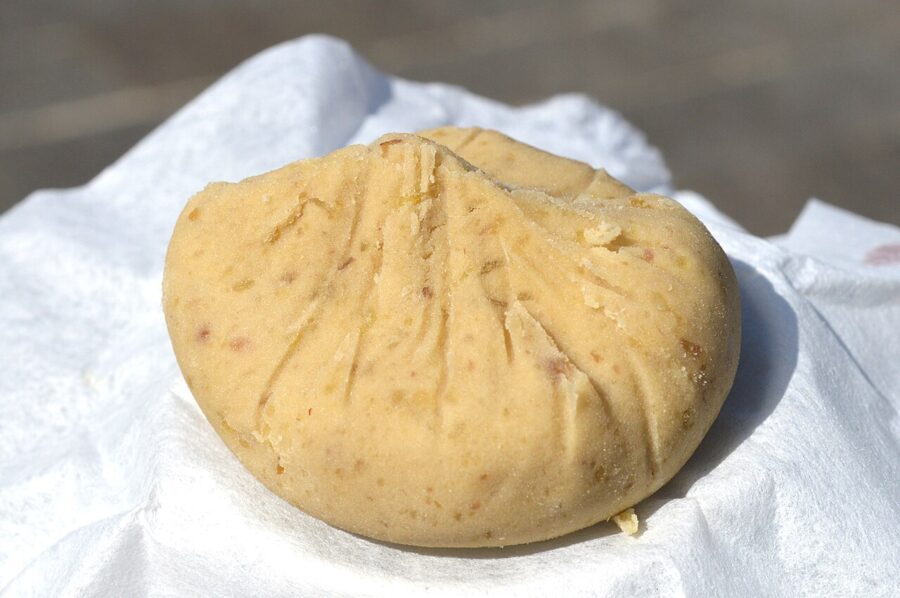
In autumn, the sweet that people drive for is kuri-kinton from Nakatsugawa in Gifu: steamed chestnut and sugar, nothing else, squeezed in a cloth into the shape of a chestnut. It’s sold roughly from September to January. Don’t confuse it with the sweet chestnut-and-sweet-potato mash of the same name in New Year osechi boxes.
Kyoto, shop by shop
Kyoto is the place to eat wagashi sitting down. I’ve touched on its matcha sweets in my Kyoto food guide; these are the tea rooms to plan a day around.
Toraya Karyo, Kyoto Ichijo. Toraya’s Kyoto tea room sits on a quiet old street just west of Karasuma-dori, near the Imperial Palace and about five minutes from Imadegawa Station, exit 6. It opens 10:00–18:00 (last orders 17:30) and closes on 1 January and the last Monday of most months. A seasonal namagashi with a drink starts at ¥1,617.
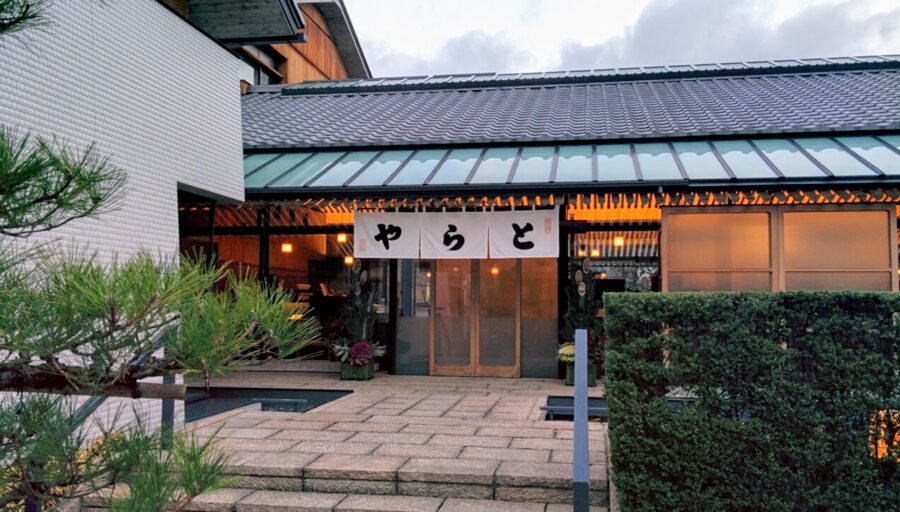
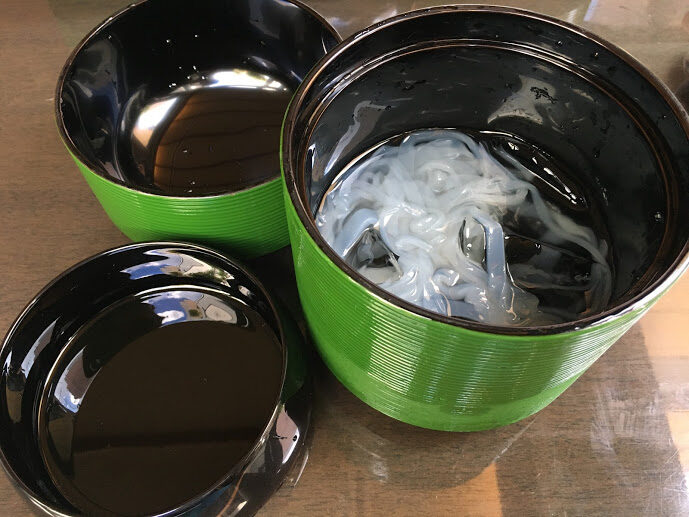
Kagizen Yoshifusa, Gion. Kagizen has been in Gion since the Edo period, now on Shijō-dōri a few minutes’ walk from Yasaka Shrine, and its kuzukiri is the dish. Fresh kudzu-starch noodles come in iced water in a lacquer box, with black syrup made from Hateruma Island sugar for dipping. The shop sells sweets 9:30–18:00, the tea room serves 10:00–18:00 with last orders at 17:30, and it’s closed on Mondays (Tuesday when Monday is a holiday).
Kasagiya, Ninenzaka. A sweet shop on the stone steps of Ninenzaka, below Kiyomizu-dera, open since 1914 and barely changed. The painter Takehisa Yumeji lived nearby and came here with his lover Hikono, and there’s an ink painting of his on the wall. Order the zenzai with grilled mochi, or kameyama, the same beans without the soup.
Around Shimogamo and Imamiya. Futaba, Housen and the Mitarashi Chaya, all covered above, are within walking distance of Shimogamo Shrine. Ichiwa is a bus ride northwest, by Daitoku-ji.
Tokyo’s old houses
Tokyo’s sweet makers are scattered, so pick a neighbourhood and do it on foot.
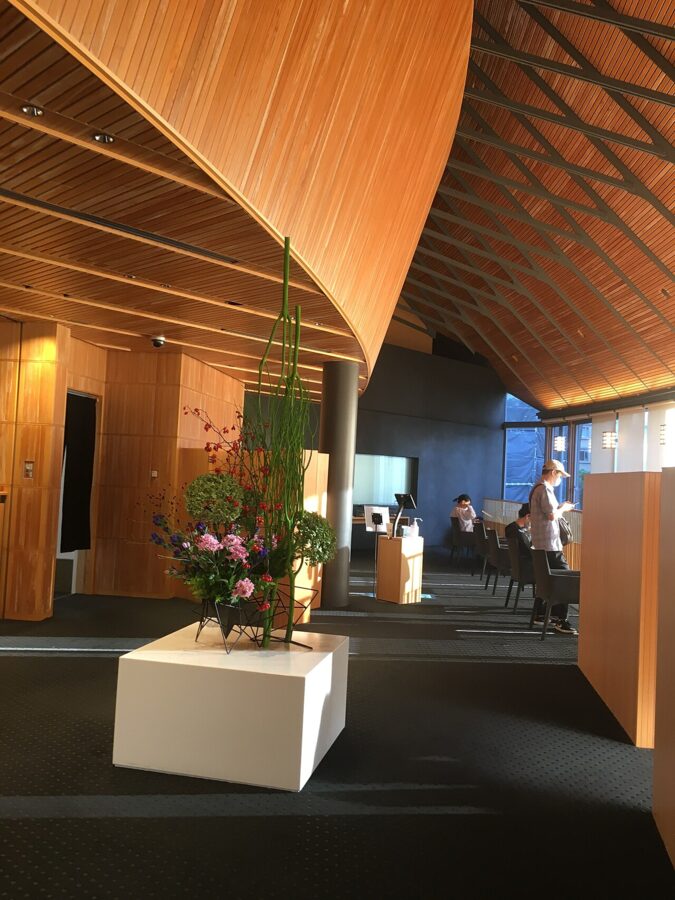
Toraya, Akasaka. Toraya’s flagship sits on Aoyama-dori, seven minutes from exit A of Akasaka-mitsuke Station. The shop opens 9:00–18:00 on weekdays and 9:30–18:00 at weekends, the tea room Toraya Karyo serves 11:00–17:30 (last orders 17:00), and both close on the 6th of each month except December. Each month the Akasaka shop sells two namagashi you can’t get at the other branches, ¥540 each; the December 2026 pair are Shin-sazanka and Yumaki.
Naniwaya Sohonten, Azabu-Juban. The taiyaki shop from earlier. Upstairs there’s a small dining room where you can eat taiyaki with kakigori in summer, which is better than it sounds.
Ueno. Usagiya’s dorayaki and Mihashi’s anmitsu are a short walk apart, which makes a sensible morning.
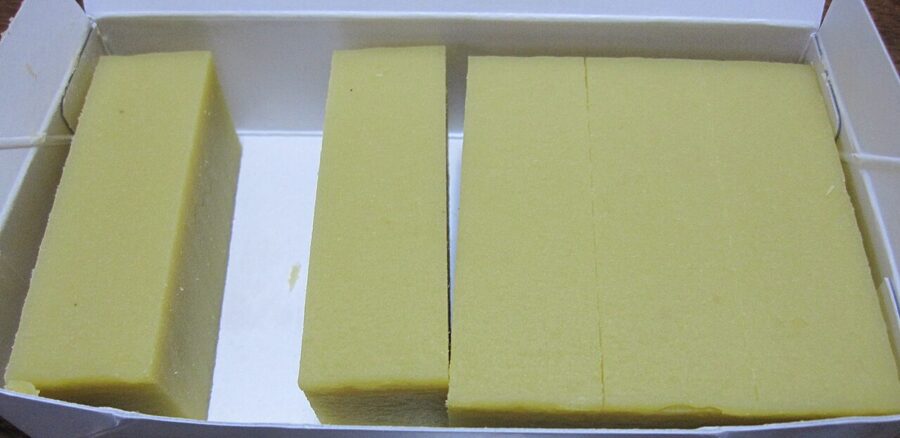
Funawa, Asakusa. Funawa, founded in 1902, makes imo-yōkan, a firm block of sweet potato and sugar with no bean paste at all. It’s one of the cheapest good wagashi souvenirs in Tokyo, and the plain version is the one I’d buy.
Across the Sumida. Pair Chomeiji with the cherry trees of the Mukojima riverbank, and Funabashiya with Kameido Tenjin.
Kanazawa, Matsue and the road to Ise
Kyoto, Kanazawa and Matsue are often called the three great sweet towns of Japan, and the last two owe it to tea-loving lords. I’ve written up Kanazawa’s sweet shops and gold leaf in the Kanazawa guide, so here’s the short version.
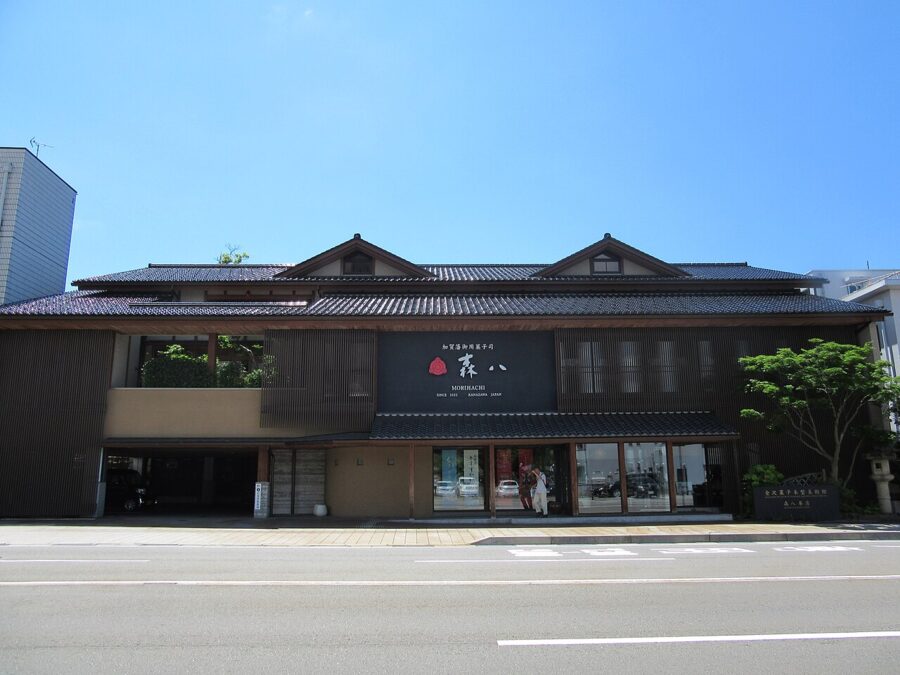
Kanazawa’s best-known old house is Morihachi, founded in 1625. Its Chōseiden, a rakugan of wasanbon sugar pressed into a red and white oblong, was devised under the third Maeda lord and named by the tea master Kobori Enshū. The main shop, open 9:00–18:00 and closed only on 1–2 January, has a museum upstairs of about a thousand carved wooden sweet moulds, and a tea room until 17:00.
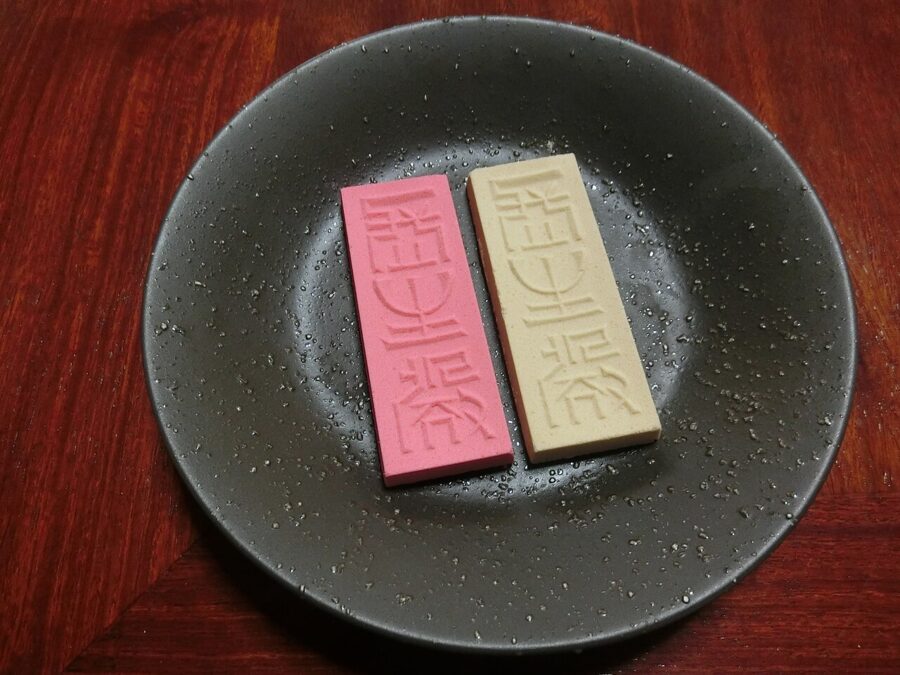
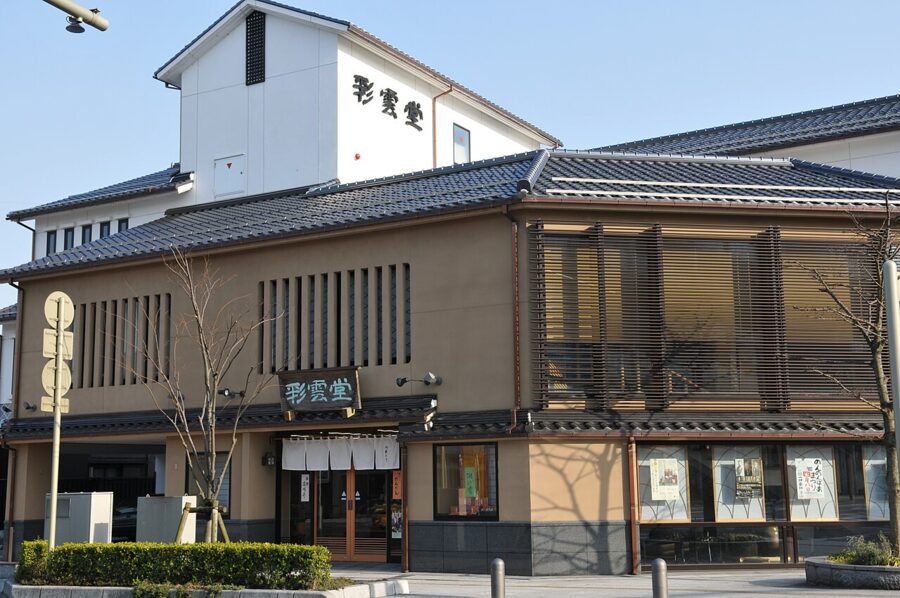
Matsue’s sweet culture goes back to its seventh lord, Matsudaira Harusato, a tea master better known as Fumai. Three sweets he favoured were later revived by local shops and are still sold as the Fumai sweets: Wakakusa, Yamakawa and Natane no Sato, each made by a different Matsue house. Saiundo, founded in 1874, makes Wakakusa from soft gyūhi coated in green rice powder, and its main shop is a ten-minute walk from Matsue Station.
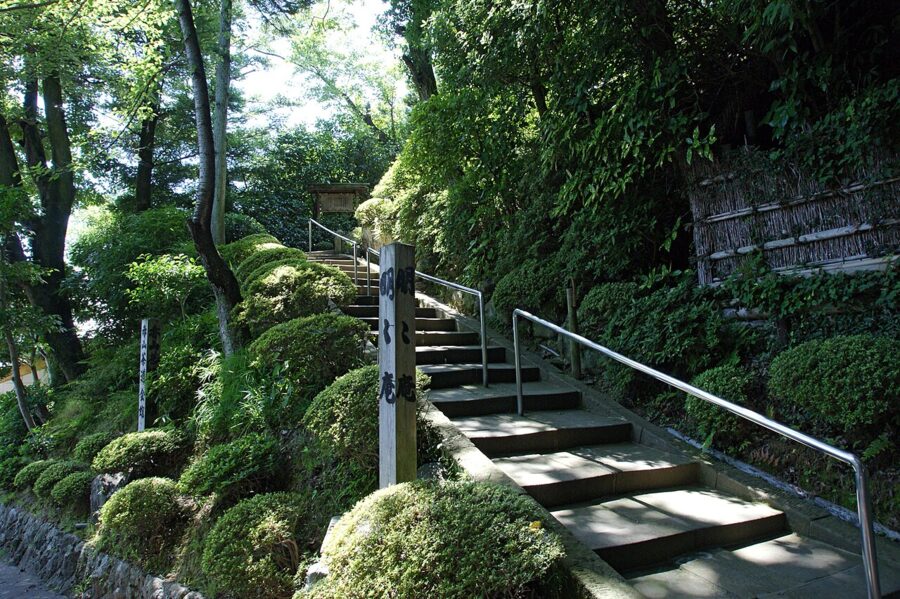
To taste the Fumai sweets where they belong, go to Meimei-an, the thatched tea house Fumai had built in 1779, now on a hill above the old samurai street of Shiomi Nawate with a view of Matsue Castle. Entry is ¥600, and a bowl of matcha with two of Fumai’s favourite dry sweets is another ¥600, served 9:50–16:00 from October to March and until 16:30 from April to September.
Ise and Nara are in the mochi section above; both are an easy day out from Osaka or Kyoto. Nagasaki‘s castella, the Portuguese-born sponge now counted as wagashi, is in my piece on foods with foreign origins.
Kanmidokoro: what to order
A kanmidokoro is a sweet house, a sit-down café for traditional desserts, and it’s where Japanese people go for a sugar break that isn’t cake. The menus look long but repeat the same building blocks: agar jelly, beans, mochi, syrups and ice. It isn’t a kissaten: you’re here for beans and mochi, not coffee and toast.
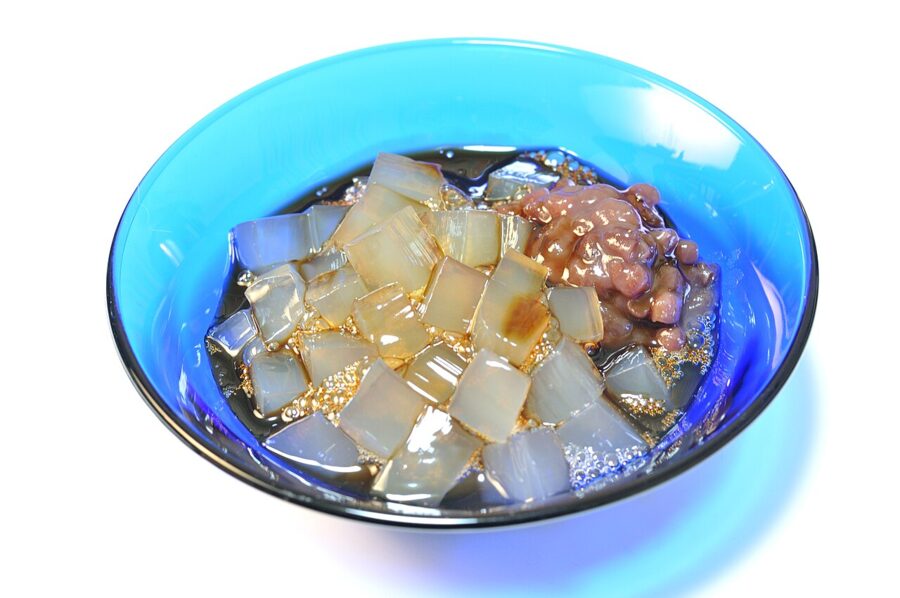
Anmitsu is the classic: cubes of agar jelly with bean paste, black syrup, often fruit and chewy white shiratama dumplings. It grew out of the older mitsumame (no bean paste), and a Ginza shop is usually credited with adding the anko in 1930. At Mihashi, open since March 1948 opposite Ueno Park and three minutes from the Shinobazu exit of JR Ueno, a plain anmitsu is ¥680.
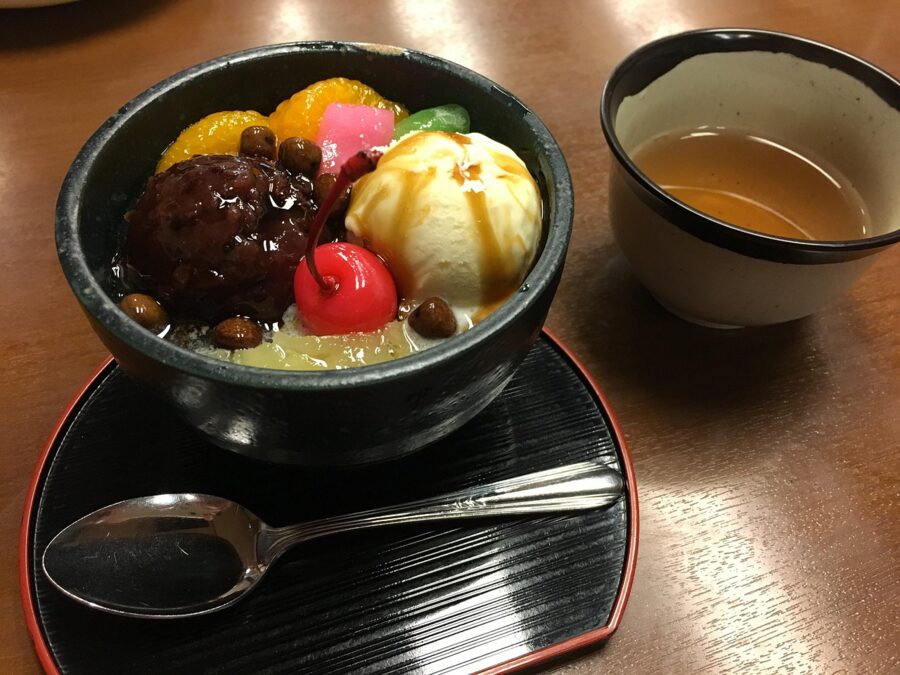
Zenzai and oshiruko are hot bean soups with mochi, and the names don’t mean the same thing in east and west. In Kansai, zenzai is a soup of whole beans and oshiruko is a smooth one. In Tokyo, zenzai is a thick, almost soupless pile of bean paste over mochi, and both soups are called oshiruko. When the menu is unclear, ask for tsubu or koshi.
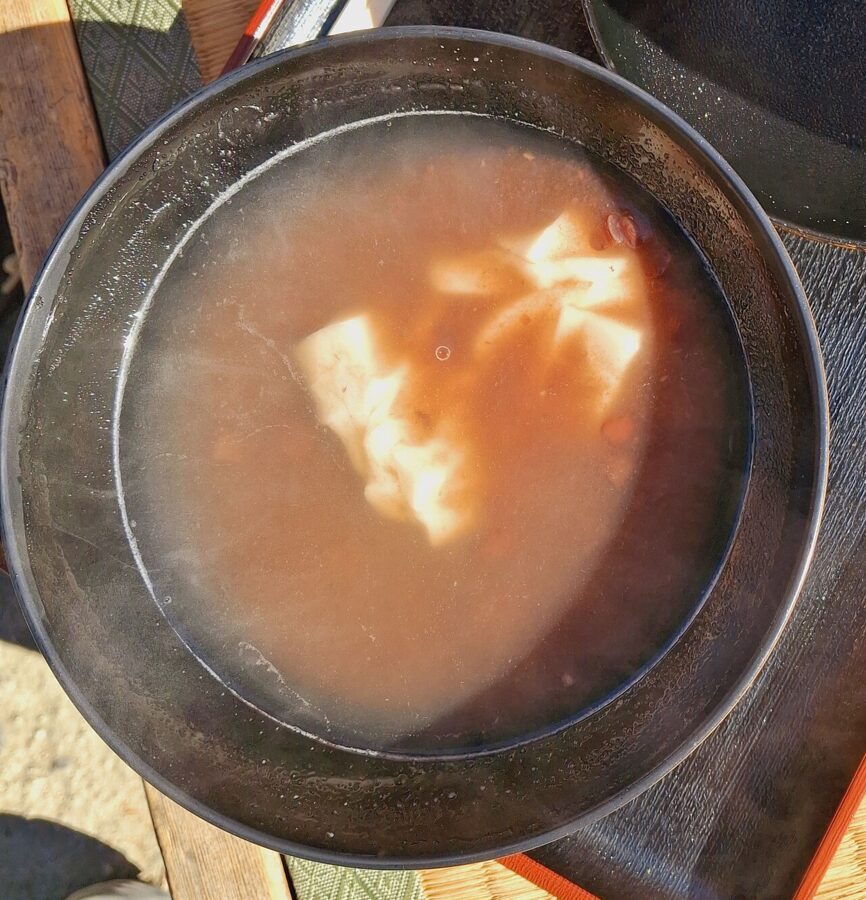
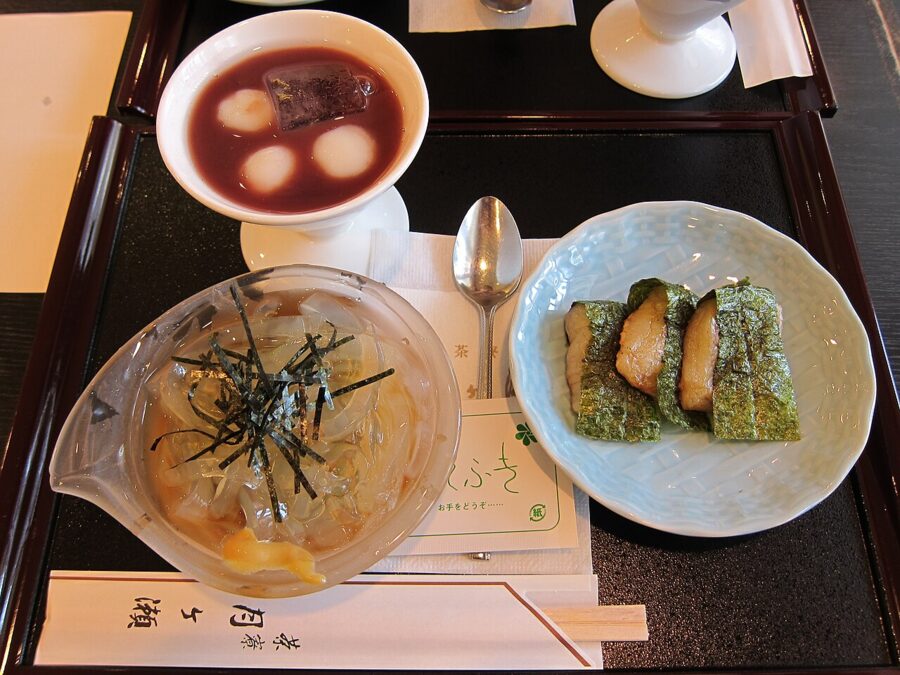
Kuzukiri, warabi-mochi and kakigori are the summer orders. In winter, look for the seasonal zenzai and anything with chestnut. A matcha set, a bowl of tea with one sweet, is the right order when you’re tired and want to sit down for twenty minutes.
Prices, shelf life, and a short skip list
Wagashi is cheap by the standards of Japanese food. A street sweet is a few hundred yen; a sculpted namagashi from a famous house is about ¥500; sitting down with tea costs from ¥400 at Akafuku to ¥1,600 or more at Toraya. The real constraint is time: most of what’s good won’t keep.
| Sweet | Example price | Eat within |
|---|---|---|
| Nakatanidou yomogi mochi, Nara | ¥180 each | The same day |
| Chomeiji sakura-mochi, Tokyo | ¥300 to take away; ¥500 with tea | The same day |
| Akafuku, Ise | ¥400 for two with tea; ¥900 for a box of eight | 2 days (summer), 3 days (winter) |
| Toraya Akasaka monthly namagashi | ¥540 | The same day |
| Mihashi anmitsu, Ueno | ¥680 | Eat in |
| Toraya Karyo Kyoto, namagashi with a drink | From ¥1,617 | Eat in |
| Yōkan, rakugan, senbei, okoshi | Varies | Weeks to months; check the box |
Things I’d skip:
- Carrying namagashi home on a long flight. Buy yōkan, rakugan or senbei for gifts, and eat the fresh sweets in Japan.
- Strawberry daifuku that has sat in a warm case all afternoon. The fizz is not a feature.
- “Warabi-mochi” cups from a supermarket chiller if you want to know what the real thing tastes like. Look for hon-warabi on the label.
- Eating mochi quickly, standing up, while talking. See above.
And one thing I wouldn’t skip: Akafuku’s main shop at five in the morning, on the first of a month if you can manage it. Order the two pieces with tea, find out what the month’s tsuitachi-mochi is, and buy one for the train.
You Might Also Enjoy
 Hunan Food: Fish Head with Chopped Chilli, Chairman Mao’s Pork and Changsha After Dark
 Two Weeks in Japan: A First-Timer’s Itinerary From Tokyo to Kobe, With the 2026 Rail Pass Maths
 The Yakitori Guide: Every Cut, Every Tare, Every Counter Worth Sitting At
 Hangzhou: Walking West Lake, Lingyin Temple, the Longjing Tea Villages and How to Spend Two Days