Japanese Snacks and Food Souvenirs: Regional Omiyage, Kit Kat Flavours and What Travels Home
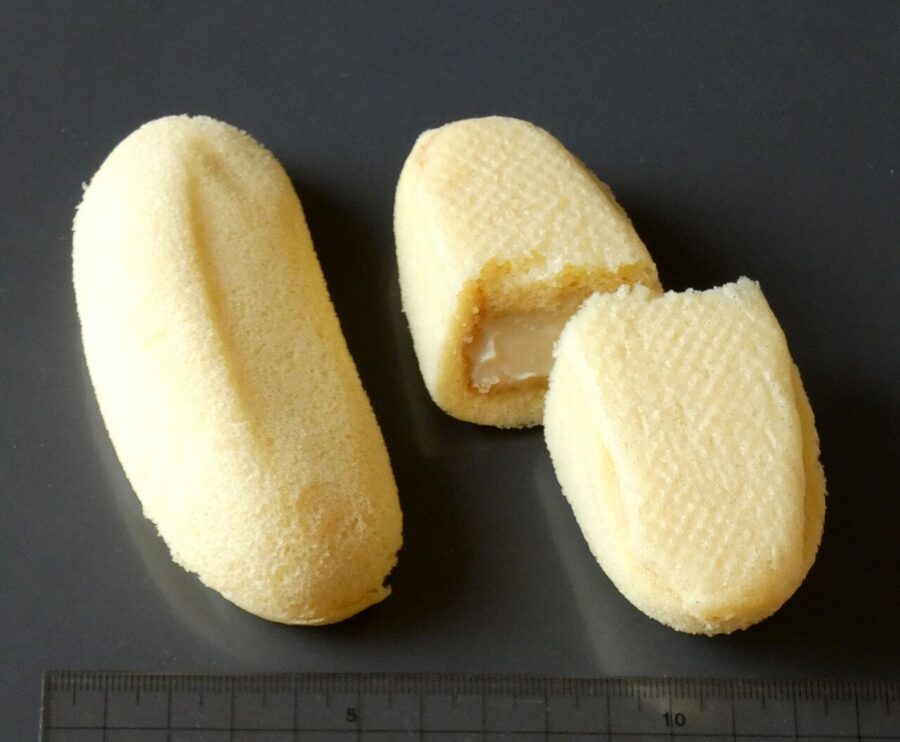
A box of Tokyo Banana is A4. Grapestone, the company behind the banana-custard sponge cake, sized it that way so the box would slide into an attaché case, and a salaryman heading home from a Tokyo business trip wouldn’t have to carry a paper bag of sweets through the Shinkansen gates. It’s the only gift box I know that was designed around a briefcase. That one detail tells you most of what you need to know about who buys Japanese food souvenirs, and why.
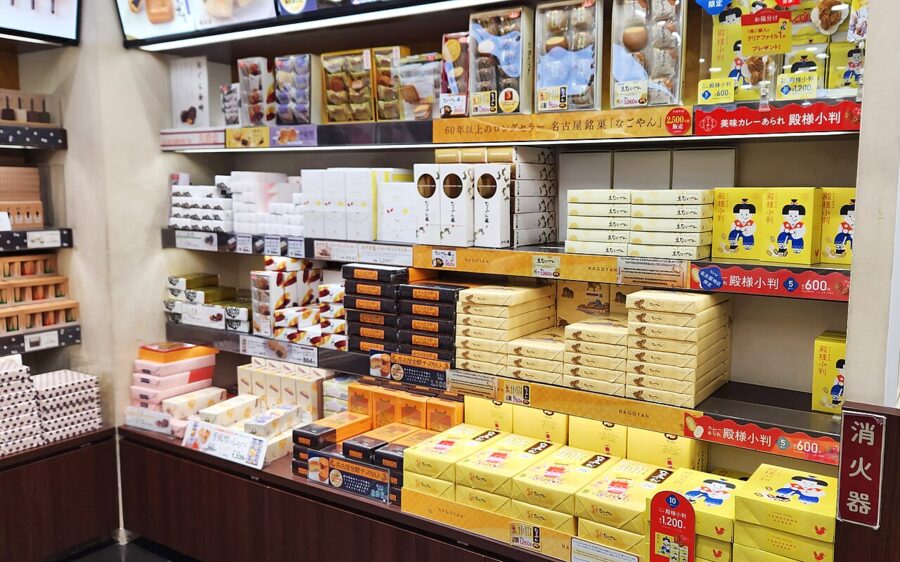
In Shenzhen, colleagues back from a Hong Kong weekend brought egg rolls in a tin and left the lid open on the nearest desk. Japan runs on the same instinct, scaled up into an industry. Every station of any size has a hall of boxed sweets, every airport has a counter for the local one, and nearly every box is filled with individually wrapped pieces, so you can leave one on each desk in the office.
Some of those boxes are excellent. Some are the edible equivalent of a fridge magnet, bought because the town’s name is printed on the lid. Japanese has a proverb for the second kind, meibutsu ni umai mono nashi: there’s nothing tasty among famous local products. It’s unfair to plenty of them, but not to all.
This guide is the sorting job. It covers why the habit exists, the regional boxes worth carrying home, the konbini and supermarket snacks that make better presents than people expect, where to buy, and what survives the flight and the customs desk at the other end. Prices are the makers’ own, checked in November 2026.
| Region | The box to buy | How long it keeps | Will it travel? |
|---|---|---|---|
| Hokkaido | Shiroi Koibito; Royce nama chocolate; Jaga Pokkuru | Royce nama chocolate: one month, refrigerated | Shiroi Koibito easily; Royce only with a cool bag |
| Tokyo | Tokyo Banana | 7 days, counting the day you buy it | Yes, if you fly within the week |
| Nagoya | Bankaku Yukari prawn senbei; Aoyagi uiro | Check the label | Yukari, yes |
| Ise | Akafuku | 2 days in summer, 3 in winter | No |
| Kyoto | Baked yatsuhashi; nama yatsuhashi | Vacuum-packed nama: about 9–11 days | Baked, yes; nama, only on a short trip |
| Fukuoka | Hakata Torimon | About 3–4 weeks | Yes |
| Okinawa | Beni-imo tart; chinsuko | Check the label | Yes |
| Anywhere | Regional Kit Kat; senbei; Jagariko | Months | Yes, and they weigh almost nothing |
In This Article
- Why a whole country buys snacks for the office
- Region by region: the boxes worth carrying
- Hokkaido: biscuits, chocolate and potatoes
- Tohoku: custard moons and peanut crackers
- Tokyo: the banana, and a basement of snack brands
- Hamamatsu: a pie for the evening
- Nagoya: uiro and prawn crackers
- Ise: the one you can’t take home
- Kyoto: yatsuhashi, two ways
- Hiroshima: momiji manju
- Fukuoka: roe and a milk bun
- Nagasaki and Kagoshima: castella and karukan
- Okinawa: purple tarts and lard biscuits
- Kit Kat, Japan’s other national confectionery
- What’s on the supermarket shelf?
- Senbei and kaki no tane
- Pocky, Jagariko and Umaibo
- Where it’s cheapest
- Stations, airports and basements: where to buy
- Tax-free shopping changed in November 2026
- What travels, and what doesn’t
- Read the date first
- Heat, cold and crumbs
- Sake, whisky and liquids
- Meat, dairy and the customs desk at home
- Prices, and a short list of things to skip
Why a whole country buys snacks for the office
The word on every one of these boxes is omiyage, written 土産. Those two characters were first read dosan, and meant simply “product of the land”, the same sense they still carry in Chinese. From the Muromachi period onwards they were read as miyage, and one theory traces that word to 宮笥, also read miyage, the charms and offerings that shrines handed out, including the talismans pilgrims carried home from Ise.
That origin explains the shape of the custom. Omiyage isn’t a souvenir in the English sense, a thing you buy to remember your own trip. It’s a gift for the people who didn’t go, and the people who covered your work while you were away, which is why it’s usually food: it gets shared, eaten and gone, and nobody has to find shelf space for it.
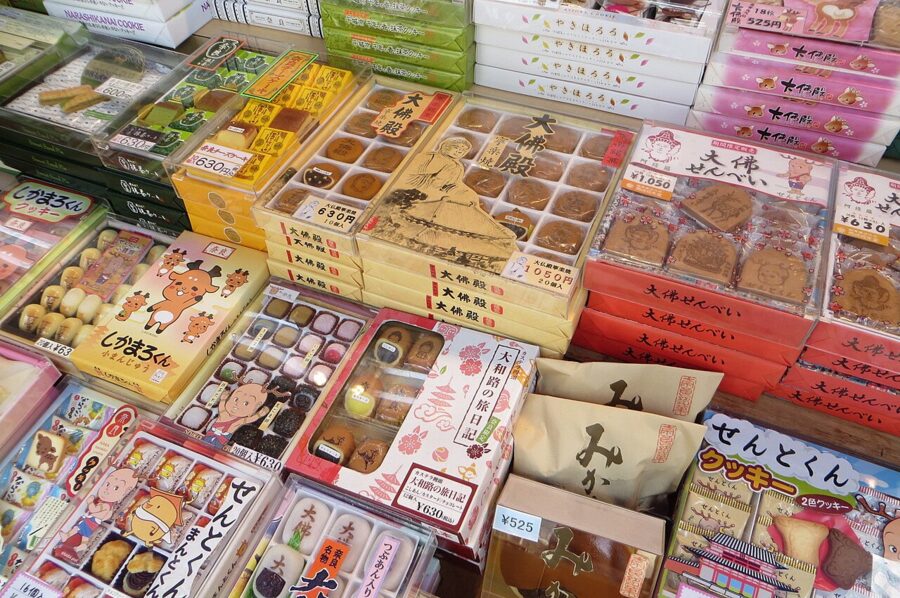
The individually wrapped box has a surprisingly specific history. In 1973 a Sendai confectioner, later renamed Kashoen Sanzen, launched a Baumkuchen called Date Emaki as individually wrapped pieces packed into a box, and it took off once it went on sale at Sendai Airport. Its next product was harder: a soft sponge filled with custard, with no preservatives, which would normally go stale in days.
The fix took more than three years of joint work with Mitsubishi Gas Chemical, which had just commercialised an oxygen absorber. The result, sealed in film with a sachet of it inside each wrapper, went on sale in September 1979 as Hagi no Tsuki. It still sells around 100,000 a day, and you’ll find the same kind of sachet tucked into a great many souvenir boxes today.
The other half of the system is the meibutsu, the famous product of a place. A town without one tends to invent one, and a maker with a hit tends to keep it local on purpose, because “only sold here” is the point. Osaka’s Hanshin department store ran a basement arcade of regional specialities from 1951 to March 2014, and people called it Alibi Yokocho, Alibi Alley, because you could buy the omiyage for a trip you’d never taken.
A practical rule before you start: count heads, then buy a box with more pieces than people. Wrapped pieces mean nobody has to cut anything, and a box that runs out before the last desk is worse than no box at all.
Region by region: the boxes worth carrying
Every prefecture has a shelf of its own, and a full list would run to hundreds of products. These are the ones that have earned their place, plus a few that are better eaten in Japan than carried out of it.
Hokkaido: biscuits, chocolate and potatoes
Shiroi Koibito, two thin langue de chat biscuits around a layer of white chocolate, went on sale in December 1976. The name, “white lovers”, supposedly came from something the founder said on the way back from a ski trip, when snow started falling. It was sold only in Hokkaido, and that scarcity is a large part of why it became the box every business traveller to Sapporo was expected to bring back.
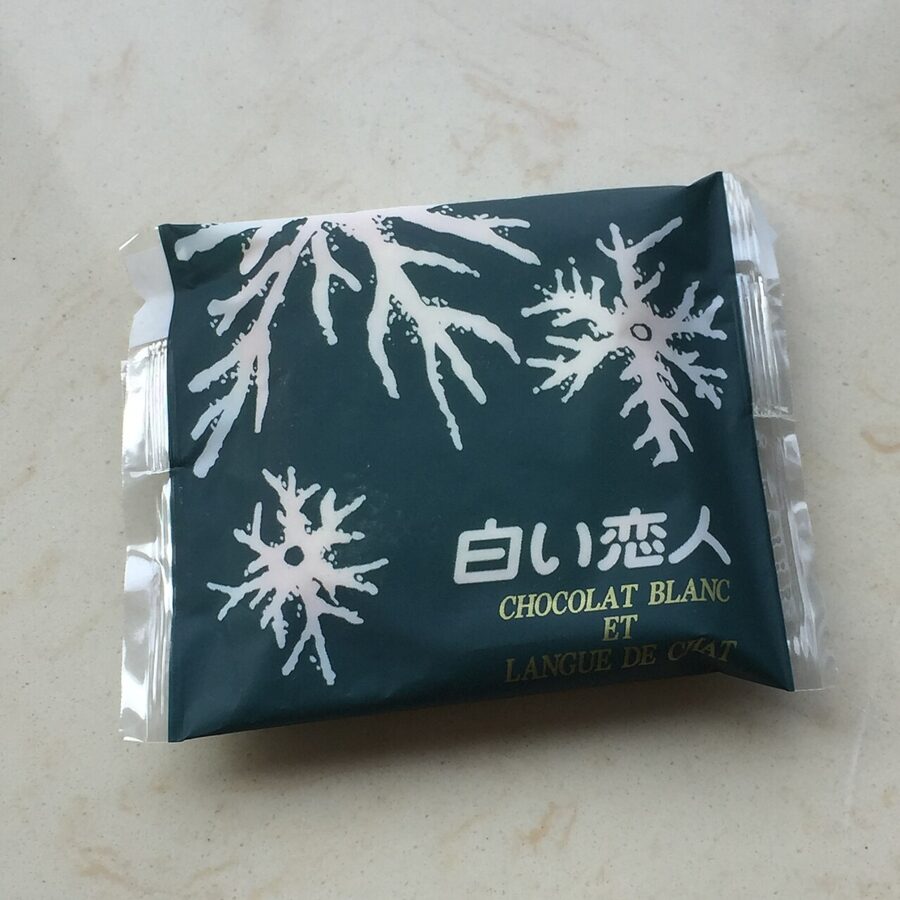
Ishiya, the Sapporo maker, sells around 200 million biscuits a year, and its newer factory in Kitahiroshima makes about 1.1 million a day. The company’s own shop charges ¥1,144 for a box of 12 and ¥2,289 for 24. In August 2007 it was caught relabelling best-before dates and the biscuits vanished from shops for about 100 days. Since then, every individual wrapper has carried its own date.
If you want to see where they come from, Shiroi Koibito Park sits in Miyanosawa, in Sapporo’s Nishi-ku, a short walk from Miyanosawa Station at the western end of the Tozai Line. It opens 10:00–18:00, with last entry to the paid factory area at 16:30.
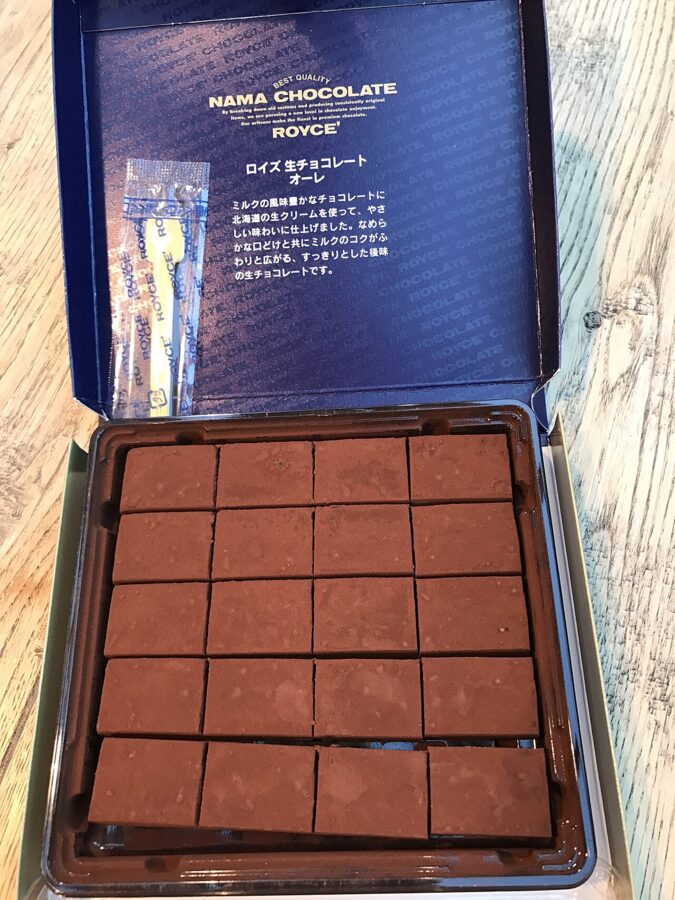
Royce, the other Hokkaido chocolate name, is better known for nama chocolate: soft squares of ganache dusted with cocoa. The Au Lait box of 20 costs ¥1,215 at Royce’s own shop, carries a best-before of one month, and has to be kept in a fridge below 10°C. That last part is the catch for carrying it home, and I come back to it below. Royce’s potato chip chocolate, crisps coated on one side in milk chocolate, costs ¥1,188 and is far more forgiving.
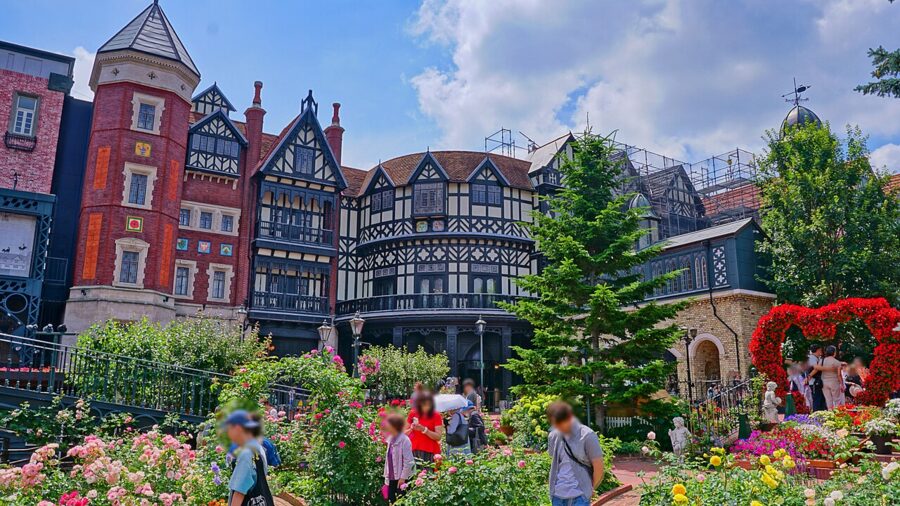
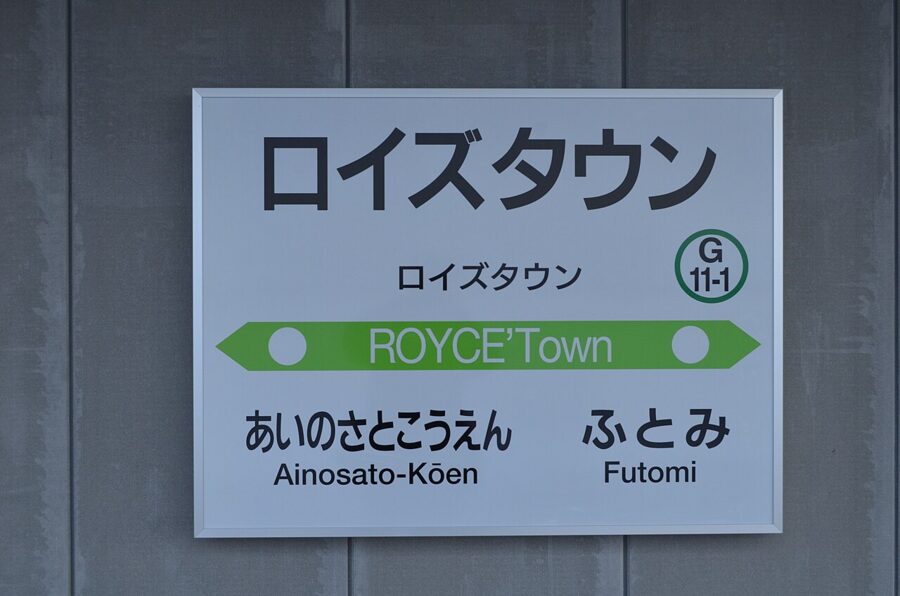
Royce also runs a factory attraction, Royce Cacao & Chocolate Town, in Tobetsu, north of Sapporo, beside Royce Town Station. It opens 10:00–17:00 with last entry at 15:00, costs ¥1,200 for adults, and the factory shop downstairs opens 9:00–18:00.
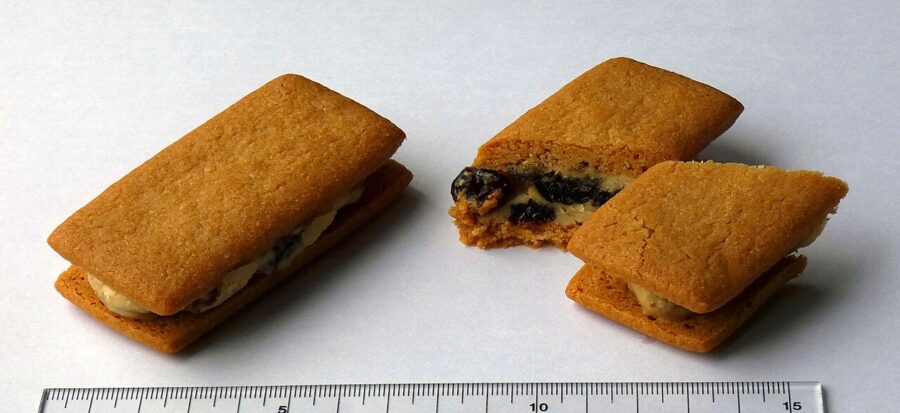
From Obihoro, in the farmland of eastern Hokkaido, comes Rokkatei’s Marusei Butter Sandwich: a raisin and white-chocolate butter cream between two biscuits. It accounts for roughly 40 percent of Rokkatei’s sales. The label copies the one on Marusei butter, which the settler company Banseisha produced in 1905 as the first commercial butter made in Hokkaido.
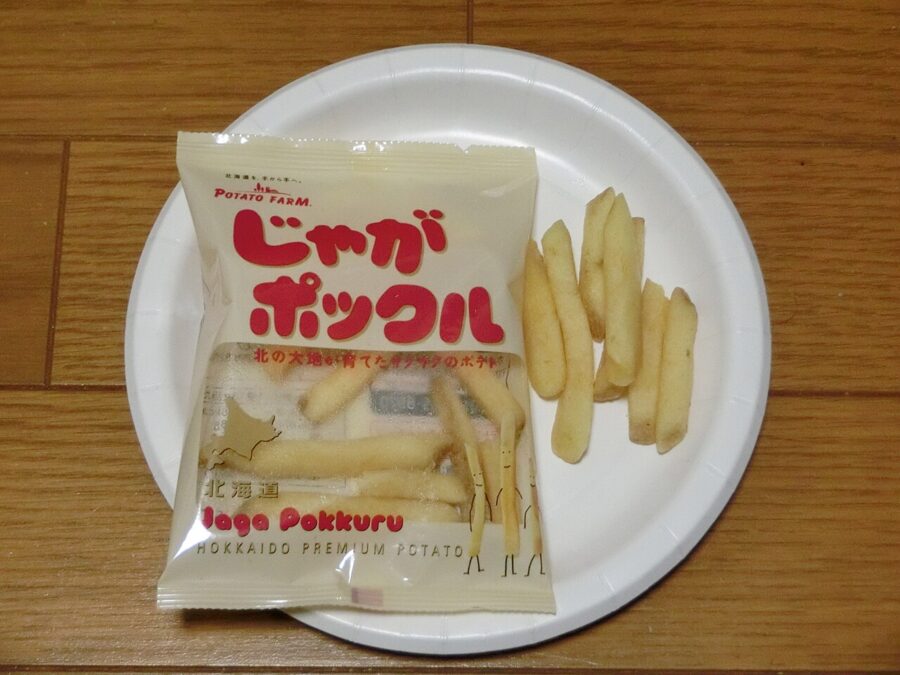
Then there’s Jaga Pokkuru. Calbee makes these fried potato sticks, seasoned with Okhotsk grilled salt, only at its factory in Chitose and sells them only in Hokkaido. The name is borrowed from the korpokkur of Ainu folklore, the little people who live under butterbur leaves.
The story behind it is the best snack-company feud I know. When the founder’s son was running Calbee in the 1990s and developed Jagariko, the founder himself, Matsuo Takashi, declared it too hard to sell. It sold anyway, and he set out to make a better potato stick himself. That project became Jaga Pokkuru, first sold in 2002 under another name, and for years it was so scarce that shops limited how many you could buy.
Tohoku: custard moons and peanut crackers
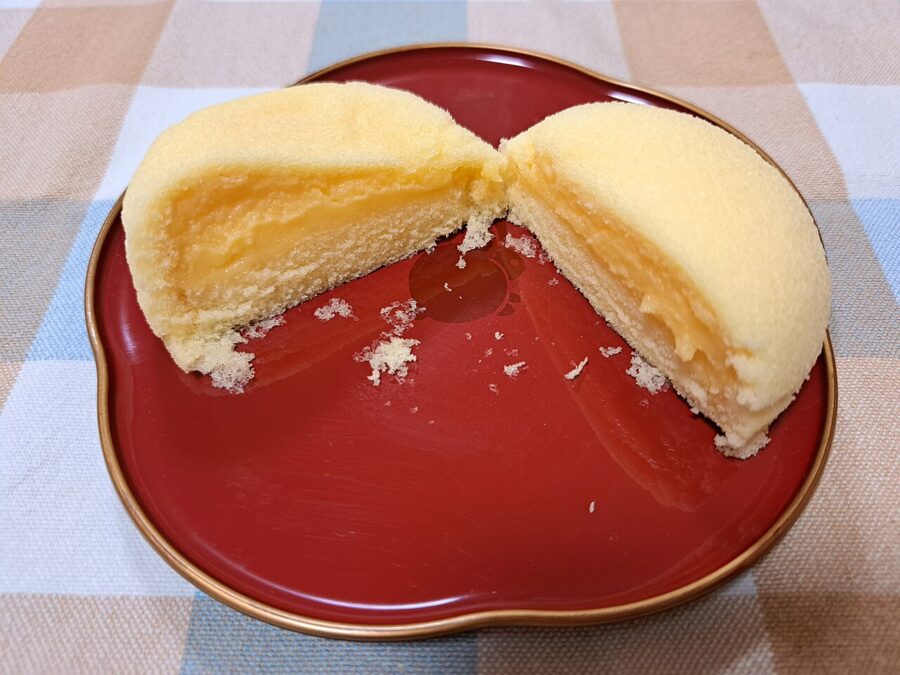
Hagi no Tsuki, the custard-filled sponge from Sendai, is the box behind that oxygen-absorber story. The name means “the moon over the bush clover”, for the pale round cake. It’s soft, mild and easy to like, which is exactly what an office gift should be.
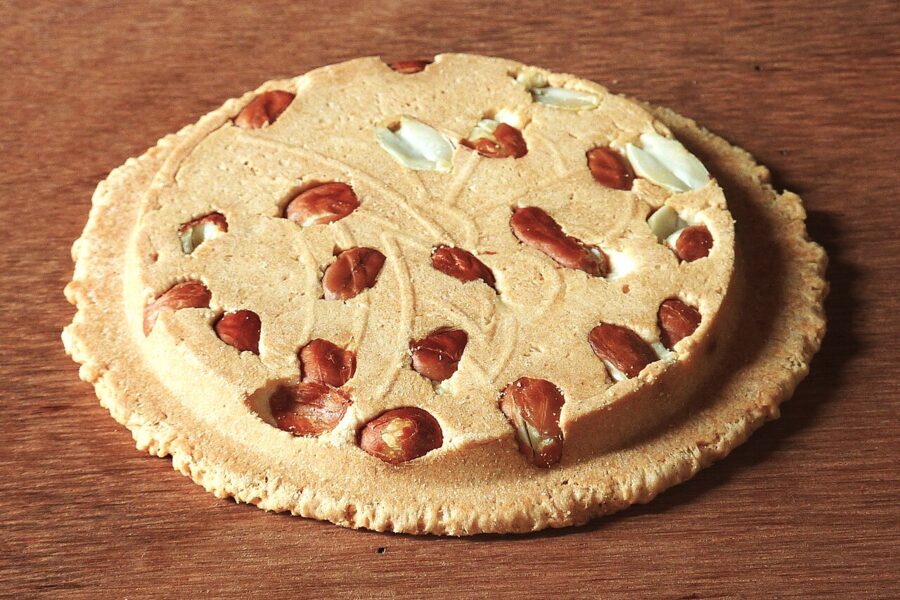
Further north, Iwate and Aomori make nanbu senbei, crackers of wheat flour rather than rice, baked flat in iron moulds and often studded with peanuts or sesame. They’re cheap, light and last for weeks, and a bag of them is a better present than most fancy boxes.
Tokyo: the banana, and a basement of snack brands
Tokyo Banana was a deliberate act of branding. Bananas were chosen because nobody dislikes them, and because Japan grows none commercially, so they felt both familiar and a little urban. The company never ran a TV campaign, relying on a yellow sign and the jingle-like line “Tokyo omiyage ni Tokyo Banana”. There’s a nice irony in the factory address, though: the cakes are made under contract in Tokorozawa, in Saitama.
The original carries a best-before of seven days, counting the day you buy it, so it’s a gift for the end of your trip, not the start. In 2007 and 2008 it was the best-selling item at Tokyo Station, and it’s still the box most people mean when they say “Tokyo omiyage”.
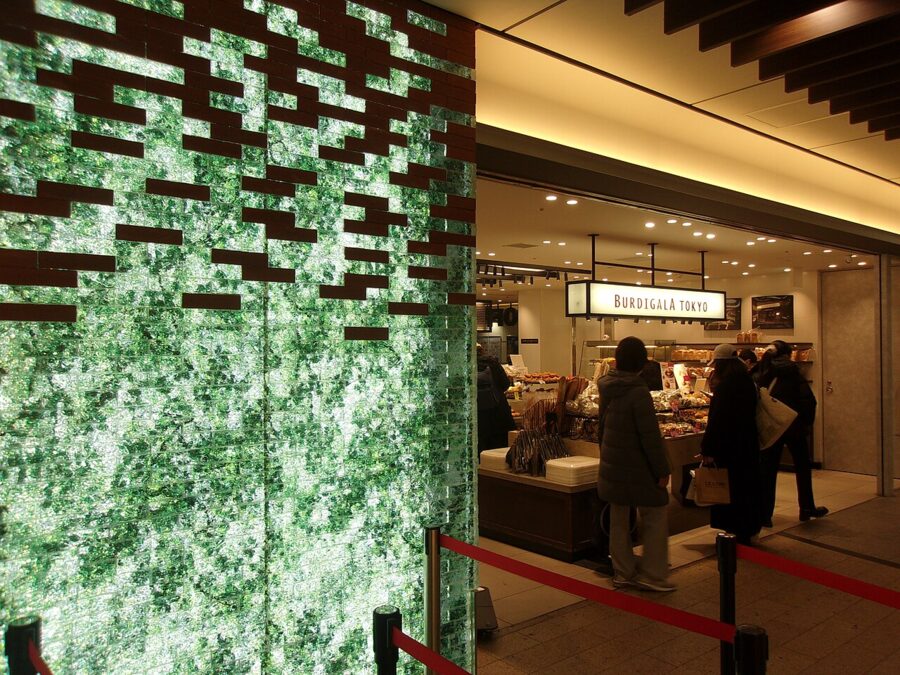
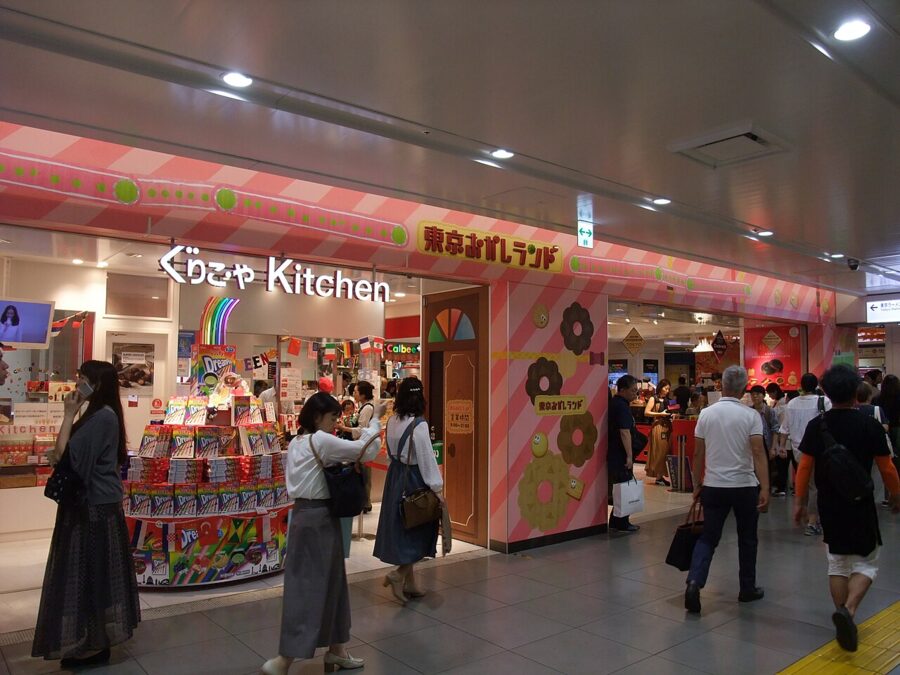
For snack brands rather than cakes, go to Tokyo Okashi Land in the B1 arcade of Tokyo Station Ichibangai, on the Yaesu side outside the ticket gates. It’s a cluster of manufacturer shops: Calbee Plus, Glico’s Almond Days, Kameda’s Cho Happy Turn, and Morinaga’s Okashina Okashiyasan. Each sells things you won’t find in a supermarket, including snacks fried or baked on site.
Hamamatsu: a pie for the evening
Hamamatsu is eel country, the city on Lake Hamana, and in 1961 the second president of the local confectioner Shunkado decided to put eel into a French biscuit. Unagi Pie is a palmier with eel extract worked into the pastry and a glaze brushed on at the end like kabayaki sauce. It doesn’t taste of eel. It tastes of butter, sugar and, faintly, garlic, which is in the recipe.
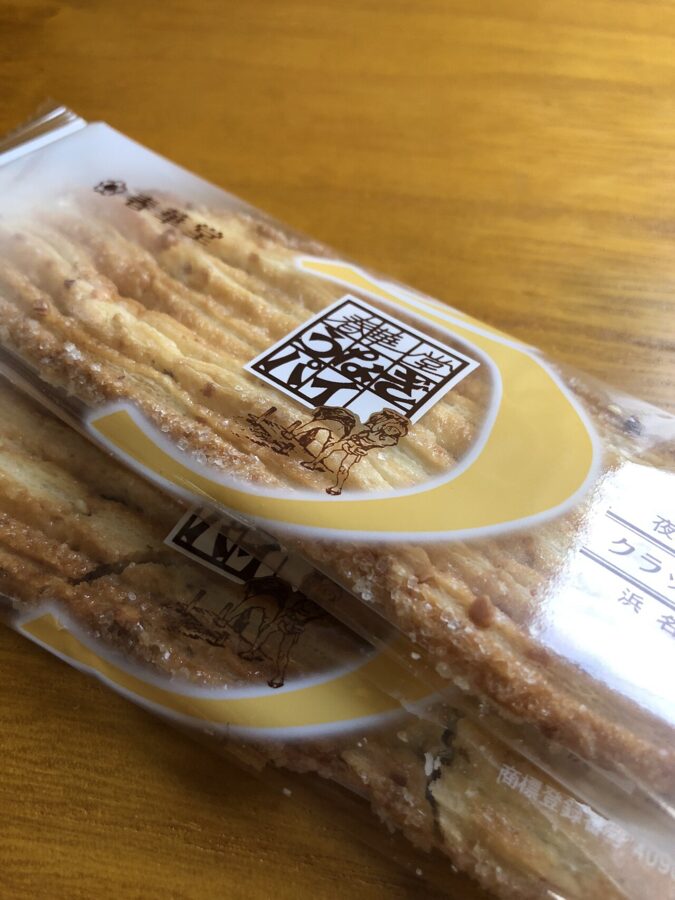
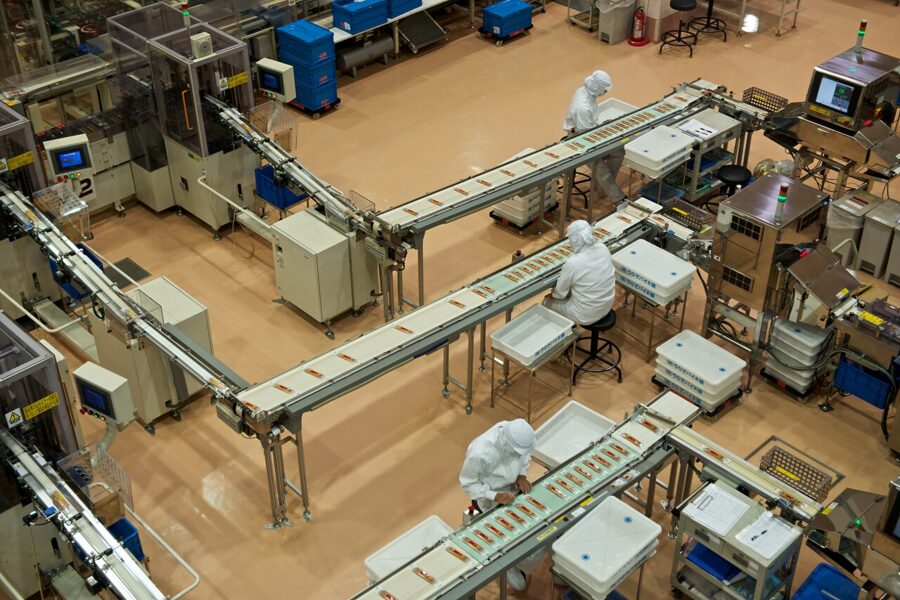
Sales grew with the new Tokaido Shinkansen and Tomei Expressway, from 600,000 pieces in 1962 to ten million a year by 1966. Shunkado opened the Unagi Pie Factory, where you can watch production, in Hamamatsu in April 2005.
Nagoya: uiro and prawn crackers
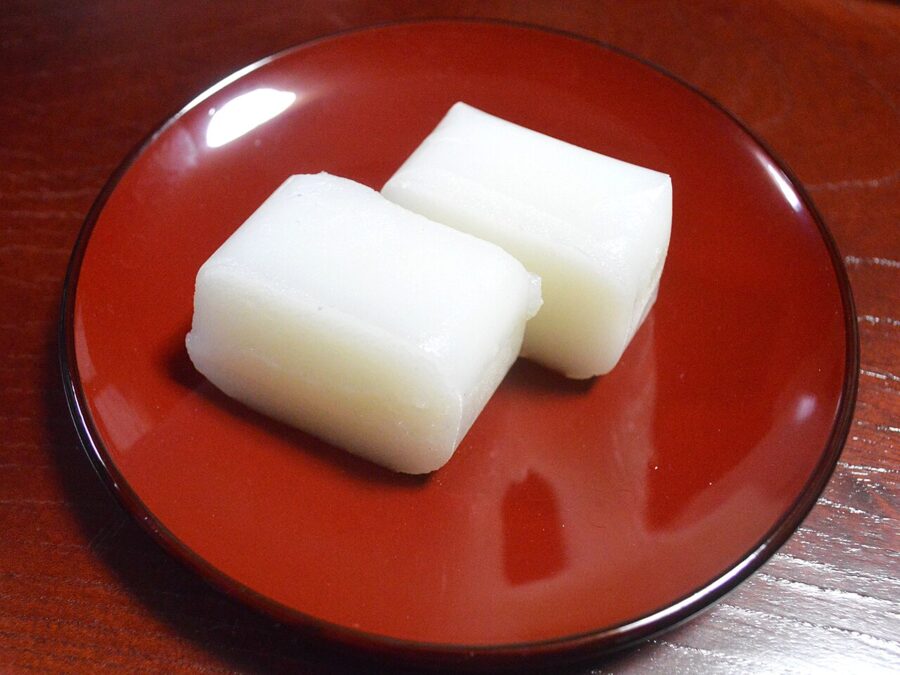
Nagoya‘s classic box is uiro, a steamed sweet of rice flour and sugar with a dense, springy bite somewhere between mochi and a firm jelly. Aoyagi Sohonke, founded in 1879, started selling it on Nagoya Station’s platforms in 1931. When the Tokaido Shinkansen opened in 1964, Aoyagi’s uiro was the only one sold on board every train, and that’s how the rest of Japan learned that Nagoya meant uiro.
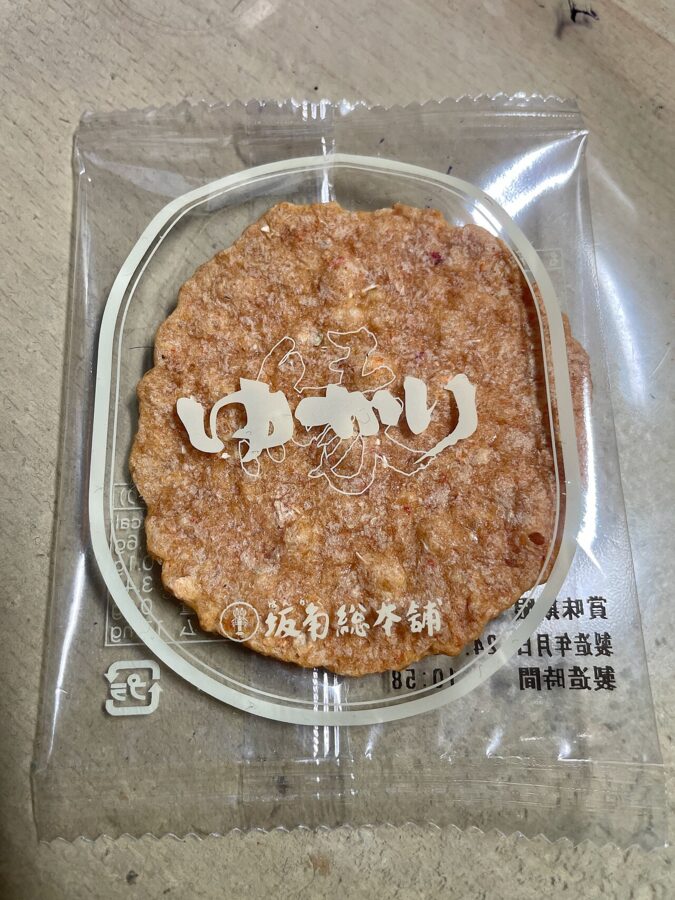
The better gift, to my taste, is Bankaku’s Yukari. Bankaku has made prawn senbei since 1889, and gave Yukari its name in 1966. It’s a thin, crisp, properly prawn-flavoured cracker, the box is light, and it’s one of the few omiyage that goes as well with beer as with tea.
Ise: the one you can’t take home
Akafuku has been selling its rice cake at the gates of Ise Grand Shrine for about three centuries. Each piece is a soft mochi under smooth red bean paste, pressed with three ridges for the Isuzu River that runs past the inner shrine.
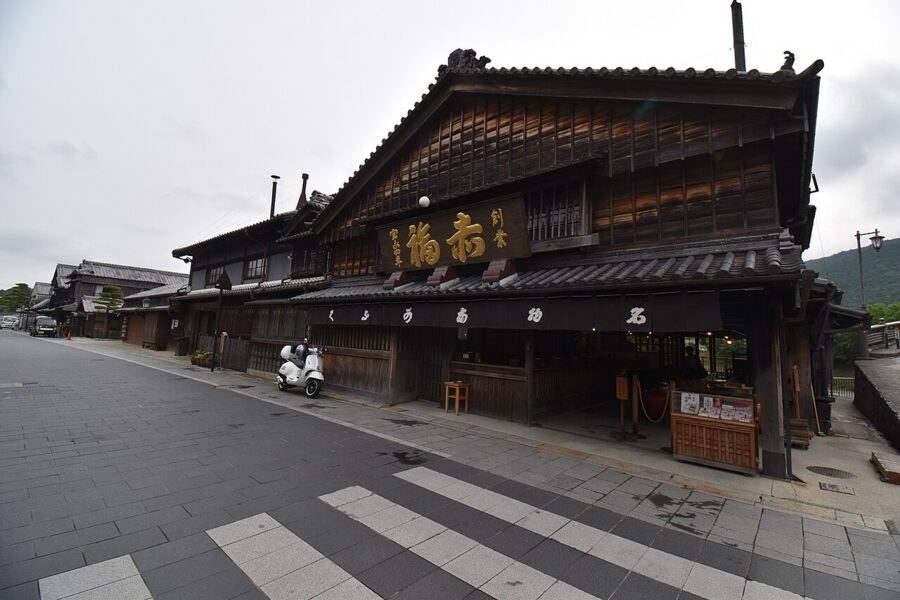
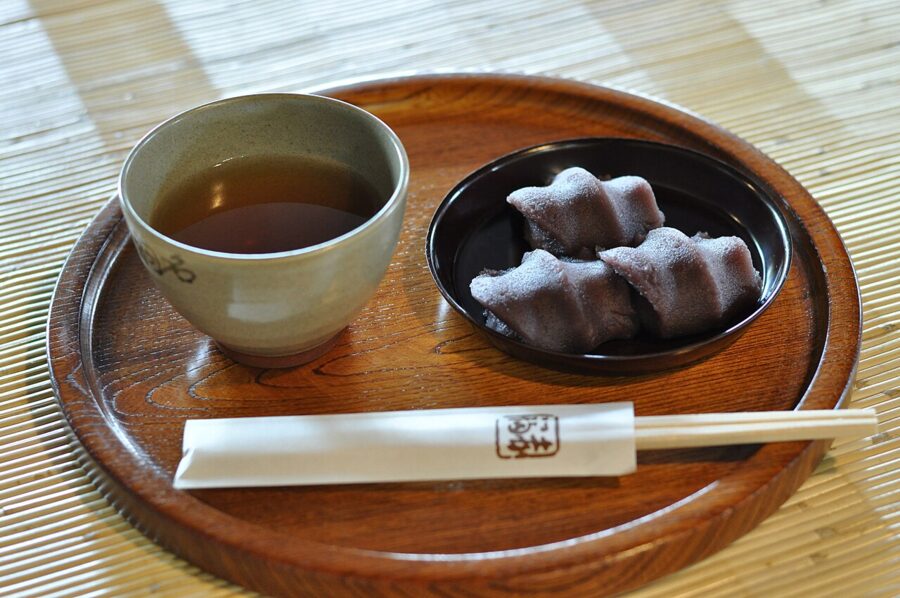
It’s made without preservatives, and its use-by is two days in summer and three in winter, counting the day of production. Buy a box on the way home from Ise and eat it on the train. In 2007, the year of its 300th anniversary, the company was caught freezing cakes and relabelling them, and was shut for months, which is why it’s now strict about dates.
Kyoto: yatsuhashi, two ways
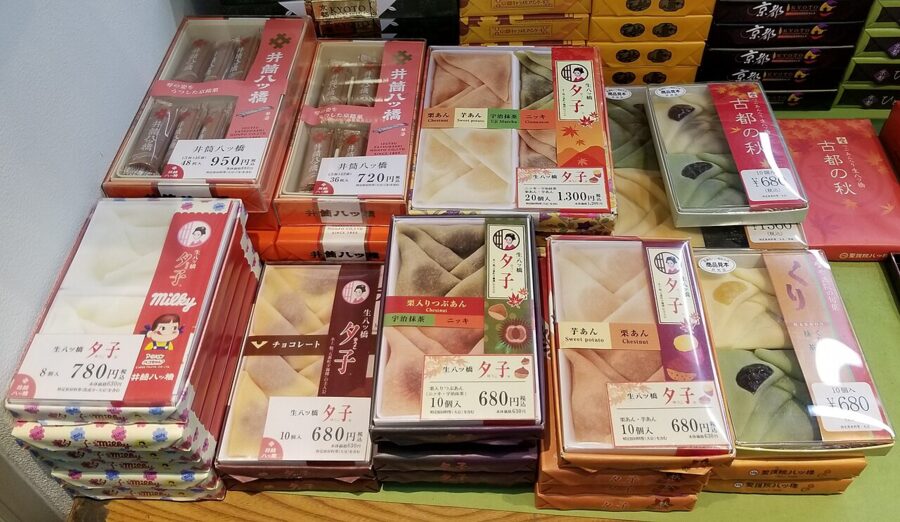
Kyoto’s souvenir is yatsuhashi, and there are two of them. The original is baked: a dough of rice flour, sugar and cinnamon, steamed, rolled thin and baked into a hard, curved cracker shaped like a koto or a bridge plank. Nama yatsuhashi, unbaked, appeared in the 1960s and was soon folded around red bean paste. That soft triangle is what most visitors now mean by the word.
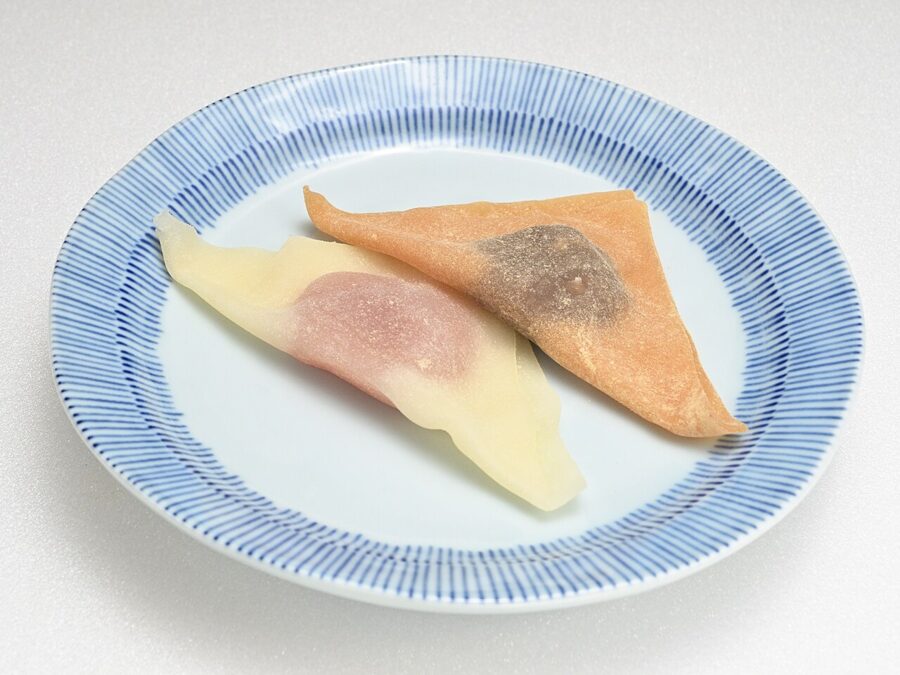
In a 2006 survey by the city, 96 percent of tourists bought sweets as souvenirs, and yatsuhashi made up 45.6 percent of those sales. The makers also fight about who came first. Shogoin claims 1689; Izutsu, founded in 1805, sued over that date and lost, at the Kyoto District Court in June 2020, the Osaka High Court in March 2021 and the Supreme Court that September.
For a gift, the practical difference is shelf life. Vacuum-packed nama yatsuhashi lasts roughly nine to eleven days unopened, but makers who skip preservatives and vacuum packing give you two to four. Baked yatsuhashi keeps far longer. If you want sweets for yourself, my wagashi guide covers the fresh ones you eat on the day.
Hiroshima: momiji manju
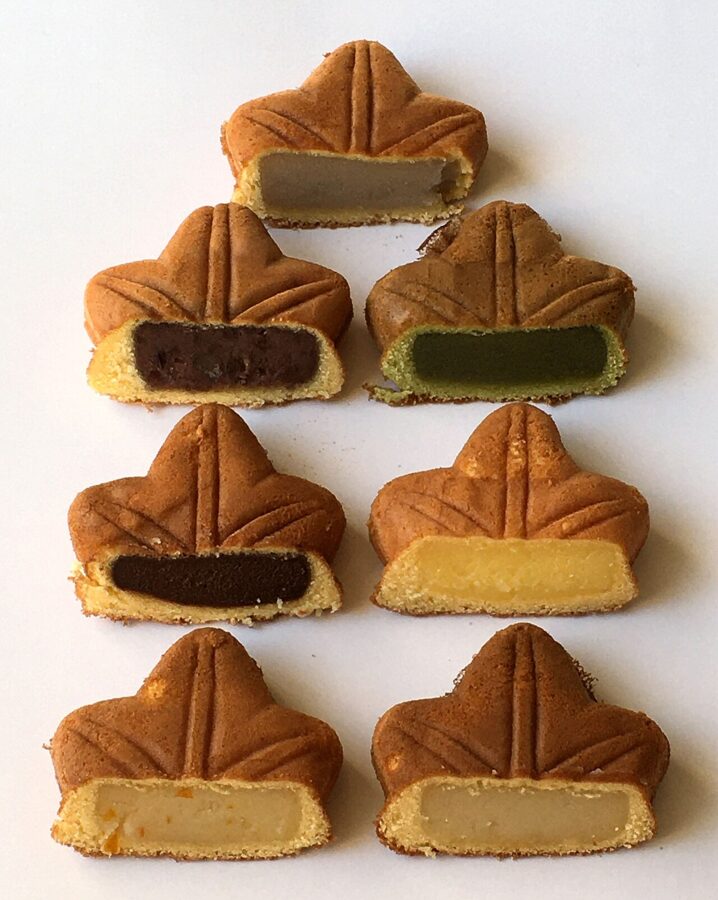
Hiroshima’s box is the maple-leaf cake, and I’ve covered it properly in my Hiroshima and Miyajima food guide. In short: buy a mixed box so the office can argue about red bean versus custard.
Fukuoka: roe and a milk bun
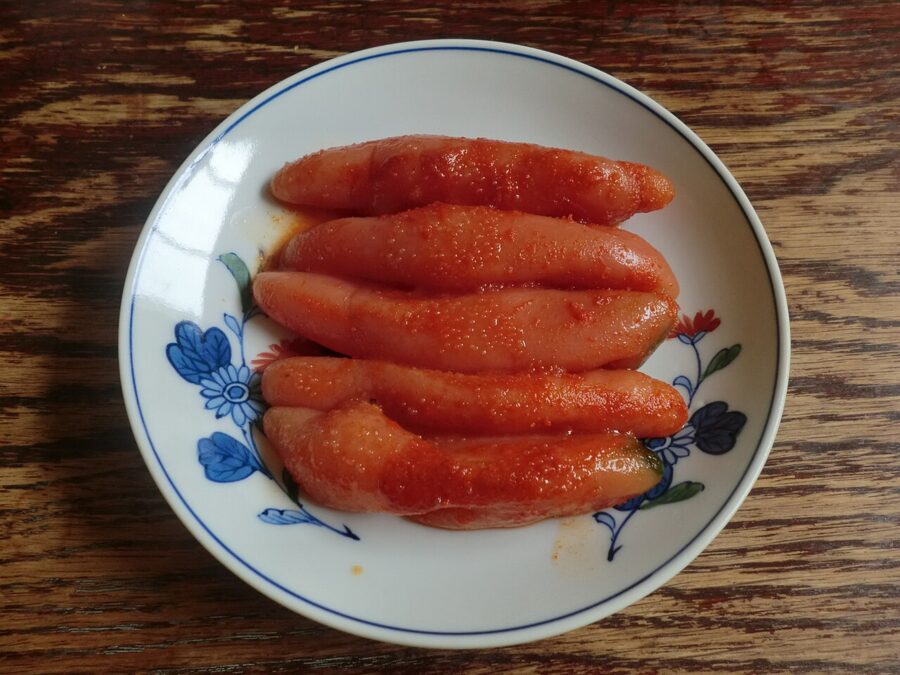
Fukuoka’s most famous food souvenir isn’t sweet at all. Spicy mentaiko, pollock roe cured and marinated in chilli, came from Korea’s myeongnan-jeot, which Kawahara Toshio had eaten as a young man in Busan. Back in Hakata after the war he spent years adjusting it for Japanese taste, sweetening the marinade and adding dashi, and his shop, Fukuya, began selling it on 10 January 1949.
He never patented the method and taught it to other makers instead, which is why every Hakata souvenir shop now has a whole refrigerated wall of it. It’s at its best on hot rice, which makes it a fixture of the Japanese breakfast. It needs a fridge, though, so treat it as a last-day purchase.
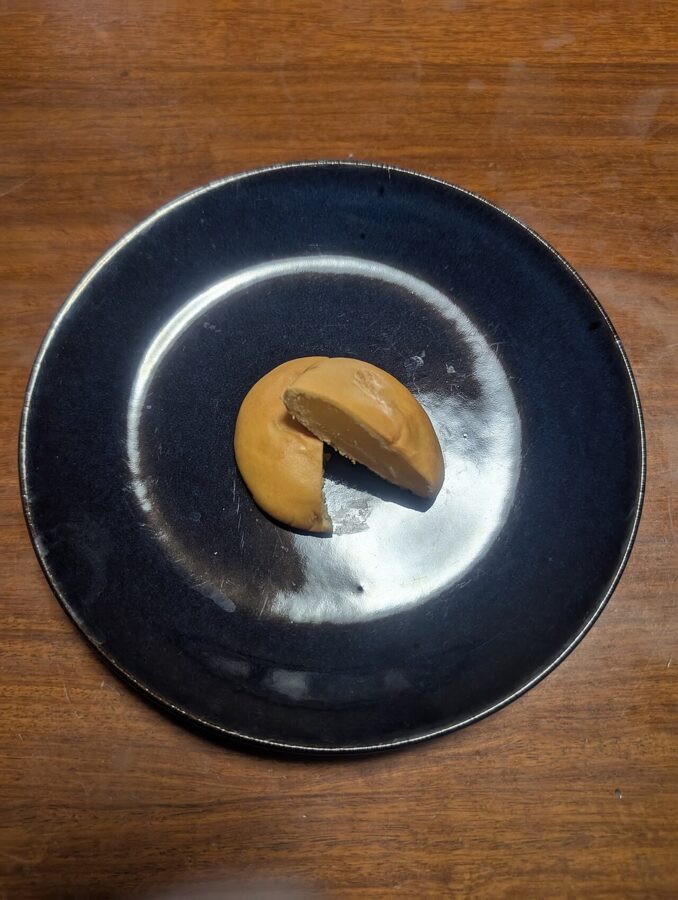
For something you can carry, Meigetsudo’s Hakata Torimon is a white-bean-paste bun with butter and cream in the dough, launched in 1993. Meigetsudo made about 64 million of them in 2019. The name is Hakata dialect for the costumed marchers of the Dontaku festival, and the bright yellow square box was designed to stand out at Fukuoka Airport.
Nagasaki and Kagoshima: castella and karukan
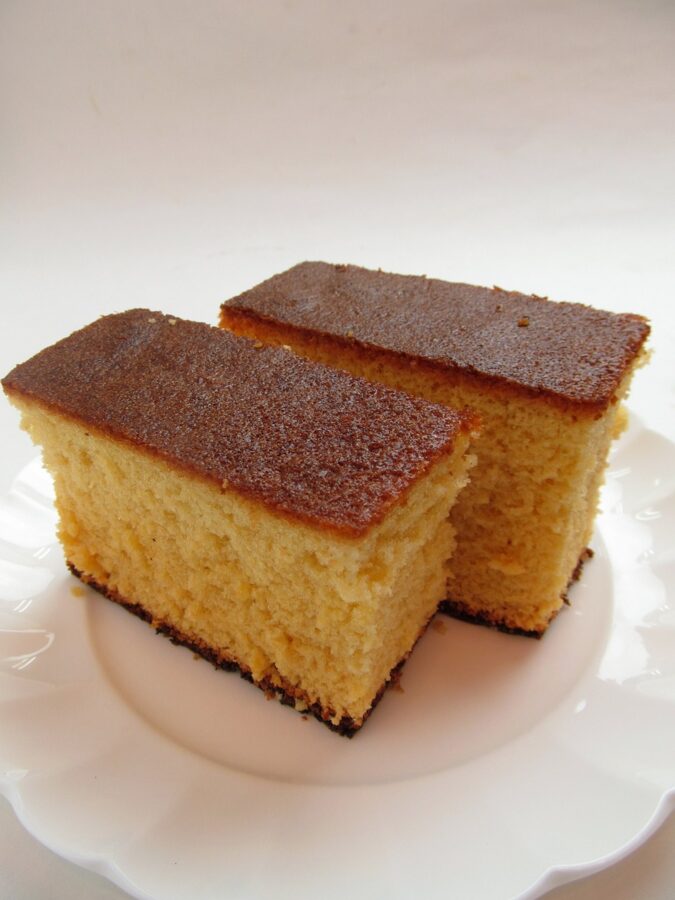
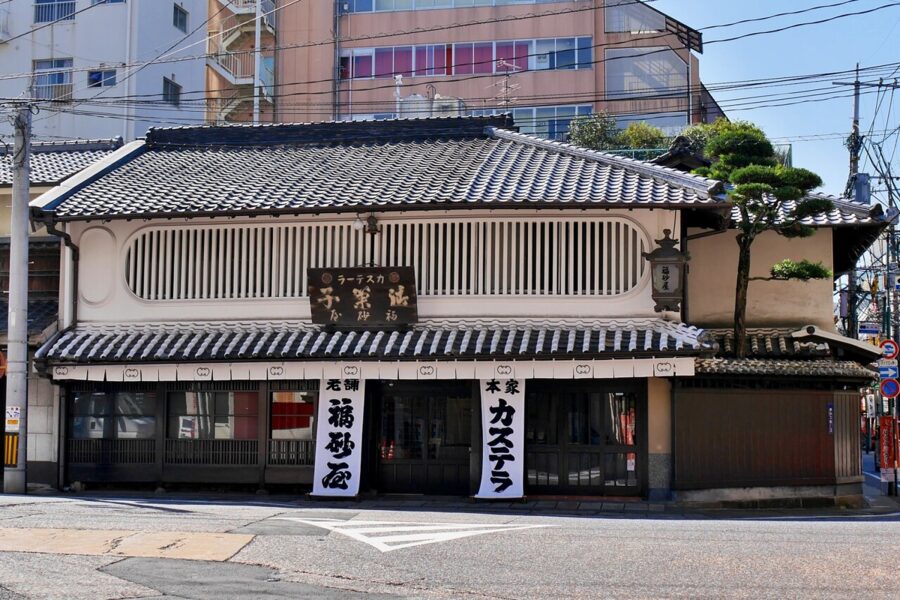
Nagasaki‘s box is castella, the sponge cake that came with Portuguese traders and became a Japanese sweet. Fukusaya, the best-known of the Nagasaki makers, dates its founding to 1624. A whole castella, sold as a long block and cut into slices, is a heavy, handsome gift.
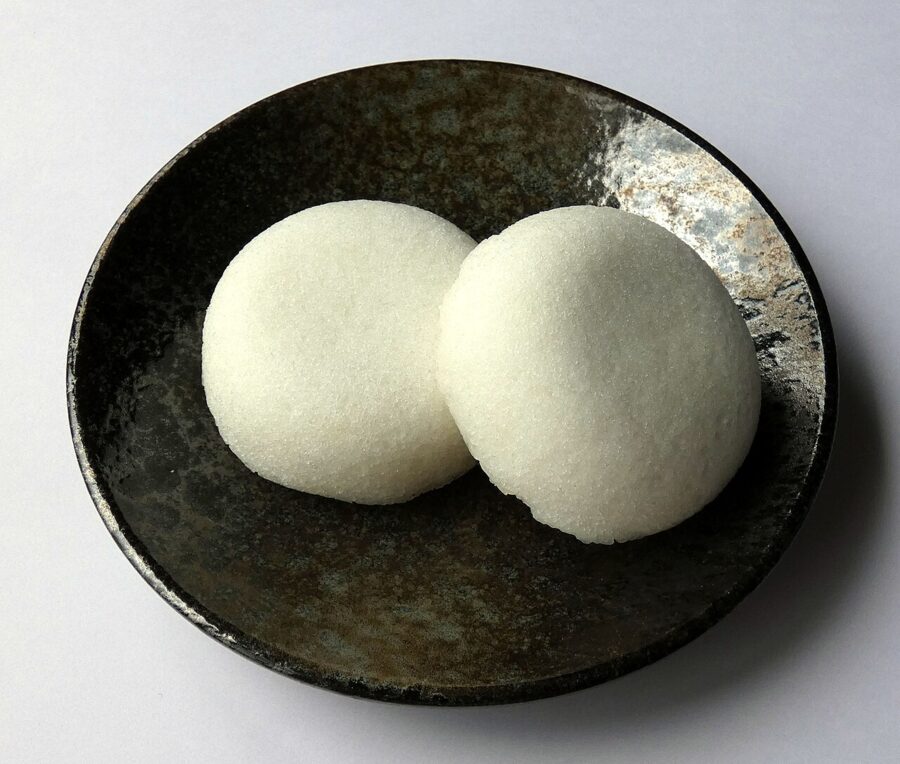
Further south, Kagoshima’s karukan is a steamed cake of rice flour, sugar and grated mountain yam, white, springy and faintly sweet. The modern souvenir form is karukan manju, wrapped around red bean paste. When the wild yam harvest is poor, karukan gets more expensive, which tells you the recipe hasn’t been cheapened.
Okinawa: purple tarts and lard biscuits
A lot of Okinawa’s souvenir shelf is purple, and that’s thanks to one village project. In 1986 a Yomitan cake shop, then called Porsche, joined a village revival scheme and started baking tarts filled with local beni-imo, purple sweet potato. The company is now called Okashi Goten, and it sells more than ten million beni-imo tarts a year. You can watch them made through the glass at its factory shops, which don’t need a booking for small groups.
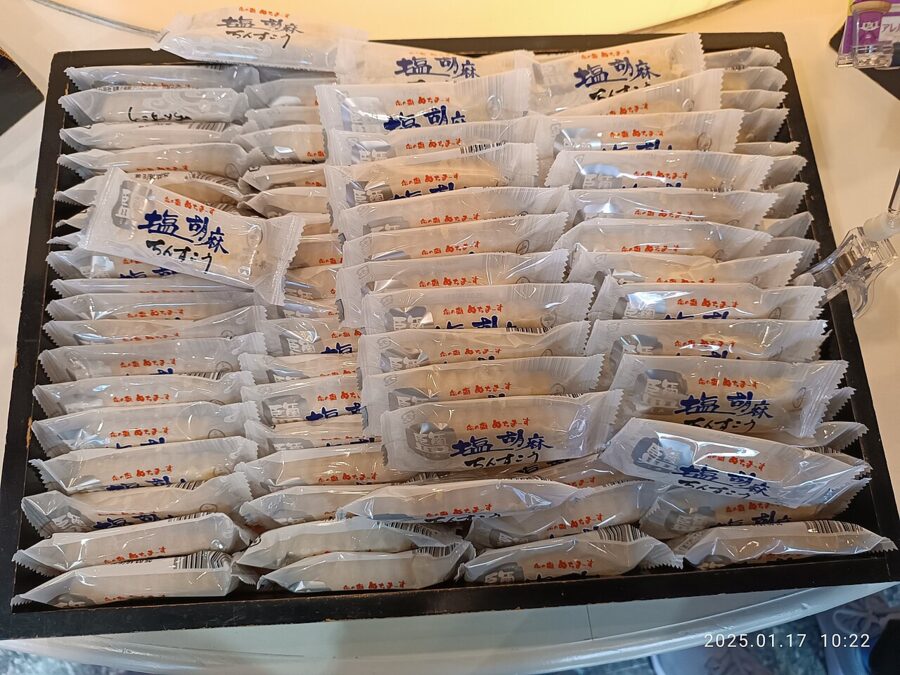
The older Okinawan biscuit is chinsuko, made with flour, sugar and lard, which began as a sweet for the Ryukyu court. The bar shape is an American contribution: a member of the Arakaki confectionery family reused cookie cutters from an American military base, which allowed mass production and the small wrapped packs you see now.
Kit Kat, Japan’s other national confectionery
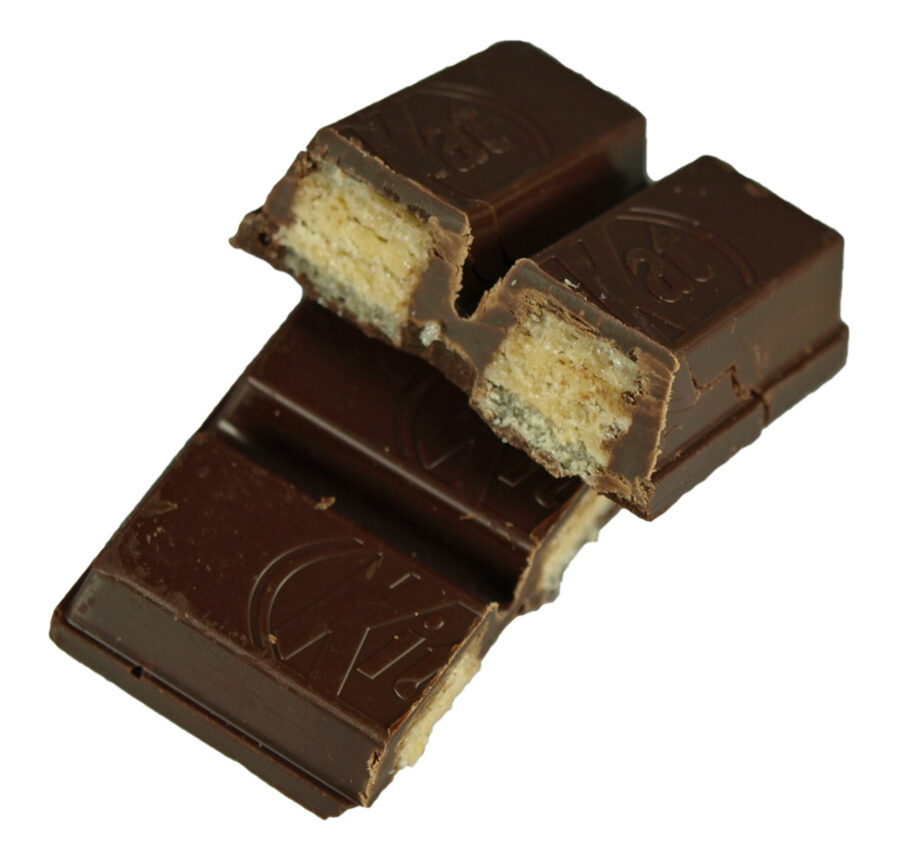
Kit Kat arrived in Japan in 1973, made by Fujiya under licence, and passed to Nestlé after it bought the brand’s British owner. Nestlé Japan makes it at its Kasumigaura factory in Ibaraki. Early on, the British recipe tasted too sweet, so the Japanese team tested strawberry as a Hokkaido-only product, found it sold, and took it nationwide. Japan also cut the standard bar from four fingers to two, to suit smaller portions.
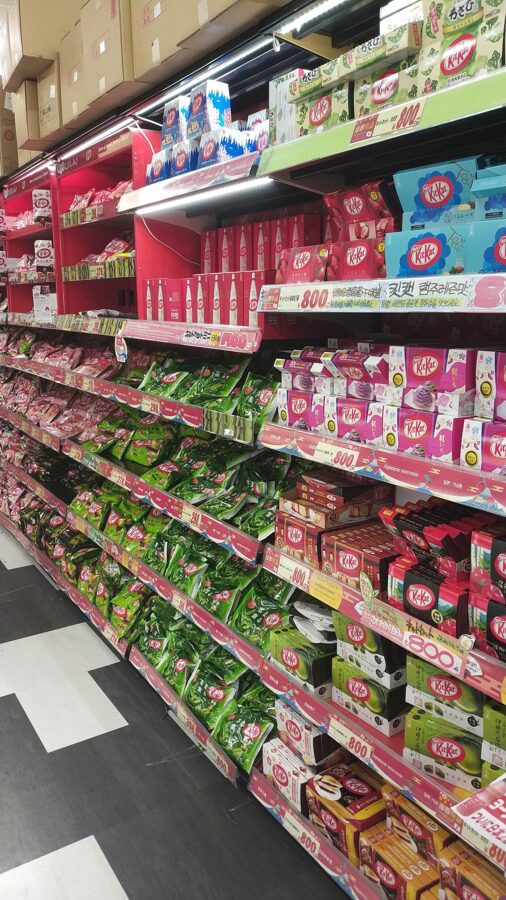
Then came a lucky accident of language. Kit Kat sounds like kitto katsu, “you’ll surely win”, and students in Kyushu started giving them to each other before exams. It’s now a national exam-season ritual, and some packs have a space on the wrapper for a message.
The regional flavours, which Nestlé calls gotouchi Kit Kat, started with Yubari melon in Hokkaido. A Tokyo soy-sauce flavour followed in 2008, and in 2009 the range was rebadged as Kit Kat Tabisaki Mail, with room on the pack to write to whoever you’re giving it to. Flavours that have carried a regional label include Shinshu apple, zunda (sweet green edamame paste) for Tohoku, Tochiotome strawberry for Tochigi, Kobe pudding, yuzu kosho for Kyushu, and beni-imo for Kyushu and Okinawa.
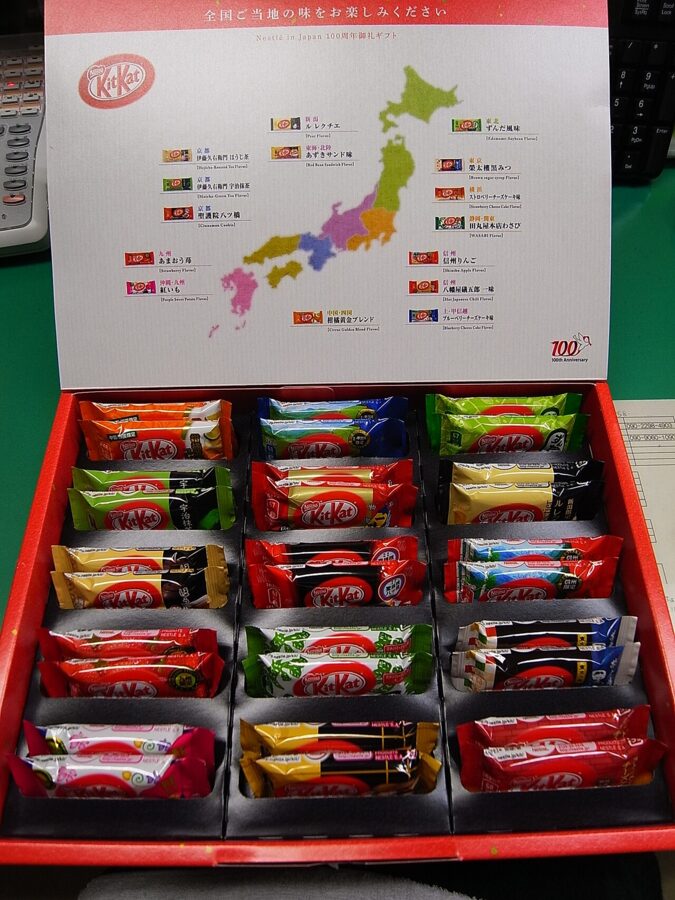
Some of the best are collaborations with old local makers. Kyoto’s Uji matcha version is made with tea from Itohkyuemon, Shizuoka’s wasabi version with Tamaruya, and the Nagano chilli version with Yawataya Isogoro, the shichimi blender from Nagano city.
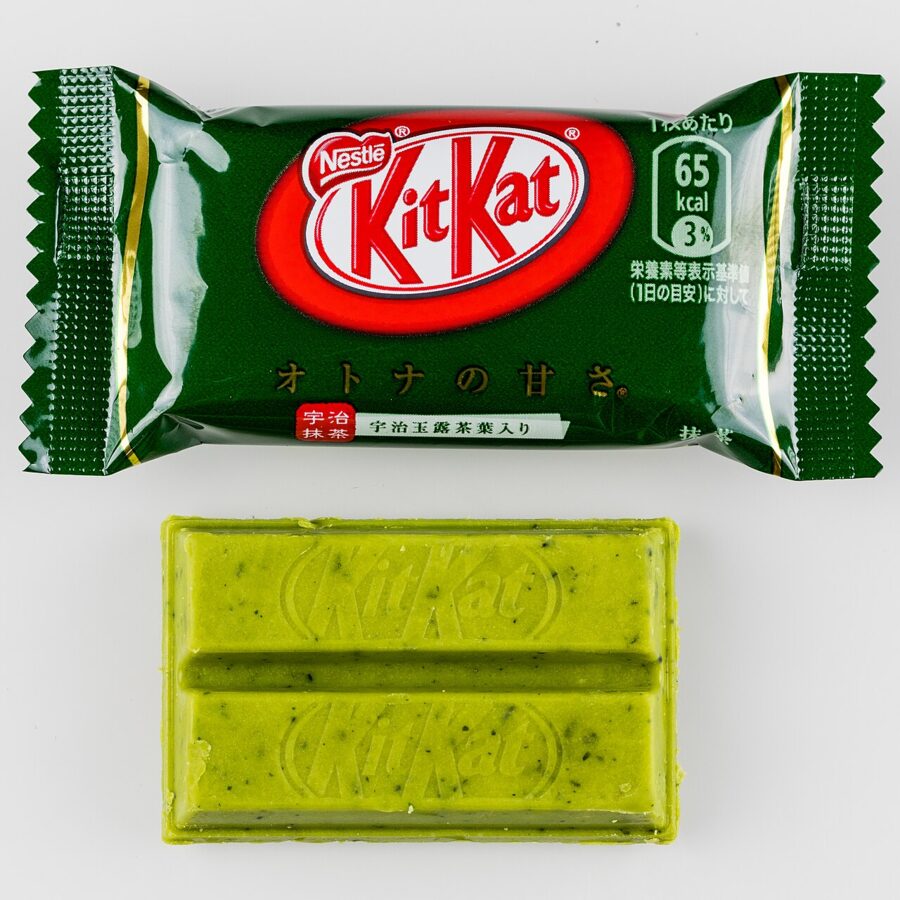
The matcha Kit Kat is the one you’ll find everywhere, and there are deeper, less sweet versions in the regular range too. If you care about the tea itself, my Japanese tea guide is a better place to spend your money in Kyoto than a chocolate bar. A practical point: the regional flavours are easiest to find at stations and airports in their own regions, while the standard flavours in big family bags are much cheaper at supermarkets than at any souvenir counter.
What’s on the supermarket shelf?
Some of the best edible souvenirs cost a few hundred yen and come from the same shelf Japanese children raid after school. They’re light, they last for months, and nobody at home has a box of them already.
Senbei and kaki no tane
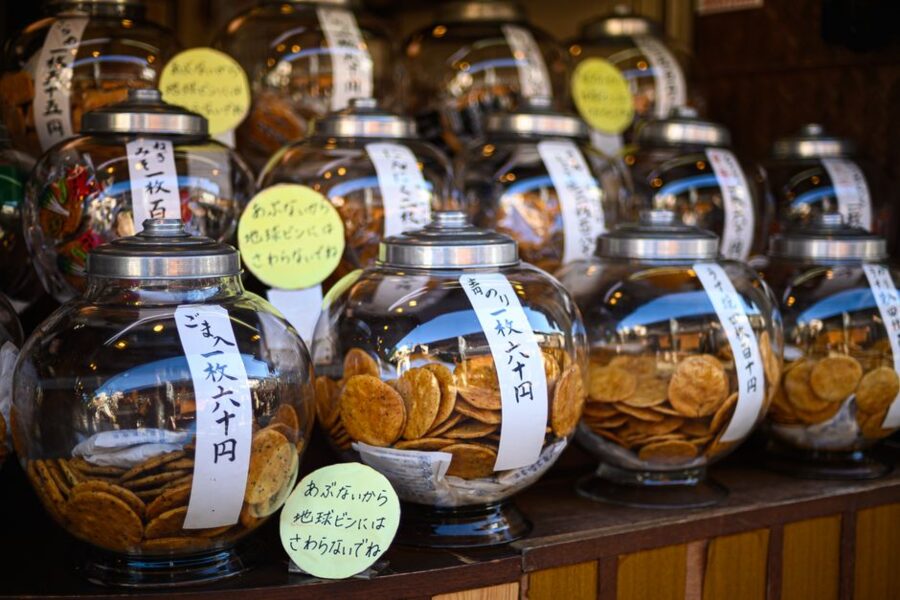
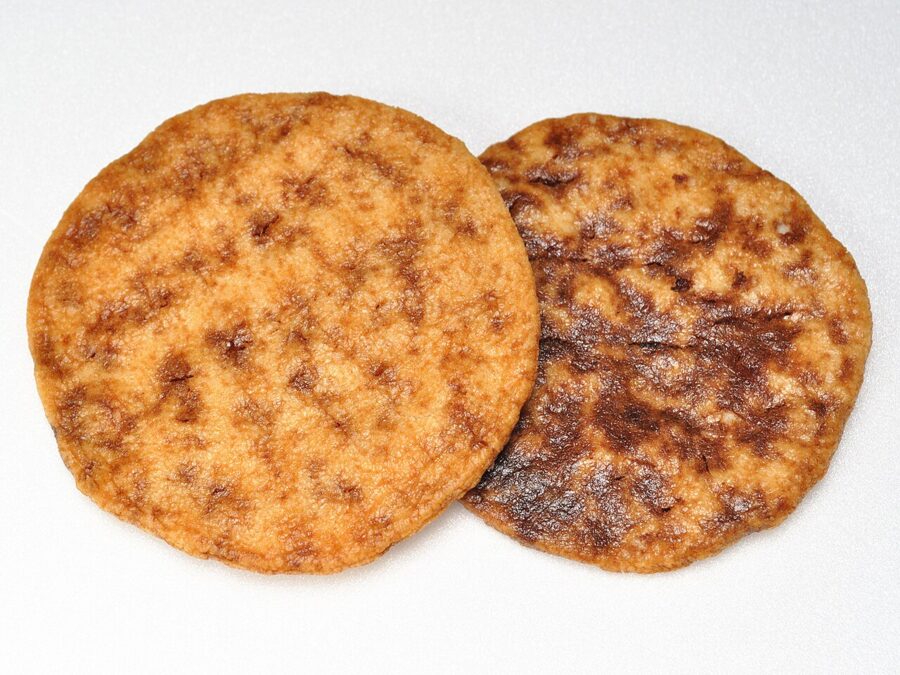
Rice crackers split into two families. The hard, toasted Soka style is named after the town in Saitama, and it’s built to fill you up. The softer, lighter Niigata style, developed from the 1960s, is designed so you keep reaching for another. Then there’s nure senbei, “wet” senbei, soft and soaked in soy sauce, which are chewy and salty and divide every room.
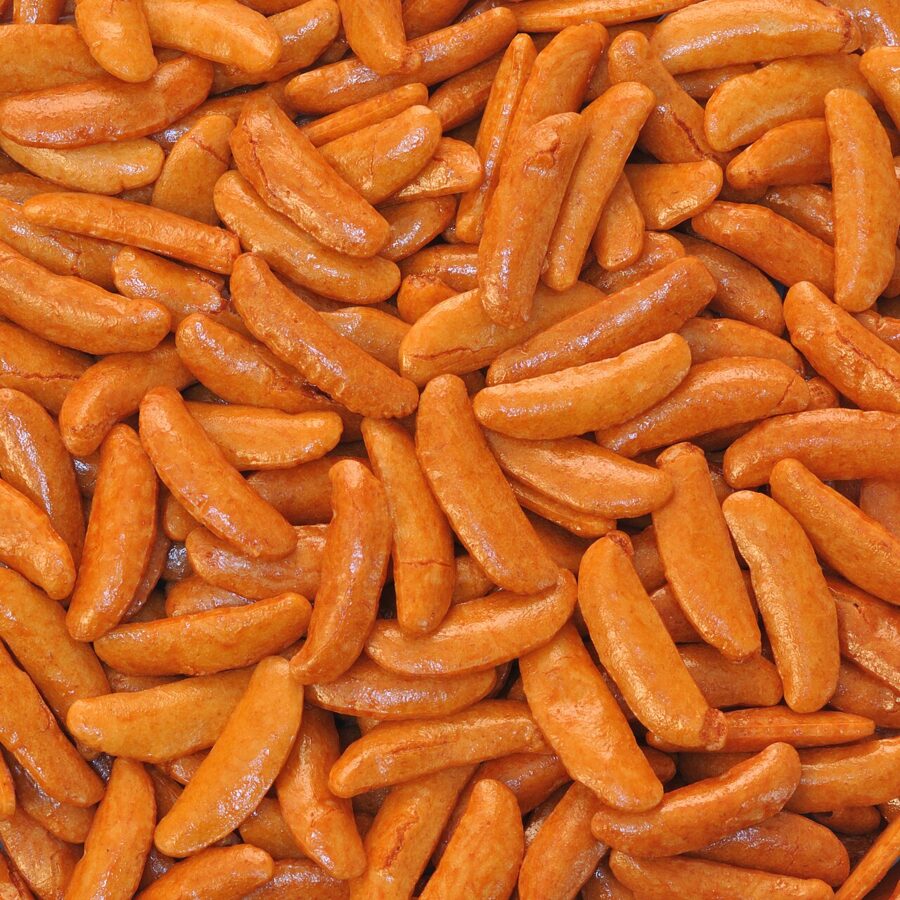
Kaki no tane, the little orange crescents of chilli-soy rice cracker, has one of the best origin stories in Japanese food. In 1923 a cracker maker in Nagaoka, Niigata, Imai Yosaburo, found that his wife had trodden on one of his oval moulds and bent it out of shape. He couldn’t straighten it, used it anyway, and a trading partner said the result looked like persimmon seeds. He sold them under that name from 1925 and never trademarked it, so anyone could copy it.
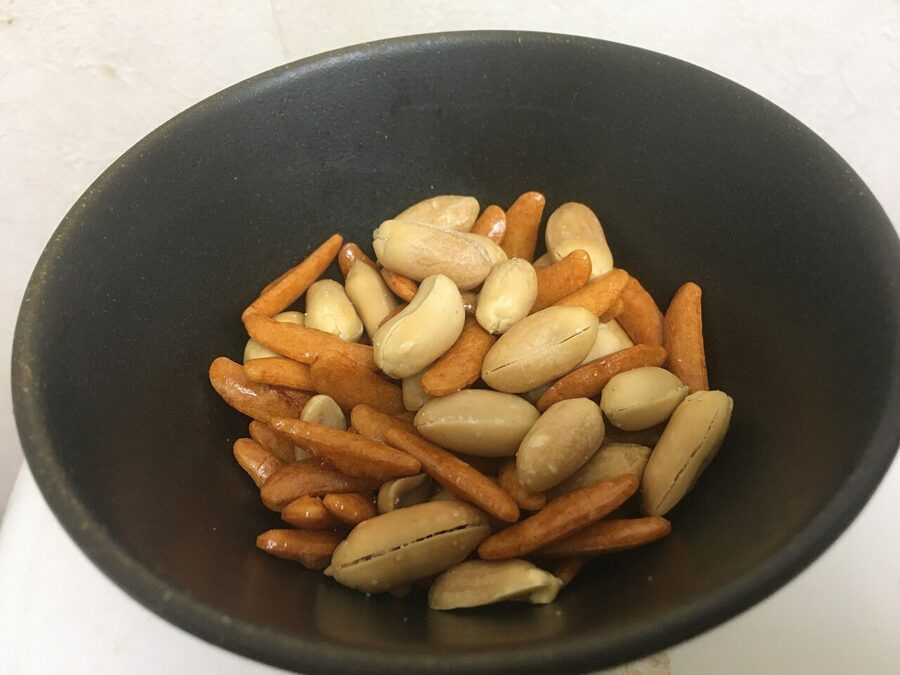
Mixed with peanuts it becomes kaki-pi, and nobody agrees who did that first. Kameda, the market leader, sells it in bags of six small packets, which also happens to be the perfect format for sharing.
Pocky, Jagariko and Umaibo
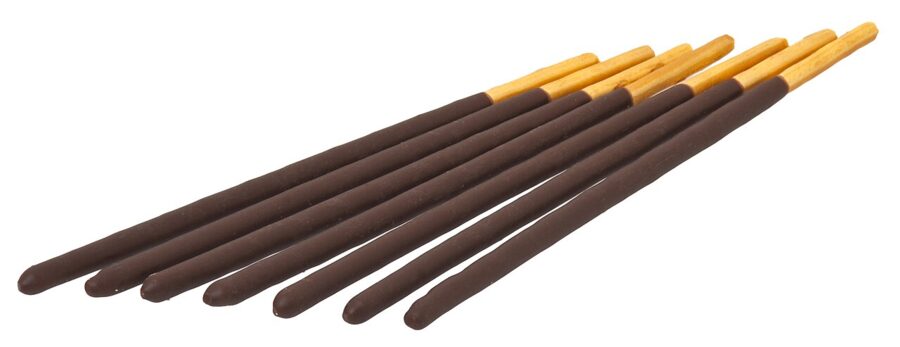
Glico launched Pocky in 1966. The problem was how to coat a biscuit stick in chocolate without coating the hand that held it, and the answer, leaving a bare handle, is said to have been inspired by Osaka’s kushikatsu skewers. In 2020 Guinness World Records named it the best-selling chocolate-coated biscuit of 2019.
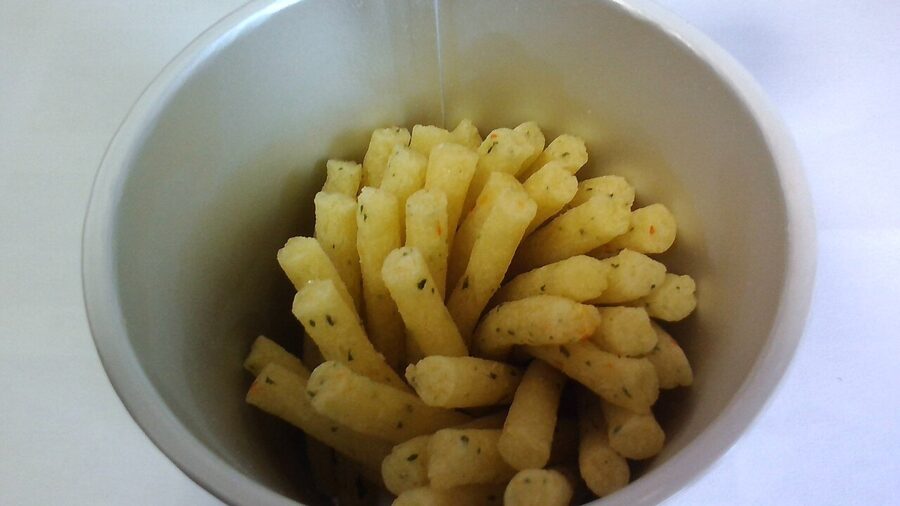
Jagariko, Calbee’s potato sticks in a paper cup, came out in 1995 and was designed for high-school girls to carry in their school bags. Early testers called it too hard and bland, and the founder agreed. The name came from a developer’s friend, Rikako, who liked the samples: jaga-imo plus Rikako, shortened. It took off from autumn 1997, and the cup makes it the ideal train snack.
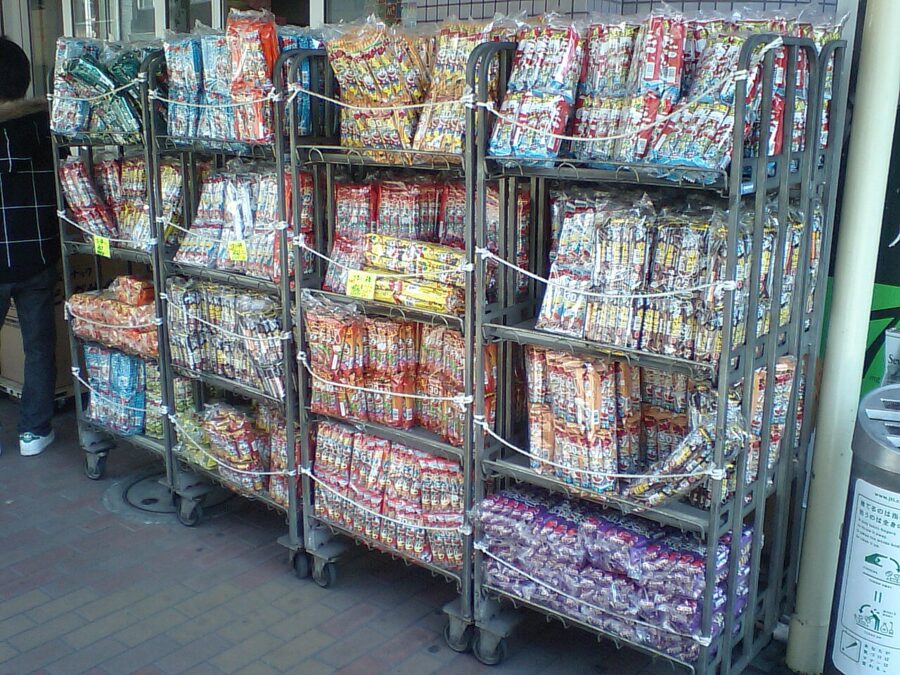
Umaibo is the cheapest thing in this guide. The puffed corn stick, made by Riska and sold by Yaokin, launched in July 1979 at ¥10 and stayed at that price for 42 years. It went to ¥12 in April 2022 and to a standard ¥15 before tax from October 2024. More than 60 flavours have come and gone, and a bag of 30 sticks is the most popular present I’ve ever brought back.
Where it’s cheapest
Convenience stores are for single packs, not for stocking up. They sell close to list price and rarely discount, so the same family bag of Kit Kat or senbei costs noticeably less at a supermarket, a drugstore chain or a discount store like Don Quijote. Supermarkets are also where you’ll find local snacks that never reach a souvenir hall, often for a fraction of the price.
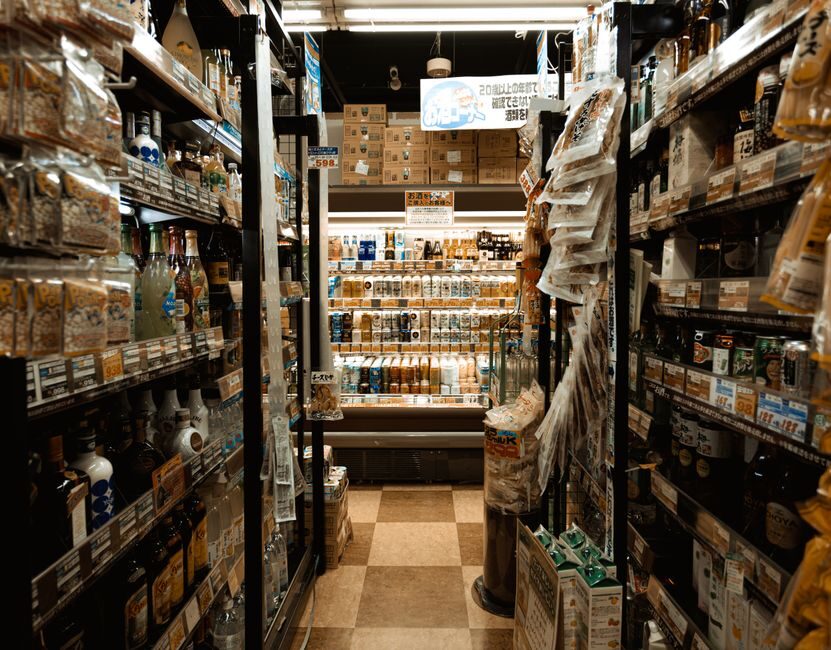
The exceptions are the regional and seasonal limited editions. Those come and go, and if you see one you like, buy it on the spot: it may not be there next week.
Stations, airports and basements: where to buy
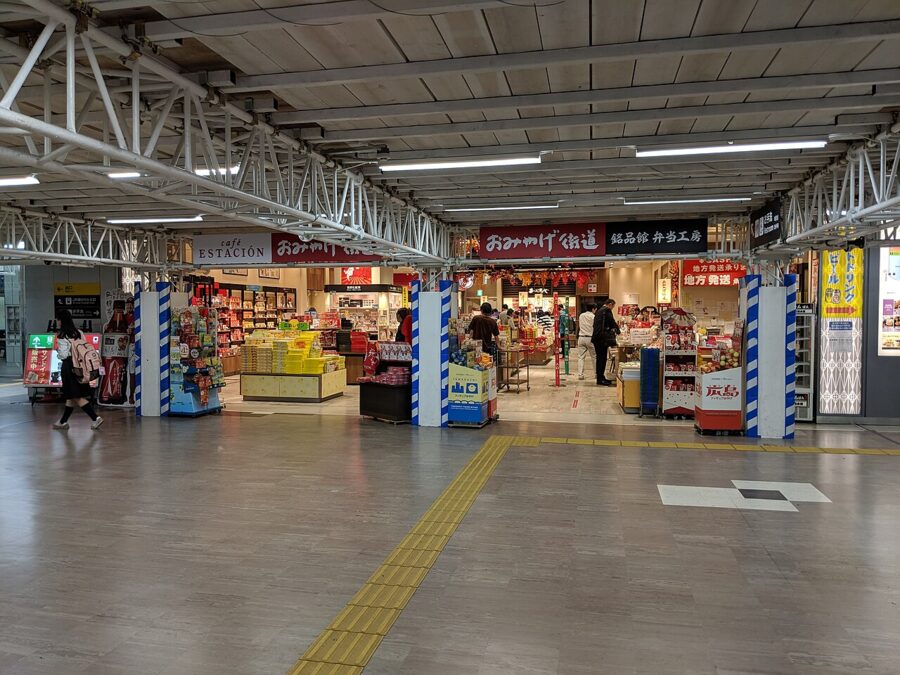
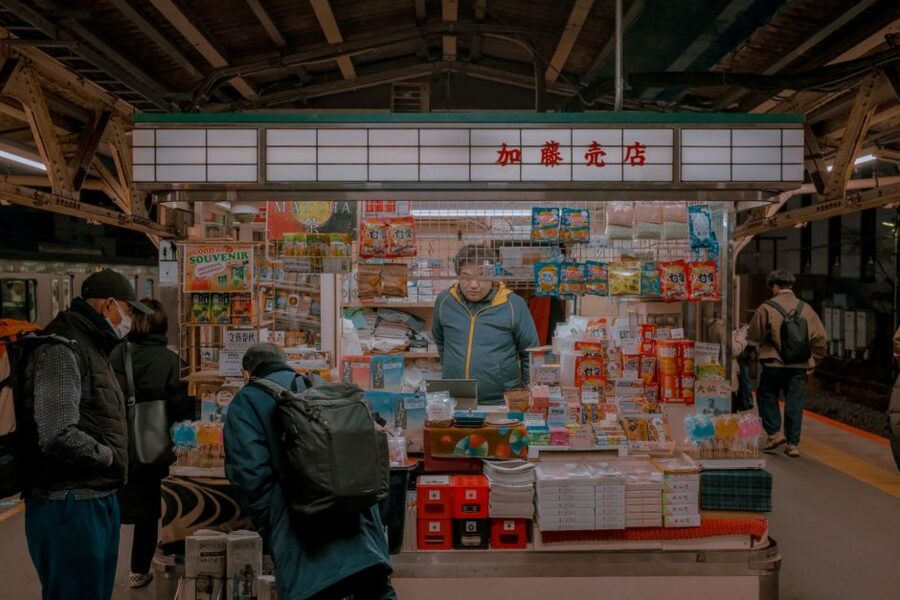
Major stations are the best one-stop shops, because they stock the whole region, not just the town. At Tokyo Station, Gransta is inside the gates and Tokyo Station Ichibangai is outside them on the Yaesu side, and between the two you could buy omiyage for all of Japan. Nagoya Station’s underground ESCA arcade has an Aoyagi shop; Hiroshima, Sendai and Hakata stations all have big souvenir halls.
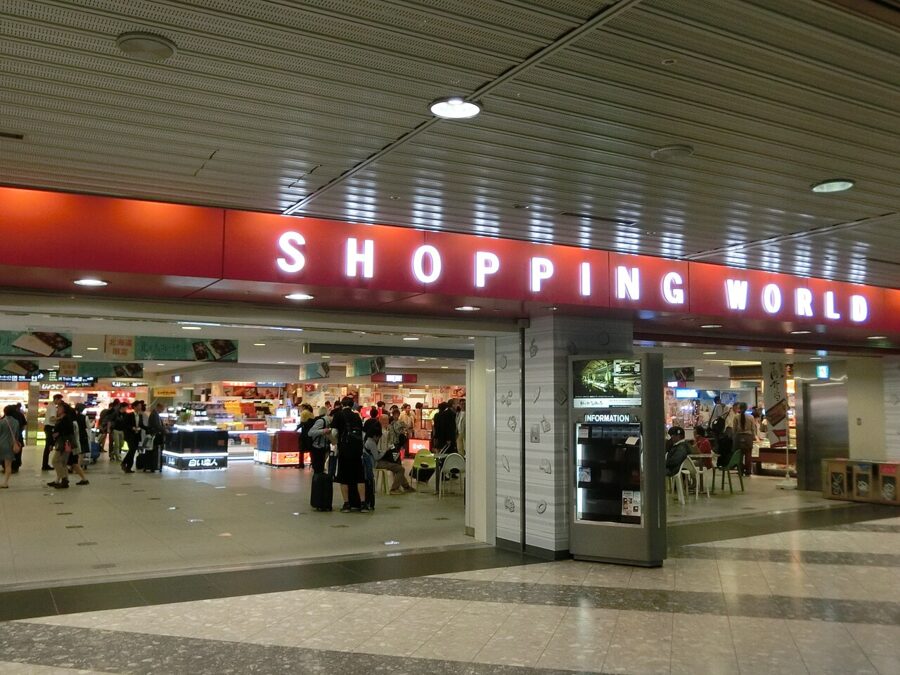
Airports are the second option, and some products were built around them. Hakata Torimon took off at Fukuoka Airport, and New Chitose Airport near Sapporo works as a Hokkaido souvenir mall, Royce’s own shop included. Buying at the airport means you carry less around, but you’re buying against the clock, and you won’t find a quiet counter before a holiday weekend.
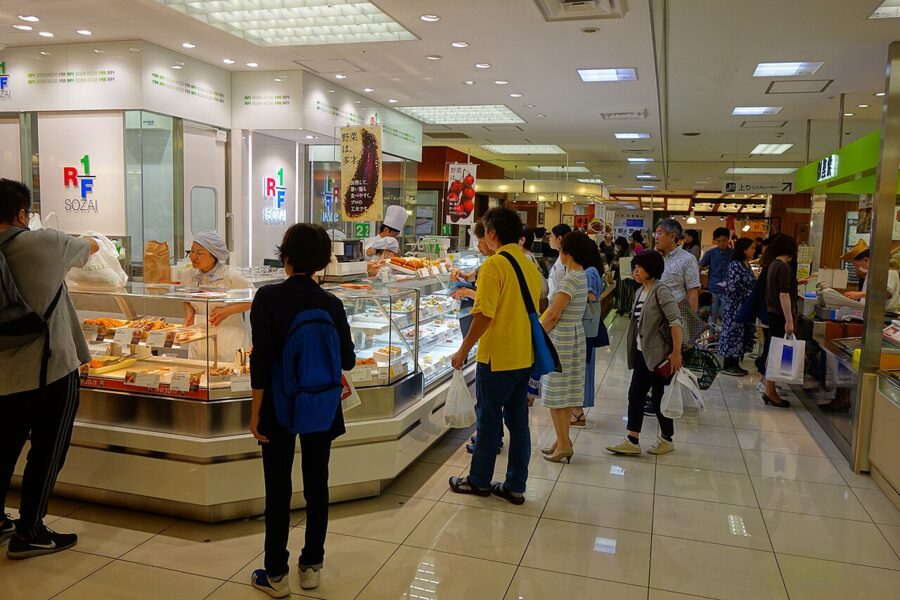
Department store basements, the depachika, are the third, and they’re where to go for the best quality. Most have counters for old regional makers as well as the city’s own, and their wrapping is better than any station kiosk’s. If you’re handing boxes over separately, ask for a paper carrier bag for each; it’s a normal request.
Tax-free shopping changed in November 2026
If you shop tax-free, the rules are new. From purchases made on 1 November 2026, Japan moved to a refund system: you pay the full price including consumption tax at the shop, and get the tax back after customs confirms at departure that you’re taking the goods out of Japan. You have 90 days from purchase to leave.
At the airport, you scan your passport at a tax-free kiosk before you check your bags, and the screen tells you whether customs wants to inspect anything. That order matters: you must have every item with you, and you can’t retrieve a checked bag afterwards. At the busiest airports, including Narita, Haneda, Kansai, Chubu, Fukuoka, New Chitose and Naha, short-term visitors can also do it online through Visit Japan Web, on the departure-hall wifi before security.
Two traps apply directly to food. The threshold is ¥5,000 before tax in one shop on one day, and the old sealed bags for consumables have gone. But if you eat any of it before you leave, you lose the refund, and the check works receipt by receipt: one missing item cancels the refund for everything on that receipt.
Food is taxed at 8 percent and alcohol at 10, so on a box of biscuits the saving is modest. Ask the shop how it pays refunds before you hand over your passport.
What travels, and what doesn’t
Most boxed omiyage is built to travel inside Japan for a few days. Getting it through a long-haul flight and a foreign customs hall is a different test.
Read the date first
Japanese labels carry one of two dates. Shohi kigen, 消費期限, is a use-by date, printed on things that spoil fast, like Akafuku and fresh cakes; after it, don’t eat it. Shomi kigen, 賞味期限, is a best-before date, a promise about quality rather than safety. Most boxed biscuits and crackers carry a best-before of several weeks or months, but always check, because the box looks the same either way.
Heat, cold and crumbs
Anything labelled for the fridge, 要冷蔵, is a problem on a long trip. Royce nama chocolate needs to stay below 10°C, and mentaiko needs refrigeration too. Shops will pack both with ice packs for a few hours, which is enough for a short domestic flight and not much more. Nama yatsuhashi and Tokyo Banana won’t melt, but their short dates mean they should be the last things you buy.
Crackers, baked yatsuhashi, Shiroi Koibito, Yukari, Hakata Torimon, chinsuko and Kit Kat are the safe list. Pack biscuit boxes flat in the middle of your case, surrounded by clothes, and keep chocolate out of a sunny hotel window. In summer, Kit Kat and Pocky soften quickly in a hot car or on a long walk.
Sake, whisky and liquids
Bottles go in checked luggage, because the 100 ml limit on hand-luggage liquids applies on international flights out of Japan. Bubble-wrap them or ask the shop for a bottle box. If you’re bringing sake or Japanese whisky home, check your own country’s duty-free allowance before you buy six.
Meat, dairy and the customs desk at home
This is where souvenirs most often go wrong. The United States requires you to declare all food, and its customs service warns that many meat products are banned, including products where meat is only an ingredient, such as a beef broth. Australia asks you to declare all food too. The EU and the UK generally refuse personal imports of meat and dairy products from outside Europe.
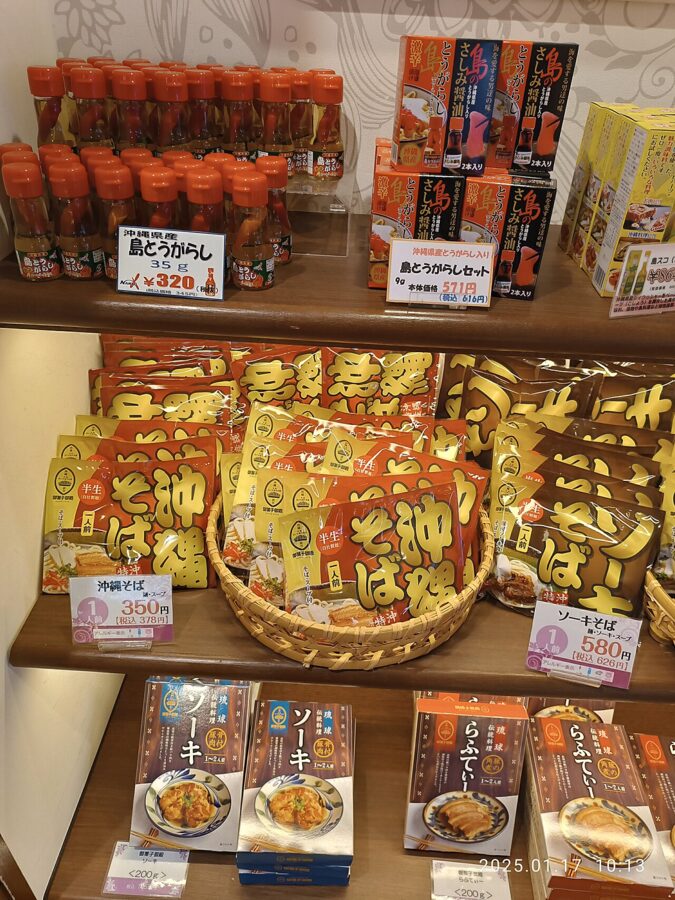
In practice that rules out a lot of Japan’s savoury souvenirs. Pouches of retort curry made with beef or pork, ramen kits with pork-based soup, Okinawan rafute and soki, and frozen gyoza are all likely to be confiscated. Fish products such as mentaiko are treated differently in some countries and not in others. Biscuits, crackers, chocolate and boxed sweets are rarely a problem, but declare them anyway: declaring costs you a minute, and not declaring can cost a fine.
Prices, and a short list of things to skip
For scale: one Umaibo is ¥15 before tax. A box of 12 Shiroi Koibito is ¥1,144 and a box of 24 is ¥2,289, while 20 squares of Royce nama chocolate are ¥1,215. That’s a little under ¥100 a biscuit for Shiroi Koibito, which is about the going rate for a big-name box.
Weight matters as much as price. If you’re flying with a budget airline’s 7 kg cabin allowance, a box of 24 Torimon at 1.2 kg is a sixth of it, while a bag of Umaibo or Jaga Pokkuru weighs next to nothing. Buy dense sweets for the people you see often, and light snacks for everyone else.
And the skip list:
- Akafuku as a gift for anyone outside Japan. It won’t survive the trip, so eat it in Ise.
- The “Koibito” lookalikes. Parodies of Shiroi Koibito turn up all over Japan; buy one only if the joke is the gift.
- Multipacks at convenience-store prices.
- Royce nama chocolate on a long, hot journey without a cool bag. Take the potato chip chocolate instead.
- Tokyo Banana on the first day of a two-week trip.
- Anything with meat in it, if you’re flying home to the United States, Australia, the EU or the UK.
My own routine has settled into something simple. Buy the light, long-lasting snacks from supermarkets as you go, and leave the boxed regional sweets for the last station or the airport. Count the desks before you choose a box, then add two.