Sukiyaki and Shabu-Shabu: The Japanese Hot Pot Guide, from Yokohama Gyunabe to Ryogoku Chanko
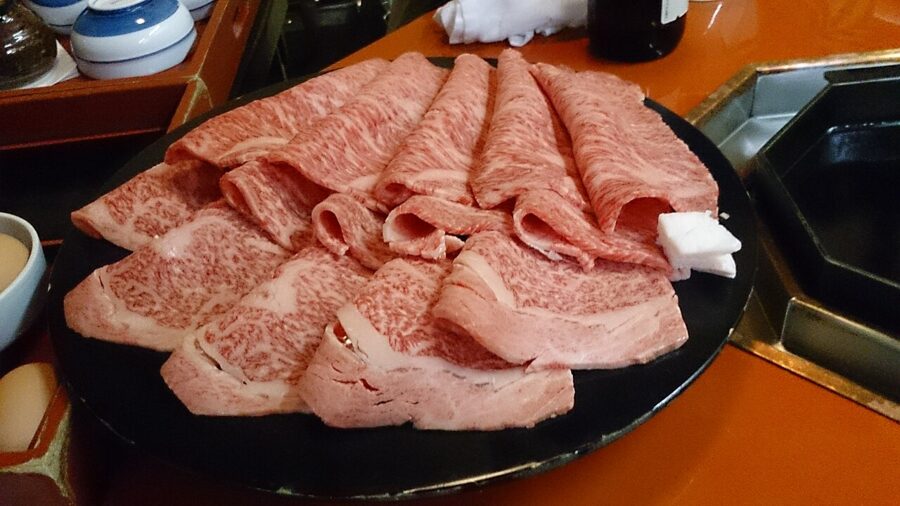
The pot came to the table with a chimney. A copper funnel rose through the middle of it, a ring of water with a strip of kelp sat around the funnel, and the server lit the burner and left me alone with a plate of beef sliced so thin the pattern of the plate showed through. I had eaten from exactly that shape of pot before, on my three days in Beijing, where it holds clear broth for paper-thin mutton. This was Kyoto, and the dish was shabu-shabu.
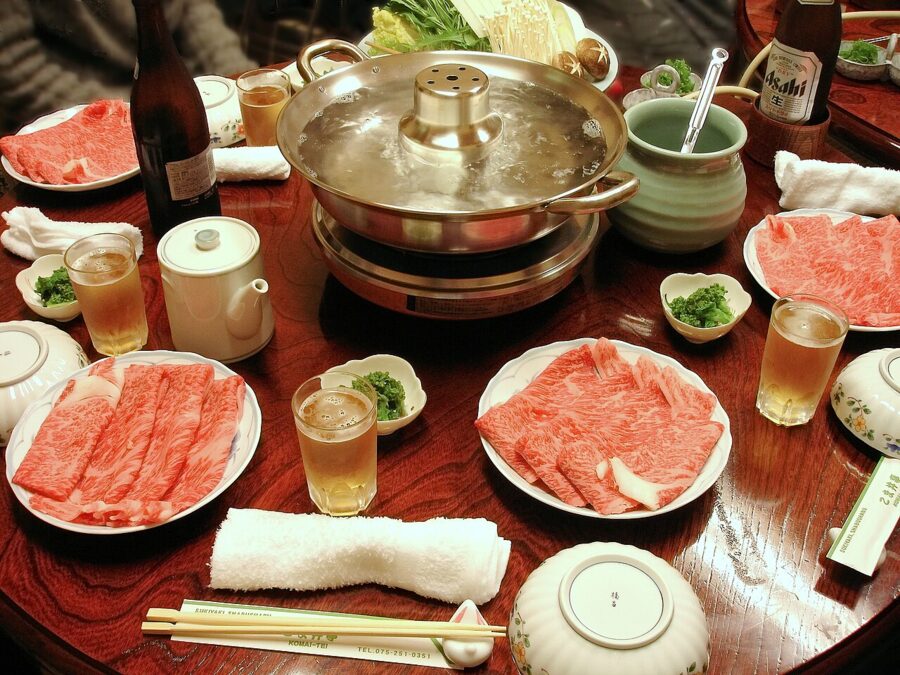
The likeness isn’t an accident. Shabu-shabu reached Kyoto from Beijing in 1945, carried home by a doctor from Tottori who collected folk crafts. Sukiyaki, the other famous Japanese beef pot, comes from the opposite direction entirely: a shallow iron pan, a lump of beef fat, sugar and soy sauce, and no broth to speak of. In Shenzhen, hot pot meant Sichuan hotpot in a split pot of chilli oil, so it took me a while to accept that the Japanese versions are meant to taste of the meat and very little else.
Japanese has one word for all of it: nabe, the pot, or nabemono, things in a pot. Sukiyaki and shabu-shabu are the two that travel, but every region has its own. Akita grills pounded rice on cedar skewers and drops it into chicken broth, and sumo stables cook one communal pot for the whole house. Osaka simmers whale with mizuna, Yamanashi stews flat noodles in miso, and Kyoto puts a block of tofu in hot water and calls it dinner.
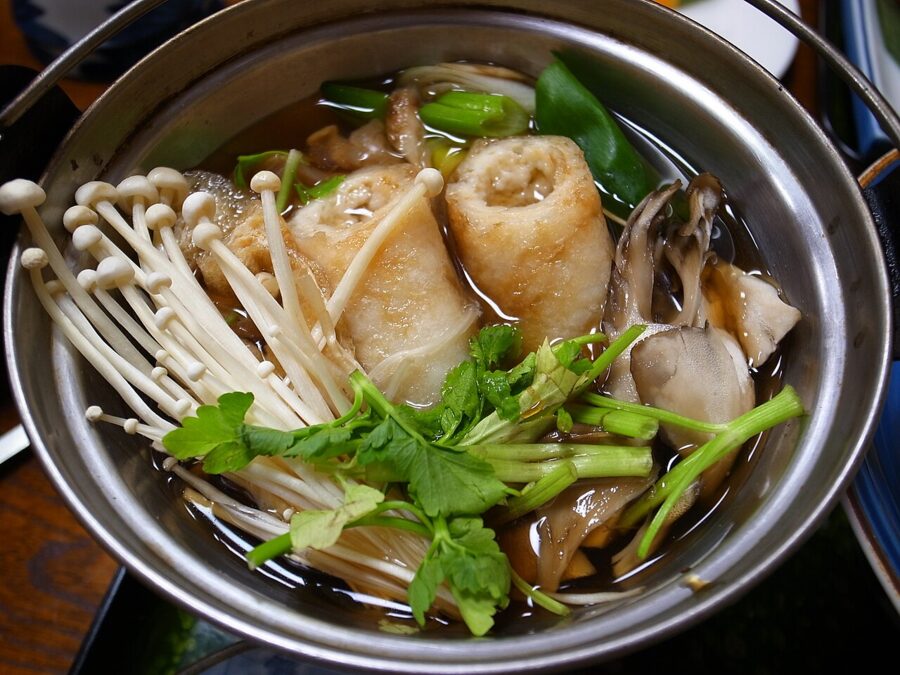
This guide covers sukiyaki and shabu-shabu in depth, from their history to the old restaurants still serving them, then widens out to the regional pots, the noodles or rice that finish every nabe, table manners and prices. My guide to Japanese wagyu covers the beef itself, so here it only matters for what happens to it in the pan.
| Pot | Where it’s from | What’s in it | How it’s seasoned | How you eat it |
|---|---|---|---|---|
| Sukiyaki, Kansai style | Kyoto, Osaka, Kobe | Beef, negi, tofu, shirataki, greens | Beef seared in fat, then sugar and soy straight onto the meat | Dipped in raw egg |
| Sukiyaki, Kanto style | Tokyo, Yokohama | Same, often with shungiku and shiitake | Warishita: soy, mirin, sake and sugar mixed in advance | Dipped in raw egg |
| Gyunabe | Yokohama, 1860s | Cubed or sliced beef, negi | Miso or warishita in a shallow iron pan | Straight from the pan |
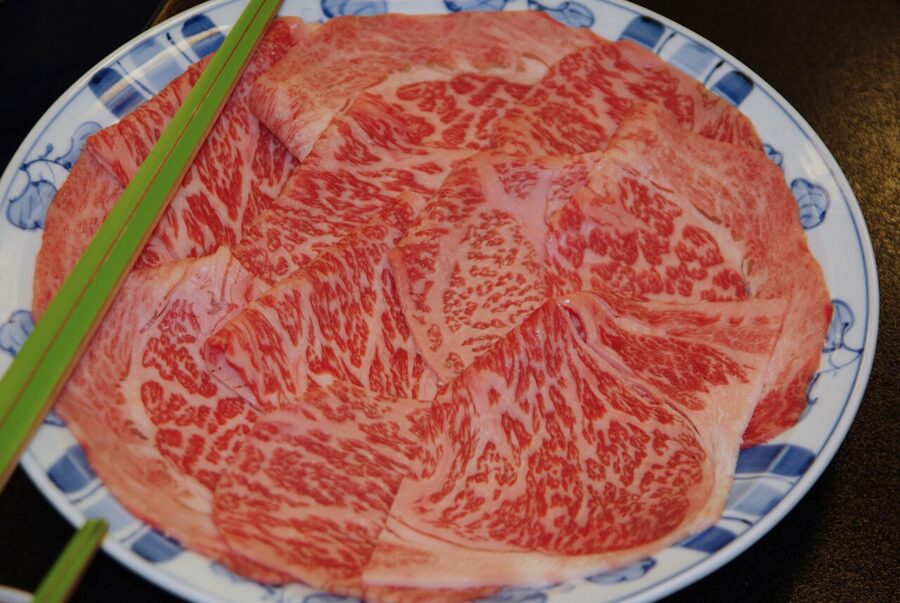
| Shabu-shabu | Kyoto and Osaka, 1940s and 1950s | Paper-thin beef or pork, vegetables, tofu | Plain water or kelp stock | Swished, then dipped in sesame sauce or ponzu |
| Chanko nabe | Sumo stables, Tokyo | Chicken, fish or pork, vegetables, tofu, meatballs | Chicken stock with soy, salt or miso | Ladled into bowls |
| Motsunabe | Fukuoka | Beef or pork offal, cabbage, garlic chives | Soy or miso, garlic, chilli | From the pot, noodles at the end |
| Mizutaki | Fukuoka (and Kansai) | Bone-in chicken | Milky chicken stock | Ponzu |
| Yosenabe | Everywhere | Whatever is in season: fish, shellfish, chicken | Seasoned dashi | From the pot |
| Ishikari nabe | Hokkaido | Salmon, onion, cabbage, tofu | Miso, sansho pepper on top | From the pot |
| Kiritanpo nabe | Akita | Grilled rice sticks, chicken, burdock, seri, maitake | Chicken stock, soy | From the pot |
| Ankou nabe | Ibaraki | Anglerfish flesh, liver, skin | Miso or soy, or liver-thick dobu-jiru | From the pot, winter only |
| Harihari nabe | Osaka | Whale (now often pork or duck) and mizuna | Light dashi | From the pot |
| Botan nabe | Tamba Sasayama, Hyogo | Wild boar | Miso | From the pot |
| Hoto | Yamanashi | Thick flat wheat noodles, pumpkin | Miso | Served in its own iron pot |
| Yudofu | Kyoto | Tofu | Hot water and kelp | Dipped in a soy-based sauce |
In This Article
- Beef, after a thousand years without it
- A spade, a cedar box and a doctor in Nagasaki
- Yokohama, 1862
- How Tokyo’s gyunabe turned into sukiyaki
- Kanto or Kansai? Two ways to start the pan
- Kansai: sear first, sugar on the meat
- Kanto: warishita
- The raw egg
- What goes in, and the shirataki myth
- The old sukiyaki houses still cooking
- Tokyo: Asakusa and Nihonbashi
- Yokohama: the original gyunabe
- Kyoto: Teramachi and Kiyamachi
- Osaka: Dotonbori
- Cheaper sukiyaki
- Shabu-shabu: a Beijing pot, a Kyoto kitchen, an Osaka name
- Yoshida Shoya and Junidanya, 1945–1947
- 1952: Suehiro gives it a name
- Tottori’s susugi nabe
- Sesame, ponzu and the order of things
- Two sauces
- What goes in, and when
- Beyond beef
- Where to eat shabu-shabu, from ¥1,099 to five figures
- The chains and tabehoudai
- The founding houses
- Chanko and the Ryogoku connection
- Why sumo eats from one pot
- Eating chanko in Ryogoku
- A map of Japan in hot pots
- Hokkaido and Tohoku
- Kanto
- Central Japan
- Kansai
- Kyushu and Okinawa
- The everyday ones
- How a nabe meal ends
- Who cooks? Service and manners at the pot
- What it costs
- Skip this
Beef, after a thousand years without it
For most of Japanese history, beef was not food. Buddhist rules and a run of imperial bans kept four-legged animals off the table for the best part of a millennium, and an ox was something that pulled a plough. My piece on the history of Japanese food covers that long meat-free stretch and how the Meiji government ended it. What matters here is that when beef did arrive, in the 1850s and 1860s, Japan cooked it in a pot.
A spade, a cedar box and a doctor in Nagasaki
The word sukiyaki is older than the beef. A cookery book of 1643, Ryori Monogatari, describes sugiyaki, fish and vegetables simmered in miso inside a box of cedar, sugi. Then in 1801 another, Ryori Hayashinan, gives suki-yaki: duck or other birds grilled on the iron blade of an old spade, the suki, held over a fire. Japanese food historians usually treat both as ancestors, and the spade explains the flat pan.
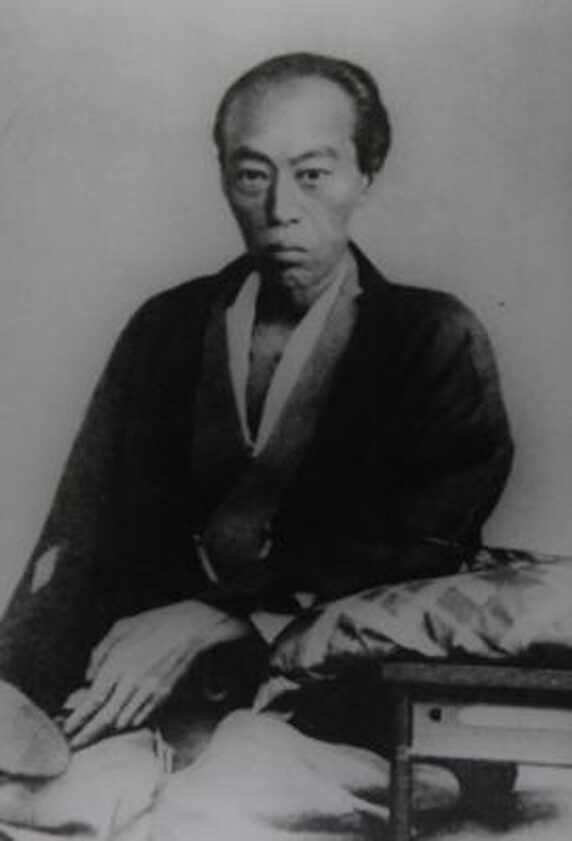
The first beef sukiyaki on record is a doctor’s. On the fifth day of the first month of 1854, the physician and scholar Mitsukuri Genpo wrote in his travel diary that he had eaten beef cooked on a plough blade in Nagasaki, the port where Dutch and Chinese traders had eaten meat for generations.
Yokohama, 1862
Beef went mainstream through Yokohama. The port opened to foreign residents in 1859, local farmers refused to sell their oxen to be eaten, and the foreigners shipped cattle in from China, Korea and America until dealers in Kobe started sending Japanese cattle east. In 1862 an Irifune-cho tavern called Isekuma split its premises in two and turned one half into a gyunabe shop, beef in a pot, and Japanese sources count it as the first.
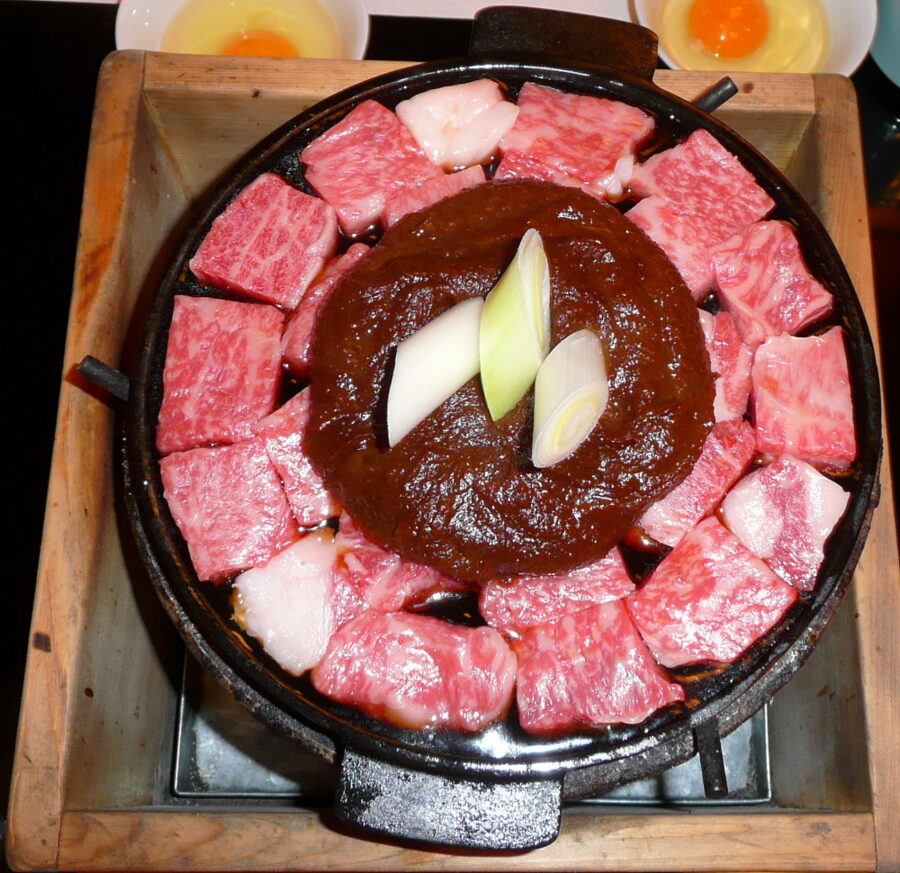
Six years later, in 1868, a cook named Takahashi Otokichi opened a beef shop in Yokohama that is still there. He borrowed the method from botan nabe, the wild boar pot, simmering cubes of beef in miso with negi to cover the smell, in a shallow iron pan over a charcoal brazier. In 1885 the shop moved for a while to the Ota district, where a rope curtain, nawanoren, hung at the door to keep out flies, and locals started calling it Ohta Nawanoren. The name stuck, and the cubes are still cut the same way.
Gyunabe became the badge of the new age. In 1871 the writer Kanagaki Robun set a whole comic book, Aguranabe, in Tokyo beef houses, and one line from it is still quoted: whoever doesn’t eat beef pot is an unenlightened fool. Tokyo had about 70 beef-pot shops in 1875. Two years later it had 550.
How Tokyo’s gyunabe turned into sukiyaki
Early gyunabe was a loose category. Meat and negi were the only constants, the seasoning was miso at first and soy by the late 1870s, and customers more or less decided the rest. In Osaka, meanwhile, “sukiyaki” still meant fish: sea bream or pike conger simmered in dashi, with the soy and sugar set beside the pot so each customer could season it. Beef sukiyaki only took over in Osaka around 1897, after the war with China.
Then the two traditions met. Chinya in Asakusa opened as a restaurant in 1880 and says it became a sukiyaki specialist in 1903 because the Kansai style was spreading through Tokyo. After the Great Kanto Earthquake of 1923, Kansai-style restaurants moved into the rebuilt city, the Tokyo beef houses took the more fashionable name, and the word gyunabe now survives mostly in Yokohama and on gyudon-chain menus.
Kanto or Kansai? Two ways to start the pan
Every Japanese family has an opinion on this. The difference is the first five minutes.
Kansai: sear first, sugar on the meat
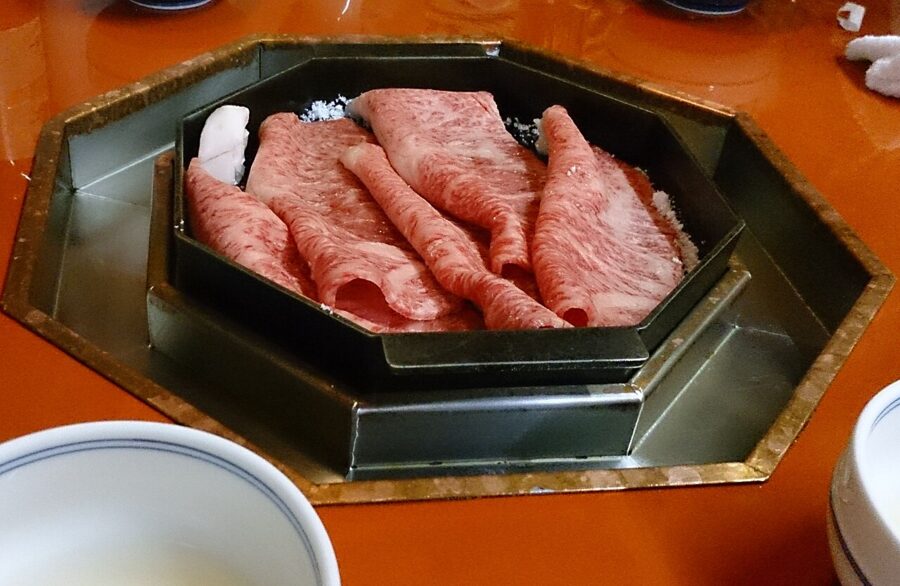
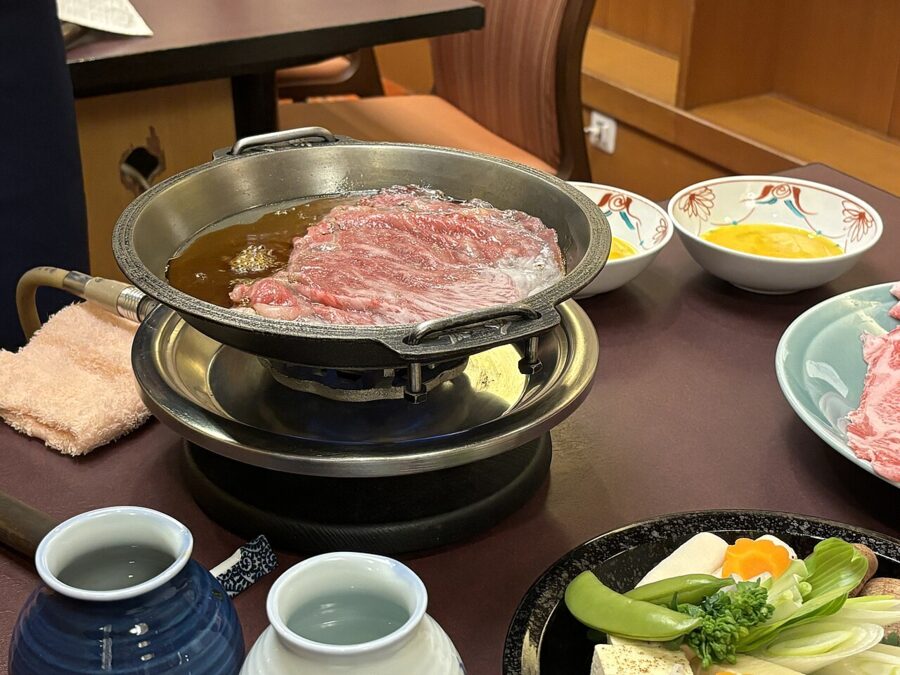
In Kyoto, Osaka and Kobe, the pan goes on dry. Someone rubs a cube of beef fat around it until it shines, lays a few slices of beef flat, and when they colour, sprinkles sugar straight over them, then soy sauce, a splash of sake. You eat that first round of beef on its own, before a single vegetable goes in. Only then do the negi, tofu and greens arrive, and the pan becomes a pot.
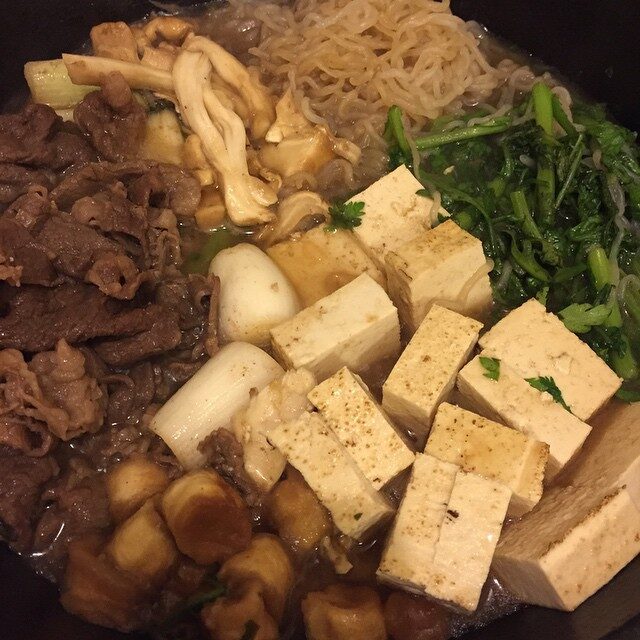
Kyoto cooks tend to use zarame, a coarse amber sugar, with a little warishita, while Osaka and Kobe use sugar, soy and dashi separately. The point of all of it is the seared crust on the beef, and the fat that renders into the pan before any liquid can dilute it.
Kanto: warishita
In Tokyo and Yokohama the seasoning is mixed in advance. Warishita is soy sauce, mirin, sake and sugar, sometimes with dashi, poured into the hot pan so the beef simmers rather than fries. It’s easier to control, and it’s what bottled sukiyaki sauce imitates.
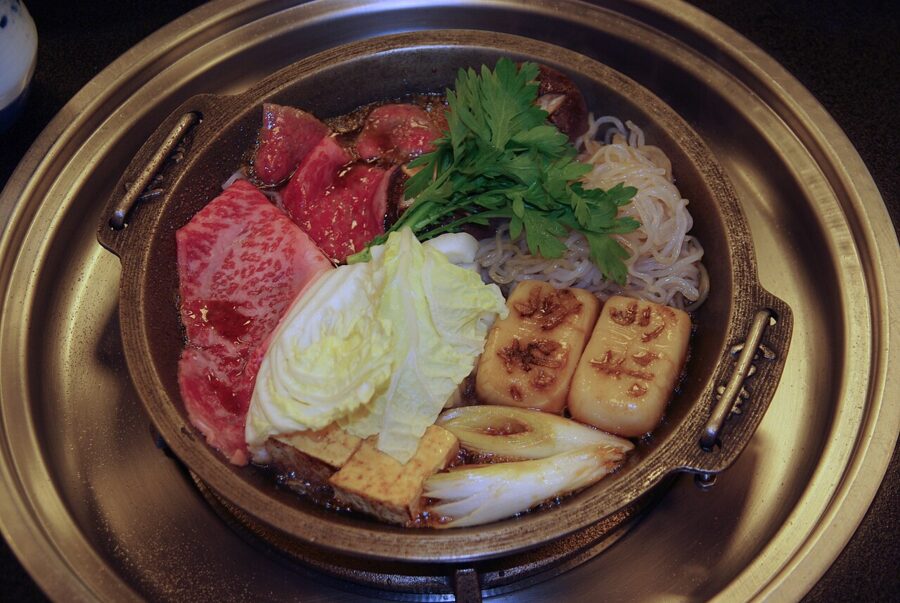
Here’s the catch. Most of Tokyo’s old sukiyaki houses now melt fat and sear the first slices before adding warishita, a habit that dates from the Kansai influx after 1923. Chinya calls its own version a mix of the two: the first beef comes off the pan alone, flavoured with Senju negi, and only then does the warishita go in. So the Kanto-Kansai split is sharpest in home kitchens, and blurriest in the restaurants you’re most likely to visit.
The raw egg
Each diner gets a small bowl and a raw egg, cracked and beaten with chopsticks. Hot beef goes from the pan into the egg and then into your mouth. The egg cools the meat enough to eat at once, takes the edge off the sweetness, and coats everything in something close to a sauce.
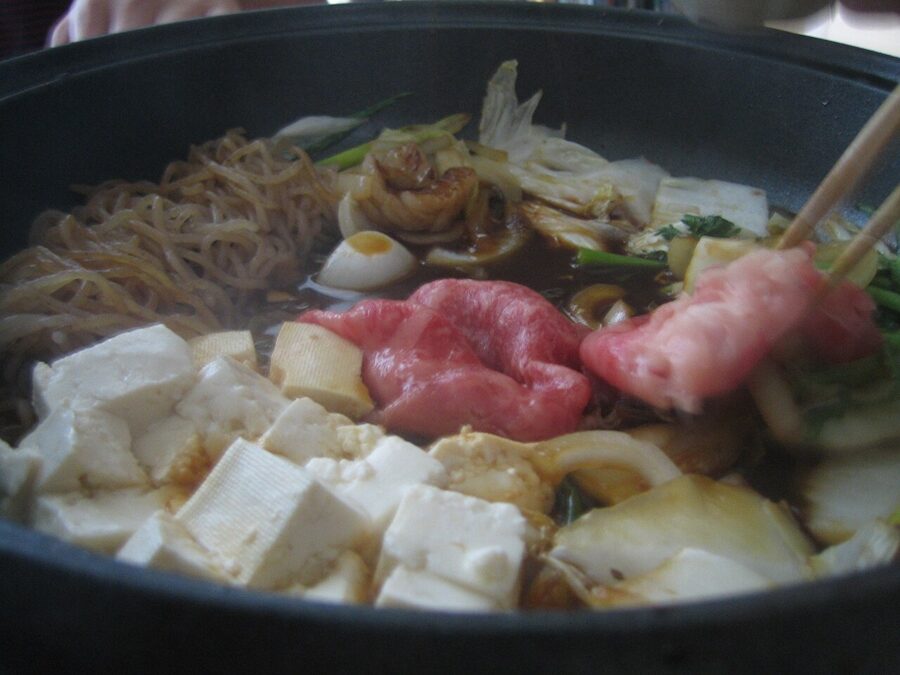
Nobody knows exactly how it started. The early miso gyunabe didn’t use egg, which led some writers to credit Kansai. A likelier source is shamo nabe, a fighting-cock hot pot older than any beef dish, which was already eaten with raw egg. Shinoda Kozo’s collection of Meiji reminiscences has a shop clerk in about 1887 ordering egg with his beef in Yotsuya and being baffled when the staff didn’t understand his slang for it.
If raw egg worries you, Japanese eggs are sold with a best-before date that assumes you’ll eat them raw. You can also just leave it. The beef is perfectly good straight from the pan, and the comedian Furukawa Roppa remembered Tokyo gyunabe being eaten without egg at all.
What goes in, and the shirataki myth
The vegetables and tofu have a collective name, zaku. A standard plate carries thick-cut negi, Chinese cabbage, shungiku (crown daisy greens), shiitake, grilled tofu, shirataki konjac noodles and sometimes fu, wheat-gluten cakes that soak up sauce like a sponge. Regions swap things in and out: bean sprouts in some places, potatoes in others, cabbage and lettuce in Okinawa, where sukiyaki is served at canteens as a sweet-soy stir-fry with an egg on top.
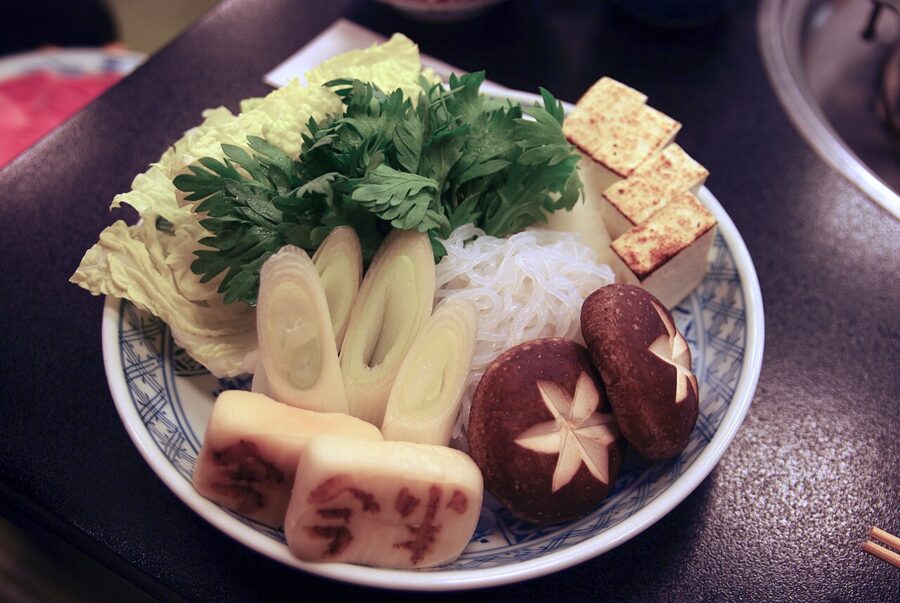
You’ll be told to keep the shirataki away from the beef because the lime used to set konjac toughens meat. The Japan Konnyaku Association tested this and found no difference in the beef’s texture and almost no change in the sauce. Rinse the shirataki if it comes in liquid, and put it wherever there’s room.
The old sukiyaki houses still cooking
The best sukiyaki in Japan is a family dinner at home, which you probably can’t book. The next best is one of the Meiji and Taisho-era houses that have been cooking it for over a century. Here are the ones I’d go to, by city, with hours and prices as published in November 2026.
Tokyo: Asakusa and Nihonbashi
Asakusa was Tokyo’s great entertainment district when beef arrived, and three of the old sukiyaki houses are still there. My guide to Tokyo’s food neighbourhoods covers the rest of what to eat around Senso-ji.
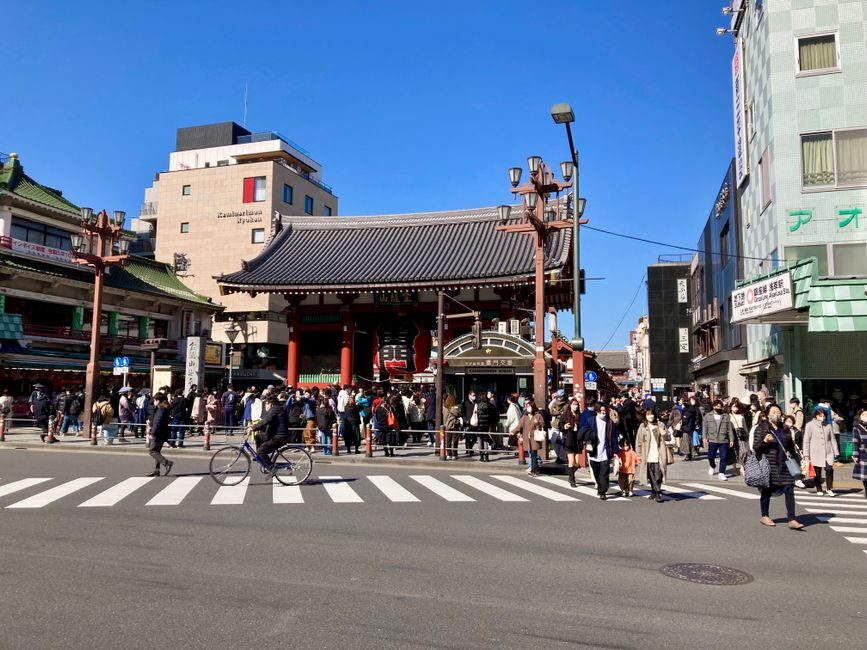
Imahan Honten started as a beef-pot shop in Honjo, across the river, in 1895, moved to Asakusa, and has been at Asakusa 1-19-7 on Shin-Nakamise since rebuilding after the war. It’s also one of the cheapest of the old guard, because it keeps things simple: no courses, just three grades of sukiyaki at ¥5,000, ¥7,000 and ¥9,000 a person, with rice, pickles and miso soup at ¥850 a set. It’s three minutes’ walk from Asakusa Station on the Ginza, Asakusa and Tobu lines, open 11:30–20:30 with a break from 15:00 to 17:00, and closed on Tuesdays. Come with at least one other person: the pans can’t be shared between tables, so they don’t seat solo diners.
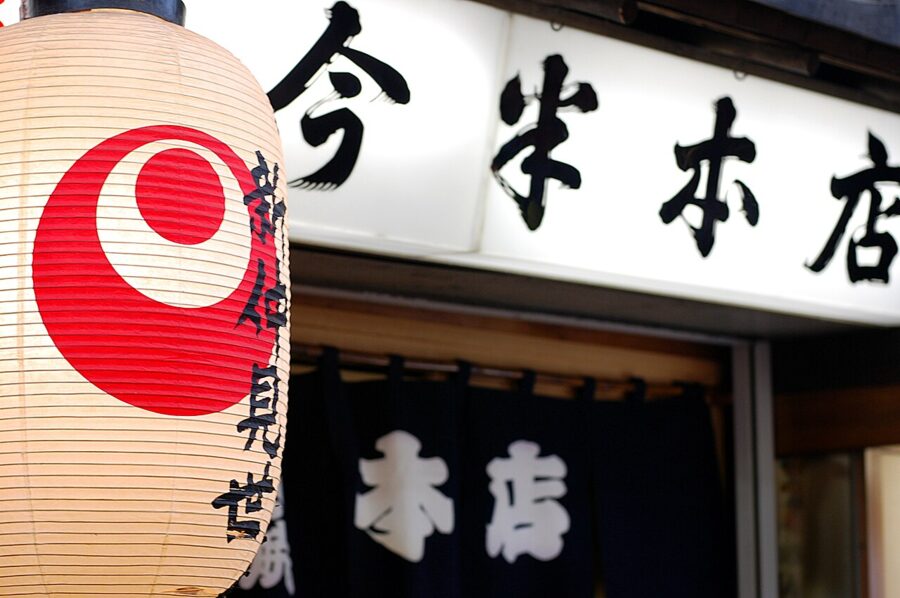
Two other Imahans grew from the same 1895 root and now run separately. Asakusa Imahan, on Kokusai-dori, claims to have invented beef tsukudani, beef simmered down in soy, which it sells all over Tokyo. Ningyocho Imahan opened as a Nihonbashi branch in December 1952, on the site of an old variety theatre, and became independent in 1956. It’s the most polished of the three, with branches across the city.
Chinya is the other big Asakusa name. It opened in 1880, took its name from the pet dogs, chin, the family had sold to feudal lords, and turned sukiyaki specialist in 1903. The old building in Asakusa 1-chome closed in August 2021, but the restaurant group WDI bought the name and reopened it on 18 March 2022 at Hanakawado 2-16-1, by the Kototoi-bashi-nishi crossing, with the old owner and staff still involved. Hours are 11:00–15:00 and 16:30–21:30 on weekdays (last orders 20:00) and 11:00–21:30 at weekends.
In Nihonbashi, Iseju is the old sukiyaki house of Kodenmacho, at Kodenmacho 14-9, three minutes from exit A1 of Bakuro-yokoyama Station on the Toei Shinjuku line. Besides sukiyaki it serves suupu-ni, a soupier simmered beef, which is worth ordering if one of you finds sukiyaki too sweet.
Yokohama: the original gyunabe
Ohta Nawanoren is the place to taste what Meiji Japan actually ate. The house dish is butsugiri gyunabe: chunks of beef, not slices, simmered in miso in a shallow iron pan. It’s at Suekichicho 1-15 in Naka-ku, seven minutes’ walk from Hinodecho Station on the Keikyu line, heading towards the Isezaki Mall shopping street. Dinner runs 17:00–21:00, weekends and holidays add lunch from 12:00 to 15:00, and it closes on Mondays and on the first, third and fifth Sundays of the month.
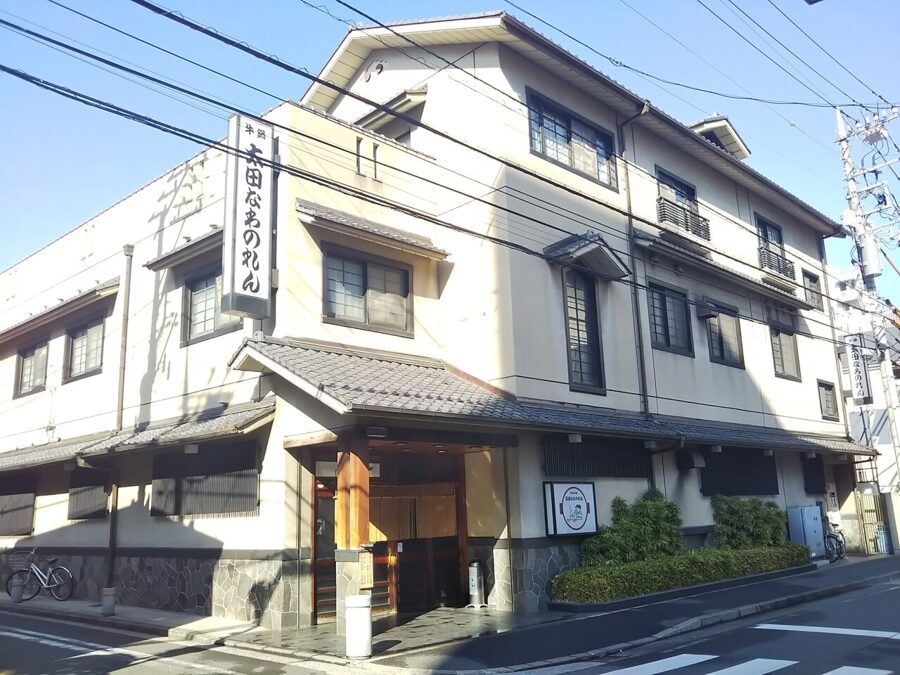
It is not cheap. Courses with gyunabe start at ¥14,300, a service charge of 10% is added, and the ¥8,200 butsugiri gyunabe on the a la carte menu has to be ordered for two. Bookings for each month open on the first day of the month before.
Kyoto: Teramachi and Kiyamachi
Mishima-tei sits on Teramachi just south of Sanjo, five minutes’ walk from Sanjo Station on the Keihan line, under the Meiji gas lamp that has become its trademark. It has been serving sukiyaki for around 150 years and makes a point of its own way of searing the beef, the Kyoto habit of cooking the first slices before anything else goes in. It’s open 11:00–21:00, and the dark wooden frontage alone is worth the walk down Teramachi.
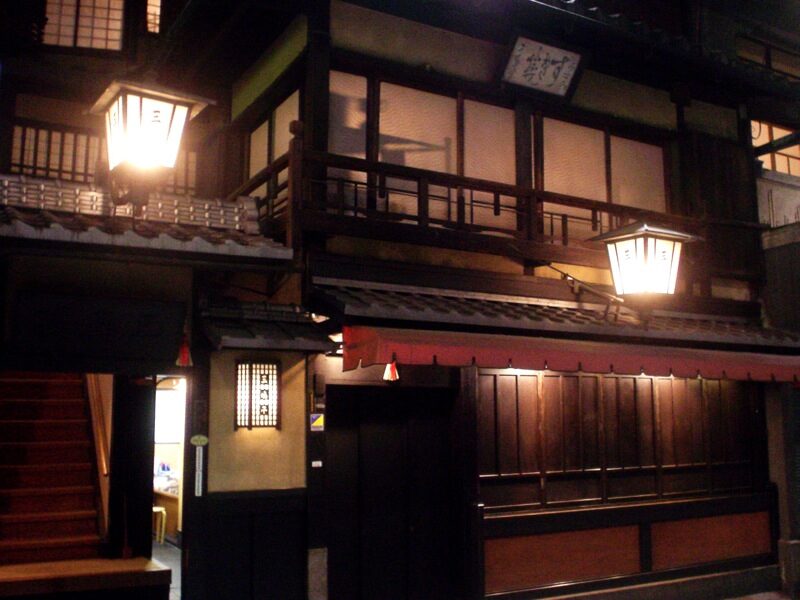
Moritaya was founded in 1869 and is as much a meat company as a restaurant: it runs a wholesale business, its own cattle farm in Wachi in the hills north-west of Kyoto, and restaurants in Kyoto, Osaka and Tokyo. The Kiyamachi branch, on the Kamo River side of Kiyamachi, is the one to book, and it does shabu-shabu as well as sukiyaki.
Osaka: Dotonbori
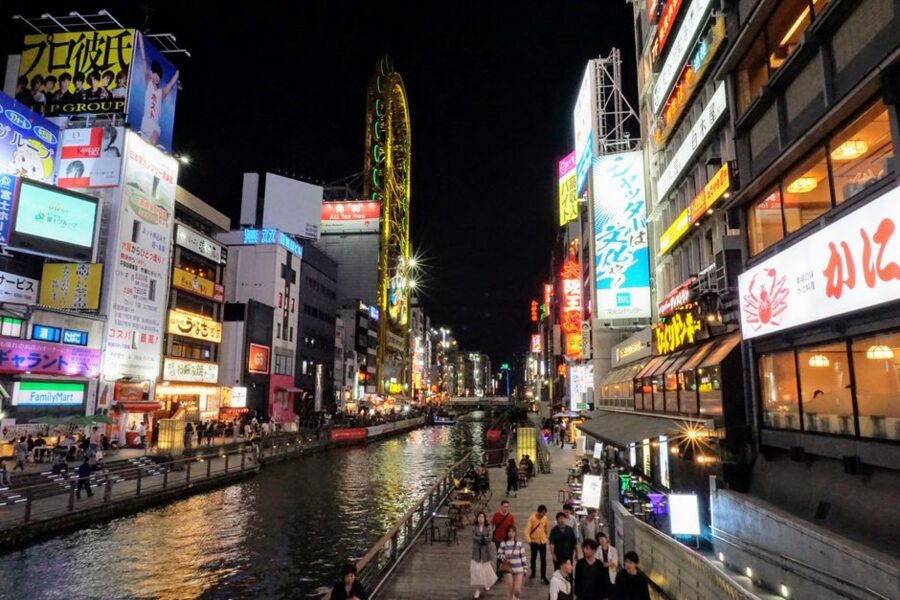
Hariju opened in Sakai in 1919, moved to the Shinsekai entertainment district, and has stood at the entrance to Dotonbori since 1948. The building holds a Japanese restaurant for sukiyaki and shabu-shabu, a Western-style grill, a curry shop and a butcher’s counter. My guide to Osaka street food covers the rest of Dotonbori.
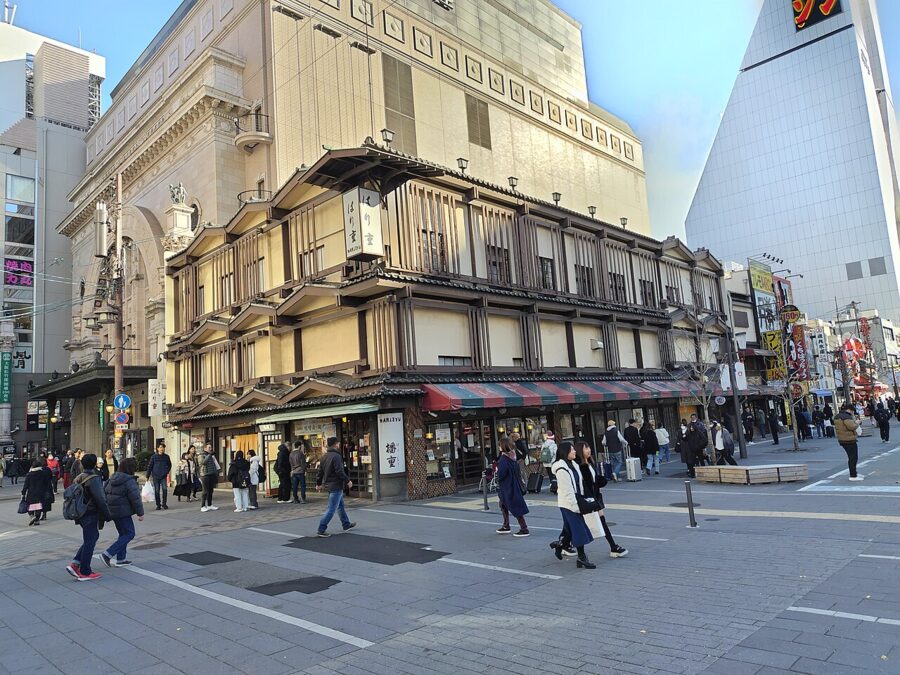
The Japanese restaurant is at Dotonbori 1-9-17, open 11:30–15:30 (last orders 14:30) and 17:00–21:00 (last orders 20:00), closed on Tuesdays except holidays and in December. Sukiyaki and shabu-shabu dinners run from ¥9,900 to ¥16,500 with a special course at ¥19,800, and lunch is ¥7,150, tax and service included. Bookings start at two people, and the restaurant announced a price rise on some sukiyaki and shabu-shabu menus from 1 November 2026, so check the current figure when you book.
Cheaper sukiyaki
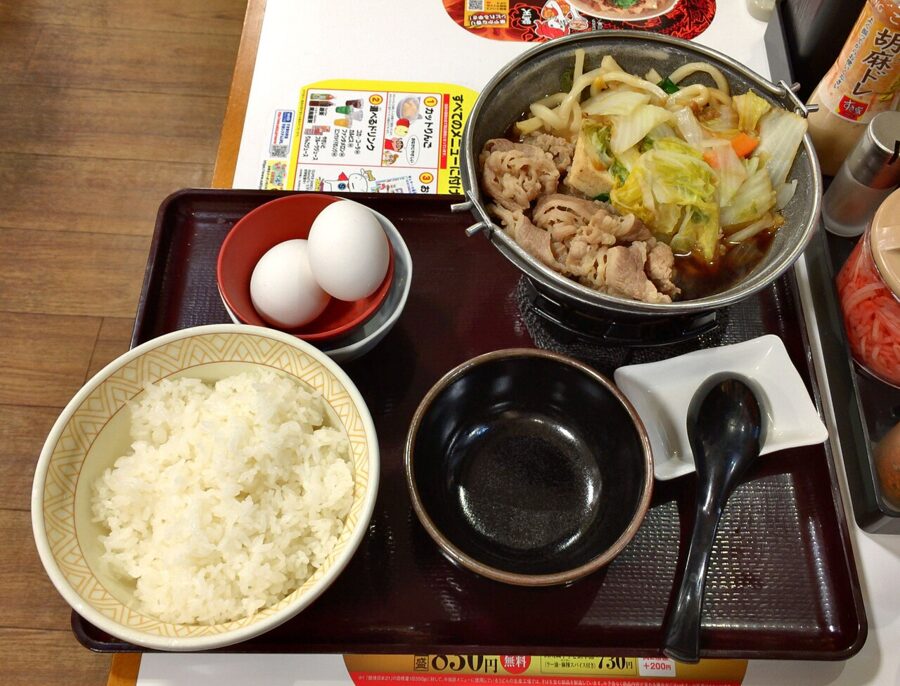
Sukiya and Yoshinoya, the two big gyudon chains, have both sold one-person sukiyaki pots in recent winters, a little iron pan with beef, tofu and an egg for well under ¥1,500. It’s a decent weeknight dinner. It’s not the dish, and I wouldn’t let it set your expectations before the real thing.
The middle ground is a regional beef town, where ryokan dinners often make sukiyaki the main course of a kaiseki-style meal, made with the local brand, and in Takayama that means Hida beef.
Shabu-shabu: a Beijing pot, a Kyoto kitchen, an Osaka name
Shabu-shabu has three birthplaces and a long-running argument about which counts. All three trace back to the years after the Second World War, and all of them come back to the folk-craft movement, the circle around the philosopher Yanagi Soetsu who believed ordinary handmade things were the most beautiful.
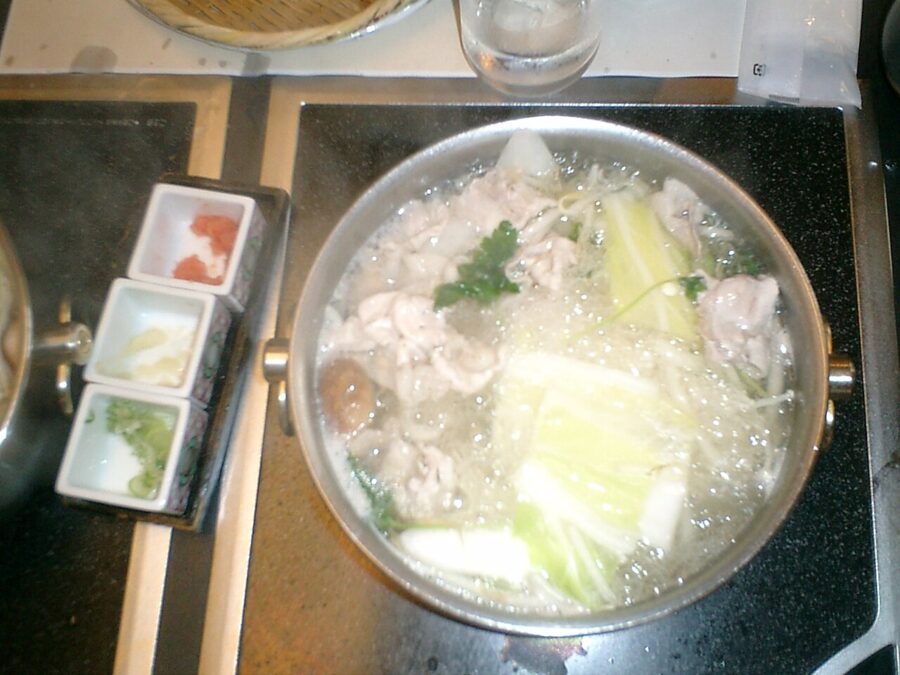
Yoshida Shoya and Junidanya, 1945–1947
Yoshida Shoya was an ear, nose and throat doctor from Tottori who called himself a producer of new folk crafts. He had been living in Beijing, and in September 1945, after the surrender, he came home and described one dish in particular to Nishigaki, the owner of a Kyoto restaurant called Junidanya: shuan yangrou, Beijing’s instant-boiled mutton, cooked by each diner in a chimney pot of boiling water.
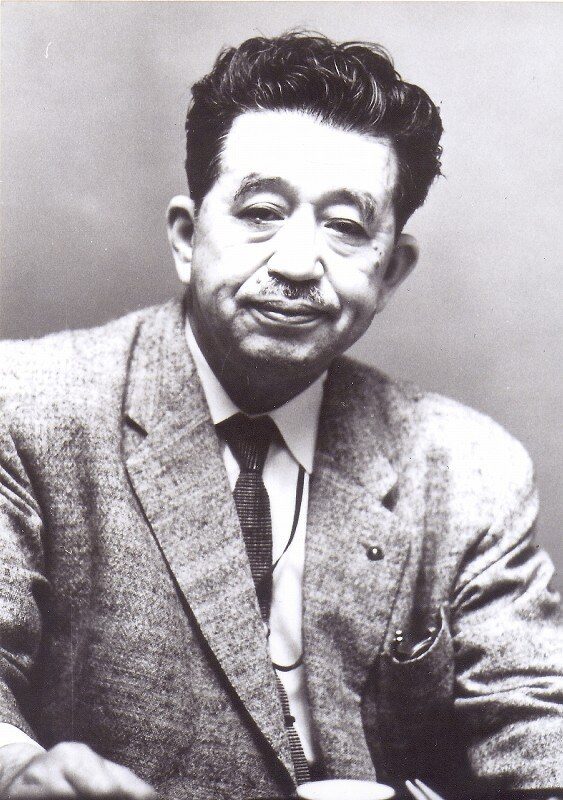
Nishigaki spent nearly two years adapting it, with advice from Yoshida, Yanagi and the potter Kawai Kanjiro. Mutton became beef, the Beijing sesame sauce was adjusted for Japanese tastes, and he had chimney pots made to order. In 1947 Junidanya put it on the menu as gyuniku no mizutaki, beef boiled in water, and folk-craft people carried it to other cities.
1952: Suehiro gives it a name
The name came from Osaka. Miyake Chuichi, owner of the Suehiro steakhouse in Kitashinchi and another folk-craft devotee, added the new beef-in-water dish to his menu in 1952 and wanted something catchier. According to the restaurant, he heard staff rinsing hand towels in a tub, a rhythmic splashing that sounded like shabu, shabu, shabu, and decided that was the sound of meat being swished through water. He registered the name as a trademark, and Suehiro still calls itself the birthplace of shabu-shabu.
So the dish is Kyoto’s and the word is Osaka’s. A restaurant in Kameyama, Mie, even says it has served beef mizutaki since 1935, but the chimney pot gives the Beijing route away.
Tottori’s susugi nabe
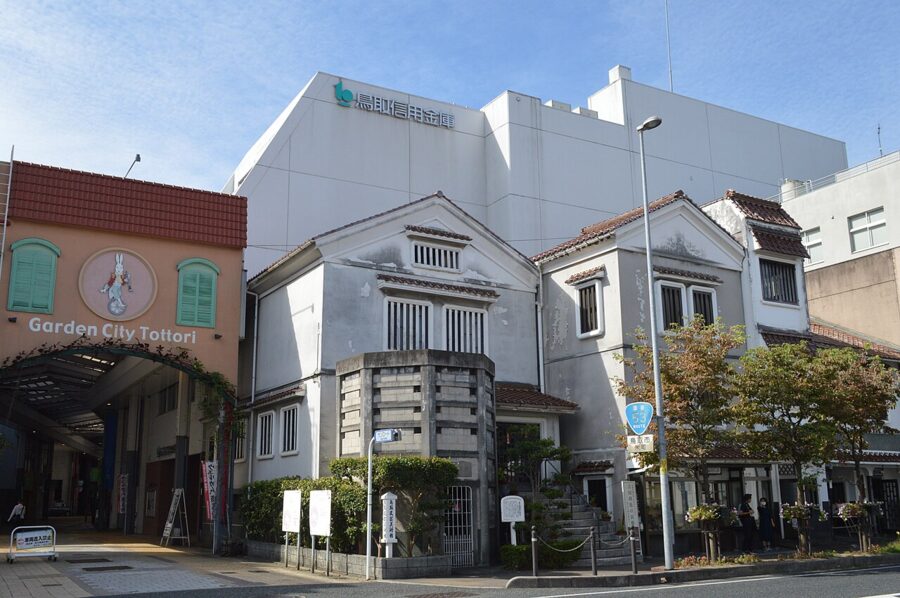
In 1962 Yoshida opened a restaurant beside the folk-craft museum he had founded in Tottori, Takumi Kappo, with Nishigaki teaching the sesame sauce. He refused the Osaka name and translated the Chinese one instead: gyuniku no susugi nabe, beef rinsing pot. Nishigaki later wrote that Takumi Kappo was the true home of the dish called shabu-shabu, and Takumi Kappo, five minutes’ walk from the north exit of JR Tottori Station, still serves it as susugi nabe with Tottori wagyu.
Sesame, ponzu and the order of things
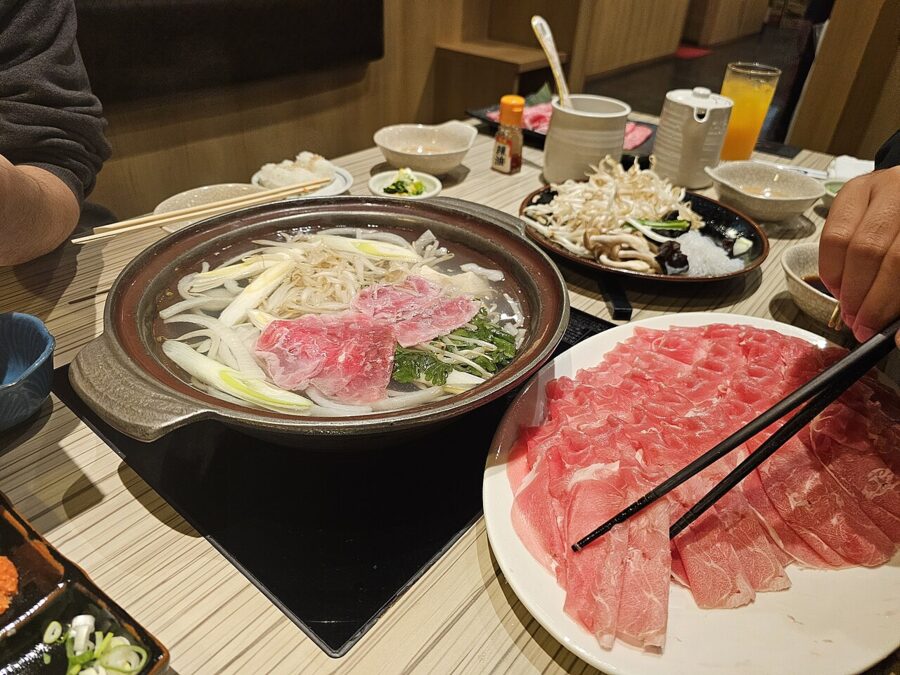
Hold a slice of beef with your chopsticks, swish it through the simmering water two or three times until the red is gone, and eat it. Beef cut for shabu-shabu is so thin that ten seconds too long turns it grey and tough.
Two sauces
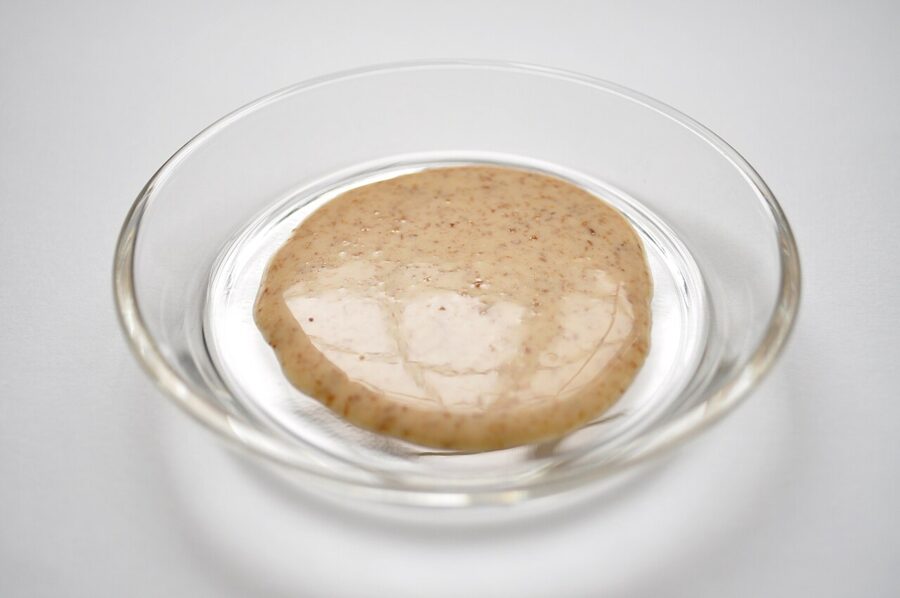
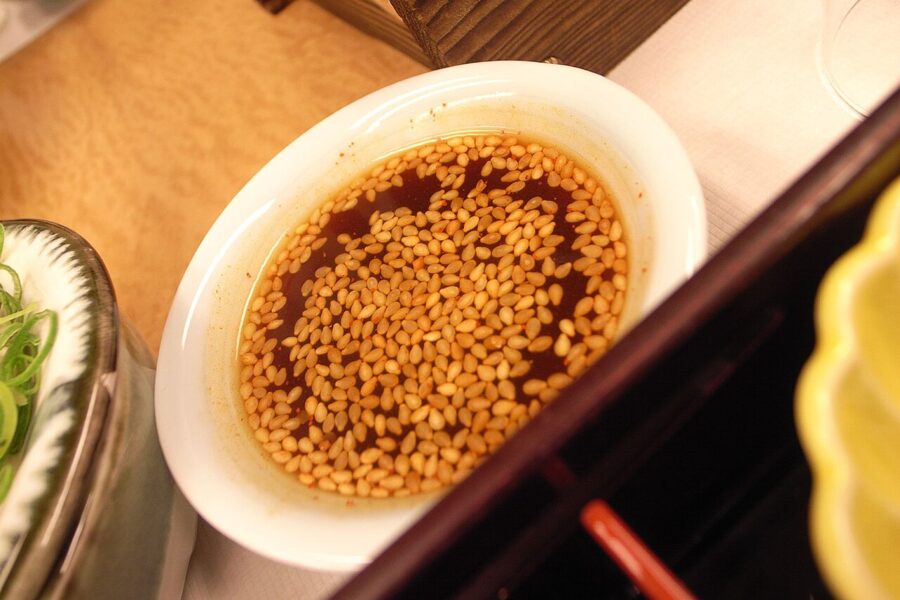
Every table gets two dips. Gomadare is a thick sesame sauce, nutty and a little sweet, and it’s the original: Suehiro’s version, which it calls goma-zu, is made from sesame ground for 100 hours and mixed every morning by the owner. Ponzu is soy sauce sharpened with citrus juice. The usual rule is sesame for beef and ponzu for vegetables and tofu, but nobody will stop you doing it the other way round.
What goes in, and when
Start with a slice or two of beef, eaten as soon as it’s done, so the meat flavours the water. Then put in what takes longest: carrots, the thick white ends of Chinese cabbage, shiitake. The leafy greens, tofu, enoki and leaves of cabbage go in last and only need a minute.
Skim off the grey foam that rises, called aku, with the small ladle that comes with the pot. A survey by the vinegar maker Mizkan in 2021 found that people in eastern Japan mostly put vegetables in first and people in western Japan mostly start with meat, and that the average Hokkaido diner swishes each slice about four times. Count yours if you want to fit in.
Beyond beef
Beef is the default, and plain “shabu-shabu” on a menu means beef. Pork shabu-shabu (buta-shabu) is cheaper and very common, especially at chains. The regional versions are where it gets interesting: octopus and lamb in Hokkaido, beef tongue in Sendai, winter yellowtail in Toyama, pike conger in Kansai, horse in Kumamoto, Kurobuta pork in Kagoshima, and Saga’s cha-shabu with Ureshino green tea in the broth. In Okinawa it’s Agu pork, which my Okinawa food guide covers.
Where to eat shabu-shabu, from ¥1,099 to five figures
Shabu-shabu is cooked at home far less often than sukiyaki, so it’s much more of a restaurant meal, and the range is enormous. At the bottom is the all-you-can-eat chain. At the top are the houses that invented it.
The chains and tabehoudai
Shabu-yo, run by the Skylark family-restaurant group, had 336 branches in September 2026. It’s about the cheapest way to try shabu-shabu anywhere: the weekday lunch with two plates of pork is ¥1,099, and the all-you-can-eat menus let you mix meats, vegetables, broths and sauces as you like.
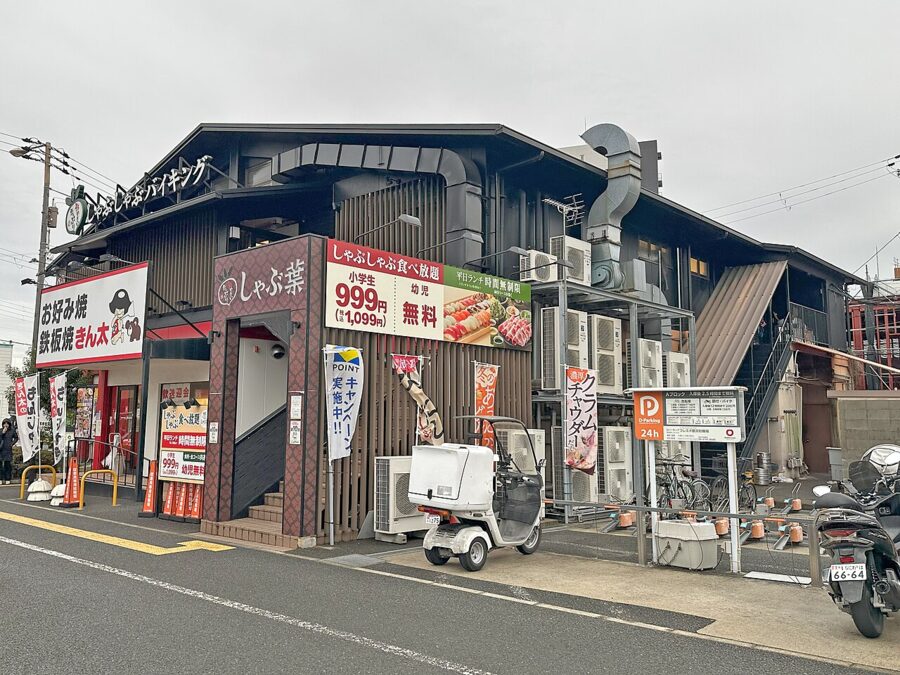
Shabu-shabu Onyasai is a step up. Its all-you-can-eat courses run 120 minutes, with last orders at 90, and cost ¥3,608–¥7,128 including tax depending on the meat, from pork to marbled Japanese black beef, with ten broths to choose from. Children under school age eat free and primary schoolchildren pay half.
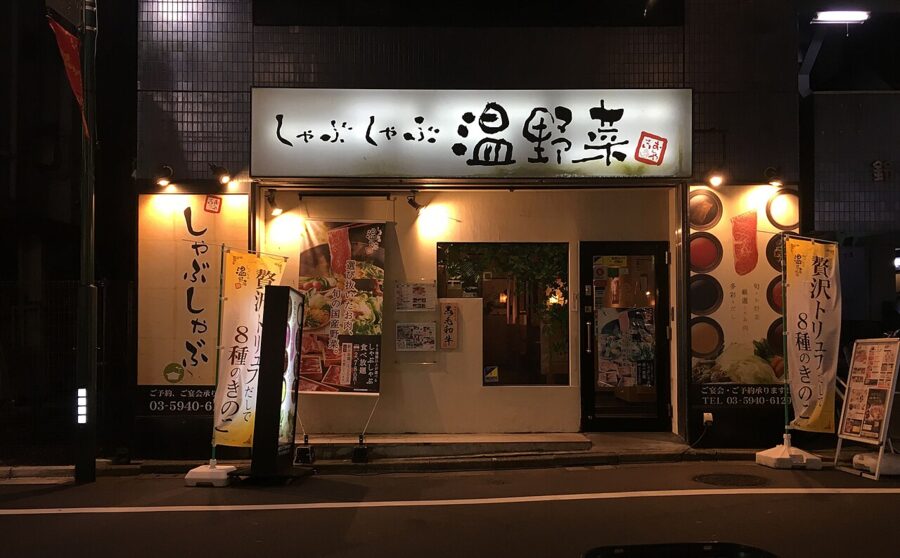
Mo-Mo-Paradise opened in Kabukicho in 1993 and does all-you-can-eat sukiyaki as well as shabu-shabu, which makes it the easy option if your group can’t agree. Its Tokyo branches are in Shinjuku, Shibuya, Ikebukuro, Akihabara (a minute from JR Akihabara Station) and Asakusa, three minutes from Asakusa Station by Kaminarimon.
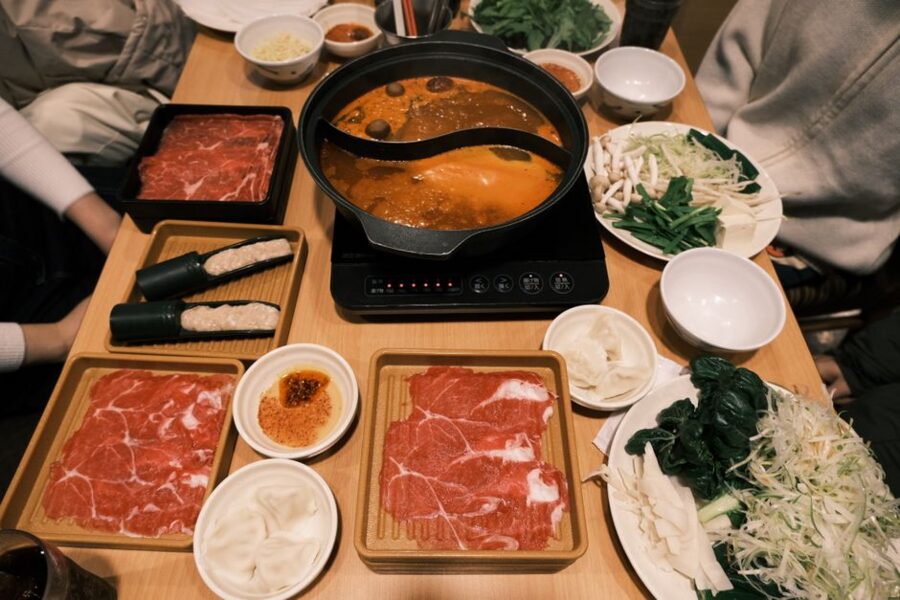
Tabehoudai, all-you-can-eat, has its own rules. There’s a time limit, almost always 90 or 120 minutes, with last orders about 30 minutes before the end, and you order plates in rounds.
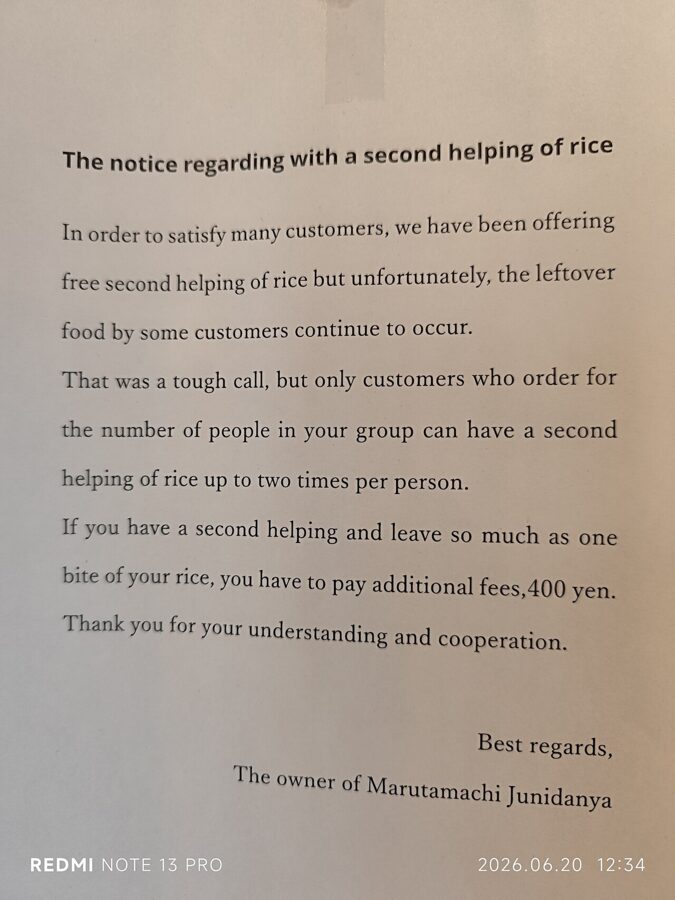
Leaving food you ordered is frowned on, and Shabu-yo runs a food-waste campaign asking customers to take small amounts, often. Even a classic house can have rules: Marutamachi Junidanya in Kyoto charges ¥400 if you leave any of a free second helping of rice.
The founding houses
Dojima Suehiro is where to taste the 1952 recipe now. The original Eirakucho Suehiro Honten building in Kitashinchi is closed while it’s rebuilt, and the company opened Dojima Suehiro nearby on 26 June 2023 to carry on in the meantime, with a folk-craft interior and the same sesame sauce. It’s on the fourth floor of Ripple Dojima Town at Dojimahama 1-3-22, open 11:30–14:00 and 17:00–22:00 and closed on Sundays and holidays. The restaurant’s own guide puts dinner at around ¥10,000 a head and lunch at about ¥2,000.
Junidanya still occupies its house in a lane off Hanamikoji in Gion, at Gion-machi 570-128. The name refers to Chushingura, the kabuki epic of the 47 ronin, which has eleven acts; the idea being that dinner here is the twelfth. The beef is cooked in copper pots made to the house’s own design, and the rooms hold a tiger print by Munakata Shiko and pieces by Kawai Kanjiro. Expect five figures: its shabu-shabu set is listed at ¥14,600 through its booking partner, fees included.
Ningyocho Imahan was one of the first to bring the dish to Tokyo. Its first president, Takaoka Noboru, heard that Kansai had a dish of beef boiled in water, had a copper chimney pot made by a coppersmith in Ningyocho, and started serving shabu-shabu alongside sukiyaki. Its restaurants still do both.
Chanko and the Ryogoku connection
Chanko is what sumo wrestlers eat, and in the sumo world the word covers every meal cooked in a stable, not just the hot pot. But the hot pot is what everyone means, and it started with one wrestler’s popularity.
Why sumo eats from one pot
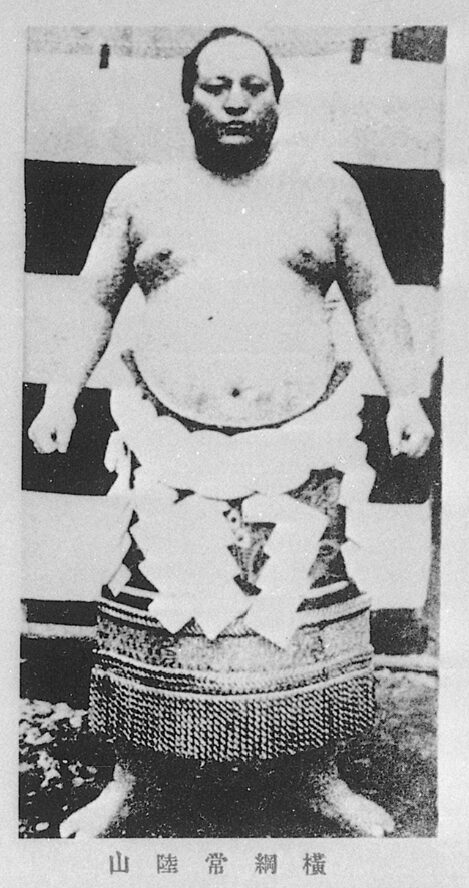
Until the late Meiji period, wrestlers were served individual trays. Then in 1909 the first Kokugikan hall opened in Ryogoku, the grand champion Hitachiyama became a national star, and so many recruits joined his Dewanoumi stable that serving them one by one became impossible. The stable put one big pot in the middle of the room, and every other stable followed.
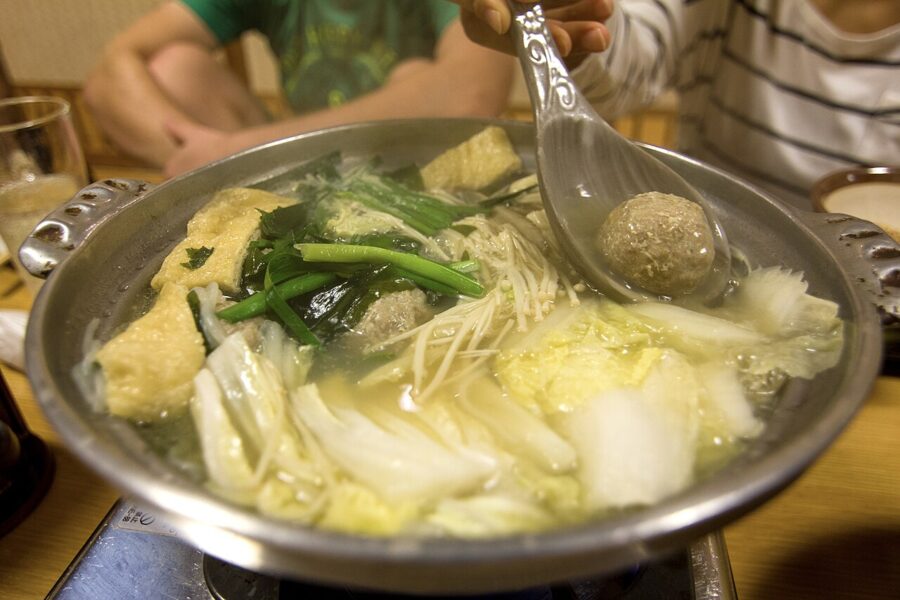
Chicken was the traditional meat because a chicken stands on two legs, and a wrestler who touches the ground with his hands loses. Beef and pork only went into the pot from about 1965. The basic chanko is soppu-daki, chicken-bone broth seasoned with soy, sugar and sake, with chicken thighs, onion and vegetables, and the word “soppu” lives on in sumo slang for a lean, bony wrestler. Fish chanko is usually made chiri style, simmered plain and dipped in ponzu.
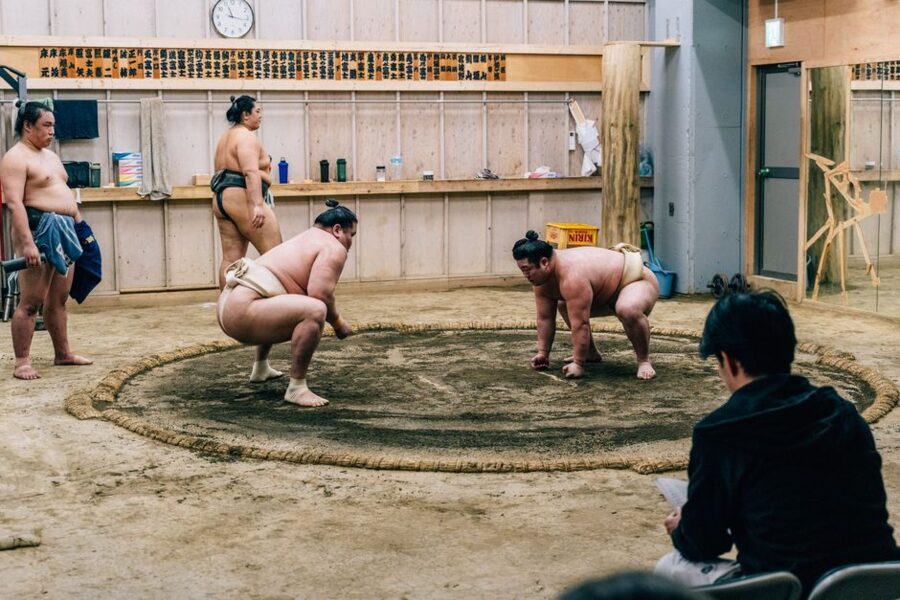
Junior wrestlers do the cooking on a rota as chanko-ban, under a senior who plans the menu and does the shopping. They eat in order of rank: the stablemaster and guests first, then the senior wrestlers, then everyone else, and older wrestlers remember reaching the pot to find only broth. Stables still eat two meals a day as a rule, with no breakfast, and train on an empty stomach in the morning.
Eating chanko in Ryogoku
Retired wrestlers have been opening chanko restaurants for decades, often with help from their old stable, and a cook who has done his years as chanko-ban has a trade to fall back on. Most of them cluster in Ryogoku. The Sumida City Tourism Association dates the real boom to 1985, when the Kokugikan moved back to Ryogoku from Kuramae.
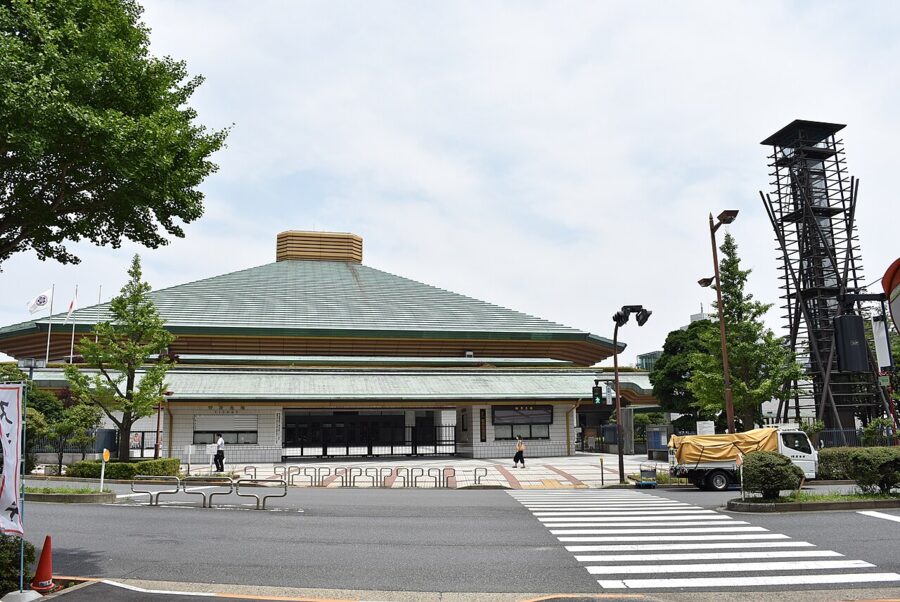
The easiest chanko to try in Tokyo is inside the Kokugikan itself. On tournament days in January, May and September, the basement banquet hall sells bowls of chanko to ticket holders, and the flavour changes through the fortnight: at the September 2025 tournament it was soy from day one, salt from day six and miso from day eleven. It’s a small bowl, often with a big chicken meatball, and the best snack in the building.
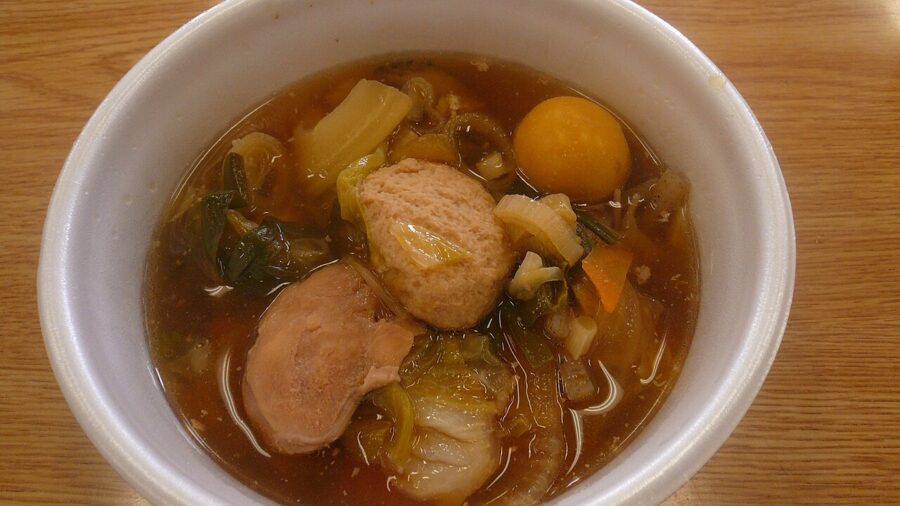
For a full chanko dinner, Chanko Edosawa‘s Ryogoku Sohonten, founded in 1974, is a minute’s walk from the east exit of JR Ryogoku Station at Ryogoku 3-24-11 (three minutes from exit A4 on the Oedo line). It opens 11:30–15:00 and 17:00–23:00 Monday to Saturday and 11:30–21:30 on Sundays and holidays. A pot for two or three is a lot of food. Look for tsukune, chicken meatballs, which turn up in most Tokyo chanko.
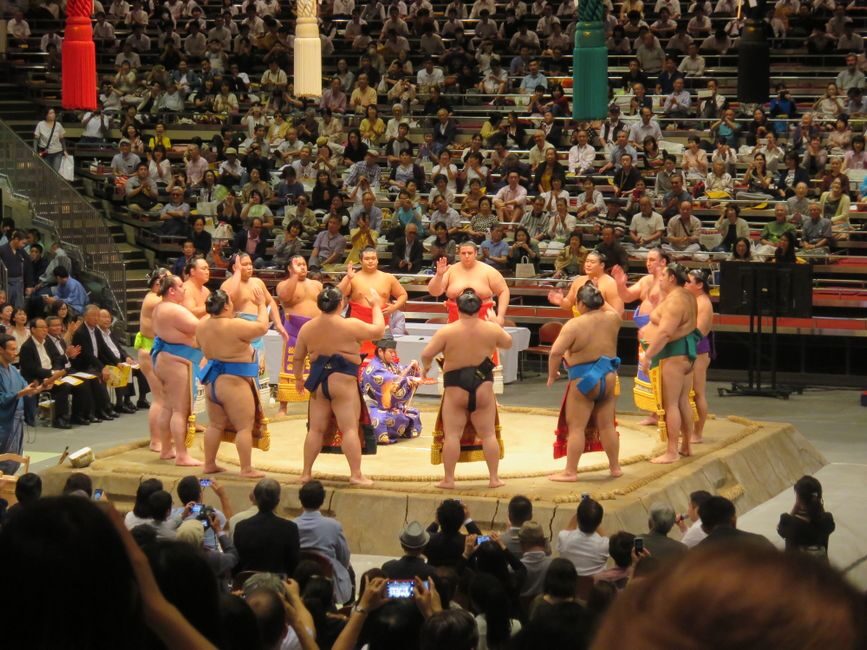
Restaurant chanko is also lighter than the stable kind. Stables season heavily, because wrestlers sweat, and one former wrestler who ran a chanko restaurant until 2015 said he cut the salt for customers so they wouldn’t tire of it halfway through.
A map of Japan in hot pots
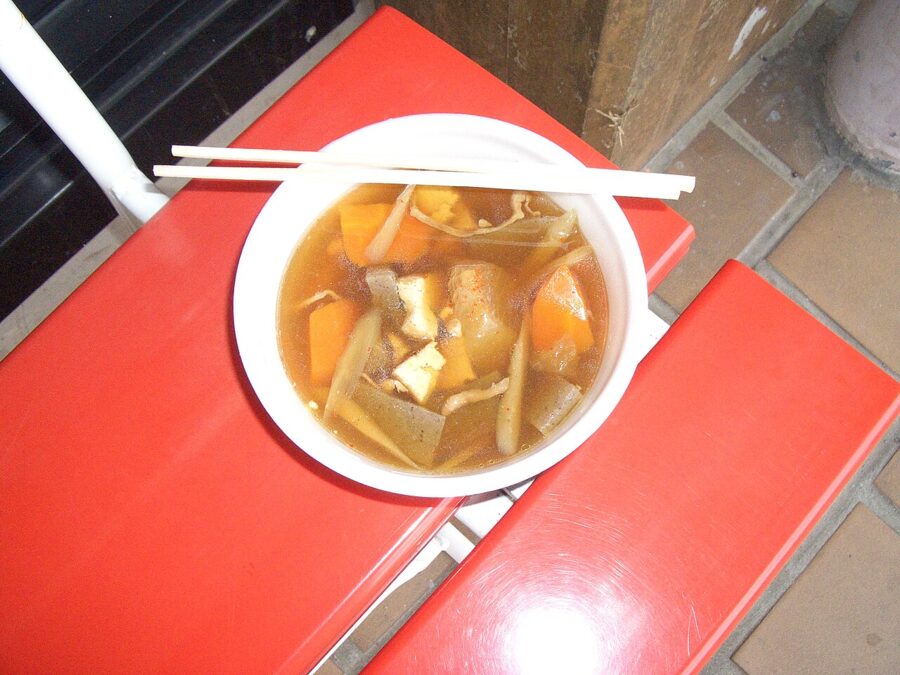
Almost every prefecture has a nabe, and most of them have something to do with what was cheap and plentiful there in winter. Here they are roughly north to south, with the ones worth travelling for.
Hokkaido and Tohoku
Ishikari nabe is salmon, miso and kombu stock with onion, cabbage, daikon, shiitake and tofu, finished with a shake of sansho pepper. It’s named after the Ishikari River, where the salmon run, and the version everyone copies is credited to a restaurant at the river mouth that opened in 1880 and developed it from a fishermen’s staff meal. Don’t confuse it with sanpei-jiru, which uses salted salmon.
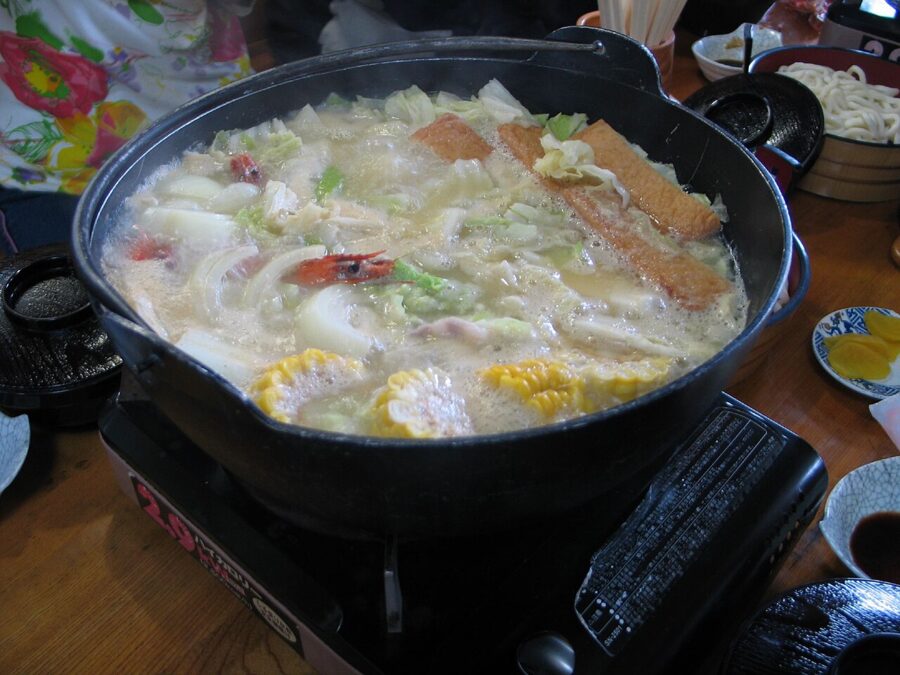
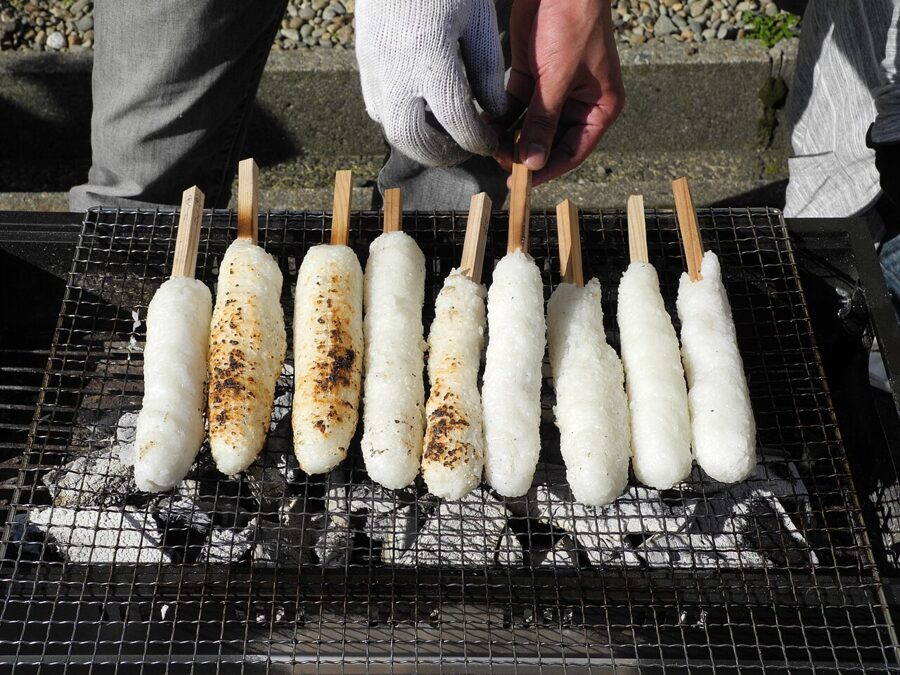
Akita has two. Kiritanpo nabe is made with rice pounded half-smooth, pressed around cedar skewers, grilled, and then cut and simmered in a broth of Hinai jidori chicken with burdock, seri, maitake and negi. Shottsuru nabe is seasoned with shottsuru, Akita’s fish sauce, traditionally brewed from sandfish for a year or more.
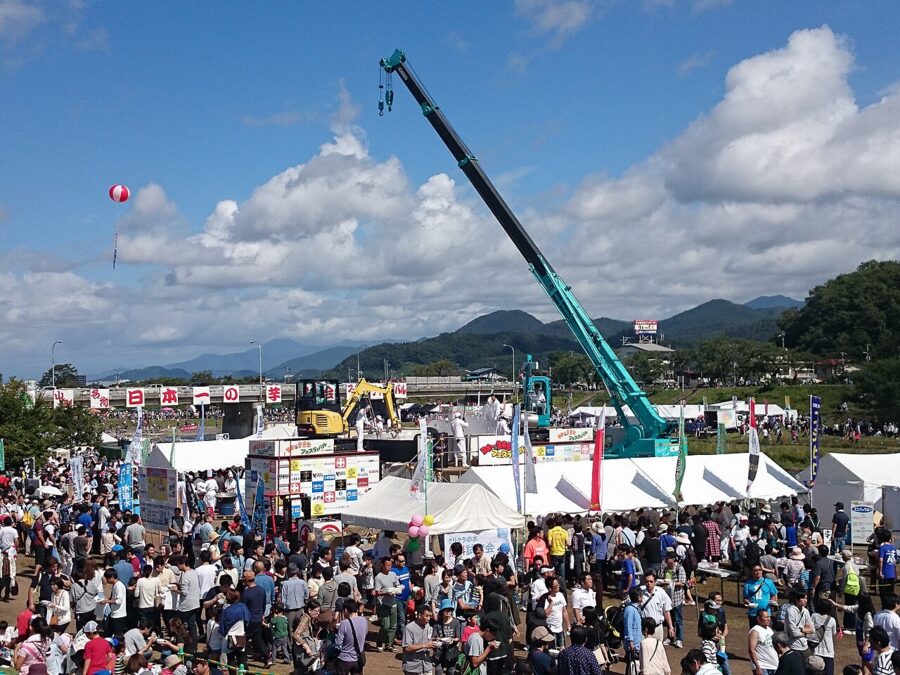
In Yamagata, autumn means imoni, taro and beef in soy, cooked on riverbanks at parties called imoni-kai. Since 1989 Yamagata City has held a festival where it’s made in a pot so wide that the ladle hangs from a crane. Over the border in Sendai, the same party uses pork and miso.
Kanto
“Fugu in the west, anglerfish in the east” goes the saying. Ankou nabe is an Ibaraki winter dish, and almost all of the fish goes in: flesh, skin, stomach, gills, fins and the liver, which is the prize. Fishermen’s versions are miso, ryotei versions soy, and in Oarai, Hitachi and Kitaibaraki some places make dobu-jiru, cooked with no water at all, the liquid coming from the fish and vegetables.
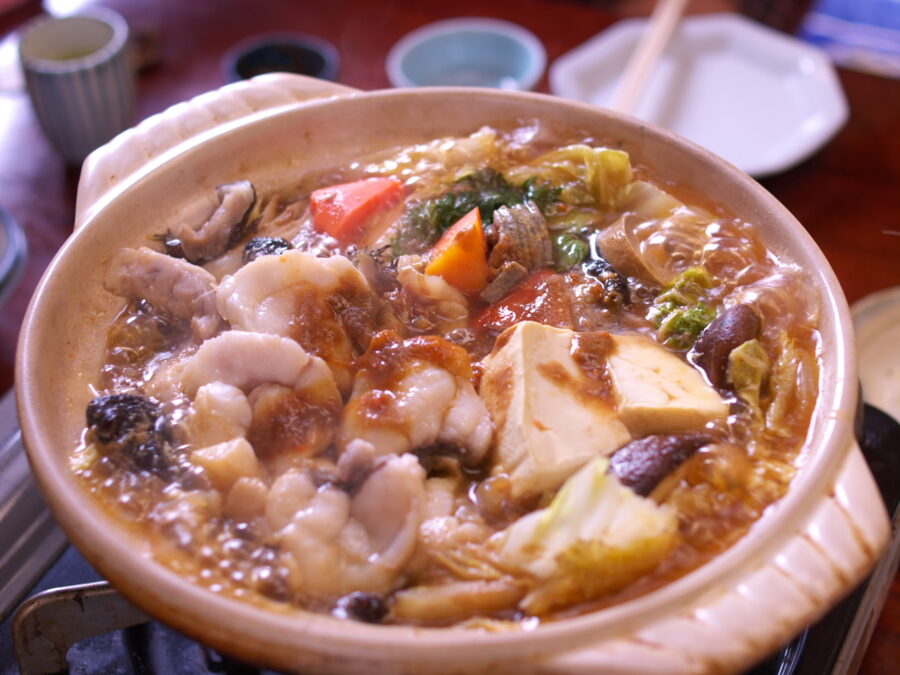
In Tokyo, Isegen in Kanda-Sudacho has served ankou nabe since 1830 and calls itself the only anglerfish specialist in the city. The building dates from 1930 and is listed as a Tokyo historic building, and it’s worth going for the rooms alone.
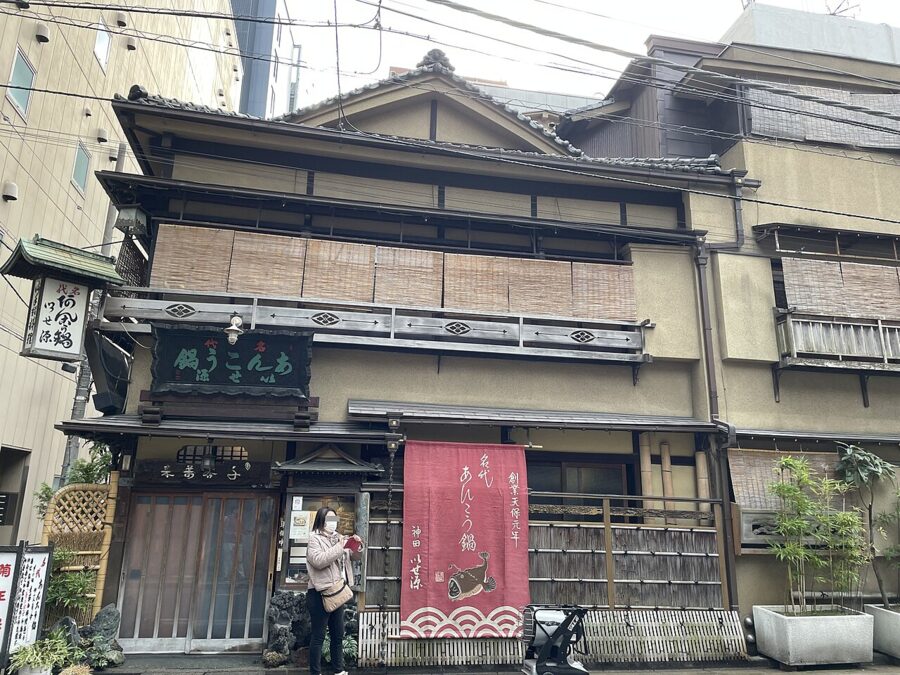
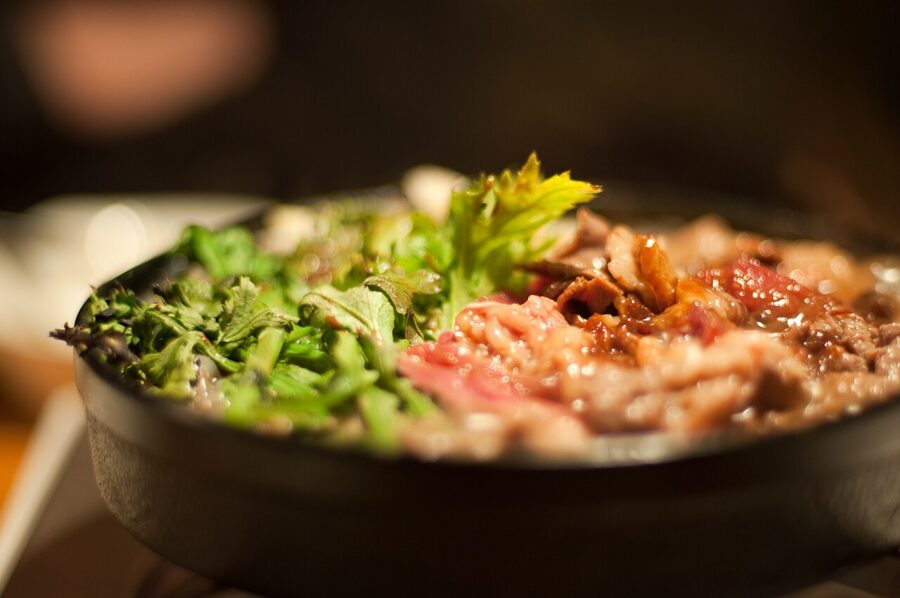
Sakura nabe is horse meat simmered in a shallow pan, sukiyaki fashion. “Sakura” because, so the story goes, raw horse meat is the pink of cherry blossom.
Central Japan
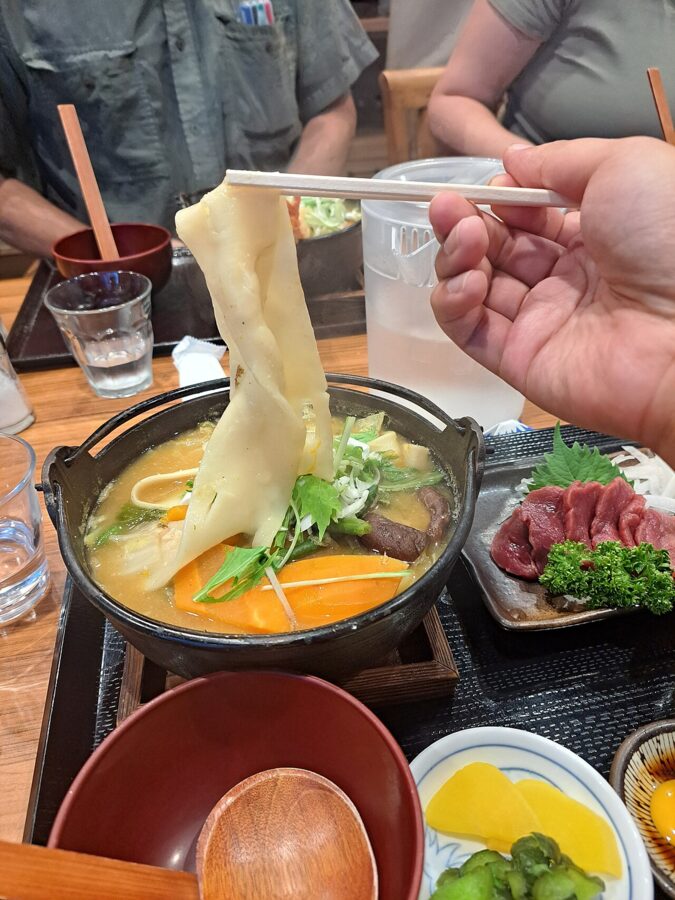
Hoto is Yamanashi’s: thick, flat wheat noodles cut by hand and simmered in miso with pumpkin and vegetables, served bubbling in its own iron pot. The noodles go into the pot raw, so their flour thickens the broth into something close to a stew. The old saying went that a girl who couldn’t make hoto wasn’t ready to be married off.
Around Nagoya, sukiyaki made with chicken is called hikizuri, and many families there eat sukiyaki on New Year’s Eve instead of the usual soba. The story is that households once killed one of their own hens for the year’s last dinner; the name, “dragging”, is read as dragging nothing from the old year into the new.
Kansai
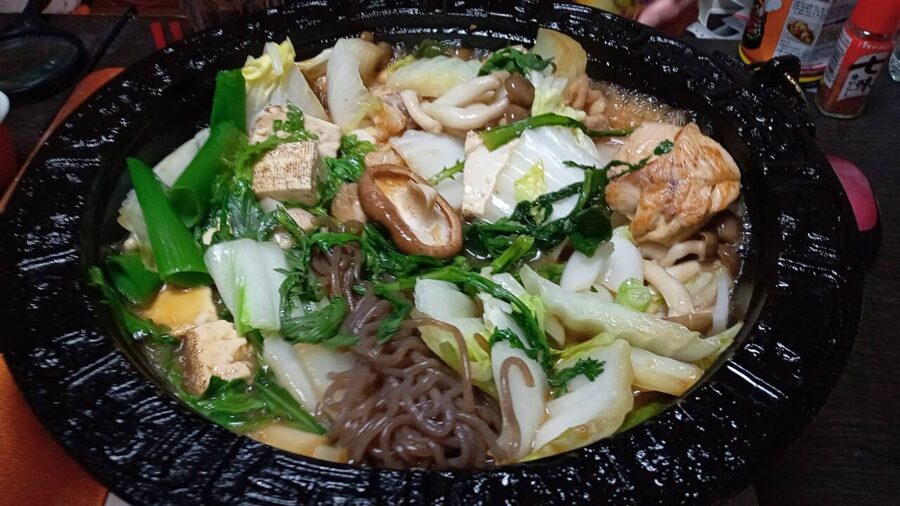
Yudofu is Kyoto’s quietest meal: a block of tofu warmed in water over a piece of kombu, lifted out and dipped in a soy-based sauce with negi and a little yuzu.
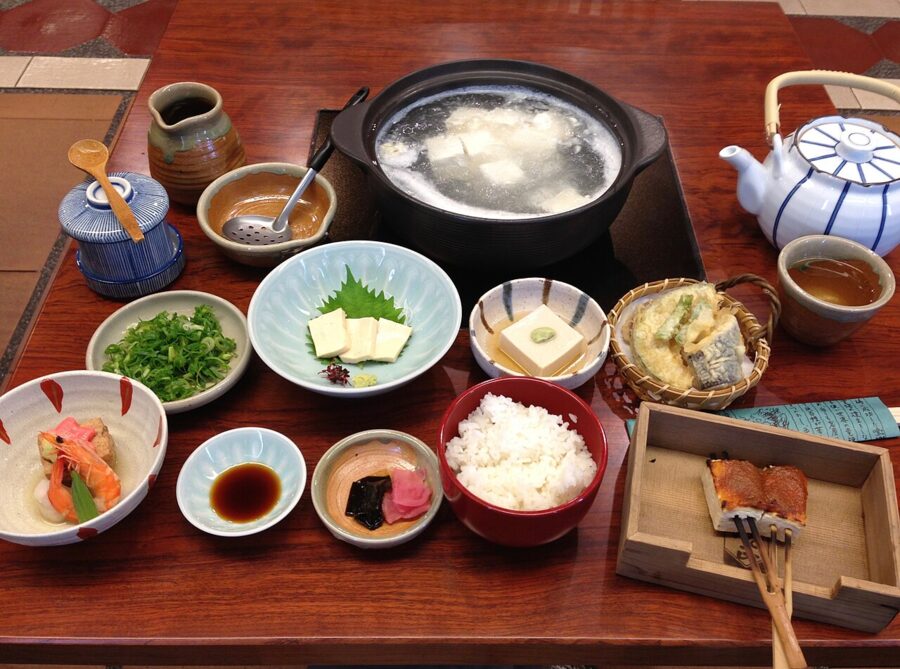
It’s said to come from the temple quarter around Nanzen-ji, and the area still has several yudofu restaurants. My guide to what to eat in Kyoto explains why Kyoto tofu is worth a whole lunch.
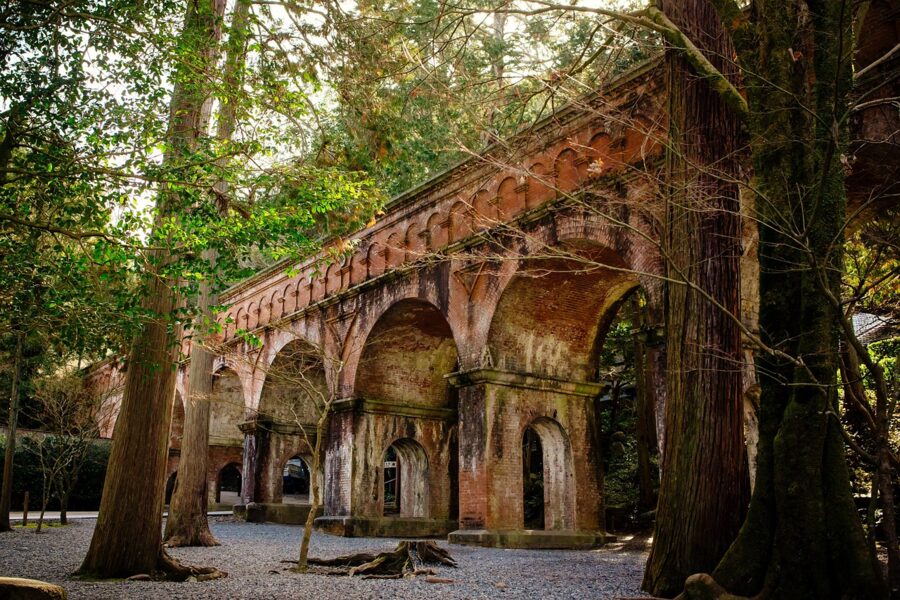
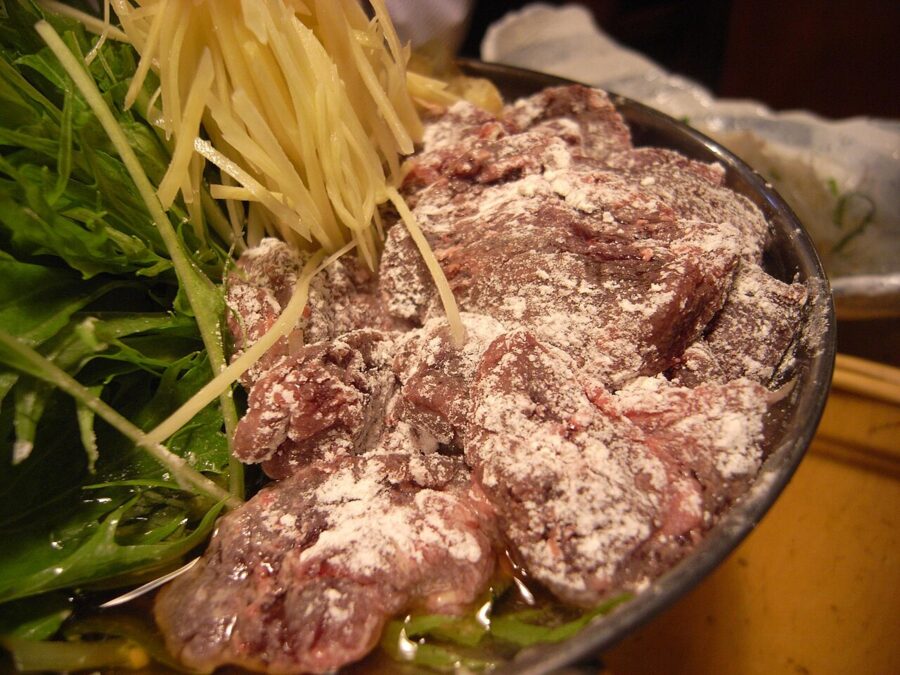
Harihari nabe is an Osaka pot of whale meat and a great deal of mizuna, named for the crunch of the leaves, hari hari. When whale was cheap it was a working-class dinner; now that whale is scarce and expensive, the same pot is usually made with pork or duck. If you don’t eat whale, order that version and you’ve lost almost nothing.
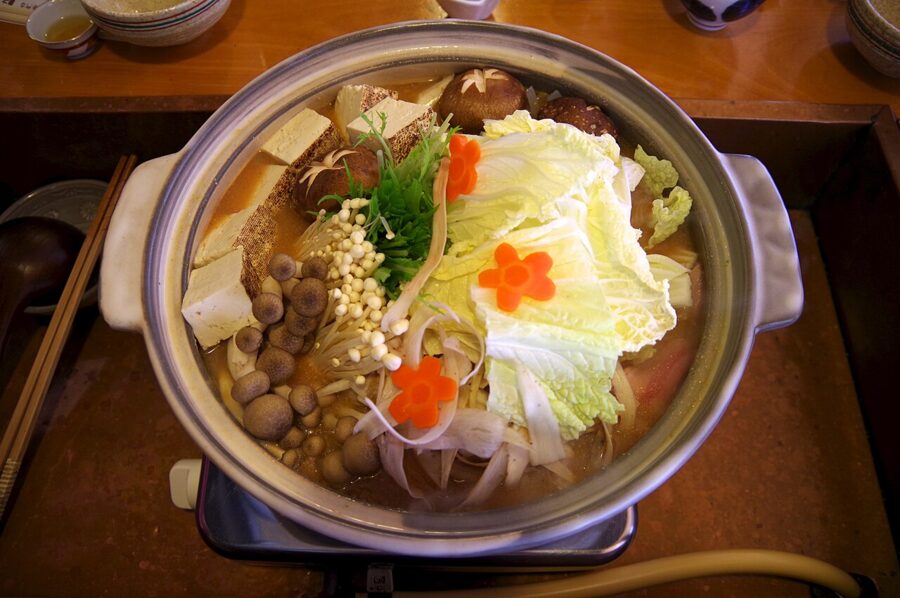
Botan nabe, “peony pot”, is wild boar in miso, the dish that gave Ohta Nawanoren its idea in 1868. The home of it now is Tamba Sasayama in Hyogo, where the meat is laid on the plate in the shape of a peony. The name actually came first and the arrangement followed it. It was picked as one of Japan’s 100 regional dishes in 2007 and given the national Agency for Cultural Affairs’ “100-year food” label in 2021.
Osaka also has tecchiri, fugu chiri, pufferfish simmered in kombu stock and dipped in ponzu. Osaka calls fugu teppo, the gun, the joke being that both can kill you if they hit, and tecchiri is short for gun-chiri. My fugu guide covers the licensing and where to eat it safely.
Kyushu and Okinawa
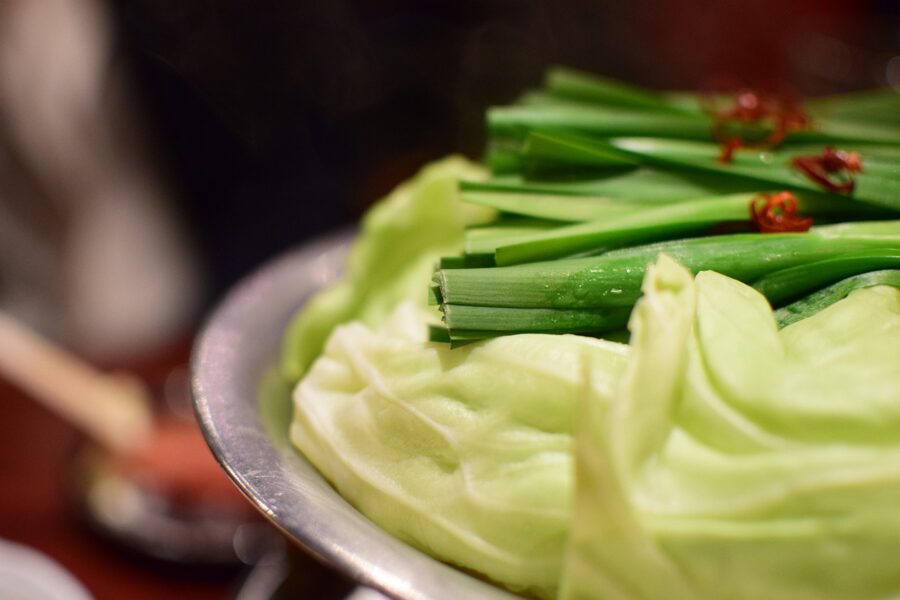
Fukuoka’s two pots, motsunabe (offal with cabbage, garlic chives and garlic) and mizutaki (bone-in chicken in a milky broth), are covered in my Fukuoka ramen guide. Okinawa is the one place with almost no nabe tradition, thanks to the climate.
The everyday ones
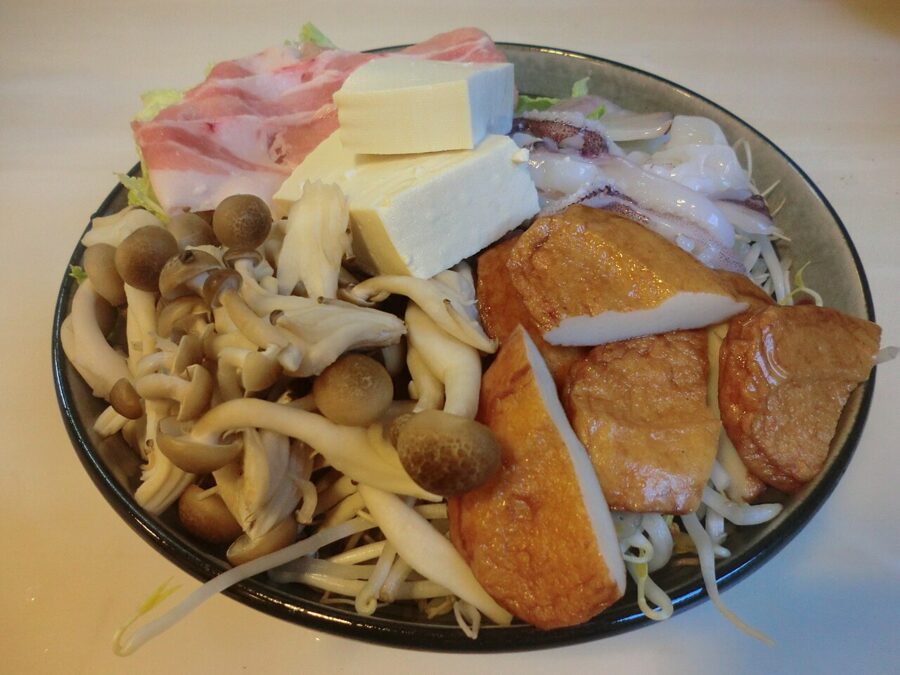
Yosenabe, “gathered pot”, is whatever is around: fish, prawns, clams, chicken, tofu and winter vegetables in seasoned dashi. Hokkaido versions lean towards scallops and onion, Hokuriku towards anglerfish, Kansai towards beef.
Joyanabe, “every-night pot”, is pork and spinach in water with a little sake, dipped in ponzu, a name that means you could eat it every night without tiring of it. It spread among the Kamakura literary set around the novelist Kume Masao. Oden is a nabe too, and gets its own guide in oden.
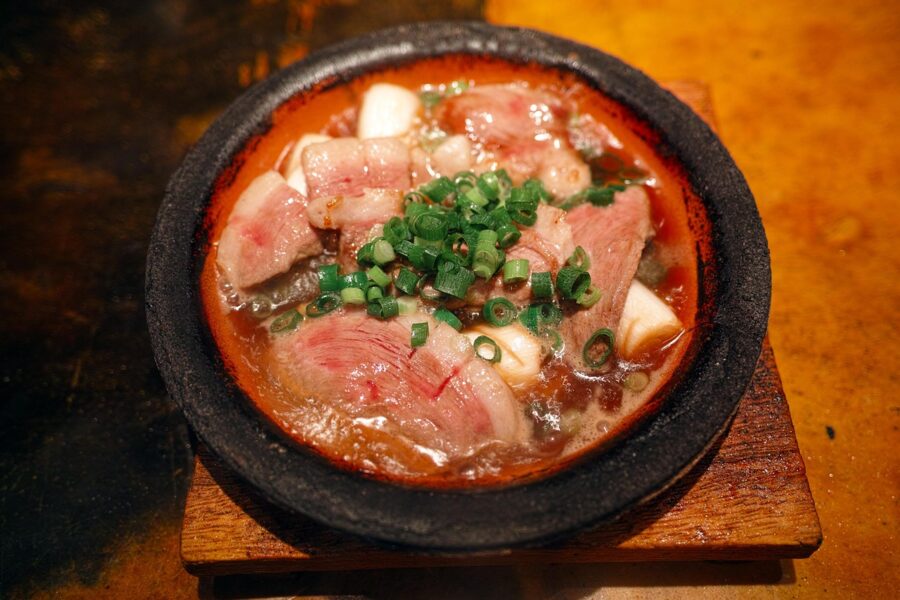
From October to March, nabe also turns up on izakaya menus everywhere, usually as a small pot for two to share with drinks: duck, chicken meatballs, kimchi, oysters in miso. It’s the cheapest way to try a regional style without travelling for it, and it goes very well with warm sake.
How a nabe meal ends
Never leave the broth. By the end of a nabe meal it has taken flavour from everything that went into it, and every kind of pot has its own way of finishing with it, called shime, the close.
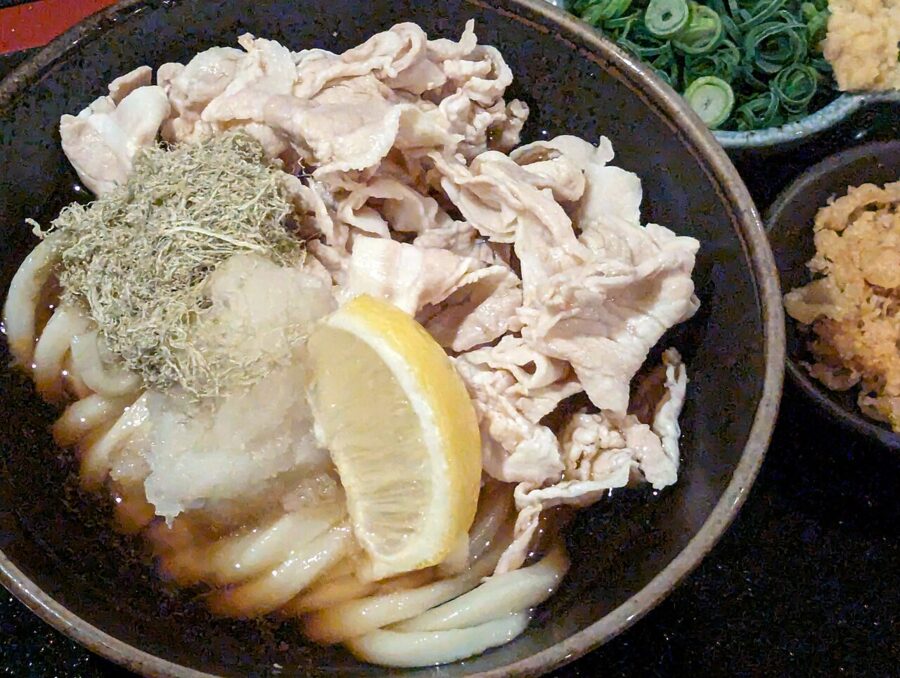
Udon is the usual finish for sukiyaki and shabu-shabu. Thick noodles go into the leftover sukiyaki sauce or shabu-shabu stock for a few minutes and soak up whatever is left. At a restaurant you usually order the noodles separately, so ask. My udon guide covers the noodles themselves.
Zosui is rice simmered in the broth, often with beaten egg poured over at the last moment and chopped negi on top. It’s the most common shime of all, the standard end to fugu, crab, chicken and chanko pots, and the reason to keep the broth clean of scum all through the meal. In the Muromachi period it was written with characters meaning “add water”, which is close to the truth.
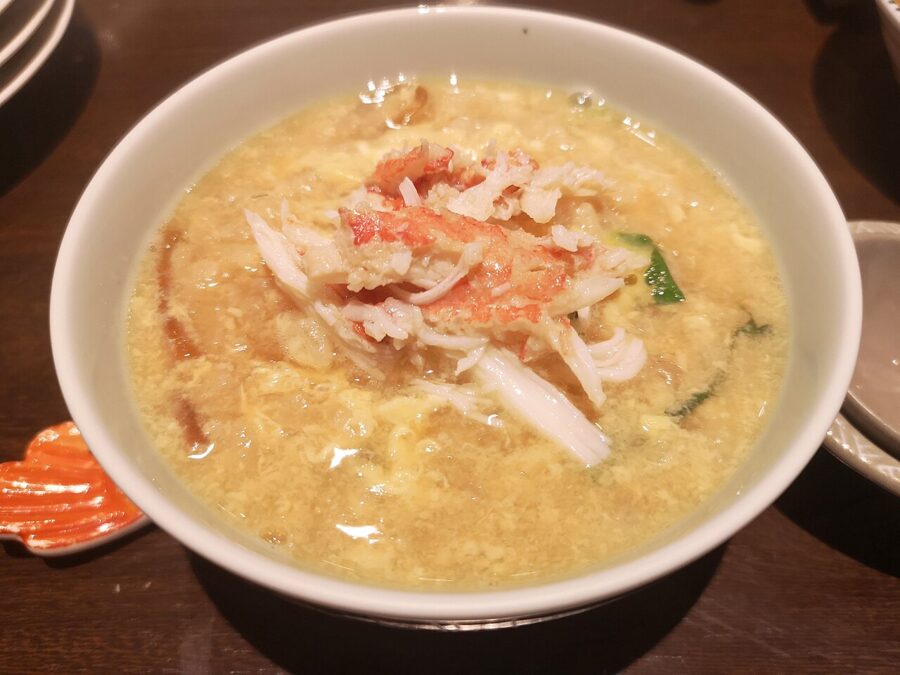
Champon noodles are the Fukuoka finish for motsunabe, a habit picked up around 1990 from Nagasaki. Ramen noodles are a common choice for miso and kimchi pots. At home, leftover sukiyaki goes over rice the next morning with an egg.
Who cooks? Service and manners at the pot
At the old houses, someone cooks for you, at least at first. A server, called nakai-san at a ryotei or a ryokan and traditionally a woman in kimono, kneels or stands beside the pan, sears the first slices, seasons them and puts them in your egg bowl. After that she might keep going all evening, or leave the chopsticks with you and come back now and then to rescue the pan. Watch the first round carefully: it’s a free lesson.
At chains, at izakaya and at most shabu-shabu places, you do it all yourself, and the staff will show you the controls on the burner. In any group, one person usually takes charge of the pot, and Japanese has a word for them: nabe bugyo, the pot magistrate, who decides when things go in and tells everyone else to wait.
The manners are mostly common sense. Use the serving chopsticks or ladle to take things from a shared pot, not the ones you eat with. Don’t fish around for the best piece of beef, and don’t tip the leftovers from your egg bowl back into the pan.
Skim the foam as you go. And at a shabu-shabu table, don’t drop a whole plate of meat into the pot at once: cook a slice or two at a time and eat them as they’re done.
Many traditional houses only take bookings for two or more, so solo travellers do better at chains or the Kokugikan chanko. If you have allergies or don’t eat beef, say so when you book, not halfway through dinner.
What it costs
Here’s a rough guide to one person’s dinner, from the figures restaurants published in late 2026. Drinks are extra, and some traditional places add a service charge.
| Level | Example | Price per person |
|---|---|---|
| Chain lunch | Shabu-yo weekday pork lunch | ¥1,099 |
| All-you-can-eat shabu-shabu | Shabu-shabu Onyasai, 120 minutes | ¥3,608–¥7,128 |
| Old-house sukiyaki, simple | Imahan Honten, Asakusa, with rice set | ¥5,850–¥9,850 |
| Classic sukiyaki or shabu-shabu course | Hariju, Dotonbori | ¥7,150 (lunch), ¥9,900–¥19,800 (dinner) |
| Meiji gyunabe course | Ohta Nawanoren, Yokohama | From ¥14,300 plus 10% service |
| Founding shabu-shabu house | Junidanya, Gion | From ¥14,600 |
Lunch is where the value is. Some of the old houses run a cheaper midday menu with the same beef in smaller quantities, and booking a table at noon instead of 19:00 is the easiest way to eat at one without paying full dinner prices. If yakiniku is also on your list, my yakiniku guide covers the other great table-grill beef meal, and the price ranges are similar.
Skip this
- All-you-can-eat sukiyaki as your first sukiyaki. The meat in sukiyaki is the whole point, and cheap, thin beef cooked in a lot of sweet sauce tells you very little about the dish.
- Dropping a full plate of shabu-shabu beef into the pot to save time. You’ll get grey, chewy meat and a pot of scum.
- Turning up alone at a traditional sukiyaki house without checking. Several of them simply don’t seat one person.
- Kobe or top-grade A5 beef for shabu-shabu if you don’t like rich food. The fat that makes it extraordinary on a grill can feel heavy after the tenth slice in water. A leaner cut, or pork, is often more enjoyable.
- Judging sukiyaki by the versions abroad. In Bangkok, for example, Thai suki is a completely different dish that only borrowed the name.
If you only have room for one beef pot, make it a Kansai-style sukiyaki at an old house, at lunch, with someone else searing the first slices. Then find a cheap shabu-shabu chain for a second night, and a chanko bowl in Ryogoku if there’s a tournament on. Leave room for the noodles. Everyone else at the table will be waiting for them.
You Might Also Enjoy
 Hong Kong Day Trip: A Working Plan from Shenzhen (or a Cruise Ship, or a Layover)
 Kobe Food Guide: Beef, Pork Buns, Bakeries and the Sobameshi of Nagata
 Harbin Ice Festival: Ice and Snow World, Sun Island and How to Survive Harbin in January
 Luoyang: The Longmen Grottoes, the Old City, the Water Banquet and a Day Trip to Shaolin