Kobe Food Guide: Beef, Pork Buns, Bakeries and the Sobameshi of Nagata
A pork bun at Roshoki in Nankinmachi costs ¥120. Walk twenty minutes north, up through Sannomiya to Kitano-zaka, and the lunch course at Wakkoqu’s teppan counter is ¥7,950; dinner goes a long way past that.
Both are Kobe food, and both have people waiting for them. Only one of them is what Kobe actually eats on a Tuesday.
I spent a year eating baozi in Shenzhen, so I came to Kobe for the beef and stayed for everything around it. Kobe is a port that opened to foreign ships in 1868, and you can still eat that date. German bakers, Chinese traders, Russian chocolatiers and the cooks off foreign liners all landed here, and their bread, cakes and coffee became Kobe’s. Then there is the other Kobe, west of the centre, where the shoe-factory districts of Nagata invented a plate of fried rice and noodles chopped together on a griddle.
This guide does the beef properly, then spends most of its length on everything else. That is where the city is cheapest, best and least crowded with people like me.
If you only have a day, here is the short version.
| Eat | Where | Rough price | Worth it because |
|---|---|---|---|
| Kobe beef teppanyaki | Sannomiya, Kitano | ¥7,000–20,000+ | The real thing, cooked in front of you |
| Pork buns (butaman) | Nankinmachi, Motomachi | ¥120 each | Kobe’s oldest street food, still hand-folded |
| Bifukatsu (beef cutlet) | Sannomiya, Motomachi, Shinkaichi | ¥2,800–3,300 | Kobe’s everyday beef, with five-day demi-glace |
| Sobameshi and bokkake | Nagata, Sannomiya basement | ¥800–1,000 | The working-class Kobe plate |
| Bread and cake | Kitano, Motomachi, Sannomiya | ¥300–1,500 | The city spends more on bread than anywhere in Japan |
| Akashiyaki | Akashi, 15 minutes by train | ¥900 or so | Egg dumplings in warm dashi |
| Sake at the brewery | Nada, Higashinada | Free museums | The biggest sake district in Japan |
In This Article
- Kobe beef, without the mythology
- Teppanyaki, steak or sukiyaki?
- Eat it at lunch
- The beef nobody photographs: bifukatsu
- A port city that runs on bread
- Freundlieb, twice
- Cake, chocolate and wafers
- Coffee, then and now
- Kitano: eat, don’t queue
- Nankinmachi: eat standing up
- Roshoki and the pork bun
- What else to eat in Chinatown
- Go west to Nagata for sobameshi
- Sobameshi, where it started
- Bokkake, the Nagata stew
- Nikuten, doro sauce and Kobe takoyaki
- Akashi, fifteen minutes on
- Drink where the sake is made
- Hakutsuru Sake Brewery Museum
- Kiku-Masamune Sake Brewery Museum
- Arima Onsen, if you have the afternoon
- Where to eat, area by area
- Getting there and around
- Sannomiya
- Motomachi
- Kitano
- Harborland
- Nagata
- What it costs
- Skip this
Kobe beef, without the mythology
Kobe beef is a brand, not a breed. It comes from Tajima cattle, the black Japanese breed of northern Hyogo, born, raised and slaughtered in the prefecture and graded high enough to earn the name. There are no beer-drinking, massaged cows involved. If you want the grading, the cut-off weights and how it compares with Matsusaka and Hida, my Japanese wagyu guide goes through it all; here I’ll stick to eating it in the city that named it.
The name itself is a port story. Tajima cattle were raised in the mountains of northern Hyogo for centuries as working animals, and the name Kobe beef is usually traced to the foreign merchants of the early port, who ate the meat and called it after the place they bought it. The brand you pay for today is younger: the association that certifies it was founded in 1983 to stop counterfeits.
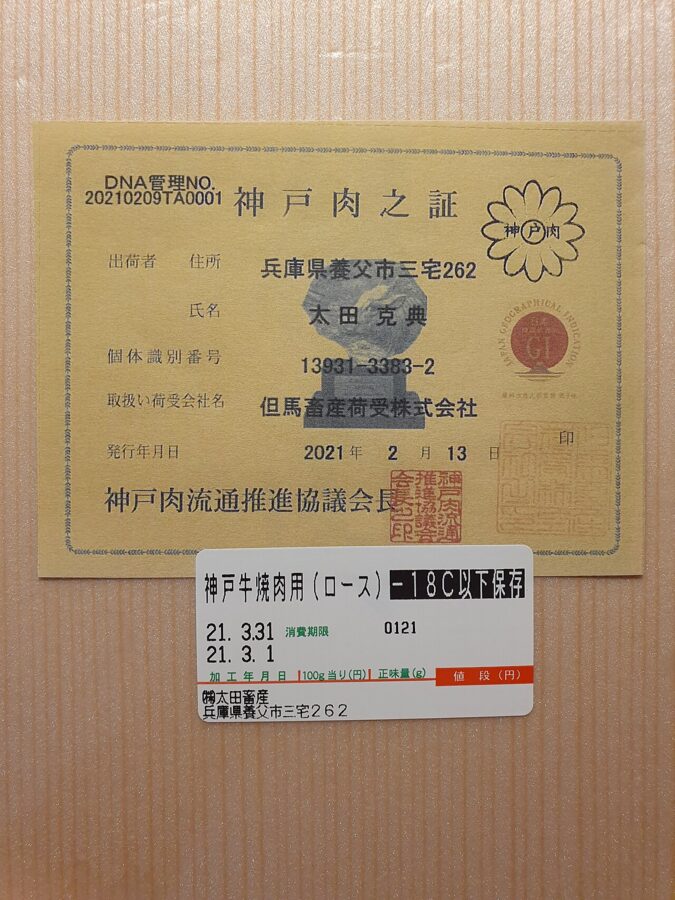
Two things protect you from fakes. The Kobe Beef Marketing and Distribution Promotion Association registers the shops allowed to sell it, and a registered shop displays a small bronze statue of a Tajima bull. The second is the certificate, with the animal’s 10-digit number on it. If a place has neither and the price looks too good, it is serving wagyu, possibly very good wagyu, but not Kobe beef.
Watch the menu wording too. Restaurants often run two grades side by side: certified Kobe beef and a cheaper house beef with Tajima bloodlines. Mouriya, for example, sells its own “selected beef” from a contract farm in Yabu, in the Tajima heartland, and says so plainly. That is a fair deal if you know which one you ordered.
Teppanyaki, steak or sukiyaki?
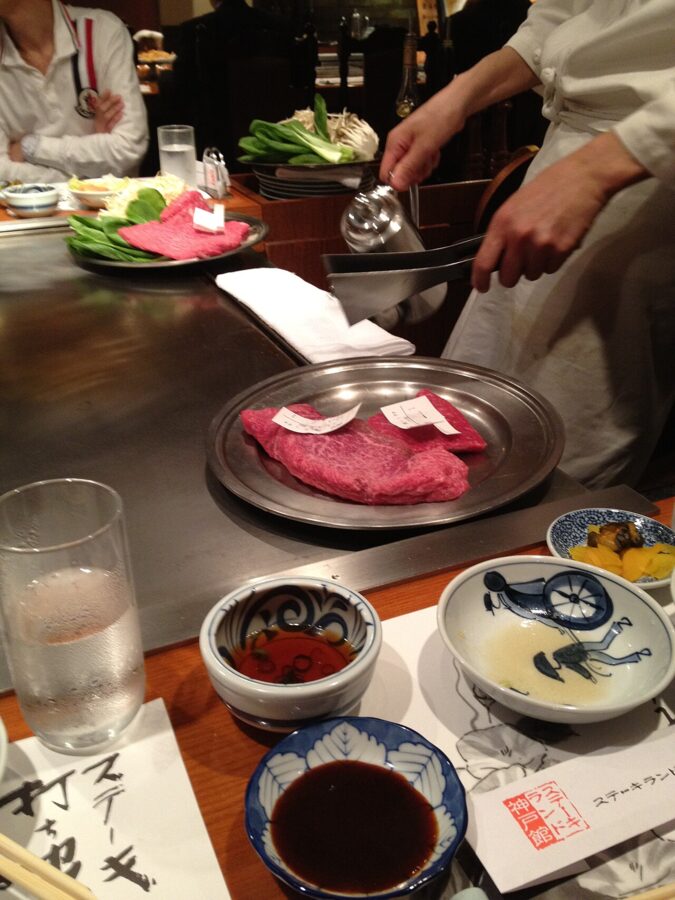
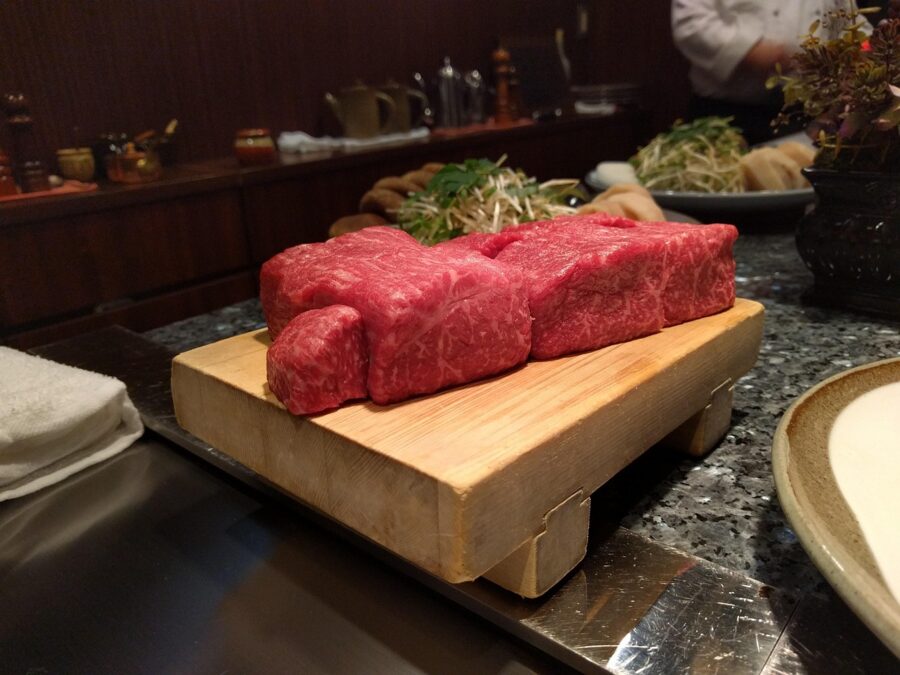
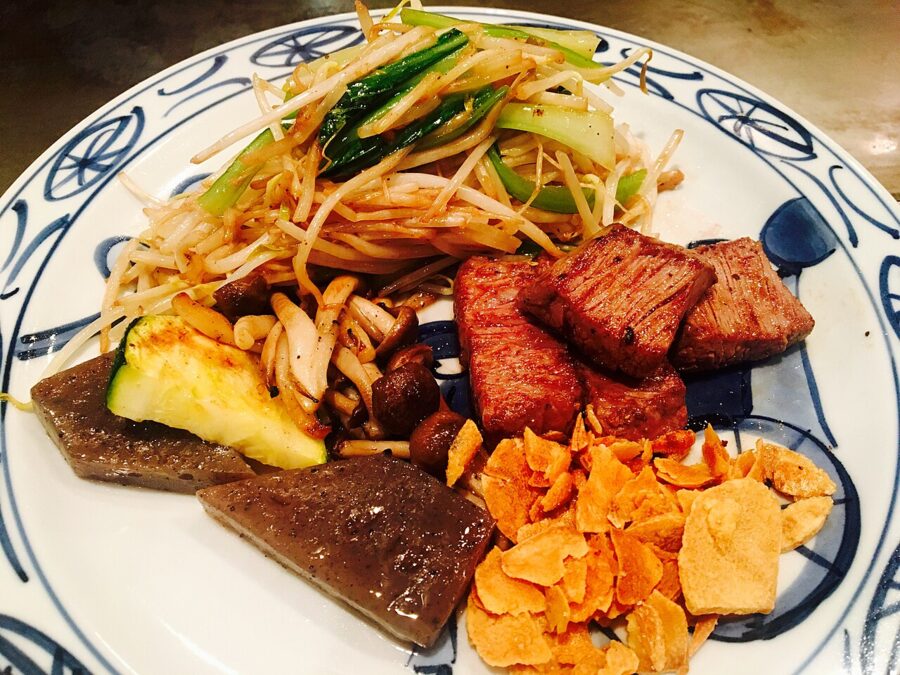
Teppanyaki is the Kobe way and the one I’d choose first. You sit at a steel griddle, the chef cooks garlic chips, vegetables and then your beef in front of you, cuts it into bites and serves it with salt, a little mustard or ponzu. Misono, on the 7th and 8th floors of its building at Shimoyamate-dori 1-1-2, two minutes north of the west exit of Hankyu Kobe-Sannomiya Station, has been doing this since 1945 and says it was the first. Lunch runs 11:30–14:30 (last order 13:30), dinner 17:00–22:00.
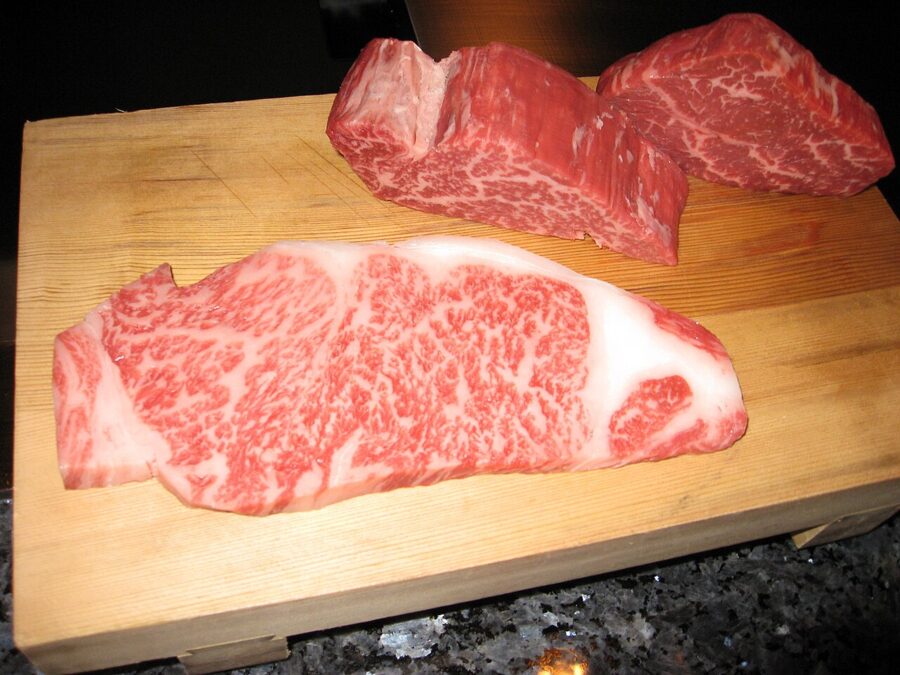
Sirloin is the classic order, fat-streaked and rich. Fillet is leaner and softer. Rump and the smaller cuts cost less and taste more of beef and less of butter, which is not a bad trade at 150 g. Kobe beef melts at a low temperature, so the chef cooks it fast and rarely past medium; if you like steak well done, order something other than Kobe beef.
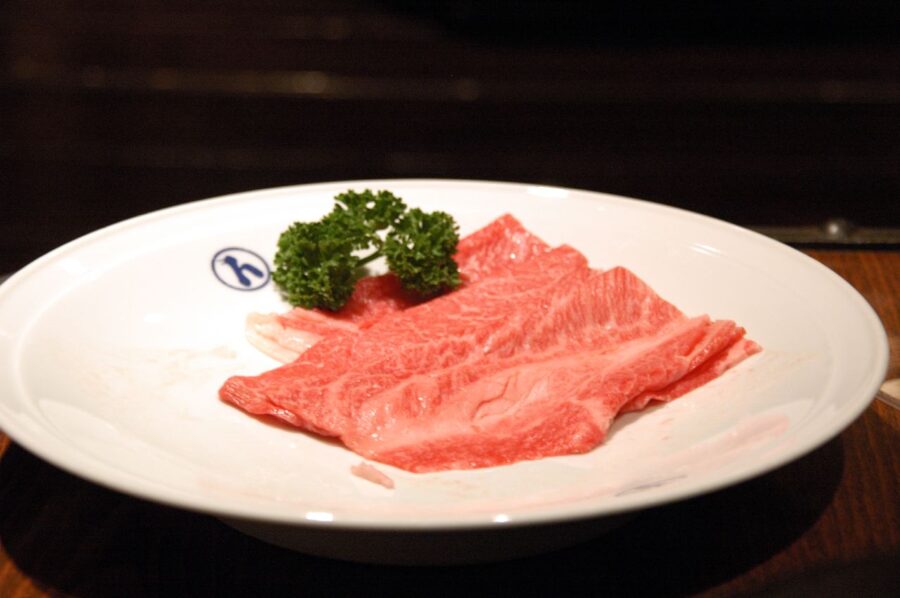
Sukiyaki and shabu-shabu are the other two ways in. Both use thin slices, and the fat that makes a thick steak heavy is exactly what makes a slice in sweet soy broth so good.
If you want the broth versions in depth, my guide to sukiyaki and shabu-shabu covers how to order. Kobe Plaisir, the restaurant run by the farmers’ cooperative JA Zen-Noh Hyogo since 2008, adds a third: Kobe beef steamed in a bamboo seiro over Hyogo vegetables, with a yolk-and-dashi sauce. It is on the ground floor of Hotel The B Kobe, about five minutes’ walk from the Sannomiya stations.
Eat it at lunch
Book ahead. Most of the well-known counters take reservations online in English, and some lunch courses need a day or two’s notice, especially at weekends. When you sit down, the chef will ask how you’d like the beef cooked and may show you the raw cut first. The meal usually closes with rice, miso soup and pickles, sometimes garlic rice fried on the same steel, then coffee away from the griddle.
The cheapest way to eat good Kobe beef is lunch, and it isn’t close. Most teppan restaurants run shorter lunch courses at a fraction of dinner prices. At Wakkoqu’s Kitano-zaka branch (Nakayamate-dori 1-22-13, ten minutes’ walk north from the Sannomiya stations), the lunch course is listed at ¥7,950 from 12:00 to 15:00. Wakkoqu’s top course, 200 g of special-grade Kobe beef with dessert, is ¥18,450.
Mouriya is the old name. It started in 1885 as a beef business, now runs five restaurants in Sannomiya plus one in Gion in Kyoto, and its main branch at Shimoyamate-dori 2-1-17, five minutes from the west exit of JR Sannomiya, seats 50 over three floors and opens 11:00–22:00 (last order 21:00). Steakland is the opposite of hushed: 370 seats on the 6th floor of a building one minute from the Hankyu west exit, with special lunch prices. It is loud and touristy and good value, and the menu lists Kobe beef alongside cheaper steaks, so check which one you’re ordering.
And the budget answer is on a train platform. Awajiya, the station caterer, sells its niku-meshi box of sweet-soy beef over rice for ¥1,480 at its counters in Kobe and Shin-Kobe stations. It’s everyday beef rather than Kobe beef, but it’s a decent beef lunch for the Shinkansen. My ekiben guide has Awajiya’s other boxes.
The beef nobody photographs: bifukatsu
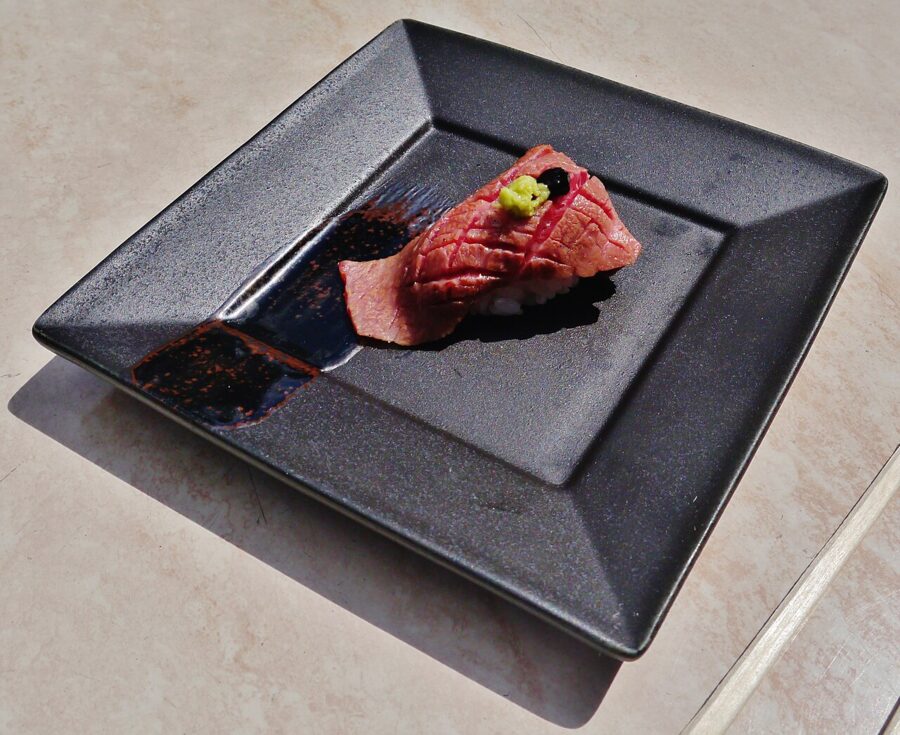
Ask people in Kobe where they eat beef and a lot of them won’t say teppanyaki. They’ll name a yoshoku restaurant, one of the old Western-food houses, and order bifukatsu: a beef cutlet, breaded, fried rare in the middle, and drowned in demi-glace. Kobe’s version of Western food came from chefs who had cooked on foreign passenger liners and in the port’s hotels, and it settled into the city as something you eat on a Wednesday, not a birthday.
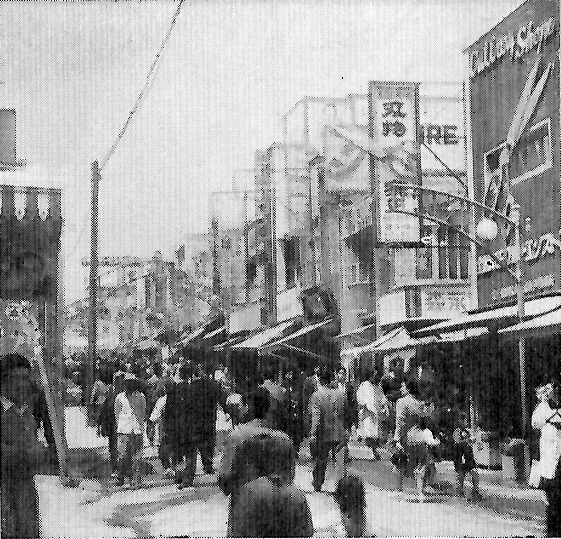
Grill Ippei is the name everybody gives you. It opened in 1952 in Shinkaichi, then the flashiest part of Kobe, because the founder, Yokoyama Kan, decided after the war that Western food was the future. The demi-glace takes five days and the recipe has passed through four generations. The original shop still stands about three minutes from Shinkaichi Station, and there are branches in Sannomiya, Motomachi and Nishinomiya.
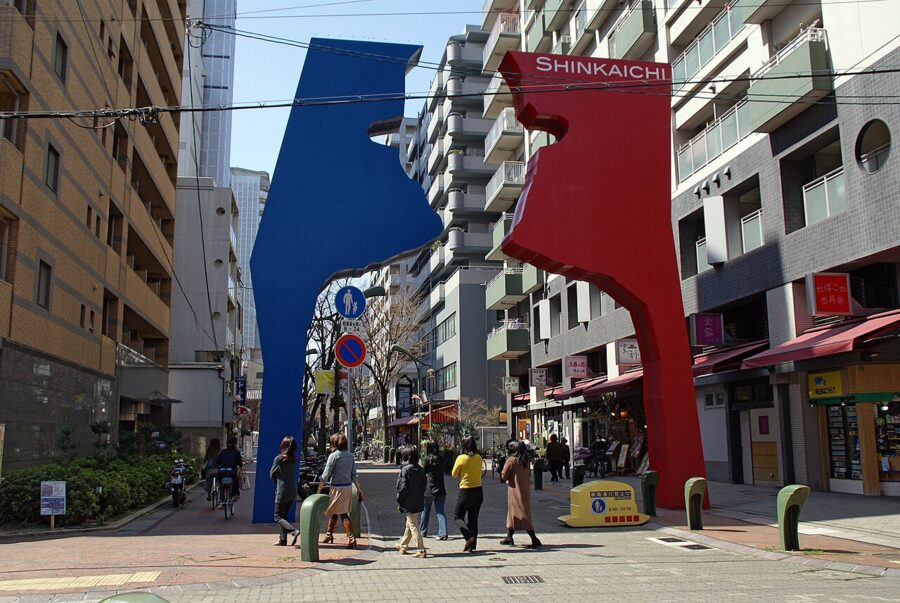
At the Motomachi branch, in the basement of a building inside the arcade, a set with a 100 g fillet cutlet, a fried prawn, salad, rice and soup was ¥2,800 this spring; the omurice set was ¥1,450. The beef in that cutlet is Australian fillet, which is common for bifukatsu and one reason it costs a fraction of a Kobe beef steak. Note that the Shinkaichi main shop closes on Wednesdays and Thursdays.
Mon, at Kitanagasa-dori 2-12-12, two minutes from Hankyu Kobe-Sannomiya Station, has been frying cutlets since 1936. The room is dark wood and old Kobe, the cutlet is ¥2,940 with rice extra, and the matchboxes were designed by the woodblock artist Kawanishi Hide. It opens 11:00–20:45 without a break and closes on Wednesdays, which makes it the easy late lunch.
The sauce bottle on your table is a Kobe story too. The thick, sweet sauce Japan pours on cutlets was first made in 1948 by a Kobe company, now Oliver Sauce, and the dark doro sauce scraped from the bottom of the vat is a Kobe habit you’ll meet again in Nagata. If you like the pork version better, my tonkatsu guide covers the whole katsu family.
A port city that runs on bread
Here is the number that surprised me. In the national household survey, households in Kobe spent an average of ¥41,967 a year on bread across 2023–2025, the highest of any city in Japan. Kobe has topped that table before, slipped, and taken it back. It has a bakery on most corners and people who argue about them.
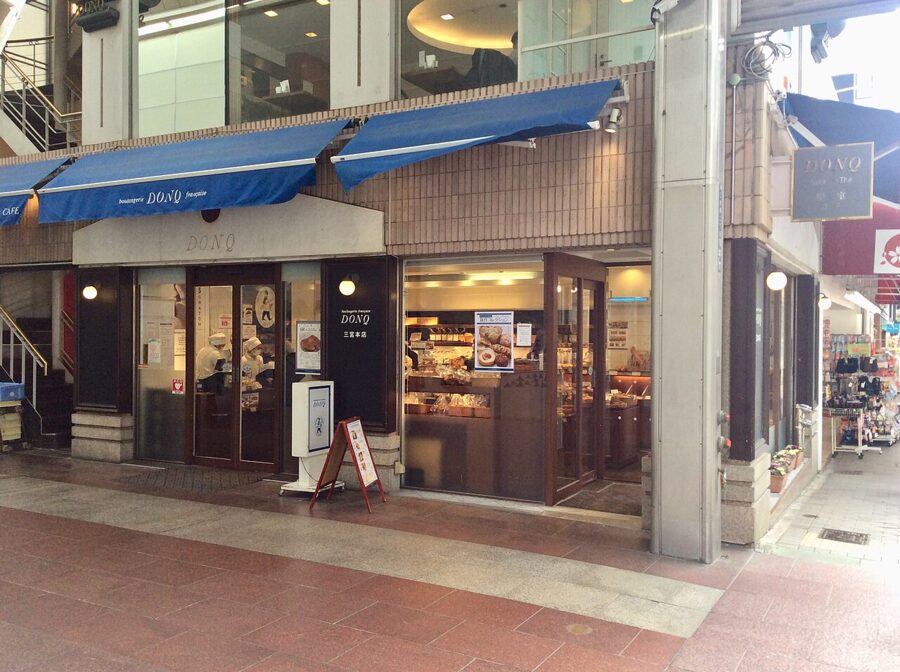
The foreigners came first and the bakers followed them. Donq began as Fujii Pan in 1905 in Hyogo ward. Freundlieb opened in 1924, founded by the German baker Heinrich Freundlieb. Isuzu Bakery, which turned 80 this year, opened in 1946, and in 1998 its baker Izutsu Eiji became the first bread-maker named a Kobe Meister, the city’s title for master craftsmen.
Freundlieb, twice
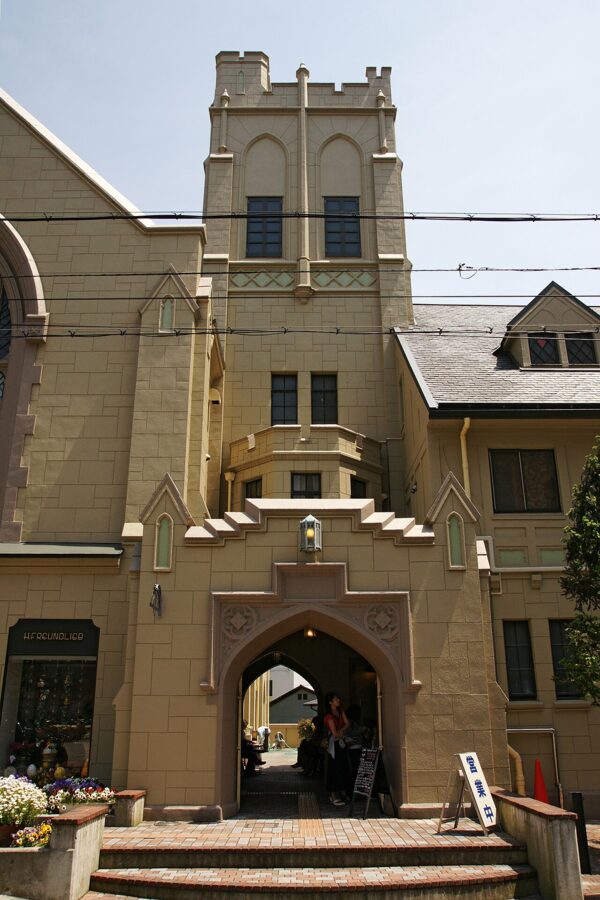
Freundlieb is the one to visit, because it lives in a church. Since 1999 the shop and cafe have occupied the former Kobe Union Church, a 1929 building by William Merrell Vories, at Ikuta-cho 4-6-15, about ten minutes south of Shin-Kobe Station. The ground floor sells bread and the dense German biscuits and pies it is known for. The old chapel upstairs is the cafe, and the sandwiches on its own bread are the order.
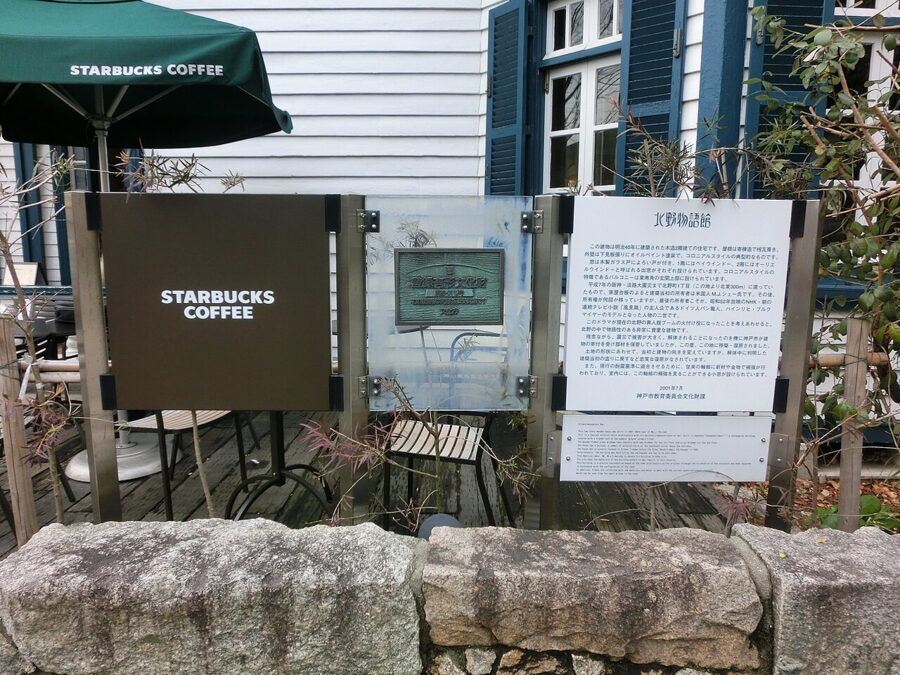
Up the hill there is a second Freundlieb building, which is now a Starbucks. The two-storey wooden house on Kitano-zaka was built in 1907, owned by the Freundlieb family, and made famous by a 1977 NHK morning drama based loosely on Heinrich’s life. It collapsed in the 1995 earthquake, was taken apart and rebuilt on its present site in 2001, and has served coffee since 2009.
Cake, chocolate and wafers
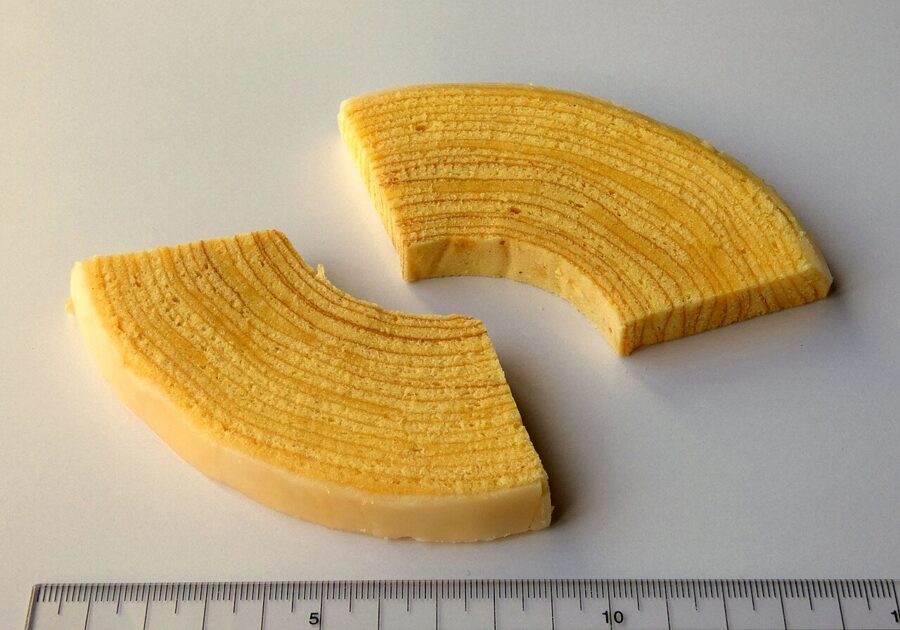
Kobe calls itself a sweets city, and the history backs it. Karl Juchheim, a German confectioner held as a prisoner of war, baked what is generally counted as Japan’s first baumkuchen on 4 March 1919 at an exhibition in Hiroshima, in the hall that is now the Atomic Bomb Dome. He opened a shop in Yokohama, lost it in the 1923 earthquake and started again in Sannomiya. Juchheim is still a Kobe company, with its main shop on the Motomachi arcade and, since April 2025, an annex in the GLION ARENA KOBE building on the waterfront where the baumkuchen is baked in AI-controlled ovens.
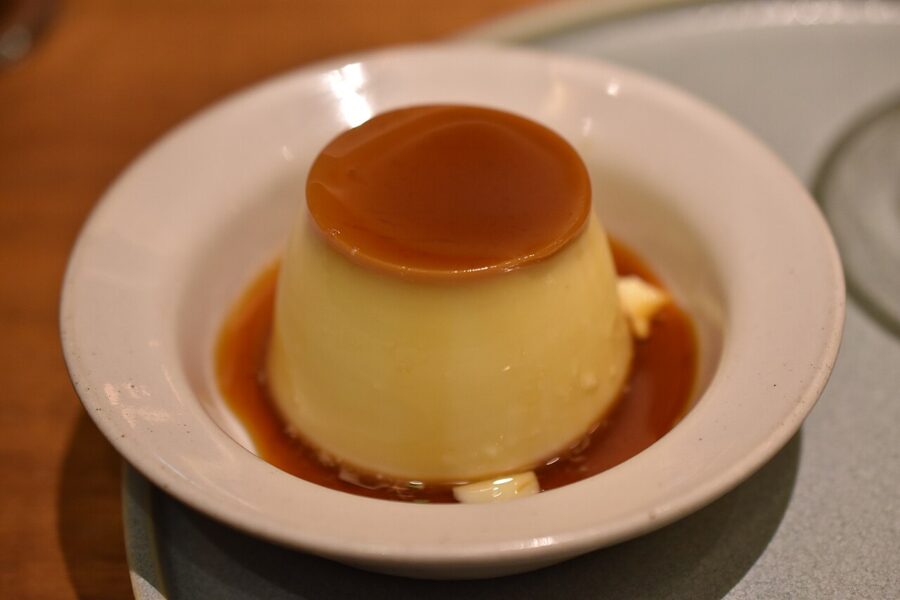
Morozoff began in 1931 as a chocolate shop on Tor Road, the street that runs downhill from Kitano to the old foreign settlement. By the company’s own account it introduced the idea of giving chocolate on Valentine’s Day to Japan the following year. Today my order is the custard pudding, which comes in a heavy glass cup.
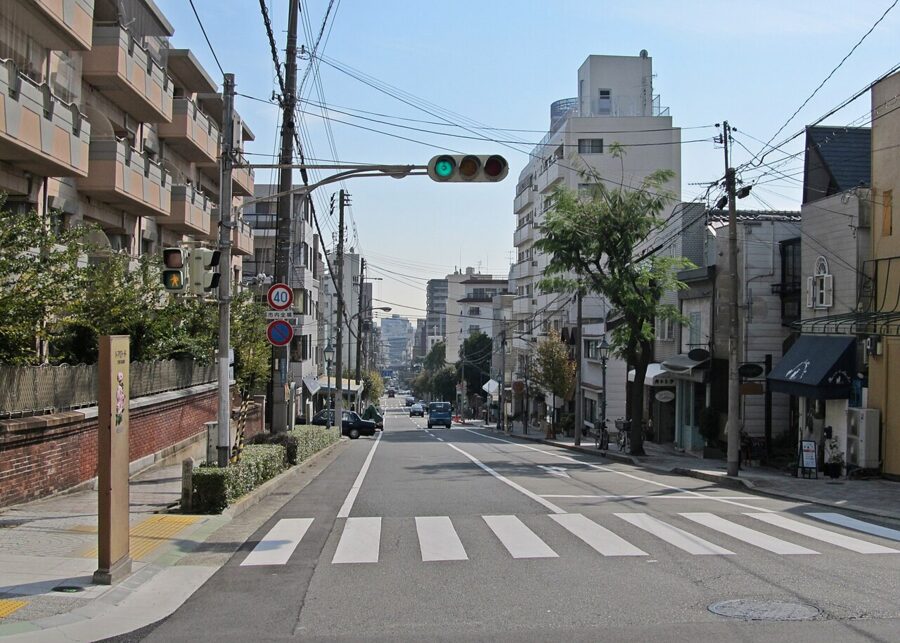
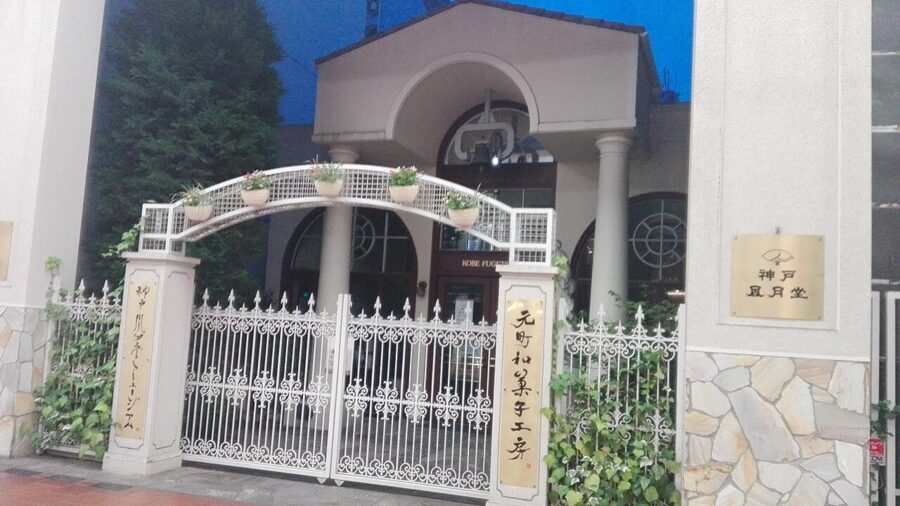
Kobe Fugetsudo, founded in 1897, sells the city’s standard gift: gaufres, two wafer-thin discs with cream between them. A customer brought back French wafers around 1926 and asked the shop to try making them, the first boxes went on sale in 1927, and the bakers turned out about 800 a day over charcoal. Production stopped in the war and resumed in 1951. They travel well, which is the point.
Coffee, then and now
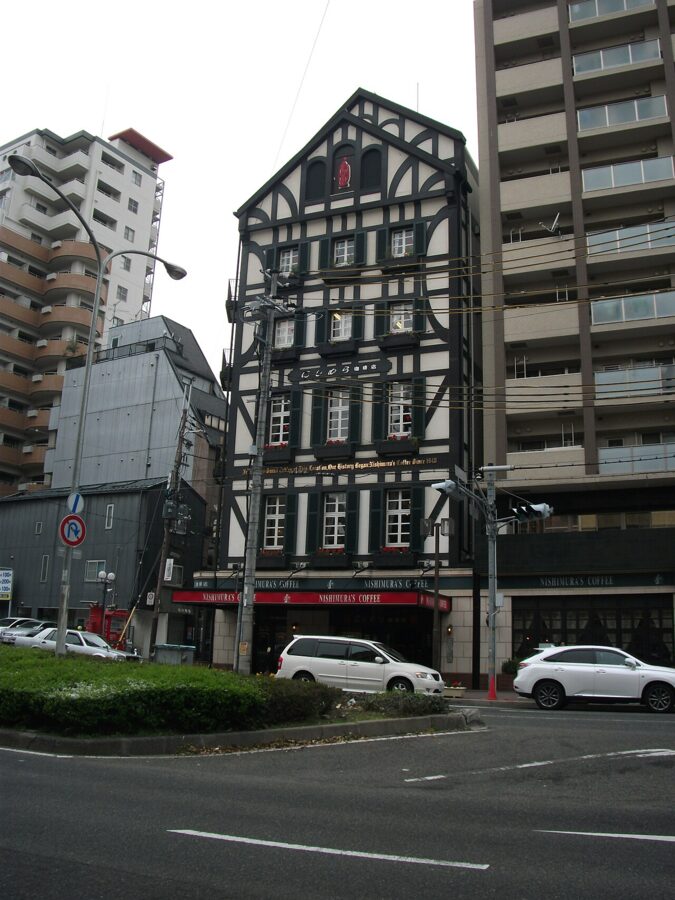
Kobe drinks coffee like a port that had it first. Nishimura Coffee opened in 1948 with three tables and grew into the half-timbered main shop at Nakayamate-dori 1-26-3, which serves from 8:30 to 22:00. I’ve written about it and the city’s other old coffee houses in my kissaten guide, so I’ll just say go for breakfast.
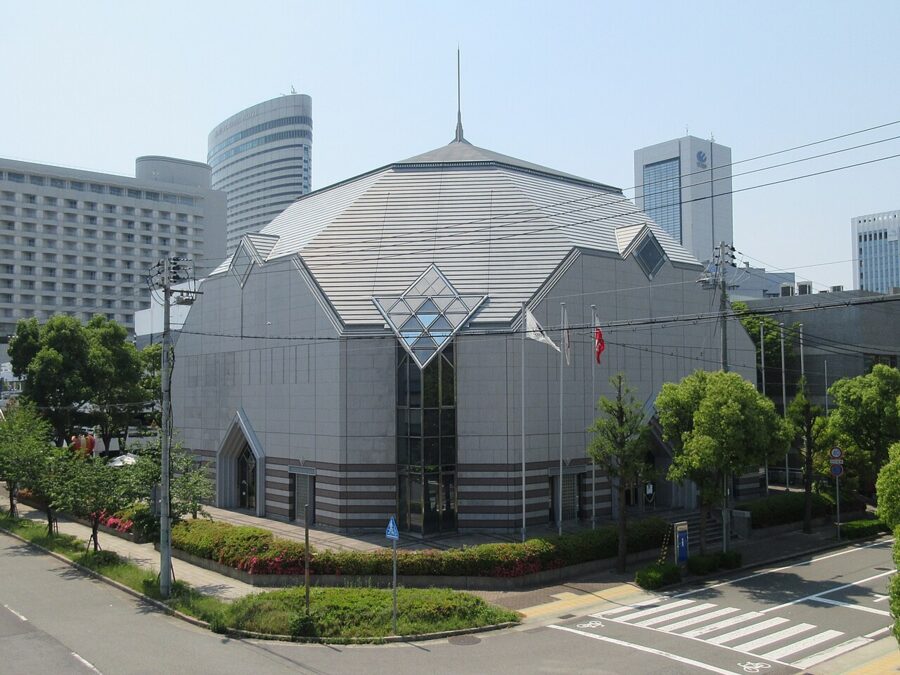
The other half of the story is industrial. UCC, the coffee company, is from Kobe and in 1969 sold the world’s first canned coffee with milk; Japan’s vending machines have been full of it ever since. Its coffee museum on Port Island opened in 1987, shut in March 2020 and reopened on 1 July 2026 with tastings and roasting classes.
Kitano: eat, don’t queue
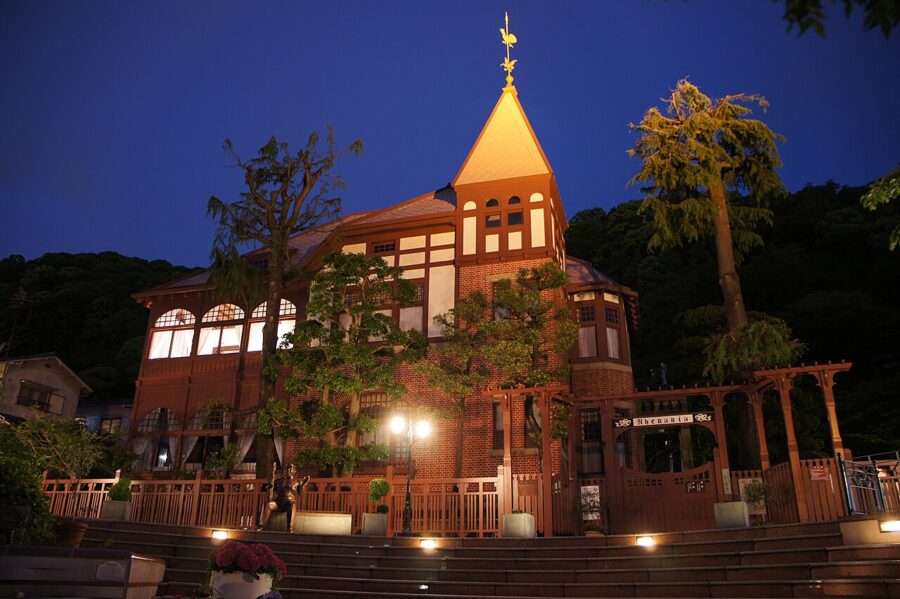
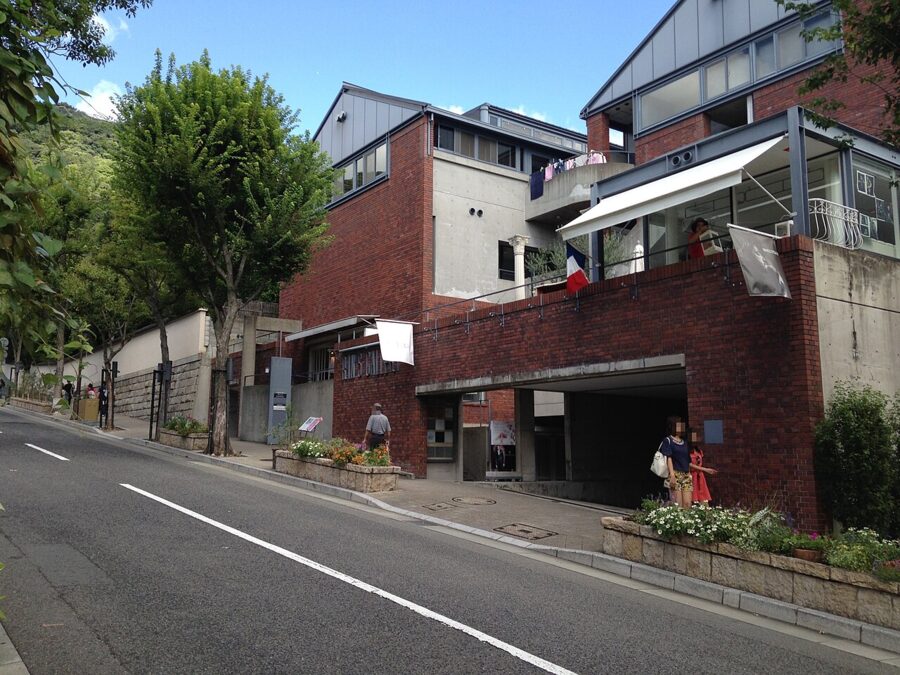
Kitano is the hillside of old foreign houses, the ijinkan, above Sannomiya, and it’s where most visitors spend a morning. The houses are worth one or two entrance tickets. The food on the main slopes is mostly cafes and souvenir sweets at Kitano prices, so treat it as a walk with a coffee and eat properly back down the hill.
Nankinmachi: eat standing up
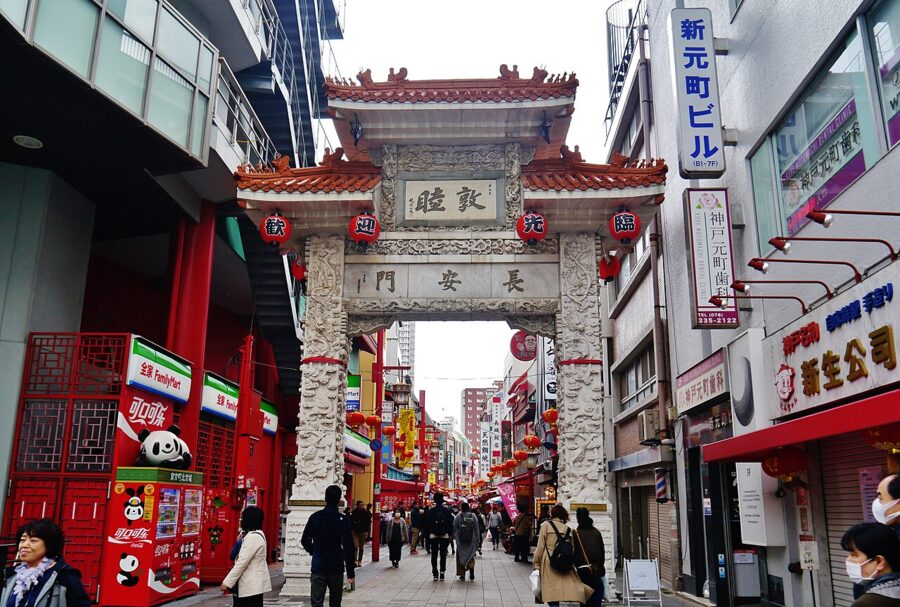
Nankinmachi is Kobe’s Chinatown, and it is small: about 270 m from east to west and 110 m from north to south, squeezed between the Motomachi arcade and the old foreign settlement. It grew with the port. Chinese merchants arrived after 1868, but Qing China had no treaty with Japan, so they couldn’t live inside the settlement and set up just west of it, selling pork, groceries and meals.
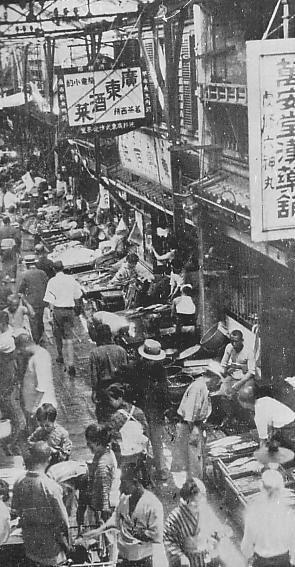
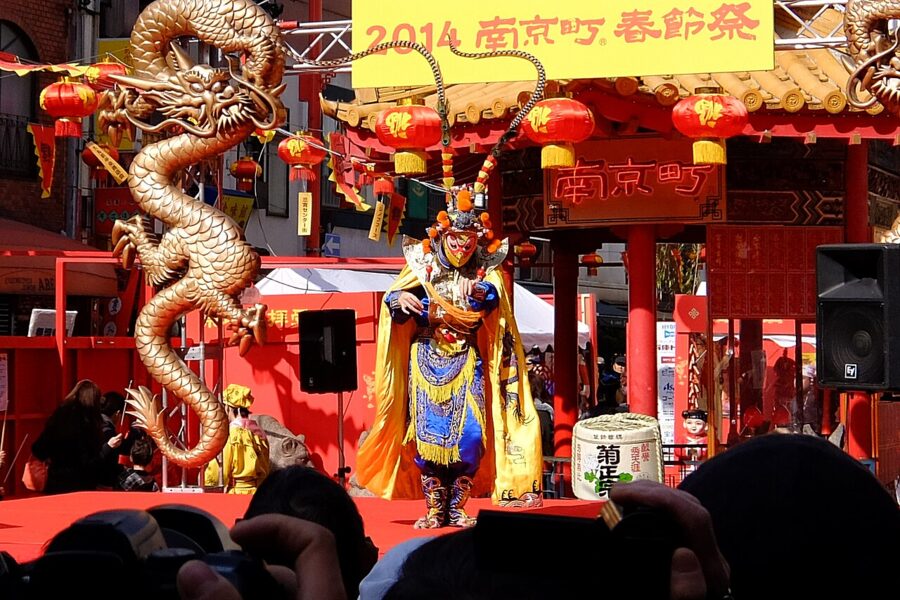
The 1945 air raids burned it to the ground, and for years after the war it was black-market stalls and bars. The shopkeepers formed an association in 1977, rebuilt it as a Chinatown on purpose, added the gates and the square, and started the Lunar New Year festival. It is one of Japan’s three historic Chinatowns, with Nagasaki‘s and the much bigger Yokohama Chinatown. You can walk the whole thing in five minutes, which is the point: you’re here to eat on your feet.
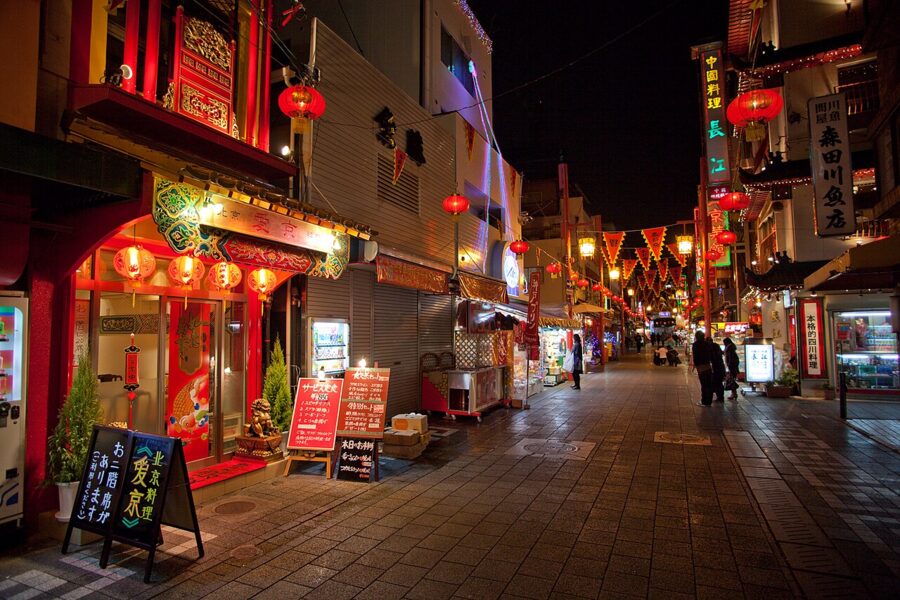
Roshoki and the pork bun
Roshoki is why the queue exists. Cao Songqi, a migrant from Zhejiang, opened it in 1915 and adapted the small Tianjin-style baozi into something he called butamanju, “pork bun”, a name Japanese customers could take to. It calls itself Japan’s first pork-bun specialist.
The buns are small, about two good bites, and the skin is chewy and a little salty, raised with a starter the family has kept going for 111 years. After Shenzhen I expected to be unimpressed. I wasn’t.
The old shop was knocked down in early 2025, and Roshoki sold its buns from its sister shop across the square while a new building went up. The rebuilt Roshoki opened on 11 November 2026, its 111th year, with an open kitchen where you can watch staff fold 13 buns a minute. The shop makes about 13,000 a day. Five cost ¥600 and ten cost ¥1,200.
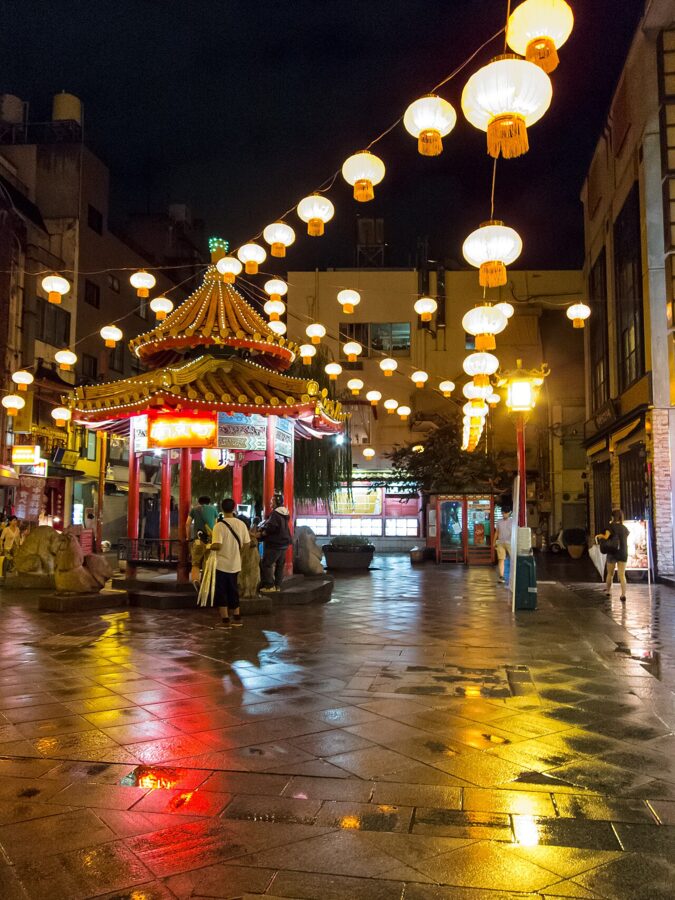
Hours are 10:00–18:30 or until sold out, closed Mondays (Tuesdays when Monday is a holiday). Weekend waits run 30 minutes to an hour. Roshoki itself says the quietest times are weekdays from 10:00 to 11:00 and from 17:25 to 18:15, and that rainy weekdays are best of all.
Eat them hot, in two or three bites, before you walk off. That’s how they’re made to be eaten.
Pork buns are serious business here. Roshoki, Shikoro in Motomachi and Sannomiya Ikkanro started the Kobe Butaman Summit in 2011, a weekend of pork buns from Chinatowns and bakeries across Japan, and the 15th ran this month with a Guinness record attempt for the largest pork-bun tasting. Kobe also has a Pork Bun Day, 11 November, because a pig’s snout looks like the number 11.
What else to eat in Chinatown
Kobe’s Chinese food came mostly from Guangdong, and Cantonese restaurants still dominate. The street counters sell soup dumplings, sesame balls, roast pork and steamed buns; the restaurants upstairs do set lunches and noodles. Kobe also has its own gyoza habit: you dip them in miso dare, a sweet-savoury miso sauce, loosened with soy and vinegar.
Gyozaen, a short walk from the square, opened in 1951 and claims the idea. My gyoza guide covers it and the other old shops.
I’d skip the Kobe beef skewers and Kobe beef buns sold at the busiest corners. They are the most expensive things on the street and the least like what Kobe people eat here. A pork bun, a plate of gyoza and a tea is the right meal.
Two dates for your calendar: the Lantern Fair hangs lanterns over the streets from 28 November to 25 December this year, and the Mid-Autumn festival comes round in September.
Go west to Nagata for sobameshi
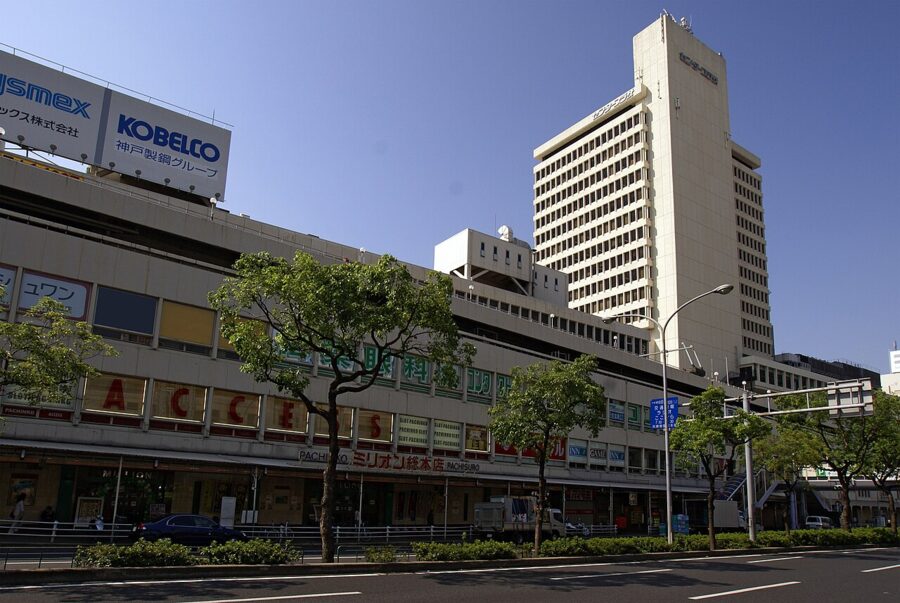
Nagata ward is a different Kobe. It is the old workshop district west of the centre, where the rubber and chemical shoe factories were, with large Korean and Okinawan communities and a long tradition of cheap, filling food cooked on griddles. It was hit hardest of all by the fires after the 1995 earthquake, and it rebuilt around its food and a giant robot.
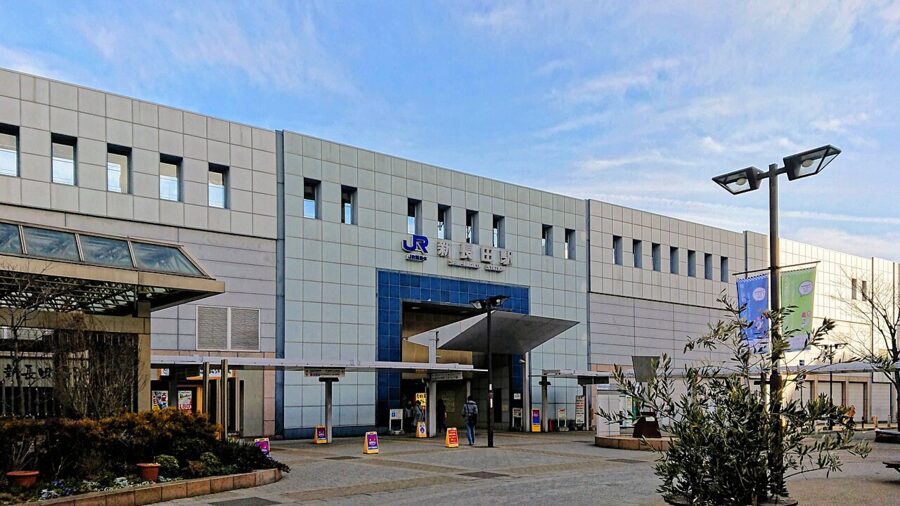
Sobameshi, where it started
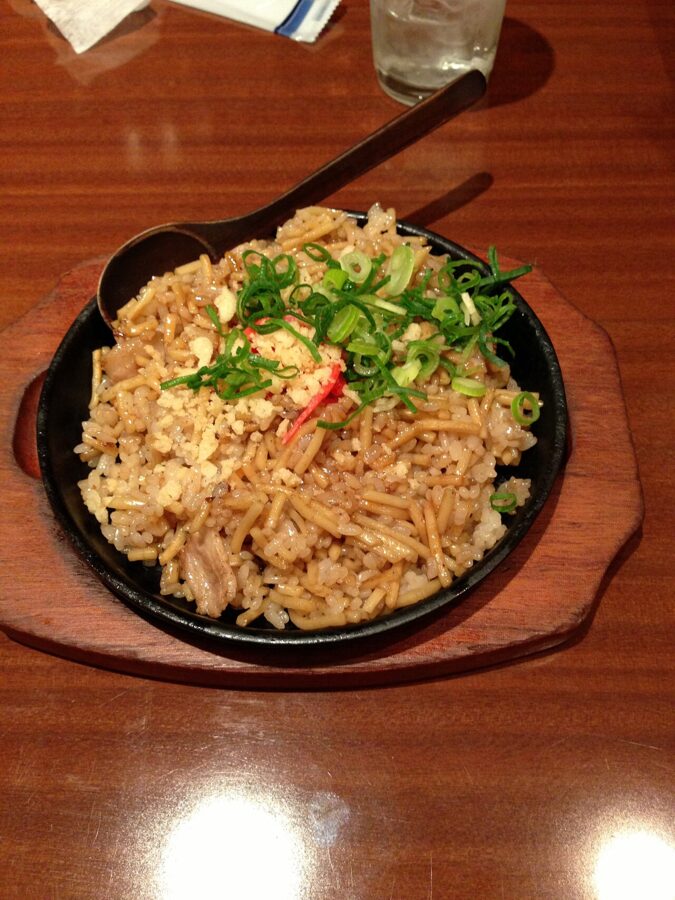
Sobameshi is yakisoba chopped small on the griddle and fried together with rice, then sauced. The story Nagata tells is practical. Factory workers would come into a local okonomiyaki shop at lunchtime with cold rice from their lunch boxes and ask the cook to fry it with the noodles. The shop usually credited is Aomori, at Kubo-cho 4-8-6, about six minutes from the south exit of JR Shin-Nagata, open since 1957.
Aomori is a small counter shop with a big griddle, and the house sobameshi is made with its own suji-kon, beef tendon simmered with konnyaku. It opens at 11:30 and closes on Tuesdays, and the lunch queue moves fast. You will spend about a tenth of what a teppan steak costs, and you’ll be eating the dish where it began.
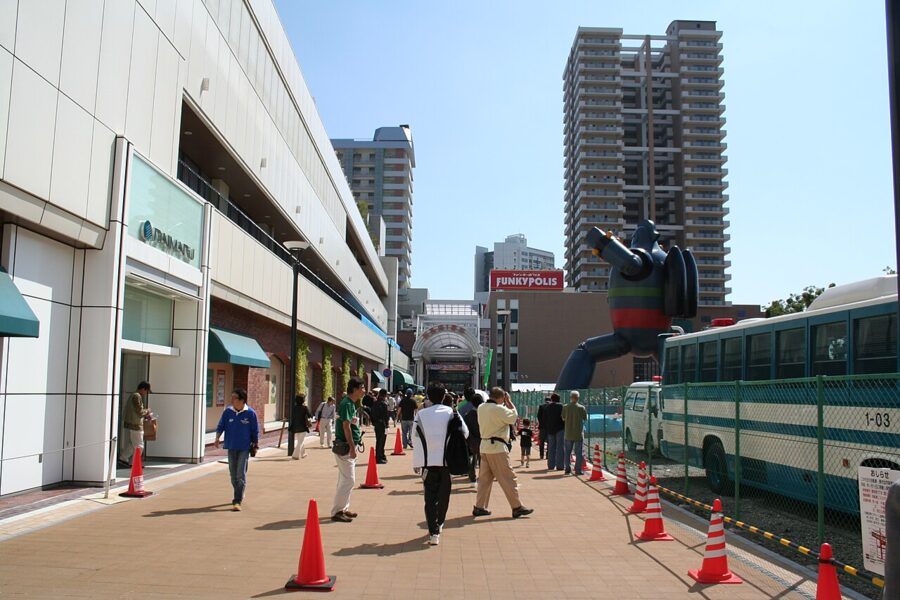
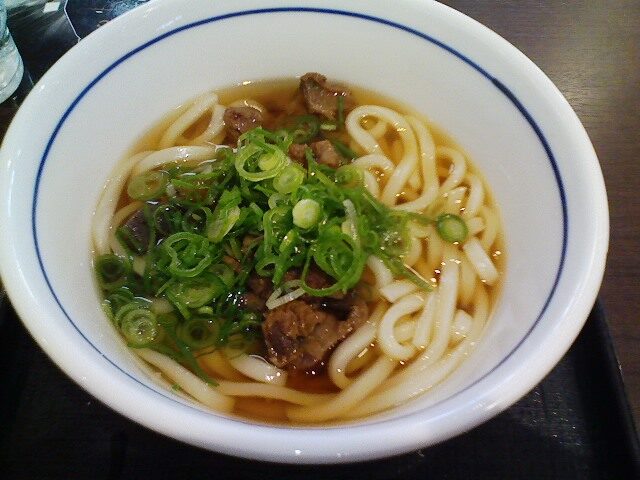
Bokkake, the Nagata stew
Bokkake is the ingredient that ties Nagata together: beef tendon and konnyaku simmered for hours in sweet soy until the tendon turns to jelly. The name is local dialect, from bukkakeru, “to pour over”, and that’s what you do with it, over udon, into okonomiyaki, onto yakisoba and through sobameshi. Tendon is a cheap cut, which is the whole point of Nagata food.
If you can’t get out to Nagata, Nagata Honjoken brings it into the centre. Its counter in the basement of Sannomiya Center Plaza East makes its noodles fresh each day and serves bokkake yakisoba, about ¥800 for a regular plate, from 11:00 to 21:30 on weekdays and from 10:30 at weekends. The yakisoba comes off a long griddle straight onto the steel in front of you.
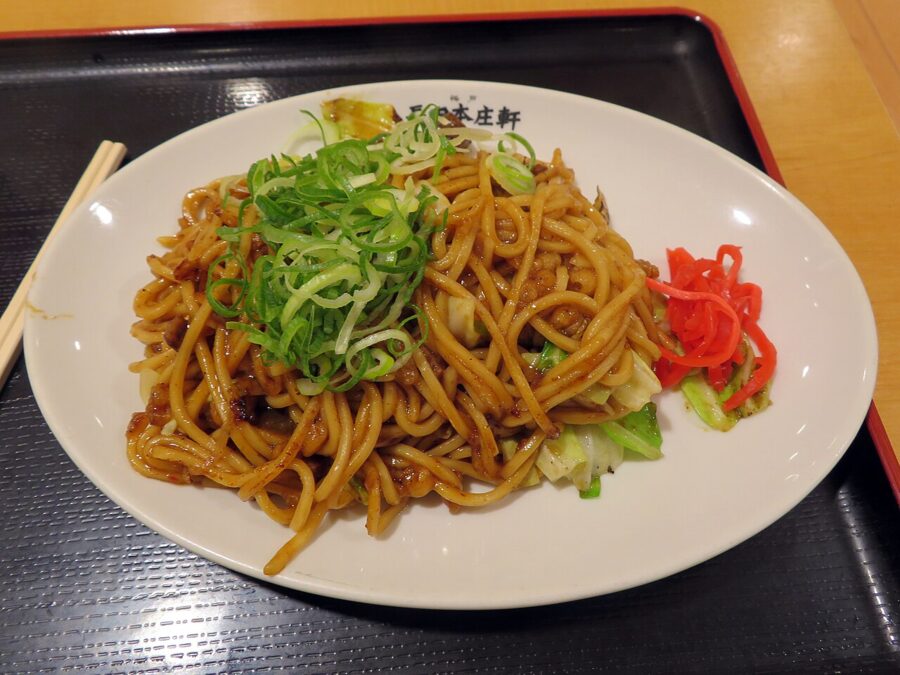
Nikuten, doro sauce and Kobe takoyaki
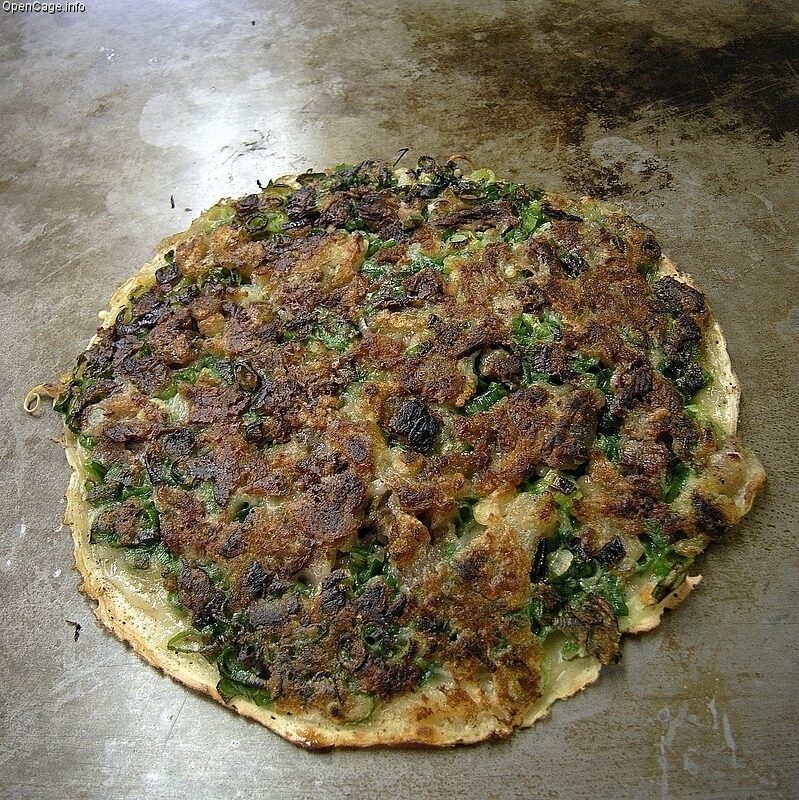
Nagata’s okonomiyaki is the old, layered kind. Nikuten is built on a thin crepe with no egg in the batter, then cabbage, beef or bokkake, and a smear of sauce, which in Nagata is usually doro sauce, the thick, spicy sludge from the bottom of the Worcestershire vat. I’ve covered it and the doro sauce story in my okonomiyaki guide.
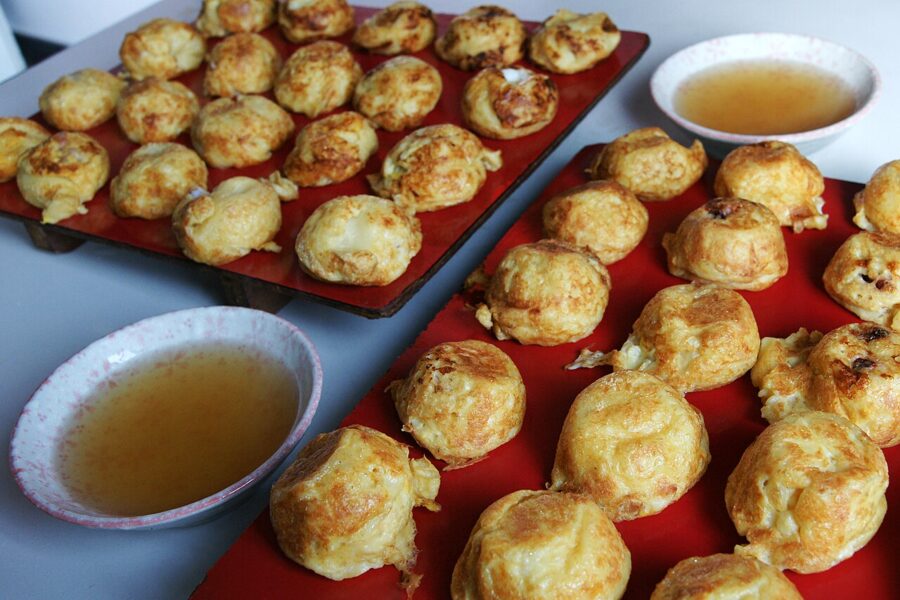
Kobe also has its own takoyaki, somewhere between Osaka and Akashi. In Hyogo and Nagata wards, some shops serve takoyaki sitting in warm dashi and you brush on the sauce yourself. If that sounds strange, it’s because Kobe sits between two takoyaki cultures and took a bit of each; my takoyaki guide explains both. For the full Osaka version, half an hour east by train, try my guide to Osaka street food.
Akashi, fifteen minutes on
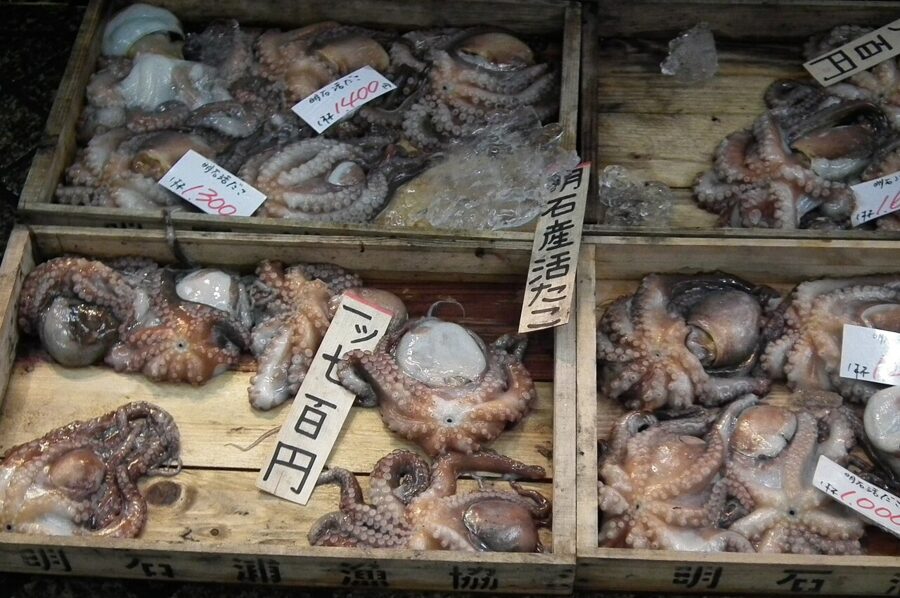
Akashi is the next city west, about 15 minutes from Sannomiya on a JR Special Rapid, and worth a lunch for one reason: akashiyaki, which the town calls tamagoyaki. They are soft egg-rich dumplings with a piece of local octopus inside, served on a tilted board and dipped one by one into warm dashi. They are the ancestor of Osaka’s takoyaki and far gentler.
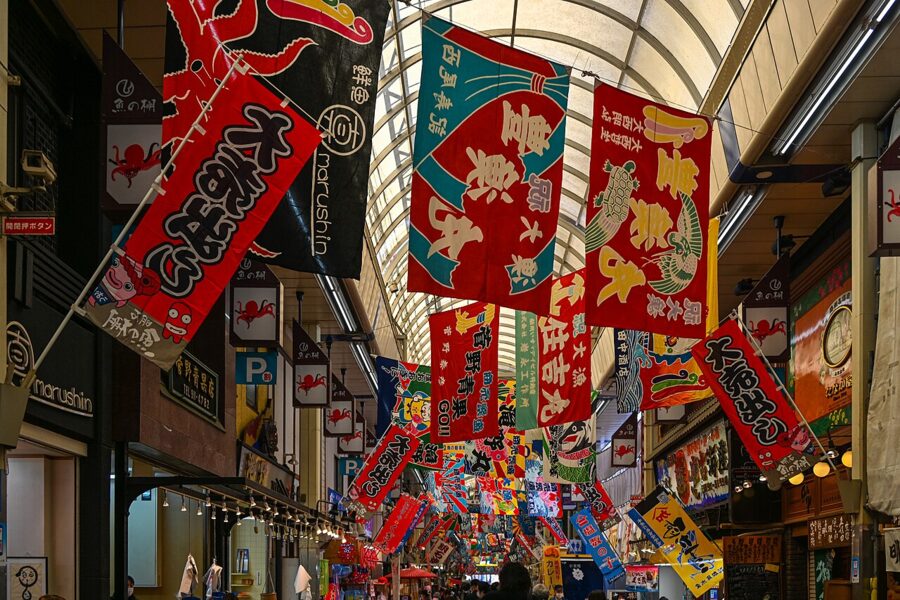
Walk three minutes south from the station to Uonotana, the fish arcade, and you’ll find akashiyaki counters along it and in the side streets, between stalls of sea bream, conger eel and Akashi octopus, the town’s pride. Expect to pay around ¥900 for a board.
Drink where the sake is made
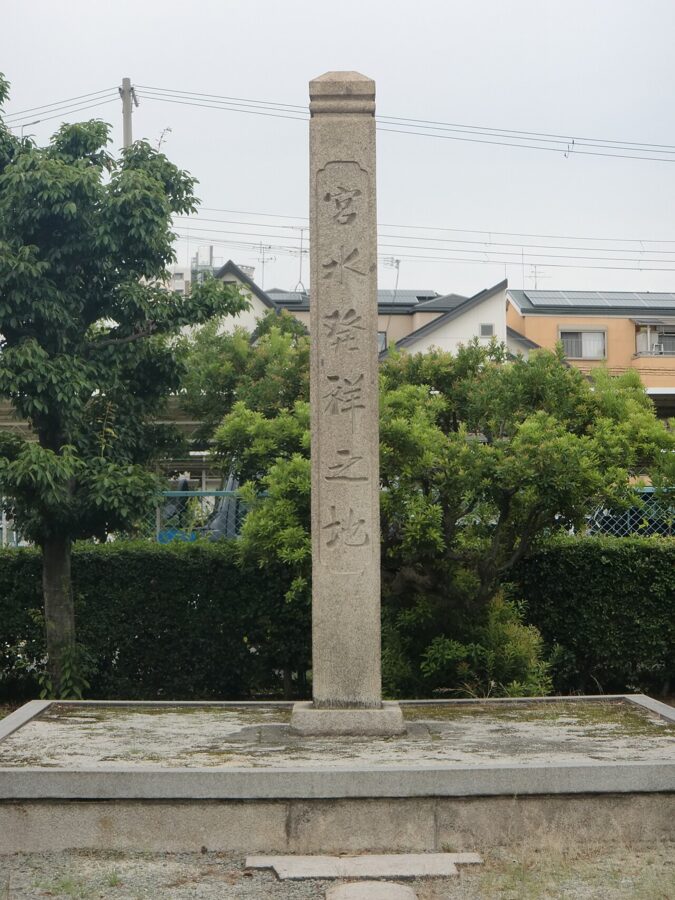
East of the centre, along the coast between Kobe and Nishinomiya, is Nada, Japan’s biggest sake-brewing district. It is known as Nada Gogo, the five villages of Nada, and the breweries grew here for three reasons: rice from the Hyogo plains, cold winds off Mount Rokko and Miyamizu, a hard, mineral spring water from Nishinomiya that helps make the clean, dry style the district is known for. My guide to drinking sake in Japan covers Nada sake properly. This section is about how to visit.
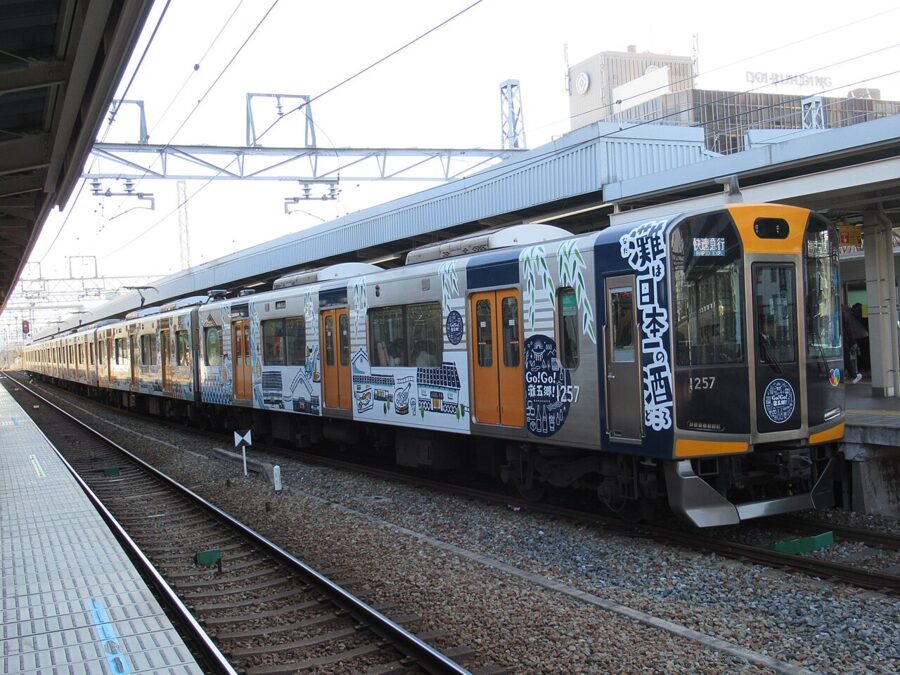
Take the Hanshin line, not JR. Two museums make an easy half-day and both are free.
Hakutsuru Sake Brewery Museum
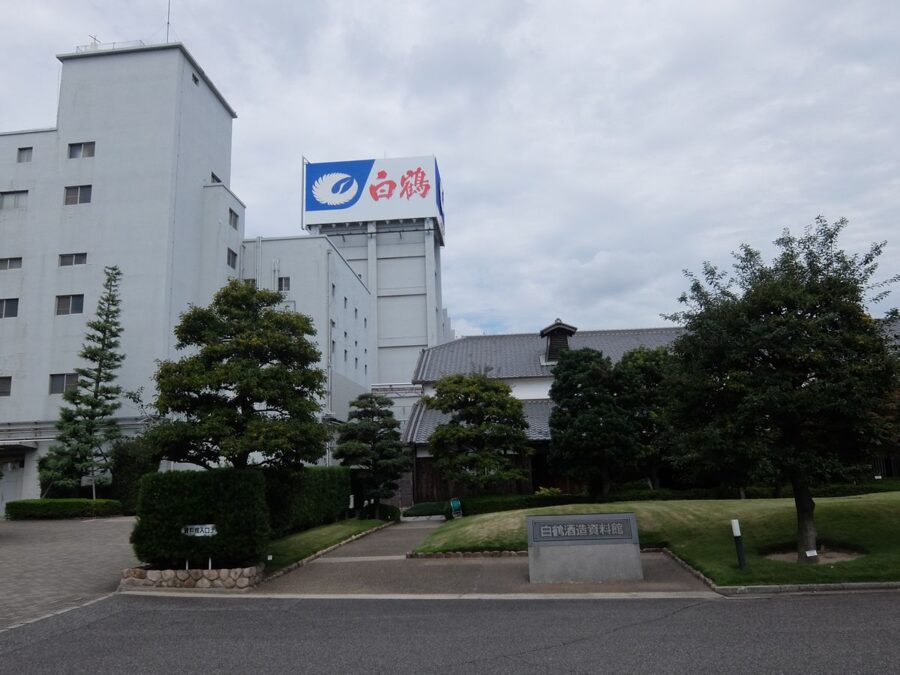
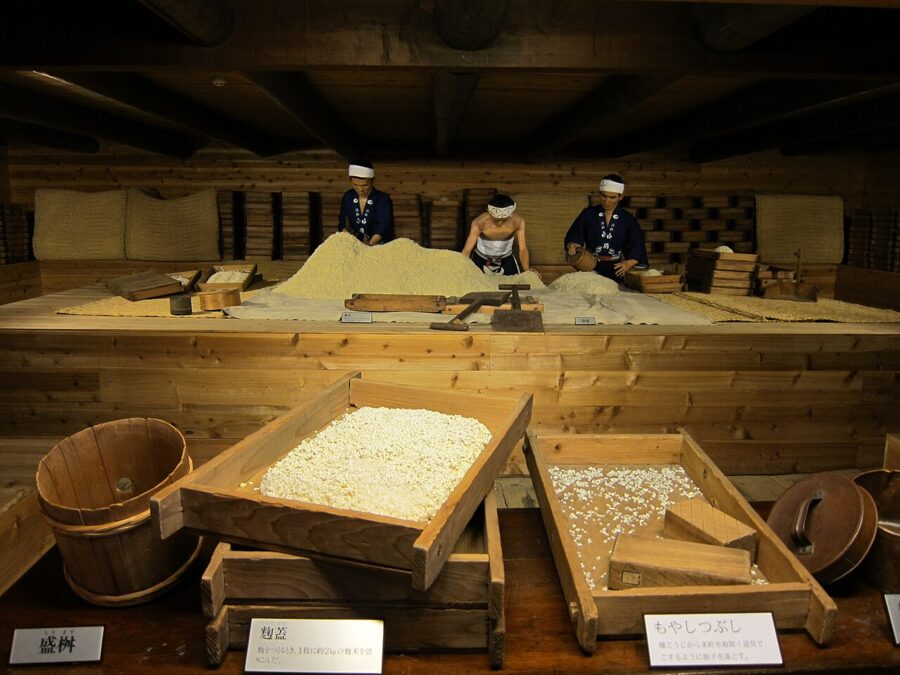
Hakutsuru, one of the biggest names in sake, turned a Taisho-era brewery building into a museum. It walks you through the old brewing process with tools, life-sized figures and short videos, and there’s a shop at the end. It’s at Sumiyoshi Minami-machi 4-5-5, about five minutes from Hanshin Sumiyoshi Station, open 9:30–16:30 (last entry 16:00). It closes over New Year (28 December to 4 January this winter) and at Obon, and groups of fewer than ten don’t need to book.
Kiku-Masamune Sake Brewery Museum
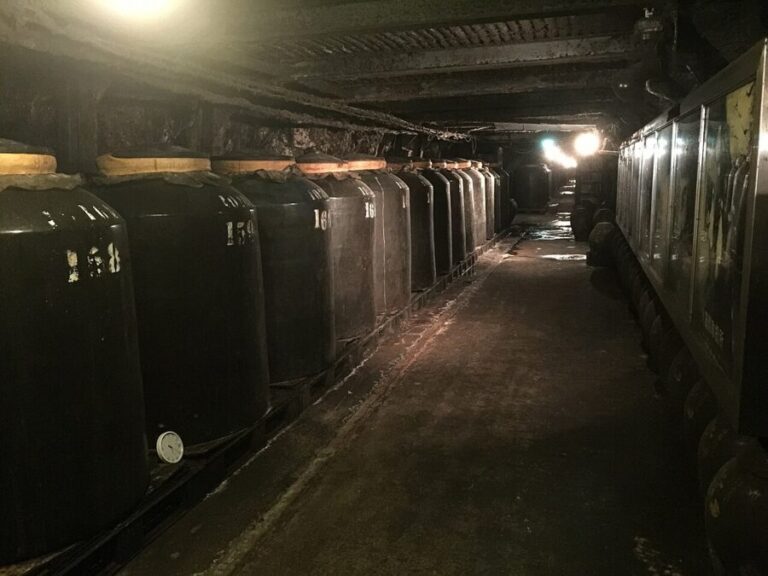
Kiku-Masamune’s museum has a better story. Its core was a brewery built in 1659 in Mikage and moved to this site in 1960. The 1995 earthquake brought it down, staff dug the brewing tools out of the rubble by hand, and it reopened in a rebuilt hall in January 1999 using the old beams. The tools are a nationally designated folk cultural property.
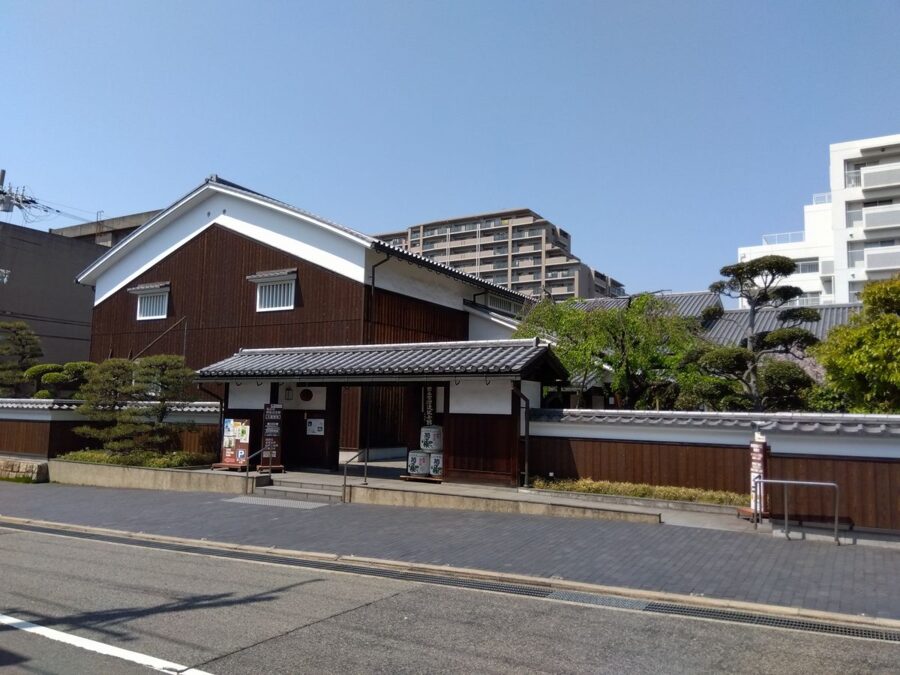
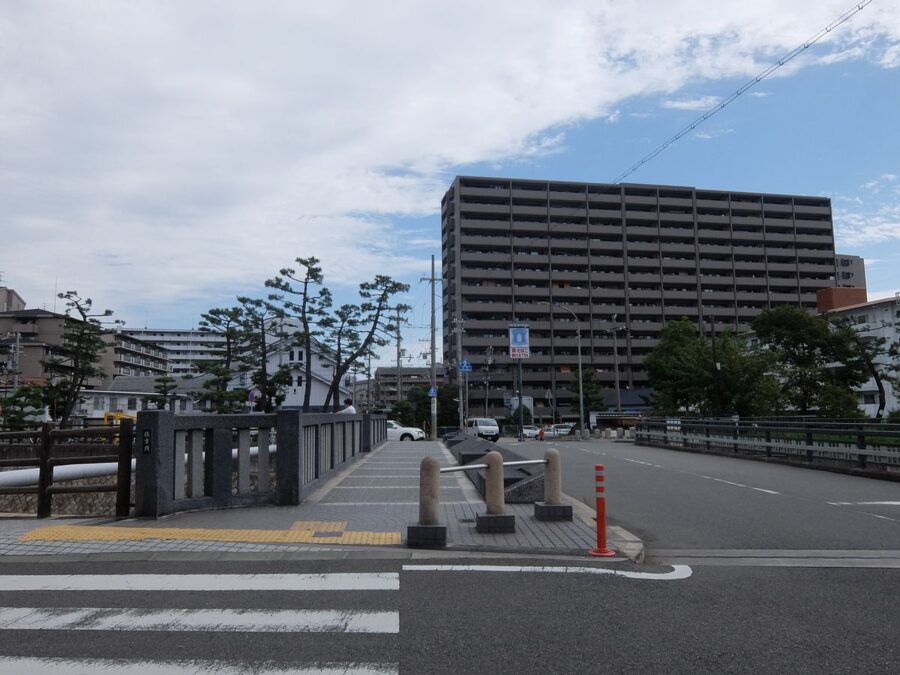
It’s at Uozaki Nishi-machi 1-9-1, open 9:30–16:30, and since April 2026 it closes on Tuesdays (Wednesday when Tuesday is a holiday) as well as over New Year. From Hanshin Uozaki Station it’s a ten-minute walk south along the path beside the Sumiyoshi River; from Minami-Uozaki on the Rokko Liner it’s two minutes. Kiku-Masamune also runs half-hour tours of its taruzake factory, where sake is aged in cedar barrels, at 11:10, 14:10 and 15:10, maximum 15 people, booking needed.
Go in autumn or winter if you can. That’s brewing season, the shops have new sake, and several breweries open their gates for a day; Hakutsuru held its open-brewery day on 3 October this year.
Arima Onsen, if you have the afternoon
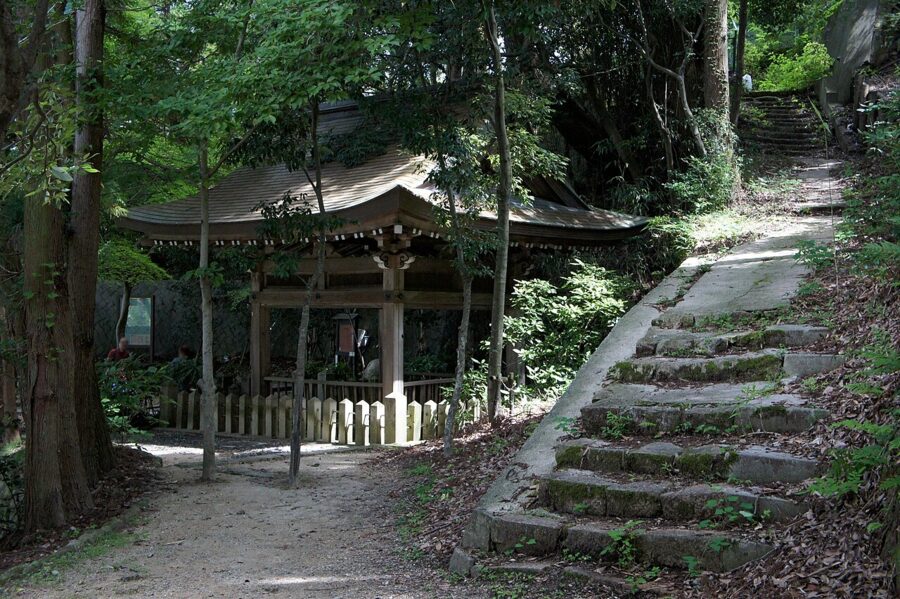
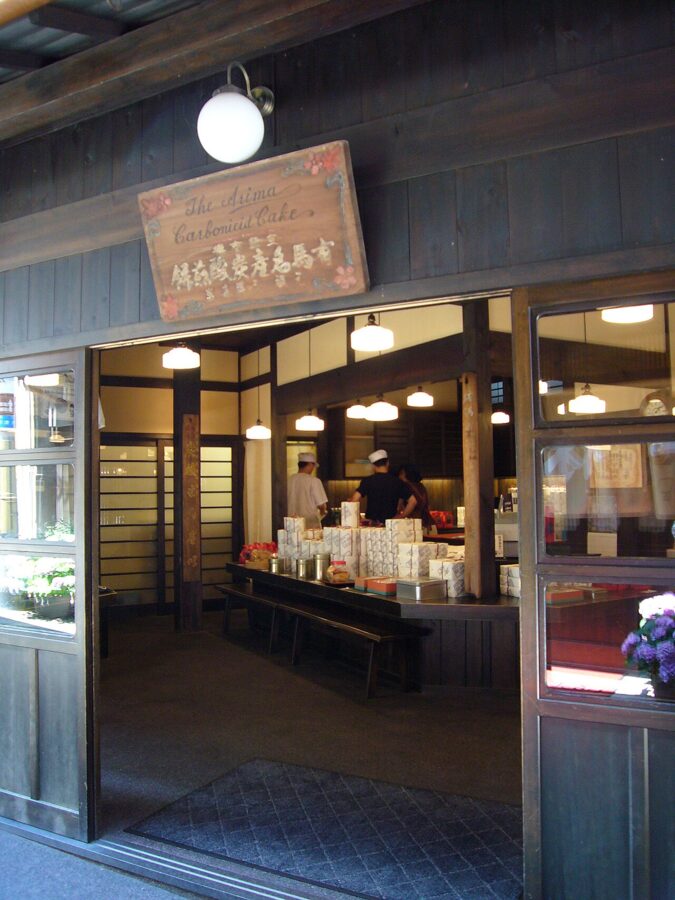
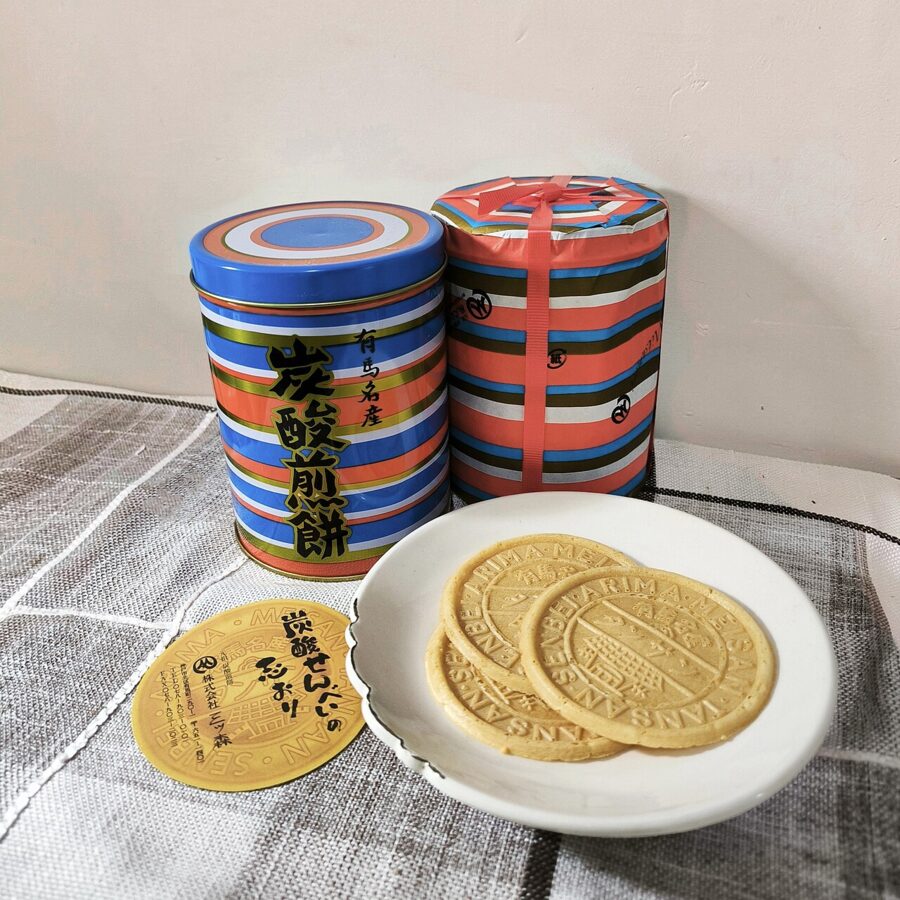
Arima Onsen is in the city limits, on the far side of Mount Rokko and under an hour from Sannomiya by subway and the Kobe Electric Railway. Go for the iron-red gold spring and come back with tansan senbei, crisp wafers made with the town’s naturally carbonated spring water.
Where to eat, area by area
Kobe is long and thin, squeezed between Mount Rokko and the sea, and every eating district sits on the same east-west rail lines. You can walk from Kitano to Nankinmachi in 25 minutes, all downhill.
| Area | What to eat | Station |
|---|---|---|
| Sannomiya | Kobe beef lunches, bifukatsu, Center Plaza konamon | JR Sannomiya, Hankyu and Hanshin Kobe-Sannomiya |
| Motomachi | Pork buns, gyoza, cake shops, Grill Ippei | JR and Hanshin Motomachi |
| Kitano | Coffee, bakeries, teppan counters at the foot of the hill | Shin-Kobe or a 15-minute uphill walk from Sannomiya |
| Harborland | Views, malls, chain branches | JR Kobe |
| Shinkaichi | Old yoshoku, cheap izakaya | Shinkaichi (Kobe Kosoku line) |
| Nagata | Sobameshi, bokkake, nikuten | JR Shin-Nagata |
| Nada | Sake breweries and museums | Hanshin Sumiyoshi, Uozaki |
Getting there and around
Sannomiya is the hub. From Osaka it’s about 20 minutes on a JR Special Rapid, or a little over half an hour on the Hankyu or Hanshin lines from Umeda, and the Hanshin line carries on west to Motomachi and east to the sake breweries. Shinkansen passengers arrive at Shin-Kobe, one stop up the hill from Sannomiya on the subway. Everything in this guide except Nagata, Akashi, Nada and Arima is walkable from there.
Sannomiya
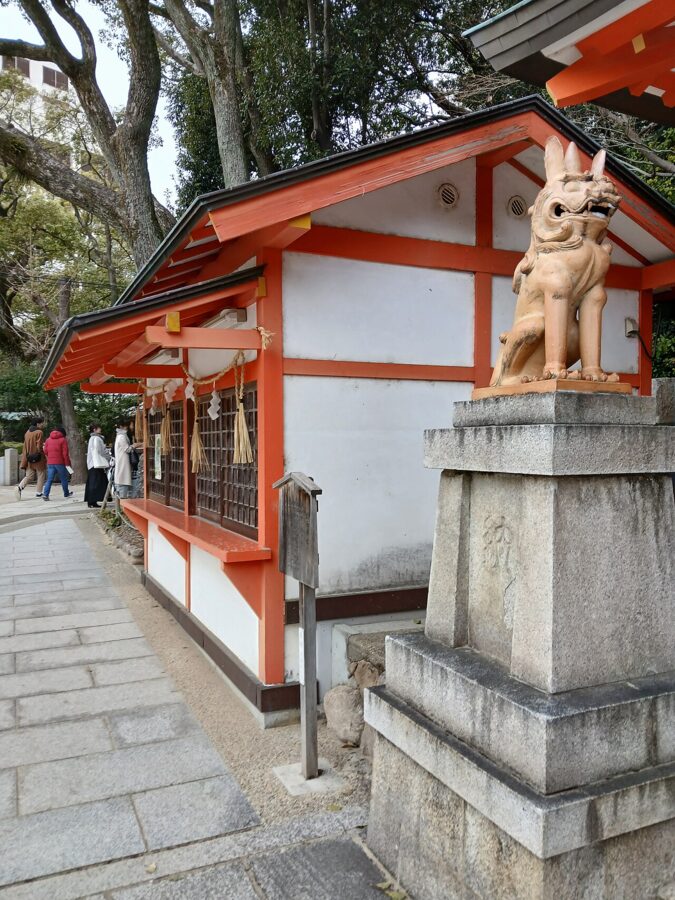
Sannomiya is the centre and where you’ll stay. The teppan restaurants cluster in the streets north of the stations, around Ikuta Shrine and up towards Kitano-zaka. The arcades south of the tracks are for snacking, and the basements of the Center Plaza buildings are the cheap end: konamon, curry and noodles at counter prices.
Motomachi
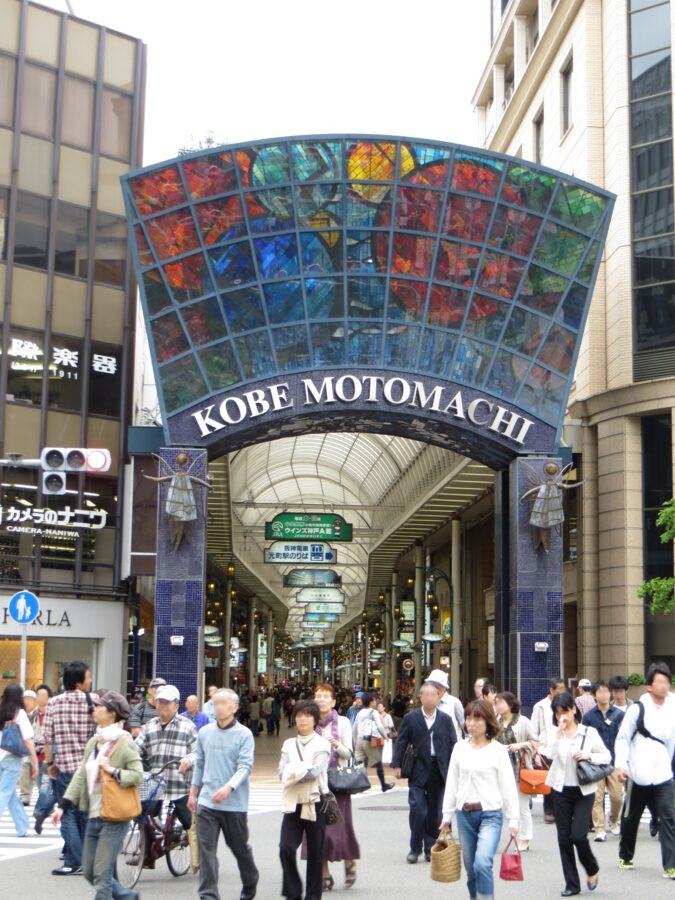
Motomachi starts where Sannomiya’s arcades end and runs west for over a kilometre. The covered Motomachi shopping street is the old high street of the port, and the sweet shops cluster along its eastern end. Nankinmachi opens off its south side. This is the best half-day of eating in Kobe, and it’s all on foot.
Kitano
Kitano is about the houses, not the food, but it’s a good place for coffee and for bread. Freundlieb is at the eastern edge, Nishimura Coffee at the bottom of the hill, and Wakkoqu’s teppan counter at Kitano-zaka. Work your way down for lunch.
Harborland
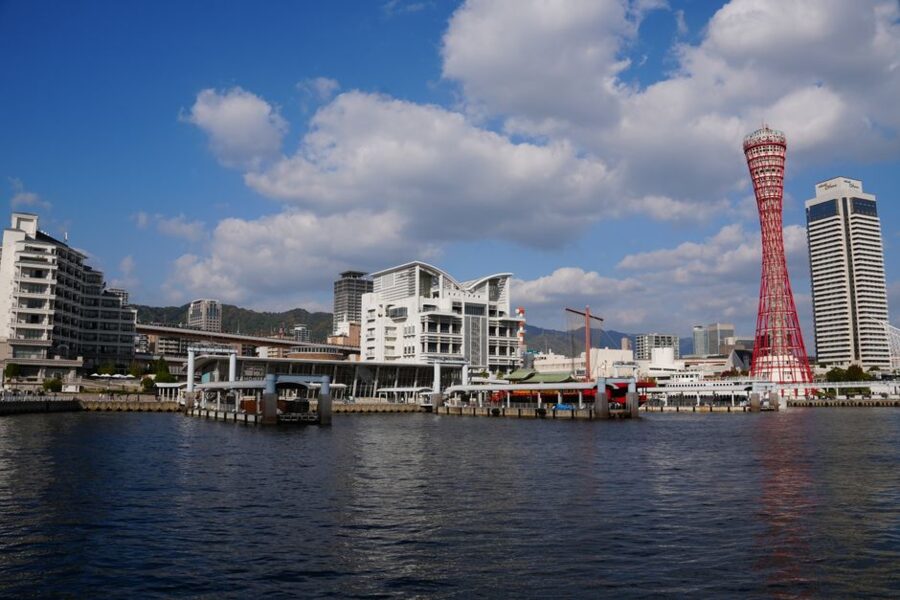
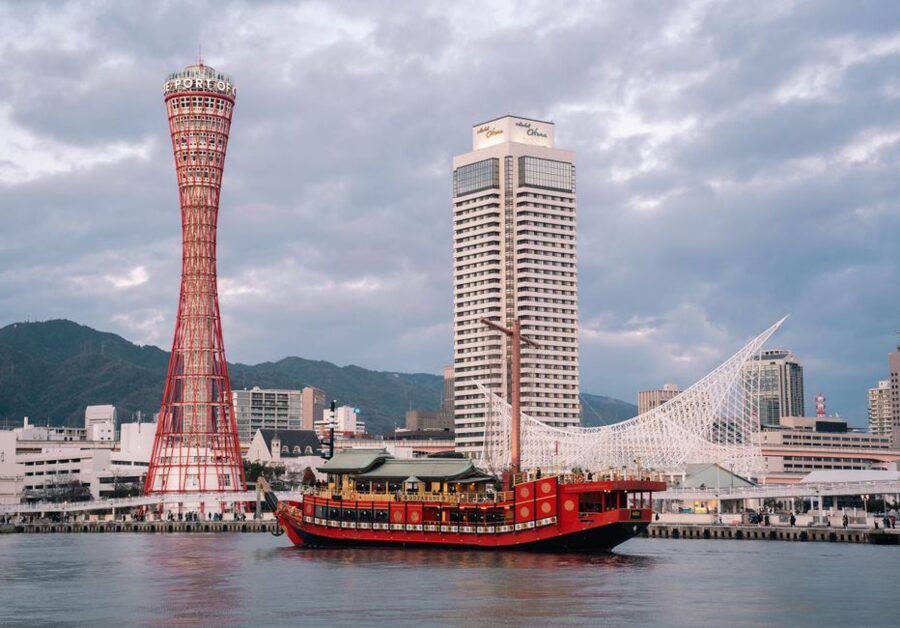
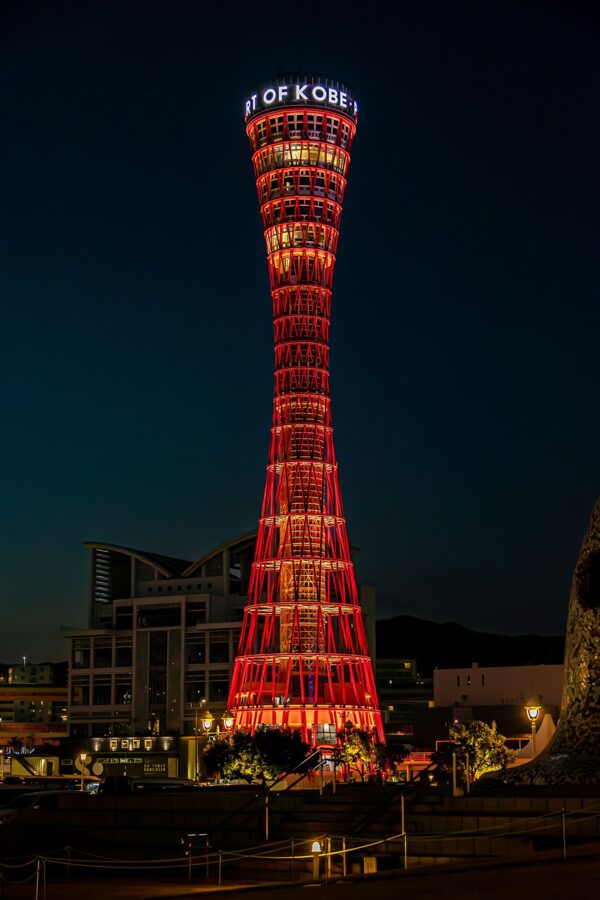
Harborland is the waterfront mall district around the umie complex, with the Ferris wheel and the best view of Port Tower. Come for the sunset. The food is mostly chain branches and food courts, including an outpost of Nagata Honjoken in umie, and you’ll eat better ten minutes inland.
Nagata
Nagata is a ten-minute train ride and a different city. Go at lunchtime, eat sobameshi or nikuten, and walk past the Tetsujin statue on the way back to the station. Don’t expect English menus; point, and you’ll be fine.
What it costs
Kobe is cheaper than its reputation, as long as you don’t eat Kobe beef at every meal. These are the prices I’d plan on.
| Meal | Price |
|---|---|
| Roshoki pork buns, five | ¥600 |
| Bokkake yakisoba, regular | about ¥800 |
| Awajiya niku-meshi ekiben | ¥1,480 |
| Omurice set, Grill Ippei Motomachi | ¥1,450 |
| Bifukatsu set, Grill Ippei Motomachi | ¥2,800 |
| Beef cutlet at Mon (rice extra) | ¥2,940 |
| Teppan lunch course, Wakkoqu Kitano-zaka | ¥7,950 |
| Special Kobe beef course (200 g), Wakkoqu | ¥18,450 |
| Hakutsuru and Kiku-Masamune museums | free |
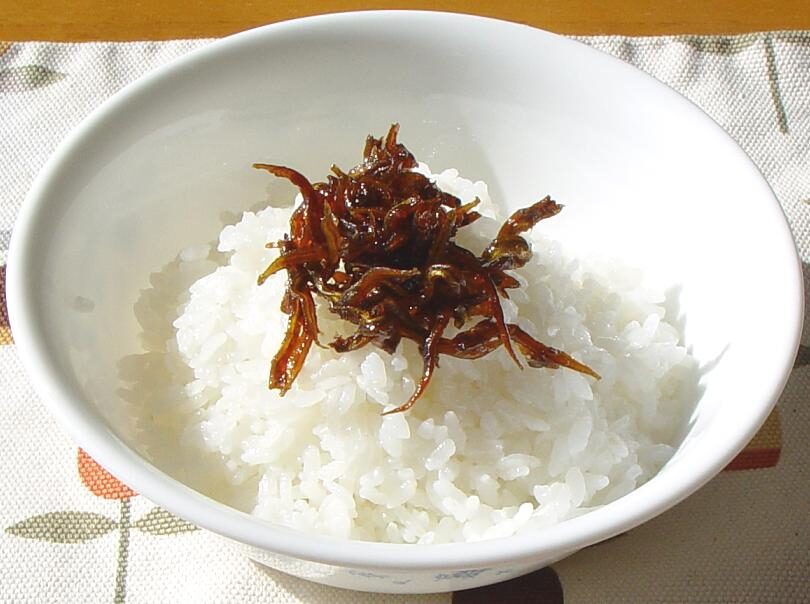
Spring brings one more thing to eat. In early spring, households across Kobe cook ikanago no kugini, tiny sand lance simmered in soy, sugar and ginger until they curl up like rusty nails, and the smell drifts out of kitchens all along the coast. Shops sell it ready-made when the season starts, and it goes on rice.
Skip this
- Kobe beef at a price that seems too good. Under about ¥5,000 for a “Kobe beef” steak, look for the bronze statue and the certificate. Without them it’s wagyu with a Kobe label.
- Kobe beef skewers in Nankinmachi. Expensive for the size. Spend the money on a proper lunch course.
- Kitano for lunch. Walk the houses, drink a coffee, then go downhill to eat.
- Harborland for dinner. Lovely at sunset, mostly chains after dark.
- Roshoki at noon on a Saturday. Go on a weekday at 10:00, or when it rains.
- Arima for the food alone. It’s a bath town. Go to bathe, and bring back senbei.
Here’s how I’d do a day. Pork buns at Roshoki when it opens at 10:00, then a slow walk down the Motomachi arcade to buy wafers for home. A teppan lunch in Sannomiya, ordered before the lunch menu closes. Coffee at Nishimura, then down to the harbour for the sunset over Port Tower.
And if there’s room left, the train to Shin-Nagata, a counter seat at Aomori, and a plate of sobameshi cooked on the griddle where somebody first asked for their cold rice to be fried with the noodles.
You Might Also Enjoy
 Must-Try Food in China: The Regional Map Nobody Gives You
 Japanese Onsen: How to Bathe, the Tattoo Question and the Hot-Spring Towns Worth the Trip
 Japanese Curry: Kare Raisu, Navy Curry and the Regional Bowls Worth Travelling For
 Things to Do in Chengdu: People’s Park Teahouses, Wenshu Monastery, Sanxingdui and a Three-Day Plan