Gyoza in Japan: Utsunomiya, Hamamatsu and the Pan-Fried Dumpling Japan Made Its Own
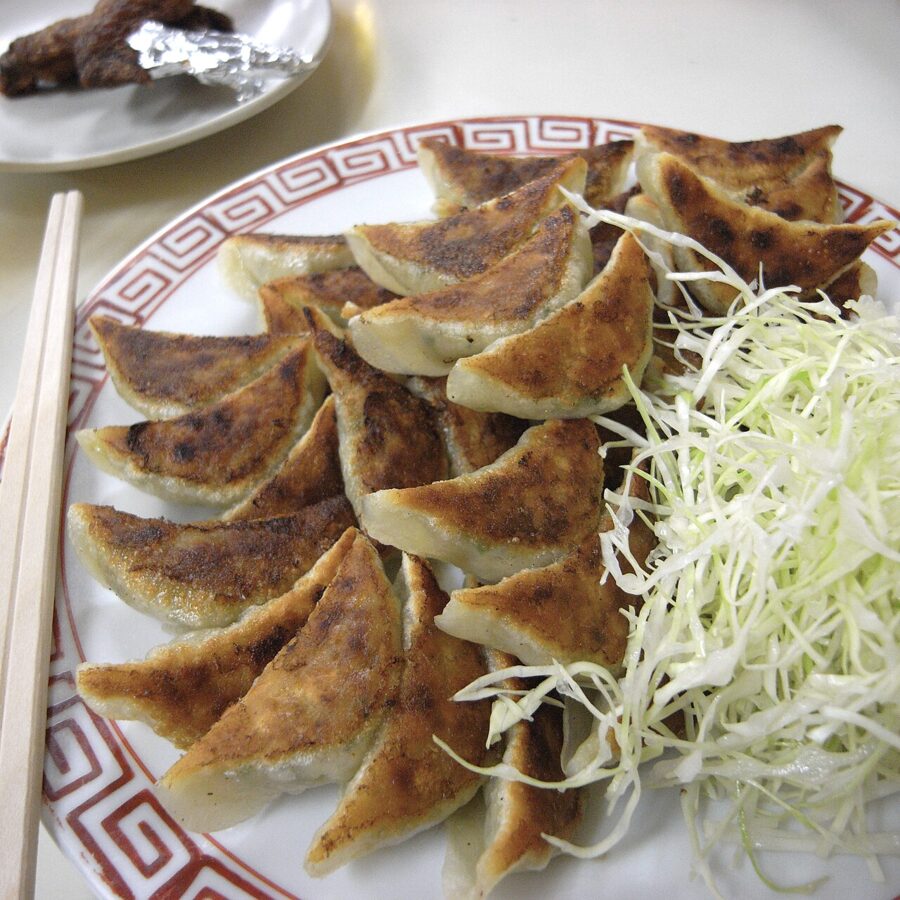
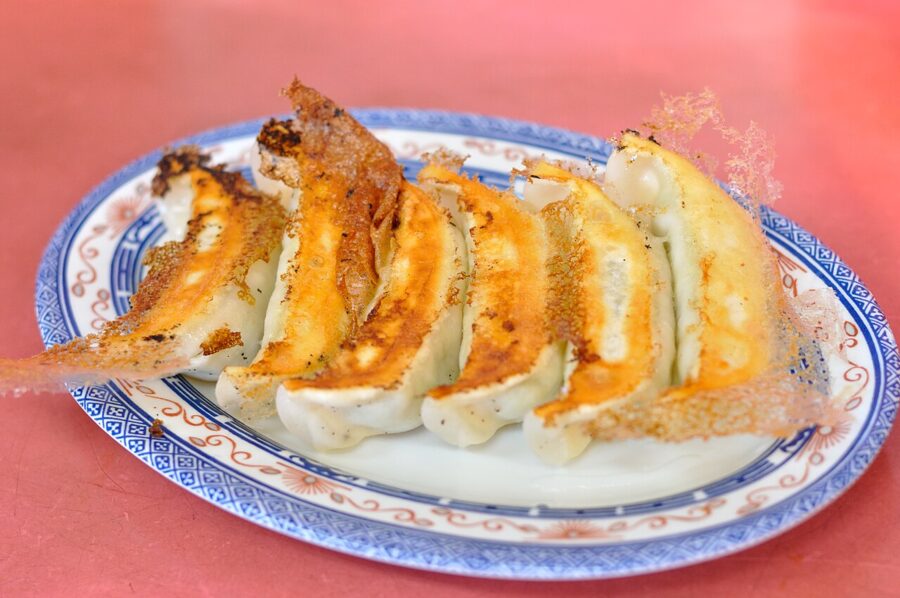
The plate at Utsunomiya Minmin comes out crust side up. Six gyoza, ¥380, laid edge to edge like roof tiles and browned to the colour of toast, with the pleats tucked underneath where you can’t see them. In the dumpling houses I used to eat at in Shenzhen, the northern cooks boiled their jiaozi, weighed them out by the half-jin and would have told you, without a trace of irony, that this plate was upside down. They’d have been right, by their rules.
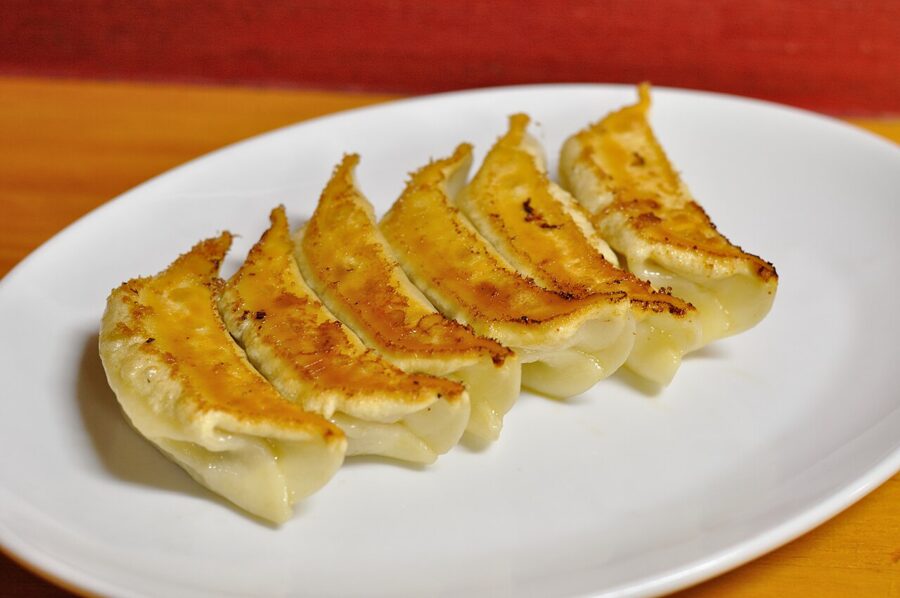
Japan took the dumpling and changed nearly everything about it. The skin got thinner. Cabbage and garlic went into the filling. The default cooking method became a hard fry, a blast of steam under a lid, then a second fry until the bottom sets into a crisp sheet, and the finished gyoza stopped being a meal and turned into the thing you order next to ramen, rice or a beer.
Then whole cities started competing over it. Utsunomiya and Hamamatsu have spent three decades arguing about which of them buys more gyoza, using a government household survey as the scoreboard.
Kobe dips its gyoza in miso. Hakata and Osaka shrink them to one bite. Tokyo’s Kamata gave them wings.
This guide covers the lot: what makes gyoza Japanese, the forms you’ll see on a menu, the gyoza cities and the shops in each worth the trip, the chains, the frozen bags, and what it all costs. If you only want the short version, here it is in one table.
| Where | Style | What’s different | Start at |
|---|---|---|---|
| Utsunomiya, Tochigi | Yaki, sui and age, often all three | Vegetable-heavy filling, cheap plates, a city full of specialists | Minmin and Masashi on Baba-dori, or Kirasse for a sampler |
| Hamamatsu, Shizuoka | Yaki in a circle | Cabbage-sweet filling, boiled bean sprouts in the middle, eaten by the dozen | Mutsugiku by the station, Ishimatsu’s main shop |
| Kobe, Hyogo | Yaki with miso dare | A sweet-savoury miso dipping sauce instead of soy and vinegar | Gyozaen in Nankinmachi, Hyotan, Akaman |
| Hakata, Fukuoka | Hitokuchi (one-bite) | Small, crisp, ordered in rounds, often with yuzu kosho | Houuntei in Nakasu, Asahiken by Hakata Station |
| Osaka | Hitokuchi | Folded rather than wrapped, very thin and crisp | Tenpei in Kitashinchi |
| Kamata, Tokyo | Hane-tsuki (winged) | A lacy crisp sheet joining the whole pan | Nihao, Kinparu, Huanying |
In This Article
- What makes a dumpling a gyoza
- Gyoza against jiaozi
- The pan: fry, steam, fry again
- The dipping dish
- Yaki, sui, age and the rest of the menu
- Yaki gyoza
- Sui gyoza
- Age gyoza
- Hane-tsuki: gyoza with wings
- Hitokuchi and tetsunabe
- Utsunomiya: the city that built a brand on a dumpling
- What Utsunomiya gyoza is like
- Where to eat in Utsunomiya
- The Utsunomiya Gyoza Festival
- Hamamatsu: cabbage, bean sprouts and a lot of gyoza
- Where to eat in Hamamatsu
- The household spending war
- Kobe dips its gyoza in miso
- One bite at a time: Hakata and Osaka
- Hakata hitokuchi gyoza
- Osaka hitokuchi gyoza
- Five more gyoza towns worth a detour
- Fukushima: enban gyoza
- Tsu: the giant school-lunch gyoza
- Noda: White Gyoza
- Kochi: yatai gyoza
- Hiroshima and Miyazaki
- Gyoza with ramen, rice and beer
- With ramen
- With rice
- With beer
- Tokyo: three stops for gyoza lovers
- The chains: Ohsho, Osaka Ohsho and Manshu
- Frozen, chilled and to take home
- Gyoza as a souvenir
- What gyoza costs
- Skip this
What makes a dumpling a gyoza
Gyoza came to Japan in its modern form through Manchuria, carried home by soldiers and settlers after 1945, a story I’ve told in more detail in my piece on Japanese foods with foreign origins. That isn’t quite the whole history. Pan-fried dumplings appear in Japanese cookbooks well before the war: Nakamura Toshiko’s 1927 home guide to Chinese cooking already gives a recipe for pan-fried gyoza, and tradition credits the 17th-century lord Tokugawa Mitsukuni as the first person in Japan to eat a dumpling of this kind.
But the postwar wave is what made gyoza ordinary. Returnees opened food stalls, the stalls sold ramen, and a plate of gyoza became the side order. Even the word came back with them. Prewar cookbooks read the characters the Mandarin way, chaozu, while Japanese living in Dalian and the rest of Manchuria had picked up “gyoza” from the local Shandong-style dialect or from the Manchu word giyose.
The comedian Furukawa Roppa, who wrote about food as obsessively as he performed, listed the gyoza shop among the new kinds of restaurant that had appeared in Tokyo after the war, in a 1955 essay collection. By the late 1950s the word was common in cookbooks and newspapers.
Gyoza against jiaozi
If you’ve eaten dumplings in China, the differences are easy to taste. My guide to Chinese dumplings goes through the jiaozi family region by region; here’s the short comparison.
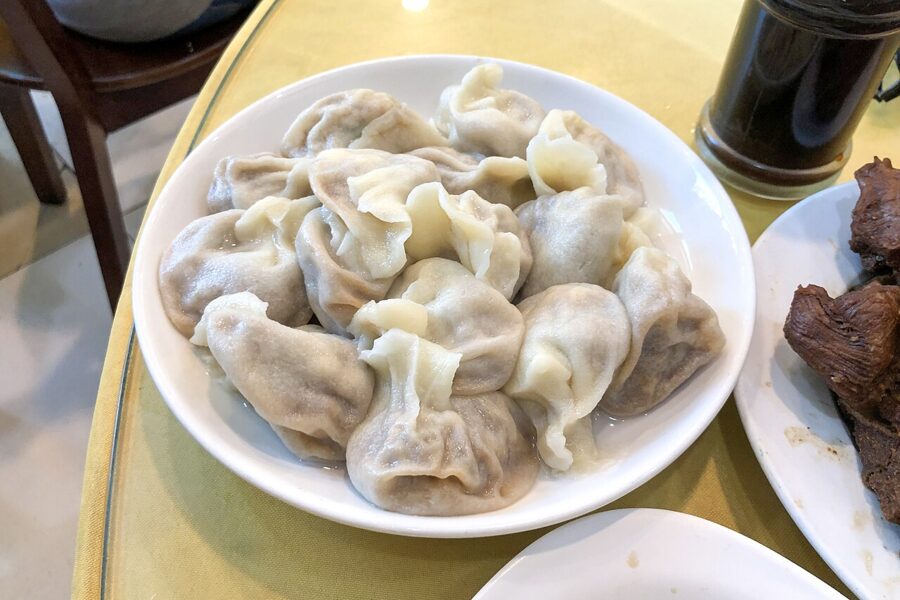
- Skin. Japanese gyoza skins are thin and usually bought ready-made, even in homes. Northern Chinese jiaozi skins are rolled thicker, because the dumpling is the whole meal.
- Filling. Pork, cabbage, garlic and garlic chives is the Japanese default. Most Chinese jiaozi lean on napa cabbage and skip garlic in the filling altogether.
- Cooking. Japan fries first, then steams. China boils by default, and pan-fried guotie are a separate, less common dish.
- The plate. Gyoza is okazu, something you eat with rice, beer or ramen. In northern China, jiaozi are usually the meal itself.
There’s a practical reason for the thin skin, too. Rice is the staple in Japan, so a dumpling eaten next to a bowl of it didn’t need to be filling on its own. Gyoza moved to the side of the plate and got lighter to fit.
The pan: fry, steam, fry again
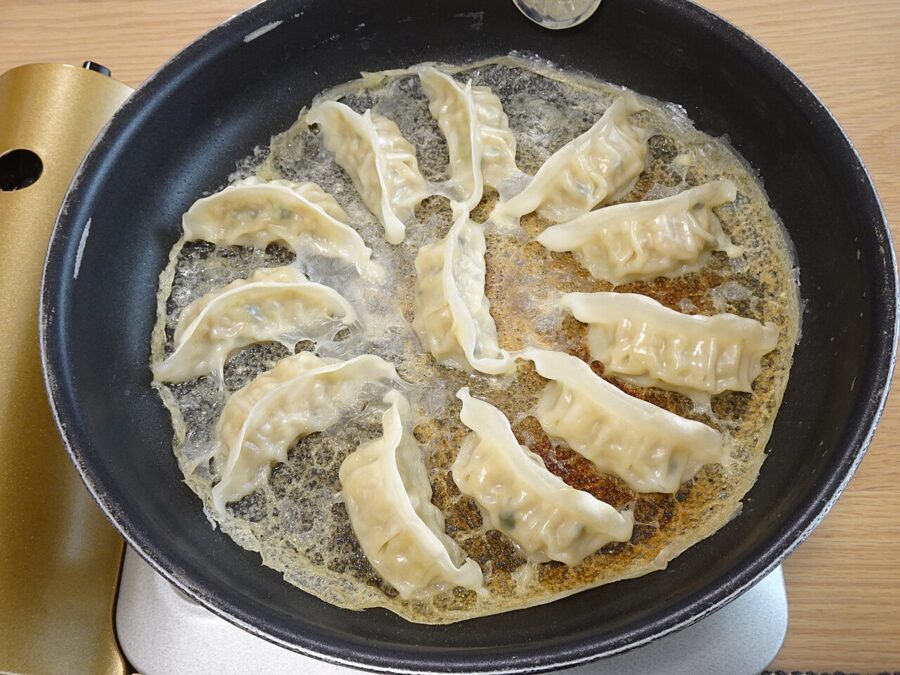
Every gyoza shop in Japan does a version of the same three steps. The dumplings go flat side down into an oiled pan and fry until the bottoms colour. Water goes in, a lid goes on, and the steam cooks the filling and turns the tops soft and slightly translucent.
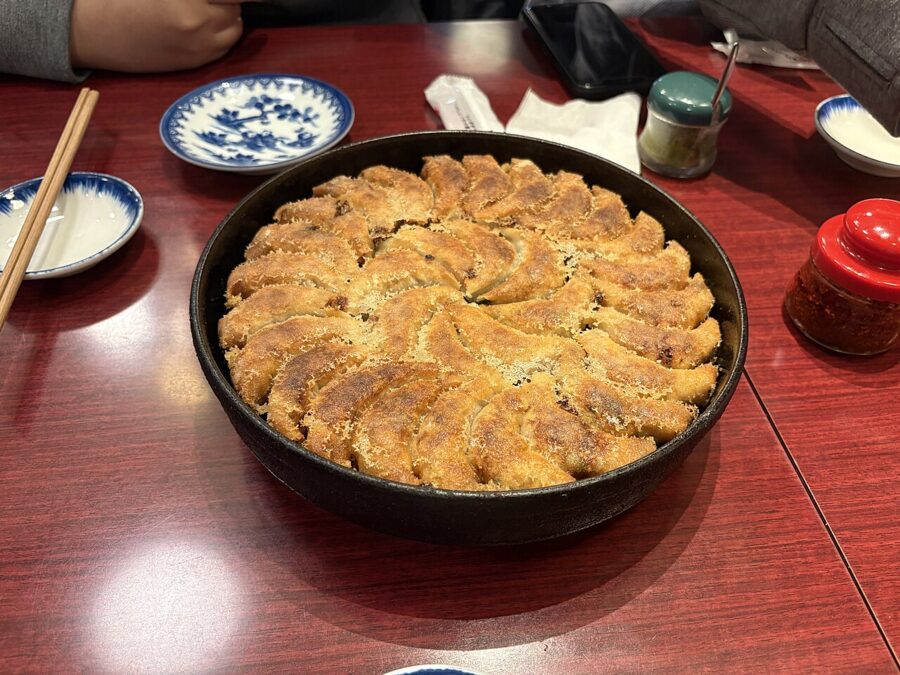
Then the lid comes off and the pan goes back to high heat until the water is gone and the bottoms crackle. Specialist shops use flat rectangular griddles with their own water taps, so the cook can hit the steam stage in a second. Masashi in Utsunomiya still uses the round iron pans it started with, packed so tight that the flour dusting on the dumplings fries into a thin crisp skirt.
The dipping dish
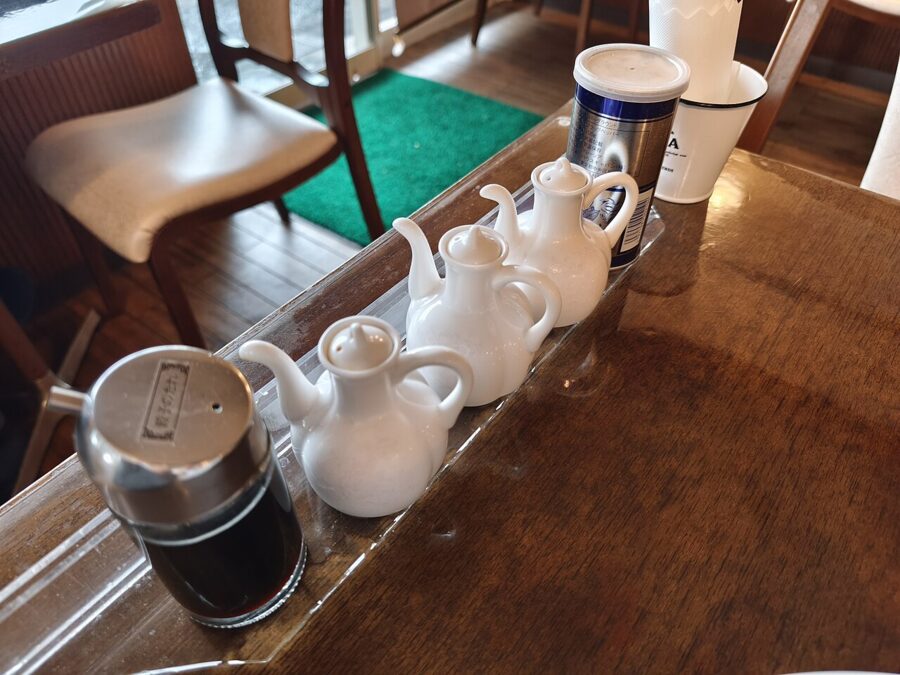
On almost every table you’ll find three bottles: soy sauce, vinegar and rayu, a chilli oil. You mix your own. In eastern Japan that’s the norm and people argue about the “golden ratio” of soy to vinegar; western Japan is more likely to give you a shop’s own premixed tare, sometimes citrusy like ponzu, sometimes sweet with tamari.
A few variations are worth knowing. Vinegar with a lot of black pepper, su-kosho, was pushed by a Tokyo Chinese restaurant as a gimmick and caught on, and it’s lighter than soy. Utsunomiya regulars sometimes use vinegar alone. Kobe uses miso, which gets its own section below.
Yaki, sui, age and the rest of the menu
Most menus list gyoza by cooking method, and the words are the same everywhere. Learn five and you can order anywhere in the country.
Yaki gyoza
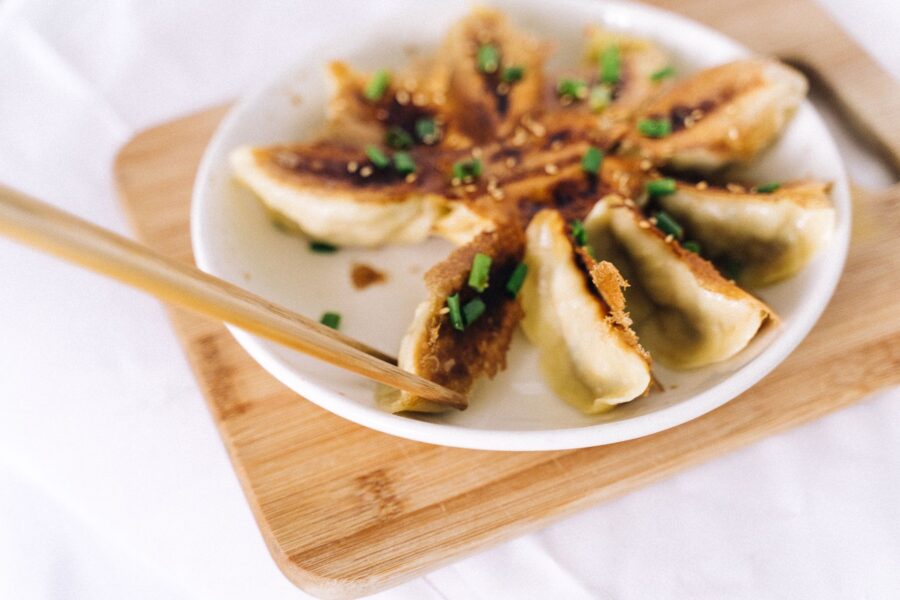
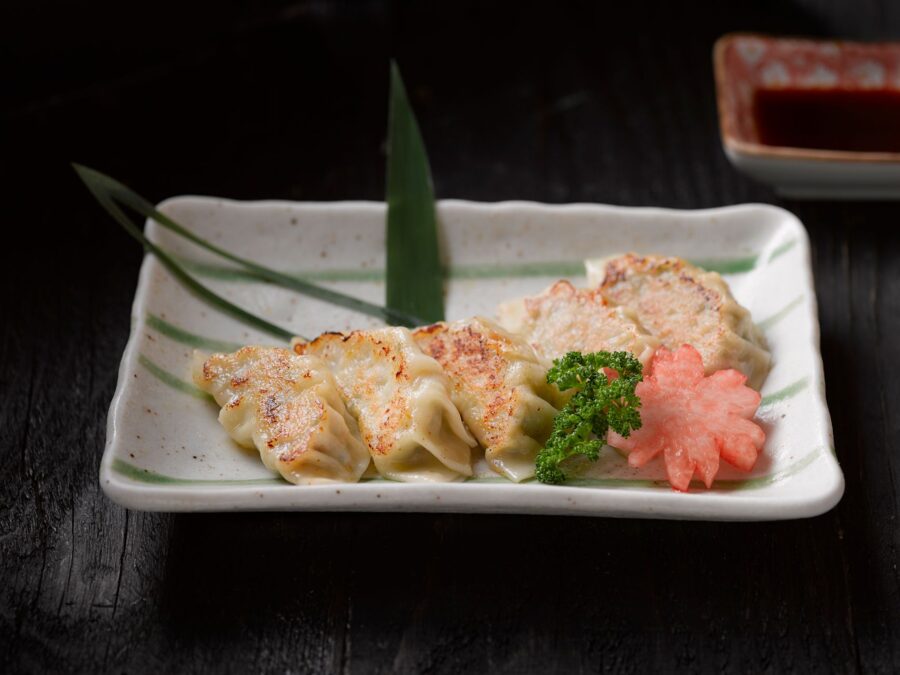
Yaki means grilled or fried, and yaki gyoza is the default: when a menu just says “gyoza”, this is what arrives. The standard serving is six, though Hamamatsu and some ramen chains sell them by the dozen and more.
Sui gyoza
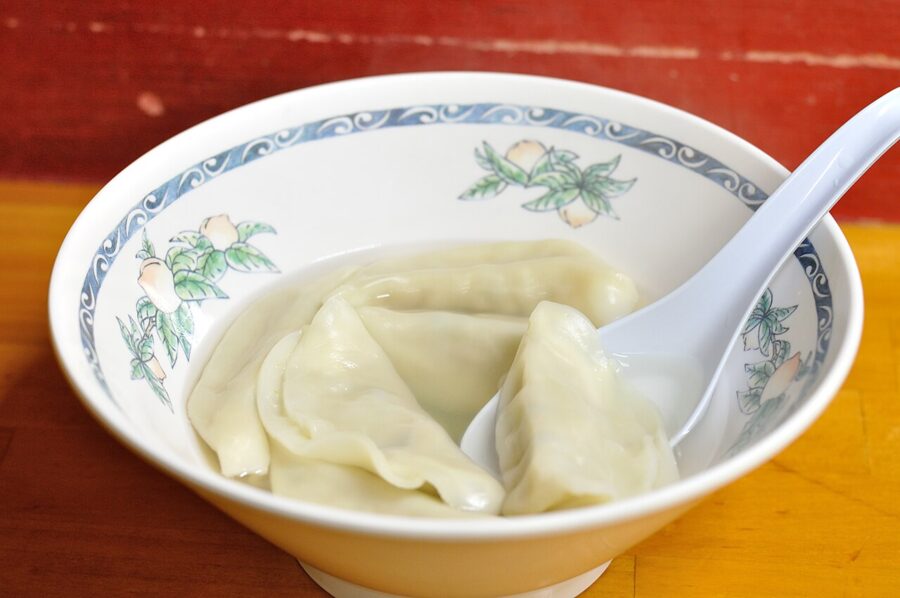
Sui gyoza are boiled, which makes them the closest thing in Japan to everyday Chinese jiaozi. In Utsunomiya they usually come in a bowl of the hot water or a light broth they were cooked in, and you season the liquid yourself with rayu, soy or pepper from the table. Some shops call the soup version suupu gyoza.
Age gyoza
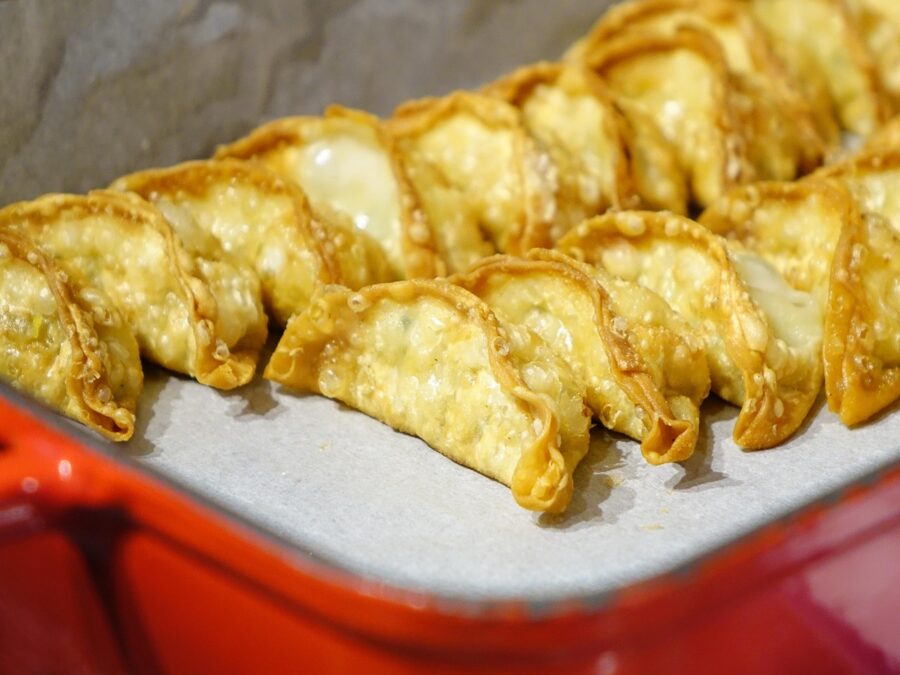
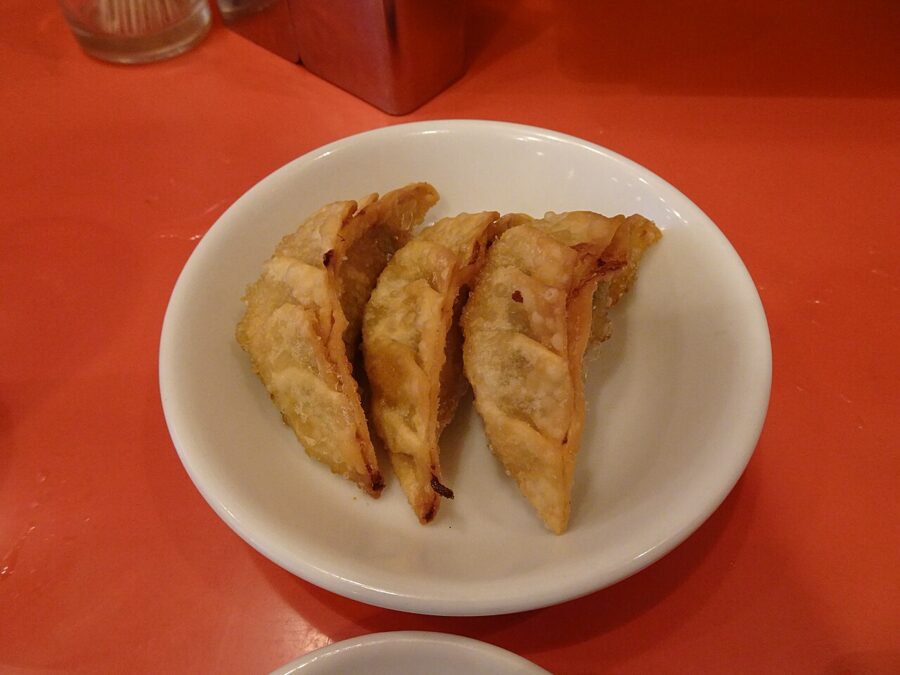
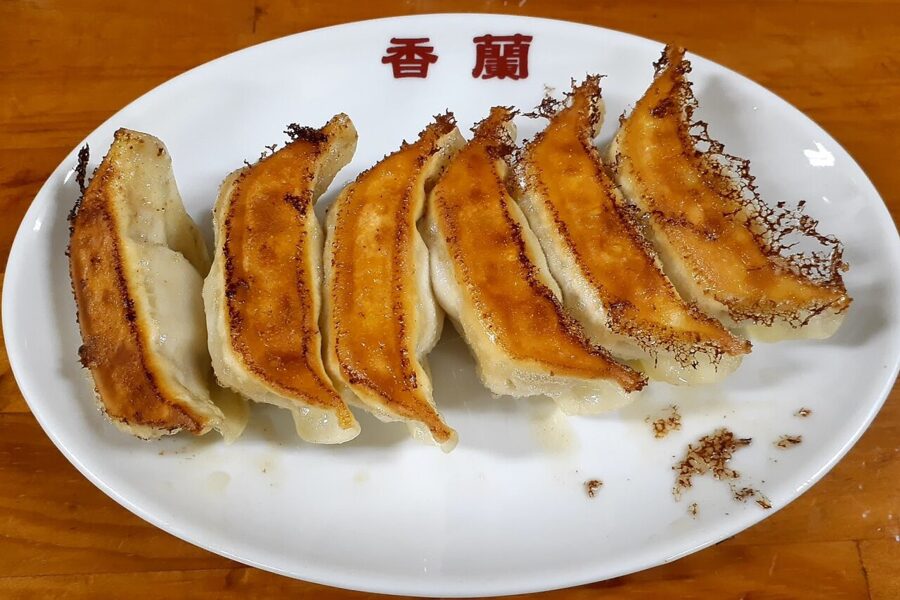
Age means deep-fried. The whole dumpling goes into oil, raw, and comes out crunchy all over, more like a snack than a side. Kouran in Utsunomiya serves its age gyoza with pink rock salt instead of a dipping sauce, and it’s one of the shop’s most popular plates.
Hane-tsuki: gyoza with wings
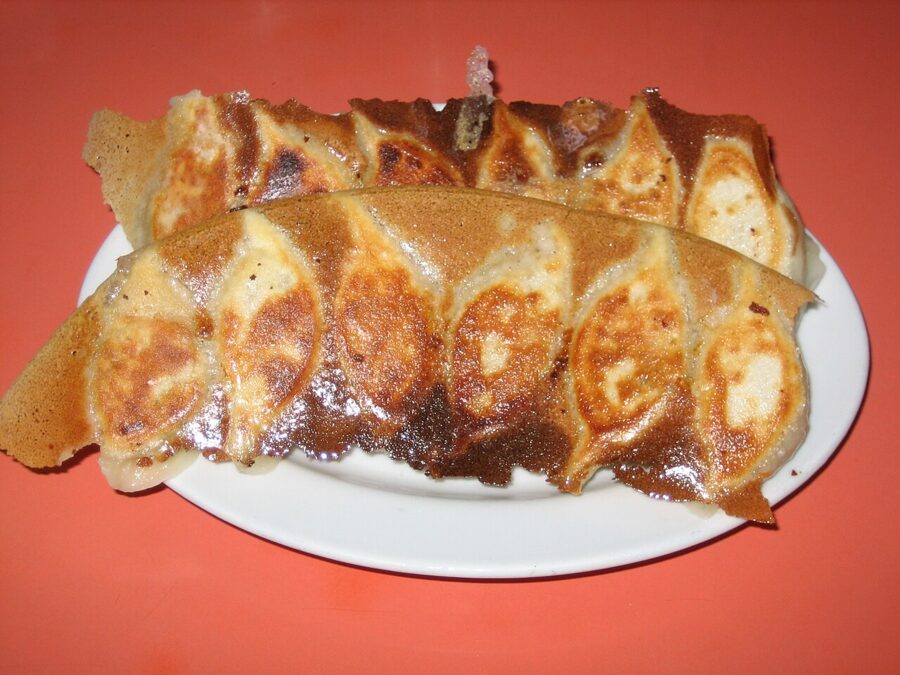
The hane, or wing, is a lacy crisp sheet that joins every gyoza in the pan. It’s made by pouring flour or starch mixed with water into the pan at the steam stage; when the water boils off, the starch fries into a thin brittle skirt. It’s a recent invention.
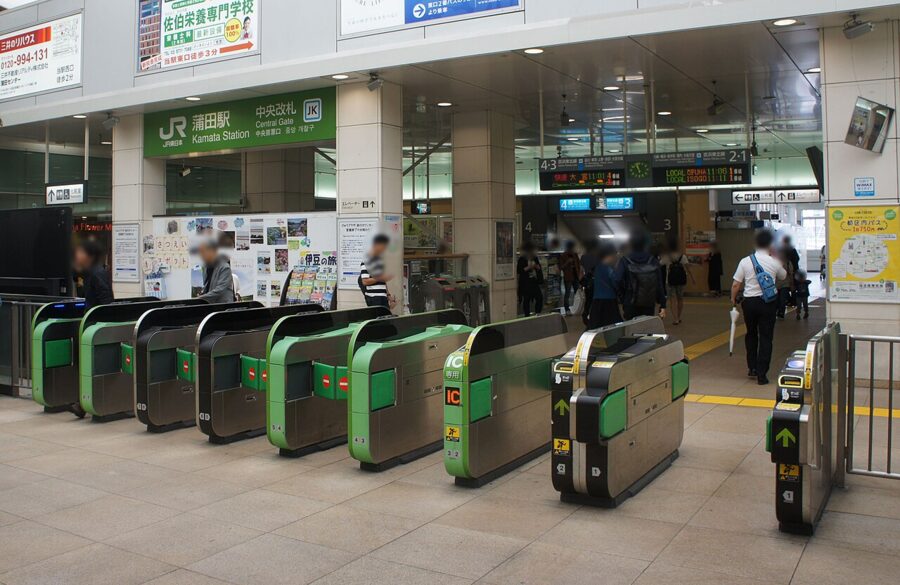
Nihao opened in Kamata, in Tokyo’s Ota ward, in 1983, and its founder, Yagi Isao, is credited with the first winged gyoza. He returned to Japan as one of the war orphans left behind in China, and one story says the idea came from a pan-fried bun he’d known in Dalian. His brother went on to run Kinparu and his sister Huanying, and the three shops are still known in Kamata as the gosanke, the big three.
Kamata is a short ride on the JR Keihin-Tohoku Line from Shinagawa, and the Tokyu lines stop there too. Nihao also sells its gyoza frozen, ¥1,080 for twenty, if you’d rather try the wings in your own pan.
Hitokuchi and tetsunabe
Hitokuchi means one mouthful. These are small gyoza, much smaller than a standard one, fried hard so the whole thing crunches. Hakata and Osaka each have their own version and their own founding shop, both covered further down.
Tetsunabe gyoza are served in the small black iron pan they were cooked in, still sizzling. Kitakyushu claims the idea for its steel-making Yahata district, the city’s tourism board says the iron pan was meant to keep the gyoza hot to the last bite, and the style spread from there to Hakata.
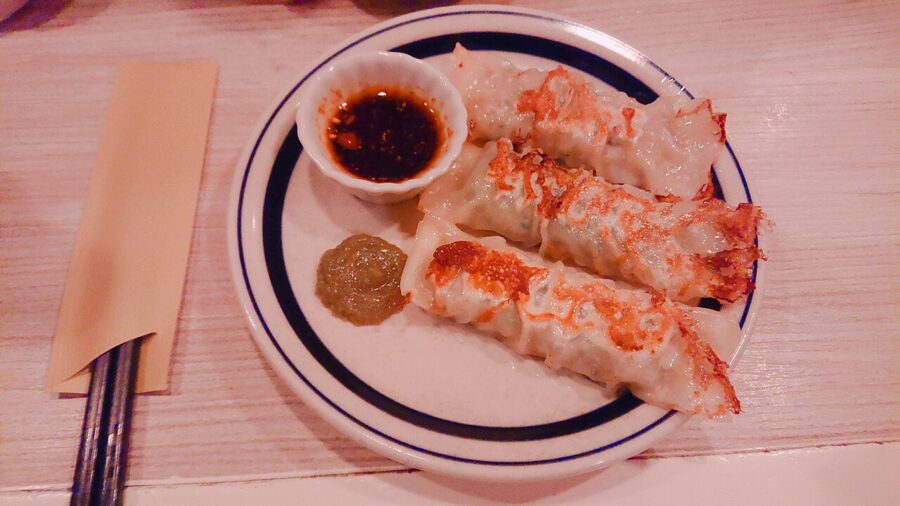
You’ll also run into bo gyoza, long rolls closed at both ends like a spring roll, and tebasaki gyoza, chicken wings boned and stuffed with gyoza filling. Neither has a home city. Both turn up at izakaya.
Utsunomiya: the city that built a brand on a dumpling
Utsunomiya’s gyoza story starts with the army. From 1940, the Imperial Army’s 14th Division, which drew its men from Utsunomiya and the surrounding area, was stationed in Manchuria. When the survivors came home after the war, they brought the dumplings with them, and gyoza shops began to open in the city.
For decades nobody outside Tochigi paid much attention. Then in 1989 a quarry collapse at Oya, the stone-mining district west of the city, hit tourism hard, and a city tourism officer went looking for something else to sell. He found it in the government’s household spending survey: since gyoza had been added as a separate item, Utsunomiya had been at or near the top every year.
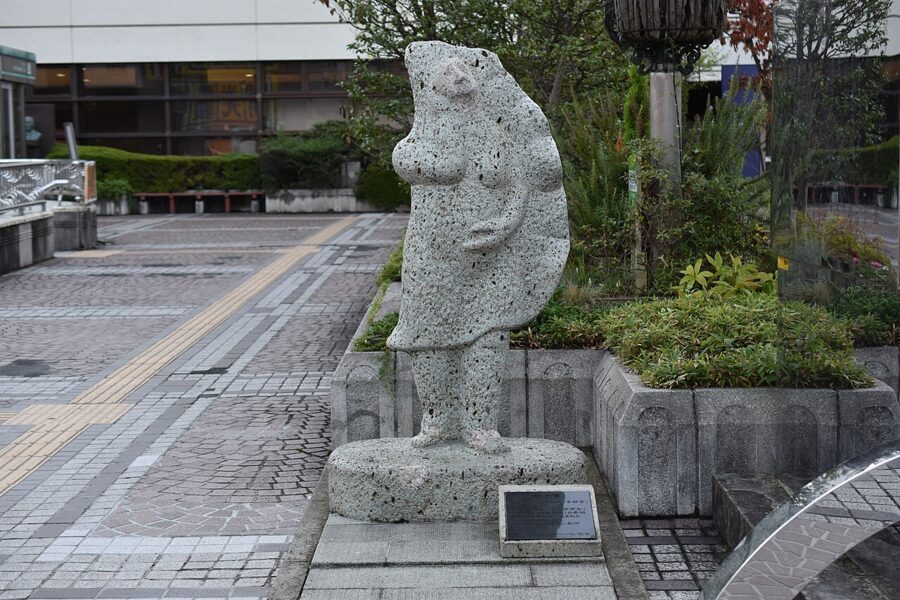
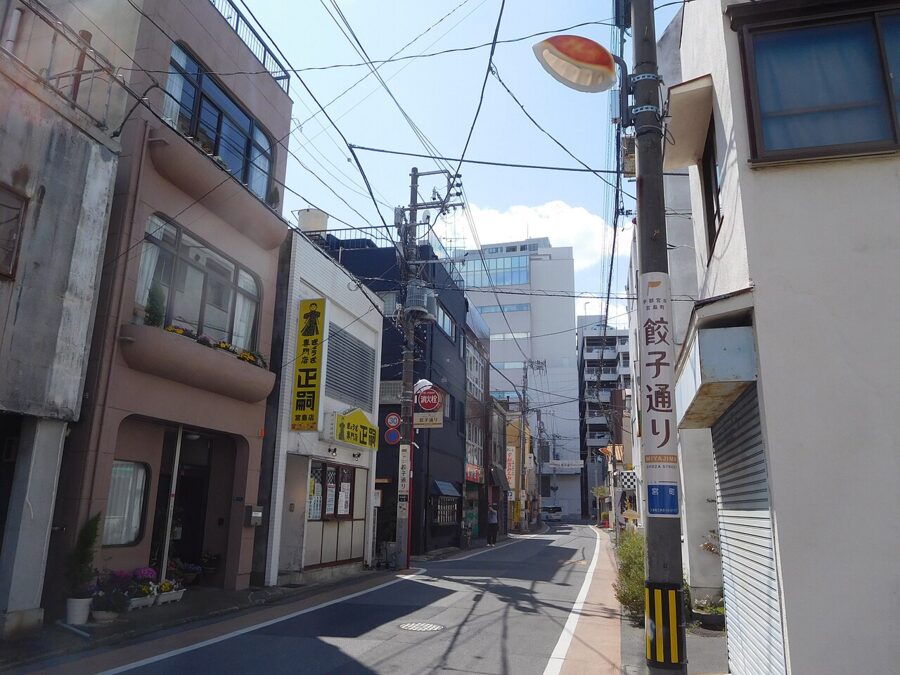
The Utsunomiya Gyoza Association followed in 1991, the stone Venus appeared outside the station, and a city that most people passed through on the way to Nikko became somewhere you went on purpose. The association had more than 90 member shops by 2019, and around 300 places in the city serve gyoza in some form.
What Utsunomiya gyoza is like
There’s no single recipe, but the common thread is a filling heavy on vegetables, cabbage and often napa cabbage, with less meat and less garlic than you might expect. The association even grades members: anything over 70 percent vegetables gets labelled “vegetable-heavy”. Plates are cheap, and most specialists sell yaki, sui and age gyoza at the same price, so the local habit is to order one of each.
Minmin’s numbers, from the association’s own listing: a 7.5 to 2.5 ratio of vegetables to meat, a skin 1 mm thick, 20 g per gyoza. Kouran goes the other way, with a 1.2 mm skin made with strong flour that comes out chewy, and a cabbage-and-onion filling.
Where to eat in Utsunomiya
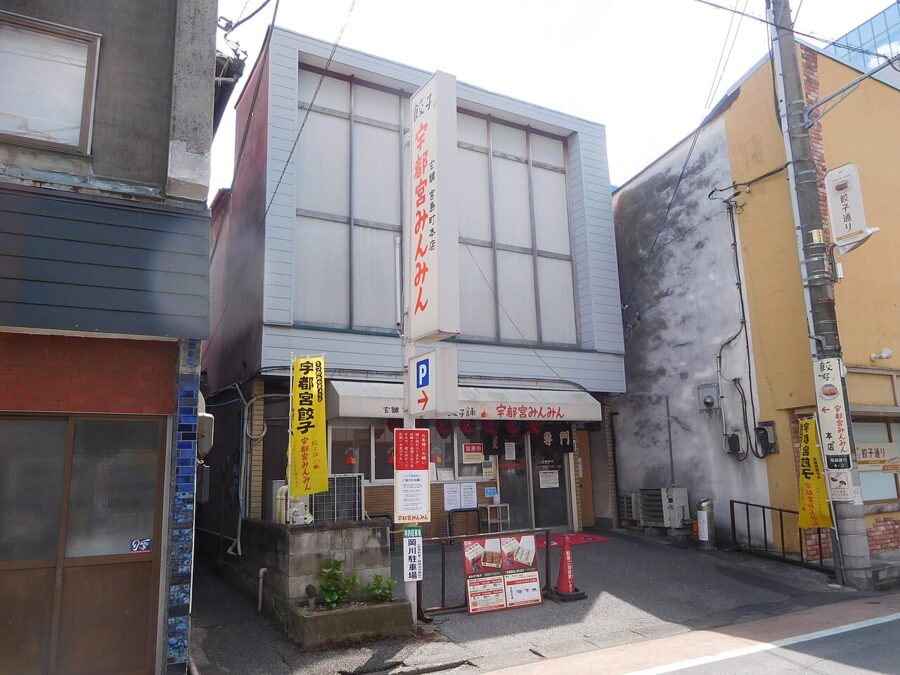
Minmin main shop (Baba-dori 4-2-3). Yaki, sui and age gyoza, ¥380 each for six, rice ¥220. Open 11:00–20:30 (last orders 20:00) and closed most Tuesdays. The yaki are fried in sesame oil and the garlic is used as an extract, so it doesn’t follow you around for the afternoon.
Masashi Miyajima-cho main shop (Baba-dori 4-3-1), a short walk along the same street. The menu is two items: yaki and sui gyoza, ¥280 for six, and the shop states plainly that it doesn’t serve rice or beer. It opens at 11:30 and closes when the gyoza run out, it’s shut on Tuesdays and Wednesdays, and there are 12 counter seats, so the queue is part of the meal.
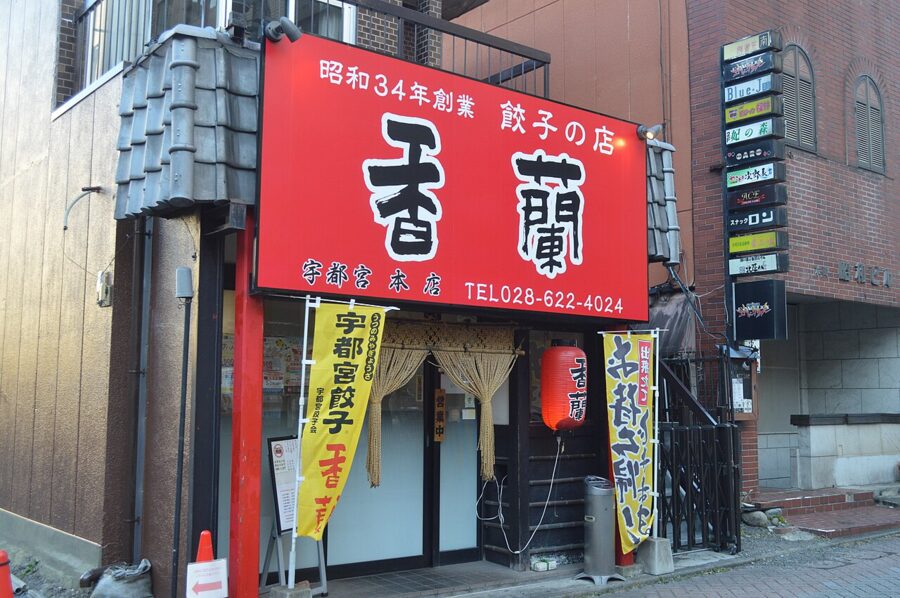
Kouran main shop (Honcho 1-24). Yaki, age and sui gyoza, ¥390 for six, open 11:00–20:00. Order the age gyoza at least once. Kouran also sells frozen gyoza to take home, twelve for ¥629.
Kirasse (Baba-dori 2-3-12, basement of the MEGA Don Quijote LaPark building, across from Futarayama Shrine). The association’s own food hall, and the best answer if you have one meal and can’t choose. Five member shops have permanent counters: Minmin, Menmen, Kouran, Ryumon and Satsuki. A second zone rotates other members daily and sells a plate with one gyoza from each of five shops.
The permanent counters run 11:00–20:30 on weekdays and to 21:00 at weekends; the rotating zone is 11:00–21:00, and the souvenir corner opens at 10:00. Each permanent shop has its own day off, so check before you go if you’ve got your heart set on one. And it’s pronounced “kirasse”, not “korasse”, as the association politely points out.
The Utsunomiya Gyoza Festival
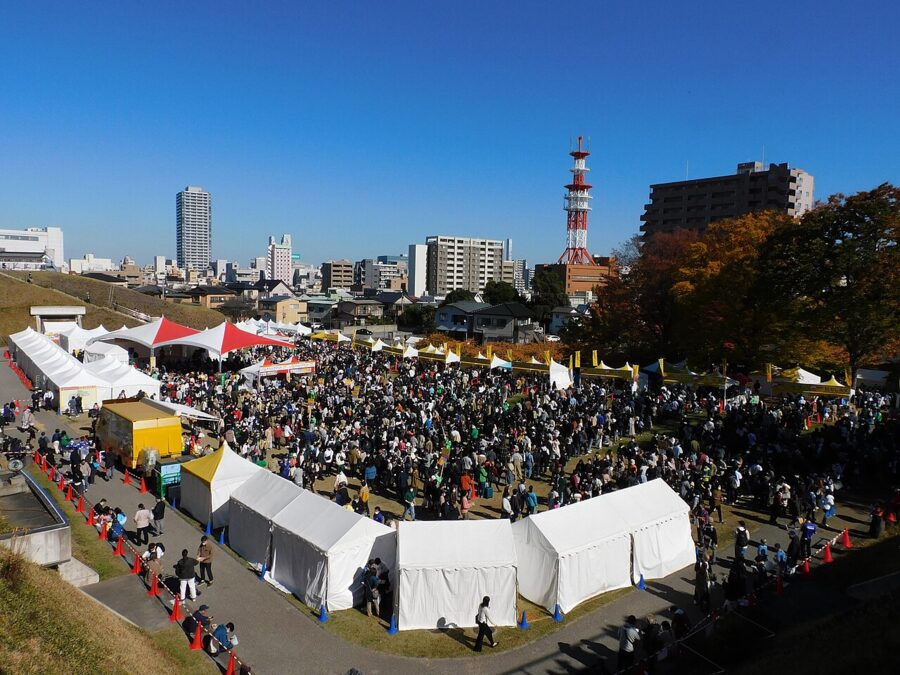
Every November the association runs a two-day festival where member shops set up stalls and sell plates for ¥200 each. The 2026 edition was on 7 and 8 November, 9:00–17:00, and the number of gyoza on a plate varies from shop to shop. Expect long queues at the famous names and short ones at shops you’ve never heard of; the short queues are where the surprises are.
One more thing to look out for: the JR station’s platform soba stand once sold gyoza soba, a bowl of noodles with gyoza dropped in. It’s a reminder of how far the city leaned into the theme.
Hamamatsu: cabbage, bean sprouts and a lot of gyoza
Hamamatsu, halfway between Tokyo and Osaka on the Tokaido Shinkansen, has about 80 gyoza specialists and more than 300 places with gyoza on the menu. People here eat gyoza as a whole meal. A plate of 20 or 30 for one person isn’t unusual, which is why the city’s gyoza are light and why the bean sprouts are there.
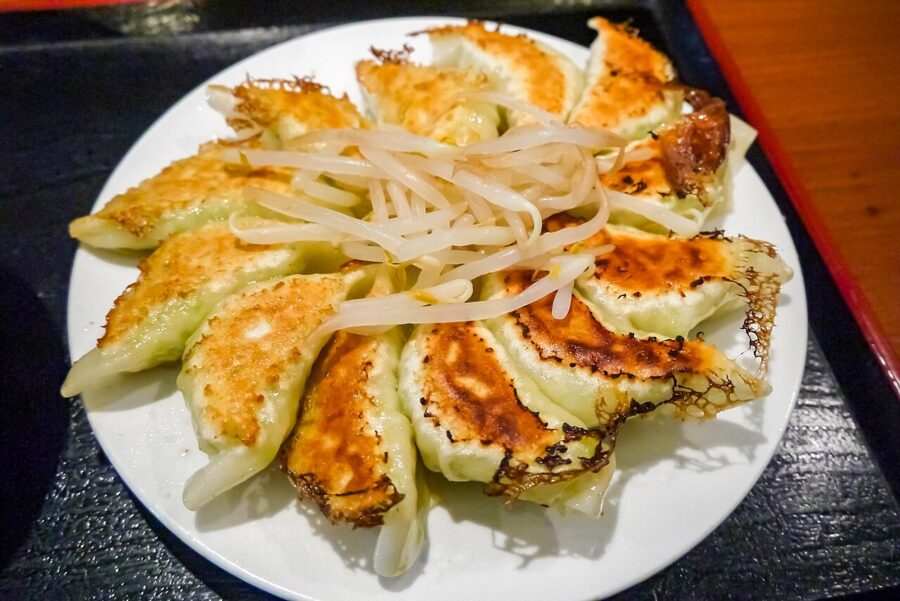
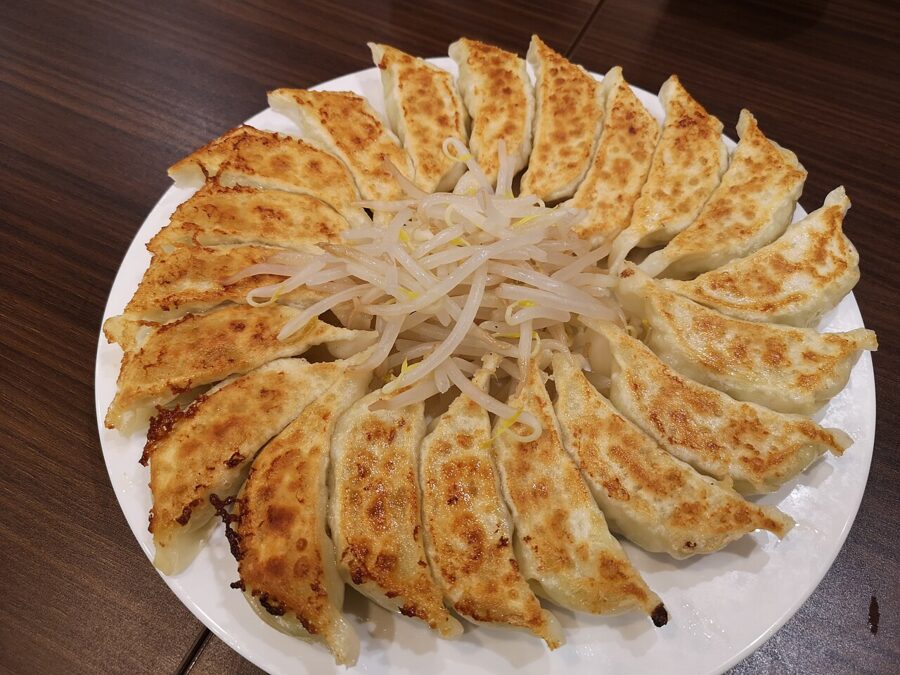
The filling is mostly cabbage, which makes it sweet, with pork and very little garlic. The gyoza are fried in a ring in a round pan and turned out onto the plate as a wheel, with boiled bean sprouts in the middle to cut the oil between mouthfuls.
The usual origin story credits Ishimatsu, a food stall that opened near Hamamatsu Station in 1953 and started making gyoza for repatriated soldiers who described what they’d eaten in Manchuria. Hamamatsu’s Chinese residents were already serving pan-fried gyoza before the war, though, so the city’s gyoza is older than the stall. Ishimatsu is credited with the wheel and the sprouts.
Where to eat in Hamamatsu
Mutsugiku (Sunayama-cho 356-5), about three minutes’ walk from the south exit of JR Hamamatsu Station. Founded in 1962 and now in its third generation, with a thin, specially made skin and a mostly cabbage filling. Open 11:30–14:30 and 17:00–21:00, closed Mondays and Tuesdays, lunch only on Sundays. No reservations, and it stops when the gyoza run out; the “medium” plate is twelve.
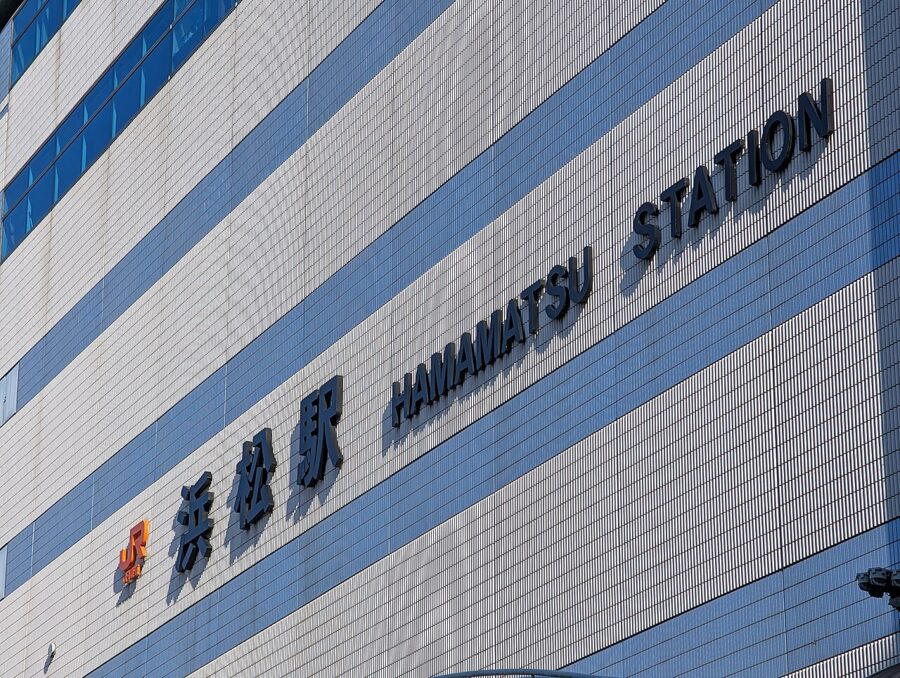
Ishimatsu main shop (Hiraguchi 252-1, Hamana ward). The founding shop’s main branch is out in the suburbs, with a big waiting room and a 64-space car park, so it suits a car or a taxi. Open every day, 11:00–14:30 and 17:00–20:30, and 11:00–21:30 at weekends, with a counter selling frozen gyoza by the door.
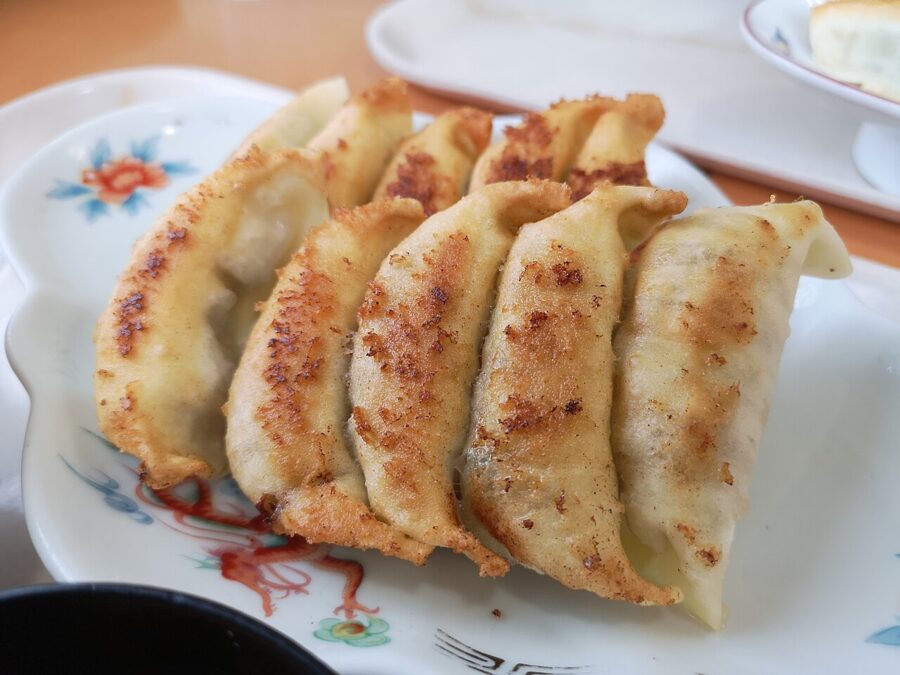
Fukumitsu (Sato 1-25-8). The outlier. Fukumitsu makes its own thick skins and fries them until they’re crunchy, then lays them in a row instead of a wheel. Open 11:00–21:00 without a break, closed on some Tuesdays and Wednesdays.
Hamataro Gyoza Center (Hosoe-cho Nakagawa 981-2). Run as a showroom by Toa Kogyo, a company that makes gyoza machines, so you can watch production through glass. The two house gyoza are red, with garlic, and white, without. Closed Wednesdays.
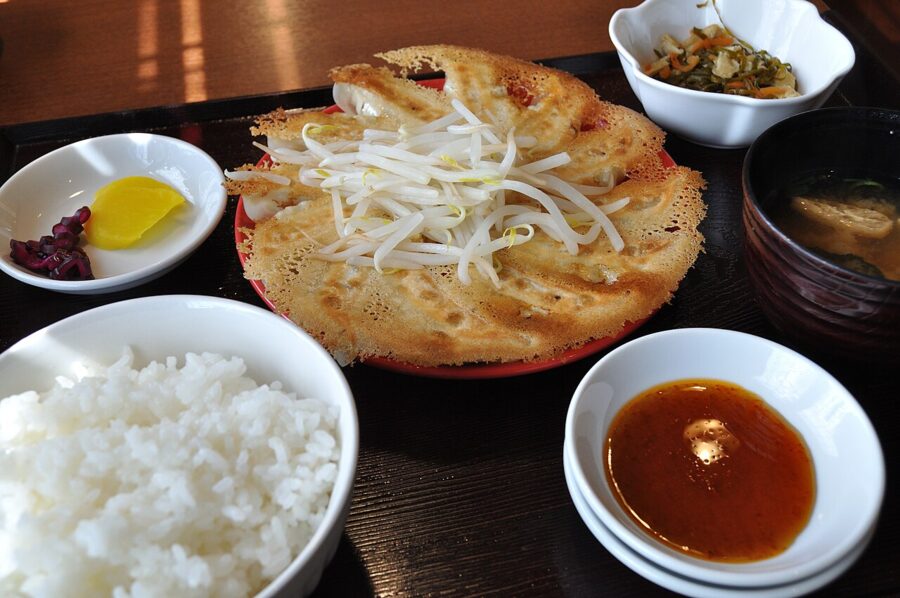
For a cheap local lunch, Gyoza no Sunago, three minutes from Saginomiya Station on the Enshu Railway, has charged ¥200 for six since it opened in 1991, give or take the consumption tax. And if you’re staying the night, the city’s other famous food is unagi from Lake Hamana.
The household spending war
The scoreboard both cities use is the Family Income and Expenditure Survey, published by the Statistics Bureau of the Ministry of Internal Affairs and Communications. It reports what households of two or more people spend on hundreds of items, city by city, for the prefectural capitals and the big designated cities.
Hamamatsu only became a designated city in 2007, so for years it couldn’t appear in the table. It ran its own count in 2006 and announced it ate about four times as many gyoza per household as Utsunomiya. When the official numbers arrived, the two were almost level: in 2009 Utsunomiya spent ¥4,187 per household and Hamamatsu ¥4,137.
Since then the title has moved around. Hamamatsu took it in 2011, when the earthquake hit spending in Utsunomiya, and the two have fought over the top spot ever since. Then Miyazaki, which marks the third of every month as gyoza day and had been creeping up the table for years, won in 2021 and 2022, helped by a long local habit of buying gyoza to take home at a time when people weren’t eating out.
| Year | First | Second | Third |
|---|---|---|---|
| 2025 | Hamamatsu, ¥4,046 | Utsunomiya, ¥3,575 | Miyazaki, ¥3,418 |
| 2021 | Miyazaki, ¥4,184 | Utsunomiya and Hamamatsu behind | |
| 2009 | Utsunomiya, ¥4,187 | Hamamatsu, ¥4,137 | Kagoshima, ¥2,764 |
Hamamatsu has now won three years running, 2023 to 2025. Before you take any of this too seriously, read the small print. The survey only counts gyoza bought ready-made to take home; frozen gyoza and gyoza eaten in restaurants aren’t included. And the Statistics Bureau’s own appendix for 2024 lists 96 sampled households for each of the three cities.
So the “gyoza capital of Japan” is decided by what fewer than a hundred families in each city pick up from the shop on the way home. Nobody in either city seems bothered by this, and nor should you be. It’s a rivalry, not a research paper.
Kobe dips its gyoza in miso
In Kobe the dipping sauce is the point. Tables at the city’s old gyoza shops carry a pot of miso dare, a loose, sweet-savoury miso sauce, and locals spoon it into the dish and loosen it with soy and vinegar. Each shop has its own blend, some built on dark Hatcho-style miso and some on lighter white miso.
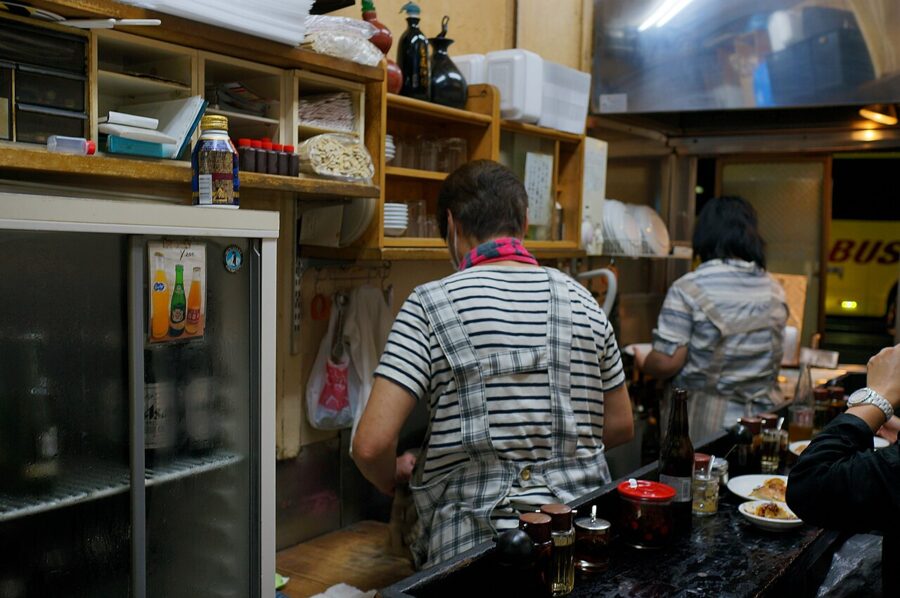
Gyozaen in Nankinmachi, Kobe’s Chinatown, about five minutes’ walk south of JR Motomachi Station, opened in 1951 and calls itself the birthplace of the miso dare. The house filling is unusual too: Kagoshima pork with about 9 percent Kobe beef mixed in, and no garlic. The menu is short: yaki, sui, age and soup gyoza, plus a couple of noodle dishes.
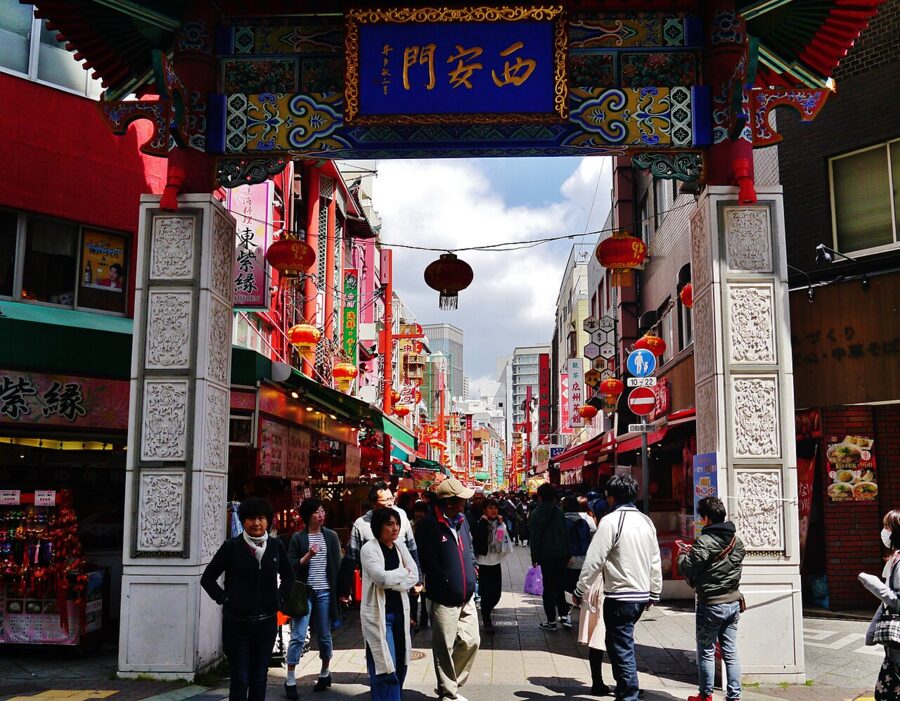
Hyotan, founded in 1957, has a shop in Motomachi and another in Sannomiya (Kitanagasa-dori 1-31-37), which opens 11:00–23:00. A serving is seven gyoza. Try the miso dare on its own first, then add soy, vinegar or the grated garlic on the table.
Akaman is the other old name, a gyoza-only shop on Motomachi-dori a few doors from Hyotan’s Motomachi branch, also with miso dare and a takeaway counter. If you’re in Kobe for one meal, eat at one of the three and then walk through Nankinmachi; all of them are within a few minutes’ walk of JR Motomachi Station.
One bite at a time: Hakata and Osaka
The two cities that shrank the gyoza did it for different reasons, and the results taste different.
Hakata hitokuchi gyoza
Houuntei, which dates its gyoza to 1949, is credited with the Hakata style. Its founder had eaten boiled dumplings in Manchuria and made them small so they wouldn’t swell too much in the pot; when he switched to frying, the small size stayed. The original recipe uses no garlic in the filling and pairs the gyoza with yuzu kosho, a citrus-chilli paste, instead of rayu.
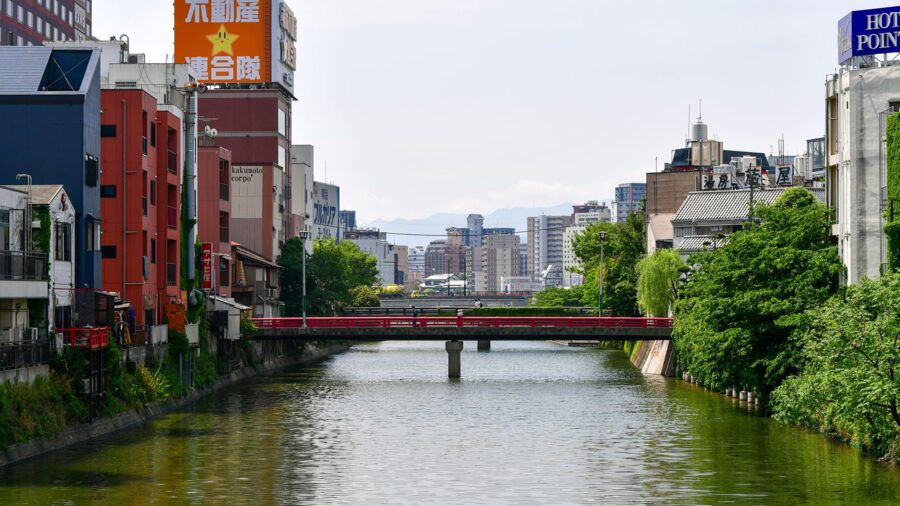
Houuntei is in Nakasu 2-chome, about seven minutes’ walk from exit 1 of Nakasu-Kawabata subway station. Asahiken, which opened by Hakata Station in 1954, fries its gyoza ten to a plate and is the easier stop if you’re between trains. You’ll also find hitokuchi gyoza at yakitori bars and at the yatai stalls; my Fukuoka ramen guide covers the stall scene.
Osaka hitokuchi gyoza
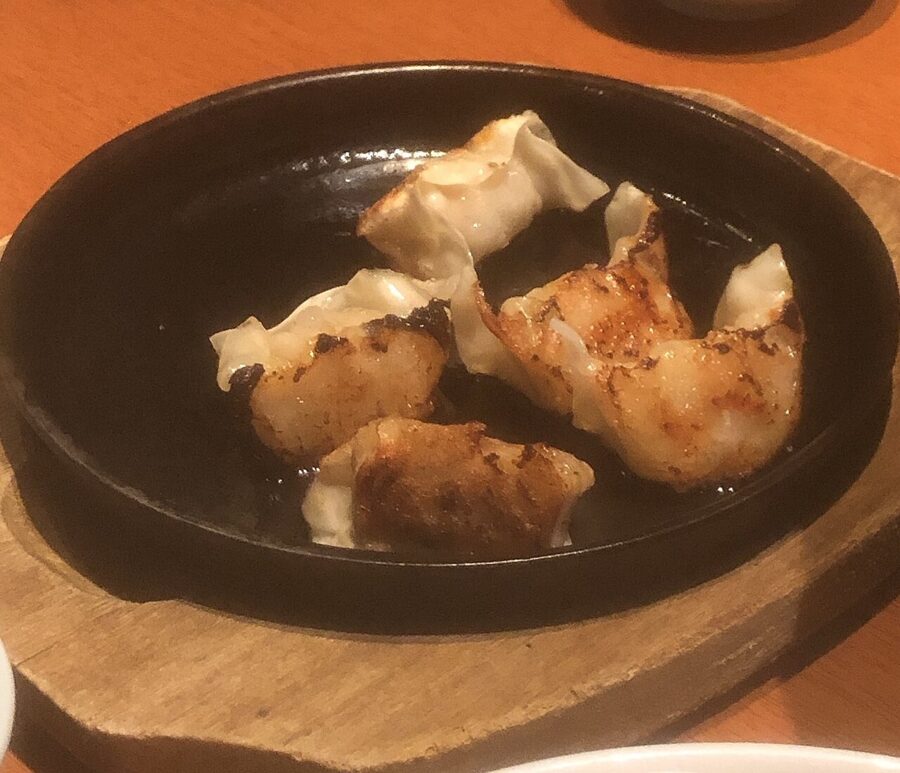
Osaka’s version comes from Tenpei, which opened in Kitashinchi, the city’s bar and hostess district, in 1955. The small gyoza spread by word of mouth among the hostesses, and copycats followed across Kitashinchi and Minami. A standard skin is used, but it’s folded over the filling rather than pleated around it, and fried very thin and crisp.
Tenpei still trades in Kitashinchi and sells its gyoza frozen online, thirty for ¥2,100. The other name you’ll see everywhere is Tenten, founded in 1977, whose chilled boxes of hitokuchi gyoza sell at Shin-Osaka Station for ¥1,490. Osaka’s other bite-size street food is takoyaki, and the two make a reasonable last dinner before the shinkansen.
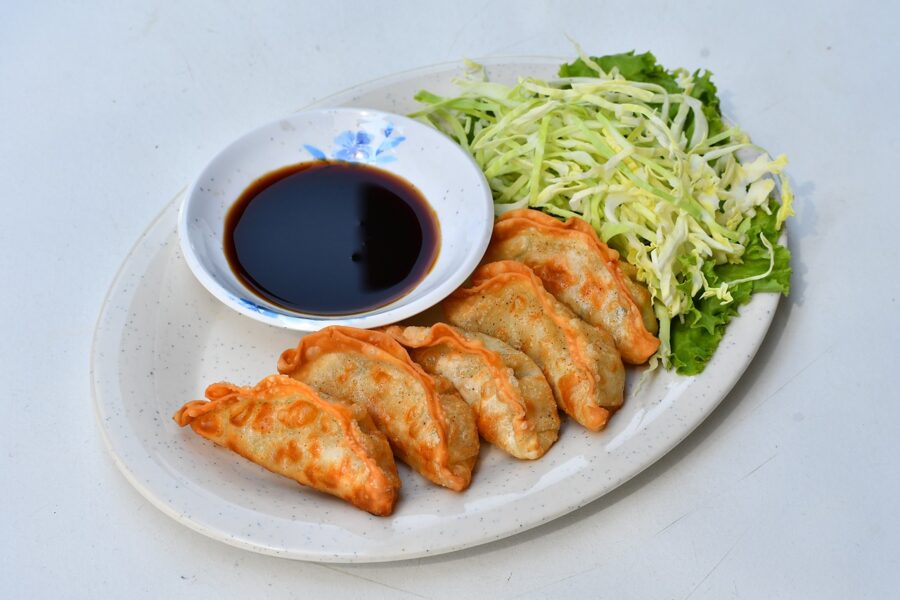
Five more gyoza towns worth a detour
Utsunomiya and Hamamatsu get the attention, but every region has a gyoza it’s proud of. These are the ones with an actual style rather than a marketing slogan.
Fukushima: enban gyoza
Fukushima city’s enban, or flying-saucer, gyoza goes back to Kanno Katsue, a repatriate from Manchuria who ran a food stall after the war. She packed a frying pan full of gyoza, fried them, then flipped the whole pan onto a plate, and the result came out as a disc. She went on to found Manpuku, and the style spread as she taught it.
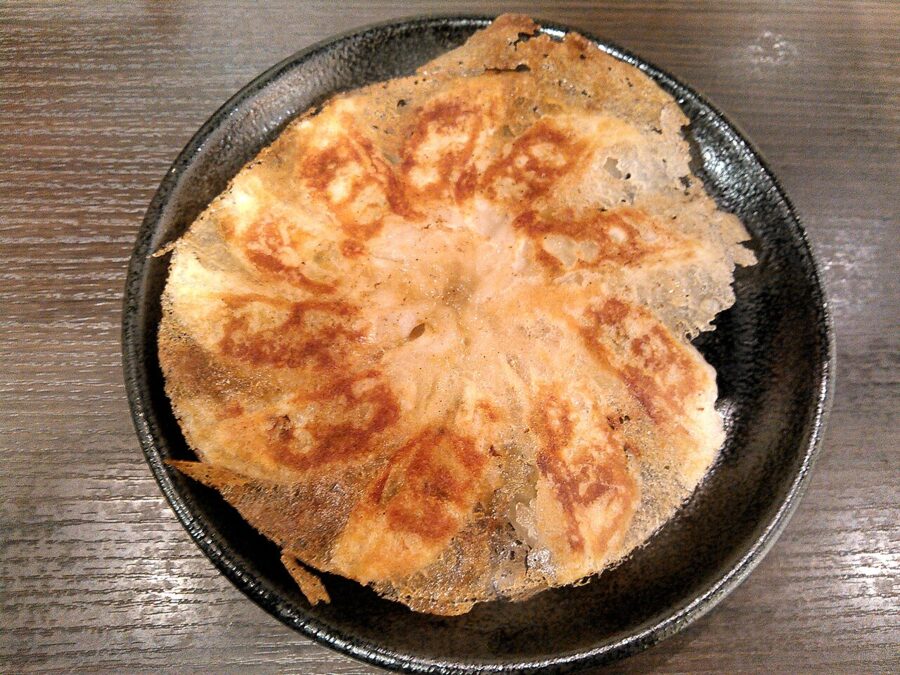
The Fukushima gyoza association was set up in 2003 to promote it, and in 2024 the Agency for Cultural Affairs listed enban gyoza among its “100-year foods”.
Tsu: the giant school-lunch gyoza
Tsu, the capital of Mie, has the strangest origin story of the lot. Around 1985, school nutritionists designing lunches decided that one huge deep-fried gyoza was easier for the kitchen staff than lots of small ones, and they used wrappers 15 cm across. The children who ate them grew up, and in 2008 a local group sold them at the Tsu festival.
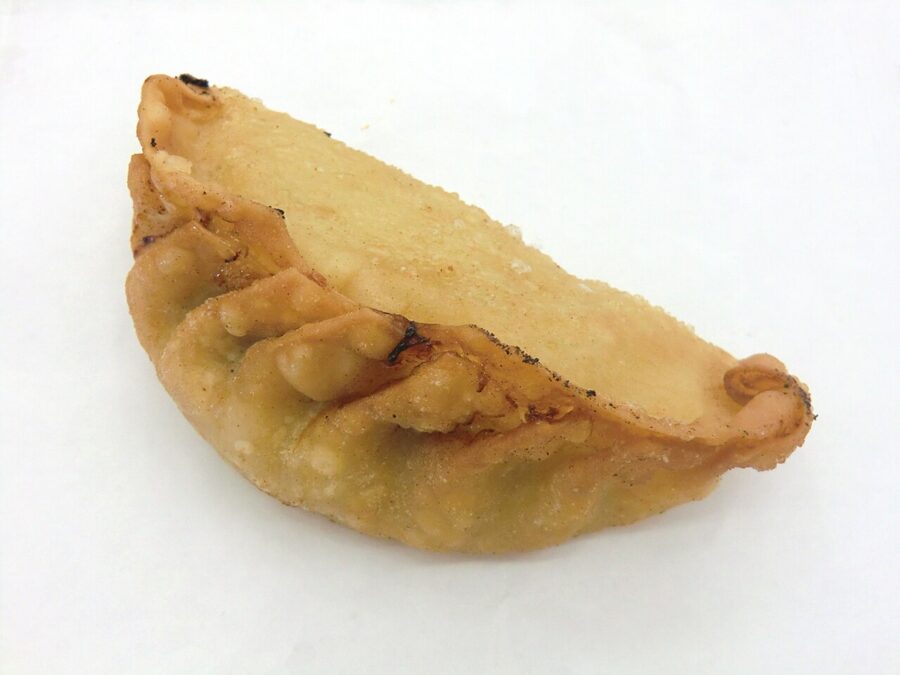
The rules are simple: a 15 cm wrapper and the deep fryer. About 30 places in Tsu served them as of 2024, and like enban gyoza they were added to the 100-year foods list that year.
Noda: White Gyoza
White Gyoza in Noda, Chiba, has been going since 1960, and its gyoza look like no other: thick, plump and round, closer to a small fried bun. The founder, Mizutani Shinichi, learned to make dumplings in Manchuria from a man named Bai, meaning white, and almost called the shop “Pai Gyoza” before deciding the English word sounded better.
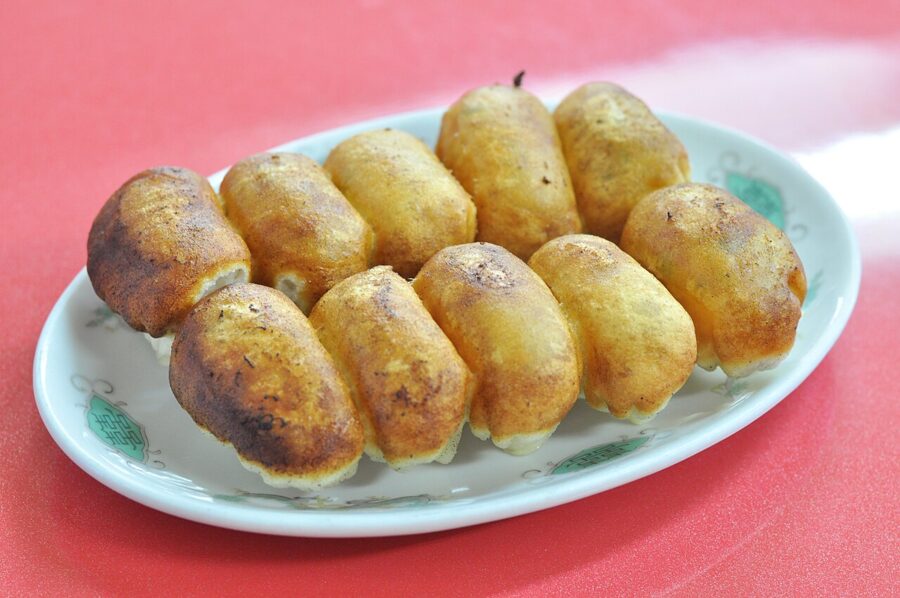
A fried serving of eight is ¥660, and sixteen raw ones to cook at home are ¥880. The main shop has stopped mail order because it can’t keep up with demand, and it asks visitors to check opening times before making the trip. There are licensed branches across the Kanto region and as far afield as Kanazawa and Saga.
Kochi: yatai gyoza
Kochi’s best-known late-night gyoza come from Yasubei, a stall-style shop that opened in 1970, seven minutes’ walk from JR Kochi Station. The gyoza have thin skins and are fried in plenty of oil so they come out crisp, and they’re a classic last stop after a night’s drinking. It opens around 19:00 and runs into the early hours, closed Sundays.
Hiroshima and Miyazaki
In Hiroshima, gyoza shops pile chopped Kannon negi, the local spring onion, into the dipping sauce and eat it on top of each gyoza. Miyazaki, the spending-survey upstart, doesn’t have one signature shape; its strength is takeaway, and the city’s gyoza council was only founded in 2020 to make a tourist product out of a local habit.
Gyoza with ramen, rice and beer
You’ll eat most of your gyoza in Japan without going to a gyoza shop at all. Nearly every ramen shop has them, many Chinese-style diners build set meals around them, and izakaya list them next to the fried chicken.
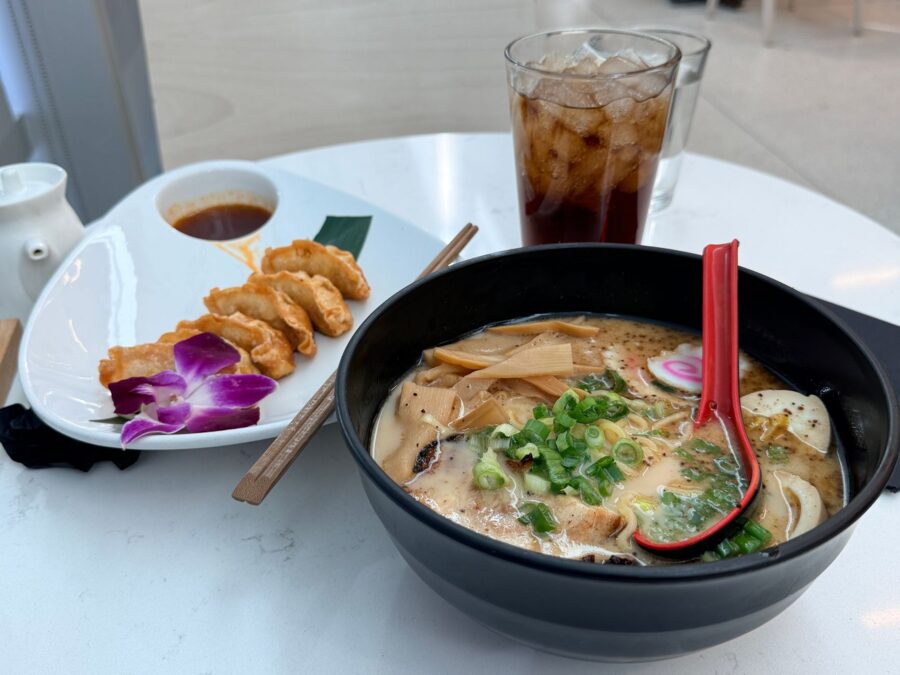
With ramen
At a ramen shop, gyoza are the default extra. Order them when you order the bowl, because they take longer than the noodles. Some ramen shops end up better known for their gyoza than their noodles.
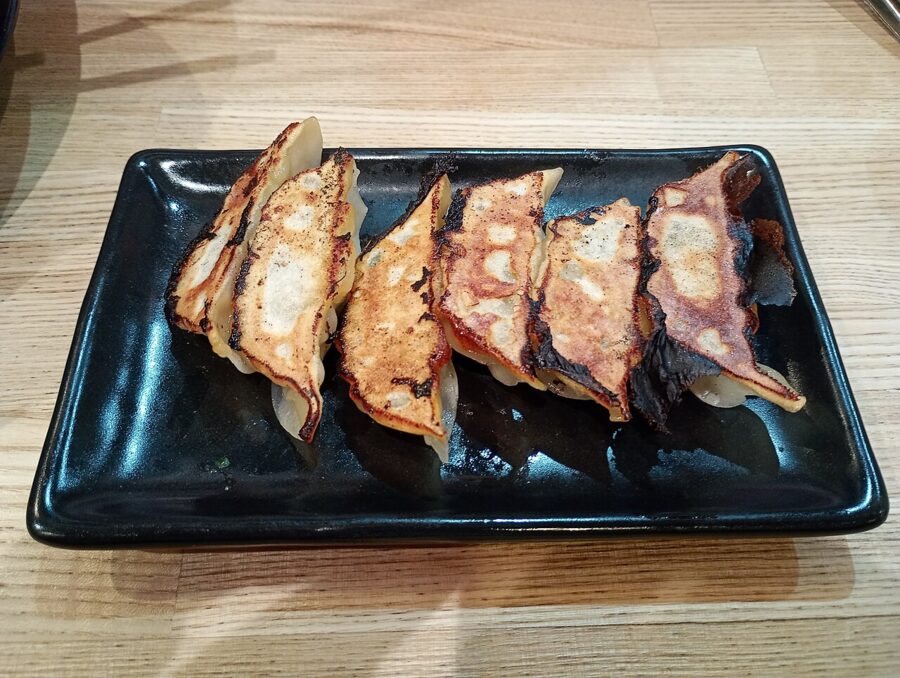
With rice
The gyoza teishoku, a set meal of gyoza, rice, soup and pickles, is a very Japanese idea, and it’s what the thin skin is designed for. Chains sell “double gyoza” sets with twelve pieces; Hamamatsu shops sell sets of 15 or more.
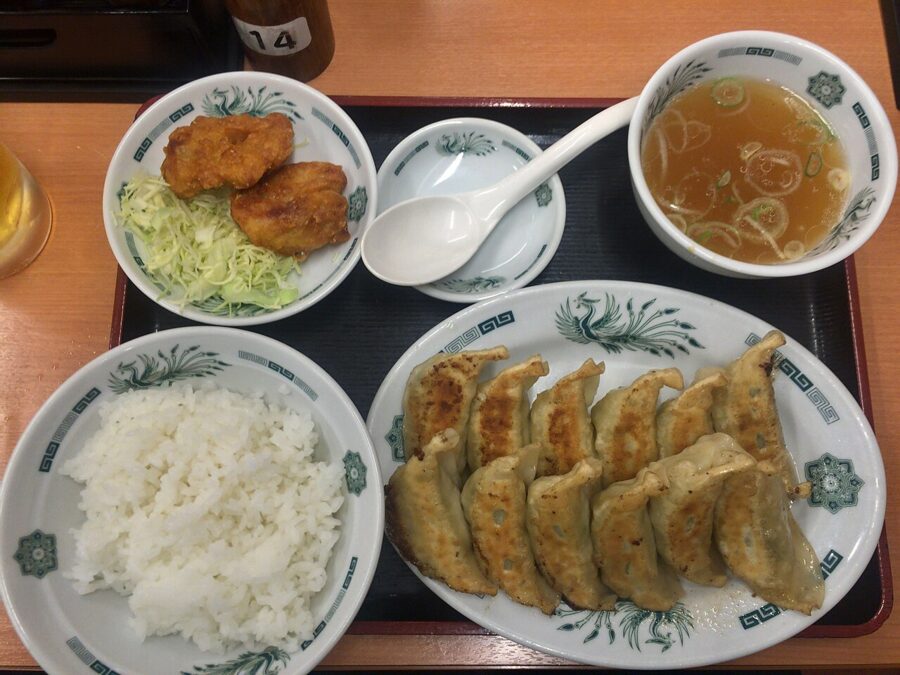
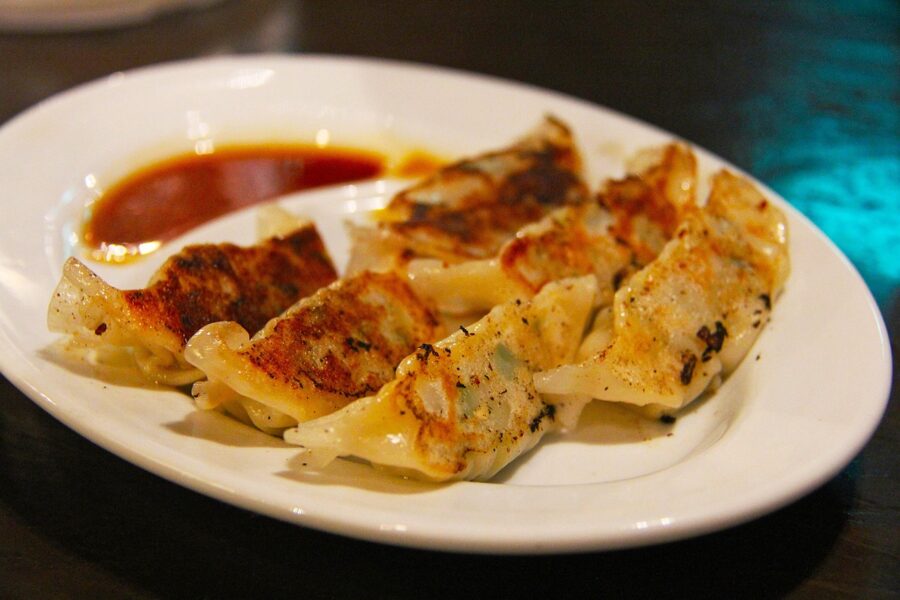
With beer
Gyoza and lager are close to a national pairing. Fried, salty and garlicky, gyoza are exactly what a cold beer wants. One chain, Dandadan, puts it in writing: “Gyoza and beer are culture”.
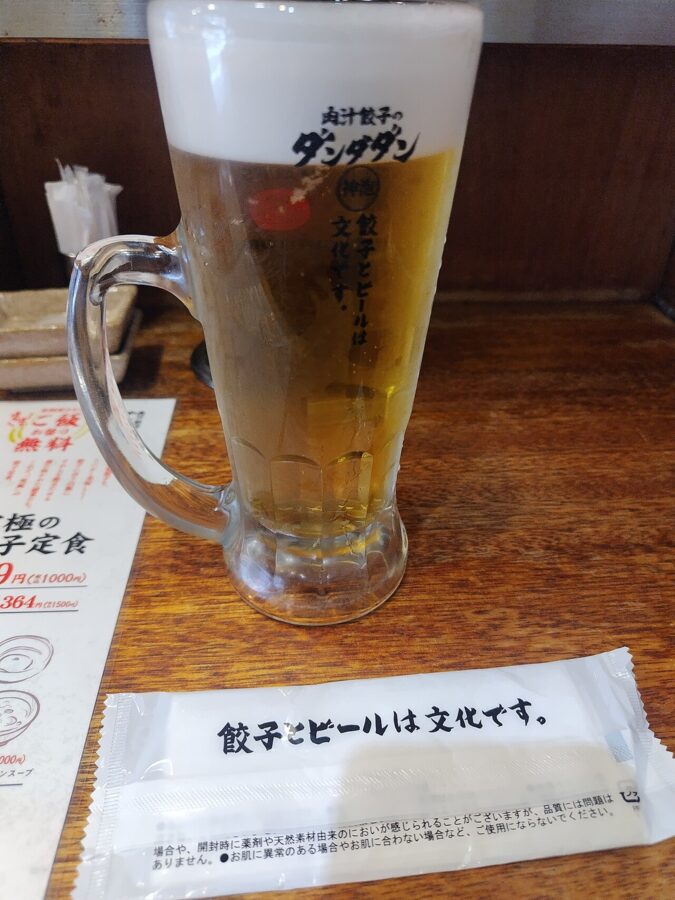
If you’d rather drink something with more character, Japanese craft beer works well with gyoza, especially a hoppy pale ale against the garlic; my guide to Japanese craft beer has the bars. At an izakaya, gyoza are one of the safest things on the menu to order first while you work out the rest.
Tokyo: three stops for gyoza lovers
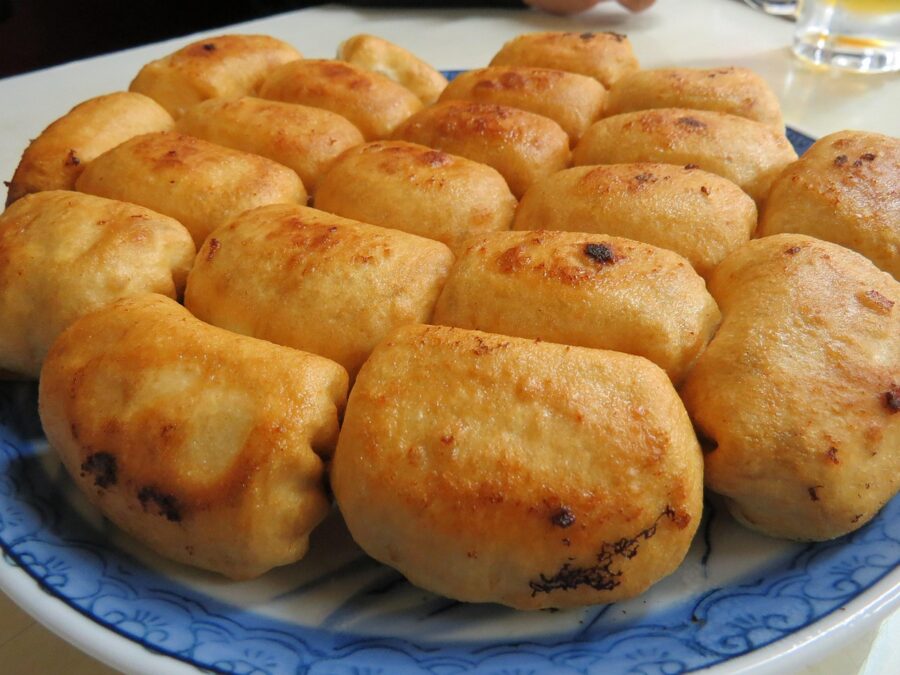
Kameido Gyoza main shop (Kameido 5-3-3), one minute from JR Kameido Station on the Sobu Line. Founded in 1953, it has served nothing but gyoza ever since: one kind, ¥300 a plate, eat in or take away, plus beer. Open 11:00–20:00 (last orders 19:30), closed Tuesdays, no reservations, and it stops when the gyoza run out.
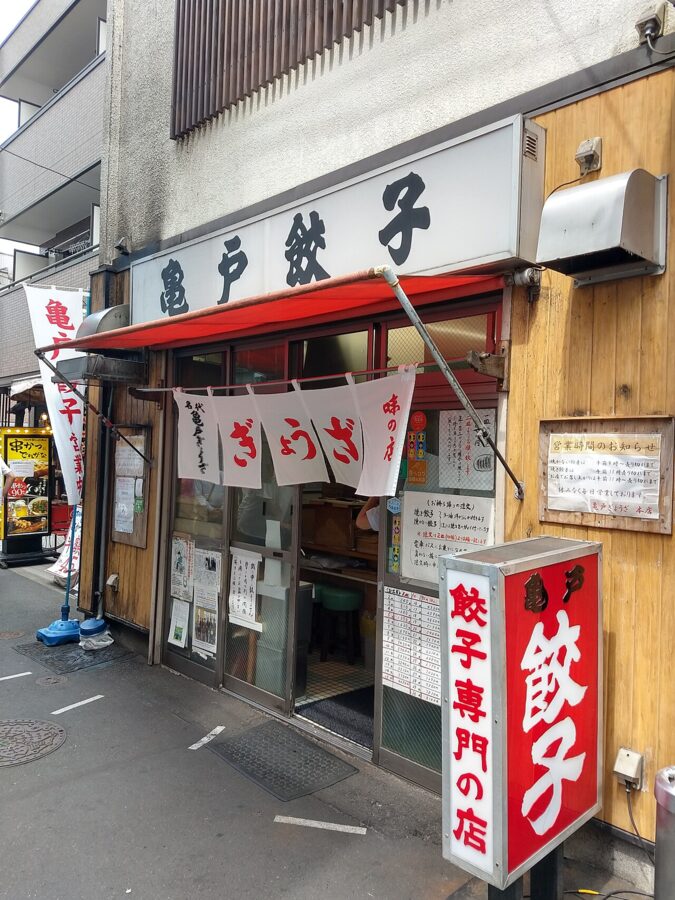
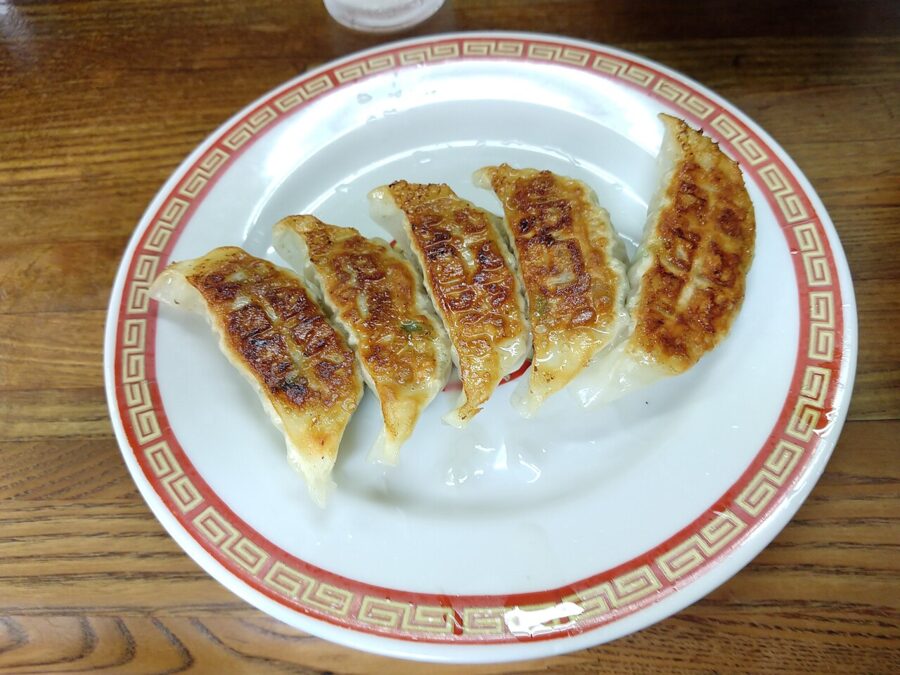
Kamata’s big three: Nihao, Kinparu and Huanying, covered above under hane gyoza. Go at lunch, when the set meals are cheap.
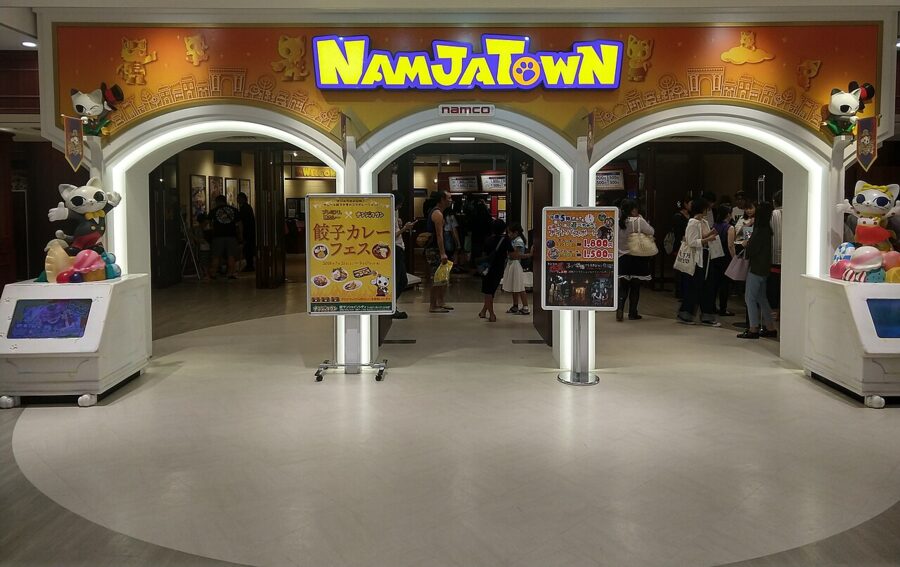
Namja Gyoza Stadium, inside Namja Town in Ikebukuro’s Sunshine City. It opened in 2002 as a showcase of gyoza from around the country and helped pull 2.18 million visitors in its first year. Namja Town opens 10:00–21:00, last entry 20:00, and you need an entry ticket even if you only want to eat.
The chains: Ohsho, Osaka Ohsho and Manshu
Chain gyoza are good in Japan, and there’s no shame in them. Three names cover most of the country.
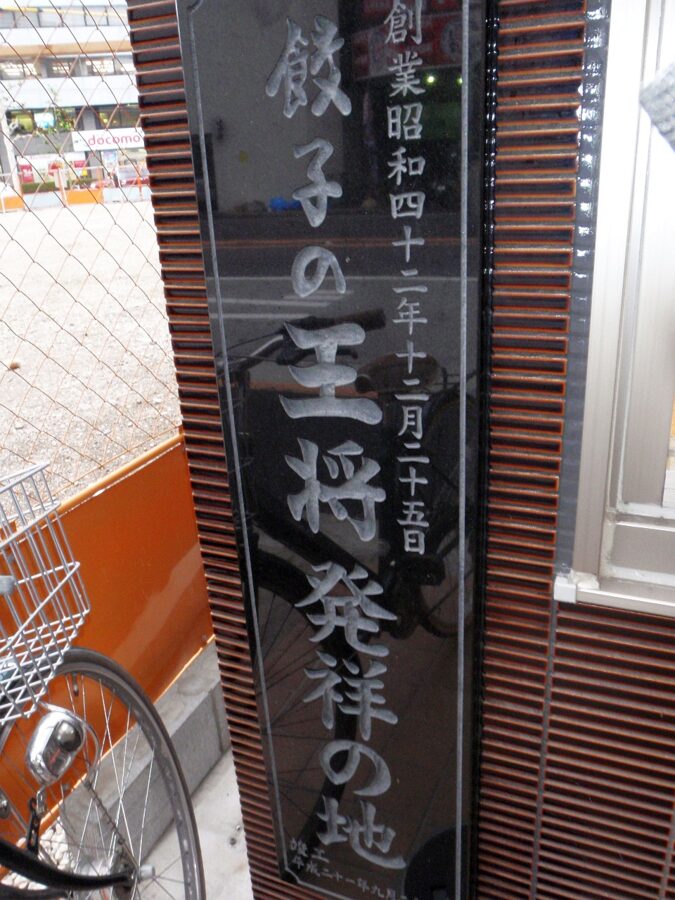
Gyoza no Ohsho opened its first shop near Shijo-Omiya in Kyoto in 1967 and now runs hundreds across Japan. Some say Ohsho started the habit of serving gyoza crust up, to show off the colour. The chain tried China in 2005 and pulled out in 2014; a Japanese-style gyoza next to fried rice never caught on there.
Osaka Ohsho is a different company. It was founded in 1969 in Kyobashi, Osaka, by a relative of Ohsho’s founder, and the two have no financial link; a court case over the name ended in 1985 with the Osaka chain taking its current name. Its supermarket frozen winged gyoza, launched in 2014, are a fixture in Japanese freezers.
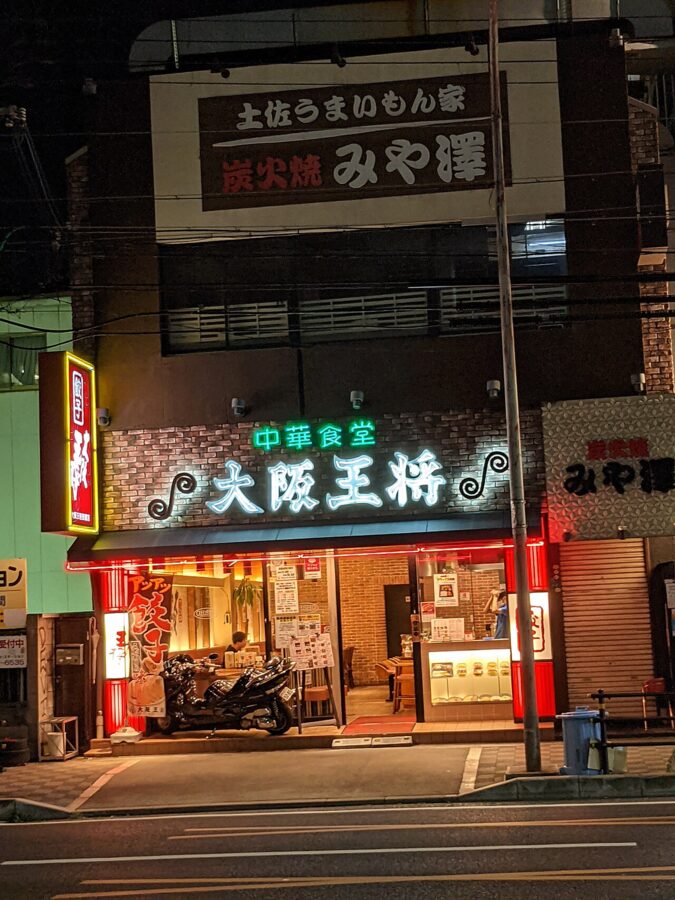
Gyoza no Manshu is Saitama’s chain, named after Manchuria and based in Kawagoe. Every shop is company-run, everything is made in its own factories, and many branches sit right by a station along the Seibu and Tobu lines, under the slogan “30 percent tastier”. Set meals come with six gyoza.
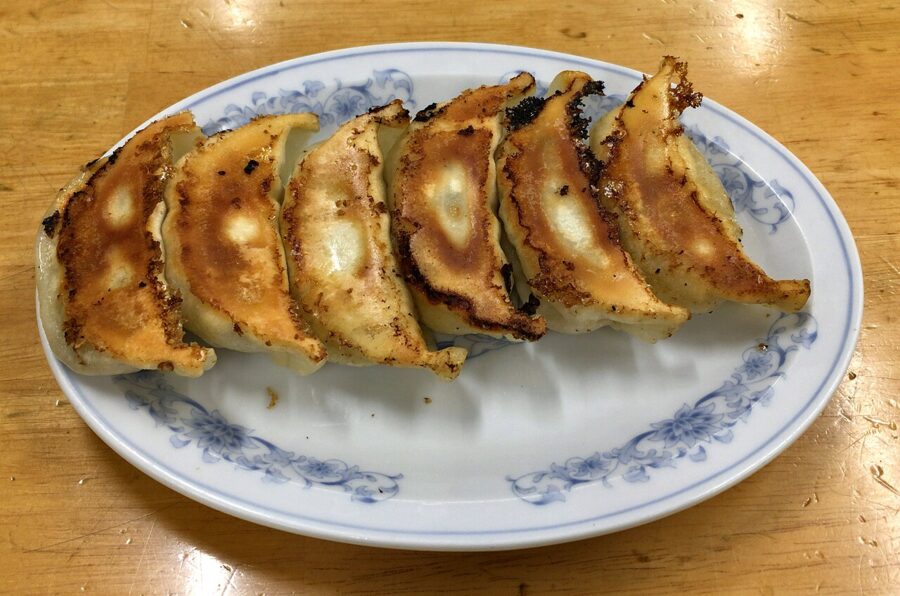
Ohsho is the one to try if you only try one. Order gyoza and something stir-fried, and look at the prices: it’s one of the cheapest full meals in Japan.
Frozen, chilled and to take home
Japanese supermarkets sell gyoza in every form: skins to fill yourself, raw chilled gyoza, cooked gyoza in the deli section, and the frozen aisle. Kibun was the first company to sell factory-made raw gyoza. Today the frozen market is worth around ¥64 billion a year.
Ajinomoto has more than half of it. Its frozen gyoza are designed to cook with no oil and no water, and the 2026 version, on sale from February, doesn’t even need a lid. In 2025 the median price of a pack was ¥215, against ¥178 for Osaka Ohsho’s winged gyoza, according to receipt data compiled by Felica Networks.
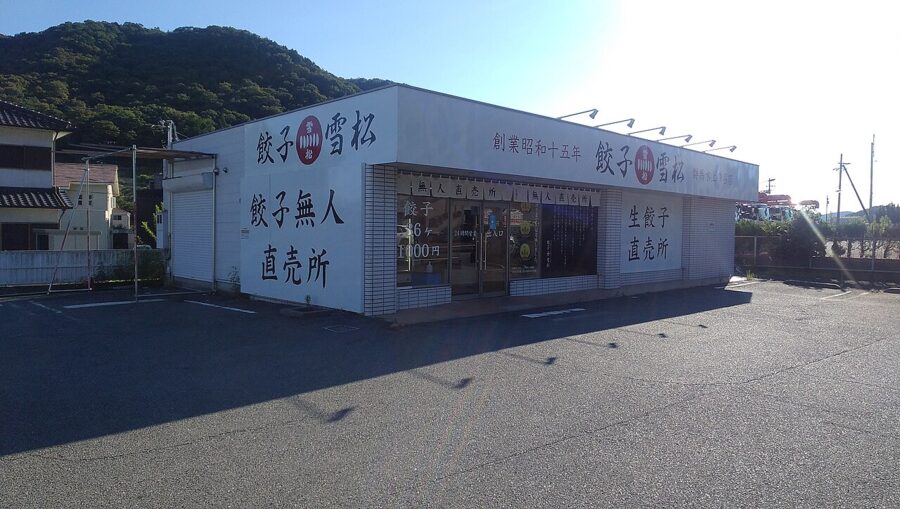
Since about 2020, unmanned frozen gyoza shops have spread across Japan: a freezer, a price list and a payment box, often open around the clock. Gyoza no Yukimatsu is the best known, and you’ll see small regional versions everywhere, including in Utsunomiya.
Gyoza as a souvenir
Plenty of specialists sell frozen gyoza, and they travel better than you’d think if you have a cool bag and a freezer at the other end. Masashi sells boxes of 30 for ¥1,200 online, Kouran sells twelve for ¥629 in the shop, and Kirasse’s souvenir counter in Utsunomiya sells frozen raw gyoza from member shops and ships them anywhere in Japan. Ishimatsu sells frozen gyoza at its main shop in Hamamatsu.
For a gift that doesn’t need a freezer, Tenten’s chilled hitokuchi gyoza at Shin-Osaka Station keep in a fridge below 10°C. White Gyoza tells customers to get raw gyoza into a freezer within an hour in summer and two in winter. Plan around that.
What gyoza costs
Gyoza are one of the cheapest good things you can eat in Japan. These are prices published by the shops, the local associations or recent 2026 listings.
| Shop | City | Serving | Price |
|---|---|---|---|
| Gyoza no Sunago | Hamamatsu | 6 | ¥200 |
| Utsunomiya Gyoza Festival | Utsunomiya | 1 plate | ¥200 |
| Masashi | Utsunomiya | 6 | ¥280 |
| Kameido Gyoza | Tokyo | 1 plate | ¥300 |
| Minmin | Utsunomiya | 6 | ¥380 |
| Huanying | Kamata, Tokyo | 5 | ¥385 |
| Kouran | Utsunomiya | 6 | ¥390 |
| White Gyoza | Noda | 8 | ¥660 |
At a ramen shop or a chain, a plate of six usually costs a few hundred yen, and a gyoza set meal with rice often stays under ¥1,000. In a specialist town you can eat very well for ¥1,000–1,500, including a beer.
Skip this
- Choosing a city by the spending table. It measures takeaway purchases by 96 families. Go to Utsunomiya for variety and Hamamatsu for the wheel, not for the title.
- Asking for rice or beer at Masashi. There isn’t any, and the counter is too busy for the conversation.
- Namja Gyoza Stadium as a gyoza trip. It’s fun if you’re already at Sunshine City or have children in tow, but you pay to enter before you eat. Kameido Gyoza is cheaper and better.
- Pouring soy straight onto the plate. Mix it in the small dish, with vinegar, and dip.
- Raw frozen gyoza on a long day out with no cool bag. Buy them on the way home, not on the way out.
If you only have one day, and it isn’t a Tuesday or Wednesday, take the train to Utsunomiya, eat yaki and sui at Minmin, walk along to Masashi for a plate of six, and finish at Kirasse with the five-shop sampler. Order vinegar, not soy. You’ll be home by dinner, and you won’t want any.
You Might Also Enjoy
 Guangzhou: Shamian Island, the Chen Clan Hall, the Old Liwan Lanes and How to Spend Three Days
 Chinese New Year in China: The 2027 Dates, the Travel Rush, Temple Fairs and Whether You Should Go
 Penang Hawker Food: The Street Canon of Malaysia’s Food Capital
 Tempura in Japan: The Counter, the Bowl, the Seasons and Where to Sit at Every Price