Okonomiyaki in Japan: Osaka, Hiroshima, Tokyo Monja and Every Griddle Between
The first time I ordered okonomiyaki in Tokyo, the waiter put down a metal cup of raw cabbage, batter and a cracked egg, switched on the griddle in the middle of my table and walked away. In Osaka a week later, a man in a white cap did everything: mixed, poured, flipped twice, brushed on the sauce, piped a lattice of mayonnaise and slid the finished pancake across the steel to me on a spatula the size of a dustpan. Same dish, same name. A completely different evening.
That split runs right through the dish. The name is two words, okonomi (what you like) and yaki (grilled), and it most likely started as a game as much as a meal: you were handed the raw ingredients and grilled them the way you liked. Osaka later turned it into a cook’s job and a city emblem. Hiroshima built a layered version so different it could pass for another dish, though locals will tell you theirs is the only real okonomiyaki, and Tokyo kept a runny cousin called monjayaki that never sets at all.
This guide covers all of it: what goes into the batter and why, the regional styles side by side, how monjayaki works, how to cook at a table griddle without making a mess of it, and the shops in Osaka, Tokyo and beyond that I’d plan a meal around. Hiroshima gets a short section here because I’ve covered it in depth elsewhere.
| Style | Home | How it’s built | What sets it apart |
|---|---|---|---|
| Osaka (Kansai) mixed | Osaka and most of Kansai | Batter, cabbage, egg and fillings mixed in a bowl, cooked as one thick round | Grated yam for a soft middle; sauce, mayonnaise, aonori and bonito on top |
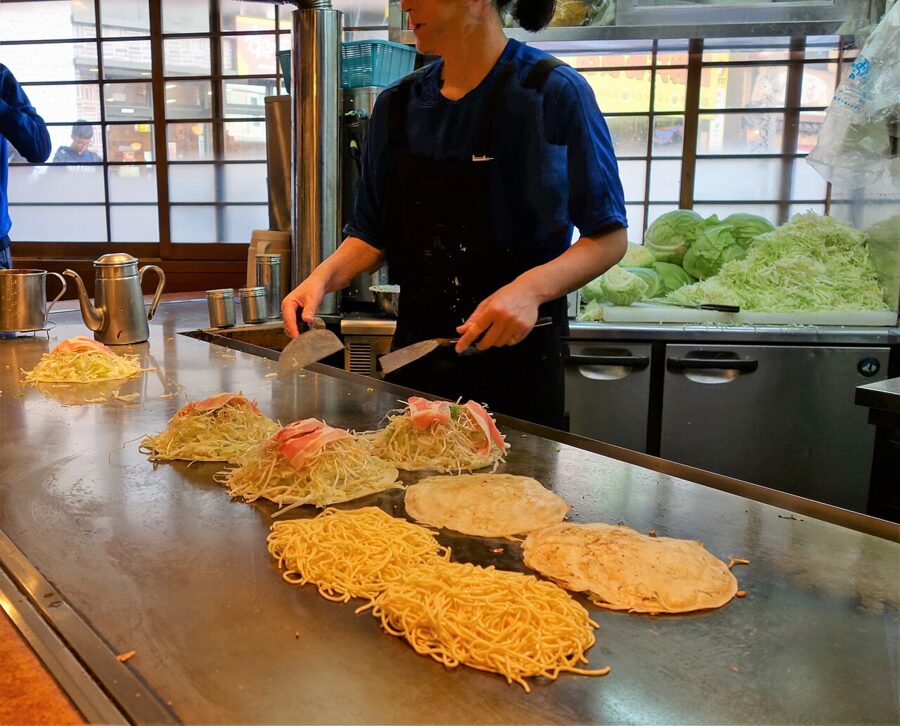
| Hiroshima layered | Hiroshima | Thin crepe, a tower of cabbage and bean sprouts, pork, noodles and a flat egg, stacked and steamed | Noodles inside as standard; no mayonnaise by tradition |
| Modan-yaki | Osaka and Kobe | Okonomiyaki with a layer of fried noodles cooked in | Okonomiyaki and yakisoba in one order |
| Negiyaki | Juso, Osaka | Thin batter under a heap of green onion, often with beef tendon | Soy sauce and lemon instead of thick sauce |
| Nikuten | Kobe and western Hyogo | Layered on a thin crepe, no egg in the batter | Spicy doro sauce, simmered beef tendon, little or no mayonnaise |
| Kashimin-yaki | Kishiwada, Osaka | Thin crepe topped with cabbage, chicken and minced beef fat | A pre-war method kept alive in one town |
| Fuchu-yaki | Fuchu, Hiroshima | Hiroshima layering with minced meat instead of sliced pork belly | The fat from the mince fries the noodles crisp |
| Kakioko | Hinase, Okayama | Shredded cabbage and a heap of local oysters, bound with batter | Oyster season only, roughly November to early April |
| Enshu-yaki | Hamamatsu, Shizuoka | Thin, under 1cm, often folded in three | Chopped takuan pickle in the batter |
| Monjayaki | Tokyo (Tsukishima, Asakusa) | Runny batter poured into a ring of fried cabbage | Never sets; eaten straight off the griddle with a tiny spatula |
In This Article
- Batter, cabbage and whatever you like
- What happens inside the batter
- Sauce, mayonnaise, aonori and bonito
- From penny snacks to postwar dinners
- The regional styles, one by one
- Osaka: mixed, flipped once, finished by the cook
- Hiroshima: layered, steamed, noodles inside
- Modan-yaki: noodles in an Osaka pancake
- Negiyaki: green onion instead of cabbage
- Kobe’s nikuten and the old layered style
- Kyoto, Kishiwada and the pre-war crepes
- Inside Hiroshima Prefecture: Fuchu, Onomichi, Mihara, Kure
- Kakioko: Hinase’s oyster okonomiyaki
- Hamamatsu, Nagoya and the folded versions
- Monjayaki, Tokyo’s runny cousin
- How to build the bank
- Tsukishima Monja Street
- Who holds the spatula?
- Cooking it yourself, step by step
- Where to eat it in Osaka
- Mizuno, Dotonbori
- Kiji, under the tracks at Umeda
- Hatsuse, Sennichimae: private rooms, your own griddle
- Yamamoto, Juso: the negiyaki original
- Fukutaro and Chibo
- Tokyo, Kyoto, Hiroshima and the long way round
- Sometaro, Asakusa
- Issen Yoshoku, Gion
- Hiroshima and Okonomimura
- Hinase, for kakioko
- Prices, etiquette and what to skip
- Manners at the griddle
- Skip this
Batter, cabbage and whatever you like
Strip okonomiyaki down and it is wheat flour mixed with water or dashi, an egg, and a lot of cabbage, cooked on a thick iron plate called a teppan. Everything else is the “okonomi” part. Pork belly is the default, squid and prawns are the classic alternatives, and a “mix” is all three at once.
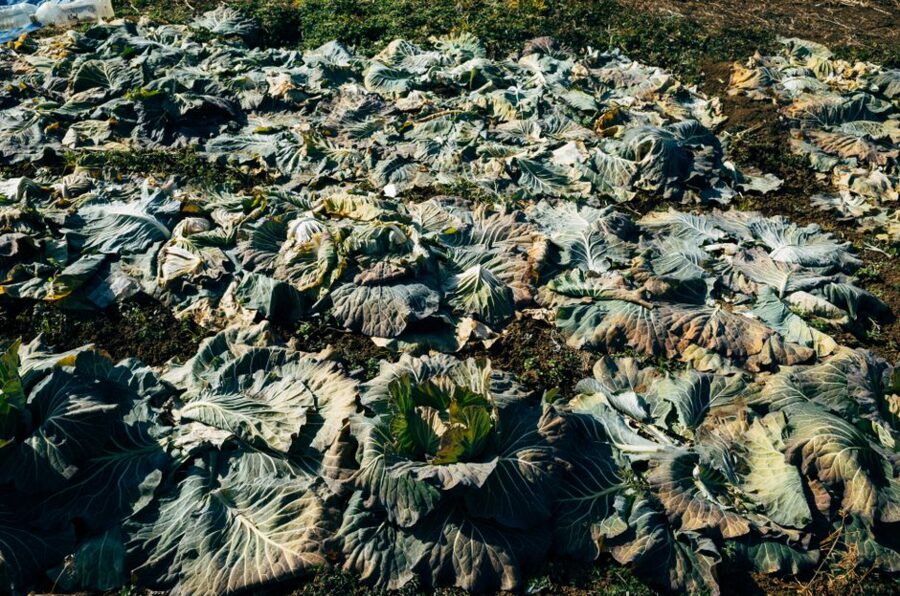
The ordering vocabulary is short. Buta-tama is pork and egg, ika-tama squid and egg, ebi-tama prawn and egg. The “tama” is for tamago, egg, and it is on the menu because eggs were an expensive extra until large-scale poultry farming spread from the mid-1950s; a few old-fashioned shops still treat egg as an option rather than a given.
What happens inside the batter
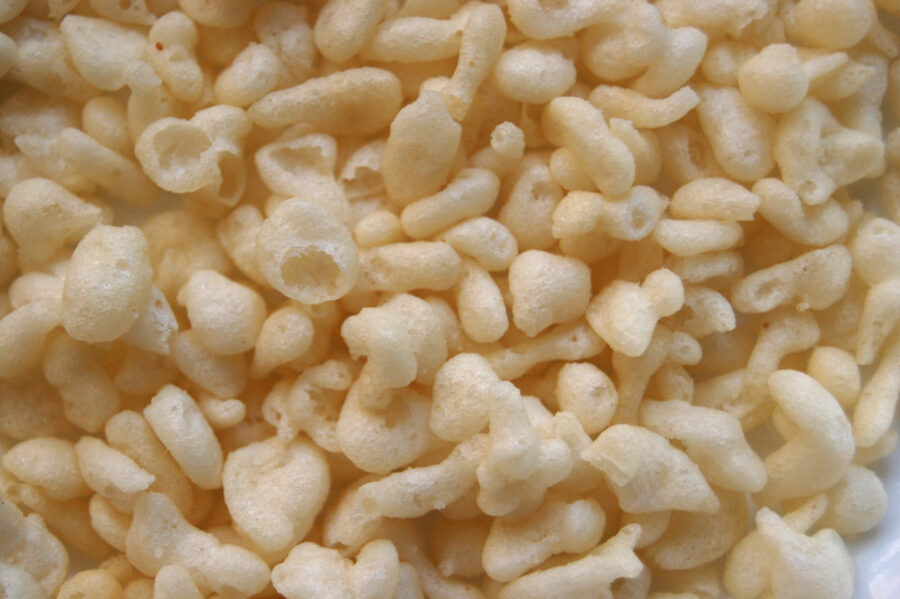
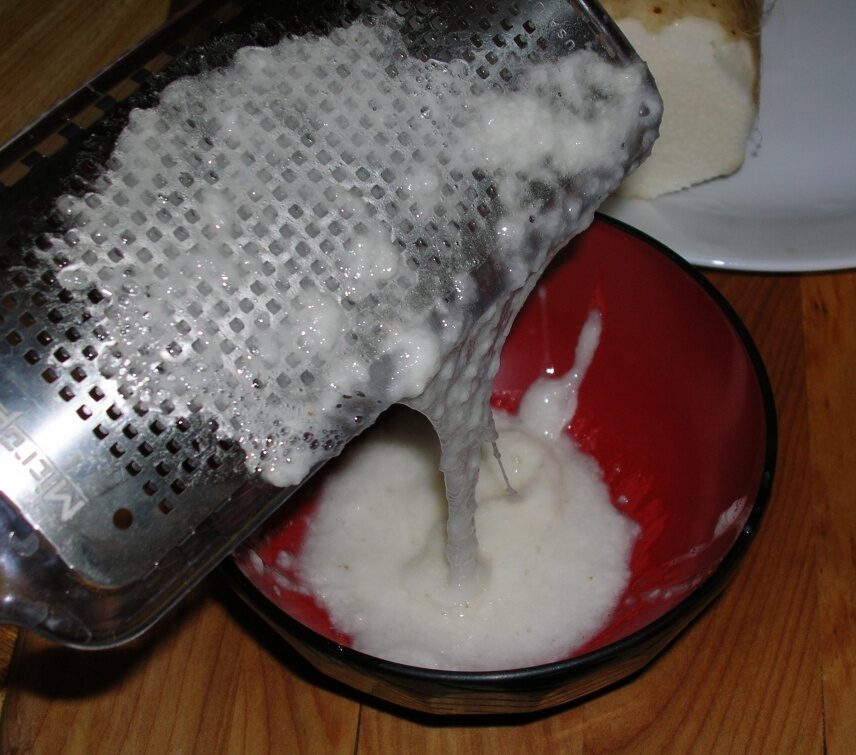
In Osaka the cabbage is chopped small and folded into the batter with the egg, a spoonful of tenkasu (crunchy crumbs of fried tempura batter), sometimes pickled red ginger, sometimes dried shrimp. Many shops also grate nagaimo or yamaimo yam into the mix. The sticky yam traps air, so the inside steams soft while the outside crisps.
One Dotonbori shop, Mizuno, takes the yam idea to its end point. Its yamaimo-yaki uses no flour at all, just grated yam binding the cabbage and the seafood, and it has been the shop’s best seller since it went on the menu in the early 1990s.
Tokyo’s mixed okonomiyaki goes further than Osaka’s in one respect. The pork and seafood are stirred into the batter too, rather than laid on top, because the cup arrives at your table with everything in it and you are expected to mix the lot. Hiroshima skips the mixing entirely, and I’ll come back to that below.
Sauce, mayonnaise, aonori and bonito
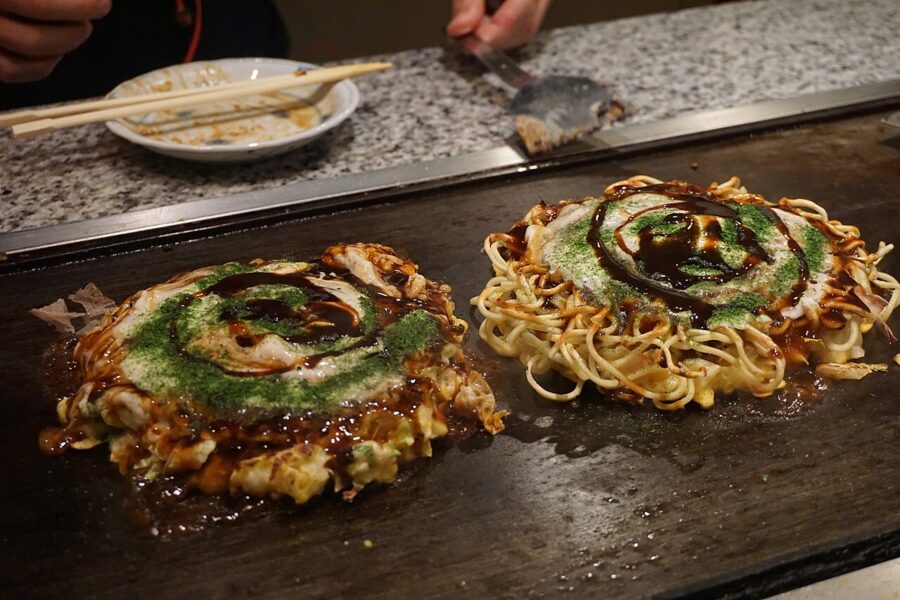
The finish is the part everyone photographs. A thick, sweet, fruity brown sauce goes on first, brushed across the top. Then mayonnaise, usually piped in thin lines, then a dusting of aonori seaweed and a handful of katsuobushi bonito shavings that curl and twitch in the heat as if they were alive.
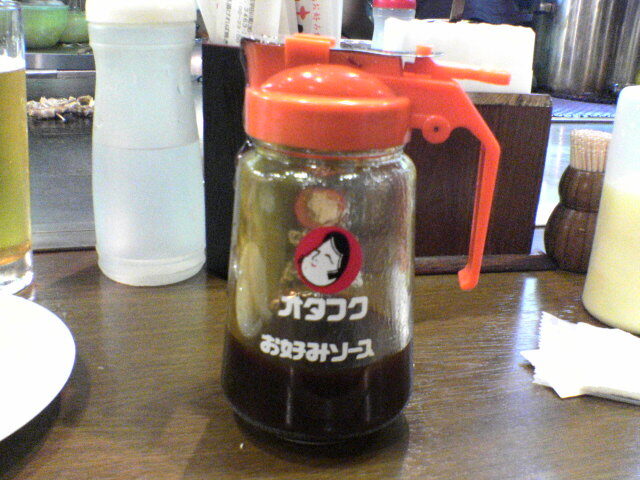
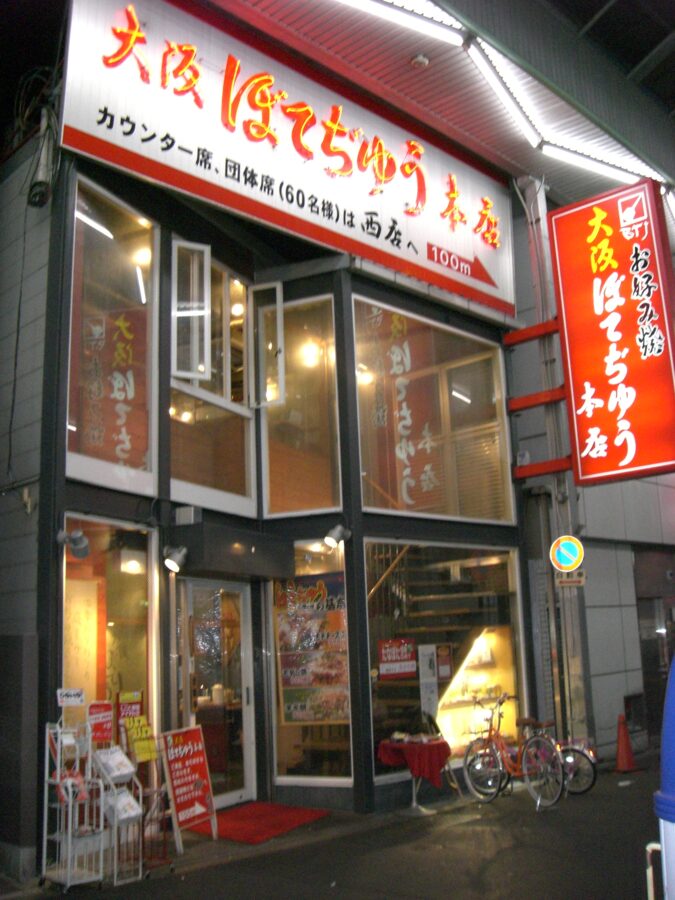
None of this is very old. Before 1948, okonomiyaki was eaten with thin Worcestershire-style sauce or soy sauce; the thick sauce arrived when a Kobe company, now Oliver Sauce, created tonkatsu sauce that year, and local sauce makers multiplied across Kobe and Osaka after it. Mayonnaise came in 1953, when Botejyu in Osaka started serving okonomiyaki with mayonnaise and mustard to suit the bar hostesses of Soemon-cho, who were among its best customers.
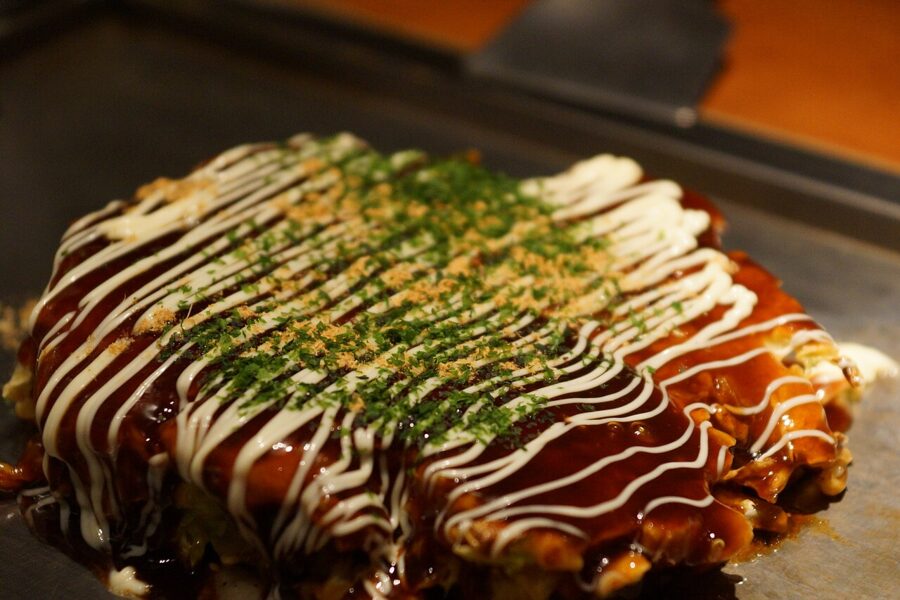
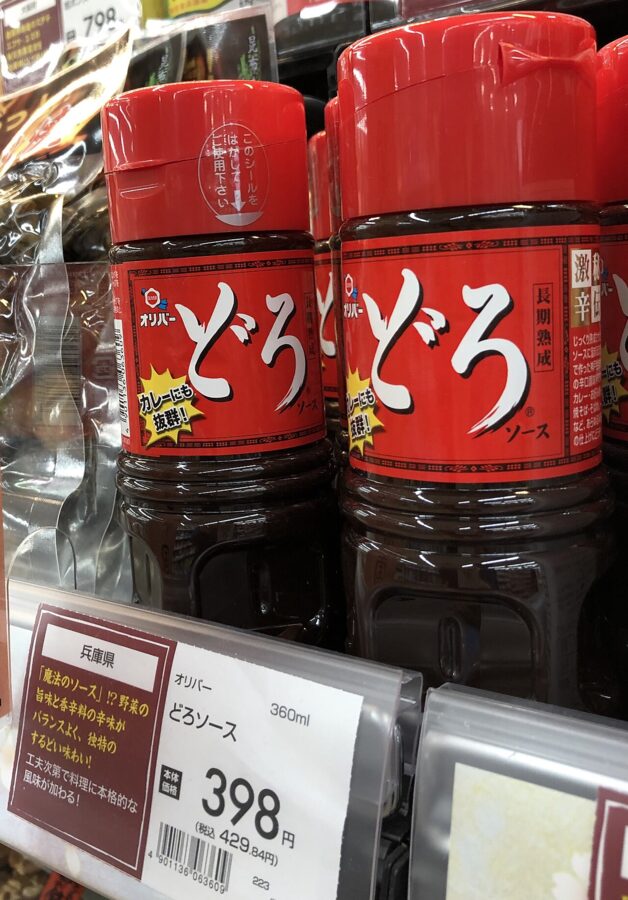
Mayonnaise is not universal, even in Kansai. In Kobe’s older districts many shops keep none on the counter and some won’t add it unless you ask, and Kobe’s sauce of choice is doro sauce, the dark, spicy sludge from the bottom of the Worcestershire vat. In Hiroshima, mayonnaise on okonomiyaki is a minor scandal, though most shops will hand you a bottle without comment.
From penny snacks to postwar dinners
People like to trace okonomiyaki back to funo-yaki, a thin flour crepe the sixteenth-century tea master Sen no Rikyu served with his tea. The link is thin at best. The dish you eat today comes out of Tokyo in the early twentieth century, from moji-yaki (sweet batter dribbled on a hot plate by children, who wrote letters with it) and from dondon-yaki, savoury griddle snacks sold from street stalls whose vendors beat a drum to announce themselves.
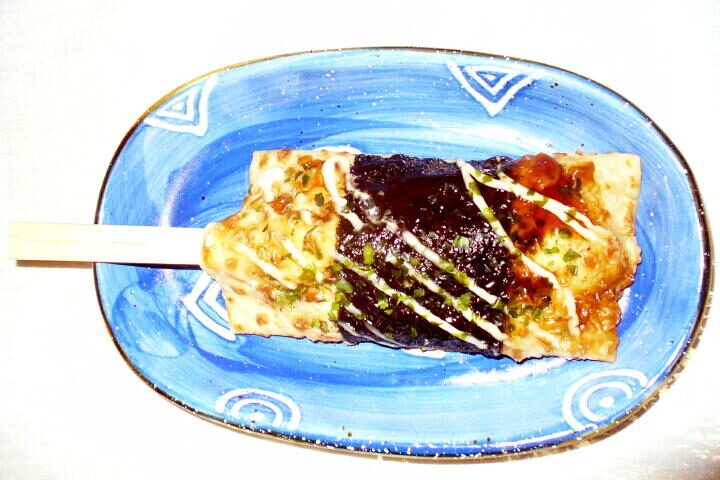
The word itself is older than most people expect. A Yomiuri newspaper report from March 1918 describes a dondon-yaki stall whose noren curtain already read “okonomiyaki”. By 1931 the folklorist Yanagita Kunio was writing that okonomiyaki and similar one-plate dishes kept dozens of specialist vendors in business in Tokyo alone.
By the early 1930s the name had moved indoors. Tokyo’s geisha districts had okonomiyaki rooms where couples were handed bowls of ingredients and a private griddle and left alone, and the police raided several shops behind Ginza in 1931 and 1932 for being little more than places to meet discreetly. The food historian Okada Tetsu reads this as the real origin: okonomiyaki began as a playful dish you cooked to your own liking in a private room.
Osaka was a step behind. Its own version of the street snack was issen yoshoku, “one-sen Western food”, a thin crepe with a little chopped green onion and a smear of Worcestershire sauce sold for one sen to children; in the Taisho era, anything with that sauce counted as yoshoku, Western food. The first Osaka shop to sell okonomiyaki by that name opened near Kitashinchi around 1937, a pricey place for geisha and Senba merchants that has long since closed, and the novelist Tanabe Seiko remembered okonomiyaki only becoming common in Osaka around 1941 or 1942.
Then the war shut most restaurants. When the dish came back in the black markets after 1945, it was bigger, heavier on cabbage and eaten as a meal rather than a snack, part of the same postwar run on wheat flour I describe in my guide to the history of Japanese food. Osaka’s okonomiyaki chains and the crowds at the 1970 World Expo did the rest, and by the 1970s the city owned the dish in the national imagination.
The regional styles, one by one
The table near the top gives the short version. What follows is the longer one, starting with the two styles you’ll meet first and moving out to the small-town versions that rarely leave their prefecture.
Osaka: mixed, flipped once, finished by the cook
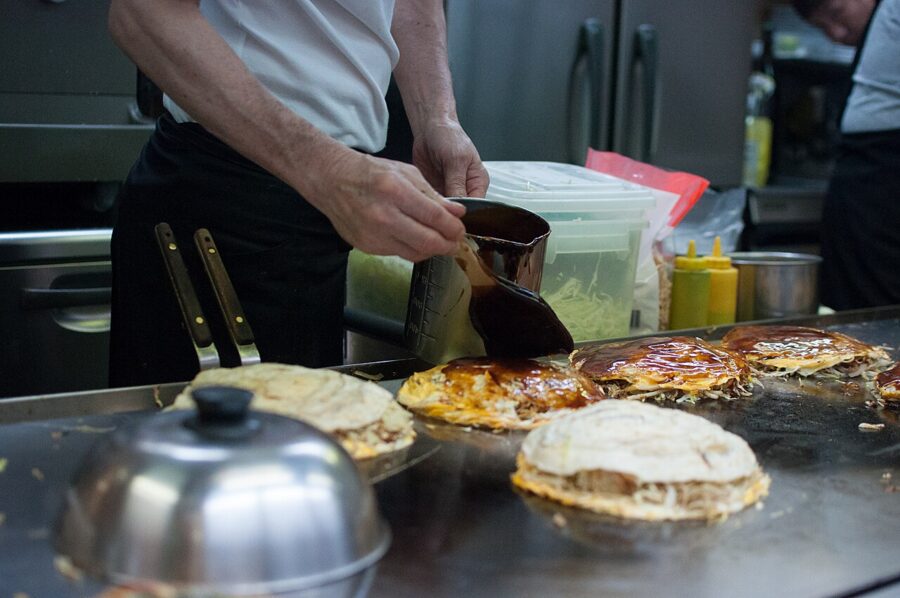
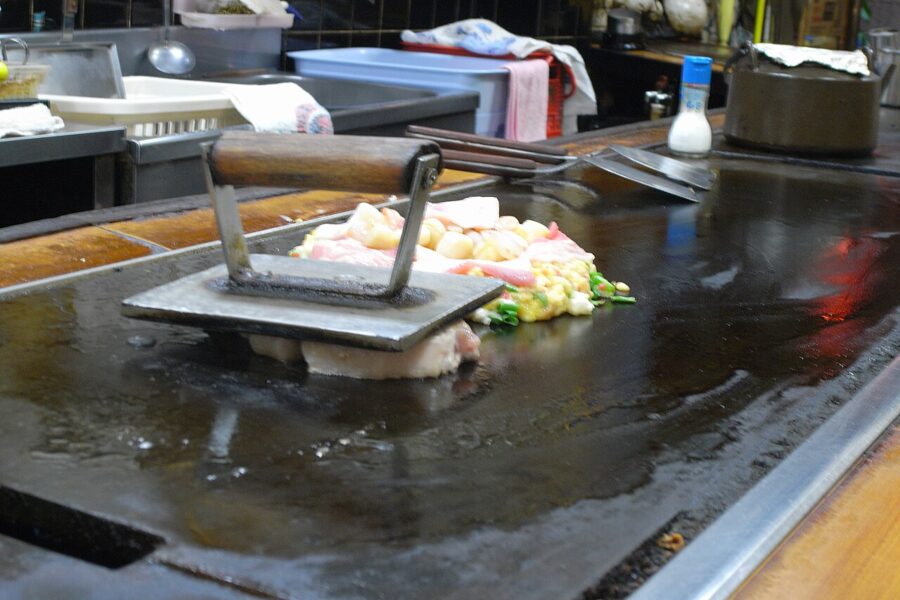
Osaka-style okonomiyaki is a thick mixed pancake, cooked on both sides and finished with sauce, mayonnaise, aonori and bonito. In most Osaka shops today the staff cook it on a counter griddle or bring it to your table ready, carried on a wide spatula locals call a chiritori, a dustpan. Cook-it-yourself shops survive mainly as old family businesses and chains from the Tokyo side.
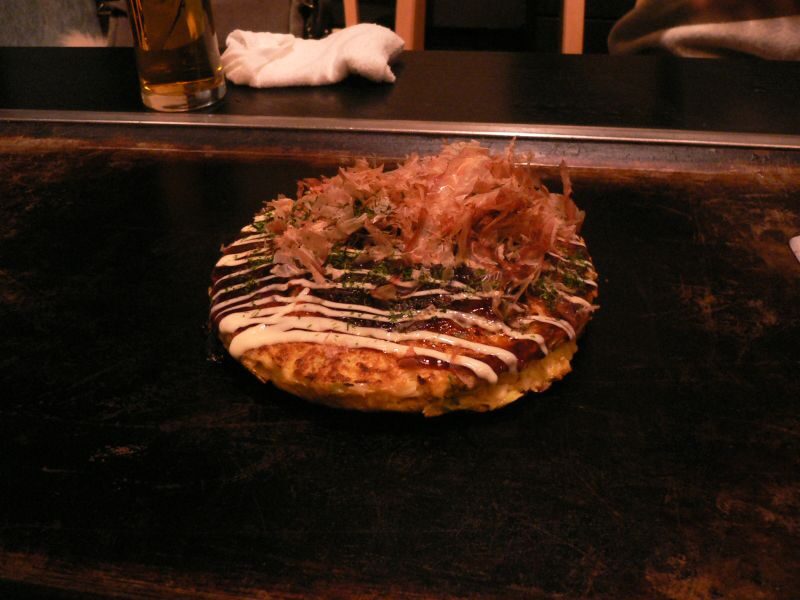
Two Osaka habits trip up first-timers. Kansai cuts its okonomiyaki in a grid of squares, never in pizza-style wedges, and you eat it from the griddle with a small metal spatula Osakans call a kote or teko. Some Kansai shops and canteens also sell okonomiyaki teishoku, a set meal with rice and miso soup, which baffles everyone from Hiroshima.
Osaka’s other griddle food is takoyaki, the octopus balls made from a runnier batter in a moulded pan and finished with the same sauce, mayonnaise, aonori and bonito; it gets its own page in my takoyaki guide. The Dotonbori okonomiyaki shops sit on the same walk as the city’s best-known takoyaki stands, which is where my guide to Osaka street food starts.
Hiroshima: layered, steamed, noodles inside
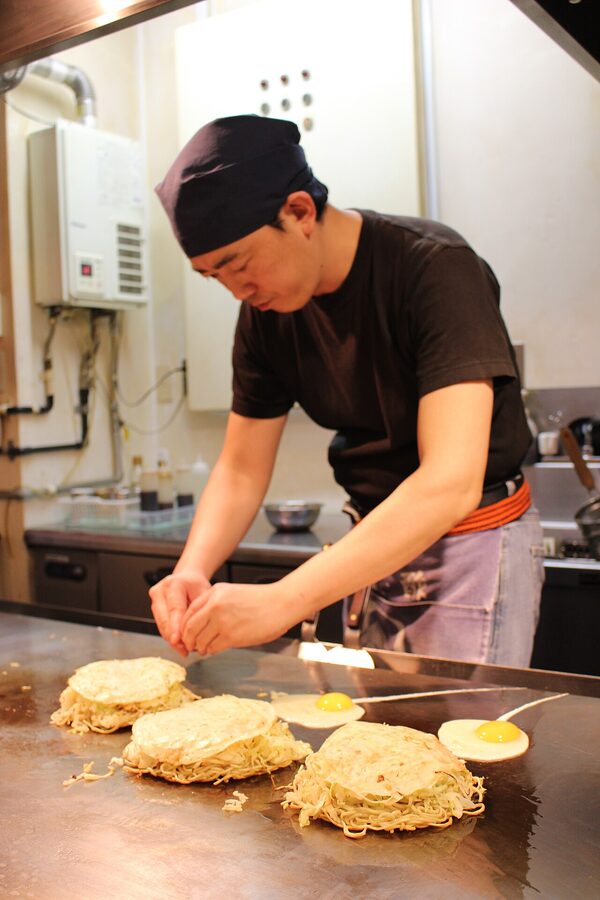
Hiroshima doesn’t mix anything. A thin crepe goes down first, then a mound of cabbage and bean sprouts, tenkasu and pork belly, a little batter to glue it, a flip, noodles fried alongside, an egg spread flat, and a final flip so the egg ends up on top under a coat of sauce. I’ve written the whole sequence up, along with Okonomimura and the shops worth the trip, in my guide to Hiroshima and Miyajima food.
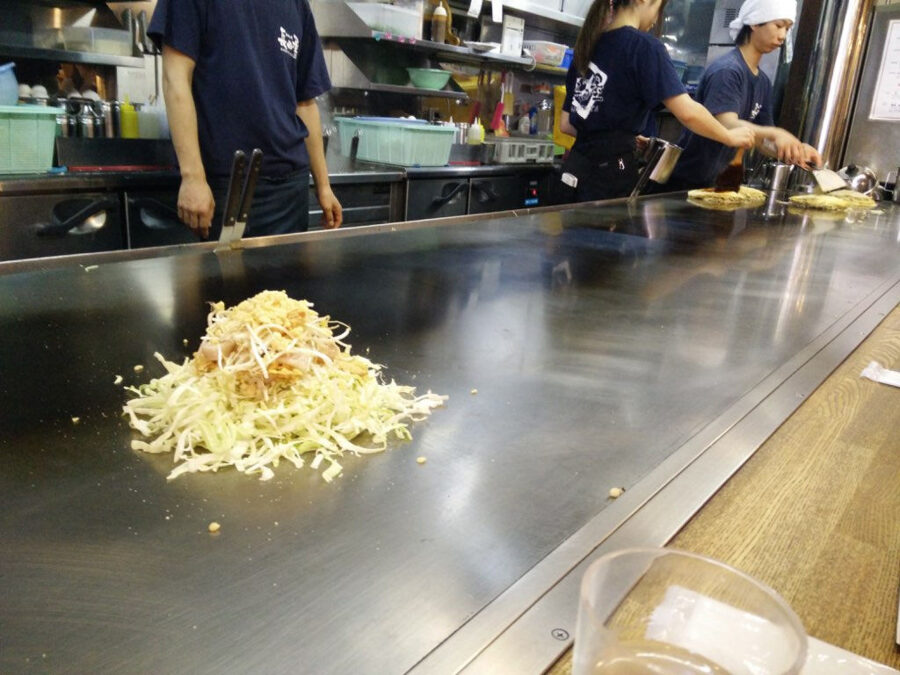
The short version for this guide: the style grew out of the same one-sen crepe as Osaka’s, sold from street stalls in Hiroshima’s burned-out centre from around 1950, and it stayed a layered dish because nobody there ever adopted the mixed method. About 80 percent of Hiroshima orders use Chinese-style noodles and most of the rest use udon. Ask for “soba” and you get the Chinese noodles, not buckwheat.
One warning that matters more than any recipe. Call it “Hiroshima-yaki” in Hiroshima and someone will correct you; the name spread from outside the prefecture in the 1970s and 1980s, and some older residents hear an echo of the city’s burning in it. In Hiroshima it is simply okonomiyaki, and the Osaka one is “Kansai-style”.
Modan-yaki: noodles in an Osaka pancake
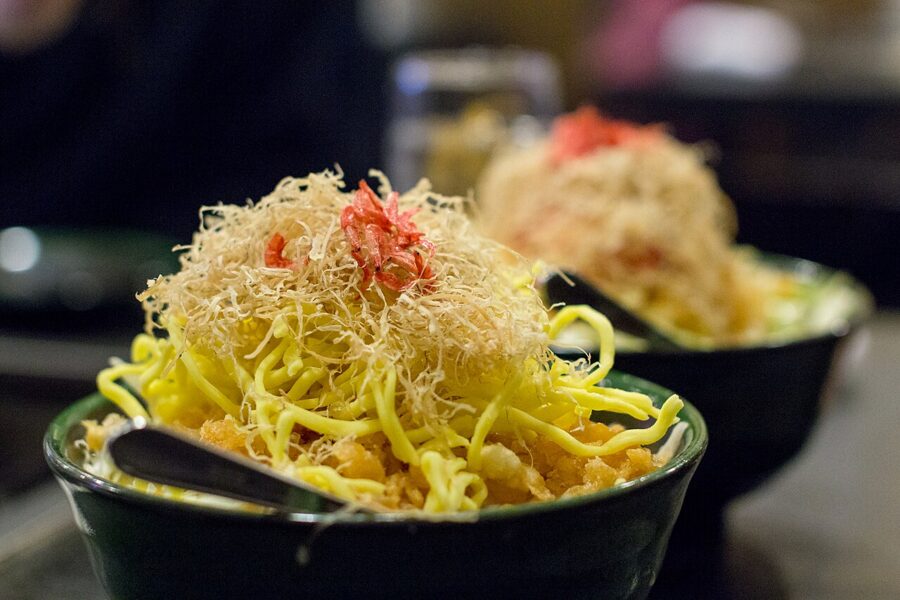
Modan-yaki is Kansai’s answer to wanting okonomiyaki and yakisoba at the same time: a mixed or layered okonomiyaki with a layer of fried Chinese noodles cooked into it. The name is usually read as the English “modern”, but Botejyu claims it began as moridakusan-yaki, “loaded-up yaki”, shortened over time. A Kobe shop is more often credited with the first version, in 1950, made with udon rather than Chinese noodles.
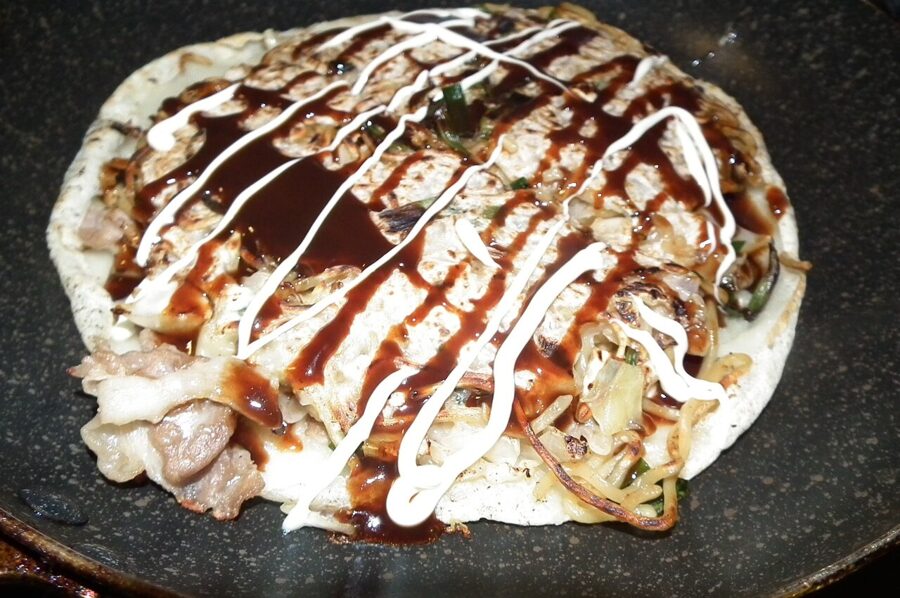
It differs from Hiroshima’s style in feel more than in ingredients. In Hiroshima the noodles are their own crisp layer; in a modan-yaki they meld into the batter. And to confuse things properly, Kiji in Umeda serves a “modan-yaki” that is fried noodles wrapped in an omelette with no okonomiyaki batter at all, so read the menu before you order.
Negiyaki: green onion instead of cabbage
Negiyaki swaps the cabbage for a heap of chopped green onion on a thin layer of batter, usually with suji-kon, beef tendon simmered with konnyaku. It is closer to the pre-war snack than modern okonomiyaki is, and because it predates the thick sweet sauce, it is traditionally finished with soy sauce, ponzu or a thin Worcestershire-style sauce.
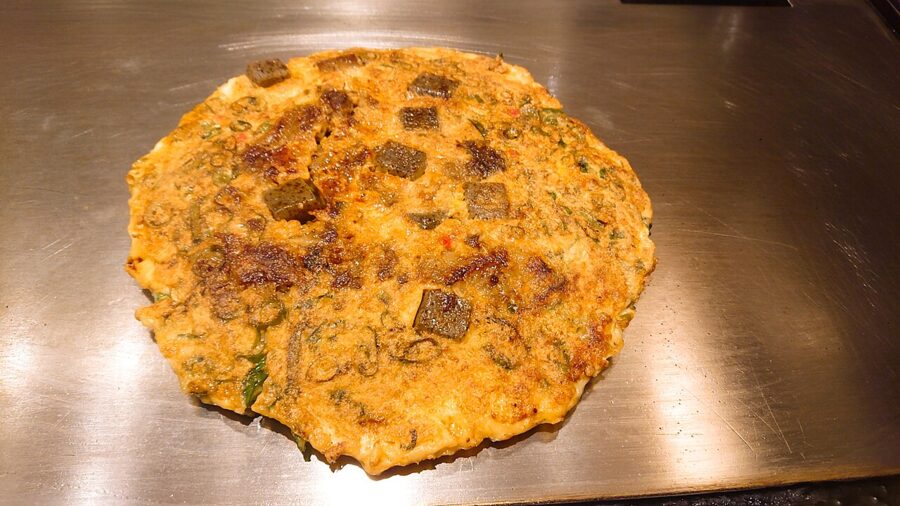
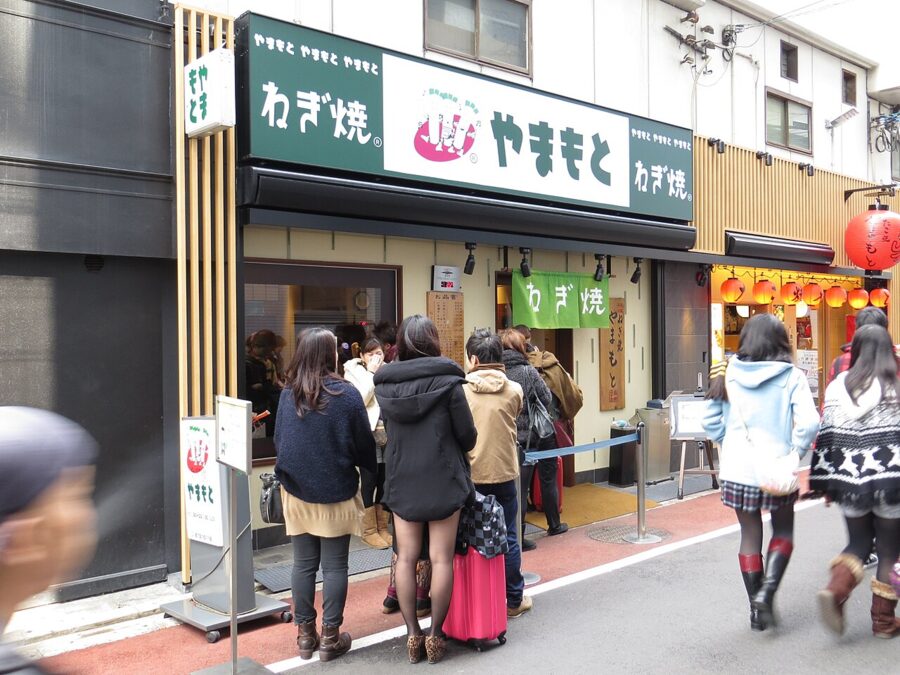
The modern version comes from Juso, one stop north of Umeda on the Hankyu line. Negiyaki Yamamoto, which opened in 1965, says the owner first made it as a meal for the children who helped out in the shop, piling on green onion because there was plenty of it. I’d order the suji-negi there before anything else.
Kobe’s nikuten and the old layered style
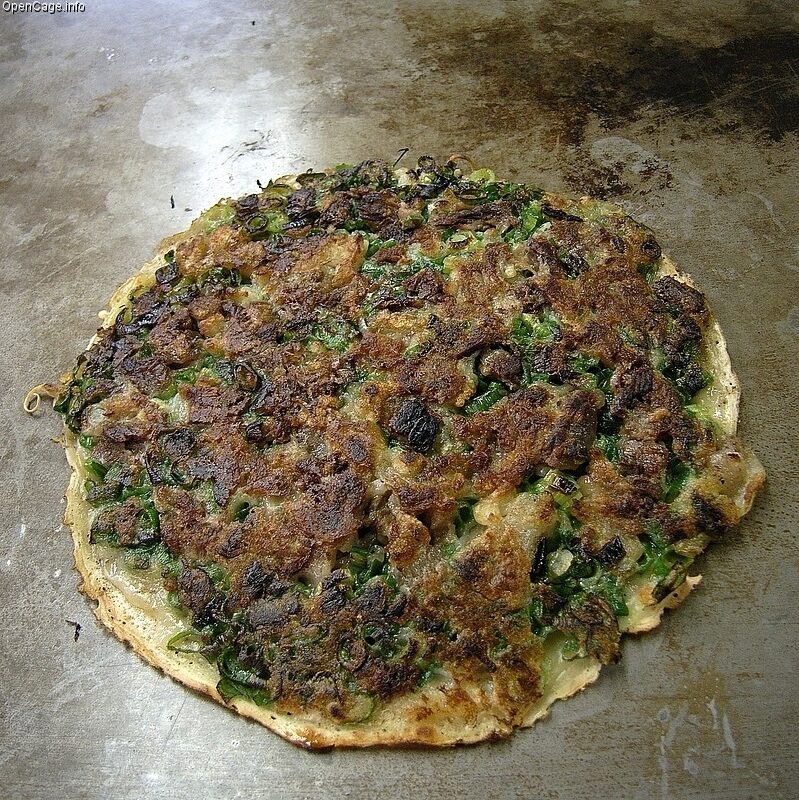
Kobe is the Kansai city that never fully switched to mixing. In its older districts, Hyogo, Nagata and parts of Chuo ward, okonomiyaki is still built in layers on a thin crepe without egg in the batter, a method locals call nikuten and which predates the Osaka style. The fillings lean on bokkake (beef tendon simmered with konnyaku), large clams and raw octopus, and the sauce is doro.
Kyoto, Kishiwada and the pre-war crepes
Several towns kept the one-sen crepe more or less as it was. Kyoto calls it beta-yaki, and the version with yakisoba or yaki udon added is manbo-yaki. In Gion, Issen Yoshoku sells a beefed-up version of the old snack with nine fillings and two eggs, which I cover with the Kyoto shops below.
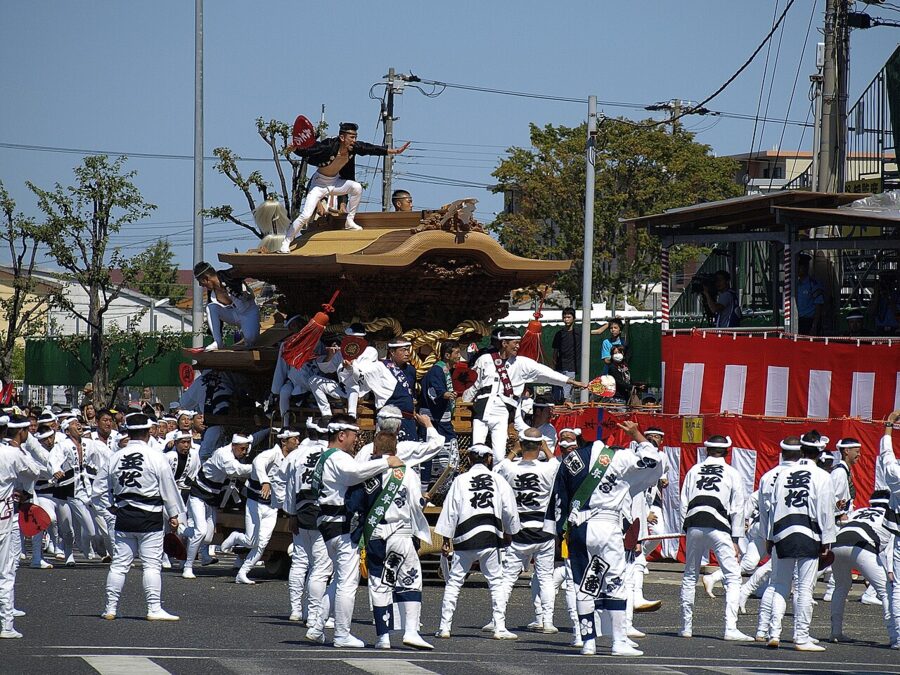
Kishiwada, south of Osaka and better known for its danjiri cart festival, has kashimin-yaki. The name joins kashiwa, Kansai dialect for chicken, and minchi, minced beef fat: a thin crepe topped with cabbage, lightly fried chicken and a scatter of beef fat that melts into everything.
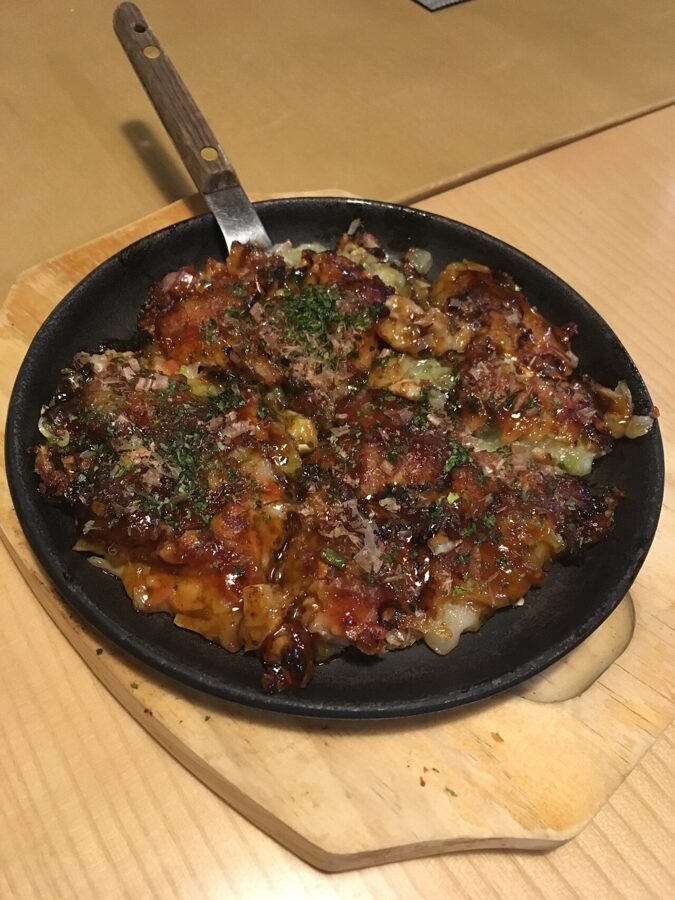
It is mostly served near the old Kishu Kaido road towards the coast rather than around Kishiwada Station, and some shops close or cut their menu on danjiri days.
Inside Hiroshima Prefecture: Fuchu, Onomichi, Mihara, Kure
Hiroshima Prefecture counted thirteen local okonomiyaki styles as of May 2025, and the best known outside it is Fuchu-yaki from Fuchu, an inland furniture town in the east of the prefecture. It is Hiroshima layering with minced meat in place of sliced pork belly, a swap made so children could afford it with pocket money. The fat from the mince fries the noodles until they crackle. Older menus simply list it as soba niku-tama; the name Fuchu-yaki was invented by the local chamber of commerce in 2006.
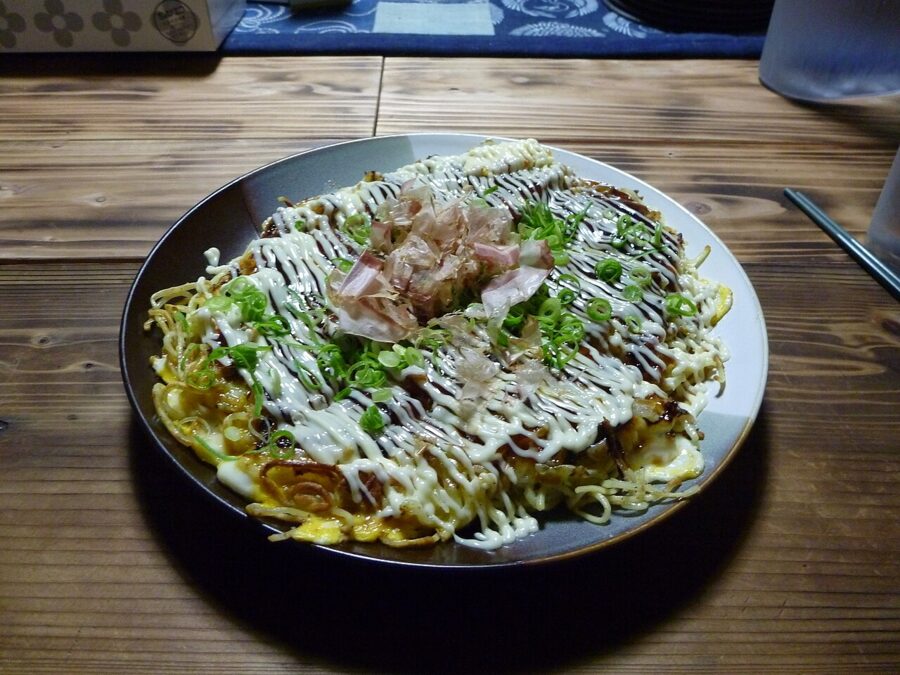
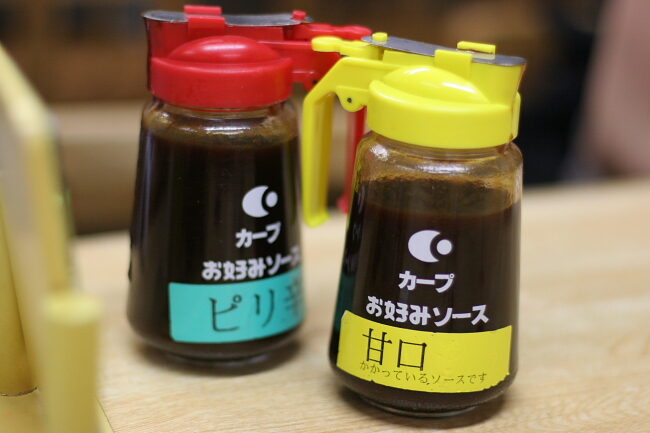
The coastal towns each add something. Onomichi puts chicken gizzards and squid tempura in; Mihara, a big poultry area, uses chicken livers and other offal and calls any okonomiyaki with noodles “modan-yaki”, as Kansai does. Kure folds its okonomiyaki in half into a half-moon, and Takehara, an old sake town, works sake lees and sake into the batter.
Kakioko: Hinase’s oyster okonomiyaki
Hinase, a fishing port in Bizen on the Okayama coast, started farming oysters seriously in the 1960s, and fishing families began putting the small or damaged ones into okonomiyaki instead of meat. The result is kakioko, short for kaki okonomiyaki, and it is packed: a heap of shredded cabbage, then oysters laid across the griddle, then more batter to seal them so they steam rather than shrink.
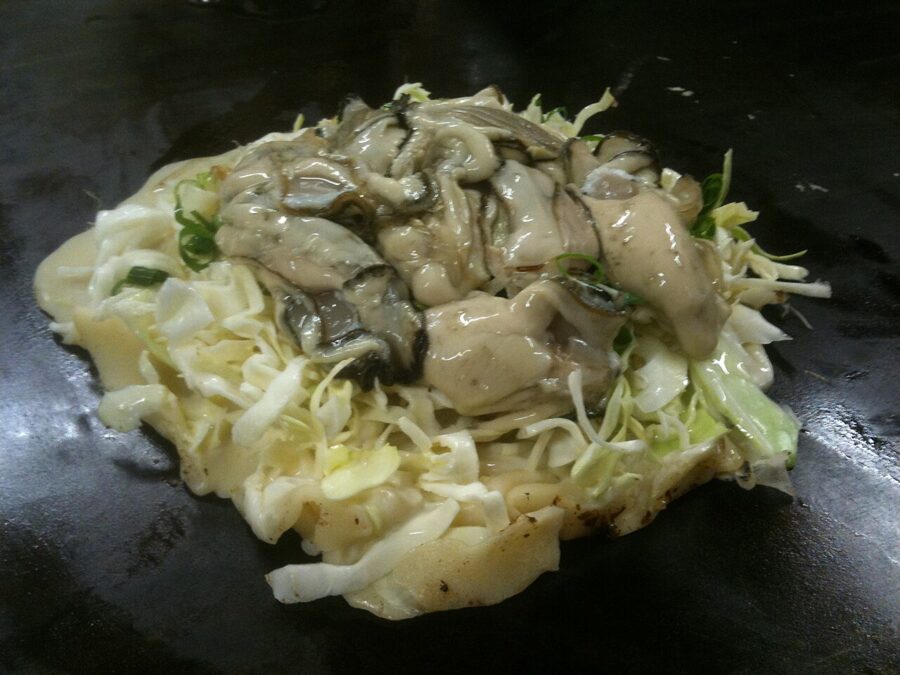
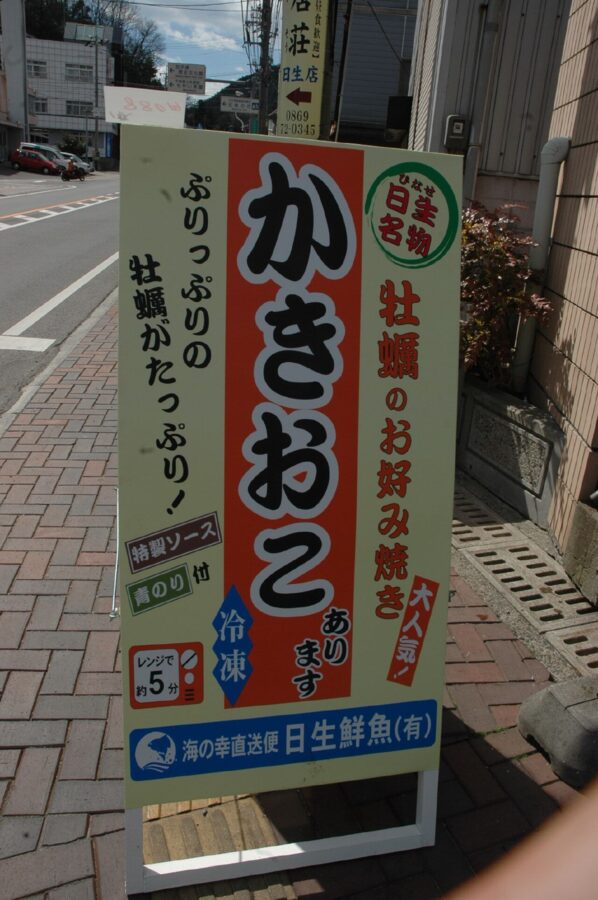
Around fifteen shops serve it, many of them around JR Hinase Station on the Ako Line, and a local group prints a new kakioko map each autumn. Fresh-oyster season runs from early November to early April; outside it, some shops use frozen oysters and others switch to ebi-oko, made with prawns.
Hamamatsu, Nagoya and the folded versions
East of Kansai the pancakes get thinner. Hamamatsu’s enshu-yaki is under a centimetre thick, often folded in three, and has chopped takuan, yellow pickled daikon, in the batter, a habit from the postwar years when farmers on the Mikatahara plateau grew daikon in bulk. The city is far better known for its gyoza, and unlike the gyoza, enshu-yaki isn’t sold as a souvenir, so few outsiders ever try it.
Nagoya’s festival okonomiyaki is folded in half and wrapped in foil so you can eat it walking. Further west, Tokushima puts sweet simmered kintoki beans into okonomiyaki, and the twin coal towns of Omuta and Arao call theirs dago. None is worth a journey on its own, but if you see one, order it.
Monjayaki, Tokyo’s runny cousin
Monjayaki, or just monja, starts with the same ingredients as okonomiyaki and then adds far more liquid: flour, Worcestershire-style sauce and a lot of dashi, so the batter is closer to soup than to pancake mix. It never sets into a round. You fry the solids, build a ring, pour the liquid into the middle and eat it off the griddle as it thickens, crisp where it touches the steel and molten above.
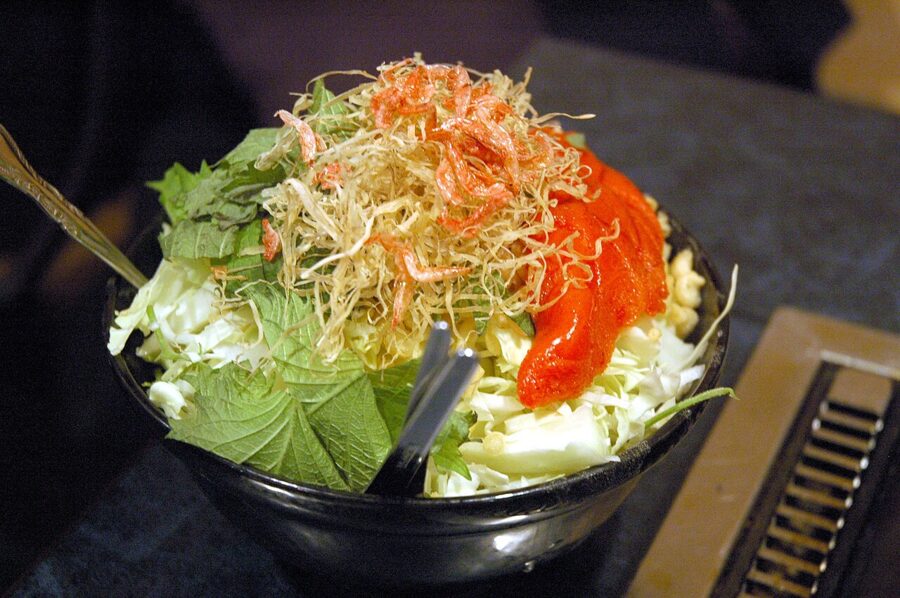
Its roots are older than okonomiyaki’s. Edo-era and Meiji-era Tokyo had moji-yaki, a sweet flour-and-syrup batter children dripped onto copper plates to write characters, and “monja” is almost certainly a corruption of “moji”. The savoury version took shape in the years after the war, when flour was rationed and a bowl was often just flour, water and sauce; cabbage, and with it the cabbage ring, only arrived from the mid-1950s.
For decades monja was children’s food. Sweet shops in Tokyo’s old downtown had a griddle in the corner until around the early 1970s, and kids paid pocket money to fight over space on it. Those shops have almost all closed, and monja moved to restaurants aimed at adults, at adult prices.
How to build the bank
The Tsukishima monja shops’ own association publishes the standard method, and it is simple once you’ve seen it. Oil the griddle and tip out the solids only, leaving the liquid in the bowl. Fry the cabbage and toppings while chopping them small with the spatula, which helps everything stick together later and brings out the sweetness of the cabbage.
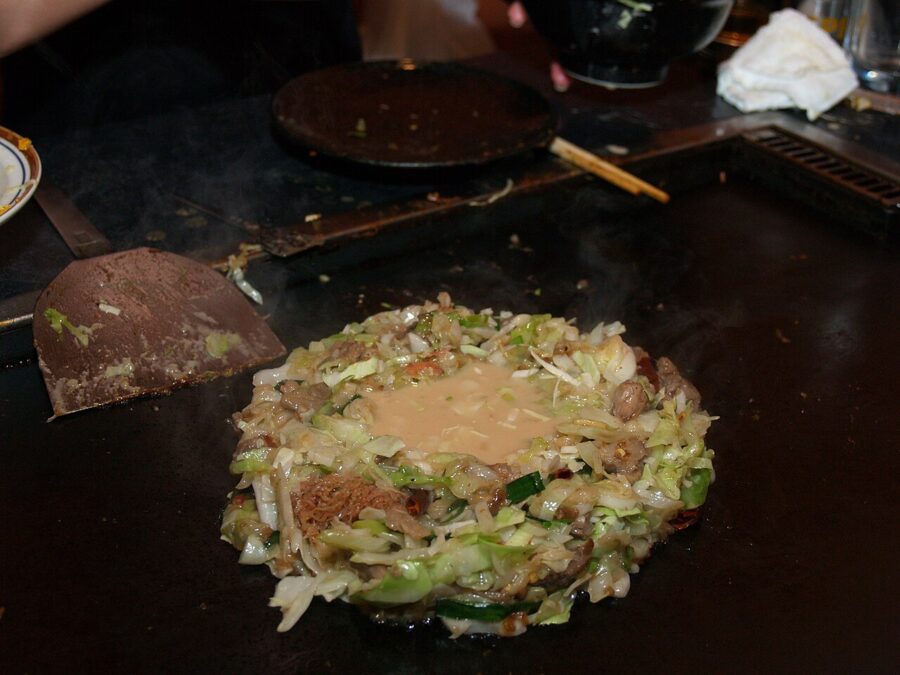
When the cabbage softens, shape it into a ring, the dote or bank, and pour the liquid into the centre. It thickens quickly; once it does, chop the bank into the batter and spread the whole lot thin across the griddle. When the surface starts to bubble, scatter aonori over it.
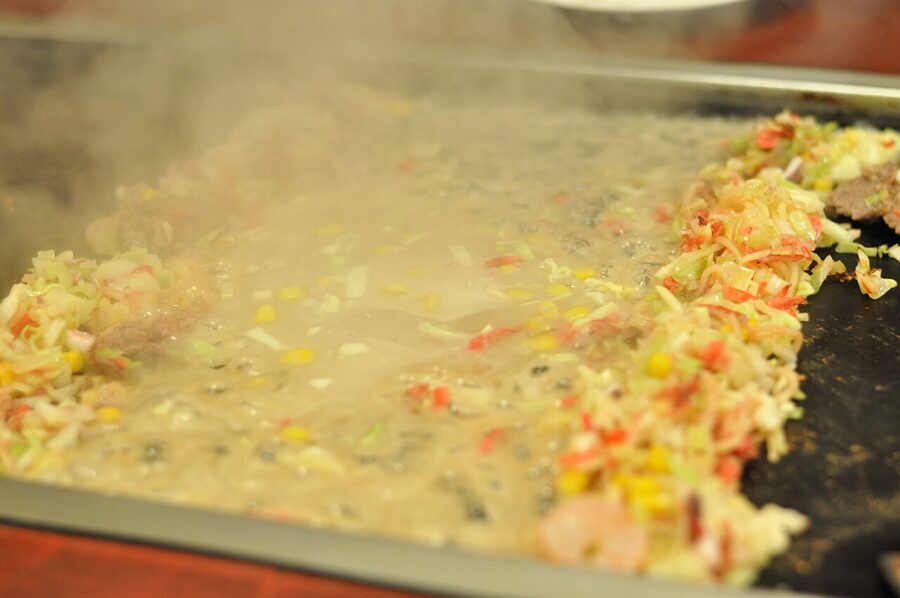
Then you eat, and this is the part that makes monja different. Each person takes a tiny spatula called a hagashi, about 2–3cm wide and 10–15cm long, presses a patch of monja against the hot steel for a few seconds and lifts it off, crisp underneath and soft on top. Don’t rush it: the browned crust is the whole point.
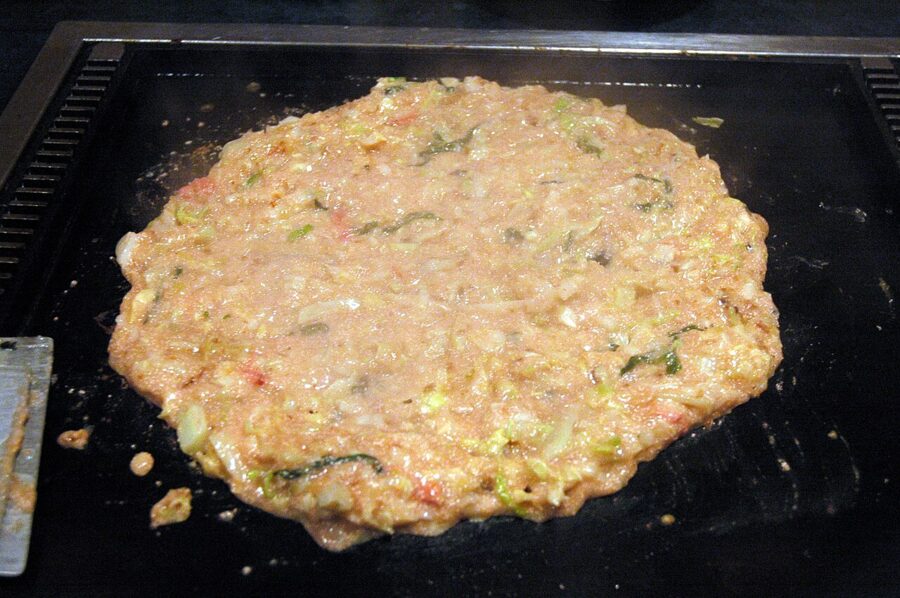
If any of that sounds like a lot, the association’s own advice is the same as mine: ask. Staff in its member shops will cook the first one for you, and it’s worth watching once before you try.
Tsukishima Monja Street
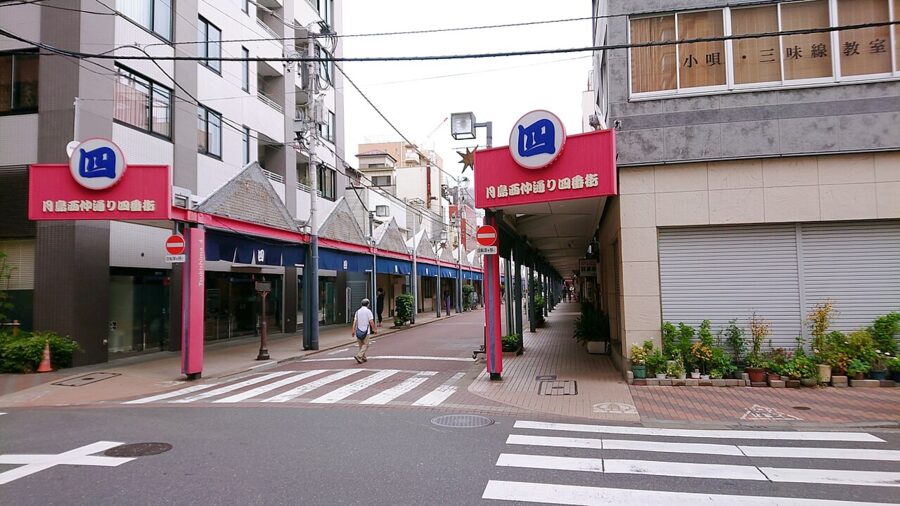
Tsukishima is an island of reclaimed land at the mouth of the Sumida River, completed in 1892 with silt dredged from Tokyo Bay. Its main shopping street, Nishinaka-dori, is better known as Monja Street, and around 70 monja and okonomiyaki shops line it and its side alleys, about 50 of them in the local association. Take the Yurakucho or Oedo line to Tsukishima Station and leave by Exit 7, which opens straight onto the street.
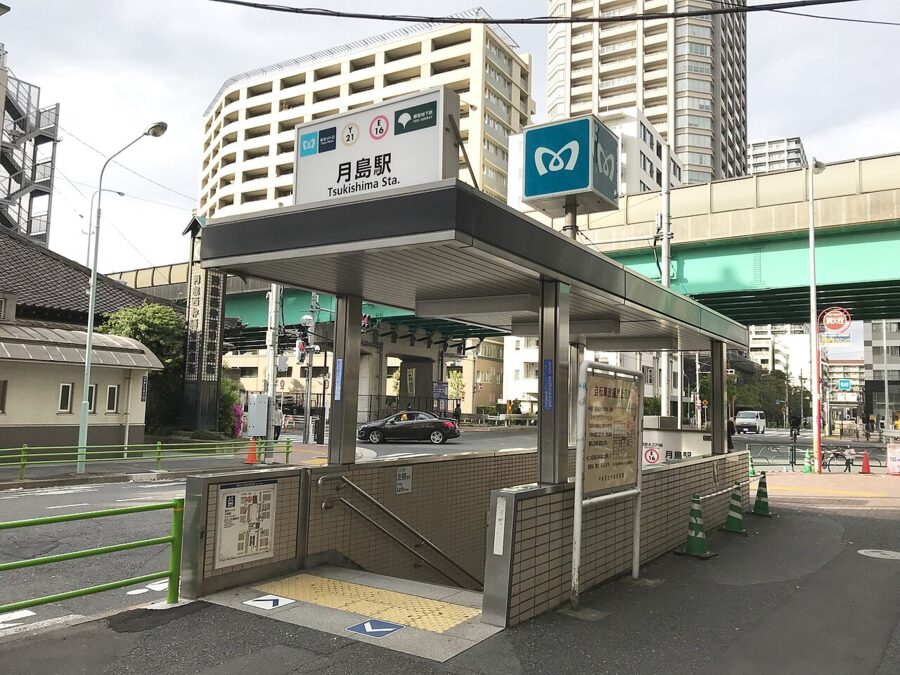
Most of those shops are not old. Monja became Tsukishima’s trade after the Yurakucho line reached the island in 1988: shoppers started heading to Ginza instead, the monja shops were the only businesses whose takings kept rising, and grocers and bakers switched trades during the late-1980s monja boom. A few older names remain.
Kondo, on the third block at Tsukishima 3-12-10, has been here since 1950 and started as a corner of a children’s sweet shop. Its tokusei Kondo monja comes loaded with squid, prawn, octopus, beef, noodles and corn, and it opens 17:00–22:00 on weekdays and 11:30–22:00 at weekends and on holidays; expect to spend ¥2,500–3,500 a head. It is about three minutes from Exit 10.
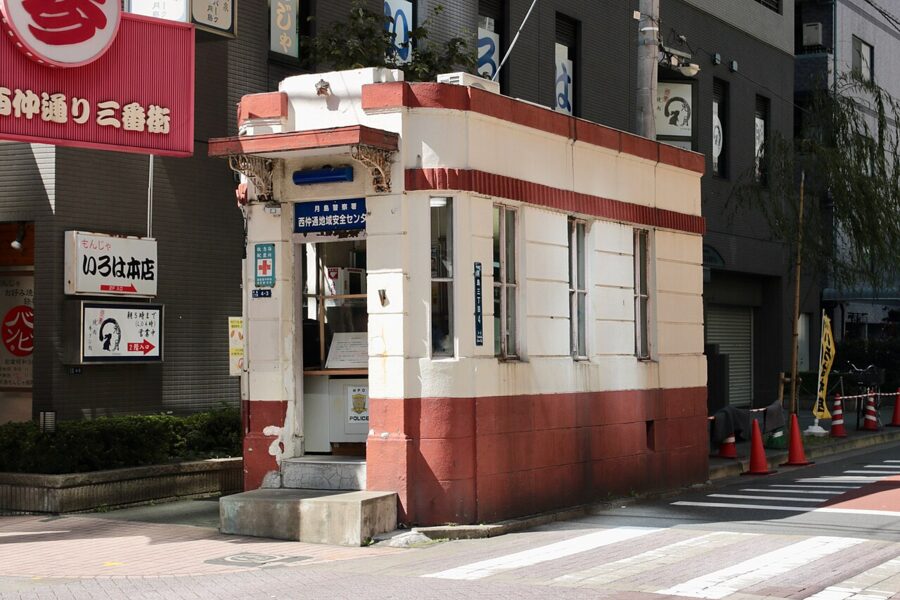
Iroha, founded in 1955, is up a flight of stairs at Tsukishima 3-4-5, three minutes from Exit 7, with windows over the street. Its sakura-ebi monja made with real dried sakura shrimp is ¥891 and a mix monja with beef, scallop and prawn is ¥1,228; it opens from 11:00 until midnight. For wheat allergies, Takarajima on the same street makes a rice-flour seafood monja, which is rare enough to be worth knowing.
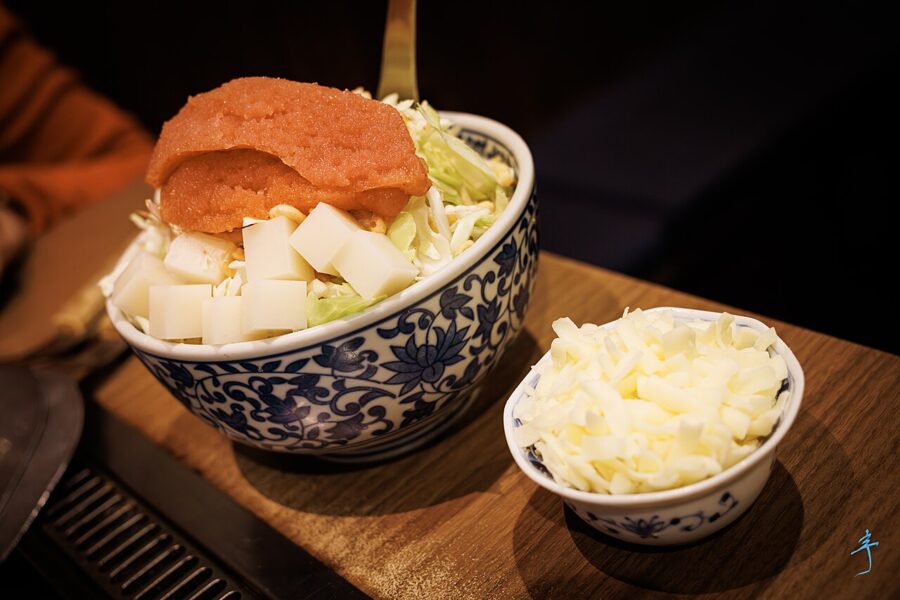
Tsukishima is not the only place to eat monja; it is also common across Tokyo’s old eastern wards and in Asakusa, and my round-up of Tokyo food neighbourhoods points you to the Sumida riverside around Asakusa. But it is the only place where a whole street does nothing else, which makes it the easiest first try.
Who holds the spatula?
Here is the practical question nobody answers before you sit down. In Osaka, Kobe and Hiroshima, assume the staff cook, and you either eat from the griddle in front of you or from a plate. In Tokyo, and in many cities where okonomiyaki isn’t the local speciality, assume you do it yourself unless the menu says otherwise.
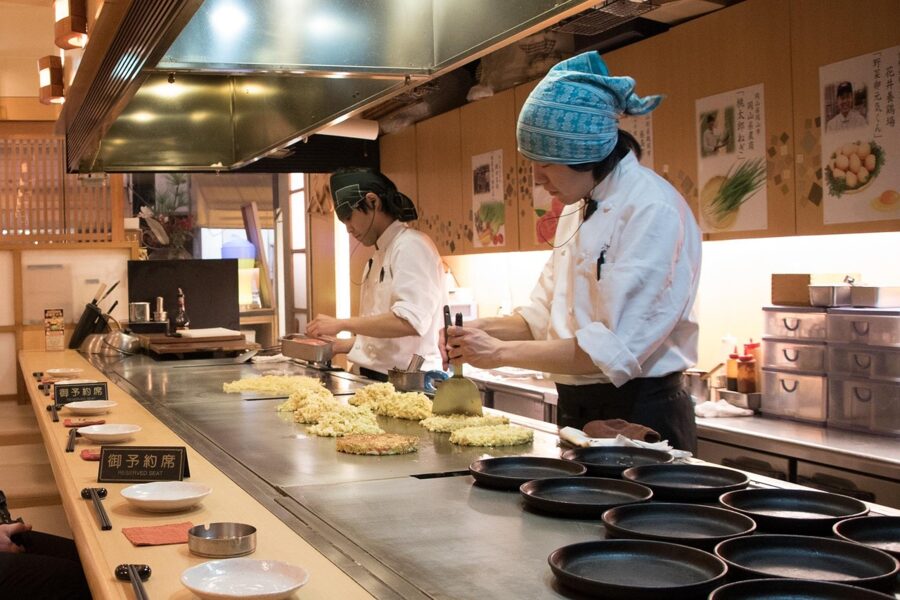
Osaka once cooked its own, too. The pre-war okonomiyaki rooms left customers alone with the griddle, and self-cooking only became the exception from the 1970s, as Chibo and other famous shops made the professional cook part of the draw; one Osaka explanation is simply that letting the shop do it is quicker. A few old houses never changed, and they are fun precisely because nobody hovers.
Cooking it yourself, step by step
When the bowl or cup arrives, mix from the bottom, lifting the batter through the cabbage to get air in, but stop as soon as everything is coated. Overmixing pulls water out of the cabbage and makes the batter runny. Make sure the griddle is hot and oiled before anything goes on it.
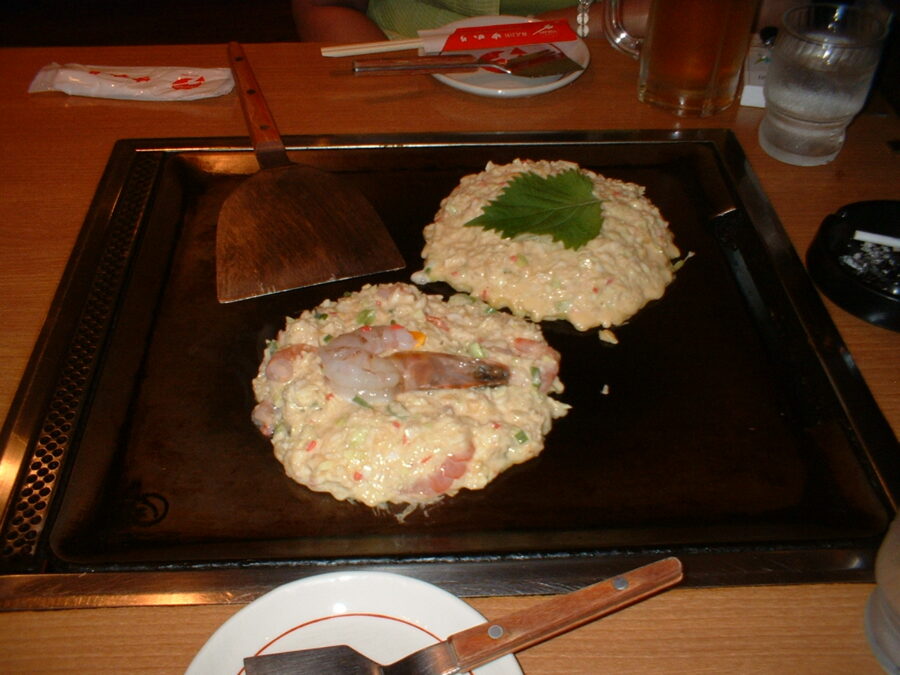
Pour the mix into a thick round, tidy the edges with the spatula, and lay strips of pork belly on top if you have them. Then wait. Four to five minutes on a medium heat, until the underside is browned and the edges look set, is about right.
Flip it in one go using both spatulas, one under each side, so the pork is now cooking against the steel. Don’t press it flat: in Osaka style that squeezes out the steam that keeps the inside soft. Give it another four or five minutes, flip it back so the pork is on top, and it’s done when the centre feels springy rather than wet.
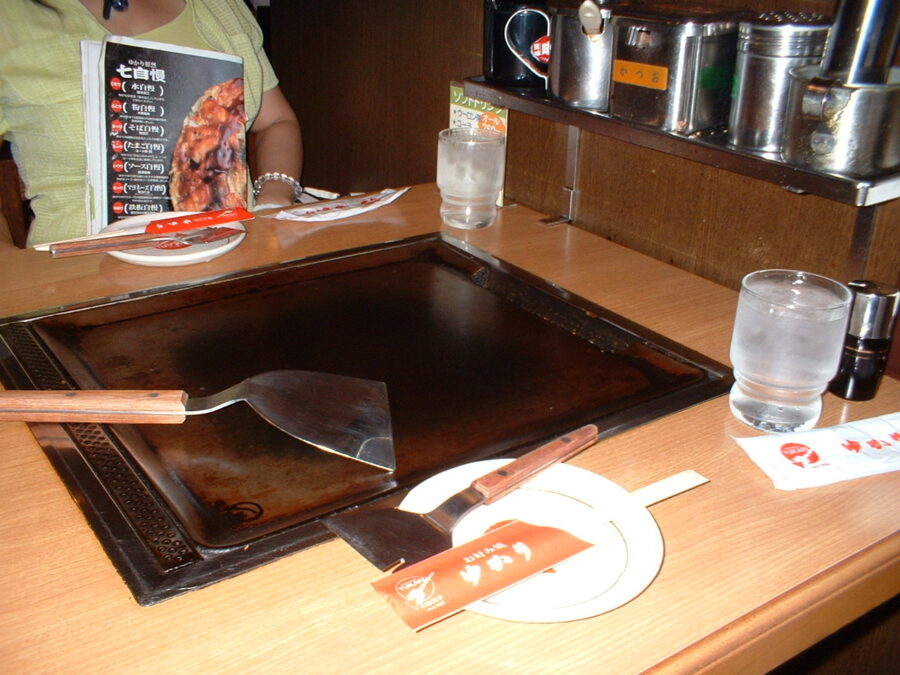
Brush on the sauce, add mayonnaise, then aonori and bonito, and cut it in a grid with the edge of a spatula. Eat from the griddle a square at a time, sliding the spatula under and lifting it straight to your mouth, or move pieces to your plate and use chopsticks. Both are normal.
Where to eat it in Osaka
Osaka Prefecture had 1,078 okonomiyaki shops in 2020, and the Dotonbori and Namba area holds the famous ones within ten minutes’ walk of each other. My Osaka street food guide covers the full Dotonbori circuit; below are the okonomiyaki shops I’d pick, including two that are worth leaving Namba for.
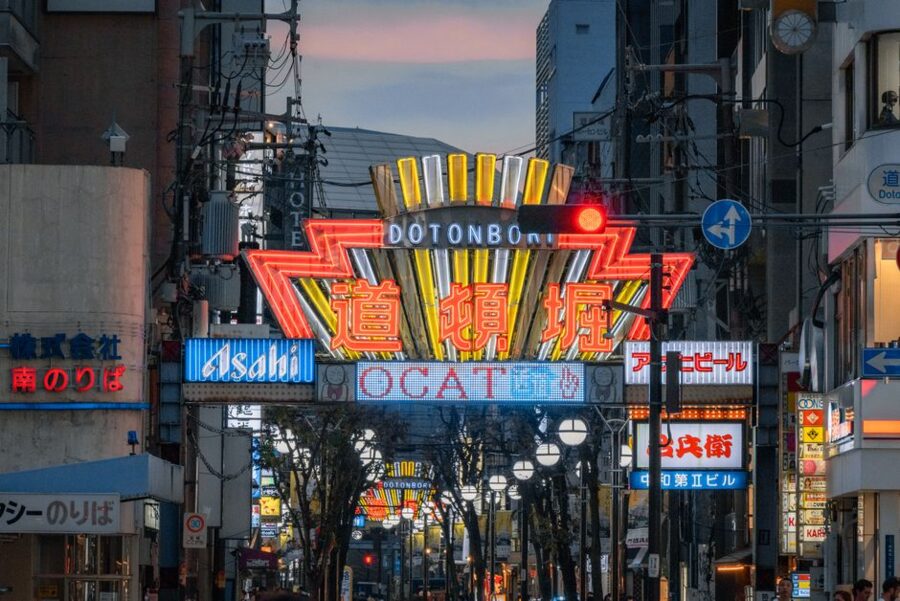
Mizuno, Dotonbori
Mizuno has been on Dotonbori for more than 70 years, just inside the arcade at Dotonbori 1-4-15, five minutes from Exit 15 of Namba Station on the Midosuji line. It is famous for the flour-free yamaimo-yaki and for its mix, which carries pork, squid, prawn, scallop, octopus and the shop’s own minced meat, with oysters in winter. It is also one of the few places that still makes the old yoshoku-yaki crepe, so you can taste the pre-war version and the modern one side by side.
It opens 11:00–22:00 with last orders at 21:00, and since February 2026 it no longer closes on Thursdays. Weekday lunch, 11:00–15:00, has a cheaper set menu.
Kiji, under the tracks at Umeda
Kiji’s main shop is a small counter upstairs in Shin-Umeda Shokudogai, the warren of eating places under the railway tracks beside Hankyu Osaka-umeda Station that opened in 1950. The family ran a stand-up bar there from 1954 and switched to okonomiyaki in 1969, and the current owner is the third generation. Trains rumble overhead the whole time you eat.
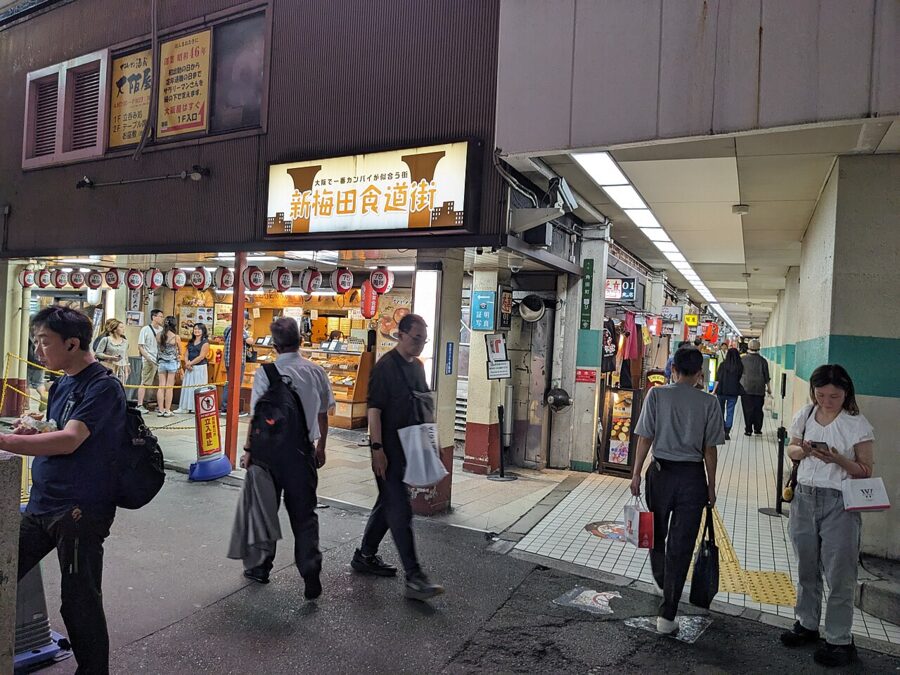
The pancakes are plain in the best sense: soft inside, crisp outside, nothing trying too hard. Kiji’s best seller is its own idea of modan-yaki, fried noodles wrapped in a dashi omelette that started life as a staff meal. It takes no reservations and only takes cash, so bring yen and go outside the lunch peak.
Hatsuse, Sennichimae: private rooms, your own griddle
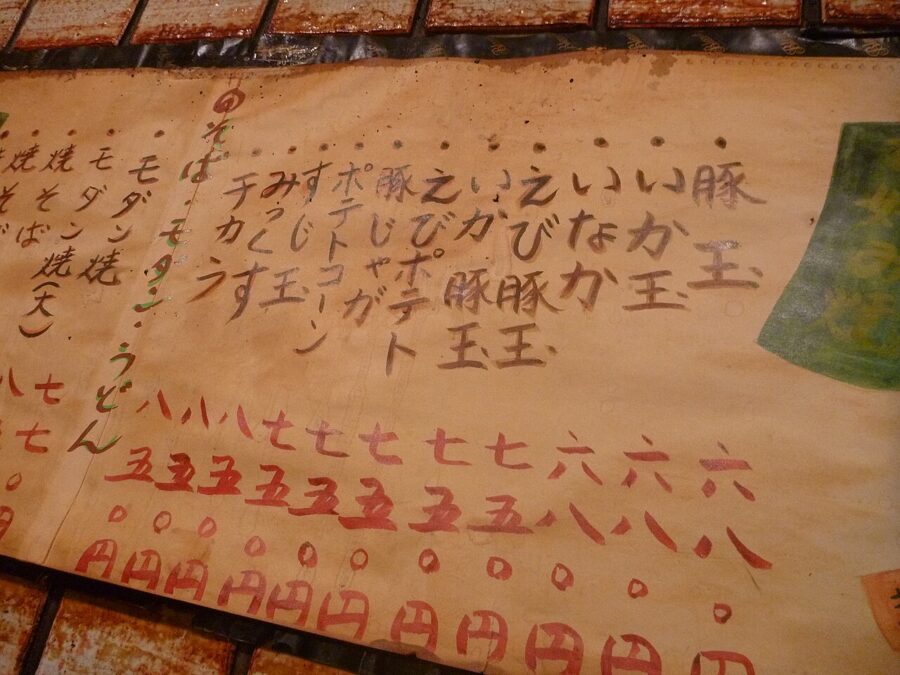
If you want to cook, go to Hatsuse. It traces itself to an inn in Sennichimae in the late Meiji era, reopened as a canteen in 1945, and every table is a private room, from two-person booths to a room for forty, each with a griddle and nobody looking over your shoulder. That is about as close as you’ll get to the pre-war Tokyo okonomiyaki rooms.
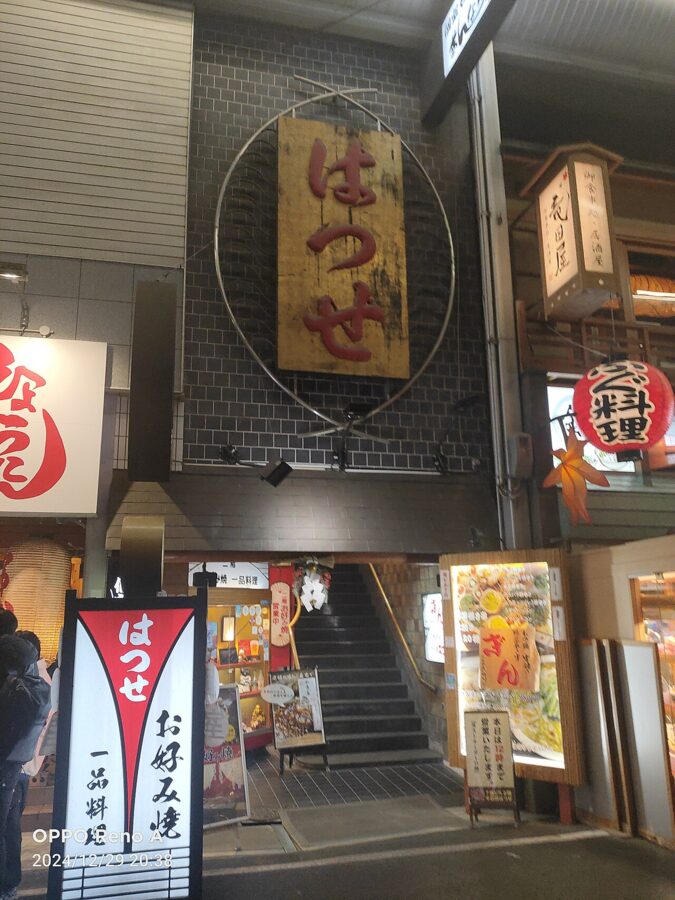
Hatsuse’s own twist is a double sauce: a thin Worcestershire-type sauce first, then a thick sweet one on top. A mix of pork, squid and prawn is ¥1,247, a pork modan-yaki ¥1,133, and it opens every day, 11:30–24:00 on weekdays and 11:00–24:00 at weekends and on holidays, with last orders at 23:00. It’s at Namba Sennichimae 11-25, three minutes from Exit B21 of Namba Station.
Yamamoto, Juso: the negiyaki original
For negiyaki, go to where it started. Yamamoto’s main shop is at Juso-honmachi 1-8-4, three minutes from the west exit of Hankyu Juso Station, one stop from Osaka-umeda on any of the three Hankyu lines. It has twenty counter seats, takes no bookings and opens 11:30–21:00 (last orders), closing on irregular days.
Suji-negi, with beef tendon, is ¥1,400; pork negiyaki is ¥1,170, and the full high deluxe with squid, beef, pork and tendon is ¥2,090. If Juso is out of the way, Yamamoto has a branch at Umeda Est near JR Osaka Station and a counter inside the shinkansen gates at Shin-Osaka, which is the best last meal before a train I know of in the city.
Fukutaro and Chibo
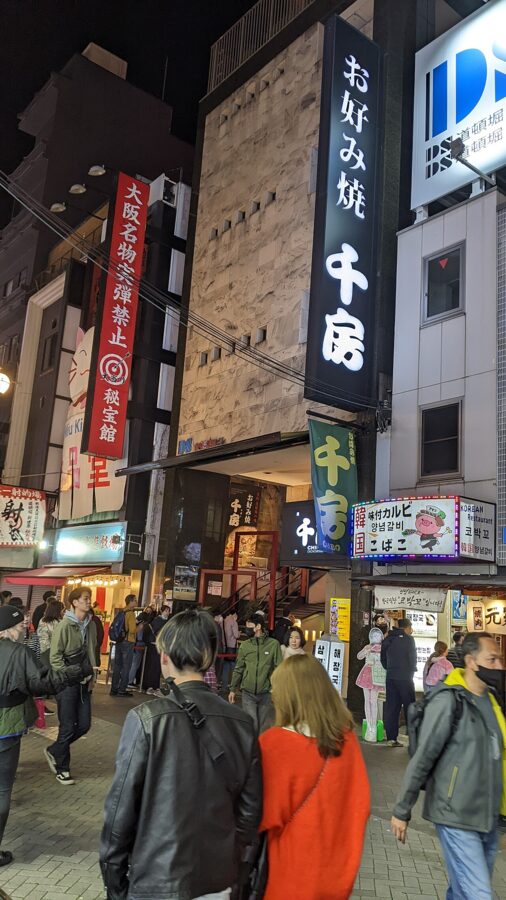
Fukutaro, at Sennichimae 2-3-17 a few minutes from Nippombashi Station, is known for suji-negiyaki piled with green onion and beef tendon and for a soft, fluffy pork okonomiyaki; expect to queue in the evening. Chibo is the polished option: the chain that took okonomiyaki upmarket from 1973, with a whole building on Dotonbori at 1-5-5 and a dependable mix. I’d go to Chibo with a group and to Fukutaro alone.
Tokyo, Kyoto, Hiroshima and the long way round
Outside Osaka, the places worth planning around are the ones that show you something Osaka can’t: the oldest okonomiyaki shop in Japan, the pre-war crepe, the layered style at its source, and the oyster version in season.
Sometaro, Asakusa
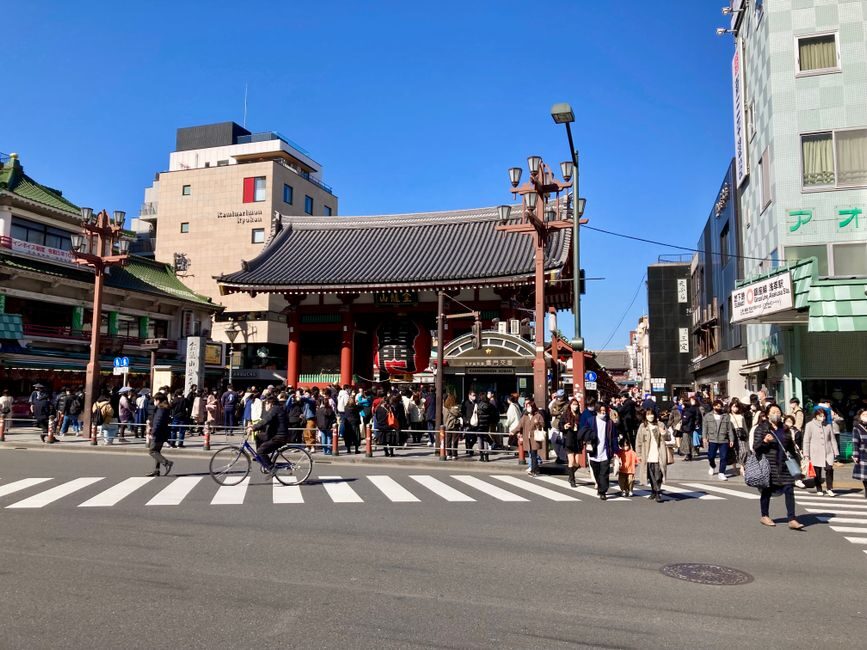
Sometaro, at Nishi-Asakusa 2-2-2 near Exit 3 of Tawaramachi Station on the Ginza line, opened in the late 1930s and is often called the oldest okonomiyaki shop still running. You cook your own, Tokyo style, and the menu keeps pre-war dishes you won’t find elsewhere, including osome-yaki, made the old layered dondon-yaki way, and a green-onion okonomiyaki made with white leek instead of cabbage. The novelist Takami Jun set part of his 1939 novel Ikanaru Hoshi no Moto ni in a shop modelled on it.
Issen Yoshoku, Gion
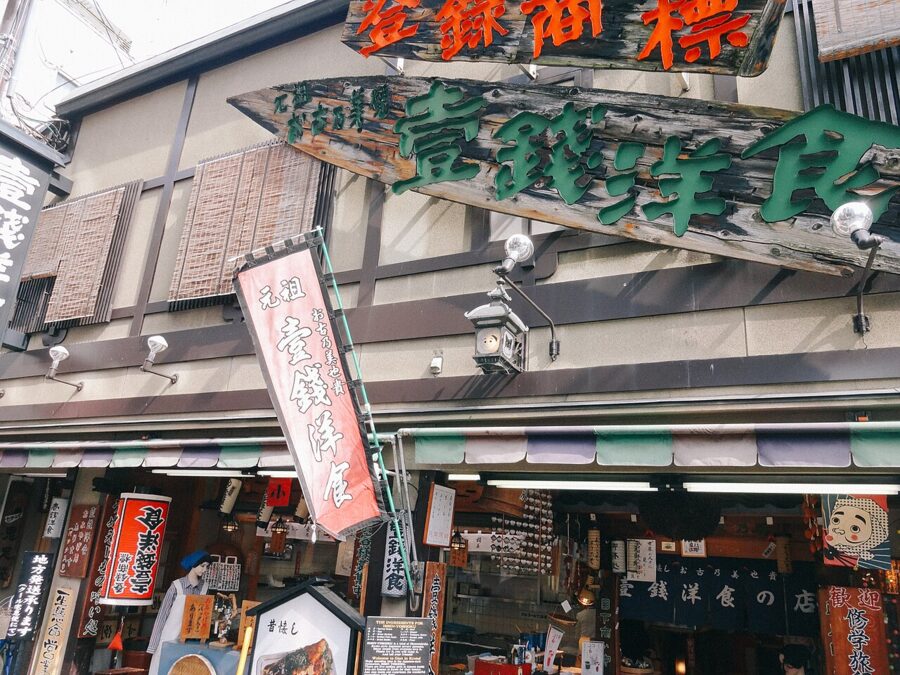
Issen Yoshoku, at Gion-machi Kitagawa 238, two minutes from Gion-Shijo Station on the Keihan line, has sold one thing since 1972: a crepe with nine fillings, including beef, konnyaku, chikuwa, green onion and sakura shrimp, plus two eggs, for ¥950. It is firmly on the tourist trail and you smell the sauce from the street, and I’d still go once, because it is the only easy place to taste the one-sen snack that led to everything else.
For the rest of the city’s food, including the Kyoto-style okonomiyaki around Sanjo and Pontocho, see my guide to what to eat in Kyoto.
Hiroshima and Okonomimura
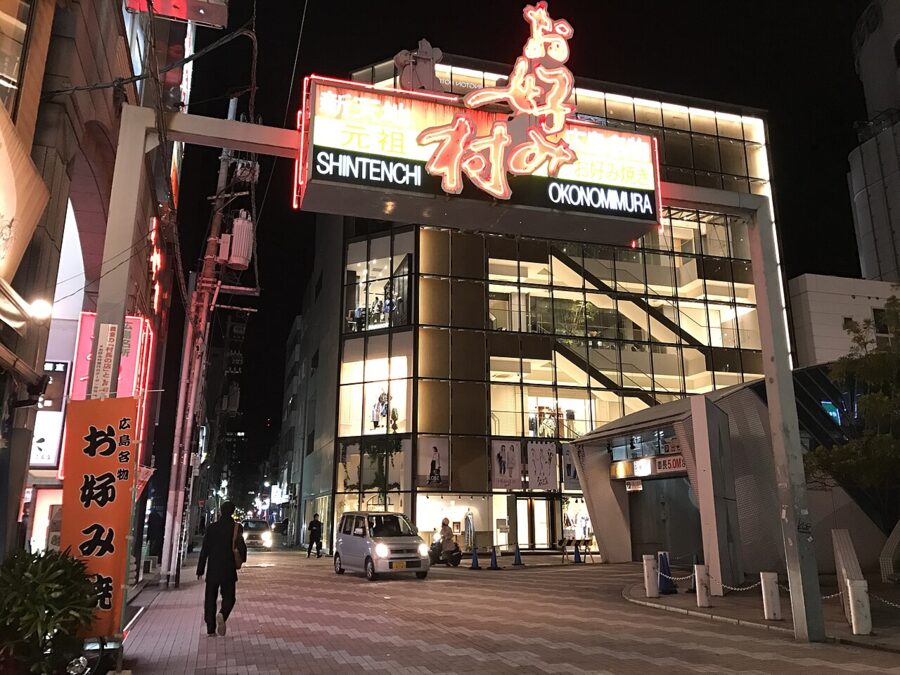
Okonomimura, in Shintenchi a few minutes’ walk from Hatchobori tram stop, collects more than twenty Hiroshima-style counters on three floors of one building, the descendant of the street stalls that set up nearby around 1950. It’s the easiest introduction for a first visit. My Hiroshima guide has the full picture.
Hinase, for kakioko
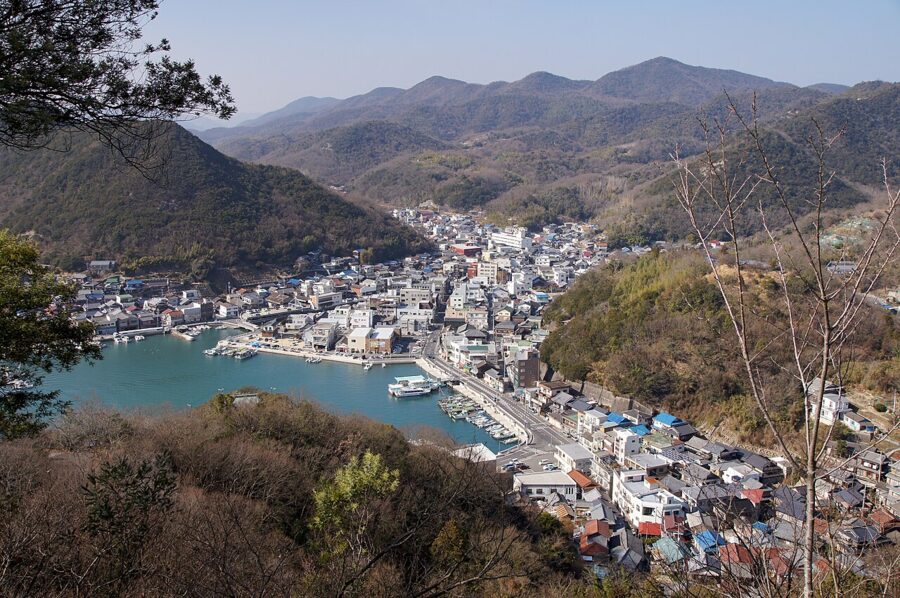
Hinase is on the JR Ako Line east of Okayama, and it makes an easy half-day from Okayama between November and March. Pick up the kakioko map at JR Okayama Station or from the Bizen tourist association, pick any shop with a banner, and order the kakioko. In summer, expect prawns or frozen oysters rather than fresh ones.
Prices, etiquette and what to skip
Okonomiyaki is still cheap food. A standard pork okonomiyaki costs about ¥950–1,250 in Osaka, a deluxe mix ¥1,400–2,100, and a Hiroshima-style order with noodles ¥850–1,200. Monja runs ¥900–1,600 a bowl, but a Tsukishima dinner with drinks usually ends up ¥2,500–3,500 a head, because a group orders several bowls and a round of okonomiyaki on the side.
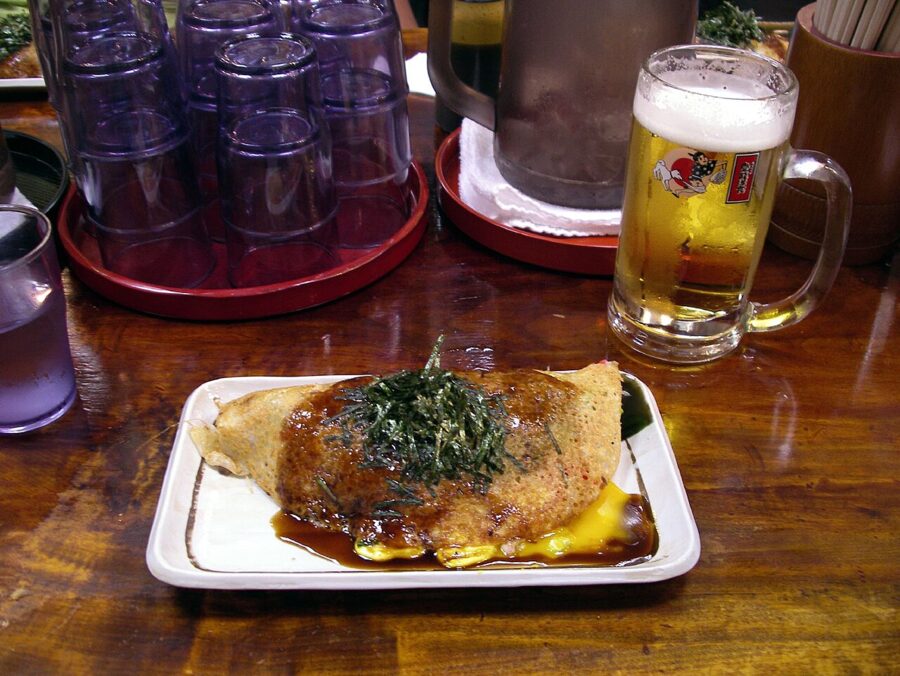
Drink-wise, okonomiyaki and beer is about as fixed a pairing as Japan has, and plenty of shops run more like an izakaya after dark, with teppan side dishes such as tonpei-yaki (pork in an omelette), stir-fried tendon and yakisoba. If you like your beer more interesting than a draught lager, my guide to Japanese craft beer has bars in both Osaka and Tokyo.
Manners at the griddle
- Order at least one dish per person. Busy counter shops expect it, and some say so.
- Eat from the griddle with the small spatula if you can. It keeps the food hot, and in Hiroshima it is how the dish is meant to be eaten.
- Don’t press an Osaka okonomiyaki flat. Hiroshima and Fuchu cooks press theirs on purpose; that’s a different dish.
- Turn the griddle down or off when you’ve finished. Sauce left on a hot plate burns and smokes out the table.
- Vegetarians should know that the batter usually contains fish dashi, bonito goes on top, and the leading sauces contain meat and seafood extracts. A vegetable okonomiyaki with katsuobushi nashi helps, but it isn’t fully meat-free.
Skip this
Skip the “Japanese pizza” line, whoever uses it. It is nothing like pizza, and a shop that sells itself that way is telling you who it’s cooking for. Skip pre-made okonomiyaki from convenience stores and frozen packs too, unless you’re desperate on a late train.
I’d also skip trying to eat okonomiyaki “properly” in every city on one trip. Pick one mixed Osaka pancake, one layered Hiroshima one if your route goes that way, and one night of monja in Tsukishima. That’s three different dishes under one name, and between them they explain the rest.
Go hungry, take cash, and sit at the counter if you can. Watch what the person next to you orders, then order the same thing with an extra egg.