Malatang in China: How to Order the Pick-Your-Own Spicy Soup, the Regional Styles and the Mala Xiang Guo Cousin
At a malatang shop in China, a bean sprout costs exactly as much as a slice of beef. The sign on the fridge says so in four characters, 荤素同价 (“meat and veg, same price”), and the steel bowl in your hand doesn’t care what you put in it. It only cares what it weighs. Most people learn this at the till, the first time a bowl of cabbage and glass noodles comes to more than lunch should.
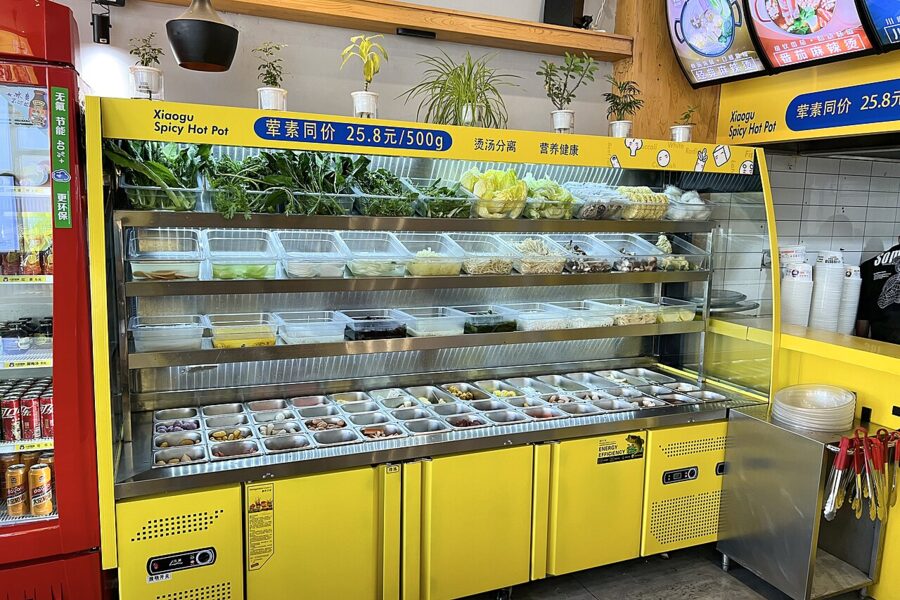
When I lived in Shenzhen, malatang (麻辣烫) was the default lunch for anyone eating alone, and it still is across most of the country. You pick, they weigh, they boil, you eat, and the whole thing takes about fifteen minutes. That’s the version almost everyone outside China knows, mostly through two chains from Harbin. But the dish is older and odder than the chains, and it changes as you cross the country.
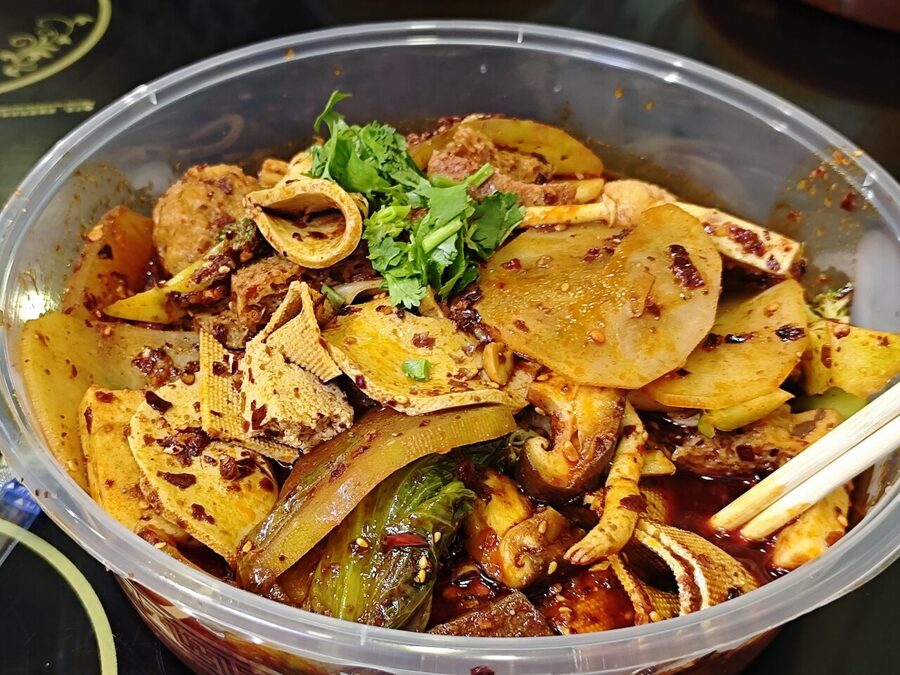
In Sichuan it’s a pot of skewers with a dry chilli dip. In the northeast it’s a milky bone broth thickened with sesame paste. In Tianshui, a small city in Gansu, it’s potato noodles under a ladle of fried chilli, and in 2024 it drew people from all over the country to eat it. Then there’s mala xiang guo (麻辣香锅), which uses the same fridge and the same scale but skips the soup altogether.
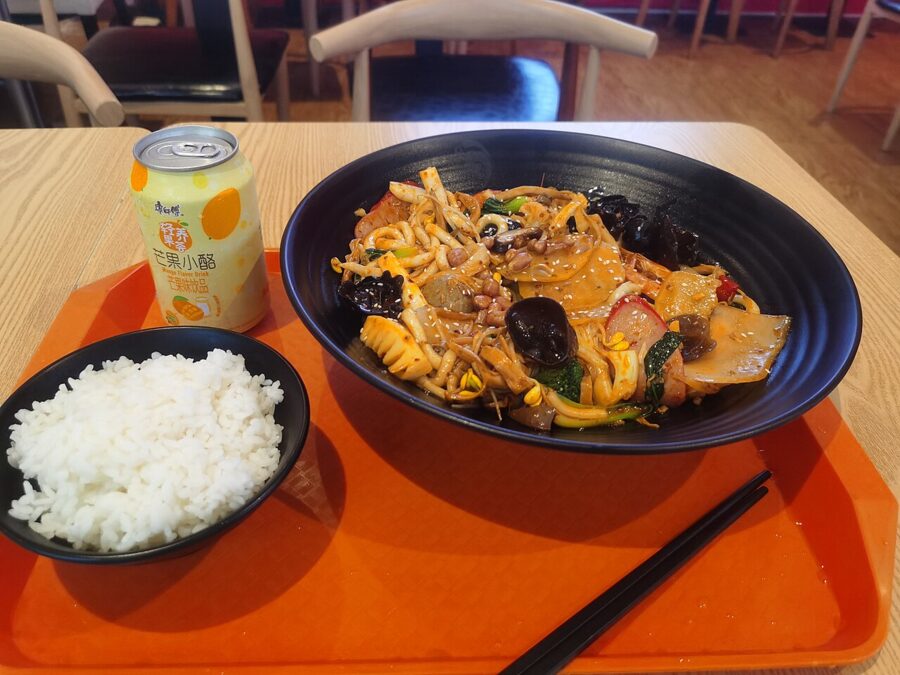
This guide covers how a shop works, the words you need at the counter, the regional styles worth a detour, what to put in the bowl and what to leave in the fridge, and what it all costs in 2026. If you want the big shared pot rather than the bowl for one, my hot pot guide covers that side of the family.
| Style | Where it’s from | Base | How you pay | Order it if |
|---|---|---|---|---|
| Sichuan malatang | Leshan, Sichuan | Red chilli broth, dry chilli dip | By the skewer | You want the original, and heat with numbing pepper |
| Dongbei malatang | Harbin and the northeast | Bone broth, sesame paste, little or no numbing | By weight | You want comfort food, or you’re at a chain anywhere in China |
| Tianshui malatang | Tianshui, Gansu | Light broth, poured chilli oil, potato noodles | By the skewer | You like chilli flavour more than chilli pain |
| Malaban | Fushun, Liaoning | No soup: sesame, vinegar, sugar, chilli | By weight | It’s 30°C outside |
| Mala xiang guo | Chongqing, popularised in Beijing | Wok-fried in chilli oil, no soup | By weight, rice extra | You’re sharing, or you want something to eat with rice |
In This Article
- How a malatang shop works
- Bowl, tongs, fridge
- The scale and the price sign
- Broth and spice
- The sesame-sauce question
- Paying and waiting
- Where it started: salt, skewers and the Min River
- Niuhua today
- How it went national
- The Dongbei bowl, and the two chains that took it everywhere
- Bone broth, sesame paste, and lots of tofu
- Yang Guofu and Zhang Liang
- Malaban: the dry one from Fushun
- Tianshui: the bowl that went viral in 2024
- What makes it different
- Gangu chilli, Qin’an pepper, Dingxi noodles
- Ha Haiying and the malatang courtyard
- Getting there
- Malatang elsewhere in Gansu
- Mala xiang guo: same fridge, no soup
- How to order it
- And maocai?
- What to put in the bowl
- Noodles: pick one
- Tofu, balls and the processed aisle
- Greens and mushrooms
- What to leave in the fridge
- Chains, small shops and what a bowl costs in 2026
- Chain or local shop?
- Hygiene
- Where to eat it
- Niuhua, Leshan, for the original
- Tianshui, for the 2024 style
- Harbin and the northeast, for the chains at home
- Beijing, Shanghai, Guangzhou and Shenzhen
- Skip this
How a malatang shop works
Every chain shop in China runs the same five steps, and most independent ones copy them. Learn them once and you can eat at any of the well over 100,000 malatang shops in the country without saying more than a dozen words.
Bowl, tongs, fridge
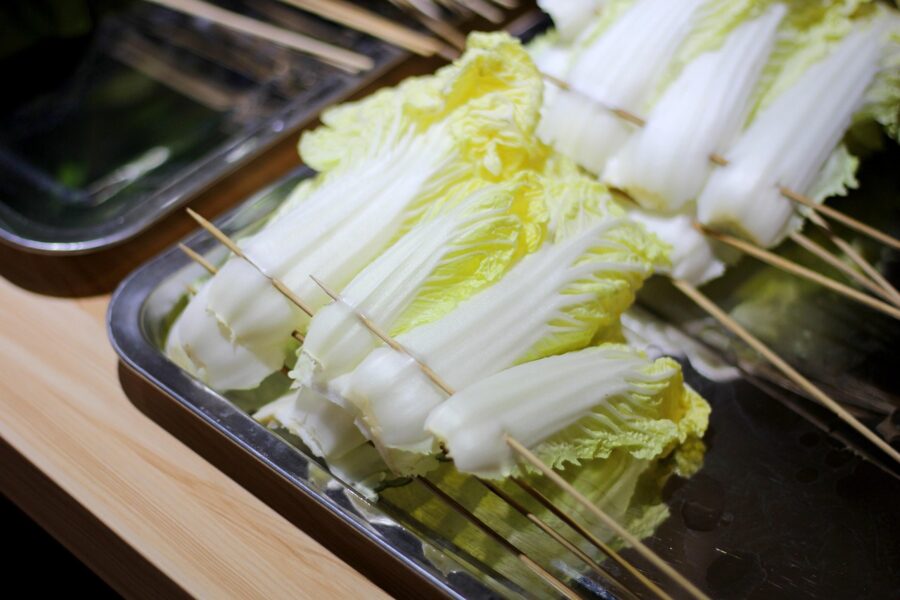
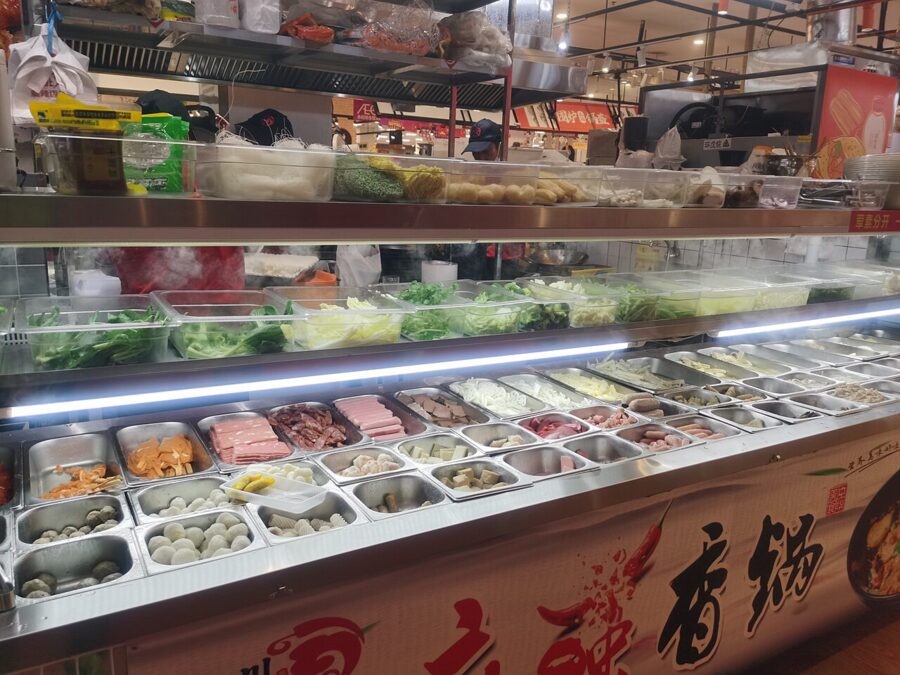
Grab a bowl (usually a stainless-steel basin or a plastic tub lined with a bag) and a pair of tongs from the stack by the door. Then walk the fridge. Chain shops keep dozens of ingredients on open chilled shelves: leafy greens and mushrooms at one end, tofu in its many forms in the middle, then the meatballs, sliced meat and noodles.
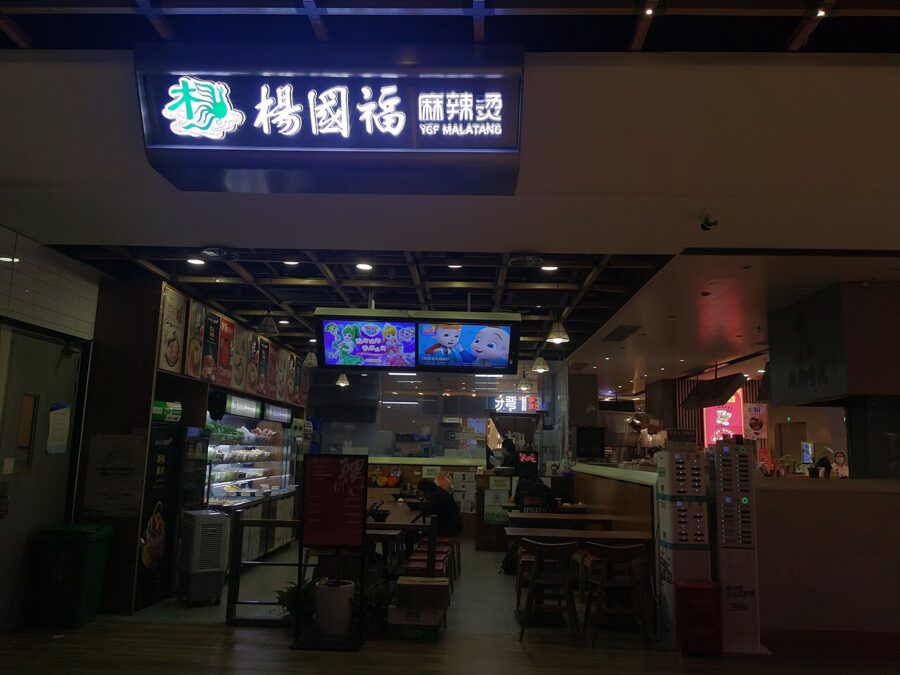
Take a little of many things rather than a lot of a few. Everything shrinks or swells in the pot (greens wilt, noodles drink broth), and a bowl that looks modest in the fridge comes back full. Noodles usually sit at the end of the run, so you see the rest of the bowl before you choose them.
The scale and the price sign
At the till the cashier sets your bowl on a scale. Almost every chain prices meat and vegetables the same, and the sign is written in one of three ways: per 50 g (one liang, 两), per jin (斤, 500 g), or now and then per kilo. The per-50 g sign is the one that catches people out, because ¥3.28 looks like nothing until you multiply by ten.
In April 2026 a Yang Guofu branch on Huangsi Street in Beijing charged one customer ¥97.21 for a bowl after its scale was set to price by the kilo while the sign said jin, which doubled the bill. The shop blamed an operator error. It’s rare, but it’s why it’s worth glancing at the display before you scan to pay: the weight should be in grams and the total should be roughly the weight times the posted price.
Broth and spice
Once the bowl is weighed, you choose the broth. The menu above the till usually has four or five. At the two big chains the default is a beef bone broth (骨汤, gutang), cloudy and mild, and you then pick a spice level on top of it. Others you’ll see: mala (麻辣, chilli and numbing Sichuan pepper), tomato (番茄, fanqie, sweet and sour and good for anyone who can’t do chilli), and a clear broth (清汤, qingtang).
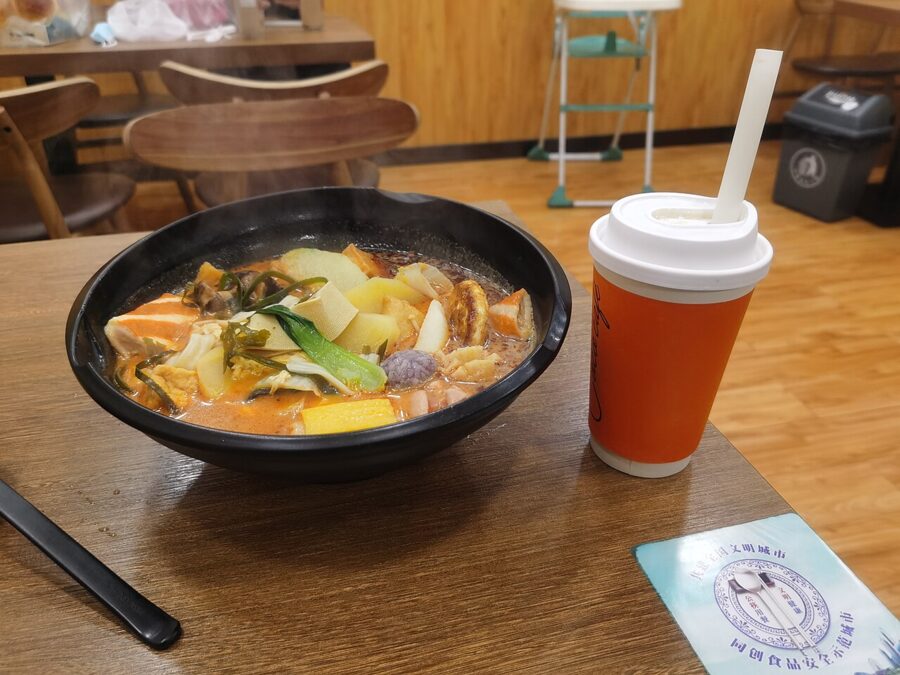
For spice, the words are bu la (不辣, not spicy), weila (微辣, a little), zhongla (中辣, medium) and tela (特辣, very). Chain-shop medium is gentle by Sichuan standards. In a Sichuan or Chongqing shop, weila is already plenty for most people on their first day, so start there.
The sesame-sauce question
Somewhere between the scale and the kitchen, someone will ask yao majiang ma (要麻酱吗), whether you want sesame paste. In the northeastern style that’s most of the point. A big spoon of sesame paste, sometimes with peanut, goes into the bowl and thickens the broth into something closer to a gravy. It mellows the chilli and adds a nutty sweetness.
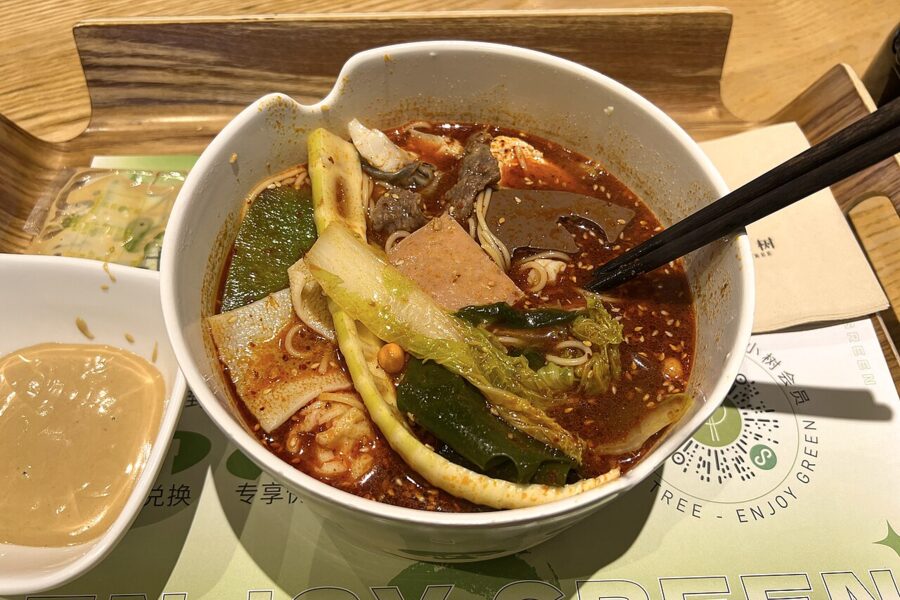
Say yes the first time, and ask for it on the side (fen kai fang, 分开放) if the shop will do it. Other useful words at this stage: bu yao xiangcai (不要香菜, no coriander), jia cu (加醋, add vinegar), tang shao yidian (汤少一点, less broth), and dabao (打包, takeaway) or tangshi (堂食, eating in).
Paying and waiting
You pay at the scale, almost always by scanning a QR code with Alipay or WeChat Pay, both of which take foreign cards now. Cash is legal tender and chains will take it, but a small shop may struggle with change for a ¥100 note. You get a receipt with a number, or a buzzer, and the bowl comes out in five to ten minutes.
Condiments sit on a side table: vinegar, chilli oil, crushed garlic, sometimes chopped coriander and spring onion. Help yourself. If you’re eating in, the broth is meant for the noodles rather than for drinking to the bottom: it’s very salty, and a bowl of it adds up fast.
Where it started: salt, skewers and the Min River
Most accounts agree that malatang began in Leshan, the river city south of Chengdu, best known for its Giant Buddha. The accounts don’t agree on who invented it. Ask in Leshan and you’ll get two stories, and the city tells both.

The first is the river story. Trackers who hauled boats up the Min and the upper Yangtze would stack stones on the bank, set a clay pot over a fire, scoop in river water and throw in whatever greens they had, with chilli and Sichuan pepper against the damp. Hawkers on the docks saw a trade in it and started carrying pots on shoulder poles, selling skewers to porters and boatmen. It’s the version you’ll hear most often.
The second is the salt story, and it’s the one with names attached. In Niuhua (牛华镇), a salt town in Leshan’s Wutongqiao District, thousands of oxen hauled brine from the wells from the Ming and Qing dynasties until the 1940s.
When an ox was retired and slaughtered, the offal went to the salt workers, who boiled bone broth with a little brine, cut bamboo into skewers and cooked the tripe and offal in the pot. Locals called it dapianshi (打偏食), roughly “grabbing a side snack”, and the novelist Li Jieren wrote about it. The craft’s lineage traces back five generations to a salt worker named Xu Xizhi.
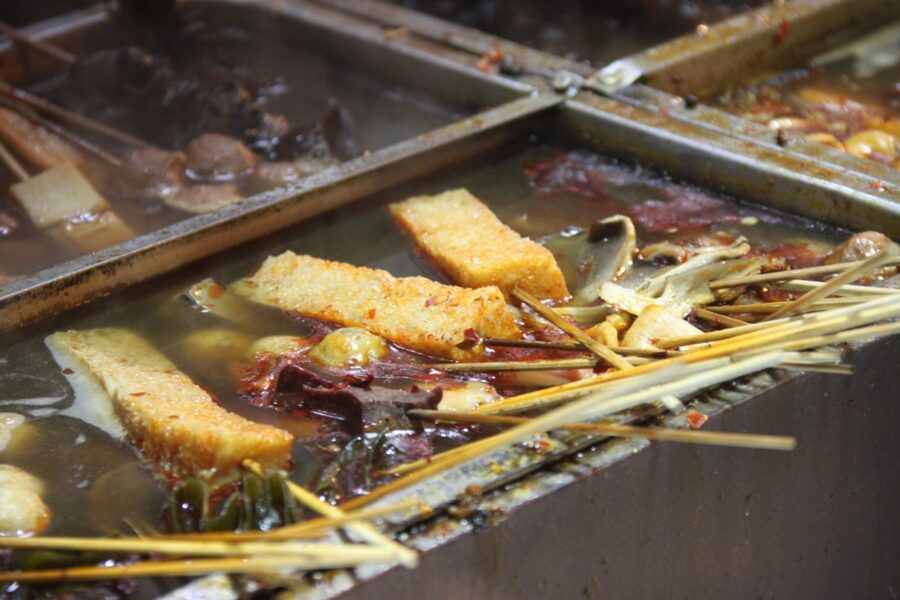
Both stories end the same way, with a pot of chilli broth, a heap of skewers and a price per stick. Into the 1980s that was what malatang was: a street stall with a pot, a few stools and a floor covered in bamboo sticks. Leshan people tell it in a little rhyme about standing by the roadside under the electricity poles, one clay pot, a few vegetables, one dry dip shared by everyone.
Niuhua today
Niuhua has done well out of the claim. In 2025 a national food-industry association named it China’s “birthplace of malatang”, and in late 2025 the Sichuan provincial government added Niuhua malatang-making to its seventh list of intangible cultural heritage. Leshan’s media centre counted 1.04 million people coming to Wutongqiao District to eat it in 2024 alone.
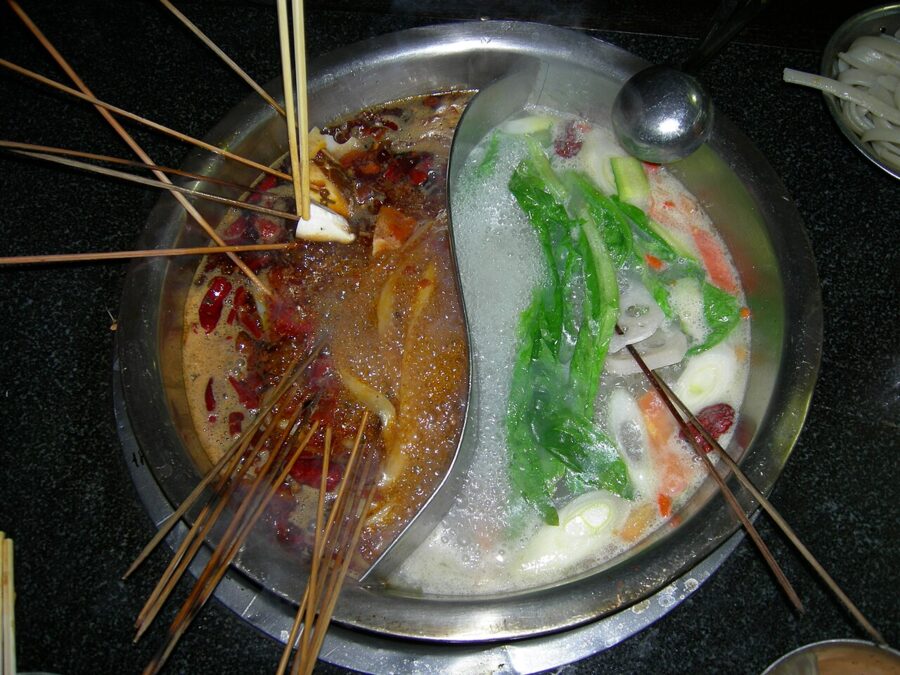
The Niuhua style is still skewer-first. Thin slices of local yellow-cattle beef are marinated, then threaded with coriander and pickled chilli; you cook them yourself in a broth of beef and pork bones, fried spices and bean paste, which the heritage holders say includes cardamom and amomum. The dip matters as much as the pot. There’s a sesame-oil dip (油碟, youdie) and a dry dip (干碟, gandie) of chilli powder ground from the local “bullet” chillies, often with crushed peanut.
The same Leshan snack tradition gave Sichuan its cold skewers soaked in chilli oil, bobo ji (钵钵鸡), which my Sichuan food guide covers properly.
How it went national
Leshan people had taken the skewer pot to Chengdu by the 1980s and 1990s. Then malatang went north. When state factories in the northeast laid off millions of workers in the late 1990s, a lot of them opened small food businesses that needed little training and less money, and a malatang stall needed only a pot and a fridge. Northeastern cooks softened it for local tastes, and the northeast is where the two chains that now sit on every Chinese high street came from.
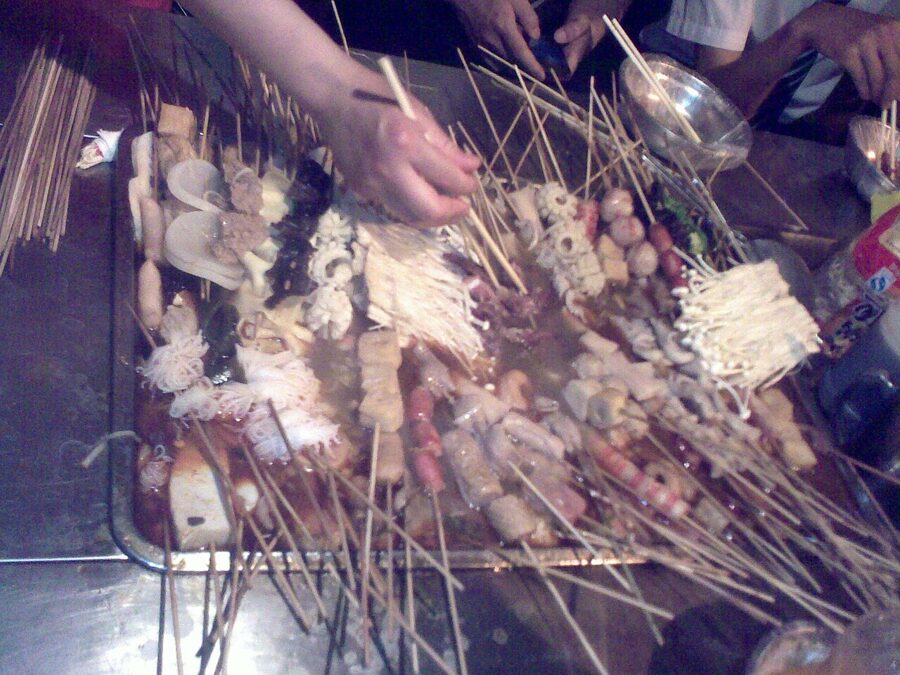
In the mid-2010s the shops went self-service: open fridges, loose ingredients, one price per weight. It was faster to run, and an industry report in 2026 pointed out the other effect: with everything on the scale at once, people stop counting and take more. By 2024 there were about 166,000 malatang shops in China, by industry counts, and Yang Guofu now has branches as far apart as Yokohama’s Chinatown, Sydney and New York.
The Dongbei bowl, and the two chains that took it everywhere
If you’ve eaten malatang at a chain in Melbourne, London or Singapore, you’ve probably eaten the northeastern version, Dongbei malatang (东北麻辣烫). It swaps the red chilli broth for a bone stock, makes it salty-spicy rather than numbing, and thickens it with sesame paste and sometimes peanut paste. The texture is half soup, half sauce.
Bone broth, sesame paste, and lots of tofu
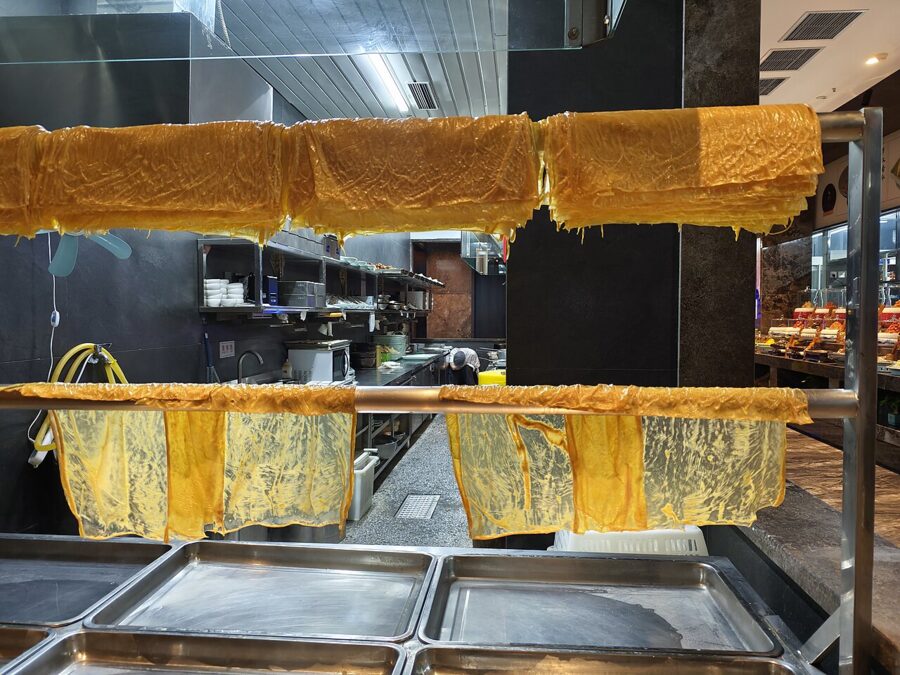
The northeast also brought its own fridge. Sliced meat and meatballs do most of the work on the meat side, and the vegetable side fills up with the local soy products: dried tofu skin, frozen tofu, sheets of pressed tofu. The starches go northern too, with chewy niujin mian (牛筋面, “beef tendon” noodles, named for their chew), potato noodles, rice cakes and even little fried dough sticks.
The newest twist is what people call lao shi nianhu malatang (老式黏糊麻辣烫), the old-style “sticky” bowl, one of the trending styles of 2025 and 2026. Recipes for it put milk in the broth, and the sesame paste goes in by the ladle until the noodles come out coated. In the northeast people like to drink it with Hongbaolai (宏宝莱), a sweet local soda.
Yang Guofu and Zhang Liang
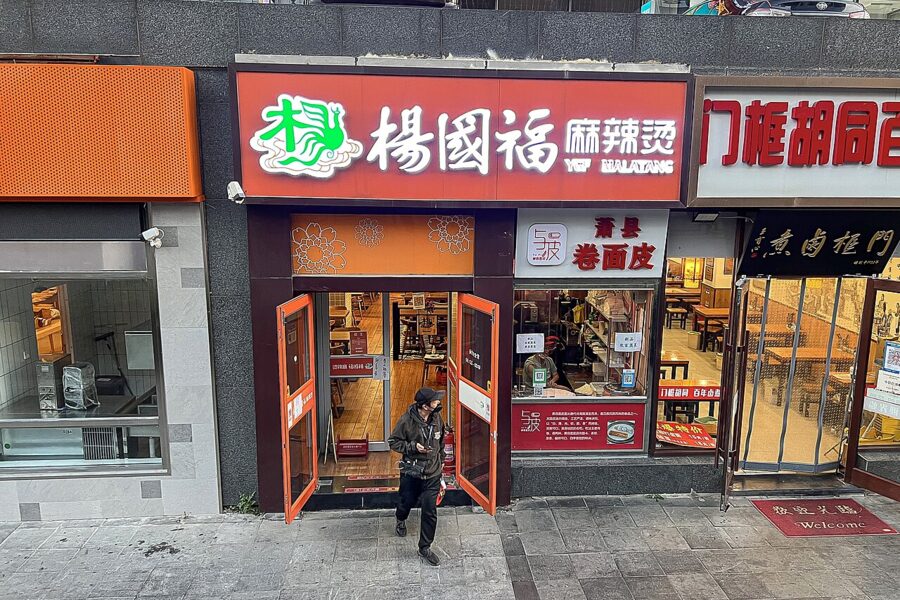
Yang Guofu (杨国福麻辣烫) started as a roadside stall in Harbin, run by Yang Guofu and his wife, and opened its first shop as Yangji Malatang in 2003. It franchised from the mid-2000s and moved its headquarters to Shanghai in 2015. Zhang Liang (张亮麻辣烫) opened its first shop in Acheng, on the edge of Harbin, in 2008, and still keeps a northeastern headquarters in Harbin alongside its Shanghai office.
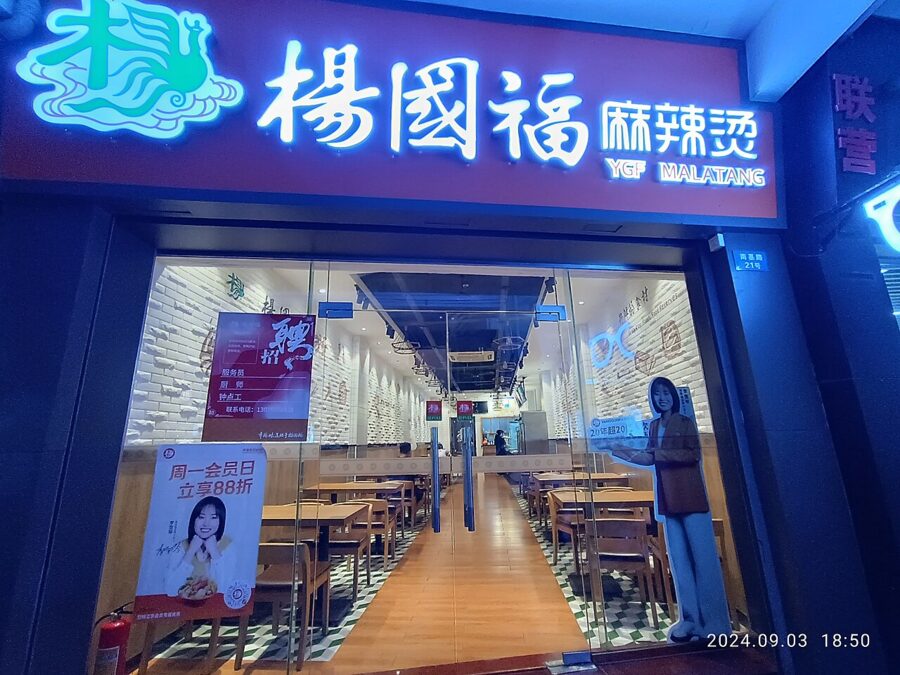
Both chains now claim six or seven thousand shops worldwide. An industry count published in 2026 put Zhang Liang slightly ahead inside China, with Yang Guofu close behind and Liu Wenxiang (刘文祥麻辣烫) a distant third. Between them the two big names hold roughly a tenth of all malatang shops in the country. Most of the rest are small family-run places with one or two branches.
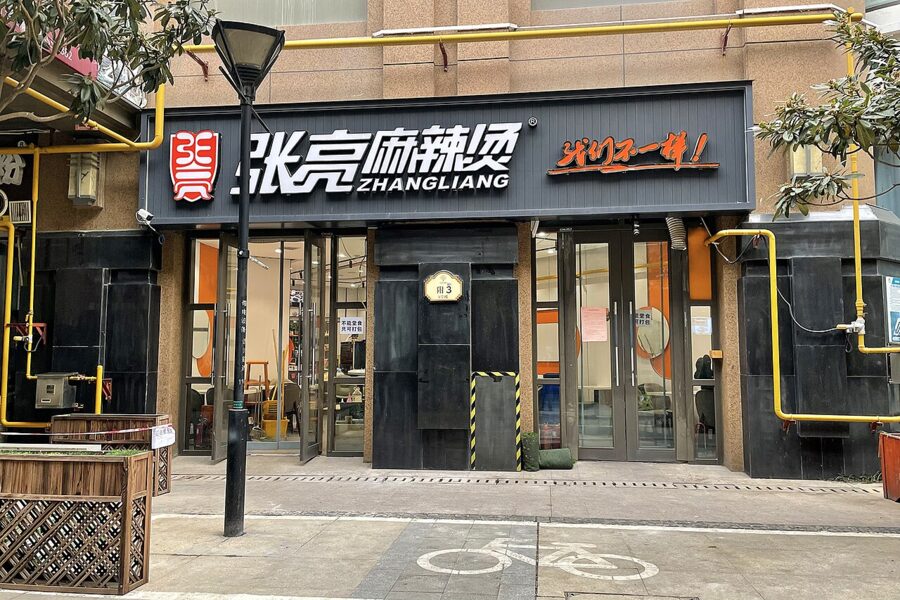
Which is better? At street level, the difference is small. Zhang Liang leans on its beef bone broth and cooks each bowl in its own pot; Yang Guofu’s menu runs wider, with a tomato broth, dry-mixed bowls and now mala xiang guo. Both are franchises, so the shop in front of you matters far more than the logo on the sign.
Malaban: the dry one from Fushun
Malaban (麻辣拌), “spicy-mix”, is malatang with the soup poured off. It comes from Fushun in Liaoning, a coal city east of Shenyang, where it was picked as one of the city’s ten signature snacks in 2016. Everything is boiled, drained and tossed with sesame paste, vinegar, sugar, garlic and chilli oil, so it comes out sweet, sour and sticky.
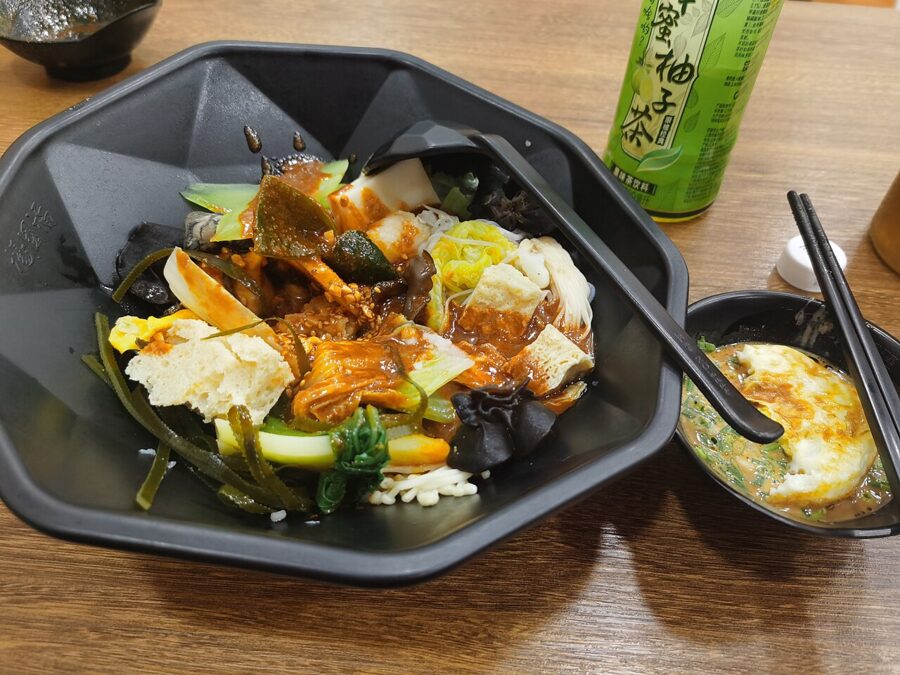
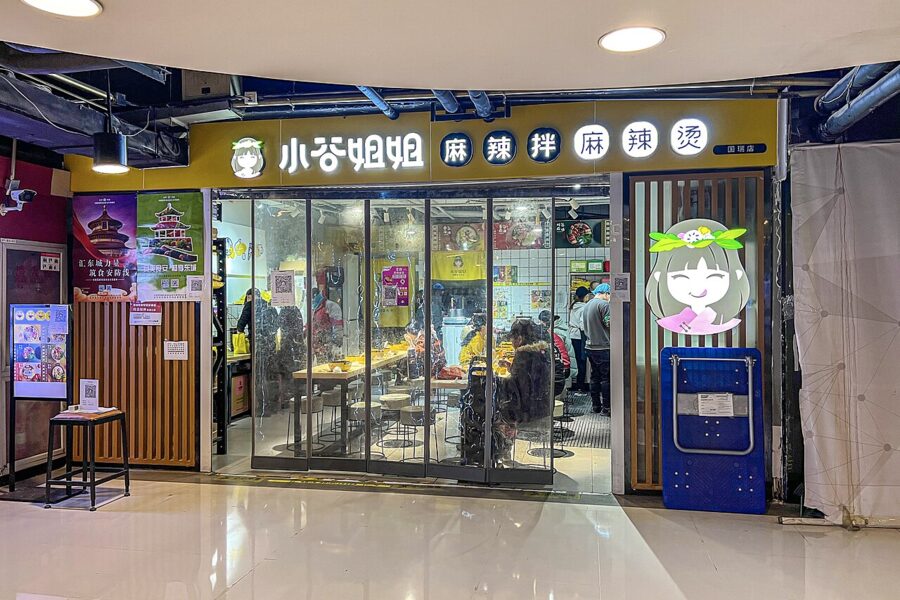
It’s the summer bowl. When it’s 30°C in Shanghai and the idea of hot soup is too much, malaban is what office workers carry back to their desks. Beijing even has a chain that leads with it, Xiaogu Jiejie (小谷姐姐), founded in 2018. Most chain shops now sell it alongside the soup version at the same price per weight, and the dry style is one of the fastest-growing parts of the business because it survives delivery.
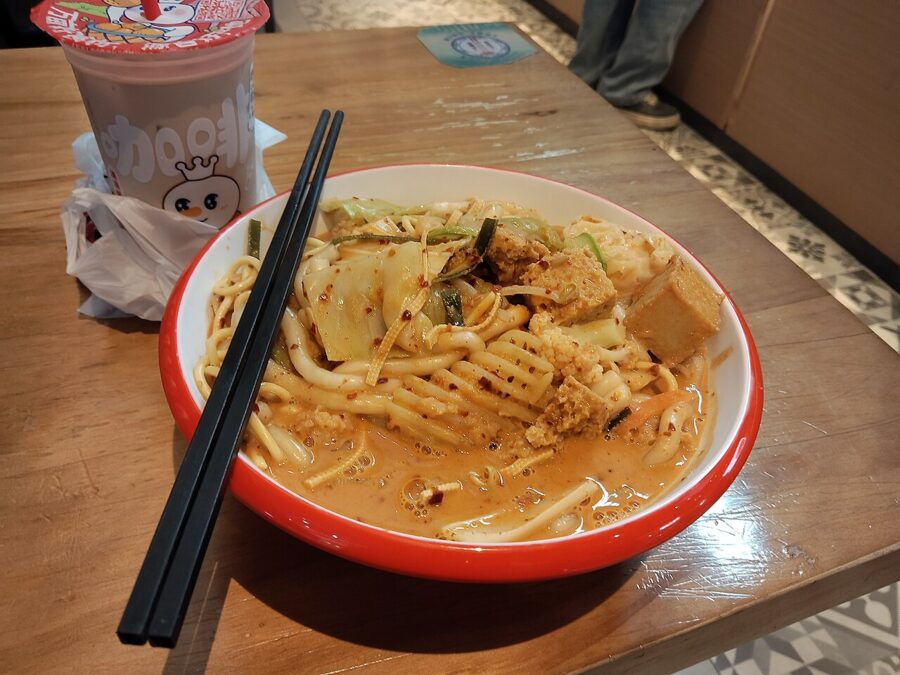
Tianshui: the bowl that went viral in 2024
In March 2024, videos of a small shop in Tianshui, a city of about three million in southeastern Gansu, started going round Douyin. They showed cooks ladling oil over plates of potato noodles while a queue stretched out of a courtyard, and one cook’s exhausted face, which became a meme. Within weeks people were taking high-speed trains to Tianshui just to eat lunch there.
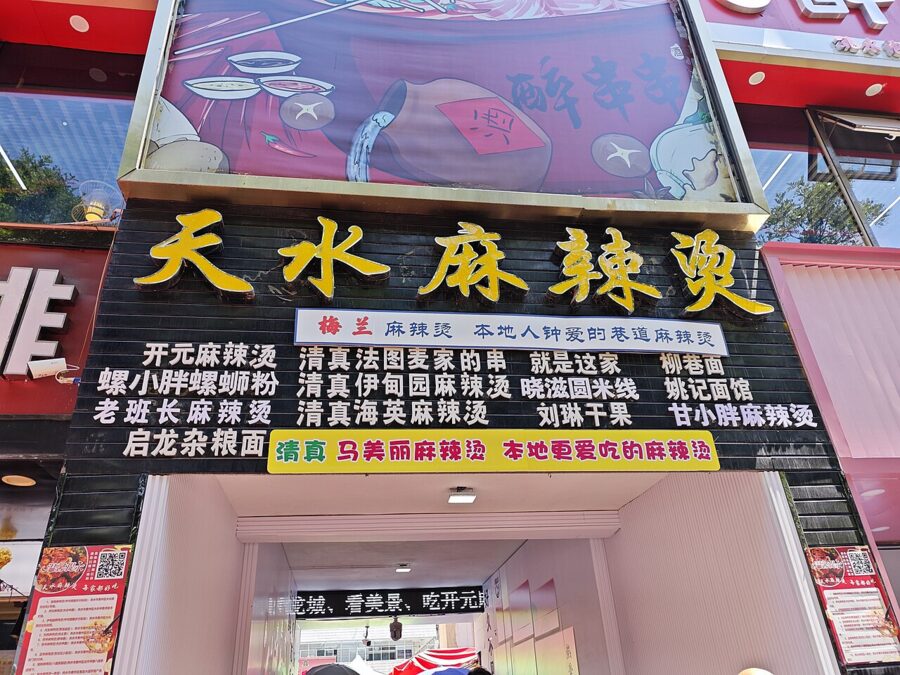
The city moved fast. In March 2024 it issued a “Tianshui malatang service plan”, set up information stands at Tianshui South station and handed out food maps, and the provincial tourism board ran media trips through the spring. Tianshui counted 59.5 million tourist visits in 2024, up 23.9% on the year before, and 65.45 million in 2025. Officials credited the malatang videos with 28,200 new jobs.
What makes it different
Tianshui malatang grew out of a 1990s snack called mala fen (麻辣粉): boiled potato noodles and potato slices with a spoon of chilli paste, pickled mustard tuber and peanuts. Over time it took on the usual malatang fridge of fish balls, sausage and greens, but the starches stayed local and potato-based. The ingredients are skewered and sold by the stick, usually ¥1 to ¥2 each.
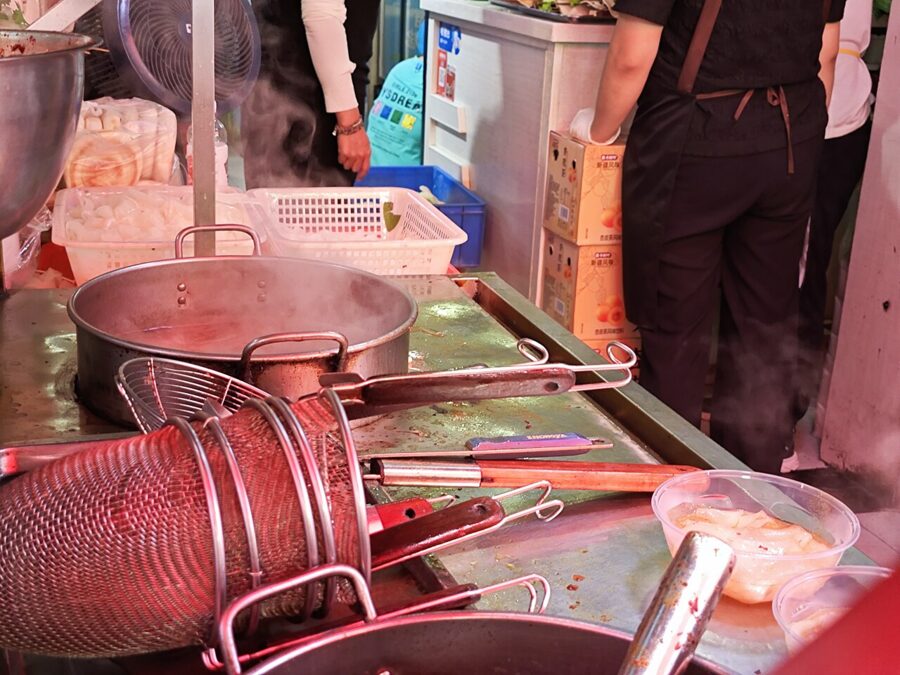
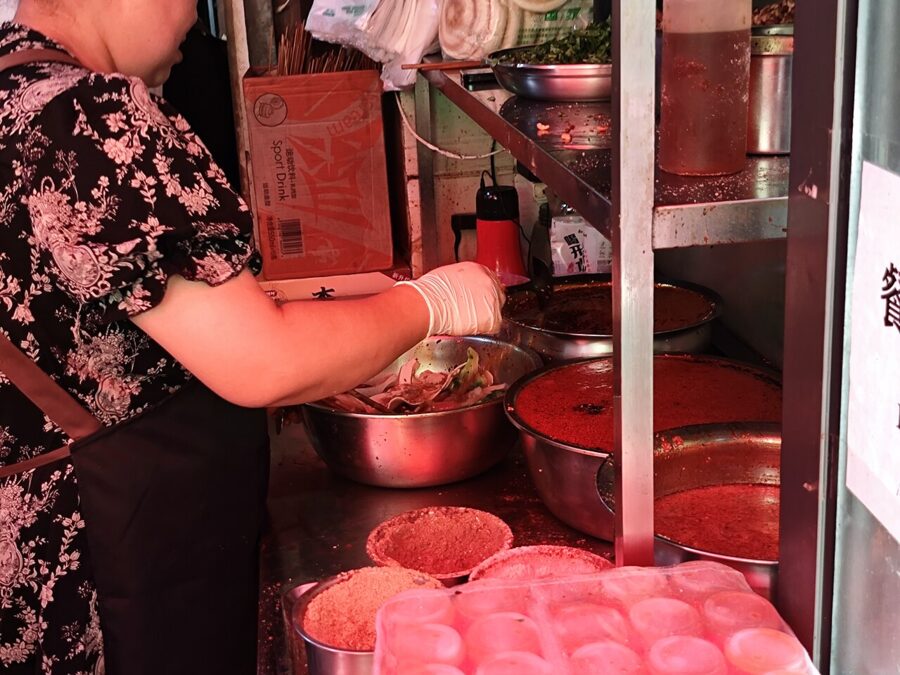
Once cooked, everything goes onto a plate or into a bowl with a ladle of the plain broth. Then come two big spoons of youpo lazi (油泼辣子), chilli flakes with hot rapeseed oil poured over them, and a scatter of ground Sichuan pepper. Locals add a spoon of garlic water and a dash of vinegar. It’s red, oily and not especially hot: the chilli tastes roasted and a little sweet.
Gangu chilli, Qin’an pepper, Dingxi noodles
The chilli is the point. It comes from Gangu County, west of the city, where chillies have been grown for over 400 years and now carry national geographic-indication protection. They’re thick-fleshed and oily, and the heat is moderate. In the months after the boom, Gangu’s chilli dealers sold five times as much as a year earlier, and the county roughly doubled its planting.

The numbing pepper comes from Qin’an County, north of the city, a protected-origin product since 2009. The noodles come from Dingxi, a potato-growing prefecture between Tianshui and Lanzhou, as wide flat kuanfen (宽粉) or hand-rolled shouganfen (手擀粉). They’re soft, chewy and slippery, and they hold the chilli oil better than wheat noodles ever could.
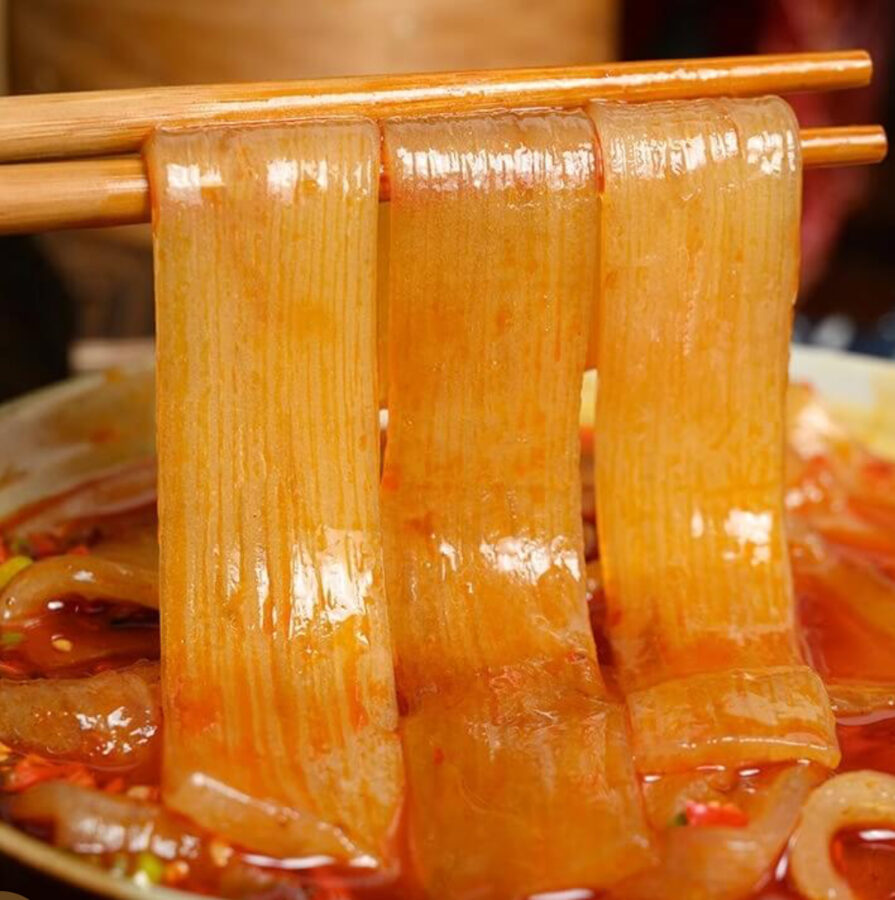
Ha Haiying and the malatang courtyard
The shop from the videos is Ha Haiying Malatang (哈海英麻辣烫), in the courtyard on Dazhong Road in Qinzhou District that locals now call the malatang siheyuan (麻辣烫四合院). It was still open and still drawing queues in spring 2026, when a woman from Xi’an told a reporter she’d waited half an hour. Its cook Na Guoping, the man with the famous pained expression, now livestreams from the counter while he cooks.
Ha Haiying turned down offers to franchise and instead started a company in 2024 with a friend to sell her chilli, seasoning packs and hand-rolled noodles. The courtyard has filled up with other malatang shops on both sides. If the queue at Ha Haiying is long, the neighbours serve the same style with a shorter wait.
Go between the lunch and dinner rushes, and avoid the Spring Festival, the May Day holiday and Golden Week (1–7 October), when Tianshui fills up and the queues come back. Pay with Alipay or WeChat Pay. Apricot-skin juice (杏皮茶, xingpi cha), a sweet-sour local drink, is the standard thing to drink with it.
Getting there
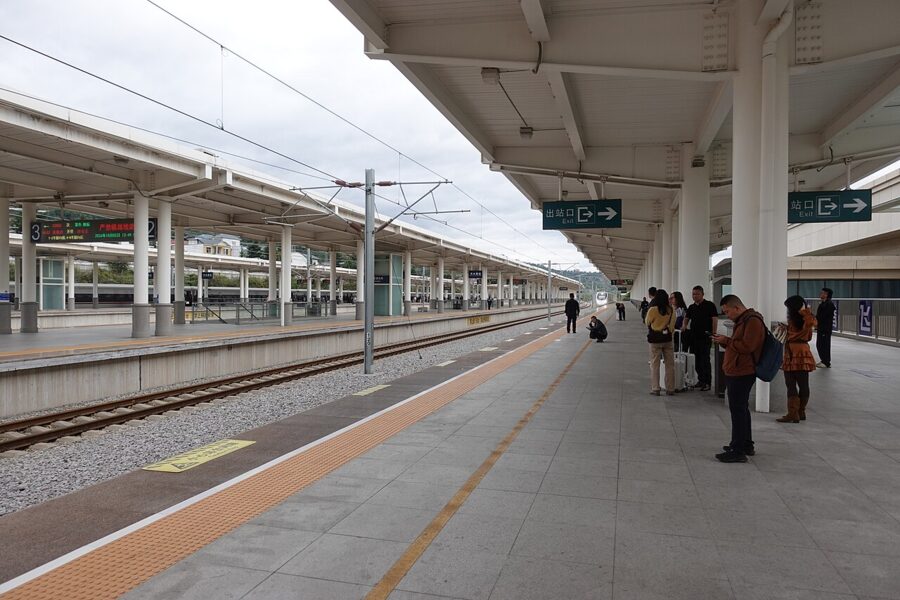
Tianshui South (天水南站) is on the high-speed line between Xi’an and Lanzhou. Most direct D and G trains from Xi’an North take about 1 hour 45 minutes; check times and book on 12306, the railway’s own app, or on Trip.com. Allow time for a taxi or a Didi from the station into Qinzhou District.
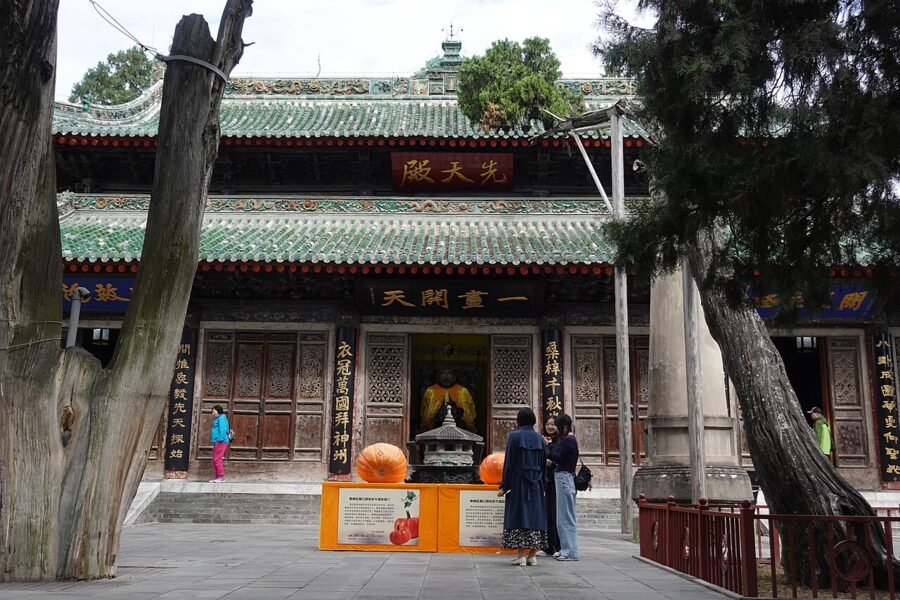
If you’re making a day of it, the Fuxi Temple in Qinzhou District is a Ming-dynasty temple to Fuxi, the mythical ancestor of the Chinese, and a good way to settle lunch. Tianshui’s food doesn’t end with malatang either: the city also sells guagua (呱呱), a buckwheat-starch snack in chilli oil that’s worth a second stop.
Malatang elsewhere in Gansu
You don’t have to go to Tianshui for Gansu malatang. In Lanzhou, the provincial capital, neighbourhood shops near the old factory districts sell bowls with the same potato noodles and chilli oil. If you’re in Lanzhou for the beef noodles, it’s an easy second lunch; my Chinese noodles guide covers the beef noodle side.
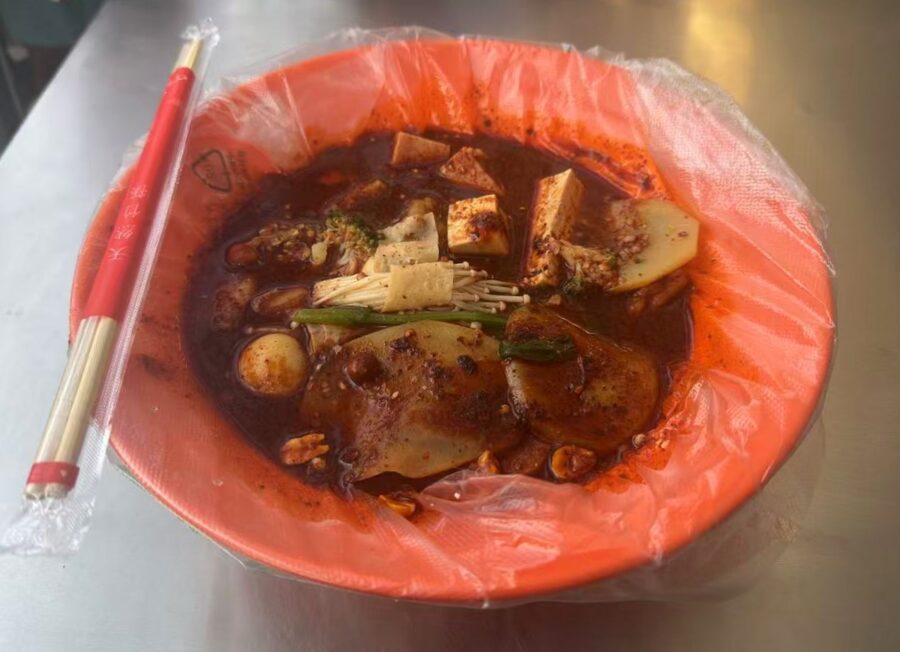
Mala xiang guo: same fridge, no soup
Mala xiang guo is malatang’s richer, louder cousin. You fill a bowl from the fridge in exactly the same way, but the kitchen stir-fries it in a wok with chilli, Sichuan pepper, bean paste and plenty of oil, and it comes out dry, glossy and sizzling, piled in a big bowl.
Most Chinese sources trace it to home cooking in the Jinyun Mountains outside Chongqing. It went mainstream through Beijing’s mall food courts in the 2000s, which is why plenty of Chengdu people, half-joking, call it a Beijing dish. Either way, it’s on menus in every Chinese city now, and chains like Yang Guofu sell it from the same counter as malatang.
How to order it
Pick heavier than you would for malatang, because there’s no broth to fill the bowl out, and pick things that fry well: lotus root, potato, cauliflower, wood ear, tofu skin, luncheon meat, beef, prawns. Leafy greens go limp in a wok. Some shops weigh meat and vegetables separately at different prices, so read the sign; others charge one price. At Yang Guofu in Beijing it was ¥7 a jin more than the malatang.
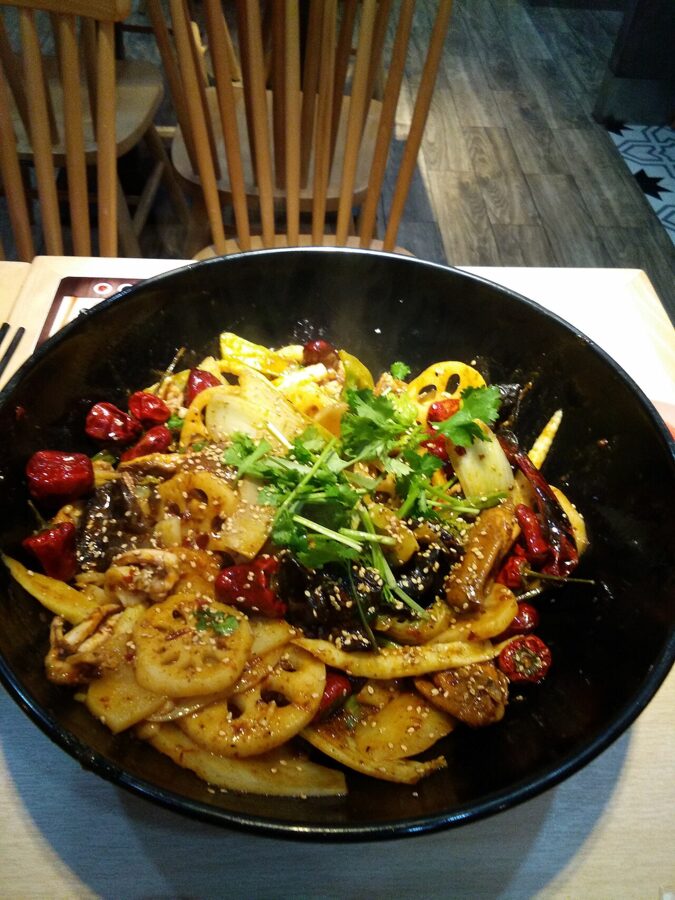
The spice levels use the same words as malatang (weila, zhongla, tela), but they run hotter because nothing dilutes the oil. Order rice (米饭, mifan), which is almost always extra, and drink something cold. Mala xiang guo is better shared: a bowl for two or three with rice is a proper dinner, while a bowl for one is a lot of oil.
And maocai?
Maocai (冒菜) is Chengdu’s version of the same idea, from the early 1990s: your ingredients are dunked in a colander in a big pot of hot pot broth, then served in a bowl with some of that broth. People call it “hot pot for one”. It’s closer to Sichuan malatang than to the northeastern kind, and I’ve written about it alongside the big shared pots in my hot pot guide.
What to put in the bowl
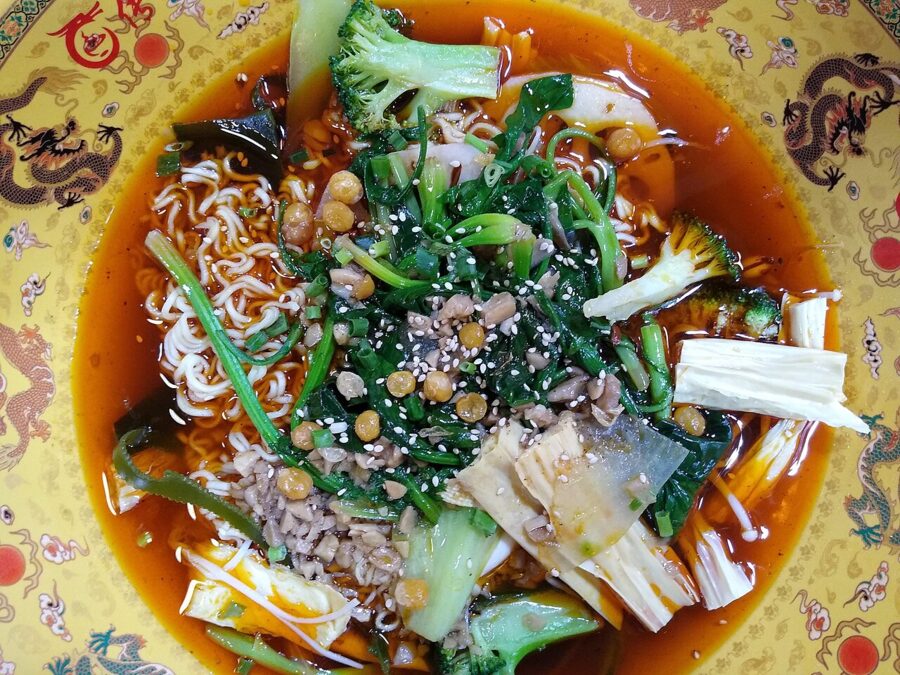
An industry list of the most popular malatang picks in 2025 put spicy marinated beef first, instant noodles second, then enoki mushrooms, duck blood, quail eggs, fish tofu and wide potato noodles. That’s a decent shopping list. Here’s how I’d build a bowl.
Noodles: pick one
One noodle is enough, because every noodle drinks the broth and the bowl turns stodgy if you double up. Wide potato or sweet-potato noodles (宽粉, kuanfen) are the best all-rounder: chewy, slippery and they don’t cloud the soup. Glass noodles (粉丝, fensi) are fine but soak up broth fast and go soggy if you eat slowly.
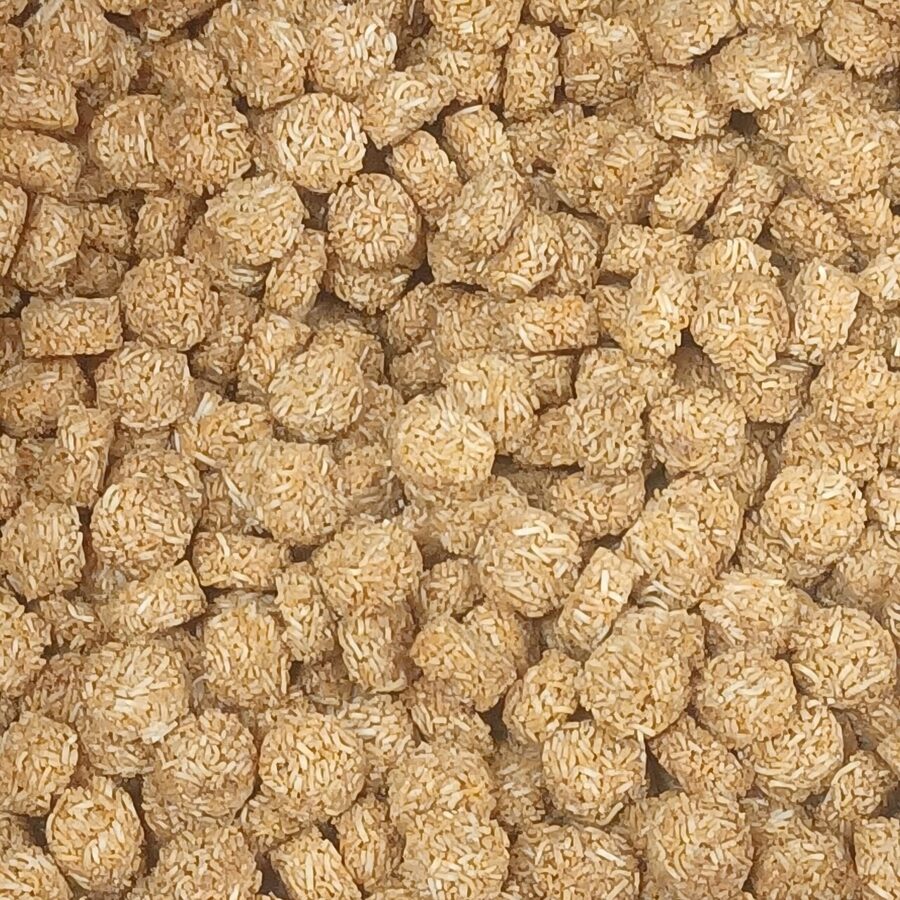
The instant noodle block (方便面, fangbianmian) sounds like a waste, but it’s one of China’s favourite picks for a reason. It cooks in a minute, stays springy and soaks up sesame broth well. In the northeastern style, try chewy niujin mian; in Tianshui, the hand-rolled potato noodles are the whole reason to come. Many people take a scoop of rice noodles too, but that’s the second noodle I’d skip.
Tofu, balls and the processed aisle
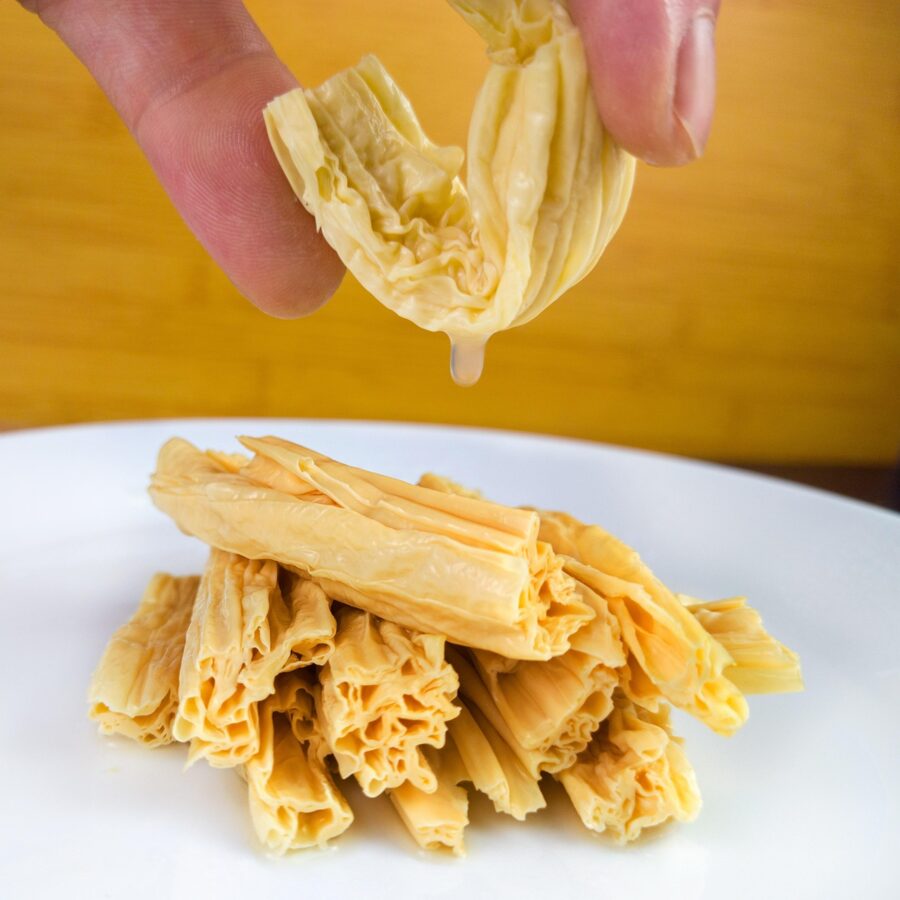
Tofu does more for a malatang bowl than anything else. Fresh tofu skin sticks (腐竹, fuzhu) and tofu puffs (豆泡, doupao) soak up broth like sponges. Frozen tofu (冻豆腐, dong doufu) has the same trick, though it carries water to the scale, so give it a shake before it goes in the bowl.
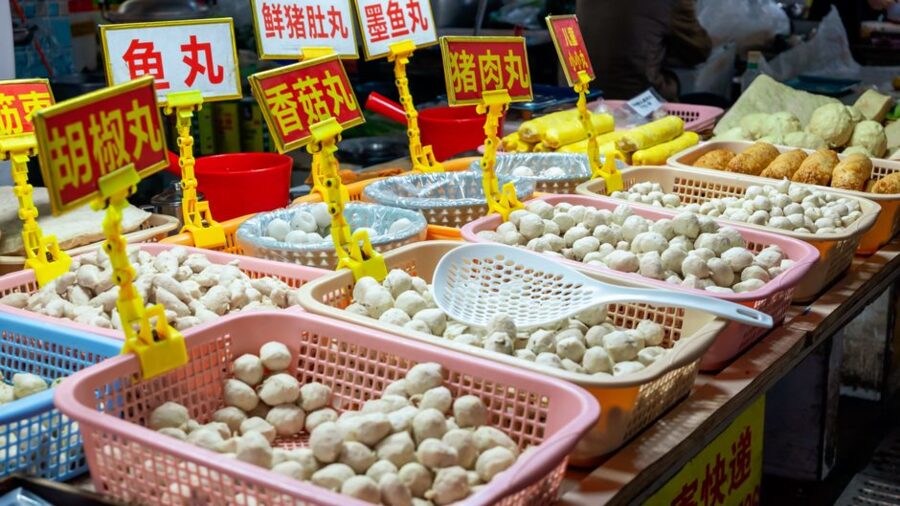
Then the processed aisle: fish balls, beef balls, fish tofu (鱼豆腐, yu doufu, a fried fish-paste cube), crab sticks, luncheon meat, little sausages. Fish tofu is the best of these, because the fried skin holds broth. Frozen dumplings often sit in the fridge too; they’re fine, though they’re nobody’s idea of good Chinese dumplings.
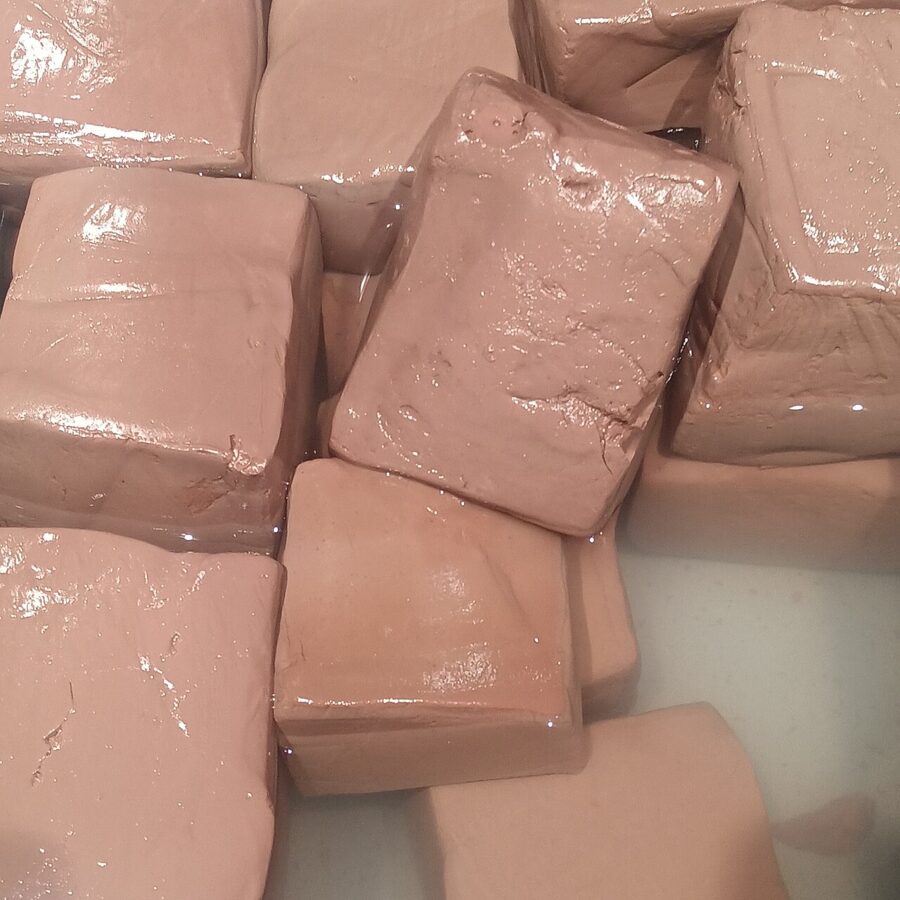
For meat, the sliced beef and lamb rolls are usually the best thing in the fridge, and because they’re light and cook in seconds they’re also the best value. Duck blood (鸭血, yaxue) is soft and wobbly and a favourite in Sichuan-style bowls. Quail eggs are popular, but they’re heavy for what they are.
Greens and mushrooms
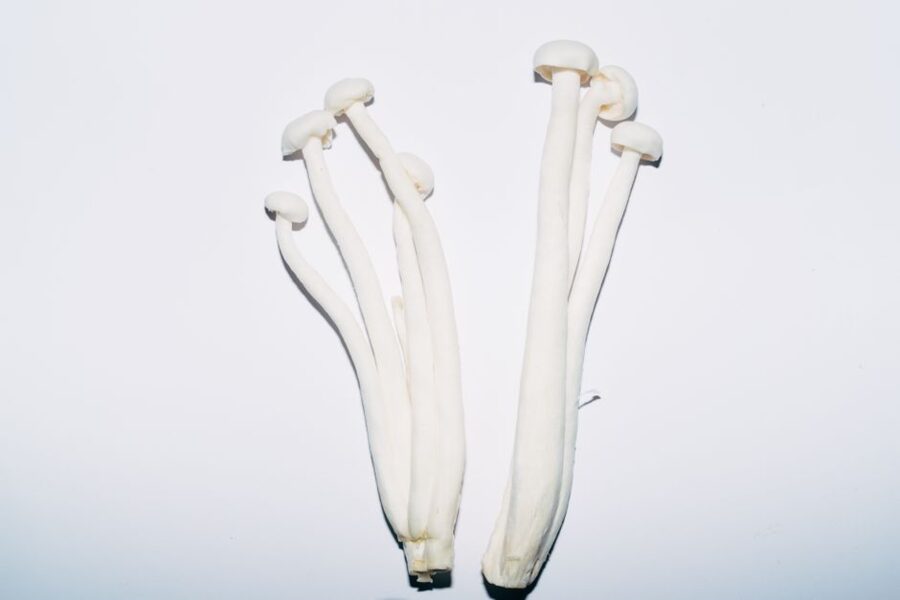
Baby napa cabbage (娃娃菜, wawacai), spinach, crown daisy (茼蒿, tonghao), lettuce, bean sprouts, kelp knots, wood ear and lotus root are the standard greens and roots. Lotus root and potato slices keep their bite; spinach and lettuce wilt to nothing. Enoki (金针菇, jinzhengu) is the mushroom almost everyone picks (it was third on that 2025 list), and it soaks up sesame broth beautifully.
What to leave in the fridge
Anything heavy and cheap is bad value in a same-price bowl. Corn on the cob is mostly cob, and whole prawns are mostly shell. Kelp knots, frozen tofu and wet greens all carry water, and potato slices are heavy, though worth one or two.
Bean sprouts are the classic trap: in late 2025 a Yang Guofu mala xiang guo counter’s ¥2.88-per-50 g sign worked out at ¥28.8 a jin for sprouts, more than a supermarket charges for organic ones, and the story ran for days.
Chains, small shops and what a bowl costs in 2026
Malatang used to be the cheap lunch. People in China joke about it now as a “price assassin” (价格刺客), the bowl that comes to ¥50 when you thought it would be ¥20, and an industry report in 2026 described the shift as going from “¥15 freedom” to “¥30 caution”. Here’s what price signs said in chain shops in 2025 and 2026:
| Shop | City | Posted price | Per jin (500 g) |
|---|---|---|---|
| Yang Guofu, malatang | Beijing | ¥32.8 per jin | ¥32.8 |
| Yang Guofu, mala xiang guo | Beijing | ¥39.8 per jin | ¥39.8 |
| Yang Guofu, Xuanwu Tianhong mall | Beijing | ¥3.28 per 50 g | ¥32.8 |
| Yang Guofu | Guangzhou | ¥2.98 per 50 g | ¥29.8 |
| Zhang Liang | Guangzhou | ¥28.88 per 500 g | ¥28.88 |
| Liu Wenxiang | Guangzhou | ¥29.88 per 500 g | ¥29.88 |
| A typical Tianshui shop | Tianshui | ¥1–2 a skewer | n/a |
A normal lunch bowl weighs 400 to 600 g, so in a big-city chain that’s roughly ¥25–40 before a drink. Delivery costs more: delivery-app prices at some Beijing branches have run ¥3.58–4.28 per 50 g. Smaller cities and family shops are cheaper, and Zhang Liang’s prices around the country run from about ¥15 to ¥30 a jin depending on the city. Yang Guofu says each franchise sets its own prices, so the same logo can mean different prices a few streets apart.
Chain or local shop?
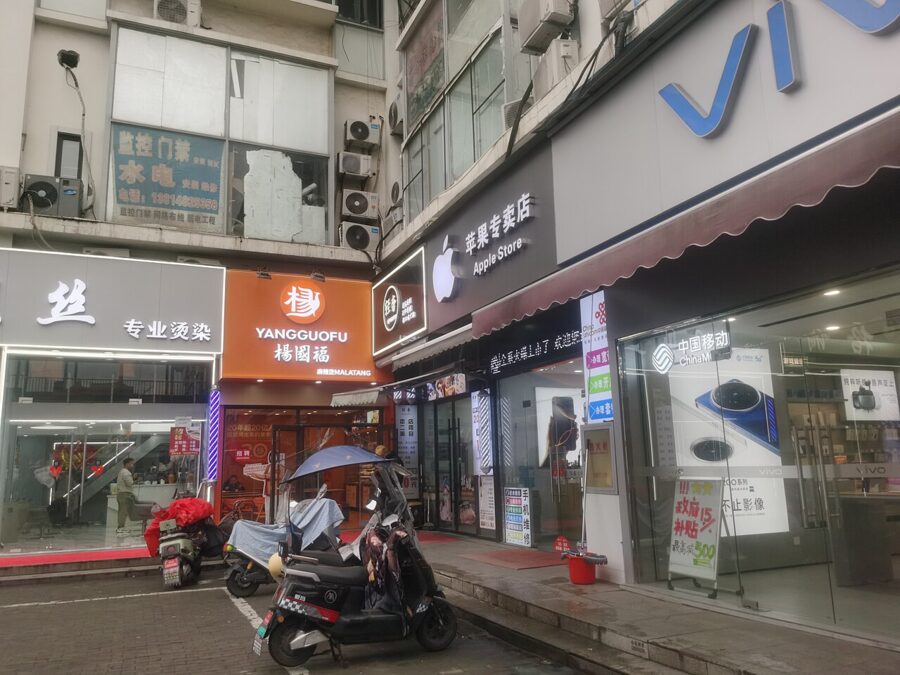
Chains are predictable: clean enough, the same broth in Harbin and Haikou, a menu with pictures, and staff used to people pointing. A good local shop has a broth with more character, often a sharper chilli oil and a fridge that changes with the market. A bad one is just a chain fridge without the training.
My rule is simple. In Sichuan, Chongqing, Gansu or the northeast, eat local, because that’s where the style is from. Everywhere else, a busy chain branch at lunchtime is a perfectly good meal, and a quiet one at 15:00 is where the greens have been sitting longest.
Hygiene
Open fridges and franchise kitchens have problems from time to time. In March 2025 a video showed a rat in the display fridge of a Yang Guofu franchise at a mall in Suzhou Industrial Park. The local market regulator closed the shop the same week, and the chain apologised and admitted gaps in how it checked its franchisees.
You can’t inspect the kitchen, but you can look at the fridge. It should feel cold, with the meat chilled or on ice and nothing sitting in a puddle. The greens should look fresh rather than dark at the edges, and the fridge should have a glass guard over it. If a shop is empty at lunchtime when its neighbours are busy, there’s usually a reason.
Where to eat it
You’ll never have to look for a malatang shop in a Chinese city. These are the places worth going out of your way for, all confirmed open in 2026. Malatang shops don’t take bookings; you walk in, and at the busy ones you queue.
Niuhua, Leshan, for the original
Niuhua is about 14 km from central Leshan, roughly a 30-minute taxi or Didi from Leshan station. The fastest trains from Chengdu East to Leshan take about 45 minutes and most take around an hour. The old streets around Niuhua’s market (Shangye Jie, Zhongxin Jie, Shengli Jie and Xinmin Jie) are lined with old malatang shops, and many stay open late.
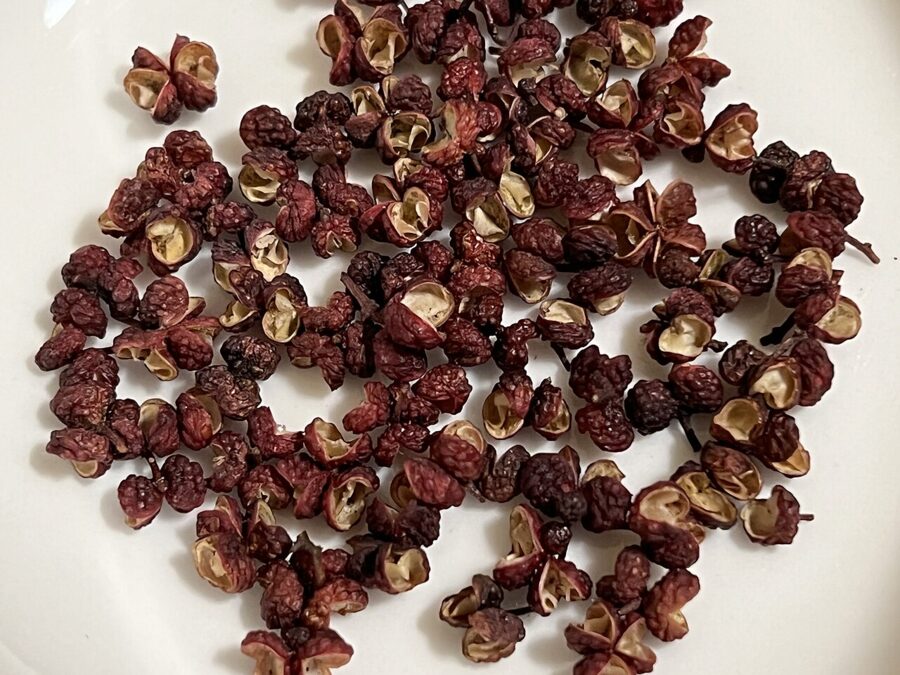
Niuhua Lüyuan Malatang (牛华绿缘麻辣烫) is where Leshan’s media centre went in January 2026 to watch the fourth-generation heritage holder Xu Yuanyuan threading skewers at the counter. Niuhua Bapo (牛华八婆), which grew from three roadside tables in 1988 into a brand with branches in Chengdu, and Zhouji (周记) are the other old names in town. Order beef and offal skewers, cook them yourself and use the dry dip. A full meal comes to a few tens of yuan.
Tianshui, for the 2024 style
Ha Haiying in the malatang courtyard on Dazhong Road, Qinzhou District, as above. Pick your skewers, hand them over, say yes to the chilli oil and add garlic water and vinegar yourself at the table.
Harbin and the northeast, for the chains at home
Both big chains started in Harbin, and Harbin and Shenyang both rank among China’s top ten cities for malatang shops. A northeastern bowl in the northeast, with extra sesame paste and a bottle of Hongbaolai, is the version the chains are copying. Fushun is next door to Shenyang if you want to try malaban where it was born.
Beijing, Shanghai, Guangzhou and Shenzhen
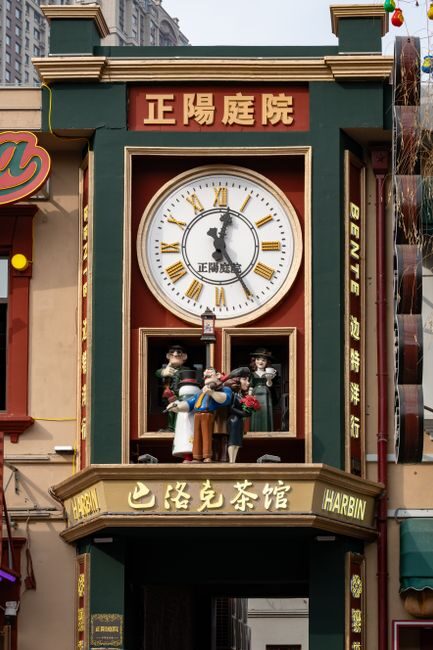
Every mall basement and office district has a Yang Guofu or a Zhang Liang, and usually both. Eat at lunchtime, when the fridge turns over fastest. Chengdu has more malatang shops than any other city, but most serve the local red-broth styles, so it’s also the place for maocai and skewer pots (串串, chuanchuan). If you’re touring China’s regional food more widely, my map of must-try food in China shows where each style belongs, and malatang often turns up in round-ups of Chinese street food too.
Hong Kong has its own branches of the big chains, including a Yang Guofu that opened in Central in 2023, but malatang is a mainland habit and the shops there feel like imports.
Skip this
- The holiday queue. In Tianshui during the Spring Festival, May Day or Golden Week, the famous shops can have very long queues; the same food is next door.
- Tela on your first day in Sichuan. Medium there is hot already.
- Drinking the broth to the bottom. It’s seasoned to flavour noodles, not to be soup, and it’s very salty.
- Two kinds of noodle in one bowl.
- A quiet chain branch in the middle of the afternoon, when the greens have been out since lunch.
Pick light, pick a little of everything, say yes to the sesame paste, and check the weight on the scale before you scan. Then find a stool and eat it while the noodles still have some bite.
You Might Also Enjoy
 Japanese Whisky: Where to Drink It (and What to Order)
 Takoyaki in Japan: Osaka’s Octopus Balls, Akashiyaki and the Stands Worth Queueing For
 Suzhou: The Classical Gardens, the Old Canals and How to See the City in One or Two Days
 Nagoya Food Guide: Miso Katsu, Tebasaki, Taiwan Ramen and the Rest of Nagoya Meshi, Dish by Dish