Ekiben: Japan’s Station Bento, the Regional Boxes Worth Buying and Where to Find Them
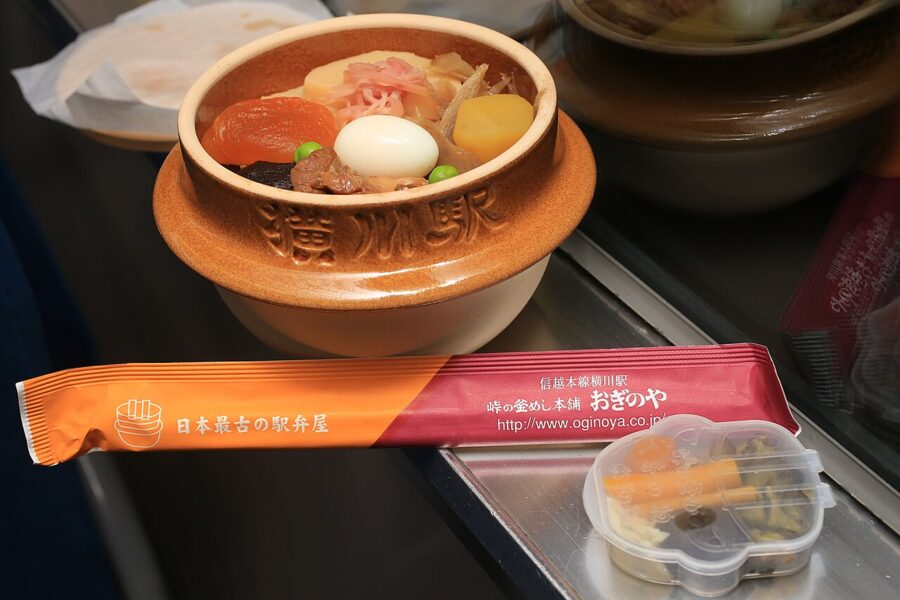
The heaviest lunch I’ve ever carried onto a Shinkansen came in a clay pot. Oginoya’s Toge no Kamameshi comes in 725 grams of glazed Mashiko stoneware, and you pay ¥1,500 for the rice inside and get the pot thrown in. Most people eat the rice, look at the pot, and then spend the next hour wondering whether it’s rude to leave it on the train. It isn’t rude, just a waste.
That pot is the whole idea of ekiben in one object. An ekiben is a station lunch box (eki is station, ben is short for bento), and the good ones are built around one place: Toyama’s pressed trout sushi, Sendai’s grilled beef tongue, the stuffed squid of a fishing town in southern Hokkaido. You buy it on the platform or in the concourse, you carry it onto the train, and you eat it cold while the place it came from slides past the window.
This guide covers the history (shorter and more argued-over than you’d think), the regional boxes worth crossing a concourse for, where to find them if you’re only passing through Tokyo, and how to eat one on a train without becoming the person everyone in the carriage remembers. Prices are from the makers’ own sites or, where noted, from the January 2026 ekiben fair at Keio Department Store in Shinjuku.
In This Article
- So what makes a box an ekiben?
- 1885, give or take
- Rice balls in a bamboo sheath
- The window years
- Who still sells on the platform
- The regional classics, line by line
- Toge no Kamameshi (Yokokawa)
- Ikameshi (Mori)
- Masu no sushi (Toyama)
- Gyutan bento (Sendai)
- Kobe, and the beef boxes
- Hiroshima’s anago-meshi
- Kagoshima: Kareigawa and the black-pork boxes
- Others that earn the detour
- Pull the string
- Where to buy them
- Tokyo Station
- Other big stations
- The January fairs
- Sell-outs and timing
- Eating on the train without annoying anyone
- Which trains
- Smell
- Rubbish
- The trolley is mostly gone
- Keep the pot
- What it costs, and what to skip
So what makes a box an ekiben?
The loose answer is any bento sold at a station. The strict answer is narrower, and it’s the strict one that explains why ekiben look the way they do. Japan’s railway caterers belong to a trade body, the Japan Railway Station Concession Association (Nihon Tetsudo Kounai Eigyo Chuokai), and in the narrow sense an ekiben is a box made by a member caterer, sold inside a station, with rice in it.
The rice rule is older than the association’s logo. Japanese National Railways split station lunches into “ordinary bento” (white rice, grilled fish, a fried thing, egg, kamaboko) and “special bento” for everything else, and for decades it refused to count anything without rice as an ekiben at all. That kept Ofuna-ken’s sandwiches off the list until the last years of JNR, and boxed shumai with no rice still can’t carry the official mark, even though Yokohama sells it by the trainload.
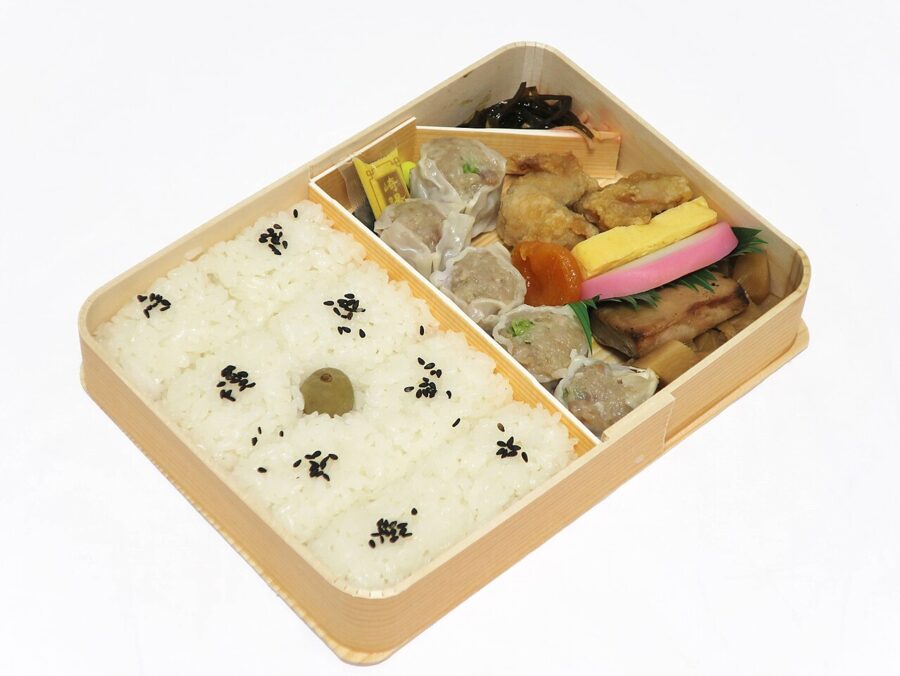
Boxes that qualify carry the association’s ekiben mark on the wrapper: a square frame divided like the inside of a lunch box, the characters 駅弁 in the brush style used on kabuki posters, a red dot in one corner and the word EKIBEN in the other. If you’re standing in front of 150 boxes and want the one made by an actual railway caterer rather than a convenience-store supplier, that mark is the quickest filter.
Three things set ekiben apart from the bento you’d buy at a supermarket. They’re regional, built around whatever the line passes through. They’re designed to be eaten cold, hours after cooking, so the menu leans on things that taste right at room temperature: simmered vegetables, sweet-soy meat, vinegared rice, pickles. And the packaging matters: the paper wrapper, the kakegami, is printed with the station, the dish and usually a picture of the local landmark, and people collect them.
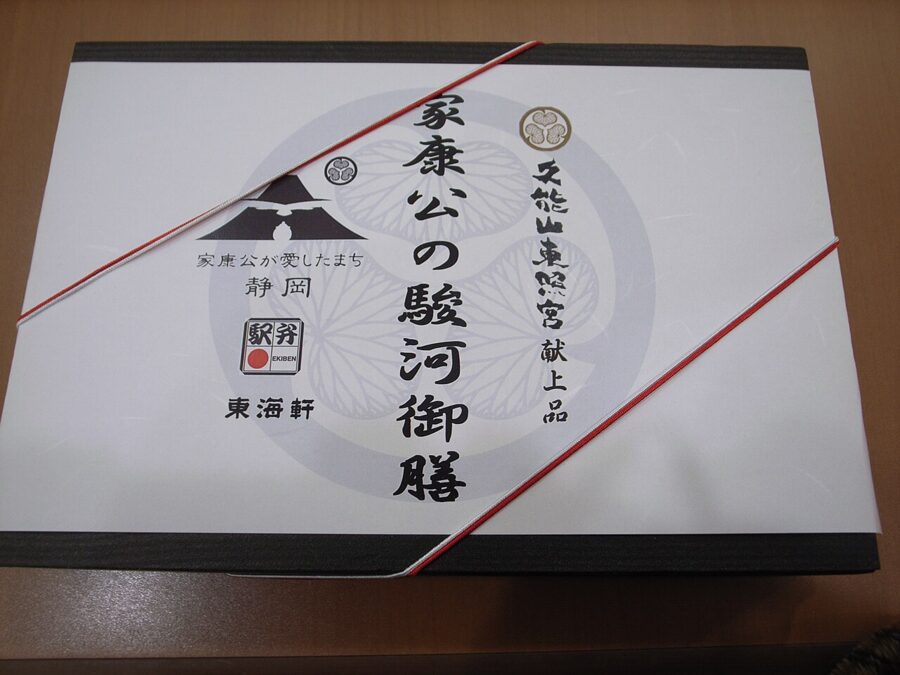
The loose definition has won in practice. Station concourses are full of bento from convenience-store suppliers and Tokyo delis, and nobody on the platform checks for a logo. I don’t either, most days. But the boxes in this guide are almost all the real thing, made by caterers who’ve worked the same station for decades, some for well over a century.
1885, give or take
Rice balls in a bamboo sheath
The textbook date is 16 July 1885. That morning Nippon Railway opened its line as far as Utsunomiya, north of Tokyo, and an inn called Shiroki-ya, asked by the railway to feed passengers, sold two rice balls and a few slices of yellow takuan wrapped in a dried bamboo sheath. 16 July is still marked as Ekiben Memorial Day, and that bundle is the one most books call the first.
It’s also the claim with the most rivals. Depending on who you read, the first station lunch was sold at Umeda in Osaka around 1877, at Kobe the same year, at Zenibako in Hokkaido in 1880, at Kumagaya in 1883 (sushi and bread, of all things), at Ueno that year too, or at Tsuruga or Takasaki in 1884. Takasaki’s caterer, Takaben, dates its own first rice-ball box to 1884. Nobody has the paperwork to settle it, which is why the 1885 date survives: it’s the one with a day and a name attached.
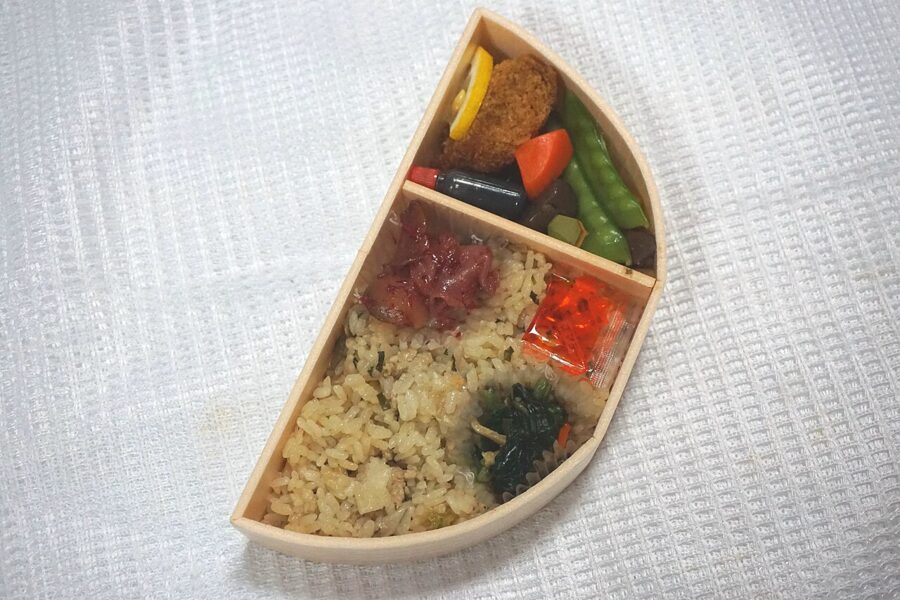
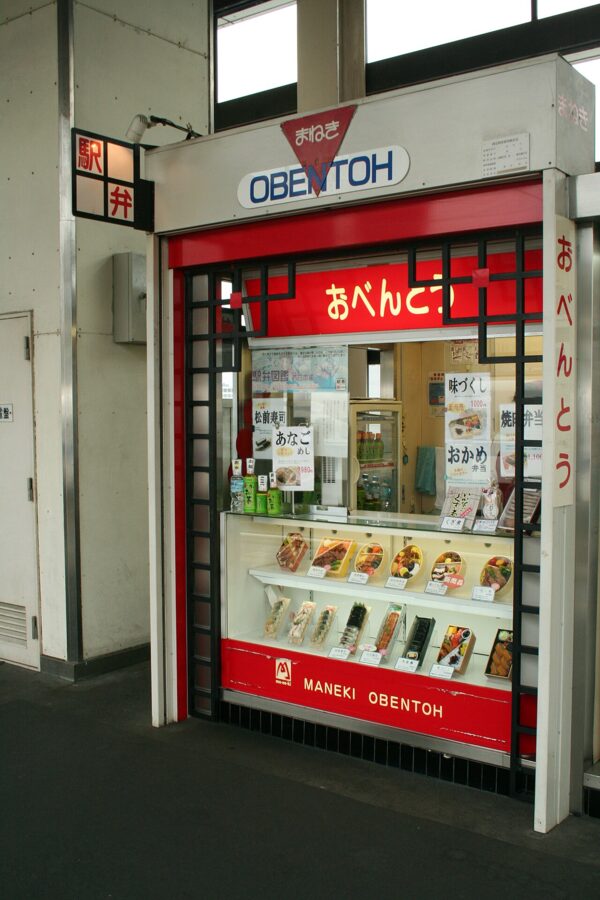
The box that looks like a modern ekiben came a few years later and further west. In 1889 a caterer called Maneki at Himeji Station packed rice and side dishes together in a wooden box, a makunouchi of the kind theatre-goers had been eating since the Edo period. Sea bream, rolled omelette, grilled kamaboko, kelp with soybeans, sweet chestnut paste, lily bulb, butterbur, Nara pickles, a pickled plum, white rice with black sesame: that’s the line-up recorded in a 1991 volume on Hyogo food from the Rural Culture Association. It sold for 12 sen when a plain rice-ball box cost around 5.
If you want the bigger picture of what Japan was eating when the railways arrived (beef, bread, and a good deal of national anxiety), my history of Japanese food picks up the Meiji story. The short version for ekiben is that the trains came first and the caterers followed, usually local inns and restaurants who saw a captive market with money and hours to fill.
The window years
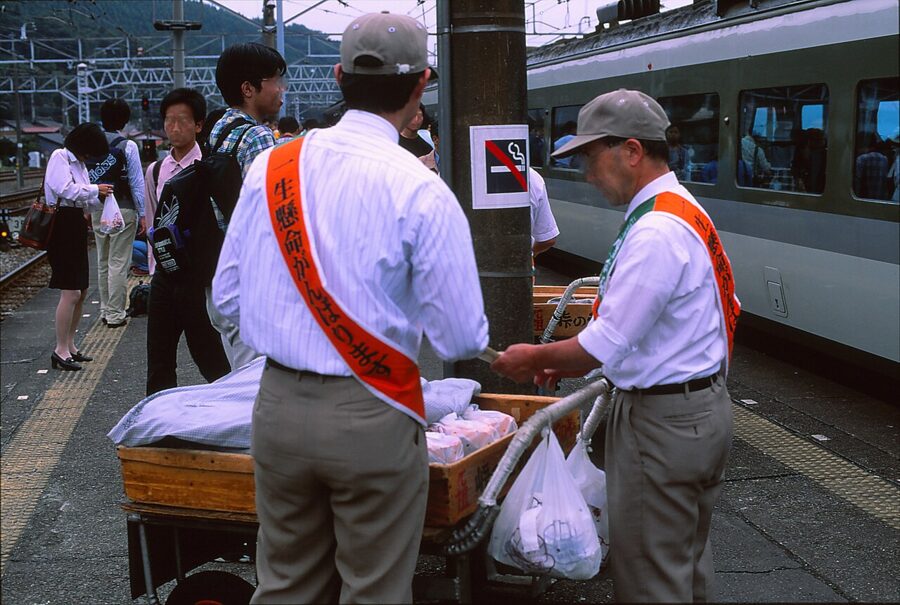
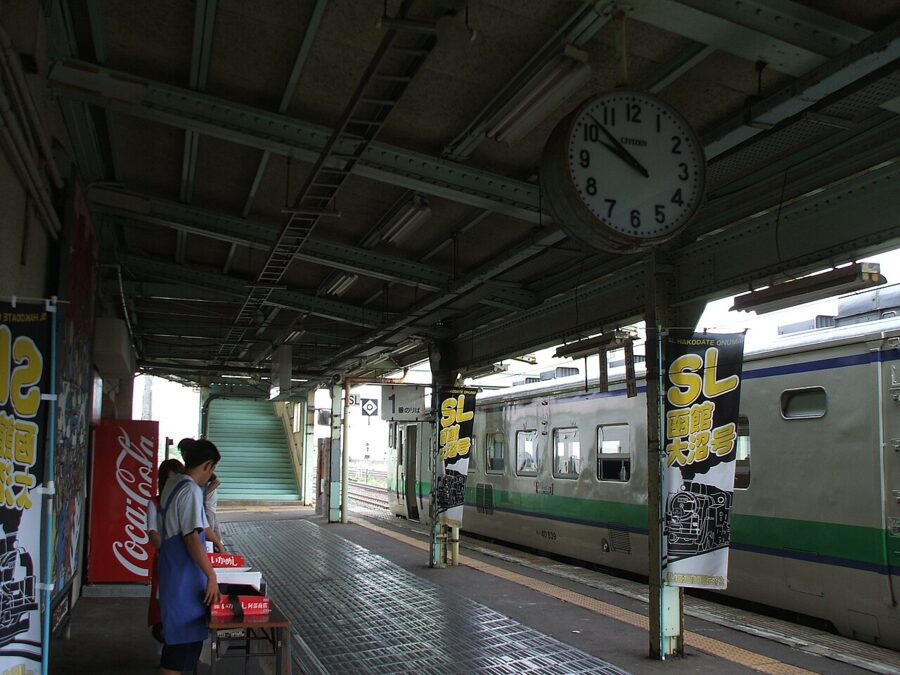
For most of the twentieth century you didn’t go to an ekiben. It came to you. Sellers called tachiuri walked the platform with a tray slung from a strap round the neck, calling out the name of the box, and passengers leaned out of the open windows to buy one before the whistle. After a price revision in 1917, a plain box cost 15 sen and a “superior” one 30.
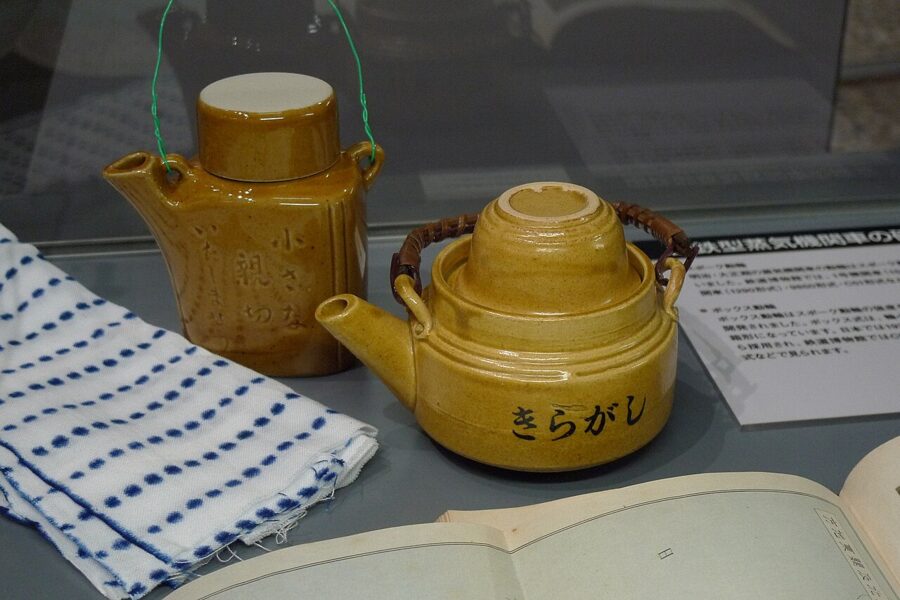
Tea came the same way. From 1889, when sellers at Shizuoka started filling small Shigaraki clay teapots, a station lunch came with a kisha dobin, a “train teapot” whose lid doubled as a cup. The railway banned them in 1921 on hygiene grounds and switched to glass bottles, which lasted only a few years: the tea looked unappetising through the glass, and bottles thrown from windows injured track workers.
Pottery came back, then soft plastic bottles from the late 1950s, then cans and, from 1996, PET bottles. You can still buy the green tea. The teapots turn up mostly as collectors’ pieces and the odd anniversary reissue.
The war bent everything. Caterers fed troop trains on a few hours’ notice, and from 1 November 1943, to save rice, the main stations switched their boxes to “potato bento”. After the war the menu recovered and kept growing, and then the trains themselves ended the window trade. Sealed windows, shorter stops, faster services, convenience stores and shopping malls inside the ticket gates all pushed sales off the platform and into shops.
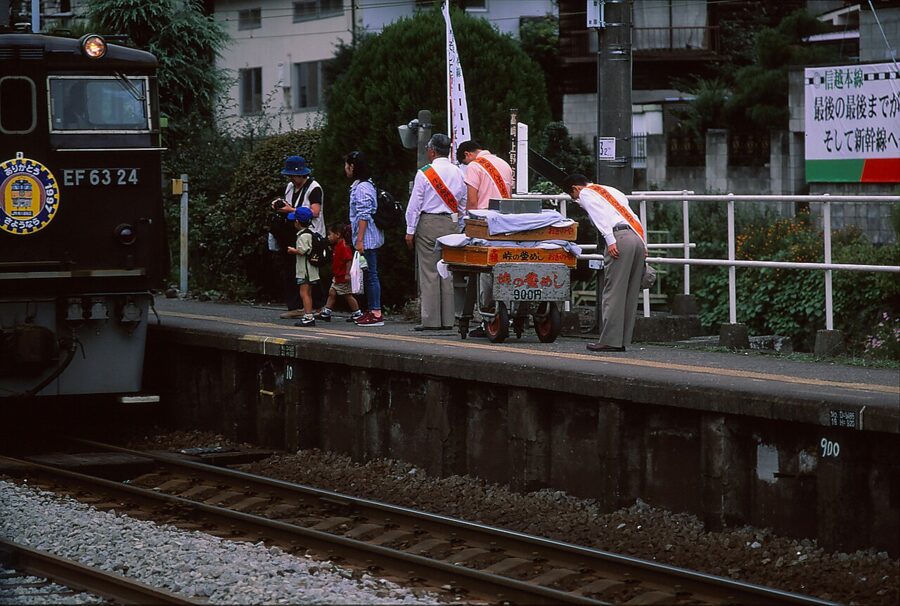
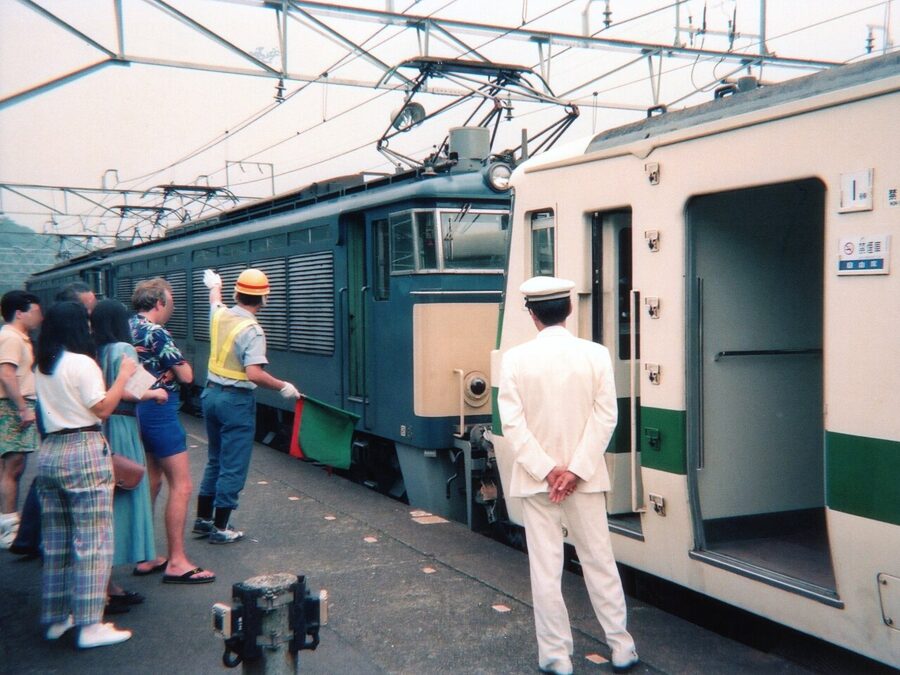
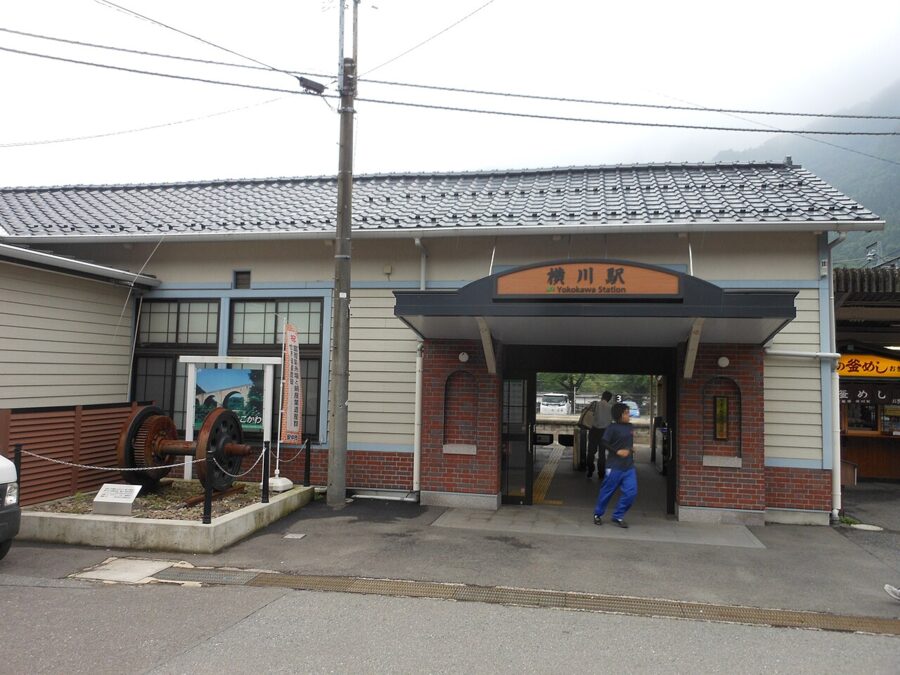
Nowhere shows the old business better than Yokokawa. Trains climbing the Usui Pass to Karuizawa had to couple pairs of EF63 banking locomotives there from 1963 until the line closed, so every train stood at the platform for several minutes. Oginoya’s staff sold kamameshi down the length of the train, then lined up and bowed as it pulled away.
Who still sells on the platform
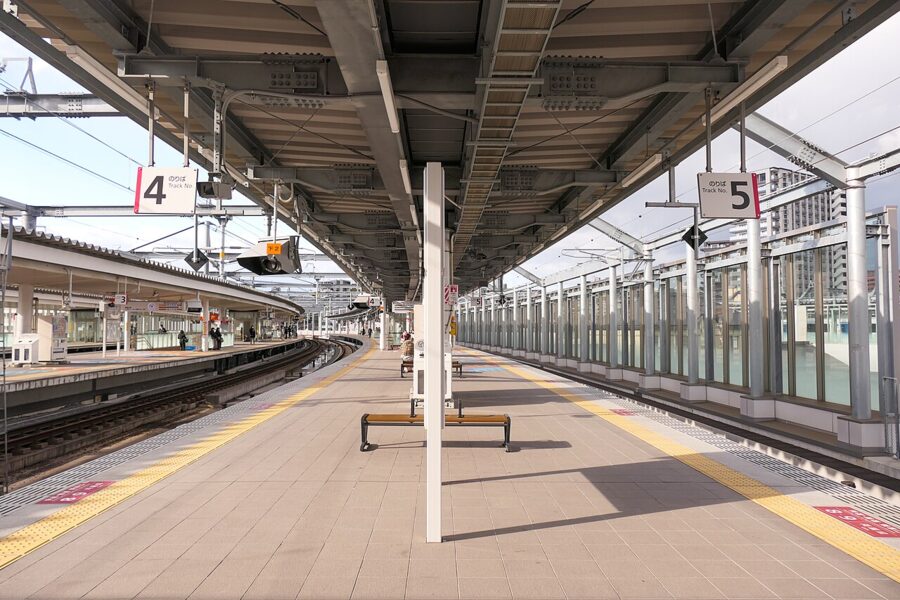
A handful of stations keep the tray going. The most dependable is Orio in Kitakyushu, where Tochikuken sells its kashiwa-meshi (chicken rice) near the north-exit stairs on platforms 4 and 5, 09:15–13:00 and 14:00–16:45. It doesn’t sell on Wednesdays or Thursdays, closes on the odd extra day, and won’t hold boxes for you, so if you’re making a trip of it, have a back-up plan.
Mori’s ikameshi seller is seasonal, as above. Down in Kagoshima, the old wooden station at Kareigawa has a weekend bento stall (more on that box below), which isn’t platform selling but has the same feel. Everywhere else, you buy from a shop.
The regional classics, line by line
There are hundreds of regional boxes, and the line-ups change every season. These are the ones with real history, a real connection to the place, and a reasonable chance of turning up either at the station or at a big Tokyo shop. The table is a cheat sheet; the detail follows.
| Box | Station / maker | What’s in it | Price |
|---|---|---|---|
| Toge no Kamameshi | Yokokawa / Oginoya | Chicken, chestnut, apricot, quail egg on dashi rice, in a clay pot | ¥1,500 |
| Ikameshi | Mori / Abe Shoten | Squid stuffed with glutinous and plain rice, simmered in soy | ¥880–1,450 (Keio 2026) |
| Masu no sushi | Toyama / Minamoto | Pressed cured trout on vinegared rice in bamboo leaves | ¥2,200 |
| Gyutan bento | Sendai / several makers | Grilled beef tongue on rice, often self-heating | ¥1,380–2,480 (Keio 2026) |
| Hipparidako-meshi | Nishi-Akashi / Awajiya | Octopus, conger eel and vegetables in a ceramic octopus pot | ¥1,480 |
| Niku-meshi | Kobe / Awajiya | Thin-sliced marinated beef on seasoned rice | ¥1,480 |
| Gyuniku Domannaka | Yonezawa / Shinkineya | Sweet-soy beef and minced beef over Yamagata rice | ¥1,620 (Keio 2026) |
| Anago-meshi | Miyajimaguchi / Ueno | Grilled conger eel on rice cooked in eel stock | ¥2,700 (Keio 2026) |
| Kanimeshi | Oshamambe / Kanaya | Flaked crab over rice | Shop only |
| Hyakunen no Tabi Monogatari | Kareigawa / Yamadaya | Shiitake and bamboo-shoot rice with Kagoshima home cooking | ¥1,800 |
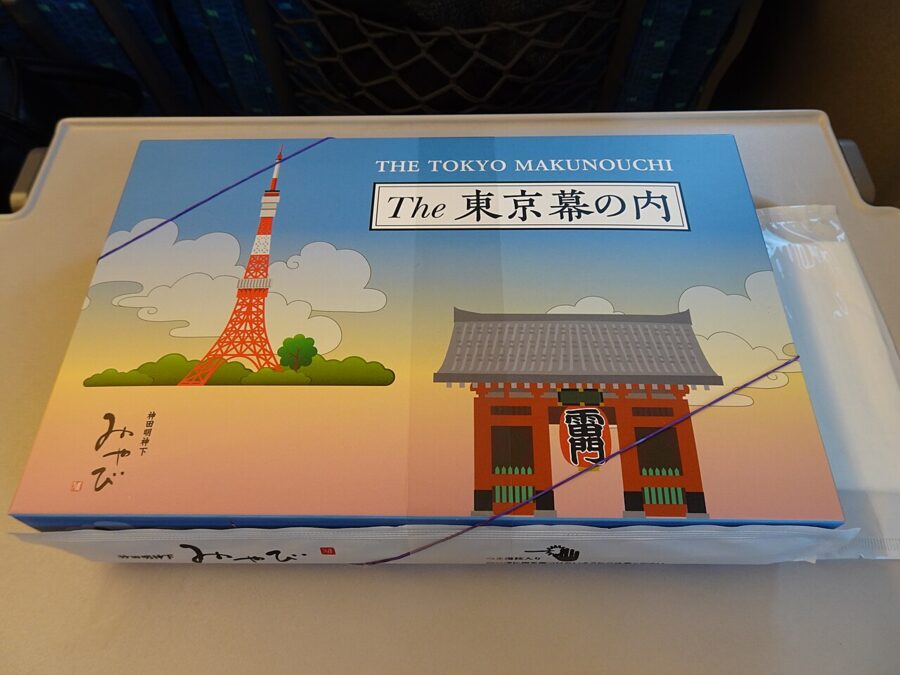
| Shumai Bento | Yokohama / Kiyoken | Five shumai and a makunouchi spread | ¥1,180 |
| Daruma Bento | Takasaki / Takaben | Mountain vegetables and chicken on soy rice, in a Daruma box | ¥1,500 |
Toge no Kamameshi (Yokokawa)
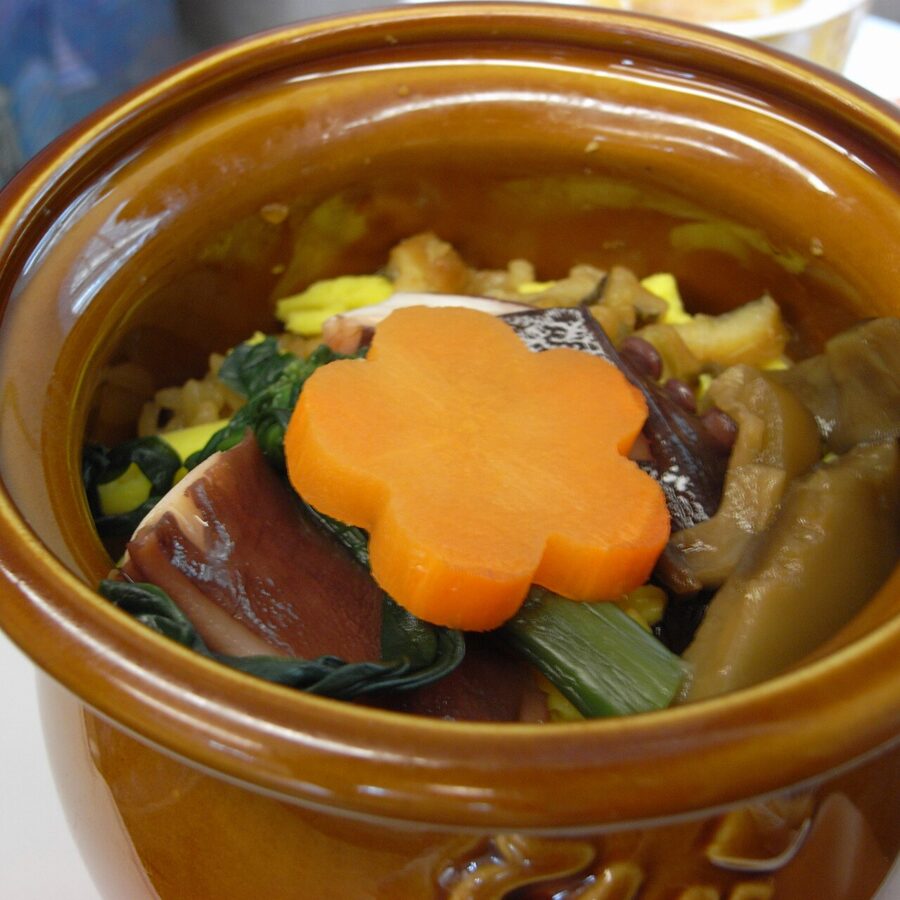
Oginoya was a struggling caterer in the 1950s, with the best-placed platform in Japan and a lunch nobody remembered. Its fourth president, Takamizawa Mineji, went onto the stopped trains and asked passengers what they wanted. The answer, more or less, was something warm and homely, and the idea came from the clay teapots: pottery held heat and didn’t take on smells. A potter in Mashiko made a one-portion rice pot, and Toge no Kamameshi went on sale at Yokokawa on 1 February 1958.
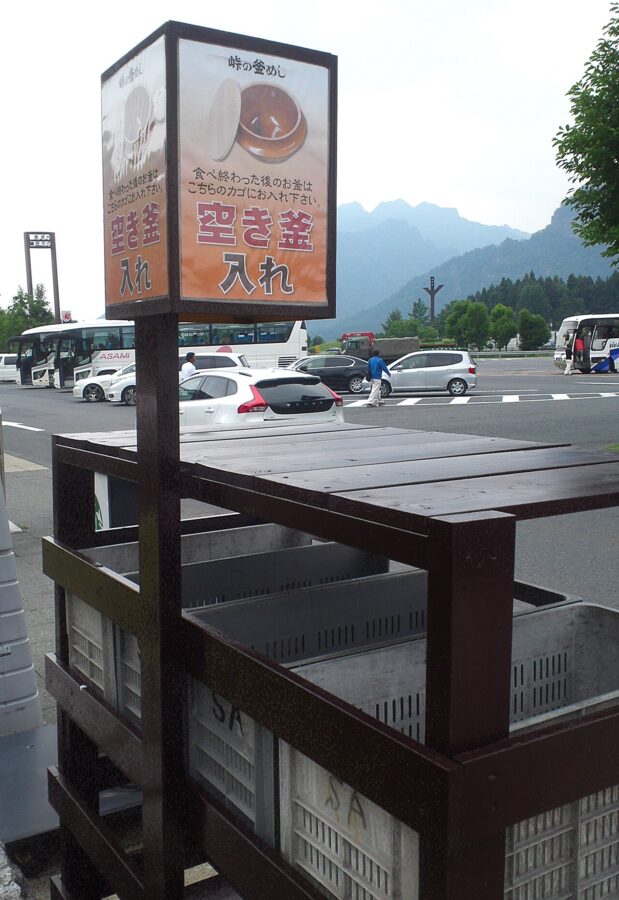
Oginoya says it has sold about 170 million since. Inside: rice cooked in its own dashi with a light soy flavour, then chicken, burdock, shiitake, bamboo shoot, a quail egg, a chestnut, an apricot, green peas and red pickled ginger arranged on top. The apricot is the bit people argue about. I eat it last, like a sweet.
Yokokawa itself is now the end of a branch from Takasaki, since the line over the pass closed in 1997 when the Nagano Shinkansen opened. Oginoya got ahead of that decades earlier by building drive-ins and service-area shops, so most kamameshi are now sold to people in cars. If you’re coming from Tokyo, the pottery version is sold at Oginoya’s own counters, including the Takasaki station stand and the Takashimaya department stores in Nihonbashi and Shinjuku. Ekibenya Matsuri at Tokyo Station sells the version in a pressed-pulp pot, same price, same food, no pot to carry home.
Ikameshi (Mori)
The squid are small, the size of your palm, and each one is packed with rice, sealed and simmered in a sweet soy broth until the rice inside turns sticky and the squid goes the colour of strong tea. Abe Shoten in Mori, on the Hakodate Main Line, has made them since 1941. Rice was rationed, squid was plentiful, and a squid stuffed with a mix of glutinous and ordinary rice filled a soldier on a troop train for a fraction of the grain. When Japanese catches fell in the 1970s, Abe Shoten turned to squid from New Zealand, which stays softer once cooked and cooled.
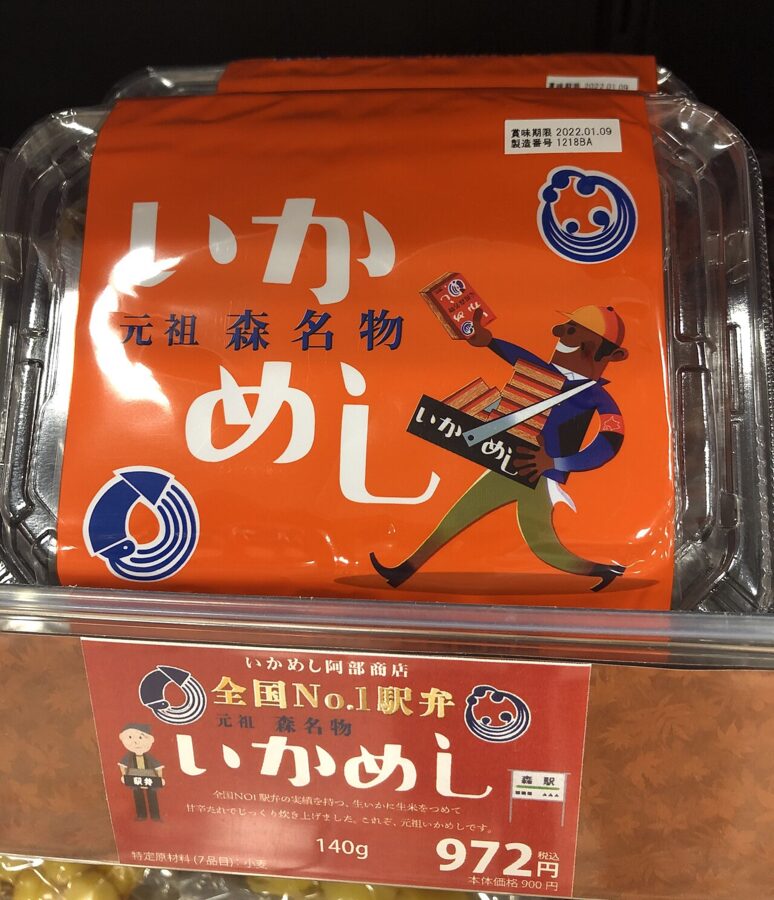
Ikameshi became famous not on the platform but in Shinjuku. Abe Shoten entered it in the first Keio Department Store ekiben fair in 1966, and by the second fair it was the top seller. It’s been a fixture of department-store fairs ever since, which is why plenty of Japanese have eaten Mori’s ikameshi without ever going near Mori. At the January 2026 Keio fair the smaller box was ¥880 and a bigger one ¥1,450.
In Mori itself, Abe Shoten sells through Shibata Shoten in front of the station and a Lawson in town, all year. There’s no year-round stand in the station, so don’t get off a train at Mori expecting a kiosk.
Masu no sushi (Toyama)
A round wooden box, a ring of bamboo leaves folded over pink cured trout on pressed vinegared rice, cut like a cake with the plastic knife in the lid. Minamoto in Toyama has been in the ekiben trade for over a century, and its masu no sushi is the box most Japanese picture when you say “Toyama”. I’ve covered how it’s made, and its pressed-sushi cousins, in my guide to types of sushi, so here’s just the buying detail.
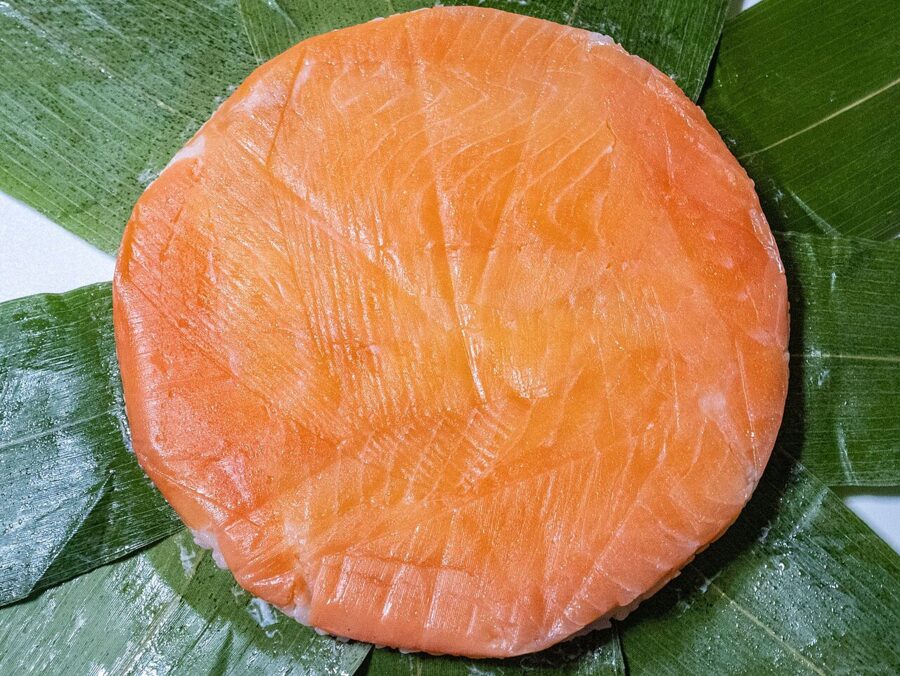
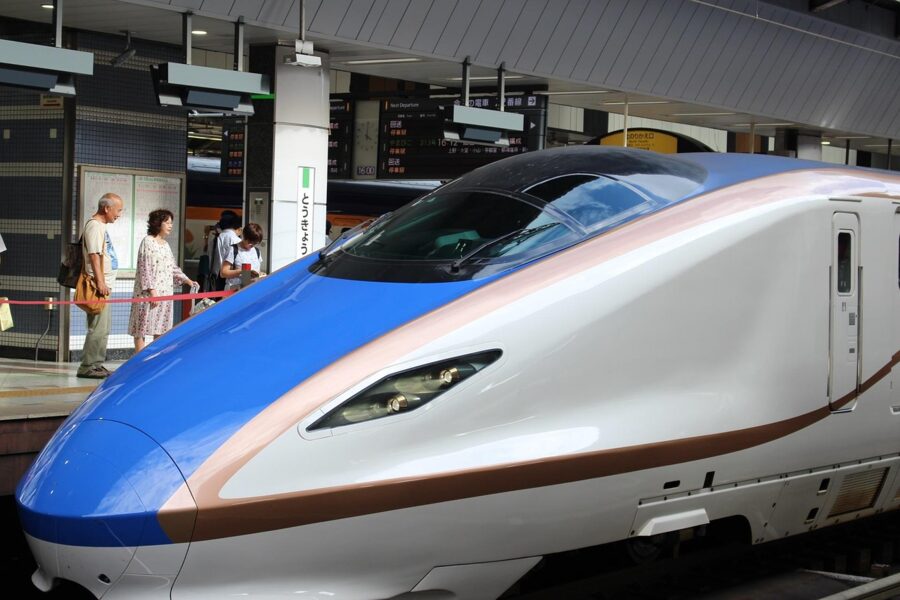
The full box is ¥2,200 and serves two. If you’re alone, the ¥1,300 small box is the sensible order. Minamoto’s head office in Toyama runs a Masu no Sushi Museum with a factory tour, which is worth a detour if you’re already on the Hokuriku Shinkansen.
Gyutan bento (Sendai)
Sendai is beef-tongue city, and its station has more gyutan boxes than any one person needs. Thick-cut grilled tongue, often with a green chilli pickled in miso on the side, over plain or barley rice. At the January 2026 Keio fair, Sendai boxes ran from ¥1,380 for a miso-seasoned tongue box to ¥2,480 for the thick-cut “shin-tan”.
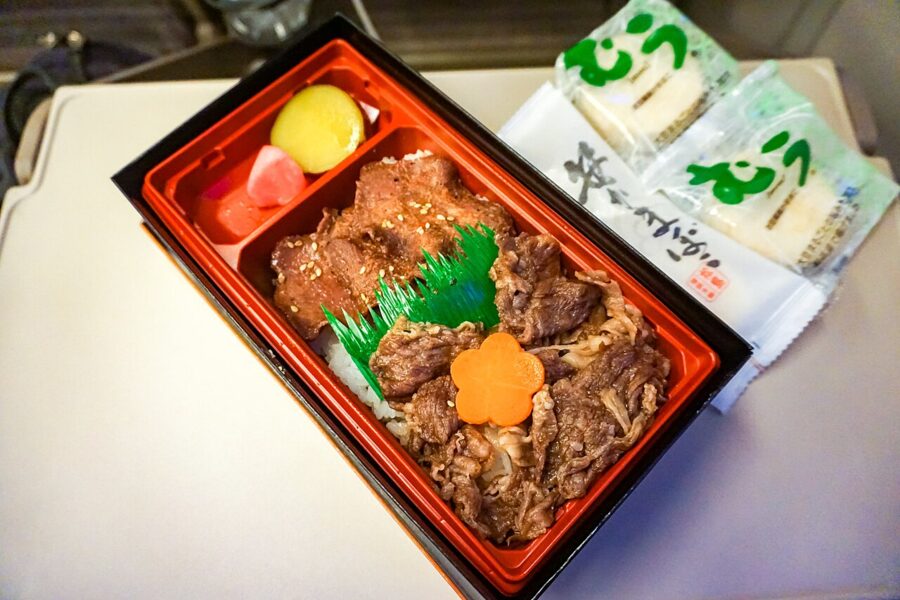
Many of them heat themselves (see the next section), and tongue is one meat that’s clearly better warm. If you’re choosing on the platform at Sendai, pick one with the string.
Kobe, and the beef boxes
Awajiya has catered Kobe Station since just after the war, and its beef boxes are the easiest good beef lunch in western Japan that doesn’t need a reservation. Niku-meshi, on sale since 1965, is thin-sliced marinated beef laid over seasoned rice, ¥1,480. A Kobe beef yakiniku box made with the specialist butcher Kisshokichi is ¥1,500, and the self-heating sukiyaki-and-steak box is ¥1,680. Buy them at Awajiya’s own shops in Kobe and Shin-Kobe stations (Shin-Kobe’s is upstairs, inside the gates).
Don’t expect a fillet. These are everyday cuts of good beef, sweet-soy simmered or grilled with tare. If you want to understand the brands before you pay for one, my wagyu guide sorts Kobe from Matsusaka from the rest.
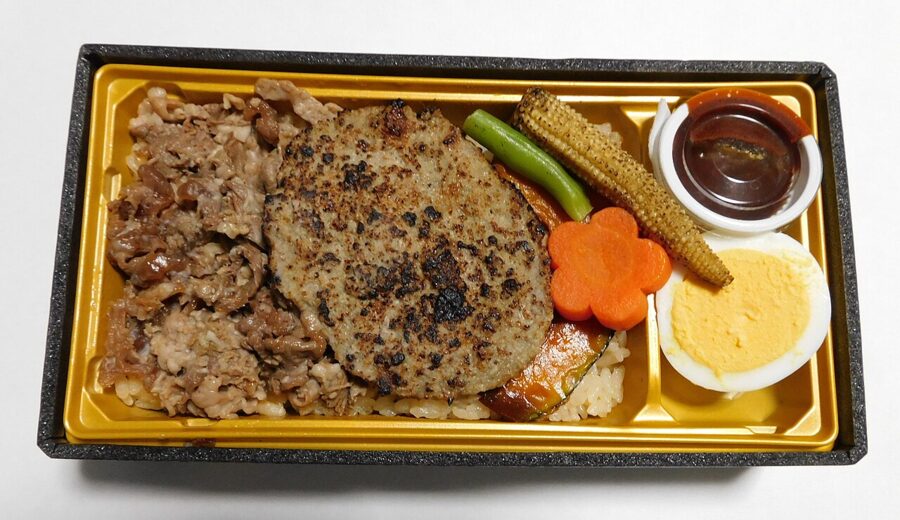
Further north, Yonezawa in Yamagata has been selling beef boxes since 1957. Shinkineya’s Gyuniku Domannaka, launched in 1992 when the Yamagata Shinkansen opened, covers rice of the Yamagata “Domannaka” variety with sweet-soy beef and minced beef. It’s one of the few regional boxes you’ll reliably find at Tokyo Station, and it has finished in the top ten at every Keio fair since it first appeared there in 2000.
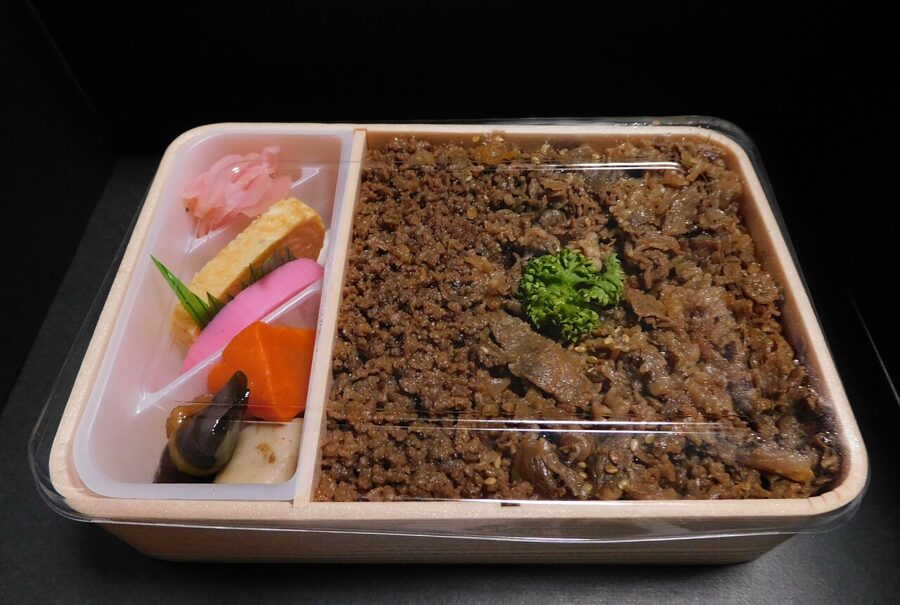
Sukiyaki, in its dozens of regional versions, is the most common way beef ends up in a box, and if you’re curious about the restaurant form, my guide to sukiyaki and shabu-shabu covers the Kansai and Kanto styles the boxes are copying.
Hiroshima’s anago-meshi
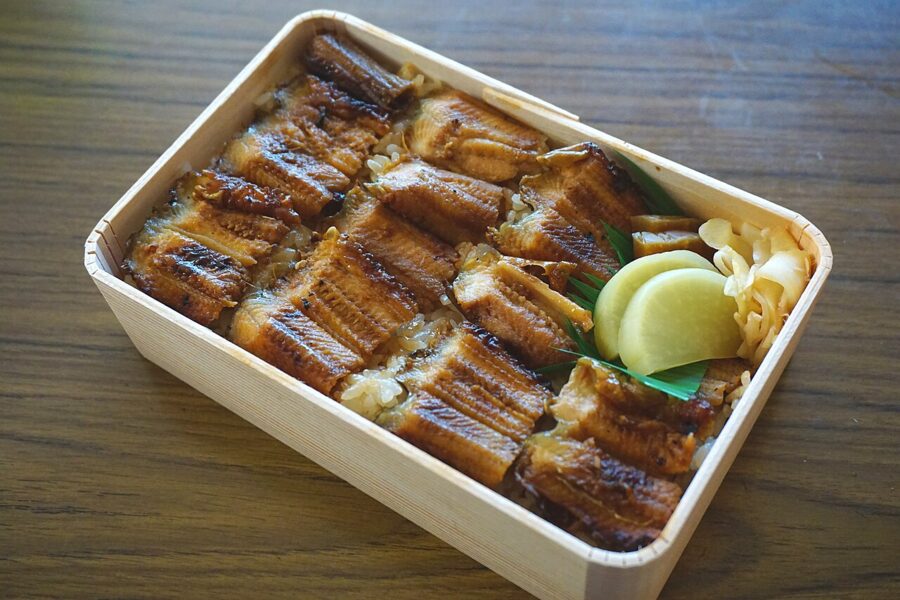
Grilled conger eel on rice cooked in eel broth, the speciality of the ferry pier for Miyajima. I’ve written about Ueno, the family that has sold it at Miyajimaguchi since the early 1900s, in my Hiroshima and Miyajima food guide, so I won’t repeat it. The short version: buy the box rather than queue for the restaurant if you’re short of time, and expect it to sell out.
Kagoshima: Kareigawa and the black-pork boxes
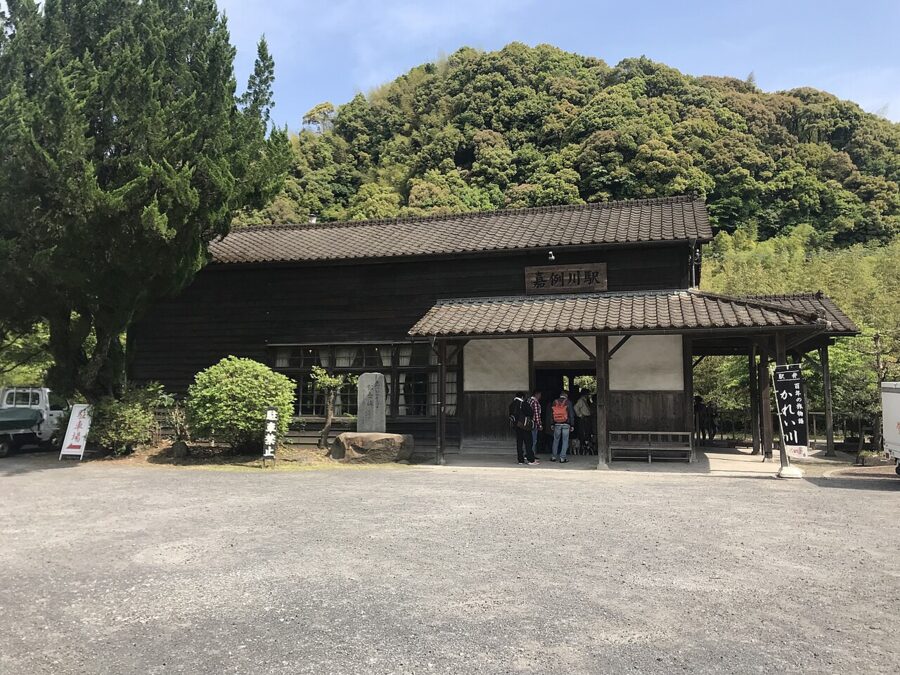
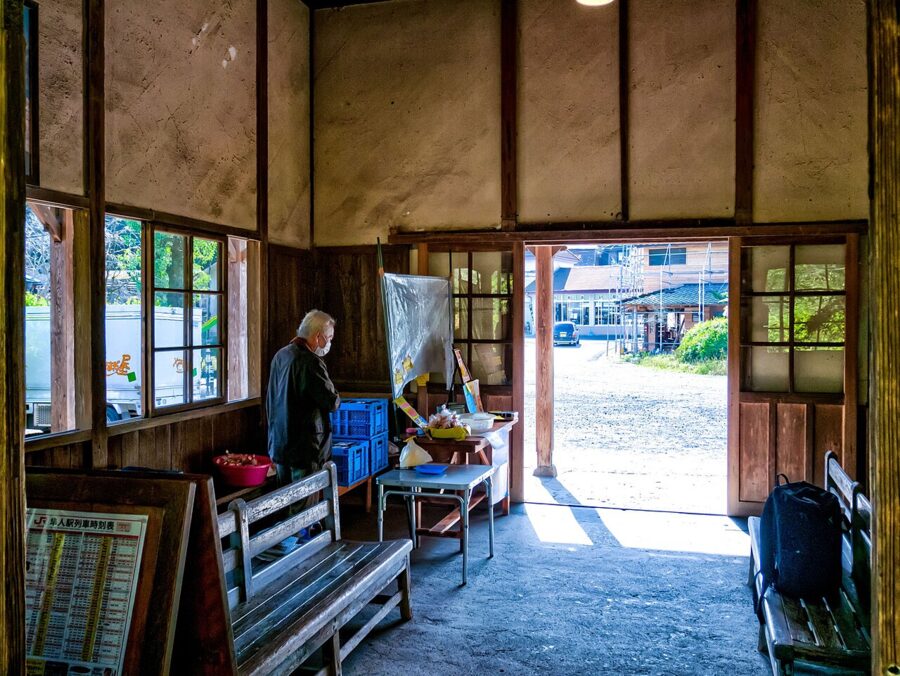
Kareigawa is an unstaffed station on the JR Hisatsu Line in Kirishima, with a wooden building that has stood since the line opened in 1903 and is now a registered cultural property. On Saturdays, Sundays and holidays, from about 10:00, a local caterer called Yamadaya sells two boxes from a table inside it. The famous one is Hyakunen no Tabi Monogatari (“a hundred-year journey”), ¥1,800 since May 2025.
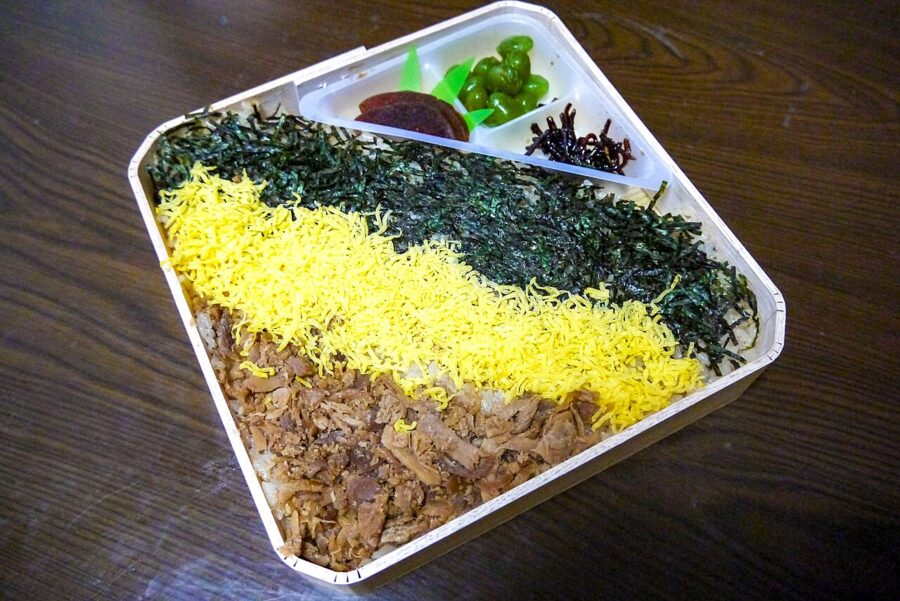
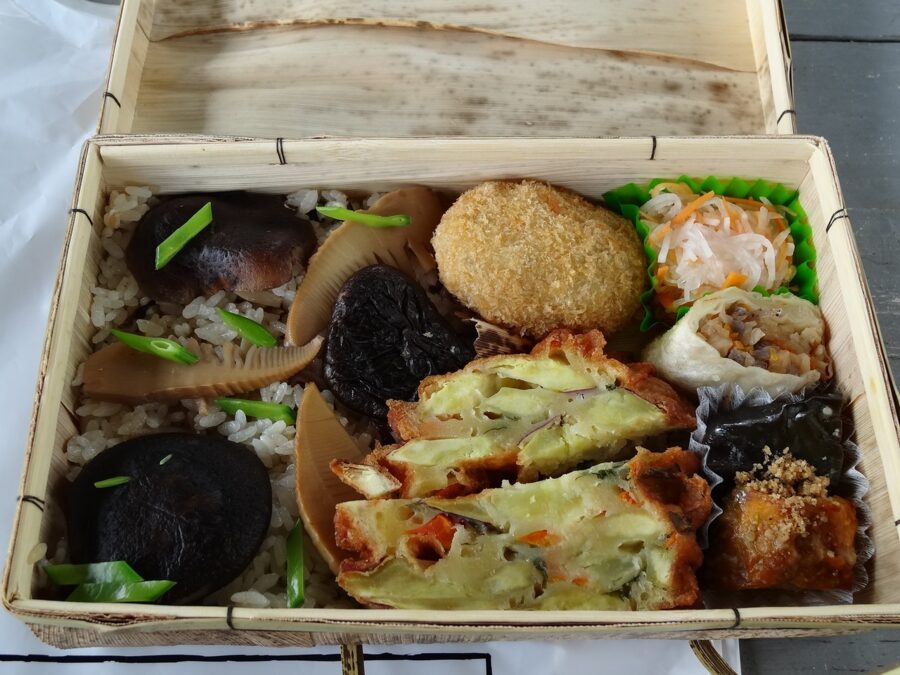
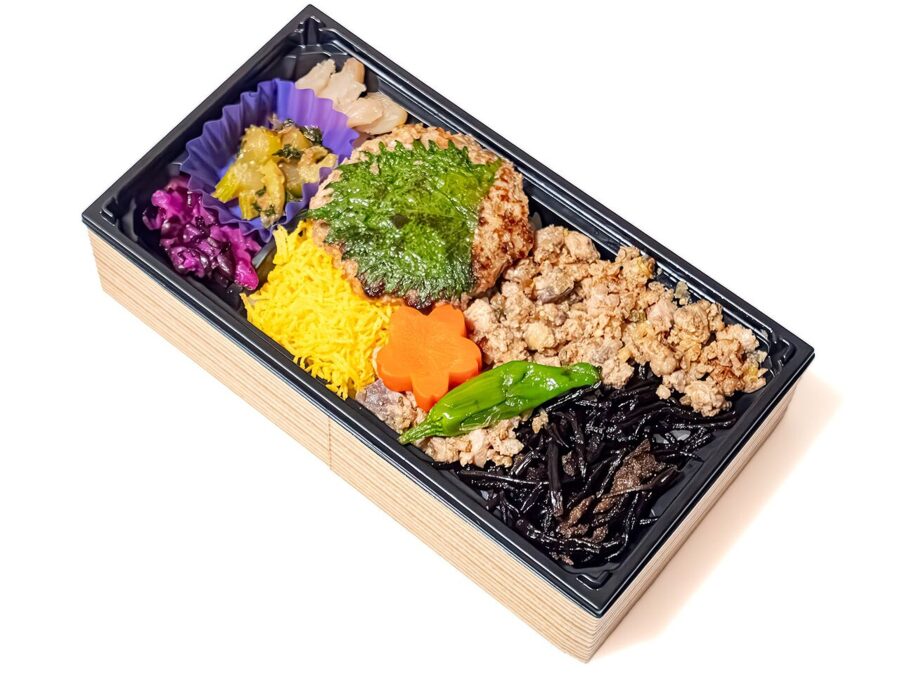
It isn’t a beef box or a seafood box. It’s rice cooked with shiitake and bamboo shoots grown in Kareigawa, a sweet-potato fritter called gane, aubergine and pumpkin with home-made barley miso, a croquette with local shiitake, vinegared radish. Country cooking, in other words, and it topped JR Kyushu’s ekiben ranking three years running. Yamadaya takes reservations up to two days ahead, and on a busy weekend you’ll want one.
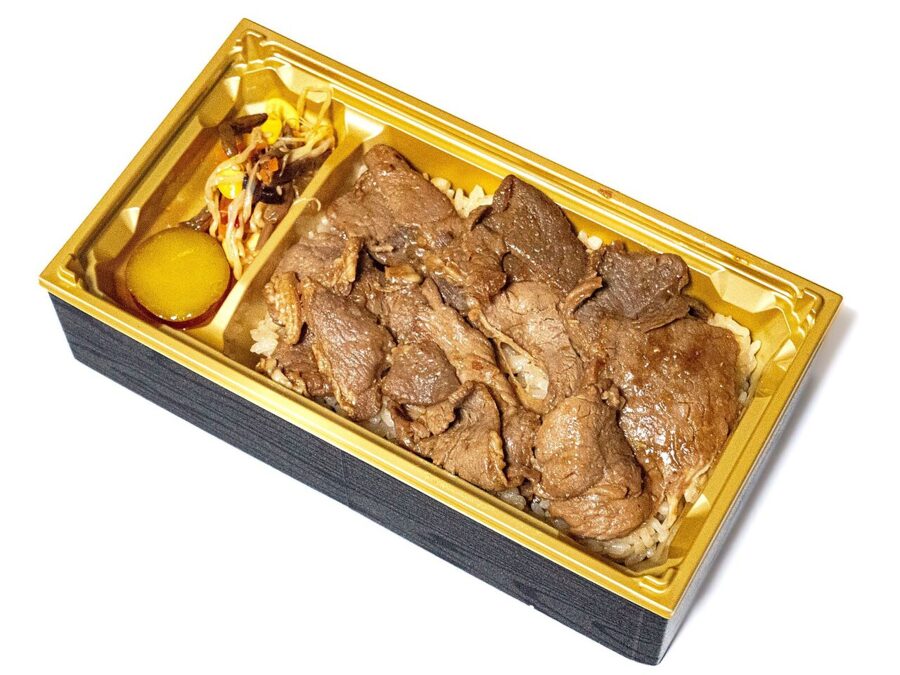
Many of Kagoshima’s other boxes are about kurobuta, the Berkshire-line black pork the prefecture is known for. A thick-cut black-pork kakuni box from Kagoshima-Chuo was ¥1,380 at the 2026 Keio fair. This is shochu country, and a small bottle of sweet-potato shochu with a pork box is a very Kagoshima way to spend the ride north.
Others that earn the detour
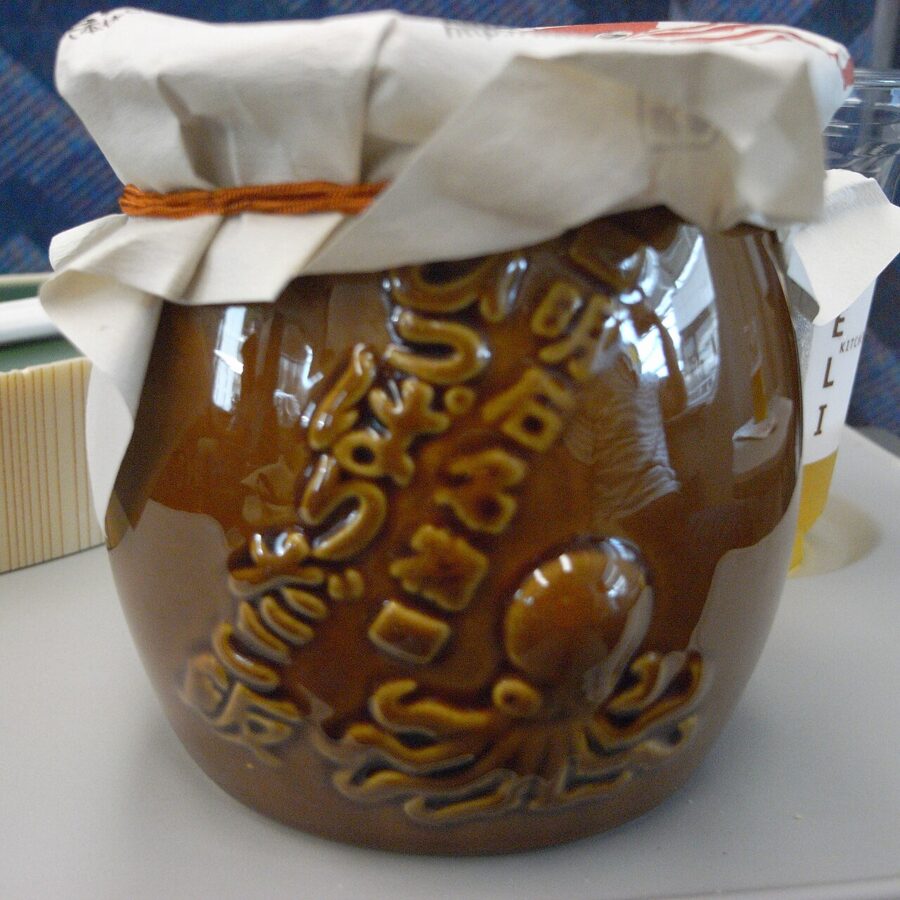
Hipparidako-meshi (Nishi-Akashi). Awajiya launched it in 1998 for the opening of the Akashi Kaikyo Bridge, and it’s now the firm’s signature: octopus, conger eel and vegetables on soy rice in a ceramic pot shaped like the clay pots Akashi fishermen use to trap octopus, ¥1,480.
Awajiya marked its ten-millionth box in 2017 with a gold pot, and has done a long run of special editions since. Poor Akashi catches mean that since 2021 most of the octopus has come from elsewhere in Japan.
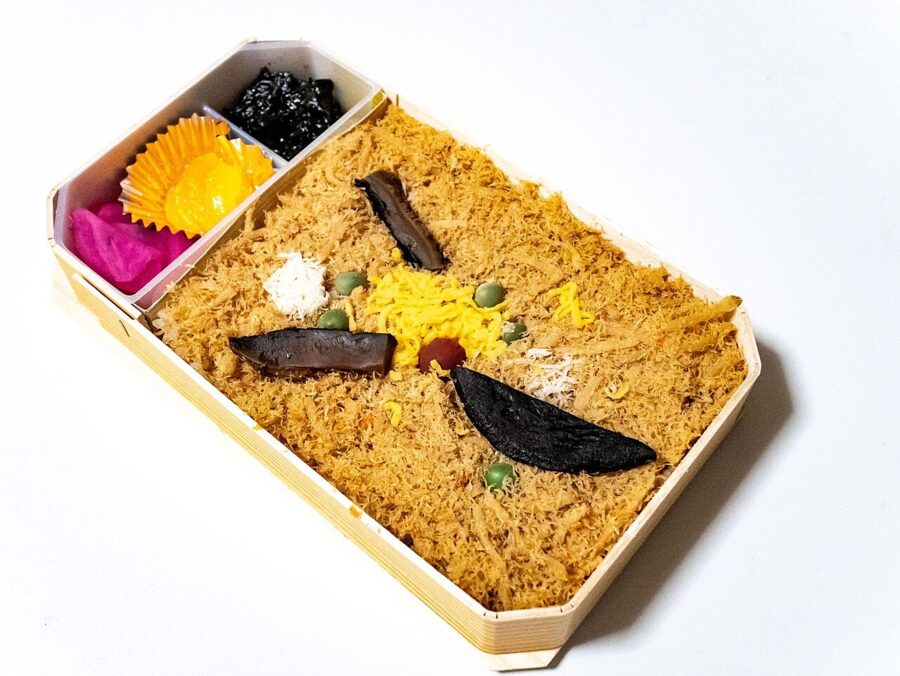
Kanimeshi (Oshamambe). Kanaya worked out the recipe in 1950 to sell crab all year rather than only in season: flaked crab over rice, with tsukudani and pickles on the side. Its main shop in Oshamambe is open 08:00–16:00, closed Tuesdays and the third Wednesday, and closes early once the boxes are gone.
Daruma Bento (Takasaki). Takaben has sold it since 1960, named for the Daruma dolls made around Takasaki and sold at the temple fair at Shorinzan Darumaji every 6–7 January. Mountain vegetables, chicken, chestnut and konnyaku on soy-flavoured rice, ¥1,500, in a red plastic Daruma with a coin slot in the mouth (the original was ceramic until 1973). Takasaki Station sells it 06:30–20:30.
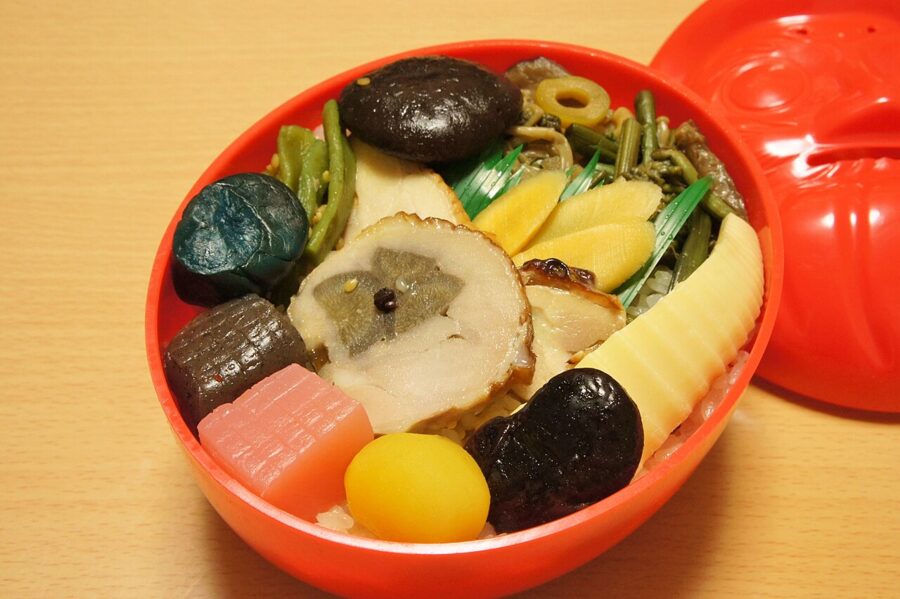
Torimeshi (Odate). Hanazen in Odate, Akita, makes the chicken rice that Tohoku people tend to name first: sweet-simmered chicken over seasoned rice. ¥1,070 at the 2026 Keio fair.
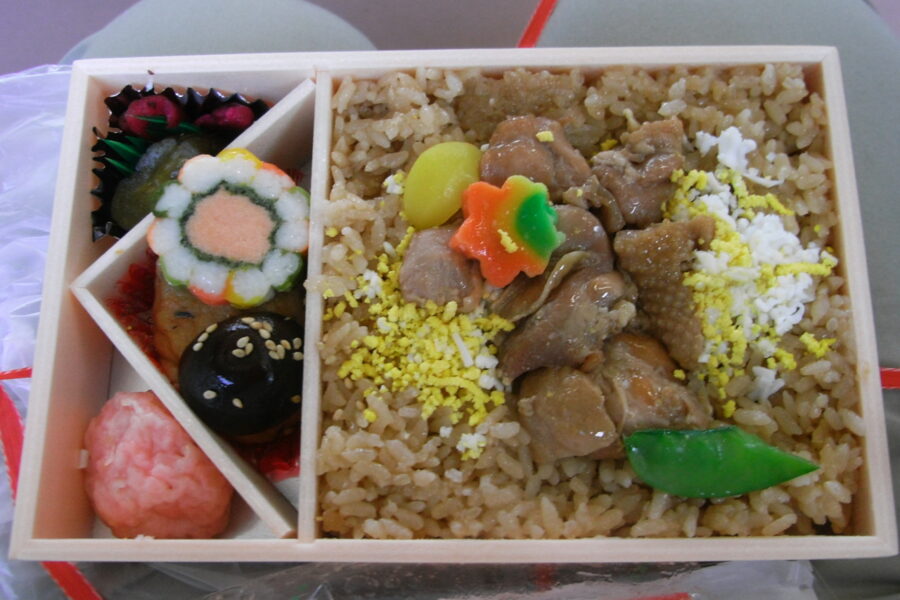
Hamamatsu’s eel. Hamamatsu, by Lake Hamana, is the Tokaido Shinkansen’s eel stop. An unagi-mabushi box from Hamamatsu was ¥1,600 at the 2026 Keio fair. My unagi guide covers the restaurants if you’d rather get off the train.
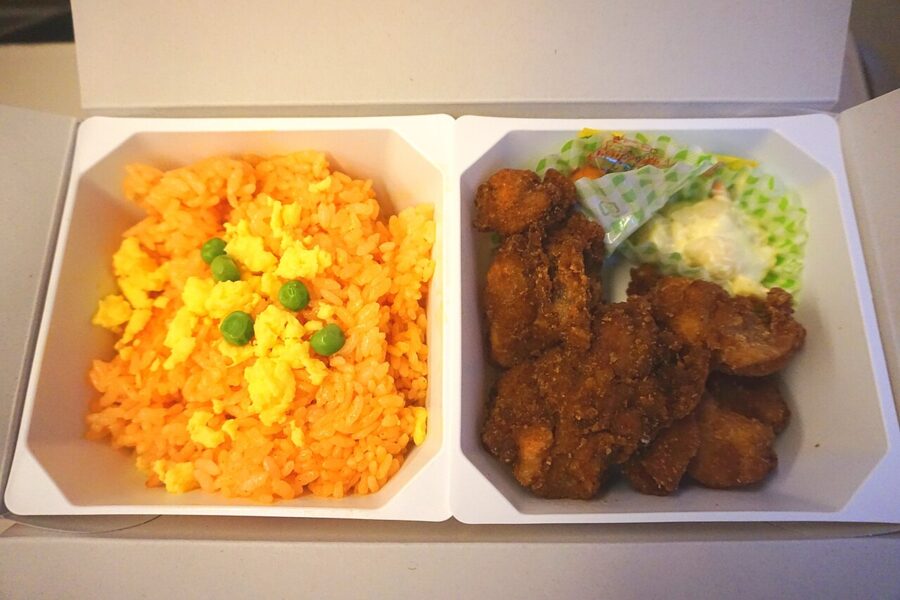
Tokyo’s own. The capital’s famous box is unglamorous: Chicken Bento, sold since 1964, fried chicken with tomato-flavoured rice, ¥1,000. It’s a children’s favourite and a hangover cure. Ofuna-ken, south of Yokohama, prints “since 1898” on the wrapper of its sandwich box, the first station sandwich in Japan by its own claim, and makes the horse mackerel pressed sushi my sushi guide covers.
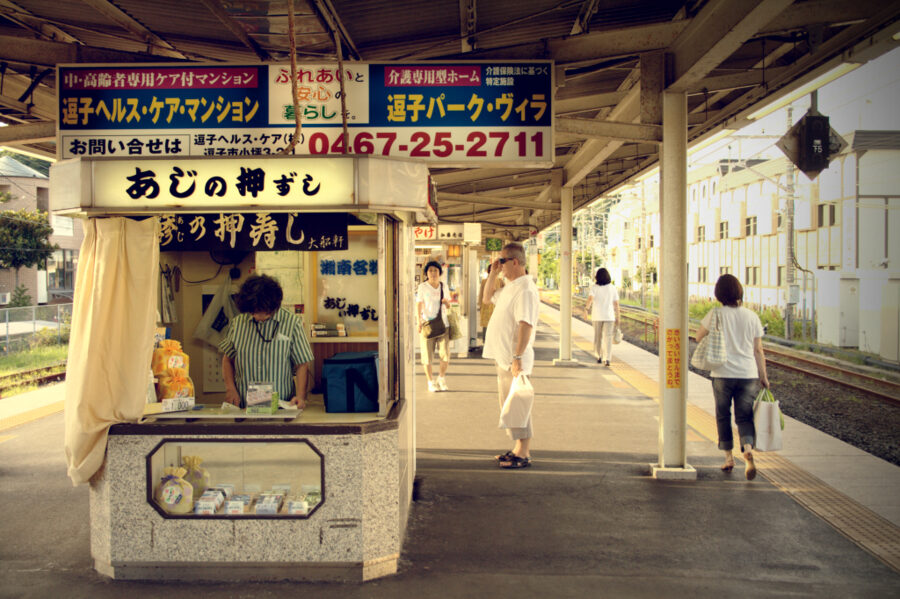
A few more from boxes I’d buy again. Kanazawa’s rosy seabass (nodoguro) rice, a reason to linger on the platform after a weekend of Kanazawa‘s seafood. Hakata’s yakitori box (¥1,070 at Keio), and Utsunomiya’s gyoza rice. None of them are famous in the way the kamameshi is, and all of them taste of the place.
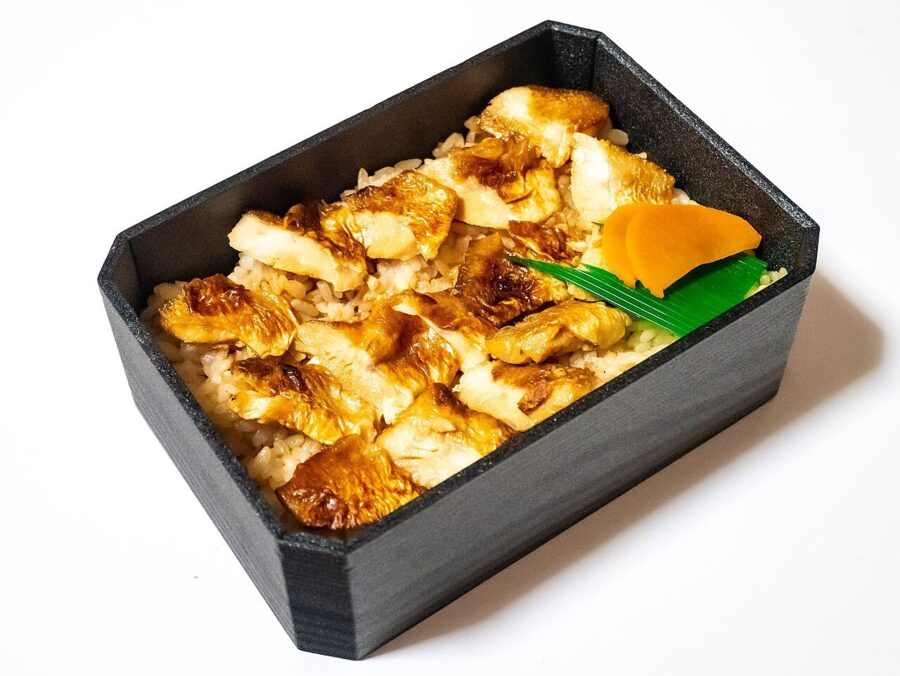
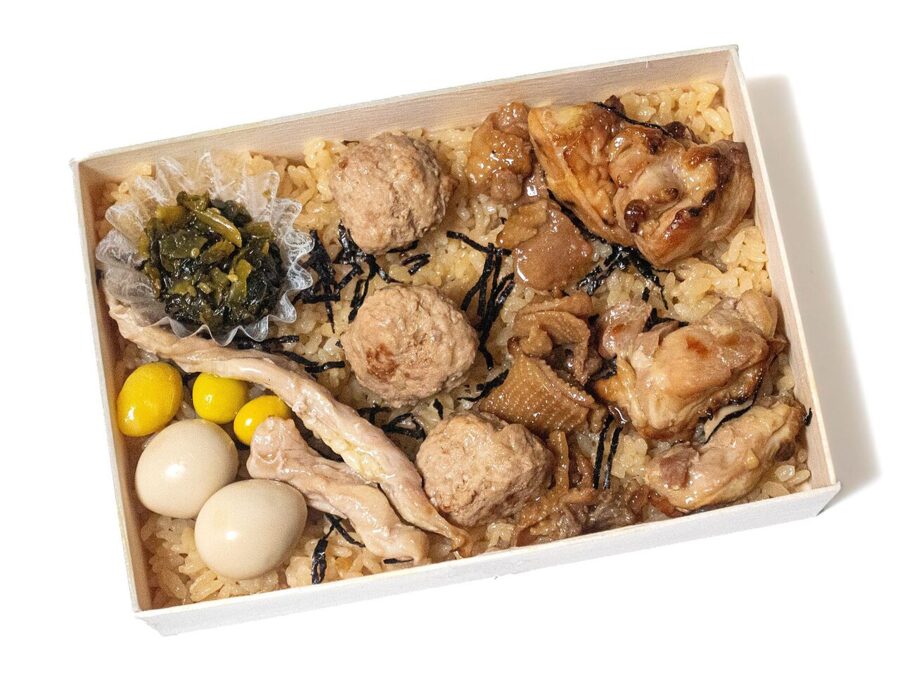
Pull the string
In 1988 Awajiya worked with a chemicals maker on a box that heats itself. Under the food tray sits a sealed pouch of water above a layer of quicklime. You pull a string on the side, the pouch tears, the water hits the lime, and the reaction gives off enough heat to steam the food through. Awajiya sells several, under the name atchitchi, which is what you say when you’ve touched something hot.
Other caterers followed, Sendai’s gyutan makers among the best known. Most heated boxes are beef: sukiyaki, tongue, gyudon-style beef. The instructions are printed on the box, usually with a diagram, and they’re worth following exactly. Put the box flat, pull the string firmly, wait the time the box tells you to, and keep your hands off the vents while it steams.
Two warnings. First, the steam is real, and a box that tips while it’s reacting will scald. Second, a heated beef box on a full Shinkansen smells exactly like a heated beef box on a full Shinkansen. That’s the subject of the next-but-one section.
Where to buy them
Tokyo Station
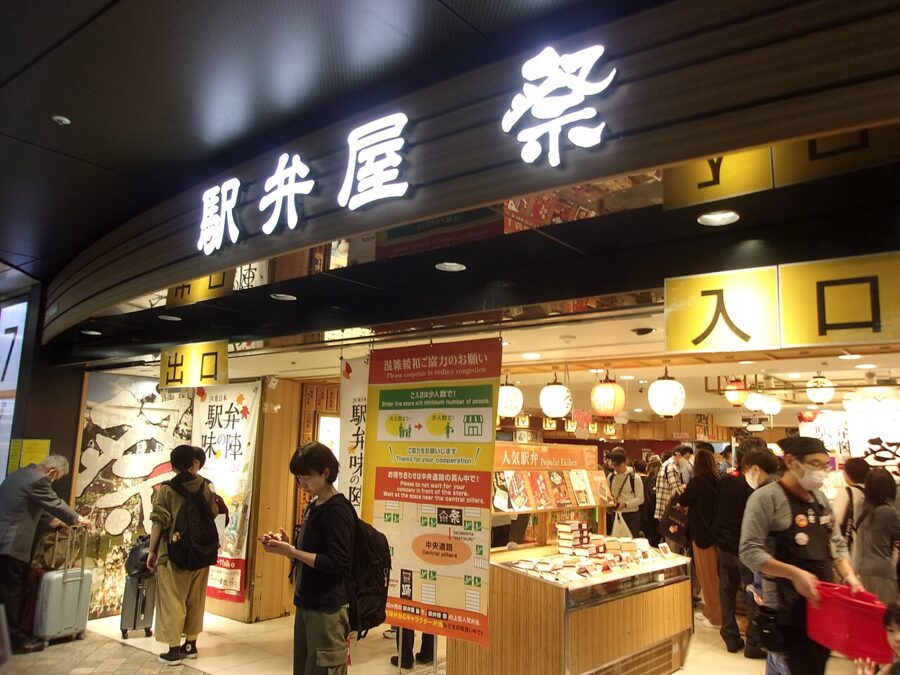
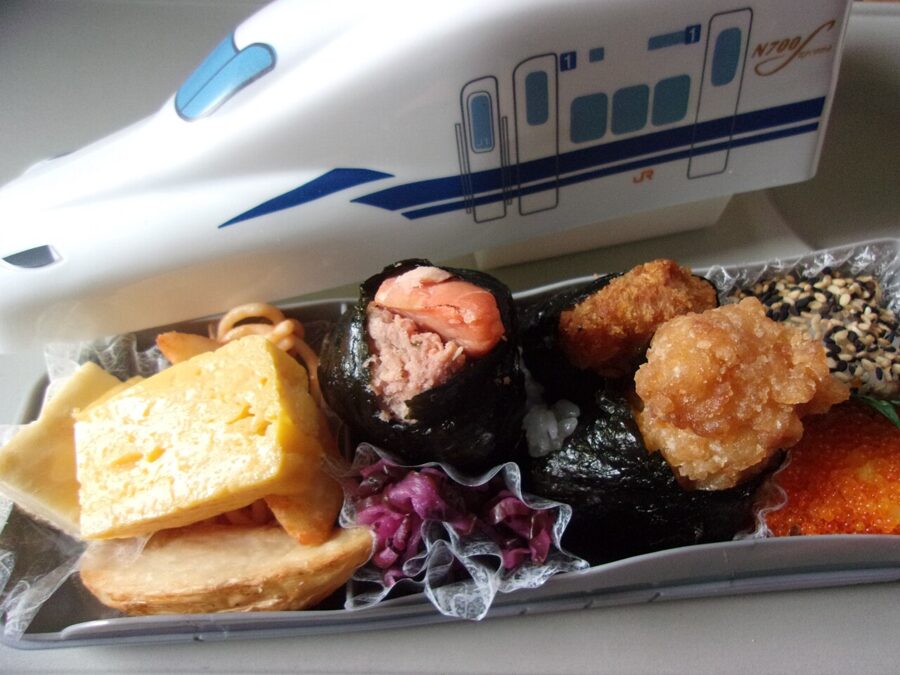
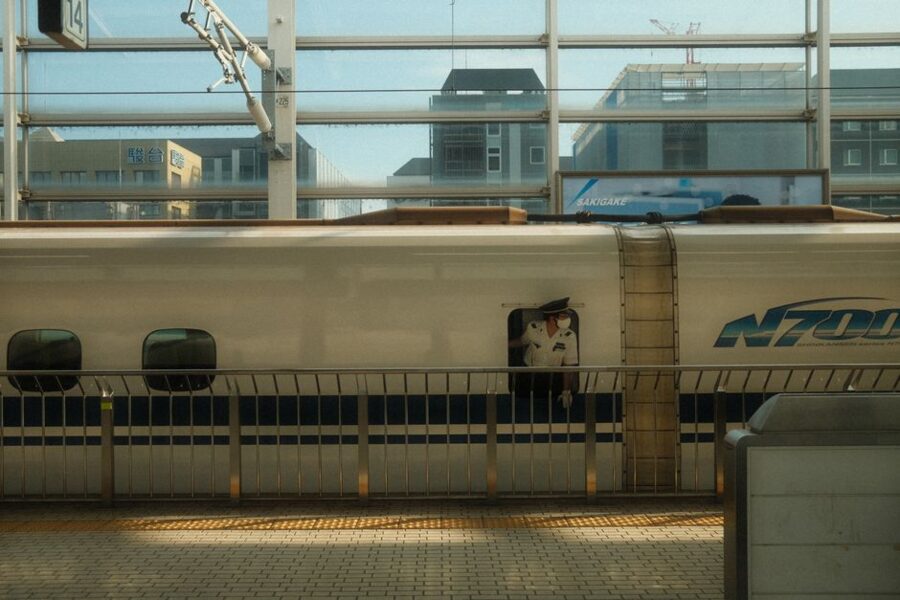
Ekibenya Matsuri, run by JR East’s catering arm, is the shop that changed how people buy ekiben. It’s inside the JR ticket gates on the central passage, the wide corridor that links the Marunouchi and Yaesu sides at ground level, and it’s open 05:30–22:00 every day. Around 150 boxes are on the shelves at any time: regional classics shipped in from around the country, Tokyo boxes, seasonal one-offs, and a shelf of children’s boxes shaped like Shinkansen.
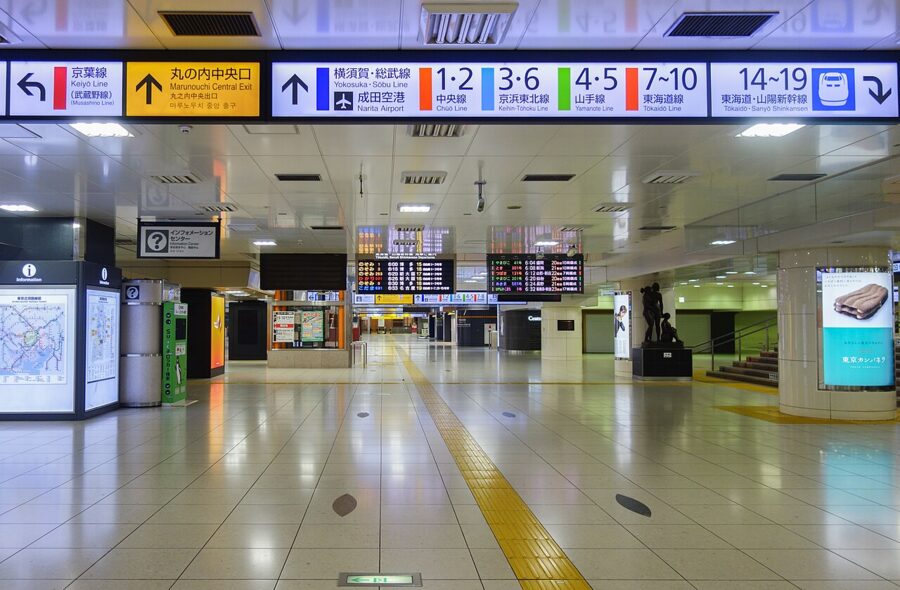
Two things I’ve learnt. It’s at its most crowded on weekday mornings, when business travellers buy breakfast, and on holiday weekends, and the popular regional boxes go first. And it has a smaller sibling nearby, Ekibenya Odori, open 06:00–21:00, which stocks the top ten sellers for people who don’t want to browse. If you know what you want and your train leaves in eight minutes, go to Odori.
Other big stations
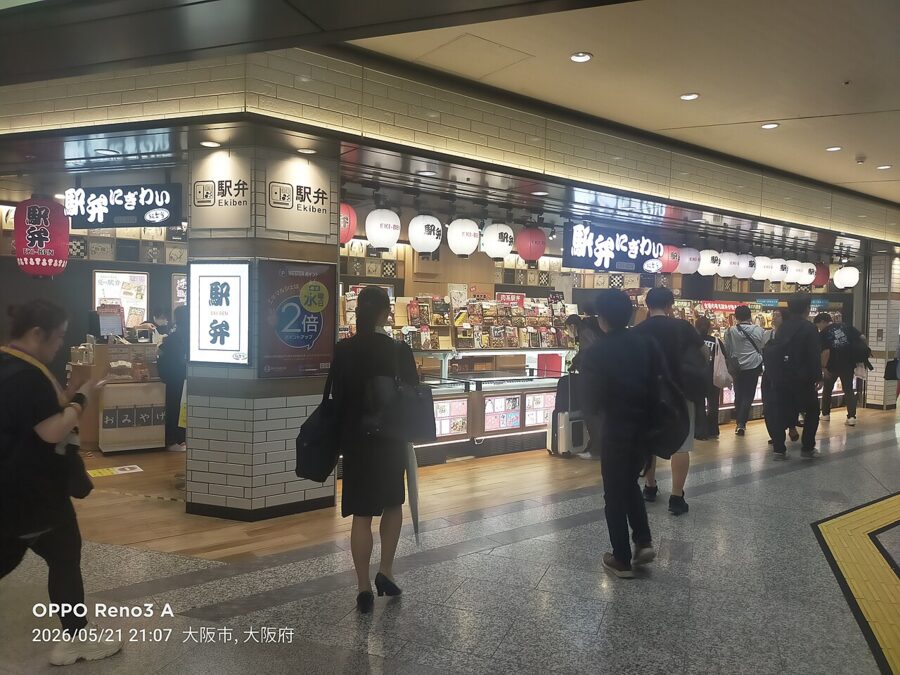
JR East has smaller Matsuri branches (signed “Ekibenya Matsuri Select”) at Shinjuku and inside ecute Omiya, which is handy before a train north or towards Kanazawa. Elsewhere, the best ekiben are usually at the station of origin, sold by the caterer that makes them. At Shin-Osaka, there’s the Nigiwai ekiben shop in the Eki Marche arcade. Kobe and Shin-Kobe have Awajiya’s own counters, Takasaki has Takaben’s, Yokohama has Kiyoken almost everywhere you look.
On the Tokaido Shinkansen itself, every stop has a kiosk or two with boxes, and smaller stations like Odawara and Kakegawa keep ekiben stands going. The range is thin compared with Tokyo or Shin-Osaka, but it’s local, and that’s the point.
If the departure board is against you, Tokyo Station’s department-store food halls and the depachika of any big terminal sell excellent bento too, just not ekiben in the strict sense. And if it’s really tight, a konbini onigiri and a tea will do. The other station classic, a bowl of soba at a standing counter, takes three minutes and can’t come on the train.
The January fairs
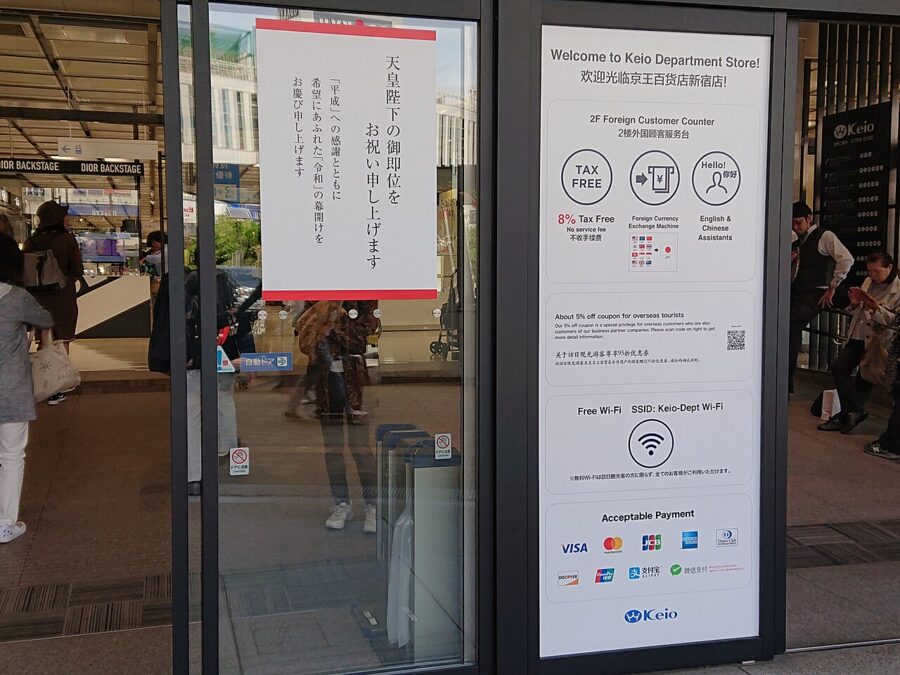
The great ekiben event of the year happens nowhere near a platform. Keio Department Store in Shinjuku held the first of its “Famous Ekiben and Japan’s Delicacies” fairs in February 1966 (the first department-store ekiben fair of all was at Takashimaya in Osaka in 1953), and it’s now the store’s biggest event of the year. The 61st ran for 16 days, 6–21 January 2026, with some boxes swapped out halfway through.
Two kinds of box are sold. Most are shipped in from the makers, but a smaller number are made on site by the caterers themselves, who bring their cooks to Shinjuku for the fair, and those are the queues worth joining.
The fair also revives lost boxes from caterers that have closed or changed hands, and organises “battles” between rival stations. There’s a seating area, so you don’t have to carry the box home.
Hanshin Department Store in Umeda, Osaka, runs its own fair in February (16 to 23 February in 2026), and Tsuruya in Kumamoto runs one for Kyushu. Keio posts the next fair’s dates and box list on its website beforehand; for 2027, expect early January again.
Sell-outs and timing
Regional boxes are made in limited numbers. At Tokyo Station that means the morning has the full range and late afternoon is thinner. At the original station, small makers stop when they run out: Kanaya at Oshamambe says as much on its own site. If a particular box is the reason you’re travelling, buy it at the start of the day or reserve it, and have a second choice ready.
Eating on the train without annoying anyone
Which trains
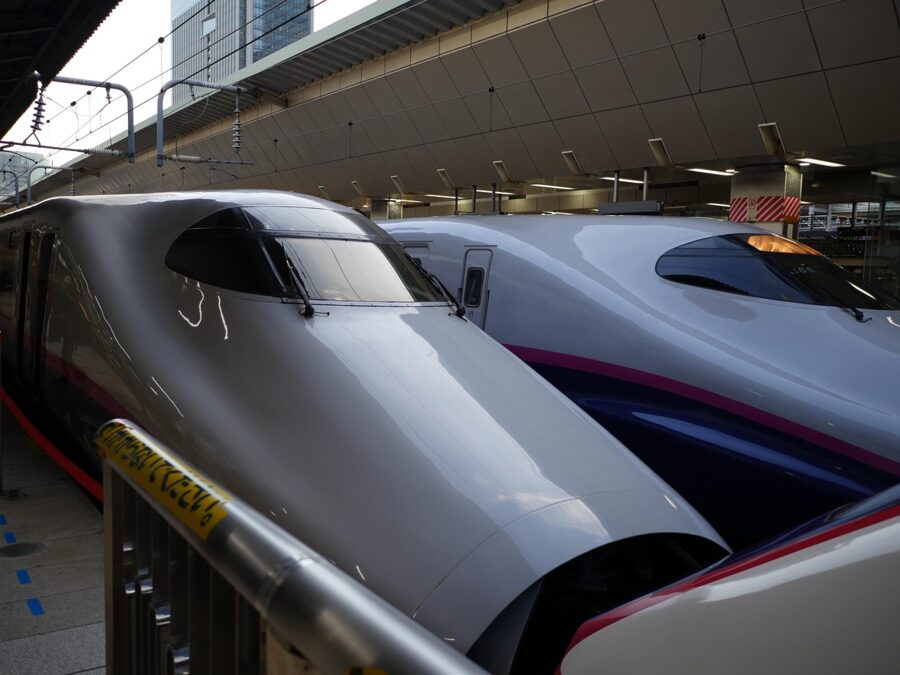
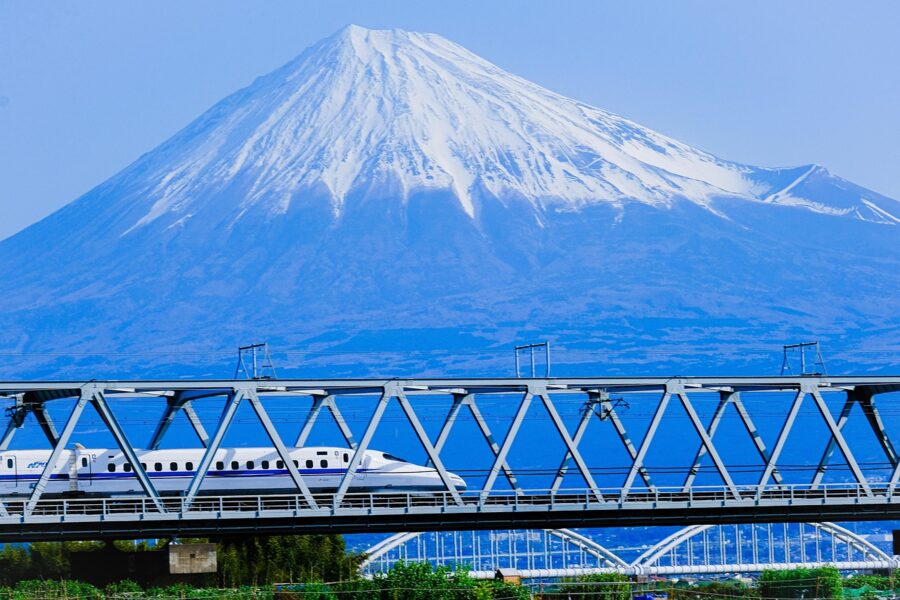
The rule of thumb is the seats. On a Shinkansen or a limited express, with forward-facing seats and fold-down tables, eating is normal and expected; watch a Tokaido Shinkansen carriage at 12:00 and a good part of it is unwrapping a box. On commuter trains with long bench seats along the walls, like the Yamanote Line, people don’t eat, and you shouldn’t either. Local trains with facing seats on longer rural lines sit in between: a quiet snack is fine, a full meal is better saved.
Smell
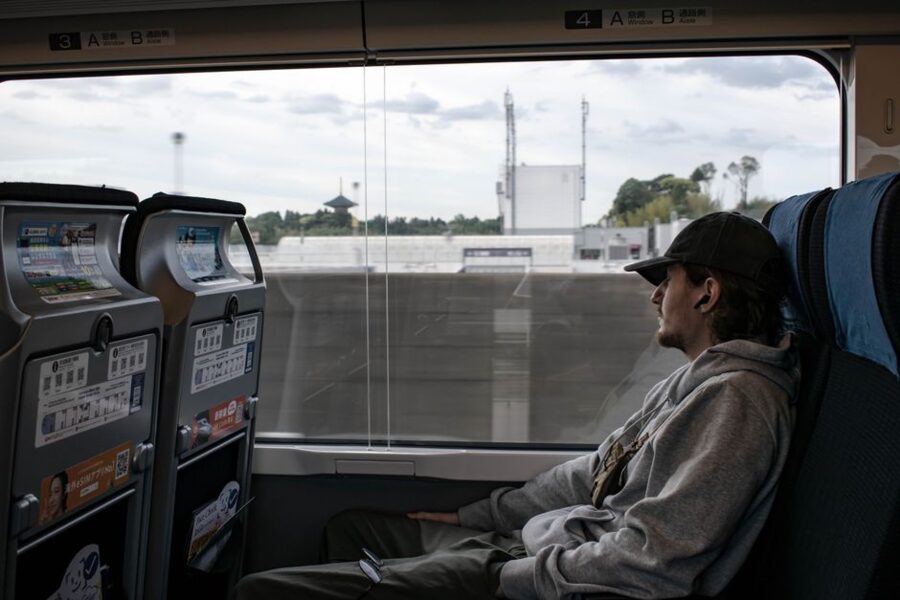
This is the one people get wrong. A cold box of rice and pickles smells of nothing. A heated beef box, a box of fried chicken just opened, Osaka’s famous pork buns, a bag of anything with garlic: these fill a sealed carriage, and nobody will say anything, because nobody ever does. On a quiet morning train, or in the Green Car, I go for something cold and mild and keep the gyutan for a busier lunchtime carriage.
Rubbish
Take it with you. The Shinkansen has bins in the vestibules between carriages, with separate slots for bottles and cans, and that’s where the box goes; don’t leave it in the seat pocket. On trains without bins, tie it into the plastic bag the shop gave you and carry it off. This matters more if the box was a pot: a kamameshi pot left on the seat is a heavy thing for the cleaning crew to clear in a seven-minute turnaround.
The trolley is mostly gone
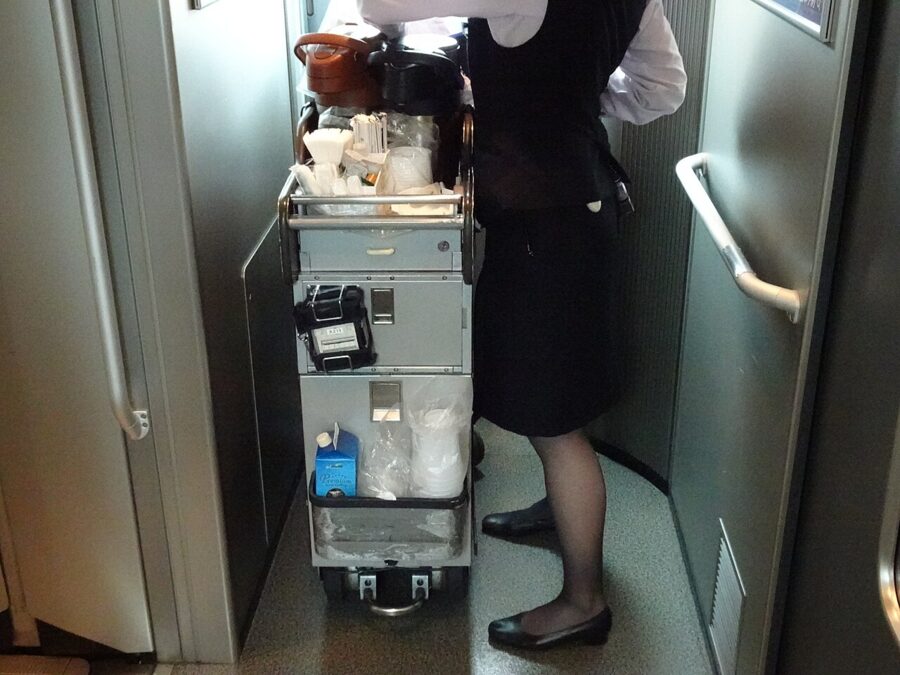
Japan’s trains once sold ekiben from a trolley, and many visitors still expect to buy lunch on board. Don’t.
The Tokaido Shinkansen ended trolley sales on 31 October 2023, after 59 years; since then only Green Car passengers can order snacks and drinks to their seat by scanning a code. The Sanyo Shinkansen cut back to the same Green Car service in March 2024, and the Kyushu and Hokkaido Shinkansen stopped onboard sales in 2019. JR East has kept a reduced trolley on some Tohoku, Hokuriku and Joetsu trains, but it’s coffee, snacks and the odd sandwich, not a choice of regional boxes.
So buy before you board, and buy a drink while you’re there. Japan’s station green tea is cheap and goes with everything, a can of beer is perfectly normal on a long-distance train, and a cup of sake with a seafood box is a very old habit. If you prefer a sandwich, a katsu sando travels better than almost anything, which is why every big station sells one; at the 2026 Keio fair, Kobuchizawa’s Koshu katsu sandwich was ¥980.
One note for vegetarians: ekiben are hard going. Even the vegetable-led boxes are usually simmered in fish stock, and the rice in many regional boxes is cooked in meat or chicken broth. My vegetarian Japan guide has better strategies for a train day than hoping for a meat-free box.
Keep the pot
The container is half the reason some of these boxes exist, and the makers know it. The obvious keeper is the kamameshi pot.
Oginoya publishes a method for cooking rice in it at home: wash one go of rice (about 150 grams), put it in the pot with 180 ml of water and soak for 5–30 minutes. Put it on a low flame with the lid on; when it boils over, after 8–10 minutes, slide the lid open a centimetre and turn the flame right down, then close it again once the bubbling stops. About 15 minutes on the heat, at least 15 resting with the lid shut, and you get a crust on the bottom that a rice cooker won’t give you.
Oginoya’s own caveat, printed with the recipe: the pot isn’t heat-proof cookware and can crack over a direct flame. It was designed with a second life as a planter in mind too, with a base made so a drainage hole is easy to knock through. If you don’t want to carry 725 grams home, any Oginoya shop will take it back.
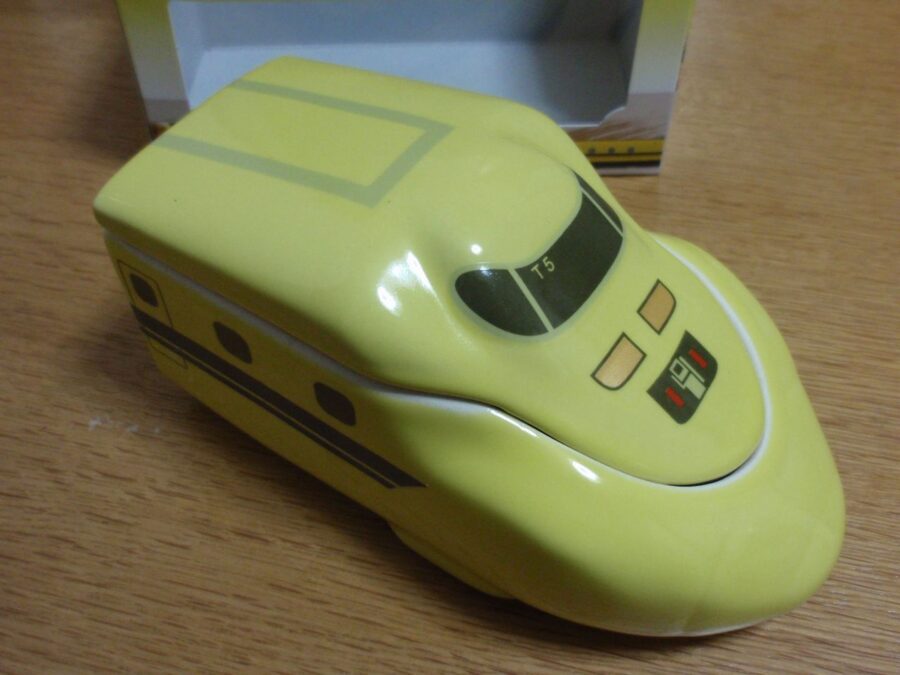
The Daruma Bento box is a piggy bank by design. Awajiya’s octopus pots are solid enough to use as small vases or pen pots, and the firm sells a lid made to fit them (¥680) and a tiny sake cup shaped like the pot, for people who’ve collected a shelf of them. Children’s boxes shaped like Shinkansen cost around ¥1,680, and the box outlives the lunch by years.
Then there are the limited editions, which arrive every month or two. Oginoya put out a box with a wrapper featuring its new character this October, and Awajiya has dressed Hipparidako-meshi in Hello Kitty pink, Expo 2025 black and gold, and has a Godzilla film tie-in box out this autumn. The wrappers alone are collected by fans who keep them in albums. If you’re the type to keep a ticket stub, keep the kakegami.
What it costs, and what to skip
Most regional boxes sit between ¥1,000 and ¥1,800 in 2026. Beef, eel and crab push towards ¥2,000–3,500; the most elaborate seafood boxes at the 2026 Keio fair, sea urchin, crab and abalone, went to nearly ¥4,000. A Tokyo-made box from the station’s own caterer is closer to ¥1,000–1,500. Prices have risen sharply in the past few years: Oginoya’s kamameshi was ¥1,100 in 2019 and is ¥1,500 now.
- Skip the generic box at a famous station. If you’re at Yokokawa, Mori or Kareigawa, buy the local box. The point of the trip is that box.
- Skip the pulp kamameshi if you want the pot. Tokyo Station sells the lightweight version; the clay one is at Oginoya’s own counters, the Takasaki station stand and Takashimaya.
- Skip the Keio fair at weekends unless you like queues. Weekend crowds there are said to beat the store’s New Year sale; a weekday morning is calmer.
- Don’t open a heated box with ten minutes to go. It needs time to heat, time to eat, and somewhere to put a hot empty box.
- Skip the ¥3,000 seafood box on a short ride. Rich boxes are for long journeys; on a 40-minute hop, a kashiwa-meshi or a shumai box is a better match for the time you’ve got.
One more thing, from experience. Tokyo Station’s Gransta is also where a lot of people buy the office souvenirs they forgot, and if you’re doing that too, it’s worth knowing the boxed snacks worth buying before you’re in the queue.
Buy the box an hour before you need it. Get a window seat. Eat it after the first stop, when the city has thinned out and the countryside has started. Keep the pot.
You Might Also Enjoy
 Dali: The Old Town, the Three Pagodas, Cangshan by Cable Car, Erhai by Bike and the Tea Horse Town of Shaxi
 Must-Try Food in China: The Regional Map Nobody Gives You
 Water Towns Near Shanghai: Zhujiajiao, Wuzhen, Zhouzhuang, Tongli and How to Pick the Right One
 Sapporo Food Guide: Miso Ramen, Soup Curry, and Susukino After Dark