Chinese Tea: The Six Families, Where the Famous Teas Grow, Teahouses and Buying Tea in China
Walk into a tea shop in China and nobody asks what you want. You get a stool at a slab of carved wood, the owner flicks on a kettle, and a row of thimble-sized cups is scalded with boiling water that drains away through slats into a bucket under the table. The first pour of tea goes the same way, straight into the tray. Forty minutes later you’ve tried three teas and a dozen cups, nobody has mentioned money, and you know far more about what you came in for than when you sat down.
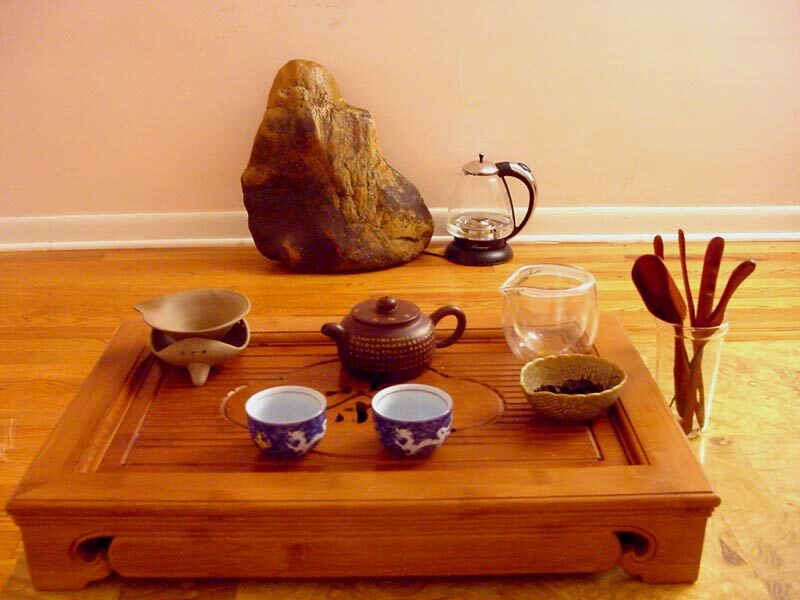
When I lived in Shenzhen, a tea tray was one of the first things I noticed in shops, offices and the back rooms of restaurants, usually with the kettle already hot. Tea in China isn’t a ceremony you book. It’s what happens while people talk, wait, bargain and get through an afternoon, and the country makes it in more styles than anywhere else on earth.
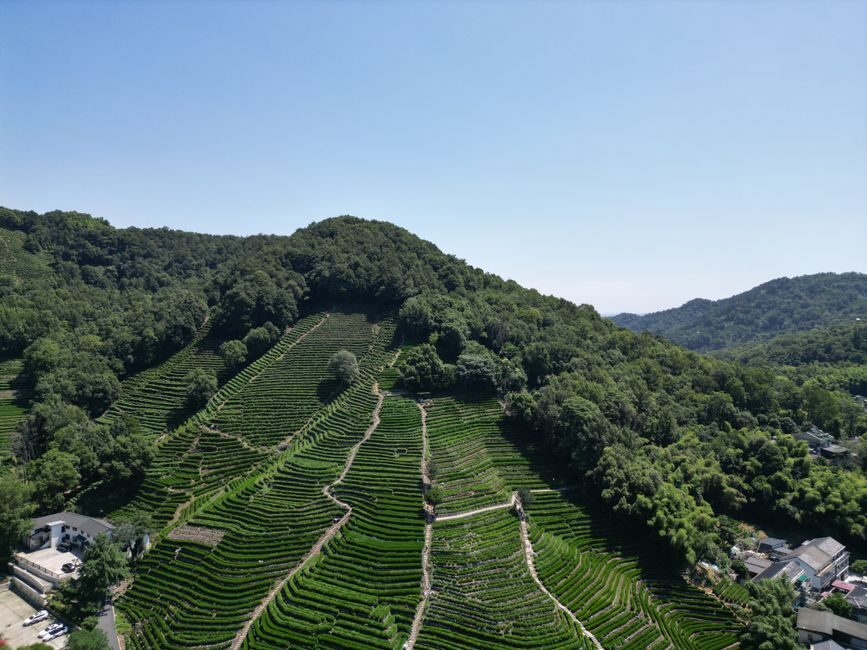
This guide is for drinking it on the ground. It covers the six families of Chinese tea and how each is made, the famous teas and the places they come from, how to drink from a glass, a gaiwan and a gongfu pot, and the teahouses worth an afternoon in Chengdu, Hangzhou, Guangzhou and Beijing. Then come the tea villages you can actually visit, how to buy without being fleeced, and a short warning about the “tea tasting” trick still played on foreigners in Beijing and Shanghai.
If you only want the map, here it is. Chinese tea is sorted by what happens to the leaf after picking, not by the plant, and every family has a home region you can travel to.
| Family | Chinese | What happens to the leaf | Teas to know | Where to go |
|---|---|---|---|---|
| Green | 绿茶 lü cha | Heated straight after picking, so it never oxidises | Longjing, Biluochun | Hangzhou; Lake Tai, Suzhou |
| White | 白茶 bai cha | Withered and dried, and that’s all | Baihao Yinzhen, Bai Mudan | Fuding and Zhenghe, Fujian |
| Yellow | 黄茶 huang cha | Made like green, then wrapped while warm to “yellow” | Junshan Yinzhen | Junshan Island, Hunan |
| Oolong | 乌龙茶 / 青茶 qing cha | Shaken to bruise the edges, partly oxidised, then fired | Tieguanyin, Da Hong Pao, Phoenix dancong | Anxi and Wuyishan, Fujian; Chaozhou |
| Red (black in English) | 红茶 hong cha | Rolled and fully oxidised | Keemun, Dianhong, Lapsang souchong | Qimen, Anhui; Fengqing, Yunnan; Wuyishan |
| Dark | 黑茶 hei cha | Piled damp and fermented by microbes, often pressed | Pu’er, Anhua dark tea, Liubao | Yunnan; Anhua, Hunan; Guangxi |
Jasmine sits outside the six. It’s a scented tea (花茶 hua cha), usually green tea that has spent several nights with fresh flowers, and it gets its own section below.
In This Article
- One plant, six families
- Green tea: what most of China drinks
- Longjing (龙井), Hangzhou
- Biluochun (碧螺春), Lake Tai
- White and yellow, the quiet ones
- Baihao Yinzhen (白毫银针), Fujian
- Junshan Yinzhen (君山银针), Hunan
- Oolong, where it gets complicated
- Tieguanyin (铁观音), Anxi
- Wuyi rock tea (武夷岩茶), Wuyishan
- Phoenix dancong (凤凰单丛), Chaozhou
- Red tea, which you call black
- Keemun (祁门红茶), Anhui
- Dianhong (滇红), Yunnan
- Dark tea: pressed, piled and aged
- Anhua dark tea (安化黑茶), Hunan
- Jasmine and the scented teas
- How China drinks it: glass, gaiwan, gongfu pot
- A glass, for green tea
- The gaiwan
- Gongfu brewing, step by step
- The tray, and the two-finger tap
- An afternoon in a teahouse
- Chengdu: bamboo chairs and a bottomless gaiwan
- Hangzhou: by the lake
- Guangzhou and Chaozhou
- Beijing: Laoshe Teahouse
- Go where it grows
- Hangzhou: Longjing village and Meijiawu
- Wuyishan
- Anxi
- Buying tea without getting burned
- The markets
- What a fair price looks like
- Packaging and the trip home
- Skip this: the “tea tasting” scam
- A last cup
One plant, six families
Every tea in this guide comes from the same evergreen, Camellia sinensis. What turns it into a pale Longjing or an inky brick of Anhua dark tea is processing, and the processing is mostly about one thing: oxidation, the browning that starts as soon as a leaf is bruised, like a cut apple.
Stop it at once with heat and you have green tea. Let it run to the end and you have red tea. Everything else sits somewhere in between, or takes a side road.
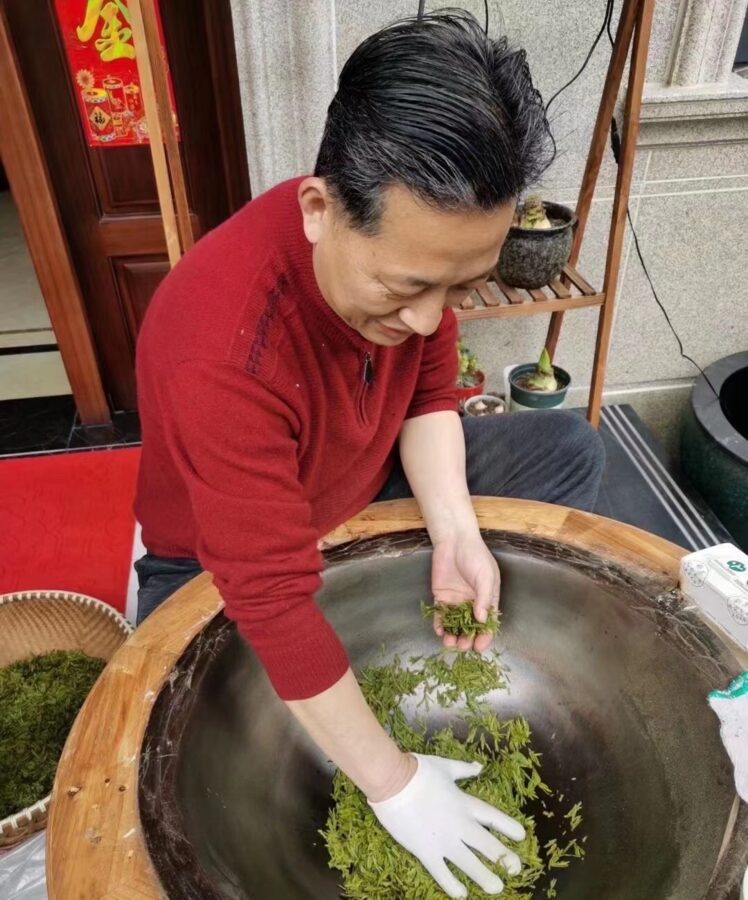
The heating step has a blunt name, shaqing (杀青), “killing the green”. Chinese green teas are mostly killed in a wok or a hot drum, which gives them a toasted, nutty edge. Japanese greens are steamed instead, which is why a sencha tastes grassy and a Longjing tastes of roasted chestnut; my Japanese tea guide covers the other side of that split.
Two naming traps catch everyone. The tea English speakers call black, China calls red (红茶 hong cha), after the colour of the liquor in the cup. And China’s “black tea”, 黑茶 hei cha, is a different family altogether: the dark, fermented teas that include pu’er. In this guide I say red tea for hong cha and dark tea for hei cha, which is how Chinese tea shops will understand you.
None of this is new. In November 2022 UNESCO added “traditional tea processing techniques and associated social practices in China” to its intangible heritage list. The listing bundles 44 of China’s national heritage items from 15 provinces, from Longjing roasting and Wuyi rock tea to Chaozhou gongfu tea and Fuzhou jasmine scenting, and it’s a fair summary of where to go.
Green tea: what most of China drinks
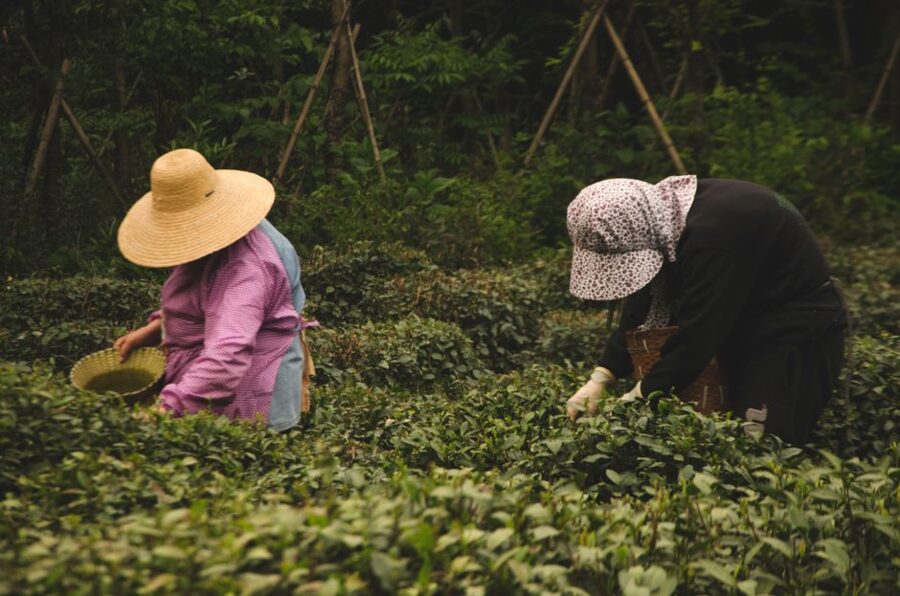
Green is the biggest family by far, with the most names and the largest harvest, and almost every tea-growing province makes one. It’s also the most seasonal. The first spring leaves are the sweetest and tenderest, and the calendar runs on the solar terms: tea picked before Qingming (清明, 5 April in 2026) is mingqian (明前), and tea picked before Guyu (谷雨) in late April is yuqian (雨前).
Longjing (龙井), Hangzhou
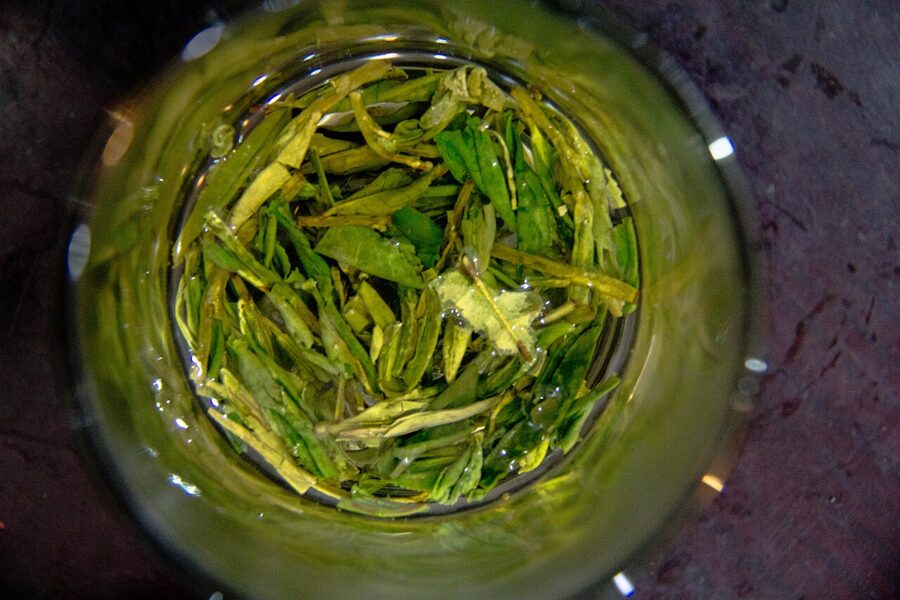
Longjing, or Dragon Well, is the one everybody in China can name. The real thing is West Lake Longjing (西湖龙井), grown in the hills and villages around Hangzhou’s lake, and since 2011 the name has been a protected certification mark limited to a zone of about 168 square kilometres. Inside it, people still rank the old sub-areas: Shi (狮, the Shifeng peak around Longjing village), Long (龙, Wengjiashan and Manjuelong), Yun (云, Yunqi and Meijiawu) and Hu (虎, around Hupao).
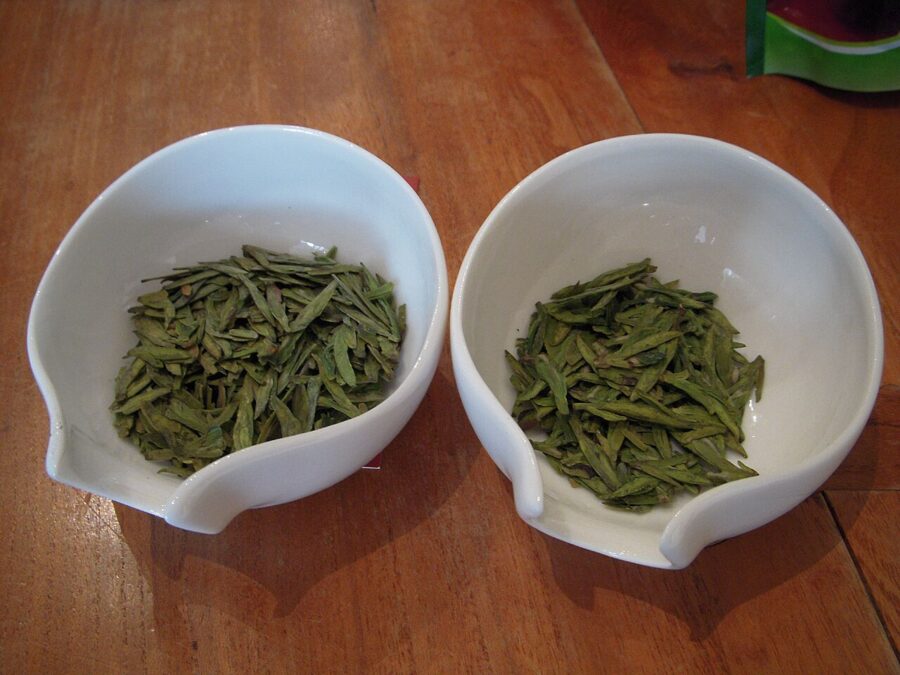
The leaves are flattened by hand in a hot wok in three stages, with names for ten different hand movements, and a good roaster takes years to train. The Qianlong Emperor visited Longjing four times and, the story goes, named eighteen bushes below Shifeng as imperial tea; they’re still there behind a low wall. In 2026 the Longjing 43 cultivar started picking on 19 March, with the older “group” bushes following in late March.
Fakes are the problem. Hangzhou passed a West Lake Longjing protection regulation in October 2021, and every legitimate pack carries an official label with a traceable code; the 2026 version has a faint tea-leaf watermark. Longjing from the wider Qiantang and Yuezhou zones of Zhejiang can be sold as Longjing, but not as West Lake Longjing, and the price gap is real: in 2026 pre-orders, the cheapest Qiantang tea started at ¥400 a jin (500 g) and the cheapest West Lake tea at ¥1,500.
Biluochun (碧螺春), Lake Tai
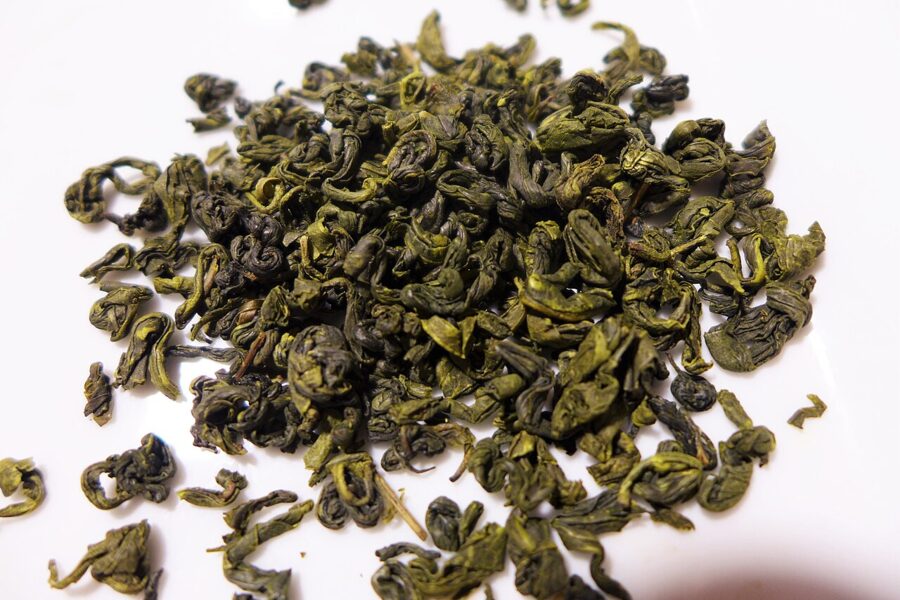
Biluochun comes from the Dongting hills, East and West, which stick out into Lake Tai south-west of Suzhou. The leaves are tiny, rolled into tight spirals and covered in white down, and the bushes grow among loquat and plum trees, which locals credit for the fruity smell. Picking runs from the spring equinox to Guyu, and good Biluochun is so dense with buds that you can drop it onto water already in the glass and watch it sink.
Its old local name was xiasharen xiang (吓煞人香), roughly “scary fragrance”. The story goes that the Kangxi Emperor tasted it on a tour south in 1699, found the name vulgar and renamed it Biluochun, “green snail spring”.
A few more greens you’ll meet on menus: Huangshan Maofeng and Taiping Houkui from Anhui’s Yellow Mountain area, Lu’an Guapian, also from Anhui, Xinyang Maojian from Henan and Duyun Maojian from Guizhou. One trap: Anji baicha (安吉白茶) means “Anji white tea”, but it’s a green tea made from a pale-leaved bush, not a white tea at all.
White and yellow, the quiet ones
White tea is the least handled tea in China. The leaves are withered, either in the sun or indoors, and then dried, and there is no heating to kill the green and no rolling. The result is pale, soft and sweet, with a smell of hay and honey, and it barely turns bitter even if you forget it in the pot.
Baihao Yinzhen (白毫银针), Fujian
Baihao Yinzhen, Silver Needle, is made only from unopened buds, each one covered in silver down, and it comes from Fuding and Zhenghe in north-east Fujian. Bai Mudan (白牡丹, White Peony) adds one or two young leaves to each bud and is a better everyday tea; Shoumei (寿眉) is the coarse, cheap end. Since the mid-2000s Fuding has pressed a lot of its white tea into cakes, because white tea ages, and the local saying sells it hard: one year it’s tea, three years it’s medicine, seven years it’s treasure.
Junshan Yinzhen (君山银针), Hunan
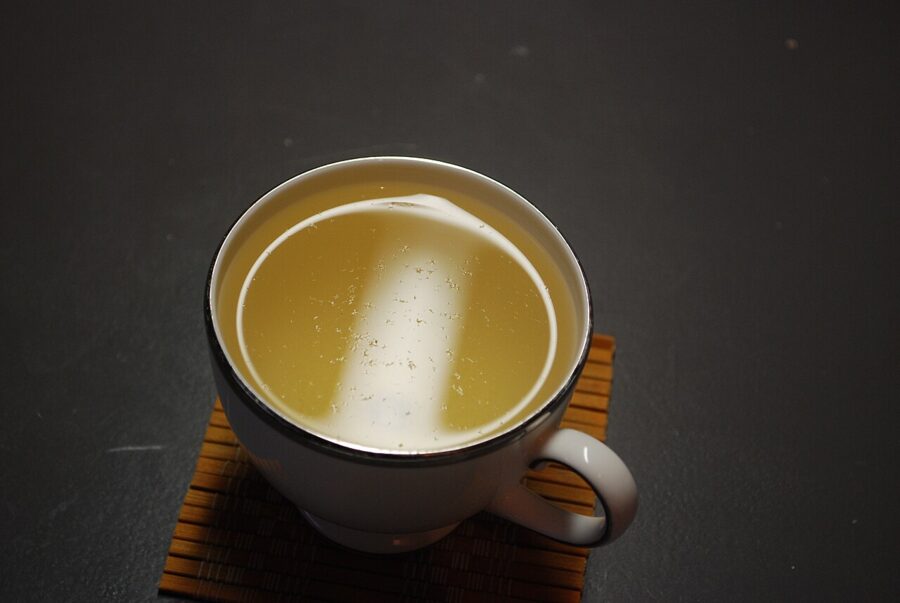
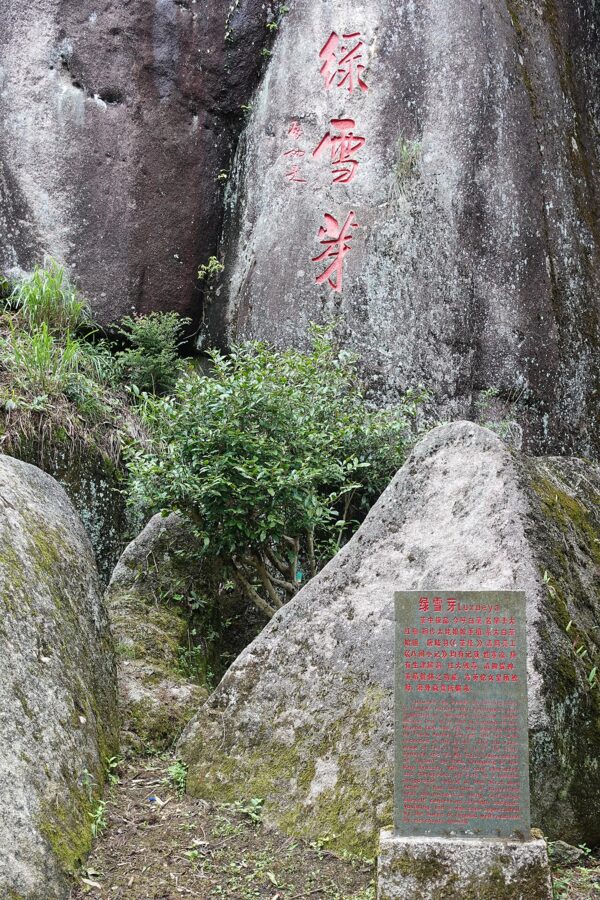
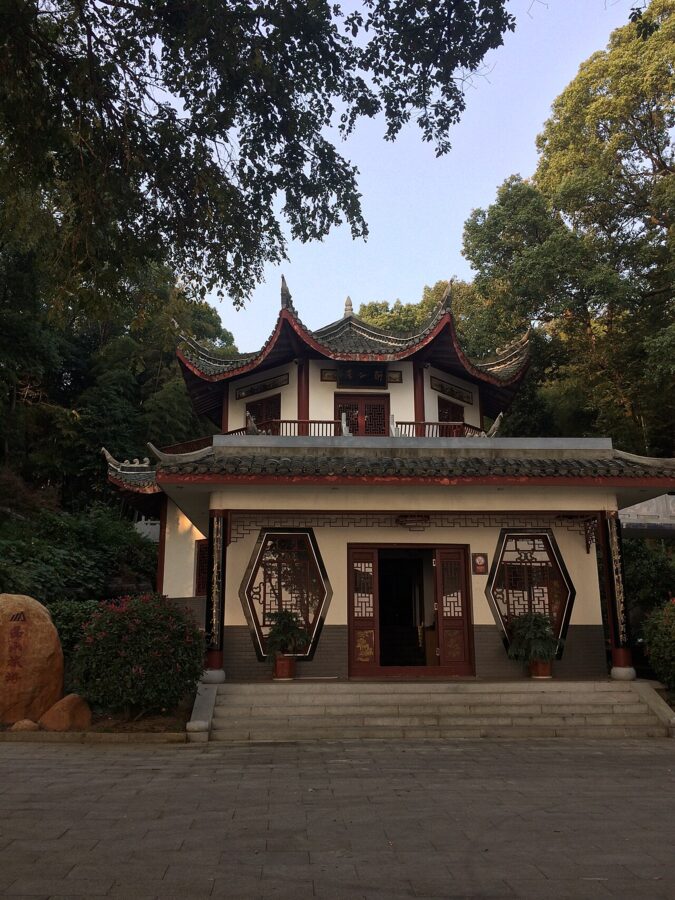
Yellow tea is green tea with one extra step: the warm, just-fired leaves are wrapped in paper or cloth and left to “yellow” (闷黄 menhuang), which softens the grassy edge. It’s rare and slow to make, and a lot of what’s sold as yellow tea is really green tea that skipped the step. Junshan Yinzhen is the famous one, from Junshan Island in Dongting Lake near Yueyang: buds only, about 40,000 to a jin, and in a glass the needles stand upright and bob up and down. It was the only yellow tea in the 2022 UNESCO listing; Mengding Huangya from Sichuan and Huoshan Huangya from Anhui are the others worth knowing.
Oolong, where it gets complicated
Oolong (乌龙茶, also 青茶 qing cha) is the widest family and the one that rewards attention most. The leaves are withered, then shaken or tumbled so their edges bruise and start to oxidise while the centre stays green, then fired to stop the process, rolled and often roasted. Light oolongs drink close to a green tea; dark, roasted ones drink close to a red. It’s the tea of Fujian and eastern Guangdong, and it’s what fills gongfu pots.
Tieguanyin (铁观音), Anxi
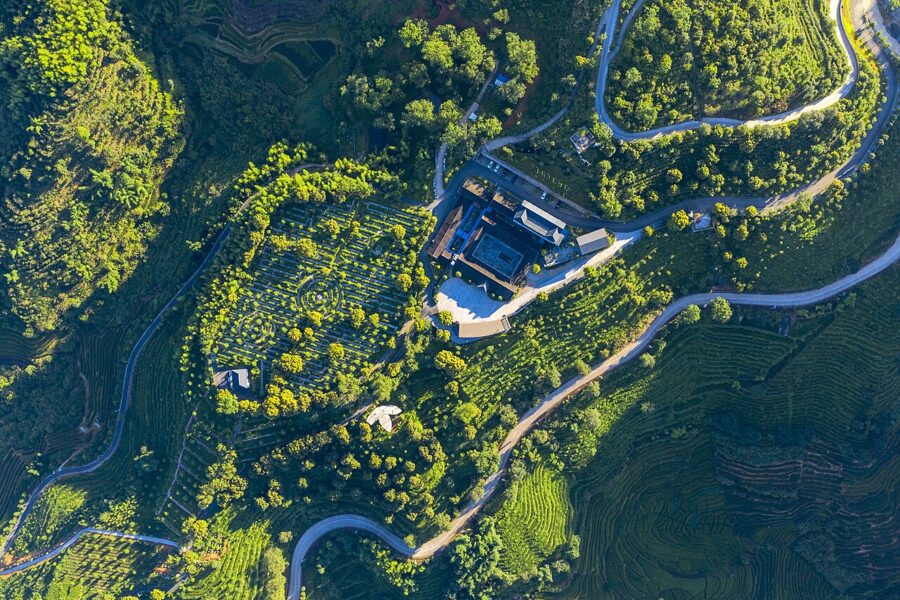
Tieguanyin, the Iron Goddess of Mercy, comes from Anxi county in Quanzhou, and Xiping town claims to be where it started. There are two founding stories. In one, a devout farmer named Wei Yin dreams of a bush in a rock crevice, finds it, plants it in an old iron pot and credits Guanyin; in the other, a local scholar presents the tea to the Qianlong Emperor, who names it for its leaves, heavy as iron and lovely as the goddess.
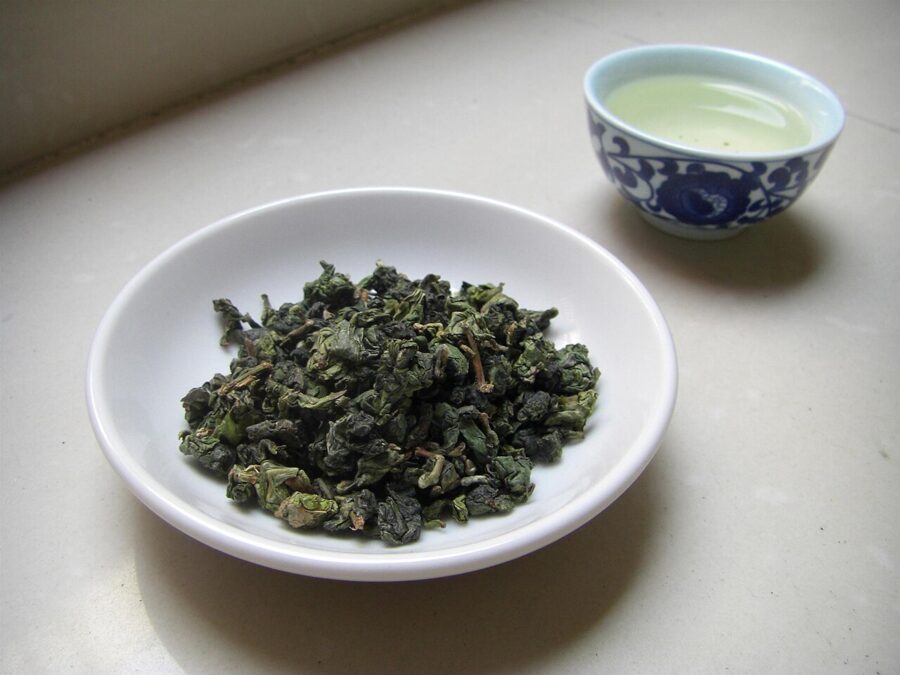
It’s picked four times a year, but only two harvests matter. Spring tea comes between Guyu and Lixia, from late April into early May; autumn tea, from late September to early October, has the strongest scent and is the one connoisseurs wait for. Modern Tieguanyin is mostly light and floral, close to a green tea; the older, roasted style (浓香 nongxiang) is darker and toastier, and you’ll need to ask for it.
In 2022 the Anxi Tieguanyin tea culture system was named a Globally Important Agricultural Heritage System by the UN’s Food and Agriculture Organization, the same year as the UNESCO listing. Tea still makes close to a fifth of the county’s economy.
Wuyi rock tea (武夷岩茶), Wuyishan
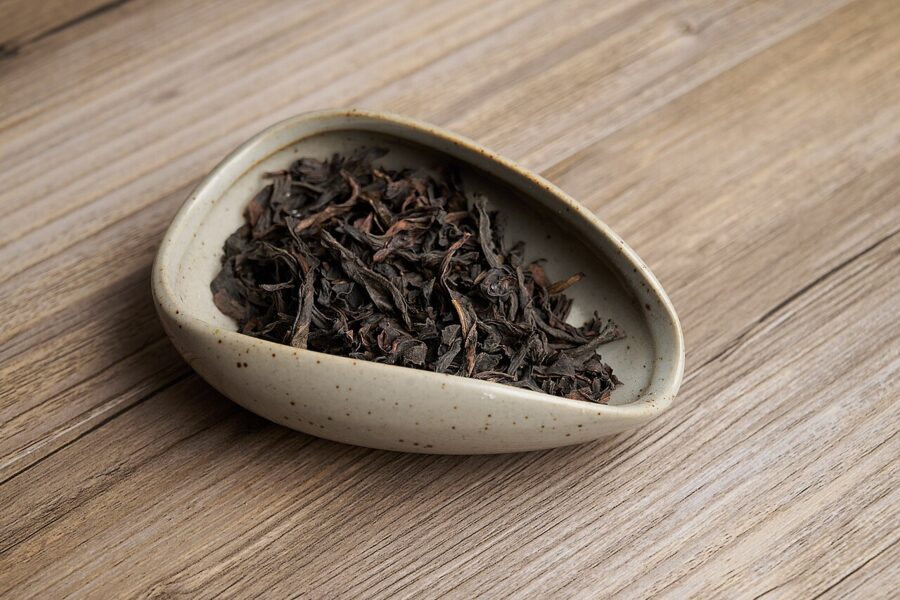
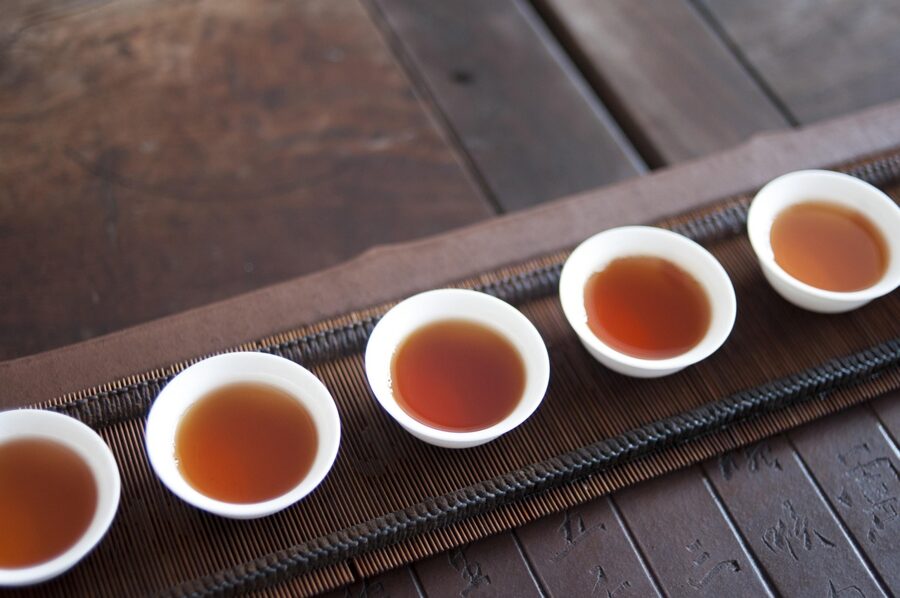
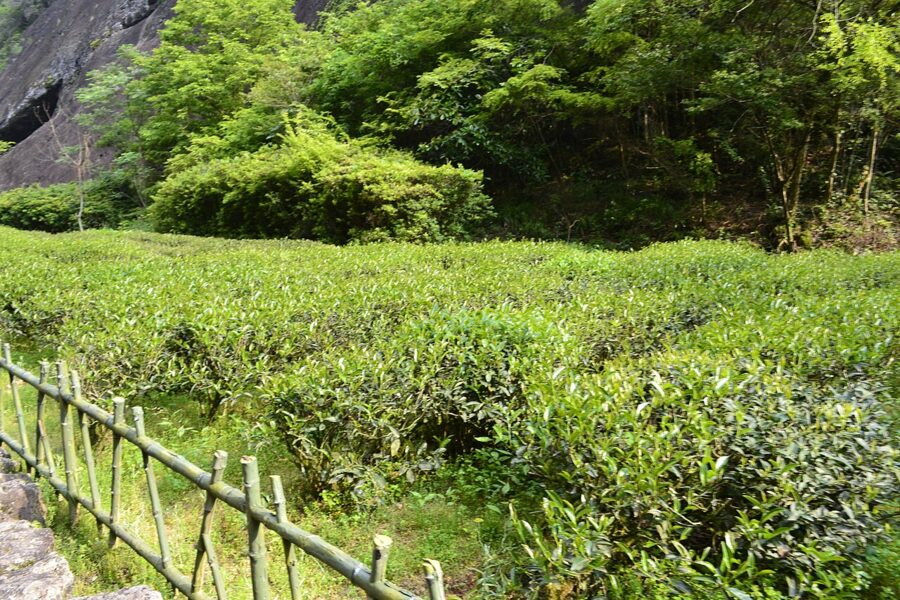
In the Wuyi Mountains of northern Fujian, the bushes grow in narrow gullies between red sandstone cliffs, and the tea is called yancha, rock tea. The leaves are long and twisted, heavily oxidised and roasted over charcoal, and the taste people chase is yanyun (岩韵), “rock rhyme”, a mineral depth that is easier to taste than to explain. Da Hong Pao (大红袍, Big Red Robe) is the famous name; Rougui, Shuixian, Shui Jin Gui and Tieluohan are the others on every shop’s list.
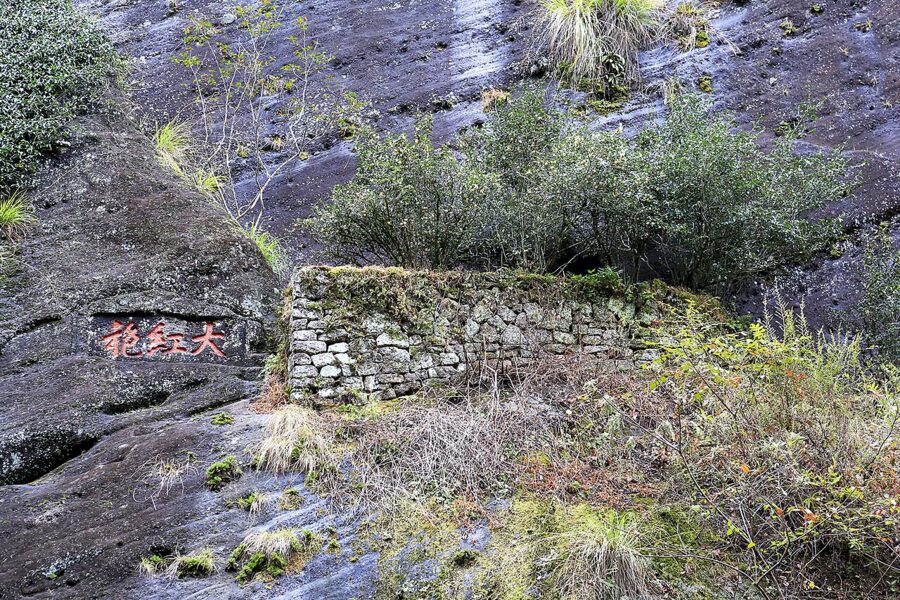
The original Da Hong Pao is a handful of old bushes on a cliff ledge at Jiulongke (九龙窠), below Tianxin Rock. The city government stopped all picking from the six mother trees in May 2006; the year before, 20 grams of their tea had sold at auction for ¥208,000. In 2006, too, the craft of making Da Hong Pao went onto China’s first national heritage list.
Phoenix dancong (凤凰单丛), Chaozhou
Across the border in Guangdong, the Phoenix Mountain area of Chaozhou’s Chao’an district grows dancong, “single bush” oolong, once picked and made one tree at a time and now sorted by its aroma. Honey orchid is the classic; yashixiang (鸭屎香), “duck shit aroma”, is the cheeky bestseller and smells of nothing of the kind. My Chaoshan food guide covers drinking it in its home towns.
Red tea, which you call black
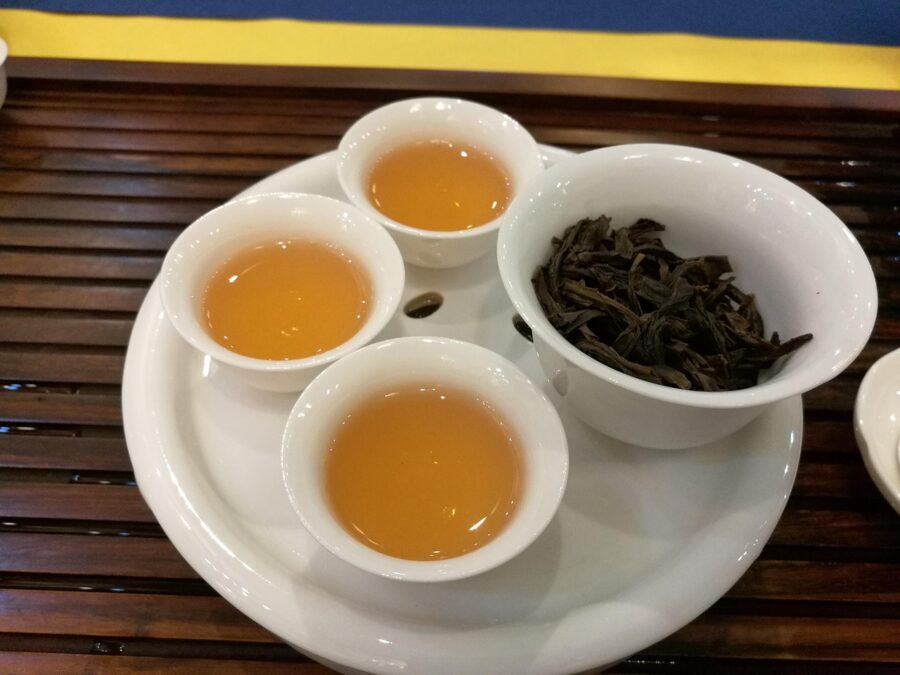
China invented red tea, and Wuyishan claims the first one: Zhengshan Xiaozhong (正山小种), which the West knows as Lapsang souchong, dried over pine fires until it smells of smoke. The leaves are rolled to break them open and then left to oxidise all the way, which turns the liquor reddish and the taste malty and sweet. China drinks far more green tea than red, but red tea is what most of the world drinks, and it began here.
Keemun (祁门红茶), Anhui
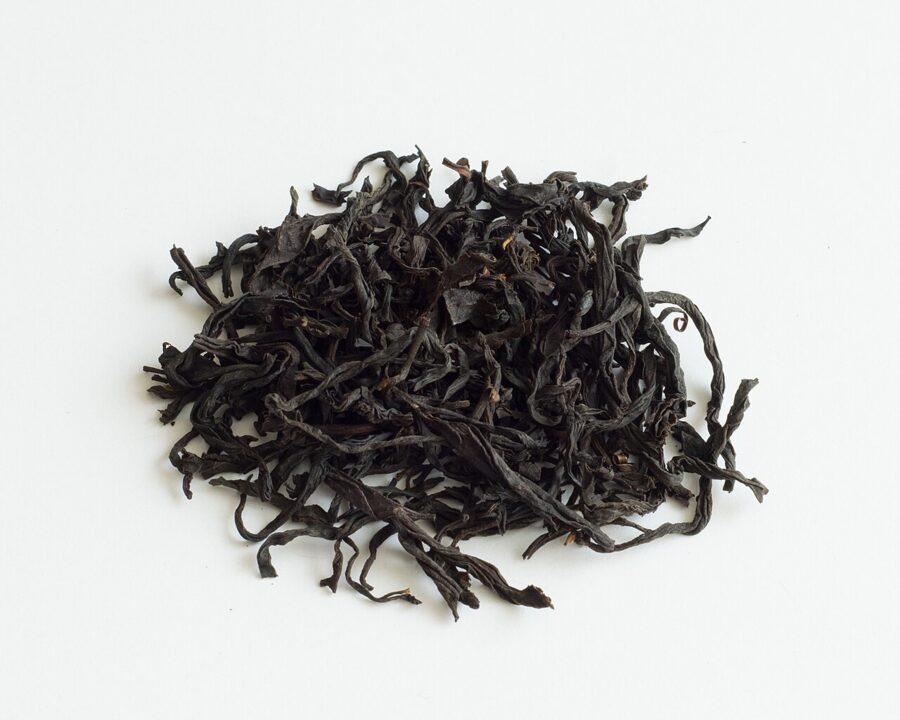
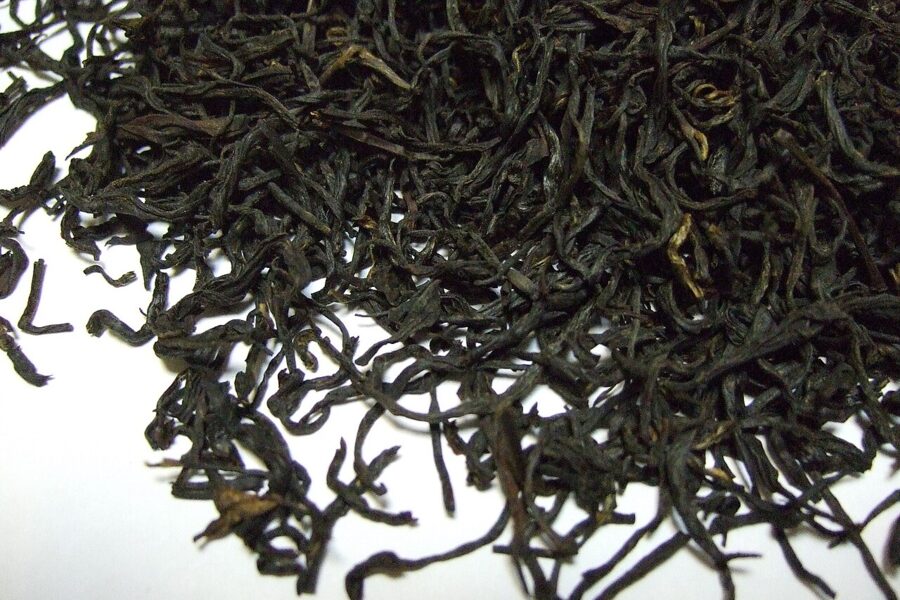
Keemun comes from Qimen county in southern Anhui, in Huangshan prefecture, a region that made only green tea until the Guangxu era in the late nineteenth century. It’s fine, tightly rolled and dark, with a scent that tea people call “Qimen aroma”, something between fruit, orchid and a little smoke. It’s usually the only red tea on lists of China’s ten famous teas, and Britain has long been its main export market.
Dianhong (滇红), Yunnan
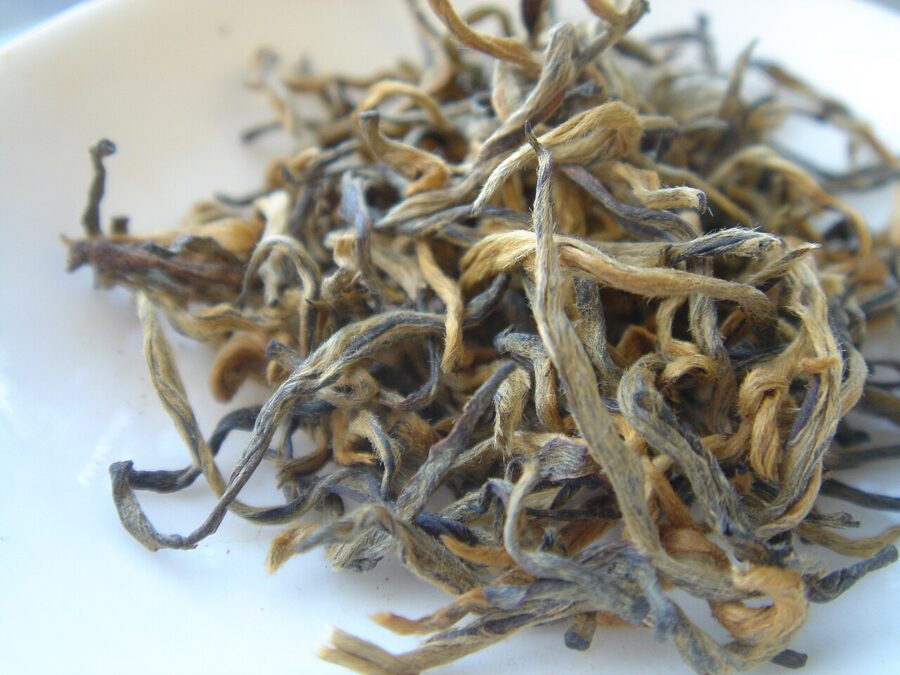
Dianhong is younger. In 1938, with the eastern tea regions near the front line of the war with Japan, the tea expert Feng Shaoqiu went to Yunnan to find new country, and in 1939 the factory at Shunning, now Fengqing, made the first batch from the local big-leaf tea, shipped through Hong Kong to Britain. The best grades are mostly golden buds, and the taste is malty, sweet and round, the easiest Chinese tea to love on the first cup.
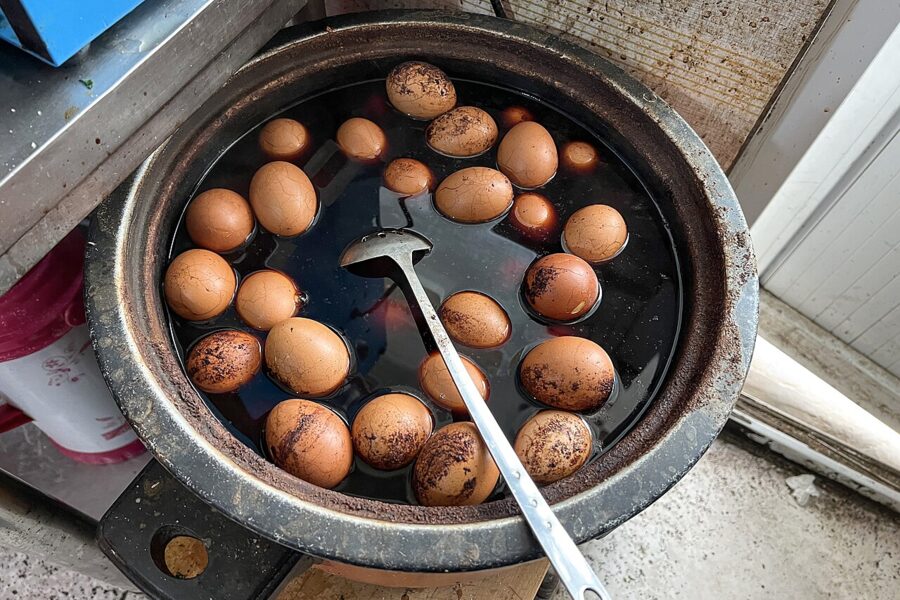
Red tea also turns up where you don’t expect it. The tea eggs (茶叶蛋) simmering in pots in convenience stores and on breakfast carts are boiled in tea and soy until the cracked shells marble the whites, and they’re part of the Chinese breakfast almost everywhere.
Dark tea: pressed, piled and aged
Dark tea (黑茶 hei cha) is the one that’s fermented by microbes rather than by the leaf’s own enzymes. The leaf is fired and rolled, then piled damp so that bacteria and moulds go to work, then dried and often pressed into bricks, cakes or logs. For centuries most of it went to the frontier, carried by mule and yak to Tibet, Mongolia and the north-west, some of it along the Tea Horse Road through Lijiang, which is why it was called border tea (边销茶).
Pu’er is the famous one, from Yunnan, and it comes raw (生 sheng, aged slowly) or ripe (熟 shou, wet-piled in weeks, a method worked out in the 1970s). It’s a whole subject on its own, with its old tea mountains, its cake-collecting and its traps, so I’ve given it a separate pu-erh tea guide.
Anhua dark tea (安化黑茶), Hunan
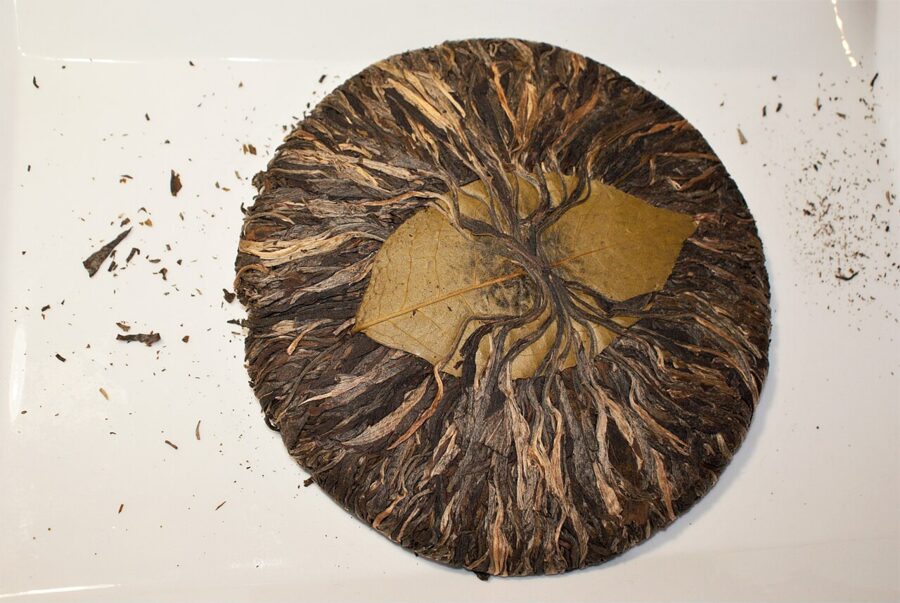
Anhua county in Yiyang, Hunan, calls itself China’s first county of dark tea. Its most theatrical product is qianliang cha (千两茶), “thousand-tael tea”, packed into a long bamboo basket, stamped tight, bound and then left outside for 55 days of sun and dew. Fu brick (茯砖) is the other one to know: break a piece and you’ll see yellow specks inside, the “golden flowers” (金花) of a fungus that the makers encourage on purpose.
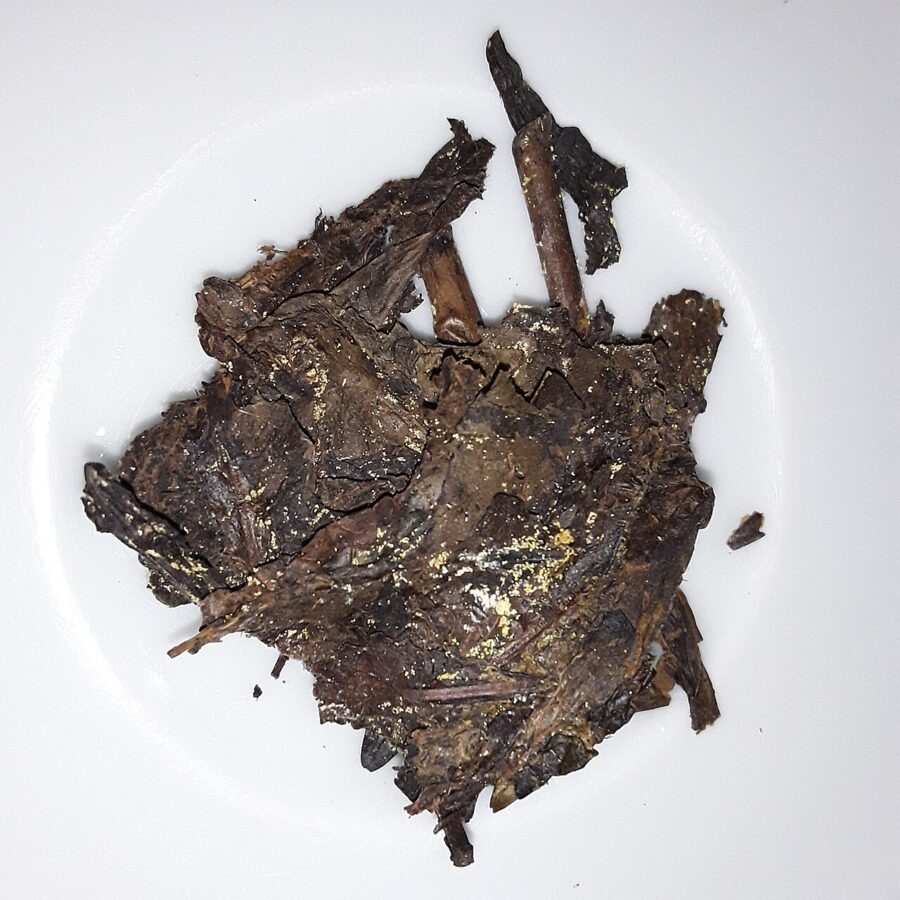
Liubao (六堡茶) from Cangwu county in Guangxi, aged in bamboo baskets, and the old Tibetan border tea of Ya’an in Sichuan are the other dark teas you’ll see in shops. They’re cheap, forgiving to brew and very good after a heavy dinner.
Jasmine and the scented teas
Jasmine tea (茉莉花茶) is made by layering a finished base tea, usually green, with fresh jasmine buds picked just before they open. The buds bloom overnight, the tea drinks in their scent, and the spent flowers are sifted out; the best grades repeat the process several times with new flowers. Good jasmine tea smells of the flower without being perfumed, and there should be few or no dried petals in it, since they’ve done their job and gone.
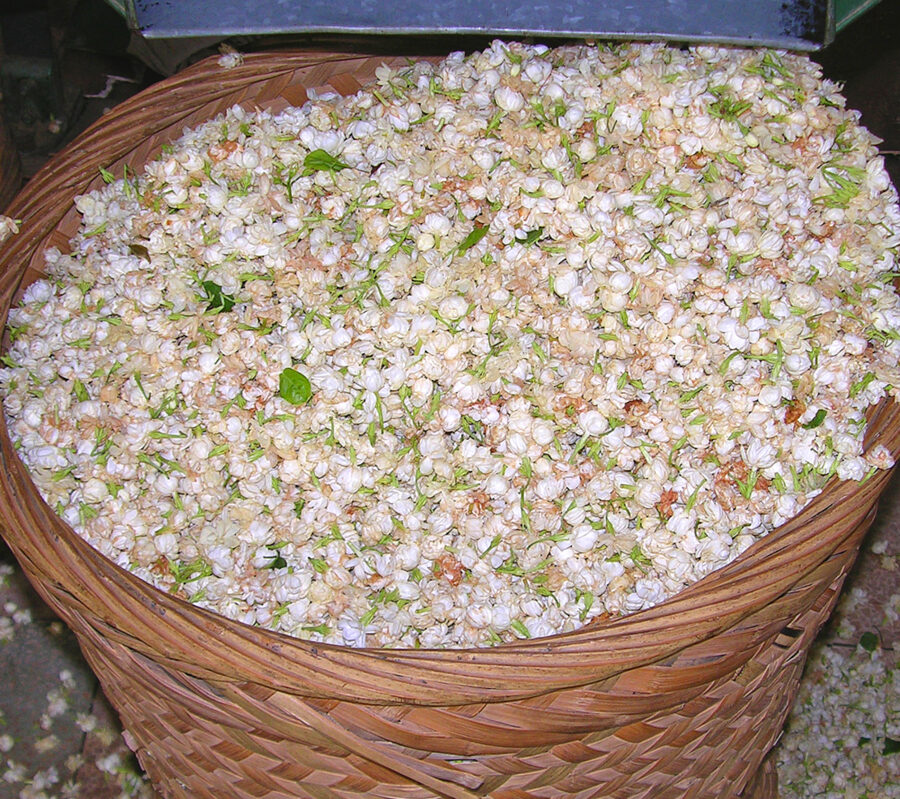
Fuzhou is where jasmine tea started, and in 2014 the FAO listed its jasmine and tea culture system as global agricultural heritage. But the flowers now mostly come from Hengzhou in Guangxi, which grows more than 80 percent of China’s jasmine and over 60 percent of the world’s. Beijing is the classic jasmine-drinking city, and the jasmine-making methods of two of its old tea firms, Zhang Yiyuan and Wuyutai, are on China’s national heritage list.
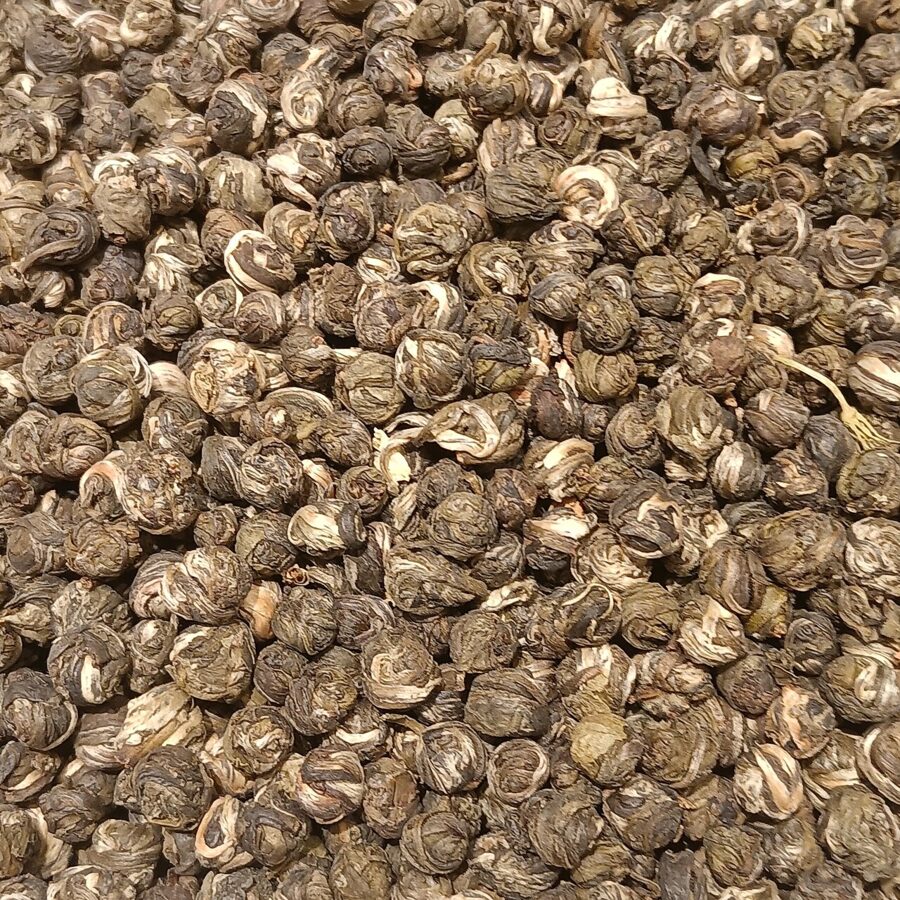
Chrysanthemum (菊花), rose buds and osmanthus are also sold as “tea” in China, though they aren’t from the tea plant. The blooming balls that open into a flower in a glass are made for gifts and tourists; they’re fun once, and the tea inside is rarely good.
How China drinks it: glass, gaiwan, gongfu pot
There’s no single Chinese tea ceremony. There are three everyday ways of brewing, and which one you get depends on the tea and the region. None of them is fussy once you’ve seen it done twice.
A glass, for green tea
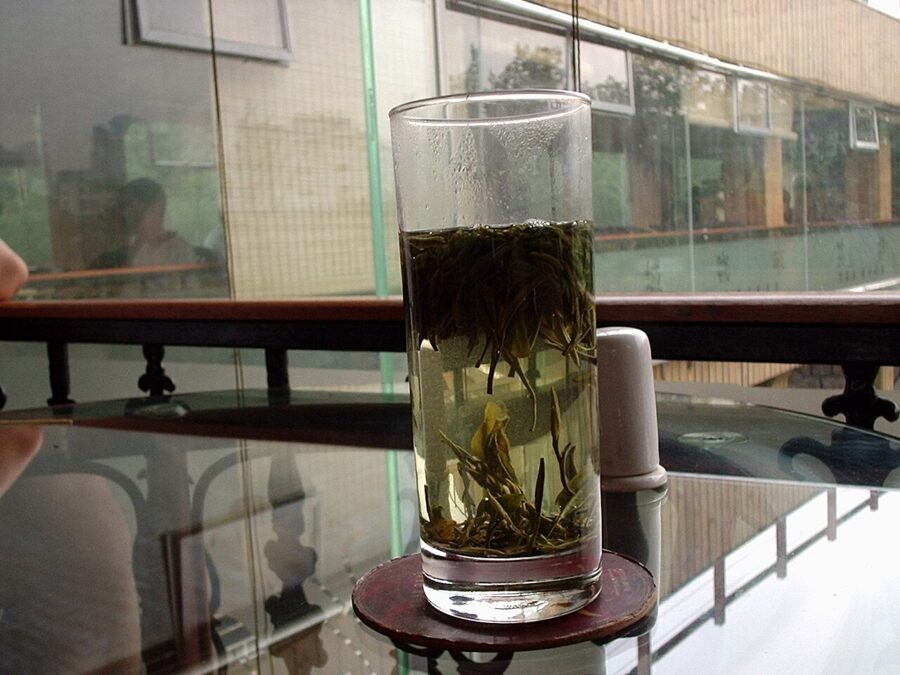
Green tea is usually brewed straight in a tall glass, with no pot and no strainer. Water off the boil, around 80–85°C, goes in first for the tender teas, and you drink when the leaves have sunk, blowing them aside as you sip. When a third of the glass is left, it gets topped up from the flask. On a train or in an office you’ll see the same thing in a screw-top tumbler with a filter, refilled from the hot-water tap all day.
The gaiwan
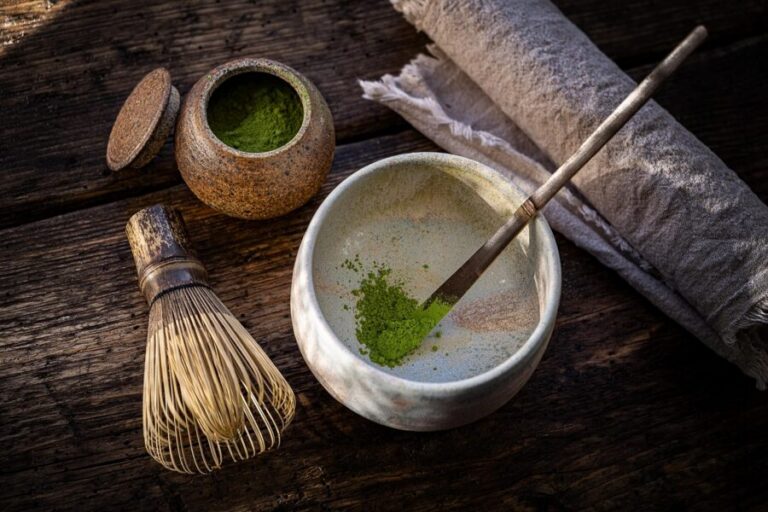
The gaiwan (盖碗) is a lidded bowl on a saucer, and it does two jobs. In Chengdu and much of Sichuan you drink straight from it, using the lid to hold back the leaves, and the attendant tops up the water for as long as you sit. In a tea shop it’s a brewing vessel instead: you hold the rim with your thumb and middle finger, keep a fingertip on the lid’s knob, and pour the tea out through the gap.
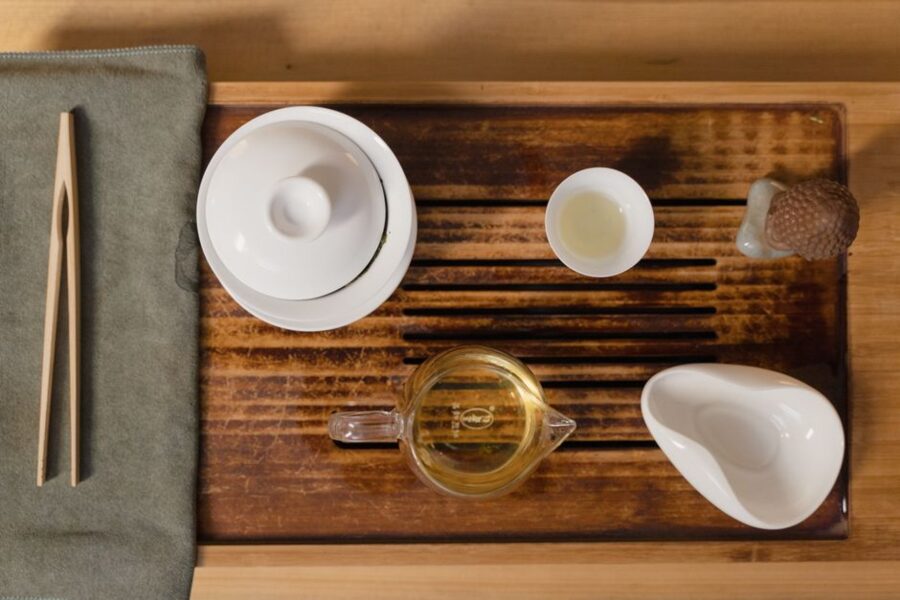
It’s the most useful thing you can bring home. A plain porcelain gaiwan costs little in any tea market, brews every family in this guide and teaches you more about a tea than a teapot will. The first few burnt fingertips are part of the deal.
Gongfu brewing, step by step
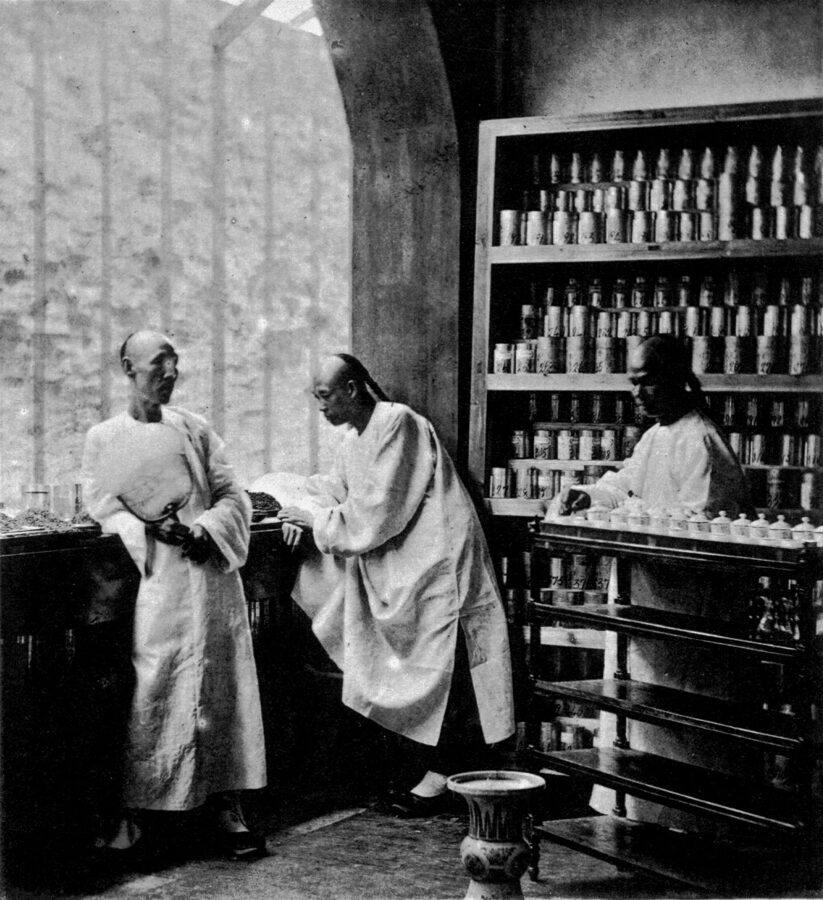
Gongfu tea (工夫茶) means tea made with skill and time, and it’s how oolong and dark tea are brewed in Fujian, Guangdong and every serious tea shop in the country. The idea is lots of leaf, a small pot or gaiwan, and many short infusions, each one a little different. This is the version you’ll see across the counter:
- Heat everything. Pour boiling water into the pot or gaiwan, the pitcher and the cups, then tip it out over the tray.
- Add plenty of leaf. Around 5–8 g in a gaiwan of 100–150 ml is a normal start; for rolled oolong in Chaozhou, the leaves can fill a third of the pot or more.
- Rinse. Fill with boiling water and pour it straight off. This “washing the tea” (洗茶) wakes up rolled and pressed leaves; skip it for delicate greens.
- Brew short. The first real infusion is often just 10 to 20 seconds. Add a few seconds each round.
- Pour it all out. Empty every drop into the fairness pitcher (公道杯), so every cup tastes the same, and so the leaves don’t keep stewing.
- Serve and repeat. Small cups, two or three sips each, then the next round. A good oolong goes six to ten infusions, and some go further.
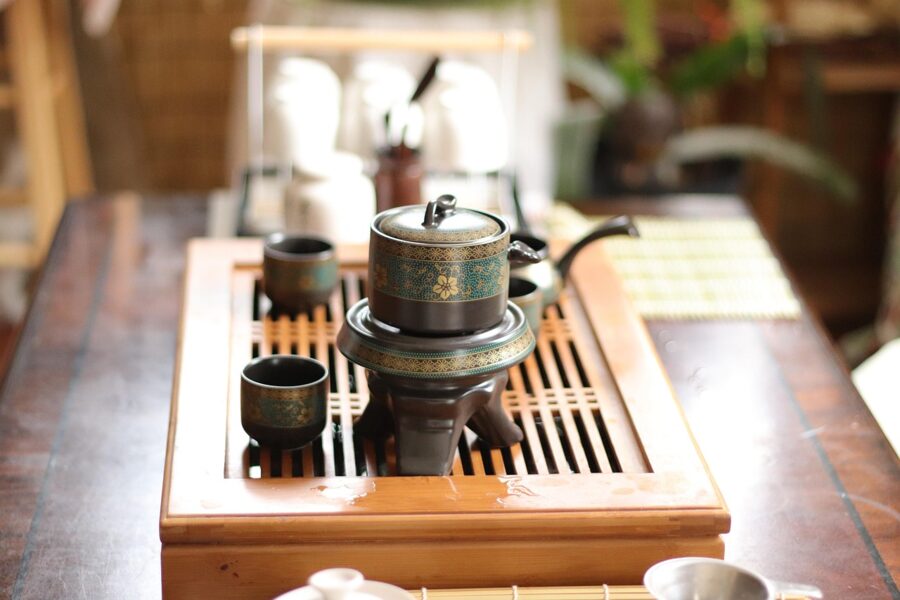
Chaozhou does it with even more ritual, three cups set in a triangle and a pour that circles over them so each cup gets the same strength. I’ve described that version in the Chaoshan guide linked above; outside Chaozhou, nobody will mind if you just use a pitcher.
The tray, and the two-finger tap
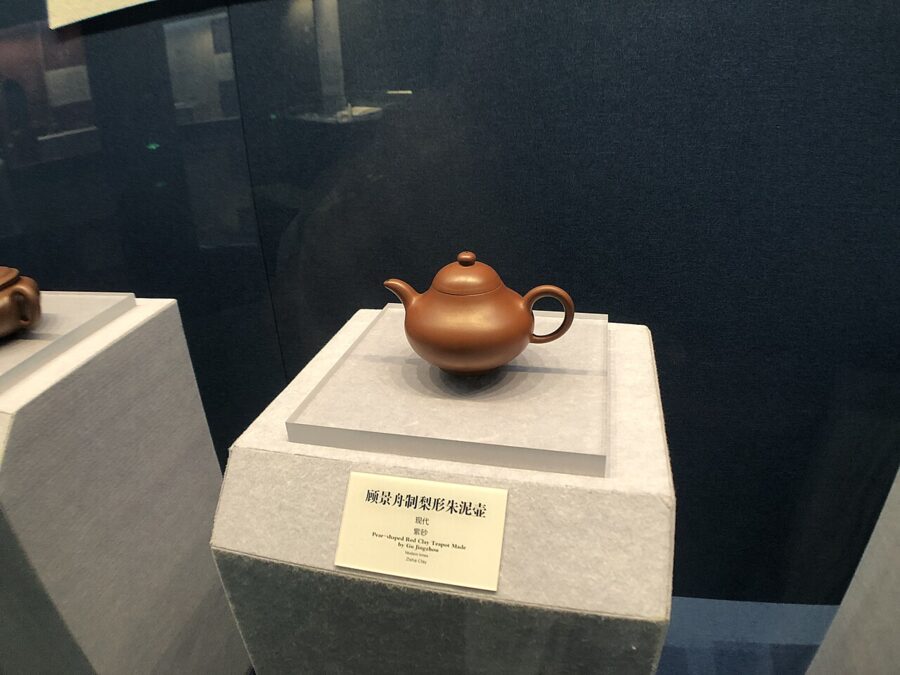
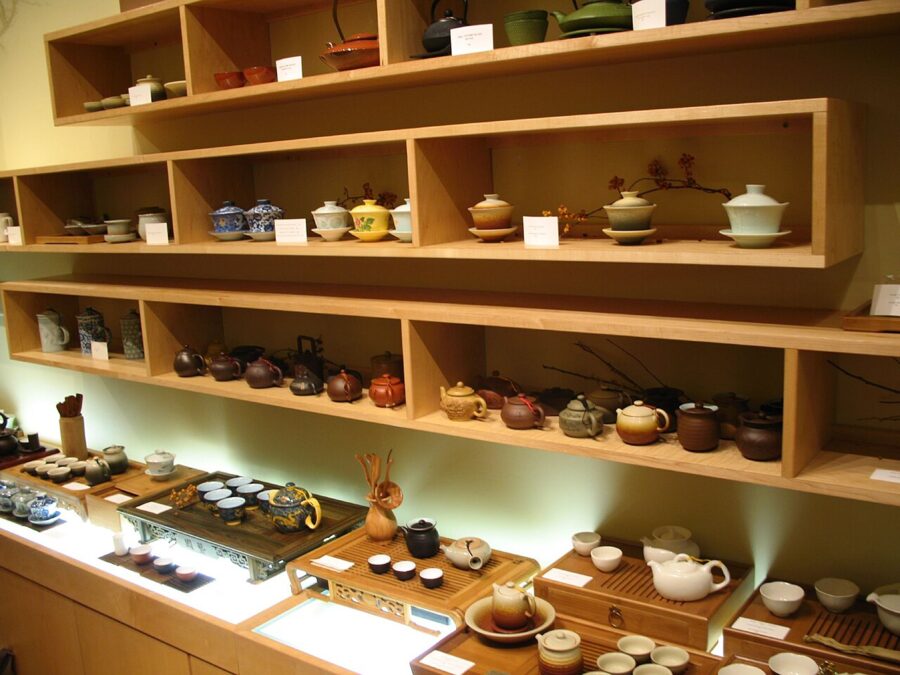
The tea tray (茶盘) is a slatted box of wood, bamboo or stone with a drain or a bucket underneath, and it exists so you can spill. Rinses, cold dregs and overflow all go into it, and nobody minds. Pour for the people around you before you pour for yourself, and fill cups about seven-tenths full, as the saying goes, not to the brim.
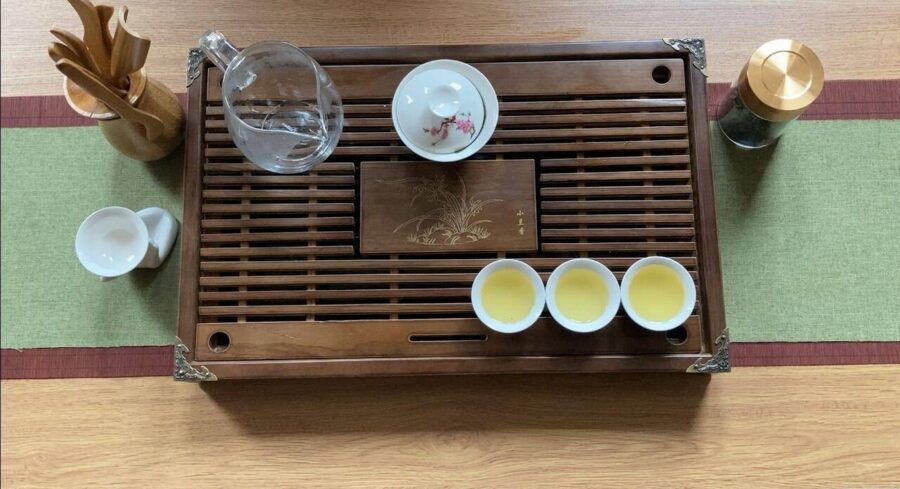
When someone pours for you, tap two or three fingers on the table to say thanks without breaking the conversation. It’s a southern habit with a story about the Qianlong Emperor attached, and I’ve told it in the Cantonese food guide. In a Cantonese teahouse, leaving the lid of the teapot ajar is how you ask for more hot water.
An afternoon in a teahouse
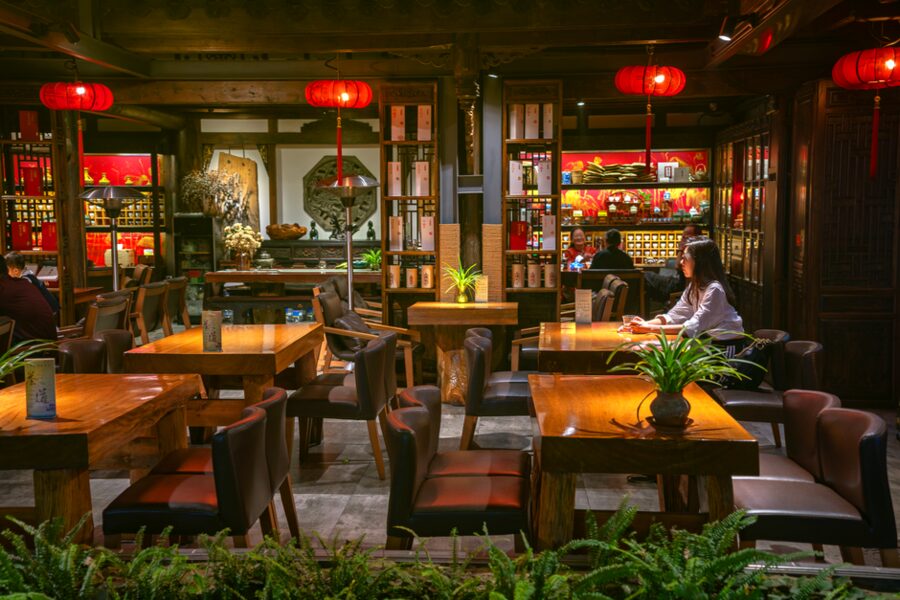
Teahouse culture changes completely from city to city. In Chengdu it’s cheap, loud and endless; in Hangzhou it’s quieter, by the water and more expensive; in Guangzhou tea is breakfast; and in Beijing the famous teahouse is really a theatre. They’re all worth a few hours.
Chengdu: bamboo chairs and a bottomless gaiwan
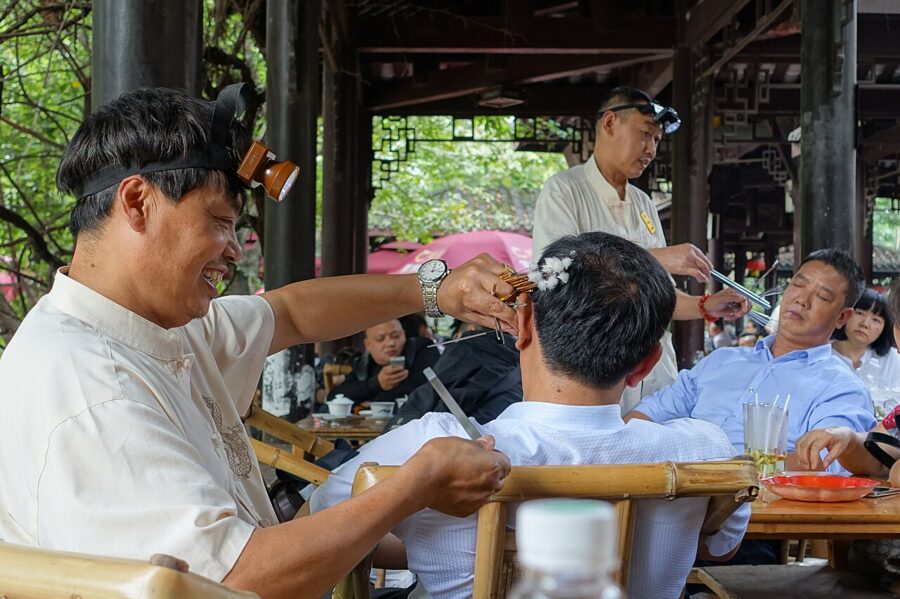
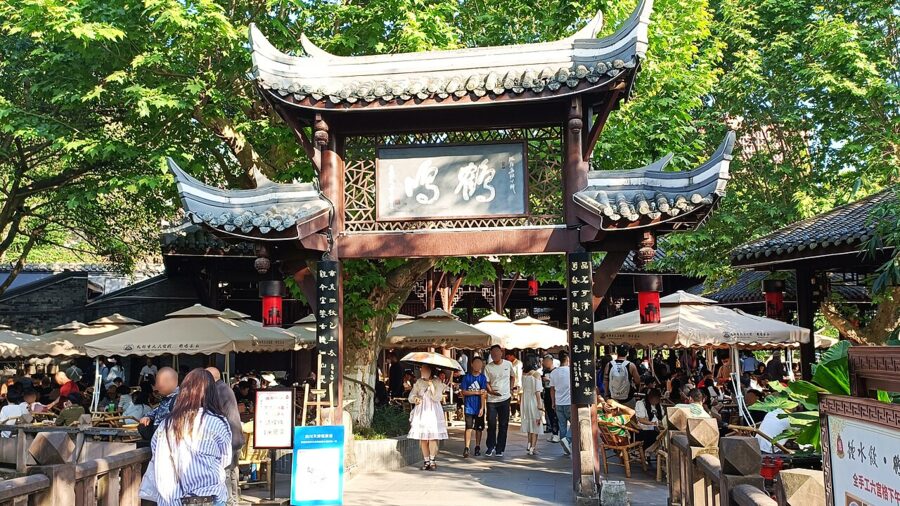
Chengdu is the teahouse capital, and you don’t need to look hard. There are teahouses in every park, under the trees in residential compounds and inside temple courtyards, filled with bamboo chairs, mahjong tables and people who intend to stay all afternoon. You pay once for a gaiwan of jasmine or green tea, and an attendant comes round with a kettle to top up the water for as long as you sit.
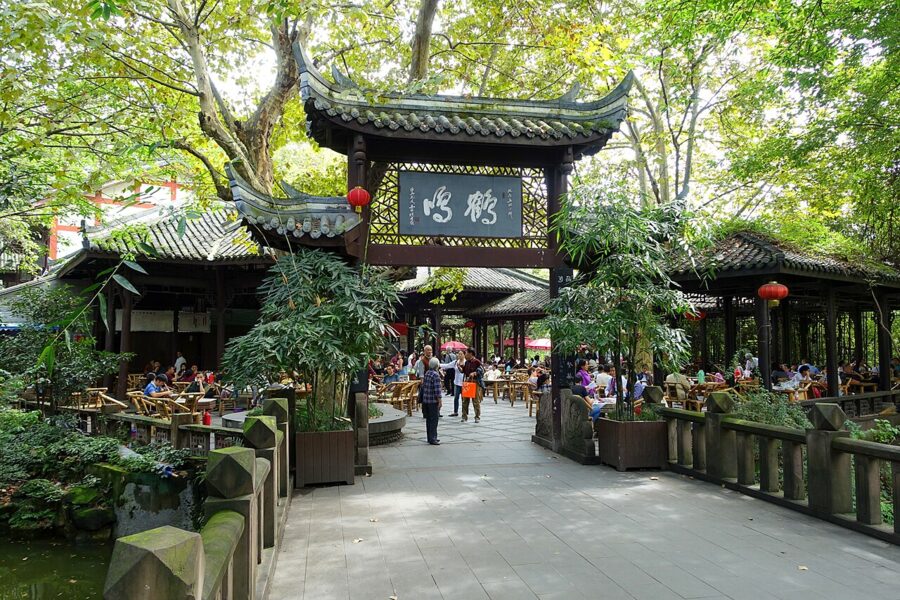
The classic is Heming Teahouse (鹤鸣茶社) in People’s Park, by the lake in the middle of the city, which dates from 1923. Its posted price in 2026 started at ¥16 a head, ¥18 after 18:00, and better leaves cost more. Ear cleaners work the tables with long metal picks and feathers; agree the price before they start. People’s Park station is on Metro Line 2, a few minutes’ walk from the park gate.
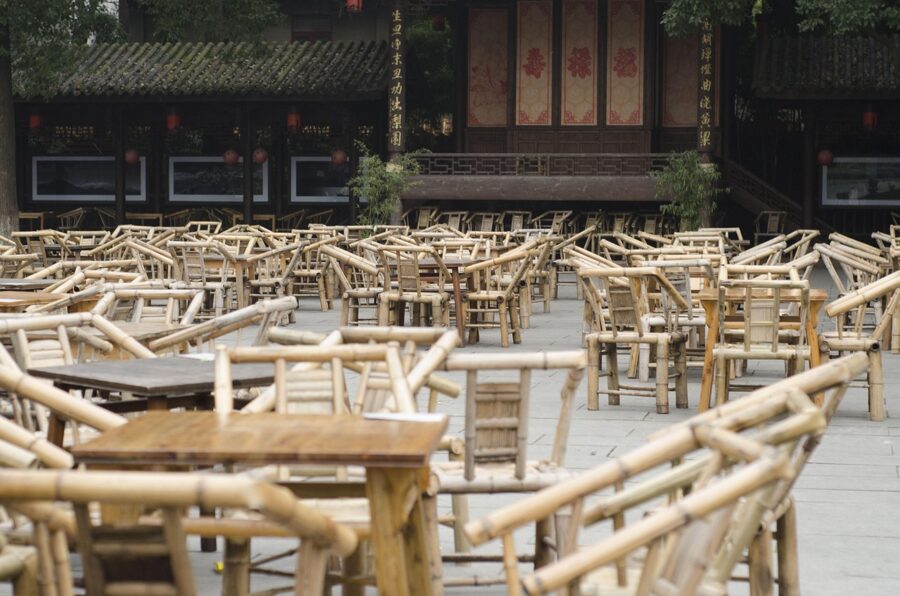
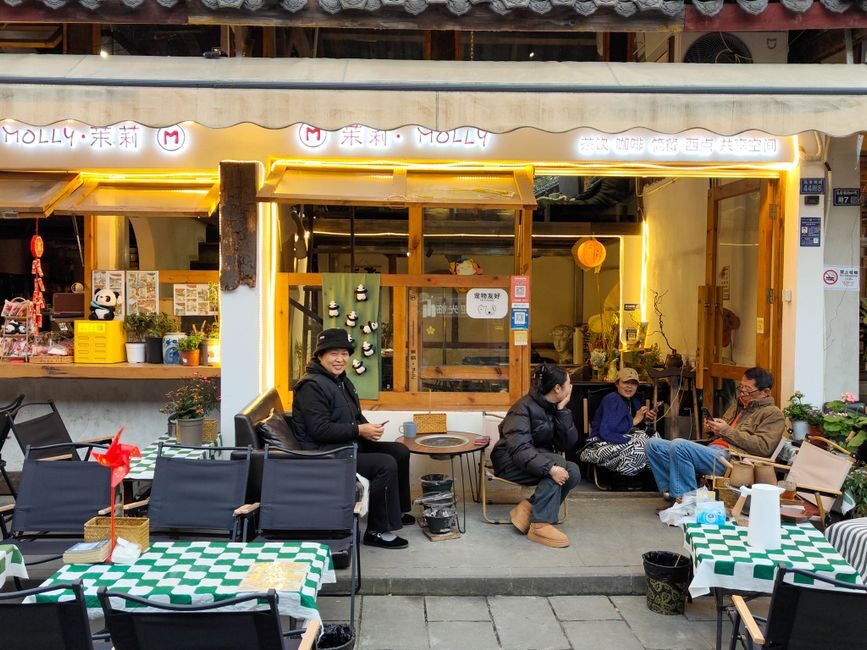
For the newer, cheaper, more local version, Daqi Teahouse (大旗茶馆) opened in October 2025 in a converted workshop of the old Chengdu Lacquerware Craft Factory in Qingyang district. It has about a thousand seats; tea is ¥5 a cup before 10:00 and ¥10 after, and it runs from morning tea through lunchtime noodles to evening drinks. For what to eat between cups, my Sichuan food guide has Chengdu’s snack shops.
Hangzhou: by the lake
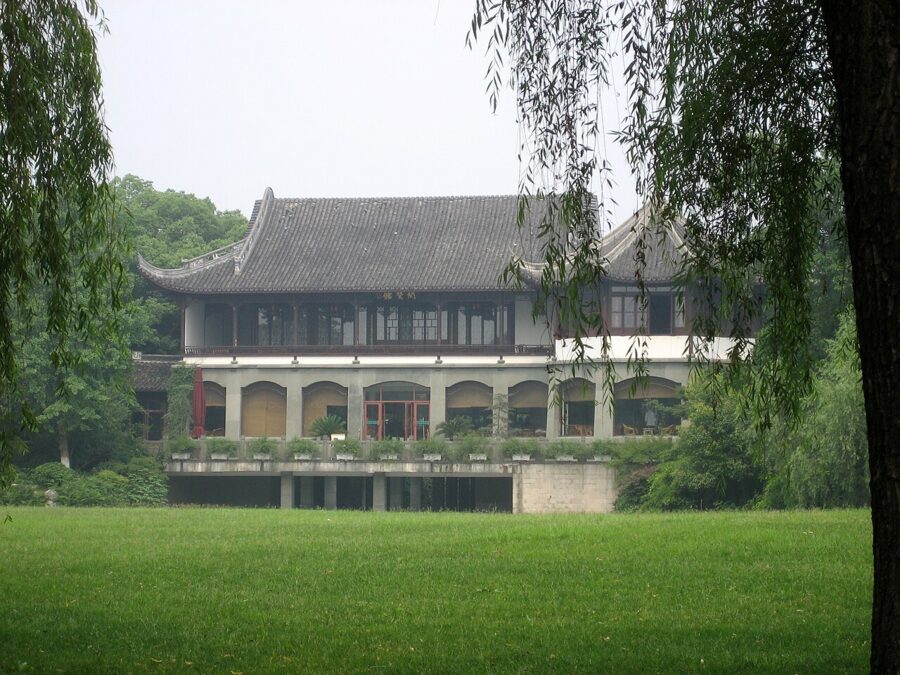
Hangzhou’s teahouses face West Lake or sit in the tea villages above it. The lakeside ones are smart, priced for the view, and usually serve a pot or glass of Longjing with a long list of small snacks; go in the late afternoon and stay for the light on the water. Up in Longjing village and Meijiawu, the farming families sell a glass of their own tea at a table on the terrace and will cook you lunch, and that’s the better afternoon.
Guangzhou and Chaozhou
In Guangzhou, “drinking tea” (饮茶) means dim sum, and the tea is almost the side dish: pu’er, chrysanthemum or oolong, poured endlessly while the baskets come out. Since May 2026 the city’s teahouses have had to post their per-head tea charge and offer a choice of teas, which the Cantonese guide explains; for the Hong Kong version, see my guide to Hong Kong dim sum. In Chaozhou and Shantou, tea is gongfu tea at every shop counter, and the teahouses around Paifang Street are a good place to rest between meals.
Beijing: Laoshe Teahouse
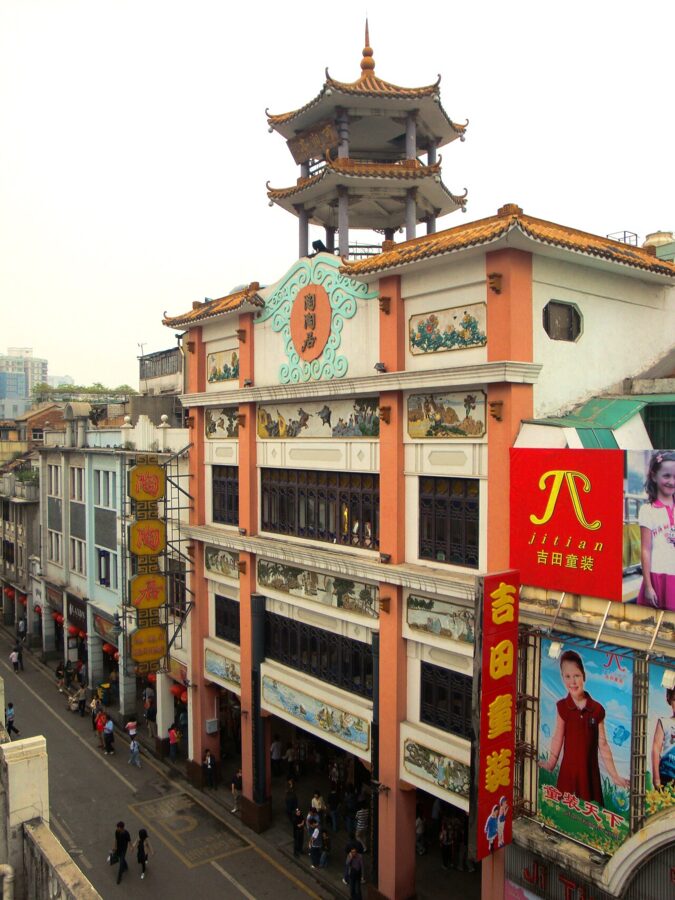
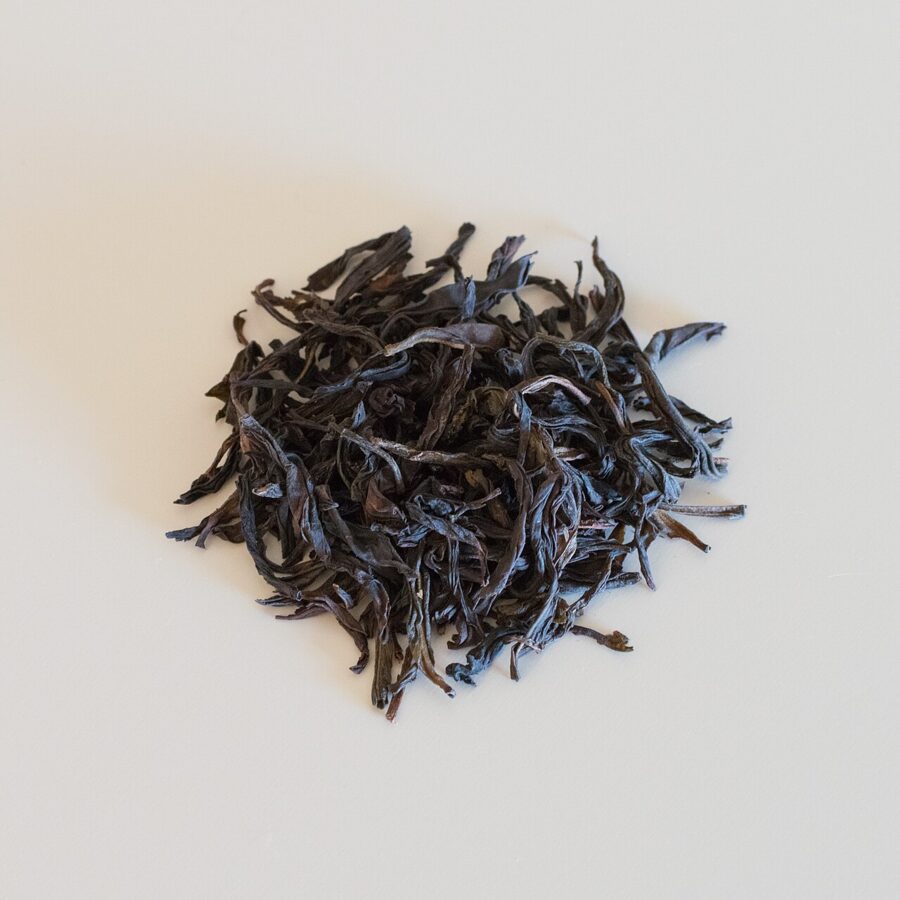
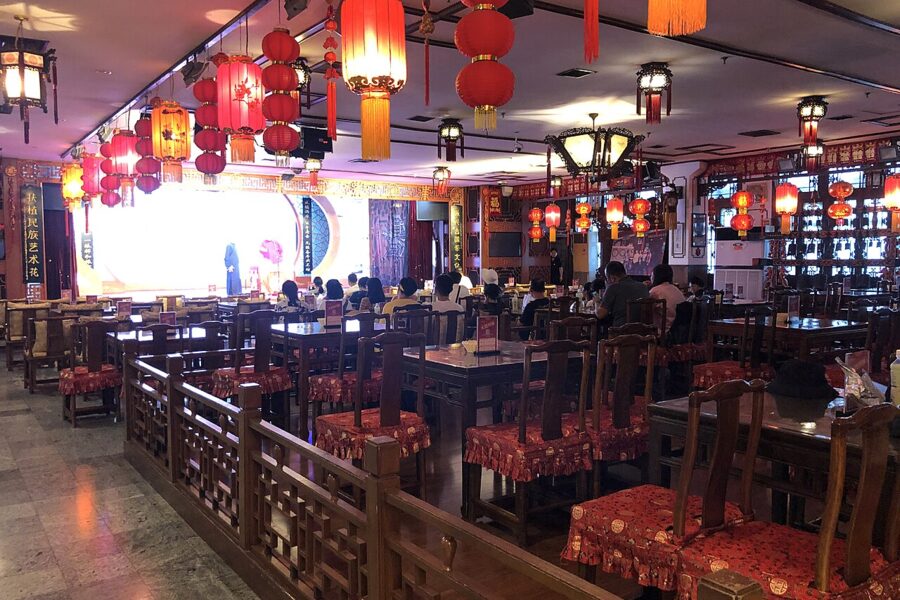
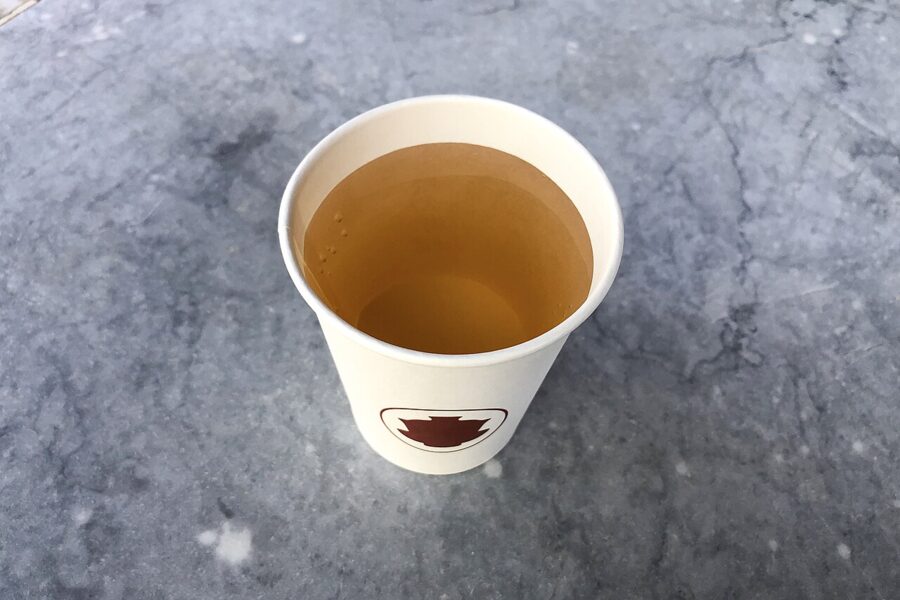
Laoshe Teahouse (老舍茶馆) on Qianmen West Street is named after the writer Lao She and his play Teahouse, and it started in 1979 as a street stall selling big bowls of tea for two fen. It opened as a teahouse in 1988 and is now a tea-and-theatre house with an evening variety show of Peking opera, acrobatics, crosstalk and other folk arts, booked in advance on its own channels or through Trip.com. It’s touristy and fun, and its tea stall still sells the two-fen bowl. For the rest of the city, see my Beijing itinerary.
Go where it grows
You can taste all of this in a city tea market. But a few tea places are easy to reach, beautiful in their own right and much better in season, and Hangzhou is the place to start.
Hangzhou: Longjing village and Meijiawu
Longjing village (龙井村) sits up Longjing Road in the hills south-west of West Lake, surrounded by its own tea terraces. Below Shifeng peak, past Hugong Temple, are the eighteen imperial bushes and the old Dragon Well spring itself; “Asking about tea at Dragon Well” (龙井问茶) is one of the lake’s New Ten Scenes. Bus 27 runs between the village and the city, and in spring the road up is a slow crawl, so go early or on a weekday.
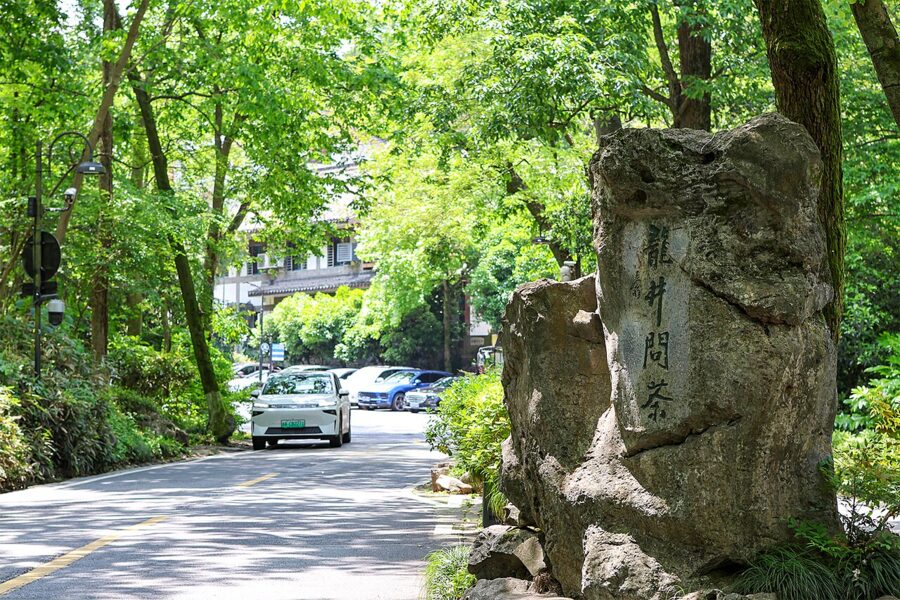
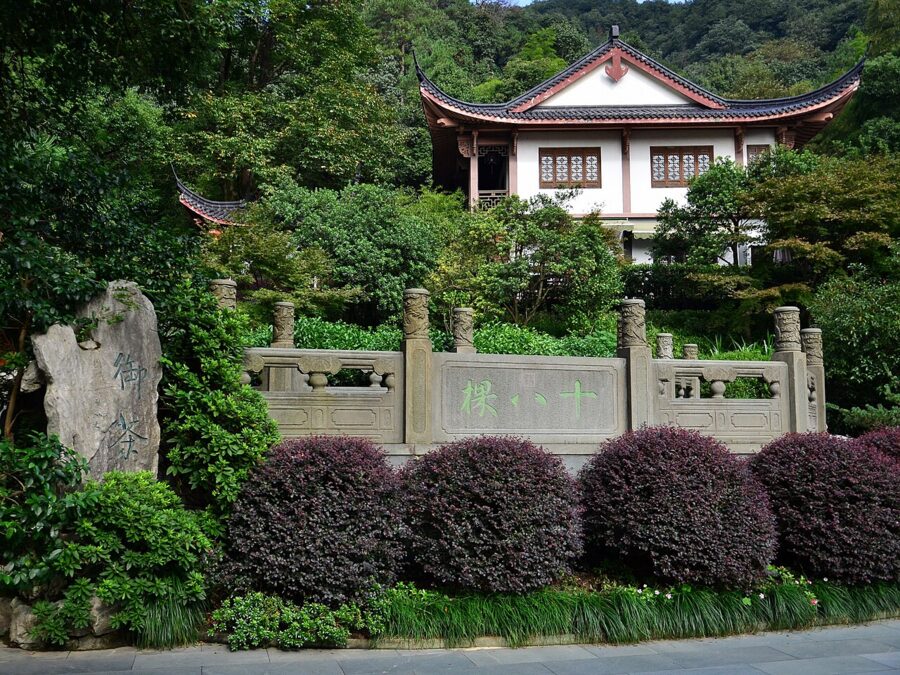
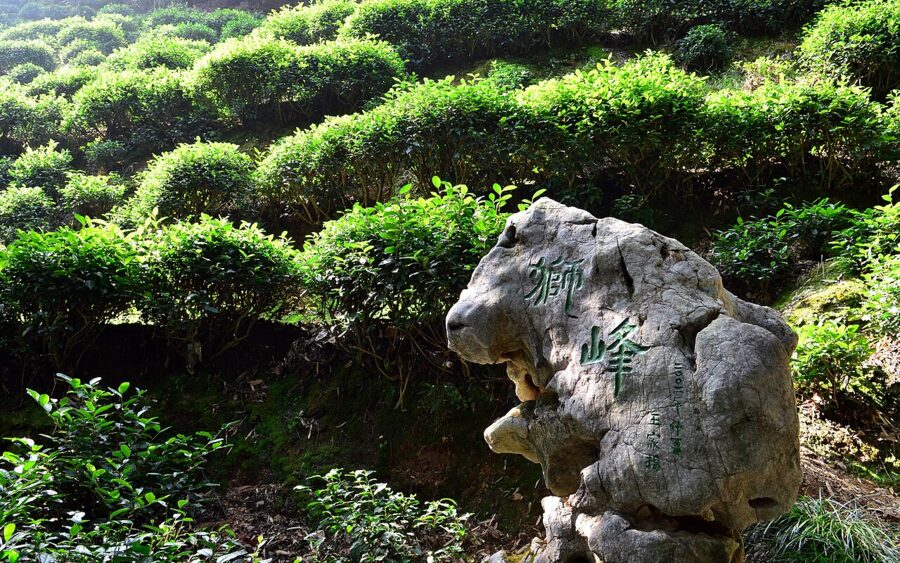
Meijiawu (梅家坞) is a long village of farmhouses in a valley to the west, in the “Yun” area that produces more Longjing than any other. Zhou Enlai visited five times from 1957, and his memorial room, in the old brigade reception hall, is in the village. A footpath over the Shili Langdang (十里琅珰) ridge links Meijiawu with the hills above Longjing village; it’s a walk of a few hours through tea and bamboo, with views of the lake.
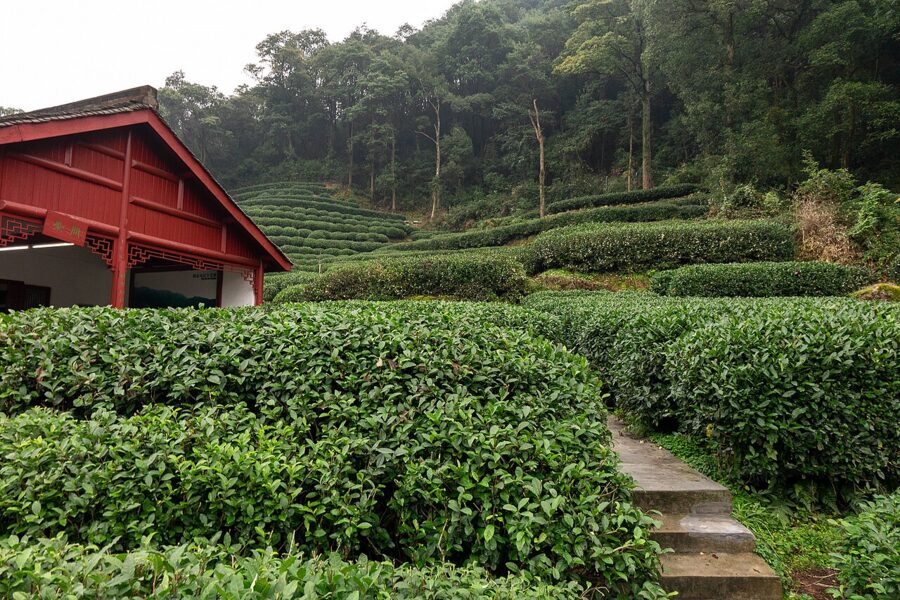
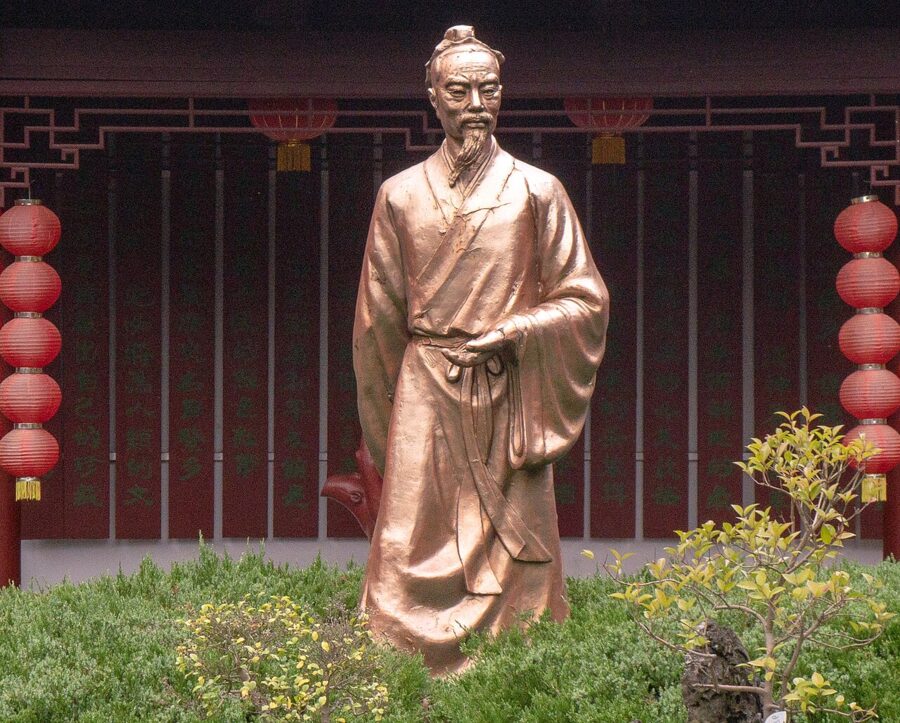
Between the lake and the village is the China National Tea Museum (中国茶叶博物馆), the only national museum devoted to tea. Its Shuangfeng site at 88 Longjing Road opened in 1991 and has the main galleries; the newer Longjing site at 268 Wengjiashan opened in 2015. Both are free and closed on Mondays outside public holidays, and the Shuangfeng site has its own tea fields, so it’s an easy first stop on the way up to the village.
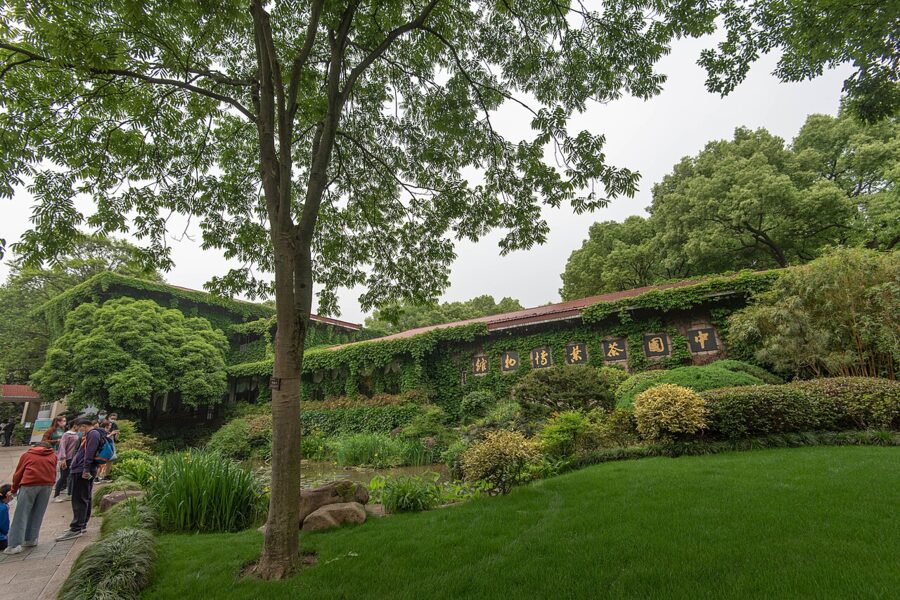
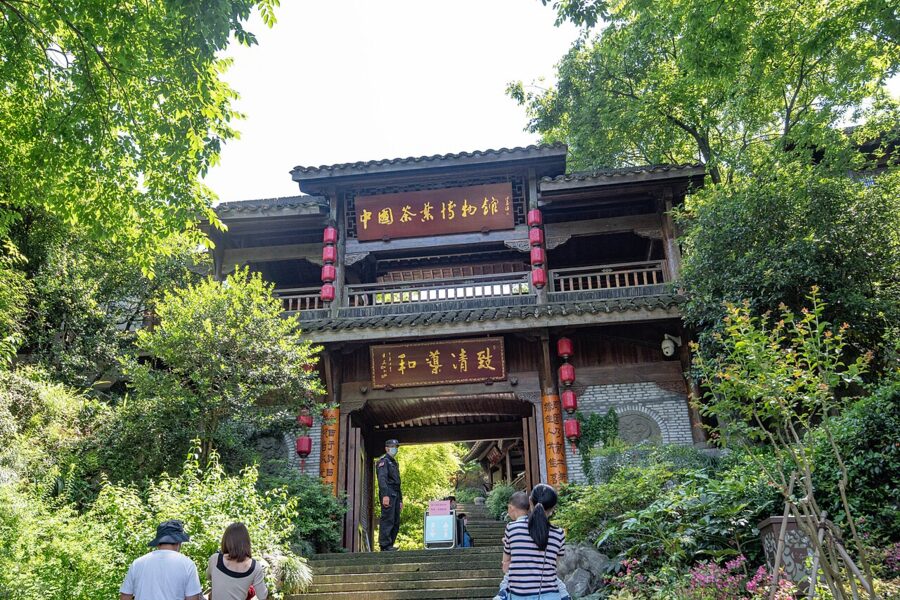
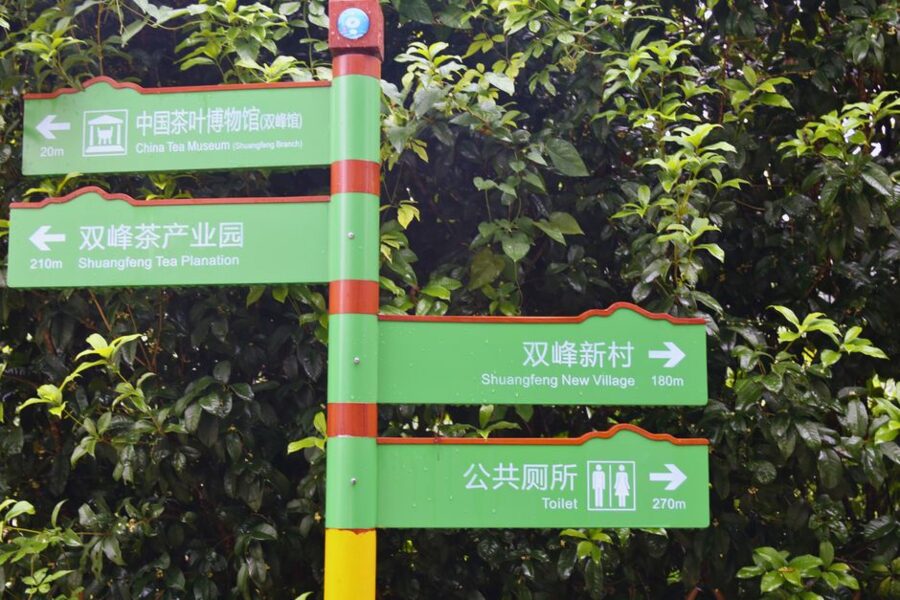
Hangzhou is under an hour from Shanghai on the fastest G trains. Go between late March and mid-April for the new tea, and avoid the three-day Qingming holiday itself if you can, when the tea villages and the lake are at their busiest of the spring.
Wuyishan
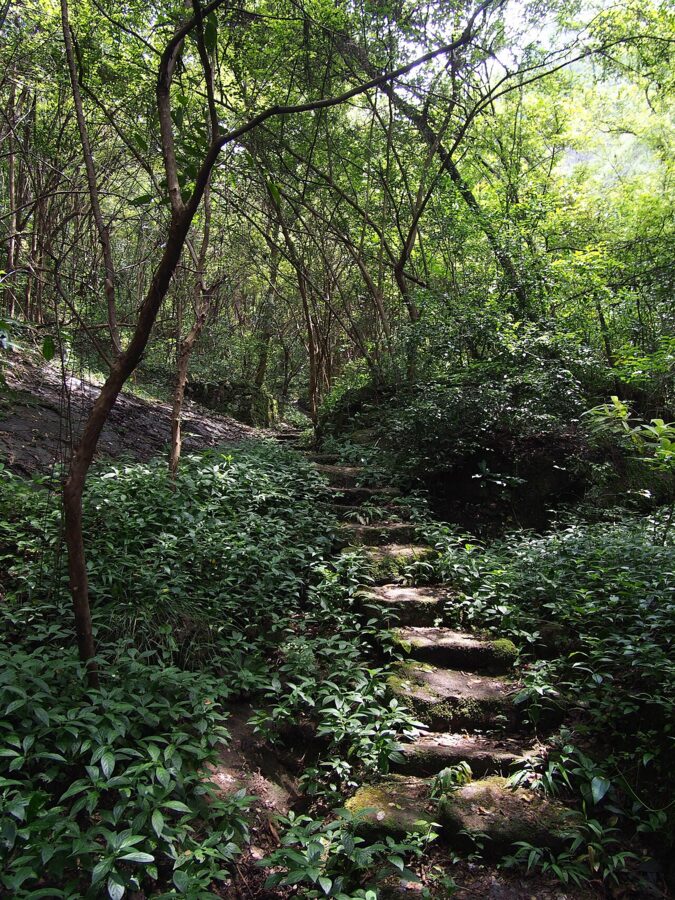
Wuyishan, in northern Fujian, is a World Heritage scenic area of red cliffs, rafting and rock tea. The Da Hong Pao scenic area is a walk up the gorge of Jiulongke between tea terraces to the mother trees on their ledge, and a path carries on from there to Tianyou Peak. Tickets for the main scenic area and the bamboo rafts on the Nine-bend River are real-name and booked in advance with your passport through the scenic area’s official channels, and the rafts are the first thing to go in holidays.
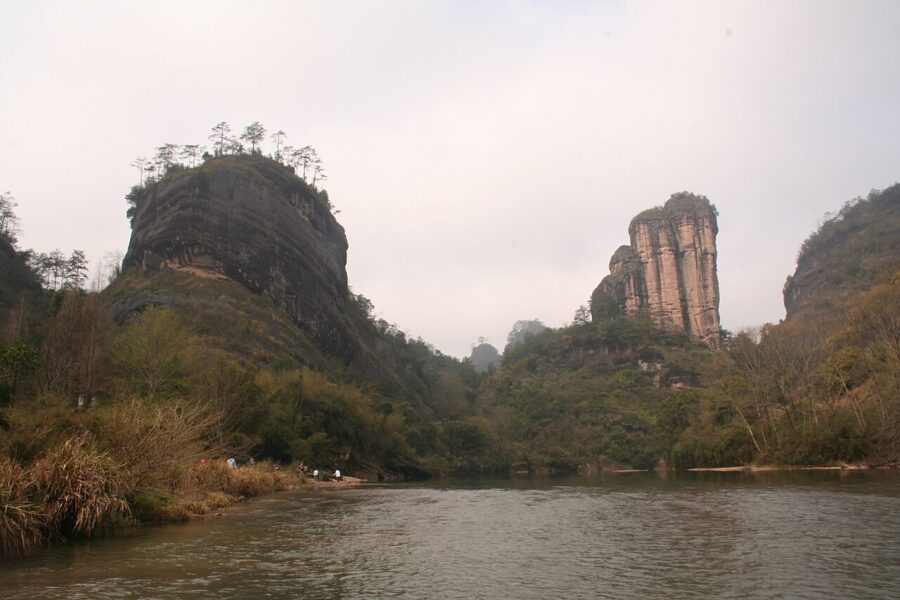
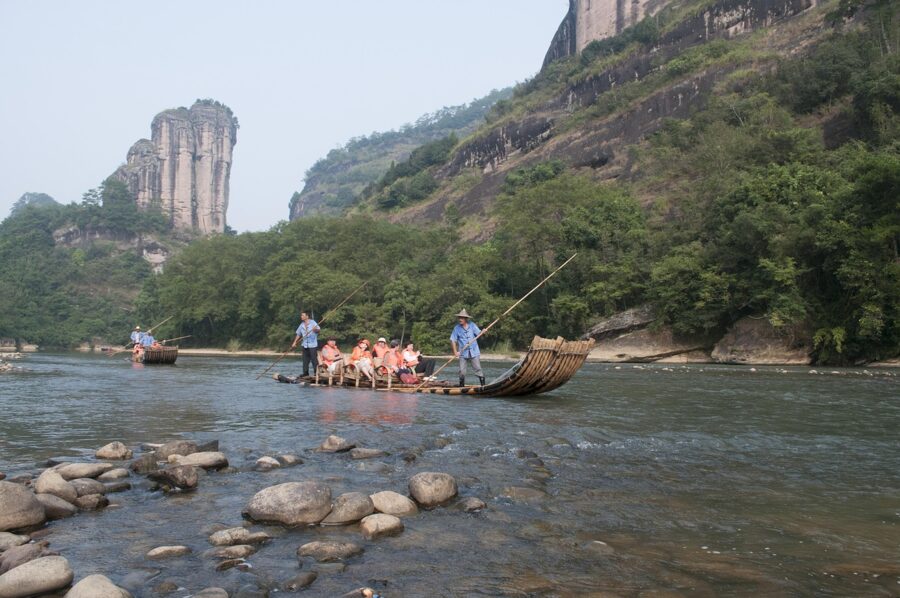
Wuyishan’s high-speed stations, Wuyishan North and Wuyishan East, are on the line between Hefei and Fuzhou. The fastest trains reach Fuzhou in a little over an hour and Hangzhou East in about two hours fifteen; check times on 12306.
Anxi
Anxi is less of a sight and more of a working tea county, inland from Xiamen and Quanzhou and reached by road. The county town’s China Tea Capital (中国茶都) market fills each morning with farmers selling sacks of new tea to dealers, and in spring and autumn the hill towns, Xiping among them, smell of tea being shaken and fired. It’s worth a day if you already love Tieguanyin; if you don’t, the tea markets in Xiamen will do.
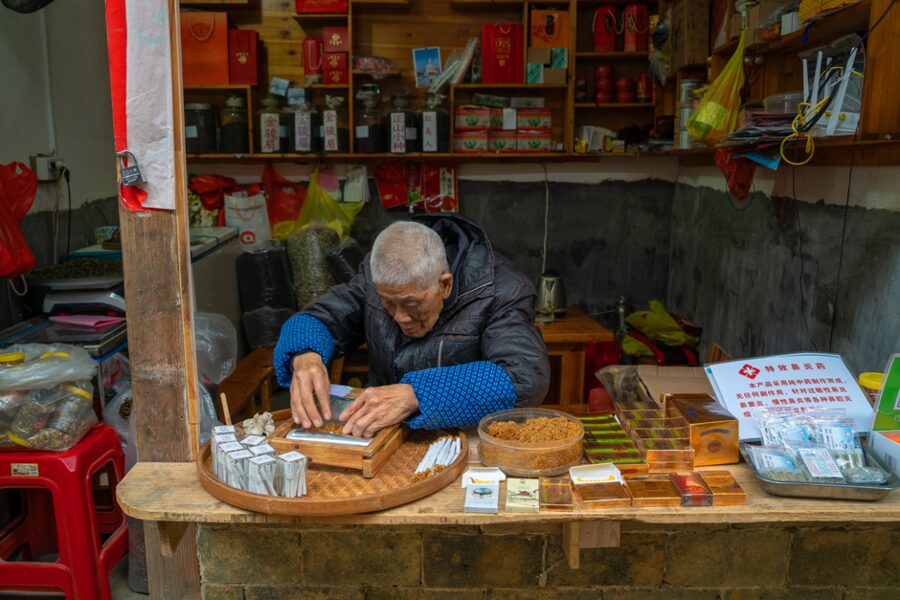
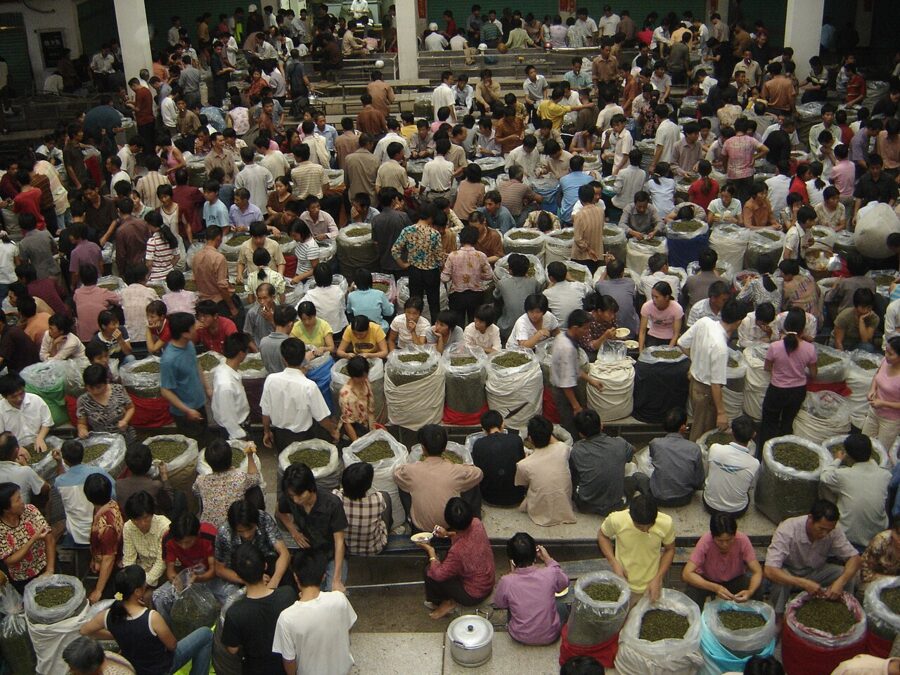
For pu’er country in Yunnan, the old tea mountains of Xishuangbanna and Lincang, see the pu-erh guide; my Yunnan food guide covers what to eat on the way.
Buying tea without getting burned
Tea is the best thing to bring home from China, and the easiest to overpay for. The rules are simple: buy in a tea market or a real tea shop, taste before you pay, and buy small.
The markets
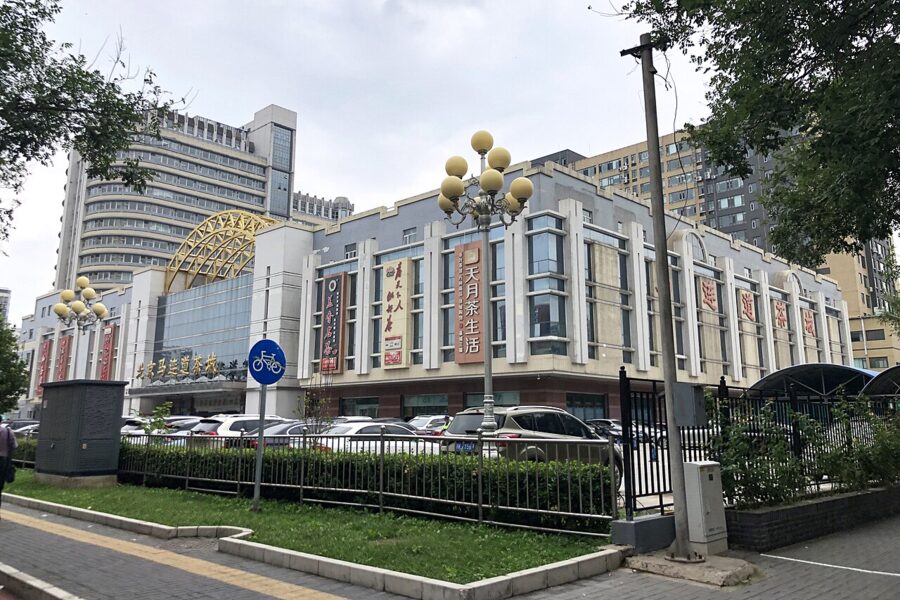
Beijing’s tea street is Maliandao (马连道) in Xicheng district, across the road from Beijing West Railway Station, with more than 1,500 tea dealers from over ten tea-growing provinces in multi-storey tea malls and street shops. Take Metro Line 7 to Wanzi station and walk south a few minutes. Many of the shops are run by families from Fujian, and the kettle will be on.
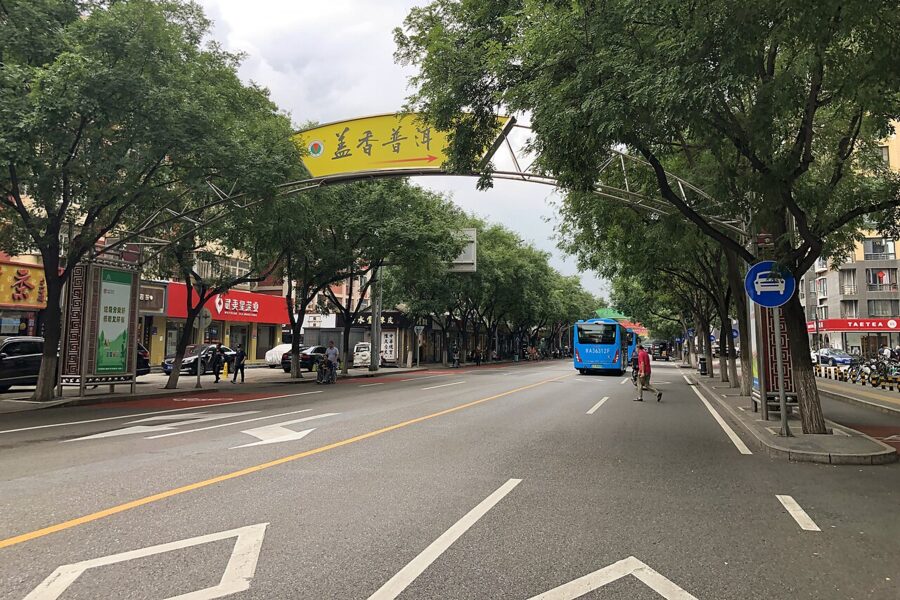
Guangzhou’s equivalent is Fangcun (芳村) in Liwan district, where more than 12,000 traders work across more than twenty tea markets, the Southern Tea Market (南方茶叶市场) on Fangcun Avenue among them. In 2026 the Shancun area around it entered urban-village redevelopment, but only one market was knocked down; the rest are trading as normal. It’s the place for pu’er, oolong and dancong at wholesale prices.
What a fair price looks like
Prices in China are quoted per jin (斤, 500 g), sometimes per liang (两, 50 g), and almost never per gram, so ask which. For a sense of scale, real West Lake Longjing in 2026 started at about ¥1,500 a jin in pre-orders, and the top lots went for more than ¥30,000. If someone offers you “West Lake Longjing” for ¥200 a jin, it isn’t.
Taste at least two or three teas at two or three shops, and buy 50 or 100 grams of the one you liked, not a gift box. The price drops by quantity and you can bargain a little in markets, though not much in branded shops. Pay with Alipay or WeChat Pay, both of which take foreign cards; cash is legal tender, but small shops may be short of change.
Packaging and the trip home
Ask for green, yellow and light oolong teas in sealed foil or vacuum packs, and keep them cool once you’re home; they fade within months. White tea, roasted oolong, red and dark teas keep for a year or more, and pressed cakes improve. Look for the official label and code on West Lake Longjing, and walk past the pre-wrapped gift boxes at scenic spots, which are where the worst tea in China ends up.
Commercially packed tea gets through customs in most countries without trouble. Australia is the strict one: you must declare tea, like all plant material, on your incoming passenger card, so tick the box.
Skip this: the “tea tasting” scam
It still works, so here it is plainly. A friendly pair, often young and saying they’re students or want to practise English, chat with you near Tiananmen, Wangfujing or Qianmen in Beijing, or on Nanjing Road, People’s Square or near the Bund and Yu Garden in Shanghai. After a while they suggest a traditional tea ceremony or tea tasting nearby, and you end up in a small room tasting a string of teas from a menu with no prices. The bill runs to hundreds or thousands of yuan, the card machine comes out, and the door is suddenly crowded.
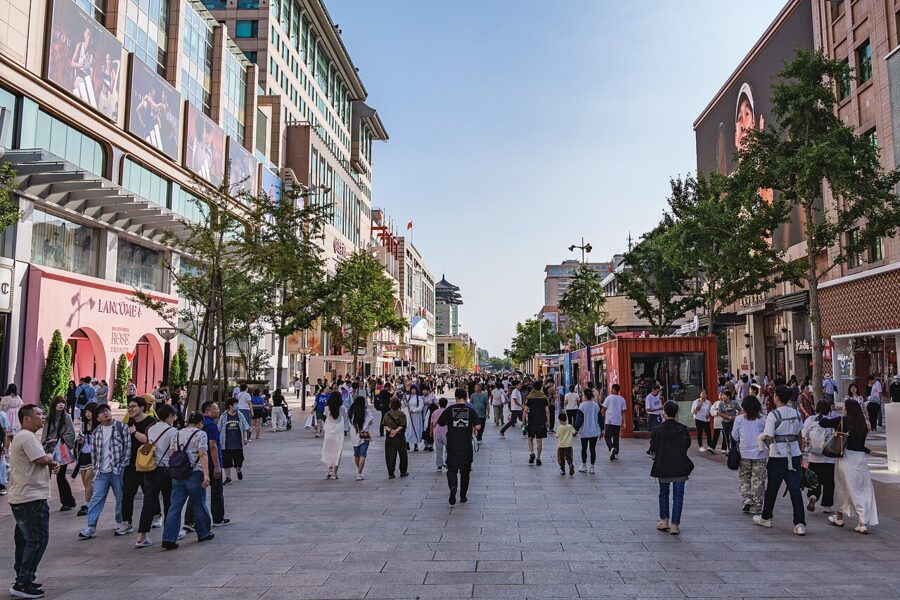
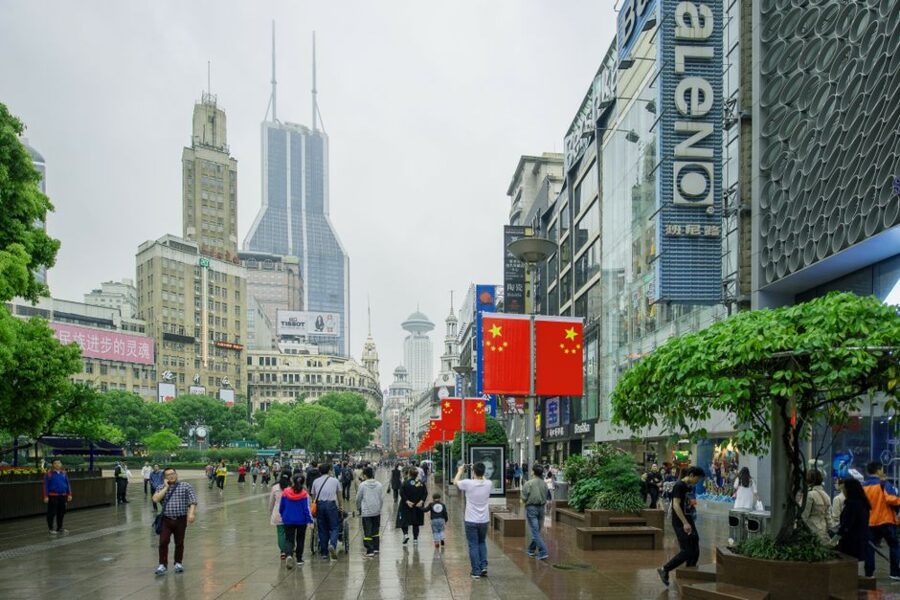
The UK government’s travel advice for China names the “tea tasting” scam by name, so it’s not a rumour. Real teahouses and tea shops show prices on the menu or the wall, and a tea shop owner who pours for you won’t ask you to come anywhere else. Say no to any stranger’s invitation to go somewhere for tea, however charming; if you’re already in it, ask for an itemised bill, refuse to pay what you didn’t agree to, and call the police on 110. The national tourism complaints line is 12301.
A last cup
Buy a gaiwan before you buy any tea. Taste three teas for every one you take home, buy 50 grams rather than a kilo, and in spring, go up the hill to Longjing village and drink a glass of the year’s new tea on a farmer’s terrace. When someone pours for you, tap the table twice.
You Might Also Enjoy
 Zhangjiajie: The Pillars of Wulingyuan, Tianmen Mountain, the Glass Bridge and How to Plan Three Days
 Konbini Food in Japan: What to Buy at 7-Eleven, FamilyMart, Lawson and Seicomart, Aisle by Aisle
 A Short History of Japanese Food (Not Really Short)
 3 Days in Shanghai: The Bund at Dawn, the Old City, the French Concession and a Day Trip, Planned Hour by Hour