3 Days in Shanghai: The Bund at Dawn, the Old City, the French Concession and a Day Trip, Planned Hour by Hour
At six in the morning the Bund belongs to the people who live behind it. Retired men stretch against the river railing, a few couples practise slow ballroom steps to a phone speaker, and somebody is always walking backwards, very carefully, for his health. The towers of Lujiazui stand across the water with their lights off, grey and ordinary, and nobody on the promenade is looking at them.
Come back at 20:00 and it’s a different city: shoulder to shoulder, phones up, the whole skyline flashing. Both versions are worth seeing, and the trick to three days in Shanghai is putting yourself in the right one at the right hour. This plan does that. It starts on the river at dawn, crosses it for a few coins, goes up the tallest building in China, spends a long day on foot in the old city and the former French Concession, and leaves room on day three for Suzhou or a canal town before bringing you back for the Bund lit up at night.
I lived in Shenzhen in 2018 and 2019, and Shanghai was where people went when they wanted the other China: older streets, grander buildings, a slower lunch. The details below are current for late 2026: ticket prices, booking rules, metro lines and exits. Where I couldn’t confirm something, I’ve left it out.
Here’s the shape of it before the detail. Times are where I’d be, not a timetable.
| Day | Morning | Afternoon | Evening |
|---|---|---|---|
| One | The Bund at dawn, sheng jian breakfast, ferry to Pudong | Shanghai Tower deck, Shanghai Museum East | Nanjing Road East, Waibaidu Bridge and the North Bund |
| Two | Yu Garden at opening, the City God Temple, the old streets | Xintiandi, Fuxing Park, Tianzifang | Wukang Road, the Wukang Mansion, Anfu Road |
| Three | Train to Suzhou, or the metro to Zhujiajiao | Gardens or canals | The Bund lit up, the river by ferry or cruise |
In This Article
- How the city fits together
- Day one: the Bund, the river and Lujiazui
- 06:00, the Bund at dawn
- The buildings worth naming
- 08:00, breakfast on Sichuan Middle Road
- 09:00, cross the Huangpu for ¥2
- 10:00, Lujiazui and the Shanghai Tower
- 13:30, the Shanghai Museum East
- 17:00, Nanjing Road East, without the gloss
- 19:00, the river after dark: Waibaidu Bridge and the North Bund
- Day two: the old city, then the French Concession on foot
- 09:00, Yu Garden at opening
- The City God Temple and the old streets
- 12:00, lunch: xiaolongbao by the zigzag bridge
- 13:30, Xintiandi and Fuxing Park
- 15:00, Tianzifang, in small doses
- 16:30, Wukang Road and the Wukang Mansion
- 18:00, Anfu Road for the evening
- Day three: out of town, back for the river
- 07:30, breakfast on Huanghe Road
- Option one: Suzhou by high-speed train
- Option two: Zhujiajiao by metro
- 19:00, the Bund lit up
- The river at night: ferry or cruise?
- Where to stay
- The Bund
- Jing’an
- The former French Concession
- Lujiazui
- Getting in from Pudong and Hongqiao
- Pudong International Airport
- Hongqiao
- Getting around and paying
- When to go
- Skip this
How the city fits together
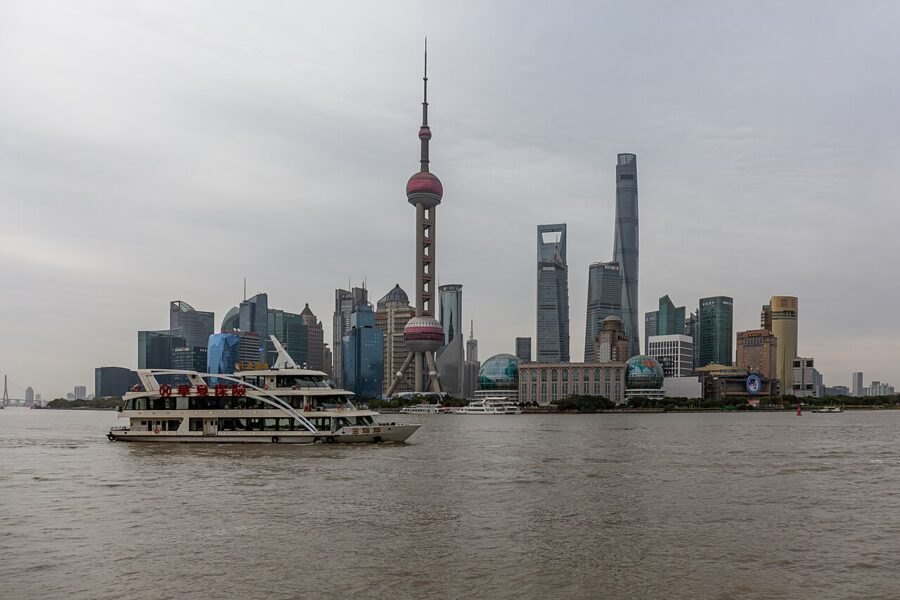
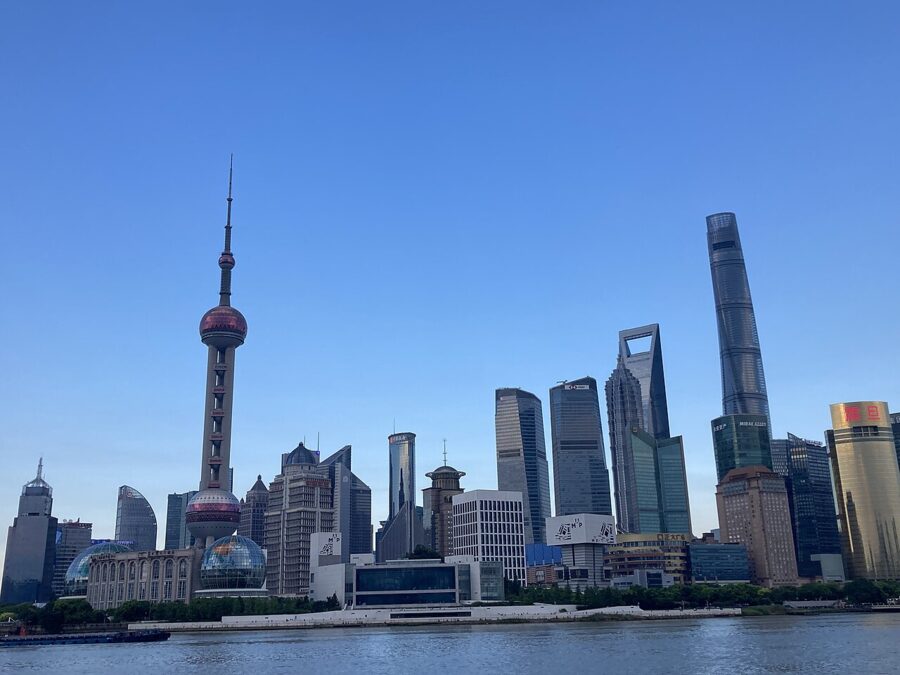
The Huangpu River splits Shanghai in two. West of it is Puxi, the old city: the Bund along the riverbank, the round walled Chinese town just south of it, and the former foreign concessions spreading west, the International Settlement to the north and the French Concession to the south-west. East of the river is Pudong, which was mostly warehouses and farmland until the 1990s and is now Lujiazui, the cluster of towers you see in every photo.
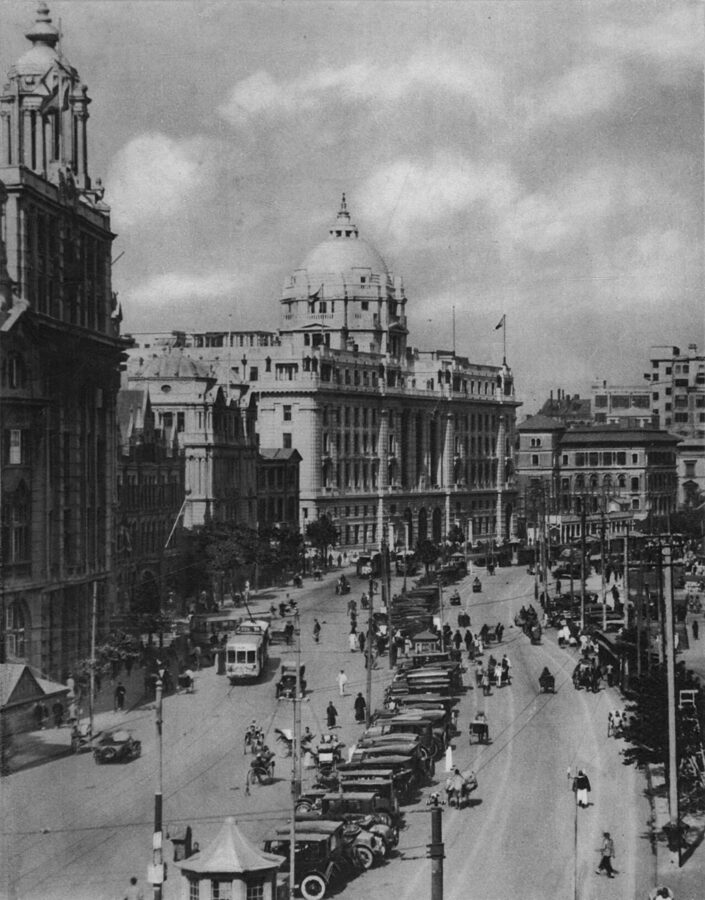
That’s really all the history you need to read the city. The Bund was the waterfront of the foreign settlements after the port opened in the 1840s, and most of its banks and trading houses went up between the 1900s and the 1930s. The old walled town, where Yu Garden is, was the Chinese county seat long before that; its wall came down from 1912, and the roads that replaced it still trace the circle. The French Concession was a residential district, which is why it’s all plane trees, villas and lane houses rather than banks.
Unlike Beijing, where the big sights are imperial and you need booked time slots for most of them (my 3-day Beijing itinerary is built around those), Shanghai is mostly streets, and streets are free. In the city you’ll book two things, Yu Garden and the Shanghai Tower, and only one of them needs any planning.
Day one: the Bund, the river and Lujiazui
06:00, the Bund at dawn
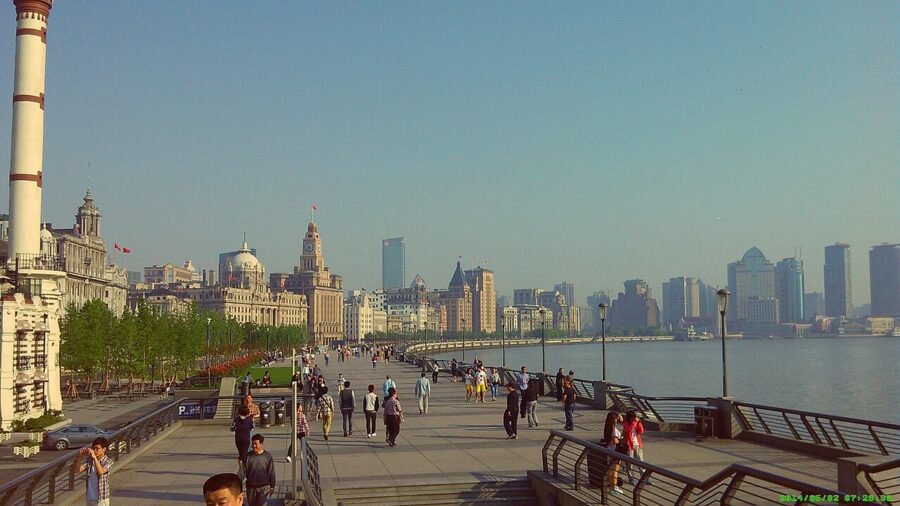
Get to the Bund for sunrise, which falls before 05:00 in June and close to 07:00 in December. East Nanjing Road station (Lines 2 and 10) is the nearest; walk east along Nanjing Road for about ten minutes and you come out at the Peace Hotel and the river. At this hour the Pudong towers are backlit, which is bad for photos of them and good for photos of the Bund, where the sun lands straight on the stone facades.
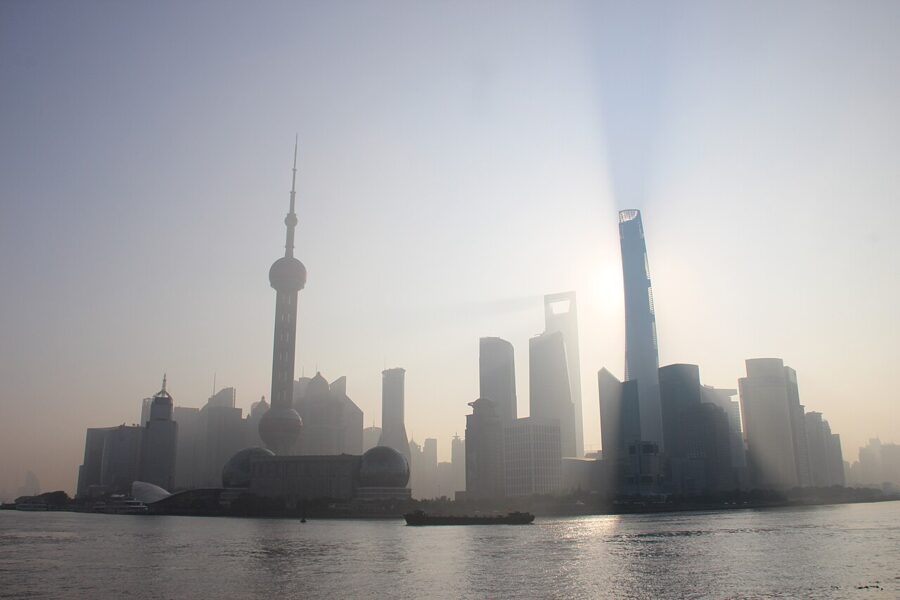
The promenade runs about 1.5 km, from Yan’an East Road in the south to Waibaidu Bridge over Suzhou Creek in the north. Walk it north to south and back, and don’t rush. The morning exercisers are friendly and used to being photographed from a distance, less so from close up.
The buildings worth naming
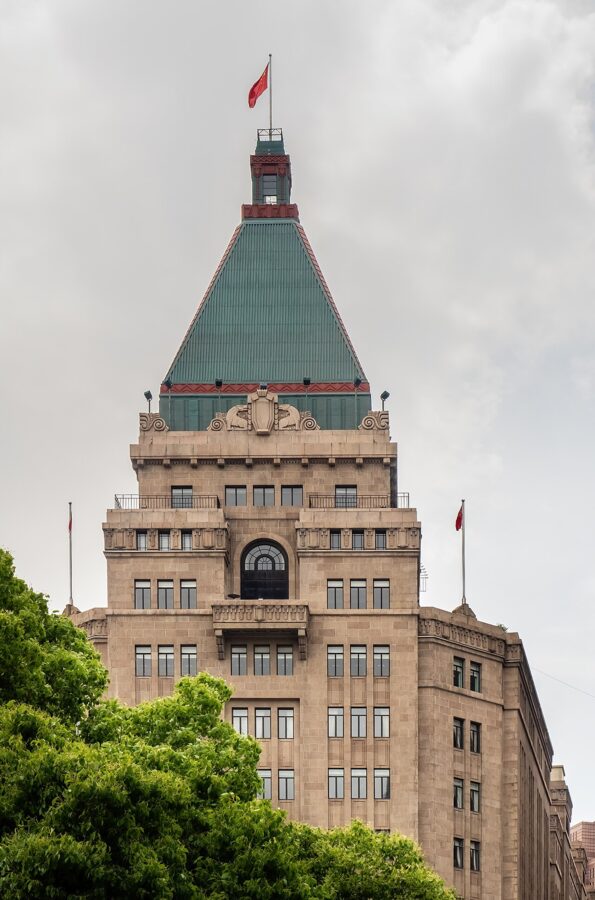
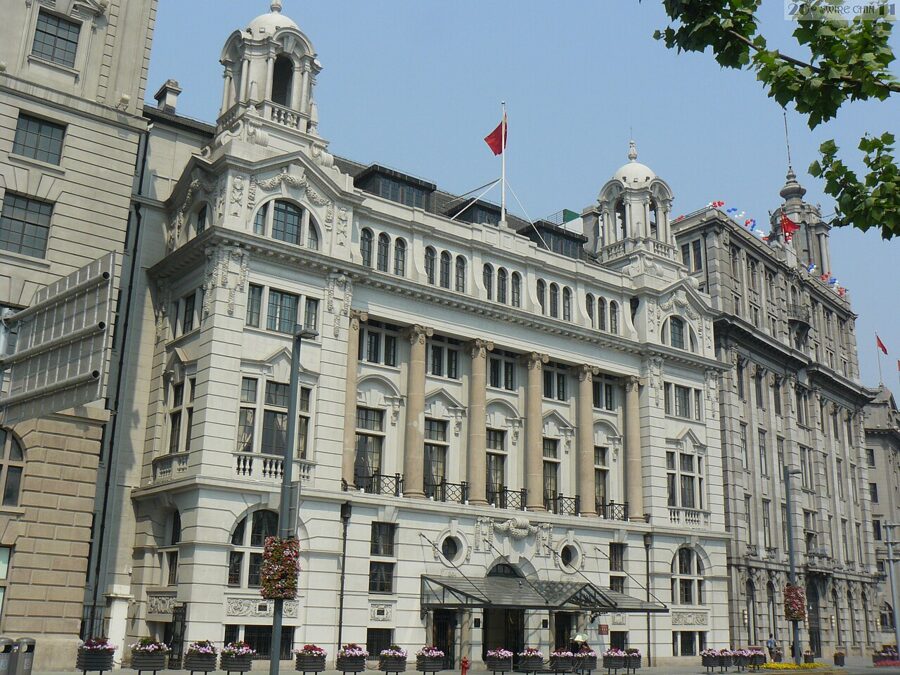
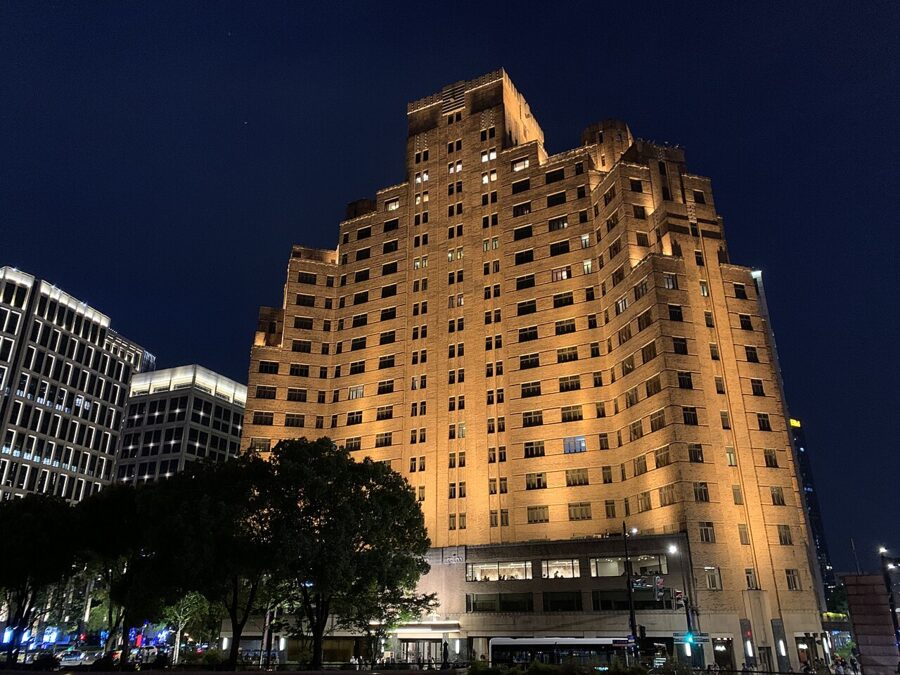
There are more than twenty protected buildings along the Bund. You need about six. Start at the Peace Hotel, the one with the green pyramid roof at the corner of Nanjing Road, built in 1929 as Sassoon House and still a hotel. The south building across Nanjing Road is the older Palace Hotel of 1908.
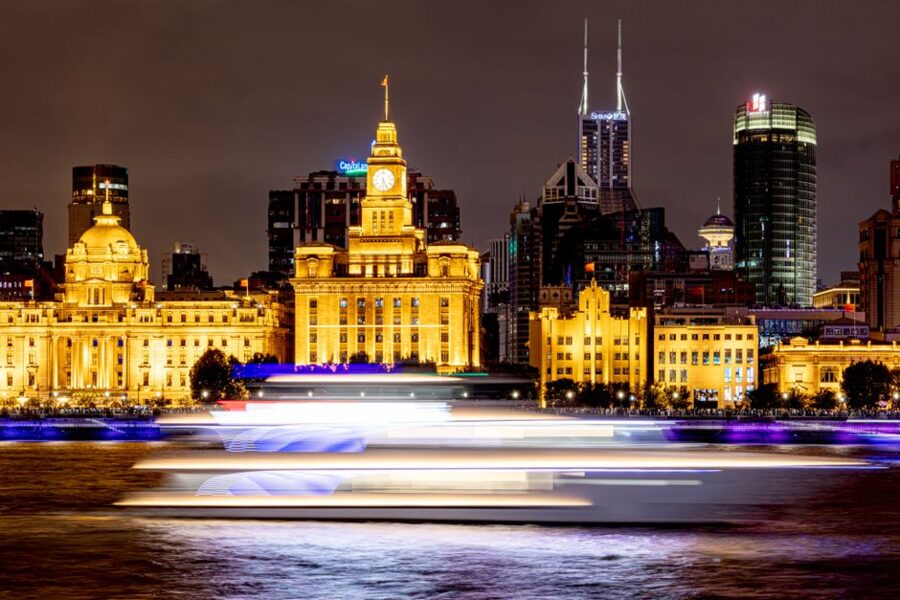
Walk south. Number 13 is the Customs House of 1927, with the clock tower whose chimes carried across the old harbour, and number 12 next to it, the domed former HSBC Building of 1923, is now the Shanghai Pudong Development Bank. Both are by Palmer and Turner, the British firm that designed a large share of the Bund, as well as the Peace Hotel and the 1937 Bank of China building at number 23, a tall art deco block with a Chinese-style roof.
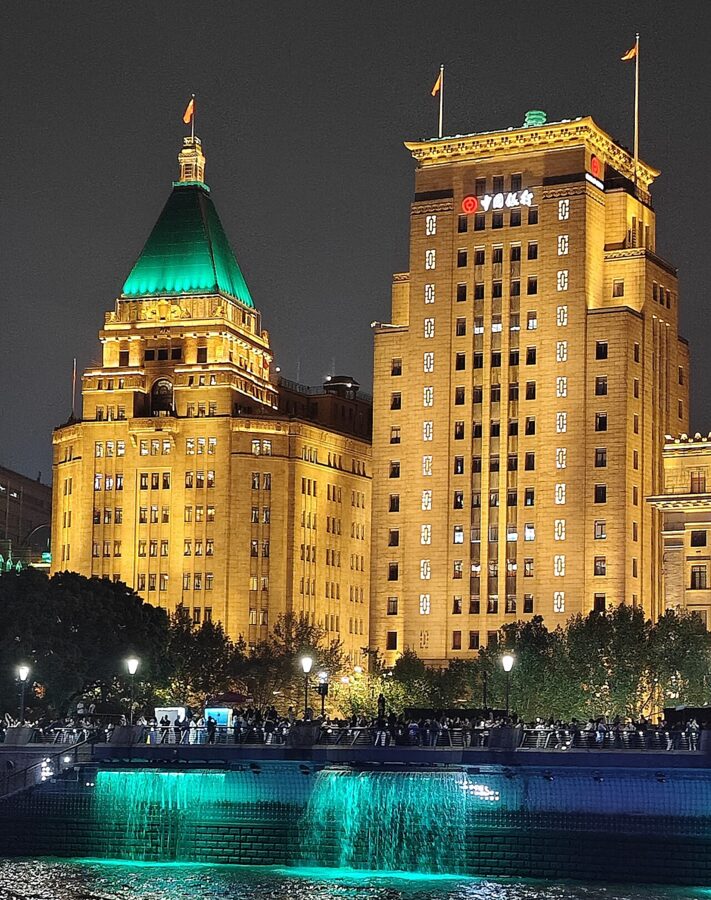
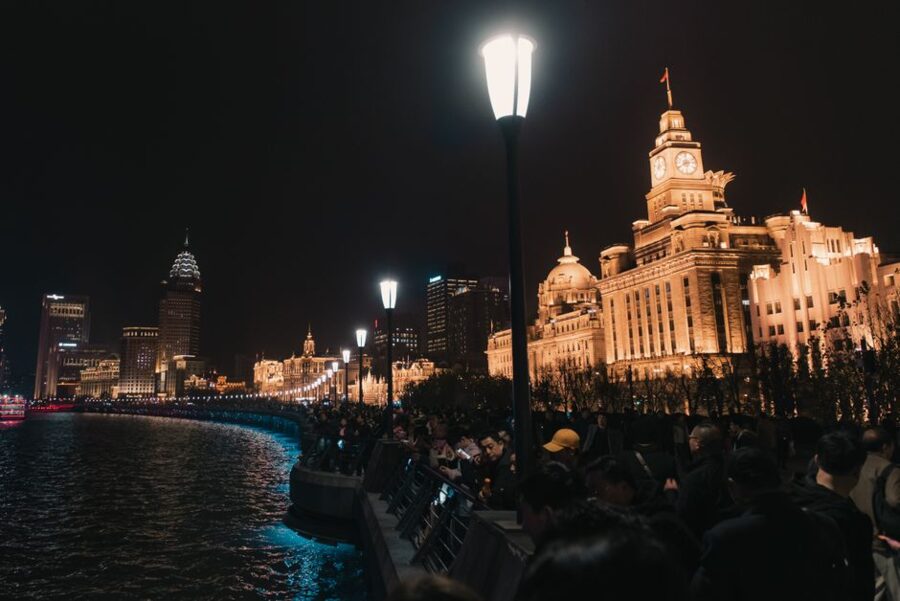
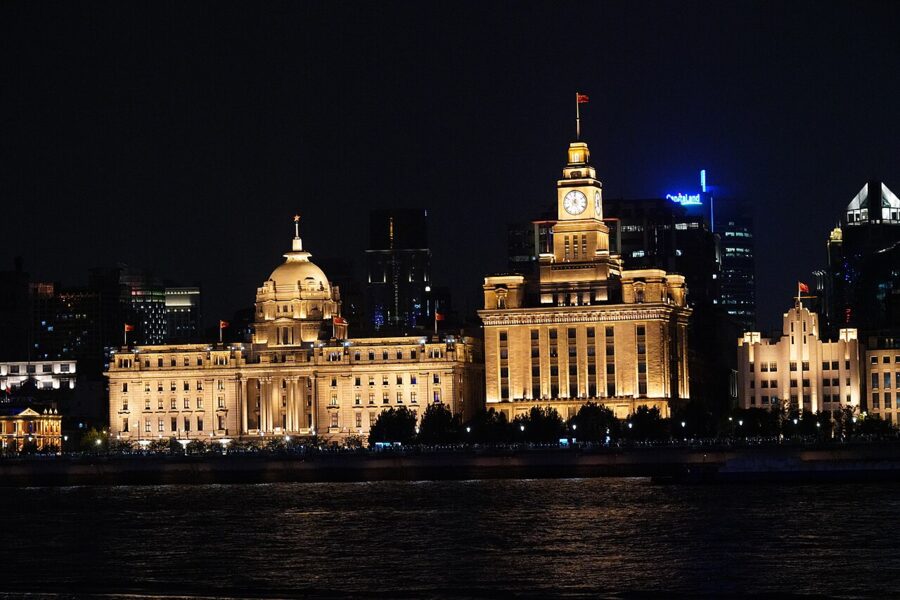
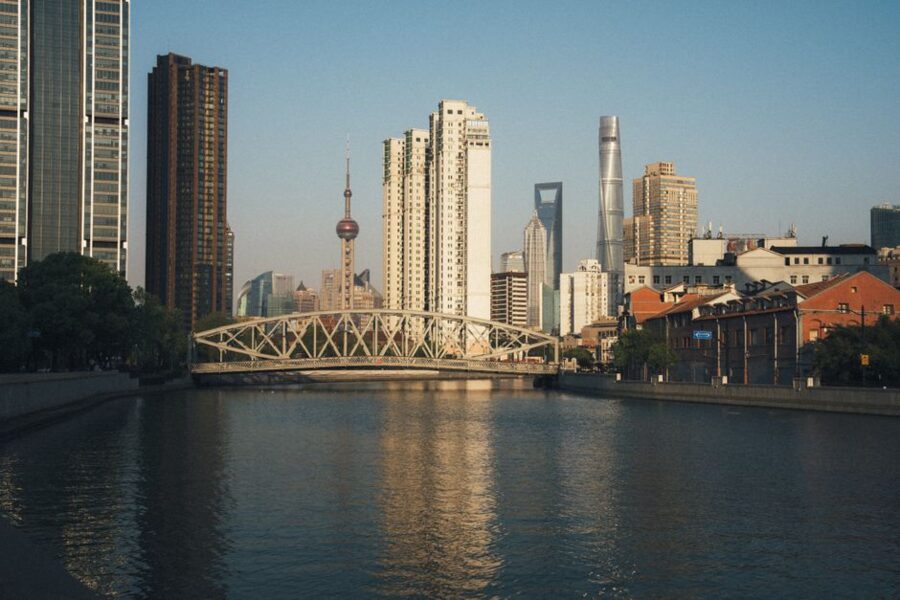
At the north end, Waibaidu Bridge is the steel truss bridge of 1907 over Suzhou Creek, and beyond it you can see Broadway Mansions, the brick block of 1934. Number 2, at the southern end, was the Shanghai Club, which is now part of the Waldorf Astoria. The rest are worth a glance, but those six are the ones you’ll recognise in old photographs.
08:00, breakfast on Sichuan Middle Road
Walk two blocks inland for breakfast. Da Hu Chun (大壶春), at 136 Sichuan Middle Road, has been making sheng jian bao (生煎包) since 1932: pork buns fried in a wide pan until the bottoms go crisp, with the firm, bready dough of the old qingshui style. It’s small and self-service, most items cost under ¥4, and the curry beef soup is the classic thing to order with them.
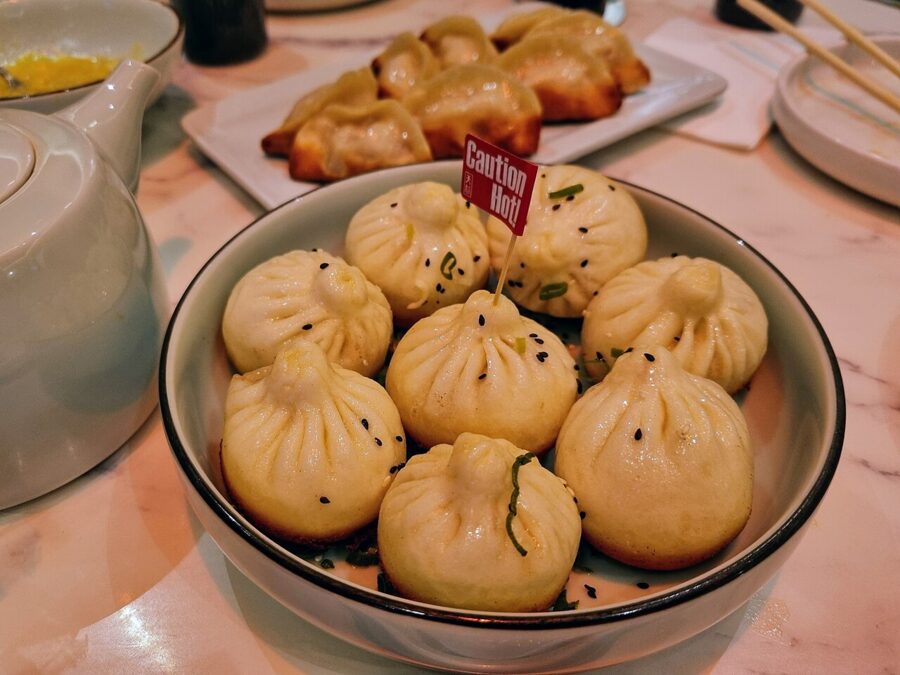
It’s the start of a proper Shanghai breakfast, and if you want the rest of it (the sticky-rice rolls, the soy milk, the scallion oil noodles) my Shanghai food guide has the shops, so I won’t repeat them here. Eat at the counter and keep moving: the river is at its best before 10:00.
09:00, cross the Huangpu for ¥2
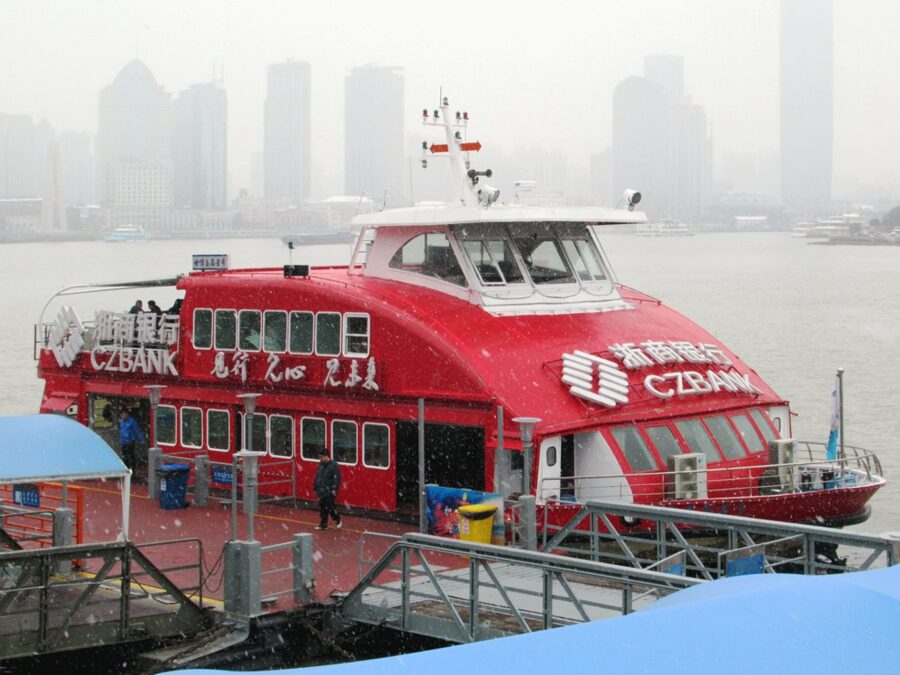
Take the public ferry. The Jinling Road East terminal (金陵东路渡口) is at the south end of the Bund, about fifteen minutes’ walk from the Customs House, and the Dongjin line (东金线) runs from there across to Dongchang Road in Pudong. The fare is ¥2. You can pay with a Shanghai transport card, a QR code in Alipay or WeChat, or cash at the machines.
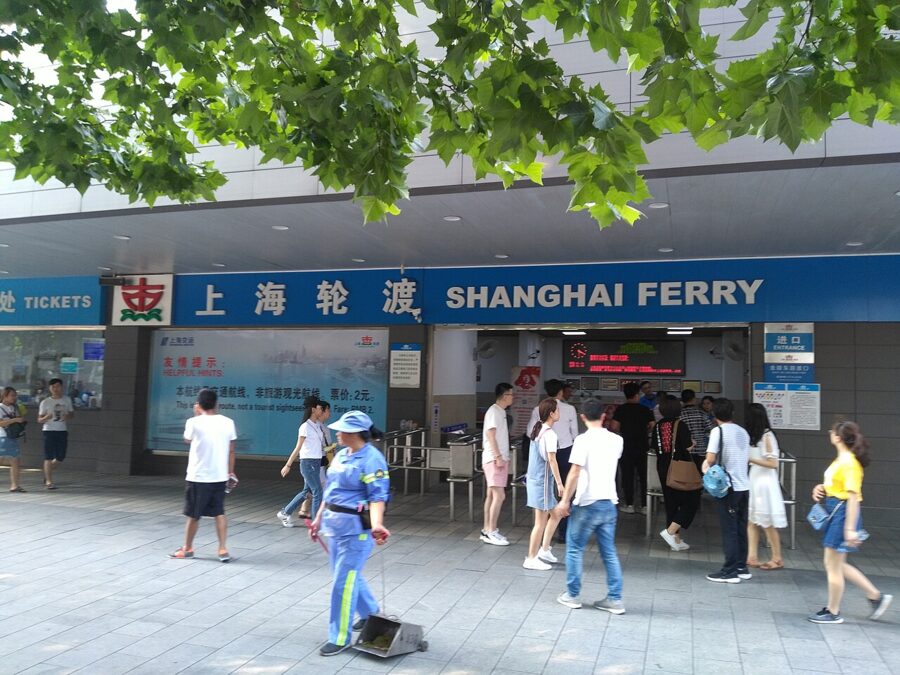
The crossing takes a few minutes. Stand at the back rail: the Bund recedes behind you as the towers grow on the other side, which is the whole reason to do it. There are other lines, including the Dongfu line (东复线) from Fuxing Road East a little further south, which runs later into the evening. Ferries stop in typhoons and occasionally for city events, so if the gates are shut, walk back to East Nanjing Road and take Line 2 one stop to Lujiazui.
10:00, Lujiazui and the Shanghai Tower
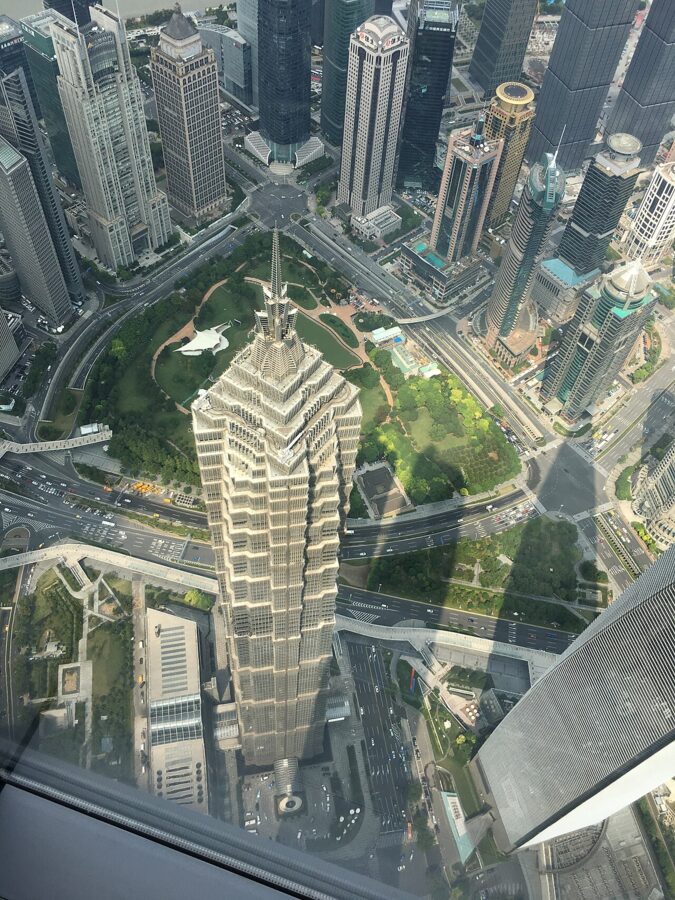
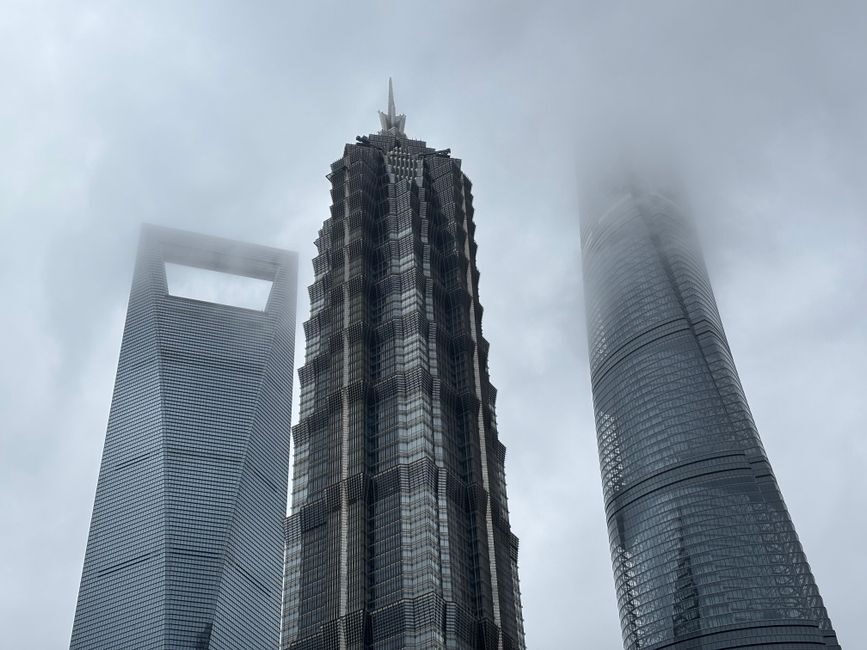
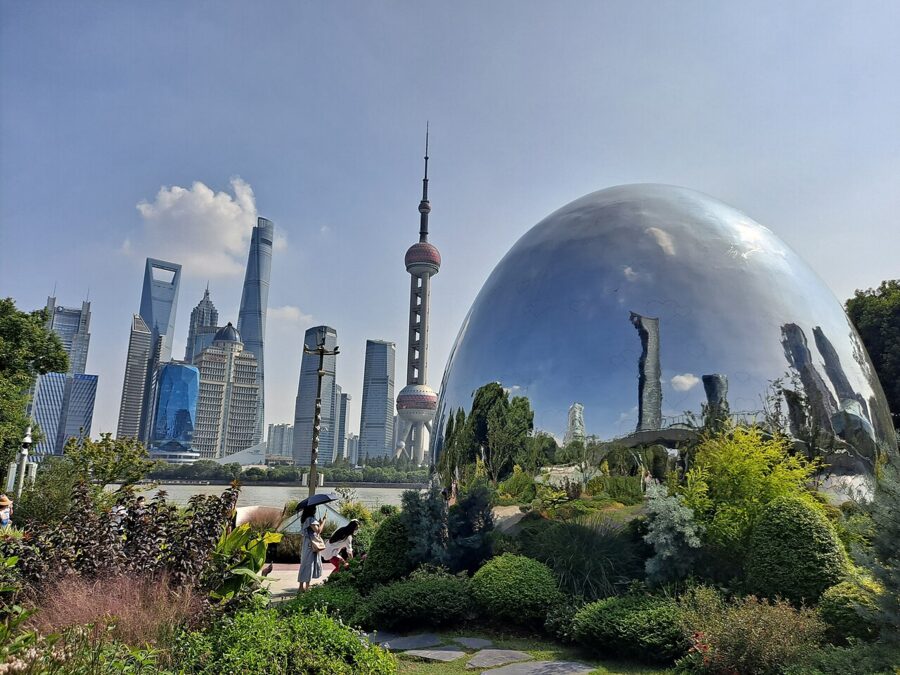
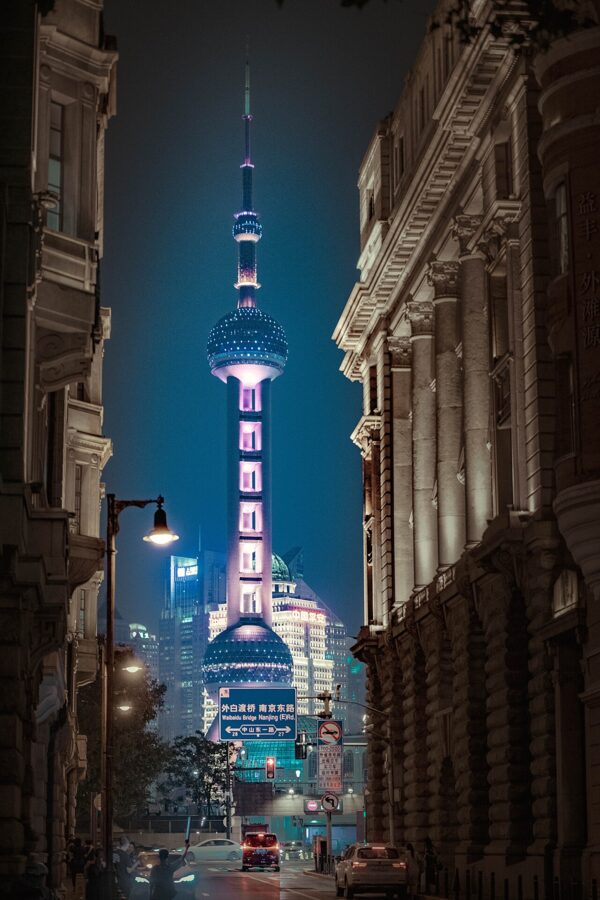
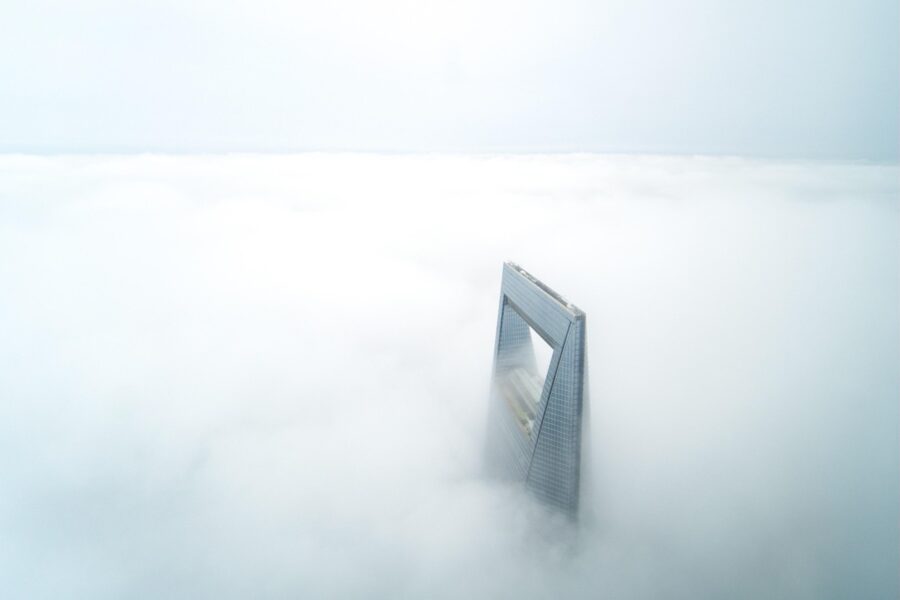
From the Dongchang Road pier, walk north along the riverside path to Lujiazui. It’s about twenty minutes and it’s the best way to arrive, with the Bund across the water on your left the whole time. The four towers stand within a few hundred metres of each other: the Oriental Pearl Tower (468 m) by the river, then the Jin Mao Tower (420.5 m), the Shanghai World Financial Center (492 m) and the Shanghai Tower (632 m).
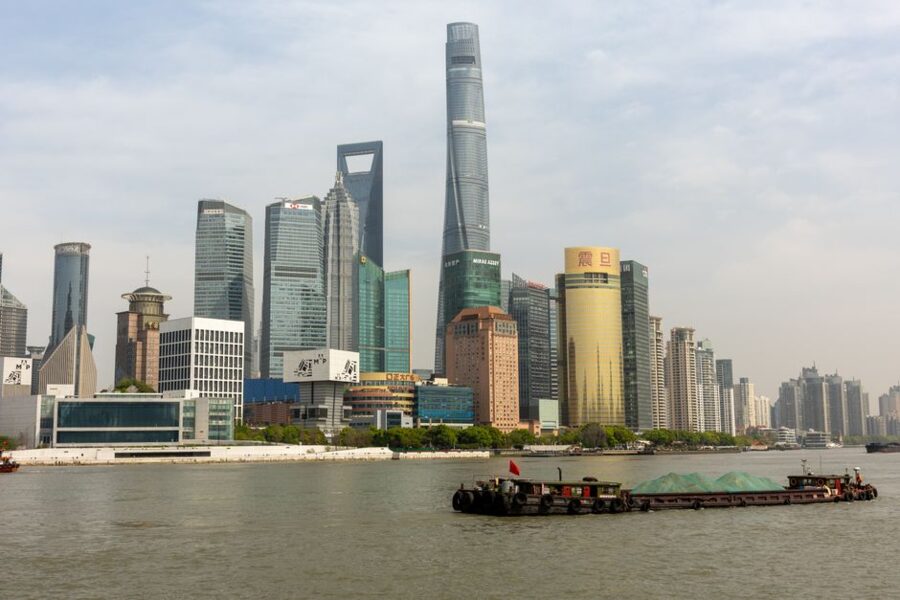
Go up the Shanghai Tower, not the others. Its observation deck, Top of Shanghai (上海之巅), is on the 118th floor at 546 m, and the ticket is ¥180 for adults, ¥120 for students and over-60s, and ¥90 for children between 101 and 140 cm. It’s open 08:30–22:00 with the last entry at 21:30. The tower names Ctrip (the Chinese twin of Trip.com), Meituan and a few other apps as its official sellers, and asks you to bring your passport.
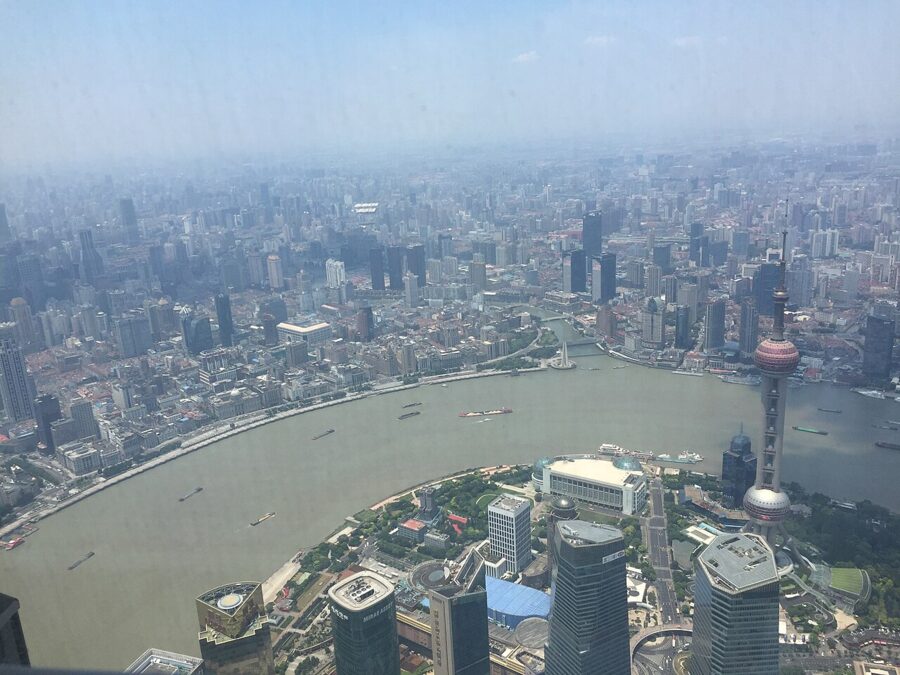
Check the sky first. Shanghai gets low cloud, and on a grey morning you’ll pay ¥180 to stand inside it. The upgrade tickets add the 125th and 126th floors, where you can see the tower’s 1,000-tonne tuned mass damper and a light show. I’d only bother on a slow day.
Lunch in Lujiazui is mall food: the IFC and Super Brand malls next to Lujiazui station (Lines 2 and 14) have everything from noodle chains to dumpling houses, and none of it will surprise you. Eat quickly. The afternoon is a better use of your time.
13:30, the Shanghai Museum East
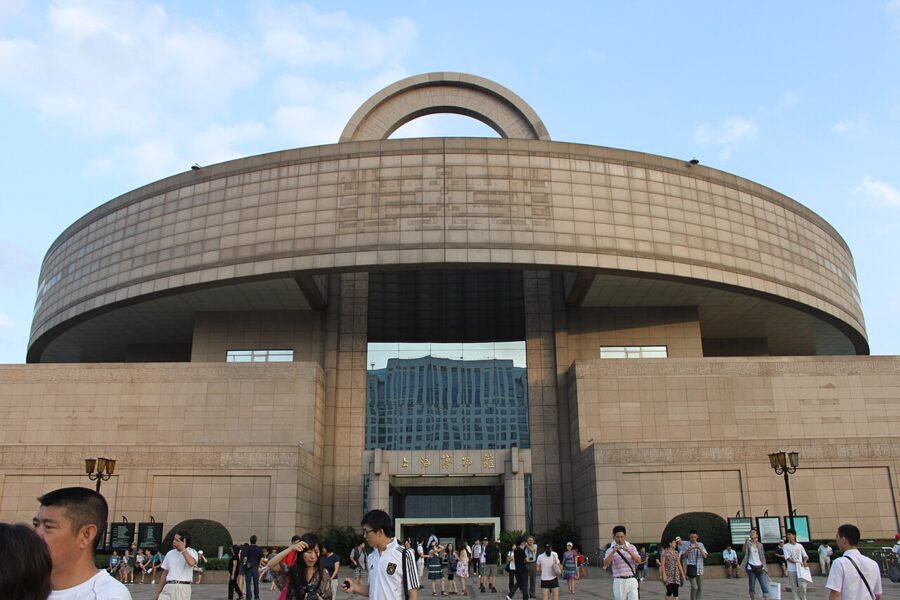
One change matters here. The Shanghai Museum now has two buildings, and in late 2026 the famous one on People’s Square is given over to a ticketed blockbuster: the ancient Americas exhibition fills its first three floors from 9 July 2026 to 14 November 2027, at ¥148 for a full ticket, booked in advance with real-name tickets. It’s closed on Mondays, except public holidays.
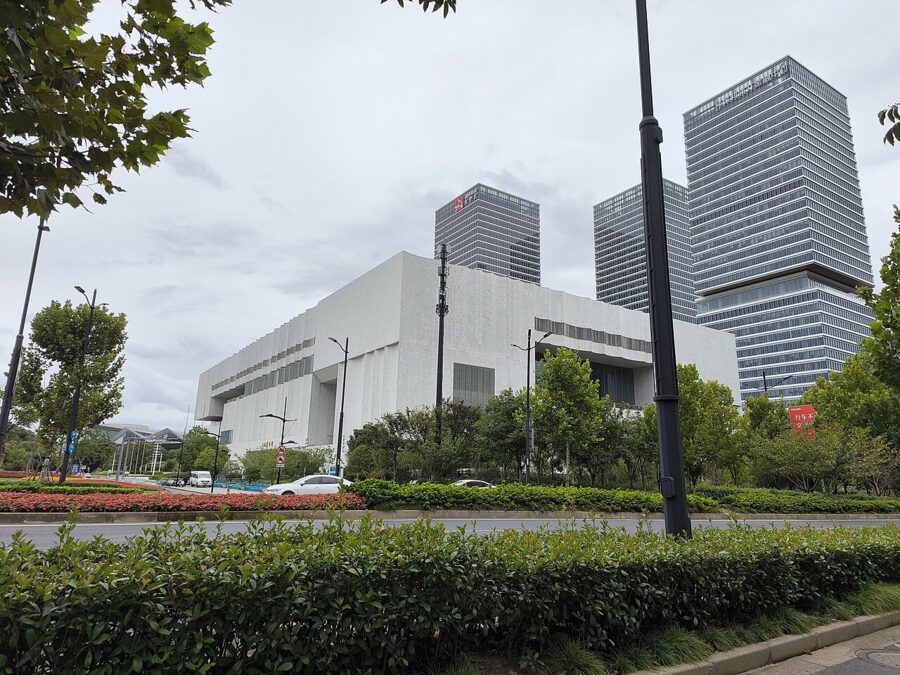
The newer Shanghai Museum East (上海博物馆东馆), at 1952 Century Avenue in Pudong, is where the permanent galleries are, and it’s free, with no booking for the main galleries. It’s open 10:00–18:00, last entry 17:00, and closed on Tuesdays except public holidays. From Lujiazui it’s three stops east on Line 2 to Shanghai Science and Technology Museum station, then a short walk west along Century Avenue.
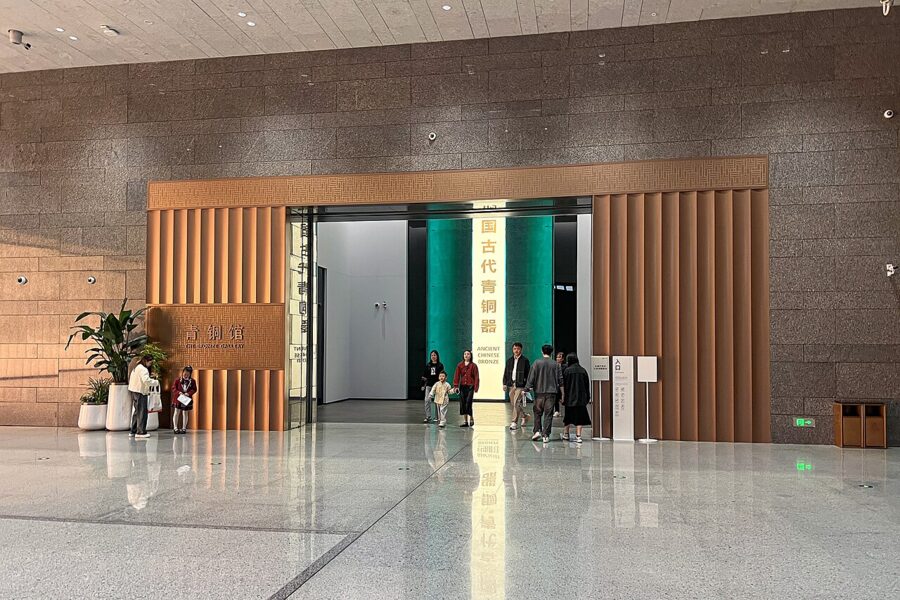
Give it two and a half hours and pick three galleries. The bronzes on the ground floor are the core of the collection and the reason the museum is famous. After that I’d do the Jiangnan gallery on the fourth floor, about the canal and silk country around Shanghai, which sets up day three nicely, and then whatever you like best of the jade, ceramics, sculpture or painting.
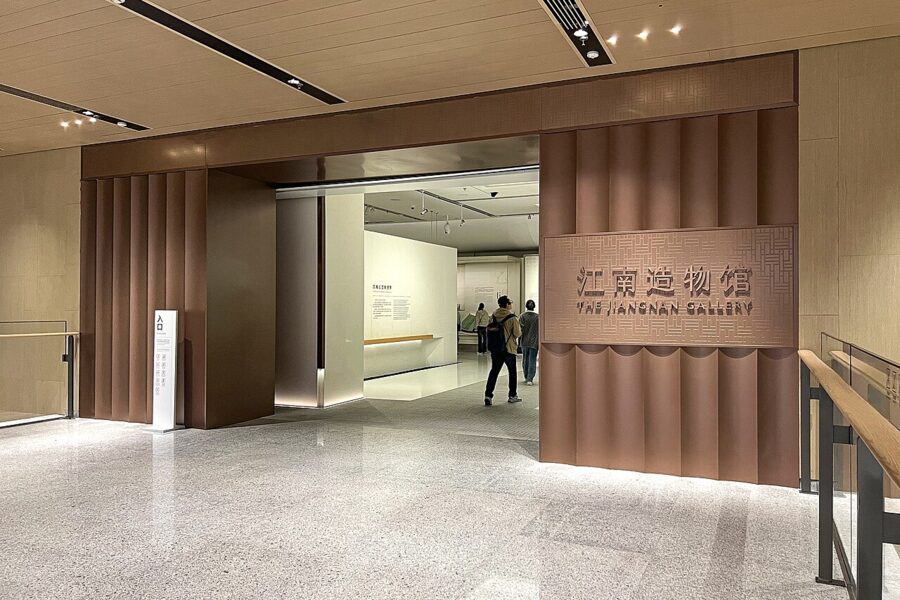
If day one is a Tuesday, swap: give this afternoon to the Bund side and fit the museum into another day. The temporary shows change through the year (a Met jewellery exhibition opened at the East building on 18 November 2026), and the museum’s official website moved to shanghaimuseum.cn in September 2026, so check there before you go.
17:00, Nanjing Road East, without the gloss
Take Line 2 back under the river to East Nanjing Road and walk the pedestrian street west. Nanjing Road East (南京东路) is the most famous shopping street in China, and you should walk it once, because it’s part of the city. You won’t buy much. It’s chain stores, old department stores, snack counters and crowds, lit up like a casino after dark.
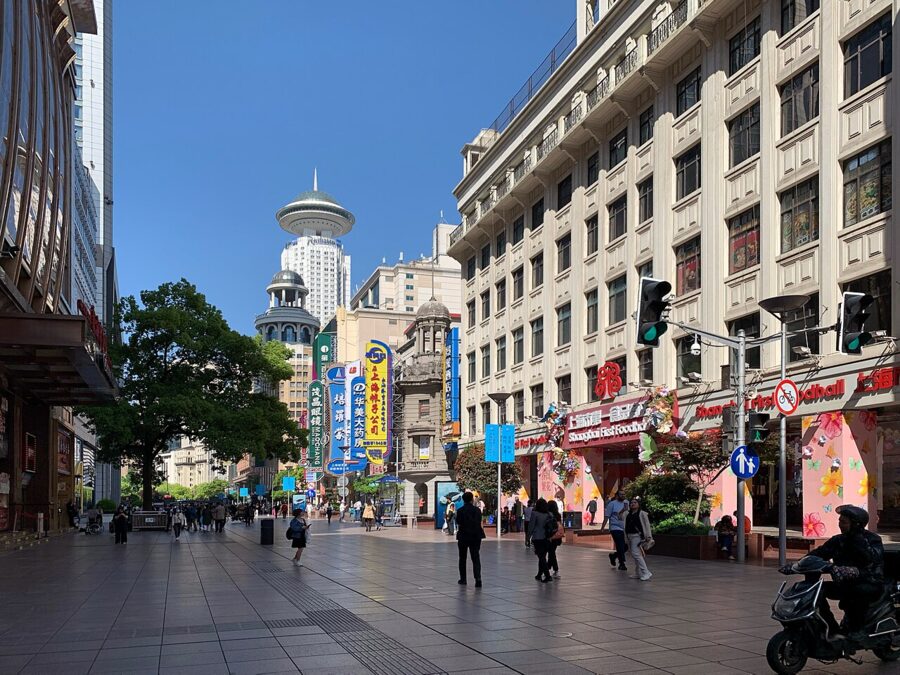
Two warnings. The first is the “tea tasting” scam, which has been running on this street and around People’s Square for years: a friendly pair, often saying they’re students practising English, suggest a tea tasting nearby, and the bill runs to hundreds or thousands of yuan. Decline and keep walking.
If you want Chinese tea, find a shop yourself. The second warning is the touts with laminated cards for fake watches, bags and massages. “No” works; don’t stop to explain.
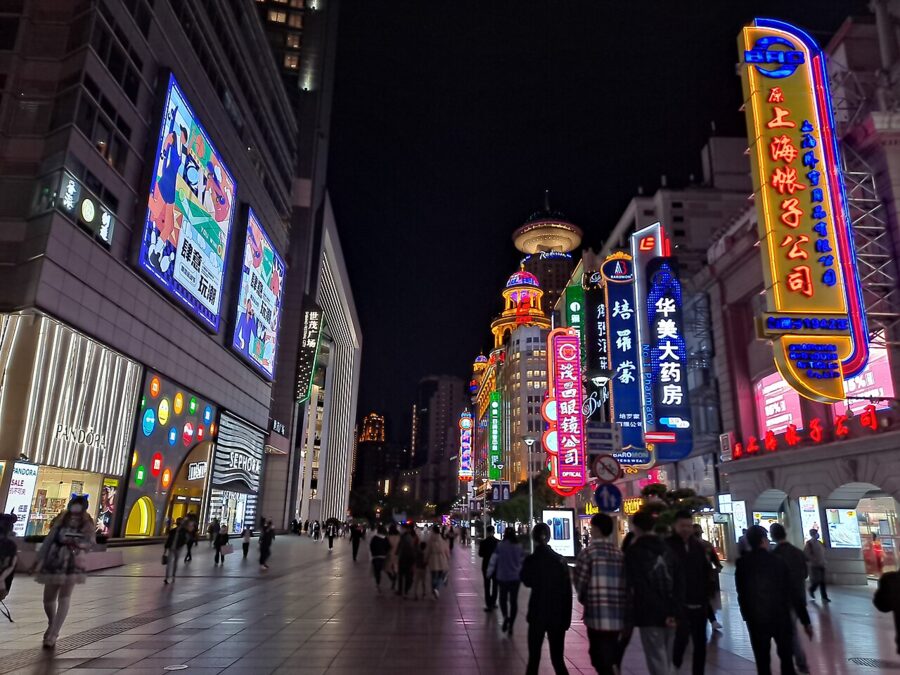
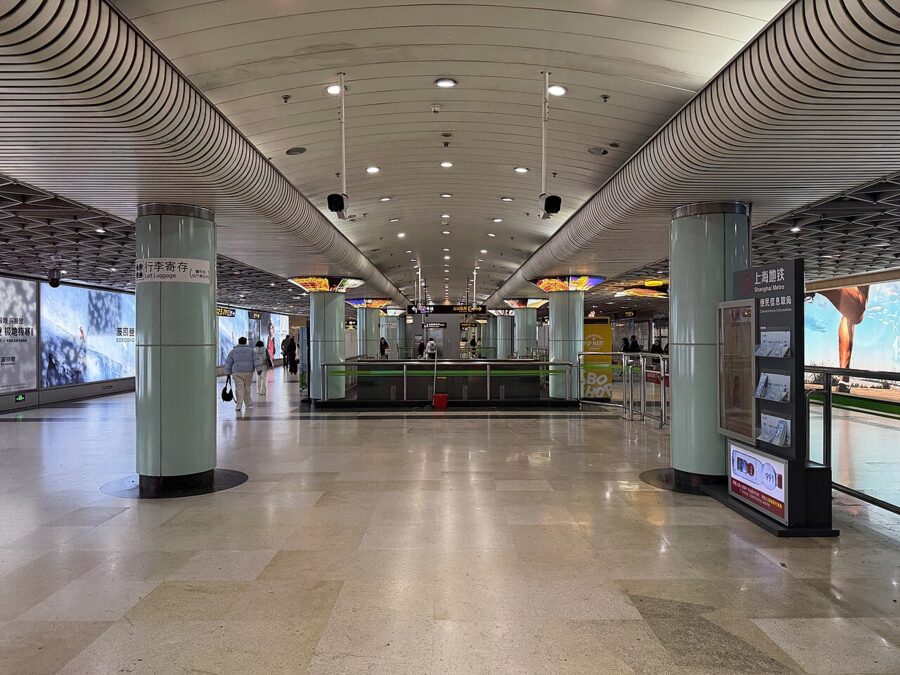
At People’s Square you can drop onto Line 1, 2 or 8. But if you still have legs, turn back east for the evening walk.
19:00, the river after dark: Waibaidu Bridge and the North Bund
Tonight, skip the main Bund promenade (you’re coming back on day three) and walk its quieter north end instead. Cross Waibaidu Bridge as the lights come on and follow Suzhou Creek west for a few hundred metres, past the old post office and the brick warehouses, then double back and walk east along the North Bund riverside in Hongkou.
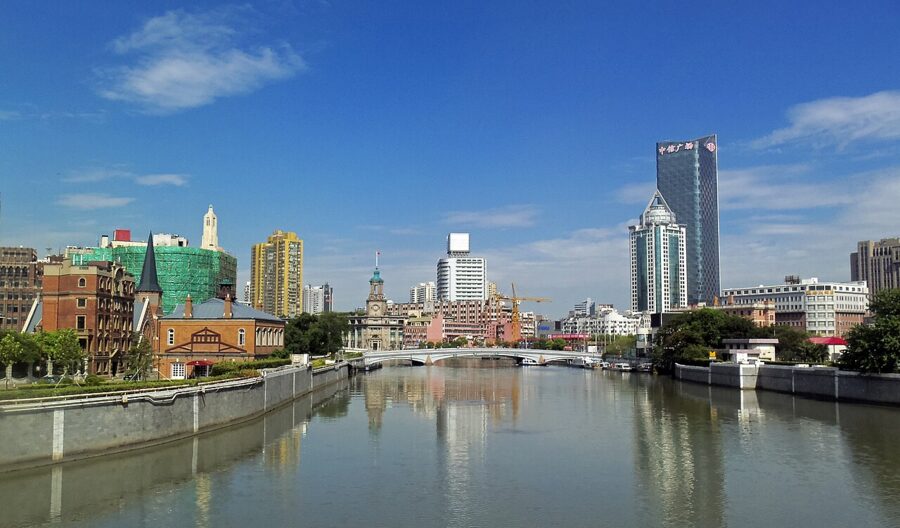
The North Bund riverside path faces Lujiazui at an angle, so you get the towers and the Bund in one view without the crush. It’s mostly locals out for a walk, a few anglers, and the occasional wedding shoot. Walk back to East Nanjing Road station, or take Line 12 from International Cruise Terminal station if you’ve gone far enough east.
Day two: the old city, then the French Concession on foot
09:00, Yu Garden at opening
Be at the gate of Yu Garden (豫园) when it opens. It’s the city’s most famous garden, and the first hour is the only time you’ll see the rockeries without a tour group in front of them. Take Line 10 or Line 14 to Yuyuan Garden station; the garden is about ten minutes’ walk through the bazaar, at 168 Fuyou Road.
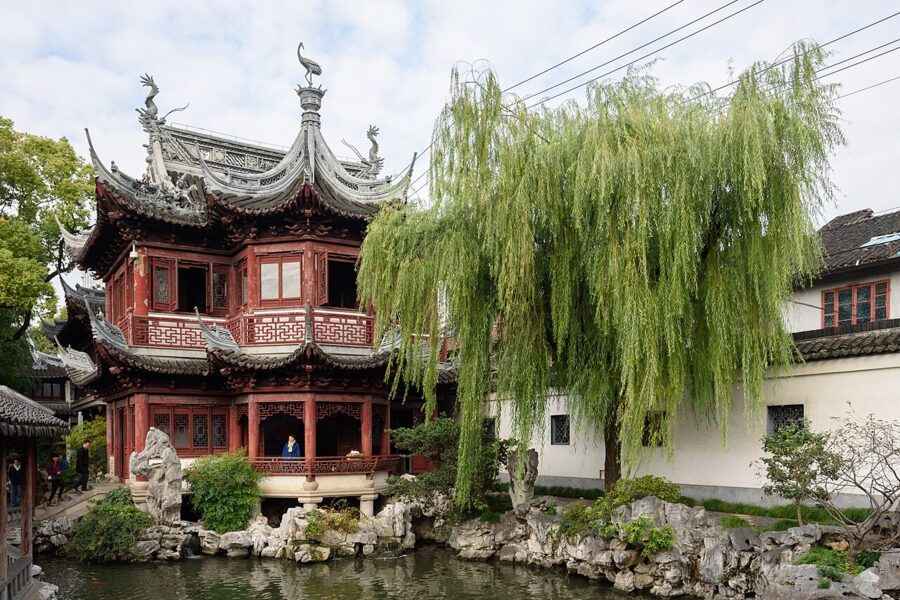
Tickets are ¥40 from April to June and September to November, and ¥30 the rest of the year. The garden is closed on Mondays (holidays aside), stops admitting at 16:00 and closes at 16:30. You can buy at the booth with a passport, but the queue can be long at weekends, so I’d book a day or two ahead on Trip.com or Klook.
In late January to early March the Yuyuan Lantern Festival takes over, with separate timed tickets (¥50–138 in 2026). Since August 2025 the garden has also run an evening light trail on some nights, so check the day’s schedule if you’d rather see it lit.
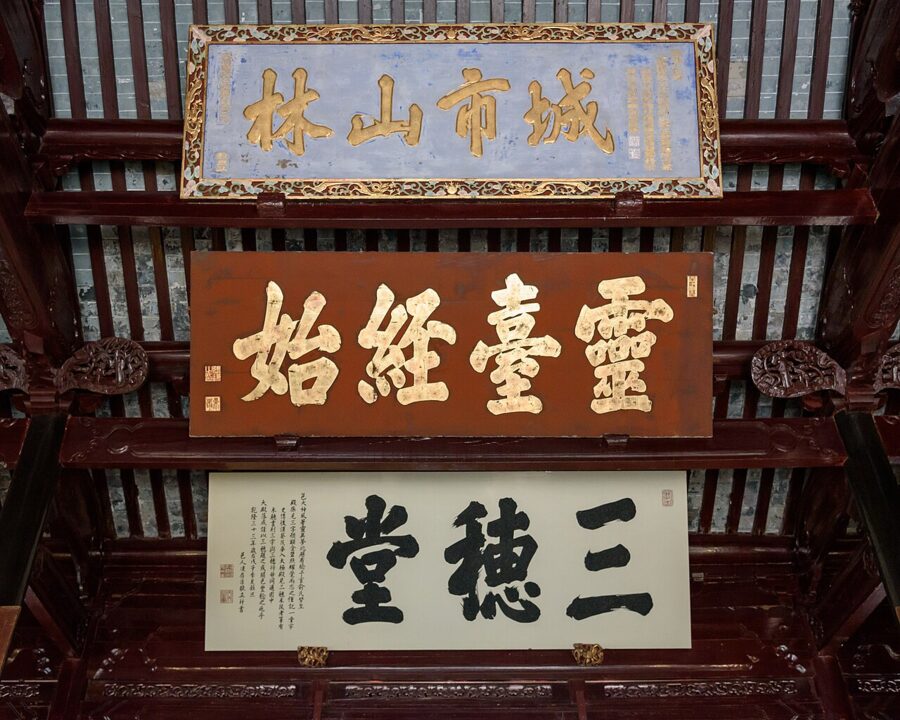
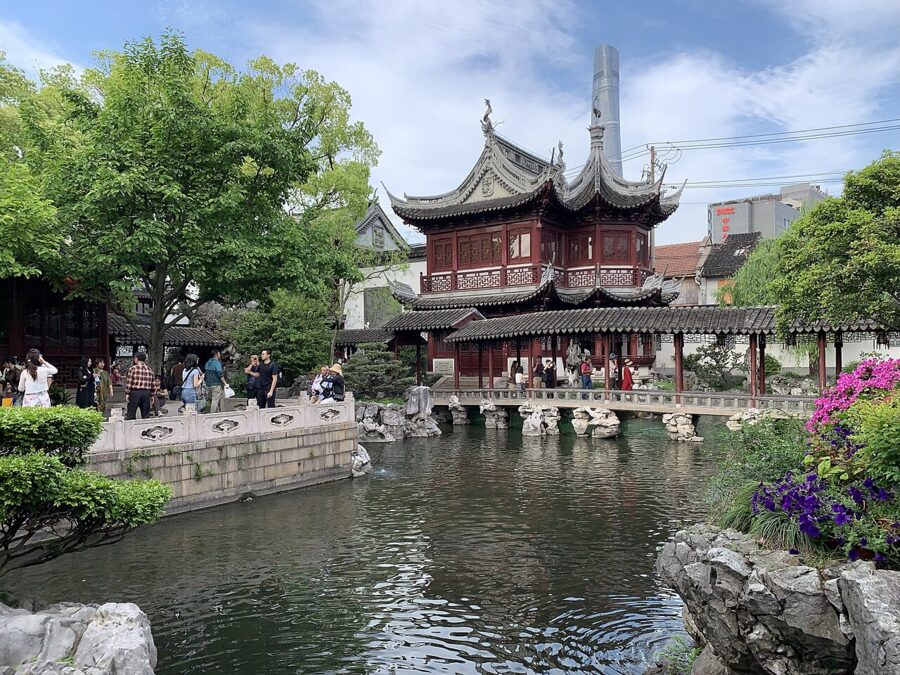
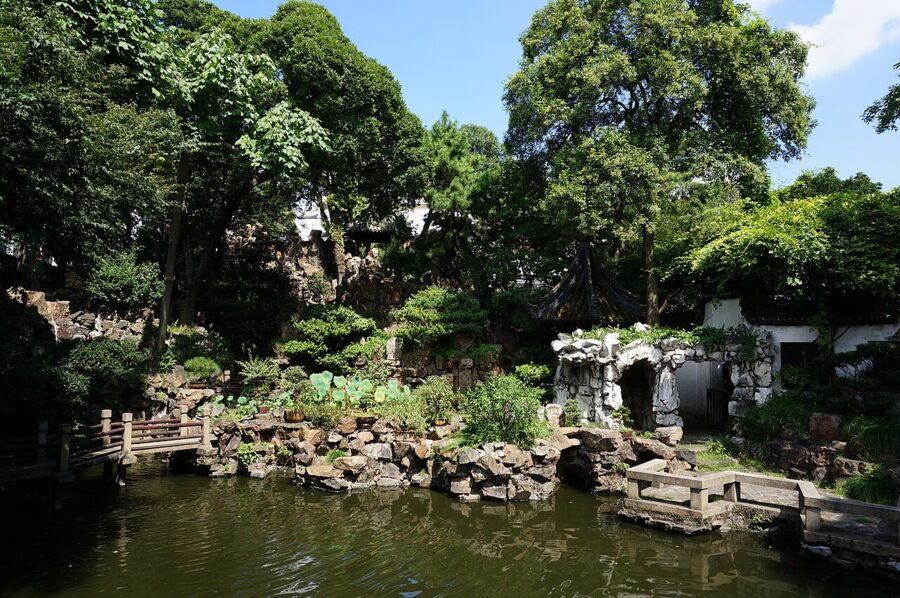
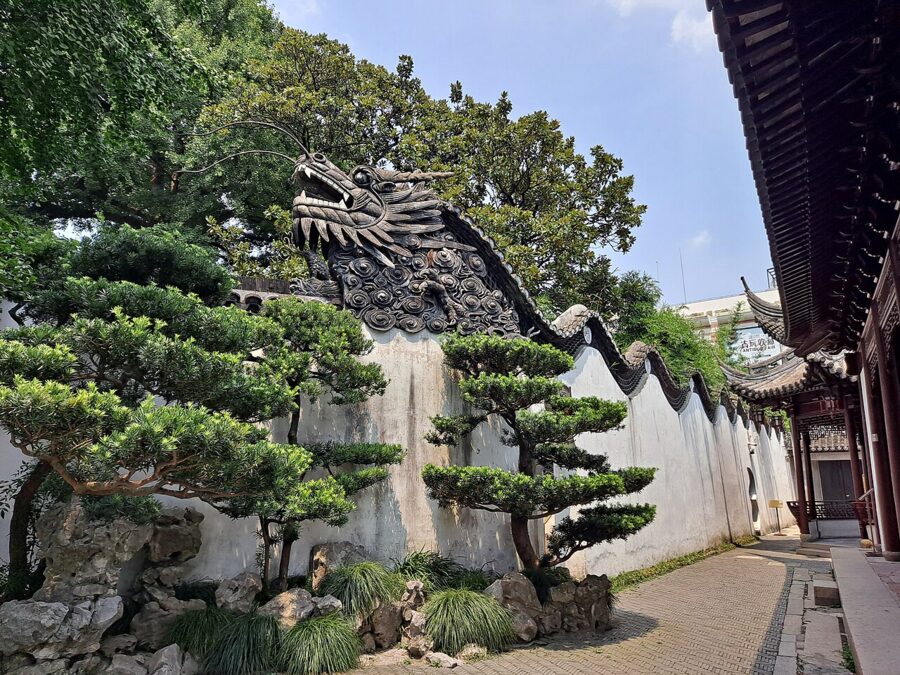
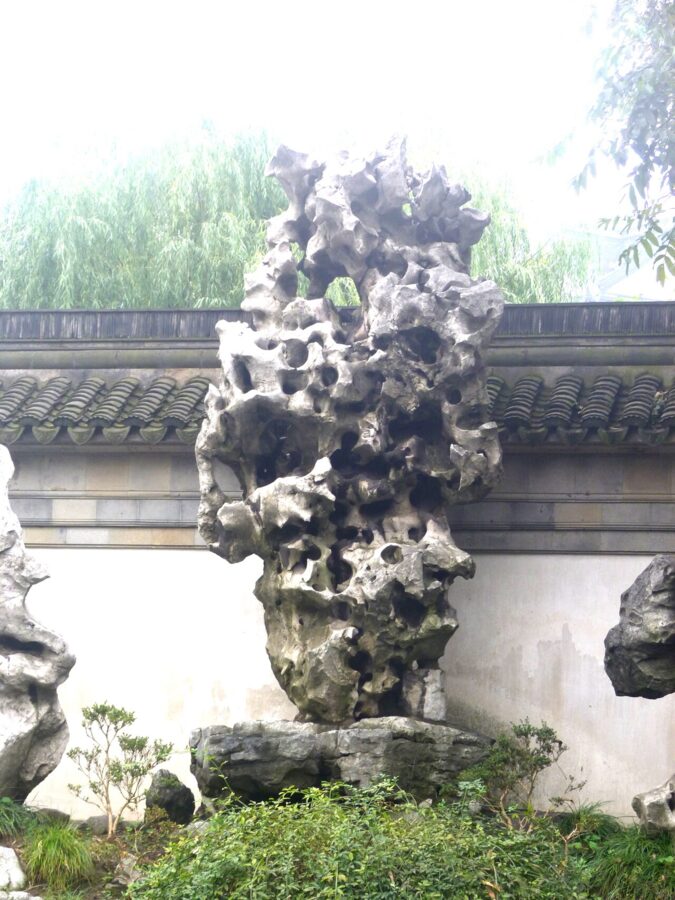
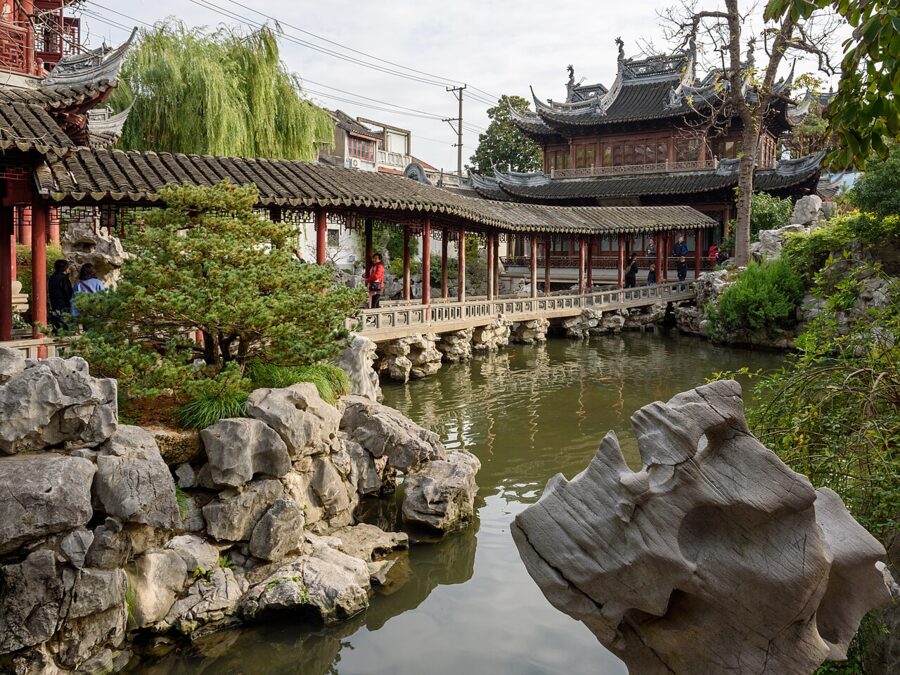
Give it an hour and a half. Find the Great Rockery, a hill of yellow stone piled up in the Ming dynasty, then work east to the Exquisite Jade Rock, a single pitted limestone rock riddled with holes. Look for the dragon walls, too, the undulating whitewashed walls with a dragon’s head at the end of each.
The City God Temple and the old streets
Outside the garden, the Yuyuan bazaar is the busiest square kilometre of fake old China you’ll ever see: rebuilt Ming-style shops selling silk scarves, chopsticks and snacks. Walk through it once, then get out. In the middle is the zigzag bridge and the Huxinting teahouse (湖心亭) on the pond, which has been serving tea there since the 19th century and is the one building in the bazaar worth going inside.
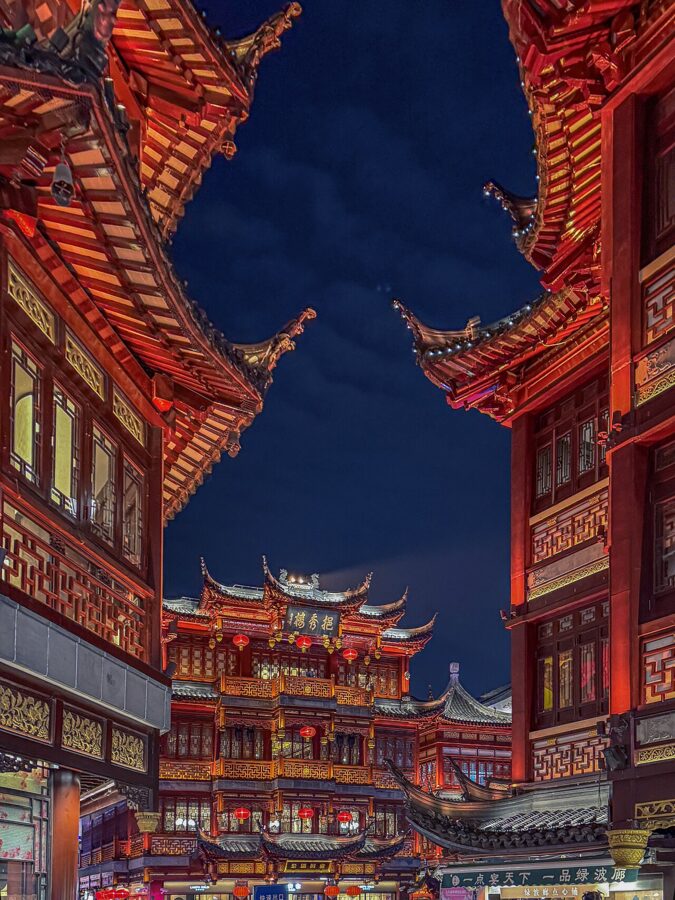
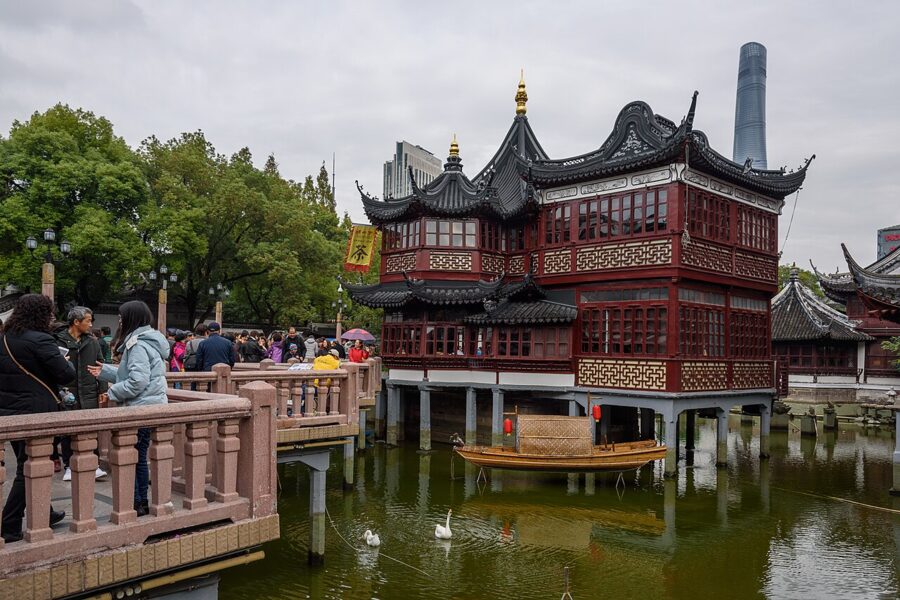
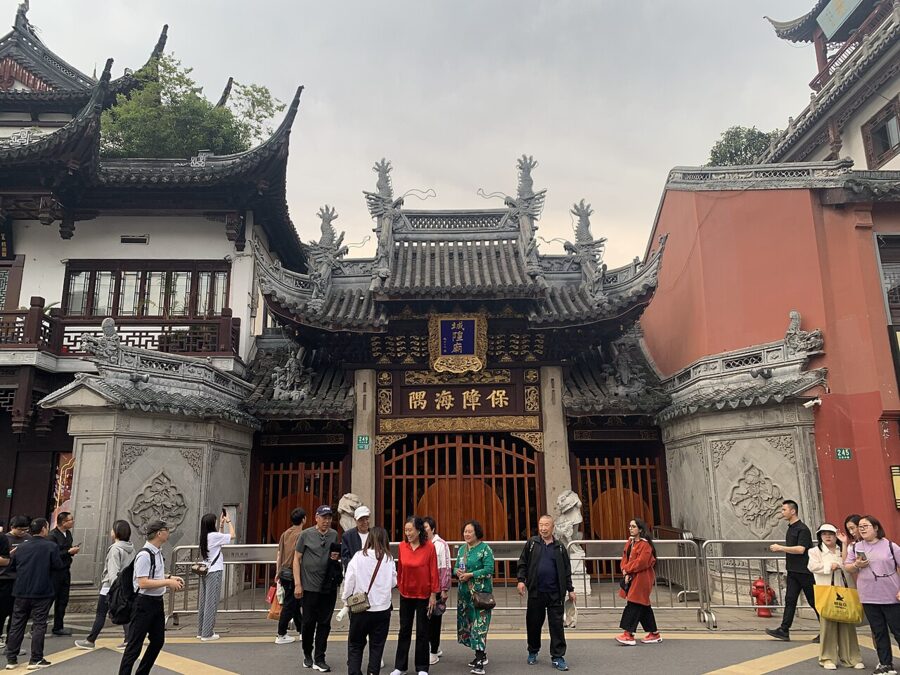
Just west of it is the City God Temple (城隍庙), the Taoist temple to the town’s guardian deity, founded in the early 15th century. It’s a working temple: people come to burn incense and pray for exams, health and money, so keep your voice down and your camera polite.
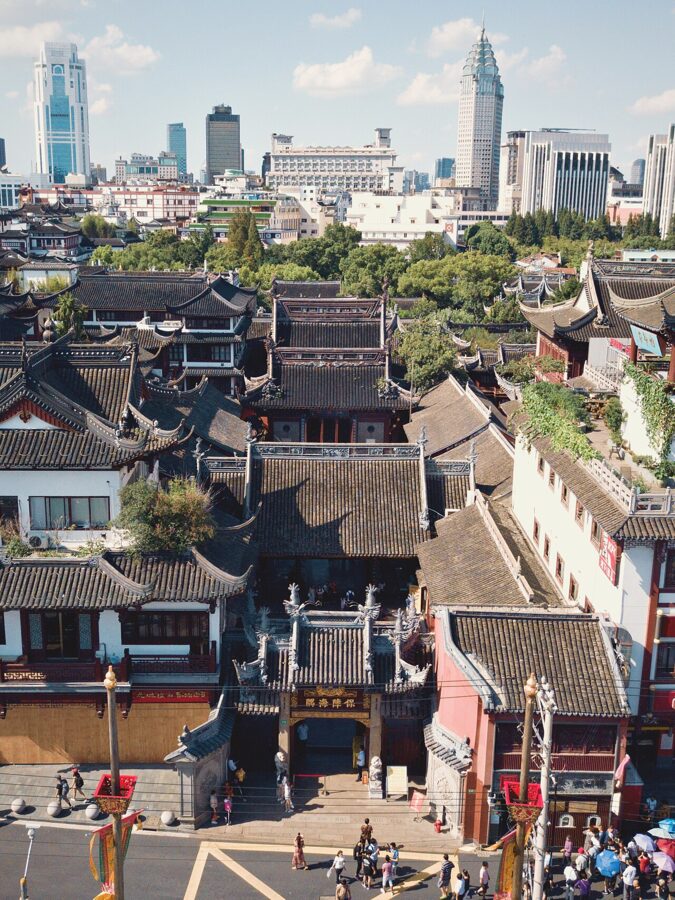
For the real old city, walk west along Fangbang Middle Road (方浜中路), then turn into the side lanes south of it. Much of this area has been cleared and rebuilt in the last decade, and some of it is shuttered awaiting redevelopment, but you’ll still find laundry on bamboo poles, men playing cards on stools and tiny shops selling one thing. Keep your expectations modest and it’s a good hour.
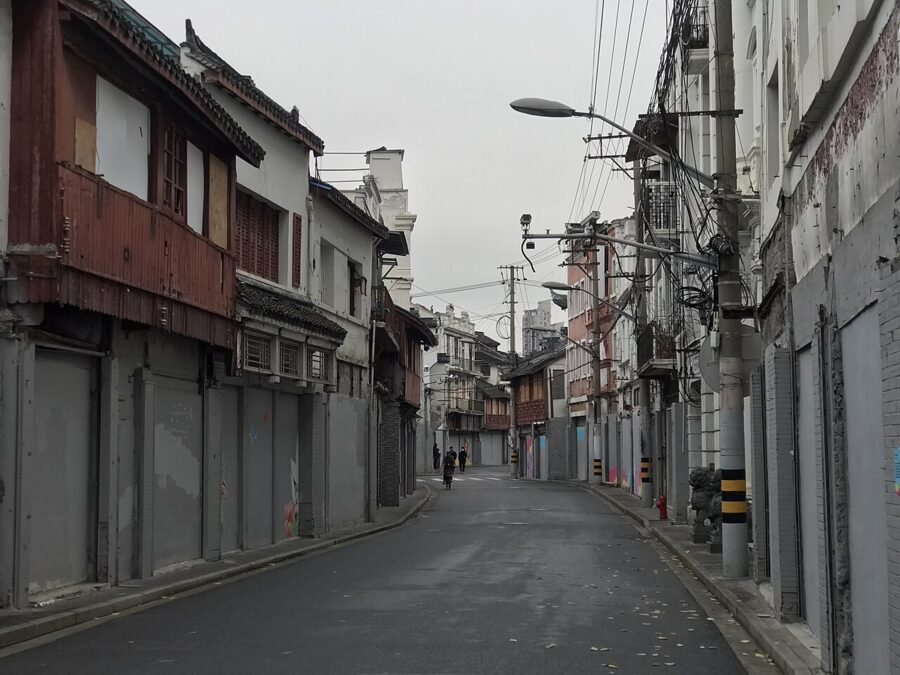
12:00, lunch: xiaolongbao by the zigzag bridge
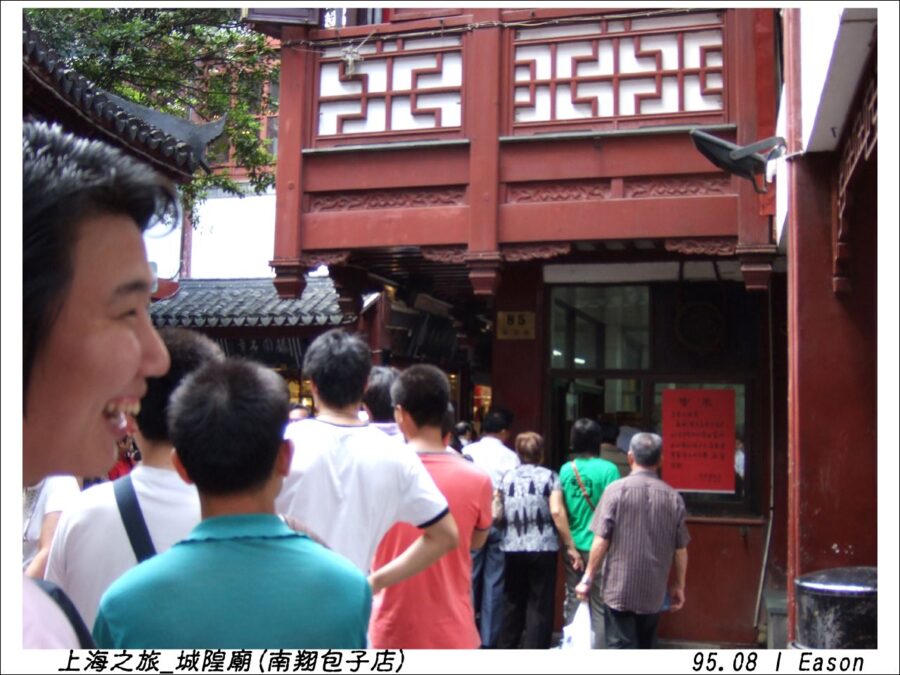
Nanxiang Mantou Dian (南翔馒头店), by the zigzag bridge, is the most famous xiaolongbao (小笼包) shop in the city, and it has been in the City God Temple grounds since 1900, when it opened in a pavilion beside the bridge. There’s a takeaway window downstairs with the longest queue and sit-down floors above with a shorter wait and higher prices. My xiaolongbao guide covers it properly, including how to eat one without burning your tongue.
13:30, Xintiandi and Fuxing Park
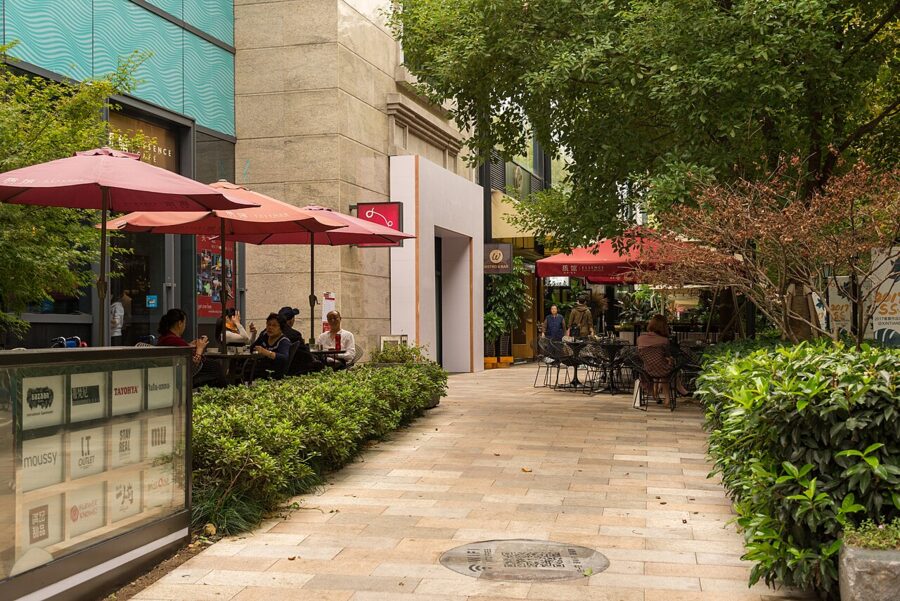
Take Line 10 two stops west from Yuyuan Garden to Xintiandi. Xintiandi (新天地) is two blocks of shikumen lane houses, the stone-gated terraces Shanghai built in the late 19th and early 20th centuries, gutted and rebuilt around 2001 as restaurants, bars and shops. It’s pleasant, expensive and nothing like how these lanes were lived in. Twenty minutes is plenty, unless you want a coffee.
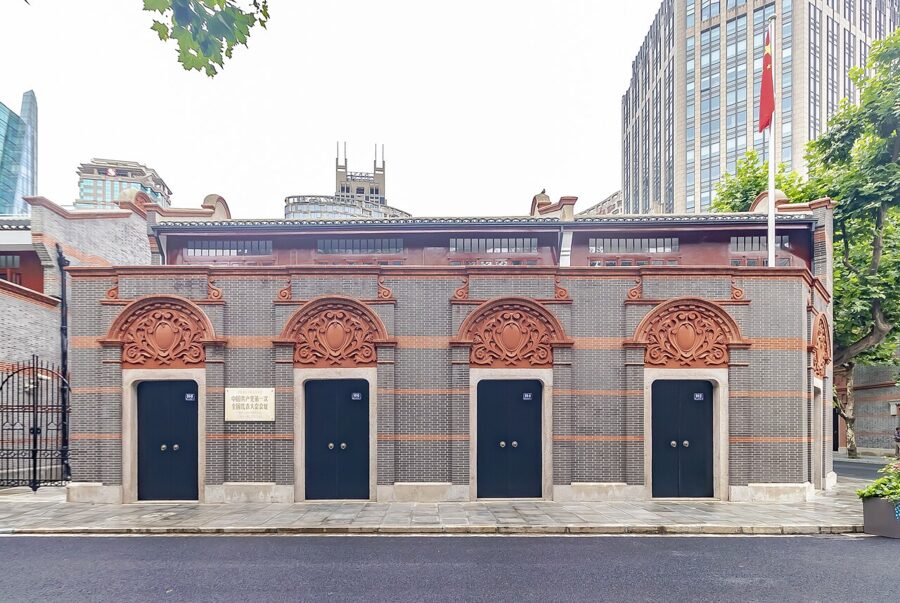
The one historical stop here is the site of the first National Congress of the Chinese Communist Party, held in a Xintiandi lane house in July 1921 and now a museum. Then walk west for ten minutes to Fuxing Park (复兴公园), the old French park, laid out in the early 1900s and free to enter.
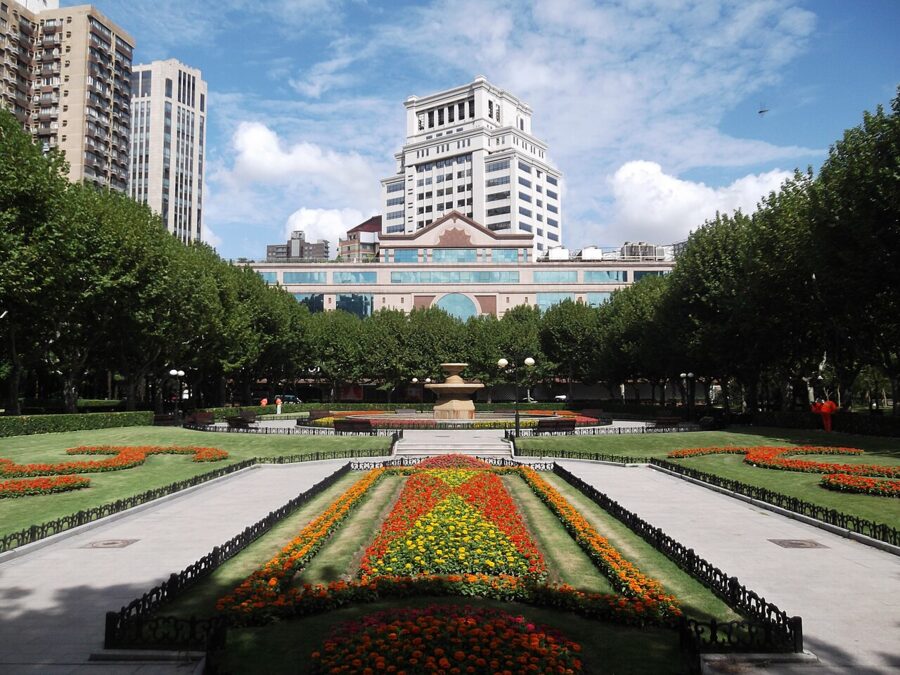
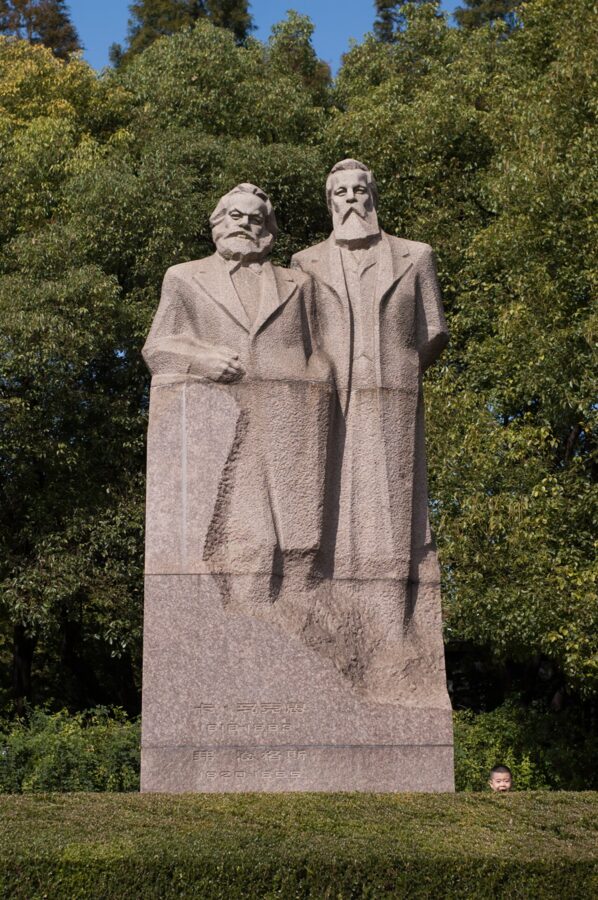
In the morning Fuxing Park is full of dancers, tai chi groups and people singing in a circle; by early afternoon it’s card games and chess. Look for the big stone statue of Marx and Engels among the trees. A few minutes from the park’s Yandang Road gate, at 14 Yandang Road, Wei Xiang Zhai (味香斋) has been making sesame-paste noodles for more than eighty years, and a bowl of majiang mian (麻酱面) is the perfect half-lunch if Nanxiang left room.
15:00, Tianzifang, in small doses
Walk south down Sinan Road, past the villas of the Sinan Mansions block, to Tianzifang (田子坊), about fifteen minutes away at Lane 210, Taikang Road. It’s a warren of real lane houses where people still live upstairs, while the ground floors have turned into craft shops, bars and bubble tea. The nearest metro is Dapuqiao station on Line 9.
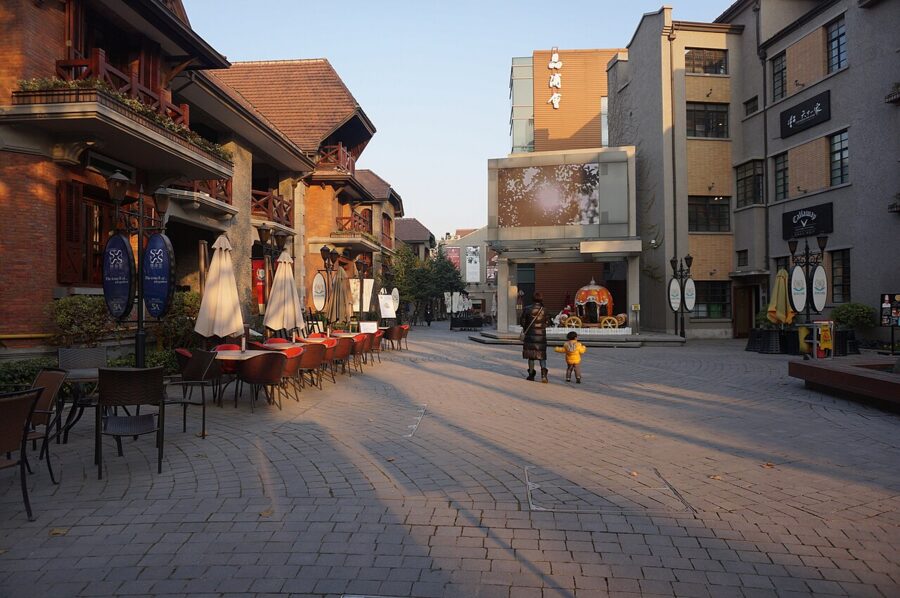
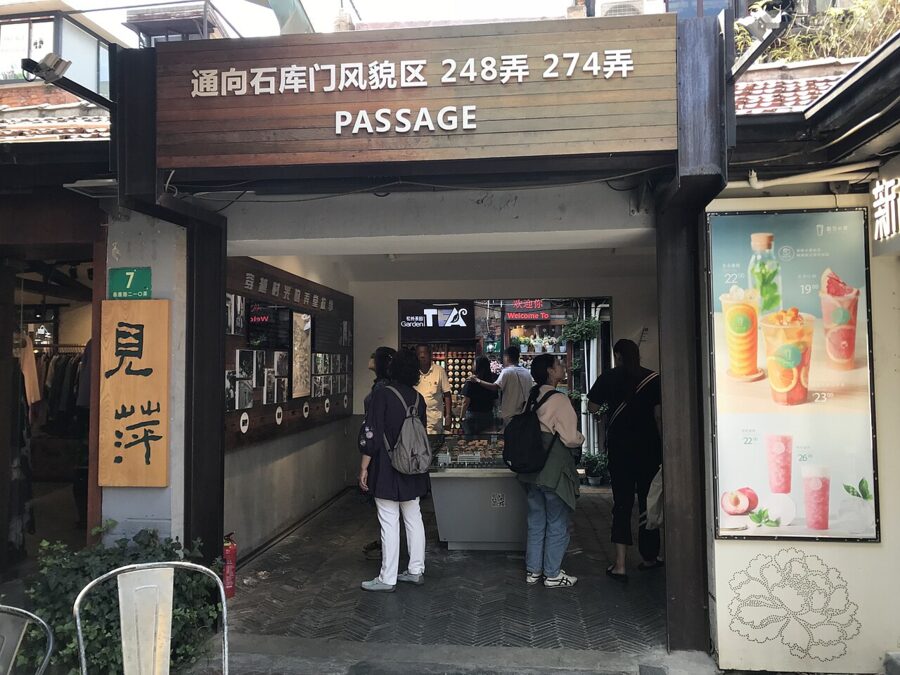
The lanes are narrow, which is the charm, and on a weekend afternoon you’ll move at the speed of the slowest selfie. The shops are mostly the same souvenirs you saw in the bazaar. Go for the architecture and the cat-sized alleys, give it forty minutes, and leave before it wears you out.
16:30, Wukang Road and the Wukang Mansion
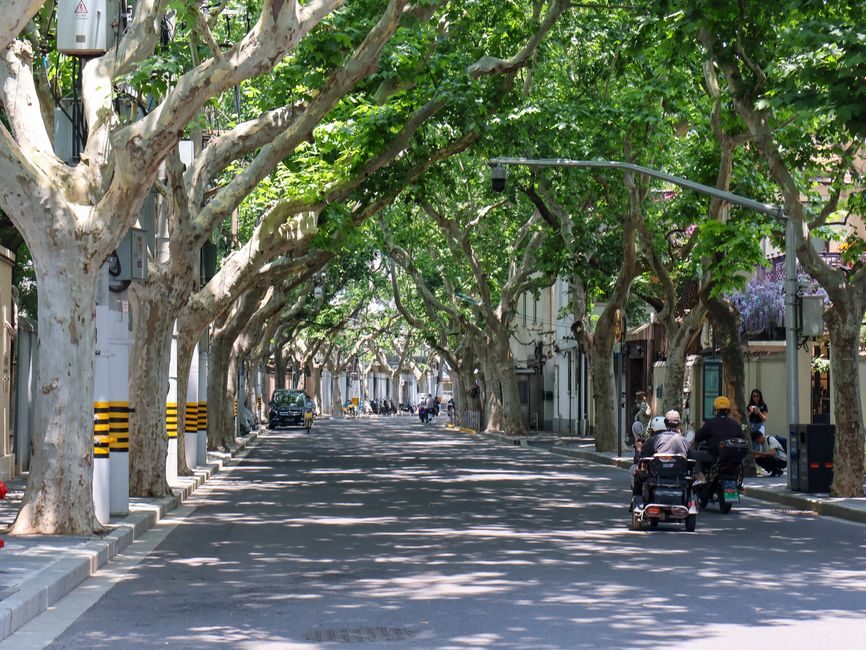
Take a Didi or the metro west (Line 9 to Xujiahui, then Line 10 or 11 one stop to Jiaotong University, a short walk from the south end of the street). Wukang Road (武康路) is the quietest, leafiest street in the former French Concession, a little over a kilometre of plane trees, garden villas and old apartment blocks. Start at the south end, with its famous building, and walk north.
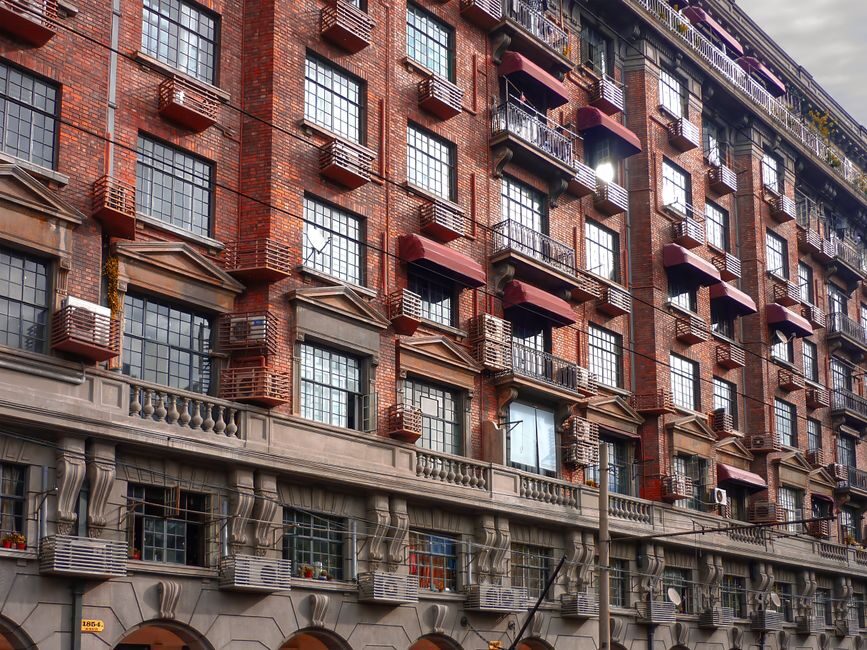
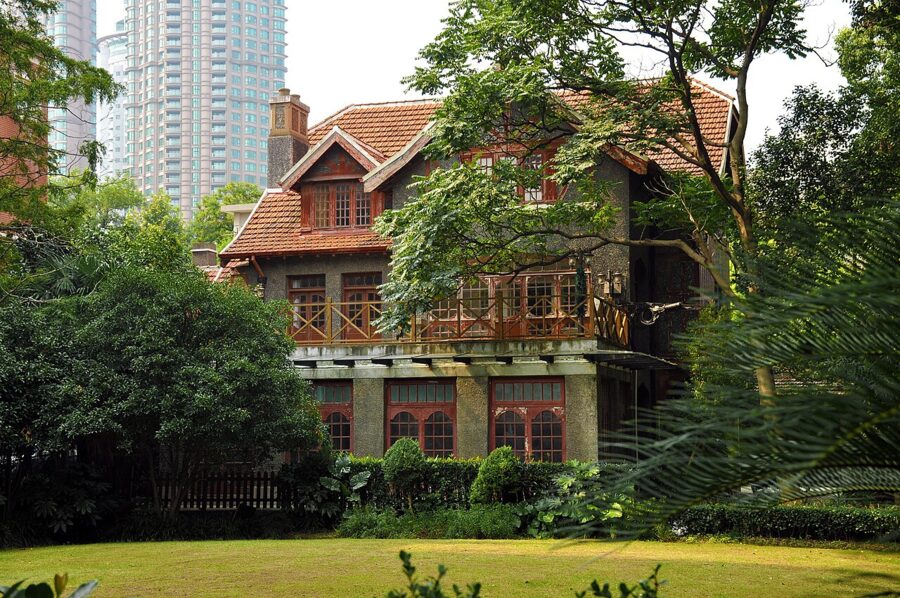
At the south end, where Wukang Road meets Huaihai Middle Road, stands the Wukang Mansion (武康大楼), the wedge-shaped apartment block designed by the Hungarian architect László Hudec and finished in 1924. It was built as the Normandie Apartments and renamed in 1953, and over the years its residents included actors and writers of the old Shanghai film world. It’s still a residence, so you look at it from outside.
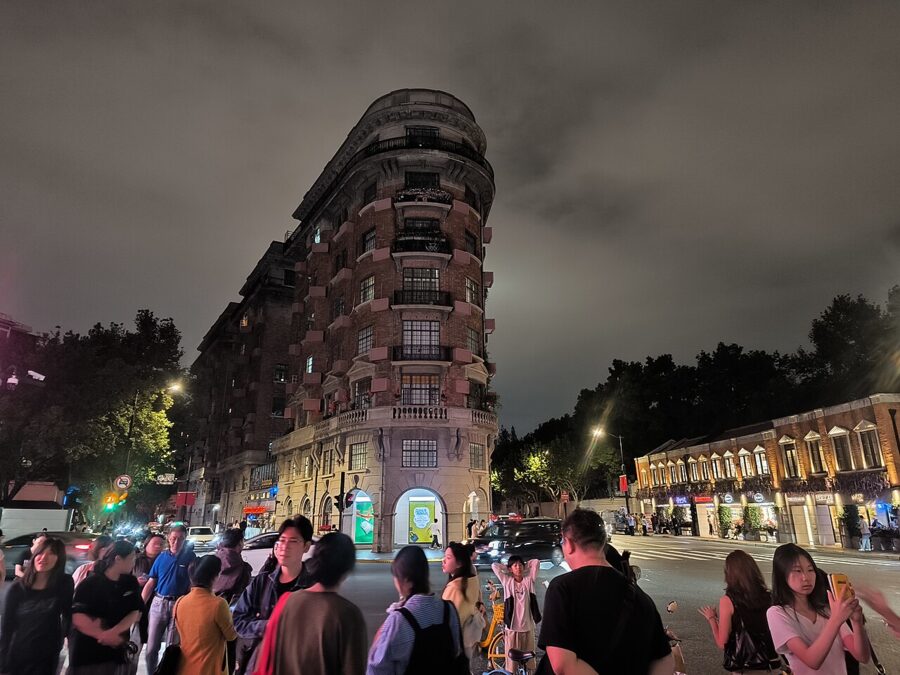
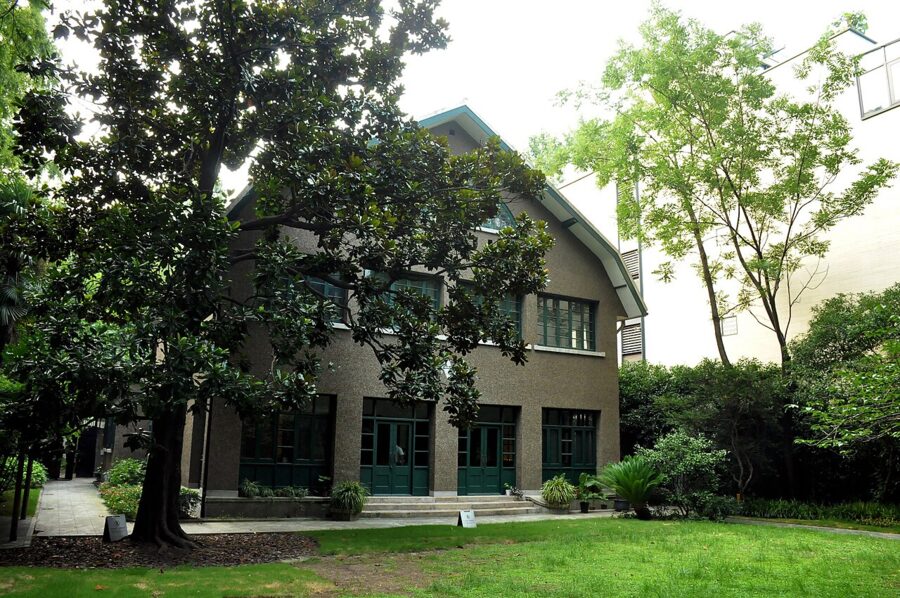
Come at golden hour, when the late sun lights the facade. The crossing in front is busy, and there’s a crowd here at any time of day, so be patient and watch the traffic. Then walk north up Wukang Road. At number 113 is the house where the novelist Ba Jin lived for decades.
18:00, Anfu Road for the evening
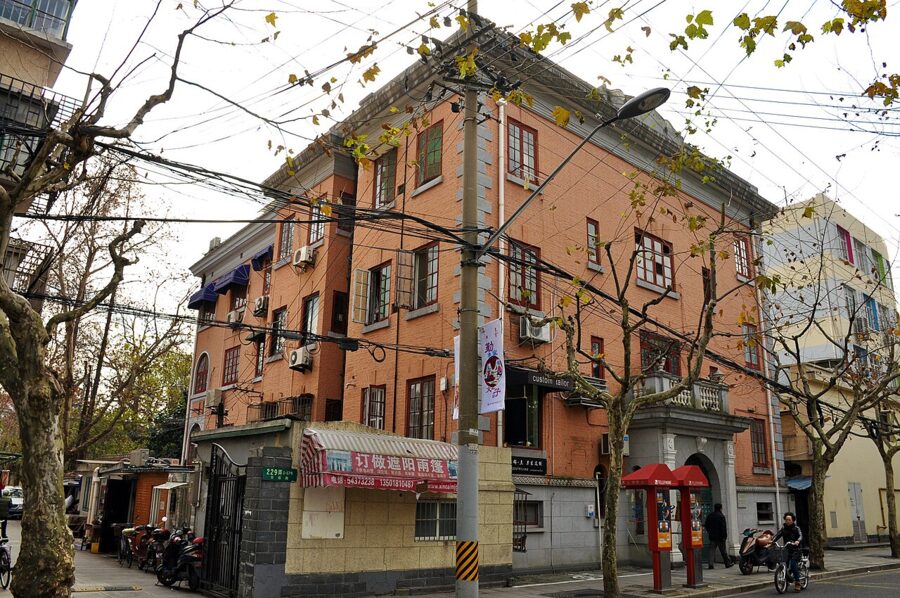
Keep going north and turn east onto Anfu Road (安福路). It’s the street young Shanghai dresses up for, all small boutiques, cafés and wine bars in old garden houses, and the people-watching is half the point. Halfway along is the Shanghai Dramatic Arts Centre, one of the city’s main theatres.
Anfu Road ends near Changshu Road station (Lines 1 and 7), so getting home is easy. For dinner, the lane-house kitchens of the French Concession are in my Shanghai food guide; Jinxian Road is a short taxi ride away, and that’s where I’d go.
Day three: out of town, back for the river
On day three you leave the city for the morning and return for the evening. The two classic choices are Suzhou, the garden city, and one of the canal towns. Both are easy, both are covered in detail in their own guides, and I’ll only give you enough here to choose and get there.
07:30, breakfast on Huanghe Road
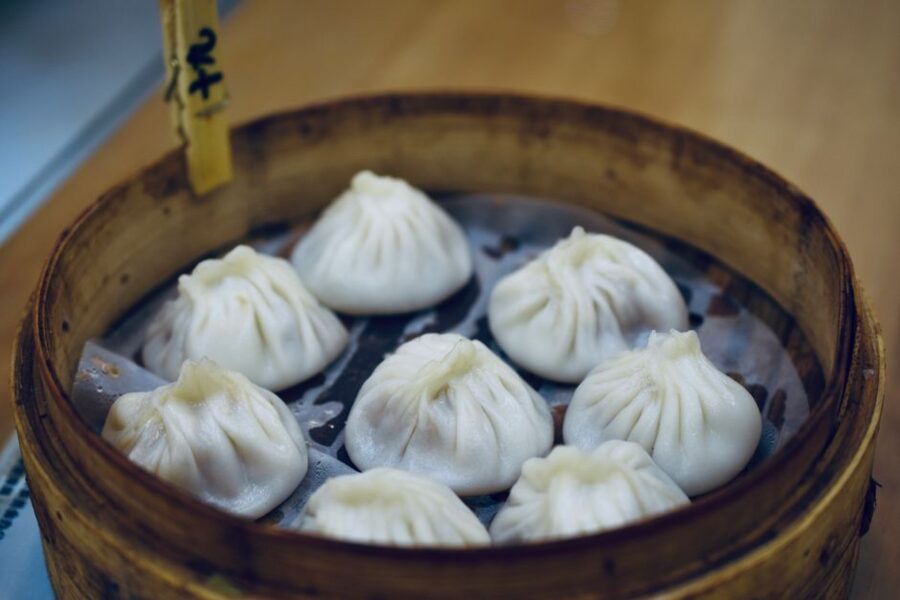
Before the train, have breakfast at Jia Jia Tang Bao (佳家汤包), at 127 Huanghe Road, about 340 m from People’s Square station Exit 8. It opens at 07:30, before the queue builds around 09:30, and its crab-and-pork soup dumplings were ¥38 a basket of twelve in November 2026. Don’t go to number 90 by mistake: that’s a different shop with a nearly identical menu.
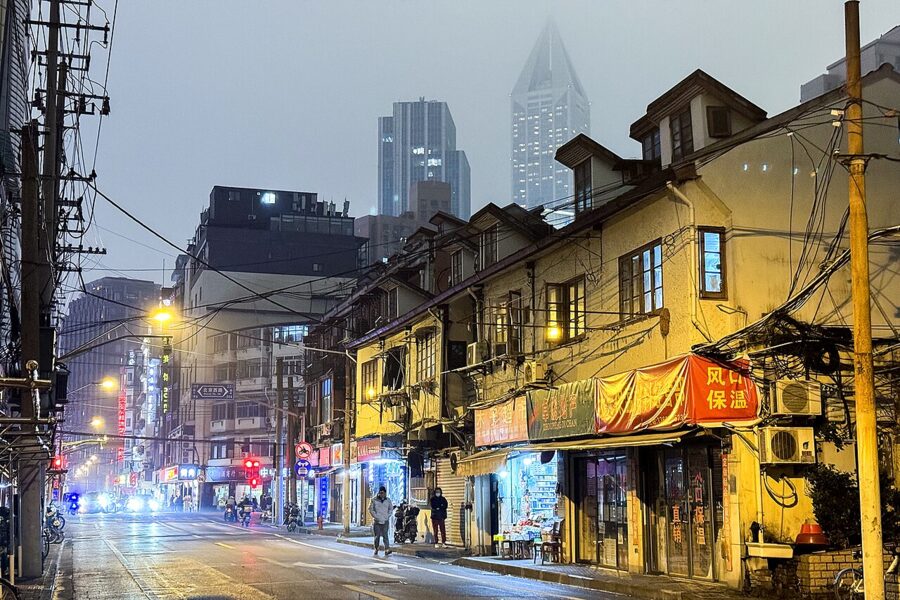
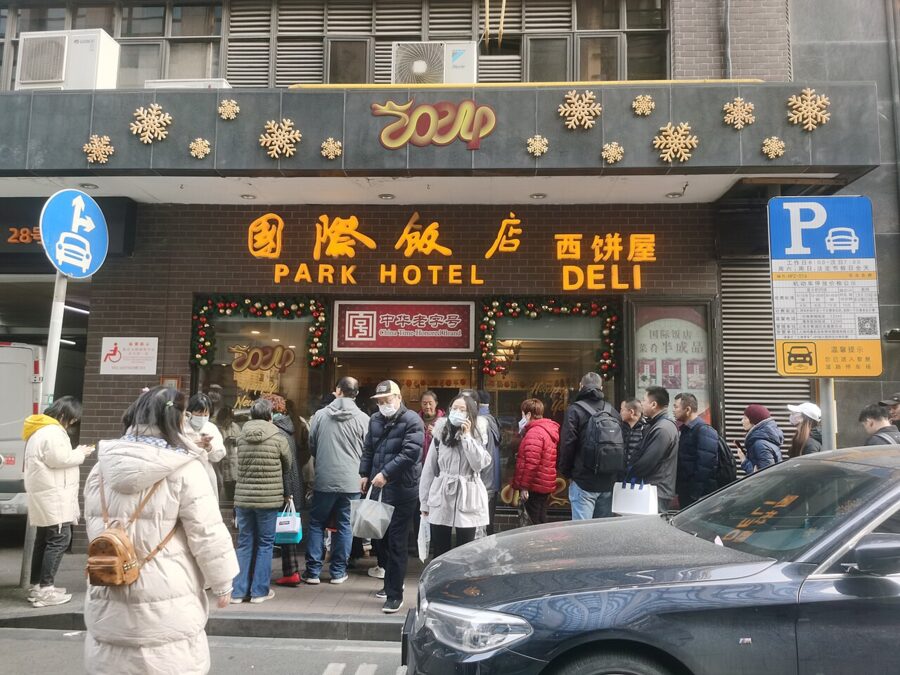
Huanghe Road is also home to the Park Hotel deli, at the Nanjing West Road end, which sells the butterfly pastries (hudie su, 蝴蝶酥) Shanghai people take home as gifts. The queue is famous. Buy them on the way back if you like; they keep.
Option one: Suzhou by high-speed train
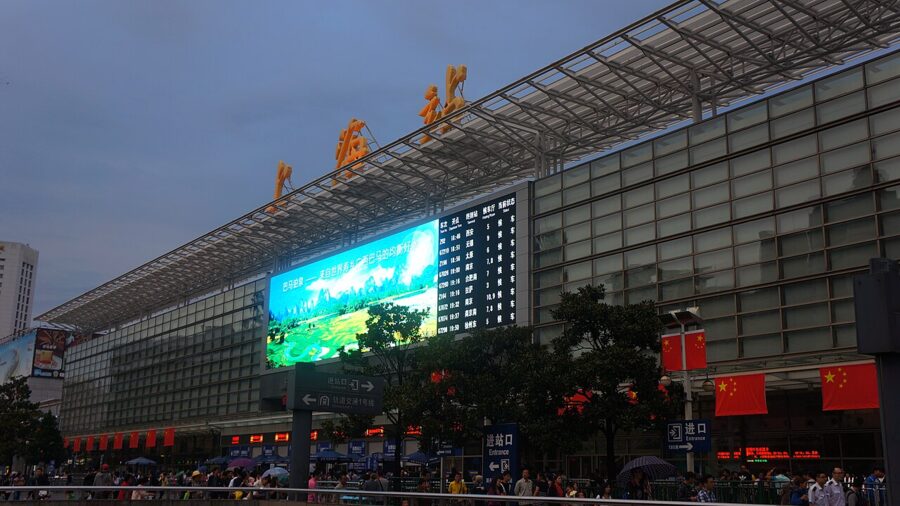
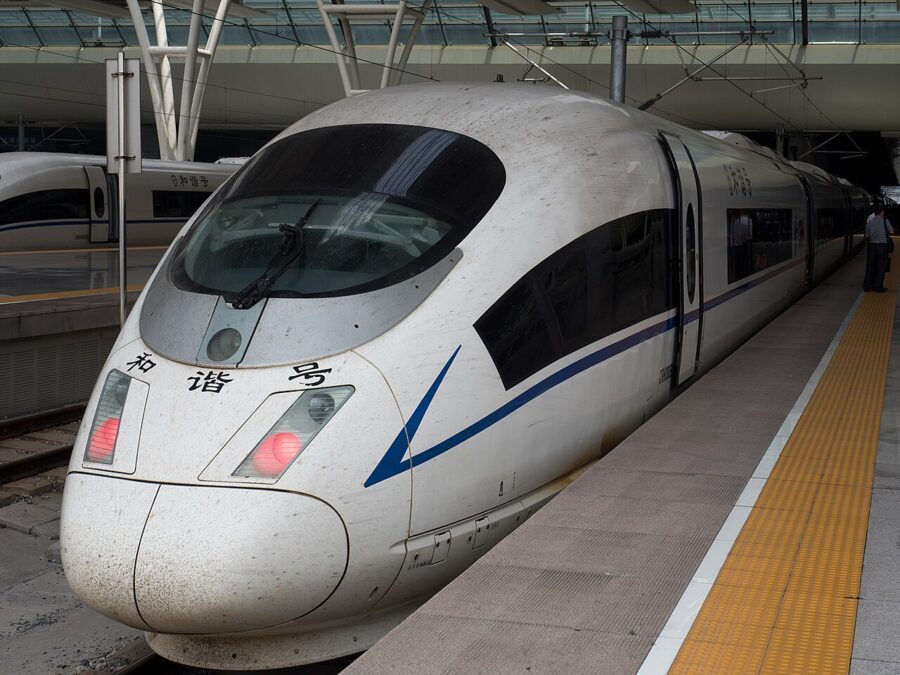
Suzhou is the city of the classical gardens, and it’s close: the fastest trains cover the 86 km in about 23 minutes. From Shanghai Railway Station (Lines 1, 3 and 4, three stops from People’s Square on Line 1), take a G or D train to Suzhou Station, not Suzhou North, because Suzhou Station is the one by the old city. Second-class fares run about ¥29–46 depending on the train, and there are hundreds a day.
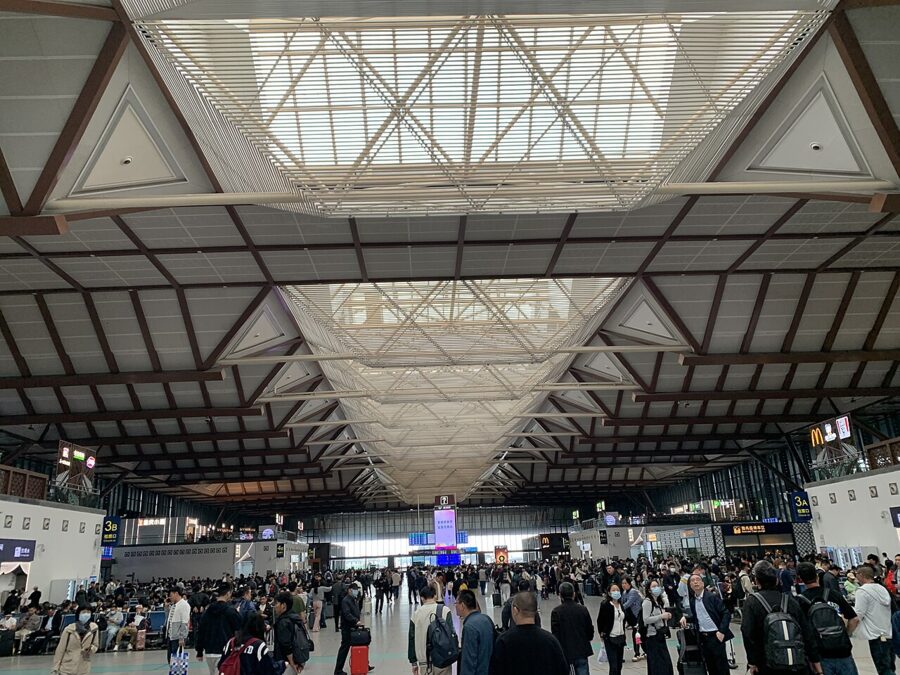
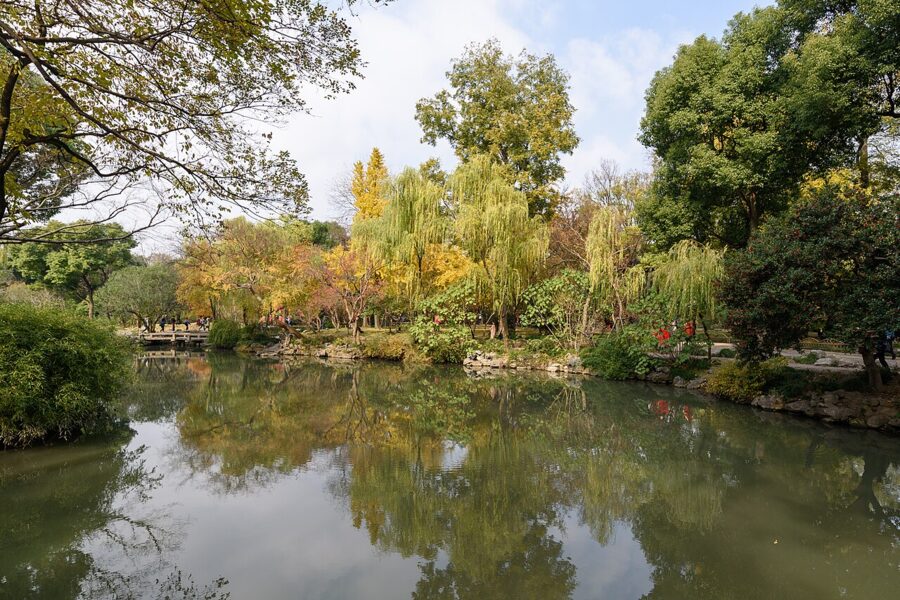
Book through 12306 (the national railway’s app, which works with a passport) or Trip.com, and bring the same passport to the gate. The famous gardens can sell out at weekends, so sort tickets the night before. My Suzhou guide has which gardens to pick, how to book them and a one-day plan; follow it and be back in Shanghai by 18:00.
Option two: Zhujiajiao by metro
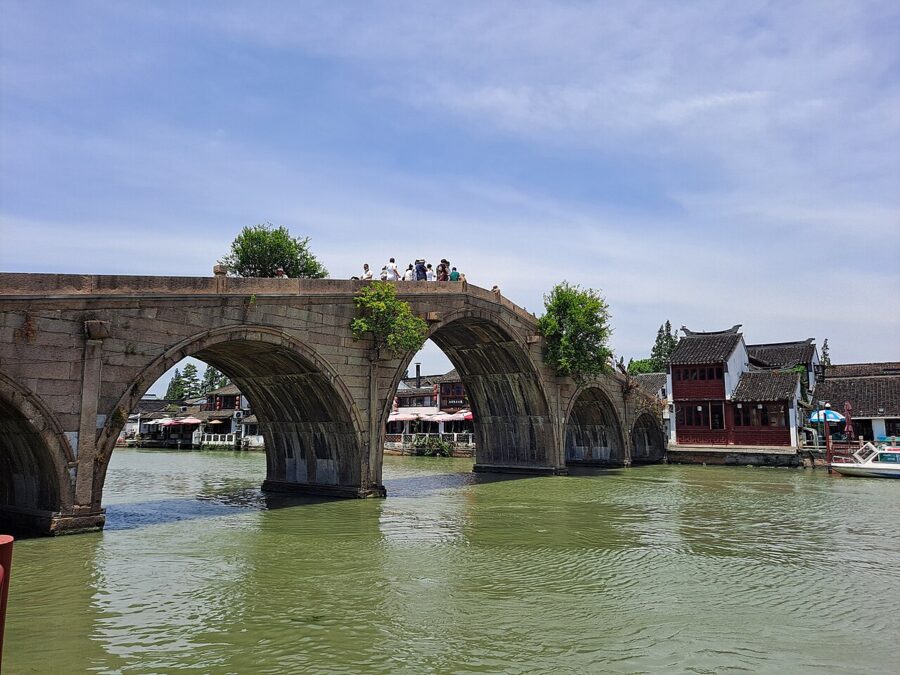
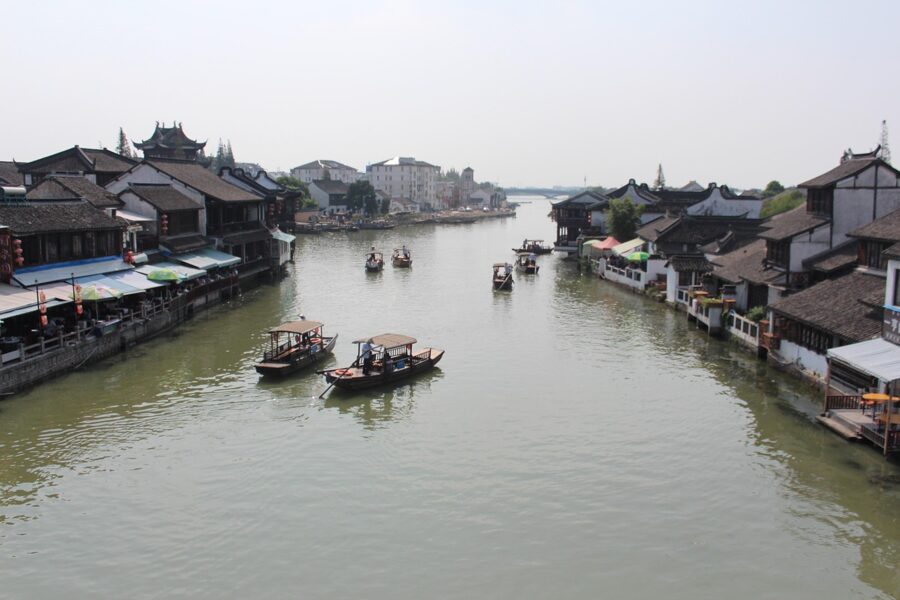
If you’d rather not deal with trains, take Line 17 from Hongqiao Railway Station to Zhujiajiao, which takes about 40 minutes. The canal town is free to walk around, with separate tickets for a few gardens and halls inside, and the five-arched Fangsheng Bridge is the picture everyone takes. It’s busy on weekends and holidays, so go early and on a weekday if you can.
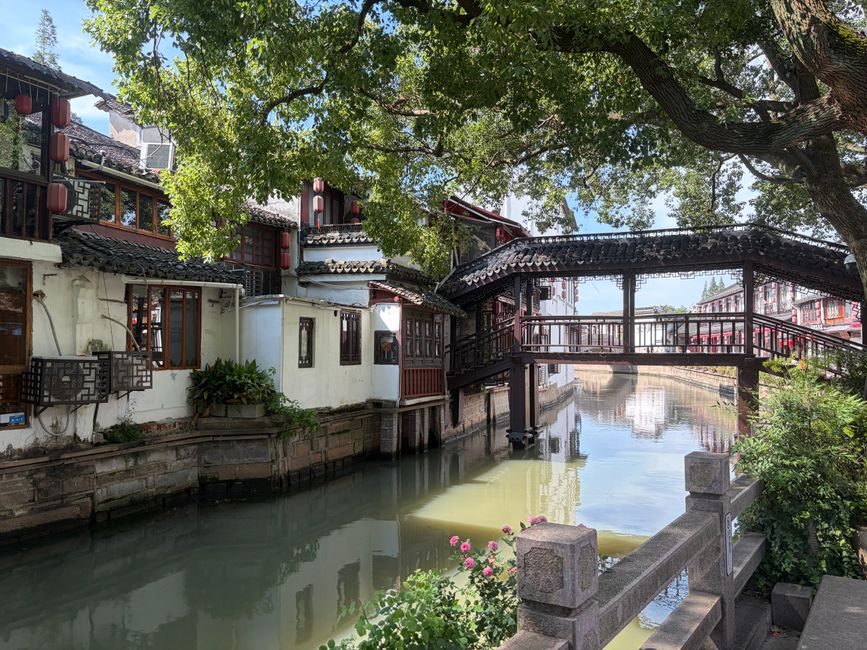
Zhujiajiao is one of several canal towns within reach, and they’re very different. My guide to the water towns near Shanghai compares seven of them, including Wuzhen and Xitang, which work better as an overnight, and Qibao, which is inside the city on Line 9 if you only have a couple of hours.
If you have more than three days, the same rail network gets you further. Hangzhou and West Lake are under an hour from Hongqiao by G train, and Huangshan, the Yellow Mountain, is a good two nights on its own.
19:00, the Bund lit up
Get back to the Bund for dusk. The buildings on both sides of the river are lit on a central schedule: on ordinary evenings the lights come on around dusk, roughly 19:00 in summer, and go off at 22:00; on public holidays they run 18:00–23:00. Lights-on takes only a few seconds, and the whole promenade cheers.
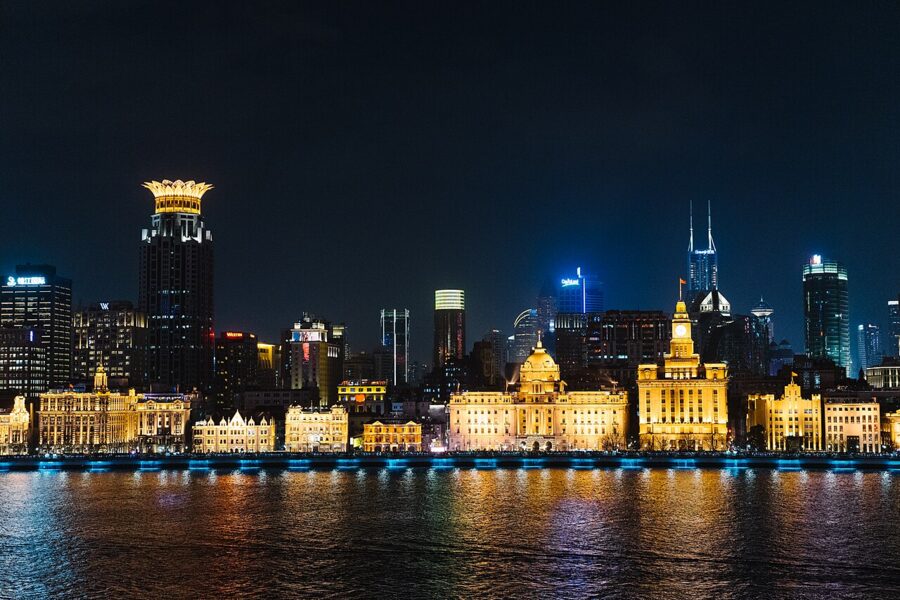
This is one of the busiest places in China on a fine evening, so a few tactics help. Enter from Fuzhou Road or Guangdong Road rather than Nanjing Road, where the police meter the crowd at the crossing, and walk the promenade south to north.
If it’s a national holiday, especially Golden Week (1–7 October), expect East Nanjing Road station on Lines 2 and 10 and Yuyuan Garden station on Line 14 to close from 16:00 for crowd control, as they did in October 2026. Use Yuyuan Garden on Line 10 instead, or walk.
The river at night: ferry or cruise?
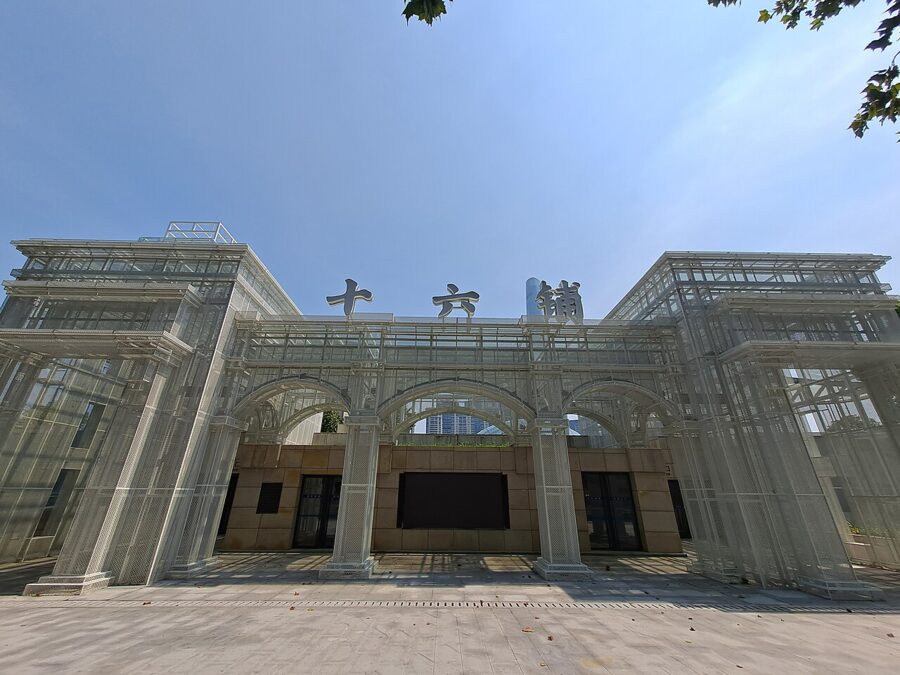
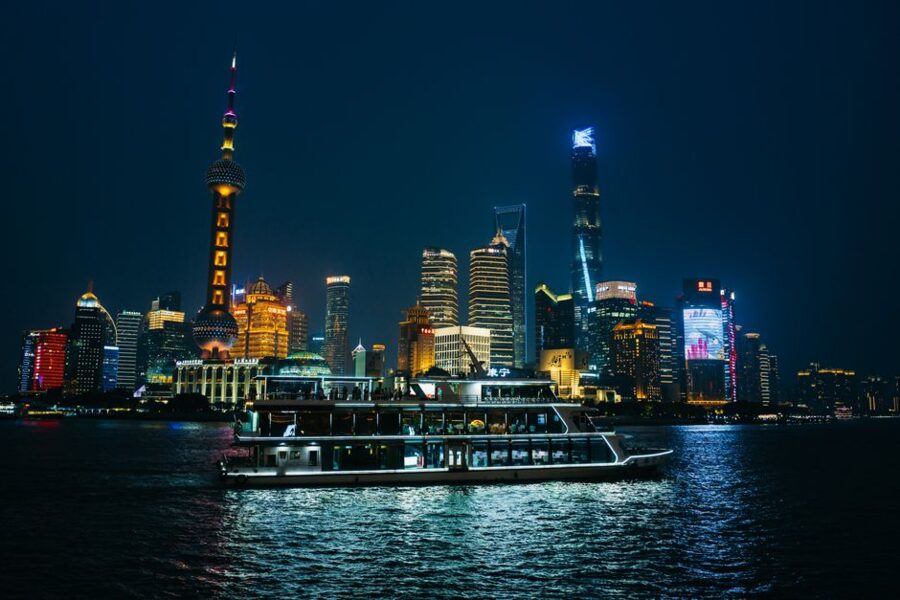
Now the question everyone asks. The Huangpu night cruises leave from the Shiliupu wharf (十六铺码头) at the south end of the Bund, run about 45 minutes, and cost roughly ¥100–150 depending on the boat and where you book. They’re comfortable, crowded and loud, and the view is genuinely good.
But the ferry gives you most of the same view for ¥2. Walk ten minutes south to the Fuxing Road East terminal and take the Dongfu line across to Dongchang Road and back; it runs into the evening (later in summer than winter). You get the Bund and Lujiazui both lit, the boat traffic, and the wind, with commuters instead of a karaoke deck. My advice: if it’s your one night on the river, do the ferry and spend the difference on dinner.
Where to stay
For three days, stay somewhere on Line 2 or Line 10; between them they reach almost everything on this plan. Here’s how the four obvious areas compare.
| Area | Good for | Downside | Stations |
|---|---|---|---|
| The Bund and Nanjing Road East | Walking to the river at dawn and night | Crowds, touts, pricey for what you get | East Nanjing Road (2, 10) |
| Jing’an | Restaurants, quieter evenings, Line 2 to both airports | Twenty minutes from the Bund | Jing’an Temple (2, 7, 14), West Nanjing Road (2, 12, 13) |
| Former French Concession | Day two on foot, cafés, character | Fewer big hotels, longer trips to Pudong | South Shaanxi Road (1, 10, 12), Changshu Road (1, 7) |
| Lujiazui | Views, airport access | Dead after office hours, every meal in a mall | Lujiazui (2, 14) |
The Bund
The Fairmont Peace Hotel, at the corner of Nanjing Road East and the Bund, is the classic: you step out of the lobby onto the river. It isn’t cheap, and the rooms facing the Bund cost more again. A step down in price, the mid-range Chinese chains (Atour, JI Hotel and their cousins) have several branches within a few minutes of East Nanjing Road station, and they’re clean, quiet and well run.
Jing’an
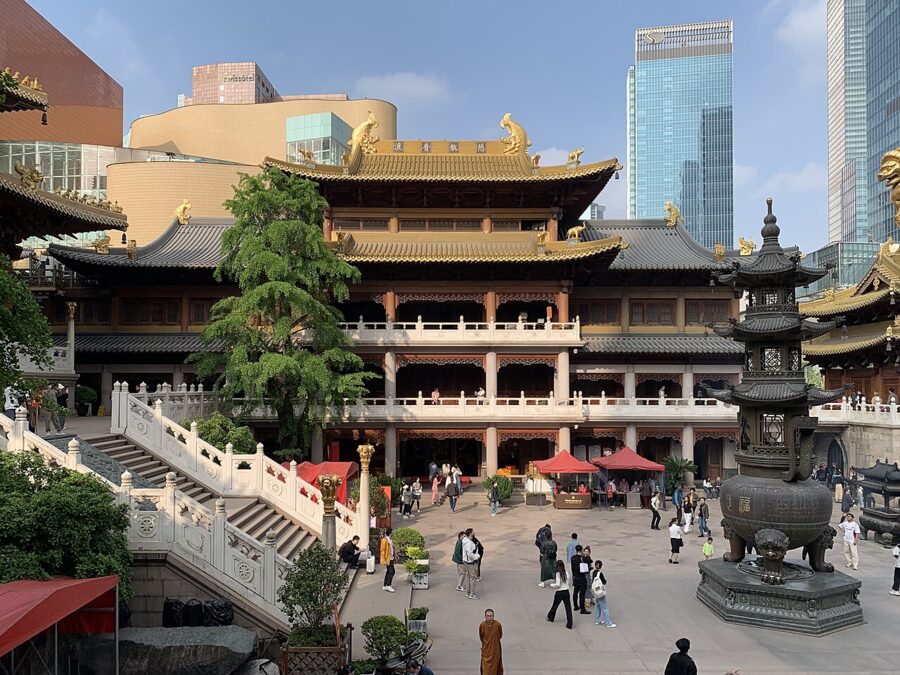
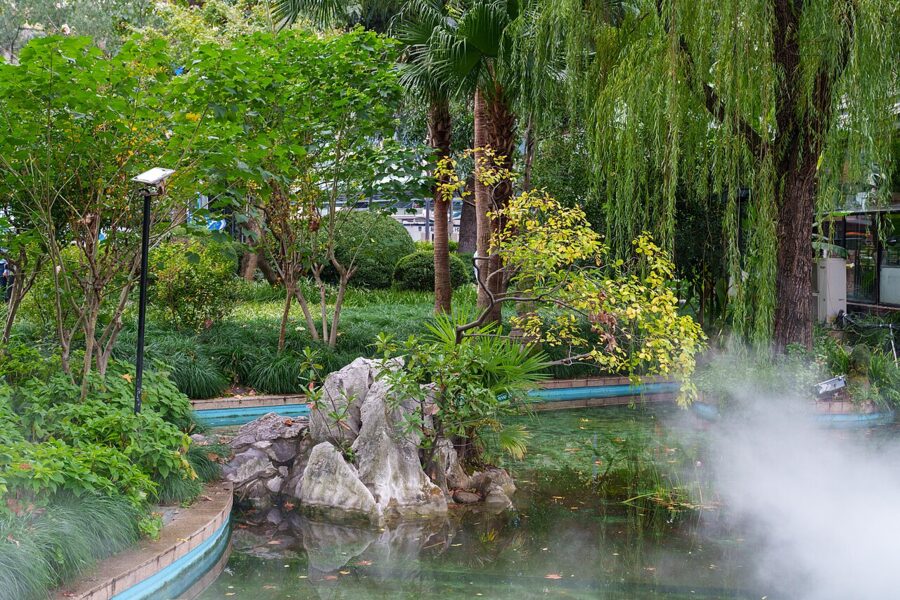
Jing’an is my pick for a first trip. It’s central, it has the best restaurants in walking distance, and Line 2 runs straight to both airports. For a splurge, The PuLi (Official site | Booking.com | Trip.com) is a calm, dark-wood hotel on Changde Road overlooking Jing’an Park, five minutes from Jing’an Temple station.
The former French Concession
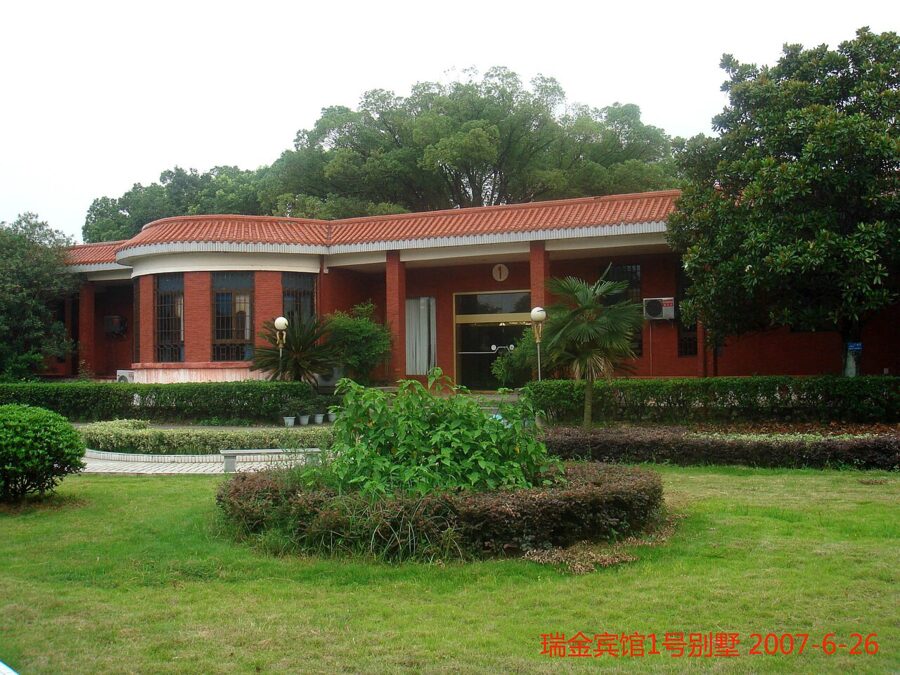
The InterContinental Shanghai Ruijin (Trip.com) occupies the old Ruijin Guest House estate, a set of 1920s villas in a big garden off Ruijin Second Road, walking distance from Tianzifang and Fuxing Park. It’s the quietest of the four areas to come home to.
Lujiazui
The Park Hyatt Shanghai (Official site | Trip.com | Agoda) fills the upper floors of the Shanghai World Financial Center, and its rooms look straight across at the Shanghai Tower. If you want a view from your bed, this is the place, but plan to eat on the other side of the river.
Getting in from Pudong and Hongqiao
Pudong International Airport
Most international flights land at Pudong, about 40 km east of the centre. You have three ways in.
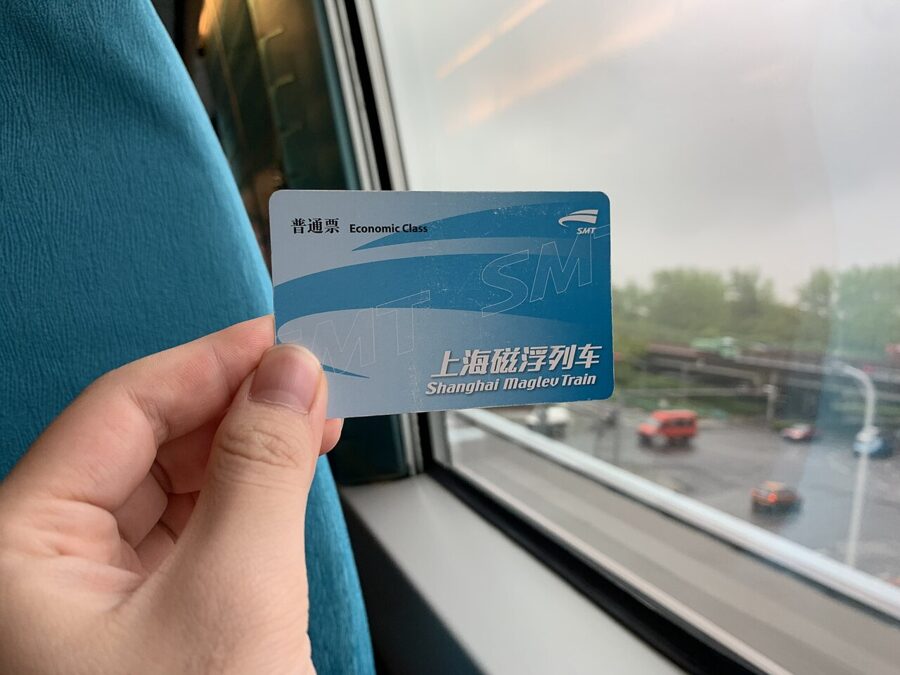
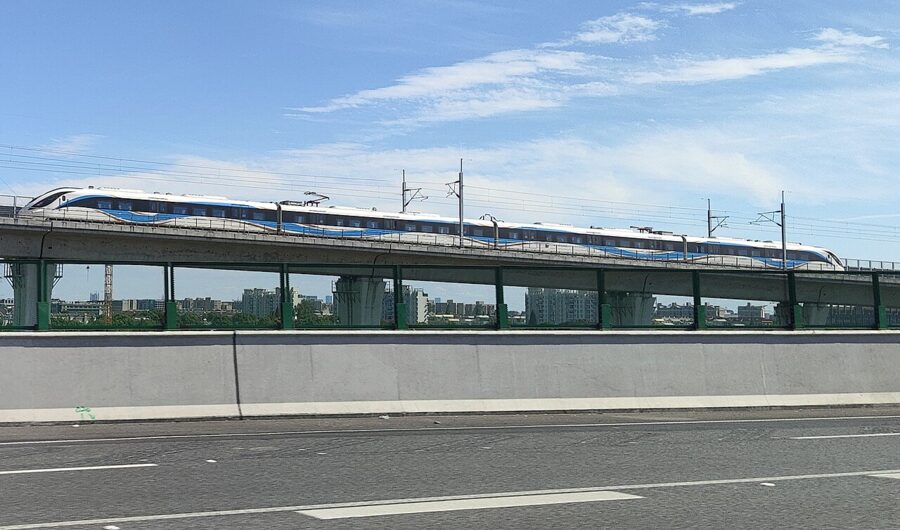
The Maglev (磁浮) runs from the airport to Longyang Road station in about eight minutes, from 07:02 to 21:42 outbound from the airport, every 15 to 20 minutes. A single is ¥50, or ¥40 if you show a same-day air ticket. At Longyang Road you change to Line 2 for the centre.
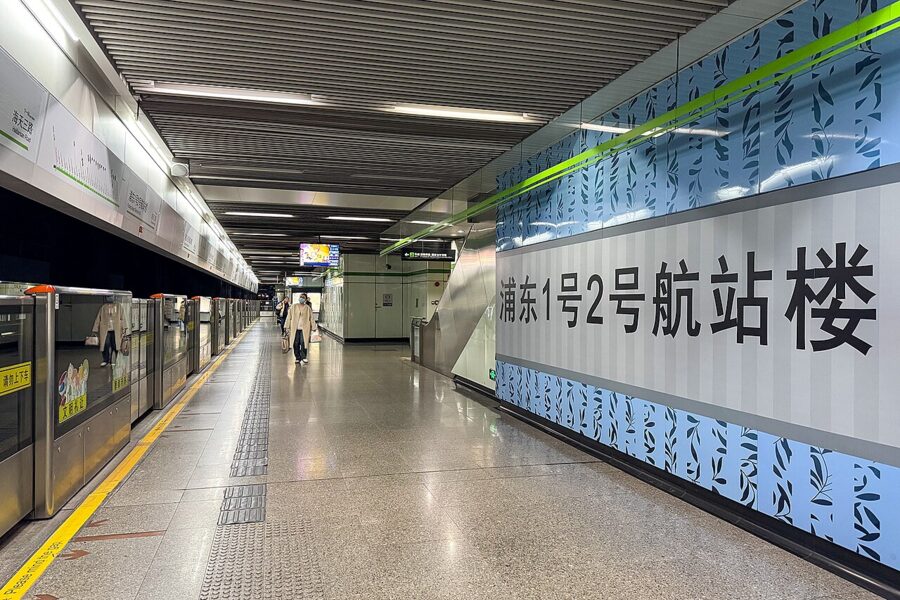
Line 2 runs from the airport itself, all the way to East Nanjing Road, People’s Square, Jing’an Temple and Hongqiao. It’s cheap and simple, but it’s slow, at more than an hour to the centre, and some trains terminate at Guanglan Road, where you change on the same platform. With luggage at rush hour, a taxi or a Didi is the better bet.
The third option is the airport link line (市域机场线), which opened in December 2024 and connects Pudong to Hongqiao in about 40 minutes. It’s the fast way to the Hongqiao rail station if you’re heading straight to Suzhou or Hangzhou.
Hongqiao
Hongqiao is the domestic airport and the main high-speed rail station, side by side in the west of the city. Lines 2 and 10 run from both Terminal 2 and the railway station into the centre in about 40 minutes, and Line 17 runs west from the railway station to Zhujiajiao.
Getting around and paying
The metro does almost all the work on this plan, and it has never been easier for foreign visitors. Since June 2025 every line accepts contactless bank cards at the gates, including Visa, Mastercard, American Express and JCB. Tap the card on the reader; you may need to enable small no-PIN payments with your bank first.
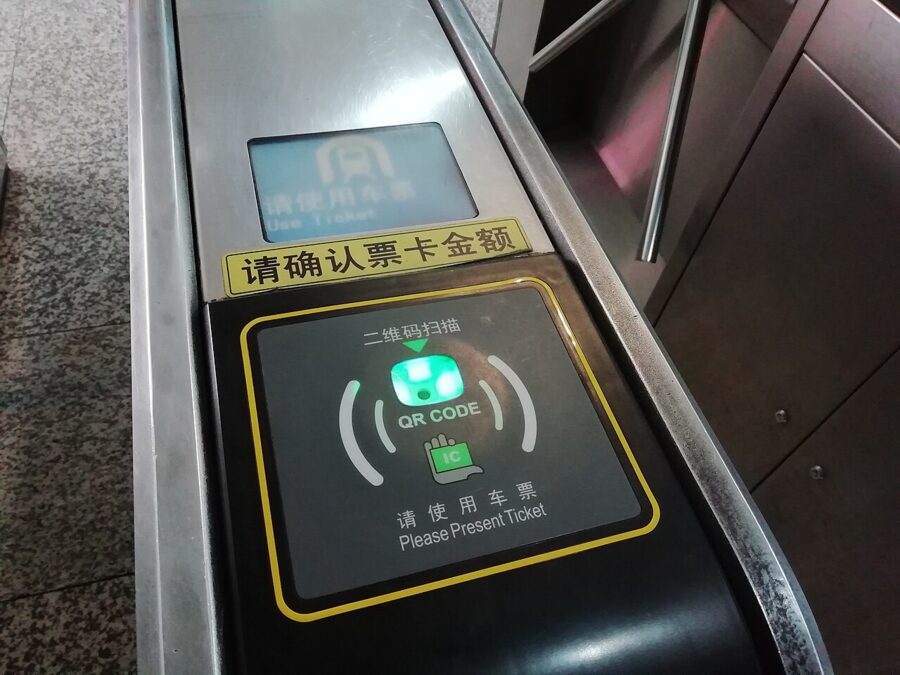
The alternative is the QR code in Alipay or WeChat Pay, both of which take foreign cards. Set one up before you arrive, because it’s also how you’ll pay for almost everything else: noodle shops, teahouses, taxis, temple tickets. Cash is legal tender and some old shops prefer it, but carry small notes, because change for ¥100 can be short.
For directions, Amap works in English and shows metro exits correctly. Didi, the ride-hailing app, also works in English and takes foreign cards, and it’s cheaper than you’d expect for short hops. Use 12306 or Trip.com for train tickets. And download an offline map of the city before you arrive, just in case.
When to go
Spring (April and May) and autumn (late September to November) are the best months: mild, mostly dry, with the plane trees in leaf. Summer is hot and humid, with typhoons that can stop the ferries, and winter is grey and damp rather than cold. Avoid the public holidays if you can: Spring Festival, the May Day holiday and above all Golden Week (1–7 October) bring crowds to the Bund, Yu Garden and Nanjing Road that you have to see to believe.
Skip this
- The Oriental Pearl Tower’s deck. If you’re going up the Shanghai Tower, the Pearl Tower is lower and older, and the view of it from the Shanghai Tower is better than the view from it.
- The Yuyuan bazaar snack stalls. Expensive and made for crowds. Eat at Nanxiang or walk ten minutes in any direction.
- Anyone who invites you for tea. See above. It’s always the same story.
- The People’s Square museum, for now. Unless the Americas exhibition is what you came for, the East building has the permanent collection for free.
Two last tips. Wear shoes you can walk 20,000 steps in, because day two is all on foot. And on day three, stay on the Bund until the lights go off at 22:00: the moment the facades go dark and the crowd sighs is the best show in Shanghai, and it’s free.