Chaoshan Food: Beef Hot Pot, Braised Goose and the Snack Streets of Shantou and Chaozhou
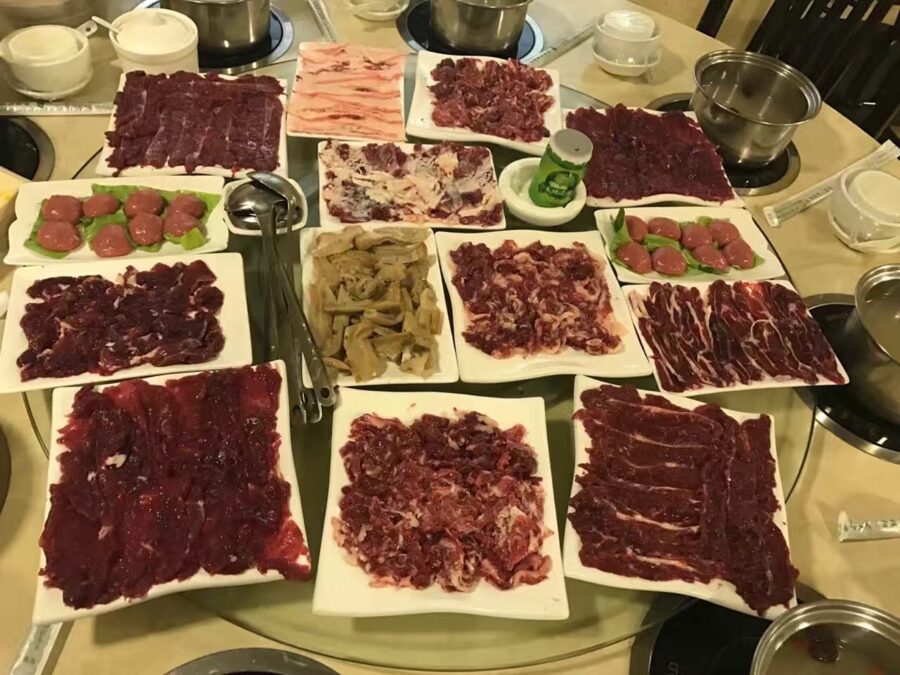
The butcher works in a glass box by the front door. Behind him hangs a side of yellow cattle that was walking around this morning, and in front of him is a queue of plates, each waiting for one particular muscle. In a Shantou beef shop the menu isn’t a list of dishes. It’s a map of a cow, and you’re expected to know which part you want.
That precision runs through everything the Teochew people cook. The goose sits in a brine some shops have kept going for decades. The oyster omelette is fried until its edge shatters, and the rice noodle soup is clear enough to read the bottom of the bowl through. Almost none of it is spicy, and very little of it is heavy.
When I lived in Shenzhen, Chaoshan food was everywhere: a lot of the city’s beef shops and late-night congee places were run by families from the east of the province. Eating it at home in Chaozhou and Shantou is a different thing, cheaper and fresher and much more fun. This guide covers who the Teochew are, the dishes worth travelling for, how to order beef hot pot without embarrassing yourself, the snack streets, gongfu tea, the train from Shenzhen or Guangzhou, a two-day plan, and the places I’d actually send you.
If you only have a minute, here’s the short version. Prices are rough, and for one person unless the table says otherwise.
| Eat this | Best place for it | When | Roughly |
|---|---|---|---|
| Beef hot pot (牛肉火锅) | Shantou city, or Guantang outside Chaozhou | Lunch or dinner, late night too | ¥80–130 a head |
| Braised lion-head goose (卤鹅) | Chenghai and Shantou | Lunch | About ¥65 a head for two |
| Oyster omelette (蚝烙) | Shantou old town, Chaozhou’s Paifang Street | Afternoon and evening | About ¥30 a plate |
| Dry noodles (干面) | Shantou old town | Breakfast | ¥15–20 |
| Raw-marinated seafood (生腌) | Shantou night streets | Late | By the plate |
| Ya mu nian sweet soup (鸭母捻) | Hu Rongquan, Chaozhou | Any time | About ¥10 |
| Gongfu tea (工夫茶) | Everywhere, all day | After every meal | Often free |
In This Article
- Who the Teochew are
- Beef hot pot, cut by cut
- The cuts
- The order, and the seconds
- Shacha, and the beef balls
- Guantang, where the beef comes from
- The brine pot: goose, eggs and everything else
- Da leng, the night table
- Raw-marinated seafood, with a warning
- Snacks, street by street
- Oyster omelette
- Kway teow, rice rolls and dry noodles
- Zongqiu and the kway family
- The night streets of Shantou and Chaozhou
- Paifang Street, Chaozhou
- Something sweet
- Gongfu tea, all day long
- Getting there from Shenzhen or Guangzhou
- Two days in Chaoshan
- Day 1: Chaozhou
- Day 2: Shantou
- Where to eat
- Shantou
- Chaozhou
- Skip this
Who the Teochew are
Chaoshan (潮汕) is the far eastern corner of Guangdong, where the Han River reaches the South China Sea. Today it’s three cities, Chaozhou, Shantou and Jieyang, but for most of history it was one prefecture run from Chaozhou, and the people still call themselves Teochew (潮州人), after the old city’s name in their own language.
That language is the first thing that tells you you’ve left Cantonese China. Teochew is a Southern Min tongue, closer to the speech of southern Fujian than to anything spoken in Guangzhou, and a Cantonese speaker from Shenzhen often can’t follow it. The food followed the same line. It’s coastal, built on fish sauce (鱼露) and the day’s catch, and it has its own pickles, its own sauces and its own idea of what a meal is.
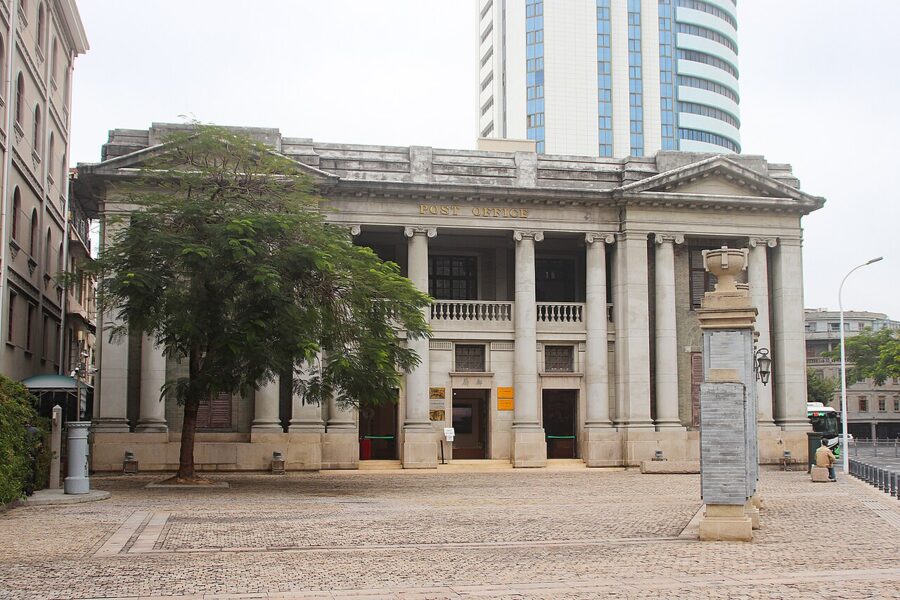
Then there’s the diaspora. Shantou, spelled Swatow on the old shipping papers, opened as a treaty port in 1860, and for a century its main export was people. Teochew families became the largest Chinese group in Thailand and one of the biggest in Singapore, and they took their noodles to Penang’s hawker stalls and their braised goose to the Chiu Chow restaurants of Hong Kong. A lot of the money and the buildings that came back are still standing in Shantou’s old town.
Chaoshan is its own school of Chinese cooking, usually counted as one of the three branches of Guangdong cuisine alongside Cantonese and Hakka. If you want the Cantonese side first, my Cantonese food guide covers it, and my regional map of Chinese food puts both in context.
In October 2023 UNESCO named Chaozhou a Creative City of Gastronomy, the sixth in China after Chengdu, Shunde, Macao, Yangzhou and Huai’an. Nobody in the old town seems to have changed anything because of it, which is the right response.
Beef hot pot, cut by cut
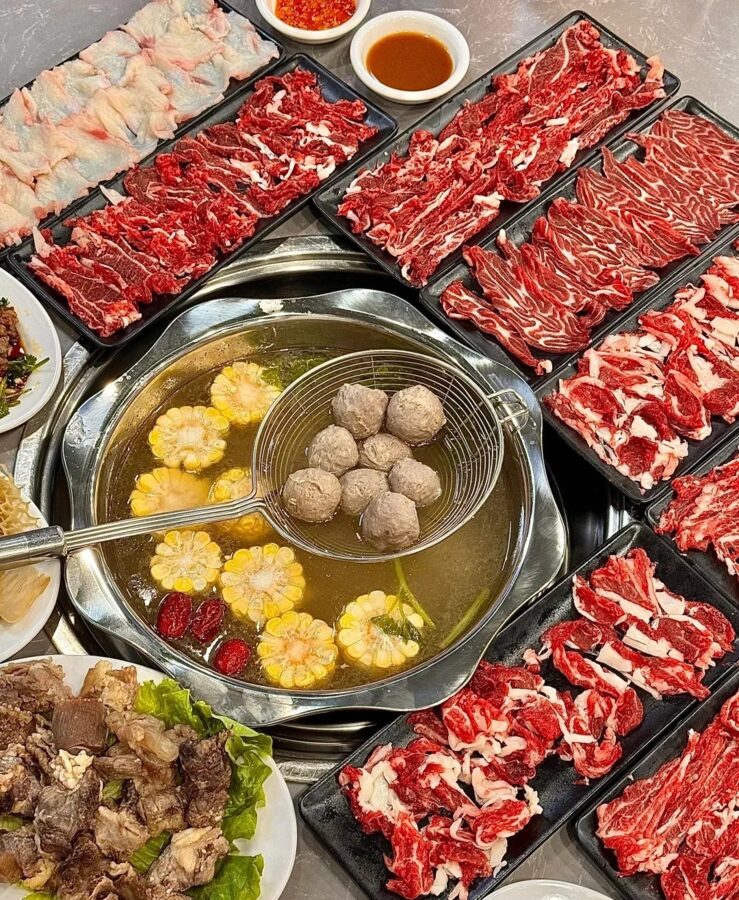
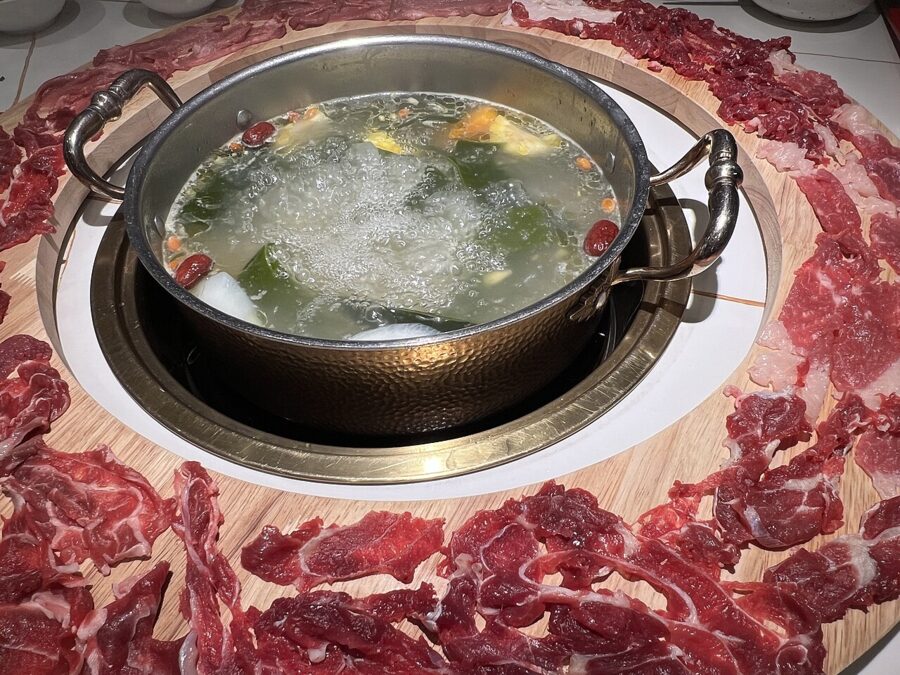
This is the dish people travel for. A Chaoshan beef hot pot (潮汕牛肉火锅) is a pot of clear beef bone broth, often with a few slices of white radish, a plate or six of beef that was slaughtered that day and never frozen, and a small bowl of sauce. That’s it. The interest is entirely in the meat, and in the seconds.
I covered the beef pot briefly in my guide to Chinese hot pot, alongside the Chongqing and Beijing styles. Here’s the longer version, the one you need when the waiter hands you a sheet of cut names and a pencil.
The cuts
Menus vary, but these names turn up everywhere. Point at the characters if you need to.
- Diaolong (吊龙), the long strip along the spine. Lean with a thin rim of fat, and the safe first order.
- Chibing (匙柄) and chiren (匙仁), from around the shoulder blade. Chiren is the small tender core and there’s never much of it, so it goes first.
- Nenrou (嫩肉), plain lean meat, often from the leg. Cheap, mild and easy to overcook.
- Wuhuazhi (五花趾) and sanhuazhi (三花趾), shank meat with lines of tendon running through it. It curls in the pot and has a crunch the lean cuts don’t. Wuhuazhi is the one locals ask after.
- Xiongkoulao (胸口朥), the pale yellow fat from the chest. It looks like lard and eats like crackling.
- Feipian (肥胼), fattier slices, plus tongue (牛舌) and tripe on most menus.
The order, and the seconds
Lean first, fat last. Start with chiren or diaolong, then the shank cuts, and save the rest for later.
Put in a few slices at a time with your chopsticks, hold them in the simmering broth until the red turns pink-grey, and lift them out. For the lean cuts that’s a matter of seconds, about ten at most. If you’ve counted to twenty, you’ve overdone it.
Xiongkoulao is the exception. Leave it in for a few minutes until it firms up and turns translucent at the edges. Then eat it straight away, with a sip of tea.
Order small. Two or three plates per round is how locals eat, because beef this thin dries out and darkens if it sits waiting. Vegetables, tofu skin and the kway teow go in only after the beef is finished, so they don’t cloud the broth while you’re still tasting cuts.
Shacha, and the beef balls
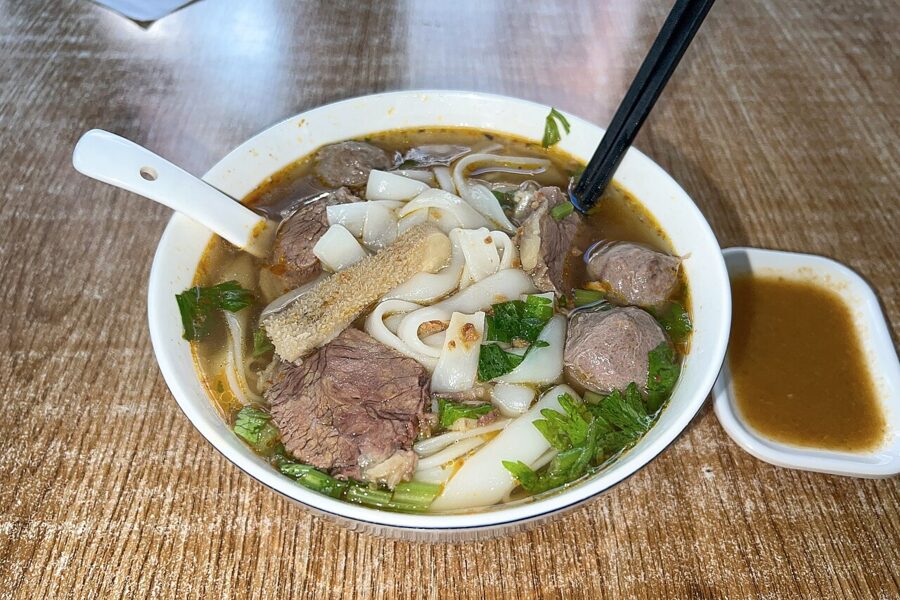
The dip is shacha sauce (沙茶酱), a coarse, savoury paste of dried fish and shrimp, garlic, shallot and spices fried in oil. It’s usually traced to the satay of Southeast Asia, carried home by returning Teochew emigrants and rebuilt with local ingredients. Most shops also put out Puning bean paste (普宁豆酱), a salty fermented soybean sauce from Jieyang, and a chilli sauce that’s saltier than it is hot.
Use the shacha sparingly. A teaspoon, some chopped celery and fried garlic if the sauce bar has them, and a splash of broth to loosen it. Locals think drowning good beef in it is a waste of the beef.
Beef balls (牛肉丸) are the other half of the meal. The tough cuts that won’t slice well are pounded by hand with a pair of heavy square iron bars until the meat turns into an elastic paste, and the balls that come out are so springy they bounce. Niujinwan (牛筋丸), with chopped tendon through them, have more chew. Put a few in at the start of the meal, since they need several minutes.
Guantang, where the beef comes from
Locals will tell you the freshest beef in Chaoshan is in Guantang (官塘), a town in Chaozhou’s Xiangqiao district, close to the slaughterhouses. The main road is lined with beef hot pot restaurants, and on New Year’s Day 2026 the district ran a whole beef hot pot week there. It’s a taxi ride from Chaozhou’s old town, and it’s what I’d do on a Chaozhou evening if you’ve already done your snacking.
In Shantou the beef houses are bigger and busier. Expect ¥80–130 a head at the well-known names, and expect to queue for a table at the famous ones in the evening. There’s a list of where to go further down.
The brine pot: goose, eggs and everything else
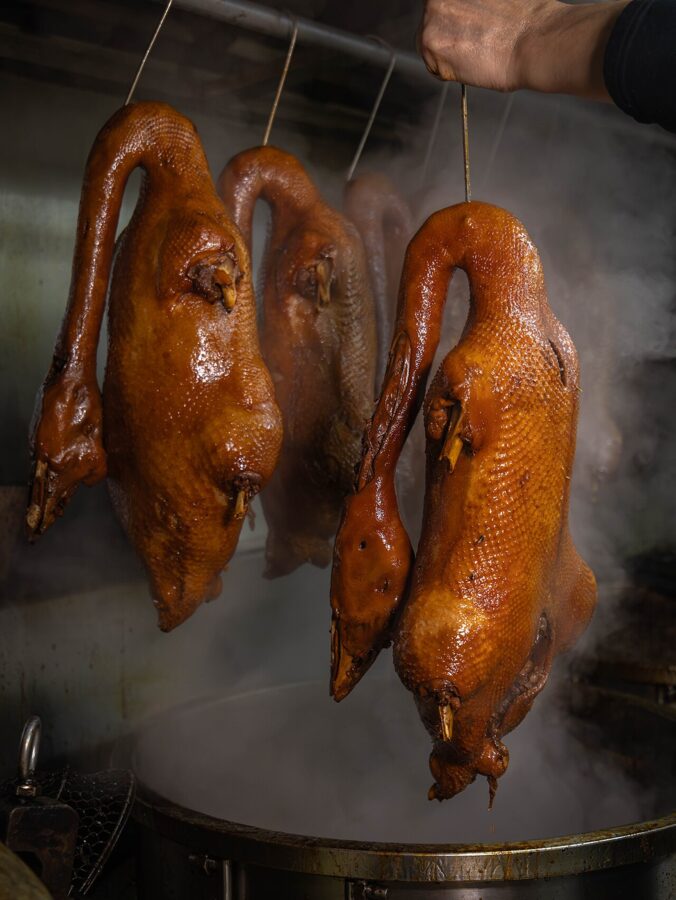
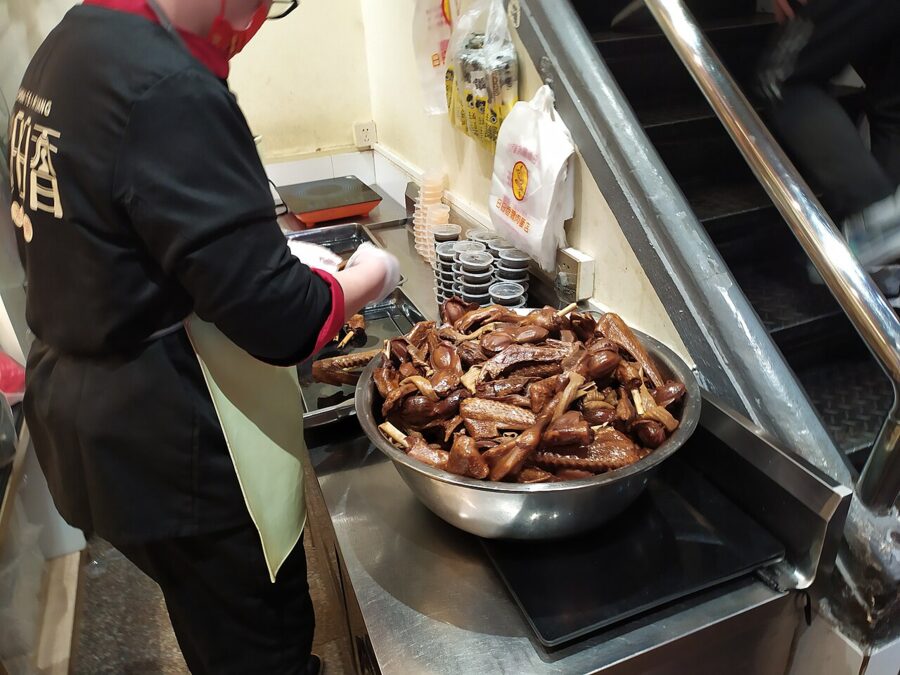
If beef hot pot is about doing as little as possible to the meat, lu (卤), braising, is about the opposite. A Chaoshan master stock is soy sauce, sugar and a long list of spices, galangal, star anise, cinnamon and liquorice among them, and good shops keep theirs going for years, topping it up and braising in it every day. The longer a stock lives, the deeper it gets.
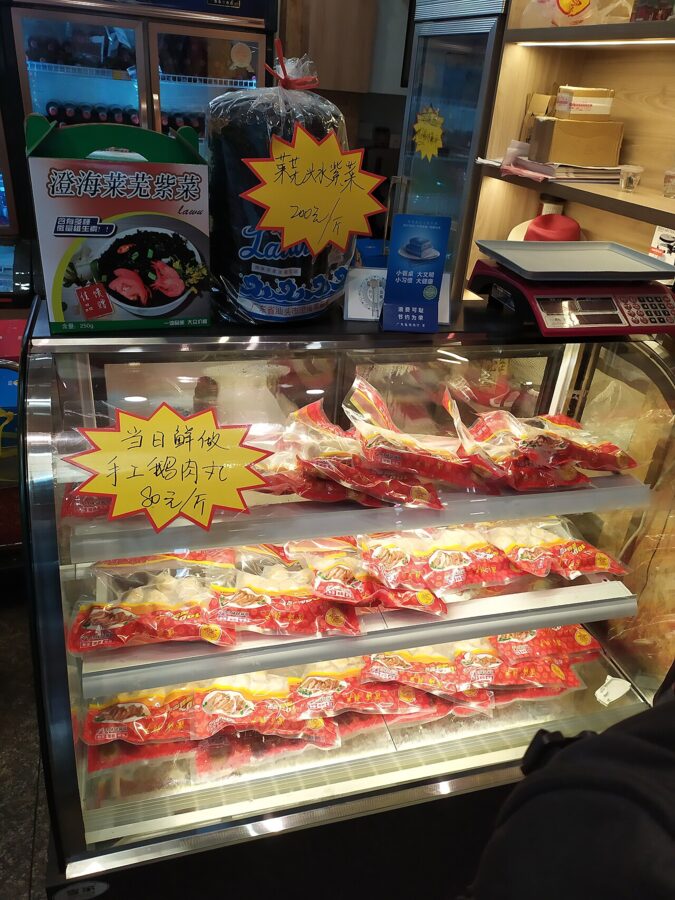
The star of the pot is the lion-head goose (狮头鹅), a huge breed named for the black knob on its head that grows bigger with age. It comes from Fubin, a town in Chaozhou’s Raoping county, and a grown gander weighs 10–12 kg, which makes it one of the biggest geese anywhere. Chenghai, a district on Shantou’s northern edge, is where it’s braised best.
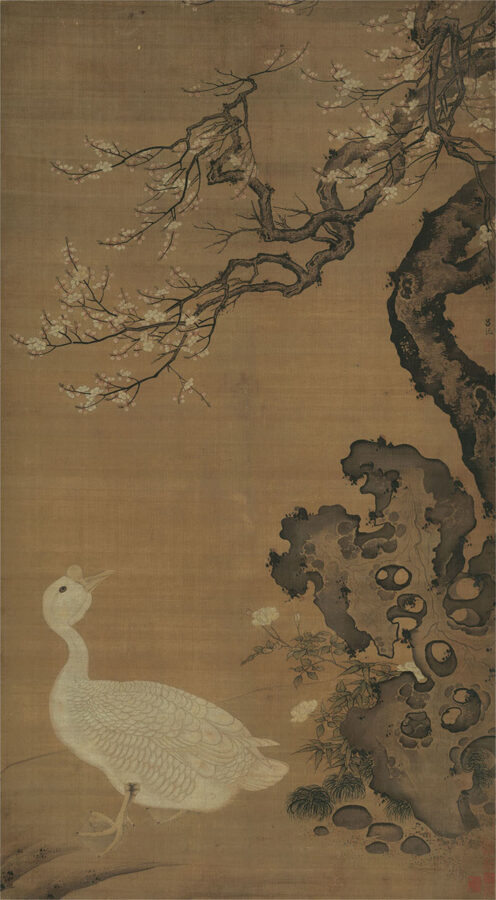
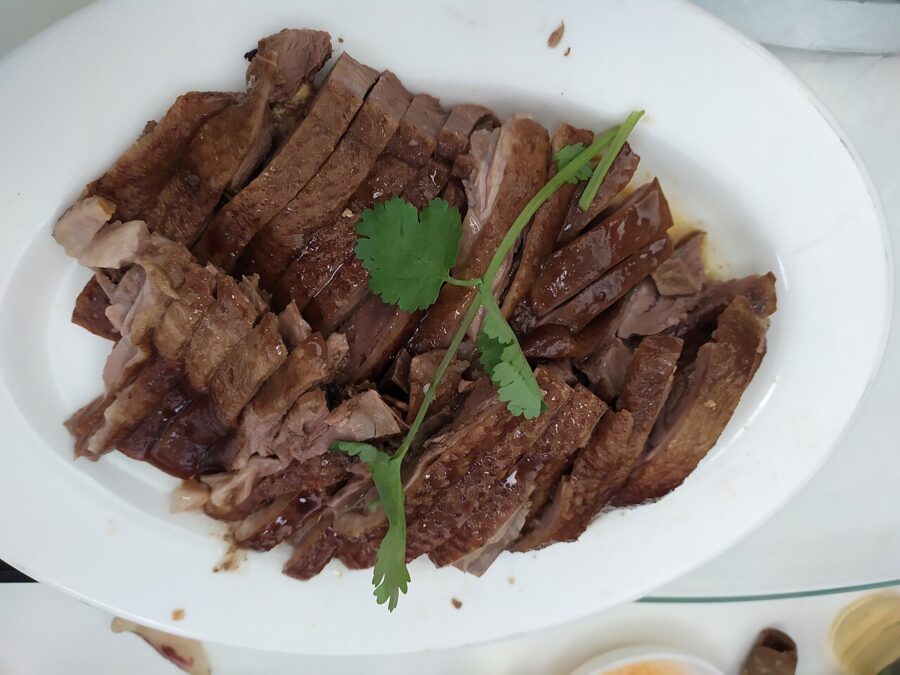
Order by the plate or the half-goose. The usual move is a mixed platter, meat plus wings, feet and liver, and the liver is the one that converts people: dense, rich and closer to a pâté than to anything you’d expect from a cheap lunch. Older geese cost more. Shops that use birds over a year old say so, and Teochew diners will argue about whether the extra flavour is worth it.
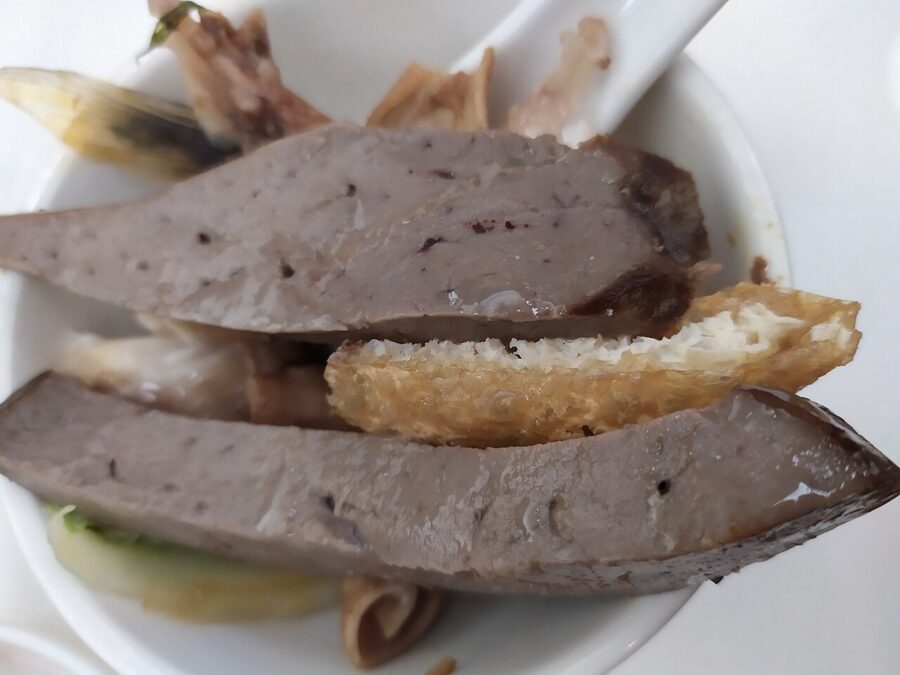
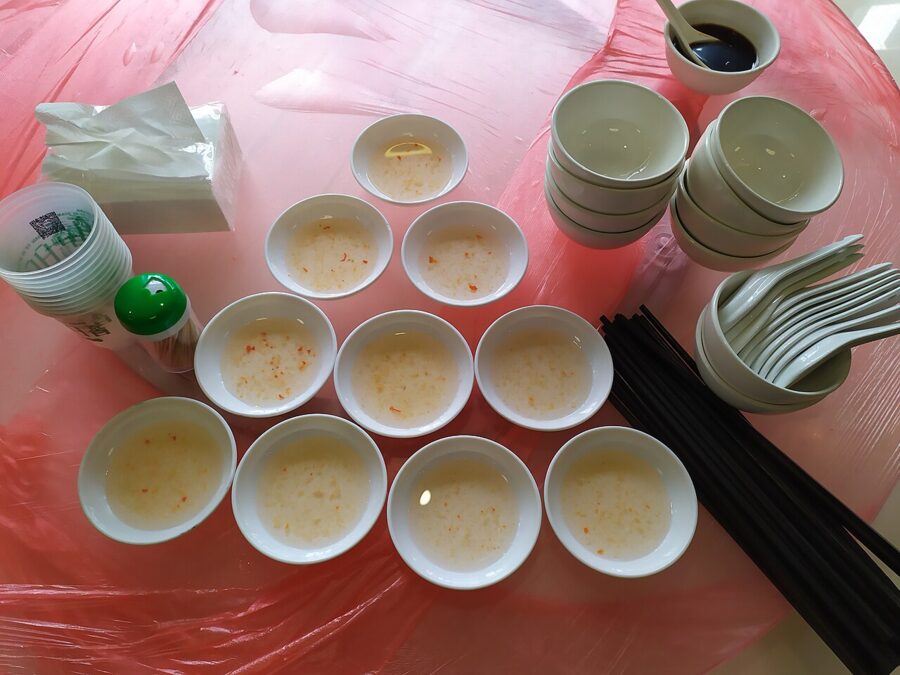
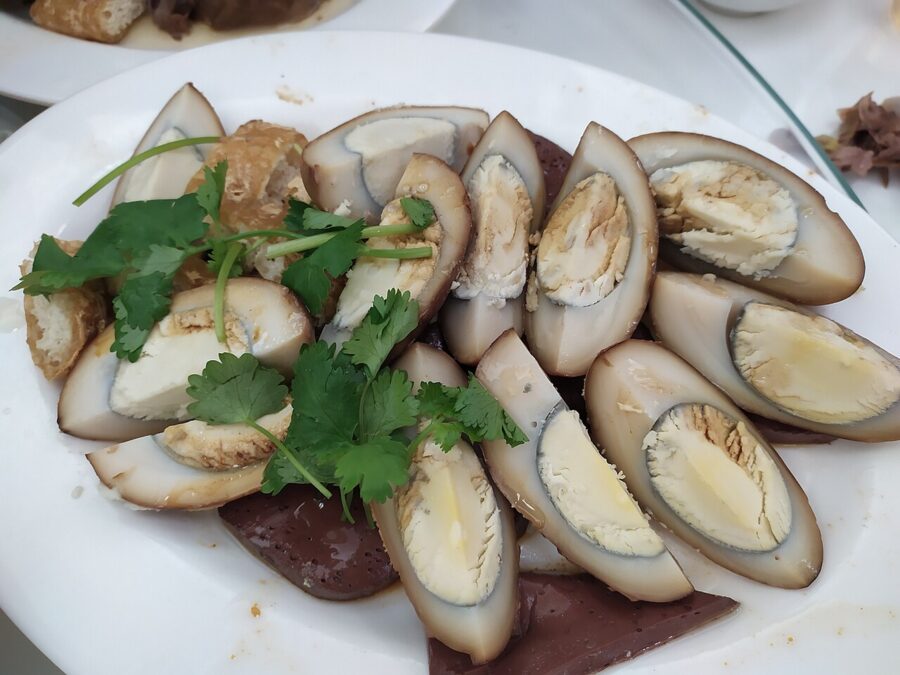
The dip is garlic vinegar, a little dish of rice vinegar with minced raw garlic, and it’s there to cut through the richness. Everything else from the pot is worth a look too: braised eggs, firm tofu, pig’s trotters, intestines, and the fried tofu that has been sitting under the goose all morning.
Da leng, the night table
The braised meats are the backbone of da leng (打冷), the cold spread that Teochew people eat late at night with plain rice congee. Picture a counter of dishes under glass: braised goose, fish rice (鱼饭, whole fish steamed in salt water and served cold), cold crab, salted greens, pickled radish, marinated clams. You point, they plate it, and a big pot of thin congee arrives to go with it.
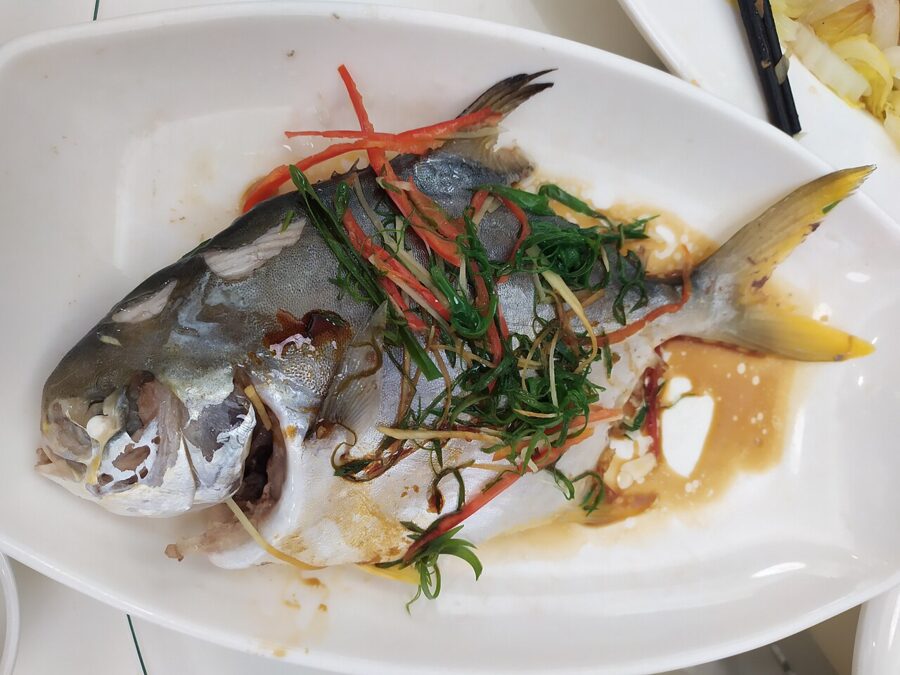
It’s the Chaoshan meal I’d least want you to miss, and it starts late. The well-known places open in the late afternoon and are busiest well into the night.
Raw-marinated seafood, with a warning
Shengyan (生腌) is Chaoshan’s most talked-about dish and its most risky. Raw seafood is steeped in a marinade of soy sauce, fish sauce, garlic, chilli, coriander and sometimes sugar or vinegar, chilled, and served without ever going near heat. Locals call it “Chaoshan poison” (潮汕毒药), as a joke and as a compliment.
The usual line-up is raw shrimp, mantis shrimp, crab with roe, and blood clams. Start with shrimp, which are firm, sweet and the easiest to get used to. The crab is soft and briny and an acquired taste; blood clams are for people who already love raw shellfish.
Now the warning. This is raw seafood, and the risk is real: stomach upsets are common among visitors, and raw shellfish can carry bacteria and viruses that a marinade doesn’t kill. Shantou’s own market regulator ran a “taste it, but taste it safely” campaign on raw-marinated seafood during its 2026 food safety week.
Eat it only at busy places that turn their stock over fast, order a small plate, eat it with congee rather than on an empty stomach, and never take it away for later. If you’re pregnant, very young, elderly or have a weakened immune system, skip it altogether.
Snacks, street by street
Chaoshan cooks have a word, guo (粿, kway in Teochew), for almost anything made from rice flour or starch, and the snack list is endless. These are the ones to look for first.
Oyster omelette
Haolao (蚝烙), the Chaoshan oyster omelette, is nothing like the soft, gooey Taiwanese version. Tiny oysters go into a batter of sweet potato starch, the whole thing is fried in a wide pan with plenty of lard, egg is poured over, and it’s cooked until the edges go brown and crisp. You eat it with a splash of fish sauce, which is not optional.
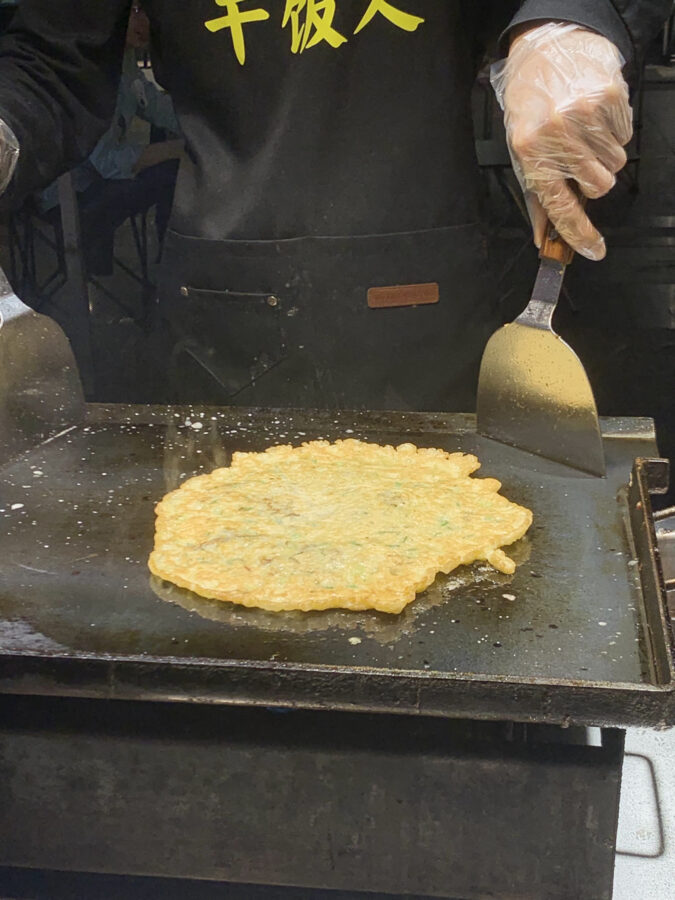
Shantou’s Xitianxiang (西天巷) lane, off Shengping Road near Xiaogongyuan, has been famous for oyster omelettes since the Republican era, when several stalls fried them side by side, and Xitianxiang Haolao (西天巷蚝烙) is still frying there. In Chaozhou, Laobin (老彬蚝烙) by the Lower Water Gate is the old town’s best-known, about ¥30 a plate; it opens in the afternoon, not for breakfast.
Kway teow, rice rolls and dry noodles
Breakfast in Chaoshan is a bowl of kway teow (粿条), flat rice noodles in a clear broth made from pork or beef bones and dried fish, with slices of fresh meat, offal or fish balls, and fried garlic on top. Every street has a shop, and every shop has its regulars. If you’ve eaten Penang’s or Bangkok’s noodle soups, this is where a lot of them come from.
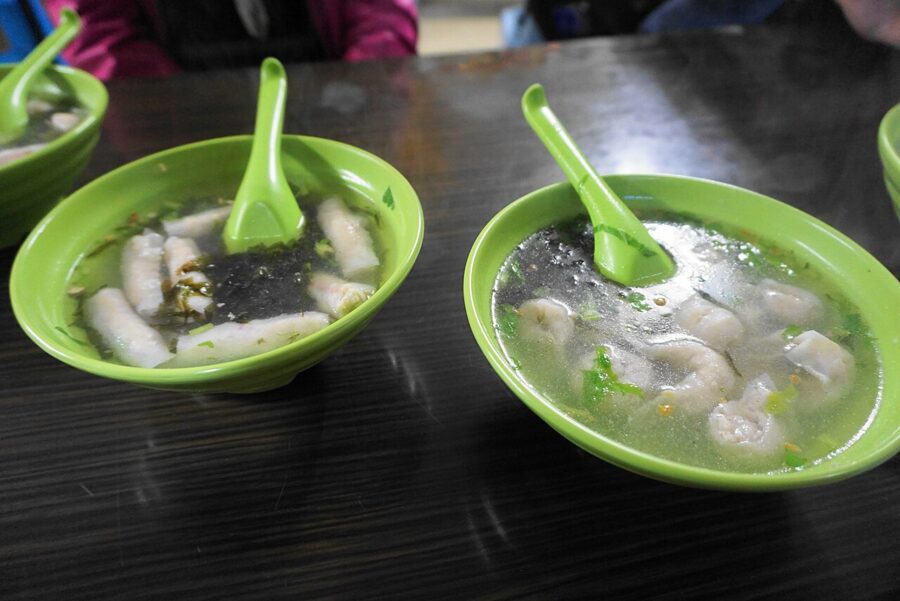
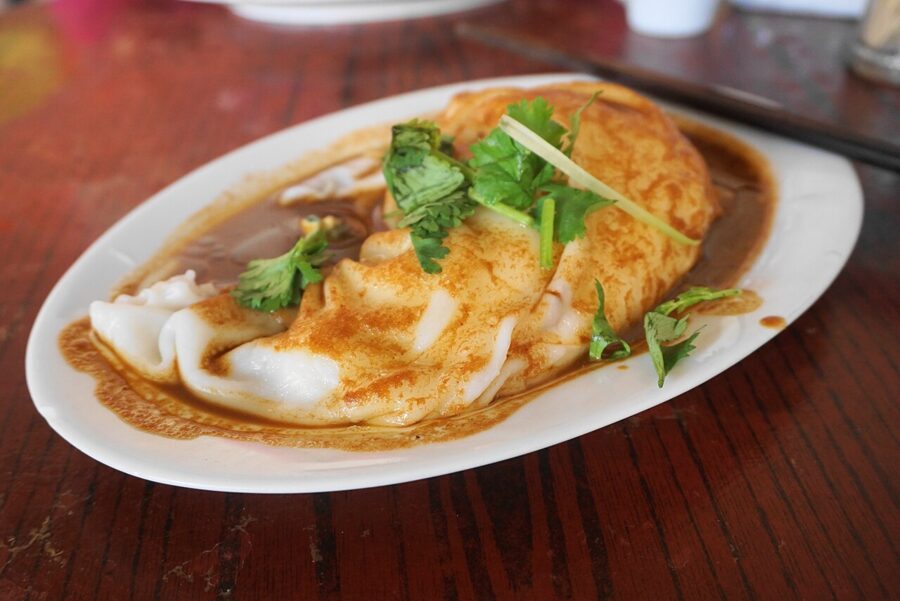
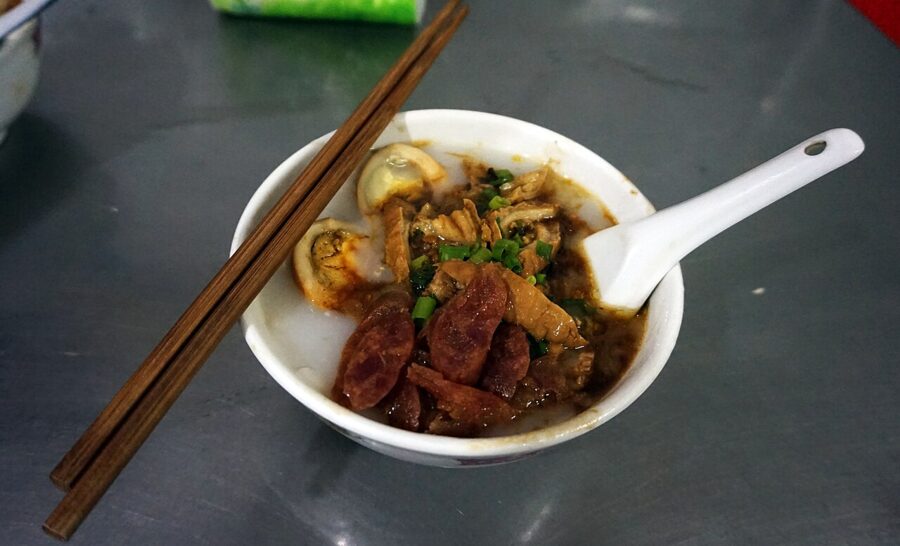
Chaoshan rice rolls (肠粉) are thinner and softer than the Cantonese kind, steamed with egg and fillings like minced pork, shrimp or oysters, and finished with a savoury sauce. Kway chap (粿汁) is breakfast of another sort: squares of rice sheet in a dark, starchy soup with braised pork, offal and egg on top, a Chaozhou dish you’ll also find in Jieyang and Shantou.
Shantou’s dry noodles (干面) are a breakfast with a cult following. Thin egg noodles are boiled, drained and tossed with shacha, sesame paste and a little lard, and served with a bowl of soup on the side. Aixi Ganmian (爱西干面), at 1 Guoping Road a few minutes from the Xiaogongyuan pavilion, says it has been making them since 1949 and opens from breakfast into the evening.
Zongqiu and the kway family
Zongqiu (粽球) are Shantou’s rice dumplings, bigger and richer than an ordinary zongzi, wrapped in bamboo leaves and filled with pork belly, mushroom, dried shrimp, chestnut and salted egg yolk. The famous version is shuangpeng zongqiu (双烹粽球), half sweet and half savoury in one dumpling.
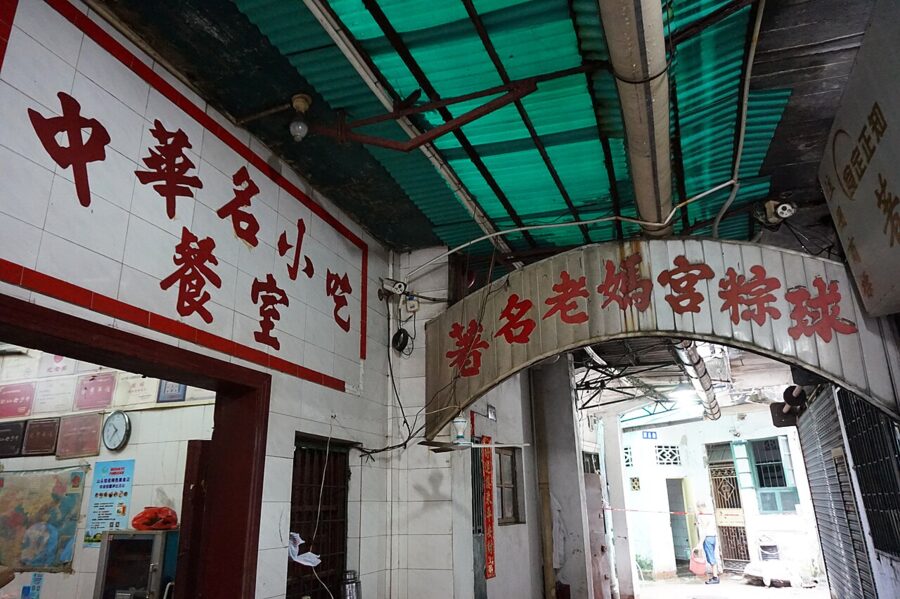
The place to buy them is Laomagong Zongqiu (老妈宫粽球) at 1 Shengping Road, beside the opera stage of the old Mazu temple. Teochew people even have a saying about it: you only know a Laomagong zongqiu once you’ve eaten it, which is their way of saying people are judged over time.
Then there’s the kway family, which you’ll find on every snack counter: chive kway (韭菜粿), bamboo shoot kway (笋粿), steamed water kway (水粿) topped with salted radish, and the pink peach-shaped kway (红桃粿) made for festivals. Shantou’s hou guo (鲎粿) is named after the horseshoe crab that once went into it. The crab is a protected animal now, and today’s versions are made without it.
The night streets of Shantou and Chaozhou
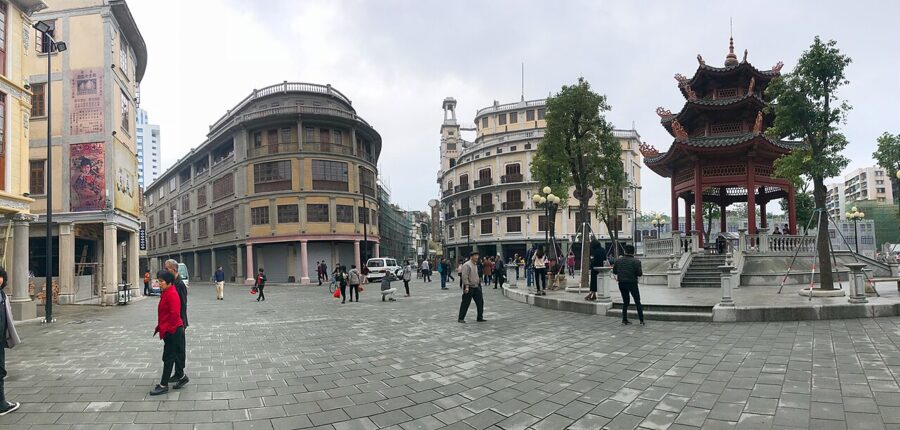
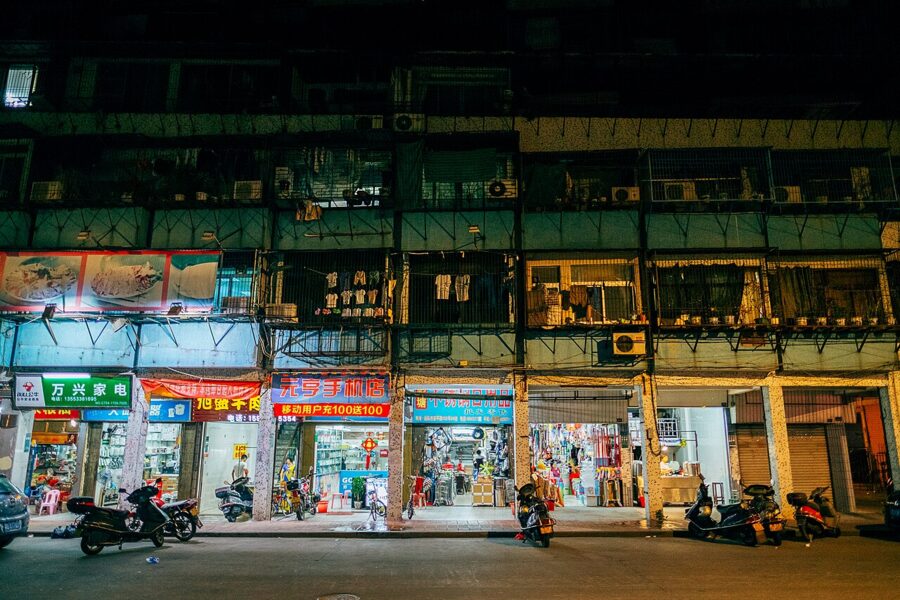
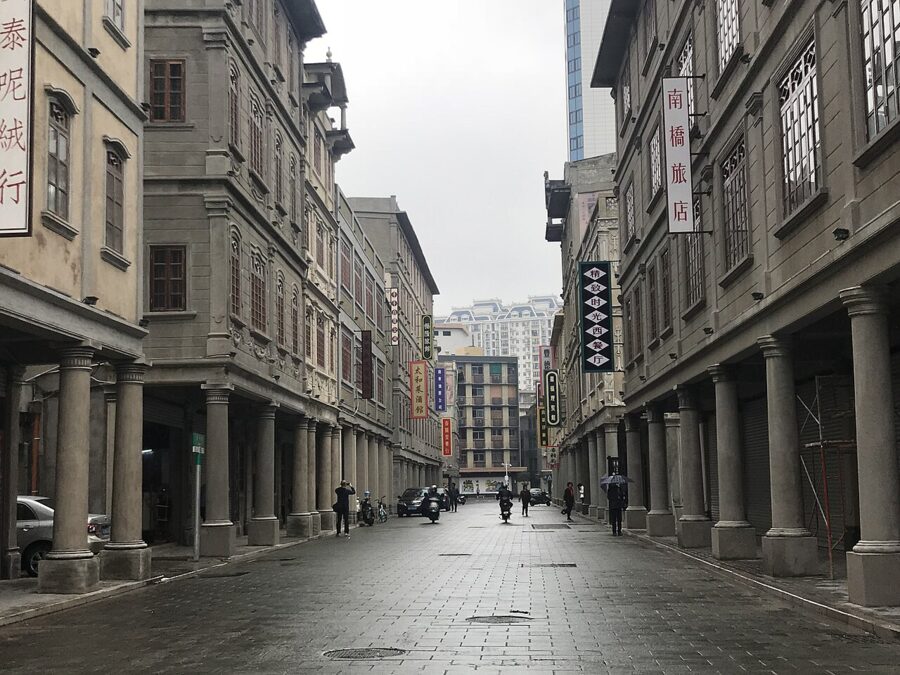
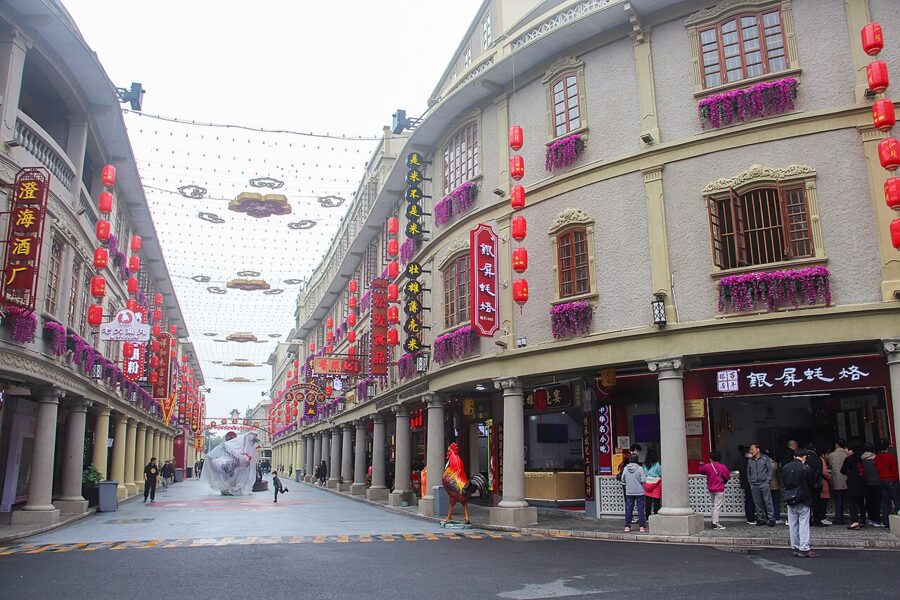
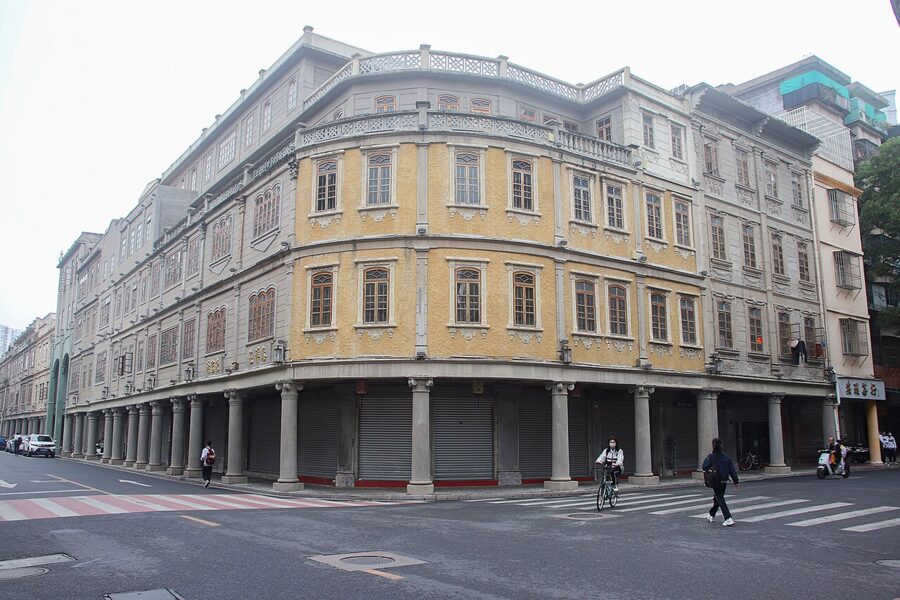
Shantou’s old town is the area around Xiaogongyuan (小公园), the “little park” with the pavilion. The streets that fan out from it, Shengping, Guoping, Anping, Zhenbang, are lined with arcaded buildings from the 1920s and 1930s, many restored over the last decade, and it’s the best part of the city to walk.
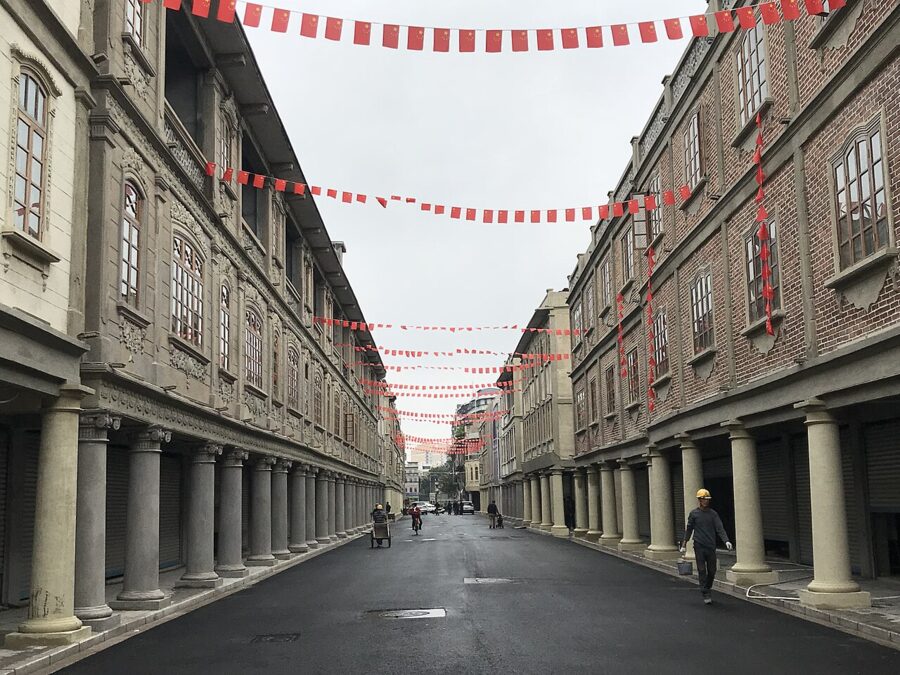
Zhenbang Road (镇邦路) is the easiest place to start. The city turned about 120 metres of it into a food street of more than twenty well-known Chaoshan brands, from fish ball and rice roll shops to braised goose and sweet soup, and it opened on New Year’s Day 2023. It’s a little polished, but the shops are the real names and the prices are on the wall.
For the night, locals head out of the old town. Longyan South Road (龙眼南路), in Jinping district, is a long strip of beef hot pot, raw-marinated seafood, sweet soup and fruit shops that fills up from about 20:00 and keeps going late. Watch out for electric scooters, which take the pavement as their own.
Paifang Street, Chaozhou
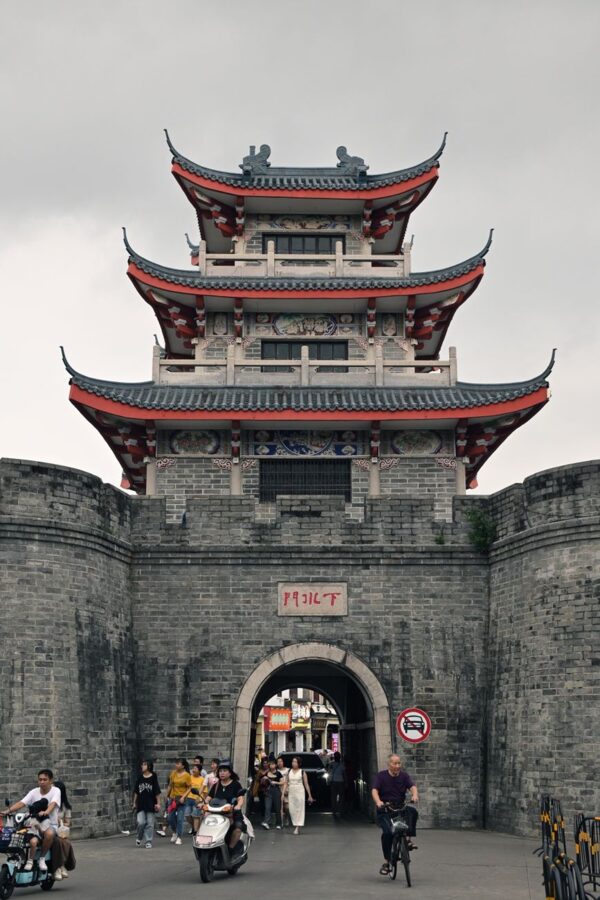
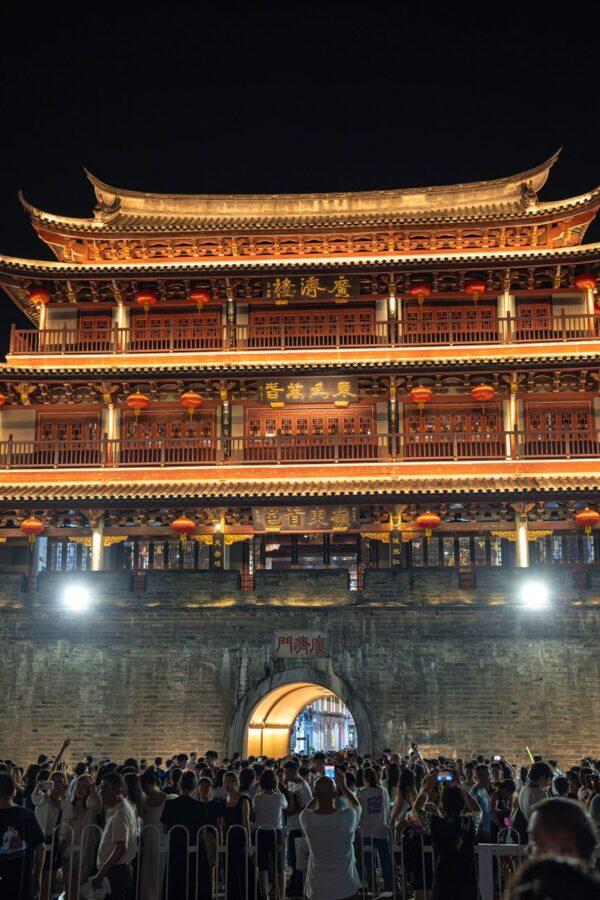
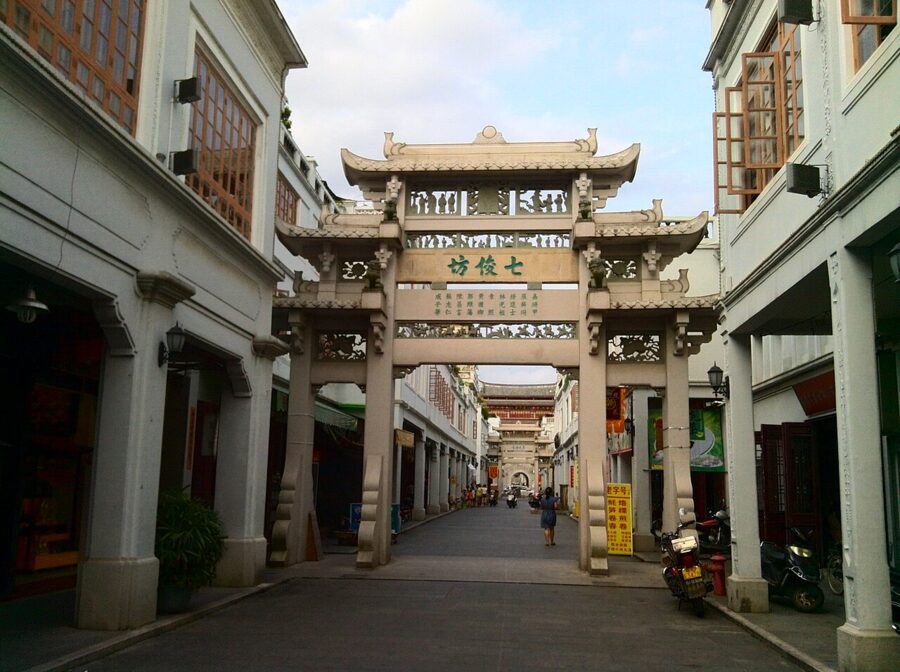
Chaozhou’s old town is smaller, older and more compact than Shantou’s. Its spine is Taiping Road (太平路), better known as Paifang Street (牌坊街), for the stone memorial arches that span it. Twenty-three of them honour scholars and officials of the Ming and Qing, most on Taiping Road itself. The originals were pulled down in the 1950s and 1960s; the ones you see were rebuilt, and the street reopened on 1 October 2009.
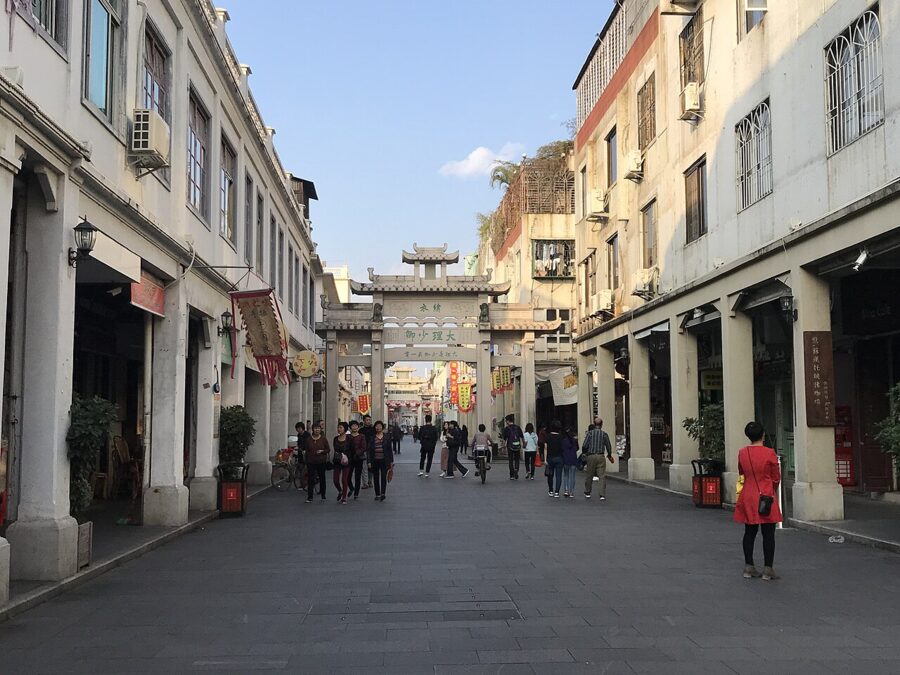
The arcaded shophouses along the street sell snacks, tea and souvenirs. The main drag is busy and a bit touristy, but the side lanes off it, and the streets towards the Lower Water Gate and the river, are where the good snack shops are. Walk it in the late afternoon, eat as you go, and stay for the evening when the lights come on.
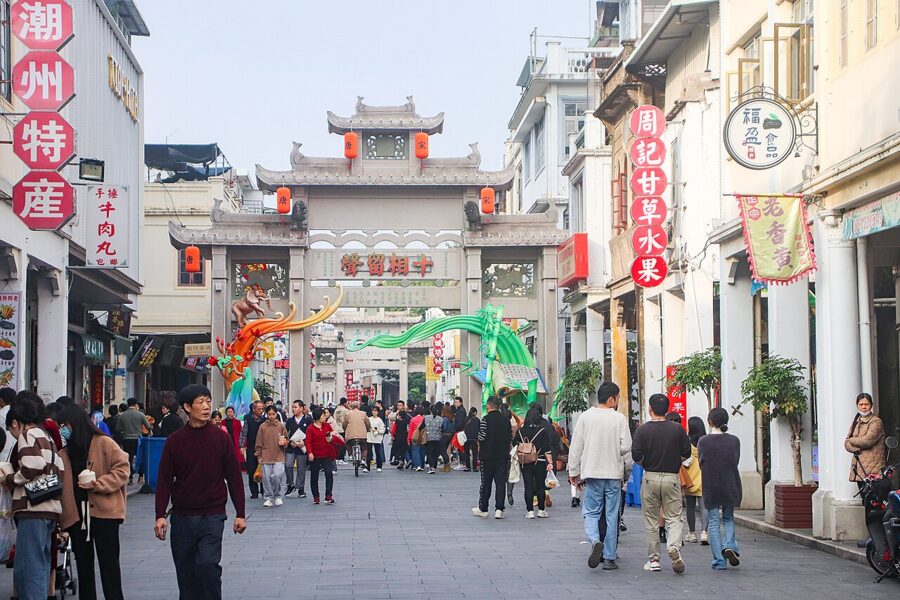
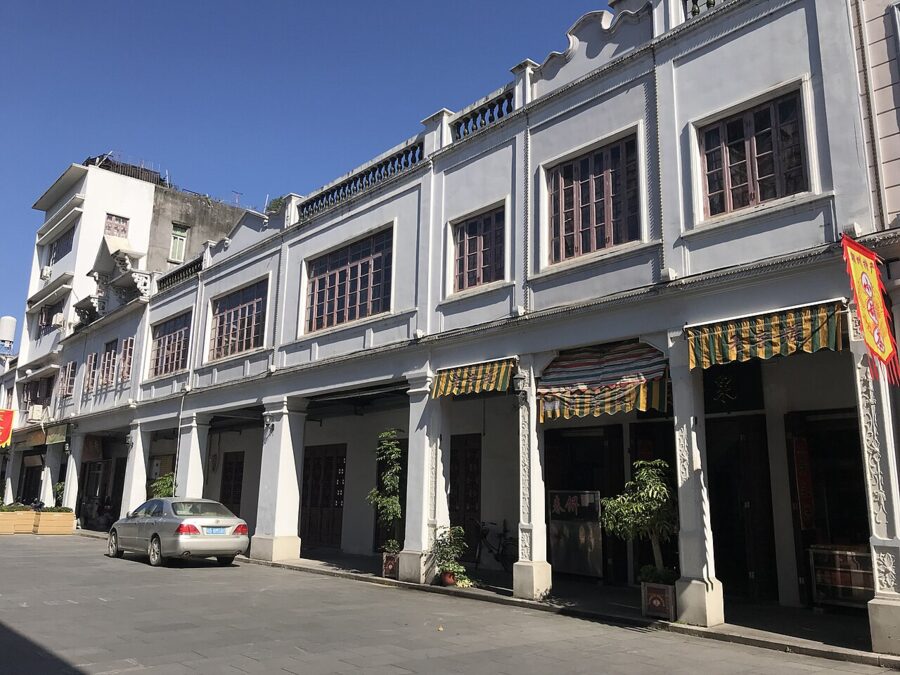
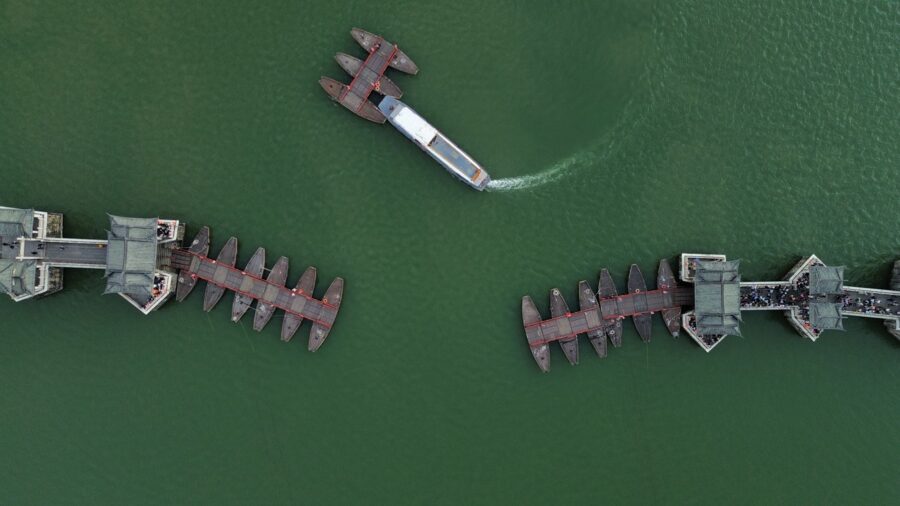
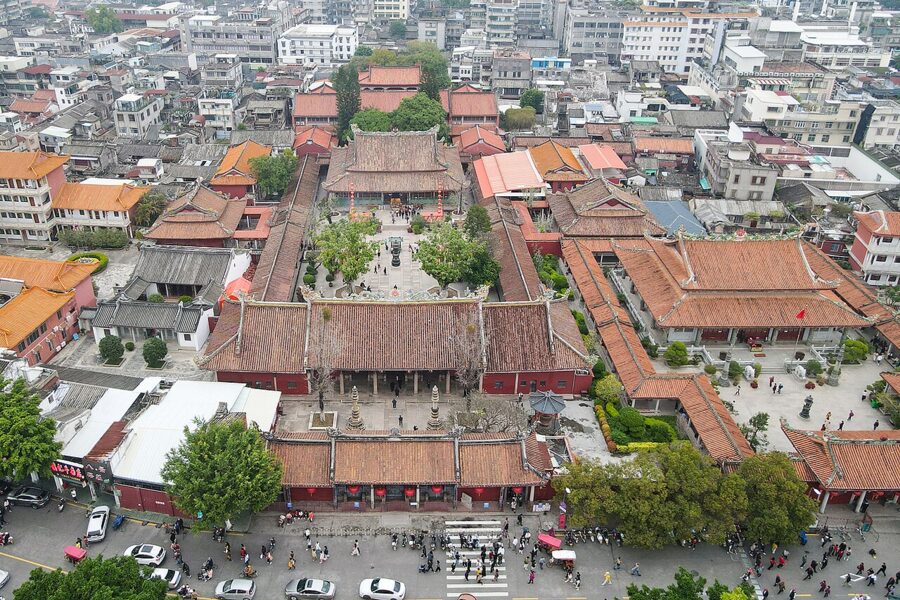
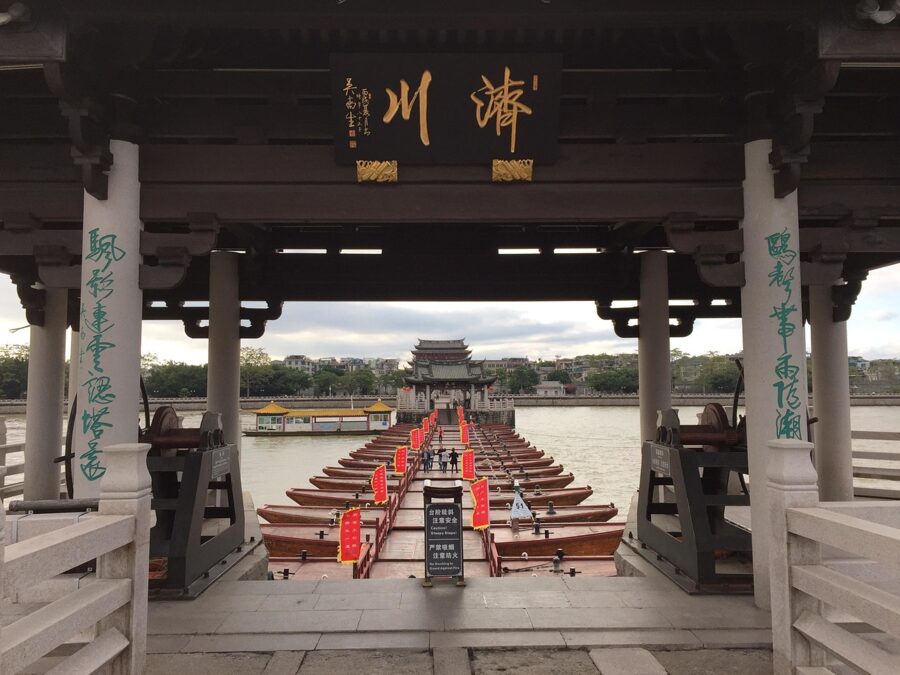
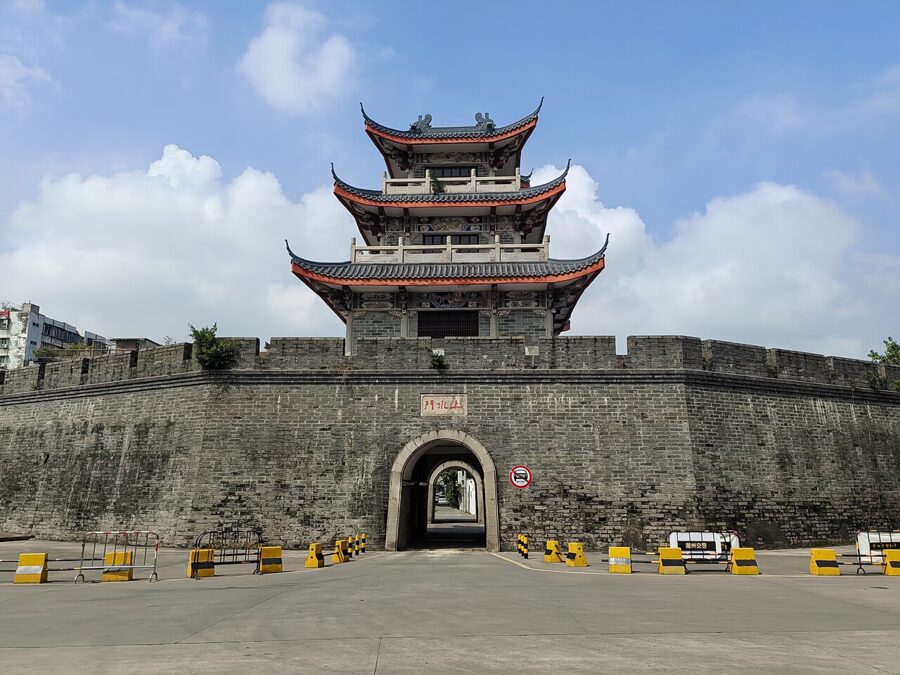
Two sights fit around the eating. Guangji Bridge (广济桥) crosses the Han River at the end of the old town, half stone piers with pavilions, half a pontoon of moored boats that’s unhooked every evening to let river traffic through. Kaiyuan Temple (开元寺), a few minutes’ walk from Paifang Street, was founded under the Tang and is a quiet place to sit between snacks.
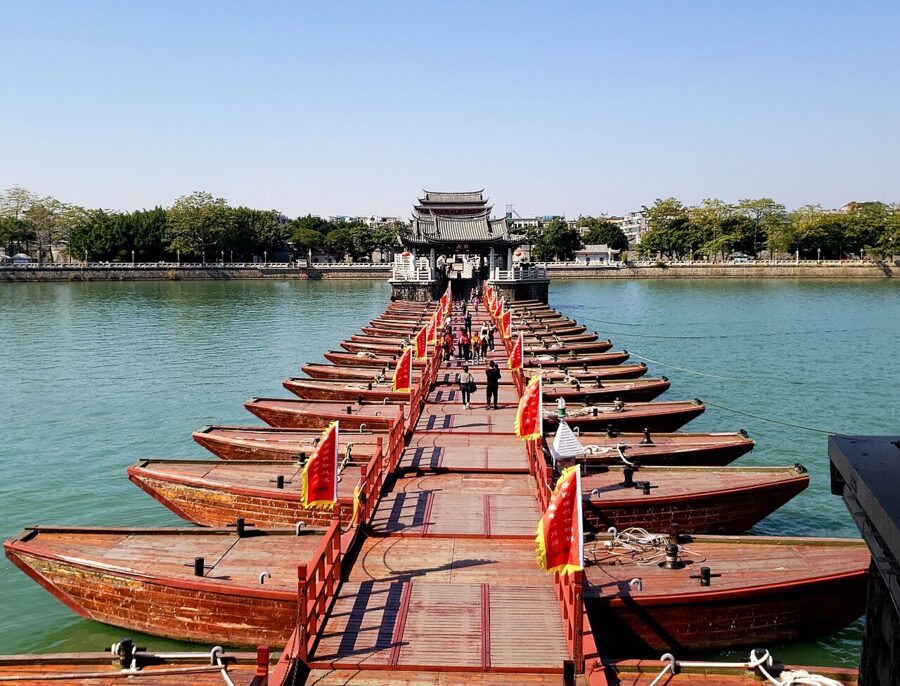
The bridge is a ticketed site. On weekdays in winter it’s open 10:00–16:30, last entry 16:00, and at weekends and on public holidays 9:00–17:30, last entry 17:00, according to Chaozhou’s old-town heritage office; weekday hours stretch to 17:30 in summer. The pontoon section closes when the Han River runs high, and the office posts notices when it reopens.
Something sweet
Chaoshan sweet soups are gentle, not sugary. The one to know is ya mu nian (鸭母捻), glutinous rice balls filled with mung bean, red bean, taro paste or sesame, floating in a clear syrup with white fungus and gingko. The name means “mother duck”, for the way the balls bob on the surface like ducks on water.
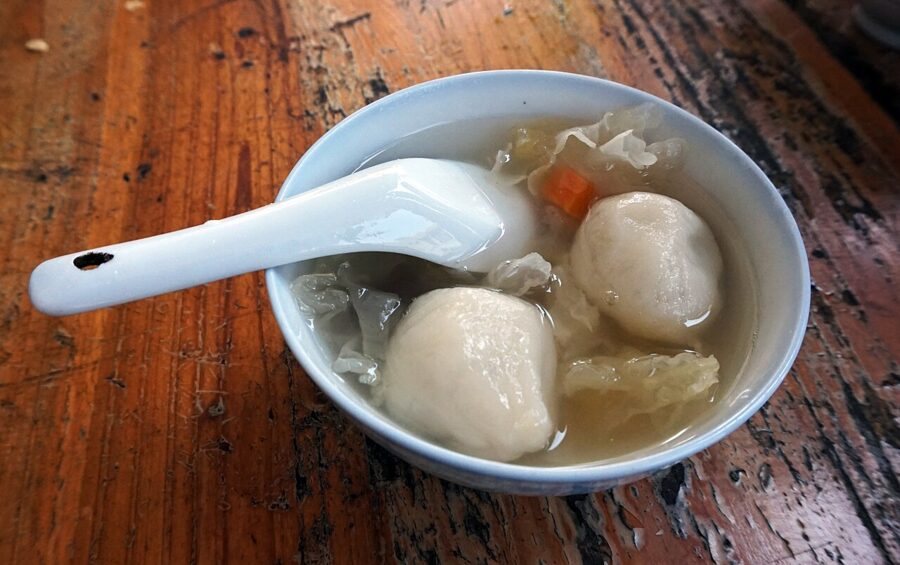
The classic place for it is Hu Rongquan (胡荣泉), at 136–144 Taiping Road on Paifang Street, which dates itself to 1911. A bowl is about ¥10. They also sell spring rolls and fermented tofu pastries (腐乳饼), the Chaozhou biscuit people buy to take home.
Beyond ya mu nian, the sweet list is long. Here it is in order of how hard I’d push it:
- Liquorice fruit (甘草水果): guava, green mango, pineapple or plum, cut up and dusted with liquorice powder and plum salt. Sold from carts everywhere, and the best thing after a heavy meal.
- Fan sha yu (反沙芋), taro cubes coated in sugar that’s cooked until it crystallises into a sandy crust. Puning in Jieyang is famous for it.
- Sugar-scallion crepes (糖葱薄饼), a thin pancake wrapped around a stick of pulled sugar, sesame and peanut. You’ll see them on Paifang Street.
- Tofu pudding (豆花), served with brown sugar syrup in the old-town sweet soup shops.
Gongfu tea, all day long
In Chaoshan you’ll be offered tea everywhere: in shops, in offices, by the people at the next table. It’s gongfu tea (工夫茶), brewed in a tiny pot and poured into three thimble-sized cups, over and over, strong and hot. Chaozhou gongfu tea has been on China’s national list of intangible cultural heritage since 2008, and in 2022 it became part of UNESCO’s listing for Chinese traditional tea-making and its customs.
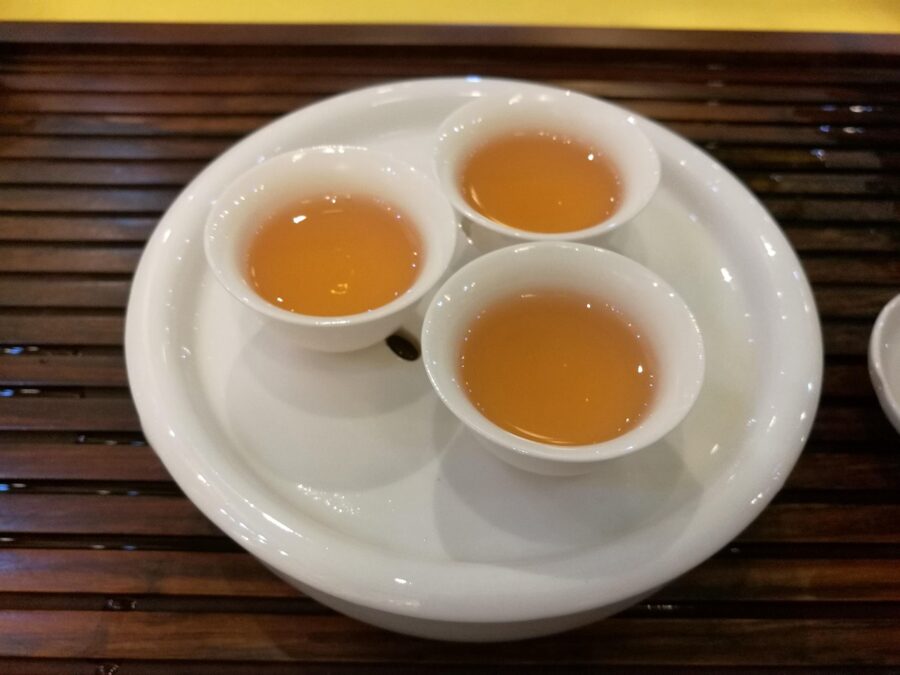
The pouring has names. The host moves the pot in circles over the cups so each gets the same strength, which is called “Guan Gong patrols the city” (关公巡城). The last drops go into each cup one at a time, “Han Xin counts his troops” (韩信点兵). Take the cup with your thumb and forefinger on the rim and a finger under the base, and drink it in two or three sips.
The tea itself is usually Phoenix dancong (凤凰单丛), an oolong from the Phoenix Mountain area of Chaozhou’s Chao’an district. Dancong means “single bush”, and the tea is sorted by its aroma, honey orchid (蜜兰香) being the famous one. There’s also a popular type called yashixiang (鸭屎香), “duck shit aroma”, which doesn’t smell of anything of the sort.
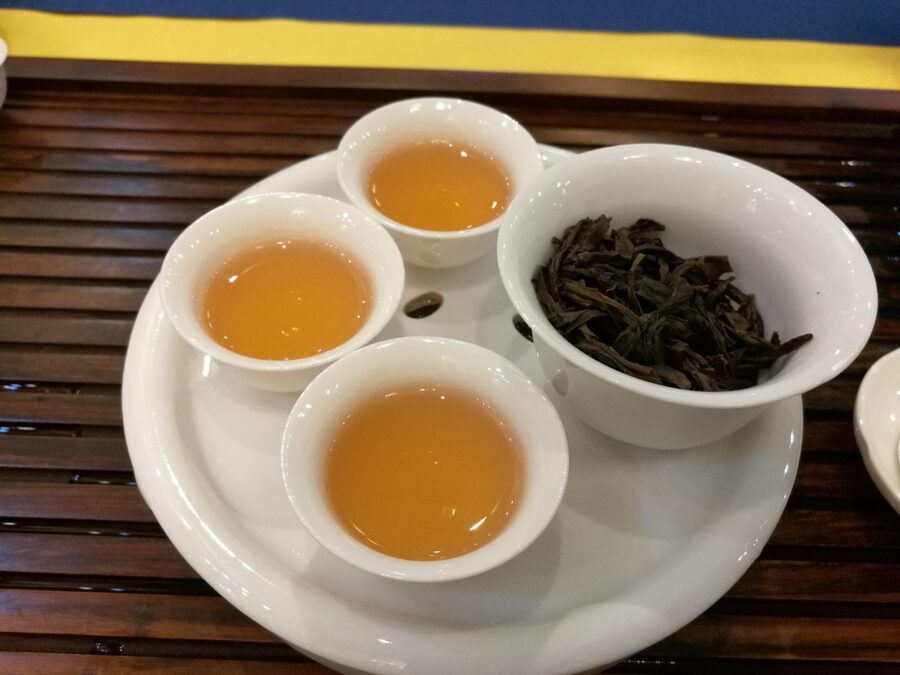
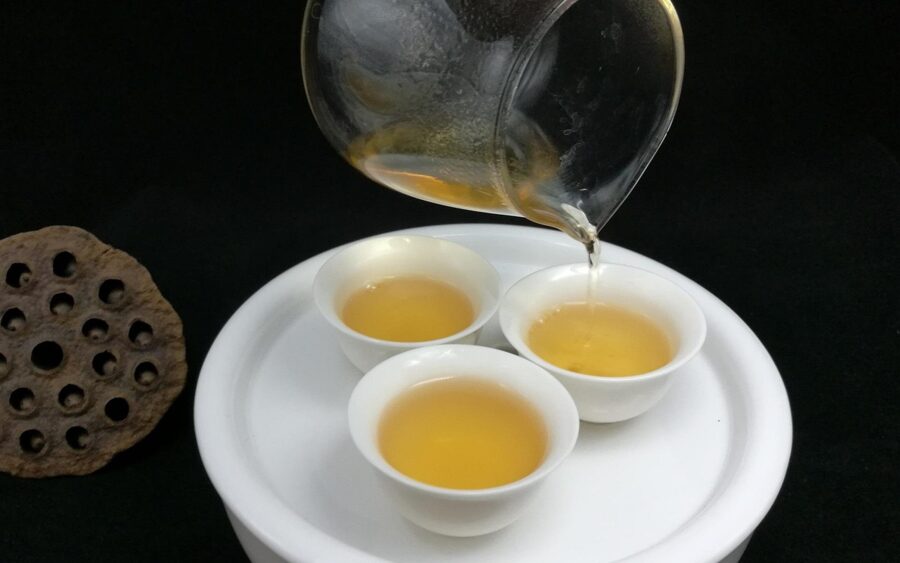
For a sit-down tea with a show, Zaiyang Teahouse (载阳茶馆) is in a restored Republic-era arcaded house on Yingju Lane (英聚巷), off the north end of Paifang Street. It does gongfu tea, Teochew opera and snacks, and it’s a good rest stop halfway through a day of eating.
Getting there from Shenzhen or Guangzhou
Chaoshan is close to the Pearl River Delta by high-speed train, and since December 2025 it’s even easier. That’s when the last stretch of the Shantou–Shanwei high-speed line opened, with an undersea tunnel into Shantou Station in the city centre.
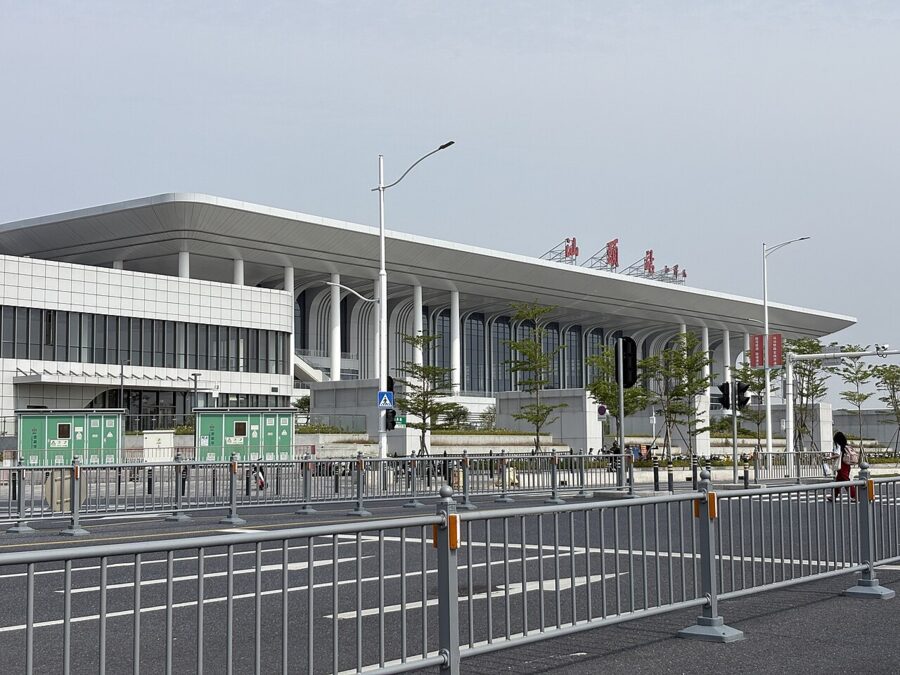
Trains run all day on both lines. The numbers, from the Shantou and Shenzhen city governments when the line opened, and from current timetables:
- Shenzhen North to Shantou: fastest G trains about 1 hour 39 minutes, non-stop. Most take around two hours.
- Guangzhou East to Shantou: fastest about 1 hour 50 minutes.
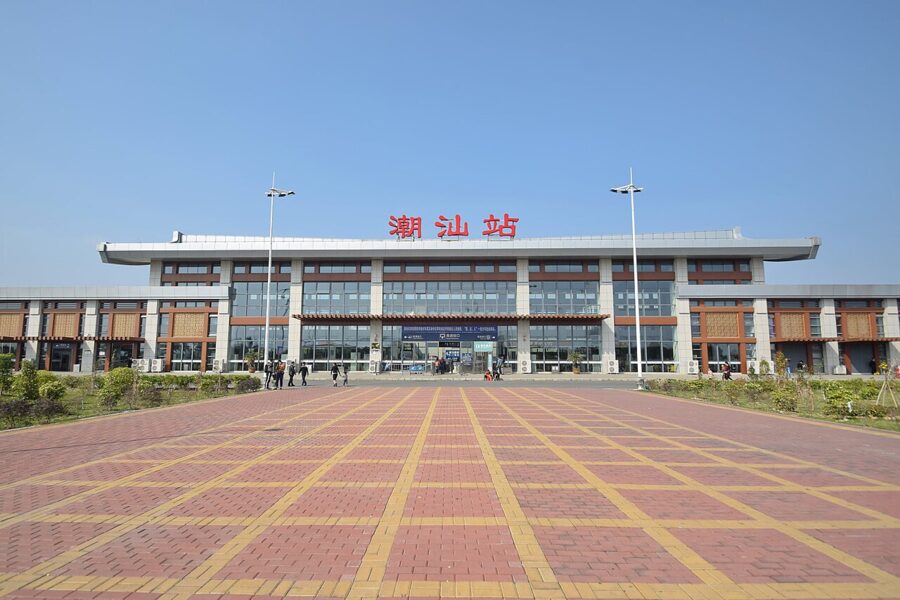
- Shenzhen North to Chaoshan Station, on the older Xiamen–Shenzhen line: fastest G trains about 1 hour 34 minutes, D trains around 1 hour 50 minutes to 2 hours. Chaoshan Station is the better stop for Chaozhou.
Book on the 12306 app or Trip.com with your passport; sales open 15 days before travel. Trains sell out over Spring Festival, the May Day holiday and Golden Week (1–7 October), when Shenzhen’s Teochew families head home. Spring Festival is also Chaoshan’s own peak season, when hotel prices multiply and queues for the famous restaurants run for hours.
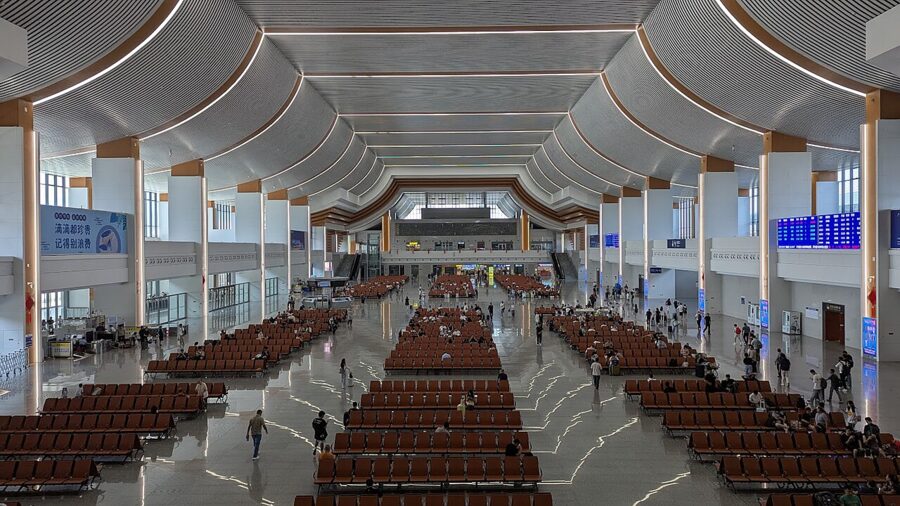
Between the two cities, Didi is the easy option: Chaozhou’s old town and Shantou’s old town are about an hour apart by car. Jieyang Chaoshan International Airport serves the whole region if you’re coming from further away.
Pay with Alipay or WeChat Pay, both of which take foreign cards now. Almost every snack shop has a QR code on the wall, and some stalls are mobile-only, though cash is legal tender and still works most places if you carry small notes. Amap is the map app to use; addresses in this guide are in characters so you can paste them in.
Two days in Chaoshan
Two days is enough for the food if you’re organised, with one night in each city. Start in Chaozhou, which has more to walk, and finish in Shantou, which has more to eat at night.
Day 1: Chaozhou
- Morning. Train to Chaoshan Station, then a taxi to the old town. Breakfast on kway teow, rice rolls or fish ball soup at any busy shop off Paifang Street.
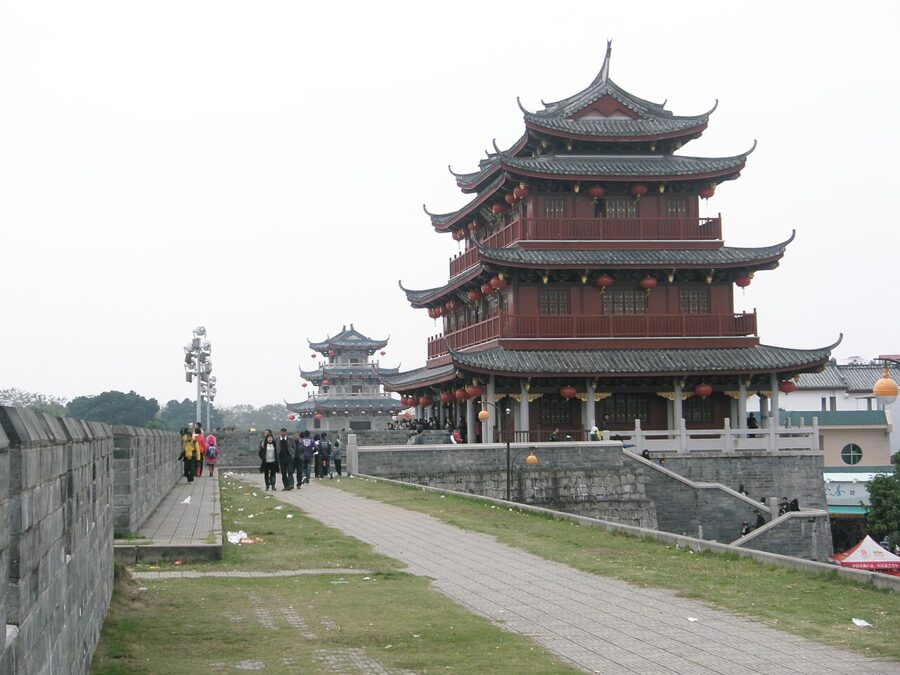
- 10:00. Guangji Bridge when it opens, then the riverside walk along the city wall.
- Lunch. Snack your way down Paifang Street and its side lanes: kway, spring rolls, ya mu nian at Hu Rongquan.
- Afternoon. Kaiyuan Temple, then gongfu tea at Zaiyang Teahouse.
- Late afternoon. Oyster omelette at Laobin by the Lower Water Gate once it opens.
- Dinner. A taxi out to Guantang for beef hot pot, or stay in town for more snacks.
Day 2: Shantou
- Morning. Taxi to Shantou, about an hour. Dry noodles at Aixi on Guoping Road.
- Late morning. Walk the old town from the Xiaogongyuan pavilion: Shengping, Anping and Zhenbang roads, the old post office, the Laomagong temple. Buy a zongqiu.
- Lunch. Braised goose at Ri Ri Xiang, or an oyster omelette in Xitianxiang and whatever else Zhenbang Road tempts you with.
- Dinner. Beef hot pot at one of the big names; book your queue number on Meituan or Dianping first.
- Late. Da leng and congee at Fuyuan, or a walk down Longyan South Road for raw-marinated seafood and sweet soup.
Where to eat
These are places I’d send you, each checked as trading in 2026. Queues are long at the famous ones in the evening; go early or late, and use the queue function on Meituan or Dianping where the shop offers it.
Shantou
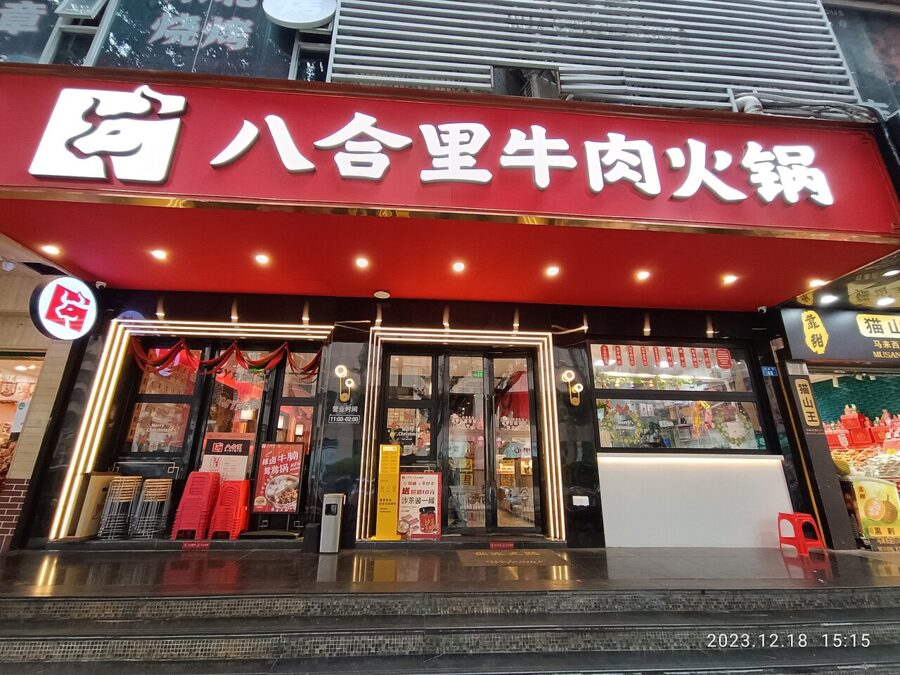
- Baheli Haiji (八合里海记), original shop, Pingdong building 5, Huanggang Road (黄岗路坪东5座), Jinping district. The beef shop that took Chaoshan hot pot national, with branches across China now. The original is still a beef house first.
- Xinghua Wuji (杏花吴记牛肉火锅), Xinghua West Road (杏花西路). The most famous beef hot pot name in the city, with a queue to match. Take a number online before you go.
- Fuhecheng Beef Balls (福合埕牛肉丸), Fuping Road, near Xiaogongyuan (福平路). An old-town beef hot pot shop known for hand-beaten beef balls. Plenty of shops borrow the name; this is the one locals mean.
- Fuyuan (富苑饮食), Chaoyangzhuang North, building 12 (朝阳庄北区12栋), Longhu district. The da leng institution: braised meats, cold fish, raw-marinated seafood and congee. Open from late afternoon until well after midnight.
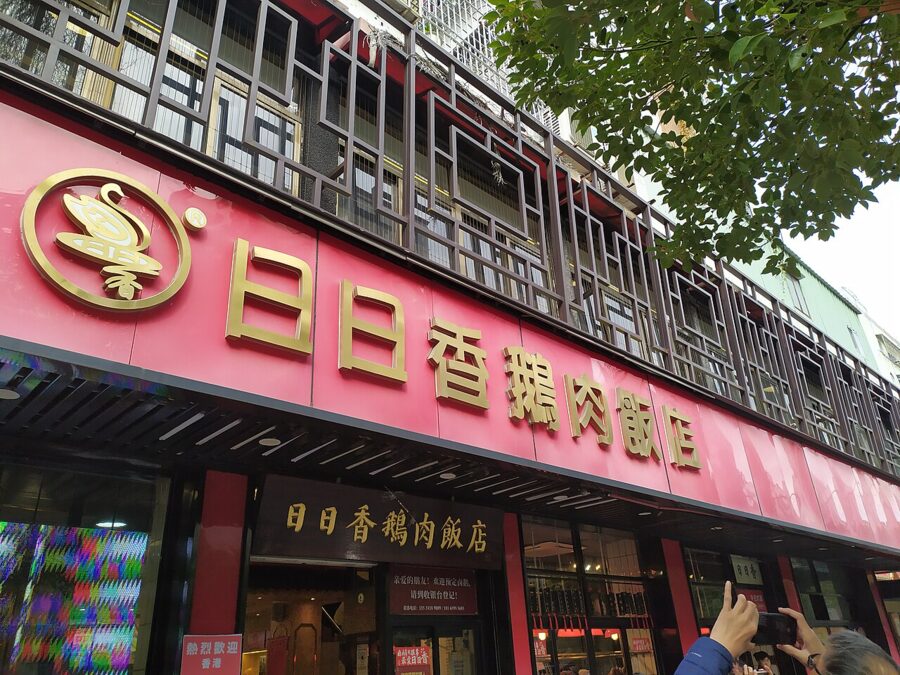
- Ri Ri Xiang (日日香鹅肉饭店), the braised goose restaurant from Chenghai, with its main shop on Tai’an Road (泰安路) in Chenghai and branches in the city and beyond.
- Aixi Ganmian (爱西干面), 1 Guoping Road (国平路1号). Dry noodles and pork soup from breakfast.
- Laomagong Zongqiu (老妈宫粽球), 1 Shengping Road (升平路1号), by the temple opera stage. Zongqiu to eat there or take away.
- Xitianxiang Haolao (西天巷蚝烙), Xitianxiang lane off Shengping Road. Oyster omelettes.
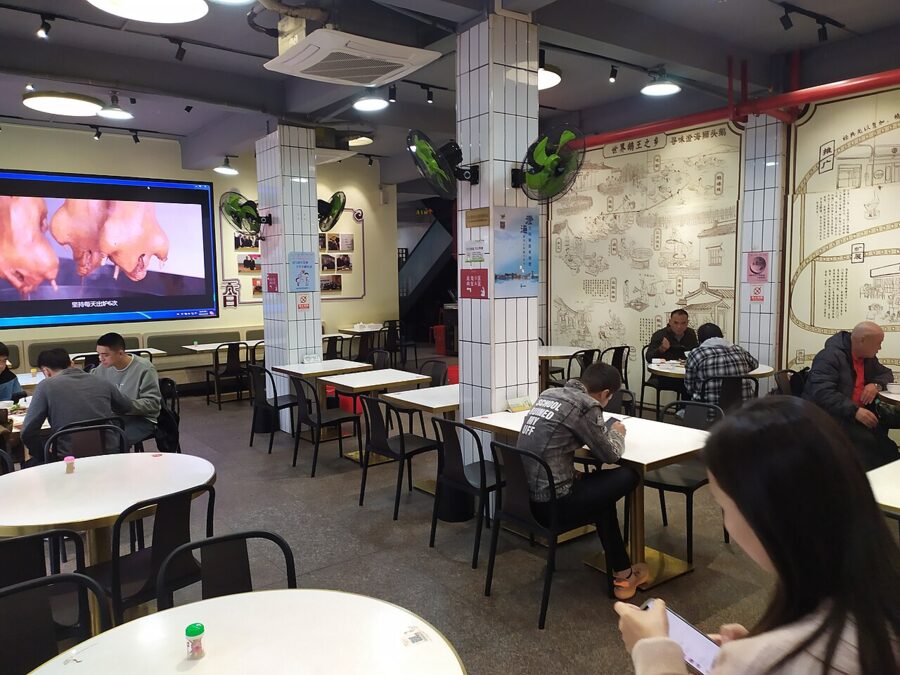
Chaozhou
- Hu Rongquan (胡荣泉), 136–144 Taiping Road (太平路136–144号), Paifang Street. Ya mu nian, spring rolls and pastries.
- Laobin (老彬蚝烙), by the Lower Water Gate (下水门). Oyster omelettes, fish dumplings and fish ball soup, from the afternoon.
- Zaiyang Teahouse (载阳茶馆), Yingju Lane (英聚巷), off the north end of Paifang Street. Gongfu tea and Teochew opera.
- Guantang Xiongdi (官塘兄弟牛肉), Guantang town, Xiangqiao district. The best-known name in the beef town, going since 1969 by its own account. If it’s full, the busiest shop nearby is the next-best bet.
If you can’t get to Chaoshan, the next-best place is Shenzhen, where Teochew families run a lot of the beef shops and late-night congee places. It’s not the same, but it’s close.
Skip this
- Spring Festival. Unless you’ve come for the folk processions and the Yingge dances, avoid it. Hotels cost several times their usual price, trains sell out and the famous restaurants have queues of hours.
- Eating your way down only the main drag of Paifang Street. The shops on the main street are fine, but the lanes off it are cheaper and better. Use the main street for walking.
- A whole meal of raw-marinated seafood. Have one small plate, with congee. A big plate on an empty stomach is how visitors lose the next day.
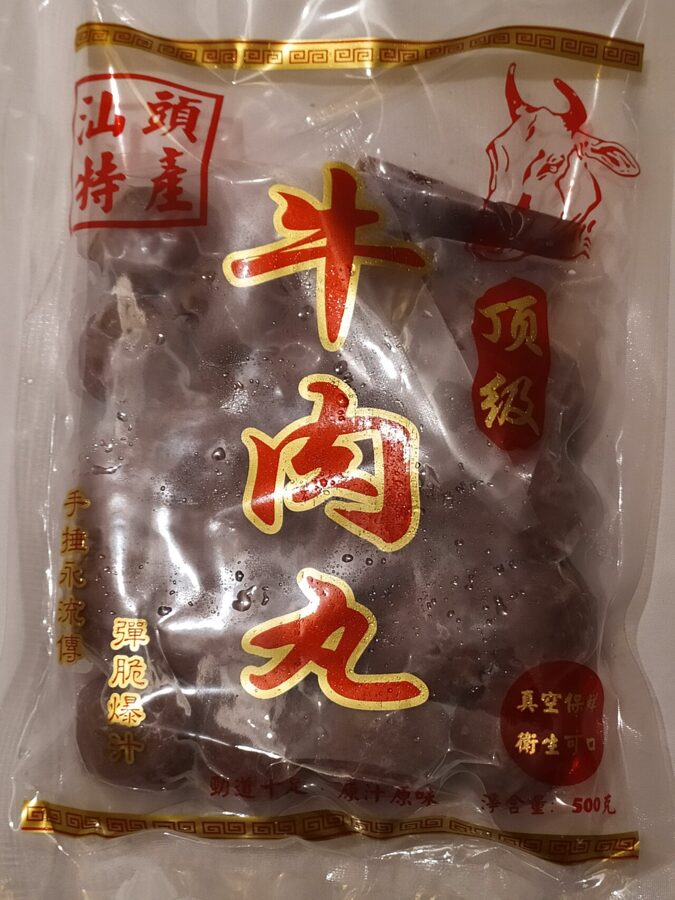
- Carrying beef balls home on a long-haul flight. Vacuum-packed beef balls are the classic souvenir, but meat products are banned or restricted by customs in many countries, including the UK, the EU, Australia and the United States. Buy tea or pastries instead.
- Ordering every cut at once. The point of beef hot pot is comparing cuts. Order two or three, eat them, then order more.
Get the train out early, eat kway teow before you do anything else, and leave room. You’ll want a second goose liver, a third plate of diaolong, and a bowl of ya mu nian on the way back to the station.
You Might Also Enjoy
 Beijing Hutongs: Where to Walk the Old Lanes, How to Read a Gate and Which Areas Are Worth It
 Nikko Day Trip: Toshogu, Kegon Falls, Yuba and How to Fit It All Into One Day
 Eating at Tokyo’s Michelin-Starred Restaurants: How to Get In, What to Order, and Which Stars Are Worth the Wait
 Niigata Ski Resorts: Yuzawa, Naeba and Myoko, From Tokyo in About an Hour