Tonkatsu in Japan: Rosu or Hire, the Tokyo Counters Worth the Queue, and the Whole Katsu Family
You can eat tonkatsu in Tokyo for ¥682 or for something north of ¥4,000, and both plates start from the same idea: a slab of pork, a dusting of flour, a dip in egg, a coat of breadcrumbs and a bath of hot fat. The cheap one is a katsudon from a chain counter, cutlet simmered with onion and egg and slid over rice. The expensive one is a pale, lard-fried loin at a Ueno house, founded in 1905, that trims every scrap of fat off its pork before it goes near the fryer. Somewhere between the two is the plate most people mean when they say tonkatsu, and it is one of the best-value meals in the country.
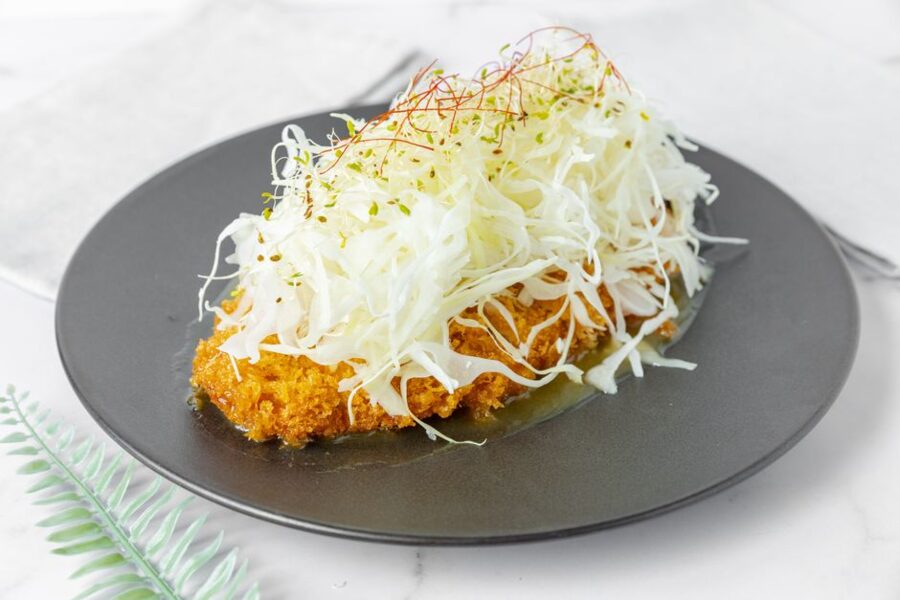
Tonkatsu is the deep-fried pork cutlet that Japan took from the European kitchen and then rebuilt so thoroughly that the original is hard to see. If you want the long version of how a French côtelette turned into a Tokyo staple, my piece on yoshoku covers it. The short version: Meiji-era Western restaurants started frying pork instead of veal, the pork got thicker, the fat got deeper, and by the early Showa period it was being sliced, served with rice and miso soup, and eaten with chopsticks.
What follows covers the two cuts, what the frying fat and temperature do, the set and how to eat it, the branded pork names you will see on menus, the whole katsu family from katsudon to katsu sando, and the counters in Tokyo and beyond that are open, worth the queue, and still frying the way they did decades ago.
In This Article
- Rosu or hire: what is actually on the plate
- Panko, lard and the fryer
- The pink-centre question
- The set, and how to eat it
- Branded pork: what the names mean
- The katsu family
- Katsudon
- Sauce katsudon in Fukui
- Niigata tare katsu
- Okayama demi katsu
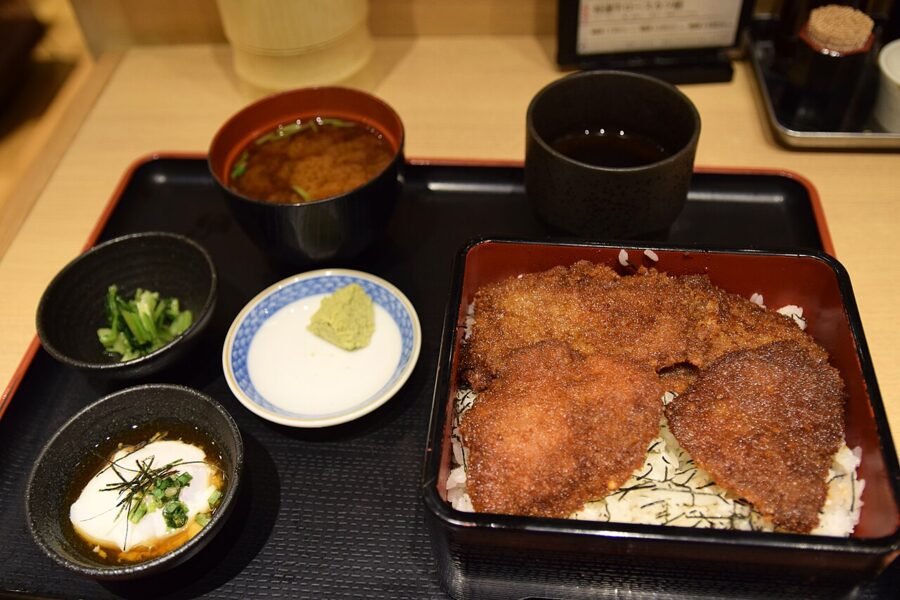
- Nagoya miso katsu
- Katsu curry
- Katsu sando
- Kushikatsu and the beef cousin
- Where to eat it in Tokyo
- Ueno and Okachimachi: the old guard
- Meguro: Tonki
- Akihabara: Marugo
- Ginza: Rengatei and Bairin
- Omotesando: Maisen
- Further out: Narikura and Aoki
- Beyond Tokyo
- Chains: cheap, everywhere, better than they need to be
- Prices, queues and what to skip
Rosu or hire: what is actually on the plate
Every tonkatsu menu starts with the same choice. Rosu (ロース, loin) is the cut from along the back, with a band of white fat along one edge. Hire (ヒレ, fillet or tenderloin) is the lean cylinder from inside the ribs, smaller, softer and almost fat-free. Specialist houses sell both, usually by weight, and the difference in price tells you which one the kitchen thinks is rarer.
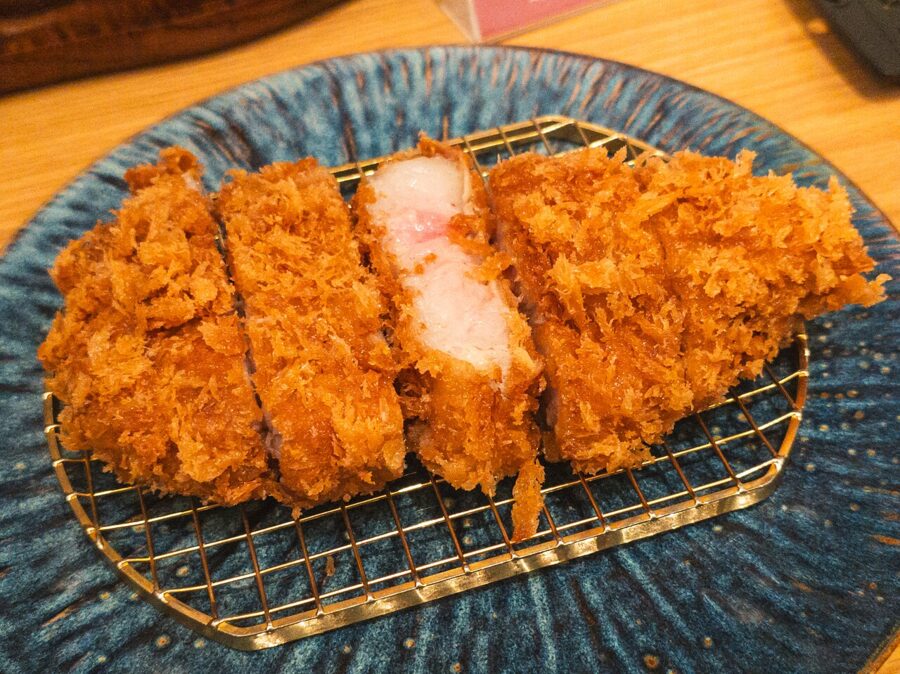
Rosu is the default and, for most people who eat a lot of tonkatsu, the favourite. The fat on the edge goes soft and sweet in the fryer, and the lean meat beside it takes on some of that flavour. A thick-cut rosu at a good counter is closer to a pork chop with a crust than to a schnitzel.
Hire is the choice for people who find rosu too rich, and the default at a few old houses that built their names on it. It is milder and more tender, and it suffers more if the fryer runs hot: there is no fat to forgive a minute too long. Hire is often served as small rounds rather than a single cutlet, which makes it easy to share.
The menu at Tonkatsu Aoki in Kamata, a ten-seat counter I come back to later, shows how far the choice can go: rosu, jo-rosu, tokujo-rosu, a rib-rosu served rare in the middle, kata-rosu (shoulder loin) and two grades of hire. You don’t need to understand all of that. Start with plain rosu, and order hire next time.
Panko, lard and the fryer
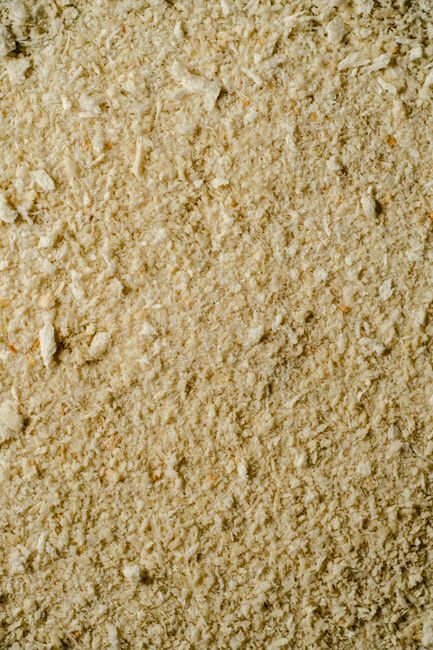
The crust is made of panko, Japanese breadcrumbs made from crustless bread and left coarse, so the coating stands up in shards rather than lying flat like a European crumb. Some kitchens use fresh, slightly moist panko (nama-panko), which fries up paler and lighter. Dry panko gives a darker, harder crunch.
The fat matters as much as the crumb. Lard was the traditional choice and is still used at the old guard: Ponta Honke in Ueno trims the fat from its loins and renders it into the lard it fries in. Many modern counters use vegetable oils, often blended. Marugo has used a blend of nine parts corn oil to one part sesame oil.
Then there is temperature. The older, faster method fries at around 170–180°C for a few minutes, which gives a deep brown crust. The style that has spread through Tokyo’s top counters starts much lower.
Ponta Honke has described starting at 120–130°C and raising the heat slowly to about 170°C; Marugo has fried its special loin at 130–140°C for around fifteen minutes and let the residual heat finish it. The result is a pale, almost white crust and meat that is evenly cooked from edge to centre.
The pink-centre question
Low-temperature frying produces cutlets that are faintly pink in the middle, and this unsettles people who grew up being told that pork must be grey all the way through. The meat at a careful counter is cooked: the pink comes from holding the whole cutlet at a moderate temperature long enough to cook it safely without tightening the fibres.
The rule in Japan is clear. Since June 2015 restaurants have been banned from serving pork raw, and the guidance from the health ministry is that pork should reach 63°C at the centre for 30 minutes, or an equivalent such as 75°C for one minute. A rosé tonkatsu from a specialist kitchen is designed to clear that line. A cutlet that is red, cold or wet in the middle is not rosé, it is undercooked, and you can send it back.
My view: trust the specialists, be wary of imitators. A counter that has fried low and slow for decades knows what it is doing. A new place that has copied the look of a pink centre without the patience behind it is where you are more likely to get a cutlet that is simply raw at the core.
The set, and how to eat it
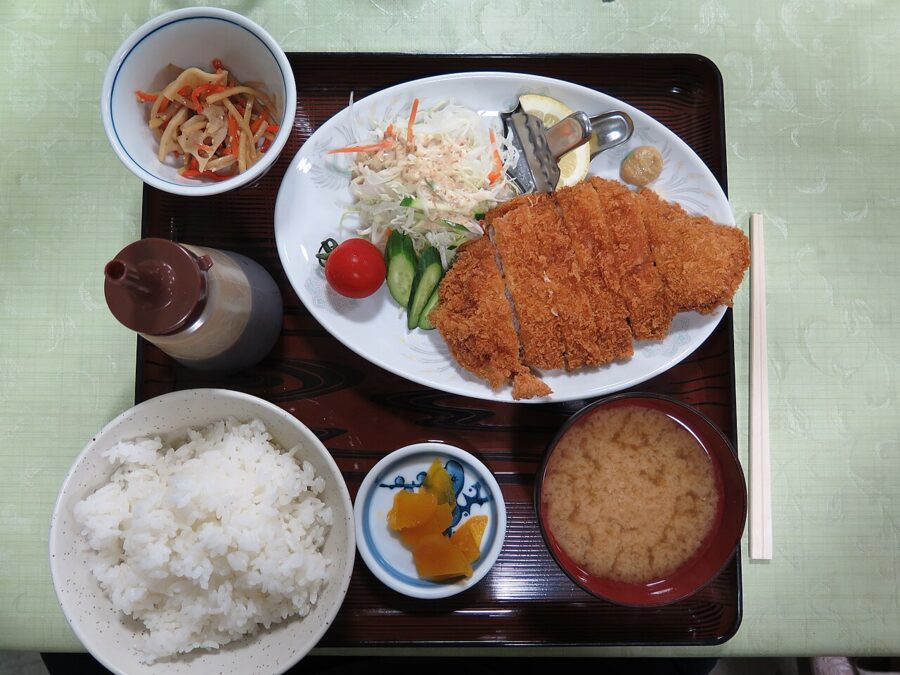
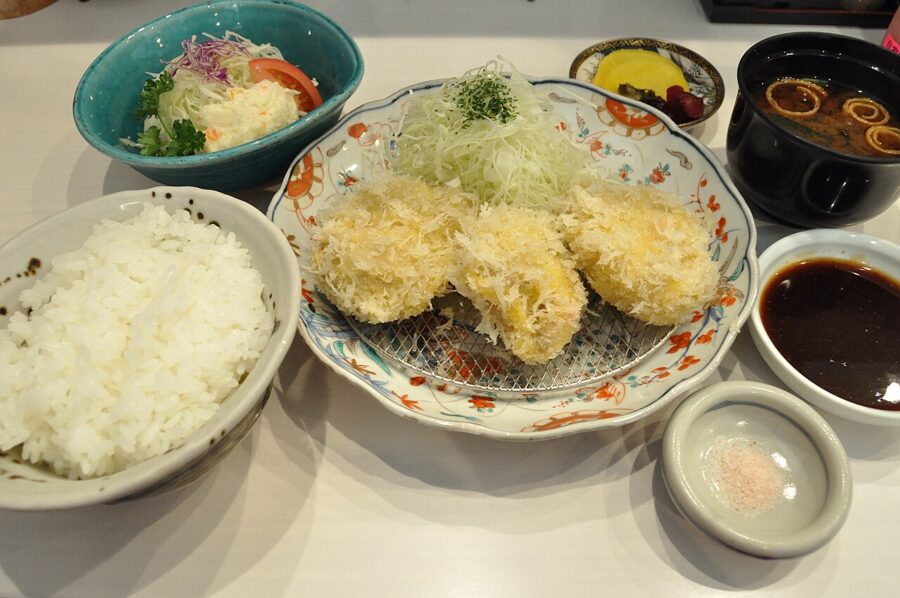
Order tonkatsu at a specialist house and it rarely comes alone. The teishoku (set meal) adds rice, a bowl of soup, a heap of shredded cabbage and pickles, and at most counters some of those are refilled for free. The set is not decoration. Each part has a job.
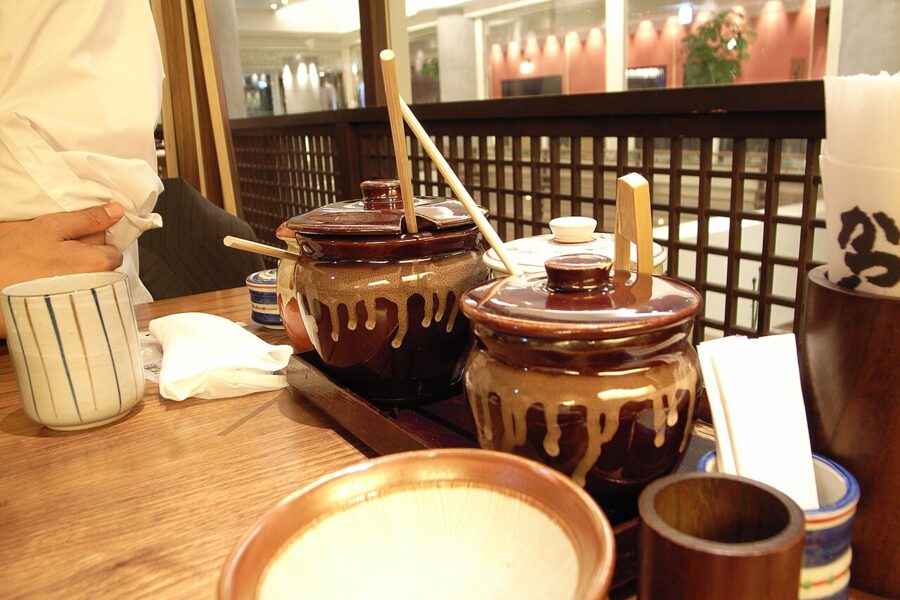
Cabbage first. The raw, finely shredded cabbage was put next to the cutlet to cut the fat, and Rengatei in Ginza tells a story that its kitchen started shredding cabbage during the Russo-Japanese War, when its cooks were called up and there was no one left to prepare cooked vegetables. True or not, the cabbage is now non-negotiable. Most specialist counters refill it if you hold up the empty plate, and there is often a dressing on the table for it.
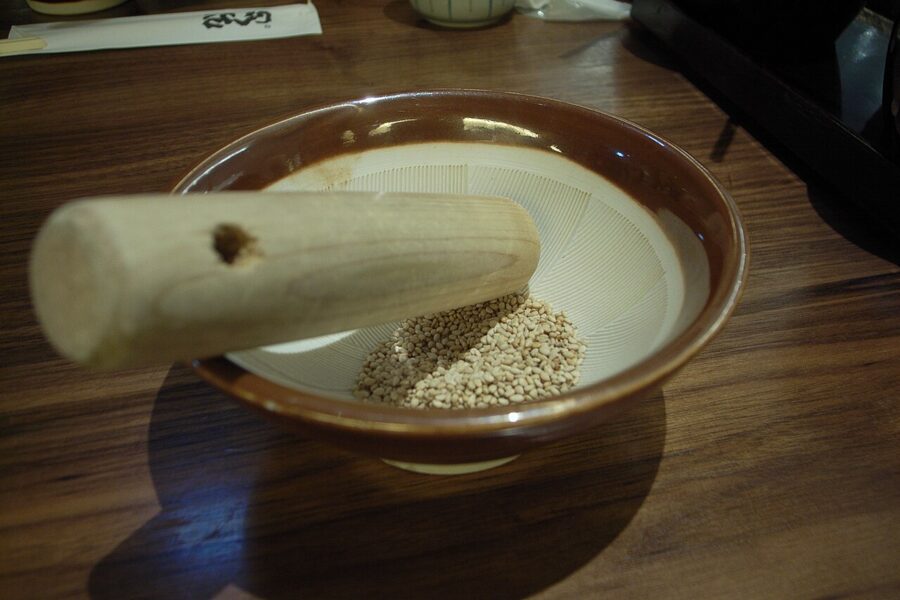
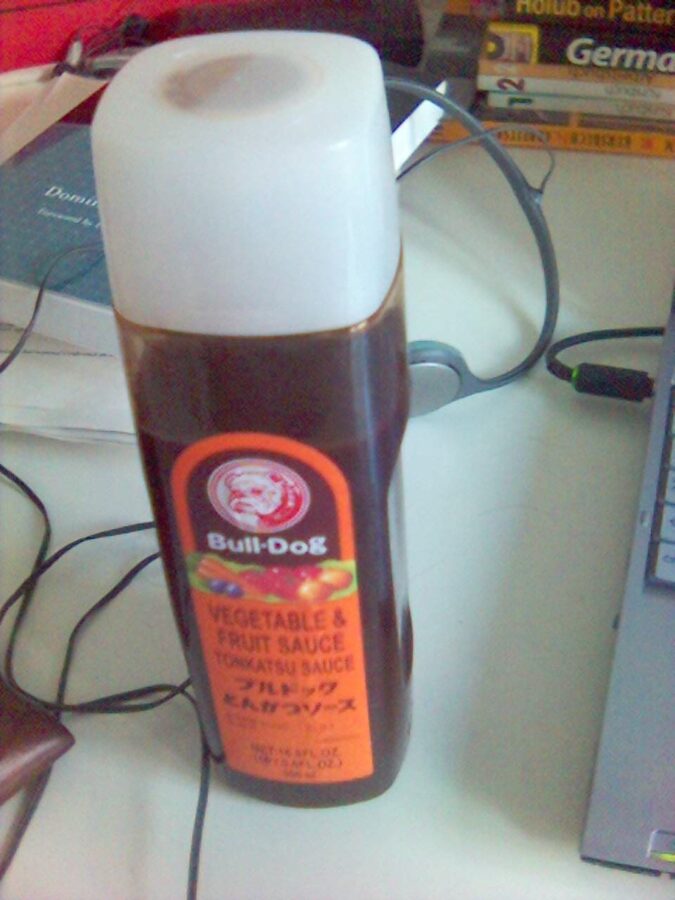
Then sauce. Tonkatsu sauce is a thick, fruity, Worcester-style sauce, sweeter and heavier than the British original; the first bottled version was made in 1948 by Oliver Sauce in Hyogo. Bull-Dog is the brand most people know from supermarkets. At counters that bring a suribachi, grind the sesame first, then pour sauce over it and dip each slice rather than drowning the plate.
Salt is the other option, and at the top end it is often the better one. Aoki in Kamata nudges you towards salt for its loin, and many counters put a small dish of salt beside the mustard. With good branded pork, try the first slice with nothing, the second with salt, and only then reach for the sauce.
The mustard is karashi, Japanese hot mustard, and it is sharper than it looks. Dab a little on the fat edge of rosu. Lemon wedges turn up with hire at some houses, and they suit it better than sauce does.
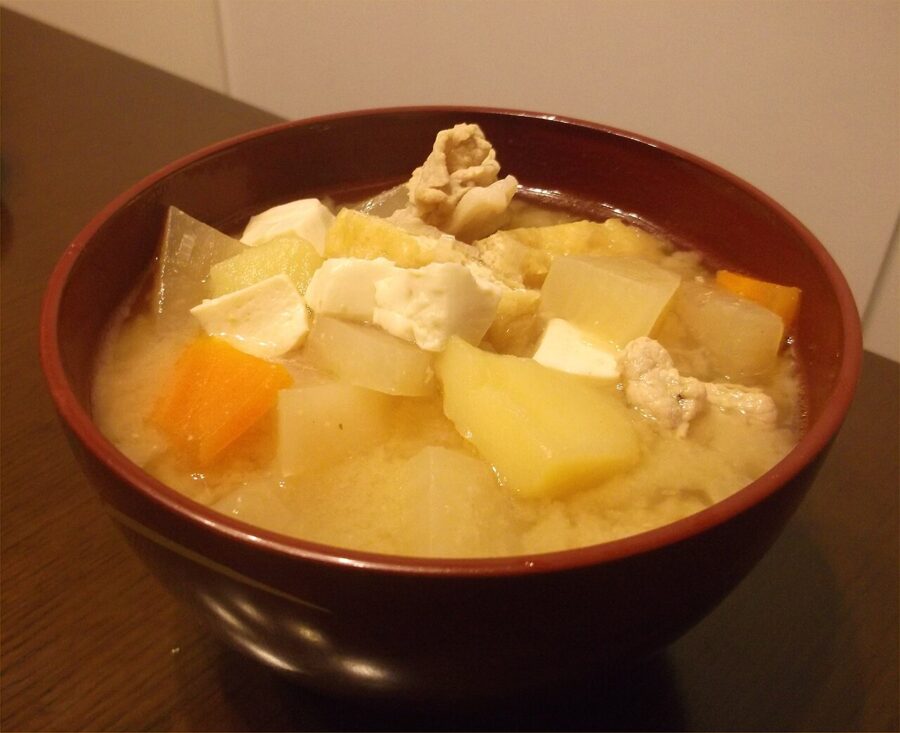
The soup at a specialist counter is often tonjiru, a miso soup with pork and root vegetables that was already in a Japanese army cookbook of 1909. Isen in Yushima lists it on the menu at ¥200. Rice is plain white rice, and at many counters the first refill is free; Tonki in Meguro and Katsukura in Kyoto both refill rice, and Katsukura refills cabbage and soup as well.
How to eat it, then. Pick up a slice with chopsticks rather than cutting it, and start with the end slices, which are crustier, saving the centre for later.
Eat cabbage between slices, and taste the dressing before you pour sauce anywhere near the cabbage. Don’t ask for a knife: everything has been sliced for a reason.
Branded pork: what the names mean
Japanese pork is sold by brand the way beef is, and the menu at a serious tonkatsu counter often reads like a breeding register. There are hundreds of named pork brands in Japan. A few are worth knowing, because they explain why one rosu costs ¥1,950 and another costs twice that.
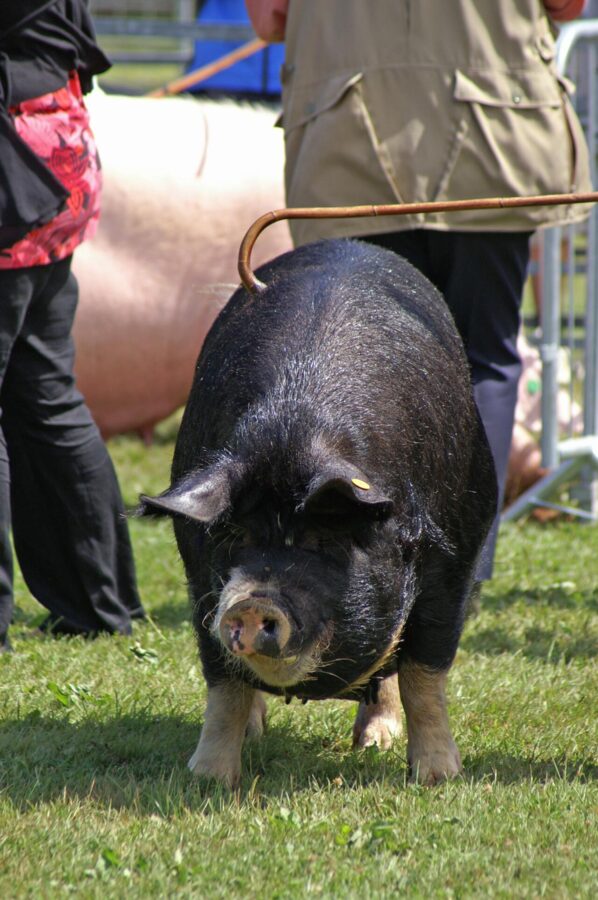
Kurobuta means black pig, and in Japan it most often means Kagoshima kurobuta: Berkshire pigs raised in Kagoshima prefecture, with sweet potato in their finishing feed as part of the prefecture’s brand rules. People pay for the fat, which is the part of the pig the brand is built on. Maisen lists a kurobuta tonkatsu on its seasonal sets, and in Kagoshima city it is what the tonkatsu counters are built around.
TOKYO X is Tokyo’s own pig. Breeders at the Tokyo Metropolitan Livestock Experiment Station started crossing Berkshire, Duroc and Beijing Black pigs in April 1990, and in July 1997 the result was registered as a fixed synthetic breed, the first in Japan to get that recognition. It is raised in the Tama area and on contract farms in Miyagi, Ibaraki, Gunma and Yamanashi. The loin carries fine threads of fat through the meat, which is why it turns up on specialist menus as a premium rosu.
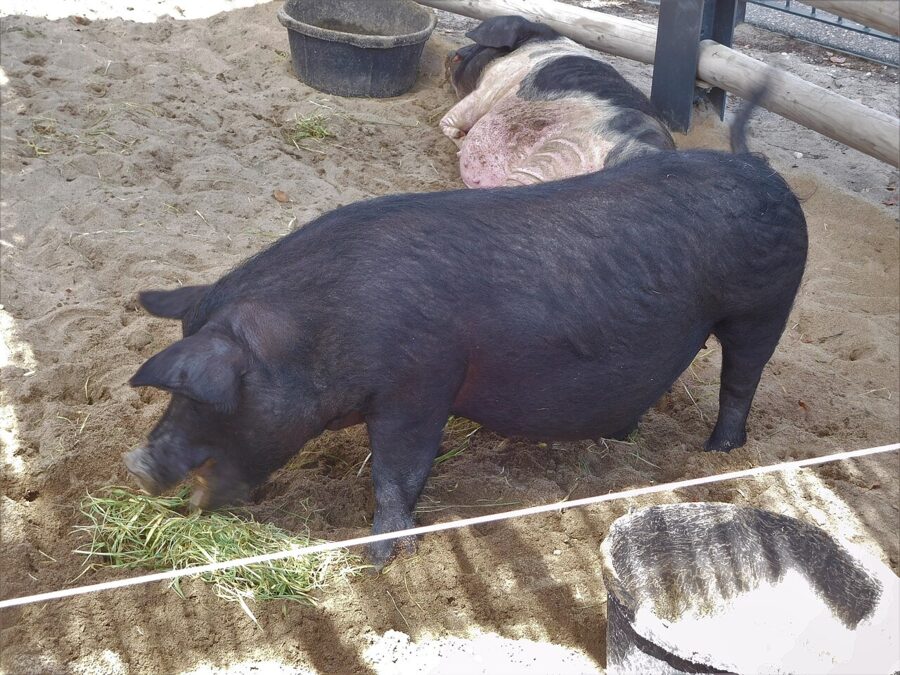
Agu is the native black pig of Okinawa, and its story is better than most brand stories. There were an estimated 100,000 before the war and only around thirty after it; a museum director in Nago and a local agricultural school teacher started saving the breed in 1981. The hiragana name あぐー is a JA Okinawa trademark for pork with at least half Agu blood. As tonkatsu it is rich and very fatty, which is lovely in a small portion and heavy in a large one.
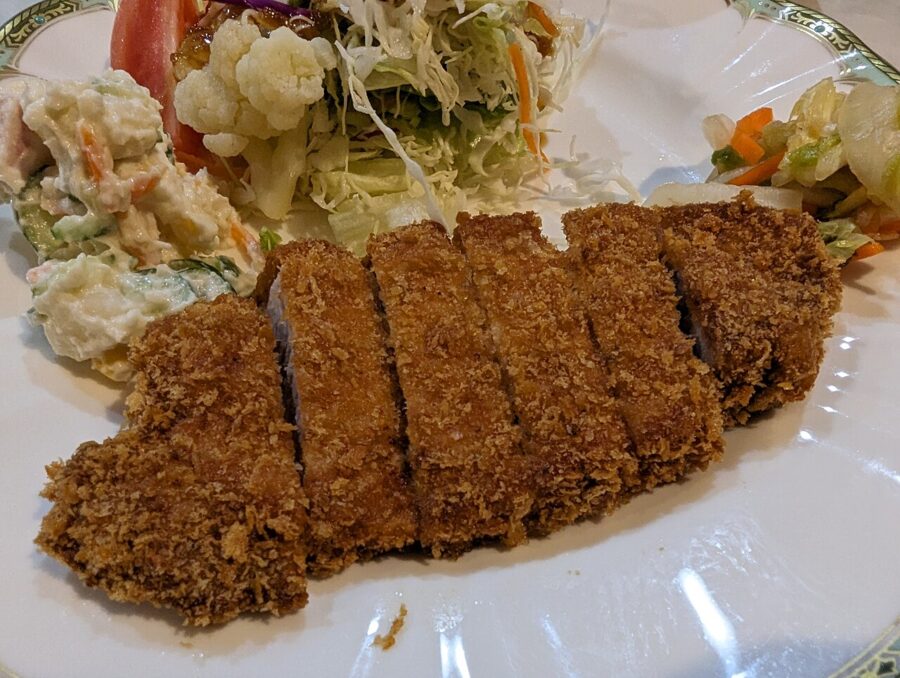
Sangenton (三元豚) means a three-breed cross, and it is one of the commonest labels on Japanese menus. On its own it says very little. What matters is the farm attached to it: Hirata Bokujo’s sangenton from the Shonai area of Yamagata, for example, is a specific product with its own following. Other names you will see include Hayashi SPF, which Aoki in Kamata uses, and a rotating cast of regional brands at the counters that change their pork with the season.
Is branded pork worth the premium? On rosu, often yes: the difference is mostly in the fat, and the fat is what rosu is for. On hire, much less so. If you’re on a budget, order a branded rosu and a plain hire, and taste them against each other.
The katsu family
Once Japan had a pork cutlet, it started putting it on things, and in things, and between things. Each region has its own version, and some are now as famous as the original. This table is the short map.
| Dish | Home | What makes it different | Where to try it |
|---|---|---|---|
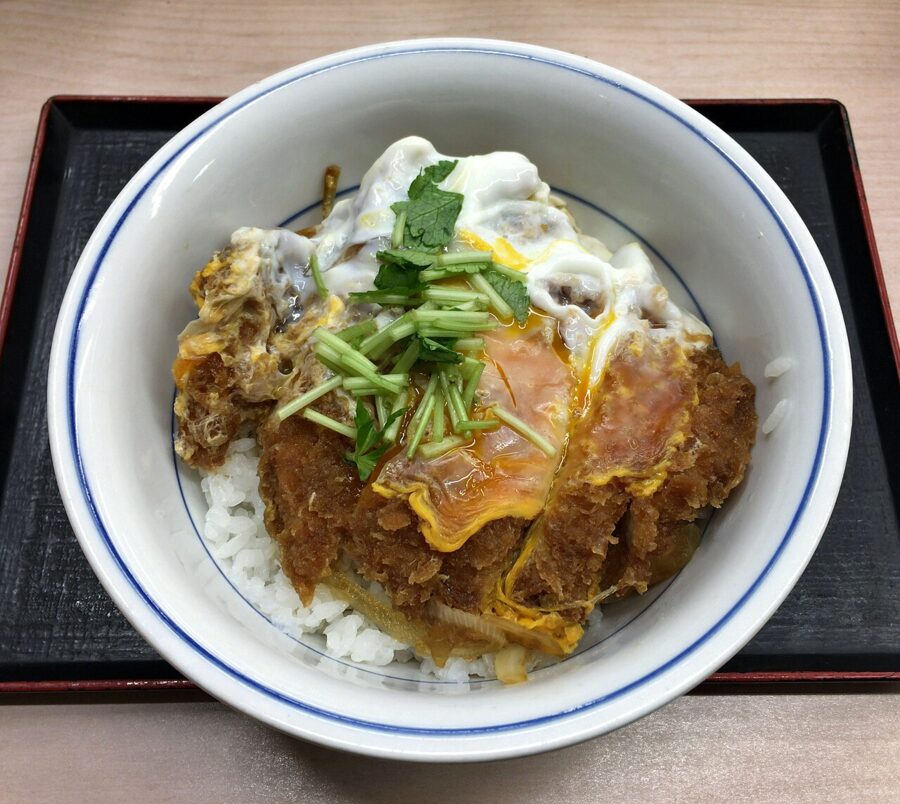
| Katsudon | Nationwide | Cutlet simmered with onion in dashi and soy, bound with egg, over rice | Any soba shop or tonkatsu counter; Katsuya for ¥682 |
| Sauce katsudon | Fukui (also Kofu, Komagane, Aizu and others) | Thin cutlets dipped in Worcester-based sauce, no egg | Yoroppaken, Fukui |
| Tare katsudon | Niigata | Thin cutlets dipped in sweet soy tare, no egg, no cabbage | Tonkatsu Taro, Furumachi |
| Demi katsudon | Okayama | Demi-glace sauce over cutlet and boiled cabbage | Katsudon Nomura, Okayama |
| Miso katsu | Nagoya | Hatcho-style red miso sauce poured over or dipped | Yabaton, Osu |
| Katsu curry | Tokyo | Cutlet on curry rice; Ginza claims the 1948 original | Ginza Swiss |
| Katsu sando | Tokyo | Cutlet in soft white bread with sauce | Isen, Maisen |
| Kushikatsu | Osaka | Small skewers of meat and vegetables, fine crumb, communal sauce | Shinsekai, Osaka |
Katsudon
Katsudon is everywhere: soba shops, lunch counters, station stands, convenience-store chillers. A cutlet is simmered briefly with sliced onion in a sweet soy and dashi broth, bound with beaten egg, and slid onto a bowl of rice. The crust goes soft where it touches the broth and stays crisp where it doesn’t, and that contrast is the whole appeal.
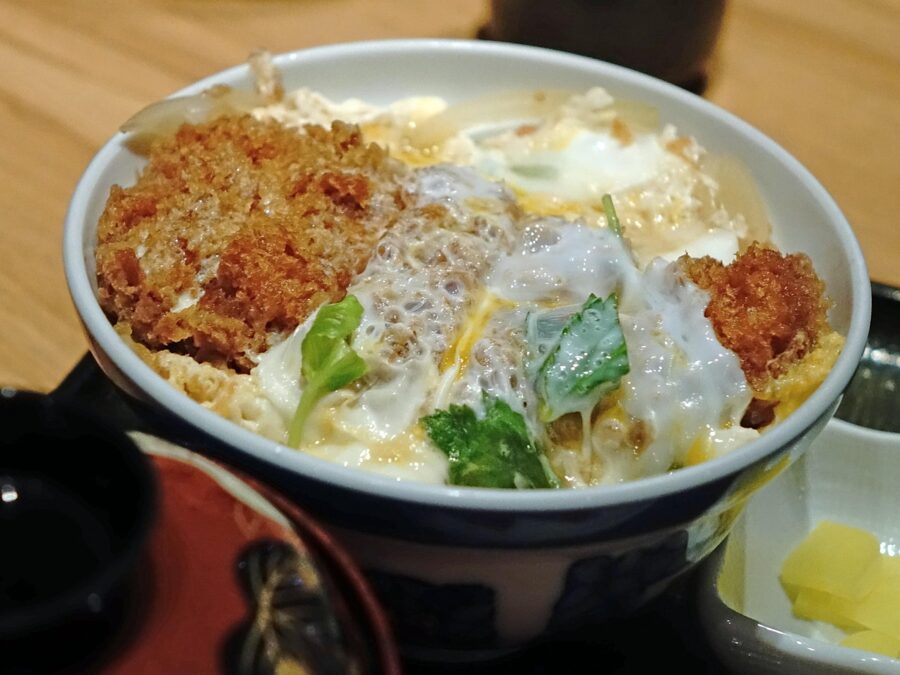
The origin is disputed. One account puts katsudon on a Kofu soba menu in the late Meiji period; another credits a Waseda student called Nakanishi Keijiro in 1921, at a soba shop by the university. What is certain is that after the 1923 Kanto earthquake, soba shops struggling against Western and Chinese restaurants took up katsudon and curry rice to win customers back, which is why so many noodle shops still serve it.
Katsudon also carries a pun. Katsu sounds like katsu (勝つ), to win, so students eat it before exams and some people eat it before job interviews and matches. Nobody takes it too seriously.
Sauce katsudon in Fukui
Outside the egg-bound mainstream there is a whole second branch of katsudon with no egg at all. In Fukui, Kofu and several other places, plain “katsudon” means sauce katsudon, and the egg version has to be ordered by another name. Thin cutlets are fried in a fine crumb, dipped in sauce and laid over rice.
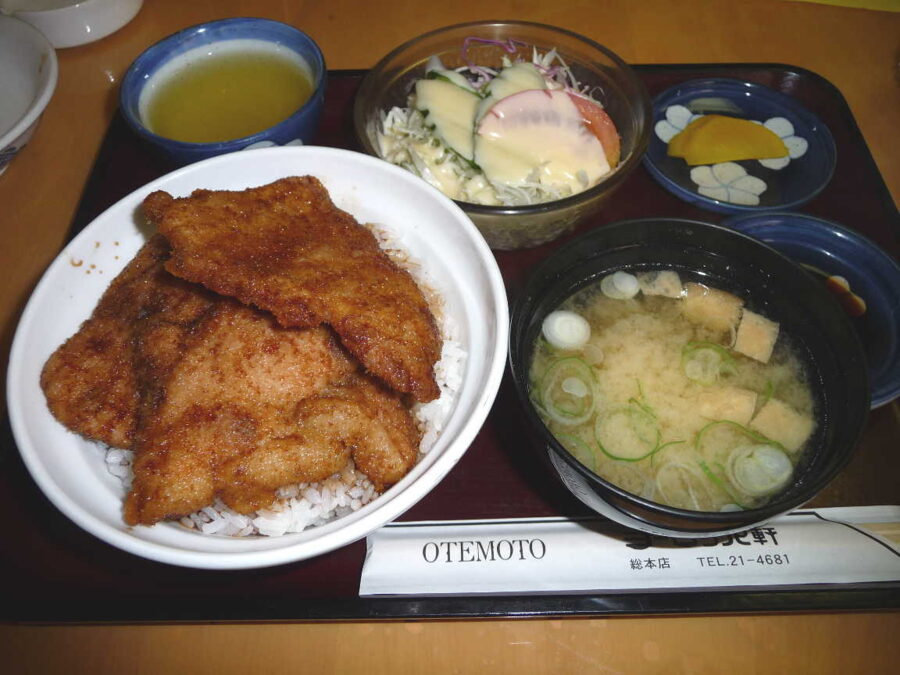
Yoroppaken is the name to know. Its founder, Takabatake Masutaro, trained as a cook in Germany, opened in front of Waseda University in Tokyo, and showed a sauce katsudon at a Tokyo cooking demonstration in 1913, which makes it the oldest documented claim for the dish. After the 1923 earthquake the restaurant moved to his home prefecture of Fukui, where the main restaurant still runs at Junka 1-chome, ten to fifteen minutes on foot from Fukui Station.
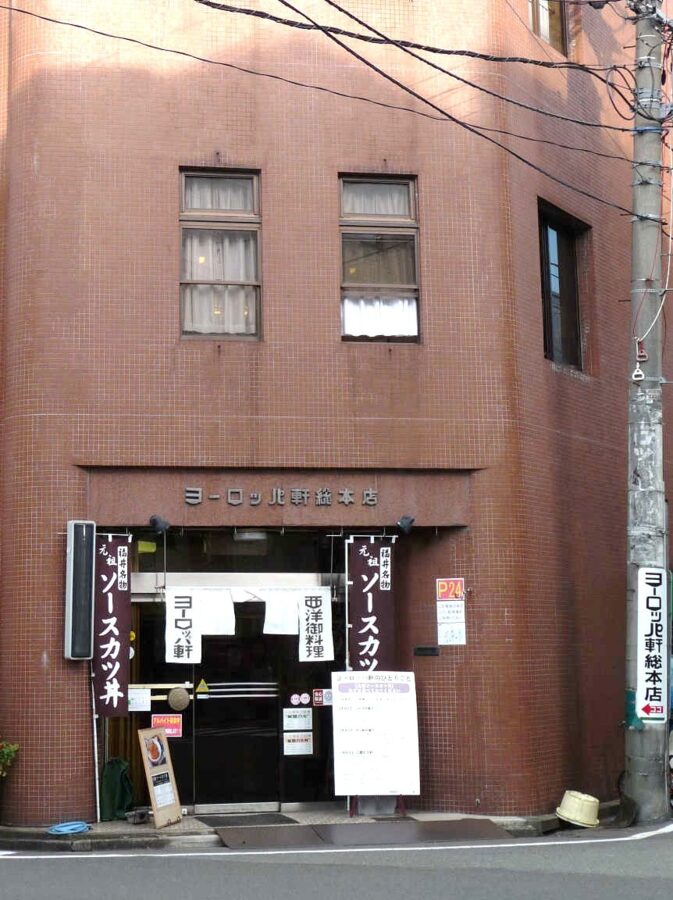
The sauce is Worcester-based with the restaurant’s own spice blend, sweeter and softer than bottled sauce, and the cutlets are fried in lard. It is light enough that a large bowl doesn’t feel like a dare. Yoroppaken doesn’t take reservations, so arrive before noon.
Niigata tare katsu
Niigata’s tare katsudon looks, to an outsider, like a katsudon somebody forgot to finish. Thin, well-pounded pork cutlets in a fine crumb are fried, dipped in a sweet soy tare and laid over rice. There is no egg and no cabbage, only the cutlets, the rice and a slice or two of pickled daikon.
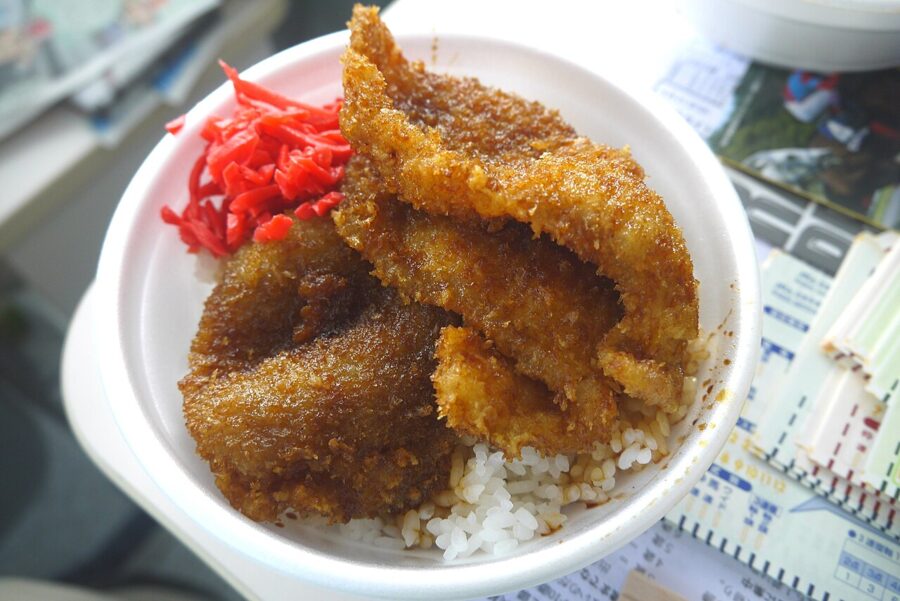
The shop that claims it is Tonkatsu Taro, which started as a street stall in Furumachi in the early Showa period and now runs from Furumachi-dori 6-bancho. The standard bowl carries five cutlets, and a three-cutlet bowl came to ¥1,070–1,080 in late 2025. It closes on Thursdays and some Wednesdays and the lunch rush can empty the kitchen early, so go before 13:00.
Okayama demi katsu
Okayama’s katsudon is covered in demi-glace. Rice, a layer of boiled cabbage, a sliced cutlet, a ladle of glossy brown sauce, often a scatter of green peas. In the centre of Okayama city this is simply “katsudon”; the egg version is the one with the qualifier.
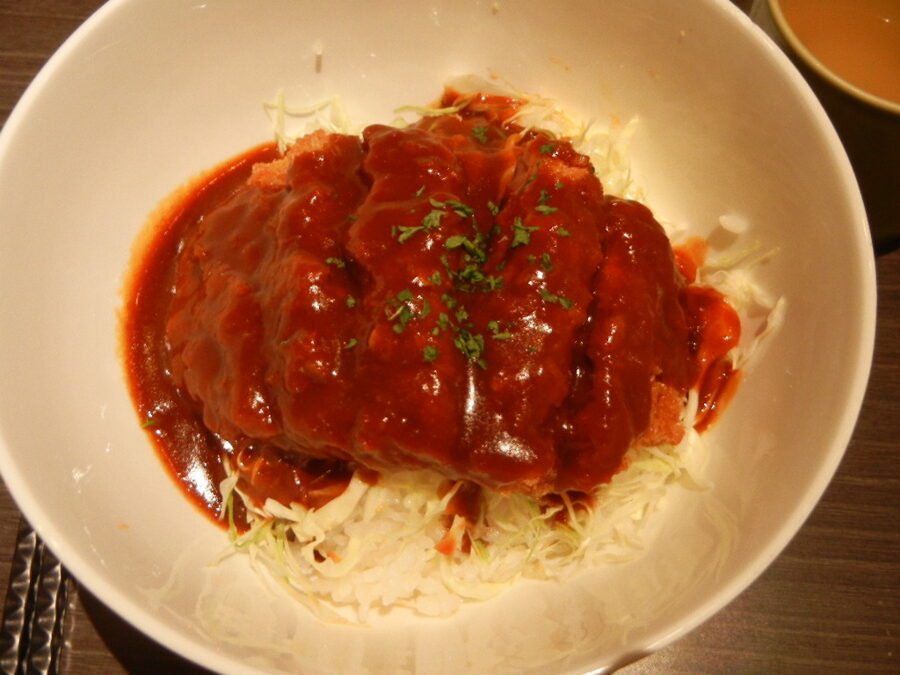
It started at Ajitsukasa Nomura, now Katsudon Nomura, where the founder Nomura Saichiro, who had tasted the demi-glace at the Imperial Hotel while training in Tokyo, put it on a katsudon when he opened in 1931. The recipe has stayed in the family. Nomura is in Heiwa-cho, about ten minutes on foot from JR Okayama Station, opens 11:00–15:00 Tuesday to Friday and adds an evening sitting (17:00–20:30) at weekends, and closes on Mondays. It offers the bowl in full, two-thirds and half sizes, which is helpful if you’re eating your way across the city.
Nagoya miso katsu
Nagoya puts miso on everything, and on tonkatsu the result is one of the city’s best-known dishes. The sauce is built on dark soybean miso of the hatcho type, sweetened and thinned with stock, and either poured over the cutlet or used as a dip.
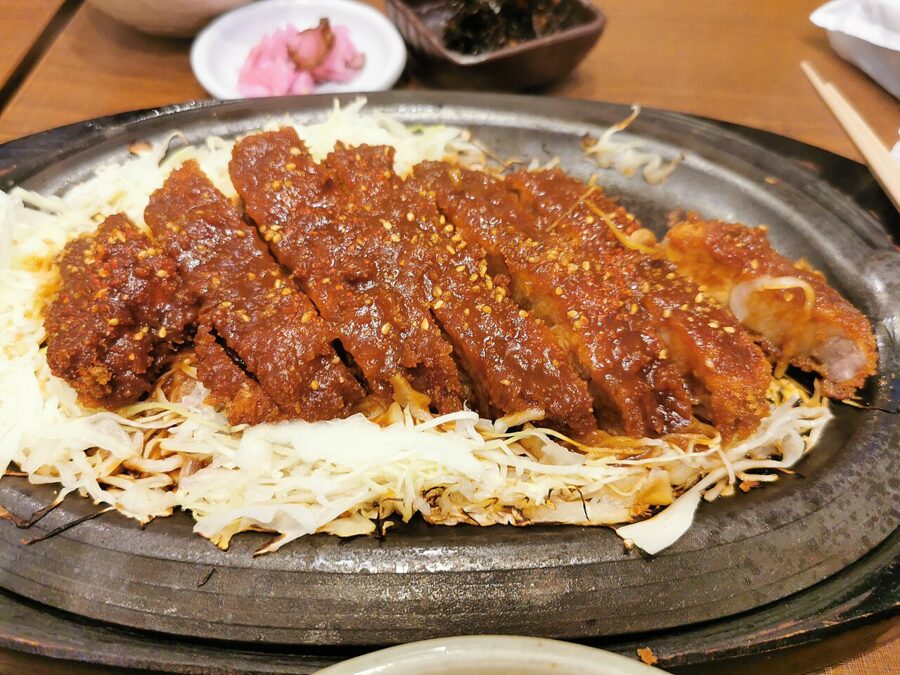
Several places claim to have invented it, from a Nagoya stall where customers dipped kushikatsu into miso stew to a shop in Tsu in Mie prefecture that says it started pouring miso over tonkatsu in 1965. The name everyone knows is Yabaton, founded in 1947. Its main restaurant at Osu 3-chome, about five minutes from Yabacho Station, opens 11:00–21:00 every day.
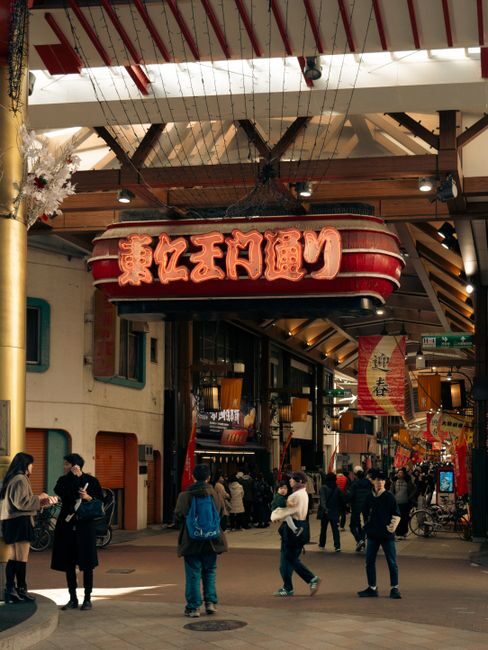
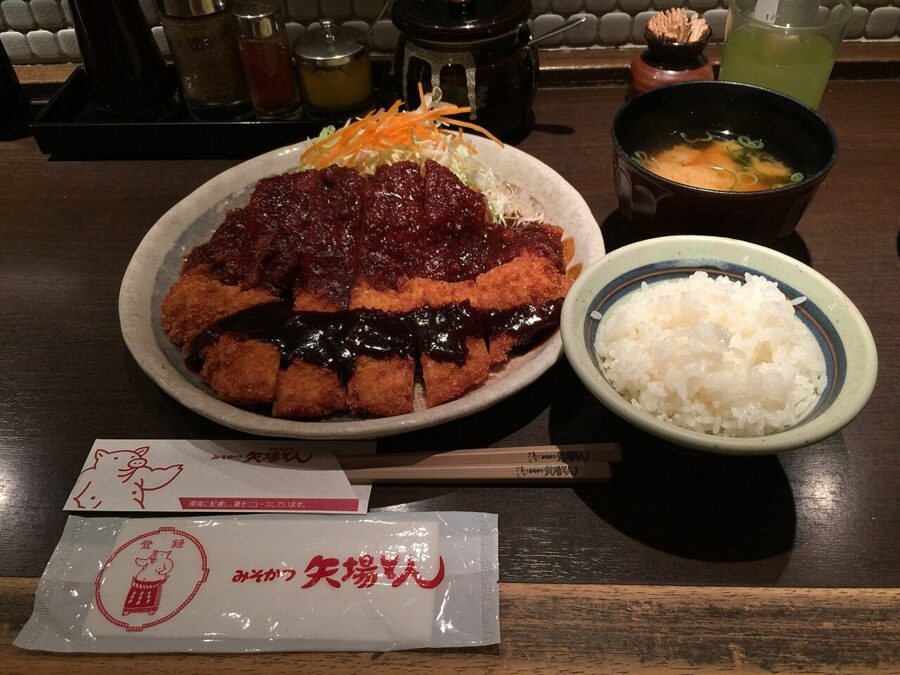
Order the waraji tonkatsu, two broad cutlets the size of a straw sandal, or the miso katsudon if you want it over rice. Yabaton is busy at weekends, and the main restaurant shows its waiting time on the company website, which is worth checking before you walk over.
Katsu curry
Katsu curry is exactly what it sounds like: a cutlet laid over Japanese curry and rice, sliced so you can eat it with a spoon. Several places claim it, including an Asakusa yoshoku stall in 1918, but the story that has stuck belongs to Ginza Swiss.
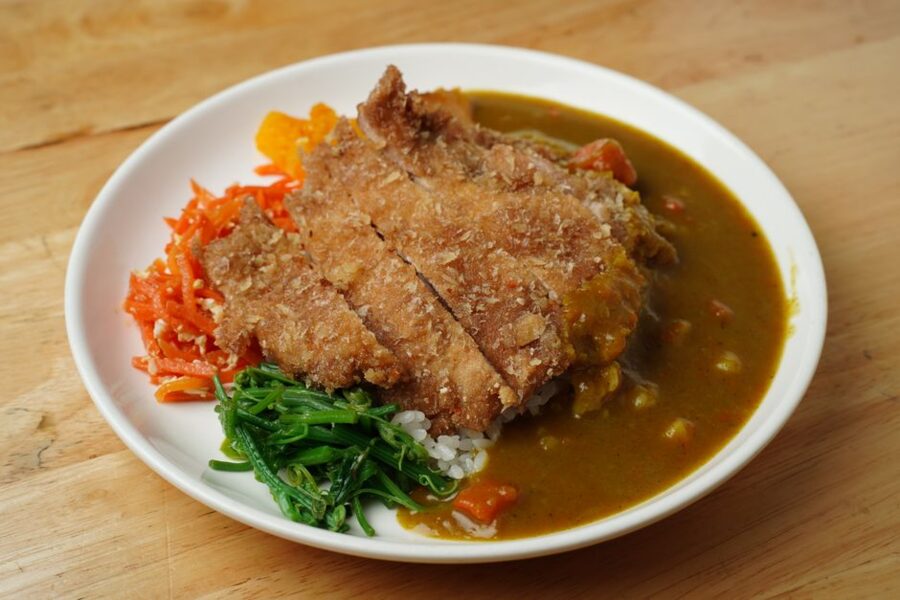
In 1948 the Yomiuri Giants infielder Chiba Shigeru, a regular at the then Grill Swiss in Ginza, asked the kitchen to put a cutlet on his curry. Katsu meant winning, he ate it before games, and his teammates followed.
Ginza Swiss still lists both the “original” katsu curry and a “Chiba-san’s katsuretsu curry”. The restaurant is now on the second floor at Ginza 3-4-4, about two minutes from Higashi-Ginza Station, and opens 11:00–21:00 (last order 20:30). Reservations carry a ¥500 per person fee, and from 14:00 there is a ¥500 table charge unless you order a drink or dessert.
Katsu curry also has a strong regional form in Kanazawa, where a thick, dark curry is served on a steel plate with a cutlet and shredded cabbage.
Katsu sando
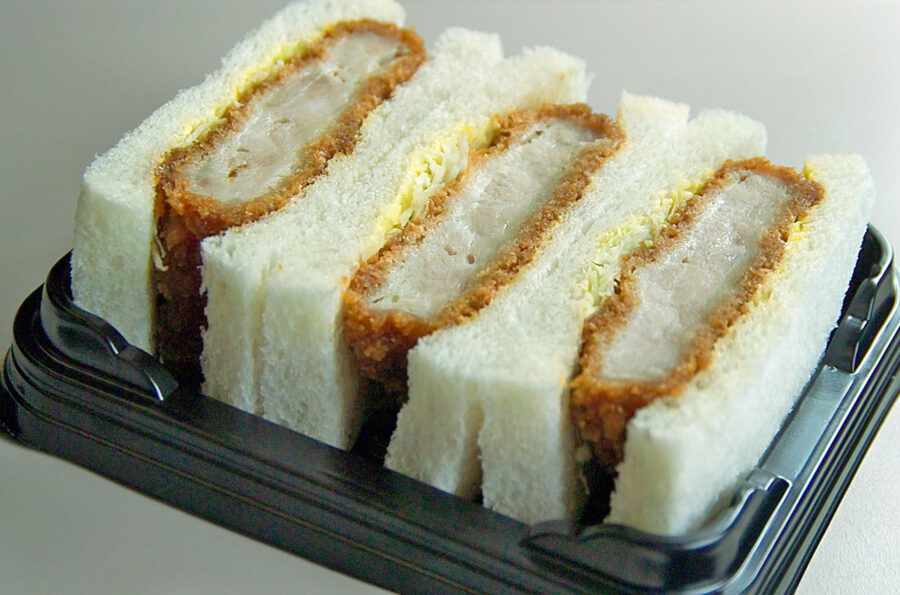
The katsu sando is a cutlet in soft white bread, crusts off, brushed with sauce and cut into neat fingers. It was invented for people who needed to eat neatly.
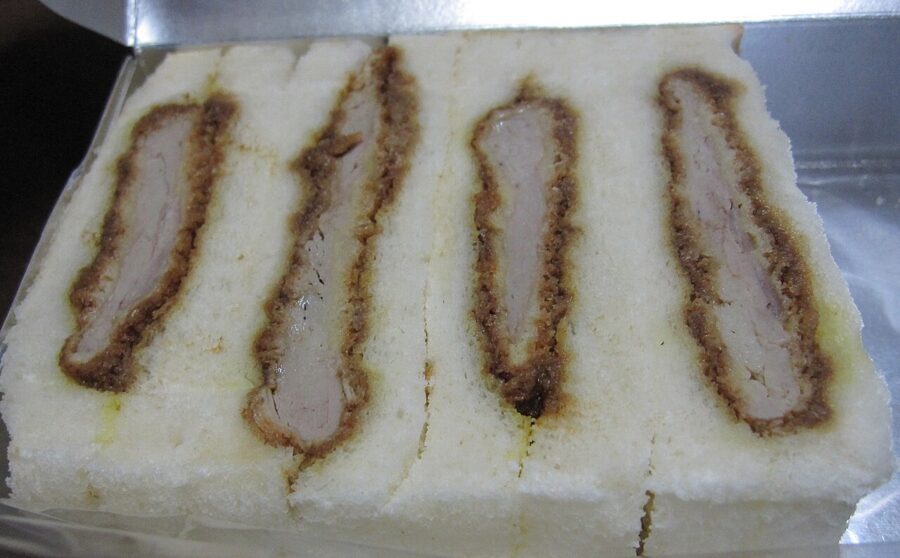
Isen, founded in Ueno in 1930 and now at Yushima 3-chome, a minute from Ueno-Hirokoji Station, is credited with it. In 1935 the proprietress, Ishizaka Toki, began putting small, soft cutlets in bread so the geisha of the nearby Shitaya district could eat without spoiling their lipstick. Isen still makes them: a nine-piece box is ¥1,900, and the restaurant’s slogan is a cutlet “soft enough to cut with chopsticks”.
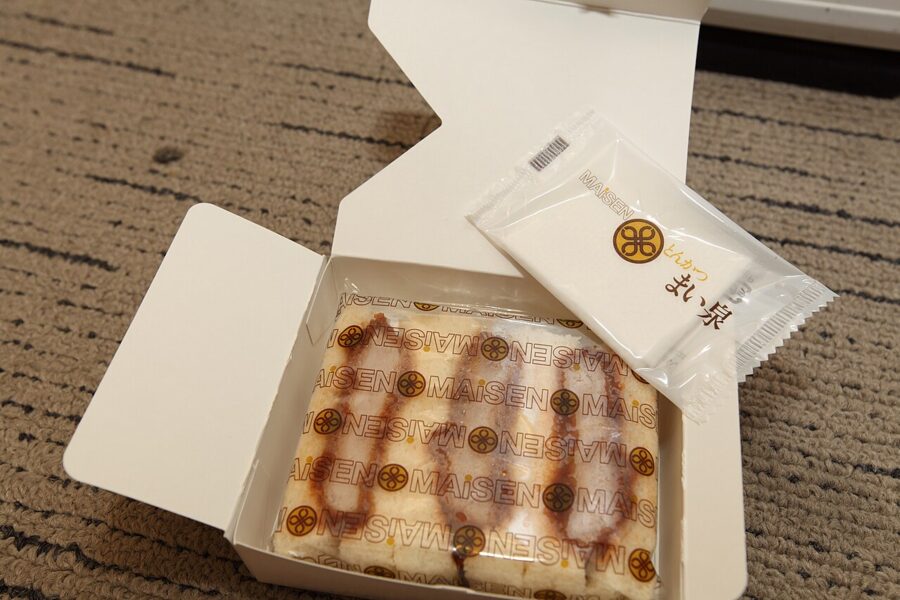
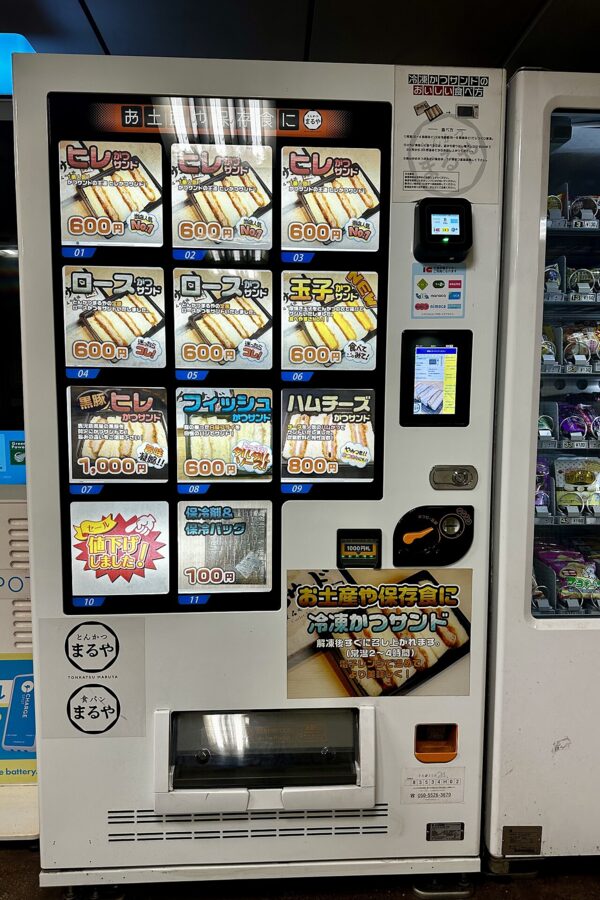
Maisen, which traded in Aoyama under the Isen name before going its own way in 1983, made the katsu sando portable. Its hire katsu sando is sold in department-store food halls and station kiosks across Tokyo, and on every date with a 3 in it the company runs a sando day. A katsu sando from a station kiosk is the best thing you can eat on a Shinkansen, and I will not be argued out of that.
Kushikatsu and the beef cousin
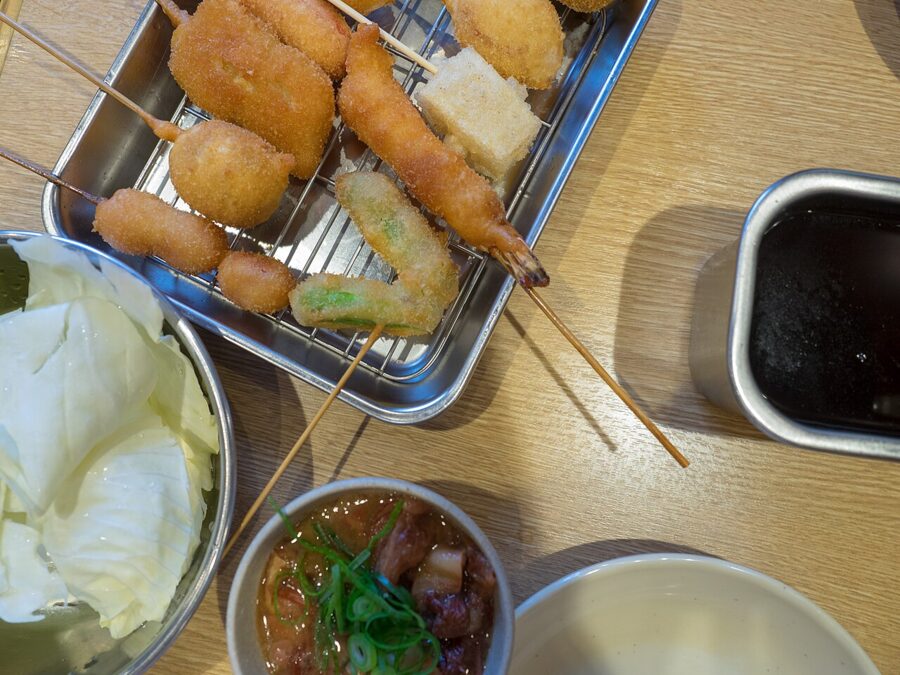
Kushikatsu is a relative rather than a variant: small skewers of pork, beef, vegetables and seafood in a fine batter and crumb, fried quickly and dipped in a shared pot of thin sauce. It belongs to Osaka, and my guide to Osaka street food covers how it works and where to eat it.
Gyukatsu, the beef cutlet, is the other cousin. It has boomed in Tokyo and Kyoto in recent years, usually served rare with a small stone griddle so you can cook each slice a little more at the table. Made with good wagyu it is rich and very good; at the cheaper chains it can be chewy. It is worth one meal, not a trip.
Where to eat it in Tokyo
Tokyo has more tonkatsu counters than anyone could work through, and they cluster in a few places. Ueno and Okachimachi have the oldest houses, Ginza has the history and the yoshoku, and Meguro has a famous counter by the station. The newer low-temperature style has spread out into the residential suburbs. If you want to plan this around a neighbourhood, my guide to Tokyo’s food neighbourhoods is a good starting point.
Ueno and Okachimachi: the old guard
Ueno was where tonkatsu became tonkatsu. In 1929 a Western-style restaurant in Okachimachi began selling thick cutlets sliced and served Japanese-style with rice, miso soup and pickles, and in the early 1930s specialist tonkatsu houses opened one after another around Ueno and Asakusa. Two of the old houses are a few minutes apart.
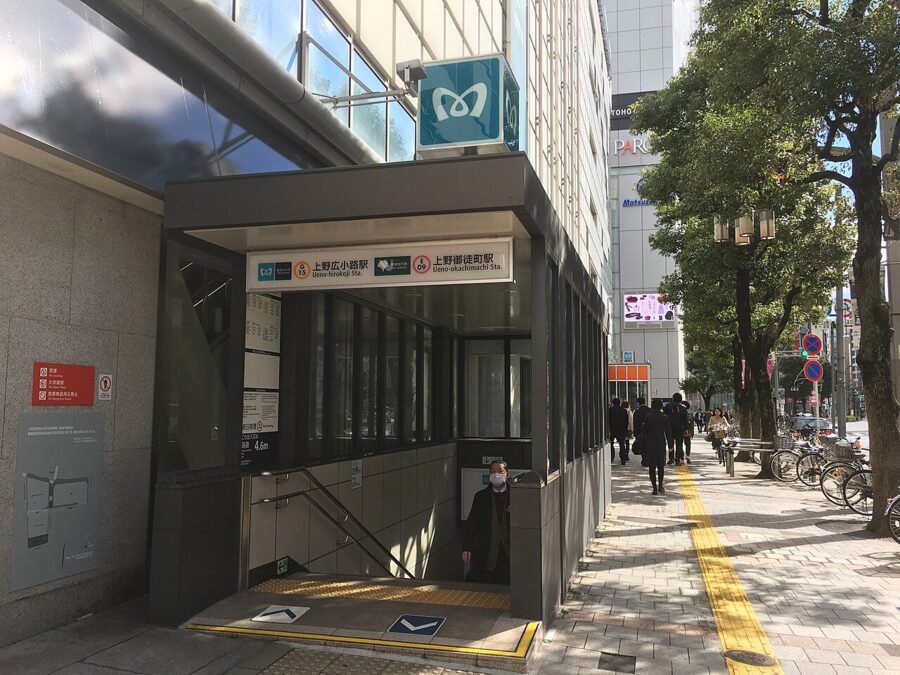
Ponta Honke, founded in 1905, is at Ueno 3-chome, about two minutes from Ueno-Okachimachi Station. It doesn’t call its dish tonkatsu: it is the katsuretsu, made from the loin with all the fat trimmed off and fried in lard rendered from those trimmings, starting cool and finishing hot. The coat is pale, the meat almost white, and you eat it with salt, a light Worcester-style sauce or mustard.
It is expensive (a 2026 bill showed ¥4,070 for the katsuretsu alone, with rice and soup extra) and closed on Mondays. Lunch is 11:00–14:00 and dinner from 16:30 (16:00 on Sundays and holidays) until 20:00.
The house idea, a thick cut fried slowly in deep fat the way a tempura cook works, has not changed in a century. Whether it is the best tonkatsu in Tokyo is a matter of taste. It is certainly the most precise.
Isen, a minute from Ueno-Hirokoji Station at Yushima 3-chome, is gentler and cheaper. A rosu set is ¥1,950 and a hire set ¥2,300, the hire katsudon ¥2,400, and the katsu sando to take away is ¥1,900 for nine pieces. It closes on Wednesdays (it opens if Wednesday is a holiday and closes the following day), takes cash only, and runs straight through from 11:30 to 20:50 on most days, which makes it the easy choice for a late lunch.
Meguro: Tonki
Tonki opened in Meguro in 1939 and is the counter many Tokyo people name first. It is about two minutes on foot from the west side of JR Meguro Station, at Shimomeguro 1-1-2.
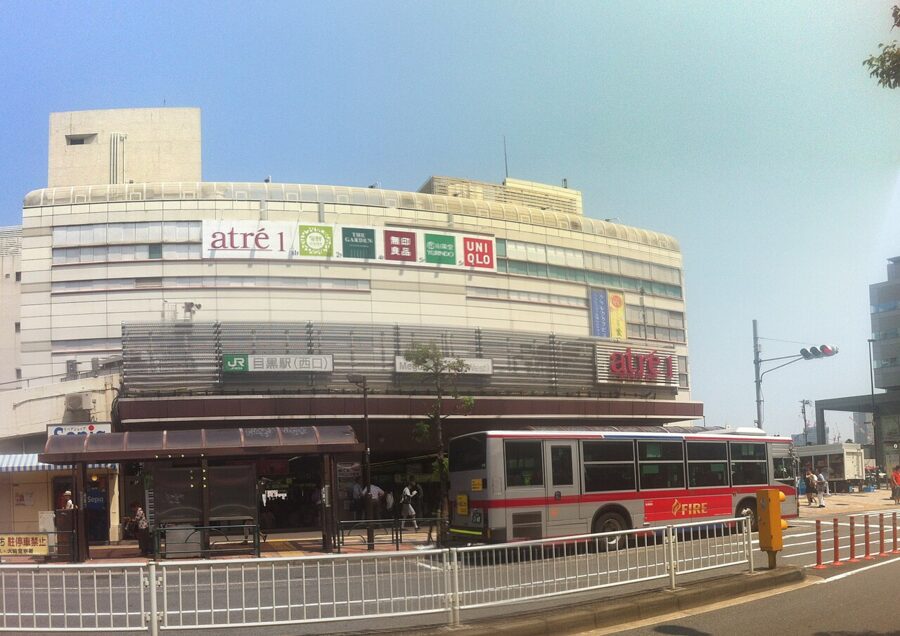
The room is the reason to go as much as the cutlet: a long counter of pale wood facing an open kitchen, a team frying and slicing in a steady rhythm, and a tatami room upstairs. Tonki opens for dinner only, 16:00–21:45, and closes on Tuesdays and the third Monday of the month. A hire katsu set was ¥2,500 on bills from autumn 2026, and the staff come round with rice and cabbage refills. Cards and PayPay are accepted.
The queue moves faster than it looks because the counter turns over quickly. Weekday evenings are easiest; on weekends go at opening or after 20:00.
Akihabara: Marugo
Marugo, five minutes on foot from Akihabara Station at Sotokanda 1-chome, is the low-temperature counter people send you to when they want to prove a point. The special rosu and special hire are fried slowly until the crust is light gold and the meat barely blushing.
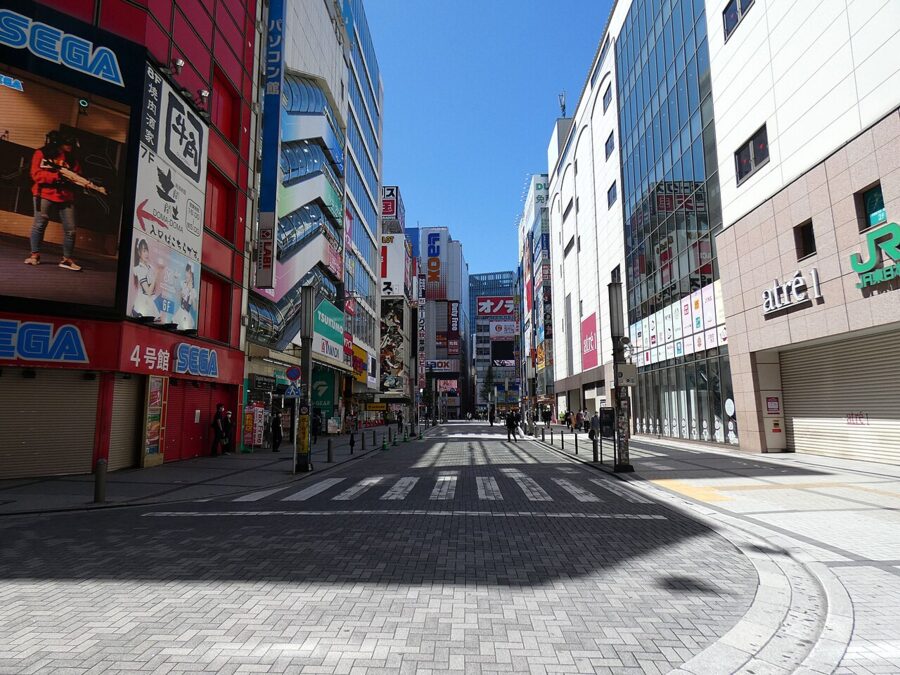
The menu is short: special hire, special rosu, regular sets, a ginger pork, a few fried seafood dishes. Lunch runs 11:30–14:50 (last order 14:00) and dinner 17:00–20:50 (last order 20:00). It closes on Mondays and on the first three Tuesdays of the month, takes cash only, and the line at lunch can run to half an hour or more, so aim for mid-afternoon.
Ginza: Rengatei and Bairin
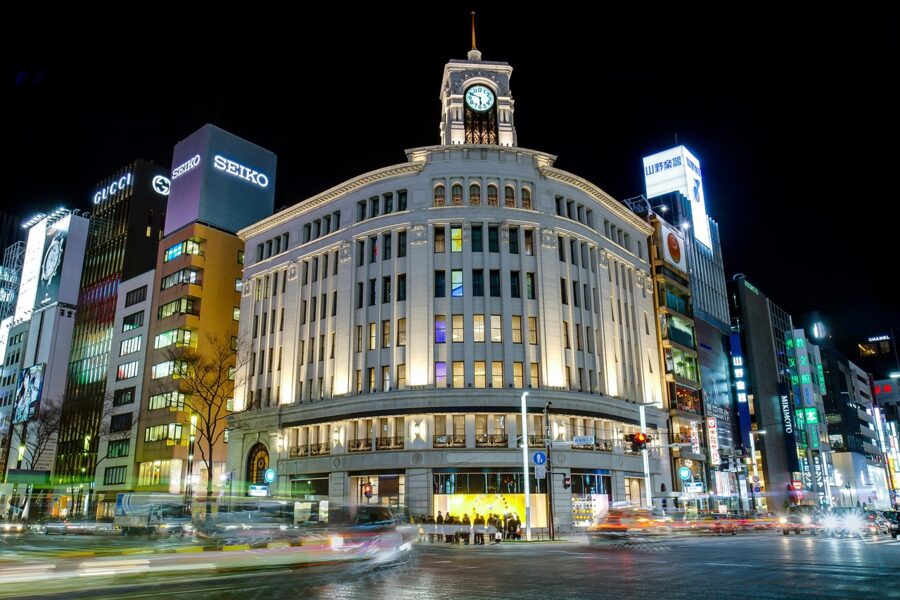
Rengatei, founded in 1895 and at Ginza 3-5-16, a minute from Higashi-Ginza Station, says it served the first pork katsuretsu in 1899 and started the cabbage habit. Historians dispute some of its claims, but the restaurant is a living piece of yoshoku history.
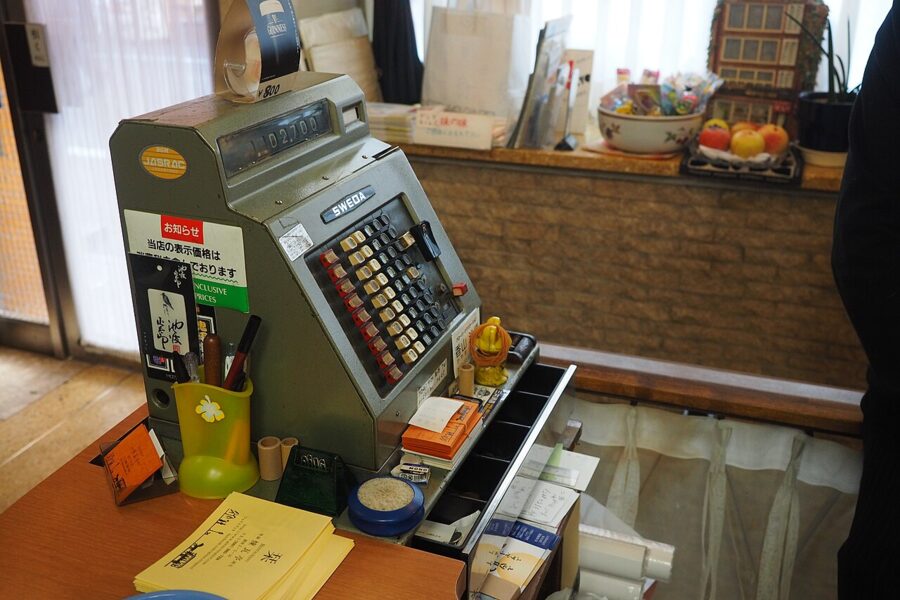
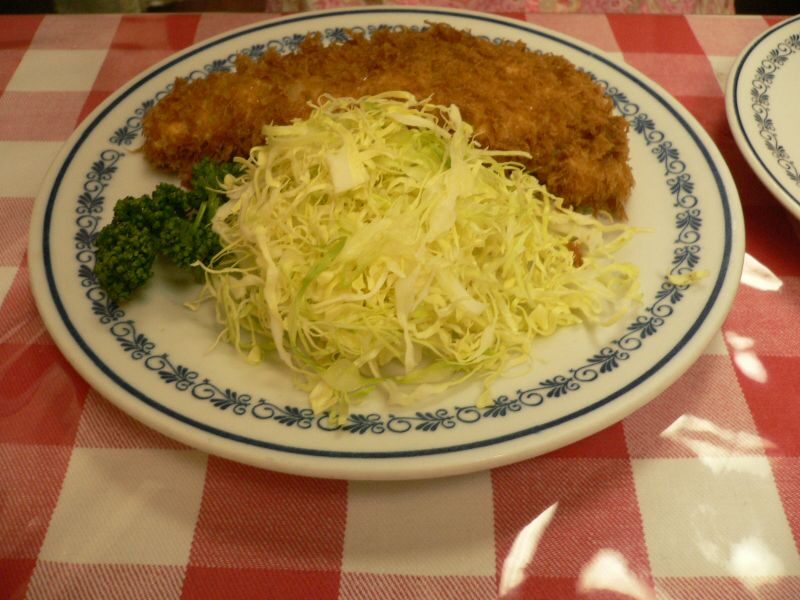
Rengatei’s cutlet is thinner and more Western than a modern tonkatsu, and the setting is a dining room rather than a counter. It closes on Sundays and takes cash only. Lunch runs 11:15–15:00 (last order 14:15) and dinner 16:40–21:00 on weekdays. Go for the history, eat the cutlet with a beer, and don’t expect a Ueno-style slab.
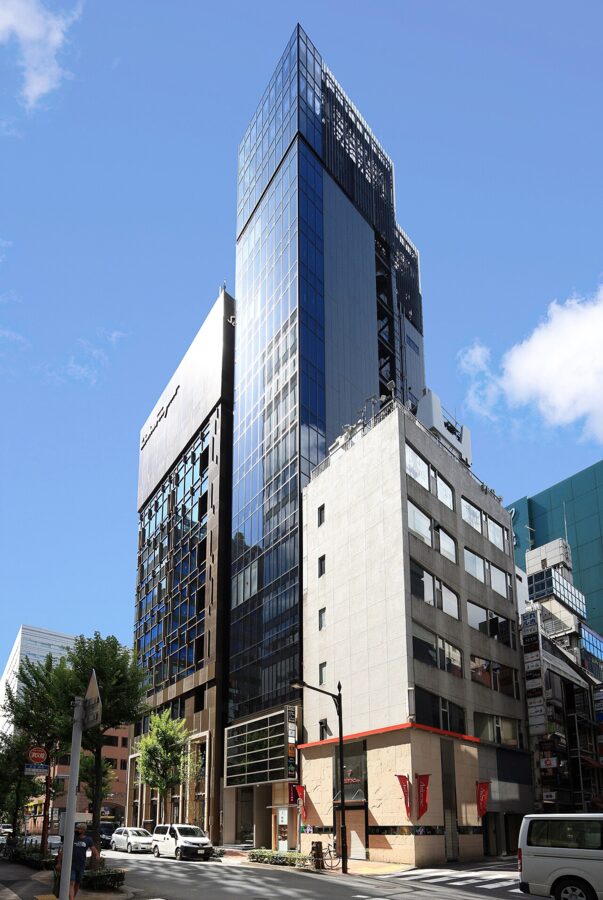
Tonkatsu Ginza Bairin, at Ginza 7-8-1, about four minutes from Ginza Station, is the Ginza house for katsudon. It reopened in its rebuilt building in July 2021 and runs from 11:30 to a 20:00 last order with no midday break and no regular closing day. It does not take reservations: you queue, and the queue often starts before the doors open.
Omotesando: Maisen
Maisen’s main restaurant, at Jingumae 4-8-5, is three minutes from exit A2 of Omotesando Station. It is the easiest serious tonkatsu in Tokyo: large, open 11:00–22:00 (last order 21:00) every day except 1–2 January, with a takeaway counter for katsu sando and bento.
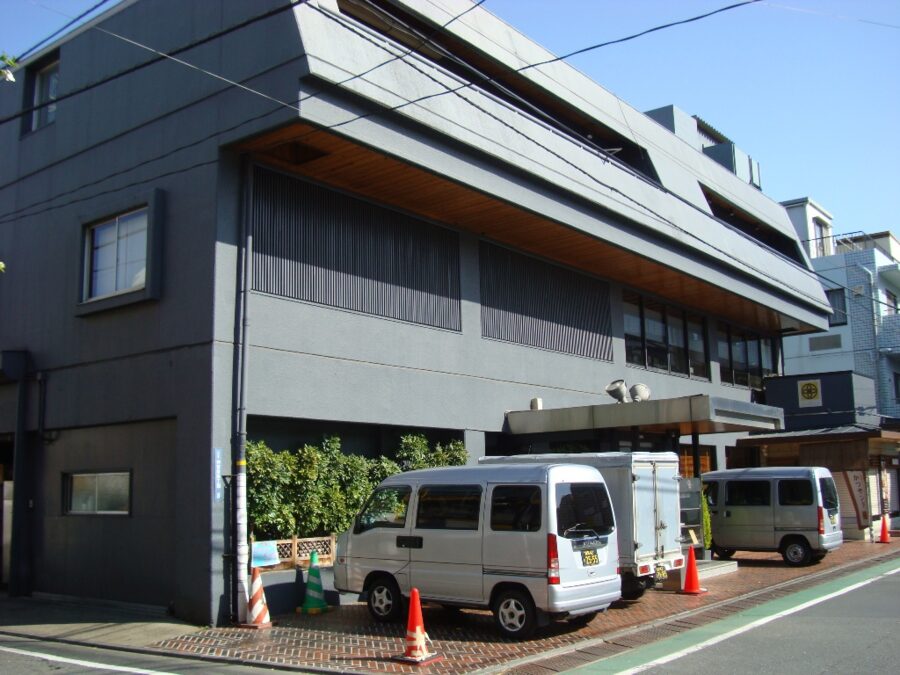
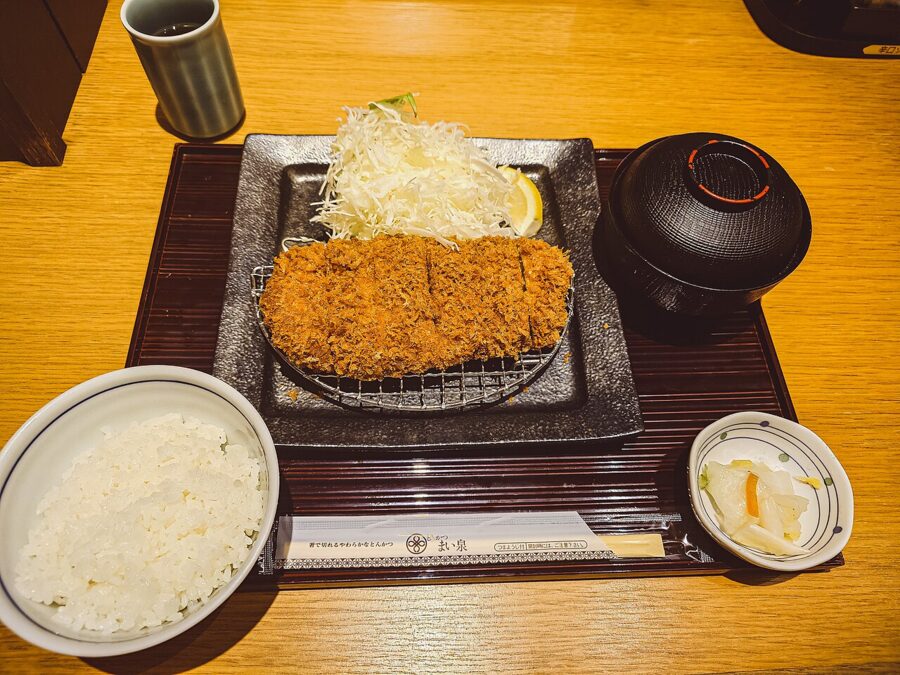
The cutlets are reliable rather than revelatory, the kurobuta options are good, and the service handles first-timers well. Maisen is owned by Suntory now and has branches all over the city. The main restaurant is still the nicest place to eat it.
Further out: Narikura and Aoki
Narikura is the counter that turned low-temperature tonkatsu into a cult. It left Takadanobaba in July 2019 for a house at Narita-higashi 4-chome, about five minutes from Minami-Asagaya Station on the Marunouchi Line. It is reservation-only through an online booking system, open for lunch 11:00–14:00 and dinner 17:30–20:00, and closed on Mondays and Thursdays.
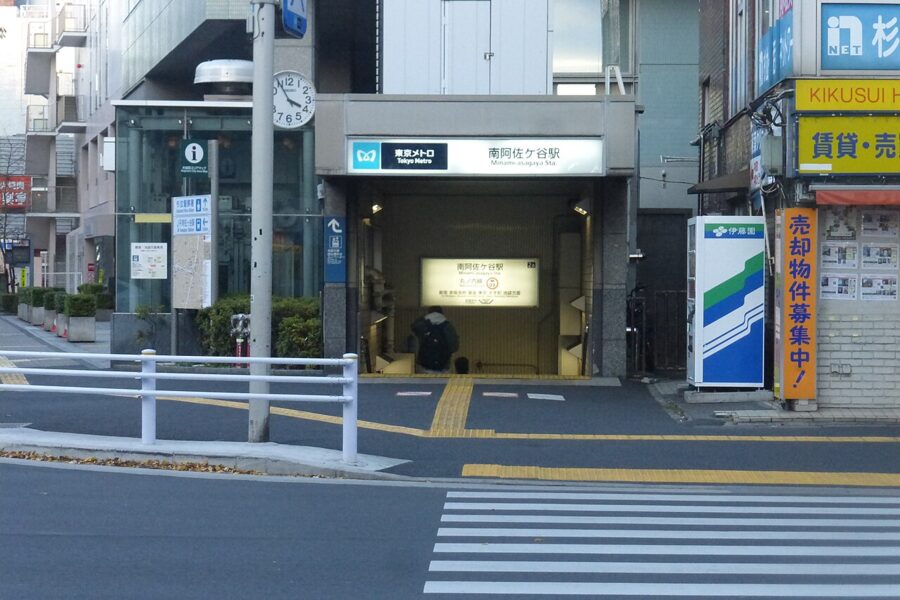
The pale coat and pink centre are the point, and so is the rare cut it calls the “chateaubriand” of the pig. Budget around ¥5,000. If you can’t get a seat, don’t go and stand outside.
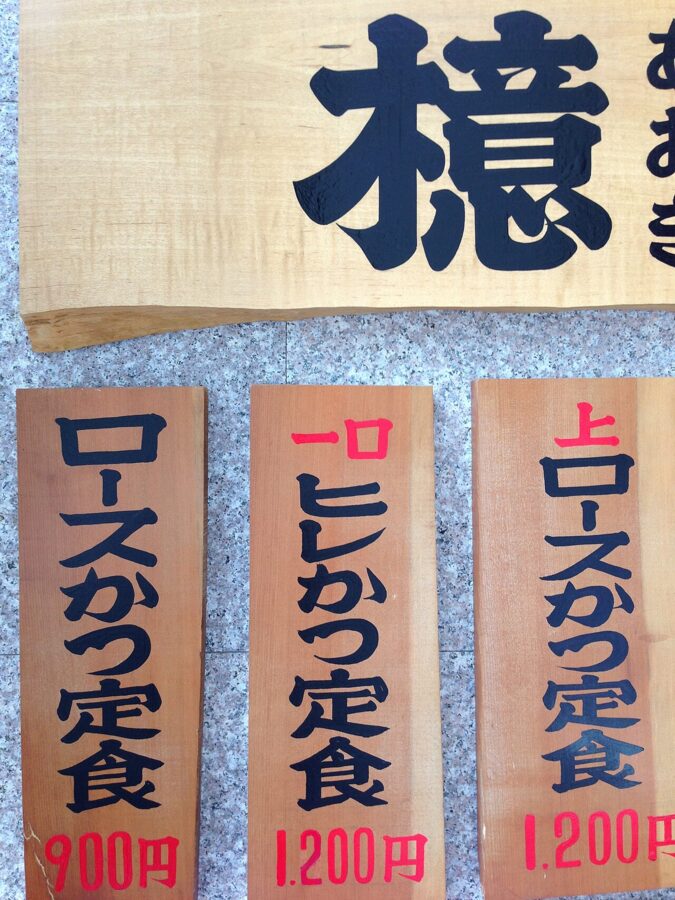
Aoki (檍), in Kamata, is the opposite: ten seats at a counter, about three minutes from JR Kamata Station, open Tuesday to Saturday 11:00–14:00 and 17:00–21:00, closed Sundays and Mondays, no cards (PayPay works). It uses Hayashi SPF pork and pushes you towards salt. The line forms as soon as it opens, and most sets come in around ¥2,000.
Beyond Tokyo
Tokyo is the capital of tonkatsu, but not the only place where it is done well. These counters are worth a detour or a meal on the way through.
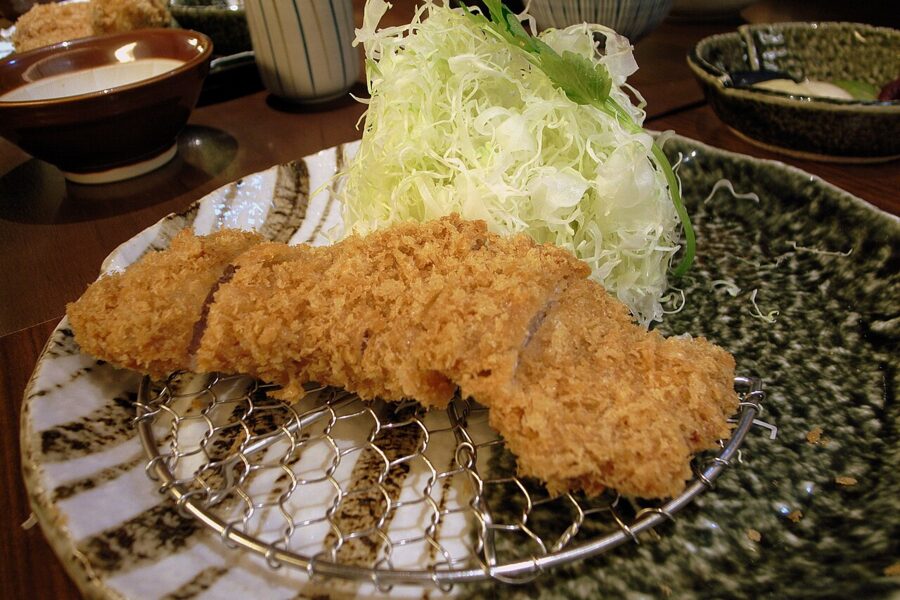
Katsukura is Kyoto’s tonkatsu chain, and its main restaurant sits on Sanjo-dori just east of Teramachi, about four minutes from Kyoto Shiyakusho-mae Station on the Tozai Line. It opens every day 11:00–21:30 (22:00 on Saturdays), refills rice, cabbage and miso soup, and is a good fallback in a city whose food guides lean on tofu and kaiseki. My guide to what to eat in Kyoto has the rest of the city.
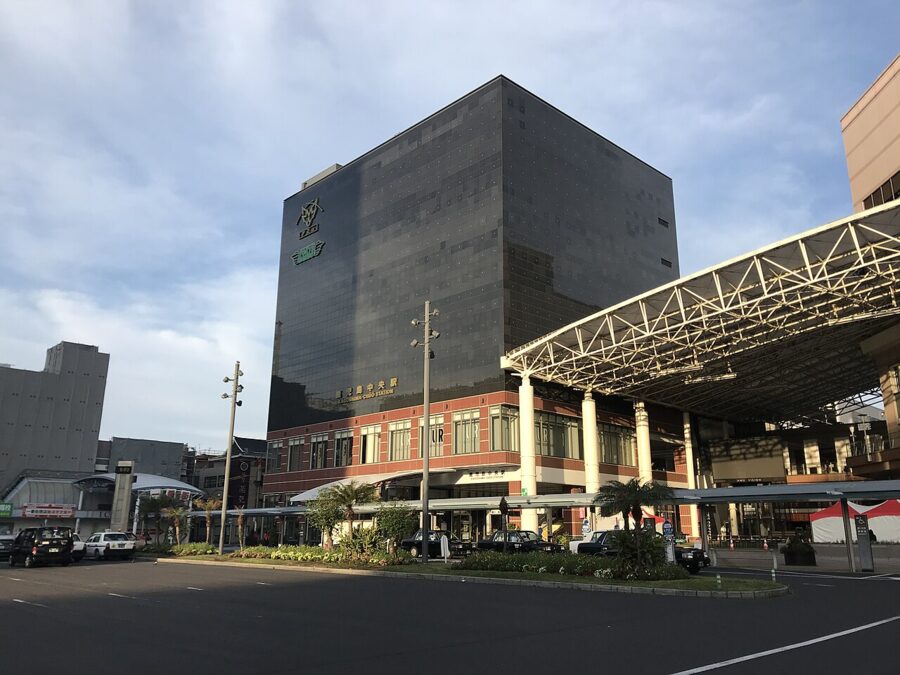
In Kagoshima, kurobuta tonkatsu is the reason to sit down at Tonkatsu Kawakyu, three minutes from Kagoshima-Chuo Station at Chuo-cho 21-13. It was opened in 1975 by a butcher, serves kurobuta rosu and hire in thick cuts with three sauces, opens 11:30–14:30 and 17:00–22:00 (last order 21:30), and closes on Tuesdays. It takes cash only. When it is full they take your name and call you back.
For the regional katsu dishes, the addresses are above: Yabaton in Nagoya, Yoroppaken in Fukui, Tonkatsu Taro in Niigata, Katsudon Nomura in Okayama. Each is near enough to its main station to fit between trains.
Chains: cheap, everywhere, better than they need to be
Chain tonkatsu in Japan is good. It is not Marugo or Ponta Honke, but it is fried to order, the cabbage is fresh, and the price is a fraction of the specialists. If you are in a town without a named counter, the chain is a perfectly decent dinner.
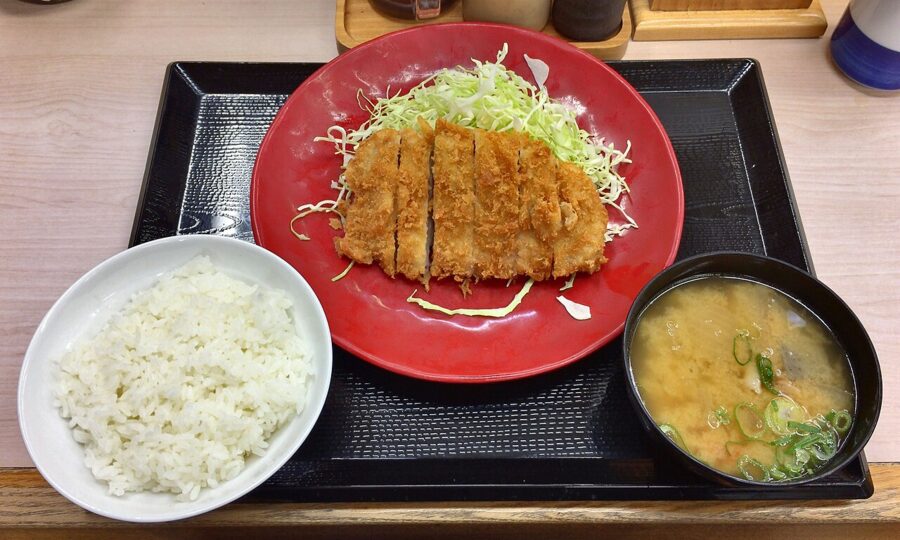
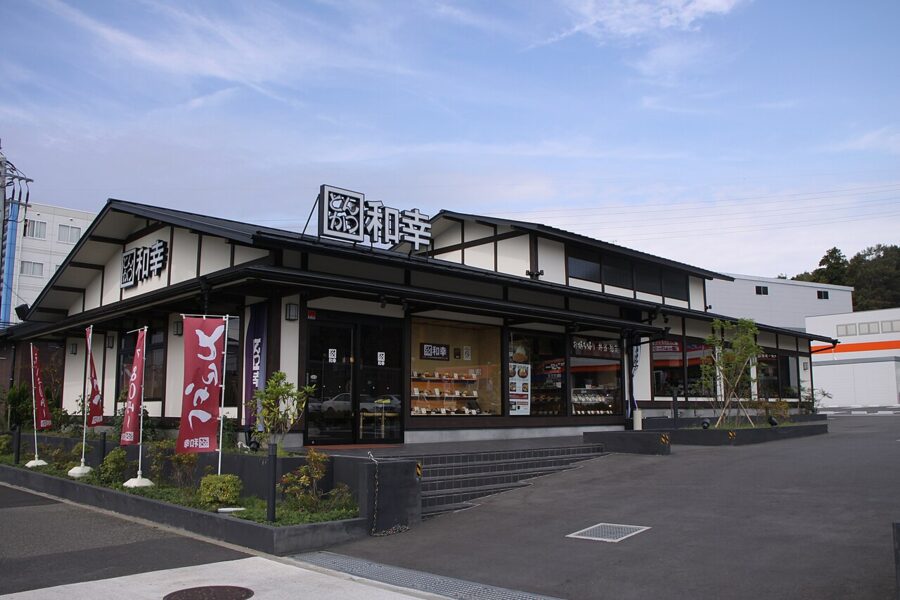
Katsuya, founded in 1998, is the budget king: a katsudon ume (80 g loin) costs ¥682 including tax, and the counters use automatic fryers that keep the cutlets consistent. Saboten, the Shinjuku-born chain, is a step up, with branded-pork sets and a long menu of seasonal specials. Wako, which opened its first shop in 1958, rests its cutlets on a wire rack so the crust doesn’t steam, and made cabbage and miso soup refills free from the start. Hamakatsu, the Kyushu chain, is the one to look for in Nagasaki and Fukuoka.
Prices, queues and what to skip
The price ladder in Tokyo, based on menus and bills from 2025 and 2026, looks roughly like this. Expect a few hundred yen of drift either way.
| Level | Example | What it cost |
|---|---|---|
| Chain katsudon | Katsuya, katsudon ume | ¥682 |
| Old-school set | Isen, rosu set | ¥1,950 |
| Famous counter | Tonki, hire set | ¥2,500 |
| Seasonal premium set | Maisen, kurobuta with seafood fry | ¥2,830 |
| Historic katsuretsu | Ponta Honke, katsuretsu alone | about ¥4,070 |
| Reservation-only | Narikura | about ¥5,000 |
Queue behaviour is simple: the famous counters have lines, and the lines move because tonkatsu is a fast meal. Join the end, keep the pavement clear, and don’t send one person ahead to hold a place for a group that hasn’t arrived. Some shops hand out menus while you wait so you can order at the door. At Kawakyu and some others you write your name on a list.
A few things to skip. Don’t drive across Tokyo for Rengatei expecting the best cutlet of your trip; go for the room and the story.
Don’t order the largest weight at a premium counter on your first visit, because 250 g of rich rosu is a lot of fat and the cheaper 150 g cut is often the better balanced. Skip the supermarket tonkatsu under the heat lamps unless you’re reheating it at home. And don’t pour sauce over everything before you have tasted the pork; at a good counter you may not need it.
Japan has two tonkatsu days, 1 October and 10 October, and neither is a reason to go. Any weekday will do. Go to Tonki at 16:00 or Isen at 14:30, sit at the counter, order the rosu, ask for more cabbage, and eat the end slices first.
You Might Also Enjoy
 The Leshan Giant Buddha and Mount Emei: How to Visit Both From Chengdu, the Paths, the Boat and the Golden Summit
 Tropical Fruits of Southeast Asia: A Tasting Guide
 Staying in a Ryokan: What Happens, What It Costs and How to Choose One
 Huangshan: The Yellow Mountains by Cable Car and on Foot, Sunrise on the Summit and the Villages Below