Peking Duck in Beijing: The Two Roasting Schools, How to Eat It, and Where It Is Worth the Money
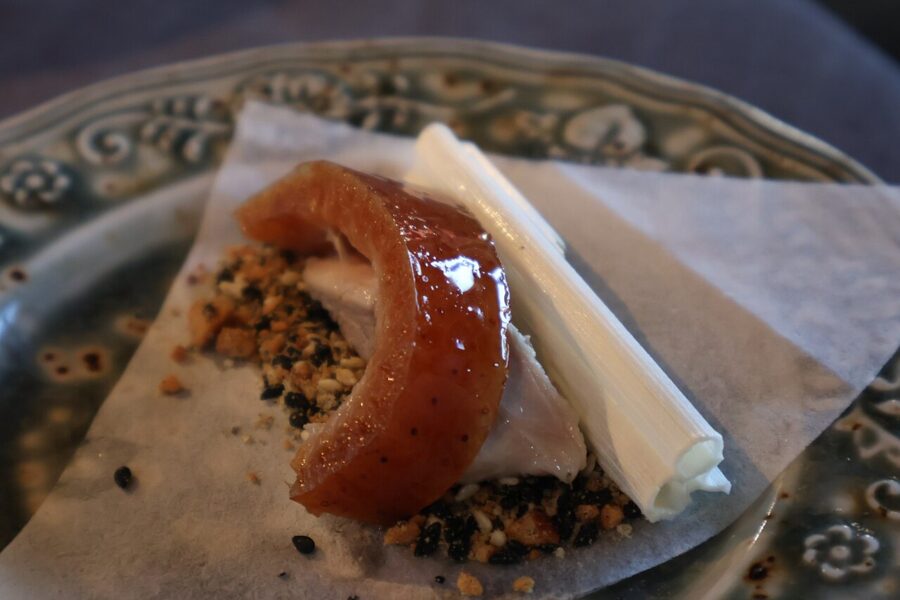
The best bite of Peking duck doesn’t involve a pancake. It’s the first one: a thin rectangle of skin from the breast, carved off the bird a few seconds after it leaves the oven, and laid next to a little dish of white sugar. You dip it, you eat it, and it shatters and then melts, sweet and smoky and gone. Everything after that is very good, but that first slice is the reason people cross Beijing for it.
I lived in Shenzhen for a while, and the duck I ate there was almost always Cantonese: roast duck and goose chopped on the bone and laid over rice. Peking duck (北京烤鸭, Beijing kaoya) was something you ordered at a northern restaurant, a dish from somewhere else. In Beijing it is the opposite, a whole performance with a carver, a timetable and a fight between two ways of building an oven that has been running for well over a century.
This guide covers what the dish is, the two roasting schools and the houses that keep them, how the meal runs from the first slice to the soup, and where to eat it in 2026 at every price. The quick version is in the table. The rest is the detail you want before you sit down.
| Restaurant | Style | Area | Rough cost | Best for |
|---|---|---|---|---|
| Quanjude (全聚德), Qianmen and Hepingmen | Hung oven, fruitwood | Qianmen | ¥288 a duck at Hepingmen | The original name, the classic carve |
| Bianyifang (便宜坊), Xianyukou | Closed oven | Qianmen | About ¥125–150 a head | Tasting the older school |
| Liqun (利群烤鸭店) | Hung oven, fruitwood | Qianmen hutongs | About ¥160 a head | A courtyard dinner with no fuss |
| Siji Minfu (四季民福) | Classic, generous plates | Forbidden City, Wangfujing | ¥150–220 a head | Best value among the famous names |
| Da Dong (大董) | Lean, very crisp skin | Dongsi, Gongti | ¥400–600 a head | A polished, modern meal |
| Sheng Yong Xing (晟永兴) | Jujube wood, caviar option | Sanlitun | ¥300–450 a head | A special night out |
| Minfang (东四民芳餐厅) | Neighbourhood Beijing cooking | Dongsi | Half duck ¥128 | Duck on a budget |
In This Article
- What lands on the table
- The bird
- Air, boiling water, maltose and a day of hanging
- How old is it, really?
- Hung oven or closed oven?
- Gualu: the open fire
- Menlu: the oven with the fire put out
- Telling them apart on the plate
- How the meal runs, from carving to soup
- Ordering: whole, half and how many people
- Timing and pre-ordering
- The carving and the sugar bite
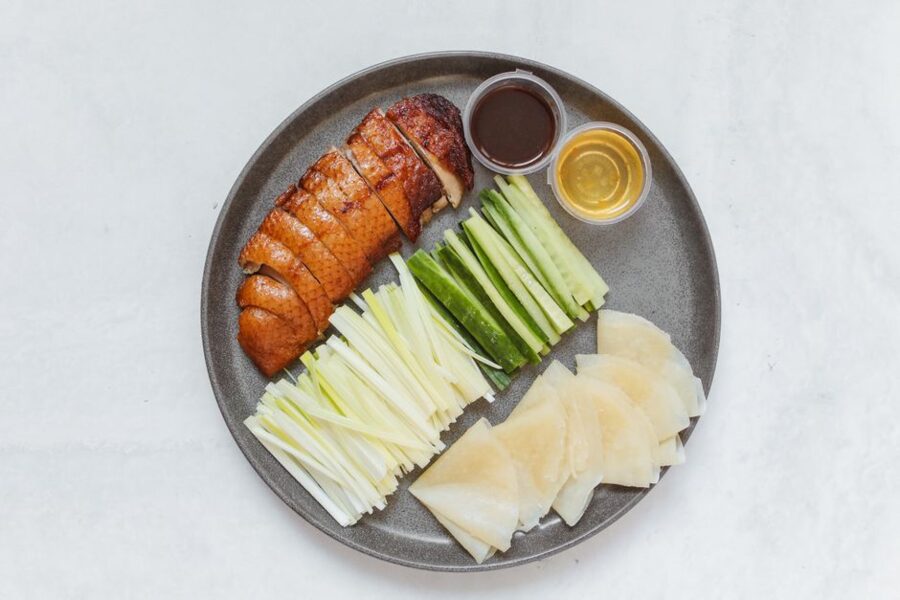
- Pancakes, sauce and the wrap
- The bones
- Booking, queues and paying
- The old names
- Quanjude: Qianmen, Hepingmen and Wangfujing
- Bianyifang at Xianyukou
- Liqun, down the hutong
- The new rooms
- Siji Minfu
- Da Dong
- Sheng Yong Xing and 1949 Duck de Chine
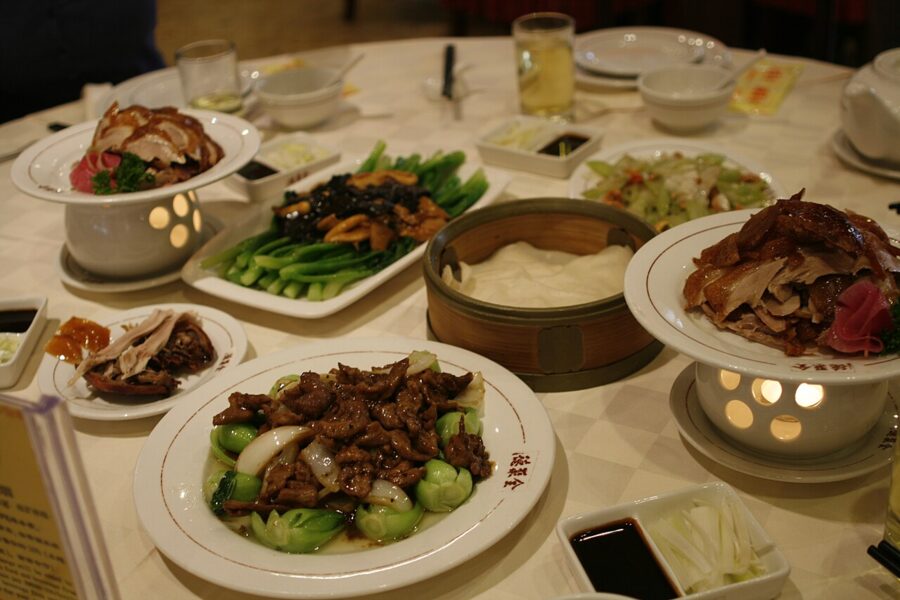
- Order more than the duck
- Duck beyond Beijing
- Where to eat it: by neighbourhood and budget
- Qianmen
- Forbidden City and Wangfujing
- Dongsi, Gongti and Sanlitun
- Under ¥150 a head
- Takeaway
- Skip these
What lands on the table
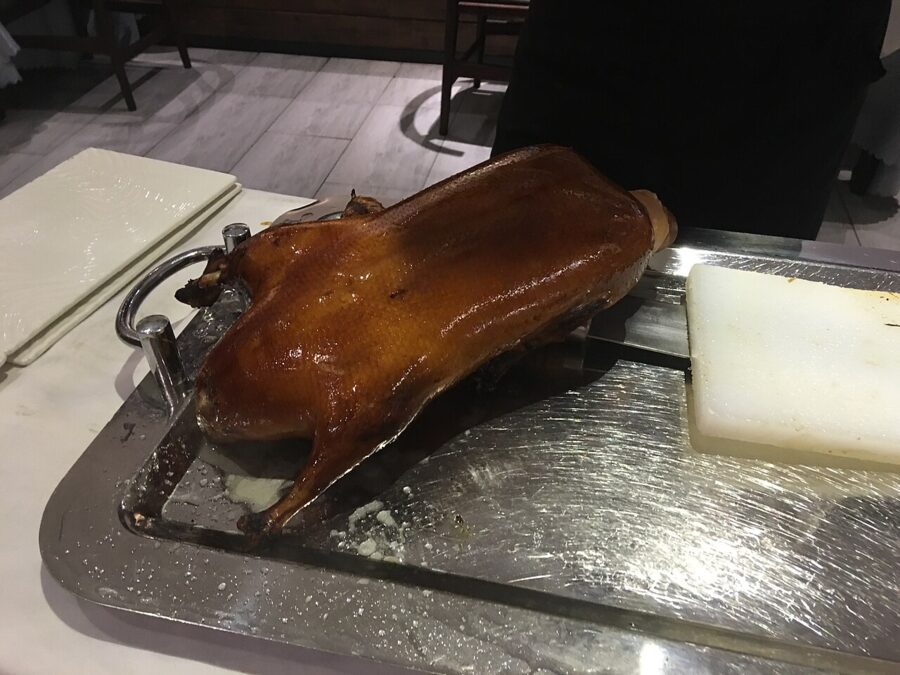
“Peking” is just the old spelling of Beijing, and in Chinese the dish is simply Beijing roast duck. It’s a roast duck carved at the table and eaten in stages: skin on its own, then skin and meat wrapped in thin pancakes with sweet bean sauce, scallion and cucumber, and at the end, if you want it, the rest of the bird cooked into a second dish. It’s less a recipe than a sequence. The bird is prepared over two days so that the skin separates from the meat and turns to glass in the oven.
The bird
The duck is the white Peking duck, raised for the table and traditionally fattened at the end of its life by force-feeding, which gave it the old name 北京填鸭, “Peking stuffed duck”. That has mostly gone. By 2021, Beijing press reports put the share of roast-duck birds that were no longer force-fed at more than 95 percent, because newer breeds put on the weight by themselves.
The restaurants are fussy about age and weight. Sheng Yong Xing, for example, says its ducks are 45 days old and come with a certificate of origin. You won’t be asked to choose a bird, but at the classic houses you’ll sometimes see two grades of duck on the menu, and the dearer one is the fatter, more carefully raised bird.
Air, boiling water, maltose and a day of hanging
The preparation is what makes the skin. After the duck is killed and plucked, air is pumped under the skin through the neck so that it lifts away from the meat. The innards come out through a small cut under the wing rather than through the belly, so the bird stays whole and can hold water in the oven later.
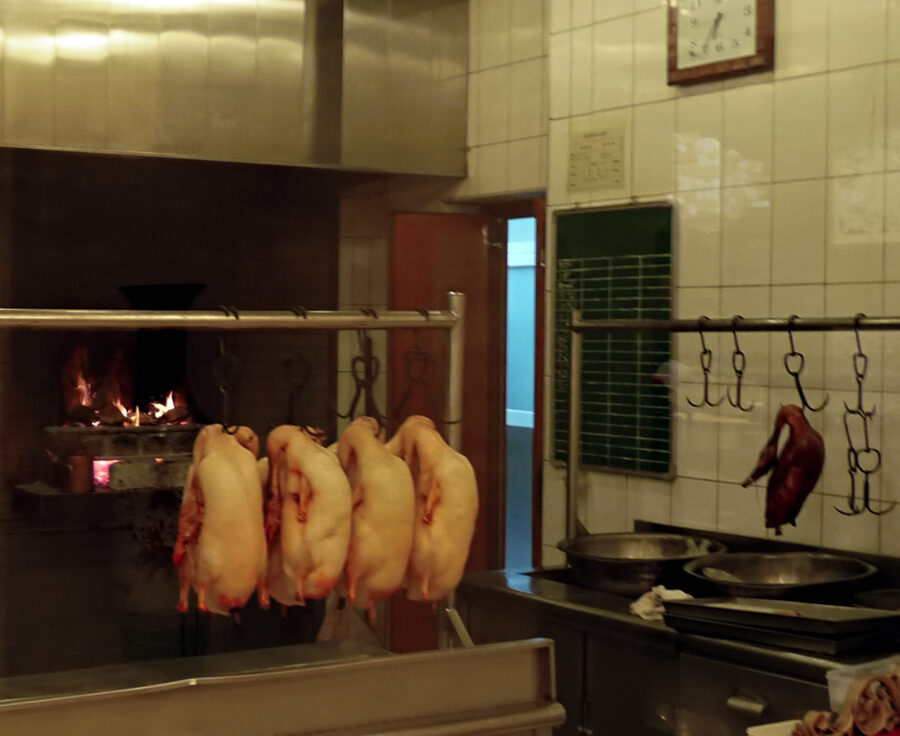
Then it’s scalded with boiling water, which tightens the skin, and brushed with maltose syrup, which gives the red-brown lacquer. It hangs for about a day in a cool, dry place. By the time it goes in the oven the skin is dry and taut, like parchment stretched over a frame.
How old is it, really?
Roast duck in Beijing’s imperial kitchens is old. A court dietary manual of 1330, the Yinshan Zhengyao (饮膳正要) by the imperial dietician Hu Sihui, already lists roast duck, and the national intangible heritage register notes records of roast duck in both the Yuan and Qing palaces. The dish in the form you’ll eat it, with its specialist ovens and named houses, belongs to the Ming and Qing centuries.
By the Qianlong reign in the eighteenth century it had left the palace. A Beijing verse of the time, Yang Miren’s Dumen Zhuzhici (都门竹枝词), lists “hung-oven duck and roast pig” among the city’s pleasures, so the hung oven was in Beijing well before Quanjude opened. What Quanjude did was build a restaurant, and then a brand, around it.
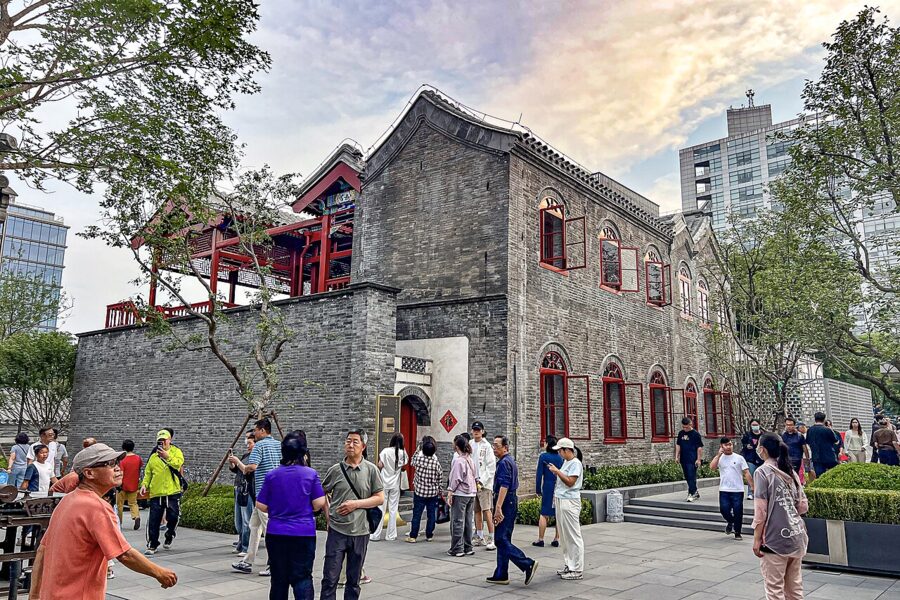
The two houses everyone names date themselves differently. Bianyifang traces itself to 1416, in the Ming Yongle reign, as a small workshop near Caishikou; the Xianyukou shop it grew out of opened in 1855. Quanjude opened in 1864 on Qianmen Street. In 2008 the roast duck craft of both was added to China’s second national list of intangible cultural heritage, as one entry, “roast duck craft”, with each house protecting its own oven.
Hung oven or closed oven?
This is the argument at the heart of Peking duck, and you can taste it. Quanjude roasts in a hung oven (挂炉, gualu) over an open fire of fruitwood. Bianyifang roasts in a closed oven (焖炉, menlu), where the fire is out before the duck goes in. Both are on the heritage register, and both houses will tell you theirs is the real thing.
Gualu: the open fire
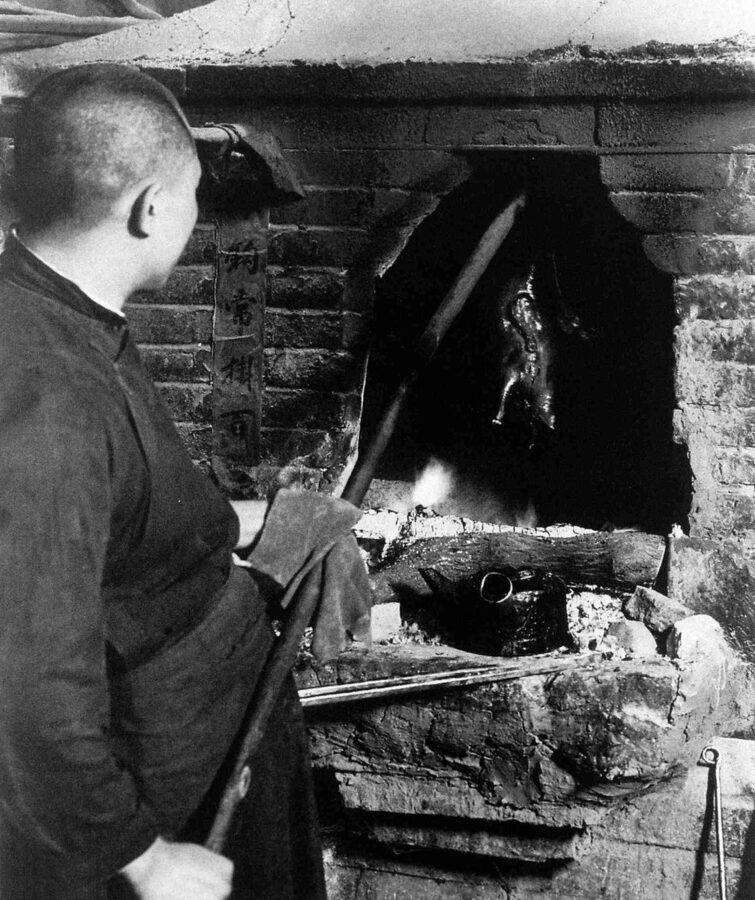
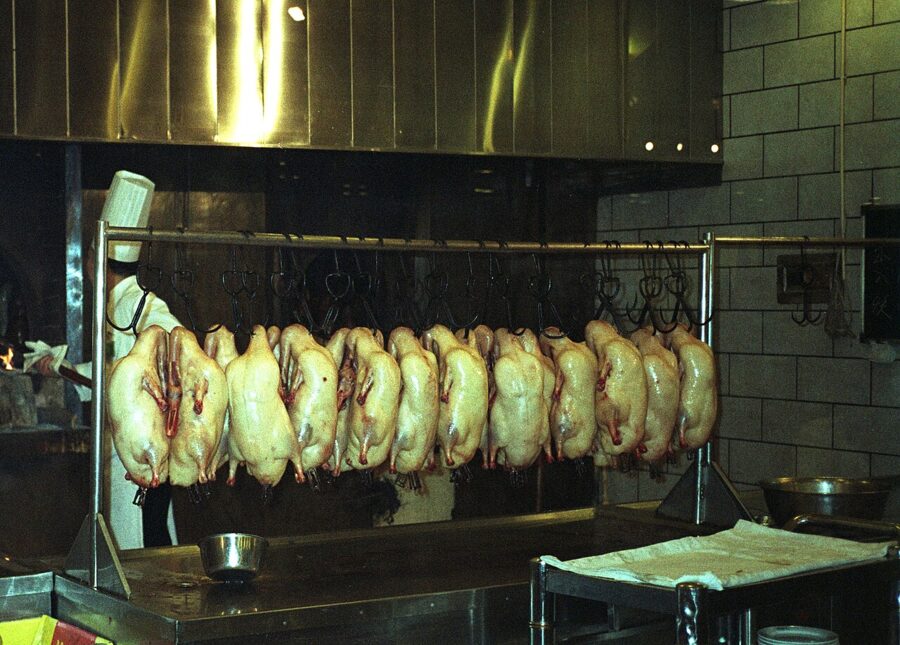
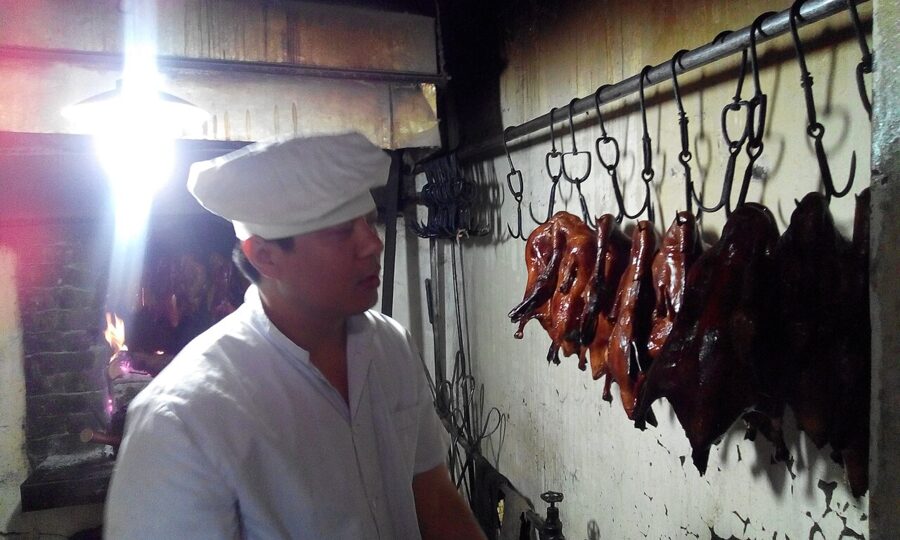
A hung oven is a tall brick oven with an open mouth and no door. The fire burns on the floor, usually jujube or pear wood, and the ducks hang from hooks above it. The roaster works standing up with a long pole, turning each bird so that the back cooks first, then the breast, and lifting it over the flames at the end to colour the underside.
Before it goes in, the duck’s cavity is filled with hot water. The water steams the meat from inside while the fire roasts the skin from outside, so the meat stays moist even though the skin takes a fierce heat. Fat drips into the fire as it renders, and the skin comes out thin, crisp and smoky.
Menlu: the oven with the fire put out
A closed oven is a squat brick box, about a metre each way, with a door. It’s heated by burning sorghum stalks inside until the walls are hot, then the fire is put out, the ducks go in on an iron rack and the door is shut. The heat stored in the brick does the cooking. The duck never touches a flame, which is why it has the nickname “green” roast duck.
The skill is all in the temperature, because once the door closes there’s no fire to adjust. Too hot and the birds burn, too cool and they stay raw, and the older roasters judged it by experience and barely opened the door. The national heritage listing for Bianyifang notes that few masters with the full technique remain, which is the clearest sign of how hard it is.
Telling them apart on the plate
Put a slice of each next to each other and the differences are obvious. The hung-oven duck has a thinner, crisper, more brittle skin that comes away cleanly from the meat, with a clear smoky note from the wood. The closed-oven duck has a shinier, slightly softer skin that stays attached, less smoke, more fat in the mouth and noticeably juicier meat.
Neither is better. If your idea of Peking duck is that first shattering slice dipped in sugar, the hung oven is your school. If you care more about the meat in the pancake, try the closed oven. Ideally, eat both, on different days, and see which you remember.
| Hung oven (gualu) | Closed oven (menlu) | |
|---|---|---|
| House | Quanjude, Liqun and most modern rooms | Bianyifang |
| Fuel | Jujube or pear wood, burning throughout | Sorghum stalks, burnt out before the duck goes in |
| Oven | Tall, open, no door | Low brick box with a door |
| Skin | Thin, brittle, smoky, separates from the meat | Glossy, softer, stays on the meat |
| Meat | Firmer, steamed by water in the cavity | Juicier, more tender |
How the meal runs, from carving to soup
Duck restaurants run like clockwork, and once you know the order you can relax. You order, you eat a few cold dishes, and when the duck is ready, which is when the oven says so and not when you do, it arrives on a trolley with a carver. From then on the staff will steer you through it.
Ordering: whole, half and how many people
A whole duck with a few side dishes feeds three or four people. Two people can manage a whole duck if they skip most of the sides, or order a half. Most houses sell both, and at the classic houses a whole duck is the surest way to see the full carving at your table, so if there are three of you, don’t hesitate.
The menu often lists more than one duck. At Quanjude Hepingmen, for example, the August 2026 menu had a Shengshi Mudan duck at ¥288 and an “1864 heritage” duck set at ¥336. Bianyifang’s menu has its own flavoured variants, such as a duck roasted with flower aromatics. If in doubt, order the plain house duck, which is what the place is built around.
Timing and pre-ordering
A duck takes a while. At busy times the wait from order to table can be long, and the bird comes when the oven says so, not when you do. Order the duck the moment you sit down, before you look at anything else on the menu, and fill the wait with cold dishes.
If you book a table or a private room at one of the classic houses, ask to order the duck with the booking so it’s roasting when you arrive. Over Spring Festival, expect set menus rather than à la carte at the famous branches; Quanjude Wangfujing sold New Year’s Eve sets in 2026, and those book up weeks ahead.
The carving and the sugar bite
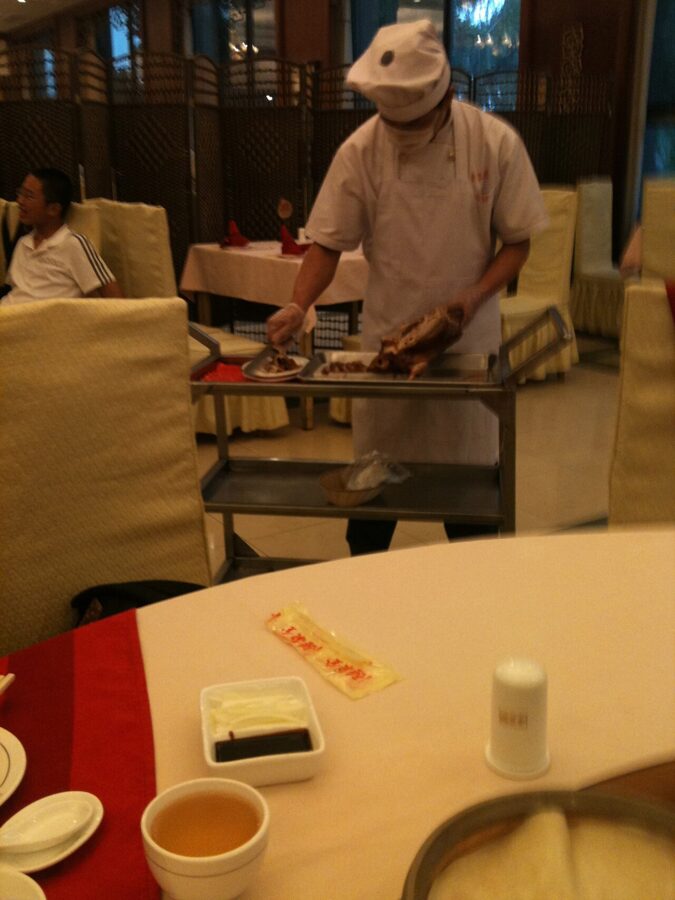
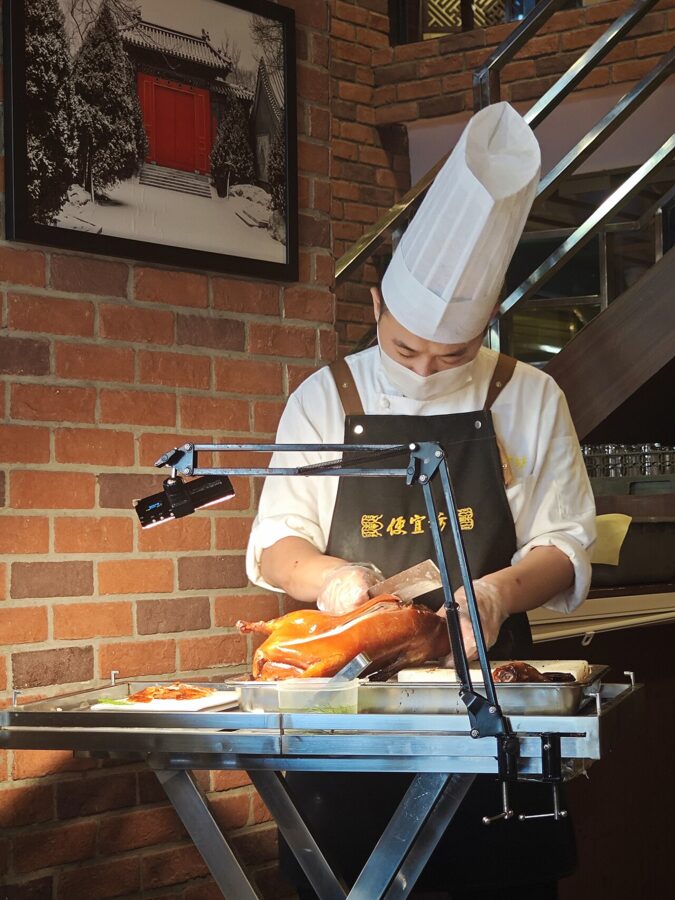
The carver works fast. The first cuts take the skin off the breast in wide strips, and those strips, sliced thin, come to you first with a dish of sugar. Then the breast meat is cut out and sliced on the angle, and the legs and back are carved into pieces that each carry a strip of skin, laid out in overlapping rows on the platter.
Old Beijing eats that first skin dipped in white sugar, and it sounds strange until you try it. The sugar sharpens the fat instead of drowning it. Some places also put garlic paste on the tray for the skin, which is the other old way, and much stronger.
How do you know you’re getting a good one? The skin should crackle, not bend, and it should come to the table hot. Each slice of meat should carry a strip of skin, and the pancakes should be warm and thin enough to see through. At a classic house you should see the bird carved in front of you; a duck that arrives already sliced from the kitchen has usually been sitting.
Pancakes, sauce and the wrap
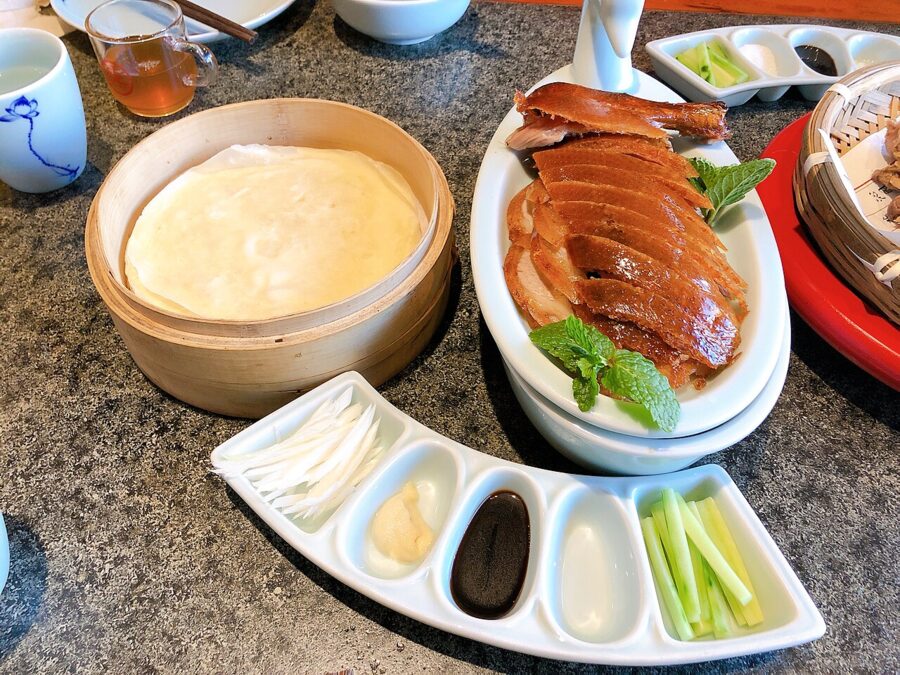
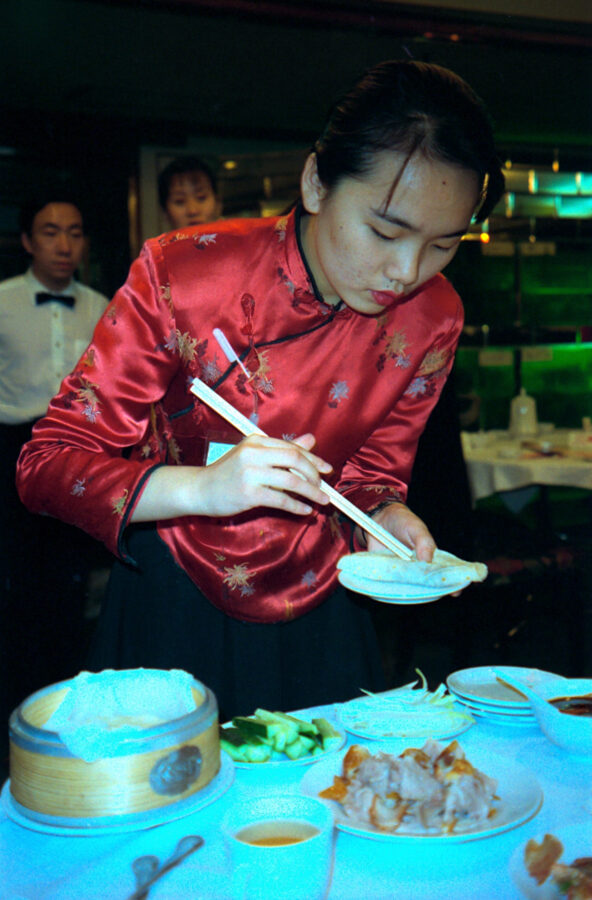
The pancakes are thin, soft wheat wrappers, called heyebing (荷叶饼) at many houses for their lotus-leaf shape. They’re made by pressing two discs of dough together, cooking them and peeling them apart, which is why each one is so thin. They arrive in a steamer basket; keep the lid on so they stay warm.
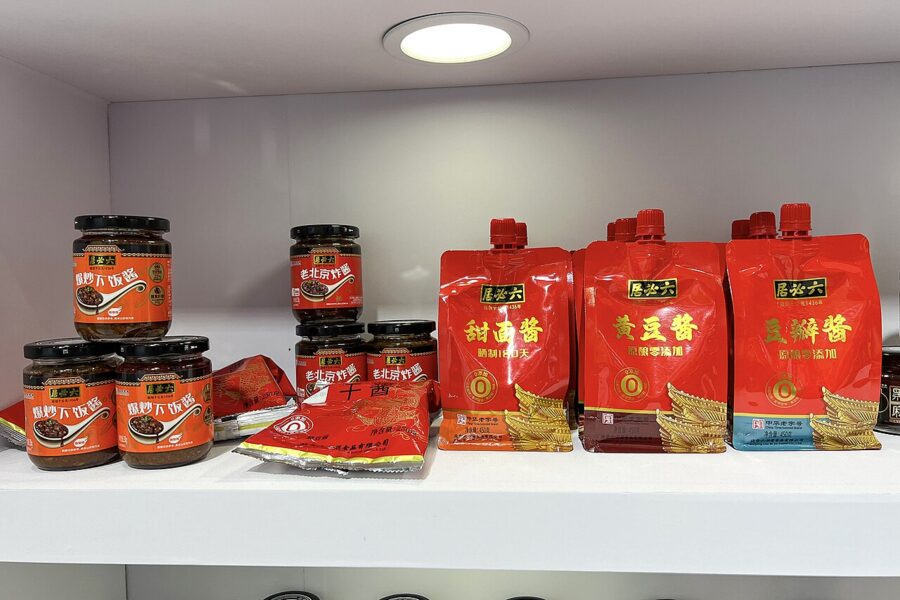
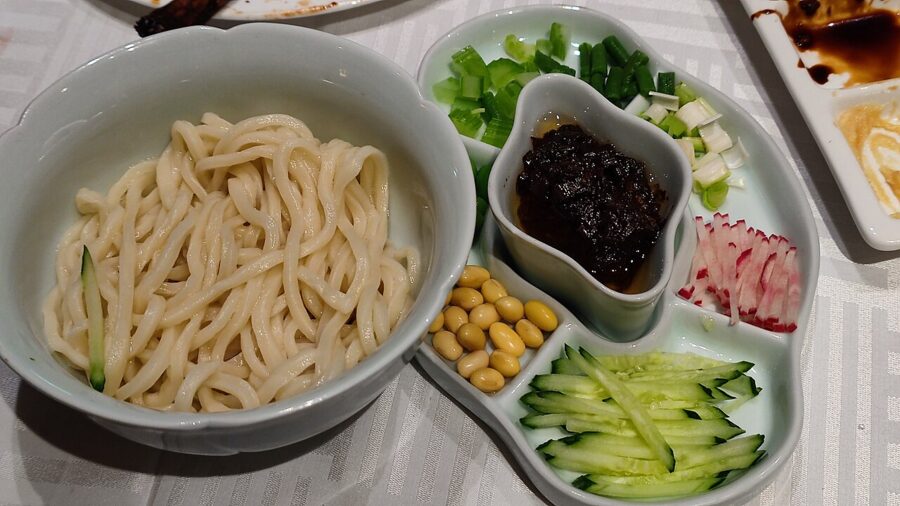
The sauce is sweet bean sauce (甜面酱, tianmianjiang), a thick fermented wheat paste, saltier and darker than the hoisin you get with duck abroad. The trick the waiters will show you is to dip the duck into the sauce rather than spreading sauce on the pancake. Then add scallion and cucumber, fold up the bottom, fold in the sides and eat it with your hands.
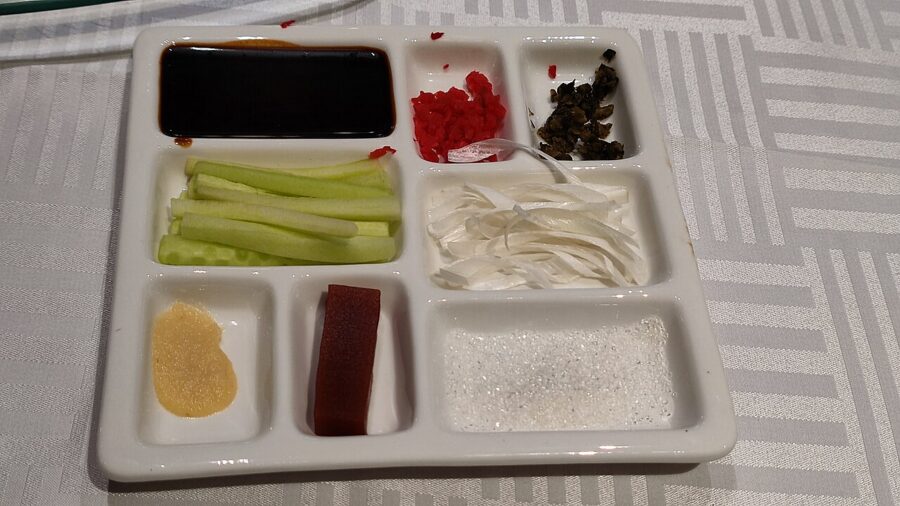
Every house has its own tray of extras. Siji Minfu brings sugar, garlic paste, pickles and sliced vegetables. Bianyifang often adds hawthorn strips and melon, which cut the fat. None of it is compulsory, but it’s worth trying a wrap with each, because the sharper things change the duck more than you’d expect.
The bones
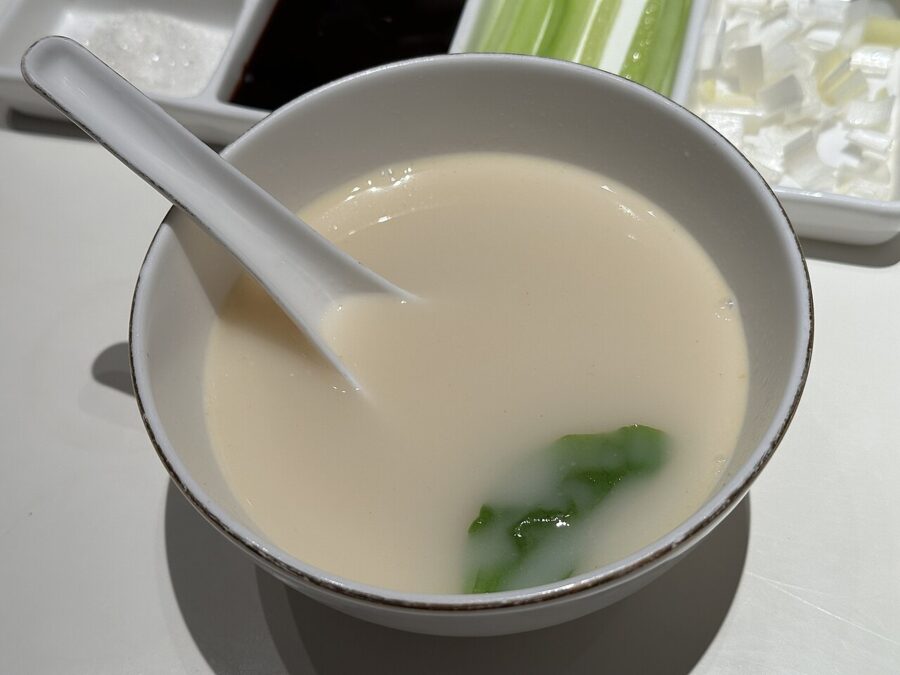
When the carving is done, the carcass (鸭架, yajia) goes back to the kitchen, and you choose what happens to it. The traditional choice is a soup (鸭架汤), milky white and deliberately plain, often with cabbage and soft tofu. The other option is to have the bones chopped and fried with salt and pepper (椒盐鸭架), which is the better beer snack.
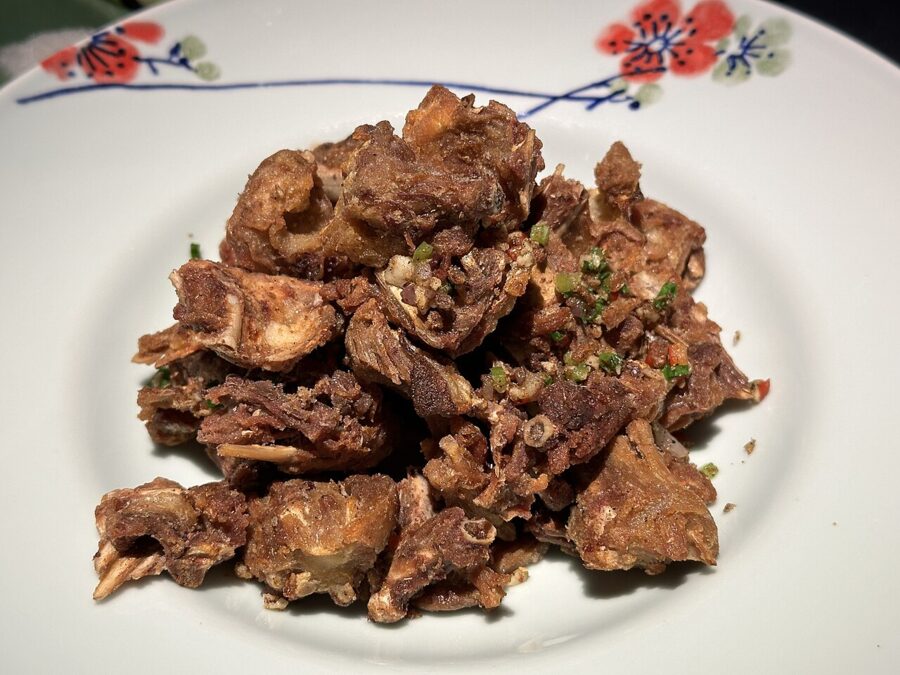
If you order a whole duck, the kitchen usually does this for free, and you can also take the carcass home in a bag. Order the soup if it’s cold out. Order the salt-and-pepper bones if you’re still hungry.
Booking, queues and paying
Quanjude, Bianyifang, Da Dong, Sheng Yong Xing and 1949 Duck de Chine all take bookings, and you should book for dinner. At Bianyifang Xianyukou, private rooms over public holidays go about two weeks ahead. At tiny Liqun, ring ahead.
Siji Minfu is the exception. You take a queue number, at the door or through its official WeChat account, and you wait; at the busiest branches you may have to be at the restaurant to get one. After touts started selling queue numbers near the Forbidden City in 2023, the chain switched to paper numbers and queuing in your own name.
Paying is easy. Alipay and WeChat Pay both take foreign cards, the Michelin-listed places accept credit cards, and cash is still legal tender. Check the menu for a service charge at the smarter rooms.
The old names
Beijing has a word for these places, laozihao (老字号), “old brand names”, and the duck houses are some of the best known. They’re not the cheapest or always the best, but they’re the reference point, and a meal at one of them is the version of Peking duck every other restaurant is measured against.
Quanjude: Qianmen, Hepingmen and Wangfujing
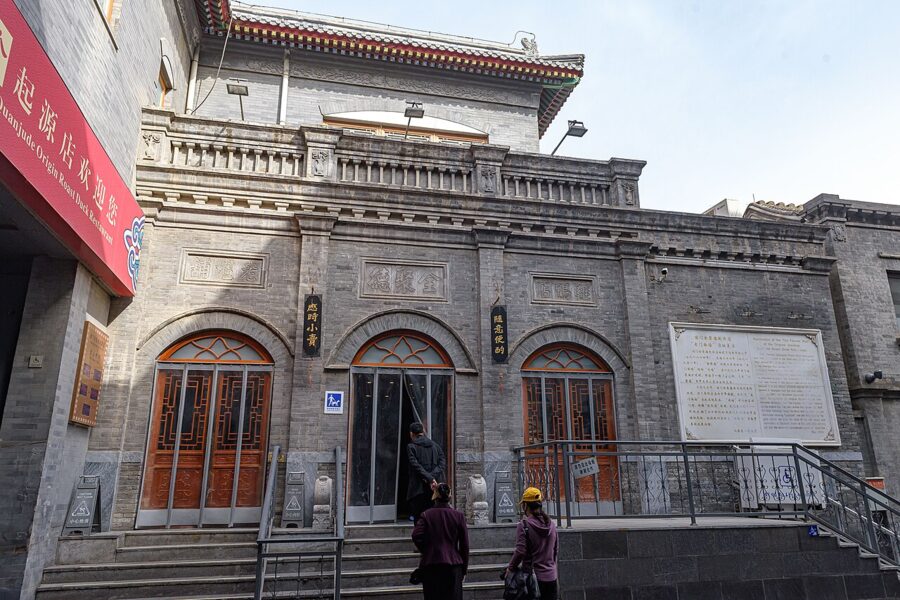
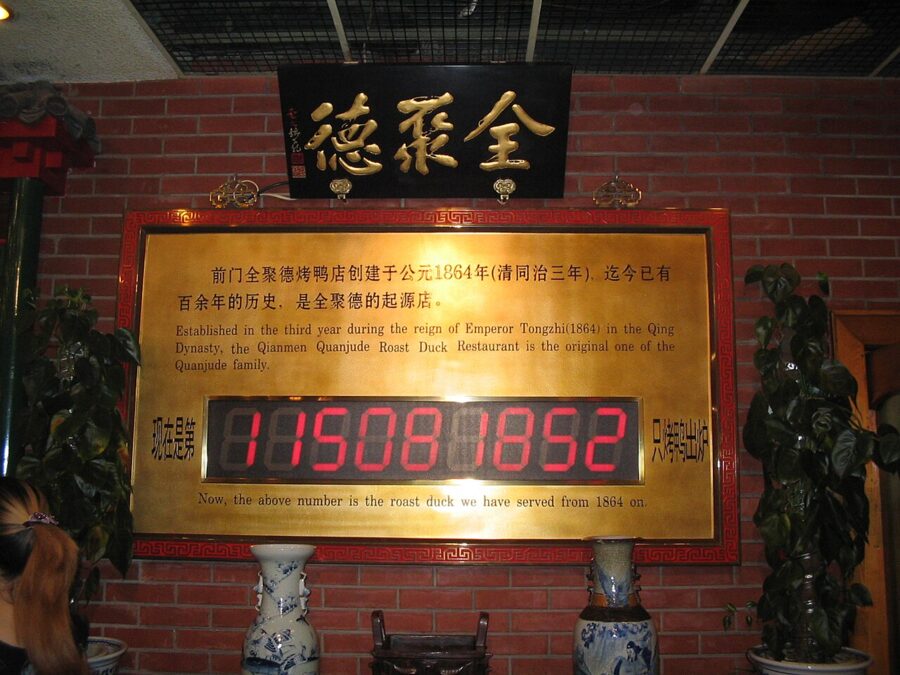
Quanjude (全聚德) was started in 1864 by Yang Quanren, who bought a grocery shop on Qianmen Street and turned it into a roast duck shop. It became the name abroad for Peking duck and, today, a listed company with nearly a hundred restaurants at the end of 2025, a handful of them franchises abroad. It is also the house of the hung oven.
The Qianmen restaurant (前门店), at 30 Qianmen Street, is the one to go to if you want the story. Take Line 2 to Qianmen station, use Exit B or C and walk south into the pedestrian street; it’s about 200 metres along on the east side. It opens roughly 11:00–14:30 and 16:30–21:00, and since 2025 it has a second-floor terrace restaurant, Wangtianr (望天儿), over the street, which books out days ahead in summer.
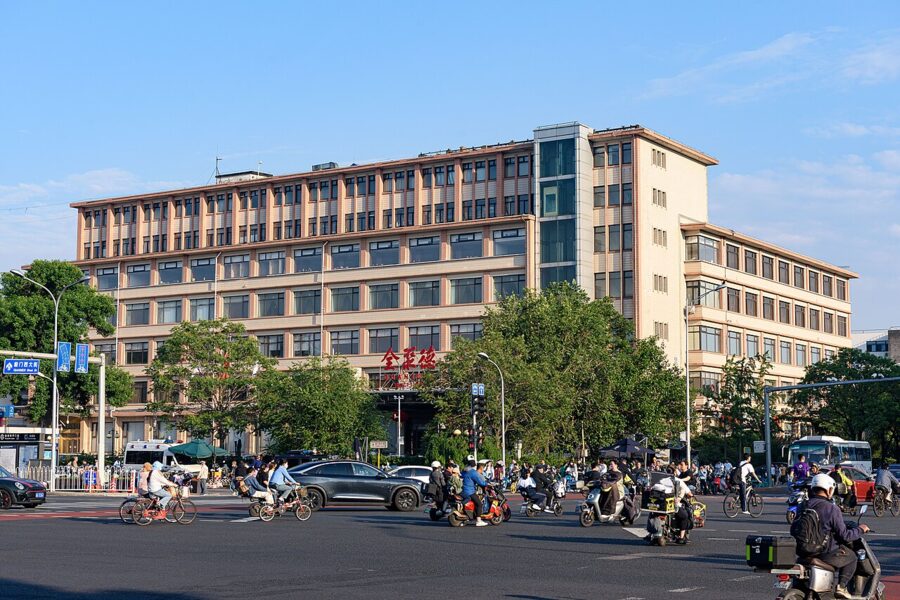
For the big classic room, go to Hepingmen (和平门店) instead, Quanjude’s headquarters building, which opened on 25 April 1979 by Hepingmen station on Line 2. It’s huge, it does banquets, and it’s where the August 2026 menu prices above come from. The Wangfujing branch (王府井店), at 9 Shuaifuyuan Hutong just east of Wangfujing Street, opens 11:00–21:00 and is the easy option if you’re staying in the centre.
Is it overpriced? A bit, for the famous name. The duck is good, the carving is the textbook version, and if you want a single Peking duck meal in Beijing with no surprises, this is it. If you want the best duck in the city, this probably isn’t where you’ll find it, and the busloads at Qianmen don’t help.
Bianyifang at Xianyukou
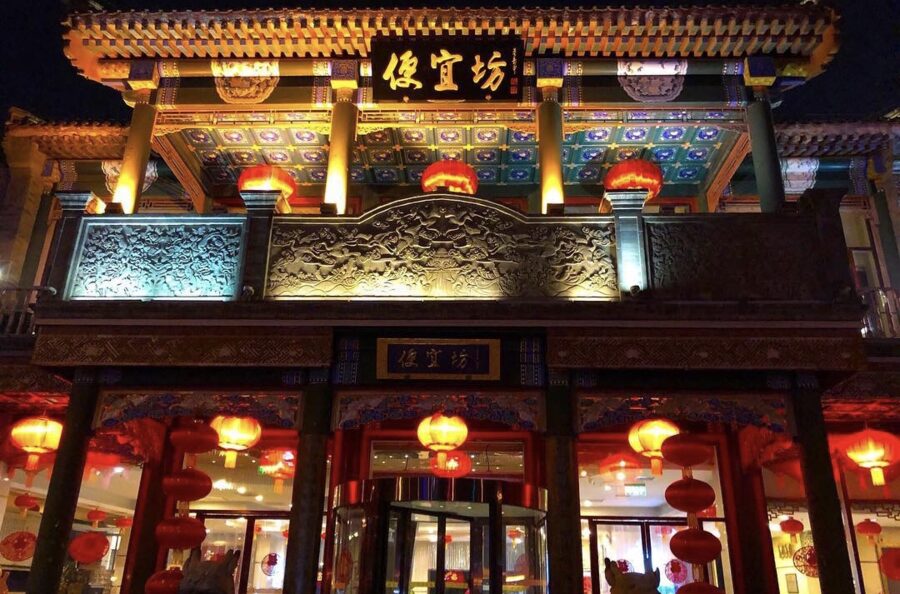
Bianyifang (便宜坊) is the closed-oven house, and the name doesn’t mean “cheap”. Read bianyi here as “convenient and agreeable”. It’s the place to taste the older school of Peking duck, the juicier one, and the Xianyukou restaurant (鲜鱼口店), at 65–77 Xianyukou Street, is the one with the history.
From Qianmen station, Exit G brings you out by Xianyukou and the restaurant is about 350 metres away. It opens 10:30–14:00 and 16:30–21:00. It costs less than Quanjude, at about ¥125–150 a head on recent menus, and the Xianyukou lane around it is a good place to walk off dinner.
Order the house duck, mustard duck feet and the salted duck liver, and finish with the house suanmeitang (酸梅汤), a sweet-sour plum drink that does a better job with fat than any tea. Bianyifang also has a branch by Chaoyang Park, at 4F, Building 16, Tianshuiyuan Beili, if you’re staying in the east.
Liqun, down the hutong
Liqun Roast Duck (利群烤鸭店) is a small courtyard restaurant at 11 Beixiangfeng Hutong, a few minutes’ walk south-east of Qianmen station through the lanes. It was opened in the early 1990s by Zhang Liqun, a hung-oven roaster who had worked at Quanjude, and it still roasts over fruitwood in a cramped courtyard house.
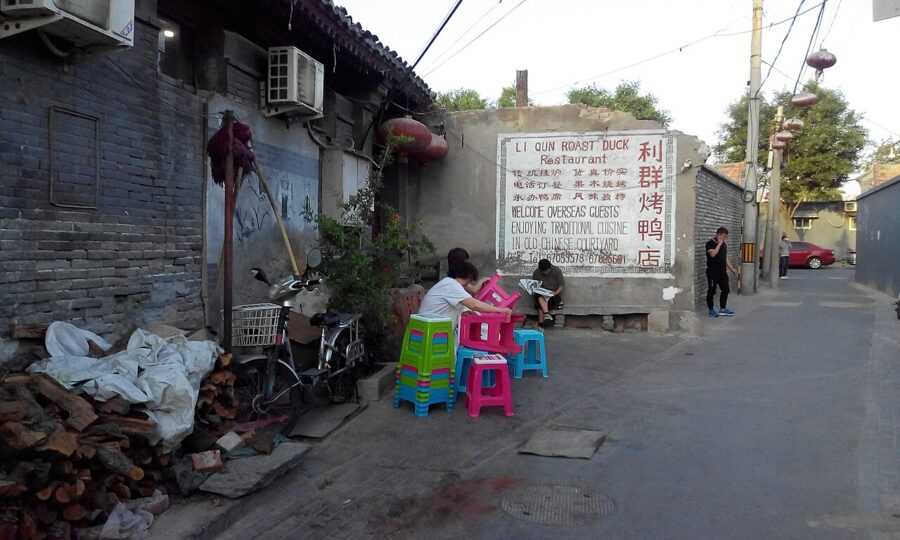
Service is brisk. It opens 11:00–22:00, costs about ¥160 a head, and the walls of the entrance passage are covered with photographs of famous diners. The duck is very good, the setting is pure old Beijing, and the mustard duck feet are the other thing to order. Ring ahead to book, because the tables are few.
The new rooms
The famous names have serious competition. Since the 1980s a generation of restaurants has rethought the duck, leaner, crisper, plated like a tasting menu, or simply cooked better than the old houses for less. These are the places Beijing people actually argue about.
Siji Minfu
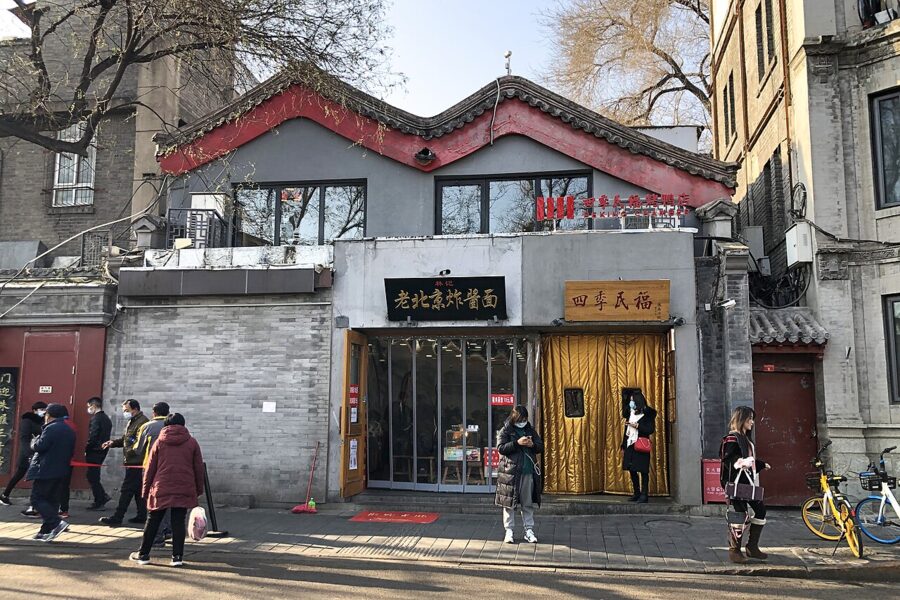
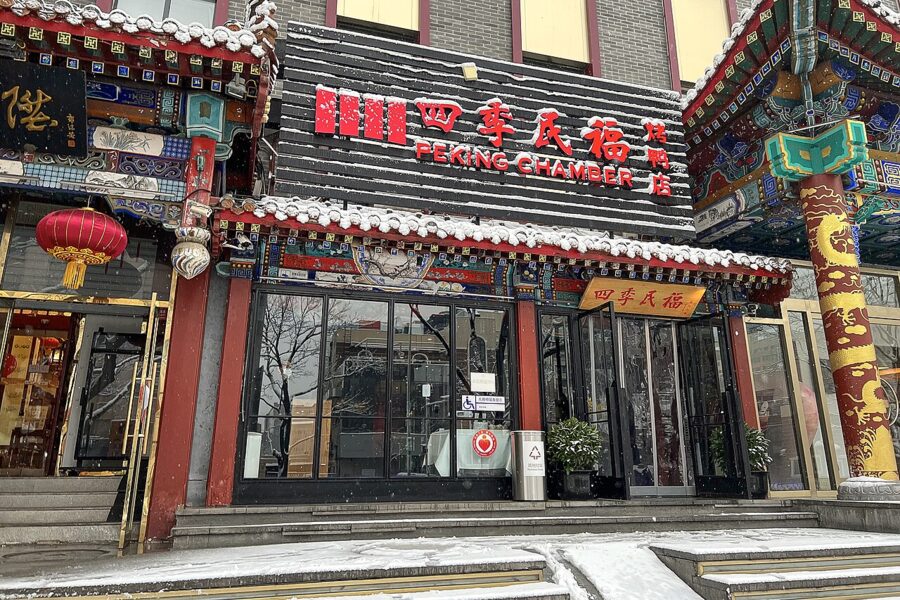
Siji Minfu (四季民福), known in English as Peking Chamber, is the duck Beijing people tend to recommend first. It’s not cheap, at about ¥150–220 a head, but the duck is excellent, the portions are generous and the rest of the menu is reliable. The catch is the queue.
The Forbidden City branch (故宫店), at 11 Nanchizi Street, is the one everyone wants, for the view of the palace corner tower from the window tables. The city’s tourism bureau listed its hours this year as 10:30–21:30 Monday to Thursday and 10:30–22:30 Friday to Sunday. My guide to the Forbidden City fits a duck meal around a palace morning.
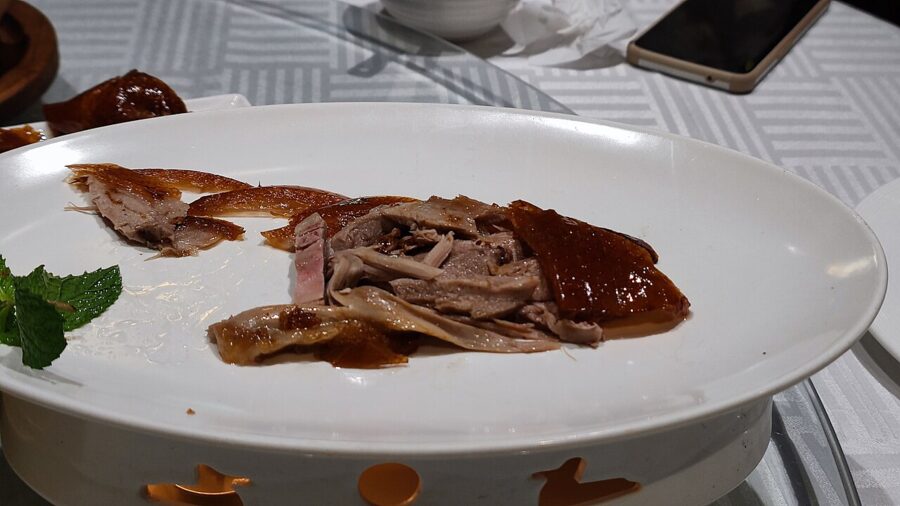
In holiday weeks the queues are serious. During a recent October Golden Week, the branch on Dong’anmen Street near the palace had nearly 180 tables queued for two-person seats, a wait of around four hours, while a takeaway duck took about 50 minutes. Get your number early and keep an eye on the queue, because if you miss your number you start again. Or go to one of the branches away from the sights, which serve the same duck without the view.
Da Dong
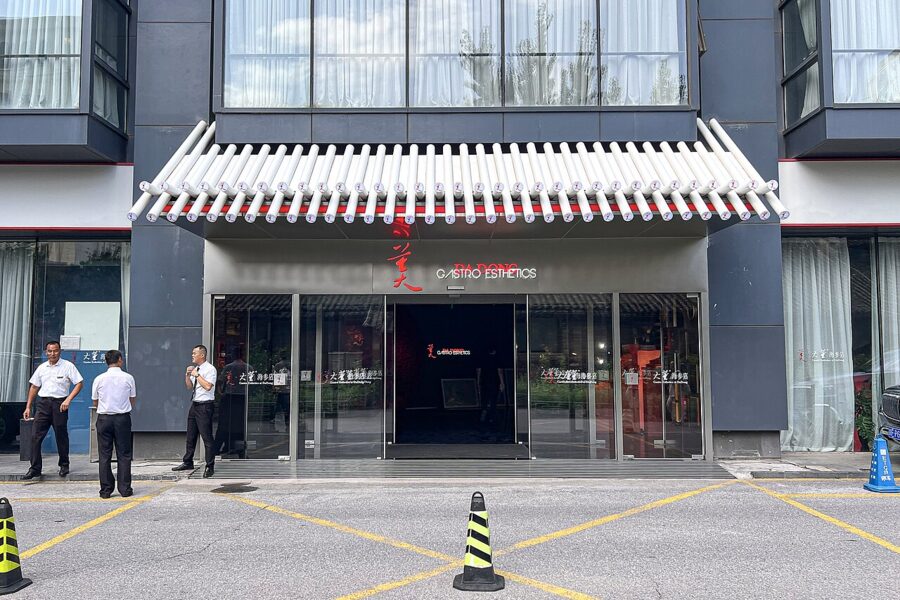
Da Dong (大董) is the chef Dong Zhenxiang’s restaurant group, which grew out of a roast duck restaurant at Tuanjiehu that opened in 1985. Its signature is the su bu ni (酥不腻) duck, “crisp but not greasy”, sold in English as the “superlean” duck. The skin is very crisp and the fat underneath is pared right back.
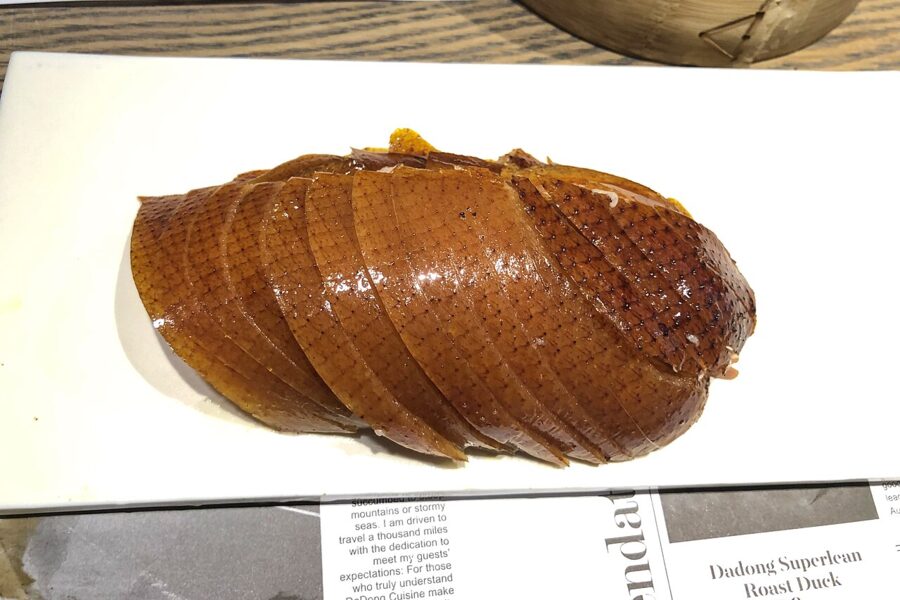
The flagship at Nanxincang, 1–2F Nanxincang International Plaza, 22A Dongsishitiao, is by Dongsishitiao station on Line 2 and opens 11:00–22:00. Expect around ¥400–600 a head. The rest of the menu is elaborate and expensive, with sea cucumber, artful cold dishes, and desserts. It’s the place for an anniversary, not for a first Peking duck.
Sheng Yong Xing and 1949 Duck de Chine
Sheng Yong Xing (晟永兴), at 5 Xindong Road in the Sanlitun embassy district, opened in 2017 and is in the Michelin guide with a star. It roasts its 45-day-old ducks over jujube wood in a brick oven on the second floor, and offers caviar as an add-on. Count on ¥300–450 a head, book directly with the restaurant, and order the duck with caviar only if someone else is paying.
1949 Duck de Chine (1949全鸭季), at 98 Jinbao Street, is a converted factory courtyard with a terrace, and its duck is announced with the bang of a gong. It’s in the Michelin guide, and the city’s tourism bureau puts it at ¥350–500 a head. Come for the setting in summer, on the terrace, with a group.
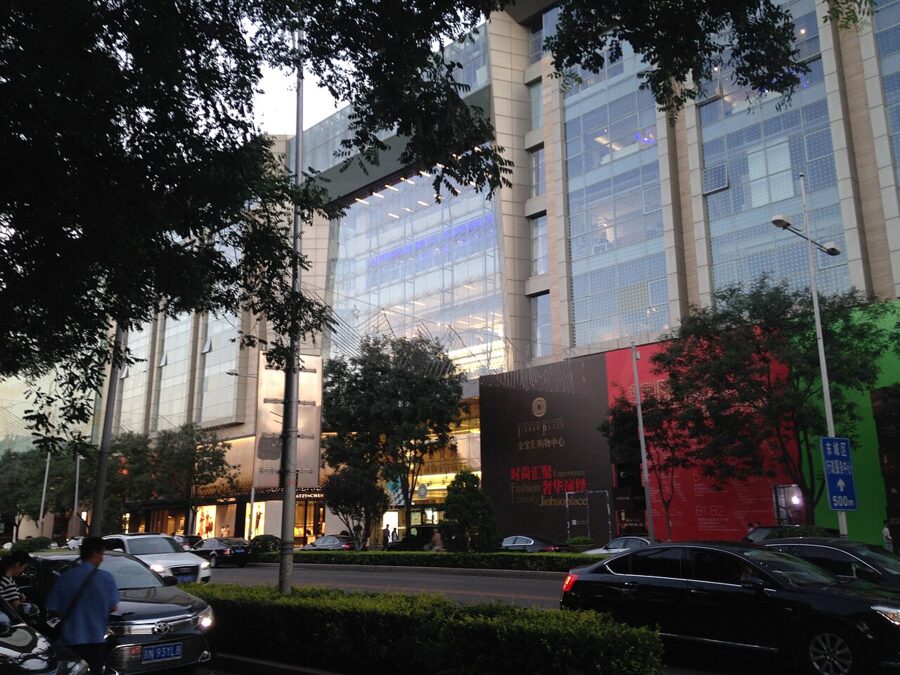
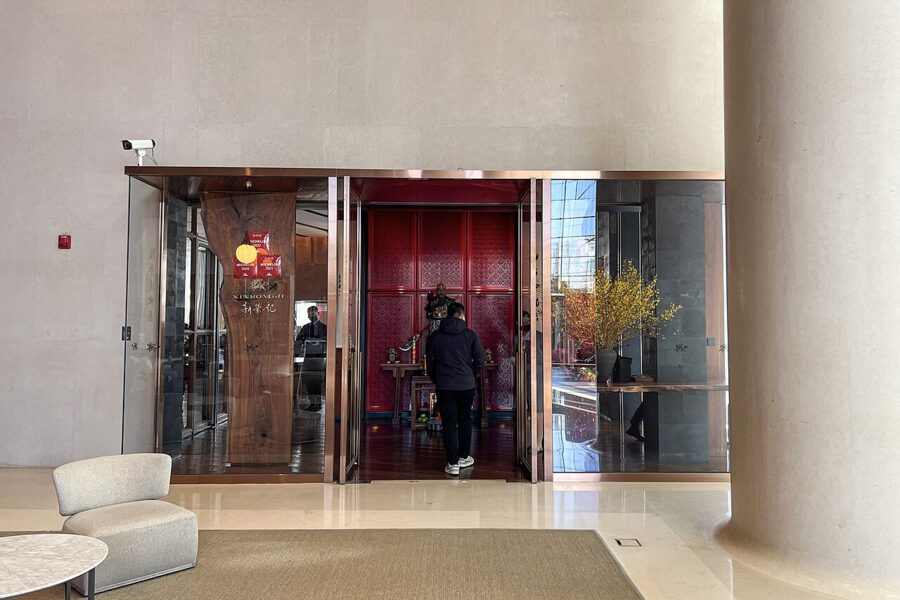
If you want a three-star meal with duck on the side, Xin Rong Ji (新荣记) at Xinyuan South Road, which holds three Michelin stars in the guide published in October 2026, serves a Peking duck at that branch. It isn’t a duck house, so treat the duck as an extra rather than the reason to book.
Order more than the duck
A duck house menu is mostly northern and Shandong cooking, and the side dishes are half the meal. A few to look for, by the Chinese on the menu:
- Mustard duck feet (芥末鸭掌): boned duck webs, cold, with a sharp mustard dressing. The best palate-cleanser on the table.
- Salted duck liver (盐水鸭肝): cold, soft and rich, like a lighter pâté.
- Flame-seared duck hearts (火燎鸭心): a hot, quick stir-fry and a Bianyifang speciality.
- Qianlong cabbage (乾隆白菜): raw cabbage leaves in a sesame-paste dressing, sweet and nutty, an old Beijing cold dish.
- Zhajiangmian (炸酱面): noodles with fermented soybean sauce. My guide to Chinese noodles covers the bowl in full.
- Sour and spicy cuttlefish roe soup (乌鱼蛋汤): a Shandong soup that turns up on many duck menus, sour, peppery and good after the fat.
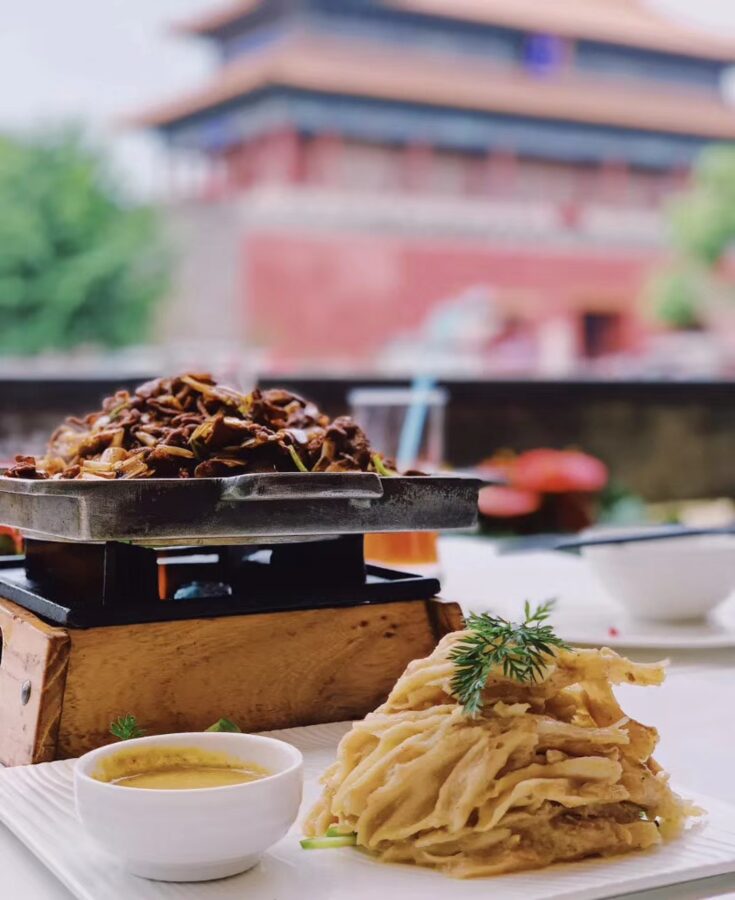
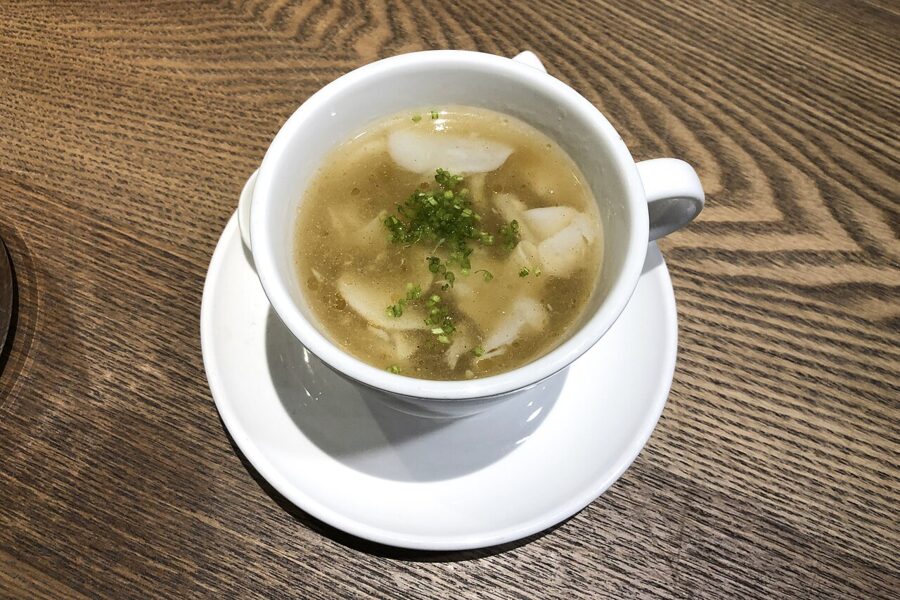
If you want to round out the trip, Beijing’s other big meals are Beijing dumplings, lamb-and-scallion in particular, and the copper-pot mutton hot pot, best in winter. For how it all fits into northern Chinese cooking, wheat rather than rice and Shandong technique at the base, see my guide to what to eat across China.
Duck beyond Beijing
Peking duck isn’t China’s only great duck, and it isn’t the only one you’ll meet. A few worth knowing so you don’t confuse them on a menu.
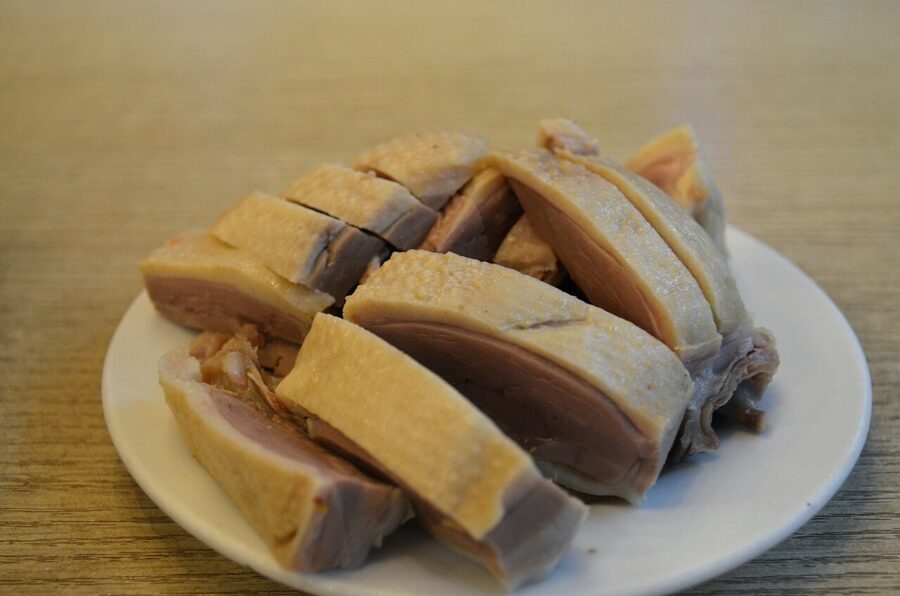
Nanjing salted duck (盐水鸭, yanshuiya) is the other famous city duck, brined, gently poached and served cold, pale and salty, with no crisp skin at all. In Hong Kong and Guangdong, Peking duck goes by the Cantonese name pin pei aap (片皮鴨), “sliced-skin duck”. The Cantonese roast duck and goose chopped on the bone are a different tradition altogether.
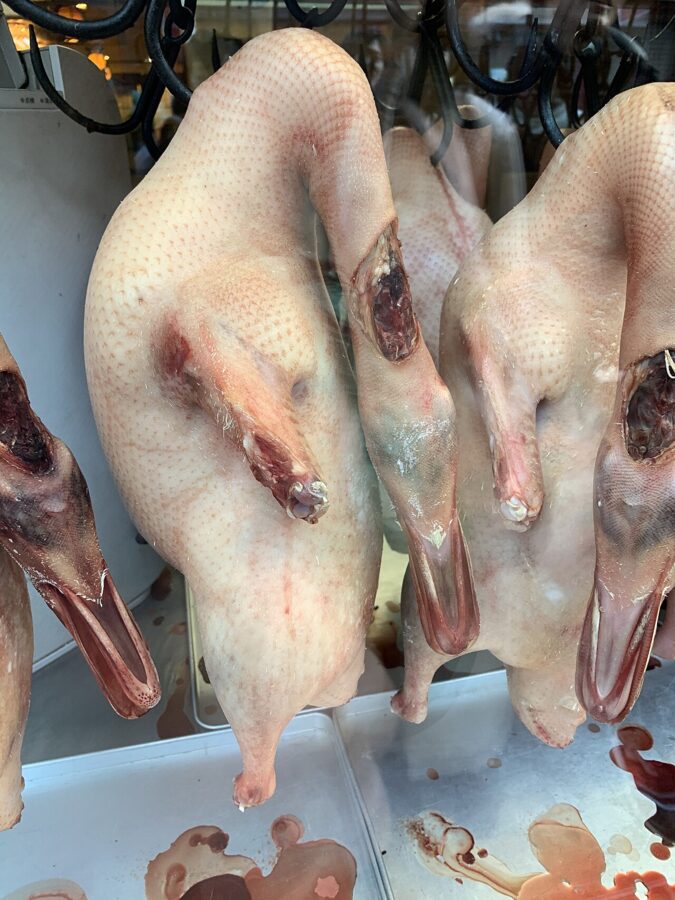
Abroad, the dish varies wildly. The British crispy aromatic duck is a different thing, steamed and then deep-fried, created in Britain in the second half of the twentieth century. In Japan, Peking duck is a fixture of Yokohama Chinatown, and Quanjude has a handful of franchises abroad. But a duck carved at your table in Beijing, five minutes out of the oven, is still a different meal.
Where to eat it: by neighbourhood and budget
You don’t have to cross the city for good duck. Most visitors stay around Wangfujing or Qianmen, and both have several good options within a short walk. Here’s how I’d choose.
Qianmen
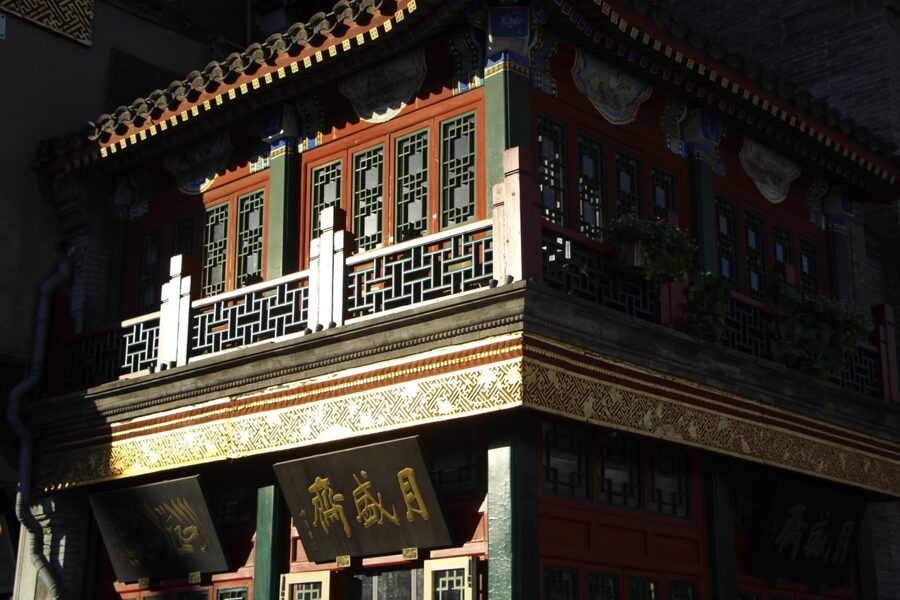
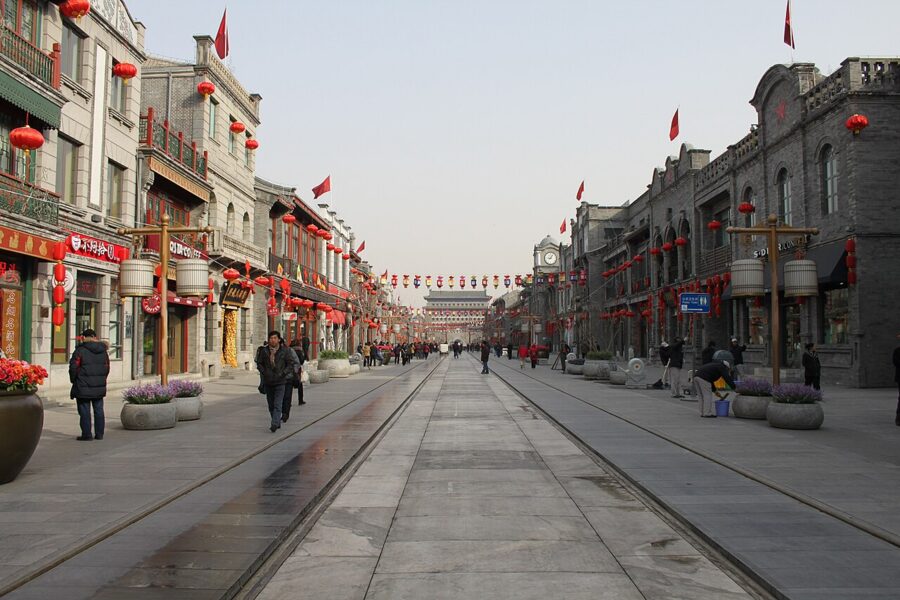
Qianmen is the place to eat both schools in one trip. Quanjude Qianmen and Bianyifang Xianyukou are a few minutes apart, and Liqun is a short walk east through the lanes. If you only eat one duck in Beijing, I’d send you to Liqun for the setting or Bianyifang for the oven, and to Quanjude only if the history matters to you more than the duck.
For a cheaper modern option, Juqi (局气) has a Qianmen branch on the third floor of Building E14 at Beijing Fun (北京坊), open 11:00–21:00. It’s a modern Beijing-cooking chain with its own take on the duck and a menu of old Beijing dishes, and it’s a reliable lunch stop.
Forbidden City and Wangfujing
Siji Minfu Forbidden City is the obvious choice, if you can face the queue. Quanjude Wangfujing is the easy alternative, with bookings and no fuss. 1949 Duck de Chine on Jinbao Street is a short taxi ride east if you want a smarter dinner after a day at the palace, and the walk back to Wangfujing is easy.
Dongsi, Gongti and Sanlitun
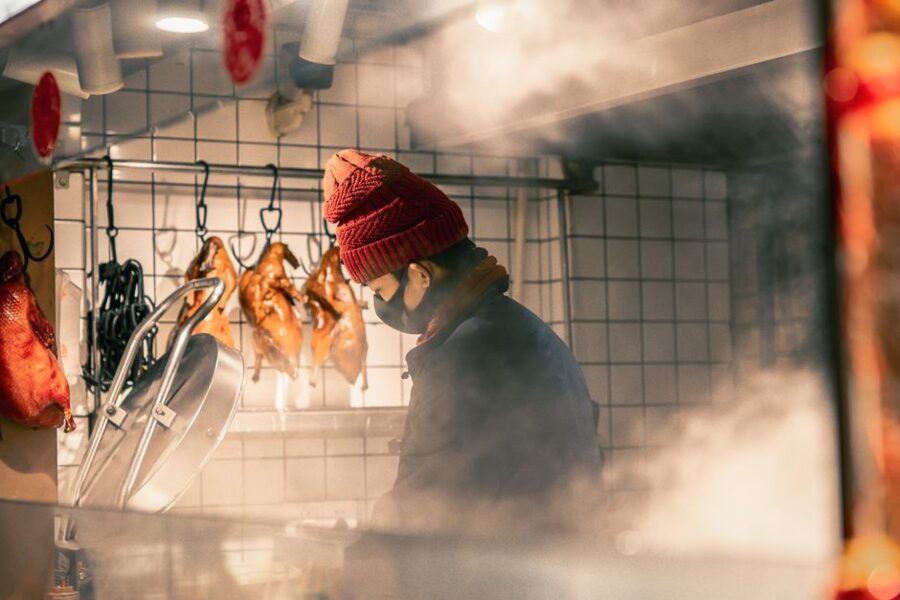
East of the centre, Da Dong Nanxincang is the flagship modern duck, and Sheng Yong Xing in Sanlitun is the best-known of the upscale independents. Both are evening places; book them, dress a little better than you would for Quanjude, and plan on two hours. If you’re doing a Great Wall day, either makes a good dinner to come back to.
Under ¥150 a head
Good duck doesn’t have to be expensive. Minfang (东四民芳餐厅), a neighbourhood restaurant at 79-2 Chaoyangmennei Dajie in Dongsi, sells a half duck for ¥128, and the city’s tourism bureau singled out that duck as the value order in a January 2026 round-up of hutong restaurants. Bianyifang Xianyukou at about ¥125–150 a head is the cheapest of the famous names.
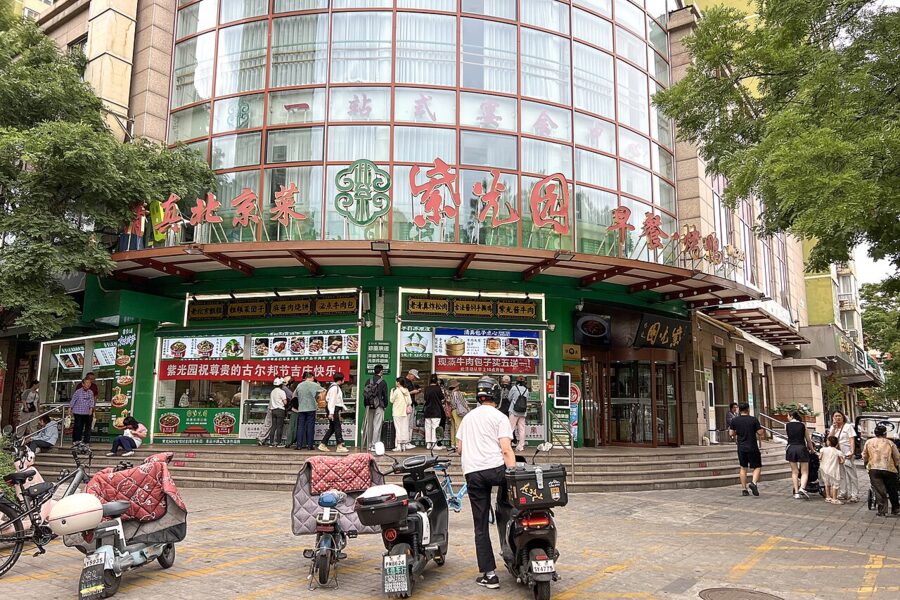
Zi Guang Yuan (紫光园), an old halal brand with branches across the city, lists roast duck as a signature alongside its breakfast snacks, and its prices are low. The Niujie branch, at the corner of Niujie and Nanheng West Street, opens 06:00–10:00 for breakfast and 10:30–22:00 for the rest of the day.
Takeaway
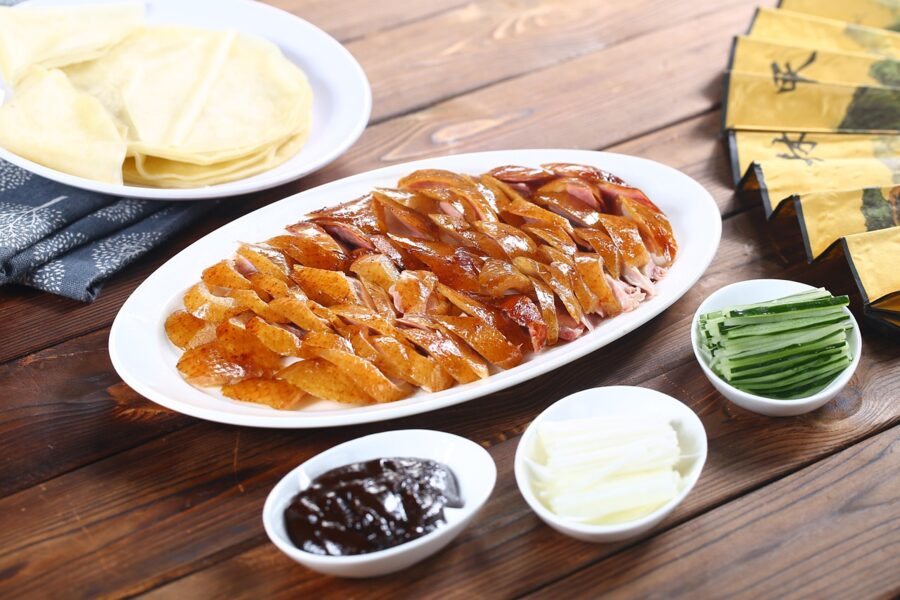
Almost every duck house sells whole and half ducks to take away, sliced and boxed with pancakes, sauce, scallion and cucumber. It’s the answer to the Siji Minfu queue, and a fine dinner in a hotel room after a long day on the Wall. Eat it within half an hour, before the skin softens, and don’t try to reheat it in a microwave.
Skip these
A few things to avoid, in no particular order:
- Vacuum-packed “gift” ducks at scenic-area shops. They’re sold everywhere around Qianmen and Wangfujing, and the same box is often much cheaper online or at a supermarket. It’s a reheated duck in a bag, not a souvenir worth carrying home.
- Touts selling queue numbers. Since 2023 Siji Minfu has only accepted its own paper numbers and WeChat queue in your own name, so a number bought from someone outside is a waste of money.
- Peking duck at a hotel buffet. The skin sits under a heat lamp and goes soft in minutes. It’s the dish at its worst.
- Eating near the palace in Golden Week. In the first week of October the famous branches by the Forbidden City have had queues of several hours, and the other public holidays are busy too. Eat duck on a weekday before or after, or at a branch away from the sights.
Book Bianyifang for one night and Liqun or Siji Minfu for another. Eat the first slice of skin with sugar, the second with garlic, and the rest in a pancake. Then have the bones made into soup, and drink it slowly.
You Might Also Enjoy
 Chiang Mai Food Guide: Khao Soi, Sai Ua, and the Northern Thai Kitchen
 Jigokudani Snow Monkeys: How to See Them, When to Go and a Day Around Nagano
 Beijing Hutongs: Where to Walk the Old Lanes, How to Read a Gate and Which Areas Are Worth It
 Mount Hua: The Five Peaks, the Plank Walk and How to Climb Huashan From Xi’an